Investigation of collision between sewage truck and The Ghan

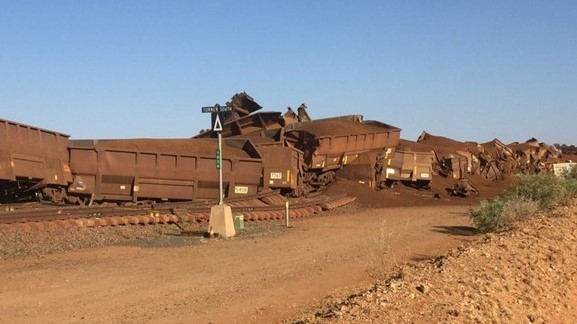
The ATSB has found that a collision between The Ghan passenger train and a loaded sewage truck occurred when the driver of the truck drove into the path of the train at a private road level crossing at 'Murrow Farm' near Two Wells in SA.

The Australian Transport Safety Bureau has today released its final investigation report into the collision which occurred on 6 August 2007 seriously injuring the truck driver. At the time of the accident road traffic at the level crossing was controlled by 'Stop' signs.

The ATSB found that the truck driver did not stop and did not see the train until he was on the level crossing. However, vegetation adjacent to the crossing had grown to the point where the truck driver could not see the approaching train even if he had stopped as required. Had the vegetation been adequately maintained, the truck driver would have been able to clearly see The Ghan, stop and then proceed safely over the crossing when the train had passed.

As a result of this investigation, the ATSB has identified safety issues primarily related to maintenance practices for the control of vegetation in the rail corridor which require action to reduce the risk of future collisions at this and other level crossings. Six safety recommendations have been issued. The ATSB also acknowledges safety action already undertaken by the Australian Rail Track Corporation in response to identified safety issues. Copies of the report can be downloaded from the ATSB's internet site at www.atsb.gov.au or obtained from the ATSB by telephoning 1800 020 616.

Depressurisation, 475 km north-west of Manila, Philippines, 25 July 2008, Boeing Company 747-438, VH-OJK

Today the Australian Transport Safety Bureau is releasing its Preliminary Factual report on the depressurisation of Boeing 747-438, VH-OJK, 475 km northwest of the Philippines, while being operated on a scheduled passenger flight from Hong Kong to Melbourne on 25 July 2008.

It is important to note that the information contained in the preliminary factual report, as the name suggests, is limited to preliminary factual information that has been establish in the initial investigation of the accident. Caution should be exercised that there is the possibility that new evidence may become available that alters the circumstances as depicted in the report.

To date, the Australian Transport Safety Bureau investigation, assisted by a number other organisations and agencies, including the Civil Aviation Authority of the Philippines, the National Transportation Safety Board and the Federal Aviation Administration of the USA, the Civil Aviation Safety Authority of Australia, Qantas and Boeing, has determined that about 55 minutes after departure from Hong Kong, and after the aircraft was established at its cruising altitude of 29,000 ft, the captain and first officer reported hearing a 'loud bang or cracking sound' with an associated airframe jolt. At that time, the autopilot disconnected, and the first officer, who was the pilot flying at the time, assumed manual control of the aircraft. Multiple warning messages were displayed in the cockpit, including warnings regarding the R2 door status and cabin altitude - that is the altitude corresponding to the air pressure inside the aircraft cabin. After donning oxygen masks the crew completed the 'cabin altitude non-normal' checklist. Approximately 20 seconds after the event, the captain reduced the thrust on all four engines and extended the speed brakes. The first officer commenced the descent, while the captain declared a MAYDAY on the Manila flight information region (FIR) radio frequency.

About 5 and a half minutes later, the aircraft reached and was levelled at an altitude of 10,000 ft, where the use of supplementary oxygen by passengers and crew was no longer required. After reviewing the aircraft's position, the flight crew elected to divert and land at the Ninoy Aquino International Airport, Manila. Landing preparations were subsequently commenced, including the jettisoning of excess fuel to ensure the aircraft's landing weight was within safe limits. The flight crew reported that many system failure messages were displayed, including all three instrument landing systems (ILS), the left VHF omni-directional radio-range (VOR) navigation instrument, the left flight management computer (FMC) and the aircrafts anti-skid braking system.

The cabin crew reported that shortly after the bang was heard, oxygen masks fell from most of the personal service units in the ceiling above passenger seats and in the toilets. Most passengers started using the oxygen masks soon after they dropped. All the cabin crew, who were engaged in passenger service activities at the time, immediately located oxygen masks to use. Some crew located a spare passenger mask and sat in between passengers, while others went to a crew jump-seat at an exit, and one used a mask in a toilet.

The flight crew reported that at all times during the ensuing descent into Manila, they were able to maintain the aircraft in visual flight conditions. With radar vectoring assistance from Manila air traffic control, the captain, who had assumed the pilot flying role, conducted an uneventful approach and landing on runway 06, with a smooth touchdown, full reverse thrust and minimal braking. Emergency services were in attendance after the aircraft was stopped on the runway, after which intercom contact was made with a ground engineer and the aircraft verified as being safe to tow to the airport terminal and disembark the passengers via a terminal airbridge.

None of the passengers or crew aboard the aircraft reported any physical injuries to the cabin crew immediately following the depressurisation event, or to the operators staff upon arrival in Manila.

An initial inspection of the external aircraft surfaces on the ground in Manila revealed the complete loss of the right wing forward leading edge-to-fuselage fairing, with separation occurring along the lines of interconnection between the fairing and fuselage skins. In the area exposed by the fairing loss, was an inverted T-shaped rupture in the fuselage skin, with several items from within the forward cargo hold partially protruding from the rupture.

Following removal of all cargo materials and lowering of the hold right-side curtain panels, it was found that the fuselage rupture was aligned with the nominal position of the number 4 passenger emergency oxygen cylinder; (slide2) one of seven such cylinders in a bank along the right side of the hold. The number 4 cylinder was missing from the bank.

On the basis of the physical damage to the aircraft's forward cargo hold and cabin, it was evident that the number 4 passenger oxygen cylinder sustained a failure that allowed a sudden and complete release of the pressurised contents. The rupture and damage to the aircraft's fuselage was consistent with being produced by the energy associated with that release of pressure. Furthermore, it was evident that as a result of the cylinder failure, the vessel was propelled upward, through the cabin floor and into the cabin space. Damage and impact witness marks found on the structure and fittings around the R2 cabin door showed the trajectory of the cylinder after the failure.

The following graphics illustrate the likely trajectory of the cylinder, based on the observed damage:

(slide 3) This graphic represents a cross-sectional view through the aircraft at the position of the R2 main cabin door - you will note here the oxygen bottle in situ in the cargo hold, the main deck floor, the R2 door and handle, the bustle that contains the escape slide and the overhead storage bins.

(slide 4) It is apparent that the cylinder failed towards its lower end, allowing a sudden and complete release of the pressurised contents that had sufficient energy to rupture the fuselage. It is likely that the lower part of the cylinder exited the aircraft through the rupture at this time, while the bulk of the bottle, complete with valve was propelled upward through the cabin floor. You can see the hole punched through the main cabin floor by the cylinder here, as viewed from within the cargo hold.

(slide 5) The cylinder then impacted the R2 door frame and the internal door handle - you can see in these photographs green paint transfer from the cylinder on the partition, vertically oriented scoring of the door escape slide shroud (bustle), impact damage on the door frame and the internal door handle rotated approximately 80% towards the open position. However, the door handle shaft had failed, as it is designed to do if an attempt is made to open the door in flight, so the position of the door handle is not representative of the position of the door lock mechanism or the security of the door. The investigation has confirmed that the door latches were still engaged. The portable walk-around oxygen cylinder that was normally located in an alcove just inside the R2 door was not present, and was not accounted for in a subsequent search of the aircraft.

(slide 6) It is apparent that the impact with the door frame broke off the cylinder valve and caused the cylinder to invert, while continuing to travel upward. Various items of debris were found around the aircraft cabin in the vicinity of the R2 door. Of note, that included fragments of the number-4 oxygen cylinder valve handle, the valve pressure relief assembly and the valve body itself. A fragment of the valve body was also recovered from within the damaged area on the door frame. However, a thorough search of the cabin and overhead ceiling void space failed to locate any part of the number-4 oxygen cylinder itself.

(slide 7) The cylinder then impacted the overhead panelling end on, producing the circular cut-out type damage observed in these photographs. The diameter of the cut-out region closely matched that of the passenger oxygen cylinder, as can bee seen in the lower photograph.

(slide 8) The still rotating cylinder then produced crushing damage adjacent to the cut-out opening. The semi-circular area of crushing damage to the partitioning panel was of a similar diameter to the cut-out section. A light fitting, normally present in the overhead panels had sustained upward crushing damage and presented clear green paint smears of a similar colouration to the marks on the partition panel and door bustle.

(slide 9) The cylinder then fell to the cabin floor, back through the hole into the cargo hold and exited the aircraft through the ruptured fuselage.

The investigation to date has also identified other damage to the aircraft, including severing and damage to numerous electrical cables and cable bundles, routed through the lower aircraft fuselage near the point of rupture. In addition, both right side (first officer's) aileron control cables, routed along the right side of the fuselage above the passenger oxygen cylinders, were fractured during the rupture event. However, the aircraft control systems have a redundancy arrangement whereby the first officer's aileron control cables are duplicated by the captain's system, the cables from which were routed along the opposite (left) side of the forward cargo hold. Interlinks between the aileron systems provided the necessary redundancy in this instance, ensuring the continued safety of flight after the event.

(slide 10) In terms of cabin safety issues, Investigators conducted a comprehensive walk-through examination of the aircraft's cabin and a survey of the safety systems; in particular, the status of the passenger oxygen masks and equipment. Preliminary observations included that:

  • there were 353 passenger seats in the aircraft
  • 476 passenger oxygen masks had deployed from their overhead compartments
  • 426 passenger oxygen masks were pulled down (i.e. activated for use) - you will note in this photograph arrowed a number of those that dropped, but were not activated, and
  • forward crew rest and customer support manager station masks had not deployed.

Cabin safety investigation aspects are ongoing and will examine the serviceability and functionality of the cabin oxygen apparatus and other cabin safety equipment, cabin crew actions, and passenger actions and problems. The investigation has interviewed all 16 of the cabin crew about their experiences, and a review of cabin crew procedures will be conducted.

The investigation is also conducting a survey of all passengers on the flight. The results of this survey will help the investigation determine what occurred and enable the investigation to document passenger and crew actions, equipment issues, and whether there were any resulting injuries. The effects of the damage sustained by the oxygen system on its capacity to function adequately and for a sufficient period will also be investigated. The survey will also help determine if any improvements in equipment design or crew procedures are needed to enhance safety. The survey has been emailed or posted to passengers where the ATSB could locate contact details. Passengers who have not received a survey but who would like to receive one are requested to provide an email or postal address to the ATSB, and this can be done through 1800 020 616 or to email.

The ongoing engineering investigation into the apparent oxygen cylinder failure will focus on (but not be limited to):

  • cylinder design, manufacturing methods and type testing procedures
  • manufacturing quality control processes and results
  • modes and mechanisms of cylinder failure
  • historical oxygen and pressurised cylinder failure experiences, civil and military, aviation and industrial.
  • cylinder degradation mechanisms
  • the adequacy and efficacy of inspection, maintenance and repair processes, procedures and equipment prescribed by the manufacturer and implemented by maintenance organisations, and
  • cylinder filling processes and procedures.

As the failed cylinder was not recovered, the ATSB is currently working with the aircraft manufacturer, other aircraft operators and the oxygen cylinder manufacturer, to obtain samples of cylinders from the same manufacturing batch as the failed item, to facilitate the ongoing investigation of all relevant issues.

Examination of cockpit voice recorder, flight data recorder and quick access recorder information is ongoing and will include the

  • Analysis of CVR audio regarding crew actions, aircraft handling and crew/cabin communications during the approach and landing at Manila
  • Analysis of FDR data to produce a detailed sequence of events and assist in identifying secondary damage from the oxygen cylinder failure and the effects of that damage to aircraft systems and aircraft handling.

A number of safety actions have already been taken by the operator. On 27 July (2 days following the VH-OJK event), the aircraft operator, in agreement with the Civil Aviation Safety Authority (CASA), commenced a fleet-wide program of detailed visual inspections of its Boeing 747 oxygen system installations. The ATSB was advised that those inspections were completed by 1 August.

The operator has also completed a preliminary internal review of the event, addressing the crew and passenger response, the emergency passenger oxygen system operation, supplementary passenger oxygen requirements, and the functionality of the depressurisation emergency announcement system operation.

The ATSB has also considered, in consultation with the NTSB, US FAA, Boeing and CASA, the need for any immediate safety action. It is important that any corrective or precautionary action undertaken in response to a safety occurrence should be justifiable in terms of established or probable facts. However, in view of the nature of the depressurisation event and the implication of a possible mechanism or condition that could affect the structural integrity and safety of other oxygen cylinders used in the aviation environment, the ATSB has released a number of safety advisory notices on the basis of prudence, until such time that the mechanism/s contributing to the cylinder failure are established and understood.

Those safety advisory notices encourage all organisations performing inspection, testing, maintenance and repair activities on aviation oxygen cylinders, to note the circumstances detailed in the ATSB's preliminary report, with a view to ensuring that all relevant procedures, equipment, techniques and personnel qualifications satisfy the applicable regulatory requirements and established engineering best-practices. The ATSB also encourages other operators of transport category aircraft fitted with pressurised gaseous oxygen systems, to note the circumstances detailed in the preliminary report, with a view to ensuring that all oxygen cylinders, and cylinder installations, are maintained in full accordance with the relevant manufacturers requirements, statutory regulations, and established engineering best practices.

The investigation is ongoing and the ATSB continues to work closely with representatives from the US NTSB and FAA, Boeing, CASA and Qantas. It is always difficult to predict how long an investigation such as this will take. While it is likely to take some months, should any critical safety issues emerge that require urgent attention, the ATSB will immediately bring such issues to the attention of the relevant authorities who are best placed to take prompt action to address those issues.

Qantas Airbus Incident Media Conference

The Australian Transport Safety Bureau was advised yesterday afternoon of an occurrence involving an Airbus A330-300 aircraft while on a flight from Singapore to Perth, operating as Qantas Flight 72. The aircraft, which had 303 passengers and 10 crew on board, was in normal level flight at 37,000 ft about 110 nautical miles north of Carnarvon and 80 nautical miles from Learmonth near Exmouth in north-western Australia, when the pilots received electronic centralised aircraft monitoring messages in the cockpit relating to some irregularity with the aircraft's elevator control system. The aircraft is reported to have departed level flight and climbed approximately 300 ft, during which time the crew had initiated non-normal checklist/response actions. The aircraft is then reported to have abruptly pitched nose-down. During this sudden and significant nose-down pitch, a number of passengers, cabin crew and loose objects were thrown about the aircraft cabin, primarily in the rear of the aircraft, resulting in a range of injuries to some cabin crew and passengers.

The crew made a PAN PAN emergency broadcast to air traffic control, advising that they had experienced flight control computer problems and that some people had been injured, and they requested a clearance to divert to and track direct to Learmonth. A few minutes later the crew declared a MAYDAY and advised ATC of multiple injures including broken bones and lacerations. The aircraft landed at about 1330 local time, about 40 minutes after the start of the event.

The ATSB understand that there were 14 people with serious but not life-threatening injuries, which included concussion and broken bones who were taken by air ambulance to Perth. In addition, up to 30 other people attended hospital with possible concussion, minor lacerations and fractures, with up to a further 30 or so people with minor bruises and stiff necks etc who did not need to attend hospital. However, these casualty figures are subject to further clarification and confirmation. All passengers have been now been transported to Perth. Given the nature of injuries, the occurrence is defined as an accident in accordance with the International Civil Aviation Organization definition.

The ATSB has initiated a safety investigation and two investigators from the ATSB's Perth office travelled to Learmonth yesterday evening and commenced initial on-site investigation activities, which included securing the aircraft's Flight Data and Cockpit Voice recorders. A further five ATSB investigators are due to arrive in Learmonth early this afternoon Western Australia time.

An officer from the Civil Aviation Safety Authority with a type rating on the A330 has joined the ATSB team. In addition, le Bureau d'Enquetes et d'Analyses, or BEA of France, the French counterpart of the ATSB has assigned an accredited representative as the State of Design and Manufacture of the aircraft, to provide assistance to the ATSB investigation. An investigator who is a flight control specialist from the aircraft manufacturer Airbus, is currently travelling to Australia and will also assist the investigation team.

It is obviously very early in the investigation and too soon to draw any conclusions as to the specific cause of this accident. The ATSB investigation will explore all aspects of the operation of the aircraft, including through detailed examination of the Flight Data and Cockpit Voce recordings, aircraft systems and maintenance history, Air Traffic Control radar and audio recordings, and weather conditions. The ATSB will also be conducting a range of interviews with the pilots and cabin crew, and will also speak with passengers to examine the cabin safety aspects.

It is always difficult to predict how long an investigation such as this will take. While it is likely to take some number of months, the ATSB will release a Preliminary Factual report within about 30 days. Furthermore, should any critical safety issues emerge that require urgent attention, the ATSB will immediately bring such issues to the attention of the relevant authorities who are best placed to take prompt action to address those issues.

Without pre-empting any findings in relation to cabin safety issues and the wearing of seatbelts, this accident serves as a reminder to all people who travel by air of the importance of keeping seatbelts fastened at all times when seated in an aircraft.

Fatal Mid-Air Collision at Moorabbin Victoria, 27 August 2008

A media conference discussing the progress of the investigation into the circumstances surrounding the mid-air single fatality accident on 27 August 2008 will be held tomorrow, Thursday 28 August 2008.

Where: 47 Silver Street, (crn Lorna and Silver Streets) Cheltenham, Victoria

Time: 10:30 am (local time)

Mr Mike Watson, Investigator in Charge (IIC) will discuss factual information known to the investigation team at this time and will outline the investigation process.

Any person/witness with information about the accident is encouraged to contact the ATSB on 1800 020 616.

No further media briefings will be conducted by the on-site team. After this briefing, all media enquiries must be directed to the media contact listed below.

ATSB Preliminary Factual Report, In-flight upset, Qantas Airbus A330, 154km west of Learmonth, WA, 7 October 2008

The following is the text of the media briefing given by Ms Kerryn Macaulay, Director, Strategy and Capability, at 10am 14 November 2008.

Good morning. I am releasing the Australian Transport Safety Bureau's Preliminary Factual report on the in-flight upset of an Airbus A330 aircraft, registered as VH-QPA, which occurred 154 km west of Learmonth, Western Australia, while being operated on a scheduled passenger flight (Qantas Flight 72) from Singapore to Perth on 7 October 2008. The ATSB immediately commenced an investigation into this accident[i] and has been working collaboratively with our safety investigation counterparts in France and the United States - the French BEA (Bureau d'Enqutes et d'Analyses pour la s'curit' de l'aviation civile) and the US NTSB (National Transportation Safety Board), as well as the aircraft and component manufacturers, Qantas, and CASA.

As you know, at about 1240 on 7 October 2008, while the aircraft was cruising at 37,000 ft, the autopilot disconnected, accompanied by various aircraft system failure indications. While the crew was evaluating the situation, the aircraft abruptly pitched nose-down and descended 650 ft. After returning the aircraft to 37,000 ft, the crew commenced actions to deal with multiple failure messages. Shortly after, the aircraft commenced a second uncommanded pitch-down event and descended about 400 ft. The crew's timely response led to the recovery of the aircraft descent within seconds in relation to both pitch-down events.

The crew initially made a PAN emergency broadcast to air traffic control but upgraded this to a MAYDAY after receiving advice from cabin crew on the extent and seriousness of injuries incurred by passengers and crew. The aircraft diverted to land at Learmonth and this was done carefully by the flight crew as is detailed in the ATSB report.

Unfortunately, during the upset, a flight attendant and at least 13 passengers were seriously injured and many others experienced less serious injuries. Most of the injuries involved passengers who were seated without their seatbelts fastened.

Examination of flight data recorder information indicates that, at the time the autopilot disconnected, there was a fault in a flight computer system component known as the air data inertial reference unit number 1 (ADIRU 1)[ii] which resulted in a number of spurious spikes in ADIRU parameter values. Further spurious parameter spikes continued to influence a number of system failure indications throughout the flight, resulting in frequent failure messages being provided to the crew. The crew completed required actions in response to the messages, but these actions were not effective in removing the spikes or failure indications. The investigation team is continuing to examine the influence of the spikes in ADIRU parameters on the performance of the flight controls[iii].

Most components on modern aircraft, including ADIRUs, are highly reliable and there has only been a small number of occasions where ADIRUs of different types made by varying manufacturers have had some form of failure. It is extremely rare for any such failures to have an effect on an aircraft's flight controls. The ATSB has previously investigated an in-flight upset related to ADIRU failure from a different manufacturer in a Boeing 777 which occurred in 2005 and was traced to a software fault. While a software fault has not been ruled out in the current investigation, it seems unlikely that the two events are linked.

In terms of ongoing investigation activities, the ATSB is able to advise the following:

  • The three ADIRUs will be subject to comprehensive testing at the manufacturer's facilities[iv] in the US. This testing is planned to commence on Monday. A carefully prepared test plan is currently being finalised in anticipation of this complex work to ensure the investigation team has the best possible chance to understand what led to the pitch-down events in order to provide a basis to eliminate the problem at its source.
  • The investigation will review the ADIRUs' data monitoring capability and management of anomolous ADIRU data, including flight deck indications and will also review records of previous occurrences involving ADIRU failures (which did not result in in-flight upsets) and any occurrences where large numbers of spurious messages were generated.
  • Subject to the results of the ADIRU testing, examination of other aircraft components may be conducted such as the three flight control primary computers and their software in order to understand why the fault in the ADIRU was able to be translated to flight control movements.
  • Possible external sources of electromagnetic interference are being explored and assessed, including from the Harold E. Holt very low frequency transmitter near Exmouth, WA and from portable electronic devices on board the aircraft. This is unlikely, especially if the problem is clearly identified during the ADIRU and system testing.
  • Work is still continuing on the cabin safety issues with interviews having been conducted with all the cabin crew as well as some of the passengers who were seriously injured. On 28 October 2008, the ATSB started distributing a passenger questionnaire seeking passenger observations during the upset events and asking questions in relation to the use of seatbelts, injuries and the use of personal electronic devices. Contact details for some passengers are incomplete. If any passenger has not received a questionnaire, please contact the ATSB on 1800 020 616 (or 61 2 6257 4150 from outside Australia) or via email to atsbinfo@atsb.gov.au. A review of relevant industry requirements regarding the use of seatbelts is also being conducted.
  • The ATSB is aware that a post-incident multi-agency debrief of the emergency response to the accident has been conducted in Western Australia. The ATSB will review the outcomes of that debrief in relation to information obtained at interviews and from responses to the passenger questionnaire.

A number of important safety actions have already been implemented arising from the investigation to date. These include:

  • Following a 14 October 2008 telex, Airbus issued an Operations Engineering Bulletin on 15 October, applicable to all A330 aircraft fitted with Northrop-Grumman ADIRUs which detailed a procedure for flight crew to follow in the event that specified fault indications were observed in order to reduce or eliminate the risk of a future similar in-flight upset event.
  • The aircraft operator has incorporated the material from Airbus in a Flight Standing Order for its A330 operations and has commenced a program of focussed training during simulator sessions and route checks to ensure that flight crew undertaking recurrent or endorsement training are aware of the contents of the Flight Standing Order.
  • On 27 October 2008, the Civil Aviation Safety Authority issued a media release to reinforce the ATSB's message that the occurrence was a timely reminder to 'remain buckled up when seated at all stages of the flight'.

The investigation is ongoing and the ATSB continues to work closely with the BEA, the NTSB, Airbus, Qantas, Northrop Grumman and CASA. It is always difficult to predict how long an investigation such as this will take. While it is likely to take some time, should any critical safety issues emerge that require urgent attention, the ATSB will immediately bring such issues to the attention of the relevant authorities who are best placed to take prompt action to address those issues.

[i] As serious injuries were incurred, this constituted an accident under the International Civil Aviation Organisation definition outlined in Annex 13 to the Chicago Convention and as defined in Australia's Transport Safety Investigation Act 2003.

[ii] There are three ADIRU units that form part of the Air Data and Inertial Reference System.

[iii] There are three flight control primary computers (commonly known as PRIMs) in the aircraft's flight control system with one PRIM operating as the master in normal operations. It processes and sends orders to other computers which may result in flight control surfaces being moved to execute different manouevres including to pitch the aircraft's nose up or down. One source of information to the PRIMs are the ADIRUs.

[iv] Northrop Grumman Corporation.