Level Crossing Collision, Edith Street, Horsham, Victoria

An ATSB investigation has found that the driver of a motor vehicle who was fatally injured on 11 August 2005 at the Edith Street level crossing in Horsham, Victoria, did not give way to the train as prescribed in 'Road Rules�- Victoria'. The motorist drove into the path of the train even though the level crossing flashing lights and bell were operating correctly.

The ATSB's report concludes that it is likely that the driver of the car was distracted by internal and/or external factors. Internal factors may have included an expectation that a train would not be present, familiarity with the crossing and/or personal issues. External factors may have included the presence of an intersection immediately after the crossing.

The report further concludes that there was nothing the train crew could have done to prevent the accident. In the interest of enhancing future road/rail safety the ATSB has made a series of recommendations which include opportunities for better public education regarding the dangers of level crossing, the improved inspection of warning signage associated with level crossings and a review of the upgrade priority assessed for the Edith Street level crossing.

Horsham is situated on the main Melbourne to Adelaide line and is approximately 300 km north-west of Melbourne, and 450 km south east of Adelaide. The level crossing comprises a single rail line crossed at right angles by the roadway and is protected by flashing lights a bell, approach warning signs and road markings. Copies of the report can be downloaded from the ATSB's internet site.

Crew member falls to his death from passenger ship

A crew member on board the P&O cruise ship, Pacific Sun fell to his death because his safety harness was not properly secured, according to an Australian Transport Safety Bureau report released today.

On 5 February 2006, Pacific Sun berthed at number eight wharf Darling Harbour, Sydney. The quartermaster on the twelve to four watch was assigned to clean rust streaks from the outside of the port bridge wing. At 1205, before the quartermaster started work, the officer on watch checked his safety harness and completed a work permit. The quartermaster then climbed out onto an open catwalk and started to work outside the bridge wing of the ship, 24 m above the concrete wharf.

At about 1249 the quartermaster apparently lost his footing and fell onto the wharf below. He died as a result of the injuries he sustained in the fall.

The ATSB's investigation report states that the quartermaster was probably in the process of moving the safety line on his harness from one strong point to another at the time that he lost his footing and fell. The factors which contributed to his fall include a safety harness that was fitted with only one lanyard and workplace risk assessment and procedures that were inadequate. The quartermaster may also have been distracted from the task at the time by non-work-related issues.

The ATSB report recommends that ship operators should ensure that the procedures, permits and risk assessments for personnel working aloft adequately identify the hazards and stipulate measures to mitigate the risks. The report also recommends that ship operators should ensure that the safety harness and lanyard used by personnel working aloft are appropriate for the purpose considering all aspects of the tasks to be performed.

Copies of the report can be downloaded from the ATSB website, or obtained from the ATSB by telephoning 1800 020 616.

ATSB research report into perceived pilot workload and safety of instrument approaches

An ATSB Research report has found that pilot workload was perceived as being higher, and reported losses of situational awareness were more common, with the area navigation global navigation satellite system [RNAV (GNSS)] approach like the one being flown by the crew of the 15-fatality aircraft at Lockhart River on 7 May 2005, compared with all other approach types except the non-directional beacon (NDB) approach, which involved similar workload and situational awareness levels.

The Australian Transport Safety Bureau has made a number of recommendations to enhance the safety of RNAV (GNSS) approaches including to Airservices Australia for a review of waypoint naming conventions for the purpose of improving readability and contributing to situational awareness; and a review of approaches with segment lengths different from the 5 nautical mile optimum and/or with multiple segment steps.

ATSB recommendations to the Civil Aviation Safety Authority include further research to better understand factors affecting pilot workload and situational awareness during the RNAV (GNSS) approach.

The ATSB has today also dispatched copies of its confidential draft final report on the Lockhart River accident to directly involved parties. This is to enable checking of the accuracy of more than 400 pages of the report and appendices and to ensure natural justice. In accordance with international convention, directly involves parties have up to 60 days to comment before the ATSB reviews comments and finalises the report for public release.

The research report (Perceived Pilot Workload and Perceived Safety of RNAV (GNSS) Approaches) can be downloaded from the ATSB internet.

Crew member fatality on board a ship in Groote Eylandt

A joint investigation carried out by the Australian Transport Safety Bureau and the Marshall Islands Maritime Authorities has found that a lack of preparedness, communication and supervision; and the incorrect use of the mooring winch brake were contributing factors in the death of a crew member on board the Marshall Islands flagged ship Probo Bear on 10 April 2006.

At 2150 on 10 April, the crew on board the products/ oil/bulk/ore carrier Probo Bear prepared to shift the ship forward, to position its number seven cargo hold under the Groote Eylandt jetty fixed loading boom. The weather was fine with light winds and there was little tidal flow.

At 2212, the master ordered the forward spring lines and stern lines be slackened, and to commence heaving on the head lines and aft spring lines. The main engine was run slow ahead for about ten seconds to start the ship moving.

During the shift ship operation one of the forward spring lines became taut. The master ordered the forward mooring crew to slacken the taut spring line, but it did not slacken off. The master ordered dead slow astern on the main engine to halt the ships movement. Just under a minute later, when he noted that the taut spring line had suddenly become slack, the master ordered the engine stopped.

A short time later, the crew member operating the number two forward spring line was found lying on the forecastle deck to the port side of the spring winch platform. He had severe head injuries and his safety helmet had been split in half. None of the crew on the forecastle had seen what had happened, but they had heard what sounded like a mooring line moving swiftly through the air.

A medically trained crew member was sent to the forecastle while the master informed the local authorities. The crew completed the mooring operations and paramedics boarded the ship when it was all fast at 2300. The crew member was confirmed dead at 2304.

The ship completed its cargo operations without further incident and sailed on 12 April 2006.

The investigation report makes recommendations to ship managers and masters in relation to the need for preparedness, communication and supervision during mooring operations.

ATSB action to be taken against accident operator for failing to report safety incidents

The ATSB has announced that it will refer Lessbrook Pty Ltd to the Director of Public Prosecutions for its failure over several years to report aviation safety occurrences to the bureau as required by legislation.

Lessbrook Pty Ltd operates under the name Transair and was the operator of the aircraft in which two pilots and 13 passengers lost their lives on 7 May 2005. Despite the accident, it is only in recent weeks that Lessbrook has provided the Australian Transport Safety Bureau with evidence which our analysis has shown includes 25 safety incidents which should have been reported immediately or within 72 hours depending on their severity.

The unreported occurrences include 7 immediately reportable matters (IRMs) that occurred between 1 July 2003 and the accident. They include a gear failure on departure from Bamaga, a cabin pressurisation warning near Cairns, a burning smell near Inverell, and a problem with flaps leading to a flapless take-off and associated flight issues from Gunnedah to Sydney.

Under the Transport Safety Investigation Act 2003 (TSI Act) and Regulations such IRMs must be reported immediately by responsible persons (eg the airline operator) in accordance with the regulations and failure to do so has a maximum penalty of imprisonment for six months (Section 18 of the TSI Act). Failure to report the more routine matters or to make a written report of IRMs carries a maximum penalty of 60 penalty units, a very steep fine.

While in accordance with international requirements and domestic law, ATSB investigations do not seek to assign blame or liability, a serious breach of the TSI Act with respect to the investigations or reporting requires action to deter people from failing to comply with its safety objectives.

The failure to report these occurrences, which were reported by relevant pilots to the operator, is indicative of a poor safety culture and poor safety system within the operator. However, the reports are a separate safety issue compared with the fatal accident.

Despite the difficulties the ATSB has had in obtaining timely and complete information for its investigation, a draft of the final report is planned to be released to directly involved parties on 15 December. This is to enable checking of factual accuracy and to ensure natural justice. There are 60 days to comment before the ATSB finalises the report for public release.

This media release constitutes a report released under Section 25 of the TSI Act.

Grounding of the ship <em>Mellum</em> in the port of Thevenard.

The ATSB has found that a misunderstanding between the master and pilot, and the lack of planning by the ship's crew were contributing factors in the grounding of the Liberian flagged general cargo ship Mellum on 28 September 2004.

The Australian Transport Safety Bureau investigation found the master/pilot information exchange was deficient, and that the insets and scales of the navigation chart in use may have contributed to the grounding.

At 1124 Australian Central Standard Time on 28 September, the general cargo ship Mellum let go from the wharf at Thevenard and headed to sea with a pilot on board. The sky was overcast and there was occasional light rain, but visibility was good. The wind was from the southeast at about five knots and the tide was flooding at about one knot.

At about 1217, the ship cleared Yatala Channel beacons one and two at a speed of about seven knots. Shortly thereafter, with the entrance beacon on the starboard bow, the pilot informed the master that he intended to disembark as they had earlier agreed. The master moved to the bridge wing and watched as the pilot disembarked the ship. He then returned to the wheelhouse and ordered the helmsman to steer a course of 222 by gyro compass.

The master soon noticed that the ship was to the south of the intended track and ordered a course of 225. At 1233, before this last order could be executed, the ship grounded just south of the entrance beacon.

The master stopped the main engine and then tried various manoeuvres to free the ship. He then called the pilot boat to request assistance. At 1320, the pilot reboarded the ship. Ballast water was moved and discharged from the ship to lighten it and change the trim.

Manoeuvres with the assistance of a local tug were carried out when the rising tide allowed, and at 2309 the pilot reported that the ship was afloat.

At 1500 on 30 September the detention order that had been issued after the grounding was lifted when the ship had been checked for damage and seaworthiness. At 1606, Mellum weighed anchor and sailed for Melbourne.

The ATSB has made a safety recommendation to Flinders Ports in relation to pilot training with the aim of preventing further incidents of this type.

ATSB Final Report into passenger evacuation at Hobart Airport on 17 May 2005

An ATSB investigation report has found that while an emergency passenger evacuation at Hobart was conducted rapidly and in a pro-active manner in the interests of passenger safety, there were problems with communication involving the pilots, ground crew, and cabin crew that created potential risk and has led to improved safety action for the future.

The Australian Transport Safety Bureau's final report into the Boeing 717 evacuation on 17 May 2005 found that a right engine starter had failed during the engine start due to loss of lubricating oil because a seal retaining ring was incorrectly installed. This resulted in smoke and sparks issuing from the right aircraft engine. The smoke and sparks were reported to the captain as a fire by the aircraft dispatcher, and the captain ordered an emergency evacuation.

The 3 floor-level aircraft doors were opened by the flight attendants but when the right front door was opened, the escape slide fell to the ground uninflated. The investigation found that the escape slide may not have been properly armed after the doors were closed and that this was not noticed when visually cross-checked. (The passenger operated over-wing exits were not used as there were no passengers sitting in these rows.)

All 26 passengers successfully exited the aircraft in less than 64 seconds, but 11 reported sustaining minor injuries.

The emergency evacuation was ordered before the relevant checklist had been completed. This resulted in a lack of emergency lighting in the rear emergency area and delay in the extension of wing flaps that would have been necessary had the over-wing exits been used.

As a result of this incident, the operator has undertaken several safety actions to enhance passenger safety. These include: improved aircraft maintenance procedures relating to markings on door slide brackets; defined phraseology to be used in emergency communications between aircraft dispatchers and pilots; door closure procedures for engine starts; improved policy on cockpit discussion restrictions after door closure; and improved cabin crew procedures and training.

Freight train load shift led to collision with passenger train

An ATSB has found that inadequate load securing methods, combined with reduced track clearances, lead to a collision between a steel plate freight load and a passenger train at Eden Hills station platform on 30 September 2005.

The freight load had been protruding from the side of the freight train for at least 85 km before the collision occurred.

Eden Hills is located about 14 km south of Adelaide in the Adelaide Hills region. Both trains were heading towards Adelaide when the collision occurred.

There were no injuries and only minor damage to track and rollingstock infrastructure.

The Australian Transport Safety Bureau investigation determined that the minor collision occurred as a result of movement of an inadequately secured metal plate load and reduced clearance between both tracks. Given the inadequate load securing methods, the risk of a load shift and strap failure, a collision became likely irrespective of track clearances.

As part of the investigation, the ATSB issued a safety advisory notice on 26 October 2005 to encourage better load security.

In the interest of future rail safety, the ATSB has now made further recommendations regarding the use and application of tensile strapping to ensure load security, reviewing acceptance and audit procedures to ensure load security, and reviewing standards and procedures to mitigate against reduced track clearances.

Read the report: Collision between Freight Train 5MA5 and Passenger Train 206A

ATSB investigation into Strikemaster jet fatal accident near Bathurst

The ATSB's on-site investigation into the 5 October 2006 fatal accident involving a BAC-167 Strikemaster jet, NE of Bathurst, NSW, is continuing. Access to the accident site has been hampered by the presence of a large bushfire, which is currently being fought by the NSW Rural Fire Service.

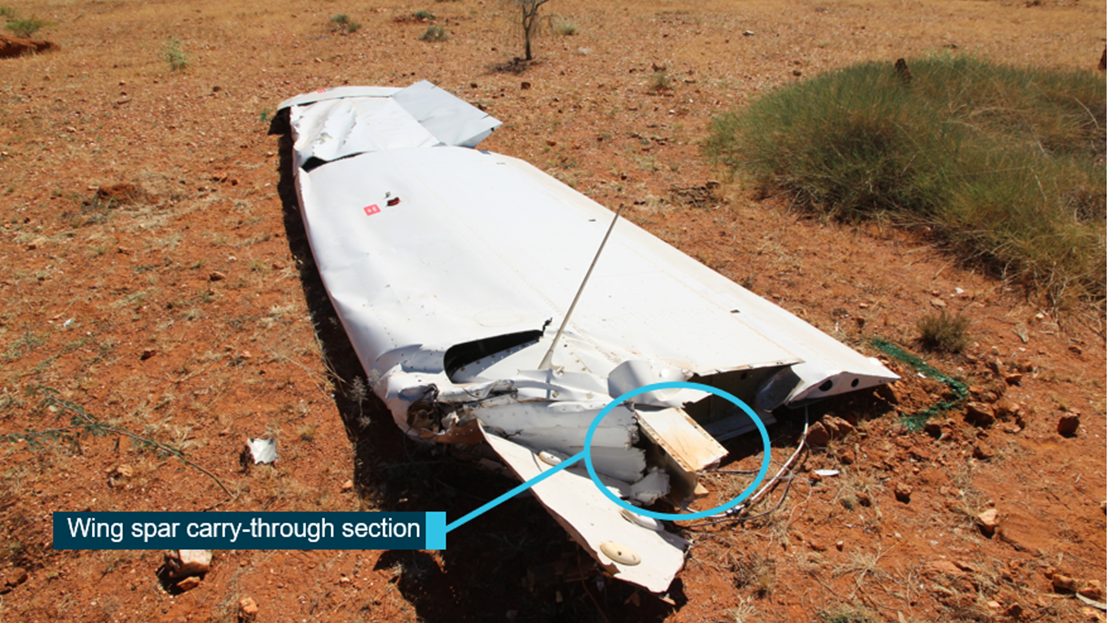
The Australian Transport Safety Bureau's on-site investigation team has reported that the aircraft wreckage trail extends more than 1 kilometre. Team members have been able to access some of the aircraft wreckage during a period of limited access to the accident site over the last 2 days. During that time, the team located and examined the aircraft's right wing and reported that the wing had separated from the aircraft fuselage in-flight.

At this stage, the ATSB does not know where in the wreckage trail sequence the wing is located, or the reason for the separation.

ATSB investigators will continue their work at the accident site over the coming days, subject to gaining safe access. Investigators have also been accessing the operator's aircraft maintenance and operational documentation. A preliminary factual report will be issued in about 30 days.

Witnesses are asked to call the ATSB on 1800 020 616.

Lack of safety measures led to chief engineer’s severe burns

An Australian Transport Safety Bureau (ATSB) investigation has found that a lack of hazard awareness and safety control measures led to the chief engineer on board the Australian bulk carrier River Embley sustaining burns to 45 percent of his body when he was scalded by hot water that unexpectedly sprayed from a steam valve he and a junior engineer were working on.

On the morning of 14 October 2005, the engineers were working in the engine room while the ship was at anchor off Gladstone. While they were dismantling the turbo alternator exhaust steam valve a thousand litres of pressurised hot water unexpectedly started to spray from the valve and onto the chief engineer standing on staging below.

In an effort to escape the hot water spray the chief engineer tried to jump clear of the staging but became entangled in the securing rope which had formed a barrier.

The ship's crew mounted an immediate first aid response and the master organised a helicopter evacuation. The chief engineer was transported to Gladstone Hospital and later transferred to the Royal Brisbane Hospital intensive care unit.

The report concludes that the engineers did not fully assess the exhaust steam piping system and its drainage arrangements, or allow sufficient time for the exhaust steam system to completely drain before starting to work on the valve.

The ship's work permit system and job safety analysis procedures were not utilised by the engineering crew and deficiencies in safety management were not identified in two audits prior to the accident.

It is also considered that a sizable experience gradient between the chief engineer and the other engineers along with a lack of training allowed a series of 'single person' errors to go unchecked and unquestioned.

The ATSB has made several safety recommendations aimed at preventing further accidents.