Mishandled air manoeuvre prompts changes to procedures

An aircraft operator has changed its operating procedures following a go-around during an attempted landing at Melbourne in July 2007. The aircraft manufacturer has also revised some of its procedures for the aircraft type.

A passenger aircraft had attempted to land at Melbourne airport in fog, but abandoned the landing due to low visibility. During the go-around, the aircraft descended to within 38 feet of the ground before climbing.

An Australian Transport Safety Bureau (ATSB) investigation report, released today, found that the go-around did not work as intended due to a combination of:

  • problems in positioning the thrust levers for the aircraft's engines
  • failure of the aircraft's flight computers to switch to go-around status and
  • the way tasks were sequenced in the operator's go-around procedures.

The ATSB investigation also found that reporting of the occurrence had not met the requirements of the Transport Safety Investigation Act 2003.

This incident has prompted the operator to change its go-around procedures. The aircraft manufacturer has also changed its published procedures to emphasise some crucial flight crew actions in go-around manoeuvres.

The Chief Commissioner of the ATSB, Mr Martin Dolan, said that the investigation was a good example of how safety investigators could work with operators to improve transport safety.

"We can often learn as much or more from occurrences like this as we can from investigating tragic accidents," Mr Dolan said. "A thorough analysis of what happened, and why, can contribute to improved safety, as it did in this case."

"I would like to remind all transport operators that doing our safety job well relies, in part, on the timely reporting of accidents and incidents," Mr Dolan added.

Full details of the incident and investigation can be found in ATSB's investigation report (Report number AO-2007-044).

Media briefing—mishandled go-around at Melbourne airport

On Friday 5 March 2010, the Australian Transport Safety Bureau (ATSB) will hold a media conference to accompany the release of its final investigation report into a mishandled go-around procedure, involving an Airbus A320-232 passenger aircraft (registered VH-VQT). The incident occurred during a landing attempt at Melbourne airport on 21 July 2007, following a scheduled flight from Christchurch, New Zealand.

The ATSB's Chief Commissioner, Mr Martin Dolan, and Team Leader, Aviation Safety Investigations, Mr Joe Hattley, will discuss the report. Mr Dolan and Mr Hattley will also share the key safety lessons learnt from the investigation.

Where: 62 Northbourne Avenue, Canberra City ACT (ATSB Central Office)

Time: 11.00am (ADST)

The report will be available via the ATSB website (atsb.gov.au) at 10.30am on Friday, 5 March.  Hard copies will also be available, at 10.30am, for media representatives attending the briefing. No further media briefings will be conducted by the investigation team. After this briefing, all media enquiries should be directed to the media phone number below.

Tailstrike Melbourne Airport, Vic. 20 March 2009 A6-ERG Airbus A340-541

The Australian Transport Safety Bureau (ATSB) is releasing its Interim Factual report into the tailstrike involving Airbus A340-500 aircraft, registered A6-ERG, during takeoff at Melbourne Airport, Vic. on the evening of 20 March 2009. The aircraft was being operated on a scheduled passenger flight from Melbourne to Dubai in the United Arab Emirates. This report builds on the facts advised in the report that was released on 30 April 2009 (ISBN 978-1-921602-43-6, available at www.atsb.gov.au).

The investigation has determined that the pre-flight take-off performance calculations were based on an incorrect take-off weight that was inadvertently entered into the aircraft's portable flight planning computer by the flight crew. Subsequent crosschecks did not detect the incorrect entry and its effect on performance planning, and the resulting take-off speeds and engine thrust settings that were applied by the crew were insufficient for a normal takeoff.

As a result of this accident, the aircraft operator has undertaken a number of procedural, training and technical initiatives across its fleet and operations; with a view to minimising the risk of a recurrence. In addition, the aircraft manufacturer has released a modified version of its cockpit performance-planning tool and is developing a software package that automatically checks the consistency of the flight data being entered into the aircraft's flight computers by flight crews.

The investigation has found a number of similar take-off performance-related incidents and accidents across a range of aircraft types, locations and operators around the world. As a result, the ATSB has initiated a safety research project to collate those events and examine the factors involved. The findings of that project will be released by the ATSB once completed.

The ATSB continues to work closely with the United Arab Emirates General Civil Aviation Authority (GCAA), the French Bureau d'Enquetes et d'Analyses (BEA), the operator and aircraft manufacturer. Ongoing investigation effort will include the examination of:

  • computer-based flight performance planning
  • human performance and organisational risk controls
  • reduced thrust takeoffs and the use of erroneous take-off performance data.

The remainder of the investigation is likely to take some months. However, should any critical safety issues emerge that require urgent attention, the ATSB will immediately bring such issues to the attention of the relevant authorities who are best placed to take prompt action to address those issues. In the interim, the ATSB has drawn this interim report to the attention of operators to remind them of the risks associated with calculating and entering take-off performance information.

Ditching 6 km west of Norfolk Island – 18 November 2009 - Preliminary Report

The Australian Transport Safety Bureau (ATSB) is releasing its Preliminary Factual report into the ditching that occurred 6 km to the west of Norfolk Island on the evening of 18 November 2009 and involved Israel Aircraft Industries Westwind 1124A aircraft, registered VH-NGA. The six occupants evacuated the aircraft as it sank, and were later recovered by a rescue vessel from Norfolk Island.

While the ATSB has yet to establish all the factors relevant to this occurrence, it nevertheless highlights the risks in operating long distance flights to remote island locations which are subject to rapidly changing weather conditions.

As a result of this accident, the aircraft operator commenced a program to check and revalidate the company's commercial Westwind pilots. The program addressed a number of aspects of the company's Westwind operations.

The ATSB has interviewed a number of witnesses and people who were associated with the occurrence, and is assessing the feasibility of recovering the aircraft Cockpit Voice and Flight Data recorders from the seabed.

The investigation is continuing and will include further examination and analysis of the:

• meteorological information and its effect on the decision making and actions of the crew during the flight
• fuel planning relevant to the flight
• operational requirements that were relevant to the conduct of the flight
• crew resource management
• aeromedical flight classification and dispatch.

The remainder of the investigation is likely to take some months. However, should any critical safety issues emerge that require urgent attention, the ATSB will immediately bring such issues to the attention of the relevant authorities who are best placed to take prompt action to address those issues.

Flying Low Can Prove Fatal

A bulletin released by the Australian Transport Safety Bureau (ATSB) today reveals that unauthorised and unnecessary low-level flying has contributed to the deaths of at least 12 people during the past 10 years.

The bulletin, the first in the series of the ATSB's avoidable accidents publications, presents case studies on the dangers of flying low. It also focuses on the key safety lessons learnt from each of these cases.

The ATSB's Director of Safety Data, Research and Technical, Mr Julian Walsh, said the bulletin aims to educate the flying community and general public about the inherent hazards of unauthorised low-level flying.

"The key lesson we've learnt from this report is that these tragedies were avoidable. Low-level flying is risky and should be avoided when there is no reason to do it," Mr Walsh said.

"When a pilot flies low they encounter obstacles, such as powerlines, that are difficult to see and difficult to avoid. There's also very little time to recover control of the aircraft if something goes wrong.

"I sincerely hope that pilots take heed of lessons detailed in this bulletin and consider the potentially tragic consequences of low-level flying."

The ATSB will release further bulletins from the avoidable accidents series in the future. The topics are based on trends in the types of accidents that have been reported to the ATSB.

Tailstrike at Melbourne Airport, Vic. on 20 March 2009 – Interim Factual report

On Friday, 18 December 2009, the Australian Transport Safety Bureau (ATSB) will be holding a media conference to accompany the release of its interim factual report into the tail strike involving Airbus A340-500 aircraft, registered A6-ERG, during take-off at Melbourne Airport, Vic. on the evening of 20 March 2009.

Mr Martin Dolan, Chief Commissioner of the Bureau, and Mr Ian Sangston, Director of Aviation Safety Investigations will discuss the report. Mr Dolan and Mr Sangston will also review the investigation activities conducted up to this point, and highlight the safety action already undertaken with a view to preventing a recurrence of the accident.

Where: 62 Northbourne Avenue, Canberra City ACT (ATSB Central Office)

Time: 10:30 am (local time)

No further media briefings will be conducted by the investigation team. After this briefing, all media enquiries must be directed to the media contact listed below.

Helicopter Accident, Dorrigo, NSW

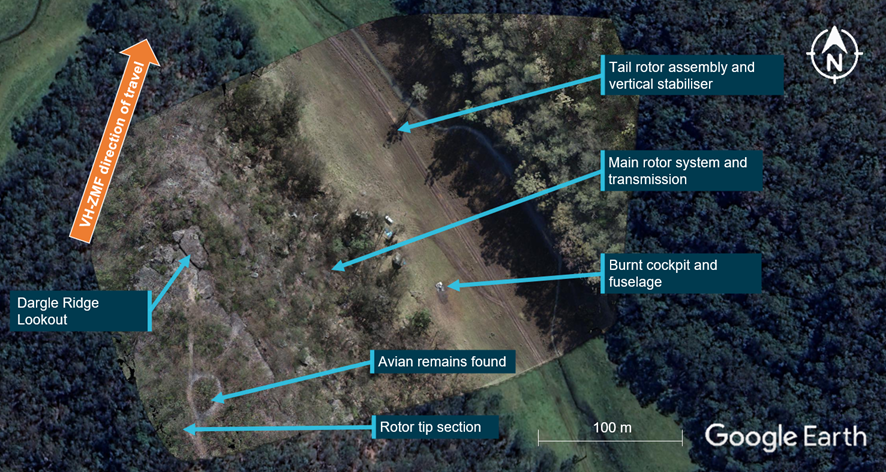
The Australian Transport Safety Bureau (ATSB) held a media briefing near Dorrigo, NSW on the ATSB's investigation into the Bell 206 helicopter accident on 9 December 2009.

Senior Investigator Chuck Davies told the media that the investigation would seek to identify what factors may have contributed to the accident. The ATSB is also investigating two other incidents involving helicopter operations in support of firefighting efforts, that occurred near Bathurst and Tamworth this week.

The ATSB has dispatched a team of five investigators to Dorrigo. The team arrived on site early on 10 December and is expected to be on site for 3 to 5 days. The ATSB is working closely with the NSW police who are also on site.

During their time on site, the team will; examine the site including the available physical evidence, speak to any witnesses, and visit the aircraft operator to recover relevant operational and maintenance documentation. A number of items and components from the helicopter may be recovered from the site for later technical examination.

On return from the accident site, the investigation will continue gathering factual information including the weather at the time of the accident, any recorded data, and additional witness and other interviews. The investigation will then analyse the data before making any findings and, where necessary, will encourage safety action in order to prevent a recurrence of similar accidents.

It is too early to speculate about contributory and other factors relevant to this accident. Accident investigations can be complex and fatal accidents such as occurred at Dorrigo yesterday can take many months to finalise and to release the final investigation report to the public. However, a Preliminary Factual Report will be released in about 30 days.

Any witnesses to the accident are requested to contact the ATSB at tel: 1800 011 034 or 1800 020 616, or via email

Media briefing – fatal accident, WA

On Thursday 19 November 2009, the Australian Transport Safety Bureau (ATSB) will be holding a media conference into the fatal accident involving VH-ZRR, a Cessna A188B, near Kojonup, WA on 17 Nov 2009.

The Investigator in Charge, Mr John Robins, will provide factual information in relation to the accident. Mr Robins will not be providing any analysis or possible contributing factors.

Where: Kojonup Apex Park, Corner Broomehill Road and Albany Highway, Kojonup, WA

Time: 11.00am (local time)

No further media briefings will be conducted by the investigation team. After this briefing, all media enquiries must be directed to the media contact listed below.

Media briefing: Helicopter Accident, Dorrigo NSW

Media Briefing at 2pm, 10 December 2009 at the Skywalk, Dorrigo National Park, Dorrigo NSW

Helicopter Accident involving a Bell 206 Helicopter (VH-MJO), near Dorrigo NSW on 9 December 2009.

The Australian Transport Safety Bureau (ATSB) is investigating the accident involving a Bell 206 Helicopter (VH-MJO), which occurred near Dorrigo NSW, on 9 December 2009.

ATSB Senior Investigator, Mr Chuck Davies, will discuss factual information known to the ATSB at this time and will outline the investigation process at a media conference today, Thursday, 10 December 2009.

Where: The Skywalk facility, Dorrigo National Park., near Dorrigo

Time: 2.00 pm (local time)

No further media briefings will be conducted by the investigation team. After this briefing, all media enquiries must be directed to the media contact listed below.

2009/14: Second Interim Factual Report into the Qantas Airbus A330-303 in-flight upset, 154 km west of Learmonth WA, on 7 October 2008

On Wednesday, 18 November 2009, the Australian Transport Safety Bureau (ATSB) will be holding a media conference to accompany the release of its second interim factual report into the in-flight upset involving Airbus A330-303 aircraft, registered VH-QPA that occurred 154 km west of Learmonth, WA on 7 October 2008.

Mr Martin Dolan, Chief Commissioner of the Bureau, and Mr Ian Sangston, Director of Aviation Safety Investigations will discuss the report, which builds upon the facts released in the previous interim factual report, and details the safety actions taken as a result of the accident. Mr Dolan and Mr Sangston will also be talking about the investigation activities conducted up to this point.

Where: 62 Northbourne Avenue, Canberra City ACT (ATSB Central Office)

Time: 10:30 am (local time)

No further media briefings will be conducted by the investigation team. After this briefing, all media enquiries must be directed to the media contact listed below.