Final ATSB report into the operational non-compliance at Perth Airport on 9 May 2008

The Australian Transport Safety Bureau (ATSB) has released its final investigation report into the serious incident at Perth Airport, WA on 9 May 2008, involving an approach and landing by a Boeing Company 737-800, registered PK-GEF, during a period of planned runway works.

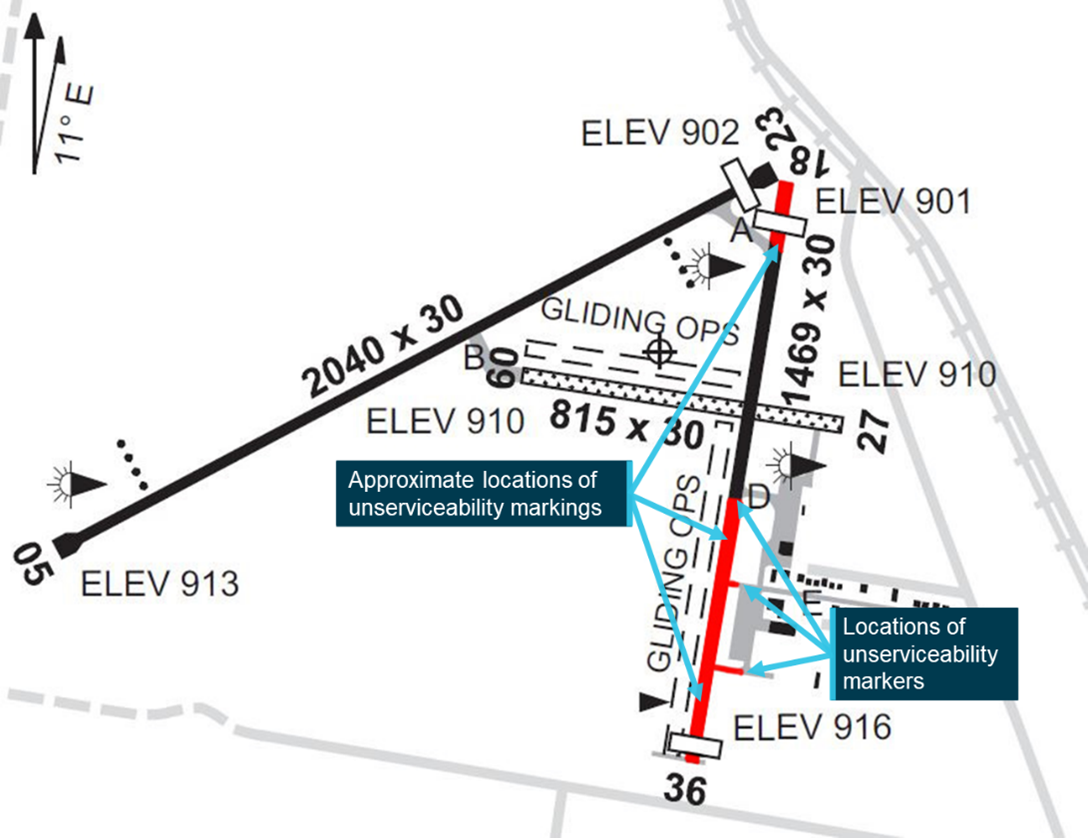
The ATSB report found that the permanent runway 21 threshold and touchdown markings were not required to be obscured and were clearly visible to the flight crew. Those markings continued to provide approach and landing cues to the normal touchdown zone, which was located within the runway works area. The use of 6 m closed runway markings, in lieu of 36 m markings as recommended by the International Civil Aviation Organization (ICAO), increased the risk of a flight crew conducting a visual approach to the still-visible permanent threshold/touchdown area.

The report outlines a number of differences between the closed runway markings as recommended by ICAO Annex 14 Aerodromes, and the Civil Aviation Safety Authority (CASA) Manual of Standards (MOS) Part 139 Aerodromes.

A number of safety issues were identified as a result of the ATSB investigation. Safety action undertaken by the aircraft operator, the airport operator, and CASA in response to those safety issues should, when completed, reduce the risk of a similar event in the future.

Copies of the report can be downloaded from the ATSB's internet site at www.atsb.gov.au or obtained from the ATSB by telephoning 1800 020 616.

The Ghan level crossing collision: final ATSB report

The ATSB investigation of a collision between The Ghan passenger train and a double road-train has found that the accident occurred because the road-train was driven through a 'Stop' sign at a level crossing at an estimated speed of 50 km/h, linked to local truck driver practice and medical issues.

The final report by the Australian Transport Safety Bureau also found that The Ghan hit the road-train just behind its prime mover at a speed of 101 km/h on the afternoon of 12 December 2006 at the Fountain Head Road level crossing at Ban Ban Springs, about 170 kilometres south-east of Darwin.

Both of the train's locomotives, a wagon and nine passenger carriages subsequently derailed. Many of the 64 passengers and 17 staff on board sustained minor injuries with the driver of the road-train and one passenger hospitalised for several days following the collision.

The road-train driver had been carrying road-base material across the Fountain Head Road level crossing about thirty times each day for the previous month and had apparently only seen about four trains in that time. It was the driver's practice, and that of other drivers engaged in the same work, to slow rather than stop at the level crossing.

The train driver had appropriately sounded the locomotive horn three times before the collision and the headlight was illuminated and on high beam.

The investigation found that road-train driver had severe bilateral hearing loss, to the extent that he would not have been eligible to hold his unrestricted heavy vehicle licence, and that this hearing loss would have compromised his ability to hear the locomotive horn in the time leading to the collision.

The ATSB also noted concerns regarding the adequacy of sighting distances at level crossings for vehicles up to 53.5 metres long using such crossings.

The ATSB investigation report acknowledges the initial emergency response measures taken by GBS Gold Pty Ltd and the work being undertaken by the Australian Transport Council, the Northern Territory Government and the Australasian Railway Association in regard to initiatives intended to raise public awareness of the safety risks associated with level crossings.

The ATSB report recommends that relevant authorities consider the issues identified by the investigation in relation to the medical examination of heavy vehicle drivers, sighting distance requirements at level crossings used by high combined gross mass vehicles, driver compliance at railway level crossings, and accident response in light of the remoteness of much of the Northern Territory rail corridor.


ATSB Preliminary factual report on Boeing 747 electrical system event

An ATSB preliminary factual report into an electrical system failure involving a Boeing 747-400 near Bangkok on 7 January 2008 indicates that the event was less serious than first reported.

The aircraft, with 346 passengers and 19 crew on board, was being operated on a scheduled service between London and Bangkok. When the aircraft was at about 21,000 feet on descent to Bangkok Airport, the customer service manager notified the flight crew that a substantial water leak had occurred in the forward galley. Over the following 12 to 13 minutes, cockpit indications showed a number of electrical bus and system failures that indicated alternating current (AC) buses, 1, 2 and 3 were not powered. The status of AC bus 4 appeared normal and some systems were powered by batteries.

The captains primary flight display, navigation display, and some other instruments were available in a degraded mode and the crew conducted an uneventful approach and landing in day visual meteorological conditions.

Post-flight inspections identified a minor water leak in the forward galley sink drain and that an ice drawer drain was blocked. That inspection also found cracks in a fibreglass drip shield located above an electrical component rack in the aircraft's main equipment centre, as well as evidence of dark liquid stains on the shield. Further inspection found that a ribbon heater on a drain line leading to the forward grey water drain mast was inoperative, and that a length of hose on the drain line at that location was split.

On 11 January 2008, the aircraft manufacturer issued a Multi Operator Message to operators of 747-400 series aircraft, containing advice and instructions for the inspection and repair of main equipment centre drip shields. The manufacturer is preparing an inspection and repair alert service bulletin on the same subject that is scheduled for release by May 2008.

In addition to conducting fleet-wide inspections and, where necessary, repairs to drip shields and drainage systems, the aircraft operator issued a Cabin Standing Order and a Flight Standing Order requiring cabin and flight crews to identify, treat and report abnormal water accumulation in galley areas.

The event involves complex systems and a wide-ranging investigation is continuing with the cooperation and assistance of local and international agencies, the aircraft manufacturer and the operator. Given the complex nature of the investigation, the ATSB is not able to comment further to the text contained in the preliminary report. Provision of analysis and findings in relation to the circumstances of this incident (which may be further revised) will be provided in the final report. In addition, the ATSB will immediately communicate any need for urgent safety action should that become evident during the investigation.

Copies of the report can be downloaded from the ATSBs internet site at www.atsb.gov.au

Seaman dies after a fall from a ship's cargo hold ladder

The ATSB has found that a seaman may have been fatigued when he fell from a bulk carriers cargo hold ladder at the end the working day on 8 August 2007.

The Australian Transport Safety Bureau investigation also found that he may have been distracted by the equipment he was carrying and as a result of a mixture of perspiration and hydrochloric acid that would have caused irritation to his skin and eyes.

On 8 August 2007, Oceanic Angel was about three degrees south of the equator and en-route to Dampier, Australia.

After lunch, the crew were preparing the cargo holds for an upcoming salt cargo and, at about 1515, two seamen started work in number three hold. They began by spraying the dirty areas of the hold with hydrochloric acid, starting at the aft end and moving forward along the port side.

At about 1630, they stopped work for the day. One of the seamen made his way to the cargo holds aft ladder and started climbing out of the hold. The other seaman went to the forward ladder to do likewise. When the seaman on the aft ladder was almost at the ladders top platform, about 11.7 m above the tank top, he heard a loud 'thump'. He turned around and saw his colleague lying on the tank top.

The crew mounted an emergency response but the seaman had died as a result of the fall.

At 2300 on 17 August, Oceanic Angel berthed in Dampier. The local police attended the ship and the deceased seaman was taken ashore.

The ATSB investigation found that the ship's safety management system was not effective in ensuring that the crew carried out a risk analysis for the task of cleaning the cargo holds with hydrochloric acid. It also found that the crew were not aware of the safety information provided by material safety data sheets.

The ATSB has issued two safety advisory notices with the aim of preventing similar occurrences from occurring in the future.

Copies of the report can be downloaded from the ATSB website

Coupling failure leads to derailment according to ATSB report

The ATSB has determined that the derailment of a freight train on the Defined Interstate Rail Network near Seymour was due to a wagon coupler that fell onto the track and became caught under a trailing wagon.

The Australian Transport Safety Bureau has today released its final report on the investigation of the derailment that occurred near Seymour in Victoria on 12 September 2006.

The train derailed at 0520 while travelling from Griffith NSW to Melbourne and was loaded with food products for export.

The coupler, connecting the seventh and eighth wagons in the train, became dislodged when the draft key holding the coupler in position, slid out following the failure of a locking pin. There have been a number of similar failures involving this type of wagon coupler in the past.

The wagon owner has taken safety action to prevent recurrence of this failure by commencing a rectification programme to fit modified draft key components that meet Association of American Railroad standards.

The ATSB has recommended that all wagons fitted with the modified components be regularly monitored to ensure that the modification is effective.

Copies of the report can be downloaded from the ATSB's internet site

Broken rail probable cause for derailment

The ATSB has found that a broken rail emanating from rail defect was the most probable cause of the derailment of a freight train in South Australia.

The Australian Transport Safety Bureau has today released its final report into the investigation of a derailment on 10 June 2007 near Bates in SA in which 11 wagons in the middle of the train derailed and 4 overturned and were extensively damaged.

The investigation established that the derailment probably resulted from an undetected flaw in the rail which caused a section to break away under the train. While track at the derailment site had been ultrasonically tested for cracks in the past, the frequency of these inspections did not adequately take into consideration issues such as the rail quality, age, ambient temperature profile and train impact loadings.

In the interests of enhancing future rail safety, the Australian Rail Track Corporation has been proactive in adopting a number of measures to address the safety issues identified by the ATSB. These include an increase in rail testing frequency and a review of their Code of Practice to enhance engineering maintenance/testing procedures in relation to ultrasonic rail flaw detection.

Copies of the report can be downloaded from the ATSB's internet site at www.atsb.gov.au.

Thunderstorm possible cause for train derailment

The ATSB has found that strong winds during a thunderstorm could have caused a train derailment in central South Australia.

The Australian Transport Safety Bureau has today released its final report into the investigation of a freight train derailment near Tarcoola in South Australia on 1 November 2006.

The FreightLink train, travelling from Darwin to Adelaide, derailed during a thunderstorm about five kilometres east of Tarcoola. Freight wagons in the middle of the train appeared to have 'tipped over' while the train was travelling at about 67km/h in a severe thunderstorm and there was no evidence of any track or train defect that could have caused the derailment.

The investigation established that it was possible that the combined effects of strong winds at the time and the wagons' natural oscillations while travelling could have been sufficient to initiate overturning of the wagons lightly loaded with double stacked freight containers.

In the interests of enhancing future rail safety, FreightLink has been proactive in adopting a number of measures to address the safety issues identified by the ATSB and the ATSB has recommended that further action be considered.

Copies of the report can be downloaded from the ATSB's internet site at www.atsb.gov.au or obtained from the ATSB by telephoning 1800 020 616.

Train communication issue led to collision

The ATSB has found that a collision between a GrainCorp freight train and overturned truck occurred because train control could not contact the approaching train in the ten minutes or so before the collision.

The Australian Transport Safety Bureau has today released its final report into the investigation of a collision that occurred at the Olympic Highway level crossing at Illabo in New South Wales on 2 November 2006.

At the time of the collision it was dark and raining. The semi-trailer overturned while negotiating the curve prior to the level crossing. The truck driver called '000' and the message was relayed through to the Junee train control centre.

Unfortunately, the emergency message from train control was routed through to the wrong locomotive on the train. Had the message been received by the train crew the collision would probably not have occurred.

The investigation established that the train drivers and train controllers had failed to ensure that the primary radio communication system in the leading locomotive was switched on and registered on the CountryNet train communications system. The investigation also found that the train company's policies and procedures, train control procedures and network rules failed to ensure that the train's communication system was operative at the time.

In the interest of enhancing future road/rail safety, the ATSB has issued a number of recommendations that address various safety issues including the need to ensure that the primary radio communication system, CountryNet, is operational at all times in the leading locomotive of all trains in New South Wales.

Fatal Aircraft Accident - in the ranges north of Gascoyne Junction (east of Carnarvon WA)

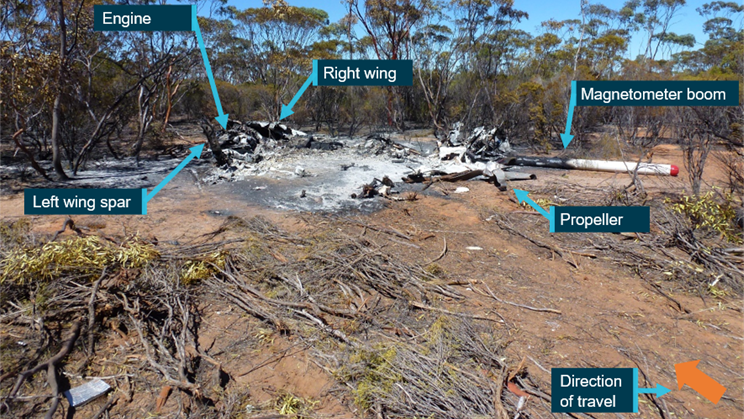
The Australian Transport Safety Bureau (ATSB) is conducting an investigation into the circumstances surrounding the reported mid-air collision between a Robinson helicopter and a Piper Cub that occurred during the late afternoon on 13 February 2008, in the ranges north of Gascoyne Junction.

A team of four (4) Transport Safety Investigators is expected to be in Carnarvon later today to commence the on-site phase of the investigation.

Any person/witness with information about the accident is encouraged to contact the ATSB on 1800 020 616.

Further advice will be provided if the ATSB decides to conduct a media conference at the accident site.

The ATSB expects to have a preliminary factual report available for public release in approximately thirty (30) days from the date of the accident.

ATSB Safety Bulletin on Rail Level Crossing Accidents

The ATSB has released a safety bulletin to raise public awareness of the factors which have contributed to a spate of recent tragic rail level crossing accidents.

Since April 2006 the Australian Transport Safety Bureau has investigated 12 significant level crossing accidents of which nine have involved heavy road vehicles.

The terrible tragedy of the Kerang accident in Victoria in June last year is an example of such an accident where 11 people lost their lives and 20 were injured.

The recent investigations conducted by the ATSB have found in almost every case that the motorist failed to stop and give-way to the train at the level crossing and that there was little the train driver could do to prevent or minimise the collision.

Underlying factors such as complacency, fatigue, expectation that no train will be encountered at the crossing, sighting problems, and distraction have all been found to have influenced the motorist's failure to stop.

The ATSB safety bulletin has been compiled with the assistance of the Australian Trucking Association and the Australasian Railway Association and will complement the work already being undertaken by these organisations and by the various state authorities to raise public awareness of these accidents to seek to save lives in the future.