Oxygen bottle failure and depressurisation accident still under rigorous scrutiny

The Australian Transport Safety Bureau is continuing its rigorous and comprehensive examination of the circumstances surrounding the failure of an oxygen cylinder that led to the depressurisation of a Boeing 747 on a flight from Hong Kong to Melbourne in July last year.

The ATSB's second interim factual report on this accident, released today, indicates that to date there is no evidence of systemic safety problems with oxygen bottles of the type involved in the accident. Various tests have not been able to replicate the cylinder failure that initiated the accident.

The report provides details of the wide-ranging and ongoing technical examination of five oxygen cylinders obtained by the ATSB from the same manufacturing lot as the failed cylinder. The original cylinder was lost in the South China Sea in the course of the accident.

Analysis of the factual information and findings as to the factors that contributed to the accident remain the subject of ongoing work. Details will be included in the final report of the investigation.

To date, all pressure tests of the cylinders met or exceeded the relevant safety specifications, with recorded rupture pressures being over twice the maximum working pressure of the cylinders.

Other work is being carried out to determine the minimum size of mechanical flaws that could result in cylinder failure in service. The ongoing ATSB investigation will supplement that work with a program of rupture tests on cylinders that have had various sized 'artificial' flaws machined into the shell.

The ATSB expects to conclude the data gathering and analysis aspects of the investigation in early 2010, with a final report to follow.

Collision between Silver Yang and Ella’s Pink Lady off Point Lookout, Queensland – 9 September 2009

The Australian Transport Safety Bureau (ATSB) has released its preliminary investigation report into the collision between the bulk carrier Silver Yang and the yacht, Ella's Pink Lady.

The report contains factual information gathered to date, as part of the investigation process.

ATSB investigators last met with the skipper of Ella's Pink Lady on 9 October 2009, prior to her departure on her round-the-world voyage.

The ATSB investigation is ongoing and will focus on several specific areas including:

  • the electronic detectability of the yacht
  • the lookout being kept on board both vessels
  • adherence to the International Regulations for the Prevention of Collisions at Sea (COLREGS)
  • collision risk assessment
  • actions taken following the collision.

Since Silver Yang was enroute to China, ATSB investigators were unable to attend the vessel. However, the Hong Kong Marine Department has assisted the investigation by collecting and providing a range of material from the ship, including statements from the master and involved crew.

The final report is unlikely to be available for several months. Should any critical safety issues emerge that require urgent attention, the ATSB will immediately bring such issues to the attention of the relevant parties who are best placed to take prompt action to address those issues.

Once completed, the investigation report will be published on the ATSB website.

Media conference talking notes [PDF 80 kbPDF]

Audio of media conference [MP3 audio 1500 kb]

2009/13: Pilots reminded to be aware when operating in areas of known or forecast turbulence

The investigation of an in-flight breakup that occurred near Clombinane, Victoria on 31 July 2007 has found that it most likely resulted from an encounter with localised and intense turbulence, from an elevator control input, or from a combination of both. The accident resulted in the death of the pilot and passenger on board the Rockwell International Aero Commander 500-S aircraft on a business flight from Essendon Airport to Shepparton.

As a result of its investigation, the Australian Transport Safety Bureau reissued the publication Mountain Wave Turbulence (available for download at www.atsb.gov.au), distributed the investigation report to all Australian operators of the Aero Commander aircraft, and issued a safety advisory notice to aircraft operators and pilots. That notice encouraged aircraft operators to review their procedures to ensure an appropriate awareness amongst operating personnel of the implications for aircraft performance of the combination of aircraft weights and speed, and of the ambient conditions; in particular, when flying in, or near areas of forecast severe turbulence.

The investigation found that some pilots operating the aircraft type were generally unaware of the applicability of the aircraft's manoeuvring speed during flight through turbulence, despite the inclusion of relevant advisory information in the operator's documentation. There was also a concern that pilots generally may not have been exercising as much caution in forecast severe turbulence conditions as they would for thunderstorms, even though the intensity of the turbulence could be similar.

At the time of the in-flight breakup, special weather reports for severe turbulence and severe mountain waves were current for the area. Wind speeds on the ground were reported to be 50 kts and calculations using the recorded radar data and forecast wind showed that the aircraft had been in cruise flight at 7,000 ft above mean sea level at speeds probably greater than its published manoeuvring speed, prior to it disappearing from radar. The wreckage and its distribution pattern were consistent with an in-flight breakup during cruise flight.

There was no evidence of any pre-existing defect, corrosion or fatigue found in the aircraft structure. An examination of the wreckage and fracture surfaces showed that the aircraft structure failed under symmetrical negative overstress.

A full report is available from the ATSB website Aviation Occurrence AO-2007-029

Collision between a Hong Kong registered bulk carrier, Silver Yang and an Australian yacht, Pink Lady

The Australian Transport Safety Bureau (ATSB) is investigating the collision between the bulk carrier Silver Yang and the yacht, Pink Lady.

Mr Mike Squires, Acting Director of Surface Safety Investigations, confirmed the known details of the incident and outlined the investigation process at a media briefing held at Parliament House today, Wednesday, 9 September at 2.30pm.

Two ATSB investigators departed for Queensland this morning to commence the investigation. Brisbane Water Police are also assisting.

The Pink Lady was expected to berth at Southport sometime this afternoon. The yacht was dismasted in the collision.

According to Mr Squires, the ATSB was advised of the incident by AUSSAR at about 3.00am this morning. The collision between the yacht, Pink Lady and a bulk carrier Silver Yang is reported to have occurred about 15 miles east of Point Lookout, North Stradbroke Island, Queensland.

The ship Silver Yang is bound for China to discharge its cargo. The flag state, Hong Kong, are assisting with the ship side of the investigation.

There is no report of injuries.

There was reported radio contact between the ship and yacht after the incident but details of the communication are not known.

It is not known how long an investigation such as this will take. The ATSB will release a Preliminary Factual report within about 30 days. Should any critical safety issues emerge that require urgent attention, the ATSB will immediately bring such issues to the attention of the relevant authorities who are best placed to take prompt action to address those issues.

Collision between a Hong Kong registered bulk carrier, Silver Yang and an Australian yacht, Ella’s Pink Lady

On 20 October 2009, the Australian Transport Safety Bureau (ATSB) will be holding a media conference to accompany the release of its Transport Safety Investigation Preliminary Report, MO-2009-008, into the collision between Silver Yang and Ella's Pink Lady. The incident occurred off Point Lookout, Queensland, on 9 September 2009.

Mr Peter Foley, Director, Surface Safety Investigations will discuss the preliminary report, which is a statement of facts known at this time, and will be talking about the investigation activities conducted up to this point.

The media conference is being held at the ATSB Canberra Office, on Tuesday, 20 October 2009.

Where: 62 Northbourne Avenue, Canberra City ACT

Time: 10:30 am (local time)

All future media enquiries must be directed to the media contact listed below.

Media Conference Alert: Collision between a Hong Kong registered bulk carrier, Silver Yang and an Australian yacht, Pink Lady

The Australian Transport Safety Bureau (ATSB) is investigating and two investigators departed for Queensland this morning to commence the investigation. The yacht is expected to berth at Southport later this afternoon.

Mr Mike Squires, Acting Director of Surface Safety Investigations will discuss factual information known to the ATSB at this time and will outline the investigation process at a media conference today, Wednesday, 9 September 2009.

Where: 62 Northbourne Avenue, Canberra City ACT (ATSB Central Office)

Time: 2.30 pm (local time)

No further media briefings will be conducted by the investigation team. After this briefing, all media enquiries must be directed to the media contact listed below.

Collision with terrain – near Kokoda, PNG – 11 August 2009 – P2-MCB, De Havilland DH-6 Twin Otter

The Papua New Guinea Accident Investigation Commission (AIC) has released its Preliminary Factual Report into the collision with terrain that occurred near Kokoda, Papua New Guinea on 11 August 2009, involving a De Havilland DH-6 Twin Otter aircraft, registration P2-MCB. The AIC is investigating this accident, together with support from the Papua New Guinea Department of Transport, in accordance with its obligations under Annex 13 to the Convention on International Civil Aviation. The AIC requested the Australian Transport Safety Bureau (ATSB) to assist their investigation by providing investigator support, information and technical advice and facilities support.

In accordance with paragraph 5.23 of Annex 13, the ATSB appointed an Accredited Representative and a number of advisors to the Accredited Representative (ATSB investigators) to assist the AIC during the on-site phase, in the technical examination of a number of recovered aircraft items and components, and as requested by the AIC during the remainder of the investigation.

The ATSB is reproducing the AIC report titled Aircraft accident investigation interim report, Collision with terrain, P2-MCB, De Havilland DHC 6-300, 6 NM SSE Kokoda, 11 August 2009 on its web site with the permission, and on behalf of the Accident Investigation Commission.

Any media enquiries in respect of the AIC report and ongoing investigation should be directed to:

Mr William Vate
Telephone: +675 325 7500, ext 506
Facsimile: +675 323 3339

All other enquiries in regard to the ongoing investigation should be directed to:

Papua New Guinea Department of Transport
Accident Investigation Commission
C/- Po Box 1489,
Port Moresby
National Capital District
Papua New Guinea

Telephone: +675 325 7500, ext 508
Facsimile: +675 323 6198
E-mail: airtransport@datec.net.pg

Derailment of Train 5MB7 at Benalla

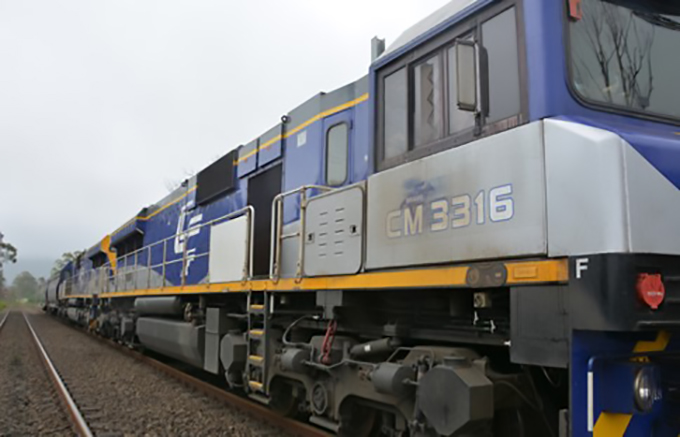
The ATSB has found that the major derailment of an Interail freight train at Benalla in Victoria on 2 June 2006 occurred because the train driver did not correctly interpret and respond to a signal.

The Australian Transport Safety Bureau investigated the accident which resulted in of the derailment of two locomotives which sustained heavy damage along with 19 wagons and two track machines which were located in an adjacent siding. A nearby Victorian Railway Institute Hall also sustained heavy structural damage as a result of the derailment.

There were no serious injuries to the train crew or other people.

The investigation concluded that the driver of the train failed to correctly interpret and then respond to a signal and that the co-driver was ineffective in preventing the derailment as he was pre-occupied and not fully alert.

In the interest of enhancing future rail safety the ATSB has made a series of recommendations which include a review of crew coordination, an examination of mentoring responsibilities, and a review of processes for the re-certification of drivers.

Cannabis and mobile telephone probably contributed to fatal level crossing collision

The ATSB has found that the driver of a motor vehicle fatally injured in a collision with a train on 5 June 2006, was under the influence of cannabis and probably distracted by his mobile telephone at about the time of the accident.

The Australian Transport Safety Bureau has released its report into the accident which occurred at a level crossing on Thurgoona Road on the northern outskirts of Albury at approximately 1:22 pm on 5 June 2006. The 1986 Holden Commodore drove at a steady speed of less than 60 km/h into the path of a Sydney bound CountryLink XPT passenger train which was travelling at between 120 and 130 km/h at the point of collision.

The Commodore was destroyed by the collision and the 19 year old male driver was thrown from the car and fatally injured. There were no physical injuries to witnesses, crew or passengers of the train.

The investigation found that the level crossings flashing lights and warning bells were operating at the time of the collision and that the train driver had sounded the trains horn when he realised the car was not going to stop at the lights.

Toxicology results from the fatally injured driver were positive for cannabis. The concentration of the drug in the drivers blood exceeded levels where studies have indicated performance impairment becomes truly prominent across all drivingrelated performance measures.

The investigation also found that the motor vehicle drivers mobile telephone probably rang at or around the time that the car was approaching Thurgoona Road level crossing. While the driver did not answer the call, the ringing telephone probably distracted him from the driving task.

The ATSB concluded it was likely that combined, these two factors contributed to the motor vehicle driver not responding appropriately to the level crossing flashing lights and bell, and subsequently driving into the path of the train.

The ATSB has recommended raising public awareness of the risks associated with cannabis use and mobile telephones with respect to driving performance. The investigation also noted that at the completion of the Albury Wodonga Hume Freeway Project (scheduled for mid 2007), the road bridge would result in the closure of the level crossing, achieve grade separation and eliminate the risk of future level crossing accidents at Thurgoona Road.

Track misalignment causes derailment

An ATSB investigation has found that a number of factors combined to cause the derailment of a freight train at Yerong Creek in southern NSW on 4 January 2006, any one of which may not have resulted in a derailment in its own right.

The Australian Transport Safety Bureau investigation into the derailment concluded that a track misalignment occurred as a result of localised stresses in the rail that had built up until the track moved as the train passed over it.

The track at this location, the main rail corridor between Melbourne and Sydney, has rails that have been welded into one continuous length, in accordance with modern international practice.

The investigation found that the track had not reacted evenly to the forces upon it, and that this had led to a fault in the track, in the form of excessive localised stress in the area of the misalignment.

The investigation found that such localised stresses are very rare, and difficult to detect, even with the best modern technology.

The ATSB acknowledges that both the ARTC and the NSW rail regulator have procedures in place to reduce as much as possible the risk of track stresses building up to the point of track instability.

The ATSB has issued a safety advisory notice to all track maintainers in Australia to highlight this limitation of present technology when managing continuous welded rail.

Copies of the report can be downloaded from the ATSB's internet site.