

Source: Operator
What happened
On 30 January 2026 at about 1205 local time, the pilot and sole occupant of a Cessna U206F departed from an Emu Point aircraft landing area, Northern Territory, en route to Darwin Airport.
Prior to departure the pilot conducted a pre-flight inspection and reported that the aircraft departed with 190 L of fuel. No abnormalities were observed during the take-off or the initial climb. The aircraft levelled off at about 2,000 ft above mean sea level (AMSL) and the pilot conducted the cruise checklist, with no issues identified. Shortly after this, the pilot observed an engine RPM overspeed. The pilot reduced the propellor pitch lever, but this had no effect, so they reduced the throttle to maintain an appropriate RPM.
Shortly after this, the engine began running rough, accompanied by increasing vibration and a reduction in engine power. Almost immediately, smoke began entering the cockpit via the cabin air vents, which the pilot closed. The engine performance continued to degrade to the extent that the aircraft was unable to maintain straight and level flight. The pilot observed smoke and oil spraying onto the airframe and windscreen, reducing forward visibility. They reported that the engine vibrations increased violently, to the point that the entire airframe was shaking.
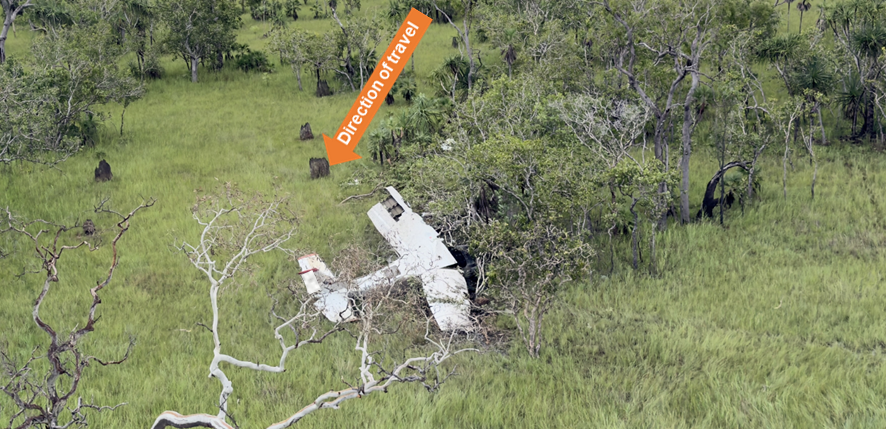
The pilot selected an area of open grassland interspersed with trees and termite mounds beyond a heavily wooded area and prepared to conduct a forced landing.
Source: Operator, annotated by the ATSB
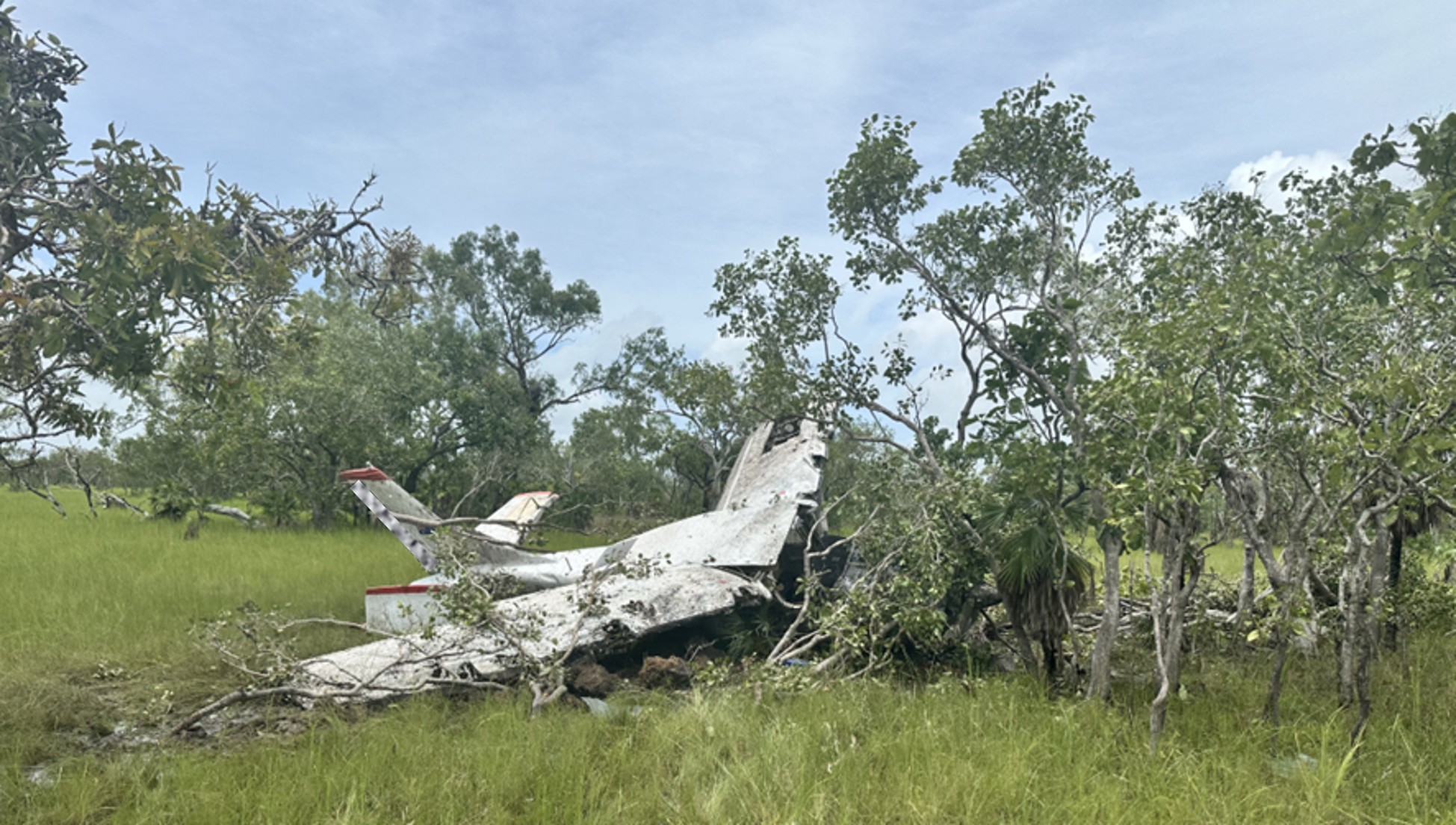
Prior to landing, the pilot conducted final checks, unlatched their door and maintained what power was available to assist in clearing the tree line. However, prior to touchdown, the aircraft collided with several trees before rotating left, impacting the ground heavily and coming to a stop (Figure 1).
The pilot reported a brief period of unconsciousness and after ‘coming to’, turned off the ignition and checked that the ELT[1] had activated. The pilot exited through the shattered cockpit windscreen and moved to a safe distance from the wreckage, returning briefly to retrieve a handheld VHF radio and a personal mobile phone. The pilot’s initial attempts to coordinate emergency assistance were unsuccessful. Shortly after, they established radio contact with another aircraft that relayed a MAYDAY call. A rescue aircraft with an emergency response team arrived about one hour later.
The pilot was medically assessed and later admitted to hospital with minor abrasions and a broken collarbone requiring surgery.
The aircraft was significantly damaged and, at the time of publishing, the remote location, terrain and weather conditions have prevented aircraft recovery. Consequently, the likely cause of the reported engine failure remains undetermined.
Safety message
In-flight engine failures and partial power loss in single-engine aircraft require pilots to exercise effective and timely decision-making to reduce the severity of injuries and damage. These events often result in the pilot experiencing high workload and time pressure, where preparedness is critical. Deciding on responses to a partial engine power loss before the flight will reduce your workload during the event and assist you in taking some form of considered action.
When experiencing a rough running engine, pilots should focus on flying the aircraft and continually assess landing options. The ‘aviate, navigate and communicate’ framework establishes a clear hierarchy of priorities, particularly during emergencies. Acting in the appropriate order of priority improves situation awareness and supports coordinated responses in a dynamic environment.
Guidance from ATSB publication
About this report
Decisions regarding whether to conduct an investigation, and the scope of an investigation, are based on many factors, including the level of safety benefit likely to be obtained from an investigation. For this occurrence, no investigation has been conducted and the ATSB did not verify the accuracy of the information. A brief description has been written using information supplied in the notification and any follow-up information in order to produce a short summary report, and allow for greater industry awareness of potential safety issues and possible safety actions.
[1] Electronic Locator Transmitter (ELT): an aviation safety device installed in aircraft that automatically or manually transmits a distress signal via satellites.
Occurrence summary
| Mode of transport | Aviation |
|---|---|
| Occurrence ID | AB-2026-010 |
| Occurrence date | 30/01/2026 |
| Location | 102 km east-north-east of Port Keats Aerodrome |
| State | Northern Territory |
| Occurrence class | Accident |
| Aviation occurrence category | Collision with terrain, Engine failure or malfunction, Forced/precautionary landing, Smoke |
| Highest injury level | Serious |
| Brief release date | 20/02/2026 |
Aircraft details
| Manufacturer | Cessna Aircraft Company |
|---|---|
| Model | U206F |
| Sector | Piston |
| Operation type | Part 135 Air transport operations - smaller aeroplanes |
| Departure point | Emu Point Aircraft Landing Area, Northern Territory |
| Destination | Darwin Airport, Northern Territory |
| Damage | Destroyed |