

Annual Report 2024–25
The ATSB Annual Report 2024–25 outlines performance against the outcome and program structure in the Department of Infrastructure, Transport, Regional Development, Communications, Sport and the Arts' Portfolio Budget Statements 2024–25(Opens in a new tab/window).
Chief Commissioner's Review
On behalf of the Australian Transport Safety Bureau (ATSB), I am pleased to present the ATSB Annual Report 2024–25. This was a significant year as we celebrated the 25th anniversary of our establishment on 1 July 1999. As we have for each of those 25 years, in 2024–25 we continued delivering on our purpose of improving transport safety for all Australians.
During the year, we focused on the direction contained in the Minister’s Statement of Expectations 2023 to 2025, and the priorities as detailed in the ATSB Strategic Plan. Through our strategic plan we aim to:
» influence positive transport safety outcomes through independently identifying and sharing safety concerns and fostering safety awareness, knowledge and action
» further position the ATSB as Australia’s national transport safety investigator, maximising safety outcomes across transport sectors through growth and innovation
» be an enduring and adaptable organisation that delivers on its mission across changing environments by investing in its people, systems and partnerships.
Some of the actions taken during the year demonstrating our progress in line with these goals included:
» increasing engagement and awareness through investment in stakeholder relationships and the promotion of safety messages through videos and animations
» prioritising the release of timely information from our investigations through prioritising the publication of preliminary and interim reports
» continuing to strengthen our partnership with RMIT University to provide a centre‑of‑excellence for transport safety investigation with the roll-out of the Graduate Diploma in Transport Safety Investigation postgraduate qualification
» strengthening our relationships with our counterparts internationally to improve accident investigation capability and compliance with international protocols and obligations.
In 2024–25, the ATSB published 142 safety-related products, including 67 final investigation reports, 10 preliminary and interim reports, 46 occurrence briefs, 14 safety promotion videos, and 5 safety advisory notices covering the aviation, marine and rail modes of transport.
Significant investigations completed during the year included:
» Gold Coast – Aviation tourism. In April 2025, we released the final report into the midair collision between 2 Eurocopter EC130 helicopters conducting scenic flights on the Gold Coast in early January 2023 (AO-2023-001). The investigation made 28 findings, identified 12 safety issues, and resulted in the release of 2 safety advisory notices. The investigation stressed a number of key safety messages including the potential for unintended consequences when managing changes in aviation operations, and the correct fitment and wearing of seatbelts in helicopter tourism operations.
» Cloncurry – Aviation fire spotting. In June 2025, the final report was released into the pilot incapacitation, loss of control and collision with terrain of a Gulfstream fire surveillance aircraft, south-east of Cloncurry, Queensland, on 4 November 2023 (AO‑2023‑053). The report, supported by a safety promotion video, underscored the dangers of operational practices which circumvent critical safety defences, and the insidious and deadly potential of altitude hypoxia.
» Sydney – Marine SOLAS. Our investigation of a near grounding of the bulk carrier Portland Bay off Royal National Park, south of Sydney in July 2022 (MO-2022-006), resulted in the ATSB issuing formal recommendations to one federal and 2 state government agencies and a salvage operator. The investigation, released in May 2025, identified 9 safety issues, and found a key factor in the prolonged exposure of the ship and its crew to stranding was the extensive delay in tasking the state’s nominated ocean-going emergency towage vessel.
» Brisbane – Rail passenger. In June 2025, we released a final report (RO-2023-004) into a signal passed at danger (SPAD) involving a Brisbane suburban passenger train that passed a stop signal after its driver was briefly impaired. The investigation highlighted the potential limitations of automatic warning system (AWS) alerts to prevent SPAD events. The investigation resulted in one safety recommendation being issued to the operator.
Our investigations over the year uncovered a total of 90 safety issues – factors that if unaddressed have the potential to adversely affect the safety of future operations. Of those safety issues identified, 57% were addressed through appropriate safety action, and a further 10% were partially addressed. Where identified safety issues were not effectively mitigated, the ATSB had cause to make 19 formal safety recommendations to the owners of those safety issues. We will continue to monitor the responses of the risk owners, with the objective of influencing them to take further effective safety action.
Central to our ability to achieve significant outcomes from our investigations are our dedicated staff. During the year we continued working to ensure everyone at the ATSB is supported and valued for their important roles in improving transport safety through implementing several development and wellbeing initiatives. These initiatives have also led to significant improvements in our Australian Public Service (APS) employee census results across all areas of employee engagement, communication and wellbeing.
Our staff are also supported by my fellow Commission members Mr Gary Prosser, Mr Peter Wilson and Ms Julie Bullas. I thank them for their expertise and advice in shaping ATSB investigation reports, which is central to delivering on our role as Australia’s national transport safety investigator.
As we transition into the 2025–26 period, we will continue to focus on the implementation of our strategic plan with a particular focus on improving the efficiency and effectiveness of our operations. We will continue to build our relationships with key stakeholders, including regulators, state governments, industry, and international counterparts. Similarly, we will focus on maintaining our positive APS employee census results by investing further in leadership development, data and innovation to ensure our staff have the appropriate tools and resources to do their jobs.
I look forward to continuing to work with government and all our stakeholders to ensure we are best positioned to effect safety improvements well into the future.
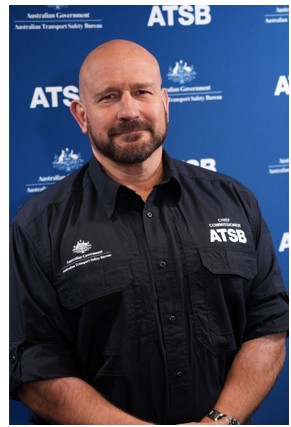
Angus Mitchell
Chief Commissioner and CEO
Publication details
| Publication number | Annual Report 2024–25 |
|---|---|
| Publication type | Annual Report |
| Publication mode | Corporate |
| Publication date | 04/02/2026 |
| Authors | ATSB |
| ISBN | 978-1-74251-003-3 |
| ISSN | 1838-2967 |