

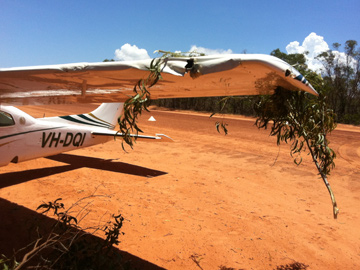
A runway accident involving a Cessna T210 reinforces the need for pilots to take extreme care when using unsealed runways.
The accident happened on 30 December 2012 when the Cessna, with a pilot and five passengers on board, was taking off from Cape Leveque airfield in WA. Cape Leveque is an unlicensed airfield managed by a tourist operator. It comprises a 972 m long and 40 m wide strip of compacted soil. There had been rain on the strip during the previous days and an early shower on the day of the accident. The airfield is monitored for serviceability and was deemed suitable on the day of the flight; however, after the accident an inspection of the airstrip revealed that there had been a substantial washout on the edge of the strip. The managers closed the airstrip for grading and repair.
Early in the take-off, the Cessna veered to the left. The pilot tried to straighten the aircraft with rudder and continue with the take-off, but ended up about a metre left of the runway centre line. About halfway down the runway the aircraft veered sharply to the left again. The pilot again tried to correct the veer, but the aircraft did not respond. He slowed the aircraft before the left wing clipped trees along the edge of the airstrip, making the aircraft swing almost 90 degrees before the right wing struck the ground. The nose-wheel collapsed in the soft sand on the edge of the airstrip resulting in the propeller striking the ground. One of the passengers sustained minor injuries and the aircraft was substantially damaged.
After the accident, the pilot of the second aircraft inspected the airstrip and reported substantial washout on the edge of the strip inside the cone markers.
As a result of this accident, the aircraft operator has reinforced the need for their pilots to:
- keep the nosewheel on the centreline of the runway at all times
- use the right rudder during take-off
- where possible avoid loose dirt and rough areas on the side of the runway
- close the throttle immediately, if the take-off needs to be rejected
- always use the checklist
- not to rush.
Read the final report: Runway excursion involving Cessna T210, VH DQI, at Cape Leveque, Western Australia, on 30 December 2012