Separation issue involving Bell 212, VH-KHO, and PZL M18B, VH-VWF, 58 km west of Mount Hotham Airport, Victoria, on 18 January 2026

Final report

Report release date: 05/05/2026

Investigation summary

What happened

On 18 January 2026, firefighting aircraft, ground personnel and assets were conducting firefighting operations at Wabonga – The Razor fireground, 58 km west of Mount Hotham, Victoria. 

There were 2 helicopters and 3 fixed wing aircraft conducting firebombing and 1 helicopter conducting rappelling operations, being coordinated by an air attack supervisor (AAS) in a Eurocopter AS350 helicopter, callsign Firebird 303. There were also 2 large air tankers (LATs) operating on the Razor ridge south of the fireground, being coordinated by a LAT AAS in a fixed wing aircraft, callsign Birddog 376. 

At about 1421, the pilot of a Bell 212 helicopter, callsign Helitak 368, reported broadcasting on the fire common traffic advisory frequency when about 5 NM (9 km) south of the fireground and inbound for rappelling operations. The pilot recalled being cleared to enter the fireground by the AAS. While the AAS could not recall issuing the clearance, they recalled checking there was no conflict with the large air tankers. As all the other aircraft were entering the fireground from the north, the AAS expected Helitak 368 to track east and remain clear of the fireground before holding and entering from the north, but did not communicate that to the pilot of Helitak 368.

About 90 seconds before Helitak 368 crossed the Razor ridge, a PZL M18B aircraft, callsign Bomber 359, left its holding position north of the fireground to conduct a drop at the southern end of the fireground, having been cleared by the AAS.

Shortly after crossing the Razor ridge, the crew of Helitak 368 sighted Bomber 359 ahead on a conflicting track. The Helitak pilot conducted a left descending turn to increase separation between the aircraft. At about the same time, Bomber 359 commenced a drop, then climbed and departed the area.

The pilot of Bomber 359 was unaware of the incident. The pilot of Helitak 368 elected to continue tracking northwards through the fireground and did not report the incident to the AAS.

What the ATSB found

The ATSB found that the air attack supervisor did not provide tracking instructions to the Helitak 368 pilot when approaching the fireground. Additionally, the Helitak pilot believed that they had separation assurance and were clear to conduct rappelling operations, resulting in a separation issue with an aircraft conducting firebombing operations.

The ATSB also found that, despite communications on the fire common traffic advisory frequency, the pilots of both Helitak 368 and Bomber 359 were unaware they were on a conflicting track. However, upon sighting the aeroplane, the pilot of Helitak 368 took action to maintain safe separation.

Additionally, the ATSB found that the pilot of Helitak 368 did not advise the air attack supervisor of the separation issue and continued to track north through the fireground, with no assurance of positive separation with other aircraft in the fireground. 

What has been done as a result

The Victorian Department of Energy, Environment and Climate Action (DEECA) advised that the findings and contributing factors in this report would be further analysed, and lessons learned through this investigation reinforced through future Victorian aviation preseason briefings and incorporated into Victorian training and case study material. Lessons learned would also be shared with the Victorian aviation sector and with national counterparts via the National Aviation Firefighting Centre (NAFC) Aviation Safety Group to enhance collective safety awareness with the broader sector.

DEECA also advised that it would focus learnings on mandatory escalation of separation issues and supervisory control recovery following airspace conflicts to inform doctrine enhancements to interagency aviation operating procedures. Specifically, accident and incident response procedures and the management of aircraft at incidents.

Safety message

Aerial firefighting is a critical capability for the management and suppression of bushfires in Australia. To effectively achieve this, multiple aircraft are flown at low heights above the ground and varying airspeeds, often in challenging environmental conditions. The low operating heights, conditions, and high traffic density increase the complexity of flight crew tasks. 

Maintenance of situational awareness of other aircraft operating in the vicinity is significantly enhanced by radio communications, aided by the presence of an air attack supervisor issuing directed communications and tactically separating aircraft. However, the effectiveness of radio communications can be affected by factors such as the number of aircraft operating on a fire common traffic advisory frequency and by terrain shielding. 

The last line of defence to avoid midair collisions under visual flight rules is for pilots to see‑and-avoid other aircraft, noting that the limitations of see-and-avoid are well‑documented, particularly where visibility may be reduced by smoke. It is therefore vital that pilots involved in firefighting operations understand where other aircraft are operating and immediately communicate any issues so that all have a common mental model of the fireground. 


The investigation

The ATSB scopes its investigations based on many factors, including the level of safety benefit likely to be obtained from an investigation and the associated resources required. For this occurrence, the ATSB conducted a limited-scope investigation in order to produce a short investigation report, and allow for greater industry awareness of findings that affect safety and potential learning opportunities.

The occurrence

Background

On 18 January 2026, firefighting aircraft as well as ground personnel and assets were conducting firefighting operations at Wabonga – The Razor (Razor) fireground, 58 km west of Mount Hotham, Victoria. This was the third day of operations at the fireground, and as the wind and turbulence had eased, it was the first day large air tankers (LATs) had been deployed to the area. It was also the first day conditions were suitable for helicopters to be used to rappel[1] ground crews into the fireground.

During the morning, the following aerial assets were operating at the fireground:

  • 2 Sikorsky (heavy) helicopters (Helitak 369 and Helitak 290) conducting long line waterbombing
  • 2 Eurocopter AS350 B3 (light) helicopters (Firebird 303 and Firebird 312) with a pilot and air attack supervisor (AAS), alternating with only 1 helicopter at the fireground at a time
  • 1 Bell 412 (medium) helicopter (Helitak 332) conducting rappelling operations
  • 2 Bombardier DHC-8-400 LATs, Bomber 390 and Bomber 391, with a SOCATA TBM700 aircraft operating as a LAT Birddog[2] (Birddog 376)
  • 3 fixed wing single engine air tankers (SEATs), Bomber 358, Bomber 359, and Bomber 363
  • Firescan (fire intelligence gathering) aircraft (usually twin-engine turbo-propeller aircraft) were also present at times. 

All aircraft were operating on a discrete fire common traffic advisory frequency (Fire‑CTAF)[3] 128.90, identified for radio communications as the ‘Razor spur fire’. Communications on the Fire-CTAF were not recorded (normally and on the incident day), nor were they required to be.

The AAS was responsible for the safe and efficient tactical coordination of aircraft operations and with directing the firebombing aircraft to ensure there was separation between aircraft. However, the aircraft were operating under visual flight rules,[4] with the pilots ultimately responsible for separation with other aircraft, using ‘see-and-avoid’ principles. 

The firebombing helicopters (Helitaks) were filling up from a water source referred to as the ‘dip’, north-west of the fireground. The SEATs were refuelling and filling with retardant at Mansfield aircraft landing area (ALA) 50 km to the west of the fireground. The dip was then being used as the inbound entry point to the fireground. After reporting when passing the dip, the aircraft were joining a holding pattern or ‘stack’, north of the fireground. To ensure separation, the Helitaks were joining the stack below 3,000 ft above mean sea level (AMSL) and the SEATs were joining above 3,500 ft, with all aircraft conducting left circuits. The AAS was then clearing the aircraft into the fireground, with the SEATs primarily dropping retardant on the western side of the fire (in an easterly direction) and the Helitaks dropping water on the northern and eastern side, with aircraft making left circuits to enter, drop, and exit the fireground. The AAS reported that they sighted each aircraft prior to clearing them into the fireground.

The LATs and LAT Birddog were dispatched from Avalon Airport, Victoria, dropping retardant on the Razor ridge south of the fireground, and then proceeded to Albury Airport, New South Wales, to refuel and reload retardant. The LATs were operating at altitudes not below 3,500 ft and were separated from the SEATs and Helitaks by a ‘virtual fence’ about 500 m north of the ridge (Figure 1).

Figure 1: Wabonga – The Razor fireground map showing firebombing drops, the holding area and virtual fence
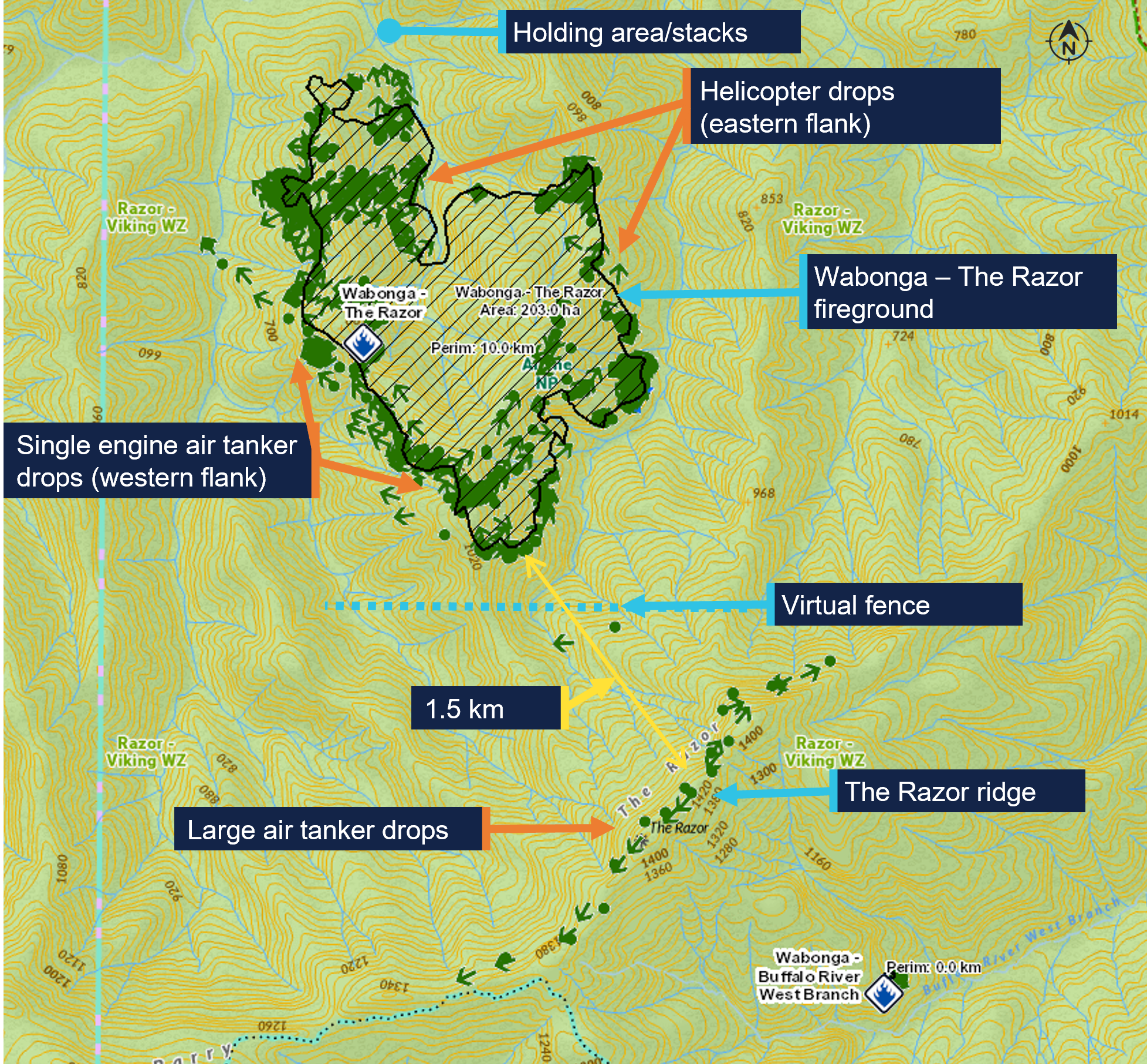
Wabonga – The Razor fireground map showing firebombing drops, the holding area and virtual fence

The green dots are the drops over the 5-day duration of the fire 16–20 January 2026. Source: DEECA, annotated by the ATSB

What happened

On 18 January 2026, at 0948 local time, a PZL M18B aircraft, VH-VWF, operating as a SEAT with callsign Bomber 359, departed from the pilot’s base at Benambra Airport, 93 km east of the fireground. Between 1014 and 1359, the pilot conducted 5 drops at the Razor fireground, returning to Mansfield ALA after each drop to refill.

Meanwhile, a Bell 412 helicopter, callsign Helitak 333, which had been tasked for rappel operations, left 5 rappelers and a rappel dispatcher at Snowy Range Mountain Airport, 28 km south of the Razor ridge, while the helicopter departed to get maintenance on a radio issue. A Bell 212 helicopter, VH-KHO, callsign Helitak 368, was then tasked to collect the rappelling crew and conduct the rappelling operation. The pilot of Helitak 368 had not previously operated at the Razor fireground and was not expecting to operate there that day. Helitak 368 departed Latrobe Valley Airport at 1331 and arrived at Snowy Range Mountain Airport at 1404, departing for the fireground with the rappelling crew 11 minutes later. 

Also at 1404, Bomber 359 left Mansfield for the fireground with its sixth load. When 5 NM (9 km) from the fireground, at about 1419 based on tracking data, the pilot reported broadcasting on the Fire-CTAF that they were inbound and tracking for the dip. Bomber 359 then entered the stack at 1421:30 and held there, awaiting clearance from the AAS (in Firebird 303) to enter the fireground and conduct a drop. 

The pilot of Helitak 368 also reported broadcasting on the Fire-CTAF when inbound about 5 NM south of the fireground, at about 1421 based on tracking data. The pilot reported handing over ‘flight following’[5] to the AAS and requesting a clearance from them to enter the fireground. The Helitak pilot reported that they would have included in the request to enter the fireground that they were also seeking clearance to enter for reconnaissance and insertion of the rappelling crew. The helicopter then commenced descent from about 5,000 ft AMSL. 

The rappel dispatcher in Helitak 368 recalled that the pilot made a 10-NM call and then a 5‑NM call, saying words to the effect of ‘We are 5 miles out. Are we ok to approach?’ and confirming what aircraft were in the area. The dispatcher reported writing the aircraft callsigns on the helicopter window and recalled the AAS saying they could enter the area. The dispatcher also recalled being aware from the communications that a bomber was in the vicinity, but did not know where the reporting points being referred to were. 

The AAS recalled Helitak 368 reporting being inbound from the south and reported that this was the first time an aircraft had entered the fireground from that direction. They recalled checking that the LATs were clear of the Razor ridge and would not conflict with Helitak 368 but could not specifically recall clearing Helitak 368 into the fireground. 

The AAS advised that it was likely they had instructed Helitak 368 to hold to the north of the fireground while the SEATs were conducting drops on the western side of the fire. They reported that they had expected Helitak 368 to follow lower terrain east of the fireground before holding to the north with the other aircraft but did not specifically instruct the pilot of Helitak 368 to do so. The AAS was typically operating north-east of the fire, away from the SEAT and helicopter water/retardant dropping circuits, and did not see Helitak 368 entering the fireground from the south. The first time the AAS recalled sighting Helitak 368 was after the incident, when it was holding to the north. The pilot of Firebird 303 could not recall Helitak 368 being cleared into the fireground from the south.

At 1422:30, recorded track data showed that Bomber 359 left the stack and tracked south‑west towards the drop target, near the virtual fence at the southern edge of the fire. The Bomber 359 pilot, AAS and Firebird 303 pilot expressed confidence that Bomber 359 would not have left the stack to commence a drop without first receiving AAS clearance, which the AAS would not give until they had sighted the aircraft and ensured the area was clear of ground personnel. However, they could not recall the clearance being given.

At 1423:55, Helitak 368 crossed the Razor ridge at about 4,700 ft AMSL, tracking approximately north-north-east and immediately commenced descending and tracking north into the fireground to conduct reconnaissance for the rappel crew insertion. The elevation of the ridge was about 4,600 ft, with most of the fireground about 2,000‍–‍3,000 ft AMSL. The pilot of Helitak 368 reported that they did not expect to encounter any other aircraft, as they believed they had been cleared into the fireground. At the time Helitak 368 crossed the ridge, Bomber 359 was about 4 km to the north-west, from where it commenced a left turn before lining up for a drop at an altitude of about 4,000 ft, tracking approximately east (Figure 2).

Figure 2: Relative positions of Bomber 359 and Helitak 368 at 1423:55 

Relative positions of Bomber 359 and Helitak 368 at 1423:55

Source: DEECA, overlaid on Google Earth, annotated by the ATSB

The rappel dispatcher reported sighting a bomber pointed out by the rappel crew leader and directing the Helitak 368 pilot to go left to increase separation. The Helitak pilot reported that they then observed a ‘yellow’ bomber in their 10 o’clock position slightly below their altitude on a reciprocal track. On sighting the aeroplane, they immediately conducted a descending left turn (Figure 3).

Figure 3: Relative positions when Helitak 368 turned left at 1424:25

Relative positions when Helitak 368 turned left at 1424:25

Source: DEECA, overlaid on Google Earth, annotated by the ATSB

Based on the recorded data for Helitak 368, the helicopter turned left to track west about 30 seconds after crossing the ridge, and Bomber 359 commenced the drop in an easterly direction about 5 seconds later. The pilot of Bomber 359 reported that they would have broadcast both ‘on the drop’ and ‘off the drop’ on the Fire-CTAF. After the drop, Bomber 359 climbed and conducted a left climbing turn before returning to Mansfield. The closest proximity between the 2 aircraft occurred at 1424:45, with Helitak 368 about 400 ft below and 500 m horizontally from Bomber 359 (Figure 4).

Figure 4: Closest proximity of Bomber 359 to Helitak 368 at 1424:45

Closest proximity of Bomber 359 to Helitak 368 at 1424:45

Source: DEECA, overlaid on Google Earth, annotated by the ATSB

The pilot of Helitak 368 reported checking with and receiving confirmation from the onboard rappel dispatcher that they had received a clearance to enter the fireground and conduct reconnaissance operations. The pilot also reported attempting to say something like ‘that was close’ on the Fire-CTAF but thought they may not have successfully transmitted that communication while focused on returning the aircraft to normal operations. 

At 1425:10, Helitak 368 conducted a left orbit then tracked northwards through the fireground. The pilot reported that they did not conduct rappel operations and instead exited the fireground to the north, to ensure they remained clear of other aircraft. At about 1429, Helitak 368 joined the stack at the northern end of the fireground, conducted 2 left orbits over the next 7 minutes, then departed the fireground to refuel at a refuelling site, about 11 km to the north-east. 

The Bomber 359 pilot had not seen or heard Helitak 368 and was unaware of any separation issue. The first time the Bomber 359 pilot recalled hearing the Helitak 368 pilot on the Fire-CTAF was when Helitak 368 was holding north of the fireground and the pilot advised they were ‘fuel critical’ and needed to depart the fireground to refuel. 

The AAS and Firebird 303 pilot were also unaware of the incident as the Helitak 368 pilot did not communicate it to them. Shortly after Helitak 368 left the fireground to refuel, the AAS in Firebird 303 handed over to the AAS in Firebird 312 and Firebird 303 departed the fireground to refuel. 

Helitak 368 subsequently re-entered the fireground from the north and conducted rappelling operations. At 1939, Helitak 368 returned the rappelling crew to Heyfield and arrived at Latrobe Valley Airport at 2001. 

The pilot of Bomber 359 completed 9 loads that day before ferrying the aircraft to Benambra. Figure 5 shows the tracks for Helitak 368 and Bomber 359 at the Razor fireground on 18 January 2026. 

Figure 5: Helitak 368 and Bomber 359 tracks for 18 January 2026 showing key locations
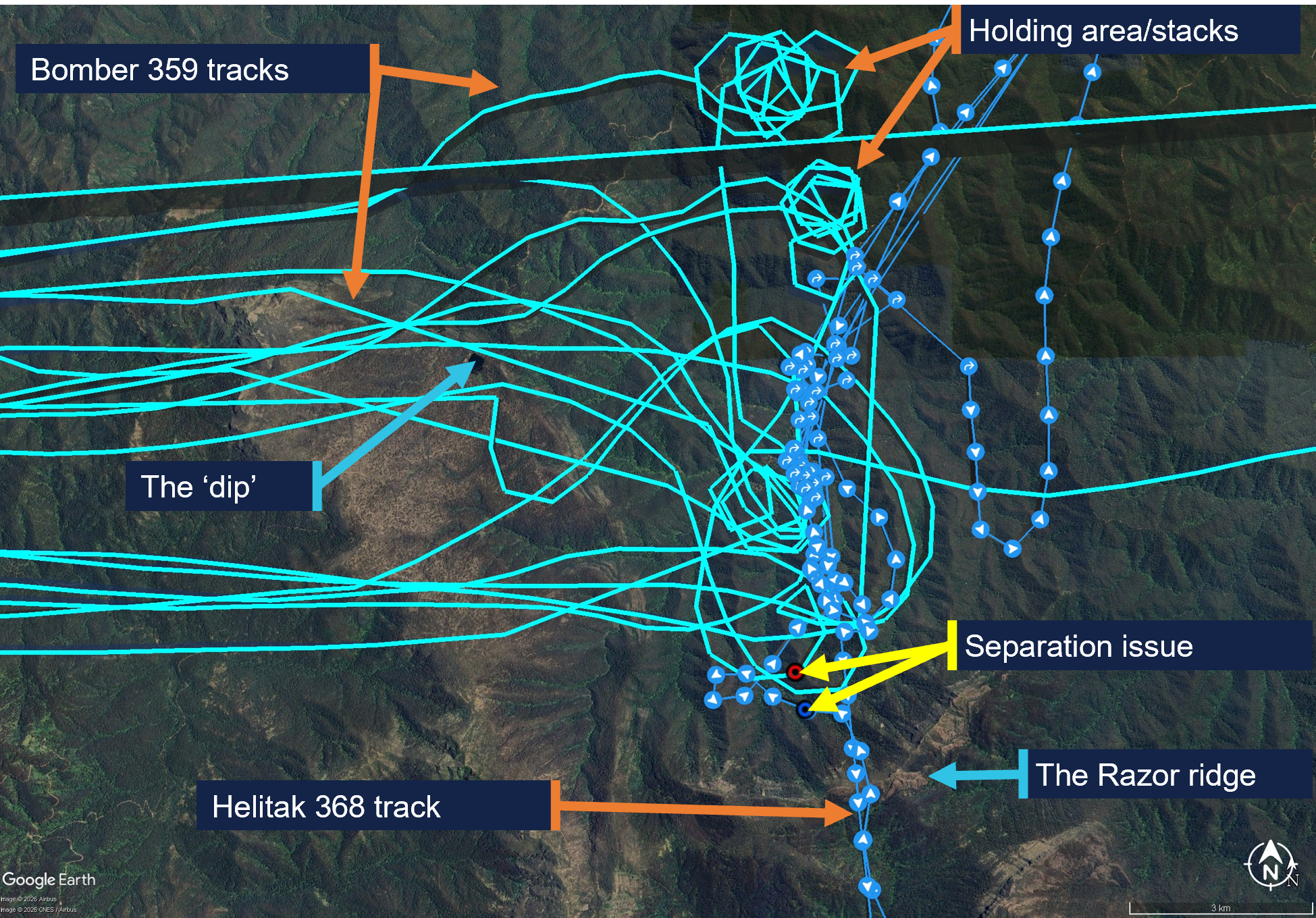
Helitak 368 and Bomber 359 tracks for 18 January 2026 showing key locations

Source: DEECA, overlaid on Google Earth, annotated by the ATSB

Reporting of the occurrence

On 19 January 2026, the operator of Helitak 368 reported the incident as a ‘near miss’ to the Department of Energy, Environment and Climate Action of Victoria (DEECA). Unsure whether the operator had reported the incident to the ATSB as required, on 20 January, DEECA reported the incident to the ATSB as a ‘near miss’ between Helitak 368 and an unknown aircraft.[6] The Helitak 368 pilot reported having a seen a yellow aircraft and having later spoken to the pilot of Bomber 360 (a yellow Air Tractor 802 aircraft),[7] however Bomber 360 was not operating at the Razor fireground on 18 January. DEECA reviewed the available data and identified Bomber 359 (red and white livery) as the most likely aircraft involved in the reported occurrence. The ATSB investigation commenced on 2 February. The AAS was notified of the event on 29 January. The operator of Bomber 359 was made aware of the occurrence on 23 January and subsequently advised DEECA on 27 January that their pilots had no knowledge of the event. This limited the ability of those involved to recall the events. 

Context

Personnel and aircraft information

Bomber 359

The pilot of PZL M18B, VH-VWF, callsign Bomber 359, held a Commercial Pilot Licence (Aeroplane), a class 2 aviation medical certificate, and had been conducting aerial firefighting operations since 1997. The pilot had accrued 13,501 hours total flight time, 103 of which were in the last 90 days. Of the total flight time, 3,987 hours were on the PZL M18 aircraft type, 75 of which were in the last 90 days. 

The incident occurred on the pilot’s third day operating at the Razor fireground, which they described as ‘very technical’ with ‘cliffs, steep escarpments, tumbling air and severe turbulence’, and a complex mix of aerial assets. 

The pilot reported that the AAS was ‘doing really well’ and the pilot of Firebird 303 was very experienced and was helping manage the AAS’s workload by assisting with communications.

The Bomber 359 pilot also reported that pilots of inbound aircraft could hear communications from the AAS, but generally not from other aircraft until they were within the fireground, due to terrain shielding. Further, pilots entering from north of the fireground would have been unable to see aircraft in the south due to smoke. 

The pilot rated their fatigue as 1/7[8] and fatigue was not considered to be a factor in the occurrence.

Helitak 368
Pilot 

The pilot of Bell 212, VH-KHO, callsign Helitak 368, held a Commercial Pilot Licence (Helicopter), a class 1 aviation medical certificate, and had about 2,500 hours total flight time, 600 of which were conducting aerial firefighting operations. The pilot had accrued 190 flight hours on the Bell 212 aircraft, 80 of which had been in the previous 90 days. 

The pilot’s self-assessed fatigue score was 1/7 and fatigue was not considered to be a factor in the occurrence.

Rappel dispatcher

The rappel dispatcher was serving their fifth year as a flightcrew member, with 2 years as a rappeler followed by 3 years as a rappel dispatcher in firefighting operations. The rappel dispatcher was seated in the rear section of the helicopter cabin facing rearwards, attached to a ‘wander lead’ mounted to the cabin roof and connected to a harness. 

The DEECA Helicopter Rappel Operations Manual stated that the rappel dispatcher was responsible for:

  • the pre-flight preparation of the helicopter for a rappel operation
  • the conduct of aerial reconnaissance of the fire area and selection of a suitable deployment location in consultation with the pilot and rappel crew leader
  • the safe dispatch of rappelers and rappel equipment from the helicopter to the ground.

The pilot advised that in the aircraft, the dispatcher assisted in reducing the pilot’s workload by managing firefighting agency radios. Additionally, the dispatcher monitored the external environment while maintaining constant communication with the pilot.

Rappel crew leader

The rappel crew leader was seated in the rear of Helitak 368 at the right-side door, facing forwards. The rappel crew leader, as the ‘mission commander’, was responsible for conducting a mission briefing with the pilot, air operations manager and other relevant personnel. 

The rappel crew leader was dispatched to the Razor fire by the district duty officer at 1205. The details they received included a ground contact, command and fireground radio communication channels and a grid reference for the fireground. Before Helitak 333 departed Heyfield, the state air desk provided the Fire-CTAF and AAS callsign (Firebird 303). 

The rappel crew were picked up during a ‘hot change’ at Snowy Range Mountain airport, in which the helicopter was not shut down. Once airborne, the rappel crew leader relayed the communications channels, fire location, Fire-CTAF, AAS and other aircraft details to the pilot of Helitak 368. 

Rappel operation

The pilot reported that they were tasked to conduct reconnaissance of the fireground for a suitable insertion point for the rappel crew. They expected that if there were aircraft that could conflict with the rappel operation, the AAS would have told them to remain south of the area until the bombers finished their drops. 

The pilot reported that the task was to get crew into the proposed site and they wanted to ‘get in and get that job done’, and that the reconnaissance would take about 5 to 10 minutes. 

The dispatcher reported that their assigned task was to liaise with another rappel crew already on the ground and either assist where they were or go elsewhere on the fireground. They reported that rappel aircraft were ‘awkward to deal with’, as rather than joining the firebombing circuit, ‘we just appear and want to go straight through and do our thing straight away’. Additionally, when they first arrive at a fireground, although they would hear bomber pilots broadcasting (for example, ‘off the dip’, or ‘on the drop’), they would not necessarily know where the dip site or drop targets were. 

Firebird 303
Air attack supervisor

The air attack supervisor was in an Airbus AS350 B3 helicopter, VH-PXX, callsign Firebird 303. The AAS had substantial firefighting experience in other roles, and this was their second season as an AAS. The incident day was the AAS’s fifth consecutive day as AAS and third day at the Razor fireground, with a similar traffic mix to the previous days, although the conditions had been unsuitable for LATs or rappel crews on the previous days.

The AAS assessed their workload as 7–8 out of 10 due to the number (up to 12 aircraft) and different types of aircraft operating in the fireground during the day. They self‑assessed their fatigue at the time as about 3–4 out of 7.

The DEECA Air Attack Supervisor Manual described the AAS role as being:

primarily responsible for the safe and efficient tactical coordination of aircraft operations when fixed and/or rotary wing firebombing aircraft are operating on a fire. 

The AAS duties included ensuring safety standards were maintained at all times. The AAS was also required to establish and maintain communications with the fire aircraft. 

The AAS described their role as primarily being a safety role ensuring safety between aircraft and other aircraft, and between aircraft and people on the ground and secondly, coordinating the effective use of the aircraft to suppress bushfires. 

The AAS responsibilities also included reporting accidents and incidents. The AAS manual specified notification procedures, which included the requirement to notify the incident controller and State Air Desk in the event of an aircraft occurrence. The Interagency Aviation Operating Procedure – Victoria, Management of aircraft at incidents, included a standdown matrix with the requirements for standing down resources in accordance with interagency procedure and that a standdown may be required as a result of an incident or near miss. 

The AAS training included strategies to tactically separate firebombing aircraft from each other, segregating fixed and rotary wing aircraft, and scaling requirements for large and heavy aircraft. While this did not include separate strategies for helicopters conducting rappel operations, the same principles of situation awareness and clear communications for the tactical separation of aircraft applied. 

Pilot

The Firebird 303 pilot had accrued over 3,000 hours in the AS350 aircraft type and more than 8,000 hours total flight time, about 40% of which was in firefighting operations. 

Air operations manager

The air operations manager’s responsibilities involved coordinating all operational components of the air operation, including the conduct of required briefings. 

The air operations manager did not recall communicating with the pilot of Helitak 368 or the AAS, but ensured the rappel crew leader made the pilot aware that there were 2 Fire‑CTAFs in use (at different firegrounds). As Helitak 368 was dispatched by the state air desk, and transported the same rappelling crew that had been in Helitak 333, essential details were provided to the pilot by the rappel crew leader.

Meteorological information

The Bureau of Meteorology forecast for the area at 5,000 ft AMSL included north to north-easterly winds up to 14 kt, visibility greater than 10 km and, for the time of the incident, broken[9] cumulus/stratocumulus clouds with bases at 5,000 ft and tops at 9,000 ft (all AMSL). 

The AAS reported that the visibility was ‘really good’ and the flying conditions were good, with no cloud that day. Weather over the previous 2 days included turbulence and south‑easterly winds that had prevented insertion of ground crew. On the day of the incident, the winds remained easterly but had abated and one rappelling crew had already deployed on the ground.

Safety analysis

The pilot of Helitak 368 had not previously been to the fireground and was unaware of the operational tactics in place where aircraft were holding and entering the fireground from the north. The air attack supervisor (AAS) was aware Helitak 368 intended to conduct rappelling operations, and expected Helitak 368 would track east of the fireground and enter from the stack in the north, however, they did not specifically instruct the pilot of Helitak 368 to do so. While the AAS could not recall clearing Helitak 368 to enter the fireground, the pilot believed they had been cleared to do so. Additionally, they also assumed that the AAS had assured they would not conflict with other aircraft and could commence their reconnaissance and rappelling task from the south. 

As a result of the misunderstanding, Helitak 368 tracked north through the fireground, without the AAS’s awareness, and unexpectedly sighted and came into proximity with Bomber 359 on a drop run. 

Any clearances issued by the AAS for Helitak 368 to enter the fireground and for Bomber 359 to conduct a drop would have occurred within a 3-minute period and been broadcast on the fire common traffic advisory frequency (Fire-CTAF) that both aircraft were monitoring. Additionally, Bomber 359’s pilot also broadcast twice (on and off the drop) during the run for their retardant drop. However, neither of the pilots were aware of the presence or of the increasing proximity of the other aircraft. While the reason for this could not be conclusively determined, there are several potential factors which may have limited the crew’s ability to identify the presence of the other. There were a number of other aircraft operating in the fireground with the associated additional communications on the Fire-CTAF in that period. The ability of the pilots of both aircraft to hear all Fire‑CTAF communications may also have been affected by terrain shielding. Further, as the pilot of Helitak 368 was unaware of the operational tactics to be used, it is likely that they would not have been aware of the locations of the reporting points and geographical references in the communications and may not have understood that Bomber 359 was operating in their vicinity. 

Although the external communication was ineffective at alerting the Helitak 368 pilot to a potential conflict, the rappel dispatcher sighted Bomber 359, and instructed the Helitak 368 pilot to go left. When the pilot sighted the aeroplane, they manoeuvred the helicopter to increase separation. The 2 aircraft passed within about 500 m horizontally and 400 ft vertically of each other. 

The pilot of Helitak 368 did not alert the AAS to the incident but continued to track through the fireground. This increased the risk of a subsequent separation issue, as the AAS still had an expectation that Helitak 368 was flying to the east of the firebombing area. However, no subsequent separation issues were reported. 

As the AAS was unaware of the incident at the time, the required post‑incident actions, which would have included advising the incident controller and may have involved a standdown of personnel, were not conducted.

Findings

ATSB investigation report findings focus on safety factors (that is, events and conditions that increase risk). Safety factors include ‘contributing factors’ and ‘other factors that increased risk’ (that is, factors that did not meet the definition of a contributing factor for this occurrence but were still considered important to include in the report for the purpose of increasing awareness and enhancing safety). In addition ‘other findings’ may be included to provide important information about topics other than safety factors. 

These findings should not be read as apportioning blame or liability to any particular organisation or individual.

From the evidence available, the following findings are made with respect to the separation issue involving Bell 212, VH-KHO, and PZL M18B, VH-VWF, 58 km west of Mount Hotham Airport, Victoria, on 18 January 2026.

Contributing factors

  • The air attack supervisor did not provide tracking instructions to the Helitak 368 pilot when approaching the fireground. Additionally, the Helitak pilot believed they had separation assurance and were clear to conduct rappelling operations, resulting in a separation issue with an aircraft conducting firebombing operations.
  • Despite communications on the fire common traffic advisory frequency, the pilots of both Helitak 368 and Bomber 359 were unaware they were on a conflicting track. However, upon sighting the aeroplane, the pilot of Helitak 368 took action to maintain safe separation.

Other factors that increased risk

  • The pilot of Helitak 368 did not advise the air attack supervisor of the separation issue and continued to track north through the fireground, with no assurance of positive separation with other aircraft in the fireground. 

Safety actions

Whether or not the ATSB identifies safety issues in the course of an investigation, relevant organisations may proactively initiate safety action in order to reduce their safety risk. The ATSB has been advised of the following proactive safety action in response to this occurrence.

Safety action by Department of Energy, Environment and Climate Action

The Victorian Department of Energy, Environment and Climate Action (DEECA) advised that the findings and contributing factors in this report would be further analysed, and lessons learned through this investigation reinforced through future Victorian aviation preseason briefings and incorporated into Victorian training and case study material. Lessons learned would also be shared with the Victorian aviation sector and with national counterparts via the National Aviation Firefighting Centre (NAFC) Aviation Safety Group to enhance collective safety awareness with the broader sector.

DEECA also advised that it would focus learnings on mandatory escalation of separation issues and supervisory control recovery following airspace conflicts to inform doctrine enhancements to interagency aviation operating procedures. Specifically, accident and incident response procedures and the management of aircraft at incidents.

Sources and submissions

Sources of information

The sources of information during the investigation included the:

  • pilots and operators of the involved aircraft
  • air attack supervisor
  • rappel dispatcher
  • rappel crew leader
  • air operations manager
  • recorded tracking data
  • Department of Energy, Environment and Climate Action
  • Civil Aviation Safety Authority. 

Submissions

Under section 26 of the Transport Safety Investigation Act 2003, the ATSB may provide a draft report, on a confidential basis, to any person whom the ATSB considers appropriate. That section allows a person receiving a draft report to make submissions to the ATSB about the draft report. 

A draft of this report was provided to the following directly involved parties:

  • pilots and operators of the involved aircraft
  • air attack supervisor
  • air operations manager
  • rappel dispatcher and rappel crew leader
  • Department of Energy, Environment and Climate Action
  • Civil Aviation Safety Authority. 

Submissions were received from:

  • air attack supervisor
  • rappel crew leader
  • the operator of VH-KHO
  • Department of Energy, Environment and Climate Action.

The submissions were reviewed and, where considered appropriate, the text of the report was amended accordingly.

Purpose of safety investigations

The objective of a safety investigation is to enhance transport safety. This is done through: 

  • identifying safety issues and facilitating safety action to address those issues
  • providing information about occurrences and their associated safety factors to facilitate learning within the transport industry.

It is not a function of the ATSB to apportion blame or provide a means for determining liability. At the same time, an investigation report must include factual material of sufficient weight to support the analysis and findings. At all times the ATSB endeavours to balance the use of material that could imply adverse comment with the need to properly explain what happened, and why, in a fair and unbiased manner. The ATSB does not investigate for the purpose of taking administrative, regulatory or criminal action.

About ATSB reports

ATSB investigation reports are organised with regard to international standards or instruments, as applicable, and with ATSB procedures and guidelines.

Reports must include factual material of sufficient weight to support the analysis and findings. At all times the ATSB endeavours to balance the use of material that could imply adverse comment with the need to properly explain what happened, and why, in a fair and unbiased manner.

An explanation of terminology used in ATSB investigation reports is available here. This includes terms such as occurrence, contributing factor, other factor that increased risk, and safety issue.

Publishing information

Released in accordance with section 25 of the Transport Safety Investigation Act 2003

Published by: Australian Transport Safety Bureau

© Commonwealth of Australia 2025

CC BY logo

Ownership of intellectual property rights in this publication

Unless otherwise noted, copyright (and any other intellectual property rights, if any) in this report publication is owned by the Commonwealth of Australia.

Creative Commons licence

With the exception of the Commonwealth Coat of Arms, ATSB logo, and photos and graphics in which a third party holds copyright, this report is licensed under a Creative Commons Attribution 4.0 International licence.

The CC BY 4.0 licence enables you to distribute, remix, adapt, and build upon our material in any medium or format, so long as attribution is given to the Australian Transport Safety Bureau. 

Copyright in material obtained from other agencies, private individuals or organisations, belongs to those agencies, individuals or organisations. Where you wish to use their material, you will need to contact them directly.

[1]     Civil Aviation Safety Regulations Part 138 MOS defined rappelling as an aerial work Class D external load operation that involves a person exiting or entering an aircraft in flight using a rope or ladder attached to the helicopter.

[2]     Birddog is used to assess the fireground and determine the most appropriate flight path to facilitate LAT integration with other aircraft.

[3]     Discrete radio frequencies are allocated for Victorian firefighting operations, which the state air desk assigns to respective firegrounds.

[4]     Visual flight rules (VFR): a set of regulations that permit a pilot to operate an aircraft only in weather conditions generally clear enough to allow the pilot to see where the aircraft is going.

[5]     Flight following during flight: requirement to communicate position and intentions every 30 mins to nominated person and to advise of any changes, diversions and pick-ups. Failure to communicate activates search and rescue action.

[6]     ATSB occurrence type is ‘near collision'.

[7]     DEECA stated that there are psychological factors in witness recall, whereby individuals can rely on stereotypical associations when reconstructing events. Such associations are a normal aspect of human memory and can result in familiar or expected characteristics being recalled in place of the observed features (e.g. yellow for a bomber aircraft).

[8]     Samn-Perelli fatigue scale: A self-assessed 7-point fatigue scale where 1 is ‘fully alert and wide awake’ and 7 is ‘completely exhausted, not able to function’.

[9]     Cloud cover: in aviation, cloud cover is reported using words that denote the extent of the cover – ‘broken’ indicates that more than half to almost all the sky is covered.

Occurrence summary

Investigation number AO-2026-006
Occurrence date 18/01/2026
Occurrence time and timezone 1424 Eastern Daylight-Saving Time
Location 58 km west of Mount Hotham Airport
State Victoria
Report status Final
Investigation level Short
Investigation type Occurrence Investigation
Investigation phase Final report: Dissemination
Investigation status Completed
Mode of transport Aviation
Aviation occurrence category Separation issue
Occurrence class Incident
Highest injury level None

Aircraft details

Manufacturer PZL Mielec
Model M18B
Registration VH-VWF
Serial number 1Z027 26
Aircraft operator Alpine Airwork
Sector Piston
Operation type Part 138 Aerial work operations
Activity General aviation / Recreational-Aerial work-Firefighting
Departure point Benambra aircraft landing area, Victoria
Destination Benambra aircraft landing area, Victoria
Injuries None
Damage Nil

Aircraft details

Manufacturer Bell Helicopter Co
Model 212
Registration VH-KHO
Serial number 31181
Aircraft operator Kestrel Aviation Pty Ltd
Sector Helicopter
Operation type Part 138 Aerial work operations
Activity General aviation / Recreational-Aerial work-Firefighting
Departure point Latrobe Valley Aerodrome, Victoria
Destination Albury Airport, New South Wales
Injuries None
Damage Nil

Wedderburn midair accident preliminary report

An ATSB preliminary report details the sequence of events leading up to the midair collision of two Van’s light aircraft returning to land at Wedderburn airfield, south-west of Sydney, as part of a formation flight.

Just after noon on 30 November 2025, the group of four Van’s amateur-built, single-engine light aircraft, using the call sign ‘Acro Formation’ and each with a solo pilot on board, was returning to land at Wedderburn, the report details.

“Approaching Wedderburn, the lead pilot directed the formation members to move from a box to an echelon formation, where each aircraft was positioned slightly behind and to the right of the aircraft ahead of them,” Mr Mitchell explained.

“This was to facilitate the aircraft landing in succession after entering the Wedderburn circuit via an ‘initial and pitch’ manoeuvre.”

In an initial and pitch manoeuvre, the formation flies an upwind leg of the circuit, aligned with the landing runway, commencing from a predetermined (initial) position. Then, about halfway along the runway, the lead aircraft will turn (or pitch) onto the crosswind leg of the circuit, with each aircraft following in succession, with a set time delay (in this case 3 seconds) between them.

“The collision occurred between #2 and #3 aircraft in the formation, shortly after the #3 aircraft commenced its turn,” Mr Mitchell said.

A nearby eyewitness recalled that each aircraft turned into the circuit after similar time delays, and that that #3 continued the turn, tighter than the previous aircraft, which put it onto a converging heading with #2.

During the collision, the rear fuselage of #3 separated from the aircraft, which descended rapidly and impacted terrain in a near vertical trajectory, fatally injuring the pilot.

Aircraft #2 was damaged, but remained flyable, and its pilot, who was uninjured, was able to land at Wedderburn and taxi off the runway.

Upon being notified of the accident the ATSB deployed a team of investigators to the site, where they examined the wreckage, as well as the damage to the surviving aircraft.

Due to the wreckage disruption a full flight control continuity check of aircraft #3 was not possible, but examination of the available controls did not identify any pre-collision defects. Examination of the propeller indicated that the engine was providing power at the time of impact.

Both pilots had frequently flown with onboard video cameras in their aircraft, but did not do so during the accident flight, and nor did the pilots in the other aircraft in the formation. In addition, no nearby CCTV cameras captured the accident sequence.

However, the ATSB was able to obtain flight tracking for each aircraft from third party flight tracking providers, electronic flight bag applications and onboard avionics, which will prove instrumental to the investigation as it progresses.

“As well as the recorded flight tracking data, the ongoing investigation will also further consider formation flying procedures and practices, pilot records and training, and aircraft maintenance records,” Mr Mitchell said.

Analysis of that evidence, and the findings that analysis leads to, will be detailed in the ATSB’s final report, to be released at the conclusion of the investigation.

“However, if at any point in the investigation the ASTB identifies any critical safety issues, we will notify relevant parties immediately so appropriate and timely safety action can be taken,” Mr Mitchell concluded.

Read the preliminary report: Midair collision involving Van's RV-7 aircraft, VH‑EWS and VH‑NMG, near Wedderburn aeroplane landing area, New South Wales, on 30 November 2025

Bankstown VFR into IMC incident

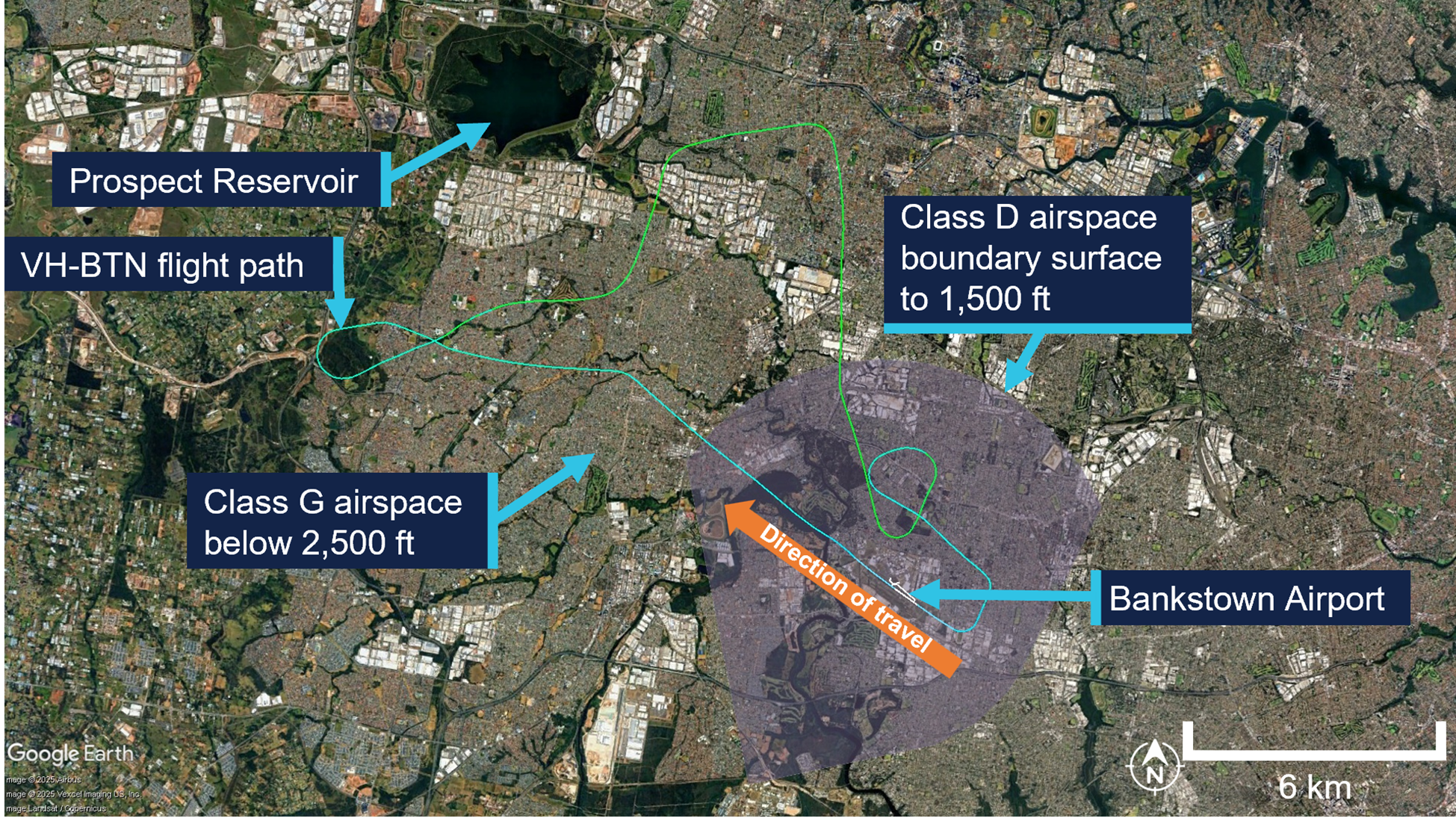
Insufficient pre-flight consideration of weather conditions around Bankstown Airport, and self-imposed pressure to proceed, contributed to a visual rules pilot entering cloud shortly after take-off, an ATSB final report details.

On 15 January 2025, a pilot who held a Private Pilot Licence planned to fly a leased Piper Archer light aircraft from Bankstown to Orange, NSW, to gain command hours required towards a Commercial Pilot Licence.

As required by the aircraft operator, Basair, the pilot met with a supervising instructor before the flight, who authorised the flight to take place under the visual flight rules (VFR).

“The instructor briefed the pilot on what they believed would be the most critical weather along the route, which was near the Blue Mountains,” ATSB Director of Transport Safety Stuart Macleod said.

“But the pilot and instructor did not review the local weather observations, or otherwise identify that the weather at Bankstown was not suitable for a VFR flight.”

The instructor reported that they did not think the pilot would be cleared to take off by Bankstown Tower if conditions were not suitable at that time.

However, prior to take-off, when Bankstown Tower told the pilot conditions were not visual, the pilot requested take-off under a special VFR clearance, which was granted.

“The instructor had not considered the pilot may make such a request,” Mr Macleod said.

“But the pilot, probably influenced by self-imposed pressure to attempt the flight despite the adverse weather conditions, proceeded to take off under this special VFR clearance, the requirements of which they were unfamiliar with.”

Soon after take-off, the aircraft entered adverse weather conditions, and inadvertently entered cloud (instrument meteorological conditions, or IMC).

Mr Macleod noted this serious incident was among the 57 VFR into IMC occurrences reported to the ATSB between the start of 2020 and end of 2025.

“Eight of those 57 occurrences resulted in fatal accidents,” he said, “and seventeen people were fatally injured in those accidents.”

In this case, the pilot received further navigation assistance from Bankstown Tower which, combined with their flight training, allowed them to regain visual flight conditions and return to Bankstown.

“While it was a good outcome in this case, the numbers indicate how serious VFR into IMC incidents can be,” Mr Macleod said.

“While in cloud, a visual pilot is vulnerable to experiencing spatial disorientation, which often leads to loss of control.

“Additionally, in this case, another aircraft operating under the instrument flight rules departed from Bankstown Airport and climbed through the same altitude in close proximity to the pilot’s aircraft.”

The ATSB’s investigation found the pilot and supervising instructor did not sufficiently consider the prevailing weather conditions at Bankstown Airport before the flight.

In response to the occurrence, Basair is implementing changes to its processes regarding when students may request special VFR prior to departure. 

Additionally, Mr Macleod noted for the broader aviation community, that CASA’s Navigating the margins with Special VFR(Opens in a new tab/window) may assist pilots in their decision-making regarding when it is appropriate to request and use a Special VFR clearance.

“This serious incident demonstrates how early assessment of weather conditions combined with early decisions to land – or not take off – are still the best way to prevent these occurrences for visual pilots,” Mr Macleod concluded.

Read the final report: VFR into IMC involving Piper PA-28, VH-BTN, 12 km north-west of Bankstown Airport, New South Wales, on 15 January 2025

Near collision involving an ICP Savannah, Piper PA-25 Pawnee and an Alexander Schleicher ASW 28, 3.2 km from Benalla Airport, Victoria, on 3 December 2025

Occurrence Briefs are concise reports that detail the facts surrounding a transport safety occurrence, as received in the initial notification and any follow-up enquiries. They provide an opportunity to share safety messages in the absence of an investigation. Because occurrence briefs are not investigations under the Transport Safety Investigation Act 2003, the information in them is de-identified. 

What happened

On 3 December 2025, a near collision occurred between a glider towing combination and a recreational aircraft after departing from Benalla Airport, Victoria. 

The glider, an Alexander Schleicher ASW 28 (ASW 28) was being towed by a Piper PA‑25 Pawnee (tug). The recreational aircraft was an ICP Savannah. All aircraft were operating under visual flight rules (VFR) in uncontrolled airspace (Class G). 

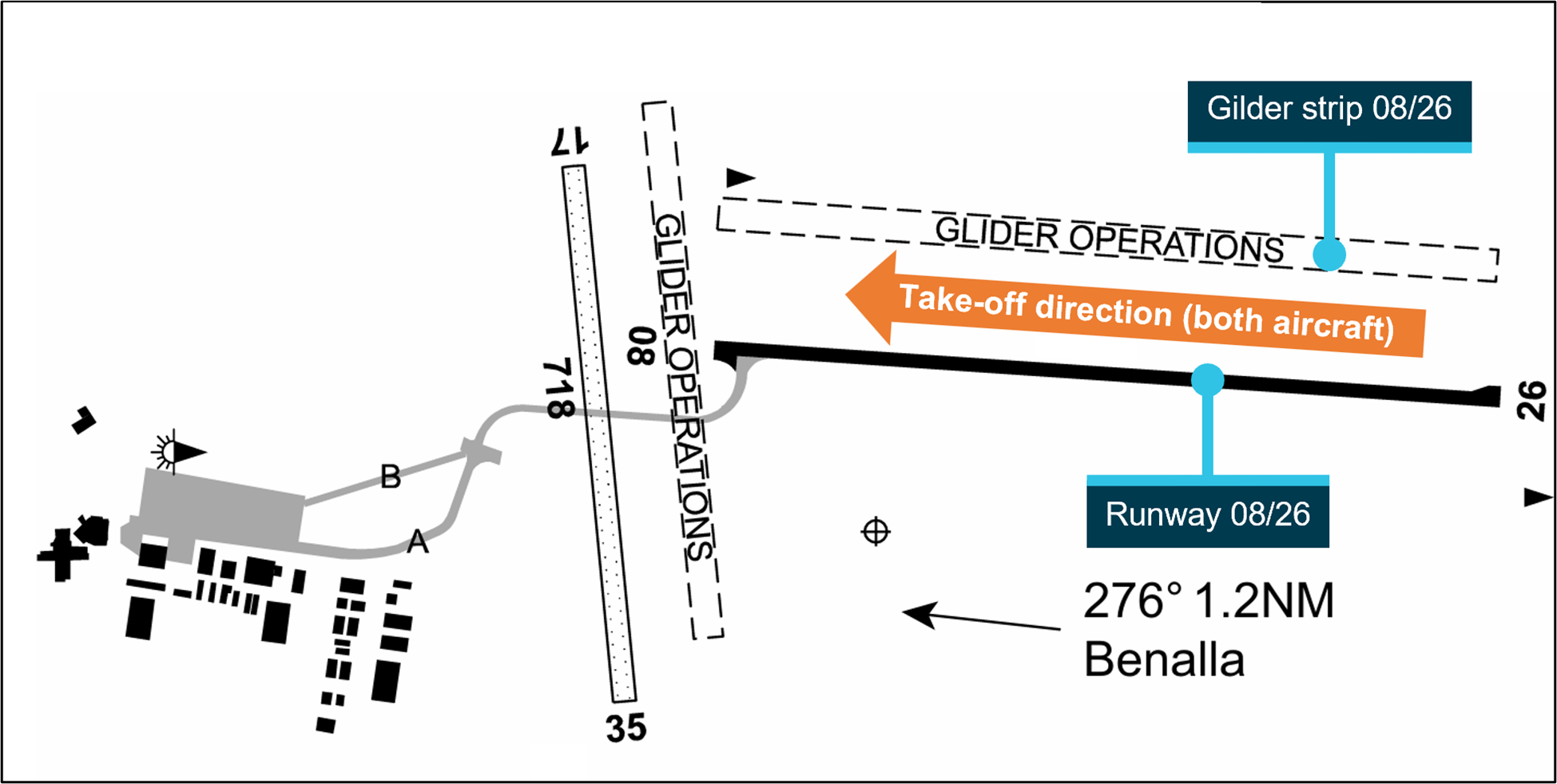
At uncontrolled aerodromes, the use of predictable flight patterns allows pilots operating under VFR to anticipate where other aircraft are likely to be, supporting effective see‑and‑avoid in the absence of air traffic control. AIP and ERSA[1] requirements for operating at Benalla Airport state tug and glider operations should use circuits to the north or east and other powered aircraft to operate south or west, with no dead side[2] available due to the contra circuits. Non-glider aircraft must remain clear of the glider circuit below 2,000 ft. Gliding operations also used runway strips parallel to the 2 runways at Benalla (Figure 1).

The pilot of the tug conducted a normal start and line up sequence for the towing operation followed by a CTAF[3] broadcast of their intentions. No other broadcasts indicating imminent departures were heard by the tug pilot. During the initial climb after take-off from the glider operations strip 26, both the tug pilot and the glider pilot noticed the Savannah rising ahead of them from the parallel aircraft runway 26. 

The pilot of the Savannah was conducting a private flight to Ovens Valley, Victoria, with a planned flight path north‑east of the aerodrome. The pilot reported that they intended to turn to the north after clearing the glider circuits. However, after climbing out of runway 26 they misjudged the distance and commenced the turn to the north earlier than intended.

At about 1240 local time and at 300 ft above ground level (AGL), the tug pilot noticed the Savannah commence a right turn above them in close proximity. The tug pilot initiated avoiding action by levelling the climbing turn, followed by the ASW 28 glider still attached. The sudden change in flight path resulted in a bow forming in the tow rope which caused a severe jolt affecting the stability of the tug and ASW 28 combination. The pilot of the tug recovered the towing combination and continued without further incident.

Based on the tug and glider pilot estimations, the separation from the Savannah at the closest point was about 100 ft vertical distance and less than a 100 m lateral distance. 

Figure 1: Benalla Airport runway and glider strips

Diagram of Benalla Aerodrome showing runways supplied by Airservices Australia.

Source: Airservices Australia, annotated by the ATSB

The pilot of the Savannah reported that they broadcast a CTAF take-off call but did not hear the take-off call by the tug pilot and were not aware of the tug and glider position. No further radio calls were made by the Savannah pilot in the vicinity of the aerodrome. 

All 3 aircraft continued their journeys without further incident. 

Safety message

Glider towing operations have limited manoeuvrability and it is imperative for other aircraft to remain clear of a glider circuit area.

Pilots operating at aerodromes with gliding activity should be familiar with local aerodrome procedures as traffic may be operating on both sides of the runway at circuit height.

Additionally, effective radio broadcasts and active listening are crucial for awareness of other aircraft movements. 

Safety Watch logo

The ATSB SafetyWatch highlights the broad safety concerns that come out of our investigation findings and from the occurrence data reported to us by industry. One of the safety concerns is Reducing the collision risk around non-towered airports.

About this report

Decisions regarding whether to conduct an investigation, and the scope of an investigation, are based on many factors, including the level of safety benefit likely to be obtained from an investigation. For this occurrence, no investigation has been conducted and the ATSB did not verify the accuracy of the information. A brief description has been written using information supplied in the notification and any follow-up information in order to produce a short summary report, and allow for greater industry awareness of potential safety issues and possible safety actions.

[1]     AIP and ERSA (aeronautical information publication and en route supplement Australia) are directories for Australian aerodromes that include details of an aerodrome and details of available air traffic and ground services, navigation aids and public facilities and any special procedures.

[2]     The non-active side of a traffic circuit is referred to as the ‘dead side.’

[3]     CTAF: Common traffic advisory frequency – in the vicinity of non-towered aerodromes. CTAF refers to the designated frequency on which pilots make positional broadcasts.

Occurrence summary

Mode of transport Aviation
Occurrence ID AB-2025-066
Occurrence date 03/12/2025
Location 3.2 km from Benalla Airport
State Victoria
Occurrence class Serious Incident
Aviation occurrence category Near collision
Highest injury level None
Brief release date 02/02/2026

Aircraft details

Manufacturer Piper Aircraft Corp
Model PA-25-235/A1
Sector Piston
Operation type Part 103 Sport and recreational aircraft
Departure point Benalla Airport, Victoria
Destination Benalla Airport, Victoria
Damage Nil

Aircraft details

Manufacturer Alexander Schleicher Segelflugzeugbau
Model ASW 28
Sector Sport and recreational
Operation type Part 103 Sport and recreational aircraft
Departure point Benalla Airport, Victoria
Destination Benalla Airport, Victoria
Damage Nil

Aircraft details

Manufacturer ICP srl
Model Savannah
Sector Sport and recreational
Operation type Part 103 Sport and recreational aircraft
Departure point Benalla Airport, Victoria
Destination Ovens Valley, Victoria
Damage Nil

Level crossing collision between freight train 6PM9 and a road vehicle in Cressy, Victoria, on 20 January 2026

Summary

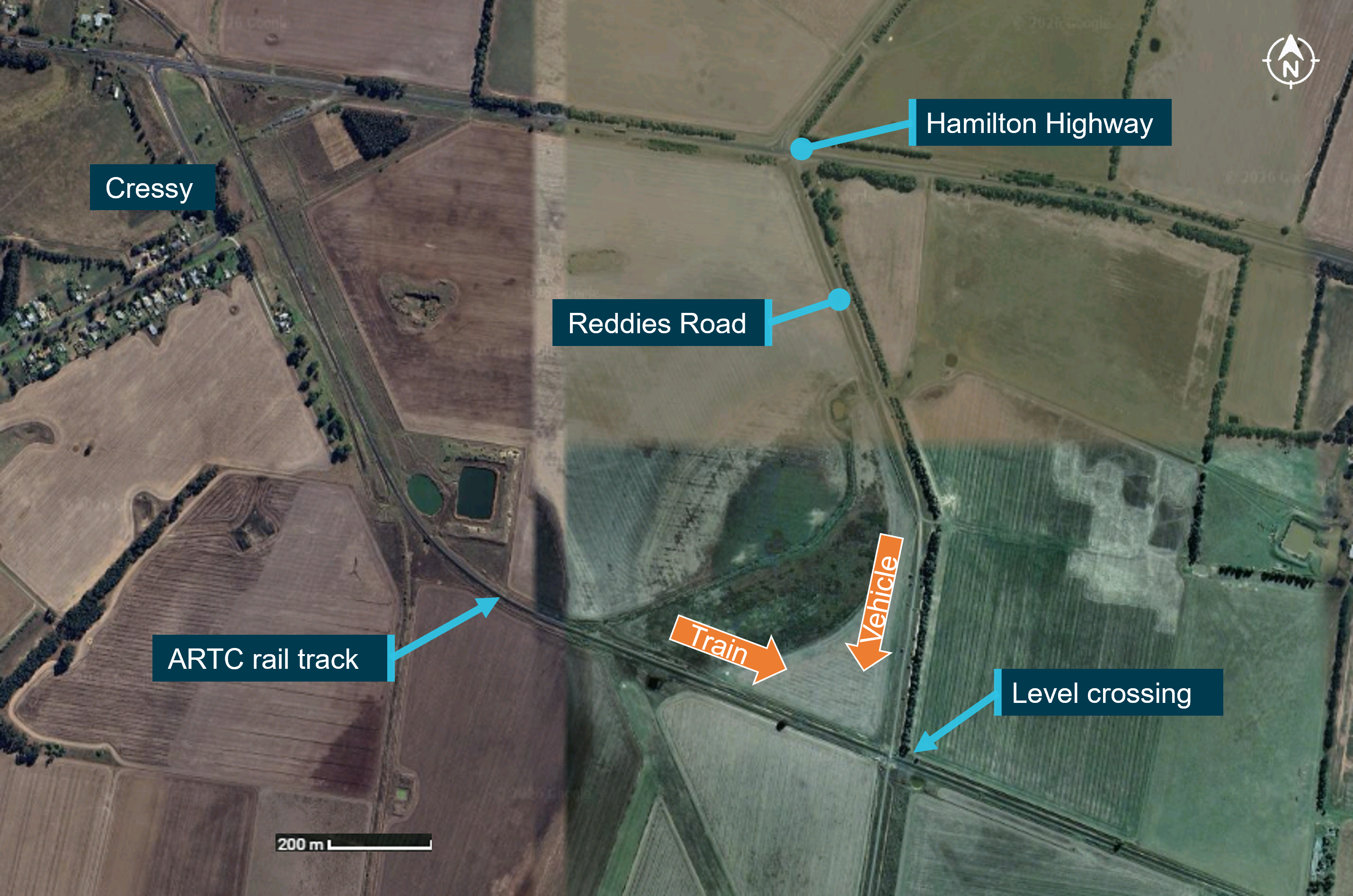
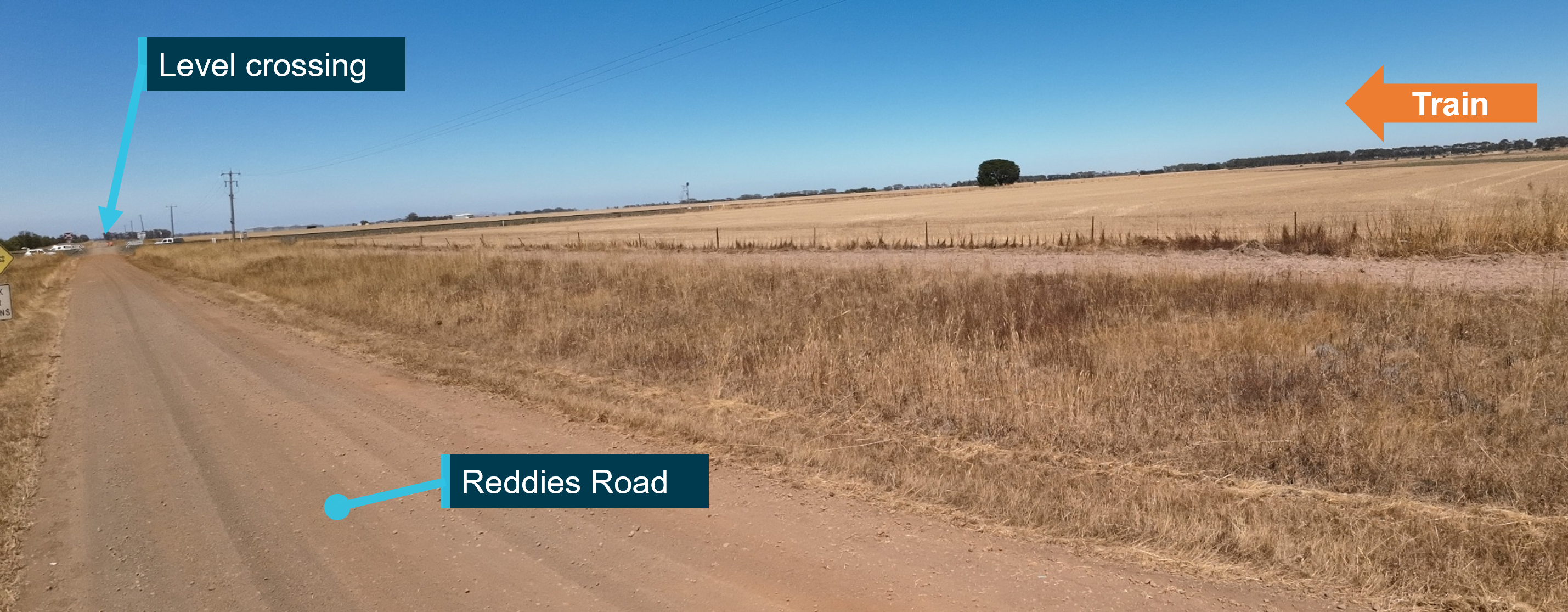
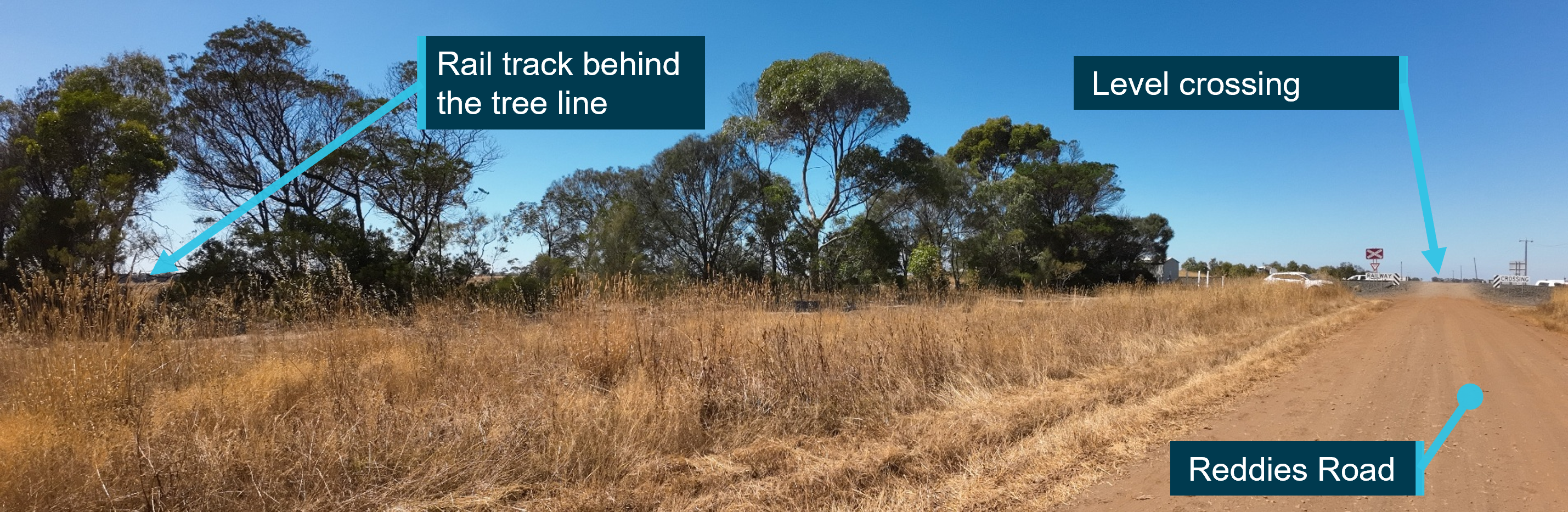
A transport safety investigation has commenced into the collision of a freight train and a road vehicle at the Reddies Road level crossing in Cressy, Victoria.

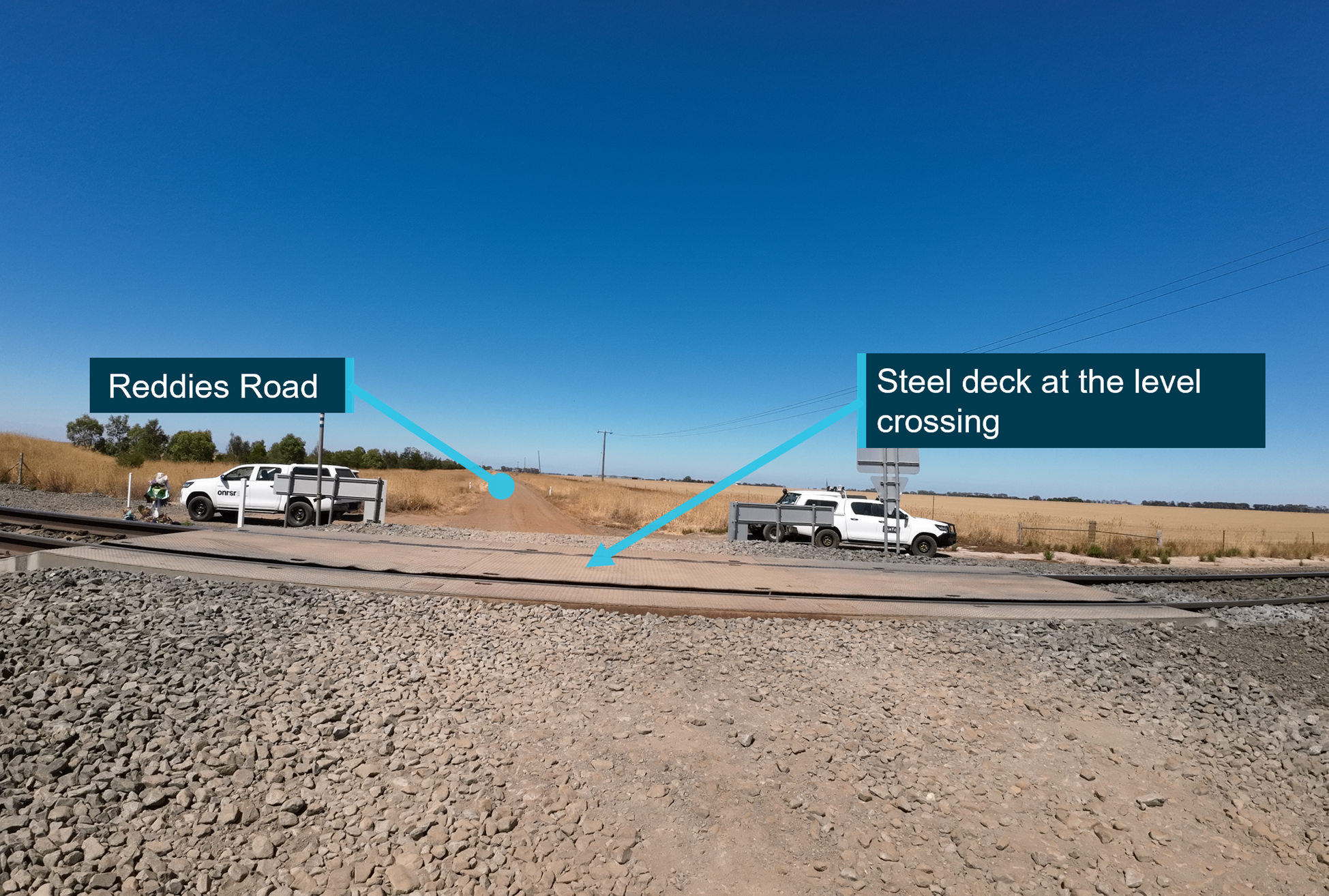
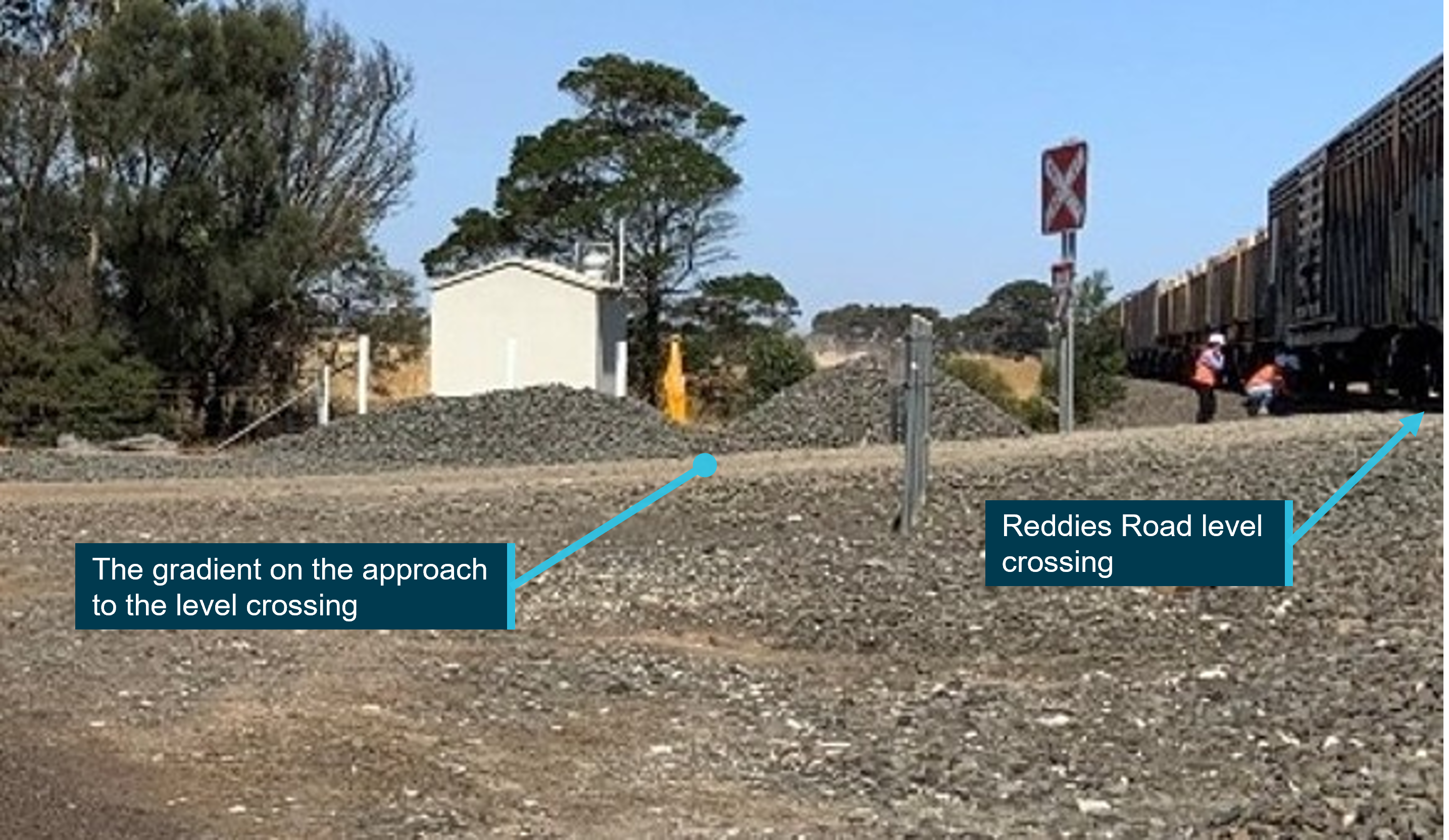
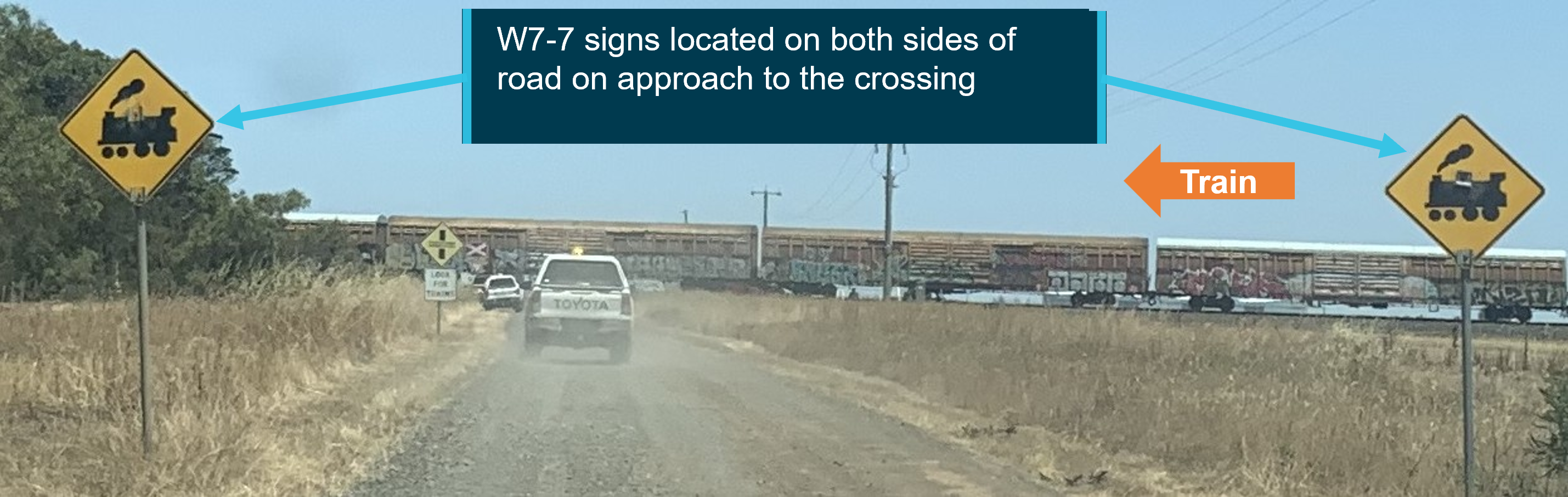
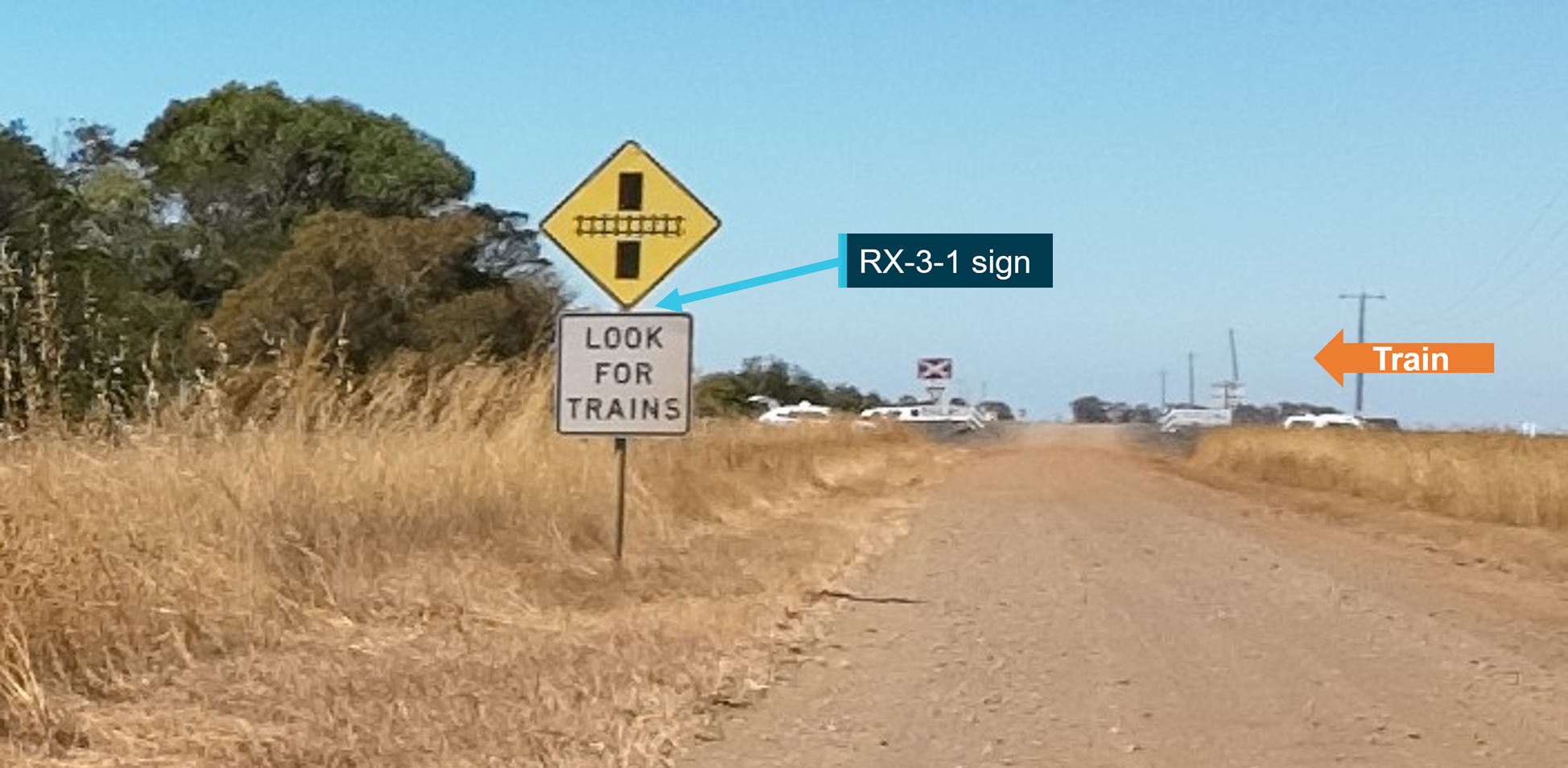
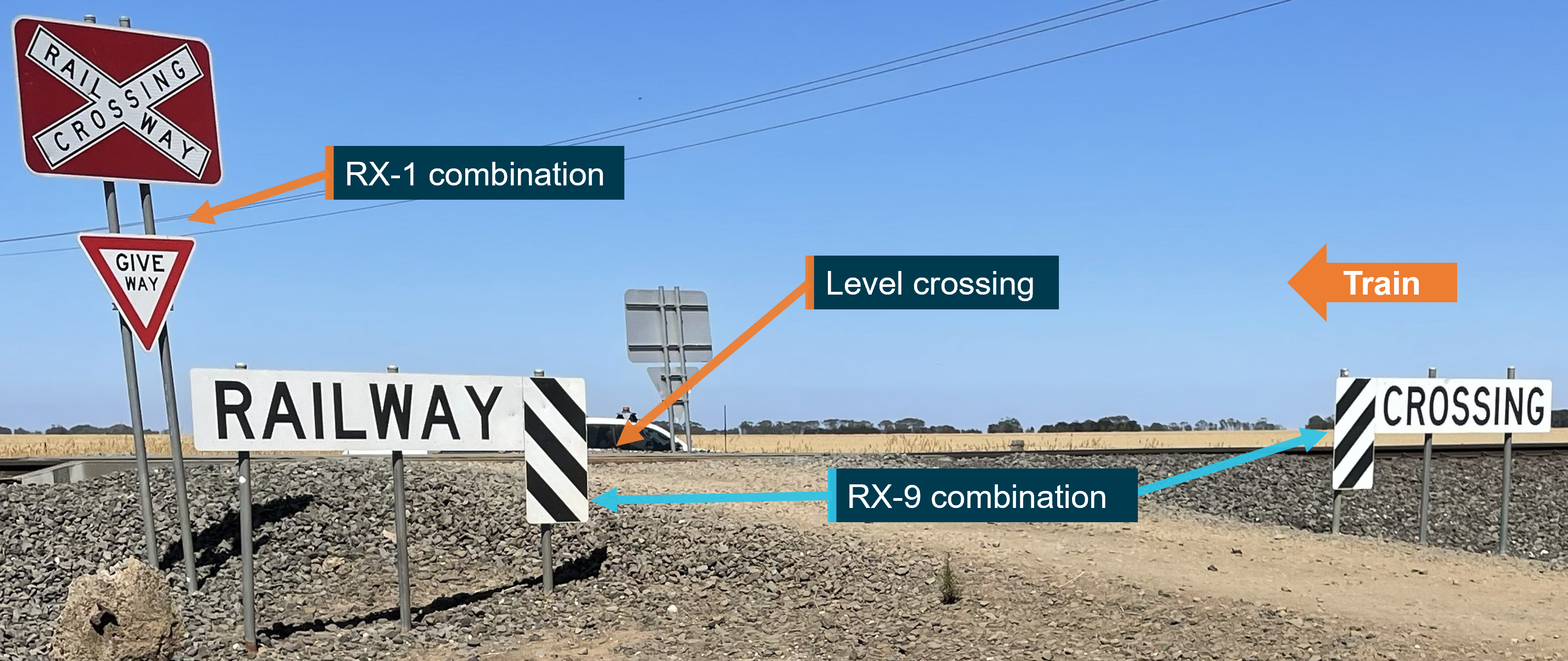
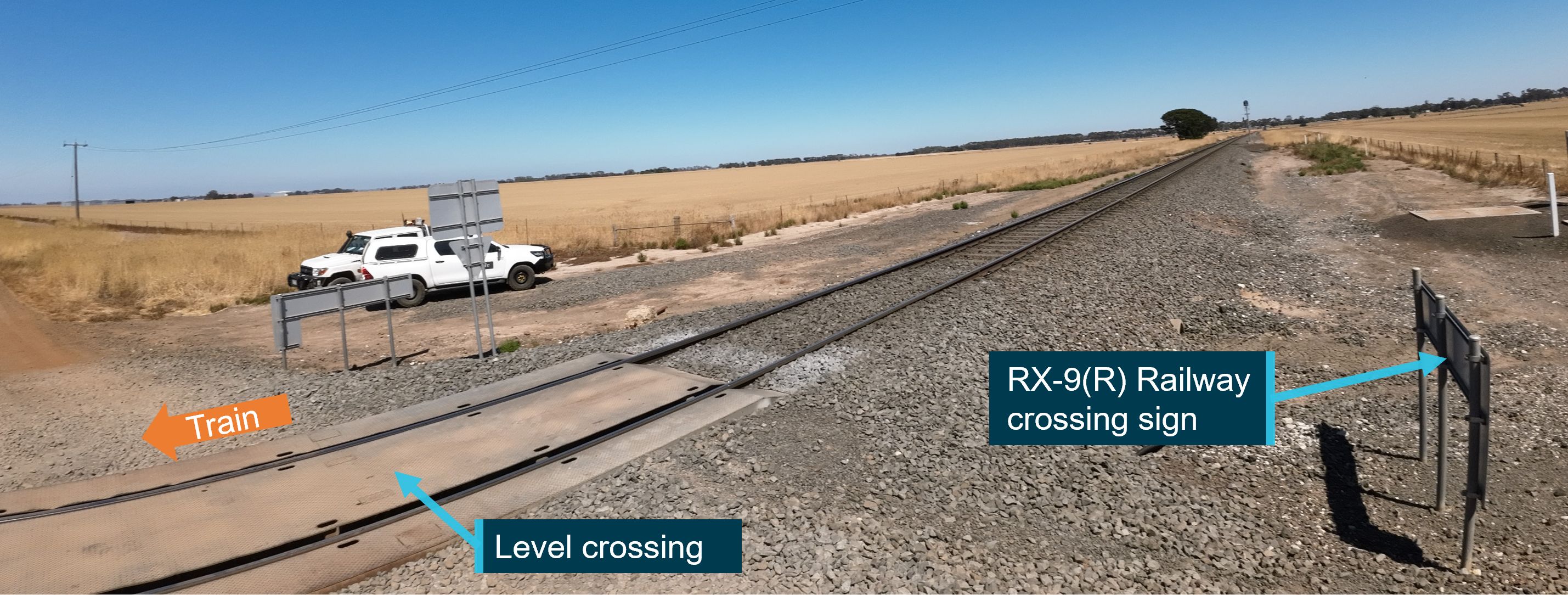
At about 1017 on 20 January 2026, freight train 6PM9, traveling to Melbourne, Victoria, collided with a utility vehicle at a road level crossing. This was a passive level crossing on an unsealed road. The Australian Rail Track Corporation (ARTC) were the track infrastructure manager and train 6PM9 was operated by SCT Logistics.

The utility vehicle was substantially damaged, and the two occupants sustained fatal injuries. The train sustained minor damage, and the crew were not physically injured.

The Office of the Chief Investigator is investigating the incident under the Transport Safety Investigation Act 2003 (Cth) under a collaboration agreement with the Australian Transport Safety Bureau.

A final report will be released at the conclusion of the investigation. However, should a critical safety issue be identified during the investigation, relevant parties will be immediately notified so safety action can be taken.

Occurrence summary

Investigation number RO-2026-001
Occurrence date 20/01/2026
Location Cressy
State Victoria
Report status Pending
Anticipated completion Q2 2026
Investigation level Short
Investigation type Occurrence Investigation
Investigation phase Evidence collection
Investigation status Active
Mode of transport Rail
Rail occurrence category Collision
Highest injury level Fatal

Train details

Train operator SCT Logistics
Train number 6PM9
Track operator Australian Rail Track Corporation
Type of operation Freight
Rail vehicle sector Freight
Destination Melbourne, Victoria
Train damage Minor

Media Statement: Heck Field light aircraft accident

The Australian Transport Safety Bureau (ATSB) has commenced a transport safety investigation into the accident involving a Van’s RV-8A two-seat light aircraft near Heck Field, on the Gold Coast, Queensland, this morning.

As reported to the ATSB, the aircraft was being used for a private flight when it collided with terrain shortly after take-off from Heck Field. The aircraft was destroyed in a post-impact fire, and the pilot and passenger on board were fatally injured.

The ATSB has deployed a team of transport safety investigators from its Brisbane and Canberra offices, specialising in aircraft operations, maintenance and engineering.

They will arrive on site on Tuesday afternoon, and over coming days will conduct a range of evidence-gathering activities, including site and wreckage examination, and recovery of any aircraft components of interest for further examination at the ATSB’s technical facilities in Canberra.

Investigators will also interview any witnesses and involved parties, and collect relevant recorded information including flight tracking data and CCTV footage, as well as pilot and aircraft maintenance records, and weather information.

The ATSB asks anyone with video footage of the accident flight, or its immediate aftermath, to contact us via the witness form on our website: atsb.gov.au/witness at your earliest opportunity.

The ATSB anticipates publishing a preliminary report, detailing factual information about the circumstances of the accident, in about 8 weeks. 

A final report detailing findings and the analysis to support those findings will be released at the conclusion of the investigation.

If the investigation identifies a critical safety issue at any time the ATSB will immediately inform relevant stakeholders.

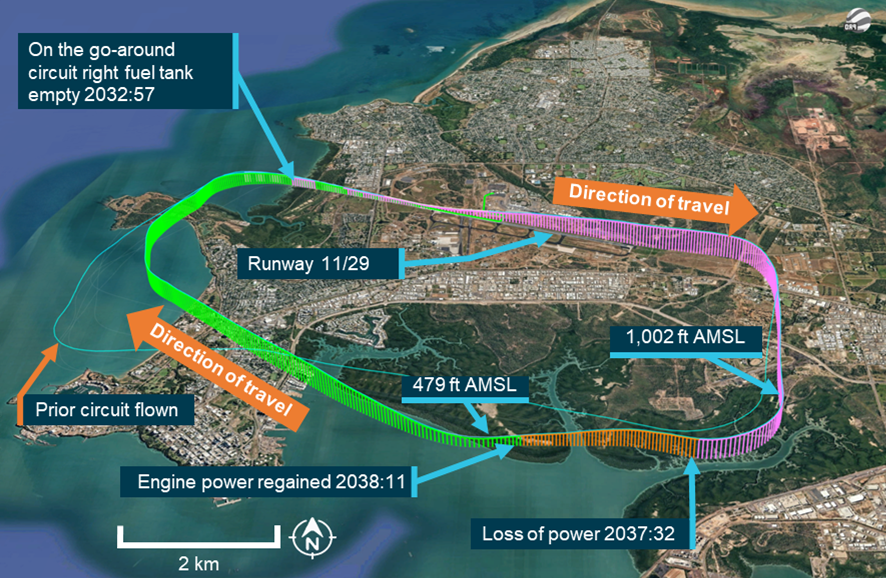
Fuel starvation during night training flight over Darwin

A Cessna 210 briefly lost engine power after its fuel selector was mistakenly left on the right tank for multiple take-off and landings during night circuit training at Darwin Airport, an ATSB final report explains.

On board the Cessna T210M was an instructor from a training organisation, and a student, who owned the aircraft and was doing their first night visual flight rules training flight.

Prior to the training exercise, the instructor, who had not previously flown a turbo Cessna 210, had taken the aircraft up for a familiarisation flight. Afterwards, they dipped the fuel tanks, and assessed there was enough fuel for the planned night circuit training session.

ATSB Director of Transport Safety Dr Stuart Godley said the fuller right tank was correctly selected by the student to start the flight, but that they did not cycle between the two tanks as the exercise progressed.

“The student did not effectively conduct the pre-landing checks to monitor the fuel state of the aircraft,” Dr Godley said.

“This was likely due to experiencing an increased workload during their first night flight in controlled airspace.

“In addition, the instructor had changed the configuration of the primary flight display during their familiarisation flight, making the fuel gauges display smaller and moving them to a location unfamiliar to the student.”

The ATSB’s final report notes the instructor identified the student had not changed tanks during the circuits – despite the requirement to always land on the fuller tank – and had intended to discuss this, but became focused instead on monitoring the student’s performance, and forgot to brief the student on the required fuel tank selection.

After several circuits, the student turned the aircraft onto downwind, and the aircraft lost power.

A MAYDAY call was made and the instructor took control of the aircraft before initiating troubleshooting checks, and identifying the fuel selector was still on the right tank, which was likely empty.

The instructor then activated the electric fuel pump before selecting the left tank, which restored power to the engine.

The student then resumed control of the aircraft, and landed without further incident.

“Fuel starvation occurrences can often be prevented by conducting thorough pre-flight fuel quantity checks, and adequate in-flight fuel management,” Dr Godley concluded.

“While pre-landing checks might be routine, they must never become perfunctory. Pilots must understand the purpose behind each check, and ensure the aircraft is properly configured for landing according to aircraft guidance.”

Read the final report: Fuel starvation event involving Cessna T210M, VH-LLM, near Darwin Airport, Northern Territory, on 8 September 2025

Dual input alert during A321 go-around following lateral deviation

A go-around after a lateral deviation and long flare to land at Sydney Airport resulted in the crew of an Airbus A321 making an inadvertent dual control input and conducting some procedures out of sequence, an ATSB final report details.

The Jetstar A321 was on an approach to land on Sydney’s runway 16R on the morning of 26 June 2025 at the end of an overnight flight from Denpasar. As conditions were turbulent, the first officer, as pilot flying, had configured the aircraft for a ‘flap 3’ landing, consistent with landing in ‘rough’ conditions.

Passing 500 ft, the captain, as pilot monitoring, confirmed the approach was stable, and air traffic control advised of an expected right crosswind component of 8 kt for landing. 

The first officer initiated the flare at 50 ft and later recalled they ‘over flared,’ with the captain observing that the first officer’s flare technique was consistent with landing with flap full.

“The aircraft floated for a prolonged period above the runway, and, subject to a right crosswind, drifted left of the runway centreline,” ATSB Director of Transport Safety Dr Stuart Godley explained.

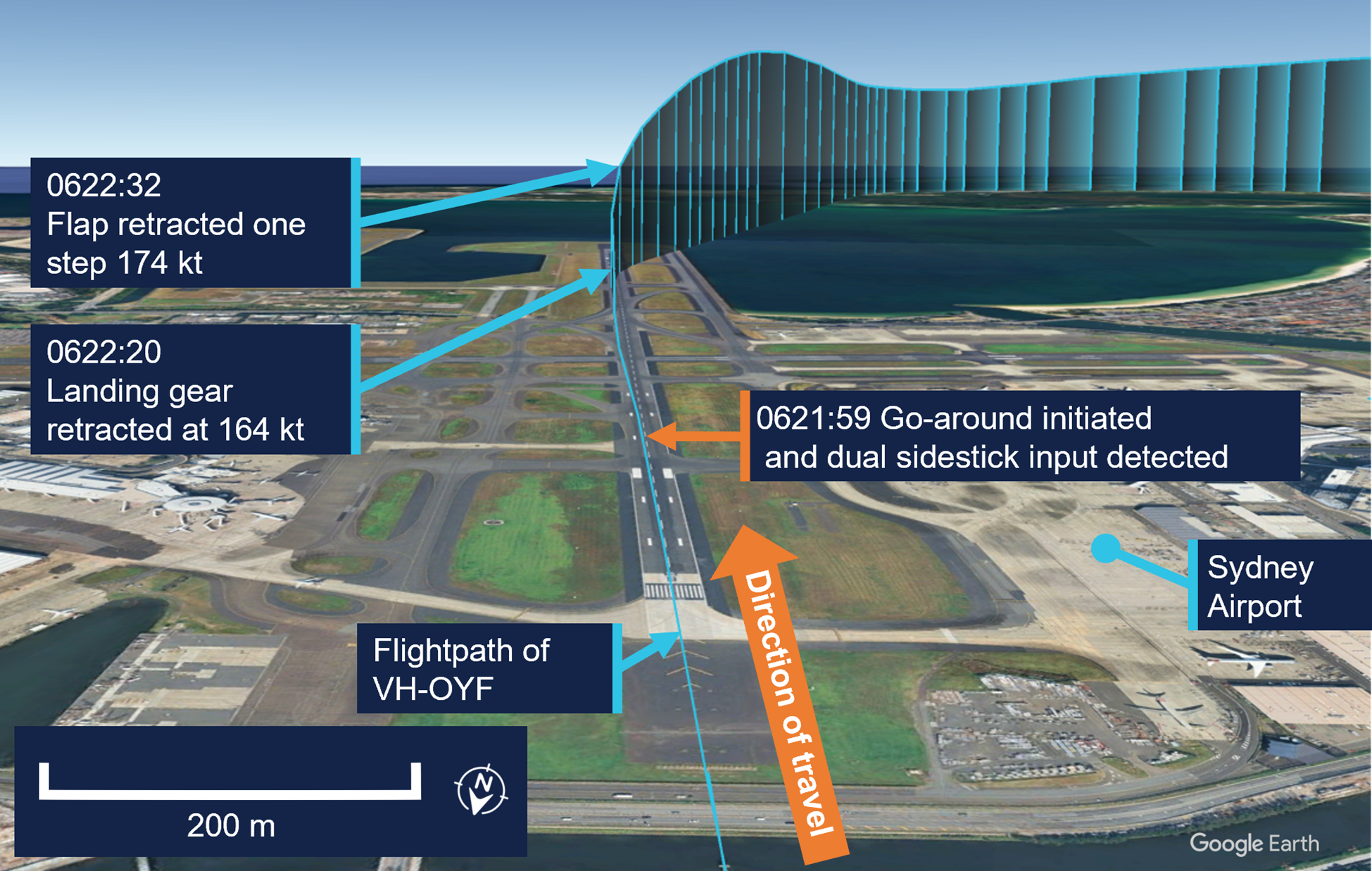
Observing this deviation, the captain commanded the first officer to conduct a go-around.

“While this decision was a consistent response to the aircraft’s lateral deviation, it took place right when the flight crew was focused on landing,” Dr Godley noted.

“In response to the rapid increase in pitch attitude, engine thrust and airspeed that followed the go-around initiation, the captain instinctively and inadvertently manipulated their sidestick controller while the first officer was flying, resulting in a dual input alert.”

The captain then took full control by engaging their sidestick push-button, and announcing “I have control”, at which point the first officer assumed the role of pilot monitoring.

“A consequence of the control handover during the initial stages of the go-around was the momentary interruption of sequential crew actions during the go-around procedures and, as a result, some of the procedural items were completed out of sequence,” Dr Godley said.

The report details that the first stage of flap was retracted out of sequence, after gear retraction, but there were no associated flight envelope exceedances or negative effects on aircraft performance.

The crew then continued the missed approach, and landed soon afterwards without further incident.

“Sound go-around decisions are an effective defence against the hazards associated with low‑level manoeuvring during landing,” Dr Godley noted.

“Being ‘go-around minded’ improves flight crew readiness, supporting timely, coordinated actions once a go-around, a period of high workload, has been commanded.

“This should involve crew members reviewing potential go-around scenarios, procedures and responses prior to conducting an approach.”

Read the final report: Control issues during landing and go-around involving Airbus A321, VH‑OYF, Sydney Airport, New South Wales, on 26 June 2025

Engine failure and ditching involving Bell 206L-3, VH-LMW, 6.5 km west of Horn Island Airport, Queensland, on 6 January 2026

Preliminary report

Report release date: 16/04/2026

This preliminary report details factual information established in the investigation’s early evidence collection phase and has been prepared to provide timely information to the industry and public. Preliminary reports contain no analysis or findings, which will be detailed in the investigation’s final report. The information contained in this preliminary report is released in accordance with section 25 of the Transport Safety Investigation Act 2003

The occurrence

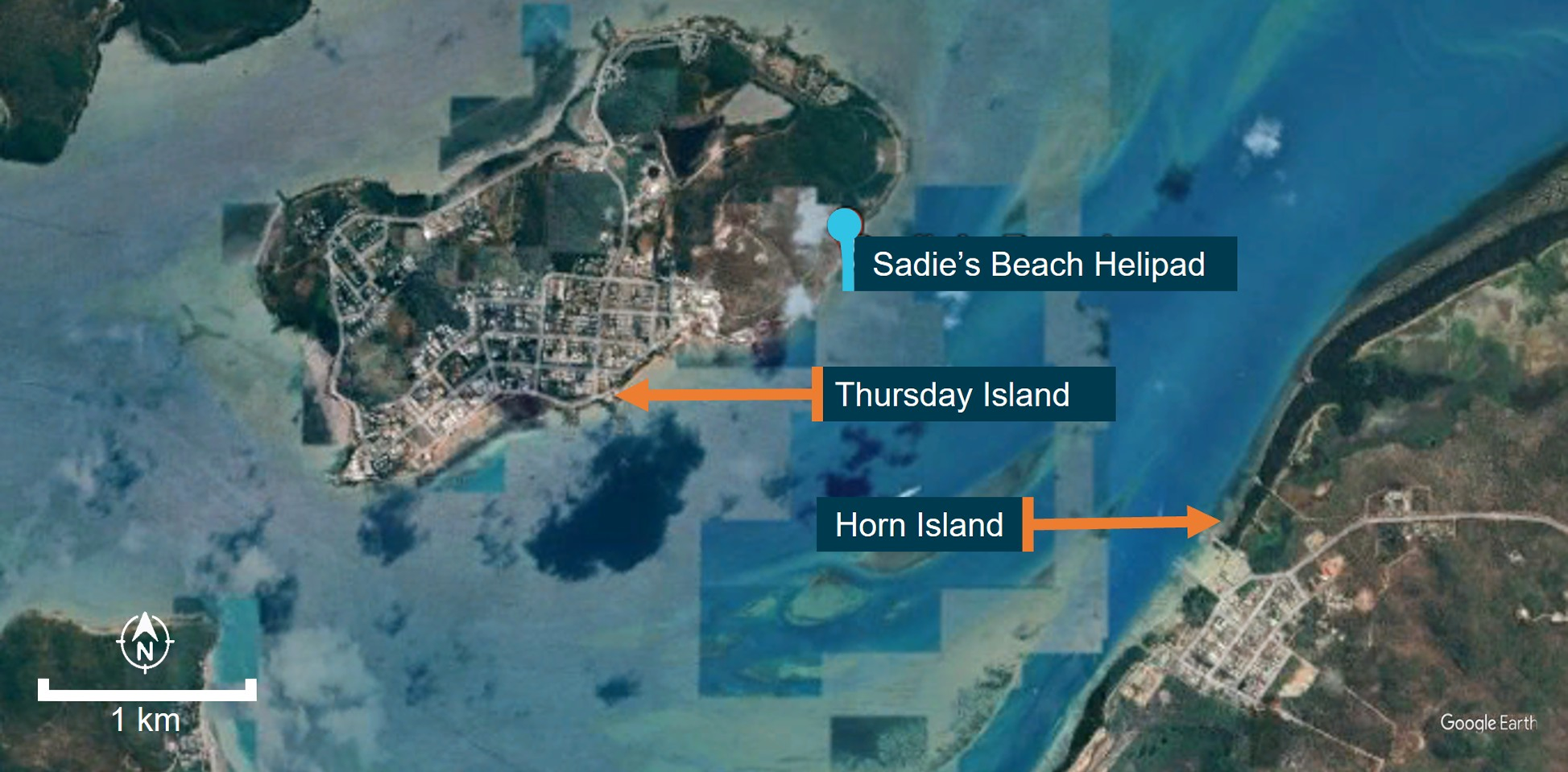
On 6 January 2026, at about 1406 local time, a Bell B206L-3 helicopter, registered VH‑LMW and operated by Fortescue Helicopters, was returning to Horn Island (Ngurupai) from Sadie’s Beach Helipad, Thursday Island (Waiben), Queensland, after transporting 2 passengers between the outer Torres Strait Islands.

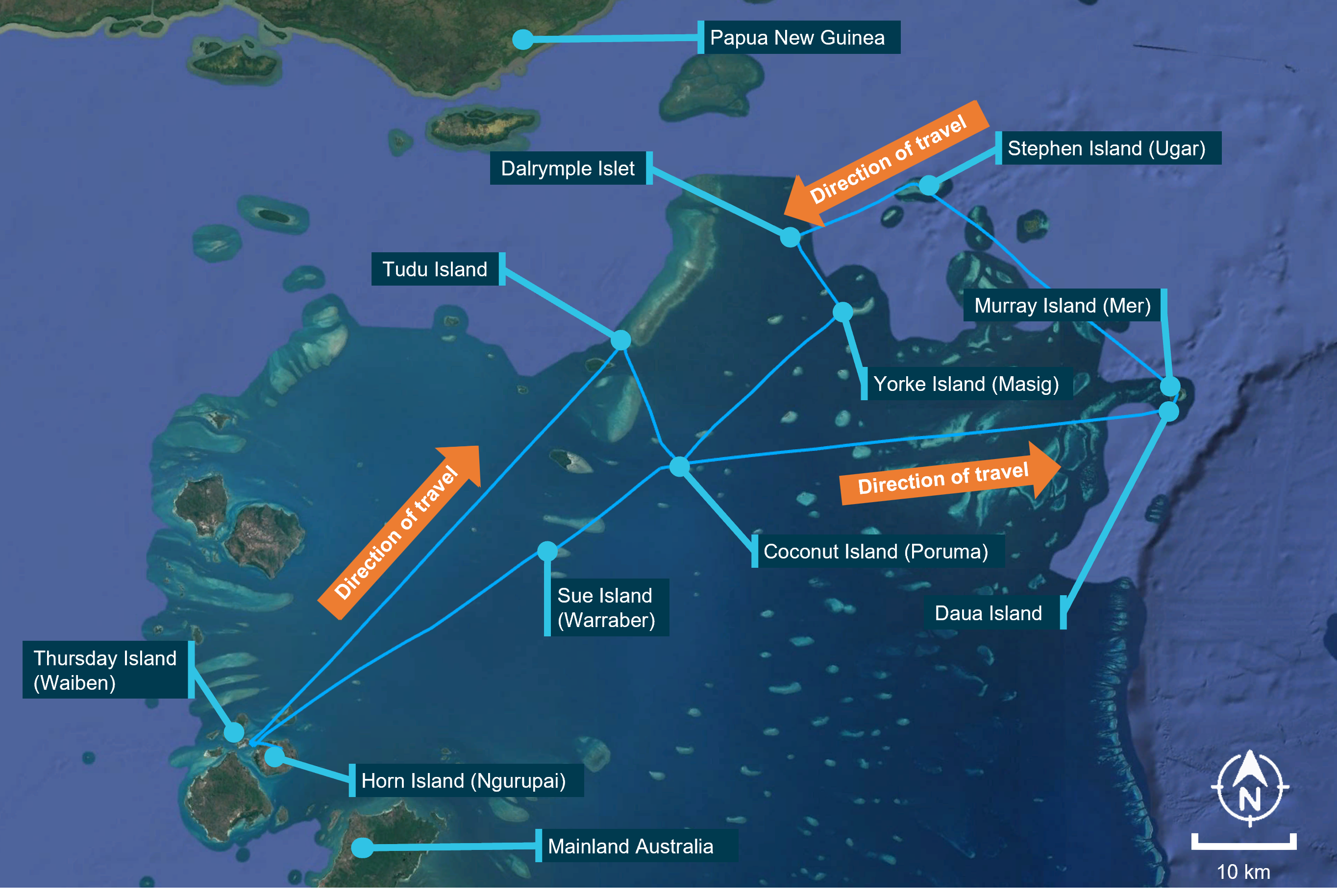
VH-LMW operations that day included 11 sectors, beginning from Horn Island Airport before embarking passengers at Thursday Island at about 0800. Following the departure from Thursday Island, the helicopter tracked and landed briefly at Tudu Island, Coconut Island (Poruma), Daua Island, Murray Island (Mer), Stephen Island (Ugar), Dalrymple Islet, Yorke Island (Masig), Coconut Island and Sue Island (Warraber), before returning the passengers to Thursday Island at about 1400 (Figure 1). The helicopter had completed about 3.2 hours of flying that day prior to the accident flight.

Figure 1: VH-LMW flight track

VH-LMW flight track on the day of the occurrence

Source: Google Earth, annotated by the ATSB

On each of the 2 stops at Coconut Island, about 130 km north-east of Thursday Island, the helicopter was refuelled from a company intermediate bulk container (IBC). The pilot reported that after disembarking the passengers at Sadie’s Beach Helipad, Thursday Island (Figure 2), before the re-positioning flight to Horn Island, about 200 lb (114 L) of fuel remained on board.

Figure 2: Location of Sadie’s Beach, Thursday Island 

Image of Thursday and Horn Island showing Sadie's Beach Helipad

Source: Google Earth, annotated by the ATSB

Following a normal take-off, at about 300 ft over the water, the pilot reported the helicopter made several sudden and  violent yawing[1] movements of about 60° to each side, accompanied by a reduction in both engine RPM and rotor RPM. An immediate scan of the engine gauges indicated that the torque gauge was fluctuating between 10‍–‍90%. The pilot partially reduced the collective[2] to recover rotor RPM, estimating they had lost about 5‍–‍6% rotor RPM at this time, however it continued to decay until the low rotor RPM warning light illuminated. 

The pilot initiated an autorotation[3] and activated the pop-out floats at about 100 ft above the water. The pilot reported that the engine had stopped before the aircraft landed on the water. 

After landing on the water, the helicopter remained afloat and upright for about 15 seconds, during which time the pilot transmitted a MAYDAY call. They recalled the helicopter then rolled about 120 degrees onto the right side. Images of the inverted helicopter showed the rear right float had detached from the skid tube and the front right float had also partially detached. The pilot reported that the float had pushed against their door which prevented egress from their nearest exit, requiring the pilot to egress through the front left (passenger) door. They then swam away from the helicopter before inflating their lifejacket. The helicopter continued to roll in the water until it became inverted. 

A private boat nearby, followed by a police boat, arrived within about 5 minutes to rescue the pilot. 

Context

Pilot information 

The pilot held a Commercial Pilot Licence (Helicopter) single-engine class, with a low‑level rating. At the time of the occurrence, the pilot’s total flying experience was 1,144 hours with about 300 hours on the Bell 206. The pilot’s last flight review was a proficiency check on 30 October 2025, valid for 2 years.

The pilot completed helicopter underwater escape training (HUET) on 25 September 2025 and held a Class 1 medical certificate valid until 14 January 2026. They had been employed by the operator since September 2025.

Aircraft information

VH-LMW was a Bell 206L-3, single-engine turbine powered helicopter, serial number 51120, constructed in the United States in 1984. A Rolls-Royce Allison 250-C30P engine was fitted to the helicopter and was registered to Fortescue Helicopters Pty Ltd, on 19 April 2023. VH‑LMW was fitted with emergency pop‑out floats for short‑term stability in the event of a ditching.

Meteorological information

Meteorological information recorded at Horn Island Airport at 1400 indicated:

  • wind 340° at 07 kt
  • visibility greater than 10 KM
  • cloud scattered[4] at 1,100 ft above the airport
  • temperature 27°/ and dew point of 25°
  • QNH[5] 1006
  • recent rain showers.

Operational information 

The operator was contracted to transport employees of an organisation that regularly conducted inspections on islands throughout the Torres Strait. 

The previous day, VH-LMW had flown 2.3 hours conducting similar inspections on islands in the north of the Torres Strait. Prior to that the helicopter had not been flown since 22 December 2025 when it had returned from Atherton, Queensland, following scheduled maintenance. 

Wreckage and post-impact information

The helicopter ditched shortly after take-off from Sadie’s Beach Helipad, about 6.5 km from Horn Island Airport. Following the pilot’s rescue, the police and pilot anchored the helicopter to prevent it drifting in the current while the operator was making recovery arrangements.

The operator subsequently arranged recovery of the helicopter and commissioned an independent engineering report. The results of the engineering report were not available to the ATSB at the time of writing.

Fuel 

The pilot’s flight plan showed the intended fuel for departure at the commencement of their day from Horn Island Airport was 800 lb (363 L).

The helicopter used Jet A-1 fuel that was stored in static tanks on Horn Island and an intermediate bulk container (IBC) on Coconut Island which was supplied via Horn Island as part of a broader distribution network. The pilot reported the IBC had been refilled in early December 2025. 

Fuel quality and contamination 

Free water[6], if present in aviation fuel, can result in filter blockages and, in more severe cases, engine failure through fuel starvation. In tropical climates, it can also create conditions that support algal growth in fuel tanks, which can degrade fuel quality and further contribute to filter obstruction. Water contamination is commonly checked in fuel using a water detecting tablet or paste which indicates the presence and level of water. 

Microorganisms that can be found in aviation turbine fuel can include bacteria, yeasts and fungi. As these organisms develop, they form solid residues that can block and damage fuel filters. Some microorganisms also generate acids that can accelerate corrosion of metal components. Because most microbial growth depends on the presence of free water, this kind of contamination is most commonly found anywhere fuel meets water, particularly in high humidity environments.

The CASA advisory circular AC 91-25 v1.2 Fuel and oil safety stated that:

Fuelling in remote locations exposes operators to increased risk in various areas, such as:

  • multi-transfer fuelling cycles, 
  • contamination of fuelling equipment whilst in transit and during aircraft arrival
  • miscellaneous fuelling equipment causing contamination issues. 

At the completion of the scheduled maintenance in December 2025, the pilot reported they had a discussion with the maintenance provider about algal growth which the pilot had identified in the helicopter’s fuel tanks. The pilot subsequently began an algal preventative treatment for VH-LMW. That involved adding an algal preventative to the full fuel tank while the helicopter remained on the ground between 22 December and 5 January.

Operator refuelling process

The operator’s procedure for drum stock refuelling required that fuel be sourced from approved drums and subjected to a series of quality checks prior to use. The procedure detailed that:

Drum stocks of fuel should be:

  • Stored under cover;
  • Stored with minimal ground contact (using wooden slats or equivalent);
  • Stored horizontally with bungs at the 3 and 9 o'clock position, or stored vertically with drum tops covers in place;
  • Refueling pumps must be fitted with a Go/No-Go filter;
  • Drum seals are checked that they are tight and not broken prior to use;
  • Drum-stock fuel is to be consumed within the specified Aviation Release Note certification date - Check the release note for the fuel to confirm it is from an approved source and within date;
  • Before fuelling an aircraft, a small amount of fuel is to be pumped into a container to be visually checked for colour, clarity and freedom from dirt and/or visible water;
  • Prior to opening the drum stand the drum upright and leave for a minimum of 30 minutes for AVGAS and one hour for JET A1 (or as long as practical);
  • Before commencing fuelling operation’s, the following earthing procedures should be carried out prior to opening the fuel cap: a. Drum to ground; b. Aircraft to ground; c. Nozzle to aircraft (disconnect by reversing this procedure);
  • Check fuel pump and associated equipment for contamination – should the pump not be fitted with an aviation grade filter the fuel should be checked for contamination using water detector capsules, or an approved equivalent;
  • Full or partly used drums should be stored when not under cover by tilting the drum so that the bungs are clear of any pooled water, or by laying the drum on its side.

The pilot reported they had taken a fuel sample from VH-LMW prior to their departure from Horn Island that morning and reported that the fuel drain looked normal. Prior to refuelling VH-LMW from the IBC at Coconut Island, the pilot had also reported they took 2 fuel samples from the IBC, an initial large sample that, in their experience, often contained contaminants, followed by a second smaller sample which they used to assess the quality of the fuel before refuelling the helicopter. They also stated they were conscious that the presence of water within the IBC was possible and therefore did not place the fuel hose toward the bottom of the IBC where water was likely to settle.

A Go-No-Go absorptive cartridge (filter) can be fitted to a fuel pumping device to absorb water from the fuel and remove any solids. 

The pilot reported that during their time with the operator they had not used a filter when refuelling from an IBC. However, they had previously used filters during their employment with other operators within the Torres Strait. The pilot reported they were unaware the operator had a filter and were advised after the occurrence the filter was stored at the company‑owned pilot accommodation on Thursday Island. 

Survival aspects 

The pilot conducted an autorotation and ditched the helicopter which remained stable for a brief time before rolling onto its right side. The pilot, who had completed helicopter underwater escape training (HUET), was able to egress and swim clear of the helicopter. However, the effectiveness of the emergency pop-out flotation system was limited. Images of the helicopter after impact showed the right rear float detached from the skid tube and the right front float displaced and the pilot reported the float obstructed their door and required an egress via the front left door. This may have impeded egress in a multi-occupant scenario or for occupants who had not completed HUET training.

HUET involves a replica of a helicopter cabin and fuselage being lowered into a swimming pool to simulate the ditching of a helicopter. The cabin can rotate upside down and focuses participants on bracing for impact, identifying primary and secondary exit points, opening an exit, releasing harness, egressing the wreckage and surfacing. HUET is normally part of a program of graduated training that builds in complexity, with occupants utilising different seating locations, exits and visibility. This training is conducted in a controlled environment with safety divers in the water.

The pilot recalled that HUET assisted them to quickly determine their primary exit was blocked by the float and identified the front left door as a secondary exit and successfully egressed the overturned and partially submerged helicopter. 

Further investigation

To date, the ATSB has:

  • collected records from the aircraft operator and Civil Aviation Safety Authority
  • collected fuel source records and quality control documentation
  • collected recorded data
  • interviewed the pilot, passengers and operator.

The investigation is continuing and will include:

  • further interviews relating to fuel quality monitoring
  • analysis of the survivability of the accident post-water impact
  • analysis of the independent engineering investigation report
  • review of operator’s fuel management process for mobile storage facilities and quality control
  • review of pilot induction training and procedures.

A final report will be released at the conclusion of the investigation. Should a critical safety issue be identified during the course of the investigation, the ATSB will immediately notify relevant parties so appropriate and timely safety action can be taken. 

Purpose of safety investigations

The objective of a safety investigation is to enhance transport safety. This is done through: 

  • identifying safety issues and facilitating safety action to address those issues
  • providing information about occurrences and their associated safety factors to facilitate learning within the transport industry.

It is not a function of the ATSB to apportion blame or provide a means for determining liability. At the same time, an investigation report must include factual material of sufficient weight to support the analysis and findings. At all times the ATSB endeavours to balance the use of material that could imply adverse comment with the need to properly explain what happened, and why, in a fair and unbiased manner. The ATSB does not investigate for the purpose of taking administrative, regulatory or criminal action.

About ATSB reports

ATSB investigation reports are organised with regard to international standards or instruments, as applicable, and with ATSB procedures and guidelines.

Reports must include factual material of sufficient weight to support the analysis and findings. At all times the ATSB endeavours to balance the use of material that could imply adverse comment with the need to properly explain what happened, and why, in a fair and unbiased manner.

An explanation of terminology used in ATSB investigation reports is available here. This includes terms such as occurrence, contributing factor, other factor that increased risk, and safety issue.

Publishing information

Released in accordance with section 25 of the Transport Safety Investigation Act 2003

Published by: Australian Transport Safety Bureau

© Commonwealth of Australia 2025

CC BY logo

 Ownership of intellectual property rights in this publication

Unless otherwise noted, copyright (and any other intellectual property rights, if any) in this report publication is owned by the Commonwealth of Australia.

Creative Commons licence

With the exception of the Commonwealth Coat of Arms, ATSB logo, and photos and graphics in which a third party holds copyright, this report is licensed under a Creative Commons Attribution 4.0 International licence.

The CC BY 4.0 licence enables you to distribute, remix, adapt, and build upon our material in any medium or format, so long as attribution is given to the Australian Transport Safety Bureau. 

Copyright in material obtained from other agencies, private individuals or organisations, belongs to those agencies, individuals or organisations. Where you wish to use their material, you will need to contact them directly.

[1]     Yawing: a yaw rotation is a movement around the yaw axis of an aircraft that changes the direction the vehicle is facing.

[2]     Collective: a primary helicopter flight control that simultaneously affects the pitch of all blades of a lifting rotor. Collective input is the main control for vertical velocity.

[3]     Autorotation is a condition of helicopter flight during which the main rotor of a helicopter is driven only by aerodynamic forces with no power from the engine. It is a means by which a helicopter can be landed safely in the event of an engine failure.

[4]     Scattered: 3–4 okta of cloud cover. An okta is a unit of measurement used to describe the extent of cloud cover (1–8).

[5]     QNH: the altimeter barometric pressure subscale setting used to indicate the height above mean sea level.

[6]     Water in aviation fuel exists in a dissolved form, in solution and as free water that is separated from the fuel and may be present as droplets or settled at the base of storage systems.

Occurrence summary

Investigation number AO-2026-003
Occurrence date 06/01/2026
Occurrence time and timezone 14:08 Australian Eastern Standard Time
Location 6.5 km west of Horn Island Airport
State Queensland
Report release date 16/04/2026
Report status Preliminary
Anticipated completion Q2 2026
Investigation level Short
Investigation type Occurrence Investigation
Investigation phase Examination and analysis
Investigation status Active
Mode of transport Aviation
Aviation occurrence category Control issues, Ditching, Engine failure or malfunction
Occurrence class Accident
Highest injury level None

Aircraft details

Manufacturer Bell Helicopter Co
Model 206L-3
Registration VH-LMW
Serial number 51120
Aircraft operator Fortescue Helicopters Pty Ltd
Sector Helicopter
Operation type Part 133 Air transport operations - rotorcraft
Activity General aviation / Recreational-Other general aviation flying-Ferry flights
Departure point Sadie's Beach Helipad Helicopter Landing Site, Queensland
Destination Horn Island Airport, Queensland
Injuries None
Damage Substantial

Whitsundays helicopter water forced landing

The ATSB has been notified of the forced landing on water of a Robinson R44 helicopter near Daydream Island on Sunday morning. 

As reported to the ATSB the pilot issued a MAYDAY call after experiencing an engine failure, deployed the helicopter’s emergency pop-out floats, and landed on the water near Daydream Island. The pilot, the sole occupant of the helicopter, was recovered by a nearby vessel and was reportedly uninjured.

The ATSB is gathering further information as to the circumstances of the forced landing to inform an investigation decision.