Near collision involving GippsAero GA8, VH-ASI, and Fairchild SA227, VH-SEZ, at Flinders Island Airport, Tasmania, on 17 December 2025

Summary

The ATSB is investigating a near collision involving GippsAero GA8, VH-ASI, and Fairchild SA227, VH-SEZ, at Flinders Island Airport, Tasmania, on 17 December 2025.

Passing 150 ft on take-off from runway 14, the crew of the Fairchild SA227 observed the GippsAero GA-8 taking off on the crossing runway 23 in close proximity.

The ATSB has commenced the examination and analysis of the initial evidence collected.

To date, the ATSB investigation has included:

  • interview flight crew from both aircraft
  • interviewing witnesses on the ground
  • examining available CCTV footage and aerodrome VHF communications
  • analysis of recorded flight data
  • examination operators and airport manuals
  • pilot and aircraft maintenance records.

A final report will be released at the conclusion of the investigation. Should a critical safety issue be identified during the course of the investigation, the ATSB will immediately notify relevant parties, so that appropriate safety action can be taken.

Occurrence summary

Investigation number AO-2025-074
Occurrence date 17/12/2025
Occurrence time and timezone 09:15 Australian Eastern Daylight Time
Location Flinders Island Airport
State Tasmania
Report status Pending
Anticipated completion Q2 2026
Investigation level Short
Investigation type Occurrence Investigation
Investigation phase Examination and analysis
Investigation status Active
Mode of transport Aviation
Aviation occurrence category Near collision
Occurrence class Serious Incident
Highest injury level None

Aircraft details

Manufacturer GippsAero
Model GA8
Registration VH-ASI
Serial number GA8-15-223
Aircraft operator Sinclair Air Charter Pty. Ltd.
Sector Piston
Operation type Part 135 Air transport operations - smaller aeroplanes
Activity General aviation / Recreational-Other general aviation flying-Ferry flights
Departure point Flinders Island Airport, Tasmania
Destination Bridport Aircraft Landing Area, Tasmania
Injuries None
Damage Nil

Aircraft details

Manufacturer Fairchild Industries Inc
Model SA227-AC
Registration VH-SEZ
Serial number AC-692B
Aircraft operator Sharp Aviation Pty. Ltd.
Sector Turboprop
Operation type Part 121 Air transport operations - larger aeroplanes
Activity Commercial air transport-Scheduled-Domestic
Departure point Flinders Island Airport, Tasmania
Destination Launceston Airport, Tasmania
Injuries None
Damage Nil

Ground strike involving a Robinson R22 Beta II, Cattle Station near Lake Sylvester, Northern Territory, on 24 November 2025

Occurrence Briefs are concise reports that detail the facts surrounding a transport safety occurrence, as received in the initial notification and any follow-up enquiries. They provide an opportunity to share safety messages in the absence of an investigation. Because occurrence briefs are not investigations under the Transport Safety Investigation Act 2003, the information in them is de-identified. 

What happened

On the afternoon of 24 November 2025, the pilot of a Robinson R22 helicopter was conducting commercial aerial mustering at a cattle station in the Northern Territory.

The operator reported that at the time of the occurrence, there was a 10–16 kt wind from the north-east and the temperature was 36°C. Relative to the aircraft’s heading the wind direction was at the 11 o’clock position.

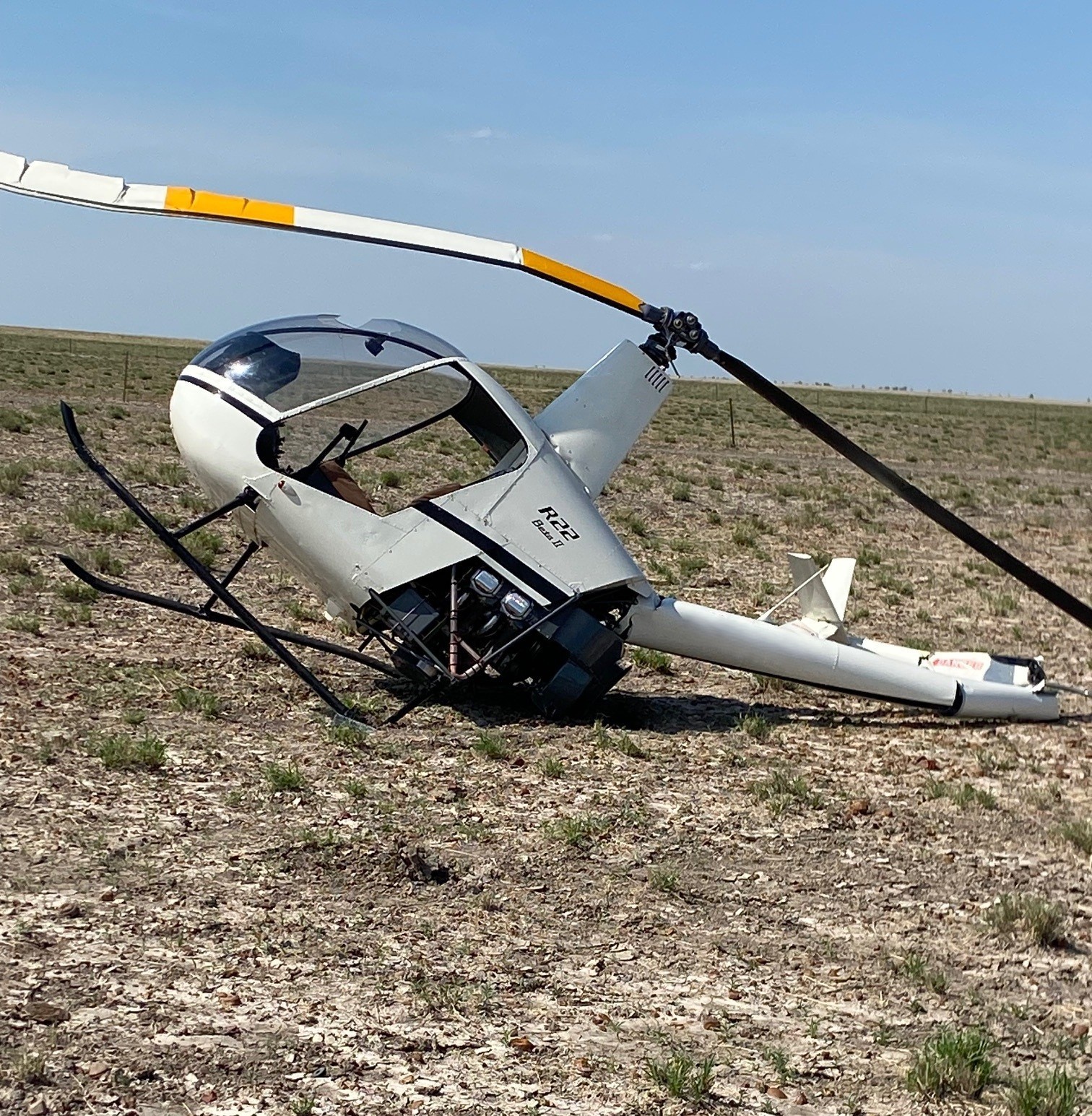
After the first herd of stock had been moved out of the laneway[1] the pilot landed the helicopter approximately 100 m from the laneway gate, to prepare for the second herd. As the second herd approached the laneway the pilot brought the helicopter into a 2–3 ft hover and slowly moved forward to gain airspeed. During this manoeuvre, the pilot reported that the helicopter encountered unexpected sink and they raised the collective[2] to counter the downward movement. Despite the increased collective, the helicopter continued to sink and the left skid contacted a grass mound. Pitching forward, one of the helicopter’s main rotor blades struck the tail boom and the helicopter lifted away from the ground and began to spin. The pilot attempted to slow the rotation by reducing the throttle and the helicopter came to a rest on the rear of its skids and the damaged tail boom (Figure 1).

The helicopter sustained substantial damage to the tail boom, skids and main rotor blades, however the pilot was uninjured. The pilot was wearing a helmet during the operation.

Figure 1: Helicopter damage

A helicopter crashed in a field

AI-generated content may be incorrect.

Source: Aircraft operator

Safety message

Helicopter mustering is an inherently high-risk activity involving low‑level flying which significantly reduces the safety margins usually available to pilots. It is important when transitioning from a hover to forward flight, that pilots establish and maintain appropriate ground clearance – allowing for a timely reaction to unexpected sink or other weather‑related conditions that can affect take-off.

This occurrence also highlights the importance and value of pilots wearing helmets during operations with increased risk. The ATSB safety advisory notice,

AO-2020-040-SAN-01 (204.84 KB)
, encourages helicopter pilots conducting low-level operations to wear flight helmets that are custom fitted to the individual’s head, include a properly secured chin strap and are maintained in accordance with the manufacturer’s recommendations.

About this report

Decisions regarding whether to conduct an investigation, and the scope of an investigation, are based on many factors, including the level of safety benefit likely to be obtained from an investigation. For this occurrence, no investigation has been conducted and the ATSB did not verify the accuracy of the information. A brief description has been written using information supplied in the notification and any follow-up information in order to produce a short summary report, and allow for greater industry awareness of potential safety issues and possible safety actions.

[1]     Laneway: a narrow corridor designed for livestock to be separated from the herd and to separate animals for different procedures.

[2]     Collective: a primary helicopter flight control that simultaneously affects the pitch of all blades of a lifting rotor. Collective input is the main control for vertical velocity.

Occurrence summary

Mode of transport Aviation
Occurrence ID AB-2025-064
Occurrence date 24/11/2025
Location Cattle Station near Lake Sylvester,
State Northern Territory
Occurrence class Accident
Aviation occurrence category Ground strike
Highest injury level None
Brief release date 23/12/2025

Aircraft details

Manufacturer Robinson Helicopter Co
Model R22 Beta II
Sector Helicopter
Operation type Part 138 Aerial work operations
Departure point Cattle Station, Northern Territory
Destination Cattle Station, Northern Territory
Damage Substantial

Ground strike involving a de Havilland DH82A Tiger Moth, South Grafton Aircraft Landing Area, New South Wales, on 30 November 2025

Occurrence Briefs are concise reports that detail the facts surrounding a transport safety occurrence, as received in the initial notification and any follow-up enquiries. They provide an opportunity to share safety messages in the absence of an investigation. Because occurrence briefs are not investigations under the Transport Safety Investigation Act 2003, the information in them is de-identified. 

What happened

On 30 November 2025, a de Havilland DH82A Tiger Moth departed South Grafton Aircraft Landing Area, New South Wales, at 1100 local time,[1] for a private flight with only the pilot on board. They departed from runway 26,[2] which was a sealed runway surface. Weather conditions were reported to be CAVOK[3] with a light and variable wind. 

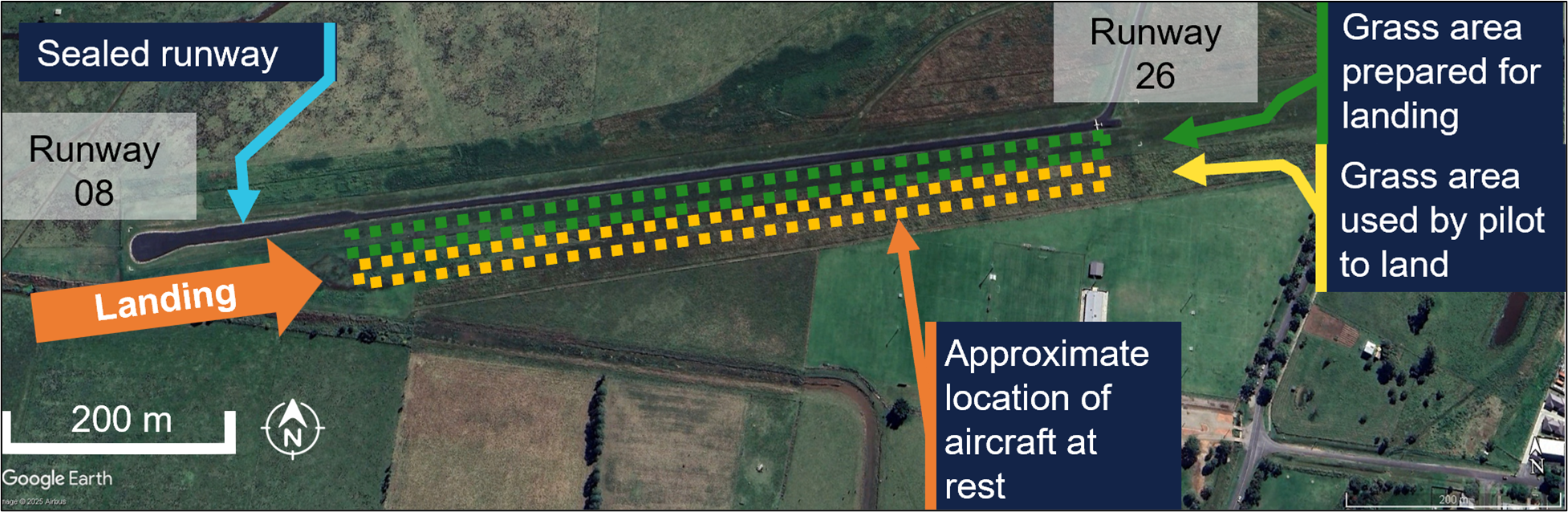
A third party suggested to the pilot that they could consider landing on the freshly mown grass area right of runway 08,[4] on their return to South Grafton. However, the pilot misunderstood the location of the prepared grass landing area. 

The pilot believed that the area available was the mowed grass beside the sealed strip further to the right. However, the prepared grass area being referred to by the third party was in between the sealed runway and that understood by pilot (Figure 1).

Figure 1: South Grafton ALA – sealed and grass areas

Picture showing location of sealed runway, grass area prepared for landing and the area landed on.

Source: Google Earth and operator, annotated by the ATSB 

A normal approach was flown, aligning the aircraft and touching down on the grass parallel to the sealed strip. However, the landing area selected by the pilot consisted of longer, slashed grass, that was not the surface that had been prepared for use. 

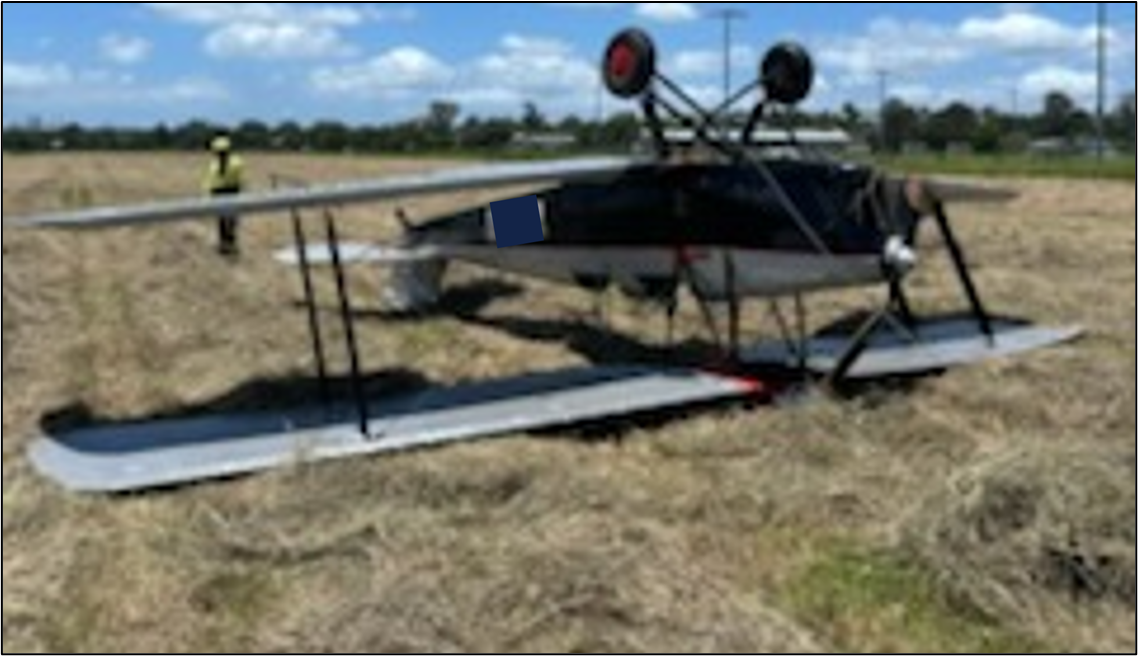
This surface caused undesirable ground handling characteristics on landing. The aircraft landed in a ‘2 point’[5] attitude, then subsequently pitched over on its nose and came to rest on its back. The aircraft sustained significant damage to its airframe and propeller (Figure 2). The pilot exited the aircraft with minor injuries.

Figure 2: The aircraft after the accident

Photo of aircraft upside down after occurrence

The supplied image had low resolution. Source: Operator

Safety message

The conditions of a landing area can change, and the pilot always needs to review the risk and have a high degree of situational awareness of the conditions. 

There was a missed opportunity during taxi to assess the surface conditions and location of the landing area that had not been used by the pilot before. Pilots need to take every opportunity available to prepare themselves with relevant runway conditions.

Landing tailwheel aircraft that have a high centre of gravity can result in a higher likelihood of loss of control during the ground roll, thus placing greater importance on ensuring the runway conditions and surface are appropriate.

If the pilot is not prepared for the landing, or the landing surface does not appear suitable before touchdown, the pilot should consider aborting the landing. This can be achieved by conducting a go-around and is normally the safest course of action if a pilot is not entirely comfortable. 

About this report

Decisions regarding whether to conduct an investigation, and the scope of an investigation, are based on many factors, including the level of safety benefit likely to be obtained from an investigation. For this occurrence, no investigation has been conducted and the ATSB did not verify the accuracy of the information. A brief description has been written using information supplied in the notification and any follow-up information in order to produce a short summary report, and allow for greater industry awareness of potential safety issues and possible safety actions.

[1]     All times referred to in this brief are local time, Coordinated Universal Time (UTC) + 11 hours.

[2]     Runway aligned 260º magnetic 

[3]     Ceiling and visibility okay (CAVOK): visibility, cloud and present weather are better than prescribed conditions. For an aerodrome weather report, those conditions are visibility 10 km or more, no significant cloud below 5,000 ft, no cumulonimbus cloud and no other significant weather.

[4]     Some pilots consider landing tailwheel aircraft on grass to be preferential due to the surface being more forgiving on aircraft components, such as the tailwheel. 

[5]     Landing attitude with both main wheels in contact with the runway and the tail wheel in the air.

Occurrence summary

Mode of transport Aviation
Occurrence ID AB-2025-063
Occurrence date 30/11/2025
Location South Grafton Aircraft Landing Area
State New South Wales
Occurrence class Accident
Aviation occurrence category Collision with terrain, Depart/app/land wrong runway, Ground strike
Highest injury level Minor
Brief release date 23/12/2025

Aircraft details

Manufacturer de Havilland Aircraft
Model DH-82A
Sector Piston
Operation type Part 91 General operating and flight rules
Departure point South Grafton Aircraft Landing Area, New South Wales
Destination South Grafton Aircraft Landing Area, New South Wales
Damage Substantial

Hard landing involving a Kavanagh Balloons G-450, near Mareeba, Queensland, on 22 November 2025

Occurrence Briefs are concise reports that detail the facts surrounding a transport safety occurrence, as received in the initial notification and any follow-up enquiries. They provide an opportunity to share safety messages in the absence of an investigation. Because occurrence briefs are not investigations under the Transport Safety Investigation Act 2003, the information in them is de-identified. 

What happened

On 22 November 2025, 3 balloons took off at dawn from a launch site near Mareeba, Queensland, to conduct scenic hot air balloon flights. The weather had light southerly surface winds, moderate north-easterly winds in the mid layers and stronger south‑easterly winds in the higher altitudes. 

As the morning progressed, the surface winds died down while the mid layers became less consistent, resulting in the pilots conducting steeper descents into their landing areas.

One of the balloons, a Kavanagh Balloons G-450, landed moderately hard resulting in injury to an elderly passenger. Initially the passenger did not seek medical attention but later in the day X-rays were conducted, and it was determined that the passenger sustained fractures to both tibias with the left tibia becoming displaced. 

Safety message

The ATSB recently published a Safety study into Australian balloon transport operation occurrences from 2014 to 2022 (AS-2023-002) which found that injuries, serious incidents and accidents were all more likely to occur during landing than any other phase of flight. For the period 2014–2022, the ATSB occurrence database recorded 58 minor injuries and 18 serious injuries sustained in commercial ballooning with layover and hard landings having contributed to the largest number of serious injuries. These resulted from balloon passengers being unrestrained within the basket and, in some occurrences, adopting an incorrect landing position. Wind was the most common factor reported to have contributed to these occurrences.

Balloon pilots are encouraged to use all available resources including passenger demonstrations and safety briefing cards to ensure that every passenger understands the landing position and its importance, and approved Bureau of Meteorology products, to ensure they understand the weather, particularly the wind, and its influence on flight safety. 

Safety Watch logo

The ATSB SafetyWatch highlights the broad safety concerns that come out of our investigation findings and from the occurrence data reported to us by industry. One of the safety concerns is Reducing passenger injuries in commercial ballooning operations.

About this report

Decisions regarding whether to conduct an investigation, and the scope of an investigation, are based on many factors, including the level of safety benefit likely to be obtained from an investigation. For this occurrence, no investigation has been conducted and the ATSB did not verify the accuracy of the information. A brief description has been written using information supplied in the notification and any follow-up information in order to produce a short summary report, and allow for greater industry awareness of potential safety issues and possible safety actions.

Occurrence summary

Mode of transport Aviation
Occurrence ID AB-2025-062
Occurrence date 22/11/2025
Location Near Mareeba
State Queensland
Occurrence class Accident
Aviation occurrence category Cabin injuries, Hard landing
Highest injury level Serious
Brief release date 23/12/2025

Aircraft details

Manufacturer Kavanagh Balloons
Model G-450
Sector Balloon
Operation type Part 131 Balloons and hot air airships
Departure point Near Mareeba, Queensland
Destination Near Mareeba, Queensland
Damage Nil

Loss of tail rotor effectiveness during low-level, slow speed survey flight

The pilot of a Bell LongRanger experienced a loss of tail rotor effectiveness while conducting weed surveying over the Snowy River, resulting in the helicopter striking a large boulder in the river during the subsequent emergency landing, an ATSB investigation report details. 

The helicopter, which was operated by Heli Surveys, had been tasked to conduct a low-level weed survey task for the NSW National Parks and Wildlife Service (NPWS). On board the flight, which had departed Jindabyne on the morning of 11 March 2022, were the pilot and four NPWS officers. 

To facilitate the survey, the helicopter was flying at a low height over the Snow River’s southern riverbank, with the nose of the helicopter yawed to the right (i.e. sideways) at a speed of about 30 kt.

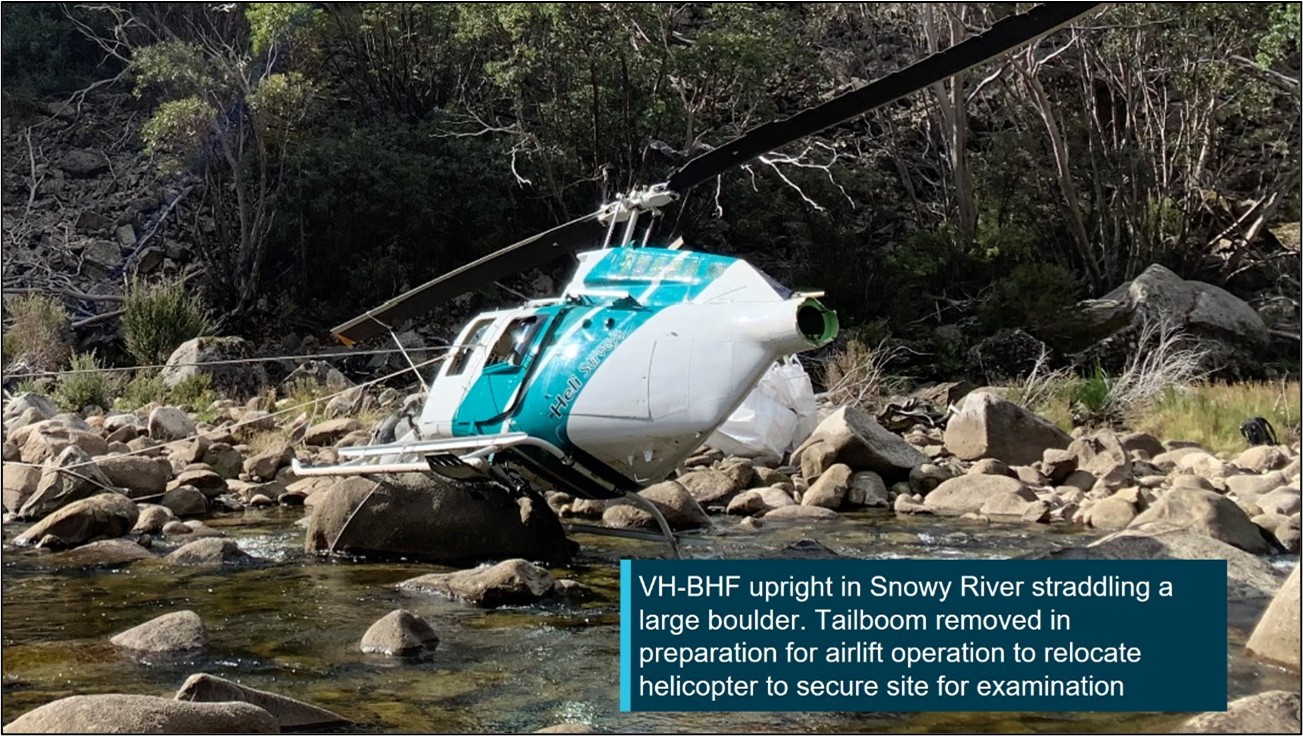
After the pilot made a light control input on the left anti-torque pedal, in an attempt to straighten the nose and improve their forward vision, the helicopter experienced an uncommanded yaw to the right. As the yaw rate accelerated the pilot decided that their only option was to reduce the throttle to idle, which stopped the yawing motion. The pilot was then committed to an emergency landing in the river, during which it struck a large, unsighted boulder.

The impact with the boulder partially separated the helicopter’s forward cockpit section from the cabin area and resulted in the tailboom partially fracturing. Three of the helicopter’s occupants sustained serious injuries and 2 received minor injuries.

“The investigation found that the combination of low-level, slow speed flight while yawed to the right by about 45°, and operating at a high gross weight and density altitude, were conducive to a loss of tail rotor effectiveness,” ATSB Director Transport Safety Kerri Hughes said. 

“As such, it was likely that a loss of tail rotor effectiveness occurred at an insufficient height to recover and avoid a collision with terrain.”

Ms Hughes explained that loss of tail rotor effectiveness (LTE) can occur when the airflow through a helicopter’s tail rotor is changed, such as by altering the angle or speed at which turbulent air from the main rotor washes into the rotating blades of the tail rotor disc.

“The investigation identified that the operator’s risk assessment for low-level operations did not contain the hazard and control measures to avoid the likelihood of loss of tail rotor effectiveness,” she said.

“Further, there was no requirement for its pilots to conduct pre-flight risk reviews to ensure that operations could be conducted without unacceptable safety risk.”

In addition, the investigation found that one of the NPWS officers on board was not required for the survey task, which unnecessarily exposed them to the risks associated with low-level flight. 

“While the client’s operating procedures referred to only permitting ‘essential personnel’ on flights, they did not provide a definition or specify the roles and responsibilities of these personnel.“ 

Since the accident, Heli Surveys has conducted a review of its risk management processes and made changes to its operational conduct, while the NPWS has revised its aviation safety policy and developed an aviation safety management system to enhance safety and manage risk across its aviation activities and operations.

“Survey flights, particularly when performed in alpine environments, are generally conducted at low level and slow speeds,” Ms Hughes concluded.

“This creates a high-risk operating environment that requires effective risk management.”

The ATSB investigation report highlights that risk management should include an overarching pre‑operational risk assessment to identify the hazards and risks common to that type of operation.

“This assessment can then be used to inform the management of risk for specific taskings including a pilot’s pre-flight risk review, to ensure the operation can be conducted safely.” 

Read the final report: Collision with terrain involving Bell 206L-1, VH-BHF, 20 km north-west of Jindabyne, New South Wales, on 11 March 2022

Engine cowling separation involving a Piper PA-28R, 8 km north-west of Amberley Airport, Queensland, on 12 November 2025

Occurrence Briefs are concise reports that detail the facts surrounding a transport safety occurrence, as received in the initial notification and any follow-up enquiries. They provide an opportunity to share safety messages in the absence of an investigation. Because occurrence briefs are not investigations under the Transport Safety Investigation Act 2003, the information in them is de-identified. 

What happened

On the afternoon of 12 November 2025, an instructor and student pilot departed Archerfield Airport, Queensland, for a navigational training flight in a Piper Aircraft Corporation PA-28R aircraft. 

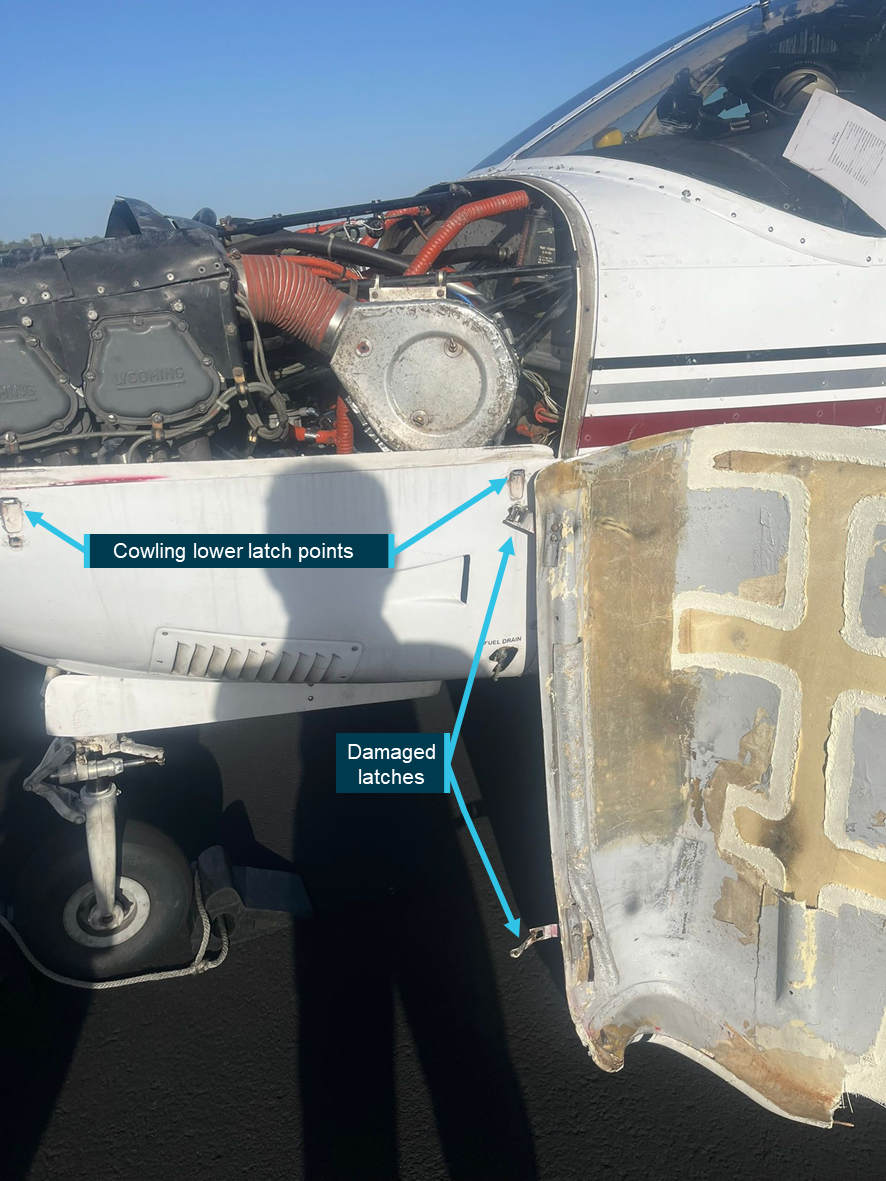
Following several hours of exercises, the flight was tracking east and transiting the Amberley Airport control zone at 1,500 ft when the entire upper engine cowling separated from its attachment points and flipped backward against the cockpit windshield, partially obstructing both pilots’ forward visibility. 

Maintaining control of the aircraft and aware of their proximity to Amberley Airport, the crew immediately assessed the engine operation and aircraft handling – finding both unaffected. The crew called PAN PAN[1] to Amberley approach air traffic control and turned toward the aerodrome to conduct an approach to runway 15. After ATC advised of significant crosswinds for that runway and mindful of their very limited forward visibility, the crew re‑positioned for an approach to runway 04.

During the turn onto the base leg of the runway 04 approach, the cowling fractured into 2 sections, with the right side separating from the aircraft and the left side moving downward and away from the windshield, remaining attached to the aircraft. The final approach and landing were uneventful.

Engineering aspects

The PA-28 engine upper cowling is a shaped single-piece composite fibre structure that affixes to the lower cowling with 4 over-centre toggle style latches (2 on each side). The instructor reported that all latches were checked for security and tightness during the aircraft’s pre-flight inspection and noted that the flight had operated normally for around 3 hours before the separation. No defects or related issues were annotated in the aircraft’s maintenance release.

The reason/s for the cowl separation remain unknown.

Figure 1: Remaining cowl section and left separation points

Remaining cowl section and left separation points

Source: Supplied by operator, annotated by the ATSB

Safety message

The well-managed response to this significant in-flight emergency ensured the safe recovery of the aircraft and crew. The methodical approach to the problem assessment, decision-making and utilisation of ATC assistance is a good illustration of best-practice emergency management.

The unintended and sudden in-flight separation of cowlings or other airframe components has the potential to interfere with aircraft controllability, engine operation, or – in the worst-case scenario – cause pilot incapacitation should the components forcefully enter the cockpit through the windshield.

Maintenance attention and airworthiness inspections must have regard to the security and ongoing mechanical condition of all cowlings, panels and their fixtures.

About this report

Decisions regarding whether to conduct an investigation, and the scope of an investigation, are based on many factors, including the level of safety benefit likely to be obtained from an investigation. For this occurrence, no investigation has been conducted and the ATSB did not verify the accuracy of the information. A brief description has been written using information supplied in the notification and any follow-up information in order to produce a short summary report, and allow for greater industry awareness of potential safety issues and possible safety actions.

[1]     PAN PAN: an internationally recognised radio call announcing an urgency condition which concerns the safety of an aircraft or its occupants but where the flight crew does not require immediate assistance.

Occurrence summary

Mode of transport Aviation
Occurrence ID AB-2025-061
Occurrence date 12/11/2025
Location 8 km north-west of Amberley Airport
State Queensland
Occurrence class Serious Incident
Aviation occurrence category Diversion/return, Fuselage/wings/empennage, Objects falling from aircraft
Highest injury level None
Brief release date 23/12/2025

Aircraft details

Manufacturer Piper Aircraft Corp
Model PA-28R
Sector Piston
Operation type Part 142 Integrated and multi-crew pilot flight training
Departure point Archerfield Airport, Queensland
Destination Archerfield Airport, Queensland
Damage Minor

Rottnest floatplane accident investigation updated with interim report

The ATSB has provided a substantive update on progress made, and noted several areas of ongoing focus, in its investigation of a floatplane accident off Rottnest Island, WA, with the publication of an interim report.

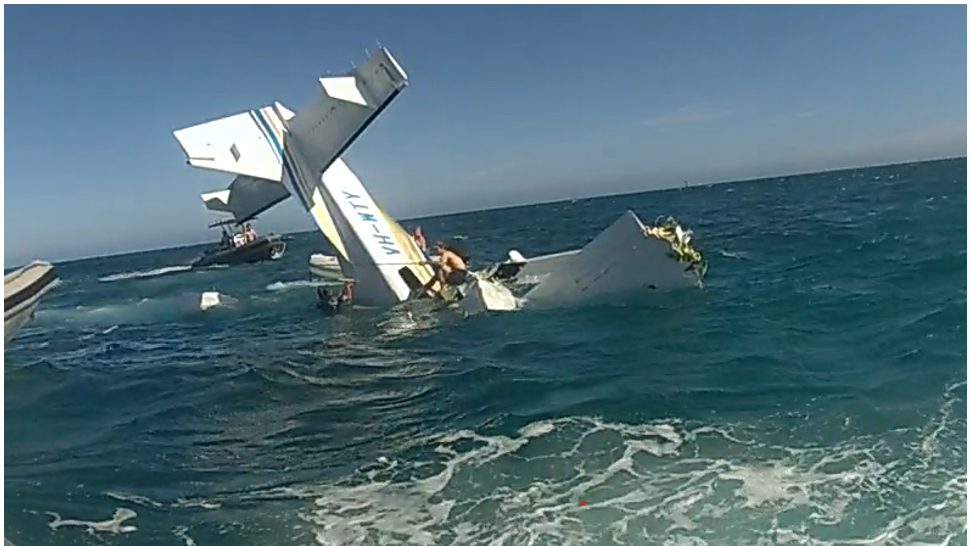
The report details that the Cessna 208 Caravan floatplane, operated by Swan River Seaplanes, hit swell and became airborne, then collided with water, during an attempted take-off from Thomson Bay, on Rottnest’s north-east, on 7 January 2025. The pilot and two passengers were fatally injured.

ATSB Chief Commissioner Angus Mitchell said the interim report follows the publication of a preliminary report in March and adds further detail around the occurrence itself, and contextual information developed so far in the investigation.

“Analysis of the wreckage, witness statements, text messages, recorded onboard data and video footage has provided a more detailed understanding of the accident sequence,” Mr Mitchell began.

“Due to strong winds, the pilot had surveyed the operator’s normal take-off area in the middle of Thomson Bay twice on the afternoon of the accident.

“Considering the conditions to be unsuitable along the normal southerly track, the pilot instead opted for an easterly take-off, closer to shore where they perceived the swell was not as bad.”

After the six passengers were conveyed by boat to the pontoon in Thomson Bay where the aircraft was stationed, the pilot taxied the aircraft to the north-west before turning and commencing the take-off to the east.

“The aircraft accelerated along the water in a strong crosswind and a light tailwind, and as it passed Phillip Rock, it encountered sea swell and chop,” Mr Mitchell said.

With an indicated airspeed of 57 kt, the aircraft struck swell and became airborne. Its nose attitude increased significantly and, after reaching a maximum altitude of 16 ft, it rolled to the left.

The left wing impacted the water, followed by the fuselage and the rest of the aircraft, and the wreckage came to rest on its nose on the seafloor, partially submerged.

Four of the passengers were able to exit the wreckage; two with serious injuries and one with minor injuries. The pilot and two remaining passengers were fatally injured, however.

A pathologist’s report for the WA Coroner identified the causes of death as drowning for the pilot, and one passenger in the first row of seats. The cause of death for the other passenger, in the second row, was drowning with head injury.

“The identification of factors contributing to the survivability of the aircraft’s occupants is an important area of focus,” Mr Mitchell said.

This is aligned with the ATSB’s ongoing SafetyWatch priority of reducing the severity of injuries in accidents involving small aircraft.

“Examination of the wreckage identified the wings hinged backwards at impact, and the trailing edge of each wing penetrated the cabin in the area of the second row of passenger seating,” Mr Mitchell said.

“The investigation is considering the crashworthiness of the Cessna Caravan aircraft and the suitability of the manufacturer and operator’s emergency equipment and procedures for accidents involving immersion in water.”

The ongoing investigation will also review the pilot’s assessment of conditions on the day of the accident, including the decision to conduct an eastwards take-off. The influence of the tailwind, crosswind and other environmental conditions on the aircraft performance, and the aircraft handling in those conditions, will be examined. 

“While the investigation is interested to understand the role of the pilot’s actions and decision-making on the accident, the procedures and other risk controls used by Swan River Seaplanes for operations in the Thomson Bay area are also an area of focus,” Mr Mitchell said.

“The investigation will also consider the operator’s identification and assessment of Thomson Bay for floatplane operations, and its operational oversight practices.”

Also under examination is the Cessna Caravan’s stall warning system, noting passenger video did not capture any stall warning sounds during the take-off run, and the stall warning circuit breaker was found in the disconnected position after the accident.

“While the Cessna Caravan’s handbook instructs pilots to have all circuit breakers in before commencing flight, experienced Caravan amphibian pilots have reported false alarms from the stall warning system during water take-offs, which can cause a loud distraction and concern to passengers,” Mr Mitchell explained.

“This has led to a reported practice within the industry of disconnecting the stall warning system circuit breaker prior to take-off, the implications of which the investigation will consider.”

The interim report also contains information gathered into the aircraft’s maintenance history, extended periods of inactivity, and return to service actions taken after the aircraft was leased by Swan River Seaplanes in late 2024.

Mr Mitchell emphasised that the investigation was still underway.

“The areas of ongoing focus detailed in today’s interim report should not be interpreted as likely findings in the investigation, given they are still undergoing detailed analysis,” he said.

That analysis, and the findings that they lead to, will be detailed in the ATSB investigation’s final report, currently anticipated for public release in the second half of 2026.

“Until then, if any critical safety issues are identified, the ATSB will immediately notify relevant parties so appropriate and timely safety action can be taken,” he concluded.

Read the interim report: Loss of control and collision with water involving Cessna 208 Caravan amphibian, VH-WTY, Rottnest Island, Western Australia, on 7 January 2025

Power bank fire highlights importance of keeping lithium battery devices easily accessible

A power bank fire in the overhead locker of a Boeing 737 illustrates the importance of passengers following new airline guidance to keep their lithium battery devices easily accessible.

The final report from an ATSB investigation into the serious 21 July 2025 incident explains the Virgin Australia aircraft was descending towards Hobart when a cabin crew member identified smoke and flames coming from an overhead locker.

“While confirming the cabin was secure for landing, the cabin crew member heard what they described to the ATSB as a popping and hissing sound,” Chief Commissioner Angus Mitchell said.

“They then saw white smoke, then flames, emanating from an overhead locker above row 7.”

When the locker was opened, a passenger’s backpack was found to be on fire.

“Cabin crew doused the flames with a fire extinguisher and, with assistance from some passengers, poured water on the bag until no smoke was emitted.”

To reduce the risk of re‑ignition, a second fire extinguisher was discharged into the locker. Cabin crew instructed passengers to keep their heads down and cover their nose and mouth to avoid inhaling smoke.

Meanwhile, on being alerted to the fire by a cabin crew member, the flight crew broadcast a PAN PAN call to air traffic control, who provided clearance for the approach and landing, and alerted aviation rescue and firefighting services.

The aircraft, which had six crew and 149 passengers on board, landed safely in Hobart without further incident.

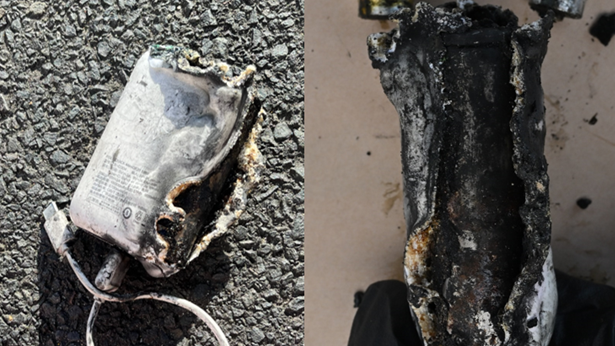
Image of power bank shown from back and side view

The ATSB investigation found a power bank inside the backpack had experienced a thermal runaway of its lithium-ion battery.

“Lithium battery thermal runaways and fires are difficult to manage, particularly in aircraft in flight,” Mr Mitchell said.

“With more devices carrying lithium batteries than ever, and as we enter a busy holiday season, it is important passengers understand and follow guidance provided by their airline around the packing and stowing of lithium battery devices.”

Virgin Australia(Opens in a new tab/window) now requires power banks, and spare and loose batteries, to be carried as carry-on baggage only, and to be protected against damage.

Batteries and power banks must now be individually protected to prevent short circuiting, and must be stowed in the seat pocket, under the seat in front, or in the passenger’s possession – not in the overhead lockers.

Australia’s other major airlines, Qantas(Opens in a new tab/window) and Jetstar(Opens in a new tab/window), also introduced revised lithium battery policies in mid-December.

“All passengers have a responsibility to ensure their lithium battery devices are packed safely and they are easily accessible in the cabin,” Mr Mitchell said.

“Further, they should not be brought on board an aircraft if they show any signs of damage or deterioration.”

Mr Mitchell also noted in the July incident the cabin crew could not complete Virgin Australia’s lithium battery fire procedures, due to the fire occurring 10 minutes prior to landing, when they also had the responsibility to ensure the cabin was secure.

“Airline procedures to manage battery fires are designed to limit the risk and reduce the likelihood of re-ignition of the battery until the aircraft can land. But it requires the batteries to be out of a bag and accessible to be easily completed.”

The ATSB’s investigation also found two cabin crew attempted to use the protective breathing equipment provided by the operator when managing the lithium battery fire, but did not find it effective due to fitment and communication/visibility issues.

“As the cabin crew were unable to use the protective breathing equipment, they had no protection from the smoke and were placed at an increased risk of smoke inhalation.”

Mr Mitchell concluded: “In-flight fires pose a significant risk to the safety of an aircraft if not managed quickly and appropriately.

“We urge passengers to familiarise themselves with their airline’s requirements before flying, and to  check the Civil Aviation Safety Authority ‘Pack Right’ website(Opens in a new tab/window) to confirm that equipment they are planning to take on board an aircraft is permitted and packed safely.”

Read the final report: In-flight fire involving Boeing 737, VH-YFY, 56 km north-north-east of Hobart Airport, Tasmania, on 21 July 2025

Preliminary report into Bankstown R22 accident

The ATSB has published a preliminary report from its ongoing investigation into a forced landing accident involving an R22 helicopter at Bankstown in Sydney’s south-west in October.

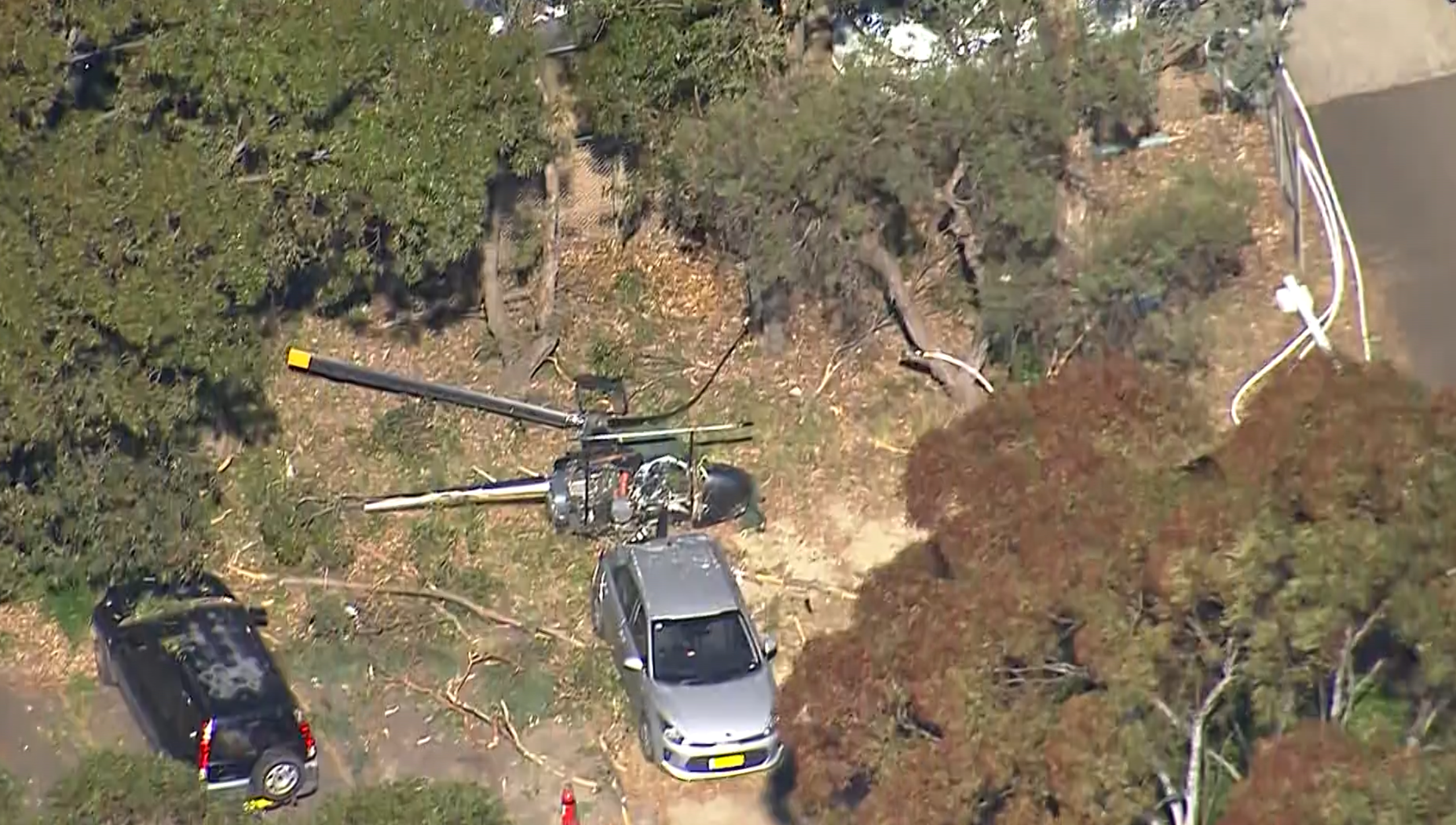
The helicopter, with an instructor and a student pilot on board, struck a car before rolling on its side in a carpark adjacent to Bankstown Airport on 3 October during an emergency autorotation forced landing.

The instructor was fatally injured, the student pilot sustained serious injuries, and the helicopter was destroyed.

ATSB Chief Commissioner Angus Mitchell said today’s preliminary report details evidence gathered so far in the investigation, but does not contain analysis or findings, which will be developed for publication in a final report.

The preliminary report details that the instructor and student pilot were conducting a circuit training flight, in windy conditions. 

“During the downwind leg of the first circuit, with the instructor in control from the left seat, the helicopter suddenly lost altitude, and the student reported seeing a loss of either engine or rotor RPM,” ATSB Chief Commissioner Angus Mitchell explained.

“The student also recalled hearing a whistling noise prior to the RPM reduction.”

Dashcam video of the accident showed the helicopter turning back towards the airport, and into the wind, as it lost altitude. It was flared as it approached the ground, likely in an attempt to reduce the rate of descent.

The helicopter impacted trees, before colliding with the rear of a parked car and then the ground, coming to rest on its left side.

First responders stated that the instructor and student had their seatbelts on. Neither of them was wearing a helmet and nor were they required to.

ATSB investigators deployed to the accident site where they examined the helicopter wreckage, where no evidence of pre-existing defects with the flight control system were identified.

“On site examinations identified an absence of the physical damage expected in an engine that was operating at the time of impact, and evidence of an exhaust gas leak in the engine’s no 4 cylinder, between the exhaust riser mount flange/gasket surface,” Mr Mitchell said. 

The leak was located directly above the carburettor heat scoop assembly. Carburettor heat is designed to draw warm air into the carburettor to prevent or remove icing. In accordance with the operator’s standard checklist for the downwind leg of a circuit, the carburettor heat control handle was found in the ‘on’ position.

“Damage identified in the main rotor system was consistent with low energy flight, as also indicated by the dashcam and the observed spread of the wreckage,” Mr Mitchell said.

“As the investigation proceeds, it will include further analysis of physical evidence from the site, including the exhaust system components,” Mr Mitchell said.

“It will also include an analysis of the audio signatures captured by the dashcam video, a review of the pilot in command’s experience performing autorotation landings, and a review of both the manufacturer and operator’s procedures for autorotation landings.”

A final report will be released at the conclusion of the investigation.

“Should a critical safety issue be identified during the course of the investigation, the ATSB will immediately notify relevant parties so appropriate action can be taken,” Mr Mitchell concluded.

Read the preliminary report: Collision with terrain involving Robinson R22 Beta, VH-RDL, Bankstown Airport, New South Wales, on 3 October 2025

Snowy Mountains VFR into IMC accident

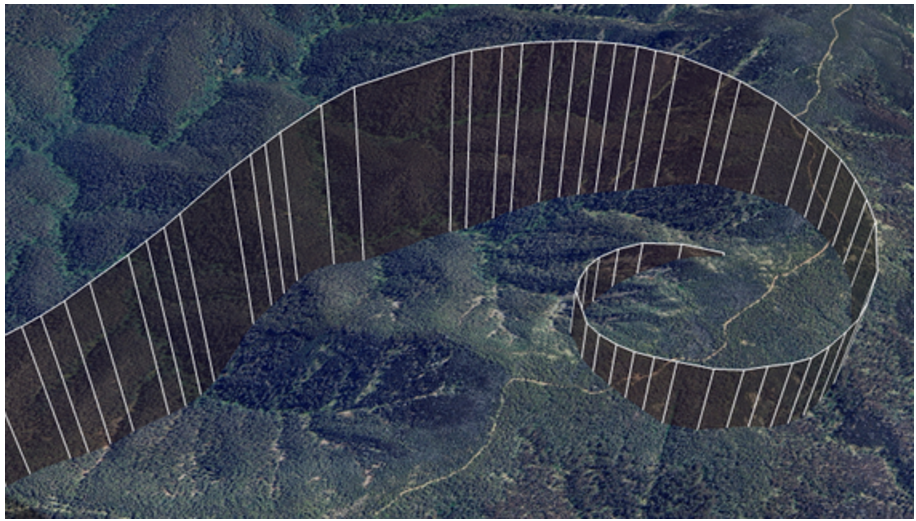
Flight tracking data showed a Beech Debonair in a spiralling descent consistent with pilot spatial disorientation while in cloud before the aircraft collided with steep, forested snow-covered terrain in the Snowy Mountains.

An ATSB investigation report details that the pilot, the aircraft’s sole occupant, had been conducting a ferry flight from Wangaratta in Victoria, where the aircraft had undergone a maintenance check, to Moruya on the NSW South Coast, on July 15 2025 under the visual flight rules (VFR). 

“Based on the forecast cloud between Wangaratta and Moruya, completing the flight while maintaining VFR was likely not feasible,” said ATSB Director Transport Safety Dr Stuart Godley.

“The pilot had done some limited instrument flying but did not hold an instrument rating, and it is very likely they became spatially disorientated after flying into cloud.”

The investigation report notes that the pilot held a recreational pilot licence and had completed some of the training required to attain a navigation endorsement. However, they were not yet licenced to fly in instrument conditions, or to conduct solo flights over such a long distance.

“The pilot’s limited training and experience in instrument flying and adverse weather conditions may have contributed to their perception of risk and decision to conduct or continue the flight in poor weather.” 

The report notes that broken cloud was forecast in the mountains east of Khancoban from 3,000 ft to above 10,000 ft. There were also areas of drizzle with overcast conditions between 3,000 ft and 9,000 ft. A witness near Khancoban airport observed the weather to be completely overcast, with cloud on nearby hilltops. 

“Given the terrain elevation in the area, it is therefore almost certain that the aircraft encountered weather conditions that made visibility marginal or worse, possibly for extended periods,” Dr Godley said.

The pilot had lodged a search and rescue time (SARTIME) with Airservices Australia, and when this elapsed AMSA’s Joint Rescue Coordination Centre was alerted and a search was launched.

Visibility was affected by cloud, and in the early stages of the search, helicopters had limited access to the area where the aircraft was last detected on ADS-B surveillance equipment. After an extended search by air, the aircraft was located on 17 July about 12 km from Khancoban. The pilot had been fatally injured and the aircraft was destroyed. 

As noted in

, in conditions where visual cues are poor or absent, such as in poor weather, up to 80 per cent of normal orientation information is missing. Humans are then forced to rely on the remaining 20 per cent, which is split equally between the vestibular system and the somatic system. Both of these senses are prone to powerful illusions and misinterpretation in the absence of visual references, which can quickly become overpowering.

“Non instrument rated pilots can rapidly become spatially disoriented when they cannot see the horizon,” Dr Godley noted. 

“The brain receives conflicting or ambiguous information from the sensory systems, resulting in a state of confusion that can rapidly lead to incorrect control inputs and resultant loss of aircraft control.”

Pilots not proficient in instrument-only flight will typically become spatially disoriented and lose control of the aircraft within 1–3 minutes after visual cues are lost.

Between 2015 and 2025 there were 116 VFR into IMC (instrument meteorological conditions) occurrences in Australian airspace reported to the ATSB. Of these, 13 were fatal accidents resulting in 24 fatalities. Based on these figures, approximately 1 in every 9 reported VFR into IMC occurrences results in a fatality. 

“One of the key risk controls for a VFR pilot to avoid entering IMC is appropriate pre-flight preparation and planning,” Dr Godley concluded. 

“Not only should pilots obtain up-to-date weather information before and during flight, they should plan an alternate landing point and be prepared to make necessary deviations from the planned route should actual weather conditions necessitate it.”

Read the final report: VFR into IMC and collision with terrain involving Beechcraft 35‑C33 Debonair, VH-KZK, 12 km east of Khancoban Airport, New South Wales, on 15 July 2025