

An aircraft’s radio failure has shown the importance of maintaining communications and the need to alert Air Traffic Control of any problems as soon as possible.
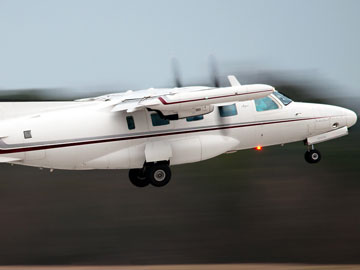
On 5 April 2013, a Mitsubishi MU-2B aircraft with two pilots on board departed from Honiara in Solomon Islands, en route to Essendon, Victoria, with an intermediate stop at Townsville. On the way to Townsville, the pilot in command found that the aircraft’s high frequency (HF) radio was not working. Consequently, the crew relayed their aircraft’s position reports to Air Traffic Control (ATC) via other aircraft operating in the area.
As the aircraft drew closer to Townsville, the crew were able to communicate directly with ATC using the very high frequency (VHF) radio. The aircraft landed safely at Townsville and was refuelled. The pilot submitted a flight plan to Airservices Australia providing details on the aircraft’s planned route to Essendon.
The ATSB emphasises the importance of alerting Air Traffic Control to any problems as soon as possible.
Shortly after take-off from Townsville, however, both the pilots and ATC discovered that the aircraft was transmitting carrier wave only (no voice communications could be heard). Townsville ATC offered the crew the option of returning to Townsville. The pilots could hear the transmissions made by Townsville ATC, but were unable to return as the fuel quantity in each wing tip tank was in excess of the maximum landing limitation and the aircraft was carrying additional fuel in the ferry tank. The pilots could not advise Townsville ATC of this as the aircraft’s very high frequency (VHF) radios were now inoperable. Consequently, the pilot elected to continue the flight as per the submitted flight plan.
The pilot attempted to fix the radio problem, but without success. ATC continued attempts to re-establish communications and left voice and text messages on both pilot’s mobile telephones and utilised two overflying aircraft. The Australian Search and Rescue (AusSAR) were also briefed on the situation. As the journey continued, Townsville ATC, Brisbane Centre ATC and Melbourne Centre ATC also continued attempts to establish communications with the crew.
When about 230 NM north of Essendon, communications with ATC were re-established. The crew had not been in normal communications with ATC for about 3 hours and 35 minutes. The aircraft landed safely.
A subsequent examination of the radio determined that water leakage from a small access door had corroded two main radio isolator breakers/switches, which resulted in the radio failure. The aircraft had been left outside for some time and subjected to tropical storms.
The ATSB emphasises the importance of alerting Air Traffic Control to any problems as soon as possible. This provides ATC with sufficient time to manage a situation, rather than having to react when an issue has developed into a major problem. In the event of a communications failure, it is important that pilots follow the appropriate procedure, and if radio communications cannot be re-established, consider utilising alternative methods such as mobile telephones.
Read the final report: Radio failure involving Mitsubishi MU-2B-60, N64MD, near Townsville Airport, Queensland, on 5 April 2013