

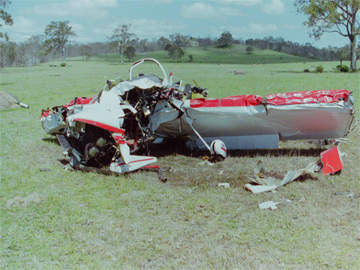
A report released today by the ATSB identifies important opportunities to improve the safety of amateur-built aircraft in Australia.
Over the past three decades, amateur-built aircraft (aircraft built for personal use from an original design, established plans or kit, which are not entirely built and assembled in a factory) have become increasingly popular in Australia. This is the first detailed examination of their safety record. The ATSB’s research has identified key differences in the safety record of amateur-built aircraft when compared with similar factory-built aircraft and established an important baseline on which to improve safety in this growing sector of the aviation community.
“Between 1988 and 2010, there was a significant difference in the accident rates of amateur-built aircraft and comparable factory-built certified aircraft flying similar operations,” said Dr Stuart Godley, manager of the ATSB’s safety research section. “In fact, the amateur-built accident rate was three times higher.” In addition, the fatal and serious injury accident rate was over five times higher in amateur-built aircraft, in particular due to relatively more serious injury accidents.
Builders of amateur-built aircraft should select, install and maintain aircraft engines carefully as engine issues are the most likely reason for an accident to occur.
“Overall, the pilots of amateur-built aircraft are significantly more experienced as pilots,” said Dr Godley. “They’ve been flying for a long time, they know aircraft, and they want the challenge and intellectual satisfaction of building a customised aircraft. Some of the aircraft are one-offs—unique designs—but the majority are either built from plans or a prefabricated kit that they’ll buy and put together themselves.”
However, pilots involved in accidents in amateur-built aircraft are significantly less experienced on the aircraft type that they were flying at the time of the accident. More than half of all amateur-built aircraft accidents occur prior to the pilot accumulating 35 hours on the aircraft type. This included owner-builders and recent purchasers of second-hand amateur-built aircraft.
A significant finding is that over half of the accidents were precipitated by mechanical events, which were mainly complete or partial engine failures. Although common during the amateur-built phase one test period (first 25 to 40 hours), mechanical failures were also significantly more common after this test phase when compared with factory-built aircraft.
A quarter of accidents were from loss of aircraft control, generally due to aircraft handling issues involving pilots with limited experience on the aircraft type. However, structural failures were not common precursors in amateur-built aircraft accidents.
“We are encouraging owners of amateur-built aircraft to ensure that they have adequate training in the same type of aircraft before operating the aircraft they have built, or purchased second-hand,” said Dr Godley.
There are very few suitable aircraft available for type-training and instruction for amateur-built aircraft and the ATSB found that 20 per cent of pilots in these accidents had less than 10 hours experience on the aircraft type. Owners of amateur-built aircraft should ensure they have adequate training on type before operating new built or purchased aircraft.
Builders of amateur-built aircraft should select, install and maintain aircraft engines carefully as engine issues are the most likely reason for an accident to occur. Careful consideration to occupant protection at the time of building is also encouraged as serious injuries have been disproportionally more common.
Read the research report: Amateur-built aircraft Part 2: Analysis of accidents involving VH-registered non-factory-built aeroplanes 1988-2010