

A fatal shipping accident in Brisbane demonstrates the dangers of complacency, even when undertaking routine tasks.
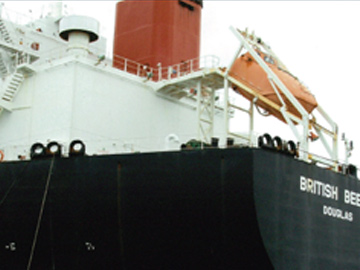
On 15 December 2011, the crew of the British Beech were taking on stores from a barge when, during the return of a stores container from the ship to the barge, the container came free of its slings. The container fell to the barge below, striking the master of the barge. The barge crew and shore paramedics attended to the master, but he died from his injuries while being transported to hospital.
The barge master placed himself in a position of danger under the suspended load, and the barge crew had not followed their company procedures for storing operations.
Lifting operations, even when they are routine, involve inherent risks. The ATSB investigation found that the ship’s crew did not view the storing operation as dangerous and had, over time, removed identified safety barriers which would probably have prevented the accident. The container had not been appropriately rigged on board the ship and the ship’s crew had not warned the barge crew of its return.
In addition, on the barge, the barge master placed himself in a position of danger under the suspended load, and the barge crew had not followed their company procedures for storing operations.
The companies of both vessels were found not to have adequately implemented compliance auditing processes. In the case of the barge company, there had been previous incidents which, though less serious, had not been acted on or learnt from. Effective compliance auditing could have caught and pre-empted some of the dangerous practices which resulted in the accident. The ATSB urges that established procedures be followed, reinforced and audited in order to ensure that vigilance is maintained and complacency avoided.
As a result of the accident and investigation, the method for handling these types of containers in Brisbane has changed so that the containers are top lifted and slings are no longer used. The ship’s manager, BP Shipping, has also implemented a thorough review of lifting and slinging processes, practices, procedures and equipment. A fleetwide review and training workshop for lifting and slinging was also completed.
This is one of several accidents that the ATSB has investigated which involved unsafe working practices in the maritime industry. Unsafe maritime work practices forms the subject of one of the ATSB’s Safety Watch articles. Safety Watch identifies safety concerns that deserve heightened attention.
Full details of the safety actions taken by both the ship’s manager and the barge’s operator can be found in the investigation report: Fatality while storing the products, tanker British Beech, in Brisbane, Queensland, on 15 December 2011