Aerial application accident

The preliminary report from our investigation involving a Piper Pawnee at Seaview, Victoria on 23 February 2022.

The Australian Transport Safety Bureau has released a preliminary report from its on-going investigation into a fatal accident involving a Piper Pawnee aerial application aircraft at Seaview, Victoria on 23 February 2022.

The report, which details factual information established in the early evidence collection phase of the investigation, notes the aircraft was flown from Leongatha to a private landing area 25 km north at Seaview, landing at about 0700 local time, in preparation for aerial spreading of superphosphate pellets.

A loader driver arrived shortly afterwards and, finding the loader already pre-filled with superphosphate pellets by the pilot, transferred them into the aircraft’s hopper.

The landing area was normally used for cattle grazing, and was prepared for aerial application operations once a year. It had been mowed into a ‘Y’ configuration by the pilot in the days before the accident.

“Data from the aircraft’s onboard GPS showed the pilot commence the take-off at about 0711,” ATSB Director Transport Safety Dr Mike Walker said.

“According to witnesses and video, the aircraft accelerated along the strip and traversed the right branch of the ‘Y’ and briefly became airborne at a point at the end of the strip, where the terrain dropped away.”

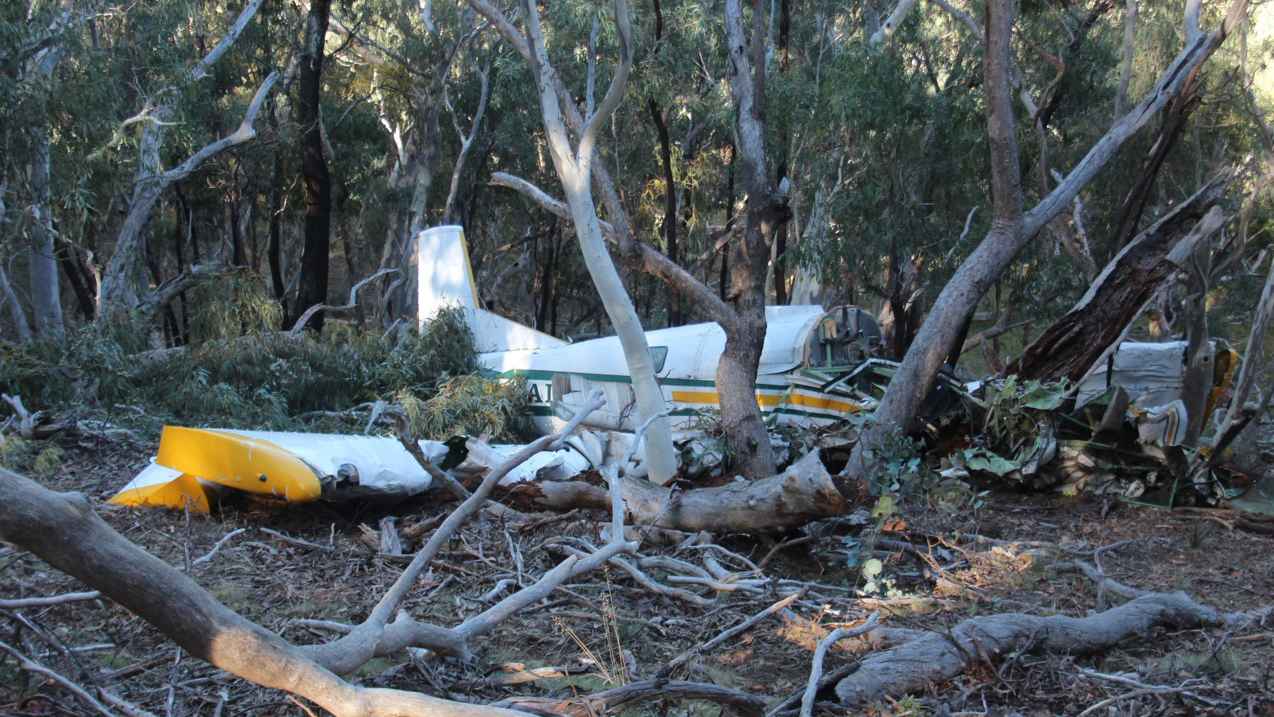
The outboard section of the aircraft’s left wing then struck trees, and the aircraft rolled to the left, pitched down, and impacted the ground.

The pilot was fatally injured, and the aircraft was destroyed.

“The ATSB’s on-site examination of the aircraft wreckage indicated no pre-impact defects with the aircraft’s flight controls or aircraft structure,” Dr Walker noted.

“Damage to the propeller indicated the engine was driving it with significant power at impact, and preliminary audio analysis of a witness video indicates the engine was at or close to its maximum rotational speed throughout the take-off.”

Based on local weather observations and the witness video, the weather at the time was fine with the wind likely calm.

Dr Walker noted that while the aircraft’s hopper was capable of carrying about 700 kg of pellets for aerial application, its maximum permissible load was 544 kg.

“The exact volume or weight of superphosphate loaded into the aircraft prior to the accident could not be determined, and the loader driver could not later recall how much superphosphate had been loaded,” he said.

Dr Walker said the investigation is continuing and will include examination of pilot and aircraft records and further analysis of the witness video and the aircraft’s GPS data.

“In addition, consideration of aircraft weight and balance and take-off performance is a central theme of this investigation. Should a critical safety issue be identified during the course of the investigation, the ATSB will immediately notify relevant parties so appropriate and timely safety action can be taken.”

A final report will be released at the conclusion of the investigation.

Read the preliminary report: Collision with terrain involving Piper PA-25-235/A9 aircraft, VH-SEH, near Seaview, Victoria, on 23 February 2022

Loco brakes SAN

Safety Advisory Notice alerts operators to be aware of locomotive braking systems

A Safety Advisory Notice has been issued to rollingstock operators as part of an ongoing investigation by the Office of Transport Safety Investigations (OTSI), into the derailment of a grain train near Wollongong.

The Notice has arisen from an ongoing investigation being conducted by OTSI on behalf of the Australian Transport Safety Bureau, into the derailment of a loaded grain train on the 1 in 30 grade rail line between Robertson and Unanderra, NSW, on 15 December 2020.

“During the descent, the train driver lost control of the train,” OTSI Chief Investigator and CEO Dr Natalie Pelham explained.

“The driver did not apply the emergency brake as the train continued to gain speed, as they believed the emergency application of the air brake would disengage the dynamic brake.”

The investigation identified, however, the locomotive’s electronic braking system did allow the dynamic brake to remain active while the emergency brake was applied.

“This feature was unknown to the operator and the train driver,” Dr Pelham said.

The investigation has identified that had the driver been fully aware of the braking functionality, it is likely they would have applied the emergency brake which may have slowed the runaway train and lowered the risk of derailment.

“Today’s advisory instructs all rail operators to review specifications and test locomotives under their control to understand how the braking systems are configured,” Dr Pelham said.

“Operators must have a complete understanding of the operation of their locomotives. Identifying safety critical information from technical specifications and testing locomotive operations must be completed and used to inform the organisation’s procedural and training material.”

OTSI conducts rail investigations in NSW on behalf of the ATSB under the Transport Safety Investigation Act 2003.

The investigation into the Dombarton incident is due to be finalised in the third quarter of 2022.

Read the Safety Advisory Notice: (RO-2020-022-san-002) Unknown functions in locomotive braking systems

Addendum 6 July 2022: some wording in this statement updated to more accurately reflect the wording in the SAN

Water over-tops track

Derailment of freight train after heavy rainfall highlights importance of adequate and well-maintained drainage

The derailment of a freight train after heavy rainfall near Charters Towers highlights to rail infrastructure managers the importance of adequate and well-maintained drainage, according to the Australian Transport Safety Bureau investigation of the incident.

Eleven wagons derailed on a loaded Aurizon freight train while it was travelling over a drainage culvert about 110 km south-west of Townsville, in the early morning of 30 December 2020.

While the locomotive stayed on the track and neither of the crew were injured, damage to the track and rolling stock was substantial.

The ATSB’s investigation found the derailment occurred after a series of rainfall events the day prior.

“While the rainfall was heavy, the ATSB’s calculations did not indicate it exceeded the design flow of the culvert itself,” ATSB Director Transport Safety Dr Stuart Godley said.

“It is therefore likely the pipe’s throughput was restricted.”

Dr Godley noted the culvert had been cleaned and cleared on 6 December, just over three weeks prior to the derailment.

“The throughput restriction could have been due to sinking, debris blocking the pipe, collapse of the pipe itself due to an exceedance of its service life – or a combination of the three,” he said.

The pooling of rainwater on the upstream side of the culvert led to it over-topping the track, which very likely undermined the track infrastructure, such that it could not support the weight of the train early the next morning.

Since the incident the track owner, Queensland Rail, has significantly improved drainage at the site, with the single 1,050 mm pipe now replaced with three new 900 mm pipes.

Queensland Rail has also had a contractor conduct a hydrology study along the rail line from Stuart, through Hughenden to Cloncurry, Mount Isa and Flynn to Phosphate Hill.

It has also identified a further 44 sites for new and upgraded weather monitoring equipment, and progressed a business case for required capital expenditure.

“To minimise the risk of system inundation and track over-topping, rail infrastructure managers should ensure their drainage systems are fit for purpose, and are clear, open, and in a serviceable condition,” Dr Godley said.

Read the final report: Derailment of freight train 9281, near Charters Towers, Queensland, on 30 December 2020

Marine pilot transfer accident

Marine pilot transfer helicopter accident investigation details 21 findings 

The Australian Transport Safety Bureau’s systemic investigation into a fatal helicopter accident during a night flight to conduct a marine pilot transfer off the coast of Port Hedland, Western Australia, details 21 findings. 

Two pilots – an instructor and a pilot under supervision – were operating an EC135 twin-engine helicopter under night visual flight rules (night VFR) to collect a marine pilot from an outbound bulk carrier on the night of 14 March 2018. 

During a second approach to land on the ship, the helicopter descended rapidly and impacted the water. The instructor pilot was able to escape the cabin as it flooded, while the pilot under supervision was not able to escape, and did not survive. 

ATSB Chief Commissioner Angus Mitchell encouraged all helicopter pilots and operators to review the investigation’s final report, and consider the findings in the context of their own operations. 

“This was a complex investigation, which has already resulted in several safety actions being taken by the operator and the regulator,” Mr Mitchell said. 

While the meteorological conditions during the accident flight met the standards for a night VFR operation, the investigation found that low celestial lighting, and the lack of artificial lighting 37 km offshore, meant the helicopter was being operated in a degraded visual (cueing) environment. 

“Helicopter pilots operating in a degraded visual environment are exposed to a higher workload and a heightened risk of spatial disorientation,” Mr Mitchell said. 

The operator’s training and assessing procedures for marine pilot transfer operations did not provide assurance that pilot under supervision experience, helicopter instrumentation, and instructor capability were suitable for line training at night in these conditions, the investigation found. 

“The accident flight was a line training flight, with the pilot under supervision in the right seat, and the instructor in the left seat,” Mr Mitchell explained. 

“However, the helicopter’s instruments were set up for a single pilot in the right seat. This limited the instructor’s ability to monitor the flight path and take over control if necessary, particularly in the degraded visual environment. 

“For any operation that relies on the instrument flying skills of a second pilot, consideration should be given to the adequacy of flight instrumentation for that pilot.” 

Mr Mitchell noted the Civil Aviation Safety Authority (CASA) has, since the incident, updated two of its regulations (CASR 91 and CASR 138), stating cockpits designed for single pilot operations need to be carefully assessed for instrument readability before being used for training, checking or testing operations. 

Additionally, the ATSB’s investigation found the pilot under supervision probably experienced a level of fatigue known to adversely influence performance. While there was insufficient evidence to establish fatigue for the instructor pilot, it is likely they were experiencing a level of fatigue in previous days. 

“The investigation found technical and methodological flaws in the operator's fatigue risk management system, and that the operator did not conduct a formal risk assessment of its roster prior to commencing marine pilot transfer operations at Port Hedland,” Mr Mitchell said. 

“Flight crew fatigue is an insidious problem that is difficult to predict for each individual on an ongoing basis and can have subtle effects that undermine performance of critical tasks. 

“Management of fatigue risk is a shared responsibility between operators and pilots and relies on sound principles, effective systems, and accurate recording.” 

The investigation also found the pilot under supervision had not undergone helicopter underwater escape training (HUET) since 2011, seven years prior to the accident. 

“This lack of recency reduced their preparedness for escape once the helicopter hit the water and rolled over,” Mr Mitchell said. 

“HUET provides familiarity with a crash environment and confidence in an emergency, for this type of accident. 

“Interviews with survivors from helicopter accidents requiring underwater escape frequently mention they considered that HUET had been very important in their survival.” 

Read the final report: Collision with water involving twin-engine EC135 helicopter, VH-ZGA, 37 km north-north-west of Port Hedland Heliport, Western Australia, on 14 March 2018

RPA fly-away

RPA fly-away results in minor injuries after shattering hotel room window

A fly-away incident where a DJI Inspire 2 remotely piloted aircraft (RPA) collided with a hotel window, injuring an occupant, serves to remind operators to be familiar and well drilled in emergency procedures, an ATSB investigation notes.

On 15 January 2021, the DJI Inspire 2 was being used for aerial photography and videography above Cockle Bay in Darling Harbour, Sydney.

Shortly after take-off, the RPA unexpectedly accelerated away from the pilot, and became unresponsive to control inputs. It accelerated to its maximum speed and, a short time later, collided with the window of a hotel adjacent to Darling Harbour.

The RPA shattered the window but did not penetrate it. A person inside the hotel received minor injuries from flying glass, and the RPA was destroyed.

The ATSB investigation into the incident found the compass of the RPA failed due to electromagnetic interference during flight, leading to the fly-away.

“Occurrence data reported to the ATSB indicates RPA fly-away occurrences are not rare,” ATSB Director Transport Safety Stuart Macleod said.

In the four years from 2017 to 2020, 94 occurrences of partial or complete loss of transmission and/or reception of digital information from an RPA were reported to the ATSB.

The majority of these occurrences resulted in damage to either the aircraft, property, or both.

“It’s important RPA pilots ensure they are familiar and well drilled in emergency procedures, as well as being proficient in flying in all flight modes,” Mr Macleod said.

Mr Macleod noted that during an RPA fly-away, there may only be a few seconds in which a pilot can take avoiding action.

“In the event of a compass failure, switching to the fully manual attitude flight mode may assist regaining control of the RPA,” he noted.

Following a review of the occurrence, the RPA’s manufacturer, DJI, updated the user manuals for a number of its products, including the Inspire 2.

The changes provide additional guidance to users regarding the use of the fully manual attitude flight mode in the event of compass interference.

Although not contributory to this occurrence, the ATSB investigation also found the pilot did not follow the operator’s emergency procedures, or comply with the regulator’s operational permissions to fly in restricted airspace.

“Adhering to operational guidelines and limitations remains important for ensuring the safe operation of RPAs,” Mr Macleod said.

“This is particularly true in populated areas, where risks are potentially elevated.”

Adhering to the limitations and guidance provided by the regulator will ensure these risks remain as low as reasonably practicable, Mr Macleod concluded.

Read the final report: Loss of control and collision with terrain involving DJI Inspire 2, remotely piloted aircraft, Darling Harbour, Sydney, New South Wales, on 15 January 2021

A330 airliner evacuation

Evacuation highlights importance of clear safety instructions and commands to passengers


The evacuation of a Qantas A330 aircraft at Sydney Airport highlights the importance of clear passenger information and commands, an Australian Transport Safety Bureau investigation details.

On the morning of 15 December 2019, the Perth-bound Airbus A330-200 carrying 2 flight crew, 8 cabin crew and 222 passengers returned to Sydney shortly after take-off, due to a hydraulic leak.

As the aircraft arrived back at the terminal under tow, a haze began to form in the cabin and flight deck, and passengers and crew experienced physical symptoms including irritation to the eyes and throat. The captain confirmed with the first officer and the cabin service manager the need to evacuate, and commanded the evacuation.

During the evacuation, 129 of the passengers disembarked via aerobridges, while the remaining 93 used one of the three deployed escape slides.

“A number of passengers used the escape slides in a manner that increased the risk of injury, and unfortunately six passengers were injured,” ATSB Chief Commissioner Angus Mitchell said.

One passenger who used an escape slide sustained serious injuries including tendon ruptures in both knees, while others sustained minor injuries including knee sprains, friction burns, and elbow cuts and abrasions.

“The ATSB found limitations and inconsistencies in how Qantas’s safety video and briefing card described emergency slide use and what to do with cabin baggage in an emergency,” Mr Mitchell said.

“For example, the pre-flight video showed a passenger sitting down and placing their bag next to them, just prior to sliding.

“The management of passengers in an emergency situation is the last line of defence to avoid injuries and fatalities, so it is important passengers are well informed through the provision of sufficient and accurate communication about what they may be required to do.”

Additionally, CCTV and other video showed at least 40 passengers exiting via aerobridges with carry-on luggage and some of these retrieved their baggage after the evacuation command, which likely slowed the evacuation process.

“Some passengers also brought cabin baggage to the top of the emergency slides, and while some complied with cabin crew and left them behind, others were shown on CCTV with their luggage in-hand, after using a slide,” Mr Mitchell continued

“Passengers should always leave their belongings behind during an evacuation.”

The ATSB found primary commands practiced by Qantas cabin crew to instruct passengers in an evacuation did not include phrases such as ‘leave everything behind’ and ‘jump and slide’.

Since the incident, Qantas has amended its passenger safety briefing video, and is looking to incorporate ‘leave everything behind’ into its primary evacuation commands.

Mr Mitchell noted the timing of the evacuation – as the aircraft arrived at the terminal and cabin crew had disarmed doors – presented a complex challenge, and the investigation found two cabin crew members did not rearm their doors prior to opening them during the evacuation.

“Crew members must remain prepared to react to an emergency at any time, until everyone has disembarked the aircraft,” he said.

Qantas has subsequently introduced periodic training that requires cabin crew members to physically demonstrate the procedures for an evacuation at a terminal.

The ATSB investigation found the hydraulic failure, which triggered the return to Sydney, occurred when a rudder servo hydraulic hose ruptured in flight.

After landing and stopping on a taxiway to await engineers and a tow, the flight crew started the aircraft’s auxiliary power unit (APU), and the APU bleed air was turned on to maintain air conditioning and power in the cabin.

Leaking hydraulic fluid was subsequently ingested into the APU air intake, and the atomised hydraulic fluid was then distributed into the cabin and flight deck via the air conditioning system as the aircraft was towed back to the terminal.

Some cabin crew members had detected unusual smells both before and after the aircraft had been towed back to the terminal, but did not pass this information on to the flight crew at the time.

This may have prompted the flight crew to turn the APU bleed air off, as part of the smoke/fumes procedure.

“Communication between the cabin crew and flight crew is essential in abnormal situations, and it is important for information to be relayed as soon as it becomes available,” Mr Mitchell said.

Finally, the ATSB report notes Qantas did not have a procedure for ‘rapid disembarkation’, which would enable faster than usual deplaning, but at a slower and more controlled pace than an emergency evacuation.

“Accidents around the world continue to show there is a significant risk of injury to passengers when escape slides are used,” Mr Mitchell said.

“This risk is acceptable in a life-threatening situation where the alternative may be catastrophic, but in cases such as a fumes event – particularly if the aerobridge is already attached – a rapid disembarkation procedure may be preferable.”

Qantas advised in May 2022 it was undertaking a review of its current non-routine disembarkation procedure, and looking to incorporate a relevant procedural framework.

“In this case, given the information available and the physical symptoms being experienced by crew and passengers, the captain’s decision to evacuate was a sound one,” Mr Mitchell concluded.

Read the final report: Hydraulic system malfunction, return and evacuation, involving Airbus A330, VH-EBC, 94 km west-north-west of Sydney Airport, New South Wales, on 15 December 2019

Visibility study

Visibility study highlights how ADS-B IN can assist pilots to better identify potential traffic conflicts

A cockpit display or electronic flight bag app showing traffic information from ADS-B IN data would have alerted the pilots of two training aircraft involved in a fatal mid-air collision near Mangalore, Victoria to the position of the other aircraft much earlier compared to visual acquisition, an Australian Transport Safety Bureau study concludes.

In March, the ATSB released its final report from its investigation into the accident which found that, following receipt of verbal traffic information provided to both aircraft by air traffic control, the pilots of both aircraft did not successfully manoeuvre or establish direct radio communications to maintain separation, probably due to not recognising the risk of collision.

The accident was the first mid-air collision between two civil registered aircraft operating under the instrument flight rules (IFR) in Australia. As the collision occurred outside of controlled airspace, air traffic control (ATC) was required to provide traffic information on other IFR aircraft, but was not responsible for ensuring separation. This meant that the pilots were self-separating using radio communications and, where possible, the ’see and avoid’ principle.

‘See and avoid’ has known limitations, and central to the investigation was determining the likelihood that the pilots of each aircraft could detect the other visually in sufficient time to take avoiding action.

“To support the investigation, the ATSB initiated an aircraft performance and cockpit visibility study to determine when each aircraft may have been visible to the pilots of the other aircraft,” said ATSB Chief Commissioner Angus Mitchell.

“In addition, the study was undertaken to determine what effect an ADS-B IN system would have had on the pilots’ ability to detect traffic as they converged.” 

Aircraft fitted with ADS-B OUT transmit positional and speed information derived from GPS to receivers including those used for air traffic control. Aircraft fitted with ADS-B IN equipment can receive this information on nearby aircraft, aiding pilot situational awareness.

Mr Mitchell said the investigation found that the pilots had insufficient time to visually acquire the opposing aircraft as cloud likely obscured the aircraft up until the collision, and added the study found that even in clearer conditions the aircraft were unlikely to have had sufficient time to visually acquire one another in time to avoid a collision.

“Analysis indicated that even in clearer conditions than experienced on the day of the accident, closing speeds and shielding by the aircraft structures would have limited the pilots’ opportunities to acquire the other aircraft, with two of the four pilots involved likely having the opposing aircraft shielded from their view at key moments prior to the collision,” he said.

As part of the study the ATSB developed scale three-dimensional models of the internal and external structures of representative aircraft using laser scanning technology, and determined the pilots’ approximate eye position within each model.

Investigators then developed animations using ADS-B position and aircraft performance data showing the cockpit view for both pilots in each aircraft overlaid with simulated cockpit traffic displays and alerts. This was supplemented by recorded air traffic control data.

These animations help illustrate the limitations of visual acquisition. Moreover, they demonstrate the significant additional alerting time that would be provided by an ADS-B IN display with an aural alert.

“The study has clearly shown that had the aircraft been equipped with ADS-B IN, the pilots would have been assisted in locating the other aircraft and alerted to its position much earlier than by visual acquisition,” Mr Mitchell said.

“The ATSB continues to strongly encourage the fitment and use of ADS-B transmitting, receiving and display devices in all general and recreational aviation aircraft, as these devices can significantly assist pilots with the identification and avoidance of conflicting traffic, and are available at relatively low-cost.”

While both aircraft involved in the mid-air collision were equipped with ADS-B OUT, neither aircraft were equipped with ADS-B IN systems, and nor were they required to be.

“Both a cockpit display of traffic information with an ADS-B traffic alerting system or an electronic conspicuity device connected to an electronic flight bag application could have provided this advance warning of a potential collision to the pilots of both aircraft,” Mr Mitchell said.

“While effective radio communication remains the primary means of self-separation in non-controlled airspace, the targeted and accurate information provided by ADS-B IN can provide pilots with significant assistance.”

Read the aircraft performance and cockpit visibility study: AS-2022-001 – Aircraft performance and cockpit visibility study supporting investigation into mid air collision of VH-AEM and VH-JQF near Mangalore Airport Vic. on 19 February 2020

Read the final report: AO-2020-012 – Mid-air collision involving Piper PA-44-180 Seminole, VH-JQF, and Beech D95A Travel Air, VH-AEM, 8 km south of Mangalore Airport, Victoria, on 19 February 2020

More information about ADS-B and the benefits of using the technology: Automatic Dependent Surveillance Broadcast - Airservices(Opens in a new tab/window)

UH-1H driveshaft

ATSB issues driveshaft failure Safety Advisory Notice to UH-1H helicopter operators


The Australian Transport Safety Bureau has issued a Safety Advisory Notice to operators of the UH-1H helicopter, recommending that they inspect the helicopter’s ‘KAflex’ driveshaft.

The Safety Advisory Notice stems from the ATSB’s on-going investigation into a fatal accident involving a UH-1H that was conducting firebombing operations at Labrina, near Launceston, Tasmania on 14 February 2022.

 The ATSB previously released a preliminary report from the investigation on 28 April, however, ongoing examination of the wreckage has determined that the helicopter’s main driveshaft had failed, with evidence of severe frictional and wear damage to one portion of the shaft.

“It is important to note that this investigation is on-going and the ATSB is yet to make formal findings as to the contributing factors to this accident, and technical examination of the KAflex shaft is continuing,” said ATSB Director Transport Safety Stuart Macleod.

However, the driveshaft’s manufacturer has advised the ATSB that the presence of frictional damage is evidence that the shaft had entered fail-safe mode during operation.”

The KAflex driveshaft was manufactured by Kamatics Corporation in the early 1980s as part of a US Army UH-1H driveshaft retrofit program. It uses flexible plates to accommodate relative movement between the engine and gearbox, and has a fail-safe mode intended to allow for uninterrupted drive for up to 30 minutes of helicopter operation.

However, the manufacturer has advised the ATSB that if a flex-frame attachment bolt were to release, the time before complete shaft failure may be significantly reduced.

Additionally, the Safety Advisory Notice notes that operators should be aware of the manufacturer’s concern of a certain serial number range of shafts for the UH‑1H that may be fitted with legacy flex-frame attachment hardware.

A number of previous KAflex driveshaft failures had already prompted the US Federal Aviation Administration to issue an airworthiness directive(Opens in a new tab/window) to UH-1H operators, which with effect from 25 February 2022 requires them to replace the KAflex before further flight.

“While the specific circumstances of this accident are still under investigation, the ATSB advises UH-1H operators to note the preliminary details of this accident, the FAA’s airworthiness directive, and to look for the presence of corrosion, fretting, frame cracking, and missing or damaged flex-frame attaching hardware during all inspections of the KAflex driveshaft,” Mr Macleod said.

The ATSB also advises UH-1H operators to familiarise themselves with Civil Aviation Safety Authority (CASA) Airworthiness Bulletin 63-004, which recommends closer inspection of the KAflex driveshaft.

The CASA AWB was re-issued in June 2021 in response to an ATSB investigation into a separate UH-1H accident where the helicopter conducted a forced landing after a driveshaft failure. The AWB was first issued in 2007.

“Any identified defects should be notified to CASA and the ATSB,” Mr Macleod said.

The UH-1H Iroquois (or ‘Huey’) was originally manufactured by Bell Helicopter for service with the United States Army and other militaries. A number of companies, including Garlick Helicopters, held supplement type certificates to convert the helicopter for civil operation and registration in the limited/restricted category.

Read the safety advisory notice: AO-2022-006-SAN-001 UH‑1H helicopter main drive shaft failure

Alpha mode activation

Flight crew unaware of alpha mode activation during low airspeed event

An ATSB transport safety investigation into an airspeed management event involving a Fokker 100 passenger aircraft has found the operator’s training did not prepare pilots for the activation of an automatic flight envelope protection mode – alpha mode – during critical phases of flight.

The investigation report details how the Alliance Airlines-operated aircraft’s airspeed reduced below the minimum allowable approach speed during final approach into Rockhampton Airport, Queensland, on 10 November 2019.

The aircraft, registered VH-UQN, was being operated on a regular public transport flight from Brisbane to Rockhampton, with 97 passengers and 4 crew on board.

“Aware of some bushfire activity to the north-east of the airport, the flight crew conducted a standard briefing prior to descent which included the speeds required for the approach, and identifying the threat of reduced visibility due to smoke,” ATSB Director Transport Safety Dr Michael Walker said.

The aircraft was slightly high on approach, and at 400 ft above ground level the flight crew encountered reduced visibility and moderate turbulence due to the nearby bushfire.

This added uncertainty, and delayed the flight crew’s identification of the high approach profile, the report notes.

“In the later stages, crew identified the high approach, and began an attempt to regain the correct profile, the aircraft’s airspeed reduced below the minimum allowable speed at about 300 ft,” Dr Walker said.

This automatically activated the aircraft’s alpha mode automatic flight envelope protection, overriding the thrust levers and accelerating the aircraft.

“The flight crew were unaware of the alpha mode activation, and the pilot flying encountered increased resistance in the thrust levers while trying to manually recover airspeed,” Dr Walker said.

After a short period, the pilot forced the thrust levers to the desired setting. The aircraft’s engines responded, airspeed increased accordingly, and the aircraft landed safely.

“The ATSB’s investigation found the operator’s initial type qualification for the F100 aircraft and cyclic training did not adequately prepare pilots to identify and respond to alpha mode activations during critical phases of flight,” Dr Walker said.

“The ATSB further identified that the aircraft’s rate of descent exceeded the operator’s stabilised approach criteria for a short period during the approach; however, it was also identified that there was no permissible exceedance criteria in the stabilised approach criteria for transient exceedances.”

Following the incident, Alliance issued an operations notice to pilots including guidance on the dangers of low thrust and low airspeed situations during performance decreasing conditions.

The notice also provided greater guidance about the activation of alpha mode within its fleet, and the operator updated its cyclic simulator training to include alpha mode activation scenarios.

“Flight crew awareness of automatic flight protections and their subsequent effect is paramount to the safe operation of passenger transport flights,” Dr Walker said.

“Effective initial and cyclic training, and assessments in these systems, is important to ensure that pilots respond appropriately to these situations during critical phases of flight.”

The ATSB investigation also identified Alliance’s acting safety systems manager at the time of the incident was unable to effectively conduct the role, due to limited experience in the role, increased workload, and remote working conditions during this time.

“This, along with other key changes, limited the operator’s capacity to provide effective safety assurance,” Dr Walker said.

Alliance has, since the incident, finalised its internal safety manual and standard operating procedures, developed a position handover checklist, and reviewed its company policy manual to detail the formal delegation of duties relating to key safety post holder positions.

“This incident highlights that effective change management is an essential part of any safety management system,” Dr Walker said.

“Changes to key safety management systems, key post holder positions, and the procedures and processes that support systems and personnel, need to be carefully managed in order to operate a robust and effective safety management system.”

Read the report: Airspeed management event involving a Fokker F28-0100, VH-UQN, Rockhampton Airport, Queensland, on 10 November 2019

RPA loss of control

RPA taxiing loss of control incident highlights the importance of fatigue management and controller design

An Australian Transport Safety Bureau investigation into a 19 June 2020 loss of control incident involving a remotely piloted aircraft (RPA) while it was taxiing following a maintenance flight highlights to RPA operators the importance of fatigue management and controller design.

After landing at Bruhl Airfield, Queensland after completing a successful autonomous test flight, the pilot of the RF Designs Mephisto RPA - a high-performance autonomous testbed which has a 2.6 m wing span and a 35 kg max take-off weight - toggled the controller’s automatic mode switch to disengage the aircraft’s automatic mode for taxi back to the hangar, the investigation report details.

The pilot then increased the throttle to provide the RPA with sufficient momentum to taxi. As the RPA turned towards the pilot, the pilot determined that it was not responding to commands to reduce the engine thrust. The pilot considered attempting to arrest the RPA by hand but determined it was moving too quickly and instead toggled the automatic mode switch to regain control and turn it away from bystanders.

The pilot then directed the RPA across the airfield and it came to rest against the perimeter fence, resulting in minor damage to the aircraft’s skin.

“The ATSB’s investigation into the incident determined that the pilot did not correctly disengage the RPA’s automatic mode,” said ATSB Director Transport Safety Stuart Macleod.

“Subsequently, when they increased the throttle to provide the aircraft with momentum to taxi back to the hangar the abort landing’ function activated, increasing the throttle to maximum and overriding the pilot’s commands to decrease throttle.”

Mr Macleod noted this incident has 3 key learnings for RPA operators.

“RPA operators should be mindful of the risk of fatigue, particularly in high tempo commercial operations,” he said.

“Even when fatigue management is not mandated, operators should ensure that their fatigue management processes are robust and effective.”

The incident also highlights the importance of controllers being as simple and reliable as possible.

“If a control leaves room for human error, then it will increase the risk of this error occurring even if procedural controls are in place. Consideration should also be given to a system that allows the remote pilot to shut down the aircraft immediately in the event of an unexpected state or failure.

“Lastly, operators should be prepared for the RPA to do something unexpected and know and frequently practice emergency procedures.”

Read the final report: Loss of control during taxi, involving RF Designs Mephisto, remotely piloted aircraft, Bruhl Airfield, 2 km south-west of Tara, Queensland, on 19 June 2020