Firebombing helicopter prelim

ATSB releases preliminary report from on-going firebombing helicopter accident investigation

Key points:

  • Preliminary report details factual information established in the investigation’s early evidence collection phase;
  • On-going investigation to consider flight profile, helicopter components, witness accounts, and imagery and video footage;
  • Analysis and findings will be outlined in the investigation’s final report.


The ATSB has released a preliminary report from its on-going investigation into a fatal accident involving a UH-1H helicopter during firebombing operations north of Launceston, Tasmania on 14 February 2022.

The crew of an air attack helicopter that was monitoring the Labrina fireground had tasked the UH-1H, registered VH-UHX (UHX), to conduct a water drop on a small hot-spot, the report details. After UHX filled its underslung water bucket at a nearby dam, the air attack crew subsequently observed it conduct a water drop that missed the target, before commencing a gradual left turn and track away from the staging area.

Suspecting UHX’s pilot was encountering an in-flight difficulty, and wanting to avoid any potential conflict with the approaching helicopter, the air attack pilot initiated a climbing 360° turn. After completing the turn the air attack pilot trailed UHX and observed the helicopter descend toward an open paddock where it impacted the ground.

A witness at the staging area, meanwhile, also observed UHX miss the hot-spot when releasing its water load, before it commenced a descending profile, entered a hover and then rapidly yawed twice, before descending from view below the tree line.

The pilot sustained fatal injuries in the accident, and the helicopter was destroyed from impact forces and a fuel-fed fire.

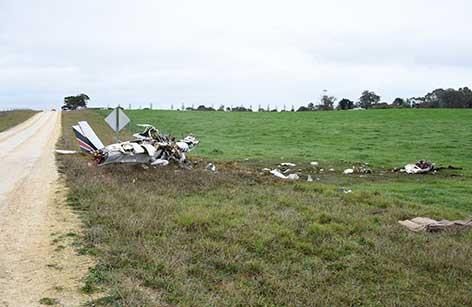
Analysis of the accident site by ATSB transport safety investigators established that the helicopter had impacted the ground along a westerly flight track. Ground scars at the site showed that the tail section made first contact with the ground, followed by the skids, main rotor blades and the cabin.

The helicopter’s tail section, including the tail rotor gearbox, had separated from the fuselage, and had come to rest a short distance from the main wreckage. The bucket and line, meanwhile, had been released from the helicopter prior to the ground impact and were positioned approximately 300 m from the wreckage.

“It is important to note that this preliminary report details factual information established in the investigation’s early evidence collection phase, but it does not detail analysis or findings, which will be outlined in the investigation’s final report,’ ATSB Director Transport Safety Stuart Macleod said.

“As the investigation progresses, the ATSB will continue to analyse the flight profile, further examine helicopter components including the engine, transmission and tail rotor gearbox, consider witness accounts, and analyse accident imagery and video footage.”

The investigation will also give consideration to the helicopter’s performance, maintenance and operational history, emergency procedures, and pilot qualifications, medical history and experience.

Mr Macleod noted a final report will be published at the conclusion of the investigation.

“However, should a critical safety issue be identified at any time during the investigation, the ATSB will immediately notify relevant parties so they can take appropriate and timely safety action.”

Read the preliminary report: Collision with terrain involving Garlick Helicopters UH-1H VH-UHX 36 km north of Launceston, Tasmania on 14 February 2022

MH370 data review

MH370 data review joint statement from the Australian Transport Safety Bureau and Geoscience Australia

A review of search data from the original Australian Transport Safety Bureau-led search for the missing MH370 aircraft has concluded that it is highly unlikely there is an aircraft debris field within the reviewed search area. 

In late January 2022, the ATSB asked Geoscience Australia to undertake a review of some of the sonar imagery collected during the original search for MH370, conducted between October 2014 and January 2017.    

The ATSB made the request after British aerospace engineer Richard Godfrey proposed an impact location for MH370 within an area surveyed during the original ATSB-led search, after his analysis of Weak Signal Propagation Reporter (WSPR) data.    

“The Geoscience Australia report notes that it is highly unlikely that there is an aircraft debris field within the area reviewed,” said ATSB Chief Commissioner Angus Mitchell. 

The review identified 11 objects not analysed during the original search. However, none were assessed to be from an aircraft wreckage debris field.    

Eight of the objects were assessed as most likely geological features, and while three were identified as anthropogenic (ie not naturally occurring), none were determined to be associated with an aircraft. 

Geoscience Australia Chief Executive Officer Dr James Johnson said over a two-month period, a team of experts had reviewed a band of high-resolution sonar imagery spanning 4,900 square kilometres.    

“This data allowed us to detect objects as small as 30 centimetres by 30 centimetres. If the aircraft was within the area we have reviewed, the sonar data would have shown a scatter field of highly reflective debris,” Dr Johnson said.   

“I want to thank my team for the skill and heart they brought to this work and the Australian Transport Safety Bureau for their leadership and partnership throughout this process.”   

Said Mr Mitchell: “The ATSB concluded its formal involvement the search for MH370 in 2017, but we acknowledge the importance of locating the aircraft to provide answers and closure to the families of those who lost loved ones and in the interests of aviation safety. 

“Can I thank Geoscience Australia for their work in applying their expertise and knowledge in reviewing the original search data.” 

Stated Dr Johnson, “We all understand the emotion that will come with this news, and those at the centre of this tragedy remain in our thoughts.”   

The data review report is available for download

here. (2 MB)

Media inquiries: media@atsb.gov.au

Loss of hover reference

Rescue helicopter pilot’s loss of hover reference leads to unintended drift and descent

Key points:

  • AW139 rescue helicopter entered an uncommanded descent and lateral drift, coming within an estimated 20 ft of terrain before being recovered by pilot;
  • Even for experienced air crews, operations in low-light conditions are challenging;
  • Operator is in the process of installing new search lights across their fleet of AW139s, and taken other steps, with the aim of preventing a reoccurrence.


An AW139 rescue helicopter came within an estimated 20 ft of terrain as a result of an uncommanded descent and lateral drift during a 24 July 2020 night-time mission to retrieve bushwalkers from a national park.

The Toll Helicopters-operated AW139 had departed Shellharbour Airport, near Wollongong, NSW, with four crew onboard, comprising a pilot, aircrew officer, paramedic and doctor, tasked to recover two lost bushwalkers from the Bungonia National Park, east of Goulburn.

The flight was conducted under the night visual flight rules with the pilot, aircrew officer and paramedic using night vision goggles.

On arrival at the search and rescue location, the helicopter tracked over high ground past the edge of an escarpment, where the terrain drops away to a valley floor,” ATSB Director Transport Safety Stuart Macleod explained.

“During the subsequent visual search phase an uncommanded, and increasing, rate of descent and lateral drift developed.”

The aircrew officer, who was in the main cabin by the right door, identified the increasing rate of descent and lateral drift towards a ridgeline and provided corrective instructions to the pilot.

It was estimated that the helicopter came within 20 ft of the ridgeline before the descent and drift were arrested.

Mr Macleod said the ATSB investigation found the pilot’s likely fixation on locating the bushwalkers resulted in them not maintaining an effective scan on the cockpit instruments and outside visual references.

“This resulted in the loss of hover reference and development of an unintended descent and lateral drift.”

In response to the loss of reference the pilot unsuccessfully attempted to engage the helicopter’s auto hover rather than commence an overshoot.

“A subsequent focus on selecting the automated mode further delayed the resumption of the scan and recognition of the increasing descent rate.”

Mr Macleod said radio communications between the paramedic and the ground party hindered communications between the pilot and aircrew officer.

“This inhibited the aircrew officer's ability to verify with the pilot whether the observed initial movement was intentional, preventing recovery from the initial drift and descent.”

In addition, the pilot subsequently did not announce losing hover reference, delaying the aircrew officer’s awareness of the developing situation and support to the pilot.

The ATSB also found the helicopter’s external white lighting (two pilot-steerable landing lights, and a steerable winch and handheld light operated by the aircrew officer) was inadequate.

“At the operating height the external white lighting was inadequate to illuminate the terrain below the helicopter, resulting in the pilot not identifying the developing rate of descent while searching for the bushwalkers.”

As a result of the incident, Toll Helicopters made several changes to their procedures and equipment aiming to prevent a reoccurrence.

These include fitting its AW139s with with a dedicated high-powered search light, amending sterile cockpit procedures, and changes to the operations manual.

The operator has also introduced additional human factors training with a focus on spatial disorientation, confirmation bias and communication techniques for all flight and medical crew.

“Operations at night in low light conditions can be challenging to even the most experienced crews,” Mr Macleod said.

“Low light conditions reduce available visual cues for maintaining aircraft position and undesired aircraft states can develop rapidly.

“To mitigate these risks, crews conducting night operations in such conditions should maintain adequate references, taking into account equipment limitations such as external lighting, and maintain an effective scan to ensure continual awareness of the position and movement of the helicopter.”

Read the final report: Near-collision with terrain involving Leonardo Helicopters AW139, VH-TJO, 25 km East of Goulburn, New South Wales, on 24 July 2020

Extreme teetering

R44 in-flight break-up highlights risk of extreme teetering and mast bumps

Key points:

  • While flying in the vicinity of a valley, R44 helicopter entered a low-G condition;
  • Subsequent extreme teetering and mast bump resulted in the in-flight break-up of the helicopter;
  • Investigation highlights that pilots of helicopters with semi-rigid rotor heads must avoid low-G situations.

A Robinson R44 helicopter broke up in flight as a result of extreme teetering, either due to turbulence or inappropriate control inputs, an Australian Transport Safety Bureau investigation has concluded.

A search was launched after the helicopter, flown by a student and instructor pilot, failed to return from a training flight from Goulburn Airport, in the Southern Tablelands region of New South Wales, on the afternoon of 2 December 2020.

Wreckage of the helicopter was found later that evening in the Bungonia State Conservation Area, approximately 31 km east of Goulburn. The accident site was also 4 km north-west of the helicopter’s last recorded ADS-B transmission, which indicated it was descending into a valley.

The helicopter’s engine and fuselage had been exposed to fire, which had self-extinguished before emergency services arrived. Both pilots were fatally injured.

ATSB investigators surveyed the wreckage trail and main wreckage site and, despite fire damage, recovered and examined several components of the helicopter’s main rotor.

Examinations confirmed a mast bump had occurred, and that the helicopter had subsequently broken up in flight.

“Mast bumping is where the inboard end of the main rotor blade contacts the helicopter’s main rotor shaft,” ATSB Director Transport Safety Stuart Macleod explained.  

In R44 helicopters, this can generally be identified by extensive damage to the teeter stops and varying degrees of damage to the main rotor shaft.

“The semi-rigid – or teetering – main rotor design of the R44 and several other popular helicopters relies on rotational force to lift the blades off the droop stops on the rotor hub during flight,” Mr Macleod said.

“During normal operation, the rotor is free to teeter and flap around its designed flight axis via the teeter hinge, while polyurethane teeter stops limit the degree of teetering.”

A mast bump can occur when extreme teetering causes the rotor blades to exceed this allowance, and contact the rotor hub at a high speed.

“The ATSB investigation found that, while flying in the vicinity of the valley, the helicopter entered a low-G condition due to turbulence, inappropriate control inputs, or a combination of both,” Mr Macleod said.

“Low-G conditions can be catastrophic for helicopters with semi-rigid rotor heads. A pilot’s ability to recover from low-G remains uncertain, and would be dependent on airspeed and time available. Pilots must therefore avoid low-G situations.”

Mr Macleod noted pilots should make a careful study of terrain, forecasts and observations applicable to a proposed flight, to identify in advance any significant weather or mechanical turbulence, and avoid flying in these conditions.

“Pilots should avoid flying downwind of hills, ridges or other potential sources of turbulence, particularly during changing or unpredictable weather conditions, and should use slow and small control inputs when encountering turbulence,” Mr Macleod said.

The investigation report also urges operators to consider the benefits of installing recording devices on their helicopters.

“While the fire would likely have prevented data recovery in this case, the inclusion of readily-available cockpit video recorders on helicopters with semi-rigid rotor heads would provide valuable insights into low-G mast bumping events, which could help prevent future occurrences,” Mr Macleod concluded.

Since the occurrence, Robinson has introduced cockpit video/audio recorders as standard equipment on new R44s, having previously been available on the larger R66 models. The recorders are currently optional on the smaller R22s, but will also become standard on these models in 2023, with retrofit kits made available.

Read the final report: In-flight break-up involving Robinson R44 Raven I, VH-HGU 31 km east of Goulburn Airport, New South Wales, on 2 December 2020

Low-light collision

A loaded coal train collided with the rear of a second coal train in low-light conditions

A loaded coal train collided with the rear of a stationary train in low-light conditions at the Port of Newcastle, after network control was not advised that the second train was disabled, a transport safety investigation report notes.

Just after 5 am on 29 July 2020, a loaded Pacific National (PN) coal train collided at 16 km/h with the rear of a stationary One Rail Australia (ORA) coal train, when arriving at Kooragang Coal Terminal, in Newcastle, NSW.

The PN locomotive and the two rearmost wagons of the ORA train derailed in the collision, and came into contact with two adjacent stationary trains, which sustained minor damage.

One of the PN drivers sustained minor injuries, and there was substantial damage to the rail infrastructure.

An investigation into the incident was undertaken by the Office of Transport Safety Investigations (OTSI), which conducts rail safety investigations in NSW on behalf of the Australian Transport Safety Bureau.

The investigation found that while the ORA train was unloading several penalty brake applications associated with a fault in its electronic pneumatic brake system had disabled the train, bringing it to a standstill.

The crew investigated the faults using a series of technical exercises, which caused the train’s End of Train light to be extinguished.

“This disablement of the ORA train constituted a Condition Affecting the Network, but the crew did not report this to the Kooragang Network Controller as they were required to do,” OTSI Chief Investigator Dr Natalie Pelham explained.

“Subsequently, the Kooragang Network Controller set a signal for the PN train to proceed with caution along the arrival road where the ORA train was stationary.”

The terminal area where the accident occurred was poorly lit by artificial trackside lighting, and the absence of an End of Train light at the rear of the stationary train reduced its conspicuity, Dr Pelham explained.

“Light produced by an overhead gantry, above the accident site, may also have caused disabling glare for the drivers of the PN train,” she added.

Since the collision, PN issued notices informing drivers to not exceed 8 km/h upon receiving a shunt proceed signal within Kooragang terminal.

ORA has added programmed monitoring of End of Train lights into its asset management plan, and circulated safety information to their drivers to remind them of the requirement to communicate all conditions affecting the network to network control.

The Australian Rail Track Corporation (ARTC) provided clarification advice to rail operators on the operation of trains with defective EOT lights and updated information contained in the Rail Access Standard (general information). ARTC also plans to review the Kooragang Operations Protocol and conduct a risk assessment to ensure the risk of collision is effectively managed and controlled during operations.

“This accident highlights the importance of train crews communicating conditions affecting the network to network control,” Dr Pelham said.

“It also emphasises the need for train crews operating in areas of restricted visibility to be prepared to stop short of any obstruction on the track.”

Read the final report: Collision between coal trains MB526 and AH378, Kooragang, New South Wales, on 29 July 2020

Level crossing collision

The driver of a road-train truck had been distracted by reaffixing their mobile phone mount to their vehicle’s windscreen before the truck entered an active level crossing

The driver of a road-train truck had been distracted by reaffixing their mobile phone mount to their vehicle’s windscreen before the truck entered an active level crossing and collided with a freight train, an Australian Transport Safety Bureau investigation has found.

The road-train, comprising a prime mover and 3 tipper trailers, entered the Yarri Road, Parkeston level crossing in front of an Aurizon freight train, north-east of Kalgoorlie, Western Australia, on 22 February 2021.

The two train crew (a driver and tutor driver) sustained serious injuries in the subsequent collision. Both the truck and locomotive were substantially damaged, with the locomotive derailing and coming to a rest about 40 m from the impact point. The truck driver was shaken, but otherwise uninjured.

“Approaching the Yarri Road level crossing from the south, drivers need to look ahead and across a curve to see the active crossing lights,” ATSB Director Transport Safety Dr Michael Walker said.

“Because of the effects of distraction, the truck driver was probably only looking at the section of road directly ahead of their vehicle, contributing to them not identifying the flashing lights until it was too late to stop.”

While approaching the crossing, the truck driver was reattaching a dash-mounted mobile phone cradle, and placing a mobile phone in the cradle.

Consequently, the truck driver’s attention was diverted from the road ahead for critical periods of the approach to the level crossing where the flashing light level crossing controls were visible and there was sufficient distance to stop.

“The Yarri Road level crossing design was consistent with the applicable Australian standard and provided sufficient opportunity for attentive drivers to identify the flashing light level crossing controls and stop,” said Dr Walker.

The investigation notes the truck driver was familiar with the route, but had never encountered a train at that level crossing, meaning a low expectancy of encountering a train possibly contributed to the truck driver allocating a low level of attention to the crossing.

The truck driver only noticed the flashing lights, indicating the oncoming train, when it was too late to prevent the collision. When the train crew saw the truck and identified that it was not going to stop for the crossing, it was too late for them to stop their train or reduce the severity of the impact.

“Given the size and weight of most trains, the onus to take action to avoid a level crossing collision rests almost entirely on the road vehicle user,” Dr Walker said.

“Distraction can significantly impair driving safety,” Dr Walker continued.

“Even though it may be possible to occasionally glance at the road ahead while engaged in another task, critical information from the broader road environment may not be effectively perceived and comprehended, particularly on curved road approaches to level crossings.”

There were 11 collisions between heavy road vehicles and trains at level crossings across Australia between July 2020 and June 2021, and 23 such collisions over the previous 5 years.

“Accordingly, in 2021, the ATSB commenced a safety study into level crossing collisions involving trains and heavy road vehicles in Australia,” Dr Walker said.

“The study, which is on-going, includes a review of previous collisions to determine their characteristics and circumstances, and also determine if there are any unidentified systemic safety issues or learning opportunities that could enhance the safety of future transport operations.”

Read the final report: Level crossing collision between freight train 2C74 and road-train truck, Yarri Road, Parkeston, Western Australia, on 22 February 2021

Mid-air collision investigation

ATSB releases Mangalore mid-air collision investigation final report

Key points:

  • Two twin-engine training aircraft collided mid-air near Mangalore Airport, Victoria fatally injuring four pilots;
  • Both aircraft were flying in non-controlled airspace at the time of the collision;
  • ATSB supports systemic enhancements to the overall Australian air traffic system that have been assessed by regulatory and air traffic specialists as providing a net overall safety increase;
  • The ATSB strongly encourages the fitment and use of Automatic Dependent Surveillance Broadcast (ADS-B) avionics, with some equipment currently available within Australia at low cost and can be used without any additional regulatory approval or expense.

The Australian Transport Safety Bureau has released the final report from its investigation into the mid-air collision between two training aircraft near Mangalore, Victoria, on 19 February 2020, identifying contributing safety factors to the accident relating to self-separation in non-controlled airspace.

The report details that shortly before 11.00am, a twin-engine Beech Travel Air departed from Tyabb Airport for a return Instrument Flight Rules (IFR) training flight to and from Mangalore Airport – a non-controlled airport in Class G airspace – with a student pilot and an instructor onboard. At around the same time, a pilot under examination and flight examiner were at Mangalore Airport preparing for an instrument rating flight test in a twin-engine Piper Seminole.

While the Travel Air was on descent and the Seminole was on climb, the two aircraft collided at an altitude of around 4,100 feet about 8 km (4 nm) south of Mangalore Airport. Tragically, all four pilots were fatally injured and both aircraft were destroyed.

Prior to the collision, the pilots of each aircraft had been provided with traffic information about the other aircraft, in accordance with procedures, by an air traffic controller in Melbourne Centre. In addition, other pilots monitoring the common traffic advisory frequency (CTAF) radio channel for the Mangalore area reported hearing pilots from both aircraft make radio broadcasts, but had no recollection of hearing them speaking directly to each other.

The accident was the first mid-air collision in Australia between two civilian aircraft operating under IFR procedures that have been in place for many decades.

“The ATSB identified that, following receipt of verbal traffic information provided to both aircraft by air traffic control, the pilots did not successfully manoeuvre or establish direct radio communications to maintain separation, probably due to the collision risk not being recognised,” said ATSB Chief Commissioner Angus Mitchell.

“The investigation also determined that while it is probable the aircraft were in instrument meteorological conditions at the time of the collision, due to extensive cloud in the area, the known limitations of the ‘see-and-avoid’ principle meant that the pilots were unlikely to have seen each other in sufficient time to prevent the collision even in clear weather.”

In non-controlled airspace, irrespective of whether an aircraft is operated under instrument or visual flight rules, pilots are responsible for separation from other aircraft.

“As such, if made aware of traffic, either via advice from air traffic control, a received broadcast, or any other means, it is vitally important for pilots that the traffic is hazard assessed and, if necessary, a plan is established to assure separation.”

Mr Mitchell stated that self-separation using broadcast traffic advice is subject to human error, even when it involves experienced pilots.

“The ATSB notes that had the aircraft been operating in controlled airspace, they would have been positively separated by air traffic control, and therefore the collision would have been unlikely to have occurred, and while the available evidence in this investigation does not support a conclusion that the present system of self‑separation in Mangalore airspace is unsafe, there is an opportunity to reduce safety risk further.

“The ATSB supports systemic enhancements to the overall Australian air traffic system that have been assessed by regulatory and air traffic specialists, in keeping with their obligations, as providing a net overall safety increase.”

Mr Mitchell noted in this accident that while the pilots were responsible for self-separation within the Mangalore CTAF area, they did not have access to the same surveillance data radar or automatic dependent surveillance broadcast (ADS-B) information that was available to air traffic control.

“As a result, the pilots were required to make timely decisions to avoid a collision without the best available information,” he said

“Consequently, the ATSB strongly encourages the fitment and use of ADS-B transmitting, receiving and display devices in all general and recreational aviation aircraft, as these devices can significantly assist pilots with the identification and avoidance of conflicting traffic,” Mr Mitchell said.

ADS-B is a system which transmits GPS-derived position data, aircraft identification and other aircraft performance parameters. In Australia, all aircraft operating under the IFR are required to be fitted with ADS-B broadcast (or ADS-B OUT).

Both accident aircraft were fitted with ADS-B OUT, but neither aircraft was fitted with a system to receive ADS-B information directly from other aircraft (known as ADS-B IN), and nor were they required to be.

“The continuous positional information that ADS-B provides, when used with a relevant alerting capability enabled, can assist in highlighting a developing situation many minutes before it becomes hazardous – a significant improvement on both point-in-time radio traffic advice and ‘see and avoid’.”

Mr Mitchell noted that in December 2021, the Department of Infrastructure announced a $30 million fund to provide rebates to general aviation aircraft operators to fund up to $5,000 or 50% of the cost of installing ADS-B transponder technology into their aircraft.

“When details of that fund are finalised, the ATSB looks forward to further highlighting the benefits of ADS-B, and in particular ADS-B IN, to the aviation community.”

Read the final report: Mid-air collision involving Piper PA-44-180 Seminole, VH-JQF, and Beech D95A Travel Air, VH-AEM, 8 km south of Mangalore Airport, Victoria, on 19 February 2020

More information about ADS-B and the benefits of using the technology:

Partial power loss

Amateur-built aircraft’s stall-spin accident demonstrates complexities of managing a partial loss of engine power

Key points:

  • Aircraft lost engine power and aerodynamically stalled at an altitude insufficient for recovery;
  • The use of a damaged engine oil cooler fitting most likely resulted in the engine being starved of oil;
  • Accident highlights the complexities of managing partial power loss.

The ATSB’s investigation into a fatal accident involving an Osprey 2 aircraft at Maitland Airport, NSW highlights both the complex nature of managing a partial power loss and the importance of good engineering practices for amateur built aircraft.

The aircraft, built by private builders from plans under the provisions of the amateur-built experimental aircraft system, took off from Maitland Airport on 17 May 2020 for the pilot’s second test flight in the aircraft.

While passing through 2,400 ft, the pilot was advised via radio that the aircraft’s engine was producing white smoke. The pilot noted the engine was not running smoothly.

The pilot broadcast their intention to return to land on runway 23, but during descent turned to join the reciprocal runway 05.

As the aircraft turned onto the base leg of the circuit, the engine failed completely, and the pilot attempted to conduct a forced landing on the closer runway 08.

“During the final stage of the glide approach, the aircraft was observed to abruptly roll, pitch down and collide with the ground,” ATSB Director Transport Safety Stuart Macleod said.

The pilot was fatally injured, and the aircraft was destroyed.

Video from the cockpit showed the airspeed decreased to between 60–65 kt prior to the roll, and examination of the accident site confirmed the aircraft contacted the ground with low forward airspeed while rolling to the left, consistent with an aerodynamic stall.

The ATSB found the use of a damaged engine oil cooler fitting, which was not compatible with the fitted oil hose, most likely resulted in the hose disconnecting from the oil cooler during the climb and the engine’s loss of oil.

“A partial loss of engine power event of this kind is a more complex scenario for a pilot to face than complete engine power loss,” Mr Macleod said.

“Pilots can be strongly influenced by the fact the engine is still providing some power, and often by the strong desire to return the aircraft to the runway to avoid damaging the aircraft in a forced landing,” he explained.

“In this case the pilot’s decision to change from runway 23 to runway 05 meant the aircraft needed to stay airborne longer, necessitating more power from the damaged engine to maintain height.”

The ATSB found this extended airborne duration, and need for increased engine power, resulted in the engine failing due to oil starvation.

“Pilots are reminded that a partial engine failure often precedes a complete loss of power,” Mr Macleod continued.

“In the event of a partial loss of power, the aircraft should be landed at the earliest possible opportunity and consideration should be given to forced landing options along the flight path.”

The investigation also identified that the required, and the majority of the recommended, build inspections of the aircraft were not conducted, and this was not detected prior to the issuance of a certificate of airworthiness that permitted the aircraft to be flown.

“While these inspections would probably not have detected the damaged oil cooler fitting, they may have identified the oil supply hose was in poor condition,” Mr Macleod said.

“They would also have been an opportunity to identify and improve the overall build quality of the aircraft.”

The ATSB also identified a number of other deficiencies relating to the inspection and flight testing of amateur-built aircraft, including the risk assessment of the proposed test pilot.

“This accident also highlights the importance of adhering to the design specifications and good engineering practices when building an amateur-built experimental aircraft,” Mr Macleod said.

“Attention should be given to the component manufacturer’s specifications, installation instructions and limitations to ensure the component, and consequently the aircraft, will perform as intended.”

The ATSB notes the Civil Aviation Safety Authority (CASA)’s proposed Part 43 regulation includes new guidance for amateur-built aircraft(Opens in a new tab/window), to revise the current rules, which were last updated in September 2000.

Read the final report: Collision with terrain involving amateur-built Osprey 2 amphibian aircraft, registered VH-WID near Maitland Airport, New South Wales on 17 May 2020

Diverted attention

Landing gear not retracted after take-off demonstrates how diverted attention or focus may result in errors of omission

Key points:

  • Q400’s landing gear not retracted until aircraft reached 15,900 ft;
  • Aircraft was below the maximum landing gear operating speed but exceeded the maximum altitude at which the landing gear could remain extended, although there was no effect on aircraft serviceability;
  • Highly-repetitive, routine tasks may result in pilots developing strong expectations that a task has been completed.

A flight crew’s omission of key calls on take-off and incorrectly completing the after-take-off checklist contributed to a Q400 turboprop airliner’s landing gear not being retracted after take-off, a new Australian Transport Safety Bureau investigation report details.

The QantasLink Bombardier DHC-8-402 (Q400) aircraft had departed Sydney Airport on 12 July 2021 to operate a scheduled passenger service to Albury with two flight crew, two cabin crew and 22 passengers on board.

Due to the relatively light weight of the aircraft and the use of normal take-off power, the flight crew expected an increase in aircraft performance, the investigation notes. The captain recalled being very focused on the correct pitch attitude for take-off and monitoring the airspeed in relation to the flap speed limit.

Later during the climb, the first officer provided the after-take-off public address announcement to the passengers. This call, which is made after passing 10,000 ft or when the aircraft is established in the cruise, also serves to notify the cabin crew that the flight deck is no longer ‘sterile’ (that is, cabin crew are free to contact the flight crew outside of emergency situations).

At that point a cabin crew member contacted the pilots, asking if it was normal for the landing gear to still be extended. The flight crew immediately looked at the landing gear panel and identified that the handle was down with 3 green lights illuminated, indicating that the landing gear was still extended.

After confirming that the aircraft‘s speed was below the maximum landing gear operating speed (of 200 kt), the flight crew retracted the landing gear. However, as the aircraft was at an altitude of about 15,900 ft, this meant the aircraft had exceeded the maximum altitude at which the landing gear could remain extended, of 15,000 ft, although this had no effect on the serviceability of the aircraft.

“The ATSB found that both pilots were heavily focused on aircraft performance after take-off, so the positive rate and subsequent gear-up calls were not made, and neither pilot identified these omissions,” said ATSB Director Transport Safety Dr Michael Walker.

Subsequently, when completing the after-take-off checklist, the pilot monitoring provided the ‘landing gear’ challenge and the pilot flying incorrectly called ‘up, no lights’ in response. Both pilots observed that the 3 green landing gear lights were illuminated but neither recognised that this was problematic for this stage of flight.

“It is likely that both pilots had a strong expectancy that the landing gear had been retracted after take-off, and they probably conducted the after-take-off checklist with a high degree of automaticity, rather than consciously looking for what was required.”

The investigation report notes that the flight crew interpreted increased levels of vibration while airborne as being related to a propeller balance maintenance log entry. In an effort to reduce the noise and vibration, the crew reduced the climb speed. This reduced the abnormal indications and seemingly confirmed that the propeller balance was the source of the problem, and is consistent with the effects of confirmation bias.

Dr Walker said the occurrence demonstrates how diverted attention or focus may result in errors of omission, especially where a task may be reliant on standard verbal cues.

“Highly-repetitive, routine tasks may result in pilots developing strong expectations that a task has been completed, even if it has not been, and make it difficult for pilots to identify an omitted action,” he said.

“Accordingly, it is essential that when flight crews are completing checklists, they focus on confirming that the relevant conditions have been met.”

Dr Walker said the investigation did consider what, if any, impact reduced flying levels and skill degradation due to the COVID-19 pandemic may have had on this occurrence.

“While both pilots met minimum currency requirements, and both had recently undertaken a proficiency check, the first officer had conducted less than one third of their normal amount of flying in the previous 90 days and had not conducted any flights for 11 days prior to the occurrence flight,” he noted.

“Overall, there was insufficient evidence to conclude that the first officer’s reduced flight recency contributed to the procedural errors made by the flight crew. The investigation also noted that the operator was aware of the potential issues associated with reduced flight recency and had introduced measures to mitigate the risk.”

The report also notes the cabin crew displayed a high level of vigilance regarding the aircraft state.

“Their willingness to bring the extended landing gear to the attention of the flight crew allowed the the problem to be identified and for the landing gear to be retracted as soon as possible,” Dr Walker said.

“This highlights the strength of timely communications between crew members.”

Read the final report: Incorrect configuration involving Bombardier DHC-8-402, VH-QOY near Sydney, New South Wales, on 12 July 2021

Unplanned mustering

Wirestrike highlights the importance of conducting a risk assessment before unplanned mustering tasks

Key points:

  • Pilot was asked to carry out previously-unplanned mustering of cattle to a yard;
  • Hazards at the yard likely not identified as pilot did not conduct a new risk assessment including an aerial inspection;
  • During a turn the helicopter struck an unmarked single wire earth return line, lost control and collided with terrain.

Mustering pilots are reminded to conduct a new risk assessment before commencing unplanned tasks, an ATSB investigation into a May 2021 wirestrike accident highlights.
 
After two days of wild goat mustering at a property near Hay, New South Wales, the pilot of a Robinson R22 helicopter was instructed to locate a small cattle herd and direct a stockperson to them for mustering to the property’s main yards.

This was first time the main yards were used during the muster. While looking for the herd, the pilot detected a second larger herd and directed the stockperson to the larger herd before heading to locate and move the small herd to the main yards.

After locating the original cattle herd, the pilot began moving them along a fence line towards the main yard and flew ahead and landed to open a gate at the entrance to the yard. They then took-off and flew in a southerly direction—at a height of between 5-10 metres—to another gate that needed to be opened for the cattle. As the R22 turned towards an adjacent gate the helicopter struck an unmarked single wire earth return (SWER) line running across the northern side of the main yards.

Witnesses reported hearing a loud bang, and the helicopter was found on its right side just outside the fence at the north-west corner of the main yards. The helicopter was substantially damaged, with indications it had sustained a wirestrike. The pilot sustained fatal injuries.

Mustering operations around yards and buildings are inherently dangerous due to low-level hazards including powerlines,” said ATSB Director Transport Safety Stuart Macleod.

“To mitigate the risk of powerlines pilots are reminded that any change to their existing flight or work plan they should conduct a new risk assessment including an aerial inspection to identify potential hazards.”

Powerlines, particularly unmarked wires, can be nearly impossible to see due to the size of the wire, camouflage with the background and the natural limitations of the eye.

“The Aerial Application Association of Australia has been working with landowners and energy suppliers to install markers on powerlines through the Powerline Safety Program. In addition, a number of power companies are making these markers available at reduced cost,” said Mr Macleod. 

The ATSB also found the helicopter’s emergency locator transmitter (ELT) did not activate after the accident as it was selected to OFF.

 “As the accident was witnessed, this did not affect the response, however, having a working ELT increases the likelihood that an aircraft and its occupants will be located quickly in the event of an accident.”

Read the final report: Wirestrike and collision with terrain involving Robinson R22, VH-KLY 75 km west-north-west of Hay, New South Wales on 26 May 2021

For more information on how to get powerline markers visit the Aerial Application Association of Australia’s website(Opens in a new tab/window).