Cessna 206 emergency egress

ATSB investigation highlights safety issues with emergency egress from the Cessna 206 with a cargo door

Key points:

  • Extended flap significantly restricts emergency egress via the Cessna 206’s rear cargo door;
  • ATSB recommends that Textron amend the Cessna 206 pilot operating handbook procedure for ditching and forced landing;
  • ATSB also recommends regulatory authorities take safety action to address the certification basis for the design of the Cessna 206 cargo door.

The collision with water of a Cessna 206 near Fraser Island, Queensland highlights known issues with evacuating from the aircraft where extended flap obstructs the opening of its rear clamshell cargo doors.

The Australian Transport Safety Bureau (ATSB) investigation into the 29 January 2020 accident has identified two safety issues associated with the Cessna 206 with a cargo door that can lead to fatal consequences in the event of a ditching. As a consequence, the ATSB has issued safety recommendations to the manufacturer and regulatory authorities in Australia and the United States to address the issues.

“The Cessna 206 procedure for ditching and forced landing states that the flaps are to be extended to 40°,” said ATSB Director Transport Safety Stuart Macleod.

“While that permits the aircraft to land at a slower speed, it also significantly restricts emergency egress via the cargo door. However, there is no warning about that aspect in the pilot’s operating handbook emergency procedures for a ditching or forced landing.”

The ATSB also found that the Cessna 206 with the cargo door does not meet the aircraft certification basis for the design of cabin exits, due to the complexity associated with opening the cargo door if it is blocked by the flaps.

“This significantly hampers emergency egress and has previously resulted in fatalities.”

To address these issues the ATSB has issued safety recommendations to Textron Aviation (Cessna’s parent company) and the US Federal Aviation Administration and Australia’s Civil Aviation Safety Authority.

“The ATSB is recommending that Textron amend the procedure for ditching and forced landing in the pilot operating handbook for the Cessna 206 to ensure pilots are aware that extending the flaps beyond 10° will significantly restrict emergency egress via the cargo door,” said Mr Macleod.

“Separately, the ATSB also recommends that the Federal Aviation Administration and Civil Aviation Safety Authority take safety action to address the certification basis for the design of the cargo door in the Cessna 206.”

The accident aircraft, a Cessna U206G operated by Air Fraser Island, was being used to conduct emergency procedures training at a beach landing area on Fraser Island with two pilots (a training pilot and trainee pilot who had just commenced flying with the operator) on board. During a simulated failure of the left main wheel during landing, a section of the nose landing gear attachment failed just after landing, resulting in the rudder becoming jammed in the full‑left position.

The aircraft veered to the left, toward the sea, and the training pilot elected to conduct a go-around. With the rudder jammed in the full‑left position, the pilot had to apply full opposite aileron to maintain control.

Subsequently, fuel starvation, due to either the uncoordinated ‘crossed controls’ flight (using opposite aileron to counter the jammed rudder) or damage associated with the nose gear failure, led to the engine losing power at a height too low for recovery, and the aircraft impacted the water.

After hitting the water, the aircraft remained upright, and the cabin quickly began to fill with water.

With the trainee unable to open the pilot door, the training pilot moved to the back of the aircraft and attempted to open the forward door of the ‘clamshell’ rear double cargo doors. In order to escape the training pilot had to force the door open by kicking it, as it was partially blocked by the partially-extended flap (set at 20°).

The pilot managed to leave the cabin through the cargo door, while the trainee exited through the pilot door window. Both swam to shore.

The aircraft, without the engine, washed up on the beach the morning after the accident.

“Cessna 206 pilots should be aware that lowering the flaps will block the cargo door exit and significantly increase the difficulty of opening the door,” said Mr Macleod.

“In the event that a ditching is required, pilots should consider not extending the flaps.

“Additionally, all passenger pre-flight briefings should also include a practical demonstration of how to open a partially-obstructed cargo door.”

Mr Macleod noted that research by the Transport Safety Board of Canada found that in the 20 years leading up to 2009, 70 per cent of fatalities where an aircraft collided with water were caused by drowning.

“That statistic reflects the inherently disorienting nature of underwater exit from an often-inverted aircraft,” he said.

Read the final report: Collision with water involving Textron Aviation Inc. (Cessna) 206, VH-AEE, near Happy Valley, Fraser Island, Queensland, on 29 January 2020

Wallan derailment interim

Planned and proposed safety actions outlined in ATSB interim report from Wallan XPT derailment investigation 

A number of safety actions are planned and proposed as a result of the derailment of an XPT passenger train near Wallan, Victoria on 20 February 2020, an Australian Transport Safety Bureau (ATSB) interim report from the on-going investigation into the accident details.

Melbourne-bound XPT passenger train ST23, operated by NSW TrainLink (NSW Trains), derailed after entering a passing loop at a speed probably between 114 and 127 km/h, the interim report notes, when the speed limit for entering the loop was 15 km/h. With the train unable to negotiate the turnout at that speed, the lead power car (locomotive) rolled onto its side and all five passenger cars derailed. Only the rear (unoccupied) power car did not derail.

The train driver and an Accompanying Qualified Worker (AQW) in the lead power car did not survive the accident, while of the 155 passengers aboard, eight passengers sustained serious injuries and 53 minor injuries. The five passenger-services crew located in the train’s passenger cars also sustained minor injuries.

“Today, in releasing an interim report, the ATSB is detailing factual information as to the circumstances of this tragic accident as we understand them, and outlining planned safety actions as proposed by ARTC – the rail infrastructure manager – and NSW Trains, the rail operator, ” said ATSB Chief Commissioner Greg Hood.

“It is important not to draw conclusions from the factual information detailed in this report as there remains a significant body of further analysis work prior to concluding this investigation. Instead, the interim report serves to detail the investigation’s progress to date and to update stakeholders and the travelling public as to our areas of on-going investigation,” he said.

“Findings, safety factors and contributing factors will be detailed in the final report, which is anticipated to be completed in the first quarter of 2022.”

The interim report notes that the rail signalling system for the standard-gauge track through Wallan had been damaged on 3 February 2020. As a result, ARTC was managing trains through the Wallan area using Train Authority procedural systems.

On the day of the derailment, the points at either end of the crossing loop at Wallan had been manually reconfigured to divert rail traffic through the loop, which ARTC had detailed through a supplemental train notice issued on 19 February.

That train notice specified a 15 km/h speed limit for entry into the loop, and a limit of 35 km/h when exiting the loop.

However, analysis of data from the train’s Hasler electro-mechanical data recorder shows that the train was approaching the loop at near the line speed of 130 km/h before a brake application was made a short distance from the turnout to the loop.

“The ATSB has made eight interim observations of the factual information detailed in the interim report,” Mr Hood noted.

“These observations are based upon evidence gathered as part of the investigation, and have been used in the report to highlight and clarify certain items of factual information,” he said.

“Among the observations are those pertaining to ARTC’s implementation of altered train working arrangements and risk management, as well as NSW Trains’ distribution of safety information to rail workers.”

Since the accident, ARTC has advised it is developing amendments to its code of practice for traffic management, and is modifying its risk assessment practices, while NSW Trains is making changes to its procedures for accessing and distributing safety critical information to train crews.

Mr Hood noted that the investigation is being led by Victoria’s Chief Investigator, Transport Safety (CITS), which investigates rail accidents in Victoria on behalf of the ATSB under a collaboration agreement using the powers of the Commonwealth Transport Safety Investigation Act (TSI Act) 2003. The investigation is also being supported by the ATSB and NSW’s Office of Transport Safety Investigations (OTSI).

“As the investigation continues, there will be further consideration of a number of factors including the management of train operations and associated risk management, and the distribution of safety critical operational information to train operators and crew,” said Chief Investigator, Transport Safety Chris McKeown.

Other areas of ongoing investigation include further human factors analysis and rail vehicle survivability and crashworthiness standards.

“The investigation team will also finalise their analysis of the derailment sequence and their assessments of the condition of the rolling stock and track conditions,” Mr McKeown said.

“They will also review passenger services crew training and preparedness for a derailment, and passenger safety information.”

Read the interim report: Derailment of passenger train ST23, Wallan, Victoria, on 20 February 2020

R44 Safety Advisory Notice

Safety Advisory Notice for Robinson R44 operators and maintainers 

The ATSB has released a Safety Advisory Notice to Robinson R44 operators and maintainers highlighting the importance of inspecting the helicopter’s clutch shaft yoke.

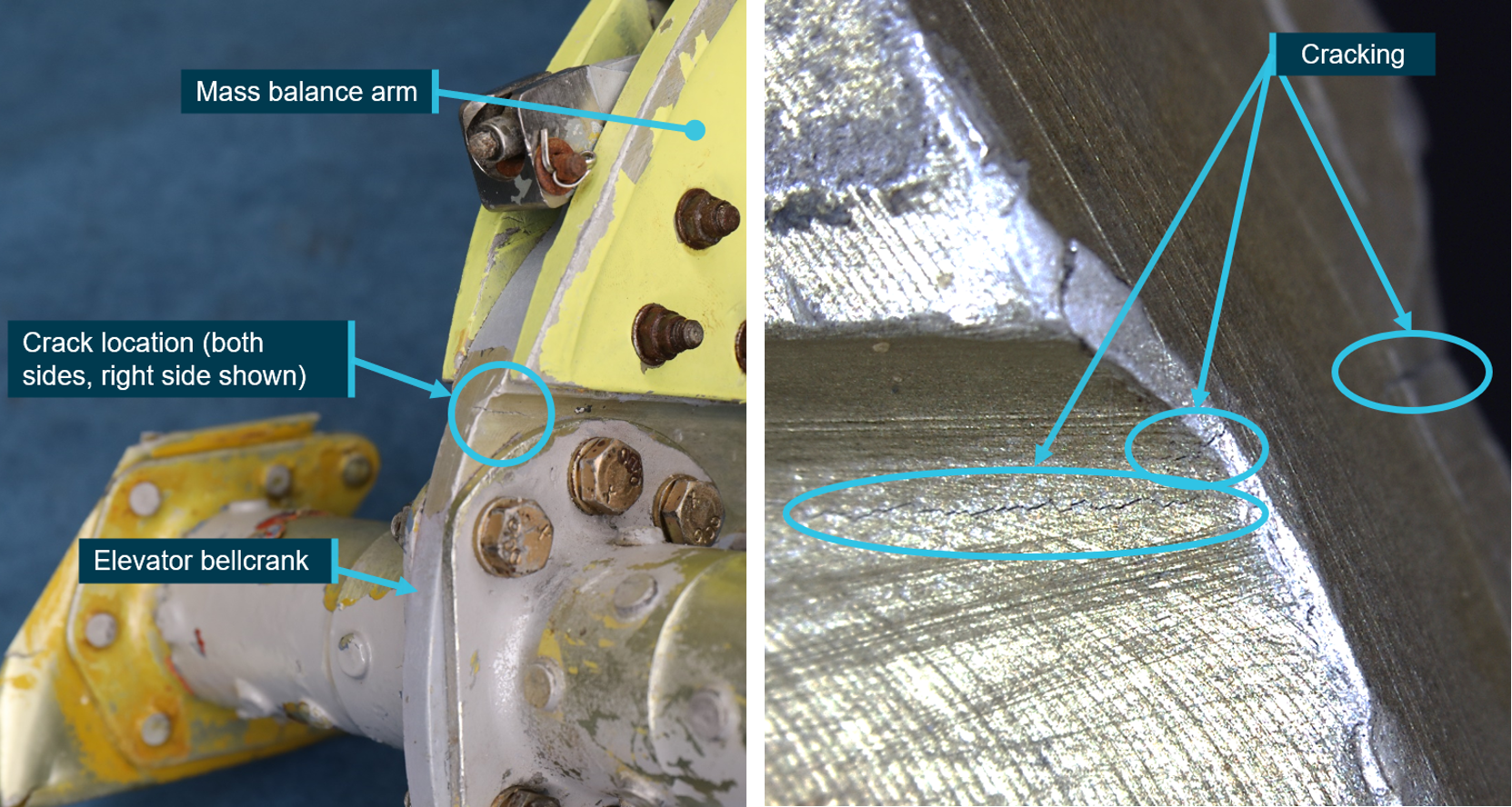
The Safety Advisory Notice arises from the ATSB’s ongoing investigation into a loss of control and collision with terrain accident involving an R44 that was conducting aerial spraying operations near Clare, South Australia on 22 December 2020, which has identified that fatigue cracking in the clutch shaft forward yoke resulted in the total loss of drive to the main rotor system.

“The ATSB’s preliminary metallurgical examination of the drive train components identified that the clutch shaft forward yoke had fractured,” said ATSB Director Transport Safety Stuart Macleod.

“Corrosion product and fretting damage were identified in the vicinity of the bolt hole adjacent to the fatigue fracture surfaces.“

The yoke is required to be inspected at every 100-hour, or annual, inspection, however, the ATSB’s Safety Advisory Notice states that a general visual inspection of the assembled clutch shaft yoke during the 100‑hour or annual inspection may not easily identify defects such as corrosion, fretting and/or cracking.

“The ATSB advises operators of R44 helicopters to note the preliminary finding of this accident and to look for the presence of corrosion, fretting or cracking, which may not be visually obvious, during inspections of the clutch shaft yoke,” said Mr Macleod.

“Any identified defects should be notified to both the ATSB and the Civil Aviation Safety Authority.”

While the specific circumstances that led to the fatigue crack on the accident helicopter are still under investigation, the ATSB has issued the safety advisory notice to advise R44 operators of the potential safety concern.

Pending the publication of an investigation’s final report, the ATSB may issue Safety Advisory Notices to raise awareness of safety critical concerns determined during the course of an investigation without waiting for the conclusion of the investigation.

Read the Safety Advisory Notice: AO-2020-064-SAN-014 R44 helicopter drive train failure

Read the report: Loss of control and collision with terrain involving Robinson R44 II, VH-HOB, near Clare, South Australia, on 22 December 2020

Power line survey prelim report

Preliminary report released for Cessna 172 accident during powerline survey 

The ATSB has released a preliminary report from its on-going investigation into a fatal accident involving a Cessna 172 light aircraft conducting power line survey work near Sutton, north of Canberra, on 13 April 2021.

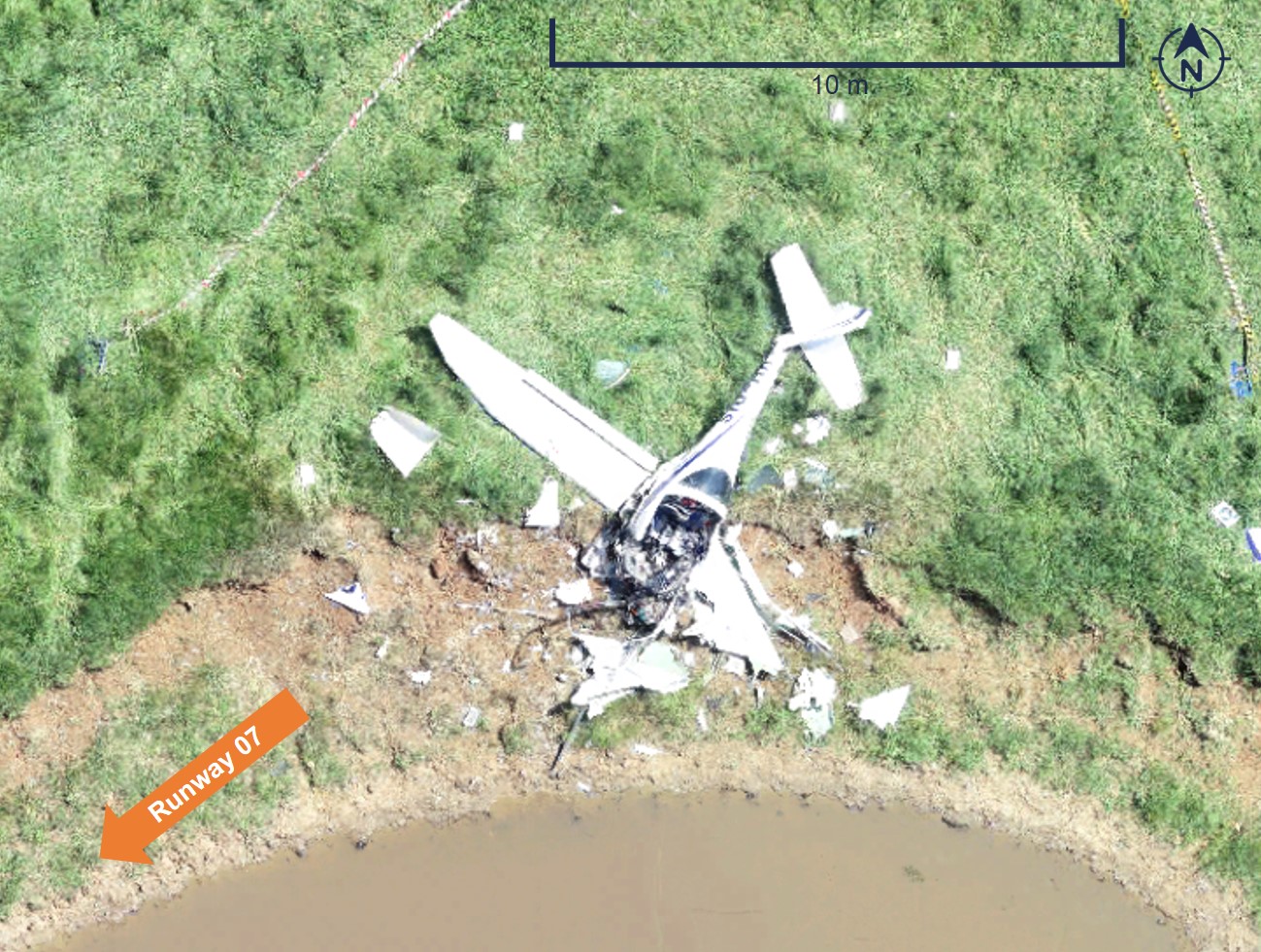
The report details that the aircraft, a Cessna R172K registered VH-DLA, had departed Canberra Airport with a pilot and observer on board to conduct power line survey work to the north of Sutton, New South Wales. While surveying power lines servicing properties to the east of Tallagandra Lane, witnesses in the area described seeing the aircraft flying low above the trees before commencing a left banking turn followed by a steep descent shortly before it collided with the ground.

“Witness reports indicated that a loss of control and entry into a spin preceded the ground impact,” said ATSB Director Transport Safety Stuart Macleod.

Examination of the wreckage showed that the aircraft impacted the ground in a near vertical, nose down attitude.

The pilot and observer sustained fatal injuries, and the aircraft was destroyed.

“To date, ATSB transport safety investigators have examined the aircraft wreckage, mapped the accident site with a drone, retrieved relevant aircraft components for further analysis, interviewed witnesses and the aircraft operator, downloaded flight-related electronic data, and collected weather information,” said Mr Macleod.

Mr Macleod noted the preliminary report does not include any safety findings or analysis, which will be detailed in the investigation’s final report.

“As the investigation progresses, the ATSB will continue to analyse the aircraft’s flight path and recorded data, and review pilot qualifications, maintenance records and the operator’s procedures for conducting flight survey aerial work,” he said.

A final report will be released at the conclusion of the investigation.

“However, should a critical safety issue be identified during the investigation, the ATSB will immediately notify relevant parties so appropriate and timely safety action can be taken.”

Read the preliminary report: Loss of control and collision with terrain involving Cessna R172K, VH-DLA, near Sutton, New South Wales, on 13 April 2021

Ballina separation occurrence

Ongoing investigation reveals recorded flight paths of Airbus A320 and private Jabiru two-seat recreational aircraft intersected with vertical separation of about 600 feet.  

The ATSB is continuing its investigation into a separation occurrence in uncontrolled airspace near Ballina where recorded data showed that the tracks of an Airbus A320 and a private Jabiru two-seat recreational aircraft intersected with a vertical separation of about 600 feet.  

The Jetstar Airbus A320, with seven crew and 163 passengers on board, was on approach to land at Ballina Byron Gateway Airport, having operated a scheduled service from Melbourne, while the Jabiru J230D aircraft, with a pilot and a passenger on board, was conducting a private visual flight rules flight from Heck Field in Queensland to Evans Head.

Aircraft operating into Ballina and Evans Head, as well as nearby Lismore and Casino airports, are required to broadcast positional calls on a common traffic advisory frequency, or CTAF, while at Ballina Airport a certified air/ground radio operator (CA/GRO) relays positional information (but does not provide a separation service) to aircraft operating in and out of Ballina to aid pilots with decision making.

The ATSB’s preliminary report into the 28 November 2020 occurrence details that as their aircraft tracked towards Ballina the flight crew of the A320 received a traffic collision avoidance system (TCAS) proximate traffic alert for an unidentified aircraft at an unspecified altitude in the 11 o’clock position, which unbeknown to them, was probably the Jabiru aircraft.

The A320 crew attempted to sight the traffic, but were not successful. The proximate alert then escalated to a traffic advisory.

The flight crew maintained their visual scan and continued with the approach to Ballina.

Subesequent analysis of the A320’s quick access recorder and data recorded by the Jabiru pilot’s OzRunways electronic flight bag app indicated that at approximately 12 NM south west of Ballina Airport, the tracks of the A320 and the Jabiru intersected, with vertical separation between the two aircraft reducing to about 600 feet.

The flight crew of the A320 sighted the Jabiru just prior to passing below the aircraft, the preliminary report notes. The pilot of the Jabiru sighted the A320 shortly after passing above it. Both the pilot of the Jabiru and the A320 flight crew observed no lateral separation between the two aircraft. 

“The ATSB’s continuing investigation will include the examination of airspace density levels; airspace suitability; flight crew actions; CA/GRS procedural design and application; and future Ballina airspace plans,” said ATSB Director Transport Safety Stuart Macleod.

Mr Macleod noted today’s preliminary report does not include any safety findings or analysis, which will be detailed in the investigation’s final report

“However, should a critical safety issue be identified during the investigation, the ATSB will immediately notify relevant parties so appropriate and timely safety action can be taken,” he said.

Read the preliminary report: Separation occurrence involving Airbus A320-232, VH-VGP and Jabiru J230D, 24-7456, near Ballina Byron Gateway Airport, New South Wales, on 28 November 2020

Runway incursion

Inappropriate radio frequency and transponder mode selection degraded flight crew's situational awareness

Key points:

  • Flight crew inadvertently selected incorrect radio frequency and TCAS/transponder mode
  • Unanticipated events and distractions during before flight checks increased workload and time pressures.
  • Visual scan did not identify an approaching aircraft due to degraded situational awareness

The flight crew of a Dash 8 turboprop airliner that taxied onto the runway in front of a light aircraft on approach to land at Gladstone Airport had not selected the appropriate radio frequency and transponder mode which significantly degraded their situational awareness, a new ATSB investigation report details.

On 17 March 2020 at about 6.00 am, the flight crew of the QantasLink Bombardier Dash 8-402 commenced pre-flight preparations for a 6.45 am flight to Brisbane. During those preparations the crew twice started the aircraft’s APU (auxiliary power unit), which failed on both occasions when selecting APU bleed air ‘ON’ to provide air-conditioning to the cabin. The captain also had to review paperwork and brief cabin crew on arrangements for a ‘person in custody’ and their police escort to travel on the flight.

After applying the Minimum Equipment List (MEL) to the APU, the flight crew undertook the remainder of their pre-flight checks, but missed setting the traffic collision avoidance system (TCAS)/transponder to ‘ON ALT’ and selecting the Gladstone common terminal advisory frequency (CTAF) radio frequency.

The first officer identified the CTAF omission during the departure briefing, however incorrectly set the frequency to 126.7 MHz instead of 118.8 MHz, which was the correct frequency for the Gladstone CTAF.

“The ATSB’s investigation found that the flight crew of the Dash 8 had inadvertently selected the incorrect radio frequency for the airport’s CTAF and incorrect mode on the traffic collision avoidance system/transponder during the before start checks reducing the flight’s crew situational awareness and mental model of traffic,” said ATSB Director Transport Safety Stuart Macleod.

“The frequency selection error was further compounded by the flight crew not recognising the absence of the aerodrome frequency response unit reply when making radio calls on the incorrect frequency and the assumption they would be alerted to the presence of any transponder-equipped aircraft that were operating in the area.”

At about 6.45 am, the Dash 8 was taxied onto the runway in front of the approaching light aircraft. In response, the instructor on board the light aircraft commenced a go-around and attempted, unsuccessfully, to contact the Dash 8 crew on the Gladstone CTAF.

Shortly afterwards, the captain identified that the TCAS/transponder was not appropriately set and selected it to ‘ON ALT’. The TCAS subsequently presented the flight crew with a traffic advisory indicating climbing traffic, which was the light aircraft that the flight crew subsequently sighted climbing in an easterly direction overhead the airport.

Mr Macleod said that the incident illustrates the human factors implications associated with the combination of increased workload and time pressures.

“Situations like this can result in degraded information processing, increased errors, the tunnelling of attention, and an increased reliance on familiar strategies or actions and probably resulted in the flight crew’s omission of the two ‘before start’ checklist items and the selection of the incorrect frequency,” he said.

“Flight crews can guard against similar situations by applying effective threat and error management strategies that recognise when such threats may arise and set in place suitable actions that minimise error potential.

“These actions include strict adherence to standard operating procedures and increased cross-checking of system inputs and mode changes.”

As result of the incident, QantasLink has reviewed its operating procedures at non-controlled airports and introduced new requirements to contact air traffic control before entering the runway.

Read the final report: Runway incursion and communication issues involving Bombardier Dash 8, VH-LQJ, Gladstone, Queensland, on 17 March 2020

Visual inspections

Damage to nose and left main landing gear demonstrates importance of visual inspections

Key points:

  • Visual inspection detected damage to nose landing gear light and main landing gear
  • Nose gear landing light was probably struck and damaged during departure from Sydney
  • No debris was found during runway inspections
  • No visible biological evidence of a wildlife strike 

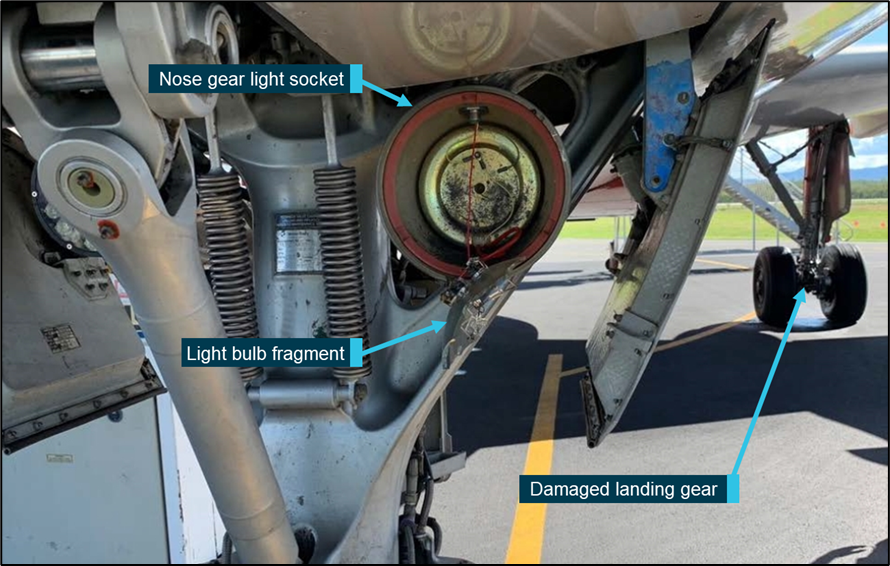
Damage found to the nose landing gear light and left main landing gear of an Airbus A320 discovered by the flight crew after a flight from Sydney to Proserpine demonstrates the importance of visual inspections, a new ATSB investigation notes.

The Jetstar Airways A320 had operated a scheduled service from Sydney to Proserpine on 5 March 2020 when on their post-flight walkaround the flight crew found the damaged landing light and left main landing gear, including a pierced hydraulic brake line.

“The ATSB’s investigation determined that the nose gear landing light was probably struck and damaged during departure from Sydney, and that the glass lens from the light most likely struck the main landing gear, piercing a hydraulic brake line,” said ATSB Director Transport Safety Stuart Macleod.

Hydraulic fluid found in the main gear wheel well, likely from the punctured hydraulic line, was probably discharged when the crew raised the landing gear during departure from Sydney, while the investigation also notes that there was no indication that the aircraft had been struck by ground support equipment prior to departure from Sydney.

“While the cause of the damage could not be determined, the nose gear landing light was probably struck and damaged during departure from Sydney.”

Mr Macleod said the investigation considered if the aircraft struck foreign object debris during its take-off roll, or a bird or a drone during departure from Sydney before the landing gear had been retracted.

“However, no debris was found during runway inspections at Sydney Airport, there was no evidence of a drone operating in the area, and there was no visible biological evidence of a wildlife strike.”

As a result, the source of the impact to the nose gear landing light could not be conclusively determined.

“This incident highlights the important role visual inspections play in maintaining the safety of an aircraft,” said Mr Macleod.

“In this case, a vigilant flight crew identified damage to their aircraft that could have otherwise impacted on the safety of subsequent flights.”

Read the final report: Landing gear damage involving Airbus A320, VH-VFL, near Sydney, New South Wales, on 5 March 2020

Main rotor strike

The ATSB is considering several factors that could have contributed to a R44’s main rotor blade striking its fuselage

Key points:

  • Main rotor struck fuselage in flight before the helicopter collided with terrain;
  • Weather stations closest to accident site showed significantly different weather from one another;
  • On-going investigation will analyse weather, continue the detailed technical examination of the engine and other recovered components.

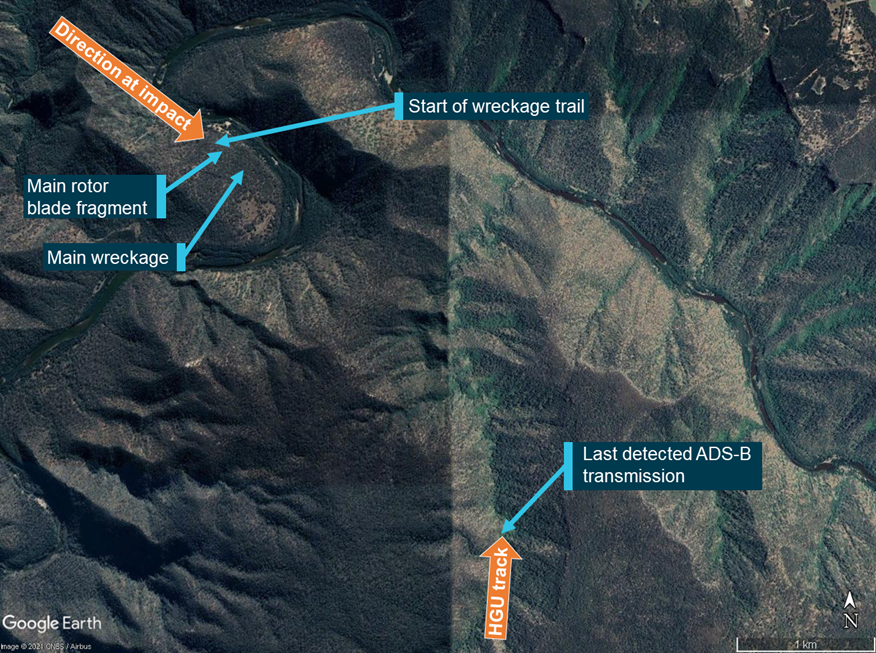
The ATSB is considering a number of factors that could have contributed to a Robinson R44’s main rotor blade striking the helicopter’s fuselage in flight as part of its ongoing investigation into a 2 December 2020 collision with terrain accident east of Goulburn.

Wreckage examination indicated that the main rotor struck the helicopter’s fuselage in flight. The uncontrollable aircraft subsequently collided with terrain, fatally injuring the trainee pilot and instructor on board, an ATSB preliminary report details.

“As we move forward with the investigation, we will consider a number of factors that could have contributed to a rotor blade impacting the fuselage in flight, such as turbulence, pilot input, engine issues and aircraft controllability,” said ATSB Director Transport Safety, Stuart Macleod.

The training flight had departed Goulburn Airport shortly before 4 pm, with the helicopter’s last recorded automatic dependent surveillance broadcast (ADS-B) detecting it descending into a valley in the Morton National Park at 4.11 pm. An aerial search was launched when the helicopter failed to return to Goulburn as expected, with the wreckage located in a valley approximately 4 km north-west of the last ADS-B transmission.

The report notes that the accident helicopter had been manufactured in May 2020 and at the time of the accident had an estimated 150 hours total time in service. During a periodic maintenance inspection in November 2020, and in line with a safety alert from the manufacturer, the engine’s intake valves were inspected and reinstalled with new gaskets.

“To date the ATSB has attended the accident site twice for examination and evidence collection, examined the helicopter’s engine and tail rotor driveshaft and interviewed relevant parties,” said Mr Macleod.

“As well as analysing weather conditions at the time of the accident, the ATSB will continue our detailed technical examination of the engine and other recovered components, including electronic devices.”

The preliminary report notes that the two closest automatic weather stations to the accident site showed significantly different weather from one another—both 1 hour prior to, and at the time of the accident. At Goulburn, 31 km to the west, recorded conditions were winds from a north-westerly direction, up to 9 kt, visibility greater than 10 km, and the temperature was 25°C. There was no other significant weather observed, while at Moss Vale, 43 km to the north-east, a special weather report was first issued at 1538, due to a significant deterioration of weather conditions in the area. These conditions continued for several hours, with a layer of broken cloud descending to 1,100 ft above sea level, with a second layer of overcast cloud descending to 1,600 ft.

Mr Macleod explained that the preliminary report does not include any safety findings or analysis, which will be detailed in the investigation’s final report.

“However, should a critical safety issue be identified during the investigation, the ATSB will immediately notify relevant parties so appropriate and timely safety action can be taken,” he said.

Read the preliminary report: In-flight break-up involving Robinson R44 Raven I, VH-HGU, 31 km east of Goulburn Airport, New South Wales, on 2 December 2020

Inadvertent hazard

An unfortunate outcome for an operator who, in addressing one problem, inadvertently created another. 

The hard landing of a Robinson R22 helicopter on a private property near Derby, Western Australia last year was an unfortunate outcome for the operator who, in addressing one problem, inadvertently created another hazard that resulted in substantial damage to the helicopter.

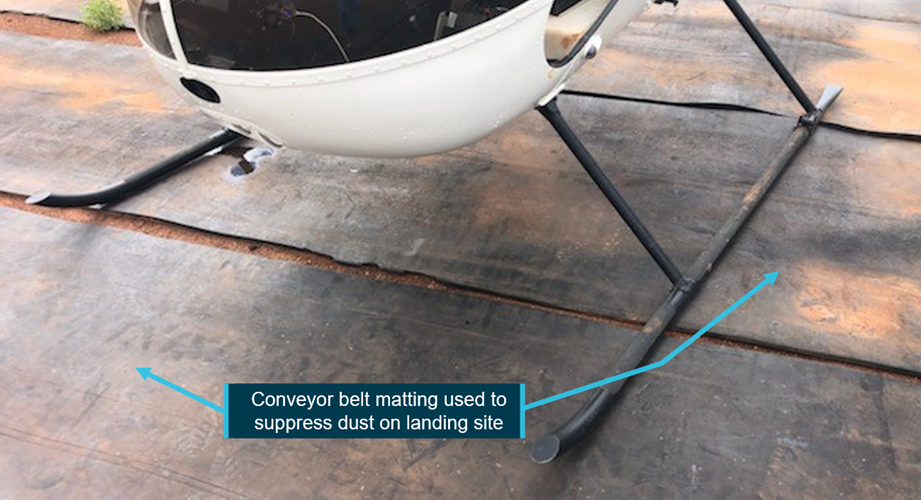
An occurrence brief* published by the Australian Transport Safety Bureau (ATSB) into the 23 December 2020 accident details how the pilot of an R22 was preparing to take off from a helicopter landing site covered with rubber matting made from conveyor belts as a means of limiting an in-flight visibility condition known as ‘brownout’. Brownout can obscure nearby visual references necessary for a pilot to control a helicopter when near to the ground, which can cause spatial disorientation and loss of situational awareness leading to an accident.

As the helicopter became airborne, it moved backwards slightly due to a headwind, resulting in the heel of the skid sliding between two overlapping sheets of matting. As the pilot attempted to gain height, the skid did not free itself and the helicopter pitched back and rolled to the left.

The pilot recognised the early onset of dynamic rollover and attempted to recover by lowering the collective. While that action prevented a rollover, it resulted in a hard landing and substantial damage to the helicopter. The pilot was not injured.

As a result of this incident, the helicopter operator has taken a number of positive safety actions including the removal of rubber conveyor belt matting from all company helicopter landing sites. The operator also issued an internal safety alert to its pilots reminding them of the requirements to ensure company helicopter landing sites are clear of any objects that could cause dynamic rollover on take-off, and how dynamic rollover can occur and the appropriate recovery technique.

*Occurrence briefs are concise reports that detail the facts surrounding a transport safety occurrence, as received in the initial notification and any follow-up enquiries by the ATSB. Because occurrence briefs are not investigations under the Transport Safety Investigation Act 2003, the information within them is de-identified, and provides an opportunity to share safety education messaging in the absence of an investigation.

Insidious danger of CO

CO exposure likely significantly degraded ability of Beaver floatplane pilot to safely operate aircraft 

Key points

  • Pilot’s ability to control the aircraft likely significantly degraded due to carbon monoxide exposure;
  • Cracks in aircraft exhaust and holes in firewall very likely allowed carbon monoxide to enter the aircraft cabin;
  • ATSB recommends mandated fitment of recording devices in smaller passenger aircraft, active CO detectors in piston aircraft.

Carbon monoxide exposure likely significantly degraded the ability of the pilot of a Beaver floatplane to safely operate the aircraft before it collided with water in Jerusalem Bay on the Hawkesbury north of Sydney in December 2017, fatally injuring all six people on board, the final report from Australian Transport Safety Bureau investigation into the accident has found.

As advised with the ATSB’s publication of two safety advisory notices arising from the investigation in July 2020, several pre-existing cracks in the aircraft engine’s exhaust collector ring very likely released exhaust gas into the engine/accessory bay, which then very likely entered the cabin through holes in the main firewall where three bolts were missing. The pilot also undertook a 27-minute taxi - to free the dock for another arriving and departing aircraft - before the passengers were boarded which likely exacerbated the pilot’s elevated carboxyhaemoglobin level.

“Shortly after take-off for the return flight from Cottage Bay to Sydney Harbour’s Rose Bay, the aircraft conducted a 270 degree right turn in Cowan Water and then entered Jerusalem Bay, below the height of the surrounding terrain,” said ATSB Chief Commissioner Greg Hood.

“It stopped climbing, continued along the bay and then made a very steep right turn. The aircraft’s nose then dropped and the aircraft collided with the water.”

From detailed analysis of photos recovered from the camera of one of the passengers on board the aircraft, as well as witness accounts, the ATSB was able to establish the accident sequence of events, and found that some of the circumstances of the flight were unexpected, given the nature of the flight and the pilot’s significant level of experience.

The aircraft entered a known confined area, Jerusalem Bay, below the height of the surrounding terrain, when there was no operational need to enter the bay,” Mr Hood noted.

“Further, the aircraft did not continue to climb despite being in the climb configuration, and a steep turn was performed at low‑level and at a bank angle in excess of what was required.

“The aircraft likely aerodynamically stalled, with insufficient height to recover before colliding with the water.”

Toxicology results identified that the pilot and passengers had higher than normal levels of carboxyhaemoglobin in their blood. This was almost certainly due to elevated levels of carbon monoxide in the aircraft cabin.

The pilot would have almost certainly experienced effects such as confusion, visual disturbance and disorientation,” said Mr Hood.

“Consequently, the investigation found that it was likely that this significantly degraded the pilot's ability to safely operate the aircraft.”

Mr Hood noted that at the time of releasing an interim report into the accident in December 2018, investigators were considering the possibility of pilot incapacitation due to the series of unexpected, and up to that point, unexplained events during the flight.

The ATSB engaged an aviation medical specialist, who, working with other medical specialists closely examined all aspects of the pilot’s medical history including electrocardiogram traces and medical reports, with no pre-existing medical conditions evident.

The ATSB was of the understanding that testing for carbon monoxide exposure on the aircraft’s occupants was conducted as part of initial toxicology examinations. However, in late 2019, the ATSB’s aviation medical specialist recommended that this be confirmed, Mr Hood noted.

“Subsequent toxicological testing indicated that the pilot and all passengers had elevated levels of carboxyhaemoglobin.”

Mr Hood thanked the families and colleagues of those lost in the accident for their understanding and support while the ATSB progressed this comprehensive investigation, culminating in the public release today of the 144-page final report.

“This investigation report release will bring the families of those lost in this tragic accident a greater sense of understanding of the circumstances of the loss of their loved ones.”

Mr Hood said the investigation would have been considerably aided if the aircraft had been fitted with an on-board recording device. The accident Beaver aircraft’s maximum take-off weight was less than 5,700 kilograms and so was below the regulatory threshold requiring the fitment of a flight recording device (such as a cockpit voice recorder and/or a flight data recorder).

Recording devices have long been recognised as an invaluable tool for investigators in identifying the factors behind an accident, and their contribution to aviation safety is irrefutable,” said Mr Hood.

Historically, due to cost considerations and technological limitations, the fitment of recording devices has only been mandated for larger aircraft.

However, advancements in technology have made self-contained image, audio and flight data recording systems far more cost-effective and accessible to all aircraft.

“That is why we are today formally recommending that the International Civil Aviation Organization and the Civil Aviation Safety Authority consider mandating the fitment of lightweight recording devices to smaller passenger-carrying aircraft.

“There are a large number of commercial passenger-carrying operations conducted in aircraft that do not require the fitment of flight recorders. So there remains the potential for unresolved investigations into accidents involving smaller passenger carrying aircraft, which poses a significant limitation to bringing about safety improvements in this sector of aviation.”

Mr Hood said the circumstances of the Jerusalem Bay accident highlight the insidious danger CO exposure poses to aircraft occupants.

“This investigation reinforces the importance of conducting a thorough inspection of piston-engine exhaust systems and the timely repair or replacement of deteriorated components,” he said.

“In combination with maintaining the integrity of the firewall, this decreases the possibility of CO entering the cabin.”

Further, the investigation also highlights that the use of an attention attracting CO detector provides pilots with the best opportunity to detect CO exposure before it adversely affects their ability to control the aircraft or become incapacitated.

“The ATSB strongly encourages operators and owners of piston-engine aircraft to install a CO detector with an active warning to alert pilots to the presence of elevated levels of CO in the cabin. Where one is not fitted, pilots are encouraged to carry a personal CO detector.”

The ATSB has recommended that the Civil Aviation Safety Authority consider mandating the carriage of active warning CO detectors in piston-engine aircraft, particularly passenger carrying aircraft.

Read the final report: Collision with water involving a de Havilland Canada DHC-2 Beaver aircraft, VH‑NOO, at Jerusalem Bay, Hawkesbury River, New South Wales, on 31 December 2017