Pilots unaware of shortened runway before Melbourne overruns

Two international airliners, both with more than 200 people on board, overran a shortened runway and took off only metres above an active worksite at Melbourne Airport in September 2023, an ATSB investigation report details.

Prior to each incident the airport’s runway 34, normally 3,659 m in length, had been temporarily shortened by 1,568 m at night for a resurfacing project, leaving 2,089 m of runway available.

The first of these serious incidents occurred on the night of 7 September 2023, when a Malaysia Airlines Airbus A330-300 overran the available length while taking off for a flight to Kuala Lumpur, passing only 7 metres above work vehicles.

In response, Melbourne Airport conducted a risk review, and took additional safety action including updating existing communications and issuing a safety alert to airlines.

However, 11 days after the first incident, a Bamboo Airways Boeing 787-9 also overran the same temporary runway end, while taking off for a flight to Hanoi, this time passing less than 5 metres above the active worksite.

Both times jet blast impacted the works area where personnel and equipment were present. No workers were physically injured, but one stress-related injury resulted from the second incident.

To scale visual representation of the 787 taking off over the works limit.

To scale visual representation of the 787 taking off over the works limit.

The reduced runway length had been notified to flight crews through NOTAMs (notices to airmen) and broadcast over radio by the ATIS automatic terminal information service.

“Neither flight crew identified that the runway was significantly shortened, despite the relevant NOTAM being provided in their flight briefing packs,” ATSB Chief Commissioner Angus Mitchell said.

“And while both crews accessed a version of the ATIS that mentioned the shortened runway, they only noted to air traffic control the weather information from the ATIS, and not the reduced runway length.”

In addition, while each airline’s flight dispatcher had accounted for the reduced runway length in their indicative take-off performance calculations, they did not specifically highlight the shortened runway in the flight crews’ pre-flight briefing packages. This was likely since each aircraft was able to safely depart from the reduced length runway if appropriate power settings were applied. 

“This oversight contributed to both flight crews using the full runway length in their pre-flight performance calculations, and subsequently conducting the take-offs with reduced thrust settings*.’

A full and correct understanding

It is a fundamental pilot responsibility to identify safety-critical aeronautical information when preparing for a flight, but that this process is susceptible to human error, Mr Mitchell noted.

“The risk controls to prevent these occurrences were predominantly procedural: relying on flight crews to carefully review aerodrome information, then identify and understand essential information – in this case, the reduced runway length available,” he said.

“Relying on predominantly procedural defences to recognise and comprehend hazards does not guarantee that flight crews will always have a full and correct understanding of operational conditions.” 

Given the likelihood of missing or misunderstanding safety information, the report highlights the opportunities for additional risk controls to enhance pilot situational awareness.

Considering the potentially catastrophic consequence of departing aircraft impacting an active works area, additional defensive layers aimed at alerting flight crews to significant runway hazards should be implemented,” Mr Mitchell said.

These can include enhancing communication of safety-critical information through flight dispatch, air traffic control, and highly conspicuous airport signage.

“In these incidents both airlines expected their dispatchers to highlight to their pilots all types of flight information critical for flight safety, but neither operator ensured this occurred,” Mr Mitchell said.

Both airlines have subsequently updated their flight dispatcher procedures and guidance.

In addition, the investigation notes Australian regulations only required air traffic control to confirm that flight crews had received the latest version of the ATIS – not that they had received the information in full. This was in line with International Civil Aviation Organization (ICAO) standards.

“Air traffic controllers have well defined and set responsibilities, which currently do not necessarily require them to directly advise flight crews of all safety critical information,” Mr Mitchell said.

“However, where there is doubt or potential that a significant safety hazard may not be understood or acknowledged, they can use their best judgement when it’s prudent to intervene.”

As a result of these incidents, Airservices Australia, in consultation with the Civil Aviation Safety Authority, has proposed changes to ATC procedures in providing essential aerodrome information associated with runway works that reduce available runway lengths.

Mr Mitchell said the ATSB would monitor the progress of this safety action and is recommending ICAO similarly review the Annex 11 standards and recommended practices for air traffic control.

“With the release of this investigation report the ATSB has issued a formal safety recommendation to ICAO that it review Annex 11 to include procedures for air traffic control communications to increase assurance that flight crews have received safety-critical aerodrome condition information,” Mr Mitchell said.

“Changes in response to this recommendation would improve aviation safety worldwide.”

Finally, Mr Mitchell also noted ICAO has adopted amendments to Annex 14 which covers aerodrome standards and recommended practices. The amendments introduce high conspicuity signage at airports to indicate temporary changes to runway declared distances. 

The Civil Aviation Safety Authority has advised these changes will be reviewed for inclusion in relevant Australian regulations as part of the normal regulatory change process.

“Conspicuous visual aids, such as the signage proposed to be introduced to ICAO Annex 14, can assist as a final defence by providing an indication of changes to the runway conditions, where the runway would otherwise appear normal to flight crews,” Mr Mitchell concluded.

“Flight dispatchers, aircraft operators, airport operators, individual air traffic controllers, air traffic services providers and others can all contribute to ensuring pilots are aware of safety‑critical information when they need it.”

Read the final report: Runway excursions on take-off involving Airbus A330-323, 9M-MTL, and Boeing 787-9, VN-A819, Melbourne Airport, Victoria, on 7 and 18 September 2023

* Reduced thrust take-offs are a common practice when the aircraft’s operating weight and available runway length does not require maximum engine thrust be used on take-off. Reduced thrust take-offs increase engine life and reduce maintenance costs through reduced engine wear.
Landing gear malfunction leads to Beaver floatplane accident during Whitsundays landing

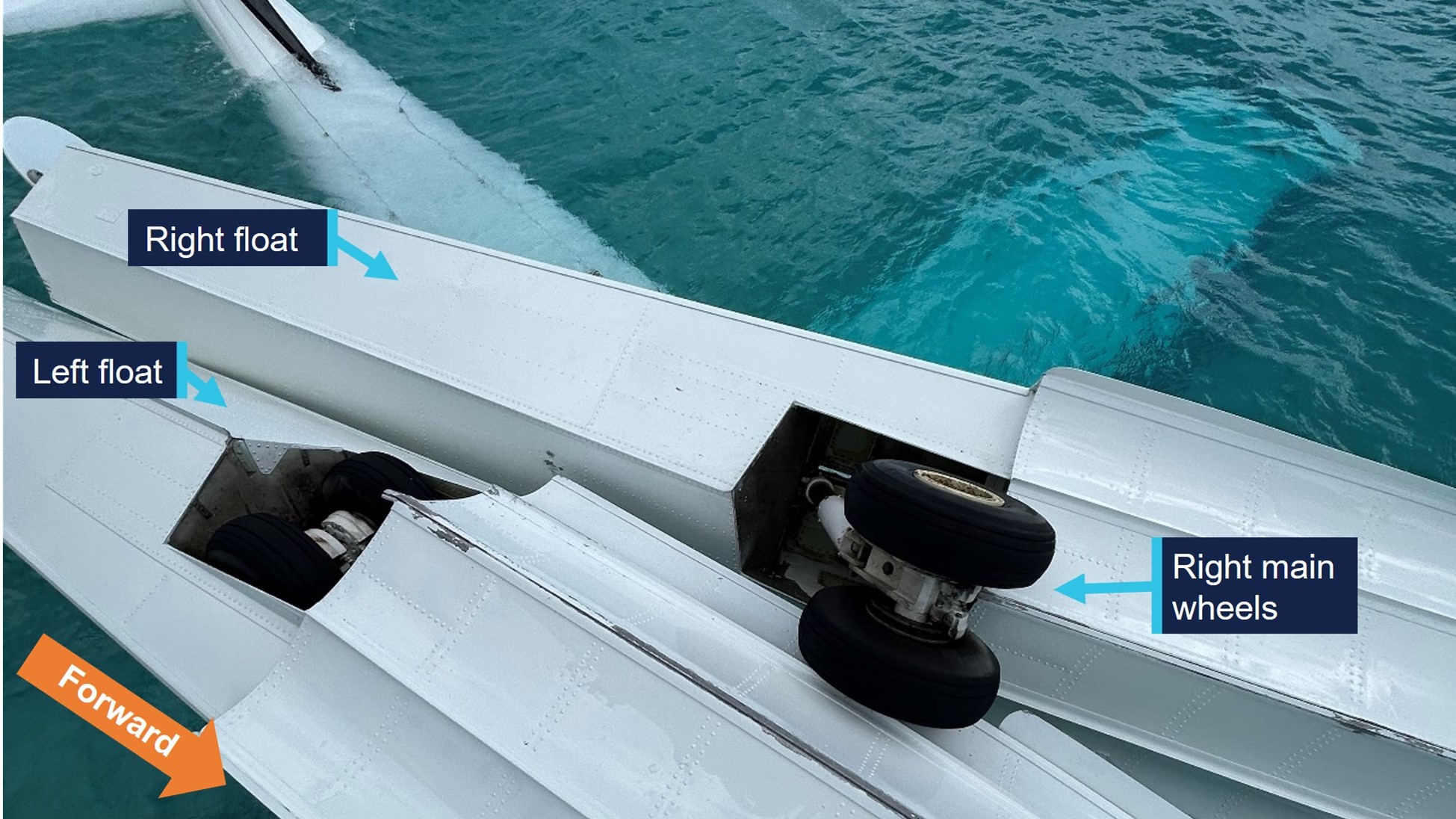
The pilot and passengers of a Beaver floatplane were unable to open the left rear cabin door to escape the aircraft after it overturned and became submerged on landing off Whitsunday Island’s Whitehaven Beach, an ATSB final report details.

The single-engine, amphibious DHC-2 Beaver had departed Hamilton Island Airport for a scenic flight to Whitehaven Beach with a pilot and four passengers on board on 26 October 2024.

After take-off the pilot selected the landing gear to retract but, likely due to corrosion, the right main landing gear assembly seized near the fully extended position.

“When the pilot was preparing for a water landing at Whitehaven Beach, they did not identify the right main landing gear had not retracted into the float during their pre‑landing checks,” ATSB Director of Transport Safety Kerri Hughes said.

The reason for the pilot not identifying the landing gear remaining extended, either via the landing gear position indication panel, the amphibian gear advisory system (AGAS) annunciation, or the wing‑mounted mirror, could not be identified. The investigation found that the AGAS was likely operational, but the pilot advised the ATSB that they did not recall hearing the AGAS annunciation just prior to the landing.

When the aircraft touched down with its right main landing gear still extended, it bounced and then yawed sharply to the right, before nosing over and becoming submerged inverted.

The pilot was able to exit the aircraft, but upon surfacing, realised none of the passengers had managed to do so.

The pilot swam back under the water to assist the passengers, but they were unable to open the aircraft’s left rear cabin door.

“Fortunately, the pilot was able to open the right main door – which took a degree of force – and assisted all four passengers to the surface,” Ms Hughes said.

All five occupants sustained minor injuries in the accident, and the aircraft was substantially damaged.

Ms Hughes noted a series of similar accidents led the Beaver’s then‑type certificate holder, Viking Air Limited, to publish a service bulletin in July 2010 strongly recommending the fitment of newly‑developed ‘push‑out’ windows, to improve emergency egress.

“These modifications were not fitted to the accident aircraft, nor were they required to be,” she said.

“This accident should highlight to operators and pilots the life‑saving value of having an alternate means of exiting an aircraft after an impact with water if the fuselage becomes distorted.”

In this instance, the circumstances that initiated the corrosion could not be determined. However, the operator enhanced their procedures for preventative maintenance on their aircraft and incorporated a minimum weekly systems check flight, including landing gear cycle when the aircraft had not been recently operated. 

In response to this accident, the Civil Aviation Safety Authority (CASA) has developed an airworthiness bulletin, AWB 32‑029, recommending enhanced vigilance and maintenance actions on the landing gear components to ensure reliability of the landing gear and actuating system.

In addition, the operator installed a second mirror on the right wing of its DHC‑2 aircraft (the fleet was already equipped with a mirror on the left wing of the aircraft, designed to help pilots observe landing gear retraction). Further, the operator implemented initial and recurring pilot training that included enhanced flight characteristics highlighting techniques specific to amphibian aircraft operations.

Finally, the ATSB’s final report also notes the pilot credited their employer‑mandated helicopter underwater escape training (HUET), completed about one month before the accident, as a life‑saving course.

“In-rushing water, disorientation, entanglement, unfamiliarity with seatbelt release mechanisms and an inability to reach or open exits are all known challenges for occupants attempting to escape from a submerged aircraft,” Ms Hughes said.

“As such, HUET has the potential to be lifesaving, not just for helicopter pilots but for all pilots operating any type of aircraft over water,” Ms Hughes said.

Read the final report: Landing gear malfunction and collision with water involving de Havilland Canada DHC-2 Beaver, VH-OHU, near Whitehaven Beach, Whitsunday Island, Queensland, on 26 October 2024

Fuel exhaustion event involving a Schweizer Aircraft Corp 269C-1, Kankool, New South Wales, on 5 October 2025

Occurrence Briefs are concise reports that detail the facts surrounding a transport safety occurrence, as received in the initial notification and any follow-up enquiries. They provide an opportunity to share safety messages in the absence of an investigation. Because occurrence briefs are not investigations under the Transport Safety Investigation Act 2003, the information in them is de-identified. 

What happened

On 5 October 2025, the pilot of a Schweizer Aircraft Corp 269C-1 planned a ferry flight from Lake Macquarie Airport (where the helicopter had just received an annual service) to a landing area near Duri, New South Wales. 

The pilot’s usual procedure was to conduct a pre-flight inspection of the helicopter prior to departure which included confirming the amount of fuel in the fuel tank with a dipstick. On this occasion, however, the pilot recalled observing the calibrated amount of fuel inside the tanks to be 92 litres. Assuming this amount was correct, the pilot was satisfied with the fuel quantity and proceeded to collect their passenger from the taxiway. Shortly after, the helicopter departed from runway 25. 

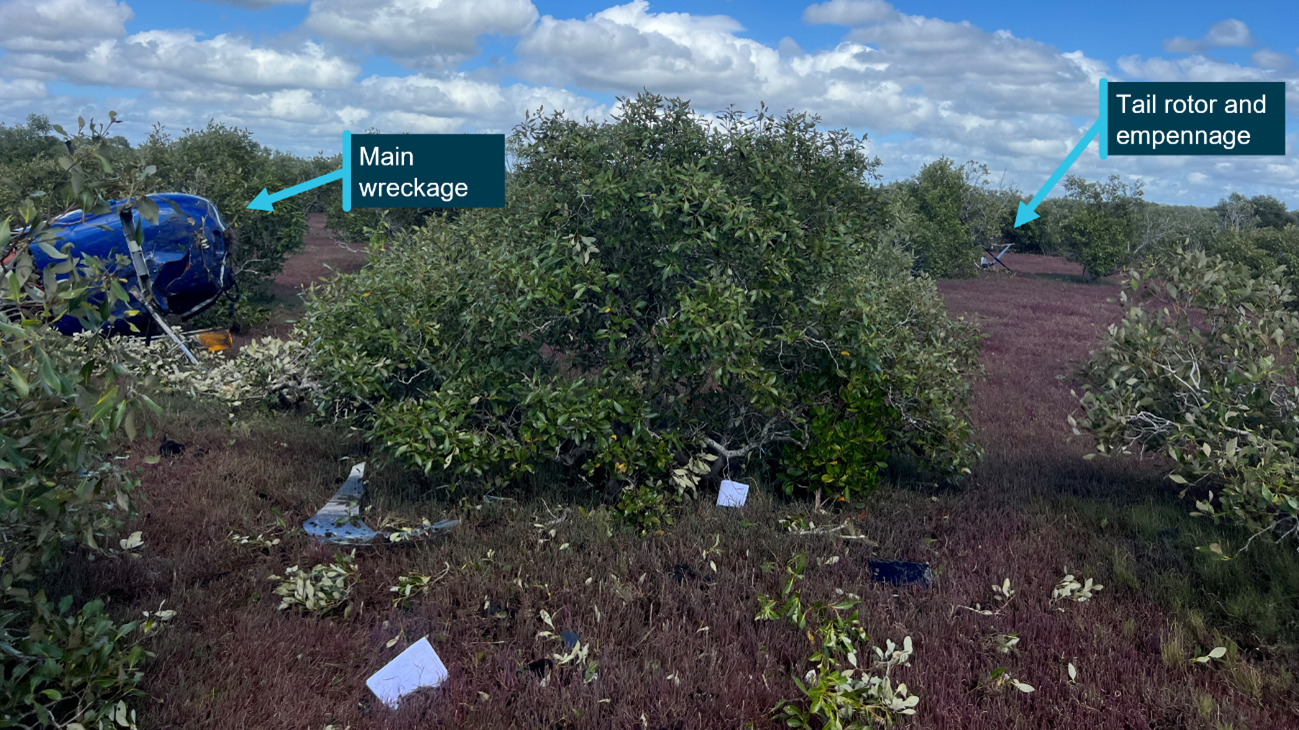
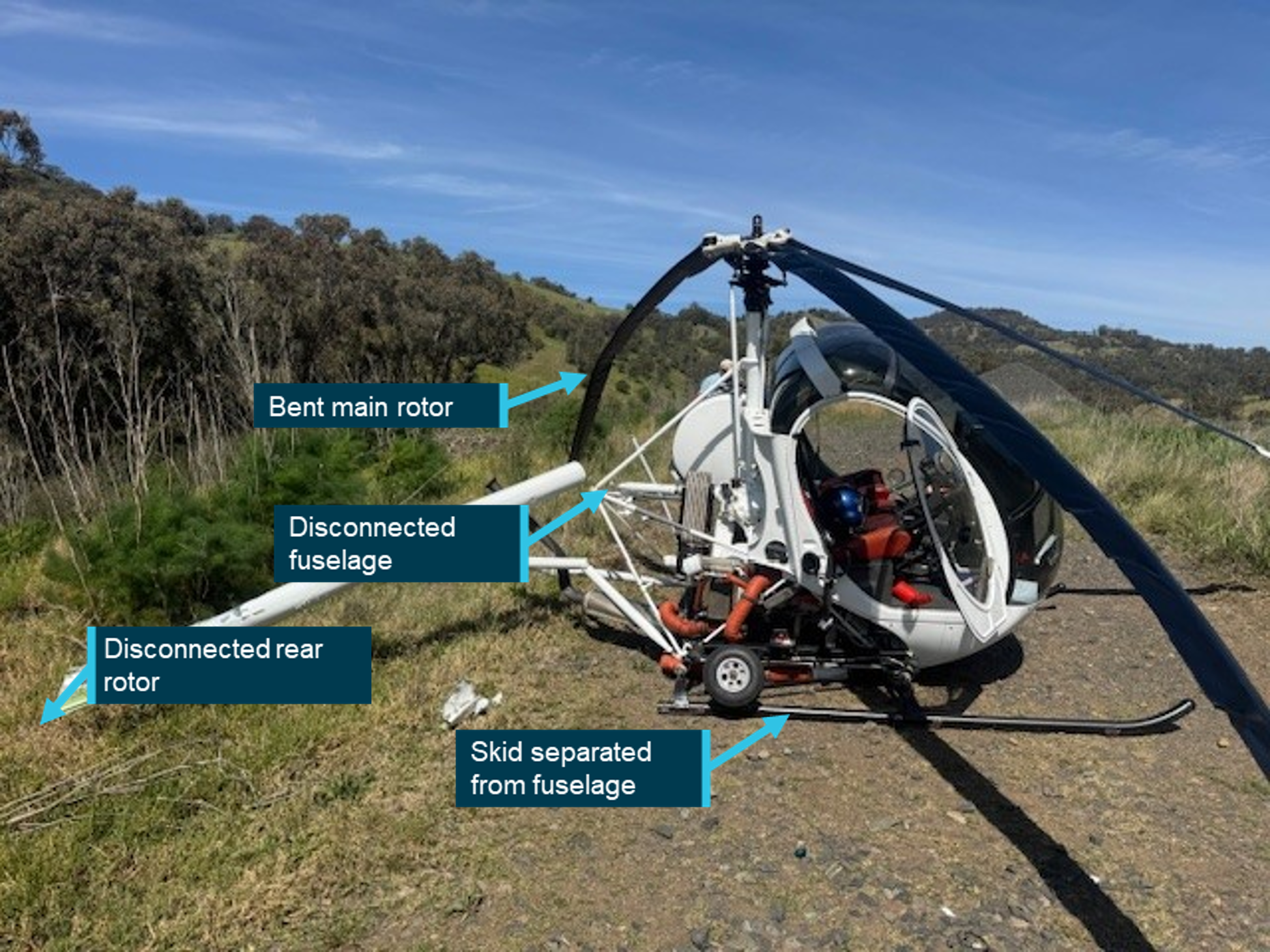
En route to the arranged helicopter landing area about 1.7 hours away, the pilot observed a different fuel burn rate to the calculations that were initially completed. Due to the distance left to travel, the pilot advised the passenger that there would be a precautionary landing conducted to inspect the fuel tank further. The pilot selected a suitable landing area and began to configure the helicopter for landing. However, at 2,500 ft, the engine stopped producing power due to fuel exhaustion and the pilot conducted an autorotation[1] to land at a track beside a train line. The helicopter landed hard, resulting in substantial damage to the skids, rotor blades and tail boom (Figure 1).

Figure 1: Damage to helicopter

Photograph showing damage to helicopter

Source: Pilot, annotated by the ATSB

Safety message

Pilots are reminded to always check the fuel quantity prior to departure using a known calibrated instrument such as a dipstick.

Pilots are also encouraged to use at least 2 independent verification methods to determine the quantity of fuel on board the aircraft. The Civil Aviation Safety Authority (CASA) advisory publication,

, provides guidance for fuel quantity crosschecking. More specifically, the advisory circular published by CASA, AC 91-15 v 1.2 - Guidelines for aircraft fuel requirements, highlights the importance of pre-flight fuel quantity checks and in-flight fuel management. 

About this report

Decisions regarding whether to conduct an investigation, and the scope of an investigation, are based on many factors, including the level of safety benefit likely to be obtained from an investigation. For this occurrence, no investigation has been conducted and the ATSB did not verify the accuracy of the information. A brief description has been written using information supplied in the notification and any follow-up information in order to produce a short summary report, and allow for greater industry awareness of potential safety issues and possible safety actions.

[1]     Autorotation is a condition of descending flight where, following engine failure or deliberate disengagement, the rotor blades are driven solely by aerodynamic forces resulting from rate of descent airflow through the rotor. The rate of descent is determined mainly by airspeed.

Occurrence summary

Mode of transport Aviation
Occurrence ID AB-2025-053
Occurrence date 05/10/2025
Location Kankool
State New South Wales
Occurrence class Accident
Aviation occurrence category Collision with terrain, Forced/precautionary landing, Fuel exhaustion
Highest injury level None
Brief release date 07/11/2025

Aircraft details

Manufacturer Schweizer Aircraft Corp
Model 269C-1
Sector Helicopter
Operation type Part 91 General operating and flight rules
Departure point Lake Macquarie Aircraft Landing Area, New South Wales
Destination Near Duri, New South Wales
Damage Substantial

EC120 uncommanded yaw accident highlights importance of type recency

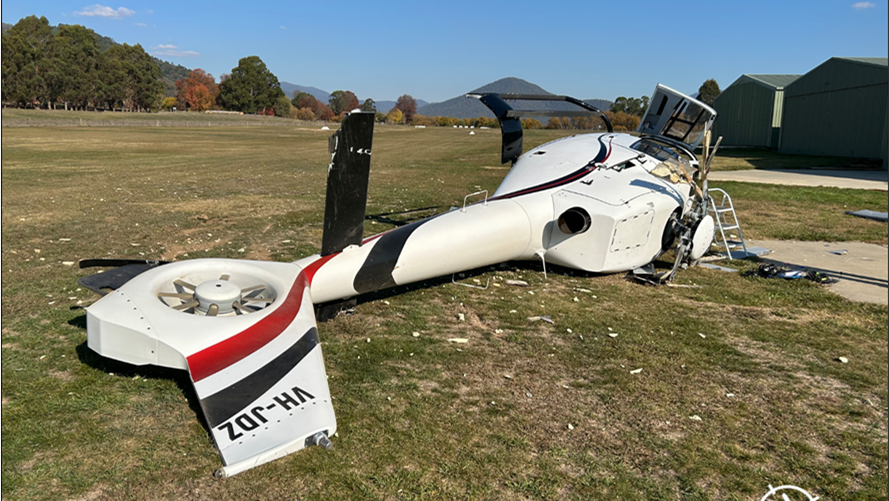
The pilot of an EC120 helicopter had not flown that type in almost 15 years prior to an uncommanded yaw on take‑off accident at Porepunkah, in north‑east Victoria, an ATSB final report explains.

On 15 May 2025, a Eurocopter EC120B was taking off from Porepunkah with a pilot and one passenger on board, for a planned private flight to Albury, NSW.

While the pilot was highly experienced in helicopter operations, held a commercial licence and was endorsed on the EC120, they had not flown one for about 15 years.

“The EC120’s ‘Fenestron’ shrouded tail rotor requires greater pedal response than conventional tail rotors such as those on helicopters like the Robinson R44, which the pilot had primarily flown in the 12 months prior to the accident,” ATSB Director Transport Safety Dr Stuart Godley noted.

As the helicopter was lifting into a hover, it was allowed to yaw (rotate about its vertical axis) to the left without correction.

After the helicopter turned through about 180°, the pilot attempted to arrest the yaw with right pedal input, but this was insufficient to correct the uncontrolled turn.

During the turn, the right skid contacted the ground, and the helicopter rolled over, resulting in substantial damage. Fortunately, both occupants then exited the helicopter uninjured.

“Although a highly experienced helicopter pilot, the pilot’s lack of recent type experience on the EC120 degraded their ability to anticipate and counter the left yaw,” Dr Godley said.

The yaw control characteristics of the EC120 were sufficiently different to produce effects in excess of the pilot’s expectations, the report notes. 

The EC120 yaws to the left – rather than to the right like the R44 – on application of power and also requires a larger opposite pedal input to arrest yaw. 

“Being highly experienced flying helicopters, this likely increased the pilot’s perception of their ability to operate the EC120, even though they had not operated the aircraft type for several years,” Dr Godley noted.

“This highlights the importance of maintaining recent type‑specific flight experience when transitioning between aircraft with differing control characteristics, and maintaining an understanding of the specific characteristics of the aircraft you fly.”

Read the final report: Collision with terrain involving Eurocopter EC120B, VH-JDZ, Porepunkah, Victoria, on 15 May 2025

R22 accident after unplanned low-level manoeuvre

An R22 helicopter was conducting unplanned and unnecessary torque turns at a low height during a commercial pilot licence training flight when it struck the ground before it could be recovered, an ATSB investigation report details.

The accident occurred on 26 February 2025 when an instructor and student pilot were conducting advanced emergency procedures training in the Robinson R22 at the Pannikin Island training area in Moreton Bay, south-east of Brisbane.

Toward the end of the lesson, the instructor recalled that the student requested to practise some torque turns: an advanced manoeuvre to quickly complete a 180° change in direction of flight. 

“Torque turns are not in the syllabus and are not a requirement for the commercial helicopter pilot licence, and were not discussed in the pre-flight brief,” ATSB Director Transport Safety Dr Stuart Godley said.

“Further, torque turns are generally not even used in aerial application and dispensing operations in rotorcraft in favour of accurately flown and coordinated ‘procedure (P) turns’.”

After the instructor demonstrated and then the student executed several torque turns, the student then attempted a final torque turn, during which the helicopter rapidly lost altitude and entered an increased low nose attitude.

The helicopter impacted the ground upright and skidded for some distance before rolling and coming to rest on its left side.

The ATSB determined that the training exercise was conducted at an inappropriate low height, increasing risk and not allowing a margin of error, the investigation found.

“When the helicopter exited a torque turn at a low height and a lower-than-expected attitude, the instructor assumed control but was unable to prevent the collision with terrain,” Dr Godley said.

The instructor sustained serious injuries, the student sustained minor injuries, and the helicopter was destroyed.

“If the decision to conduct the torque turns had been agreed before the flight, this would have allowed for a full ground briefing to establish the torque turn procedures, discuss the conduct of the manoeuvre and ensure a common understanding of how the practice turns would be conducted,” Dr Godley noted.

Further, beginning the low-level torque turn exercise at 50 ft AGL, rather than starting higher and working down as the student’s capability improved, increased operational risk.

“In a training environment, where a student has limited experience to manage unexpected aircraft behaviour, it is vital to ensure and maintain sufficient height for recovery,” Dr Godley continued.

The report notes that effective instructional decision-making balances educational value with operational risk. 

The instructor assessed the student to be capable of performing the manoeuvres based on their recent progress and performance during the lesson and having completed many previous training hours together. 

However, this assessment was done during the training flight, limiting the time available for the instructor to fully consider the benefits and risks.

“This accident highlights the importance of instructors not going outside the approved and pre‑planned syllabus, relying on conservative in-flight decision‑making to manage risk, and to anticipate and be ready to intervene quickly, especially during low-level or elevated risk manoeuvres,” Dr Godley concluded.

Read the final report: Collision with terrain involving Robinson R22 Beta, VH-8BW, 29 km from Southport Aerodrome, Queensland, on 26 February 2025

Ineffective bridge resource management, distraction in Leeuwin collision

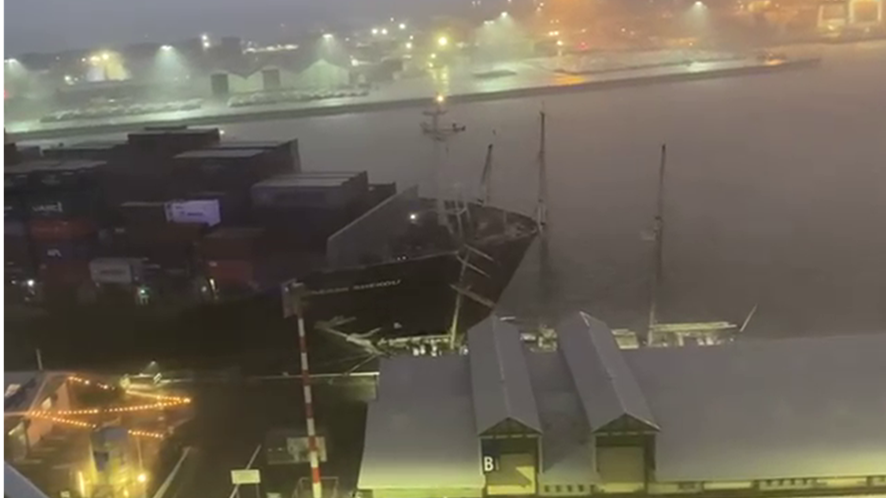
Ineffective coordination and monitoring by the crew and harbour pilots on board the container ship Maersk Shekou contributed to its collision with the tall ship Leeuwin II in the Port of Fremantle, the Australian Transport Safety Bureau has found.

The 333-metre, Singapore-flagged Maersk Shekou was being navigated into Fremantle under the direction of two harbour pilots in heavy squall conditions before dawn on 30 August 2024, an ATSB investigation final report details.

The investigation's review of audio from the ship’s bridge, taken from the vessel data recorder, found the primary pilot did not provide the helmsman with a planned port 10° helm order to turn into the inner harbour, which went undetected by the rest of the bridge team.

This meant that as the pilot attempted to use the main engine and four attached tugs to turn the ship, the helmsman attempted to maintain the ship on the previously instructed heading of 083°, rigorously opposing the ship’s planned turn.

As a result, the Maersk Shekou continued towards Victoria Quay and collided with the Leeuwin II, which was berthed at the quay, before the stern contacted the wharf edge and containers struck the roof of the WA Maritime Museum.

The Leeuwin II was dismasted and two crew, who had been on board and were escaping via its gangway just as the collision occurred, sustained minor injuries. The container ship sustained minor damage, including a hull breach, but its crew and the pilots were uninjured.

Chief Commissioner Angus Mitchell said the ATSB found the ship’s bridge team – comprising the two pilots and the ship’s crew – ineffectively implemented bridge resource management practices.

Specifically, there was not a shared mental model of the actions needed during the passage across members of the bridge team, and they failed to adequately monitor, or challenge, the ship’s turn and position in the channel.

“A properly functioning bridge team requires that all its members maintain a shared mental model to actively monitor a ship’s progress,” Mr Mitchell said.

“This relies on relevant information being conveyed to all members of the team, and actions that are incorrect being identified, communicated and rectified immediately.”

The ATSB’s investigation also found the secondary pilot was distracted from their monitoring responsibilities as they were engaged in a non-essential mobile phone call as the ship was transiting a critical area in the entrance channel.

“This meant they were distracted from their monitoring role and did not identify that the lead pilot had not ordered a course alteration, and that the helmsman's actions were opposing the ship’s planned turn,” Mr Mitchell said.

“This highlights the importance of minimising distractions on the bridge, especially during critical stages of a passage.”

The investigation also identified that making fast the supporting tugs was delayed, resulting in the bridge team, including the pilot, being engaged with the final tug’s attachment just as the ship approached the wheel over point for the inner harbour entrance channel. 

“This increased bridge team workload at the most critical stage of the passage.”

Mr Mitchell noted the ATSB also identified several risk controls established by Fremantle Ports to ensure the safe entry of large container vessels had not been adequately implemented, although these did not all directly contribute to the collision.

“These included entering the inner harbour channel without all tugs being secured, prior to sunrise, and well in-excess of the operational wind limits – all of which contravened documented procedures.”

Mr Mitchell said these factors collectively reduced the effectiveness of the port’s risk control measures and increased the risk of future safety occurrences.

Both the port and the pilotage provider, Fremantle Pilots, have committed to implement a range of safety actions in response to the investigation.

Concluded Mr Mitchell: “The dynamic nature of marine operations often results in conditions varying from those expected, and it is essential any associated risks and consequences – particularly those affecting pre-defined and documented limits – are carefully reassessed when required, and any changes to the plan are effectively communicated between all concerned parties.”

Read the final report: Collision between container ship Maersk Shekou and tall ship STS Leeuwin II, Fremantle, Western Australia, on 30 August 2024

Loss of control and collision with terrain involving a Cessna 172H, 62 km south-west of Blackwater, Queensland, on 23 September 2025

Occurrence Briefs are concise reports that detail the facts surrounding a transport safety occurrence, as received in the initial notification and any follow-up enquiries. They provide an opportunity to share safety messages in the absence of an investigation. Because occurrence briefs are not investigations under the Transport Safety Investigation Act 2003, the information in them is de-identified. 

What happened

On the afternoon of 23 September 2025, a Cessna 172 was conducting private runway inspections at multiple farms near Blackwater, Queensland. 

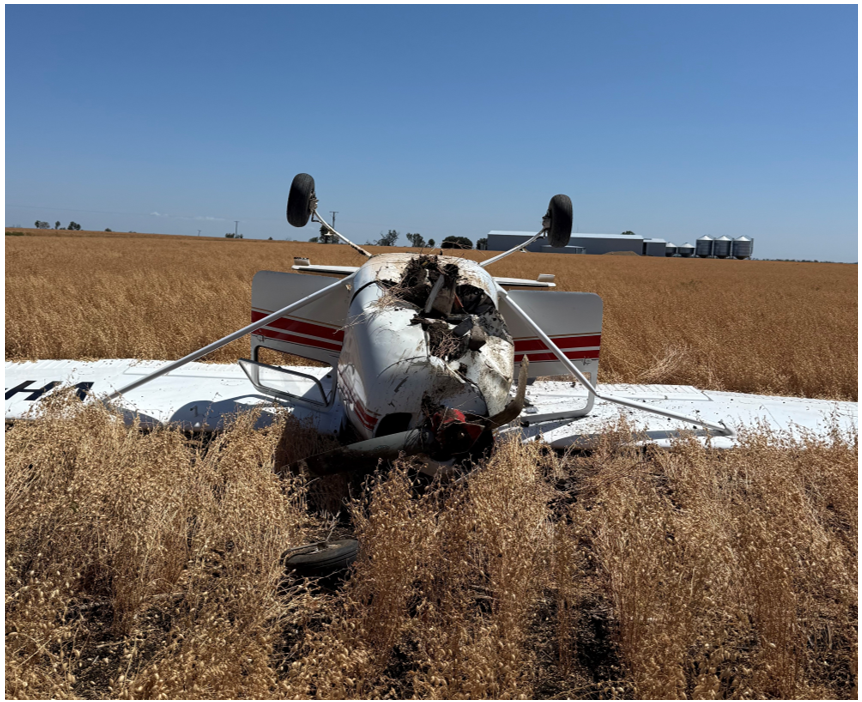
During a low level overfly of one such runway strip at about 200 ft AGL, the aircraft began to lose height. When the pilot attempted to add power, the aircraft did not respond as anticipated, resulting in a loss of control. The aircraft collided with the ground, bounced and came to rest inverted, resulting in substantial damage to the propellor, main landing gear, right wing strut, engine cowl and vertical stabiliser (Figure 1).

The pilot reported that possible contributing factors to the accident included a crosswind from the south and the warmer weather, with the aircraft not having enough lift as power was applied. 

Figure 1: Cessna 172H inverted after landing

Figure 1: Cessna 172H inverted after landing

Source: Operator

Safety message

This incident highlights that low-level flying operations have a lower margin for error with minimal time to recover the aircraft in the event of a loss of control. 

Low-level flying, particularly at private and unregulated airstrips, is inherently high risk and therefore requires effective risk management. This should include a risk assessment to consider the hazards common to the type of operation, as well as specific to the location, to develop mitigations and reduce the chance of an accident occurring.

About this report

Decisions regarding whether to conduct an investigation, and the scope of an investigation, are based on many factors, including the level of safety benefit likely to be obtained from an investigation. For this occurrence, no investigation has been conducted and the ATSB did not verify the accuracy of the information. A brief description has been written using information supplied in the notification and any follow-up information in order to produce a short summary report, and allow for greater industry awareness of potential safety issues and possible safety actions.

Occurrence summary

Mode of transport Aviation
Occurrence ID AB-2025-049
Occurrence date 23/09/2025
Location 62 km south-west of Blackwater
State Queensland
Occurrence class Accident
Aviation occurrence category Collision with terrain, Loss of control
Highest injury level None
Brief release date 31/10/2025

Aircraft details

Manufacturer Cessna Aircraft Company
Model 172H
Sector Piston
Operation type Part 91 General operating and flight rules
Departure point Private property, Queensland
Destination Private property, Queensland
Damage Substantial

Hard landing involving a Cessna 172S, Parafield Airport, South Australia, on 3 July 2025

Occurrence Briefs are concise reports that detail the facts surrounding a transport safety occurrence, as received in the initial notification and any follow-up enquiries. They provide an opportunity to share safety messages in the absence of an investigation. Because occurrence briefs are not investigations under the Transport Safety Investigation Act 2003, the information in them is de-identified. 

What happened

On 3 July 2025 at 1147 local time, a student pilot, the sole occupant of a Cessna 172S, was conducting circuit operations at Parafield Airport, South Australia.

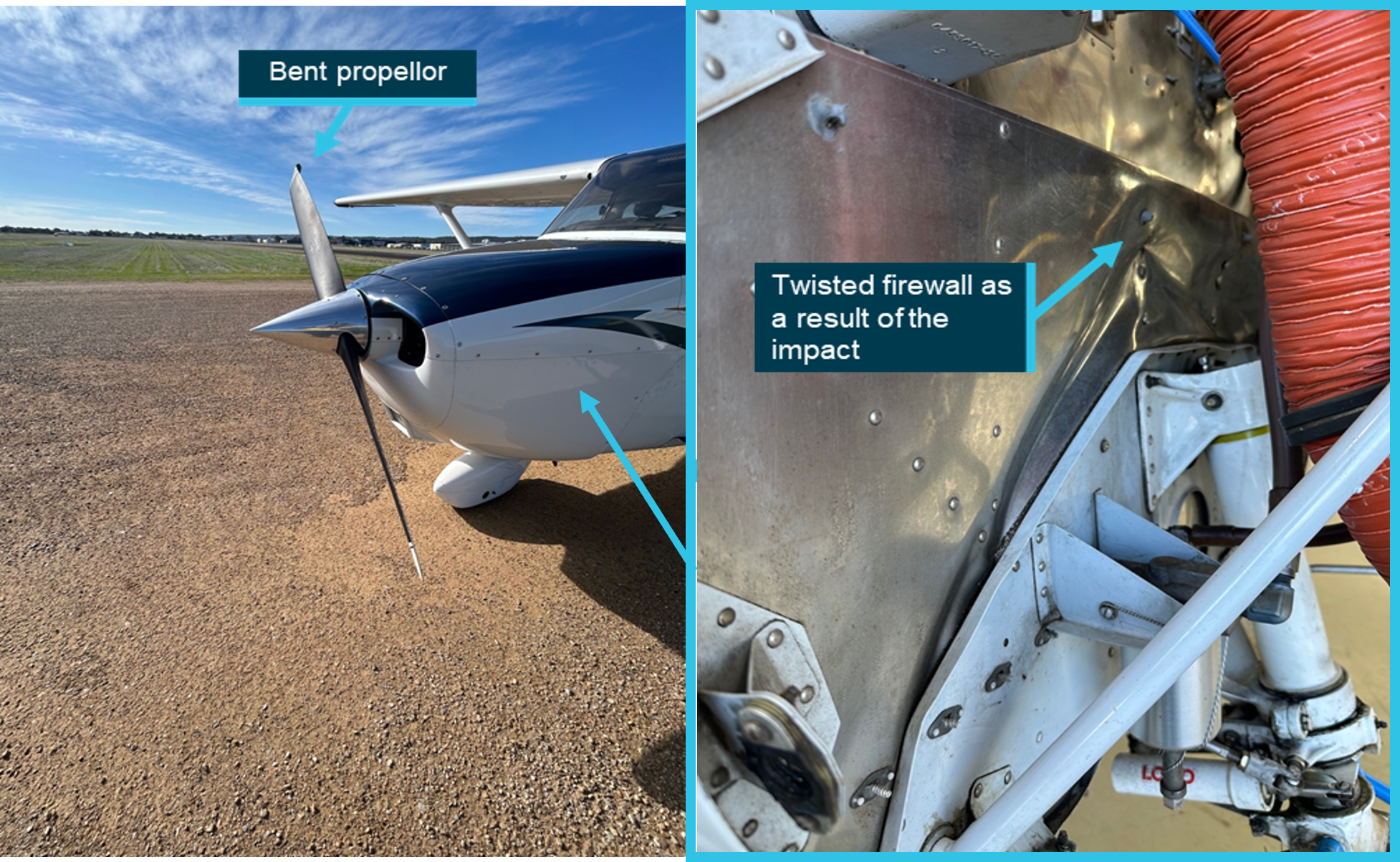
During the seventh touch-and-go of the circuit training, the aircraft encountered a gust of wind as it crossed the runway threshold, resulting in a yaw to the right. In response, the pilot advised that they pushed forward on the control column and overcorrected, resulting in the aircraft landing hard, ballooning[1] and striking the runway a second time. A propellor strike occurred during the second impact with the runway. The aircraft sustained substantial damage to the fuselage and landing gear. 

Figure 1: Damage to Aircraft 

The image on the right is a buckled firewall as a result of the impact with the runway. The second image on the left identifies the bent propellor.

Source: Operator

Safety message 

Wind gusts can be unpredictable. Gusty wind conditions present a challenge for all pilots, but in particular, less experienced student pilots. Maintaining a calm mindset is important in order to adjust the aircraft’s profile and airspeed accordingly and determine that a go‑around is necessary.

The ATSB reminds pilots that as soon as landing conditions become unfavourable, or the approach unstable, initiating a go-around will allow time to reconfigure the aircraft and conduct a safe landing.

About this report

Decisions regarding whether to conduct an investigation, and the scope of an investigation, are based on many factors, including the level of safety benefit likely to be obtained from an investigation. For this occurrence, no investigation has been conducted and the ATSB did not verify the accuracy of the information. A brief description has been written using information supplied in the notification and any follow-up information in order to produce a short summary report, and allow for greater industry awareness of potential safety issues and possible safety actions.

[1]     Ballooning occurs when the pilot flares and the aircraft climbs instead of descending onto the runway.


Occurrence summary

Mode of transport Aviation
Occurrence ID AB-2025-050
Occurrence date 03/07/2025
Location Parafield Airport
State South Australia
Occurrence class Accident
Aviation occurrence category Control issues, Hard landing
Highest injury level None
Brief release date 30/10/2025

Aircraft details

Manufacturer Cessna Aircraft Company
Model 172S
Sector Piston
Operation type Part 141 Recreational, private and commercial pilot flight training
Departure point Parafield Airport, South Australia
Destination Parafield Airport, South Australia
Damage Substantial

Take-off collision involving an Air Tractor AT-502B and an Air Tractor AT-802A, near Pilliga, New South Wales, on 26 September 2025

Occurrence Briefs are concise reports that detail the facts surrounding a transport safety occurrence, as received in the initial notification and any follow-up enquiries. They provide an opportunity to share safety messages in the absence of an investigation. Because occurrence briefs are not investigations under the Transport Safety Investigation Act 2003, the information in them is de-identified. 

What happened

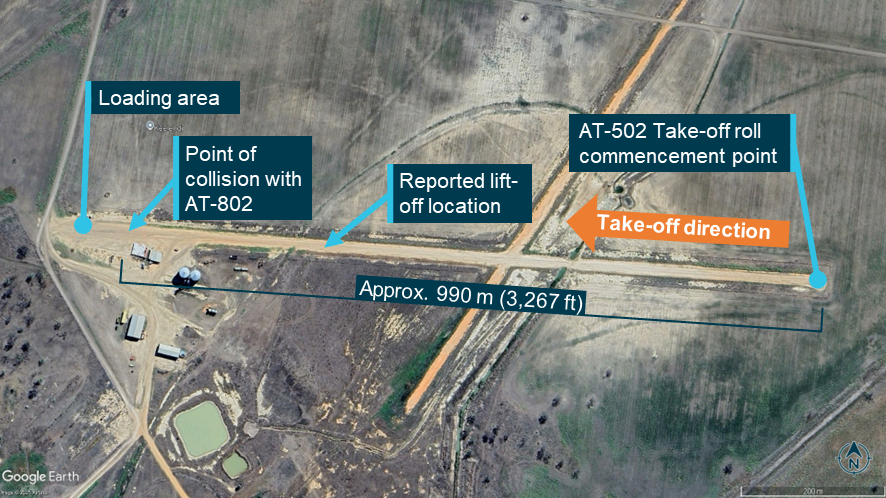
On 26 September 2025, 3 agricultural aircraft were conducting aerial application operations from a private airstrip base near Pilliga, New South Wales. The operating airstrip runway was oriented east-west, with the aircraft loading area positioned at the western runway end (Figure 1). Around 1700 local time, with a westerly prevailing wind (290°/10 kt) and the sun towards the western horizon, the pilot of an Air Tractor AT-502B (AT‑502) aircraft commenced backtracking toward the eastern end of the runway for a take-off into the wind. While backtracking, the pilot received a radio call from an Air Tractor AT-802A (AT‑802) aircraft inbound from the east. The 2 pilots coordinated separation and the AT-802 landed on the runway behind the AT-502 at the eastern end of the runway and began taxiing towards the loading area.

Figure 1: Operating airstrip

Operating airstrip showing reported take-off, landing and collision points.

Source: Google Earth, annotated by the ATSB with information from the operator

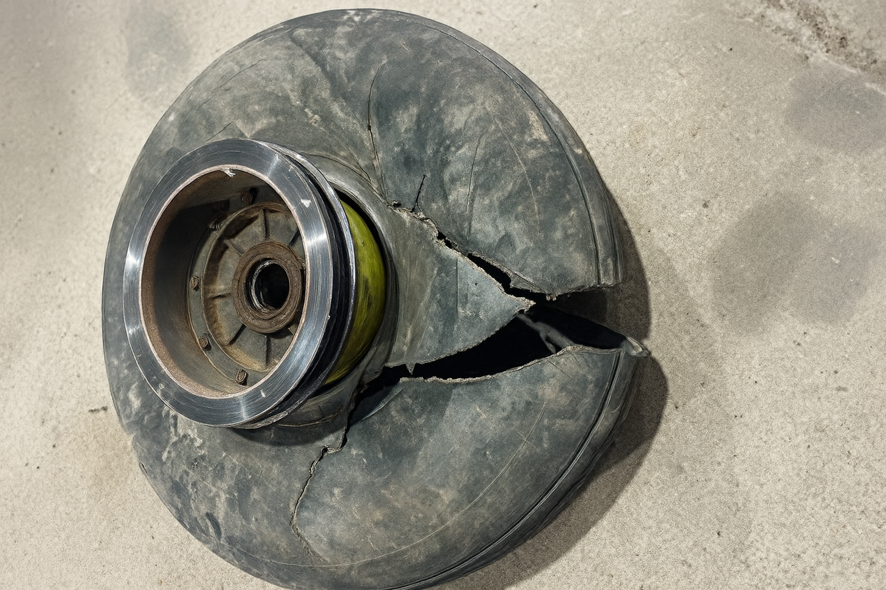
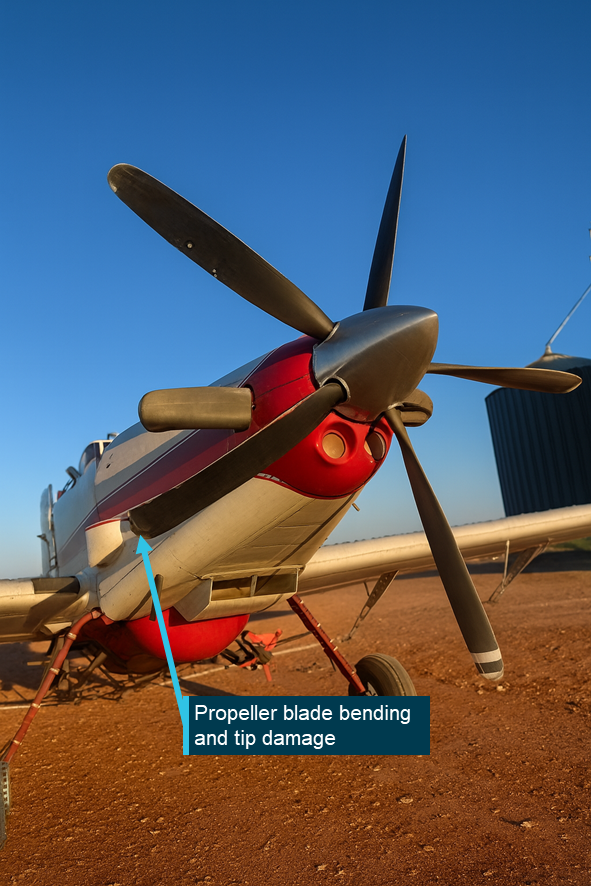
When the AT-502 pilot judged there was likely sufficient runway distance behind the just‑landed AT-802, they commenced the take-off run. Aircraft acceleration and take-off were described as normal and the aircraft lifted off behind and passed directly over the top of the taxiing AT-802. As it did so, the AT-502’s left main landing gear wheel struck the AT-802’s rotating propeller – slashing the main gear tyre (Figure 2) and damaging the outboard tip of one propeller blade (Figure 3).

The AT-502 pilot maintained control and, after dumping the load of chemical, they returned to the airstrip for an uneventful landing. The AT-802 pilot reported immediate and significant airframe vibrations from the damaged propeller and shut down the engine. Neither pilot sustained any injury.

The AT-502 pilot noted that the low sun angle created glare and associated visibility issues and may have affected their judgement of the distance to the taxiing aircraft in front. They also noted that the glare had caused the AT-802 pilot to taxi more slowly than expected, increasing the time needed to clear the airstrip.

Figure 2: AT-502 damaged left main landing gear tyre

AT-502 damaged left main landing gear tyre.

Source: Operator supplied

Figure 3: AT-802 with propeller blade damage

AT-802 showing propeller blade bending and tip damage.

Source: Operator supplied, annotated by the ATSB

Safety message

Pilots of aircraft operating from unlicensed and uncontrolled aircraft landing areas and aerodromes must ensure that they establish and maintain complete situational awareness. Regular visual scans, radio calls and use of positioning technology (such as ADSB-IN and OUT) can collectively enhance awareness and reduce conflict risk. In situations where these tools are absent or degraded (reduced or affected visibility, for example), procedural and operational allowances must be made to ensure that aircraft separation is always assured.

Safety Watch logo

The ATSB SafetyWatch highlights the broad safety concerns that come out of our investigation findings and from the occurrence data reported to us by industry. One of the safety concerns is Reducing the collision risk around non-towered airports.

About this report

Decisions regarding whether to conduct an investigation, and the scope of an investigation, are based on many factors, including the level of safety benefit likely to be obtained from an investigation. For this occurrence, no investigation has been conducted and the ATSB did not verify the accuracy of the information. A brief description has been written using information supplied in the notification and any follow-up information in order to produce a short summary report, and allow for greater industry awareness of potential safety issues and possible safety actions.

Occurrence summary

Mode of transport Aviation
Occurrence ID AB-2025-051
Occurrence date 26/09/2025
Location Near Pilliga
State New South Wales
Occurrence class Serious Incident
Aviation occurrence category Collision, Diversion/return
Highest injury level None
Brief release date 29/10/2025

Aircraft details

Manufacturer Air Tractor Inc
Model AT-502B
Sector Turboprop
Operation type Part 137 Aerial application operations
Departure point Private property, Pilliga, New South Wales
Destination Narrabri aerodrome, New South Wales
Damage Minor

Aircraft details

Manufacturer Air Tractor Inc
Model AT-802A
Sector Turboprop
Operation type Part 137 Aerial application operations
Departure point Unknown
Destination Private property, Pilliga, New South Wales
Damage Minor