Two separate incidents show how important it is to avoid distractions, such as mobile phones when driving airside.
The ATSB reminds airport workers to always remain focused during airside operations.
Radio communications phraseology should be clear, concise and unambiguous.
Two separate incidents investigated by the ATSB show how important it is to communicate clearly and avoid distractions, such as mobile phones when driving airside.
An incident at Mackay Airport highlighted the potential distraction presented by portable communication devices, especially in the dynamic airside environment.
On 29 June 2012, a Piper PA-31 Navajo aircraft, took off from runway 05 at Mackay Airport. At that time, an Airport Safety Officer (ASO) was conducting an airfield runway and lighting inspection in an airfield safety vehicle and moving in a north-westerly direction along runway 32. Despite an earlier air traffic control instruction to hold short of runway 05, the ASO was distracted by a telephone call and continued along runway 32, crossing runway 05. The Piper PA-31 passed over the airfield safety vehicle by an estimated vertical distance of 30 feet.
Too close for comfort!
It is important to remain alert and to be mindful of the potential distraction presented by portable communication devices.
In another incident that same month, an airport safety vehicle at Perth airport entered runway 21 without a clearance during the operation of low visibility procedures. Prior to entering the runway, an air traffic controller used non-standard phraseology to instruct the vehicle to conduct a runway visibility check.
The Tower controller did not know that there had been a handover between airport operations officers and thought he was talking to the same person as had been operating earlier.
In response to this incident, the Perth Airport, the operator of the vehicle, conducted a workshop for airport operations officers (AOOs) to reinforce the importance of seeking clarification of implied or unclear instructions from air traffic control (ATC).
In June 2015, Airservices Australia published the fifth edition of An Airside Driver's Guide to Runway Safety(Opens in a new tab/window). This publication identified a range of safety measures intended to help reduce the likelihood of runway incursions, including information about situation awareness and communications. This publication also highlighted the importance of scanning runways before entering or crossing a runway.
The ATSB reminds airport workers to always remain focused during airside operations. It is important to remain alert and to be mindful of the potential distraction presented by portable communication devices.
Radio communications phraseology should be clear, concise and unambiguous. Drivers of airport vehicles are urged to seek clarification of ATC instructions if there is any doubt at all about the content or intent of the instruction.
The amount of fuel on board should be thought of, not as a quantity, but as a flight time.
Fuel exhaustion happens when an aircraft runs out of usable fuel before the flight is finished.
Fuel exhaustion occurrences are normally either the result of a gross error in the fuelling of an aircraft before flight, or the result of a number of seemingly minor aspects of fuel planning and management during the flight.
Accidents involving fuel exhaustion often happen close to the flight’s destination. If fuel exhaustion occurs when the aircraft is close to landing, it may offer the pilot less time and opportunity to successfully manage the situation.
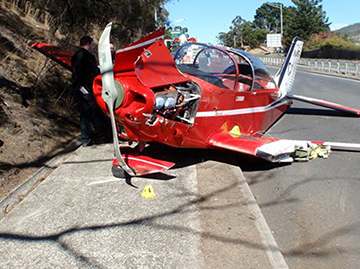
In April 2010, the pilot of a light aircraft was conducting the fifth flight since refuelling, when the engine lost power while sight-seeing over Hobart, Tasmania. The pilot conducted a forced landing onto the Brooker Highway, resulting in substantial damage to the aircraft.
The pilot reported that he had used a dipstick to assess that there was sufficient fuel for the flight, and that the fuel quantity indicator provided a similar indication of fuel quantity, showing the tank was about half full. Unfortunately, the pilot used an incorrect (but not uncommon) method of using the dipstick that resulted in an over-reading of the fuel onboard. Furthermore, a close inspection of the aircraft’s flight and fuel log would have revealed that the fuel gauge and the dipstick indications showed a fuel usage that was half the expected usage.
What we found
The ATSB investigation AO-2010-025 found that the power loss was due to exhaustion of the aircraft's fuel supply and that a number of factors worked against the pilot, some of which were outside his control.
The amount of fuel on board should be thought of, not as a quantity, but as a flight time.
Cross-checking the dipstick reading against the fuel gauge indication was an effective method for spotting errors, however, a quick mental calculation would have shown a significant discrepancy between the indicated fuel quantity and the expected fuel usage. The discrepancy could have alerted the pilot that something was wrong with the available fuel quantity information.
Safety message
Certain types of flight regularly carry just enough fuel for the flight, with little margin. Flying schools and gliding towing operations may only refuel aircraft after two or three flights, so the last flight before refuelling can have less fuel margin. Charter operations may be flying with minimum fuel required because a flight’s profitability will depend on carrying the maximum payload, which means no unnecessary fuel be carried. Such operations will be more vulnerable to any inaccuracies in the pilot’s knowledge about the amount of fuel on board. However, fuel exhaustion accidents and incidents occur in all types of aviation operations. They are normally related to a lack of awareness of information that is readily available at the pre-flight planning stage. This includes both the amount of fuel on board, and the rate of fuel consumption.
The chance of fuel exhaustion is reduced if the pilot accurately determines the amount of fuel on board prior to starting. This should entail the use of a fuel quantity cross-check using a number of sources, including:
fuel quantity gauges
dipsticks
flowmeters/ totalisers
calculations from previous refuels and fuel usage, (regularly checked for accuracy).
Fuel exhaustion happens when there is no useable fuel remaining to supply the engine(s).
The amount of fuel on board should be thought of, not as a quantity, but as a flight time. For a consistent combination of altitude, power setting and mixture setting, the fuel burn will be constant, but changing winds and deviations due to weather conditions will vary the groundspeed and therefore the range. Your fuel status should be regularly updated, at least every hour, to ensure you maintain an adequate reserve1.
An aircraft that is carrying only just enough flight fuel2 for the planned flight, but which encounters unanticipated headwinds and perhaps has to fly at a lower level is eating into its fuel reserves. Those reserves are there to be used in unforeseen circumstances and many aircraft arrive safely at their destination having used a portion of the allocated reserve fuel. However an aircraft’s fuel supply should not reach a state where, upon arriving at its destination, it can accept no further delay.
1. Reserve fuel refers to the required fuel, in addition to flight fuel, that is not planned for normal use, but remains available for unplanned events where all other useable fuel has been consumed. This fuel is to be used only when there is no other safer alternative.
2. Flight fuel refers to all the fuel that is expected to be used during the planned flight, including holding fuel and fuel for planned diversions.
Conclusion
Fuel exhaustion is more likely to occur on flights when there is little flight fuel margin, that is, landing with just reserve fuel on board. In these circumstances, particular attention to detail in fuel management is warranted. The chance of fuel exhaustion can be reduced by:
using more than one source of information to obtain consistent results about the fuel on board before flight
the use of a consistent procedure that is regularly checked to know the exact rate of fuel consumption
monitoring the flight to ensure that sufficient fuel will remain on board in the event of unplanned delays.
Even when undertaken by appropriately qualified pilots, night flight clearly presents an added level of complexity.
This case study from the Avoidable Accidents Series - Visual flight at night accidents shows that even when undertaken by appropriately qualified pilots, night flight clearly presents an added level of complexity.
In August 2011, the pilot of a Twin Squirrel AS355F2 helicopter and two film crew were travelling to various locations in the Lake Eyre region of South Australia for a television documentary. On the second day, they arrived at an island in the Cooper Creek inlet at about 1715 to meet and interview a tour group.
The pilot and film crew departed the island at about 1900. It was after last light and, while there was no low cloud or rain, it was a dark night. The moon had not risen and there was no visible horizon. Apart from the tour group’s campfire on the island, there was no other source of terrestrial lighting, and there would have been very little ambient illumination from any sources other than stars. Witnesses reported that the helicopter initially climbed vertically while moving rearwards.
This was most likely to maintain a visual reference to the campfire, which was the only available ground light source. The witnesses then observed the helicopter depart in an easterly then north-easterly direction. This was contrary to what they expected as they understood that the crew were returning to their accommodation at Muloorina Station, which was to the south.
Even when undertaken by appropriately qualified pilots, night flight clearly presents an added level of complexity.
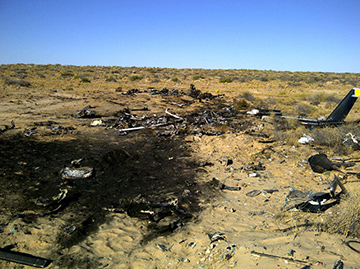
The helicopter levelled off at 1,500 ft AMSL and then commenced a turn to the right. As the helicopter had initially travelled in the wrong direction, it is probable that the pilot engaged in programming the helicopter's global positioning system (GPS) for their journey to their accommodation during this turn. Twelve seconds after beginning the turn, the helicopter started descending with the bank angle increasing. Based on the GPS data and flight path estimations, it was calculated that the helicopter impacted terrain at about 1902, about 38 seconds after it started descending. Wreckage examination indicated that the helicopter impacted terrain in a 90° right-side low attitude.
The pilot had been flying for over 30 years as a commercial pilot with over 16,000 hours experience, mostly in helicopters. He also had a night visual flight rules (VFR) rating and had 483 night flying hours in total, but only 3.4 hours in the last 12 months, and 30 hours in the past 4 years. Although he had some instrument flight time, this was more than 30 years before the accident. As such, he probably did not have enough recent night flying experience nor the level of instrument proficiency at the time of the accident needed for the very dark conditions.
The ATSB investigation concluded that the pilot probably became spatially disoriented after initiating the right turn and did not recognise the descent and increasing bank angle in sufficient time to recover.
Lessons learnt
In very dark conditions, visual meteorological conditions (VMC) essentially equates to instrument flight rules (IFR) in terms of available external visual information. Pilots need to reassess their night flying experience, recency and proficiency before every night flight, taking into account the level of instrument flying required based on the level of darkness.
Any pilot can become spatially disoriented given the right conditions. Distractions and high workload can inadvertently remove attention away from monitoring instruments, reducing the chance of recognising spatial disorientation.
The ATSB advises all operators and pilots considering night flights under the VFR to systematically assess the potential for the flight to encounter dark night conditions by reviewing weather conditions, celestial illumination and available terrain lighting. If there is a likelihood of dark night conditions, the flight should be conducted as an instrument flight rules (IFR) operation, or conducted by a pilot who has an IFR-equivalent level of instrument flying proficiency and in an aircraft that is equipped to a standard similar to that required under the IFR.
Conclusion
Data from accidents associated with the risks from night visual flight indicate that they can affect pilots at all stages of experience or qualification, in any type of aircraft. Pilots do not become immune from these risks as experience increases. The harsh outcomes of night accidents can be seen in the photos throughout this booklet. Three in four accidents involving visual flight at night have fatal outcomes.
The risks associated with night visual flying cannot be avoided—they must be understood, identified and managed. Control problems can be identified by cross-referencing information from flight instruments. They can be managed by focussing on aircraft control and using the most reliable information source. The risks from controlled flight into terrain can be managed by calculating LSALTs (lowest safe altitude), knowing terrain elevation during the cruise, and knowing where hills and obstacles are in the circuit area during take-off and landing. The knowledge can be obtained by thorough pre-flight preparation, by accurate horizontal navigation to know where you are, and accurate vertical navigation to know your distance from obstacles below. Everything is more difficult to see at night. Terrain and obstacles are often not illuminated, and it is more difficult to detect cloud. When it is time to fly low enough to land, a detailed plan of how to avoid all obstacles along the expected flightpath is necessary to maintain safety.
Visual night flying is sufficiently different from both day visual flight and (except in very dark conditions) instrument flight that it needs to be treated as a separate skill in its own right. It requires a disciplined integration of two very different skill sets of instrument flight and degraded visual flight to develop sufficient situational awareness to enable safe flight. To maintain these skills, a pilot needs to have enough recent experience and practice. When flying over land or oceans without light sources, on dark nights with no visible moon, visual flight at night is essentially the same as instrument flight.
Before every night flight, systematically assess the potential for the flight to encounter dark night conditions by considering weather conditions, celestial illumination and available terrestrial lighting. Only fly in environments that do not exceed your capabilities. In very dark conditions, consider following instrument procedures if you are rated or avoid areas with limited terrestrial lighting if you are not.
In night visual flight, there is more chance of any pilot becoming influenced by illusions. Have a coping strategy in place, and be prepared to revert to instrument flight to recover from any spatial disorientation.
This tragic accident highlights the dangers of flying visually in poor weather.
This tragic accident from the Avoidable Accident series highlights the dangers of flying visually in poor weather.
The pilot of a Cessna 337 Skymaster was conducting a private VFR flight from Moorabbin Airport, Victoria to Merimbula, NSW. The pilot, who was only qualified to operate in VMC, had indicated that he would be tracking along the coast at low level. The forecast weather included isolated showers or thunderstorms over the sea and coast, and low cloud over the sea/exposed coast. The low cloud was expected to be broken stratus between 800 ft and 2,000 ft. Visibility was quoted as reducing to 3 km in thunderstorms with rain and 6 km in showers of rain.
About 30 minutes after departing Moorabbin, people on a beach south-east of Venus Bay heard and then suddenly saw the aircraft emerge from fog at low level, flying above the water line on the beach with the wings level. Within seconds it turned right at a steep angle of bank while maintaining height and headed out to sea before disappearing from sight into the fog. The witnesses reported no apparent problem with the engines and the aircraft appeared to be under control. About 2 seconds after the aircraft disappeared from view, they heard a ‘bang’ and then silence.
Two days later, wreckage of the aircraft and three of the deceased occupants were found washed up on the beach. The pilot was not found.
The investigation concluded that while manoeuvring over water at low level in conditions of reduced visibility, the pilot probably became spatially disorientated and inadvertently descended into the water.
By turning away from the land in the foggy conditions, the pilot would have encountered a featureless, grey environment with no visible horizon, making it extremely difficult for him to judge the aircraft’s attitude and/or height.
It should be accepted that flying under the VFR will not always enable you to reach your planned destination. Weather often does not act as the forecast predicts.
It should be accepted that flying under the VFR will not always enable you to reach your planned destination. Weather often does not act as the forecast predicts. You must have alternatives available and you must be prepared to use them — even if it means returning to your departure point.
In forecast marginal weather, careful pre-flight planning is essential and must include a thorough analysis of the latest weather forecasts and consideration of your available options. Those options should be evaluated while en route to ensure you have an alternative course of action available which provides for a safe landing.
When deciding on whether it is safe to fly you should consider not only the route to be flown, the prevailing weather and aircraft serviceability, but your own physical and emotional fitness and flying experience. In other words, to be a competent pilot you must know and fly within your own limitations. Adhering to a pre-flight ‘personal minimums’ checklist will go a long way toward keeping you safe. For example, the decision to turn back or divert will be easier if you have decided in advance what your personal minimum VFR flying altitude will be. That minimum altitude may well be much more conservative than the legal requirement.
A ‘personal minimums’ checklist, included in the CASA publication ‘Flight Planning — always thinking ahead’, will help you control and manage risk by identifying risk factors and allowing you to fly with less stress and less risk.
A Mooney M20 pilot in the United States recently reported that a tablet computer interfered with the aircraft’s compass, resulting in the aircraft being 15 degrees off its assigned heading.
If you‘ve had a similar occurrence or experienced an aviation safety hazard you’d like to share, provide a comment below.
A Mooney M20 pilot in the United States recently reported that a tablet computer interfered with the aircraft’s compass, resulting in the aircraft being 15 degrees off its assigned heading.
The pilot was flying on instruments in cloud and being radar vectored when an air traffic controller advised the crew they were 15 degrees off their assigned heading. The pilot revised the heading indicator to reflect the 15 degree variation and the aircraft landed safely.
An investigation revealed the interference was caused by a tablet computer which was placed on the glare shield during the flight. The tablet computer has magnets inside which have been known to cause up to 30 degrees interference when placed in close proximity to the compass.
The pilot reported the incident to the Aviation Self Reporting Scheme (ASRS) in the United States.
The ATSB continues to investigate accidents and serious incidents that have occurred when work was being carried out on or near railway tracks.
Conducting work on or near a railway track will be dangerous if safeworking rules and procedures have not been correctly implemented to protect the worksite. Trains cannot be stopped quickly and any breakdown in the communication or management of a worksite can expose workers to great risk.
Operational safe working on track requires a high level of preparation and organisation. Whenever there is work taking place on or near operating track, coordination and communication are essential. Before authority is granted to occupy or work near a track, it is critical that all information is clearly communicated and verified between the Protection Officer and the Network Control Officer.
‘Safe work on rail’ is an area of heightened concern within the ATSB’s SafetyWatch program.
An adequate briefing about the work site and effective communications methods must be made available to the track workers. For track workers, it is vital to ensure that all levels of worksite protection have been fully established and implemented before work on or near the track is commenced. Established roles and responsibilities for worksite protection must be respected, and work should be stopped immediately and the track vacated if there is any uncertainty around the site protection status or effectiveness.
Have you experienced a partial power loss after take-off?
Check out the video below.
Partial engine power loss is more complex and more frequent than a complete engine power loss.
Partial engine power loss can range from providing very little power to almost full power, with varying levels of reliability of the remaining engine power. When faced with a partial power loss, pilots should not try to diagnose the engine problems at the expense of maintaining aircraft control.
Loss of control — Case Study
The pilot of an amateur-built Lancair 360 aircraft was conducting circuits at Bankstown Airport in April 2006. It was the aircraft’s first flight since being repaired after a landing accident. Following an overflight of the runway and a touch-and-go, the pilot conducted another touch-and-go and, shortly after lift-off at an altitude estimated by witnesses to be between 100 feet and 400 feet, the engine was heard to malfunction. Almost immediately, while still not above 500 feet, the aircraft rolled into a steep right turn.
Engine power was heard to return, but sounded intermittent. After turning approximately 90 degrees, the aircraft rolled out of the turn momentarily to about wings level, before the turn steepened again to the right. The aircraft was observed to roll further to the right and descend steeply. The aircraft impacted a taxiway. Tragically, the pilot died, and the aircraft destroyed.
The ATSB investigation found that the engine power loss was probably due to interruptions of fuel flow to the engine. The aircraft stalled at a height insufficient to allow the pilot to recover.
Do you have a plan for partial power loss after take-off? The following initial actions should be considered when responding to a partial loss in power.
Lower the nose to maintain the glide speed of the aircraft.
Conduct the basic initial engine trouble checks as per an engine failure in accordance with manufacturer’s advice. However, this should be done only if there is sufficient time.
Maintain glide speed and assess whether the aircraft is maintaining, gaining or losing height to gauge current aircraft performance. This will help to inform the options available for landing.
Fly the aircraft to make a landing, given the aircraft’s height and performance, and the pre-planned routes for the scenario. If turning is conducted, keep in mind an increased bank angle will increase the stall speed of the aircraft. Keeping the aircraft in balance will minimise rate of descent in any turn.
Re-assess landing options throughout any manoeuvres. Be decisive but be prepared to modify the plan if required.
Land the aircraft.
Have a minimum height planned to roll wings level. It is suggested in CASA documentation that turns should not be attempted below 200 feet AGL. However, this will depend on the aircraft’s roll rate, the airspeed and personal experience.
Maintain glide speed up to the point of flare; this will ensure that when flaring there is enough energy to arrest the vertical descent rate.
As is the case with a total power loss after take-off, during a partial power loss after take-off, diagnoses of the cause of the engine problem should not be attempted at the expense of maintaining control of the aircraft.
Key safety message
Most fatal and serious injury accidents resulting from partial power loss after take-off are avoidable. You can prevent or significantly reduce the risk of harm following a partial or complete engine power loss after take-off by using these strategies:
Pre-flight decision making and planning for emergencies and abnormal situations for the particular aerodrome.
Conducting a thorough pre-flight and engine ground run to reduce the risk of a partial power loss occurring.
Taking positive action and maintaining aircraft control either when turning back to the aerodrome or conducting a forced landing until on the ground.
Do you have a plan for partial power loss after take-off?
The ATSB’s central office in Canberra, houses specialist technical facilities for the download and analysis of recorded audio and flight data information.
The latest hit on Netflix may well tell us that Orange is the New Black but in the aviation safety world, we have known that for half a century.
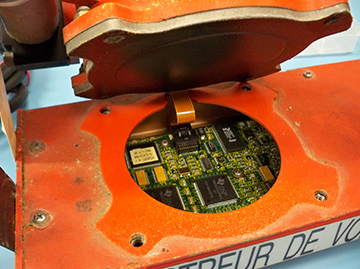
An aircraft’s flight recorders which are popularly known as ‘black boxes’, are painted orange so they can be easily found following an accident.
Black boxes are an important tool for investigators in identifying the factors behind an accident. Recorders usually comprise two individual boxes: the Cockpit Voice Recorder (CVR) and the Flight Data Recorder (FDR).
The ATSB’s central office in Canberra, houses specialist technical facilities for the download and analysis of recorded audio and flight data information. Australia is one of a few countries in the Asia-Pacific region with these facilities and we regularly provide assistance and expertise to international investigations.
If an accident occurs at night in a remote area or at sea, the flight recorders may be the main, if not only, means of establishing the sequence of events just before the accident. At the very least, CVR and FDR data can help the work of the on-site investigation team as it examines the wreckage, and can save many months in the overall investigation.
Flight recorders are particularly useful for cases in which evidence is transitory, e.g. occurrences involving environmental factors like windshear and severe turbulence. Data from flight recorders can reveal the sudden effects of windshear on an aircraft’s flight path without which, it may be difficult or impossible to determine with certainty the factors associated with an accident. The evidence available from flight recordings has shown that investigators can underestimate or misunderstand the effect of environmental factors like windshear.
Virgin Australia pilots on a tour of ATSB’s technical facilities
Before you decide to conduct low-level flying, ask yourself whether there is a legitimate or operational reason for you to do so.
This case study from the Avoidable Accident Series - Low-level flying is a powerful reminder of low-level flight dangers.
In November 2007, three German tourists, who had hired a Cessna 172N Skyhawk Aircraft as part of a contingent of three aircraft for an around Australia trip, were flying from Katherine to Tennant Creek in the Northern Territory.
There were no eyewitnesses to the accident, but the occupants of a car that was travelling on the Stuart Highway reported seeing the aircraft flying low above the highway moments before the accident. The witnesses recalled seeing an aircraft that was flying about 4 to 5 km to the west of the highway, about 150 ft above ground level. The Cessna made a slow, deliberate turn to line up with the highway, before it disappeared from sight behind a crest in the highway some distance in front of them. Shortly after, they saw the wreckage beside the highway.
Another wirestrike
The aircraft’s tail section hit a powerline that spanned the Stuart Highway, breaking the tail, which rendered the aircraft uncontrollable. The aircraft impacted the highway in a steep nose-down attitude and came to rest upside down about 150 m from the point where it had impacted the powerline. The aircraft was destroyed and the accident was not survivable.
Investigation of the aircraft wreckage determined that the aircraft’s ground speed at the time of the accident was at least 72 kts. The powerline involved in the accident was only 49 ft (15 m) above the road surface.
Before you decide to conduct low-level flying, ask yourself whether there is a legitimate or operational reason for you to do so.
Conscious decision to fly low
Evidence from images and video footage recovered from cameras found among the wreckage, suggests that there was a history of low flying by the group. One week before the accident, camera images show that the aircraft was flown low along a Western Australian beach by the same occupants with the pressure altimeter indicating an altitude of 70 ft above sea level. Video footage showed the aircraft flying below 100 ft along the beach for about 5 minutes.
Examination of the wreckage and previous pilot behaviour suggested that the pilots made a conscious decision to fly low, and were not conducting a forced landing at the time of the accident.
Earlier low flying by the group of tourists
Two of the three occupants held German private pilot licences and were sitting in the front seats. Neither of the pilots were approved to conduct low-level operations, and there was no evidence that either had undertaken any low-level flying training. Without approval to fly low and with no low-level training, the pilots probably had limited awareness of the hazards associated with flying low, such as impact with powerlines. Considering the remoteness of the area where the accident occurred, the pilots may not have expected to encounter man-made obstacles.
Safety message
Don’t forget that powerlines can be anywhere — even in the desert.
Don’t give in to the temptation to get down low for a better view of the scenery. Passengers may request you to fly lower but they probably don’t understand the risks. As the pilot, you are the one who needs to set the height limits.
Conclusion
Low-level flying is inherently unsafe for a number of reasons, so it should be avoided at all costs when there is no operational reason to do it (regardless of whether you have been trained and/or approved to do so).
Flying at low level is unsafe because:
there are more obstacles to avoid, many of which are hard to see until it is too late (e.g. powerlines and birds)
pilots have a higher workload because there are more hazards to negotiate in the environment
there may be turbulence and windshear that pilots do not encounter at higher levels and
there is very little time to recover control of the aircraft if something goes wrong.
From the accidents described in Avoidable Accidents - Low-level flying, it is apparent that the two major hazards of low flying are wirestrikes and pilots’ reduced opportunity to recover their aircraft from a stall or loss of control.
It is important to keep in mind that powerlines also exist in remote areas where you least expect. For example, the pilots of the Stuart Highway accident probably did not expect powerlines in the remoteness of the Northern Territory.
The effects of wirestrikes at low level are obvious — significant damage to the aircraft, usually leading to a loss of control and, because of the lower margin for recovery, subsequent impact with the ground or water. Pilots must keep in mind that not only do powerlines exist at low levels and in remote areas, they are also not easy to identify.
Even against a clear blue sky, wires are difficult to spot for a number of reasons. Wires can oxidise to a blue/grey tinge and may blend into the background, or the wire may be obscured by terrain. Single wires are difficult to detect from the air and can be encountered in the most unexpected places in rural areas. Even if a pilot has spotted a powerline, his or her ability to judge its distance from the aircraft can be distorted by optical illusions or a lack of nearby visual reference points.
Pre-flight assessment and planning is an important part of any flight. Make sure you have maps of your intended flight path with you when you fly, and study them before you get into your aircraft to identify any terrain, wire, or other obstacles that you need to avoid should operational circumstances necessitate flight at low level. If you have been trained and are qualified for low flying, and low flying is necessary, ensure that you conduct an aerial survey of the area from an appropriate height before you conduct any low flying.
Low-level flying also presents fewer opportunities to recover from a loss of control compared to flight at higher altitudes. It takes time to react and to regain control of an aircraft, and the closer to the ground you are, the less time and distance you have.
Flying at low altitudes is not only risky when things are going right; it becomes downright perilous when things are going wrong.
Before you decide to conduct low-level flying, ask yourself whether there is a legitimate or operational reason for you to do so.
The ATSB has released its latest Bulletin of short investigations covering incidents involving regular passenger transport aircraft, light aircraft and helicopters.
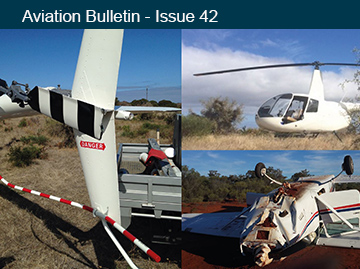
The Australian Transport Safety Bureau has released its latest Bulletin of short investigations covering incidents involving regular passenger transport aircraft, light aircraft and helicopters.
Issue 42 of the Bulletin covers 10 safety investigations and highlights valuable safety lessons for pilots, operators and safety managers. The Bulletin also highlights important safety messages for the broader aviation community, drawing on earlier ATSB investigations and research.
Released periodically, the Bulletin provides a summary of the less-complex factual investigation reports conducted by the ATSB. The results, based on information supplied by organisations or individuals involved in the occurrence, detail the facts behind the event, as well as any safety actions undertaken or identified.
Issue 42 of the Bulletin features 10 safety investigations.