As part of Rail Safety Week 2014 the ATSB is highlighting rail investigations and their critical safety lessons.
As part of Rail Safety Week 2014 the ATSB is highlighting rail investigations and their critical safety lessons. Helping to promote the Rail Safety Week 2014 message of ‘Near miss … Near hit’ the ATSB will be spreading the word about the importance of rail safety.
The Australasian Railway Association (ARA) created the safety campaign nine years ago to help reduce the numbers of rail incidents that occur across the nation, many of them fatal. Rail Safety Week is this year specifically focussing on getting the message out about how a split second can mean the difference between life and death. Each one of the 1,000 near misses that occur each year could just as easily be a hit that could end someone’s life and leave a grieving family behind.
The ATSB has investigated several accidents that occurred when maintenance work was being carried out around railway tracks. Through our SafetyWatch initiative Safe work on rail, we are urging industry to give extra attention to the risks faced by rail workers while working on track.
Deputy Prime Minister Warren Truss today announced a new high priority underwater search area for missing Malaysia Airlines Flight MH370.
Deputy Prime Minister Warren Truss today announced a new high priority underwater search area for missing Malaysia Airlines Flight MH370.
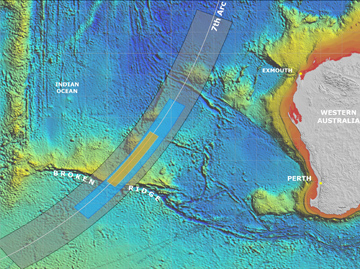
The new search area of up to 60,000 square kilometres is located in the Southern Indian Ocean and, like previous searches, is located along the seventh arc – a thin but long line that marks where the missing aircraft last communicated with a satellite.
The new phase of the search has two elements:
a bathymetric survey of the sea floor in that area
a comprehensive search of the sea floor once it has been mapped.
The bathymetric survey—or mapping of the ocean floor— has already commenced, with the Chinese survey ship Zhu Kezhen and the Australian-contracted vessel Fugro Equator conducting operations in the areas provided by the Australian Transport Safety Bureau.
A public request for tender has been issued, seeking a primary contractor to bring together and manage the expertise, equipment and vessels to carry out the comprehensive search.
More information
The Joint Agency Coordination Centre (JACC) has released a media release on the high priority search zone.
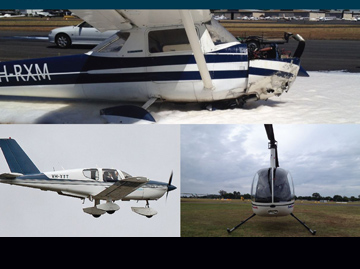
The ATSB has just released a new aviation bulletin containing 10 investigation reports.
The ATSB has just released a new aviation bulletin containing 10 investigation reports. The Aviation Short Investigation Bulletin Issue 32 covers short, office-based investigations.
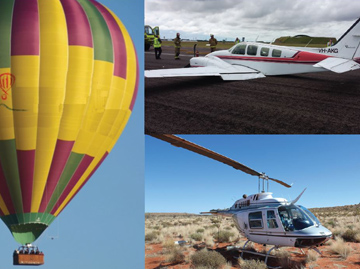
The bulletin covers incidents, serious incidents and accidents involving helicopters, jet, piston aircraft, as well as helicopters and a balloon.
Short investigations cover incidents and accidents where the associated factors are usually well-understood and do not require more detailed investigations. Nonetheless, each investigation has the potential to produce important Safety Messages for pilots, operators and others in the aviation industry. The investigations also help the ATSB identify statistics and trends in air safety.
Issue 32 of the Bulletin features 10 safety investigations:
The ATSB has just released a new aviation bulletin containing 12 investigation reports.
The ATSB has just released a new aviation bulletin containing 12 investigation reports. The Aviation Short Investigation Bulletin Issue 30 covers short, office-based investigations.
The bulletin covers incidents, serious incidents and accidents involving helicopters, jet, turboprop and piston aircraft, as well as unmanned aerial systems.
Short investigations cover incidents and accidents where the associated factors are usually well-understood and do not require more detailed investigations. Nonetheless, each investigation has the potential to produce important Safety Messages for pilots, operators and others in the aviation industry. The investigations also help the ATSB identify statistics and trends in air safety.
Issue 30 of the Bulletin features 12 safety investigations:
The ATSB has just released a new aviation bulletin containing 10 investigation reports.
The ATSB has just released a new aviation bulletin containing 10 investigation reports. The Aviation Short Investigation Bulletin Issue 31 covers short, office-based investigations.
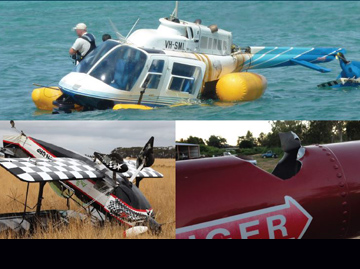
The bulletin covers incidents, serious incidents and accidents involving helicopters, jet, turboprop and piston aircraft, as well as helicopters.
Short investigations cover incidents and accidents where the associated factors are usually well-understood and do not require more detailed investigations. Nonetheless, each investigation has the potential to produce important Safety Messages for pilots, operators and others in the aviation industry. The investigations also help the ATSB identify statistics and trends in air safety.
Issue 31 of the Bulletin features 10 safety investigations:
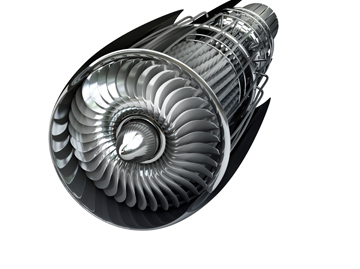
ATSB report finds that Australian turbofan engine aircraft are safe and reliable and only experience engine-related safety incidents every 20,000 flight hours on average.
A new ATSB report, released today, finds that Australian turbofan engine aircraft are safe and reliable and only experience engine-related safety incidents every 20,000 flight hours on average.
As well, the vast majority of these occurrences (98%) had no risk, or a very low risk of any accident outcome and none resulted in injury to passengers or crew.
Larger modern passenger aircraft mostly have turbofan engines because of their range, speed, and fuel efficiency. Despite the complexity of these engines, their reliability is evidenced by the low rate of engine problems.
While the research found turbofan engine aircraft had very low rates of incidents as a whole, it did identify differences between individual aircraft models.
With a combined total of over five-and-a-half million flight hours for Australian registered turbofan engine aircraft between 2008 and 2012, there were only 280 safety occurrences reportable to the ATSB that related specifically to the engine systems (or approximately one occurrence every 20,000 flight hours).
While the research found turbofan engine aircraft had very low rates of incidents as a whole, it did identify differences between individual aircraft models.
In particular, the British Aerospace BAE 146/Avro RJ, the Fokker F28/F100 and the Boeing 747 classic had higher rates of engine incidents between 2008 and 2012 than any other aircraft in the study.
The report provides aircraft operators with information that will help them put their own incidents in context and further improve safety in the future.
Fume and smoke incidents in Australian aviation are usually appropriately managed by flight and cabin crew and generally result in minor safety consequences.
Fume and smoke incidents in Australian aviation are usually appropriately managed by flight and cabin crew and generally result in minor safety consequences, according to a new report released today.
The report, jointly released by the Civil Aviation Safety Authority (CASA) and the ATSB, reveals that there were more than 1,000 fumes and smoke events reported over five years (between 2008 and 2012).
While the vast majority of these incidents were minor in nature, one event resulted in a single flight crew incapacitation and a further 11 events contributed to minor injuries to crew. In the higher risk occurrences, precautionary defences (most commonly diversions to nearby airports) were found to be effective in avoiding escalation of the event.
The report encourages aircraft operators to continue reporting fumes/smoke incidents to the ATSB and CASA to ensure the ongoing risks are effectively monitored.
The report shows that the most common source of fumes and smoke was a result of aircraft systems issues, primarily relating to failure or malfunction of electrical and auxiliary power unit systems. Equipment and furnishings also featured highly as a source of fumes and smoke. Within this category, air conditioning and galley equipment were the most common sources of fumes/smoke. External sources of fumes/smoke and cargo/baggage related events were relatively rare.
The British Aerospace BAe 146 was the aircraft type most commonly involved in fumes/smoke events when taking into account flying activity. The Embraer EMB-120 Brasilia, Fokker 100, and Bombardier DHC-8-100/200 series aircraft also had a higher than average rate of fumes/smoke occurrences over the period.
The ATSB and CASA conducted the study to further understand the nature and impact that fumes and smoke have on aviation safety. The report also addresses recommendations from a 2011 report from an expert panel on aircraft air quality that aviation safety agencies work together to provide a comprehensive study of cabin air contamination incidents.
The report encourages aircraft operators to continue reporting fumes/smoke incidents to the ATSB and CASA to ensure the ongoing risks are effectively monitored.
From today, (19 May 2014) most Victorian rail operators will have new mandatory reporting regulations that change the way they report accidents and incidents.
All Category A occurrences (serious incidents and accidents) will need to be reported immediately to the Australian Transport Safety Bureau (ATSB) by telephone on 1800 011 034.
This must be followed up within 72 hours by a written report to the Office of the National Rail Safety Regulator (ONRSR). In addition, all Category B occurrences will also need to be reported, in writing only, to the ONRSR within 72 hours.
The changes to reporting regulations are part of historic reforms to rail safety legislation that see Victoria’s railways having both a national rail safety regulator (ONRSR) and a national rail safety investigator (the ATSB).
All Category A occurrences (serious incidents and accidents) will need to be reported immediately to the Australian Transport Safety Bureau (ATSB) by telephone on 1800 011 034.
The scheme also allows any person to confidentially report a safety concern about a rail operation to the ATSB by calling 1800 011 034.
The information the ATSB gets from mandatory and confidential reports helps determine whether we need to investigate a rail safety matter or alert the relevant people in the event of a safety concern. Ultimately, reporting can save lives and prevent injuries.
ATSB is a proud Privacy Awareness Week partner. Privacy Awareness Week is held every year to promote awareness of privacy issues and the importance of the protection of personal information.
Australian Transport Safety Bureau (ATSB) is a proud Privacy Awareness Week partner. Privacy Awareness Week is held every year to promote awareness of privacy issues and the importance of the protection of personal information.
Privacy continues to be a hot issue for businesses, government agencies and of course you, our customers. We recognise that our customers value their privacy. Research has shown that 60 per cent of Australians have decided not to deal with a private business and 25 per cent have decided not to deal with a government agency due to concerns as to how their personal information will be used.
New Australian privacy laws came into force on 12 March 2014. The changes include a new set of Australian Privacy Principles that regulate how we handle your personal information and new enforcement powers for the Office of the Australian Information Commissioner (or OAIC), the federal Australian Government body responsible for privacy in Australia.
These were the most significant changes to privacy laws in over 25 years, affecting a large section of the community.
One of the aims of the new privacy laws is to ensure that your personal information is managed in an open and transparent way. We take your privacy very seriously, and we want you to know that we have updated our privacy policy in line with the new requirements.
You can access our privacy policy on our website at www.atsb.gov.au. Our policy addresses the following issues:
the types of personal information collected and held by the ATSB (including sensitive information)
how and why we collect personal information
how the ATSB stores personal information
use and disclosure of personal information (including overseas disclosure)
how you can access and correct your personal information
how you can make a privacy complaint us.
Of course, we are not the only agency that collects your personal information. Here are some tips to help you protect your own personal information:
Know your privacy rights
Read privacy policies and notices
Always ask why, how and who — this will help you to know how your personal information is going to be used, and if it is going to be given to another agency or organisation
Only give out as much personal information as you need to — always think before handing your personal information over
Ask for access to your personal information
Make sure the information an organisation or agency holds about you is accurate and up to date
Take steps to protect your online privacy
Make sure your hard copy records are properly destroyed
You can 'opt out' of marketing communications if you do not want to receive any further contact of this kind
Make a privacy complaint if you consider that your personal information has not been handled properly.
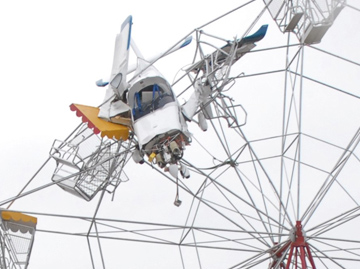
During the climb out the aircraft collided with a ferris wheel that was part of a group of amusements located at a beach festival.
The pilot of a Morgan Aero Works Cheetah Sierra 200 aircraft (Sierra), was attempting to land at the Old Bar Airstrip after conducting a private flight from Taree Airport, New South Wales.
The pilot commenced a go-around after touching down. During the climb out the aircraft collided with a ferris wheel that was part of a group of amusements located at a beach festival, adjacent and to the south of the airstrip.
There were two persons on board the Sierra and four occupants of the ferris wheel at the time of the collision. There were no reported injuries from the occupants of the ferris wheel, and the passenger in the Sierra reported receiving a minor injury.
The management of risk in aviation requires diligence and structure to be effective. In particular, when aviation activities are part of a public event...
The ATSB found that the management of risk in relation to flight training operations by Recreational Aviation Australia Incorporated (RA-Aus) was adequate; however, it had been circumvented in a number of areas during the training of the pilot. That resulted in a pilot operating in the aviation environment who did not possess the required competencies to exercise the privileges of a private pilot certificate.
The ATSB also found that the approach to the management of risk by the Old Bar Beach Festival Committee, specifically relating to aviation operations at the beach festival, was ineffective and resulted in a level of risk that had the potential to impact on the objectives of the festival.
RA-Aus have taken steps to ensure that the flight training facility that undertook the pilot’s training and its staff are aware of the requirements imposed upon them by the RA-Aus Operations Manual, and that RA-Aus staff at the facility have the required skills and knowledge to carry out flight training operations. The pilot underwent a flight review that established the need for additional training.
The festival and airstrip committees reported that in future the airstrip will be closed and aviation operations suspended when the festival is taking place.
The management of risk in aviation requires diligence and structure to be effective. In particular, when aviation activities are part of a public event the supporting procedures, processes and guidelines need to be carefully developed and applied to manage risk to those choosing to participate in the aviation environment and to others external to the aviation activity.