Fatal skydiving accident

A multi-fatal accident involving a Cessna U206G aircraft has resulted in the ATSB issuing recommendations to improve the safety of skydiving operations in Australia.


The 22 March 2014 accident occurred when the aircraft was conducting tandem parachuting operations at Caboolture in Queensland. On board were the pilot, two parachuting instructors and two tandem parachutists.

Shortly after take-off, the aircraft climbed to about 200 feet before aerodynamically stalling and colliding with the ground. Tragically, all five died in the accident.

ATSB Chief Commissioner Greg Hood said the investigation report, released today, reveals that extensive fire damage prevented examination and testing of most of the aircraft components.

“Due to the post-impact damage to the aircraft, we couldn’t rule out a mechanical defect as a contributor to this accident,” Mr Hood said.

“Importantly, our investigation did uncover a number of safety issues associated with occupant restraint, modification of parachuting aircraft and scope for improving the risk controls associated with parachuting operations.”

In response to the ATSB’s investigation, the Australian Parachute Federation (APF) and Australia’s aviation safety regulator, CASA, undertook action to improve safety of parachuting operations.

“The APF mandated that all member clubs/operations have their own safety management system to proactively assess and mitigate risks. The APF has also enhanced their audit process and increased the number of full-time safety personnel to audit their member organisations.” Mr Hood said.

“The Civil Aviation Safety Authority (CASA) has increased the available information on their website about the risks associated with sports aviation. CASA also introduced an Airworthiness Bulletin to provide guidance about co-pilot side flight control modifications.

“We welcome APF’s and CASA’s safety action but consider more can be done to improve safety for skydiving operations.”

In response to an identified safety issue, the ATSB recommends that CASA take safety action to increase the fitment of the Cessna secondary pilot seat stop modification. This safety issue affects all Cessna Aircraft and not just those being used for parachuting operations.

In addition, it is recommended that CASA introduce measures to reduce the risk associated with the aviation aspect of parachuting operations.

As well, the ATSB recommends CASA and the APF increase the use of dual-point restraints in parachuting aircraft.

Under legislation, APF and CASA have 90 days to respond to the ATSB’s recommendations.

Read the full investigation report AO-2014-053

Naming organisations

ATSB policy provides for identifying most organisations in its transport safety investigations.

ATSB policy provides for identifying most organisations in its transport safety investigations. Most organisations directly involved in any aviation occurrence investigated by the ATSB are identified in the report and on the investigation web page.

The policy ensures the ATSB’s compliance with the International Civil Aviation Organization’s recommended practices. It also ensures that the ATSB has a consistent and transparent approach across all of its aviation, rail and marine safety investigations.

Operators and other organisations can be assured that it is not a function of the ATSB to apportion blame or determine liability. Including the name of the organisation does not imply any adverse inferences.

Which organisations are identified

For aviation, all operators and regulators are identified.

For marine, all ship owners, ship management companies and the regulator are identified.

For rail, rail transport operators (rail infrastructure managers and/or rolling stock operators) and regulators are identified.

Other large organisations that contributed substantively to the occurrence will also be mentioned. The exception to the above policy will be where the operator is an individual or an individual’s name is the company name. Consistent with the Transport Safety Investigation Act 2003, the ATSB does not name individuals in its final reports.

Are there any exceptions?

If an operator or organisation had a passive or third-party involvement in an occurrence, the ATSB will not name that operator in the investigation report or published information.

Operators and other organisations will not be named in investigation report titles.

This policy applies to safety occurrences investigated by the ATSB from 1 July 2017. Any incident or accident that occurred before 1 July 2017 was treated under the previous policy.

How will an organisation know if they’re named?

The ATSB provides advance copies of its investigation reports to all organisations involved in a transport safety occurrence. This ensures organisations are aware of, and have the opportunity to provide feedback on, the report’s contents before it is made public.

Saudi safety investigator

Saudi Arabian aviation safety investigator Abdulrahman Younis is the first from his country to attend an ATSB training course—but he promises there will be many more to come.

Mr Younis is one of 30 attendees at the ATSB’s Human Factors for Transport Safety Investigators course. The course provides an overview of human factors in safety-critical systems in aviation, marine and rail industries.

“Saudi Arabia is experiencing a period of exceptional growth in aviation,” Mr Younis said. “With this has come responsibilities under the International Civil Aviation Organization.

“In 2013 our Aviation Investigation Bureau (AIB) became independent of our civil aviation authority. A key responsibility as an independent safety investigator is to have the capacity to undertake aircraft accident and incident investigations.

“Since 2013 the Bureau has sought many opportunities to open channels of communication and mean of cooperation and collaboration in relation to aviation safety and accident investigations, both regionally and internationally. My learning opportunity here at the ATSB in Canberra is an example of that and one for which I am very thankful.”

A graduate of the Embry-Riddle Aeronautical University in the US and continuing studies of Safety and Accident Investigation (MSc at Cranfield University, UK), Mr Younis spent 27 years with Saudi Arabian Airlines in engineering, training, assessment and inspection positions before moving into Technical Investigation with the AIB. After three years he was appointed Director of Investigations.

The AIB has currently a total of 32 staff responsible for all aviation incidents and accidents. With four international airports and 23 regional and domestic airports, Saudi air travel is undergoing rapid growth which puts more burden on the AIB to promote aviation safety.

“With our responsibilities for investigation, we are committed to outreach with other investigative agencies, regionally and internationally” Mr Younis said.

“We visited the UK’s Air Accident Investigation Branch (AAIB) and the BEA of France in 2013 to benefit from their experience and knowledge as independent investigation authorities. In 2014, we visited the Australian ATSB. In 2015 we went to the Canadian TSB and US-NTSB Boards. And in 2016 we visited Singapore, Russia and China and have developed Memoranda of Understanding with them.

The ATSB is a very well respected authority internationally and our AIB can benefit from an exchange of knowledge and information.

“In 2017, the AIB hosted ICAO/ACAC-MID workshop to enhance the mechanism and set a road map for establishing a regional accident investigation organization comprising the Middle East and North African states.

“Regionally we have ties with both the United Arab Emirates and Morocco. The AIB has a goal to develop an MOU with the ATSB and have opened a dialogue to share knowledge and expertise.

“The ATSB is a very well respected authority internationally and our AIB can benefit from an exchange of knowledge and information.

“We will certainly seek to involve our investigators in further training opportunities with the ATSB and to participate in accident drills and under water search of flight recorders.”

Mr Younis says the AIB has developed service level agreements with Saudi Arabian organisations with facilities that would prove useful in accident investigations. These include the Saudi coast guard, Saudi universities, research centres and other government agencies.

He has enjoyed his time in Canberra and Sydney but will warn future course attendees of the potential for cold in Canberra. “It has been a little cooler than what I expected. I was told maybe 10 degrees minimum,” he said. “It’s been a bit less than that in the mornings. But lovely nonetheless. I have told my wife I would like to bring her to Australia for a holiday in the future.”

Enhancing regional transport safety

A fourth annual meeting between the ATSB Commissioners and the Commissioners of the PNG Accident Investigation Commission (AIC) held in Brisbane today will further enhance our northern neighbour’s independence in aviation safety investigations.

An AIC capacity-building program has been in place since 2012 to strengthen PNG's capacity to conduct its own ICAO Annex 13-compliant (or transport safety) investigations.

The ATSB provides technical assistance with funding from DFAT/Australian Aid under the PNG Transport Sector Support Program. A senior ATSB investigator is also deployed to PNG under the program.

The program's focus is shifting to training new investigators to ensure the AIC's medium and long-term capability, and to other forms of institutional strengthening.

Progress under the AIC-ATSB capacity building program means the AIC is being increasingly recognised in the Asia-Pacific as a model for a developing-country transport safety investigation agency.

The Brisbane meeting will provide an opportunity for the ATSB and AIC Commissioners to share views on matters of mutual interest. It's an excellent opportunity to exchange experiences and learn from each other.

The ATSB has a long-standing relationship with the PNG AIC, and has assisted the AIC in a number of significant investigations.

These include the August 2009 Twin Otter crash near Kokoda, which claimed the lives of all 13 on board, and the October 2011 Dash-8 crash near Madang with 28 fatalities.

Aviation legend donates historic propeller

Australian aviation legend Peter Lloyd AC OBE MID today donated the propeller from a Supermarine Walrus aircraft to the Australian Transport Safety Bureau.

ATSB Chief Commissioner Greg Hood accepted the donation on behalf of the ATSB, saying it was a significant piece of Australian aviation history.

“The Supermarine Walrus was a British single-engine amphibious(Opens in a new tab/window) biplane(Opens in a new tab/window) reconnaissance aircraft first flown in 1933,” Mr Hood said.

“It was operated by the Fleet Air Arm(Opens in a new tab/window) and also served with the Royal Air Force(Opens in a new tab/window) (RAF), Royal Australian Air Force(Opens in a new tab/window) (RAAF), Royal New Zealand Navy(Opens in a new tab/window) (RNZN) and Royal New Zealand Air Force(Opens in a new tab/window) (RNZAF).

“It was the first British squadron-service aircraft to incorporate in one airframe a fully retractable main undercarriage, completely enclosed crew accommodation and all-metal fuselage.

Designed for use as a fleet spotter to be catapult(Opens in a new tab/window) launched from cruisers(Opens in a new tab/window) or battleships(Opens in a new tab/window), the Walrus was later employed in a variety of other roles, most notably as a rescue aircraft for downed aircrew. It continued in service throughout the Second World War(Opens in a new tab/window).”

Mr Hood said Peter Lloyd was a champion of aviation safety nationally and internationally for more than a half a century.

“He has made an indelible contribution to aviation safety through his position as President Emeritus and Life Member of Safeskies Australia,” Mr Hood said.

“I’d to thank Peter for his frank and fearless advice to myself and to successive Ministers and Governments on many occasions, and for his generosity in donating this significant piece of Australian aviation history.”


About Peter Lloyd

George Alfred or “Peter” Lloyd as he has become known, was born in Sydney(Opens in a new tab/window) in 1920, and attended Sydney Church of England Grammar School(Opens in a new tab/window), and then the University of Sydney(Opens in a new tab/window).

On 31 May 1940, Peter enlisted in the Second Australian Imperial Force(Opens in a new tab/window) and served throughout the Second World War. (Opens in a new tab/window)He was assigned to the 2/6th Field Regiment(Opens in a new tab/window) and saw action in the Middle East(Opens in a new tab/window) and New Guinea(Opens in a new tab/window). On 8 March 1945, Peter was Mentioned in Dispatches for gallant and distinguished service in the South-West Pacific.

On his return to Australia, he worked as a grazier and in 1951 was elected treasurer of the Royal Aero Club of New South Wales. He qualified as a pilot in 1955.

In 1957, he became president of the club, a position he held for 10 years, and then again from 1972 to 1974. He built up the club from poor condition to the largest aviation school in the British Commonwealth.

In 1958, Peter became president of the Federation of Australian Aero Clubs, and set about greatly increasing the federation's membership and promoting aviation sports throughout Australia.

Honors

In 1964, Peter was made an Officer of the Order of the British Empire(Opens in a new tab/window) (OBE) as president of the Royal Aero Club of New South Wales.

In 1969, he received the Oswald Watt Gold Medal(Opens in a new tab/window)—Australia's highest aviation award. The late Sir  Charles Kingsford Smith won this medal three times.

In 1987 Peter worked personally with Mikhail Gorbachev, the last president of the former USSR, and President Ronald Reagan of the USA and other world leaders to free a teenage German flyer, held after illegally flying to Moscow.

In 1989 he was presented with the FAI Gold Air Medal, the world’s highest and most prestigious civil aviation award. Only two other Australian's have received this honour — Bert Hinkler and Sir Donald Anderson.

Peter was also honoured by the USSR with the Yuri Gargarin Award for services to air sports internationally, aeronautics, cosmonautics, and the cause of world peace.

Peter still devotes extraordinary time and energy as President Emeritus of Safeskies, Australia's international Air Safety Conference.

In the 1990 Australia Day Honors, Peter was made an Officer of the Order of Australia(Opens in a new tab/window) for service to aviation and international relations. In 1992, he was inducted into the Sport Australia Hall of Fame(Opens in a new tab/window).

In the 2016 Queen's Birthday Honors, Peter was upgraded to a Companion of the Order of Australia (AC), for eminent service to the aviation industry, particularly to the advancement of air safety in Australia, through leading roles with national and international aeronautical organizations, and airport associations.

He has nearly 11,000 hours of flying experience on general aviation and aerobatic aircraft and experience in gliding, parachuting and ballooning.

He is Patron of the Australian and International Parachute Federation and conducted parachute jumps over Canberra on his 80th, 85th, 90th and 95th birthdays.

CSIRO MH370 drift modelling report

A new report released by the CSIRO today further confirms the most likely location of MH370 is in the new search area identified by the First Principles Review, conducted in November last year.

Dr David Griffin from the CSIRO said the new report features data and analysis from ocean testing of an actual Boeing 777 flaperon.

“Testing an actual flaperon has added an extra level of assurance to the findings from our earlier drift modelling work,” said Dr David Griffin.

“Earlier drift modelling was conducted using replicas of the flaperon found on La Reunion Island. Those replicas had been made of wood and steel, and were designed to float and behave like the original.”

The original MH370 flaperon found on La Reunion is still being examined by the French judiciary. The National Transportation Safety Board (NTSB) of the USA was able to assist in sourcing a genuine flaperon of the same model. This flaperon was cut down to match photographs of MH370’s flaperon, and then testing was done in the waters near Hobart.

“We wanted to see if the genuine flaperon drifted straight downwind like the replicas, or off at an angle, and at what speed through the water,” said Dr Griffin.

“We’ve found that an actual flaperon goes about 20 degrees to the left, and faster than the replicas, as we thought it might. The arrival of MH370’s flaperon at La Reunion in July 2015 now makes perfect sense.

“Knowing how the flaperon, and the other parts of MH370 that have been found, respond to wind and waves is just as important as knowing the currents of the Indian Ocean.

“We add both together in our model to simulate the drift across the ocean, then compare the results with observations of where debris was and wasn’t found, in order to deduce the location of the aircraft.”

The new report’s findings support the conclusions of the first report. It indicates that the most likely location of MH370 is in the new search area identified and recommended by the First Principles Review report, and most likely at the southern end of that, near 35 degrees South.

“We cannot be absolutely certain, but that is where all the evidence we have points us, and this new work leaves us more confident in our findings,” Dr Griffin Said.

The new report (CSIRO Report 2) and previous report (CSIRO Report 1), which CSIRO produced on behalf of the ATSB, are available on the ATSB’s website.

Mooring incident

The management company of the Spirit of Tasmania II has implemented a raft of changes in response to an ATSB investigation MO-2016-001 into a mooring incident at Station Pier, Melbourne, in January 2016.

The changes will ensure that weather monitoring and mooring systems and procedures are regularly checked and verified for changing weather conditions. These will reduce the safety risks for ships with large numbers of passengers.

Spirit of Tasmania II was loading cargo, vehicles and passengers at Station Pier on 13 January 2016 when, just before 6pm, strong wind gusts blew the ship away from the wharf.

After breaking away, the stern swung around until the ship was 90 degrees to the wharf, parallel to nearby Port Melbourne Beach with a possibility of grounding.

ATSB Chief Commissioner Greg Hood says the investigation found a band of severe thunderstorms passed across the location of Spirit of Tasmania II, with little warning.

“With the ship’s bridge unattended during the port stay, none of its crew saw indicators of the approaching storm until just before the breakaway,” Mr Hood said.

“The crew responded swiftly, controlling the ship’s movement using its thrusters and main propulsion machinery. With two tugs assisting, it was returned to the wharf just after 7pm.”

The ship suffered minor damage to its lower bow ramp and bow doors. Shore infrastructure suffered extensive damage to the elevated roadway and ramp arrangement on the wharf and minor damage to wharf structures. No one was injured.

Since the incident, the ship’s managers, TT-Line Company, advised the ATSB of changes to shipboard weather monitoring and notification arrangements along with changes to heavy weather and mooring procedures.

Mr Hood welcomed the changes including weather triggers for increased shipboard readiness and immediate notification of weather warnings.

“In addition, there will be access to the Bureau of Meteorology (BoM) website from the bridge, changes to on-board wind speed alarm settings and a requirement for all mooring lines to be held on the winch brakes,” he said.

“TT-Line also engaged external marine consultants to examine and recommend any alterations to berthing arrangements and infrastructure at Station Pier.”

The ATSB has issued one recommendation to TT-Line to complete safety action to adequately address the safety issue with respect to mooring at Station Pier. TT-Line has 90 days to respond to the ATSB’s safety recommendation.

Further, the Victorian Ports Corporation (Melbourne) advised the ATSB that Melbourne vessel traffic service will broadcast BoM weather warnings on VHF channel 12. All masters of ships in port waters, including at berth or anchorage, are to ensure a listening watch is maintained at all times.

Also, the BoM has advised the ATSB that it continues to upgrade its marine weather services, including a one-stop webpage on its website for improved education, information and accessibility to marine and ocean services.

Read the final report: Breakaway of Spirit of Tasmania II, at Station Pier, Port Melbourne, Victoria, on 13 January 2016

Investigators’ eye in the sky

Four ATSB transport safety investigators were recently trained in the use of a new tool that will prove highly useful in future investigations.

“We don’t call them drones,” said ATSB investigator Aaron Holman. “Although that’s what lots of people know them as. For us, they’re remotely piloted aircraft or RPA.”

Holman first proposed using RPA in transport safety investigations more than five years ago.

“I envisaged a lot of potential uses for RPA in accident investigation,” Holman said.

“Much of our investigation work requires as complete a picture of the accident as possible. This includes surveying the accident site thoroughly.

“Using RPA has the potential to replace traditional site-survey techniques involving tape measures and compasses. We’ll use them to build a much more complete reconstruction of accident sites, including in 3-D.”

Instructors from Overall Photography provided training, both in theory and practice. Overall Photography has already given courses to forestry, education, and other Government organisations.

Theory covered the core components of RPA operations, aerodynamics, and safety, as well as the importance of weather and airspace considerations, and regulations that cover the RPA in Australia.

“A lot of this was familiar to our investigators,” Holman said. “But it’s very useful to have it put in the context of RPA systems.”

Practical training was conducted on an empty sports field, with a course of coloured cones laid out. A key element of the exercise was working as teams, with a spotter monitoring the surrounding environment while the pilot focussed on the RPA.

“We’re not just using spotters because we’re in an urban situation,” said Holman. “We’re expecting to use RPAs as part of our work health and safety—inspecting sites prior to sending in investigators, so they can evaluate the risks without getting in harm’s way.

“When you’re piloting an RPA, it’s easy to focus exclusively on the device, and tune out what’s going on around you.”

The ATSB investigators were using DJI Phantom 4’s—a type of RPA that the ATSB has already invested in.

“I’m really struck by how easy they are to fly,” said Holman. “There are systems in place that let anyone fly, regardless of any previous flight experience. There’s a lot of automation that makes it easy.”

This ease of use will make RPA very useful for examining points that would be inaccessible for investigators, especially elevated or precarious locations.

“The next step we’re looking at is obtaining an operator’s certificate for the organisation,” Holman said. “And we’ll be codifying in-house procedures and checklists for investigators to ensure that when these aircraft are deployed, it’s done safely and effectively.

“It’s an evolving technology, and it’s evolving fast. Things that weren’t possible a few years ago are now possible, and there’s a lot of potential for transport safety.”

Safety boost from Thor

Thor Thormodsson has spent the past eight years travelling the world undertaking safety oversight audits for the International Civil Aviation Organization (ICAO).

The Continuous Monitoring Coordinator from ICAO’s Universal Safety Oversight Audit Programme is a commercial and instrument-rated pilot. He believes his work makes a significant difference to safety, especially in nations with less sophisticated safety oversight.

“What we find is that in some of these countries there might be fewer resources devoted to aviation transport safety,” the former Iceland accident investigator said.

“This can manifest in, for example, a lack of training and documented procedures as well as less robust reporting culture around incidents.

“There is no doubt there are dedicated people working in these places but it is when we identify specific issues, and demonstrate how they can affect safety, that our work makes a difference.”

Based at ICAO headquarters in Montreal, and armed with a technical/business degree from the Embry-Riddle Aeronautical University in the US, Thor lives and breathes his auditing—to the point where he applies it to himself.

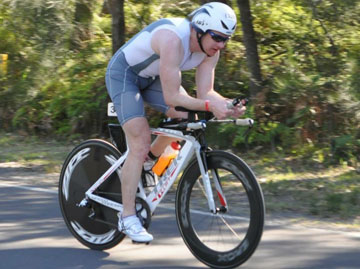
A keen footballer for many years before turning to distance running Thor, 53, was keen to take on a triathlon. A full body audit identified major flaws in his swimming.

“You really need to be competent in the freestyle which meant I needed to do a lot of work to get me through a 1500m swim in a Standard distance triathlon which also includes a 40km bike ride and a 10km run,” he said.

“I will put my training to the test in June when I do my first triathlon, back in Montreal.”

In the meantime Thor will complete his ICAO audit of the ATSB and schedule in several other audits, south and north of the equator.

He says his job has taken him to fascinating places, often with customs he feels ‘obligated’ to participate in. On a few occasions, this has resulted in headaches the morning after.

“On the whole, my job is highly rewarding,” he said. “It keeps me in touch with the outside world. I perform an audit, then go back to the country and see significant differences due to the audit findings and safety recommendations.”

Thor, who is on his first visit to Australia, hopes his personal audit will result in similarly positive outcomes in his first triathlon.

Naturally Thor can’t comment on the ATSB audit before it’s completed, but we can be sure it will be used only to further enhance aviation transport safety in Australia.