An effective response to an emergency situation ensured the safe arrival of Qantas Airbus A380 flight QF7 from Sydney to Dallas, Texas, on 15 May this year.
About two hours prior to arrival at Dallas-Fort Worth, United States, a passenger alerted cabin crew to smoke in the cabin. Cabin crew initiated the basic fire drill procedure and the customer service manager (CSM) made an emergency call on the aircraft interphone to alert all crew to the presence of smoke.
Cabin crew located the source of the smoke and removed seat cushions and covers while the CSM turned off power to the centre column of the seats.
On further investigation, the crew found a crushed personal electronic device (PED) wedged tightly in the seat mechanism. The PED contained a lithium battery.
A rapid and coordinated response by the crew ensured the situation was effectively managed and the safe landing of the aircraft.
The incident highlights the hazards of transporting lithium-ion battery powered PEDs on aircraft. More than a billion lithium batteries are believed to be transported by air every year, with potentially hundreds carried on single sectors on large aircraft.
The ATSB has received 17 notifications of similar incidents of lithium battery thermal events in aircraft over the past six years.
Cabin crew and passenger education remains a key component to managing these events. The Civil Aviation Safety Authority web page Travelling safely with batteries and pamphlet Is your luggage safe? provides information on the safe carriage of lithium-ion batteries and lithium-ion powered devices aboard aircraft.
The ATSB found that a track was accessed by a workgroup without an assessment of risks and without the establishment of appropriate risk controls.
An accident where a rail worker was struck by a passenger train near Laverton station in Victoria shows why it’s essential workers follow safeworking rules and procedures when working on or near railway tracks.
A report by the Australian Transport Safety Bureau (ATSB) found that on the morning of 2 October, 2015, a track was accessed by a workgroup without an assessment of risks and without the establishment of appropriate risk controls.
This meant that not all in the group had a clear understanding of train movements that morning, nor was there a defined position of safety known to all the workers.
The ATSB found that the train was given the all clear to proceed prior to the supervisor moving to a position of safety, clear of all tracks. There were several breaches of safeworking procedures that, while not directly contributing to this accident, increased the risks associated with the workgroup’s activities.
On that Friday morning, track workers were assembling track-side in Laverton, Victoria. They planned to undertake dogspike removal works in preparation for re-sleepering of a section of track on the Altona Loop Line.
At around 0910, the supervisor for the works began marking the track to identify those dogspikes to be removed. He was working in a track crossover about 400m on the Melbourne side of Laverton Railway Station. A lookout had been stationed for his protection.
At about 0916, a Metro Trains Melbourne suburban commuter train arrived at Laverton station, bound for Flinders Street Station in central Melbourne. After its scheduled stop, the train departed Laverton and approached the worksite. The lookout observed the train, warned workers of its approach and signalled to the driver that the track was clear.
However, as the train took the crossover, the supervisor was foul of the track, and was struck by the train travelling at about 59 km/h. The supervisor suffered serious injuries.
The supervisor was foul of the track when the train reached his location. It is probable that he expected the train to continue along an adjacent track, and not take the crossover towards his location.
Since the incident, Metro Trains Melbourne has increased the frequency of audits of infrastructure worker compliance with safeworking procedures.
The key safety message is that working in rail corridors carries significant risks that should be mitigated by adhering to established safeworking procedures.
Correct management of an abnormal situation and effective crew coordination ensured the safe return of a United Airlines Boeing 787 to Sydney on 17 April this year.
An Australian Safety Transport Bureau (ATSB) investigation found that all emergency procedures were carried out efficiently and effectively. The captain involved all relevant crewmembers and the ground-based technical operations maintenance controller (TOMC) in making a decision to return the aircraft to Sydney.
The situation occurred when a faulty oven resulted in smoke and fumes setting off a fire alarm on the San Francisco-bound flight UAL870, comprising 238 passengers, 11 cabin crew and four flight crew.
During departure, cabin crew switched on the aft galley ovens in preparation for meal services. After the two ovens were switched on, there was a short burst of smoke, with one of the ovens displaying a “FAILURE” message.
Several cabin crew detected a strong chemical odour and an electrical smell, as well as a blue haze. Other crew described it as an ozone smell. The oven interactive screen displayed a ‘Critical Error- Broken Fuse’ message.
The crew immediately pulled all relevant circuit breakers, and switched off all electrical sources to the aft galley. The inflight service manager (ISM) advised the captain. The ISM and a relief pilot from the cockpit arrived at the aft galley with fire extinguishers. By this stage, the smoke had dissipated, but the odour persisted. As it could not be confidently ascertained that the ovens were the sole source of the problem, the captain contacted the TOMC by satellite phone.
The discussion with the TOMC involved all flight crew and the ISM. It was agreed that the safest option was to return the aircraft to Sydney. The captain advised ATC by a PAN call. ATC initiated an INCERFA phase. About 110 km east of Port Macquarie, NSW, the crew commenced a return to Sydney. As the aircraft was well in excess of its allowed landing weight, fuel was dumped during the descent.
The aircraft landed without incident in Sydney at 1258 Eastern Standard Time (EST) with emergency services attending.
A post-engineering inspection quarantined the suspect oven, and after an inspection, a fuse was replaced. After appropriate testing, the aircraft was released back to service.
Boeing and the oven manufacturer investigated the cause of the ‘Critical Error’ fault displayed on the oven screen. The manufacturer individually tested all oven components. They reported that all individual components worked correctly, however, an additional measurement of the oven motor current detected that the motor did not run smoothly. The motor temperature was also above normal, most likely from insufficient airflow. This known fault had been rectified with a new oven software release.
Boeing reported that the oven manufacturer was working with United Airlines to update the software in all relevant ovens in their fleet. The exact cause of the odour could not be determined.
Indonesian safety investigator Apib Prayogi can trace his journey to working at the Australian Transport Safety Bureau in Canberra to two tragic aviation accidents.
The first was the loss of Air France Flight 4590 from Paris to New York on 25 July 2000. All 100 passengers and nine crew members aboard the Concorde died when it crashed into a hotel on take-off. On the ground, four people were killed and one was critically injured. It was the only fatal Concorde accident during its 27-year operational history.
A few years later in junior high school, Apib was fascinated by a Discovery Channel documentary on the accident and, more importantly, the investigation that followed.
“I was very curious as to how the investigators did their detective work to uncover the cause of the crash,” Apib said.
It struck a chord in the mind of the young Apib such that when career consultants paid a visit in senior high school, aeronautical engineering was presented as an option that could lead to interesting work.
With (very) solid maths results at school, Apib completed a Bachelor of Aeronautical Engineering (2010) in Adisutjipto College of Technology, Jogjakarta, and then a Master of Aeronautical Engineering (2014) from the prestigious Institute of Technology, Bandung.
This led to Apib becoming a junior investigator with Indonesia’s National Transportation Safety Committee (NTSC).
The second accident was in March 2007 when a Garuda Indonesia Boeing 737 over-ran the runway while attempting to land at Yogyakarta airport in central Java. The accident claimed 21 lives, five of whom were Australian. The accident lead to the development of the Australian government Indonesia Transport Safety Assistance Package (ITSAP).
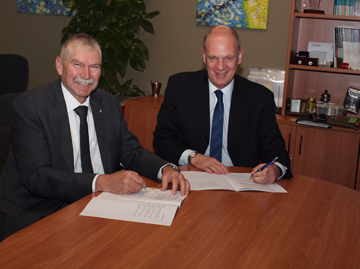
ATSB Manager International Richard Batt says the main elements of the ATSB's contribution to ITSAP is to deliver training and support for investigators from the NTSC.
“This includes the ATSB providing staff dedicated to various capacity building projects, funding ATSB training courses in Indonesia and Australia, and opportunities for aviation, marine, and rail investigators to work with their ATSB counterparts for extended periods,” Richard said.
“Our Indonesian colleagues learn much from us. But it’s not all one way. The programs that we develop are mutually beneficial. Cooperation between the ATSB and the NTSC is a key element in ensuring lasting transportation safety for the people of Indonesia and Australian travellers to Indonesia.”
Apib, 28, was selected as the first of two junior investigators who will spend time at the ATSB in Australia this year, thanks largely to his English language skills.
“I started learning English in junior high, where it is compulsory,” Apib said. “I continued into senior high and when I did my tertiary studies, most of the aeronautical engineering texts were in English.”
Apib is delighted with his time at ATSB, working with professional and highly committed staff and expanding his knowledge and experience.
“It’s like on-the-job training, especially with the short level (Level 5) investigations. We don’t have the kind of system and databases that you have here,” he said.
“I am learning how ATSB does its investigations, especially with its more advanced tools and laboratory. I already have a better understanding of how an investigation goes. And from that I can see how we can improve in Indonesia.
“We would like to have a system, such as you have at ATSB, which meets international standards. We will get there, but in my view it may take up to 10 years.”
Perhaps not surprisingly, Apib sees himself as a senior aviation investigator ‘in about 10 years’.
Married with a young daughter, Apib will continue to gain more qualifications, expand his knowledge and undertake more training.
In the meantime, he is grateful for the opportunity to work in Canberra at the ATSB, even if it is the middle of winter.
“I would like to thank Australia, the ATSB and the ITSAP program for this opportunity, and for assisting to improve our investigator qualifications and set up our flight recorder laboratory,” Apib said.
“I especially would like to thank Dr Soerjanto (NTSC Chairman) and Dr Richard Batt and the team in Level 5 investigations at ATSB. Everyone has been helpful and supportive and given me the opportunity to learn.”
Apib said he was also grateful to those who took him “out bush” for a first-hand encounter with kangaroos, koalas and a platypus!
The crew of this Tiger Airways A320 followed emergency procedures effectively to handle a potentially serious situation that affected three cabin crew members.
On 1 March 2016, a Tiger Airways Airbus A320 aircraft departed Brisbane, Queensland, on a scheduled passenger service to Melbourne, Victoria. On board were the captain, the first officer, four cabin crew members, and 63 passengers.
At about 0900 when the aircraft was above Parkes, New South Wales, the cabin crew detected a strong odour in the rear of the cabin, and notified the captain. The cabin crew were unsure what the smell was, but they later described it as being similar to an extinguished cigarette.
At 0933, as the aircraft was about 211 km north of Melbourne, the cabin crew manager advised that three cabin crew members were feeling unwell, and that one had vomited.
The flight crew contacted air traffic control, declared a PAN, and requested direct tracking to Melbourne. The captain advised the passengers that fire vehicles and ambulance would be present for their arrival at Melbourne Airport.
After landing, the aircraft taxied to the bay, followed by the airport rescue and firefighting service. After shutting the engines down, the captain advised the fire commander that other than sick members of the cabin crew, everything was normal. The fire crew did not find any source of fumes or fire, nor did a subsequent engineering inspection reveal the source.
This incident demonstrates effective crew resource management techniques to deal with an abnormal and evolving situation.
ATSB Chief Commissioner Greg Hood has reinforced the 2016 Rail Safety Week message that rail safety is everyone’s responsibility.
Australian Transport Safety Bureau (ATSB) Chief Commissioner Greg Hood has reinforced the 2016 Rail Safety Week message that rail safety is everyone’s responsibility.
The 11th Rail Safety Week will take place nationally from 15–21 August 2016.
“Rail safety is ultimately everyone’s responsibility, whether you are a member of the public, rail worker or rail operator,” Mr Hood said.
“If you are a passenger, stand behind the yellow or white line on the platform at all times. When on board a train, hold on to something, be sensible, pay attention and be alert—and courteous.
“At level crossings, trains can come at any time and from either direction so pedestrians and drivers—commercial and others—need to be fully aware of their surroundings.
“Mobile devices occupy much of our time these days, but getting that text away in a flash can result in tragedy.”
Mr Hood said the ATSB would be happier having fewer rail accidents to investigate, such as the fatal level crossing collision between a train and truck at Narromine in NSW in 2015. From its investigation, the ATSB identified areas of potential improvement related to road design, especially curved approaches before railway crossings.
Mr Hood said Rail Safety Week was not just about the public taking greater responsibility, but rail workers too.
“Rail workers have a right to come home every night after work but they need to be absolutely vigilant when working on or near tracks,” he said.
“This means effective communications amongst all workers at all times. Trains can’t stop quickly and any breakdown in the communication or management of a worksite can leave workers extremely vulnerable.”
Mr Hood said the ATSB was united with the rail industry, government, road safety and police partners in promoting safety in and around the rail network.
Death and injury on rail networks are avoidable if people obey the rules and remain aware and alert at all times.
The ATSB is urging air passengers to strictly follow government safety advice when travelling with lithium batteries.
The Australian Safety Transport Bureau (ATSB) is urging air passengers to strictly follow government safety advice when travelling with lithium batteries.
This follows an 11 August 2016 incident on a QantasLink Dash8 aircraft prior to departure at Sydney airport.
The flight was fully boarded and loaded when smoke was observed coming from a passenger’s hand luggage while it was in the overhead locker.
With fumes in the cabin, air crew initiated disembarkation procedures and the passenger was escorted to a safe area to isolate the hazard. The remaining passengers, including a wheelchair passenger, were escorted to an evacuation area.
Mobile and other electronic devices such as phones, laptops, watches and cameras containing low power lithium or lithium-ion batteries should be included in carry-on baggage only—not checked-in baggage.
The passenger’s luggage was made safe, the flight was cancelled, and passengers were moved to next service. Fortunately, no one was seriously injured but some passengers suffered side-effects from the smoke.
It was later found that the lithium batteries the passenger was carrying had ignited on board the aircraft. The operator reported that the batteries were not packaged properly (either in their original packaging or packed individually to insulate the terminals) to protect them from short circuiting.
ATSB Chief Commissioner Greg Hood said government authorities worked closely with airlines and the aviation industry to minimise the risk of aviation incidents.
“With the use of mobile devices at an all-time high, the Civil Aviation Safety Authority (CASA) has placed a greater focus on the carriage of personal electronic devices when flying,” Mr Hood said.
“Mobile and other electronic devices such as phones, laptops, watches and cameras containing low power lithium or lithium-ion batteries should be included in carry-on baggage only—not checked-in baggage.
“All spare batteries for these devices should also be placed in carry-on luggage and packaged individually to insulate the terminals to protect them from short-circuiting.
“Incidents are more likely to occur when spare batteries, such as for digital cameras, are not packaged to insulate the terminals, as was the case in this incident.
“The Australian Government has in place regulations designed to ensure the safety of passengers, but it is also everyone's responsibility to declare dangerous items and to ensure electronic devices are not only in good order but packaged according to CASA’s requirements.”
The ATSB is urging road and rail authorities to consider safer road design at railway crossings, after a tragic collision between a road-train truck and grain train.
On 23 September 2015, an eastbound road-train truck, hauling grain, collided into the side of Pacific National grain train 8834N, (travelling on the main line between Narromine and Peak Hill) at the Tullamore – Narromine Road railway crossing, about 4 km southwest of Narromine, in New South Wales. The railway crossing was controlled by flashing lights, an audible warning device (bell); passive warning signs installed on the road approaches and road surface markings.
The collision and a post-impact fire destroyed the prime mover and one of the two trailers; the truck driver was fatally injured. The crew of the train were physically unhurt. As a result of the impact two wagons, were damaged, one of which derailed. Some of the railway crossing infrastructure (flashing lights) was destroyed and required replacement.
The ATSB found that the driver of the road-train truck was probably travelling too fast for the prevailing conditions, and entered the Tullamore – Narromine Road railway crossing while it was active, and the flashing lights were operating. It was concluded that the truck driver’s attention was probably focussed on negotiating the sweeping right-hand curve that preceded the crossing, at a critical time when he needed to check for the activation of the crossing. It is likely that when the driver perceived that the flashing lights were operating, he was too close to the crossing to stop, and collided with the train.
The ATSB identified a number of areas of potential improvement related to road design (signage and standards associated with railway crossing traffic control) especially with respect to curved approaches, before railway crossings.
Furney Flour Mills, the Narromine Shire Council, and Standards Australia have implemented a range of initiatives to reduce the risk of a similar occurrence in the future, including:
enhanced employee training and medical assessment initiatives
provision of additional (road) approach passive warning signs, (W7-4) plus a review of road alignment and railway crossing road approach speeds
a review of AS 1742.7-2016, with respect to railway crossing approaches, in particular curved approaches, and the location of signage.
Safety message
Although the road rules (NSW - Road Rules 2014) make motorists primarily responsible for avoiding a collision with a train at railway crossings, prudent road design and/or advance warning of a train’s presence at railway crossings should be considered as a strategy to lower the risk of road and rail vehicle collisions.
Road and rail authorities should consider added measures to enhance the situational awareness of motorists approaching railway crossings, especially at locations with restricted sighting due to curved approach roads.
It is imperative that road vehicle drivers always approach railway crossings with extreme care. The level of care and attention required increases as road vehicle gross mass increases.
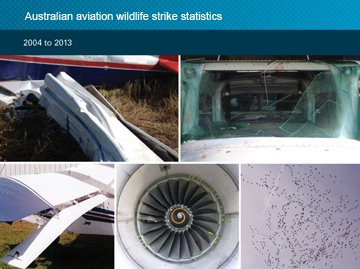
An incident where the pilot of a Glasair Sportsman GS-2 was temporarily blinded after a large eagle broke through the windscreen, highlights the serious hazards of aviation wildlife strikes.
On 24 December 2015, the pilot of a Glasair Sportsman GS-2 was conducting a private flight from Southport, Queensland, to Moruya, New South Wales (NSW), with a refuel stop at Mudgee, also in NSW. The pilot was the only person on board.
While cruising at 5,500 ft above mean sea level near Bathurst, NSW, the aircraft collided with a large bird, believed to be a wedge-tailed eagle. The bird broke though the windscreen on the left side of the aircraft and struck the pilot. The collision left the pilot with serious facial injuries and they were temporarily unable to see. The pilot was wearing a headset and spectacles, which were both dislodged and damaged during the collision. Following the birdstrike, the aircraft entered a rapid descent, but the pilot recovered sufficiently to regain control. Despite the broken windscreen and their injuries, the pilot was able to divert to Bathurst Airport and land successfully.
During their ordeal, the pilot had been able to locate the microphone of the headset and transmit a MAYDAY call. But damage to the headset meant they were unable to hear any incoming transmissions. Although air traffic control (ATC) received the MAYDAY call, they did not know the callsign or specific location of the aircraft involved, or the intentions of the pilot. About 30 minutes after the MAYDAY call, the Safety Officer at Bathurst airport contacted ATC to advise them that an aircraft with a broken windscreen (the result of a birdstrike) had landed at Bathurst.
ATSB research report (AR-2104-075) titled Australian aviation wildlife strike statistics provides some insights into the nature and characteristics of birdstrikes. The August 2010 edition of the Flight Safety Foundation magazine (AeroSafety World) includes an article titled Bird Strike Mitigation Beyond the Airport(Opens in a new tab/window), which provides some interesting comments regarding bird behaviour and the possible effects of a birdstrike on general aviation aircraft.
This incident highlights the serious hazard to aviation presented by birds, not only near aerodromes. A birdstrike can cause substantial damage which has the potential to significantly adversely affect the performance and handling qualities of an aircraft. When declaring an emergency, pilots are encouraged to relay as much relevant information as reasonably possible (acknowledging that the circumstances surrounding this incident made effective communication very difficult). Positional information and information with respect to the intentions of the pilot may be critical to an effective response by emergency services.
For pilots, this incident highlights the importance of attention to the configuration of the aircraft and cockpit settings at all stages of flight, but particularly during take-off.
On 25 September 2015, a Cessna 550 aircraft (Citation Bravo), registered VH-FGK, taxied at Lismore Airport for a private flight to Baryulgil, New South Wales. The flight crew consisted of a captain and copilot, who were the only occupants of the aircraft.
The flight crew did not detect anything abnormal during the taxi and take-off roll, until the captain attempted to rotate the aircraft to the take-off pitch attitude. When the aircraft had achieved the required rotate speed, the captain applied the normal backpressure on the control column to achieve a standard rate of rotation, and the aircraft did not rotate. The captain then applied full backpressure and reported that the controls felt very heavy. Neither the captain nor the copilot detected any change in the aircraft’s pitch attitude or any indication of pitch-up on the attitude direction indicator.
The captain rejected the take-off, applied full braking and reverse thrust, but the aircraft overran the runway. The nose landing gear detached from the aircraft about 50 m beyond the end of the sealed runway, and the aircraft came to rest in long grass and mud. The aircraft sustained substantial damage, and the captain and copilot were uninjured.
The aircraft did not accelerate normally as the acceleration was retarded by drag associated with rolling friction. This was indicative of partial brake pressure remaining during the take-off run. The partial brake pressure was possibly due to the parking brake being selected on at the holding point with enough pressure to retard aircraft acceleration during the take-off, but not sufficient to prevent the aircraft reaching rotate speed.
Furthermore, the nose-down moment generated by the partial brake pressure probably prevented the aircraft rotating sufficiently to become airborne, despite normal nose-up elevator deflection.
Heat in the brakes due to partial pressure during the take-off run may have reduced their effectiveness when the captain rejected the take-off, contributing to the runway overrun.
The Australian Transport Safety Bureau issued a safety recommendation that Textron Aviation (Cessna) take safety action to address the fact that Citation aircraft do not have an annunciator light to show that the parking brake is engaged and the Cessna 'before take-off' checklist does not include a check to ensure the parking brake is disengaged.
Safety message
For pilots, this incident highlights the importance of attention to the configuration of the aircraft and cockpit settings at all stages of flight, but particularly during take-off. For manufacturers, this incident highlights the importance of systems that bring an irregular or abnormal configuration or cockpit setting to the attention of the crew, especially when that configuration has the potential to adversely affect aircraft performance or control.