Building investigative skills

Indonesian NTSC flight recorder specialist Andreas Hananto continues to hone his flight data recovery and analysis skills...

Over a six week period, Andreas completed the theory and examinations required to achieve private pilot licence standard.

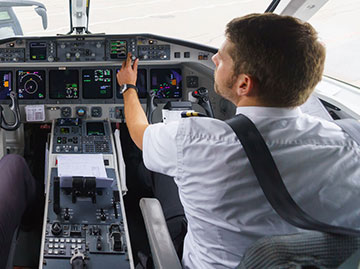
To consolidate his learnings, he undertook a flight with an instructor that demonstrated aircraft handling in the local training area at Bankstown. A second flight exercised all of the theory that had learned, including preparing a flight plan and performing the pre-flight check of the Piper Warrior.

The flight, which departed Bankstown and took in the visual coastal route passing Kingsford Smith Airport, also provided an experience of the various air traffic control zones, radio procedures and flying in turbulent conditions.

Andreas also undertook a simulator session where he successfully completed an instrument flying exercise.

The additional skills and exposure gained by Andreas through this study will enhance his ability to perform his job at the NTSC. He is looking forward to sharing this knowledge with the flight recorder group he supervises at the NTSC.

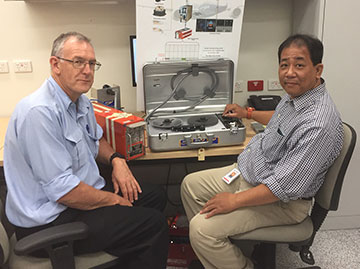
Andreas was last in Australia in December to undertake a two week placement with the ATSB as part of the Indonesia Transport Safety Assistance Package (ITSAP), which is supported by funding from the Australian Government Department of Foreign Affairs and Trade.

ATSB Senior Transport Safety Investigator Ken Kell said it had been a privilege to work alongside Andreas during his visits to Australia.

“The NTSC analyses a relatively high volume of flight recorders each year and I have had the opportunity to support his work, which has provided me with valuable insight into the operations of the NTSC.

“Andreas’ technical proficiencies are impressive”

ATSB Manager International Richard Batt said the cooperation between the ATSB and the NTSC is a key element in ensuring lasting transportation safety for the people of Indonesia and Australian travellers to Indonesia.

“The ATSB continues to support the development of investigative capabilities across the Asia Pacific region with its program of cooperation through ITSAP also extending to the Papua New Guinea Accident Investigation Commission.”

For more information on ITSAP visit the Regional Engagement webpage.

MH370 satellite imagery analysis

The ATSB has released two reports which analyse data gathered during the search for Malaysia Airlines flight MH370.

Greg Hood, Chief Commissioner of the Australian Transport Safety Bureau (ATSB), said that although the underwater search for MH370 in the southern Indian Ocean had been suspended in January 2017, some residual analysis activity had continued.

“Consistent with our commitment to the public release of information pertaining to the search for MH370, we have today released two reports, prepared by Geoscience Australia and the CSIRO,” said Mr Hood. “They provide analysis and findings relating to satellite imagery taken on 23 March 2014, two weeks after the disappearance of MH370, over the southern Indian Ocean.”

The satellite imagery was acquired through the assistance of French authorities. The images were captured by satellite two weeks after the aircraft went missing on 8 March 2014. The area covered by the imagery was not one that was searched from the air at that time, but is close to the underwater search area.

Experts from Geoscience Australia examined four images to determine whether they contained objects that were potentially man-made in origin. The details of that work are described in the report Summary of imagery analyses for non-natural objects in support of the search for Flight MH370: Results from the analysis of imagery from the PLEIADES 1A satellite undertaken by Geoscience Australia.

“Geoscience Australia identified a number of objects in the satellite imagery which have been classified as probably man-made,” said Mr Hood. “The image resolution is not high enough to be certain whether the objects originated from MH370 or are other objects that might be found floating in oceans around the world.”

Given the proximity to the defined underwater search area, the CSIRO conducted a drift study to determine the geographic origin of the objects identified in the satellite images to provide an indication of where they were likely to have been on 8 March 2014. The details of that work are described in the report The search for MH370 and ocean surface drift – Part III.

The drift study found that the projected location on 8 March of the objects identified in most of the satellite images was consistent with the area identified by experts during the MH370 First Principles Review in November 2016.  

 “Clearly we must be cautious,” said Mr Hood. “These objects have not been definitely identified as MH370 debris.”

Mr Hood stated that “The information contained within the Geoscience Australia and CSIRO Reports may be useful in informing any further search effort that may be mounted in the future.”

Malaysia, as the state of registry for the aircraft, retains overall authority and responsibility for any future search.

Read the CSIRO Drift Report III and Geoscience Australian's Satellite Imagery reports.

Safeskies conference

Former ATSB Investigator Joe Hattley has been appointed as the manager of the Safeskies 2017 conference.

Mr Hattley, who spent 24 years with the ATSB, accepted the position of Manager, Safeskies Australia at the beginning of August. He is now working closely with the Safeskies Board to present the 2017

Conference being held between 4-5 October at the National Convention Centre in Canberra.


“I would like to congratulate Joe on his appointment to Safeskies Australia,” said the ATSB’s Chief Commissioner Greg Hood. “Joe is a very experienced senior investigator who has devoted much of his life towards improving transport safety. His time with the ATSB was marked by his dedication and altruistic values, and it’s in keeping with his character that, after retiring from the Bureau, he is not letting the grass grow under his feet. I am delighted that he is continuing to pursue the safety of Australian aviation in his role at Safeskies.”

Reflecting on his time at the ATSB, where he culminated his tenure as the Assistant General Manager of Strategic Capability, Mr Hattley said he is proud to be continuing in the field of promoting aviation safety.

“Safeskies is the premiere aviation safety conference focused solely on aviation safety issues which have a high profile or are emerging as the future challenges,” said Mr Hattley. “In early October, we’re bringing together a group of national and international aviation safety experts and practitioners to present and discuss a range of contemporary issues. I encourage everyone with an interest in aviation safety to come along to Safeskies 2017.”

(Opens in a new tab/window)

Register at: safeskiesconference.com.au(Opens in a new tab/window)

Encouraging women in aviation and aerospace

The ATSB’s Chief Commissioner Greg Hood presented at the Women in Aviation/Aerospace Australia’s inaugural Canberra Summit at the National Museum of Australia on team leadership and mentorship....

Speaking on the importance of gender diversity and balance in an industry that is traditionally male-dominated, Mr Hood highlighted some sobering statistics of women in aviation.

“The percentage of female pilots at Australia’s major airlines ranges from about four to nine per cent,” said Mr Hood. “Also, the number of women in science, technology, engineering and mathematics (STEM) is around only a quarter of the total STEM workforce.”

Mr Hood acknowledged the important work of some of the agency’s female staff who were in attendance at today’s summit, highlighting their career paths and experience to the audience.

Safety Reporting Manager Elaine Hargreaves, who leads a team of six staff and manages the influx of up to around 16,000 rail, maritime, and aviation incidents and accidents each year; Kerri Hughes, one of the ATSB’s Managers of Transport Safety who leads a mixed-modal team of seven transport safety investigators and Tanya Puckett, the ATSB’s Manager of Organisational Development, who is overseeing the ATSB’s largest recruitment drive for additional Transport Safety Investigators since becoming an independent statutory authority in 2009.

“I am certain that a day will come when we no longer have to applaud such progress in gender balance,” said Mr Hood. “But until then, it is vital that we shine a spotlight on the achievements of women in traditionally male industries.”

Mr Hood said he was particularly proud to lead a relatively small organisation that employs 12 female Transport Safety Investigators...

Mr Hood said he was particularly proud to lead a relatively small organisation that employs 12 female Transport Safety Investigators who hold a range of specialist skills including human factors, technical analysis, aircraft maintenance engineering and aviation research.

“Equally, I’m proud that we have five women occupying executive roles, including two who are managers in our Transport Safety Division,” said Mr Hood. “It has now been well-established that a diverse workplace is critical to the performance of any organisation and achieving gender diversity within a workplace can encourage innovation and therefore a more holistic analysis of issues, which in turn leads to improved decision-making.”

While applauding the work being done by the Women in Aviation/Aerospace to promote the issue of gender diversity and the participation of women within the aviation and aerospace sectors, Mr Hood concluded his presentation by highlighting that only two weeks remain before applications close for anyone interested in becoming a Transport Safety Investigator.

“I can assure you, the ATSB will continue to do what it can to attract female staff into the Agency as well as encourage them to be promoted into positions at all levels,” said Mr Hood. “Hopefully I have managed to make a further contribution to improving gender balance by encouraging a number of you to apply for a role with the ATSB.”

ATSB secures drone quals

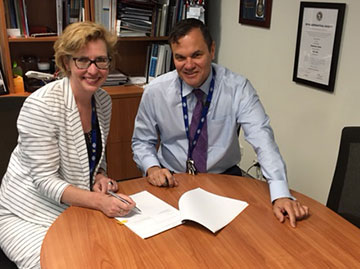
The ATSB has been issued with a Remotely Piloted Aircraft Operator’s Certificate from the Civil Aviation Safety Authority.

The Certificate, which was presented to ATSB Chief Commissioner Greg Hood and Transport Safety Investigation Manager Derek Hoffmeister on Friday 21 July by CASA acting Chief Executive Officer / Director of Aviation Safety Graeme Crawford, means the agency now has the necessary approvals to gather data and evidence during its on-site investigations using Remotely Piloted Aircraft Systems (RPAS), up to seven kilograms.

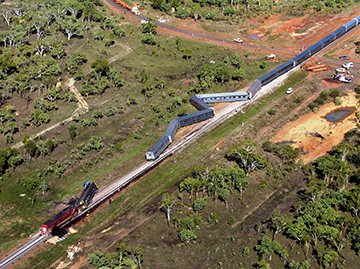
Mr Hoffmeister has also been granted Chief Remote Pilot status by CASA, after passing the required flying test and interview. The ATSB has already taken advantage of these qualifications—capturing investigative footage via its RPAS after a loaded coal train derailed between Oakey and Jondaryan in Queensland late last Friday 21 July 2017.

The Chief Pilot is just one of several transport safety investigators now qualified to fly the DJI Phantom 4, which has been assessed as most suitable for the ATSB’s RPAS operations. The investigators have received a thorough grounding in theory and practical training.

“The RPAS brings significant capability to our investigations,” Mr Hoffmeister said. “Investigators are now able to undertake an initial site survey to check for safety hazards before entering the site, and we can perform site mapping more quickly and with more accurate measurements. Also, comprehensive photos of an entire accident site can help investigations enormously. We can capture that imagery ourselves using RPAS – imagery that could previously only be obtained with a helicopter.”

Chief Commissioner Greg Hood said the agency has been monitoring the potential benefits of RPAS for a number of years, however it was only recently that advances in technology made this a viable option for the ATSB.

“RPAS are now software-equipped and capable of high-fidelity resolution photography enabling accident site safety assessment, and site and debris mapping,” Mr Hood said.

“While the size of our RPAS is below the threshold for an Operator’s Certificate, we are ensuring that we operate under CASA’s regulatory framework in the safest possible manner by gaining the qualification.

People who are flying RPAS commercially should follow the lead of the ATSB and gain their Remote Pilot Operator’s Certificate, regardless of the size of the RPAS they’re using.

“The use of RPAS compared to traditional site survey techniques, equipment and software also presents a substantial cost saving and ease-of-use benefits to the ATSB.”

In addition to building its RPAS capability, the ATSB is also conducting research and data analysis into this emerging technology to assess the safety risk to aircraft. There have been a number of ‘encounters” between RPAS and fixed and rotary winged aircraft, which is a focus of the ATSB.

“Around the world, RPAS can be procured at many retail outlets, including supermarkets and post offices; and are utilised for both pleasure and work-related purposes,” Mr Hood said. “I urge those who have procured an RPAS or are interested in doing so to educate themselves on the CASA regulations.”

“People who are flying RPAS commercially should follow the lead of the ATSB and gain their Remote Pilot Operator’s Certificate, regardless of the size of the RPAS they’re using. This will afford them the flexibility and preparedness to fly any kind of drone or deal with any changes to rules or regulations.”

Recreational drone flyers should also be conscious of the regulations, and take advantage of CASA’s free Can I fly there? smartphone app(Opens in a new tab/window).

For more information:

Article: Investigators’ eye in the sky: Four ATSB transport safety investigators were recently trained in the use of a new tool that will prove highly useful in future investigations.

Research report: A safety analysis of remotely piloted aircraft systems 2012 to 2016: A rapid growth and safety implications for traditional aviation


Media enquiries: 1800 020 616 or ATSBInfo@atsb.gov.au  

MH370 sea floor data

Bathymetry data from the search for flight MH370 has been released by Geoscience Australia.

From the beginning of the underwater search for MH370, it was always intended that all sea floor data gathered would be released to the international public.

Geoscience Australia has published the data collected during bathymetric surveys that mapped the topography of the sea floor in the search area; these maps were then used to guide the more detailed underwater search safely.

While the data was collected for the sole purpose of locating the aircraft, which disappeared in March 2014, it will also be of interest to the scientific community, as it is some of the first high-resolution data of this area of the southern Indian Ocean.

The second phase of the sea floor data is expected to be released in 2018.

Geoscience Australia provided advice, expertise and support for the sea floor mapping and underwater search for MH370. The Joint Agency Coordination Centre was the lead agency in the search, coordinating all Government assistance and responsible for whole of Government information. The ATSB led the search operations, as Australia’s national transport safety investigator.

At a meeting of Ministers from Malaysia, Australia and the People’s Republic of China held on 22 July 2016, it was agreed that should MH370 not be located in the current search area, and in the absence of credible new evidence leading to the identification of a specific location of the aircraft, the search would be suspended upon completion of the current search area.

As such, the search for Malaysia Airlines flight MH370 was suspended on 17 January 2017. Malaysia, as the state of registry for the aircraft, retains overall authority for any future search.

For more information or to access the data visit the Geoscience Australia website(Opens in a new tab/window).

Engine shutdown and collision with terrain

ATSB report emphasises the need for operators to heed the advice of aircraft manufacturers.

An ATSB investigation report has emphasised the need for operators to heed the advice of aircraft manufacturers with regards to maintenance and upgrades to their fleet.

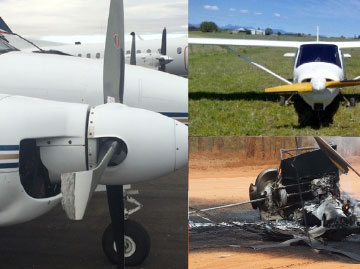
On 13 December 2016, a B200 King Air aircraft was conducting a visual approach to Moomba Airport in South Australia when the pilot observed the left engine fire warning activate. The pilot shut down the left engine, but omitted to feather the propeller. The additional drag caused by the windmilling propeller combined with the aircraft configuration for landing while in a right turn, requiring more thrust than was available. The aircraft landed in the sand to the left of the runway threshold and, after a short ground roll, spun to the left before coming to rest. There were no injuries, but the aircraft was substantially damaged.

No engine fire damage was found, which indicated the fire warning had almost certainly been a false alarm. The aircraft manufacturer had previously published a service bulletin for the optional replacement of the engine fire detection system with a system less susceptible to false warnings. The operator, however, who had limited experienced with false engine warnings in their fleet, elected not to replace the system on the aircraft.

The ATSB also found that the pilot had not received the operator’s published syllabus of training for that aircraft. Instead, a tailored training program was delivered based on the pilot’s experience on the C90 King Air and taking into account advice the operator received from the Civil Aviation Safety Authority (CASA). This training did not cover all the elements required under the Civil Aviation Safety Regulations.

As a result, CASA will be taking steps to refresh industry and its own officers’ knowledge of particular terms and concepts within the flight crew licencing regulations, so as to remove any doubt regarding their interpretation and applicability.

Read the final report: Engine shutdown and collision with terrain involving Beech Aircraft Corporation B200, VH-MVL Moomba Airport, South Australia, 13 December 2016

Weather research released

New ATSB research expected to double chances of landing safely during unforecast weather.

New ground-breaking research released by the ATSB is expected to double the chances of aircraft landing safely during times of unforecast weather. This is the first report in a series covering Australian airports supporting regular passenger transport operations.

The ATSB investigator leading the research project, Dave Wilson, has analysed an enormous amount of weather and aerodrome data to identify weather-related safety risks for Adelaide and Mildura airports.

Mr Wilson said there were around 50,000 arrivals at Adelaide each year. The likelihood of encountering unforecast weather and having to adopt a contingency plan, such as diverting, was a rare occurrence—about one in 3000.

By developing sophisticated algorithms from the data, the research makes arrival without sufficient warning even rarer—perhaps as low as one in 10,000.

In so doing, the predictive nature of the research means enhanced safety for the travelling public in Australia.

“By reducing the number of aircraft being caught out, we significantly reduce the chance that something will go wrong,” Mr Wilson said.

“As an example, if you take mornings in Adelaide, retrieving a forecast an hour out from landing could double the chance of a safe arrival compared to three hours out,” Mr Wilson said.

“Every year there are circumstances where forecasts don’t provide sufficient warning for pilots. This means they have to divert or, in some rare cases, land below specified limits with critically low fuel levels.”

This occurred in 2013 when two Boeing 737-800 aircraft were forced to divert to Mildura from landing at Adelaide, where poor weather was also encountered. One of these aircraft landed below the specified safe limits with limited fuel remaining.

The research will benefit all aviation operators but, purely due to the number of flights, will be more useful for high capacity commercial transport. Operators will be able to use the research to help guide operational staff such as dispatchers, who support their pilots by helping to focus attention on high risk times of day and seasons of the year.

It will also be of strategic use to the Civil Aviation Safety Authority, Airservices Australia and the Bureau of Meteorology.

“We can identify high-risk locations and high-risk times of day and year, and when this is used with flight planning and operational rules for landing, safety can be enhanced. It will also allow for better decision-making with respect to the prioritisation of investment decisions about aircraft and aerodrome navigational equipment,” Mr Wilson said.

This research is tangible evidence of the direction in which ATSB Chief Commissioner Greg Hood wants to take the organisation.

“The ATSB is committed to becoming a data-driven, predictive transport safety investigator,” Mr Hood said. “We will continue to source data nationally on aviation transport safety occurrences and events and use that data to identify and communicate safety risks and emerging trends.”

Over the next two years Mr Wilson will expand his research and evaluate billions of rows of data to produce a series of reports documenting weather-related safety risks for regions around Australia. The research ultimately has the potential to be applied not only in Australia, but around the world.

Read research report.

Republic of Kiribati delegation

A delegation of aviation experts from the Republic of Kiribati visited the ATSB on Tuesday, 27 June to discuss possible ways to work cooperatively in matters of aviation safety investigation.

The members of the delegation were the Honourable Willie Tokataake, Minister for Information, Communication, Transport and Tourism Development, Permanent Secretary Dr Teatao Tiira, the Director of Civil Aviation Ms Aako Teikake, the CEO of Air Kiribati Limited, Mr Tarataake Teanaki, and Aviation Advisor Mr Mike Gahan.

The delegates met with ATSB Chief Commissioner Greg Hood, ATSB investigators, and toured the ATSB Technical Analysis labs.

Chief Commissioner Greg Hood and the Honourable Willie Tokataake, Minister for Information, Communication, Transport and Tourism Development

Greg Hood said the Republic of Kiribati’s position in the South-West Pacific renders it especially important to Australia for consultation and collaboration in aviation safety.

“This has been an excellent opportunity to build stronger ties with our neighbours in the Pacific and continue to improve aviation safety in the region,” he said.


National rail investigator

From midnight, 30 June 2017, the ATSB will be responsible for conducting no-blame safety investigations of rail occurrences across all of Australia.

From 1 July, legislation will be in effect that will see the ATSB officially become the single national transport safety investigator for rail, as it takes on responsibility for investigating rail accidents and incidents in Queensland.

To support this expanded responsibility, the ATSB recently signed an agreement with the Queensland State Government to facilitate its investigation of accidents and incidents on the state’s metropolitan and regional passenger, and freight rail networks.

The ATSB’s investigation role will occur concurrently with the Office of National Rail Safety Regulator, which oversees rail safety regulation in every Australian state and territory.

ATSB Chief Commissioner Greg Hood welcomed the new role for the national transport safety investigator.

“This is an important new stage in transport safety in Australia,” said Mr Hood. “It represents the culmination of a project that began on 19 August 2011, when the Council of Australian Governments committed to national rail safety reforms.

“We’re eager to work more closely with the rail industry in Queensland, and we’ll continue to work with rail operators to ensure they understand the new arrangements and how those arrangements are going to improve transport safety.

“The ATSB has extensive investigation experience in the rail, aviation and marine sectors—a move to a fully national investigation role for rail will further enhance transport safety in Australia.”

The rail industry makes a significant contribution to the Australian economy and greater consistency of national safety requirements will help increase productivity and efficiency across the sector.

More information on rail accident or incident notifications.