Runway event involving Fairchild Industries SA227, at Darwin Airport, Northern Territory, on 5 December 2018

Brief

Occurrence Briefs are concise reports that detail the facts surrounding a transport safety occurrence, as received in the initial notification and any follow-up enquiries. They provide an opportunity to share safety messages in the absence of an investigation.

What happened

On 5 December 2018, a NOTAM was current for a displaced threshold (DT) at the western end of runway 29 (runway 11 threshold) for cable maintenance at Darwin airport, Northern Territory. A Fairchild Industries SA227, undertaking a passenger charter, conducted an intersection departure from taxiway E on runway 29 and passed low over the maintenance crew working on the upwind end of the runway. The intersection chosen for the departure was approximately at the midpoint of the runway, therefore significantly reducing the runway available.

Figure 1: Aerodrome Chart – Darwin, NT

Figure 1: Aerodrome Chart – Darwin, NT

Source: Airservices Australia, annotated by the ATSB

Pilot comments/considerations

The crew carried out calculations to determine that the aircraft could clear the obstruction described in the NOTAM. Their calculations demonstrated that the aircraft would be able to clear all obstacles even in the event of one engine failing during the take-off. Sufficient stopping distance was available for a rejected take-off (RTO) at low speed and actions required for an engine failure at or near V1[1] was to continue the take-off.

Airfield operators comments/considerations

  • The NOTAM did not specify that aircraft can request any men and equipment to be vacated, however if an aircraft’s crew does request this, it can be done, but it is the exception rather than general practice.
  • During DT operations ATC will:
    • notify aircrew, through directed transmissions, of the DT or Reduced Operating Length (ROL) when issuing a landing/take off clearance.
    • confirm if aircrew can accept a departure with the ROL that is in place, should they request an intersection departure.

Safety message

This incident highlights the need for pilots and ATC to be cognisant that when temporary changes to normal operations are in place, such as conditions in NOTAMS, increased vigilance is required.

Aircraft operation - Pilots and operators faced with unusual or changed circumstances should fully consider both their performance planning and decision-making processes. If any available option exists to enhance safe operations by increasing safety margins those options should be evaluated fully and applied if appropriate.

Airfield operators / ATC – if works are being undertaken within the runway environment it may be appropriate to restrict operations, for example, no or limited intersection departures. Alternatively, if an intersection departure is required, the maintenance crew should be advised and possibly vacated from the runway environment to provide necessary awareness and safety margins.

About this report

Decisions regarding whether to conduct an investigation, and the scope of an investigation, are based on many factors, including the level of safety benefit likely to be obtained from an investigation. For this occurrence, no investigation has been conducted and the ATSB did not verify the accuracy of the information. A brief description has been written using information supplied in the notification and any follow-up information in order to produce a short summary report, and allow for greater industry awareness of potential safety issues and possible safety actions.

__________

  1. V1 is the speed by which time the decision to continue flight if an engine fails has been made.

Occurrence summary

Mode of transport Aviation
Occurrence ID AB-2019-006
Occurrence date 05/12/2018
Location Darwin Airport
State Northern Territory
Occurrence class Incident
Aviation occurrence category Operational non-compliance
Highest injury level None
Brief release date 03/05/2019

Aircraft details

Manufacturer Fairchild Industries Inc
Model SA227
Sector Turboprop
Operation type Charter
Departure point Darwin Airport, Northern Territory
Damage Nil

Severe turbulence involving de Havilland DHC-8, Dubbo, New South Wales, on 20 December 2018

Brief

Occurrence Briefs are concise reports that detail the facts surrounding a transport safety occurrence, as received in the initial notification and any follow-up enquiries. They provide an opportunity to share safety messages in the absence of an investigation.

What happened

On 20 December 2018, a de Havilland DHC-8 was traveling from Sydney, New South Wales (NSW) to Dubbo, NSW on a regular public transport flight. During approach to runway 23 at Dubbo, the aircraft encountered heavy showers and unexpected moderate to severe turbulence. The crew disengaged the autopilot and commenced a missed approach procedure. During the missed approach, the aircraft’s indicated airspeed (IAS) dropped to 100, and the crew received a momentary stick shaker alert. While climbing through 3,700 ft, the aircraft again encountered severe turbulence.

After landing, damage to the empennage was evident, with oil canning on the skin of the aircraft. Minor damage between the rudder and elevator was also observed. There were no reported injuries to passengers or crew; however, some passengers reported feeling airsick.

Safety message

The ATSB research report, Staying safe against in-flight turbulence (AR-2008-034), details that while turbulence is normal and occurs frequently, it can be dangerous. Turbulence is rarely a threat to passenger aircraft or to pilot control of the aircraft. In a typical turbulence incident, 99 per cent of people on board receive no injuries. The report outlines what steps passengers can take to mitigate the risk of injury during turbulence.

About this report

Decisions regarding whether to conduct an investigation, and the scope of an investigation, are based on many factors, including the level of safety benefit likely to be obtained from an investigation. For this occurrence, no investigation has been conducted and the ATSB did not verify the accuracy of the information. A brief description has been written using information supplied in the notification and any follow-up information in order to produce a short summary report, and allow for greater industry awareness of potential safety issues and possible safety actions.

Occurrence summary

Mode of transport Aviation
Occurrence ID AB-2018-134
Occurrence date 20/12/2018
Location Dubbo
State New South Wales
Occurrence class Serious Incident
Aviation occurrence category Turbulence/windshear/microburst
Highest injury level None
Brief release date 03/05/2019

Aircraft details

Manufacturer de Havilland Aircraft
Model DHC-8-202
Sector Turboprop
Operation type Air Transport High Capacity
Departure point Sydney, NSW
Destination Dubbo, NSW
Damage Minor

Loss of control involving VAN’S RV-6A, Lakeland Downs, Queensland, on 5 January 2019

Brief

Occurrence Briefs are concise reports that detail the facts surrounding a transport safety occurrence, as received in the initial notification and any follow-up enquiries. They provide an opportunity to share safety messages in the absence of an investigation.

What happened

On 5 January 2019 at approximately 1045 Eastern Standard Time, the pilot of an amateur built aircraft VAN’S RV-6A took off from an unsealed runway at Lakeland Downs airstrip, Queensland for a private flight with one passenger on board.

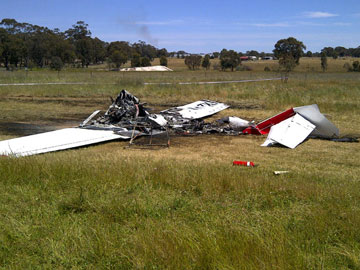
During the take-off run[1], at approximately 250 m down the runway, the aircraft began to deviate to the right uncommanded. The pilot then conducted a rejected take-off and lost directional control resulting in the aircraft veering off the runway and colliding with a tree. The aircraft subsequently sustained substantial damage.

Pilot comments

The pilot advised that there had recently been a lot of rain in the area and the airstrip was mainly clay with overgrown grass. Upon landing at the airstrip, he had noticed that the runway had a rough surface, and during take-off he had tried to follow the same track.

After the accident, the pilot walked back along the tracks the aircraft had taken and found a large rock buried in the runway that the landing gear had struck.

Figure 1: Damage sustained to aircraft

Figure 1: Damage sustained to aircraft. Source: Qld Police

Source: Qld Police

Safety message

This accident highlights the importance of identification and management of any risks that might be associated with an unsealed runway. Potential hazards may be hard to identify, with objects possibly obscured by vegetation. Changes in the runway surface can be hard to detect visually and without a vehicle or some means to apply a similar force to that of a landing aircraft.

Further information on being prepared when operating on remote airstrips can be found on the CASA website, Bush strips.

About this report

Decisions regarding whether to conduct an investigation, and the scope of an investigation, are based on many factors, including the level of safety benefit likely to be obtained from an investigation. For this occurrence, no investigation has been conducted and the ATSB did not verify the accuracy of the information. A brief description has been written using information supplied in the notification and any follow-up information in order to produce a short summary report, and allow for greater industry awareness of potential safety issues and possible safety actions.

__________

  1. Take-off run: Take-off run (ground run) is the portion of the take-off procedure during which the airplane is accelerated from a standstill to an airspeed that provides sufficient lift for it to become airborne.

Occurrence summary

Mode of transport Aviation
Occurrence ID AB-2019-001
Occurrence date 05/01/2019
Location Lakeland Downs
State Queensland
Occurrence class Accident
Aviation occurrence category Loss of control
Highest injury level Minor
Brief release date 30/04/2019

Aircraft details

Manufacturer Amateur Built Aircraft
Model VAN’S RV-6A
Sector Piston
Operation type Private
Departure point Lakeland Downs, Queensland
Damage Substantial

Flight crew incapacitation involving Diamond DA 40, 67 km west of Adelaide, South Australia, on 9 March 2019

Brief

Occurrence Briefs are concise reports that detail the facts surrounding a transport safety occurrence, as received in the initial notification and any follow-up enquiries. They provide an opportunity to share safety messages in the absence of an investigation.

What happened

On 9 March 2019, the pilot of a Diamond DA 40 was conducting a solo navigation flight from Port Augusta, South Australia (SA) to Parafield, SA. The pilot departed Port Augusta at about 0950 Central Daylight-saving Time (CDT).

About 40 minutes into the flight, the pilot began to feel a headache in his forehead and engaged the autopilot on a heading of 180⁰ and altitude 5,500 ft. Shortly after, the pilot became unconscious.

At about 1100 CDT, the aircraft infringed Class C airspace[1] and Air Traffic Control (ATC) attempted to contact the pilot numerous times unsuccessfully. The crew of a Diamond DA 42, which was operating in the area, offered their assistance to ATC in identifying and establishing contact with the aircraft. At about 1115 CDT, the crew made visual contact with the DA 40 and reported the pilot had regained consciousness. At this point, the aircraft was over water, 46 km south-south-west of Adelaide. Radio contact was subsequently established and ATC assisted the pilot in returning the aircraft to Parafield whilst under escort by the DA 42.

It is estimated that the pilot was unconscious for approximately 40 minutes.

Pilot comments

The pilot advised that the night prior to the flight he had suffered from a restless night of sleep and was recovering from a mild cold. On the day of the flight, the pilot did not consume any breakfast prior to departing from Parafield to Port Augusta. During the flight from Parafield to Port Augusta, the pilot only consumed a bottle of Gatorade, some water and a chocolate bar during the stopover in Port Augusta.

Safety action

As a result of this occurrence, the operator has advised the ATSB that they are taking the following safety actions:

  • Provide guidance that is more specific to students regarding sleep patterns and practical methods to ensure students are well rested.
  • Students will be required to include in their flight authorisation form their hours of sleep in the previous 24 and 48 hours, the time of when their last meal was consumed and the type of meal.
  • Conduct a safety briefing to re-emphasize the importance of observing company guidelines and responsibilities of the pilot in command, with more emphasis on fatigue management.

Safety message

This occurrence highlights the importance of flight crew assessing their ability to fly prior to flight. It is the flight crew’s responsibility to monitor their own health and wellbeing, to ensure that they are well rested and adequately nourished, especially during single pilot operations. Research conducted by the ATSB has found that 70 per cent of pilot incapacitation occurrences in general aviation had an effect on flight operations, in particular return to departure aerodrome or collision with terrain.

Further information about assessing your fitness to fly and pilot incapacitation can be found on the ATSB website, Are you fit to fly? and Pilot incapacitation occurrences 2010-2014.

About this report

Decisions regarding whether to conduct an investigation, and the scope of an investigation, are based on many factors, including the level of safety benefit likely to be obtained from an investigation. For this occurrence, no investigation has been conducted and the ATSB did not verify the accuracy of the information. A brief description has been written using information supplied in the notification and any follow-up information in order to produce a short summary report, and allow for greater industry awareness of potential safety issues and possible safety actions.

__________

  1. Class C airspace: This is the controlled airspace surrounding major airports. Both IFR and VFR flights are permitted and must communicate with air traffic control. IFR aircraft are positively separated from both IFR and VFR aircraft. VFR aircraft are provided traffic information on other VFR aircraft.

Occurrence summary

Mode of transport Aviation
Occurrence ID AB-2019-010
Occurrence date 09/03/2019
Location 67 km west of Adelaide
State South Australia
Occurrence class Serious Incident
Aviation occurrence category Flight crew incapacitation
Highest injury level None
Brief release date 30/04/2019

Aircraft details

Manufacturer Diamond Aircraft Industries
Model DA 40
Sector Piston
Operation type Flying Training
Departure point Port Augusta, South Australia
Destination Parafield, South Australia
Damage Nil

Thrust reversers failure involving Fokker F100, Rockhampton Airport, Queensland, on 16 December 2018

Brief

Occurrence Briefs are concise reports that detail the facts surrounding a transport safety occurrence, as received in the initial notification and any follow-up enquiries. They provide an opportunity to share safety messages in the absence of an investigation.

What happened

On 16 December 2018, at approximately 1545 Eastern Standard Time, a Fokker Aircraft B.V. F28MK0100 was conducting a regular public transport flight from Brisbane Airport, Queensland (Qld) to Rockhampton Airport, Qld with four crew and eighty-four passengers on board. During landing at Rockhampton, reverse thrust was selected by the crew, however both thrust reversers failed to deploy. The aircraft landed without incident. During taxi, the crew tested the reversers, which did not deploy.

Engineering inspection

Following non‑operation of the thrust reversers during the landing roll, an engineering check revealed that the reverse thrust lockout pins were installed, resulting in de-activation of the thrust reverser system. The lockout pins were installed as part of unscheduled maintenance action and unintentionally not removed prior to flight. It was also identified that the lockout pins did not have safety flags attached to them.

Safety action

As a result of this incident, the maintenance organisation has advised the ATSB that they are taking the following ongoing safety actions:

  • General Manager Aircraft Maintenance Organisation:
    • Counsel LAME for effective oversight/management of shift task allocation and regulatory completion of associated documentation.
    • Counsel AME to ensure any unscheduled maintenance is appropriately documented.
    • Highlight to all AMO staff the requirement to record maintenance actions and to notify management and/or rectify any safety issues noted at the time.
  • General Manager Airworthiness to review current TRP “Safety Flag” attachment management and associated reference documentation. Consideration should be given to:
    • ensure all F100/70 aircraft TRP have “Safety Flags” attached
    • update relevant Checklists and task references to include “TRP and Safety Flag”
    • update appropriate MEL TRP removal/fitment steps to include “Safety Flag” references
    • review management of Pre & Post maintenance safety tasks
    • review of pre-flight procedures to include checking that pins are not installed and have been removed.

Safety message

This incident serves as a reminder that a failure to follow procedures, such as functional checks, can result in unintended consequences. Functional checks are the last line of defence in maintenance work and can identify a range or errors that may have occurred during the job completion process. The extra few minutes taken to complete a functional check could detect an unsafe situation. This highlights the importance of ensuring that all pre-flight checks and procedures are carried out comprehensively and systematically. Where an aircraft has been out of service for maintenance, it is important to verify the functionality of all critical aircraft components before returning it to service. These checks should be conducted in addition to the routine, pre-flight checks. It is important that pilots remain aware that despite conducting comprehensive pre-flight checks, unanticipated failures can still occur during flight.

About this report

Decisions regarding whether to conduct an investigation, and the scope of an investigation, are based on many factors, including the level of safety benefit likely to be obtained from an investigation. For this occurrence, no investigation has been conducted and the ATSB did not verify the accuracy of the information. A brief description has been written using information supplied in the notification and any follow-up information in order to produce a short summary report, and allow for greater industry awareness of potential safety issues and possible safety actions.

Occurrence summary

Mode of transport Aviation
Occurrence ID AB-2019-002
Occurrence date 16/12/2018
Location Rockhampton Airport
State Queensland
Occurrence class Incident
Aviation occurrence category Engine failure or malfunction
Highest injury level None
Brief release date 30/04/2019

Aircraft details

Manufacturer Fokker B.V.
Model F28MK0100
Sector Jet
Operation type Air Transport High Capacity
Departure point Brisbane Airport, Qld
Destination Rockhampton Airport, Qld
Damage Nil

Unforecast weather involving Boeing 717, at Canberra, Australian Capital Territory, on 2 November 2018

Brief

Occurrence Briefs are concise reports that detail the facts surrounding a transport safety occurrence, as received in the initial notification and any follow-up enquiries. They provide an opportunity to share safety messages in the absence of an investigation.

What happened

On 2 November 2018 at approximately 1400 Eastern Standard Time (0400 UTC), the crew of a Boeing 717 at Brisbane, Queensland obtained a weather brief on their destination airport, Canberra, Australian Capital Territory.

The weather brief obtained included a TAF[1] for Canberra aerodrome and the latest TTF[2] SPECI[3].

Table 1: MET products obtained by crew

TAF

TAF AMD YSCB 012302Z 0123/0224 32020G35K 9999 -SHRA SCT050

BECMG 0206/0208 32013KT 9999 -SHRA SCT050

FM021500 29014KT 9999 FEW050

BECMG 0222/0224 28015G25KT CAVOK

PROB30 INTER 0204/0209 VRB30G45KT 5000 TSRA SCT020 SCT060CB=

TTF

TTF SPECI YSCB 020330Z 33025G40KT 9999 FEW050 BKN100 31/06 Q1012

RMK RF00.0/000.0

FM0330 MOD/SEV TURB BLW 5000FT

The TAF published at 2302 UTC on 01 November 2018 and valid between 0400 and 0900 UTC on 02 November 2018 had a PROB 30 INTER for thunderstorms, which indicated a 30% probability of thunderstorms occurring. The TTF SPECI published at 0330 UTC and valid for 30 minutes after the crew’s scheduled arrival time at 0400 UTC did not include thunderstorms. No TTF SPECI published up to 0600 UTC on that day included thunderstorm.

The crew additionally checked the Bureau of Meteorology’s (BOM) weather radar which confirmed a weather system similar to that of a squall line approaching the Canberra region.

Based on the information published, the crew were inclined to believe that thunderstorms were not prevalent at Canberra, as information published in Aeronautical Information Package (AIP) GEN 3.6.3 states that the “TTF supersedes the TAF for its validly period and is the current forecast for pilots of aircraft whose arrival time falls within the validity period. It should be noted that PROB is not used in TTF (but is included in TAF).”

The aircraft was subsequently required to hold for 35 minutes before landing at Canberra, as the airport was closed due to thunderstorm activity.

Table 2: Timeline of events

Time (UTC)Event
0359Weather briefing obtained by crew – included TAF and TTF
0330–0553TTF between periods 0330 to 0553 include strong wind gusts (up to 40 knots)
0405–0420Aircraft departs Brisbane
0553TTF from 0553 shows easing wind conditions (8 knots)
0600Scheduled time of arrival
0640Actual arrival time

Figure 1: Geographical Area Forecast (GAF) with highlighted contact details

Geographical Area Forecast (GAF) with highlighted contact details

Safety message

Crew are encouraged to seek further advice if they are in receipt of conflicting meteorological information or have any doubts regarding the accuracy of the published forecasts. Contact details are located at the bottom of the Geographical Area Forecast (Figure 1), which directs pilots to a forecaster for the area.

Whilst it is important to obtain specific information relating to the planned departure and arrival port, it is also important to have a complete picture of the area meteorological conditions to avoid unexpected conditions. Pilots are encouraged to use the wide range of meteorological information available.

About this report

Decisions regarding whether to conduct an investigation, and the scope of an investigation, are based on many factors, including the level of safety benefit likely to be obtained from an investigation. For this occurrence, no investigation has been conducted and the ATSB did not verify the accuracy of the information. A brief description has been written using information supplied in the notification and any follow-up information in order to produce a short summary report, and allow for greater industry awareness of potential safety issues and possible safety actions.

__________

  1. Terminal aerodrome forecast (TAF) is a format for reporting weather forecast information, particularly as it relates to aviation.
  2. The trend forecast is an aerodrome weather report to which a statement of trend, for the elements wind, visibility, weather and clouds, is appended, forecasting the weather conditions expected to affect the aerodrome for the validity period of the TTF which is normally the three hours following the time of the report.
  3. SPECI is special weather report issued when there is significant deterioration or improvement in airport weather conditions, such as significant changes of surface winds, visibility, cloud base height and occurrence of severe weather.

Occurrence summary

Mode of transport Aviation
Occurrence ID AB-2018-123
Occurrence date 02/11/2018
Location Canberra
State Australian Capital Territory
Occurrence class Incident
Aviation occurrence category Unforecast weather
Highest injury level None
Brief release date 29/04/2019

Aircraft details

Manufacturer The Boeing Company
Model 717
Sector Jet
Operation type Air Transport High Capacity
Departure point Brisbane, Qld
Destination Canberra, ACT
Damage Nil

Propeller failure involving Piper PA-32, Bankstown Airport, New South Wales, on 21 February 2019

Brief

Occurrence Briefs are concise reports that detail the facts surrounding a transport safety occurrence, as received in the initial notification and any follow-up enquiries. They provide an opportunity to share safety messages in the absence of an investigation.

What happened

On 21 February 2019, a Piper PA-32 6XT departed Orange, New South Wales (NSW) to conduct a private flight to Bankstown, NSW with two crew on board. During approach, at approximately 900 ft above mean sea level at Warwick Farm, the crew detected a vibration. The crew declared a PAN-PAN[1] to Bankstown tower requesting priority landing. The tower cleared the crew for a straight in approach to runway 11L. The aircraft landed without incident and taxied to parking.

The post-flight inspection revealed the cause of the vibration was due to a 20 cm section missing from one of the propellers. Following the incident, the engineer suspects the likely cause of the propeller section breaking off was due to a stone chip, which developed into a crack as a result of engine operation, which caused stress on the propeller, which subsequently resulted in the propeller failing during flight.

Figure 1: Missing propeller section

Missing propeller section of Piper PA-32

Source: Pilot in Command

Safety message

It is important that pilots remain aware that despite conducting comprehensive pre-flight checks, unanticipated failures can still occur during flight. The crew, in this instance, took all possible precautions by following non-normal procedures, providing clear communications to ATC and landing the aircraft as soon as possible.

About this report

Decisions regarding whether to conduct an investigation, and the scope of an investigation, are based on many factors, including the level of safety benefit likely to be obtained from an investigation. For this occurrence, no investigation has been conducted and the ATSB did not verify the accuracy of the information. A brief description has been written using information supplied in the notification and any follow-up information in order to produce a short summary report, and allow for greater industry awareness of potential safety issues and possible safety actions.

__________

  1. PAN-PAN - The radiotelephony message PAN-PAN is the international standard urgency signal that the crew on board an aircraft uses to declare that they have a situation that is urgent but, for the time being at least, does not pose an immediate danger to anyone's life or the aircraft itself.

Occurrence summary

Mode of transport Aviation
Occurrence ID AB-2019-009
Occurrence date 21/02/2019
Location Bankstown Airport
State New South Wales
Occurrence class Incident
Aviation occurrence category Propeller/rotor malfunction
Highest injury level None
Brief release date 29/04/2019

Aircraft details

Manufacturer Piper Aircraft Corp
Model PA-32-301XTC
Sector Piston
Operation type Private
Departure point Orange, NSW
Destination Bankstown, NSW
Damage Minor

Landing gear failure involving British Aerospace Jetstream 32, Williamtown Airport, New South Wales, on 31 October 2018

Brief

Occurrence Briefs are concise reports that detail the facts surrounding a transport safety occurrence, as received in the initial notification and any follow-up enquiries. They provide an opportunity to share safety messages in the absence of an investigation.

What happened

On 31 October 2018 at 1300 Western Standard Time, the crew of a Jetstream Series 3200 aircraft was conducting a revenue passenger transport flight between Williamtown, New South Wales and Canberra, Australian Capital Territory. The crew comprised of a captain and a first officer. The captain was pilot flying (PF) and the first officer was pilot not flying (PNF).

Just after take-off from Williamtown, the landing gear was selected up. The nose wheel landing gear light remained green to indicate that it had not retracted. The two main landing gear did retract, but were slower than usual. The flight crew also heard unusual sounds as the landing gear attempted to retract.

The PF decided to conduct a return to Williamtown airport. The PF took over the radios from the PNF, and requested an amended 3,000 ft level off and to remain on the tower frequency, while the PNF conducted the after take-off checklist. The PF instructed the PNF to open the aircraft Quick Reference Handbook and find the checklist for gear locked down. During this time, the PF communicated with air traffic control, to request a circuit for a return to land at Williamtown.

On approach, the PNF selected gear down. The system did not respond to this selection, and the main gear did not extend. The PF instructed the PNF to check the circuit breaker (CB) for the gear, however the PNF could not reach the CB. The PF reset the CB, after which the main gear extended.

The crew then landed the aircraft without incident.

Engineering inspection

Following the incident, inspection of the landing gear revealed that a solenoid on the landing gear selector valve failed when the landing gear was selected up.

Safety message

This incident highlights the value of effective cockpit resource management in response to unexpected events. The PF effectively delegated multiple tasks to the PNF, which enabled the PF to focus on flying the aircraft and communicating with ATC. The PF effectively used the resources available to him in order to gather more information about the problems with the aircraft, by instructing the PNF to consult the Quick Reference Handbook. CASA outlines the importance of using available cockpit resources, and provides practical steps for doing so, in their Human Factors for Pilots booklet on Teamwork.

This incident also highlights the importance of effective pilot decision making to ensuring safe flight. The PF’s decision to return to Williamtown, soon after he had identified that the landing gear was not performing as expected, reduced the risk of the situation deteriorating. Flight crew are encouraged to identify the hazards and risks they encounter during flight, and to make control decisions to minimise those risks where possible. The FAA provides decision-making guidance to pilots in their Aeronautical Decision Making (ADM) training package.

Occurrence summary

Mode of transport Aviation
Occurrence ID AB-2018-119
Occurrence date 31/10/2018
Location Williamtown Airport
State New South Wales
Occurrence class Incident
Aviation occurrence category Landing gear/indication
Highest injury level None
Brief release date 29/04/2019

Aircraft details

Manufacturer British Aerospace
Model Jetstream Series 3200
Sector Jet
Operation type Air Transport Low Capacity
Departure point Williamtown, NSW
Destination Canberra, ACT
Damage Nil

Engine failure involving a Bell 206B, near Yarraden (ALA), Queensland, on 22 September 2018

Brief

Occurrence Briefs are concise reports that detail the facts surrounding a transport safety occurrence, as received in the initial notification and any follow-up enquiries. They provide an opportunity to share safety messages in the absence of an investigation.

What happened

On 22 September 2018 at approximately 0613 Eastern Standard Time, a Bell B206 helicopter had departed from a remote location near Yarraden, Queensland. There was one pilot and three passengers on board to conduct a local scenic flight.

Approximately 6 minutes after departure, the engine flamed-out[1]. The pilot observed the engine out light was flashing on the engine instruments. The pilot subsequently conducted an autorotation[2] and landed hard resulting in substantial damage to the aircraft. The pilot was uninjured and three passengers sustained minor injuries.

The evening prior to the flight, a support pilot refuelled the helicopter to the sufficient amount for the first flight of the day, to 260 litres. The refuelling was from a drum using an electric fuel pump and PF10-CS water absorbing filters. The support pilot did not inspect the fuel filter bulb at the completion of the refuel due to the lack of ambient light.

Prior to first light on the morning of the flight, the pilot conducted a pre-flight inspection and conducted a fuel drain of the drain points. The pilot inspected the drain and identified it as a liquid that was clear and consistent with no evidence of mixing. The pilot did not test the sample and discarded the liquid.

The drum used to refuel the aircraft the previous evening was inspected. No fuel remained, but 2–4 centimetres of water was identified in the fuel pump filter bowl.

Safety message

Section 5 of the Civil Aviation Order 20.2 Air service operations states that the operator and pilot in command must ensure relevant inspections and tests are made for the presence of water in the aircraft fuel system.

The Order provides the following tips:

“It is important that checks for water contamination of fuel drainage samples be positive in nature and do not rely solely on sensory perceptions of colour and smell, both of which can be highly deceptive. The following methods are acceptable:

  1. Place a small quantity of fuel into the container before taking samples from tank or filter drain points. The presence of water will then be revealed by a visible surface of demarcation between the two fluids in the container.
  2. Check the drainage samples by chemical means such as water detecting paper or paste, where a change in colour of the detecting medium will give clear indication of the presence of water”.

About this report

Decisions regarding whether to conduct an investigation, and the scope of an investigation, are based on many factors, including the level of safety benefit likely to be obtained from an investigation. For this occurrence, no investigation has been conducted and the ATSB did not verify the accuracy of the information. A brief description has been written using information supplied in the notification and any follow-up information in order to produce a short summary report, and allow for greater industry awareness of potential safety issues and possible safety actions.

__________

  1. Flame-out: Flames extinguishing in the combustion chamber of the engine, shutting it down and no longer driving the propeller.
  2. Autorotation: A condition of descending flight where, following engine failure or deliberate disengagement, the rotor blades are driven solely by aerodynamic forces resulting from rate of descent airflow through the rotor. The rate of descent is determined mainly by airspeed.

Occurrence summary

Mode of transport Aviation
Occurrence ID AB-2018-115
Occurrence date 22/09/2018
Location Near Yarraden (ALA)
State Queensland
Occurrence class Accident
Aviation occurrence category Engine failure or malfunction
Highest injury level Minor
Brief release date 29/04/2019

Aircraft details

Manufacturer Bell Helicopter Co
Model 206B
Sector Helicopter
Operation type Charter
Departure point Near Yarraden, Queensland
Damage Substantial

Collision between two ships, Port Hedland anchorage, Western Australia, on 16 December 2018

Brief

Occurrence Briefs are concise reports that detail the facts surrounding a transport safety occurrence, as received in the initial notification and any follow-up enquiries. They provide an opportunity to share safety messages in the absence of an investigation.

What happened

At 1845 Western Standard Time (WST) on 16 December 2018, a large (292 m) Cape-size[1] bulk carrier at Port Hedland anchorage began weighing anchor to board a harbour pilot for berthing to load iron ore. The ship’s bridge team included its master, chief officer, third officer and helmsman. There was a fresh west-north-westerly wind gusting to about 30 knots at times.

A few minutes after 1900 the anchor was aweigh, and by 1909 had been heaved all the way in. At 1912, the master began using the main engine and rudder to turn the ship to port towards the pilot boarding ground. At that time, another large (289 m) bulk carrier was anchored 0.76 of a nautical mile (NM) upwind of the Cape-size bulk carrier on its starboard side (Figure 1).

Figure 1: Cape-size bulk carrier’s engine, rudder and relative position (1912 to 1923)

Figure 1: Cape-size bulk carrier’s engine, rudder and relative position (1912 to 1923). 
Source: Ship’s manager (Cape-size bulk carrier).
Note: Indicative diagram is not to scale nor aligned ‘north up’.

Source: Ship’s manager (Cape-size bulk carrier).

Note: Indicative diagram is not to scale nor aligned ‘north up’.

By 1917:30, the Cape-size bulk carrier had closed to 0.36 of a NM to the anchored bulk-carrier (indicating that the Cape-size bulk carrier’s average speed in the upwind direction was more than 4 knots). In an attempt to pass astern of the anchored ship, the master stopped the engine and then operated astern propulsion .

The Cape-size bulk carrier’s upwind movement continued, and by 1919 it had closed to within 0.20 of a NM of the anchored ship. The master now concluded that collision was certain so he operated ahead propulsion and used starboard rudder in an unsuccesful attempt to minimise collision damage.

At 1920, the Cape-size bulk carrier’s hull in way of its number 3 starboard water ballast tank collided with the bow of the anchored ship, near its stowed port anchor. The ballast tank was breached with a 12 m x 1 m tear in the shipside (Figure 2). The anchored ship’s port anchor and associated equipment were damaged.

Figure 2: Damage to Cape-size bulk carrier’s hull

Figure 2: Damage to Cape-size bulk carrier’s hull. Source: Ship’s manager (Cape-size bulk carrier).

Source: Ship’s manager (Cape-size bulk carrier).

After the collision, the master manoeuvred the Cape-size bulk carrier clear and re-anchored the ship. The collision damage rendered the ship unseaworthy and unfit for loading cargo.

The findings of an investigation by the Cape-size bulk carrier’s manager included the following.

  • The master’s actions to avoid the collision were inadequate and his ship handling was incorrect.
  • The passage plan was inadequate with respect to the transit to the pilot boarding ground, and took no account of weather conditions.
  • At no stage did anyone in the bridge team identify, assess or discuss the risk posed by the strong winds.
  • There was a failure of bridge team management (BTM),[2] including no independent checking of decisions, challenge and active participation by the chief officer and third officer who simply followed the master’s orders.

Safety action

The Cape-size bulk carrier’s manager advised that as a result of this occurrence, the following safety actions will be implemented:

  • The master is to undertake refresher ship handling training that will include manoeuvring in adverse weather conditions.
  • The chief officer and third officer will receive refresher BTM training.
  • Shipboard safety management system procedures for passage planning, pilot boarding and adverse weather will be amended to address learnings from this collision.

Safety message

This collision highlights the challenges of handling a large ship in ballast condition when there are strong winds, particularly when there is limited sea room. In this case, the wind rapidly took control of the ship once it was underway because the engine and rudder movements were late. When given, the engine and rudder orders were not appropriate, adequate, decisive and timely, and made recovery difficult.

The accident also shows that in addition to ship handling skills gained through experience and training, carefully planning all stages of a passage is vital to avoid high-risk navigation and to recover from a hazardous situation if one develops.

About this report

Decisions regarding whether to conduct an investigation, and the scope of an investigation, are based on many factors, including the level of safety benefit likely to be obtained from an investigation. For this occurrence, no investigation has been conducted and the ATSB did not verify the accuracy of the information. A brief description has been written using information supplied in the notification and any follow-up information in order to produce a short summary report, and allow for greater industry awareness of potential safety issues and possible safety actions.

__________

  1. Dimensions larger than that allowable for transit of the Panama Canal.
  2. Bridge team management (BTM) is similar to bridge resource management (BRM), which can be defined as the effective management and use of all appropriate resources, including personnel and equipment, by a ship’s bridge team to complete its voyage safely and efficiently. Shipmasters and mates are required to undertake formal BTM or BRM training.

Occurrence summary

Mode of transport Marine
Occurrence ID MB-2019-001
Occurrence date 16/12/2018
Location Port Hedland anchorage
State Western Australia
Occurrence class Accident
Marine occurrence category Collision
Highest injury level None
Brief release date 15/04/2019

Ship details

Ship type Freight