Fuel exhaustion and forced landing involving a Piper PA-25, Benalla, Victoria, on 28 September 2019

Brief

Occurrence Briefs are concise reports that detail the facts surrounding a transport safety occurrence, as received in the initial notification and any follow-up enquiries. They provide an opportunity to share safety messages in the absence of an investigation.

What happened

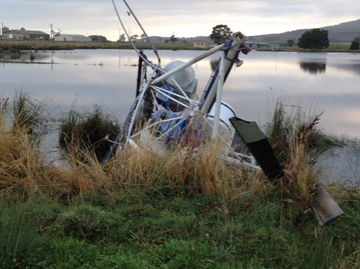
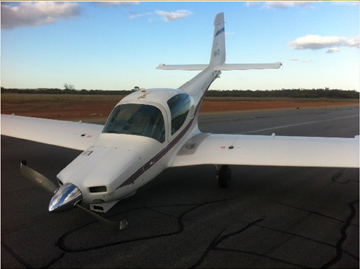
On 28 September 2019, the pilot of a Piper PA-25 was conducting glider-tow operations at Benalla Airport, Victoria. After releasing the glider at about 4,000 ft AGL, the pilot began a descent to 1,000 ft. During the descent, the engine failed. The pilot subsequently switched fuel pumps and activated the emergency power system[1], however experienced no restoration of engine power. He assessed that the aircraft was too low to conduct a glide approach to the runway and elected to land in a paddock near the airport. After the forced landing, he checked the fuel tank and identified that it was empty.

Pilot comments

The procedure for refuelling the aircraft was to refuel at the beginning of the day, and again after one hour of towing time. The pilot advised that he took over the aircraft and inspected the log, observing a total of 35 minutes towing time logged. This was consistent with the number of tows completed for the day. The pilot’s expectation was that there was sufficient fuel for another four or five glider tows. He did not visually inspect the fuel tank to confirm the fuel levels during the pre‑flight walk-around and mentioned the fuel gauge indication is difficult to read.

Safety action

As a result of this occurrence, the aircraft operator has advised the ATSB that they are taking the following safety actions:

The operator sent an email to all glider-tug pilots reminding them of the requirements in regards to fuel checks. Additionally, the fibreglass fuel gauge indicator was polished to allow for easier visual indication so accurate readings can be taken. The operator advised that they are looking into options for replacing the fuel gauge.

Safety message

This incident serves as a reminder that is in the pilot in command’s responsibility to ensure there is sufficient fuel quantity on board the aircraft.

The Civil Aviation Safety Authority advisory publication,

, provides guidance for fuel quantity crosschecking, specifically that the crosscheck should use at least two different verification methods to determine the quantity of fuel on board the aircraft.

About this report

Decisions regarding whether to conduct an investigation, and the scope of an investigation, are based on many factors, including the level of safety benefit likely to be obtained from an investigation. For this occurrence, no investigation has been conducted and the ATSB did not verify the accuracy of the information. A brief description has been written using information supplied in the notification and any follow-up information in order to produce a short summary report, and allow for greater industry awareness of potential safety issues and possible safety actions.

__________

  1. The emergency power system is an independent source of electrical power that supports important electrical systems upon loss of normal power supply. The incident aircraft has a back-up battery fitted that was switched on in this instance, in case the engine stopped due to failure of the primary electrical system.

Occurrence summary

Mode of transport Aviation
Occurrence ID AB-2019-037
Occurrence date 28/09/2019
Location 2 km ESE of Benalla Airport
State Victoria
Occurrence class Serious Incident
Aviation occurrence category Fuel exhaustion
Highest injury level None
Brief release date 08/11/2019

Aircraft details

Manufacturer Piper Aircraft Corp
Model PA-25-260
Sector Piston
Operation type Gliding
Departure point Benalla Airport, Victoria
Destination Benalla Airport, Victoria
Damage Nil

Collision with terrain involving a Kavanagh E-240 balloon, Chadstone, Victoria, on 22 September 2019

Brief

Occurrence Briefs are concise reports that detail the facts surrounding a transport safety occurrence, as received in the initial notification and any follow-up enquiries. They provide an opportunity to share safety messages in the absence of an investigation.

What happened

On 22 September at about 0700 Eastern Standard Time, a Kavanagh E-240 balloon was operating a charter flight over Melbourne, Victoria with a pilot and 10 passengers on board.

While landing at a reserve, the pilot deployed the handling line to ground crew. The pilot then determined that the balloon was unable to land in the available space and instructed the ground crew to let go of the handling line in order to manoeuvre to a different landing site.

The balloon continued the descent and the basket subsequently made contact with the roof of a house. The balloon then landed in the original landing site with the assistance of the ground crew utilising the handling line, which was still attached to the basket. The pilot and passengers were uninjured.

Pilot comments

The pilot stated that the main contributing factor to the occurrence was the use of the handling line in an attempt to guide the balloon into the landing site. Although this is common practice, during this particular landing the pilot ran out of sufficient space in the landing site.

About this report

Decisions regarding whether to conduct an investigation, and the scope of an investigation, are based on many factors, including the level of safety benefit likely to be obtained from an investigation. For this occurrence, no investigation has been conducted and the ATSB did not verify the accuracy of the information. A brief description has been written using information supplied in the notification and any follow-up information in order to produce a short summary report, and allow for greater industry awareness of potential safety issues and possible safety actions.

Occurrence summary

Mode of transport Aviation
Occurrence ID AB-2019-036
Occurrence date 22/09/2019
Location 11 km N of Moorabbin, Victoria
State Victoria
Occurrence class Serious Incident
Aviation occurrence category Collision with terrain
Highest injury level None
Brief release date 31/10/2019

Aircraft details

Manufacturer Kavanagh Balloons
Model E-240
Sector Balloon
Operation type Charter
Damage Nil

Separation issue involving a Diamond DA40 and a de Havilland Canada DHC-1, Warren Reservoir, South Australia, on 15 September 2019

Brief

Occurrence Briefs are concise reports that detail the facts surrounding a transport safety occurrence, as received in the initial notification and any follow-up enquiries. They provide an opportunity to share safety messages in the absence of an investigation.

What happened

On 15 September 2019, a Diamond DA40 was operating a dual training flight with an instructor and a student pilot on board from Strathalbyn to Parafield, South Australia. The pilot of a de Havilland Canada DHC-1 was also airborne at the same time after departing Parafield on a private flight.

The crew of the DA40 reported that during cruise at 2,500 ft on track for Dam Wall, they received a TCAS alert on an aircraft directly ahead on a reciprocal heading. Shortly after, the instructor observed the outbound DHC-1 at the same altitude, took control of the aircraft, and turned left to increase separation.

The pilot of the DHC-1 reported that upon leaving Sub Station and setting a course to the east, he saw an aircraft in the distance and perceived it not to be a risk as he judged his track would take him south of the inbound aircraft for Parafield. At the position given by the other pilot, he reported he was on climb to 3,500 ft and would have been clear of any aircraft operating at 2,500 ft.

Both the instructor and student of the DA40 and the pilot of the DHC-1 report monitoring the Adelaide Approach radio frequency and did not hear any radio calls from the other aircraft.

Safety message

This incident highlights the need for pilots to maintain situational awareness and a vigilant lookout at all times. Most aircraft conflicts in uncontrolled airspace are due to ineffective communication between pilots operating in close proximity, the incorrect assessment of other aircraft’s positions and intentions, and relying on the radio as a substitute for an effective visual lookout.

The ATSB’s SafetyWatch highlights broad safety concerns that come out of our investigation findings and from the occurrence data reported to us by industry. One of those priorities is Non-controlled airspace.

About this report

Decisions regarding whether to conduct an investigation, and the scope of an investigation, are based on many factors, including the level of safety benefit likely to be obtained from an investigation. For this occurrence, no investigation has been conducted and the ATSB did not verify the accuracy of the information. A brief description has been written using information supplied in the notification and any follow-up information in order to produce a short summary report, and allow for greater industry awareness of potential safety issues and possible safety actions.

Occurrence summary

Mode of transport Aviation
Occurrence ID AB-2019-035
Occurrence date 15/09/2019
Location 24 km E of Parafield, South Australia
State South Australia
Occurrence class Incident
Aviation occurrence category Separation issue
Highest injury level None
Brief release date 24/10/2019

Aircraft details

Manufacturer Diamond Aircraft Industries
Model DA40
Sector Piston
Operation type Flying Training
Damage Nil

Aircraft details

Manufacturer De Havilland Canada/De Havilland Aircraft of Canada
Model DHC-1
Sector Piston
Operation type Private
Damage Nil

Collision with terrain involving a Robinson R44 II, Parachilna, South Australia, on 12 September 2019

Brief

Occurrence Briefs are concise reports that detail the facts surrounding a transport safety occurrence, as received in the initial notification and any follow-up enquiries. They provide an opportunity to share safety messages in the absence of an investigation.

What happened

On 12 September 2019, a Robinson R44 II helicopter landed at Parachilna, South Australia to unload passengers after conducting a scenic flight in the Wilpena Pound area. The landing area was a raised disused railway platform that the pilot had used previously as it allowed the tail rotor to be maintained well clear of any possible obstacles.

At approximately 1540 Central Standard Time, after the passengers were unloaded and had moved away from the helicopter, the pilot commenced the lift into the hover. As the helicopter became light on the skids, the helicopter‘s nose pitched up and it began to roll to the left. The tail rotor impacted the ground and the main rotor struck the tail boom (Figure 1 Insert A).

After securing the helicopter, the pilot determined that a section of steel on the edge of the platform had dislodged and caught on the rear of the left hand skid (Figure 1 Insert B). This resulted in the unanticipated pitch and roll during the take-off sequence.

Figure 1: Accident site showing aircraft and platform

Accident site showing aircraft and platform

Source: Aircraft operator

Safety action

As a result of this occurrence, the aircraft operator advised the ATSB that they ceased operations to the landing site. The operator advised that operations may recommence in the location after the necessary maintenance has been completed on the platform and a site inspection is carried out to confirm the suitability and safety for future operations. They will also ensure that periodic inspections are performed at any helicopter landing sites to ensure ongoing safe operations.

Safety message

The assessment of suitability and safety of helicopter landing sites does not end after the initial reconnaissance or even after operating from the site for a period of time. Pilots must be aware of all potential hazards to operations, particularly in the critical phases of flight such as lifting to the hover, taxiing and commencing take-off.

About this report

Decisions regarding whether to conduct an investigation, and the scope of an investigation, are based on many factors, including the level of safety benefit likely to be obtained from an investigation. For this occurrence, no investigation has been conducted and the ATSB did not verify the accuracy of the information. A brief description has been written using information supplied in the notification and any follow-up information in order to produce a short summary report, and allow for greater industry awareness of potential safety issues and possible safety actions.

Occurrence summary

Mode of transport Aviation
Occurrence ID AB-2019-033
Occurrence date 12/09/2019
Location Parachilna
State South Australia
Occurrence class Accident
Aviation occurrence category Collision with terrain
Highest injury level None
Brief release date 14/10/2019

Aircraft details

Manufacturer Robinson Helicopter Co
Model R44 II
Sector Helicopter
Operation type Charter
Damage Substantial

Flight controls involving a Diamond DA 40, Dubbo Airport, New South Wales, on 12 September 2019

Brief

Occurrence Briefs are concise reports that detail the facts surrounding a transport safety occurrence, as received in the initial notification and any follow-up enquiries. They provide an opportunity to share safety messages in the absence of an investigation.

What happened

On 12 September 2019, a Diamond DA 40 departed Bankstown, New South Wales (NSW) for a solo navigation training flight with a student pilot on board.

During approach into Dubbo, NSW at about 500 ft AGL, the pilot extended full flap to prepare the aircraft for landing. Once full flap had been extended, the pilot noticed that he was unable to move the control stick to the left and as a result, the aircraft was unable to roll to the left. He immediately retracted the flaps to the take-off position, regained aileron authority and landed without further incident.

Engineering Inspection

Following the incident, the engineering inspection revealed that a spacer under the flap actuator control rod (Figure 1) was incorrectly re-installed above the flap actuator rod during a routine 200-hourly maintenance inspection.

During the inspection, the bolt attaching the idler arm to the actuator control rod was removed to allow for a bonding cable to be repaired. The flap system was inadvertently activated, resulting in the idler arm and the actuator control rod separating. When this was re-assembled, the spacer was incorrectly positioned on top of the actuator control rod. As a result, the bottom of the flap control rod was displaced downwards by the incorrectly placed spacer causing the cam to catch on the underlying aileron control rod when the flap was extended to the fully deflected landing position. Consequently, the control stick was unable to be moved left of the central position when the flaps were fully deflected.

Although a post-maintenance check flight was conducted before the incident flight, the problem was not detected. The manufacturer’s aircraft flight manual does not require a check of the flight controls in the landing position prior to take-off or during the check flight. Company standard operating procedures called for the extension of landing flap once established on final approach, but as the weather conditions were smooth, the flaps were not extended fully and therefore the fault was not detected.

The manufacturer’s post-maintenance check flight checklist also did not require a check of the flight controls with flap fully extended. 

Figure 1: Flap actuator installation

Flap actuator installation

Source: Diamond DA 40 Aircraft Maintenance Manual

Safety action

As a result of this incident, the training organisation has advised the ATSB that they have taken the following safety action:

  • Pre-flight checklists for all DA 40 flights have been updated to include an item to check that flight controls are full, free and functioning correctly at all flap positions.

Safety message

This incident highlights the importance of maintenance procedures and post-maintenance checks being carried out comprehensively and systematically. While the aircraft is in maintenance, all components must be refitted and reinstalled in accordance with the aircraft’s maintenance manual. Once tasks are completed, it is vital to verify the functionality of all critical aircraft components before returning it to service.

About this report

Decisions regarding whether to conduct an investigation, and the scope of an investigation, are based on many factors, including the level of safety benefit likely to be obtained from an investigation. For this occurrence, no investigation has been conducted and the ATSB did not verify the accuracy of the information. A brief description has been written using information supplied in the notification and any follow-up information in order to produce a short summary report, and allow for greater industry awareness of potential safety issues and possible safety actions.

Occurrence summary

Mode of transport Aviation
Occurrence ID AB-2019-034
Occurrence date 12/09/2019
Location Dubbo Airport, New South Wales
State New South Wales
Occurrence class Serious Incident
Aviation occurrence category Flight control systems
Highest injury level None
Brief release date 22/10/2019

Aircraft details

Manufacturer Diamond Aircraft Industries
Model DA 40
Sector Piston
Operation type Flying Training
Damage Nil

Pre-flight preparation event involving a Textron Aviation 172, Jandakot, Western Australia, on 6 August 2019

Brief

Occurrence Briefs are concise reports that detail the facts surrounding a transport safety occurrence, as received in the initial notification and any follow-up enquiries. They provide an opportunity to share safety messages in the absence of an investigation.

What happened

On 6 August 2019 at approximately 1910 Western Standard Time, a Textron Aviation Cessna 172S was conducting night circuits on a private-hire arrangement at Jandakot Airport, Western Australia, with one pilot on board.

After the aircraft had landed back at Jandakot, the pilot carried out a post-flight inspection and detected damage to the propeller (Figure 1). The damage had resulted from the tow bar not being removed during the pre-flight inspection and remaining attached to the aircraft after departure. The tow bar was found within the aerodrome confines; however, it is unknown exactly when it detached.

Figure 1: Damage to the propeller

Damage to the propeller
 
Damage to propeller

Source: Aircraft operator

Pilot comments

The pre-flight check was carried out in the hangar before towing the aircraft onto the apron, as the pilot could not access the exterior hangar lights. The pilot reported that this altered his workflow pattern, distracting him from the fact the tow bar remained attached to the aircraft.

The pilot also reported feeling tired as he had worked at his primary occupation earlier in the day, prior to the incident, and had also been on night shifts preceding the incident.

Safety action

As a result of this incident, the aircraft operator has advised the ATSB that they are taking the following safety actions:

  • The introduction of a policy for private night hirers to undertake a 30-minute one off induction course, which includes instructions on accessing all areas of the facility after hours, including the use of external lights.
  • The development of a final precautionary checklist to be completed and signed pre- and post-flight 

safety-watch-logo.png

Safety Message

This incident highlights the risk associated with operating aircraft when fatigued. Hours of work outside of flying that are not counted in flight and duty limitations can lead to a reduction in human performance and increase the risk associated with missing critical details prior or during flight. This risk could also be reduced by undertaking thorough pre-flight preparation.

Information for pilots on managing the risk of fatigue is available on the CASA website – Fatigue-fighting tips.  The ATSB SafetyWatch highlights the broad safety concerns that come out of our investigation findings and from the occurrence data reported to us by industry. One of the priorities is fatigue

About this report

Decisions regarding whether to conduct an investigation, and the scope of an investigation, are based on many factors, including the level of safety benefit likely to be obtained from an investigation. For this occurrence, no investigation has been conducted and the ATSB did not verify the accuracy of the information. A brief description has been written using information supplied in the notification and any follow-up information in order to produce a short summary report, and allow for greater industry awareness of potential safety issues and possible safety actions.

Occurrence summary

Mode of transport Aviation
Occurrence ID AB-2019-032
Occurrence date 06/08/2019
Location Jandakot, WA
State Western Australia
Occurrence class Incident
Aviation occurrence category Aircraft preparation
Highest injury level None
Brief release date 10/10/2019

Aircraft details

Model 172S
Sector Piston
Operation type Private
Damage Minor

Near encounter with wires involving a Kawasaki BK117, at Pendle Hill, New South Wales, on 28 August 2019

Brief

Occurrence Briefs are concise reports that detail the facts surrounding a transport safety occurrence, as received in the initial notification and any follow-up enquiries. They provide an opportunity to share safety messages in the absence of an investigation.

What happened

On 28 August 2019 at about 1045 Eastern Standard Time, a Kawasaki BK117 helicopter was conducting a medical retrieval from a suburban park in Pendle Hill, New South Wales. The crew consisted of the pilot in the front right seat, an additional crew member in the front left seat and a paramedic and doctor in the rear of the helicopter.

During normal operations, the paramedics are trained to open both rear doors and provide clearances and guidance into the hover. To enable movement between the doors they have a harness attached to a wander strap to allow for better visibility.

As the helicopter approached the intended landing spot, the paramedic observed a small two-strand wire running from a light pole across the approach path. The paramedic alerted the pilot of the hazard and the landing was aborted. At the time the landing was aborted, the wire was approximately 30 metres in front of the helicopter and below skid height. The helicopter subsequently made an approach to an open area clear of the wire.

Figure 1: Landing area and surrounds

Figure 1: Landing area and surrounds. Source: Google Earth, annotated by ATSB

Source: Google Earth, annotated by ATSB

Operator’s comments

The operator has well-defined standard operating procedures that apply to unknown landing site operations and training is provided to all members of the crew to be able to contribute to safe operations. In this instance, the following factors worked as designed to prevent a potentially major accident:

  • Crew resource management:
    The presence of a healthy ‘challenge and response’ environment is regularly reinforced and encouraged by the air crew with the medical crew.
  • Wire awareness:
    When operating into unknown landing sites, wire hazard awareness is kept top-of-mind.
  • Approach power margin:
    The requirement to have the power margin to enable a slow approach, allowing for careful scanning for obstacles/hazards and consideration of an immediate abort of the approach if required.
  • Approach type:
    A steep angle of approach with a limited rate of descent, meaning power was applied early in the approach. In the event there is a need to arrest the descent and climb or go-around, this transition can be accomplished quickly and with only a modest additional power application.
  • Training:
    The training provided to all medical crew members emphasises wire awareness as a major threat, and ensures that paramedics achieve the ability to be able to visualise the approach path of the helicopter and scan this path for hazards.

Safety message

This incident highlights the importance of having clear standard operating procedures and a mature crew resource management culture. In this instance, the crew were disciplined and used the correct, defined approach profile which resulted in the paramedic having sufficient time and opportunity to detect the wire and manage the threat. Appropriate training enabled all involved parties to become valuable contributors to safe operations.

About this report

Decisions regarding whether to conduct an investigation, and the scope of an investigation, are based on many factors, including the level of safety benefit likely to be obtained from an investigation. For this occurrence, no investigation has been conducted and the ATSB did not verify the accuracy of the information. A brief description has been written using information supplied in the notification and any follow-up information in order to produce a short summary report, and allow for greater industry awareness of potential safety issues and possible safety actions.

Occurrence summary

Mode of transport Aviation
Occurrence ID AB-2019-030
Occurrence date 28/08/2019
Location Pendle Hill
State New South Wales
Occurrence class Incident
Aviation occurrence category Miscellaneous - Other
Highest injury level None
Brief release date 02/10/2019

Aircraft details

Manufacturer Kawasaki Heavy Industries
Model BK117
Sector Helicopter
Operation type Aerial Work
Destination Suburban park in Pendle Hill, New South Wales
Damage Nil

Flight crew incapacitation involving a Cessna 152, Jandakot Airport, Western Australia, on 31 August 2019

Brief

Occurrence Briefs are concise reports that detail the facts surrounding a transport safety occurrence, as received in the initial notification and any follow-up enquiries. They provide an opportunity to share safety messages in the absence of an investigation.

What happened

On 31 August at about 1700 Western Standard Time, a Cessna 152 departed Jandakot Airport, Western Australia for a training flight with an instructor and a student pilot on board. The lesson was planned to conduct practice climbs in the training area. The student had a total of 2.4 hours flying experience but did not have experience flying the Cessna 152.

While returning to the aerodrome, the instructor experienced a medical episode due to an unknown and undiagnosed condition before subsequently losing consciousness. The student took over control of the aircraft and contacted Jandakot air traffic control (ATC) tower. After informing ATC of the situation, the student was instructed to conduct a few flyovers of the runway to gain situational awareness. The operator arranged for an instructor to assist the student from the tower. In addition, ATC ensured all other aircraft remained clear of the aerodrome while the student was able to practice approaches.

Once the student felt confident, ATC remained in contact to assist the student with landing the aircraft. Upon landing, emergency services vehicles attended the aircraft to assess the instructor.

At all times, communication between ATC and the student was concise, informative and positive.  

Safety message

This incident highlights the importance of how effective communication is crucial to aviation safety.

During the time the flying instructor was incapacitated, both ATC and the student pilot communicated clearly, calmly and proactively, resulting in a safe landing.

About this report

Decisions regarding whether to conduct an investigation, and the scope of an investigation, are based on many factors, including the level of safety benefit likely to be obtained from an investigation. For this occurrence, no investigation has been conducted and the ATSB did not verify the accuracy of the information. A brief description has been written using information supplied in the notification and any follow-up information in order to produce a short summary report, and allow for greater industry awareness of potential safety issues and possible safety actions.

Occurrence summary

Mode of transport Aviation
Occurrence ID AB-2019-029
Occurrence date 31/08/2019
Location Jandakot Airport
State Western Australia
Occurrence class Serious Incident
Aviation occurrence category Flight crew incapacitation
Highest injury level None
Brief release date 03/10/2019

Aircraft details

Manufacturer Cessna Aircraft Company
Model 152
Sector Piston
Operation type Flying Training
Departure point Jandakot Airport, Western Australia
Damage Nil

Rejected take-off involving a Fokker 100, Perth Airport, Western Australia, on 23 August 2019

Brief

Occurrence Briefs are concise reports that detail the facts surrounding a transport safety occurrence, as received in the initial notification and any follow-up enquiries. They provide an opportunity to share safety messages in the absence of an investigation.

What happened

On 23 August 2019 at approximately 1620 Western Standard Time, the crew of a Fokker 100 was commencing take-off from Perth Airport, Western Australia for a regular public transport flight. The captain was pilot monitoring and the first officer was pilot flying.

During the take-off run, the first officer’s seat suddenly moved back. As the seat slid back, the first officer released the control column so as not to pull it back with him, and was unable to reach the pedals once the seat had stopped at the aft limit.

The aircraft then veered slightly to the right of the runway centreline and the first officer declared, ‘Handing over’. The captain immediately took over control of the aircraft and conducted a rejected take-off.

The operator suspected that the locking mechanism on the seat had failed.

Safety message

This incident highlights the importance of a rapid and decisive handover/takeover procedure undertaken by the crew, which was demonstrated in this occurrence.

The US Federal Aviation Administration publication, Aviation Instructor’s Handbook, includes further information and guidance on the positive exchange of flight controls.

About this report

Decisions regarding whether to conduct an investigation, and the scope of an investigation, are based on many factors, including the level of safety benefit likely to be obtained from an investigation. For this occurrence, no investigation has been conducted and the ATSB did not verify the accuracy of the information. A brief description has been written using information supplied in the notification and any follow-up information in order to produce a short summary report, and allow for greater industry awareness of potential safety issues and possible safety actions.

Occurrence summary

Mode of transport Aviation
Occurrence ID AB-2019-031
Occurrence date 23/08/2019
Location Perth Airport
State Western Australia
Occurrence class Incident
Aviation occurrence category Rejected take-off
Highest injury level None
Brief release date 27/09/2019

Aircraft details

Manufacturer Fokker B.V.
Model F28 MK 0100
Sector Jet
Operation type Air Transport High Capacity
Departure point Perth Airport, Western Australia
Damage Nil

Incorrect configuration involving a Piper Aircraft Corp PA-28-180, Moorabbin Airport, Victoria, on 26 August 2019

Brief

Occurrence Briefs are concise reports that detail the facts surrounding a transport safety occurrence, as received in the initial notification and any follow-up enquiries. They provide an opportunity to share safety messages in the absence of an investigation.

What happened

On 26 August 2019, a Piper PA-28-180 aircraft departed Moorabbin, Victoria, to conduct a training flight with an instructor and student on board. The instructor was pilot monitoring and the student was pilot flying.

During the approach at approximately 100 ft AGL, the student inadvertently moved the mixture control instead of the throttle resulting in the mixture moving to the idle cut-off position. As a result, the engine lost power. The instructor advised the student to increase power to stay on the correct approach path. As the student increased the throttle, no power increase was observed. The instructor looked down to identify that the engine mixture control was at idle cut-off and that the engine was not producing power. The instructor then moved the mixture lever to full rich in an attempt to regain power, but was too late and the aircraft touched down short of the runway threshold.[1]

The crew restarted the engine and taxied the aircraft back to the apron. There were no injuries and the aircraft did not sustain any damage.

Safety message

This incident highlights that when conducting training flights, instructors need to remain vigilant at all times. This includes being aware of the aircraft state and the actions of the pilot flying. Being prepared to take over control of the aircraft and intervene at a moment’s notice can reduce the risk of further incident or accident.

About this report

Decisions regarding whether to conduct an investigation, and the scope of an investigation, are based on many factors, including the level of safety benefit likely to be obtained from an investigation. For this occurrence, no investigation has been conducted and the ATSB did not verify the accuracy of the information. A brief description has been written using information supplied in the notification and any follow-up information in order to produce a short summary report, and allow for greater industry awareness of potential safety issues and possible safety actions.

__________

  1. Threshold - The runway thresholds are markings across the runway that denote the beginning and end of the designated space for landing and take-off under non-emergency conditions.

Occurrence summary

Mode of transport Aviation
Occurrence ID AB-2019-028
Occurrence date 26/08/2019
Location Moorabbin Airport
State Victoria
Occurrence class Incident
Aviation occurrence category Incorrect configuration
Highest injury level None
Brief release date 23/09/2019

Aircraft details

Manufacturer Piper Aircraft Corp
Model PA-28-18
Sector Piston
Operation type Flying Training
Departure point Moorabbin, Victoria
Destination Moorabbin, Victoria
Damage Nil