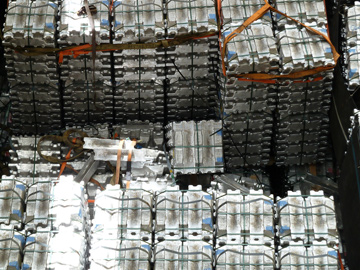
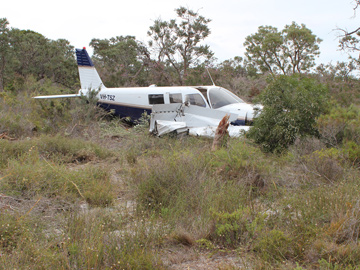
Loading related incident involving Airbus A330-202, at Jakarta International Airport, Indonesia, on 18 November 2018

Brief

Occurrence Briefs are concise reports that detail the facts surrounding a transport safety occurrence, as received in the initial notification and any follow-up enquiries. They provide an opportunity to share safety messages in the absence of an investigation.

What happened

On 18 November 2018 an Airbus A330-202 aircraft was being operated on a scheduled passenger flight from Jakarta, Indonesia, to Sydney, New South Wales.

During take-off, the flight crew detected improper adjustment to the trim controls. After take-off, the flight crew received an aircraft communications addressing and reporting system (ACARS) message advising that there was a discrepancy between the weight of a loaded cargo pallet on the load sheet and the actual weight of the pallet.

During the loading of the aircraft, all pallets had been packed and weighed correctly. The Load Control system requires a ground handler to enter the load data (pallet weights) into an electronic messaging system for transmission to the regional load control who generate the aircraft load sheet and load instruction report. The ground handler made an error when entering this data.

Therefore, the final load sheet had included a cargo pallet that was 3,000 kg whereas the actual weight of the pallet was 2,000 kg. This resulted in the zero fuel weight (ZFW) used being 1,000 kg heavier than the actual ZFW. The stabilizer setting from the final load sheet was 4.4 up, but should have been 4.7 up. The crew reported that the out of trim condition was evident during rotation.

Safety action

As a result of this incident, the operator has advised the ATSB that they are taking the following safety action:

The ground handling agent has added the requirement for a second ground handler to cross- check data entry prior to transmission. Freight scanning has been introduced in a number of airports, and is to be introduced across the whole network including in Jakarta. This will assist in identifying errors such as this.

Safety message

This occurrence highlights the importance of cross-checking all container, pallet and baggage weights when loading an aircraft. The use of a second person or an electronic system will assist in reducing these types of data entry errors. ATSB research report, Aircraft loading occurrences July 2003 to June 2010 (AR-2010-044), documents the number and types of safety occurrences involving the loading of high-capacity aircraft to raise awareness within the industry of the associated issues.

About this report

Decisions regarding whether to conduct an investigation, and the scope of an investigation, are based on many factors, including the level of safety benefit likely to be obtained from an investigation. For this occurrence, no investigation has been conducted and the ATSB did not verify the accuracy of the information. A brief description has been written using information supplied in the notification and any follow-up information in order to produce a short summary report, and allow for greater industry awareness of potential safety issues and possible safety actions.

Occurrence summary

Mode of transport Aviation
Occurrence ID AB-2018-127
Occurrence date 18/11/2018
Location Jakarta International Airport, Indonesia
State International
Occurrence class Incident
Aviation occurrence category Loading related
Highest injury level None
Brief release date 14/01/2019

Aircraft details

Manufacturer Airbus
Model A330-202
Sector Jet
Operation type Air Transport High Capacity
Departure point Jakarta, Indonesia
Destination Sydney, NSW
Damage Nil

Heat damaged wiring loom involving Boeing 737-476F, Brisbane Airport, Queensland, on 6 September 2018

Brief

Occurrence Briefs are concise reports that detail the facts surrounding a transport safety occurrence, as received in the initial notification and any follow-up enquiries. They provide an opportunity to share safety messages in the absence of an investigation.

What happened

On 6 September 2018, a Boeing 737-476 freighter was in the hanger at Brisbane Airport, Queensland undergoing routine maintenance. The crew reported that the cockpit voice recorder (CVR) was not testing and the circuit breaker was tripping.

While engineers were conducting troubleshooting on the aircraft, they discovered a heat damaged wiring loom located in the aft[1] lower cargo hold ceiling, adjacent to the CVR mount rack. The wires were severely burnt in a localised area with melted insulation and evidence of a possible fire. Engineers suspect this may have been caused by swarf[2] damaging the wiring and causing it to arc. Swarf ingress in the wiring loom was discovered from previous cargo conversion work.

Figure 1: Heat damaged wiring loom

Figure 1: Heat damaged wiring loom. Source: Operator’s engineering department

Source: Operator’s engineering department

Safety message

This incident highlights the importance of ensuring that while an aircraft is in maintenance, that all aircraft components are checked thoroughly to ensure proper functionality. When conducting any work on an aircraft, it is also vital to ensure that all areas are thoroughly cleaned to ensure no debris is left behind, as it may cause faults to the aircraft and its systems.

About this report

Decisions regarding whether to conduct an investigation, and the scope of an investigation, are based on many factors, including the level of safety benefit likely to be obtained from an investigation. For this occurrence, no investigation has been conducted and the ATSB did not verify the accuracy of the information. A brief description has been written using information supplied in the notification and any follow-up information in order to produce a short summary report, and allow for greater industry awareness of potential safety issues and possible safety actions.

__________

  1. Aft - situated in or near the rear of the aircraft
  2. Swarf - chips of metal, wood or plastic.

Occurrence summary

Mode of transport Aviation
Occurrence ID AB-2018-113
Occurrence date 06/09/2018
Location Brisbane Airport
State Queensland
Occurrence class Serious Incident
Aviation occurrence category Electrical system
Highest injury level None
Brief release date 11/01/2019

Aircraft details

Manufacturer The Boeing Company
Model 737-476F
Sector Jet
Operation type Air Transport High Capacity
Damage Minor

Precautionary Landing involving a Piper PA-28, near Yass, New South Wales, on 11 September 2018

Brief

Occurrence Briefs are concise reports that detail the facts surrounding a transport safety occurrence, as received in the initial notification and any follow-up enquiries. They provide an opportunity to share safety messages in the absence of an investigation.

What happened

Pilot report

On 11 September 2018 at 1300 Eastern Standard Time, a Piper Aircraft PA-28 was conducting a solo VFR navigation travelling from Canberra, Australian Capital Territory, to Wagga Wagga, New South Wales (NSW).

At approximately 19 km to the north-west of Yass, NSW, the pilot reported that the engine information was not displaying on the multi-function display (MFD). The pilot then reported hearing a loud noise from the auto prompter that announced that the engine sensor unit was not communicating.

The pilot reported commencing the data acquisition unit (DAU) failure checklist and then hearing an engine noise change and feeling a loss in performance, however the checklist was not completed. The pilot also reported that the aircraft began to lose airspeed and struggle to maintain height.

The pilot then reported commencing the engine failure procedures and made the decision to divert to Jindalee ALA, NSW, for a precautionary landing.

During the flight to Jindalee, the pilot attempted to troubleshoot by slowly cycling through the throttle to see if power would increase and attempted to conduct a climb with throttle at full power, with no sign of improvement. Both magnetos were isolated, and the selection was to both. The throttle was left at 2/3 open.

The pilot then made a broadcast to Melbourne Centre and on the local multicom frequency to advise of their engine issue. A safe landing at Jindalee was completed and the aircraft was secured on the ground.

Engineering inspection

Engineers inspected the aircraft and found no defects in accordance with the aircraft engineering manual. The aircraft was approved to return to service.

Safety message

When a suspected engine problem arises on a single engine aircraft, it is vital for crew to maintain control in response to emergencies.

In this scenario, the pilot maintained aircraft control and made the decision to conduct a precautionary landing.

When it is safe to do so, pilots should complete relevant emergency checklists. This will confirm the status of their aircraft’s performance and ensure a more informed decision is made when determining to continue with the flight or make a precautionary landing.

For information on what to do in the event of power loss during flight, the ATSB report and case study on Managing a partial engine power loss after take-off in single-engine aircraft is available from the ATSB website.

About this report

Decisions regarding whether to conduct an investigation, and the scope of an investigation, are based on many factors, including the level of safety benefit likely to be obtained from an investigation. For this occurrence, no investigation has been conducted and the ATSB did not verify the accuracy of the information. A brief description has been written using information supplied in the notification and any follow-up information in order to produce a short summary report, and allow for greater industry awareness of potential safety issues and possible safety actions.

Occurrence summary

Mode of transport Aviation
Occurrence ID AB-2018-112
Occurrence date 11/09/2018
Location 19 km NW of Yass
State New South Wales
Occurrence class Serious Incident
Aviation occurrence category Engine failure or malfunction
Highest injury level None
Brief release date 04/01/2019

Aircraft details

Manufacturer Piper Aircraft Corp
Model PA-28
Sector Piston
Operation type Flying Training
Departure point Canberra, ACT
Destination Wagga Wagga, NSW
Damage Nil

Personal electronic device fire in-flight involving Airbus A380, 280km north-east of Sydney, New South Wales, on 26 September 2018

Brief

Occurrence Briefs are concise reports that detail the facts surrounding a transport safety occurrence, as received in the initial notification and any follow-up enquiries. They provide an opportunity to share safety messages in the absence of an investigation.

What happened

On the 26 September 2018 at 0615 Eastern Standard Time, an Airbus 380 was in cruise toward the end of the flight from Los Angeles, United States to Melbourne, Victoria.

Shortly after a passenger in seat 18B had moved their seat they heard a cracking noise and could not locate their personal electronic device (PED). Smoke and flames were then observed emanating from the seat. Cabin crew confirmed the source of the smoke and flames was coming from under the seat.

Power to the row of seats was cut and cabin crew followed their basic fire drill training and discharged four BCF extinguishers and water to extinguish the fire.

The smoke dissipated and crew were able to distinguish the remains of a mobile phone at the rear of the left hand seat track, but were unable to remove it from its position. The decision was made to continue the flight to Melbourne and a cabin crew member was tasked with remaining seated beside the seat to ensure the phone did not reignite.

There were no injuries sustained and the remainder of the flight proceeded without further incident.

Engineers disassembled and checked the seat and found no damage to the seat, wiring or the surrounding area. The phone had been completely crushed by the seat.

Figure 1. Crushed PED in the seat track

Figure 1. Crushed PED in the seat track

Safety message

Dropping a PED whilst in flight is not uncommon, however passengers are reminded to never attempt to move the seat or extricate the PED themselves. If a PED becomes lost, alert a crewmember immediately. They will employ the appropriate techniques to find and remove the item, to ensure the device does not become a hazard in flight.

This incident highlights the effective response by cabin crew to an emergency situation. By quickly implementing the basic fire drill procedure the incident was effectively contained.

The ATSB investigation report, (AO-2016-066) Personal electronic device fire in-flight involving Boeing 747, VH-OJS, 500 km WNW of John F. Kennedy International Airport, United States, on 21 June 2016is available from the ATSB website for more information on the hazards PEDs.

About this report

Decisions regarding whether to conduct an investigation, and the scope of an investigation, are based on many factors, including the level of safety benefit likely to be obtained from an investigation. For this occurrence, no investigation has been conducted and the ATSB did not verify the accuracy of the information. A brief description has been written using information supplied in the notification and any follow-up information in order to produce a short summary report, and allow for greater industry awareness of potential safety issues and possible safety actions.

Occurrence summary

Mode of transport Aviation
Occurrence ID AB-2018-116
Occurrence date 26/09/2018
Location 280 km (150 NM) NE of Sydney
State New South Wales
Occurrence class Incident
Aviation occurrence category Fire
Highest injury level None
Brief release date 04/01/2019

Aircraft details

Manufacturer Airbus
Model A380
Sector Jet
Operation type Air Transport High Capacity
Departure point Los Angeles, United States
Destination Melbourne, Victoria
Damage Nil

Objects falling from aircraft involving a Gippsland GA-8, at Fraser Island, Queensland, on 21 November 2018

Brief

Occurrence Briefs are concise reports that detail the facts surrounding a transport safety occurrence, as received in the initial notification and any follow-up enquiries. They provide an opportunity to share safety messages in the absence of an investigation.

What happened

On 21 November 2018, a Gippsland GA-8 was operating a charter flight with one pilot and six passengers on board, at Fraser Island, Queensland (Qld).

During the flight on the return to Eli Creek, Qld, at 1520 Eastern Standard Time, the aircraft encountered turbulent conditions at 2,000 feet and the forward cargo door opened. As the pilot conducted a right turn, the door detached from the aircraft.

Post-flight, after the passengers disembarked, the aircraft was inspected. The inspection revealed damage to the rear latch receptacle indicating the door was only partially latched. It is suspected that the door was not correctly secured prior to take-off and that during the turbulent conditions a passenger may have inadvertently unlatched it.

Figure 1: Damage sustained to the rear latch receptacle

Figure 1: Damage sustained to the rear latch receptacle

Source: Operator

Safety message

There was an Airworthiness Directive (AD/GA8/3) released in 2005 by the Civil Aviation Safety Authority (CASA), and then amended in 2010, advising operators of the GA-8 that excessive wear in the forward cargo door slide may result in the door becoming detached from the aircraft in flight. The operator had been aware of this and had inspected the door a month prior to the event. No defects were found at the time of the inspection.

This occurrence highlights the importance of flight crew ensuring the doors have been correctly secured during the pre-flight checks. Failure to do so could result in the door opening in-flight and objects falling form the aircraft with the potential to cause damage or injury.

Independent research by Transport Canada has found that the two main potential causes for doors opening on piston engine aircraft, have been due to the door being incorrectly closed and excessive wear of the locking mechanism.

It is recommended by CASA in an Airworthiness Bulletin for inadvertent opening of doors in flight that operators and maintainers take the following action:

  • Ensure that all aircraft openings “doors and hatches” are inspected to ensure that:
    - the wear of the locking mechanisms are within limits
    - the door or hatch locks with a positive action
    - the aircraft doors still meet the original type certification design.
  • Maintenance personnel completing periodic inspections should ensure that all placards detailing door operating instructions are present and clearly visible both internally and external on the aircraft.
  • Operators are to ensure that:
    - the flight crew are made aware of the requirement to confirm that all doors and hatches are secured correctly prior to the starting of engines
    - the passengers are briefed correctly in the operation of doors particularly on aircraft types where a passenger is sitting at the only access door to the aircraft.
  • It is recommended that operators train flight crew on the appropriate procedures to follow in the event of a door opening in flight.

About this report

Decisions regarding whether to conduct an investigation, and the scope of an investigation, are based on many factors, including the level of safety benefit likely to be obtained from an investigation. For this occurrence, no investigation has been conducted and the ATSB did not verify the accuracy of the information. A brief description has been written using information supplied in the notification and any follow-up information in order to produce a short summary report and allow for greater industry awareness of potential safety issues and possible safety actions.

Occurrence summary

Mode of transport Aviation
Occurrence ID AB-2018-129
Occurrence date 21/11/2018
Location 4km North East of Eli Creek
State Queensland
Occurrence class Incident
Aviation occurrence category Objects falling from aircraft
Highest injury level None
Brief release date 21/12/2018

Aircraft details

Manufacturer Gippsland Aeronautics Pty Ltd
Model GA-8
Sector Piston
Operation type Charter
Departure point Fraser Island, Qld
Destination Eli Creek, Qld
Damage Minor

Collision with vessel involving a remotely piloted aircraft, at Fort Hill Wharf, Darwin, Northern Territory, on 8 September 2018

Brief

Occurrence Briefs are concise reports that detail the facts surrounding a transport safety occurrence, as received in the initial notification and any follow-up enquiries. They provide an opportunity to share safety messages in the absence of an investigation.

What happened

On 8 September 2018, at 0700 Central Standard Time, a Da-Jiang Innovations (DJI) Inspire 2 remotely piloted aircraft (RPA) was conducting a test flight above Fort Hill Wharf, Northern Territory.

During the test flight, the operator flew the RPA near a cruise ship. The RPA lost signal and the operator initiated the return-to-home procedure. During this procedure, at a height of 120 feet above ground level, the RPA deviated from the return-to-home path and collided with the ship, resulting in the aircraft being destroyed.

The pilot speculated that the ship caused interference with the datalink signal, resulting in the RPA deviating off course and subsequently colliding with the ship.

Safety message

The ATSB SafetyWatch highlights the broad safety concerns that come out of our investigation findings and from the occurrence data reported to us by industry. One of the ATSB’s SafetyWatch priorities is Safety risk of RPAs.

This incident highlights the importance of ensuring that while operating RPAs, a sufficient distance is maintained from vehicles, ships, buildings and people at all times. The Civil Aviation Safety Authority has published an extensive amount of information on flying drones/remotely piloted aircraft in Australia.

Further information about flying your RPA safely can be found on the ATSB website, under the news item: Know your drone and the rules to fly safely.

About this report

Decisions regarding whether to conduct an investigation, and the scope of an investigation, are based on many factors, including the level of safety benefit likely to be obtained from an investigation. For this occurrence, no investigation has been conducted and the ATSB did not verify the accuracy of the information. A brief description has been written using information supplied in the notification and any follow-up information in order to produce a short summary report, and allow for greater industry awareness of potential safety issues and possible safety actions.

Occurrence summary

Mode of transport Aviation
Occurrence ID AB-2018-109
Occurrence date 08/09/2018
Location Near Darwin, NT (Fort Hill wharf)
State Northern Territory
Occurrence class Accident
Aviation occurrence category Collision with terrain
Highest injury level None
Brief release date 04/01/2019

Aircraft details

Model Da-Jiang Innovations (DJI) Inspire 2 (RPA)
Sector Remotely piloted aircraft
Operation type Aerial Work
Departure point Fort Hill Wharf, near Darwin, NT
Damage Destroyed

Collision with terrain involving Yamaha RMAX RPA, near Muswellbrook, New South Wales, on 20 November 2018

Brief

Occurrence Briefs are concise reports that detail the facts surrounding a transport safety occurrence, as received in the initial notification and any follow-up enquiries. They provide an opportunity to share safety messages in the absence of an investigation.

What happened

On 20 November 2018, a Yamaha RMAX remotely piloted aircraft (RPA) was conducting an air work flight in a paddock near Muswellbrook, New South Wales. A ground support officer and navigator/spotter aided the RPA pilot.

The pilot climbed the RPA to provide ample clearance above trees and put the RPA into a hover. The pilot then moved to position himself better for the area of operation. The pilot unknowingly stepped over an electric fence. He received an electric shock, dropping the controller as a result. In the process of dropping the controller, the throttle moved to full negative. The pilot quickly picked up the controller and increased the throttle. The RPA’s descent reduced as a result but not enough to avoid contacting trees. The RPA subsequently collided with the ground resulting in substantial damage. The pilot and support personnel positioned at a safe distance from the accident were not injured.

Safety action

As a result of this occurrence, the operator has made changes to the way electrical fencing is identified and labelled. Crews will also carry an electric fence testing meter to be used at relevant sites.

Safety message

Electric fences along with other distractions and trip hazards need consideration when operating an RPA. Any operation that requires the operator to reposition themselves while operating an RPA increases the risk of trip hazards.

About this report

Decisions regarding whether to conduct an investigation, and the scope of an investigation, are based on many factors, including the level of safety benefit likely to be obtained from an investigation. For this occurrence, no investigation has been conducted and the ATSB did not verify the accuracy of the information. A brief description has been written using information supplied in the notification and any follow-up information in order to produce a short summary report, and allow for greater industry awareness of potential safety issues and possible safety actions.

Occurrence summary

Mode of transport Aviation
Occurrence ID AB-2018-126
Occurrence date 20/11/2018
Location Near Muswellbrook
State New South Wales
Occurrence class Accident
Aviation occurrence category Collision with terrain
Highest injury level None
Brief release date 21/12/2018

Aircraft details

Manufacturer Yamaha
Model RMAX Type IIG
Sector Remotely piloted aircraft
Operation type Aerial Work
Destination Muswellbrook, NSW
Damage Substantial

Near collision involving two Cessna 172, at Mudgee, New South Wales, on 29 October 2018

Brief

Occurrence Briefs are concise reports that detail the facts surrounding a transport safety occurrence, as received in the initial notification and any follow-up enquiries. They provide an opportunity to share safety messages in the absence of an investigation.

What happened

On 29 October 2018, the pilot of a Cessna 172 was conducting a solo navigation flight from Tamworth, New South Wales (NSW) to Mudgee NSW. On the same day, the pilot of another Cessna 172 was conducting a solo navigation flight to Mudgee, NSW.

At about 1500 Eastern Daylight-saving Time, the pilot of the first 172 was conducting a non-standard left-hand circuit for runway 22 on the dead side[1]. At the same time, the pilot of the second 172 was descending on the dead side of runway 22 with the intension of joining the right-hand crosswind.

The two aircraft came within close proximity of each other, with one aircraft passing under the other, resulting in a vertical separation of 83 feet and approximately 100 metres horizontal distance.

The pilot conducting the left-hand circuit was unware of the local traffic regulations at Mudgee Airport where the standard circuit direction is to the right instead of to the left for runway 22. Both pilots reported broadcasting on the common traffic advisory frequency (CTAF).

Safety message

This incident highlights the need for pilots to maintain situational awareness and a vigilant lookout at all times. This is especially important when operating at non-controlled aerodromes where pilots are responsible for monitoring and broadcasting their intensions on the CTAF. Research conducted by the ATSB has found that insufficient communication between pilots and breakdown of situational awareness were the most common causes of safety incidents near non-controlled aerodromes.

The ATSB SafetyWatch highlights the broad safety concerns that come out of our investigation findings and from the occurrence data reported to us by industry. One of the priorities is Non-controlled airspace.

Additionally, this incident highlights the need for pilots to consult the En Route Supplement Australia when flying to an unfamiliar aerodrome. As illustrated by this incident, not all non-controlled aerodromes follow the same procedures. Being aware of local traffic procedures not only helps to ensure safe operation but also helps pilots to anticipate the likely position of other aircraft.

Further information about operating safely at non-controlled aerodromes can be found on the ATSB website, A pilot's guide to staying safe in the vicinity of non-controlled aerodromes and the CASA website, Operations at non-controlled aerodromes.

The ATSB SafetyWatch highlights the broad safety concerns that come out of our investigation findings and from the occurrence data reported to us by industry. One of the priorities is Non-controlled airspace.

About this report

Decisions regarding whether to conduct an investigation, and the scope of an investigation, are based on many factors, including the level of safety benefit likely to be obtained from an investigation. For this occurrence, no investigation has been conducted and the ATSB did not verify the accuracy of the information. A brief description has been written using information supplied in the notification and any follow-up information in order to produce a short summary report, and allow for greater industry awareness of potential safety issues and possible safety actions.

__________

  1. Dead side: The area on the opposite side of the runway to where the circuit is flown.

Occurrence summary

Mode of transport Aviation
Occurrence ID AB-2018-122
Occurrence date 29/10/2018
Location Mudgee
State New South Wales
Occurrence class Incident
Aviation occurrence category Near collision
Highest injury level None
Brief release date 21/12/2018

Aircraft details

Manufacturer Cessna Aircraft Company
Model 172
Sector Piston
Operation type Flying Training
Departure point Tamworth, NSW
Destination Mudgee, NSW
Damage Nil

Aircraft details

Manufacturer Cessna Aircraft Company
Model 172
Sector Piston
Operation type Flying Training
Destination Mudgee, NSW
Damage Nil

Separation event involving a Cessna 441 and a Beechcraft B200, Dubbo, New South Wales, on 12 November 2018

Brief

Occurrence Briefs are concise reports that detail the facts surrounding a transport safety occurrence, as received in the initial notification and any follow-up enquiries. They provide an opportunity to share safety messages in the absence of an investigation.

What happened

On 12 November 2018 at approximately 1300 Eastern Daylight-saving Time, the pilot of a Cessna 441 was on a westerly approach to Dubbo Airport, New South Wales. On the same day, a Beechcraft B200 and a Piper PA-31 were also on approach to Dubbo; with the B200 inbound from the south-east and the PA-31 from the south-west. Both the 441 and the B200 were given aircraft traffic by Melbourne Centre[1], advising both crews that the B200 was arriving first for runway 05 followed by the 441 and PA-31.

Just prior to reaching the 5 NM point from the airport, the crew of the B200 reported their position on the Dubbo common traffic advisory frequency (CTAF) and requested a position update from the 441. The crew of the 441 advised that they were passing WI. Upon realisation of the potential confliction, the crew of the B200 informed the 441 of their converging track and requested the 441 conduct an orbit to maintain separation. At about the same time the crew of the 441 received a TCAS alert alerting them that the conflicting traffic was 1 NM away. They immediately conducted an orbit to the left until it was clear to resume their approach.

Pilot comments

Pilot of Cessna 441

The pilot advised that throughout their approach, they were in communication with the crew of the PA-31 coordinating their approach via the CTAF. Because of the multiple radio transmissions on the CTAF and with Melbourne Centre, they were unable to communicate with the crew of the B200 earlier.

Safety message

This incident highlights the need for pilots to maintain situational awareness and a vigilant lookout at all times. This is especially important when operating at non-controlled aerodromes where pilots are responsible for monitoring and broadcasting their intensions on the CTAF. Research has found that the most hazardous phases of flight are within 5 NM of an aerodrome and at an altitude below 3,000 ft, as there is a higher traffic density within this area.

The ATSB SafetyWatch highlights the broad safety concerns that come out of our investigation findings and from the occurrence data reported to us by industry. One of the priorities is Non-controlled airspace.

Further information about operating safely at non-controlled aerodromes can be found on the ATSB website A pilot's guide to staying safe in the vicinity of non-controlled aerodromes and CASA website Operations at non-controlled aerodromes.

The ATSB SafetyWatch highlights the broad safety concerns that come out of our investigation findings and from the occurrence data reported to us by industry. One of the priorities is Non-controlled airspace.

About this report

Decisions regarding whether to conduct an investigation, and the scope of an investigation, are based on many factors, including the level of safety benefit likely to be obtained from an investigation. For this occurrence, no investigation has been conducted and the ATSB did not verify the accuracy of the information. A brief description has been written using information supplied in the notification and any follow-up information in order to produce a short summary report, and allow for greater industry awareness of potential safety issues and possible safety actions.

__________

  1. The Melbourne flight information region (FIR) includes the southern half of Australia and the Southern and Indian oceans. The centre is directly responsible for en route services throughout the FIR.

Occurrence summary

Mode of transport Aviation
Occurrence ID AB-2018-121
Occurrence date 12/11/2018
Location Dubbo
State New South Wales
Occurrence class Incident
Aviation occurrence category Separation issue
Highest injury level None
Brief release date 21/12/2018

Aircraft details

Manufacturer Cessna Aircraft Company
Model 441
Sector Piston
Operation type Charter
Destination Dubbo, NSW
Damage Nil

Aircraft details

Manufacturer Beech Aircraft Corp
Model B22
Sector Piston
Operation type Aerial Work
Destination Dubbo, NSW
Damage Nil

Control issues involving a Kavanagh Balloons G-450, near Kooralbyn, Queensland, on 22 August 2018

Brief

Occurrence Briefs are concise reports that detail the facts surrounding a transport safety occurrence, as received in the initial notification and any follow-up enquiries. They provide an opportunity to share safety messages in the absence of an investigation.

What happened

On 22 August 2018 at 0730 Eastern Standard Time, the pilot of a Kavanagh G-450 balloon was on final approach to land near Kooralbyn Queensland with a pilot and 23 passengers on board. Passing 2,500 ft, the wind was 17 kts with calm conditions on the surface. The pilot did not expect to experience windshear during approach nor was he aware that the envelope was subject to deformation in-flight. Passing 500 ft on approach, the balloon encountered windshear and the turning vent lines were singed by the burner flame as a result of descending with speed from altitude into calm conditions. This resulted in minor damage to the turning vent lines.

As a result of this incident, the operator has conducted training with the pilot and has contacted the manufacturer to look at replacing the turning vent lines with a more flame resistant material.

Safety message

The Australian Ballooning Federation's Pilot Training Manual Part 5 "Aerostatics and Airmanship" describes the responsibilities and duties of the pilot in relation to weather conditions in detail. The manual reminds balloon pilots that when conditions change suddenly and unexpectedly, even a slight vertical movement of air due to local turbulence effects will tend to carry a balloon with it, dramatically reducing vertical (and therefore directional) control. The manual notes that is therefore essential to have a sound knowledge of weather systems and their likely effects on a balloon, and to constantly monitor weather developments while flying.

About this report

Decisions regarding whether to conduct an investigation, and the scope of an investigation, are based on many factors, including the level of safety benefit likely to be obtained from an investigation. For this occurrence, no investigation has been conducted and the ATSB did not verify the accuracy of the information. A brief description has been written using information supplied in the notification and any follow-up information in order to produce a short summary report, and allow for greater industry awareness of potential safety issues and possible safety actions.

Occurrence summary

Mode of transport Aviation
Occurrence ID AB-2018-101
Occurrence date 22/08/2018
Location 17 km East Kooralbyn
State Queensland
Occurrence class Incident
Aviation occurrence category Control issues
Highest injury level None
Brief release date 21/12/2018

Aircraft details

Manufacturer Kavanagh Balloons
Model G-450
Sector Balloon
Operation type Charter
Destination near Kooralbyn, Queensland
Damage Minor