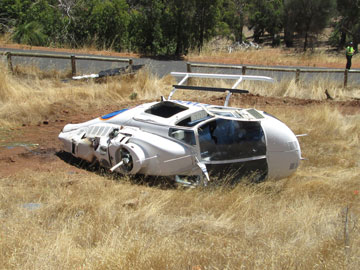
Foreign object debris involving Piper PA-31, Palm Island, Queensland, on 27 November 2018

Brief

Occurrence Briefs are concise reports that detail the facts surrounding a transport safety occurrence, as received in the initial notification and any follow-up enquiries. They provide an opportunity to share safety messages in the absence of an investigation.

What happened

On 27 November 2018, a Piper PA-31 was operating a charter flight with one pilot and three passengers on board to Palm Island, Queensland.

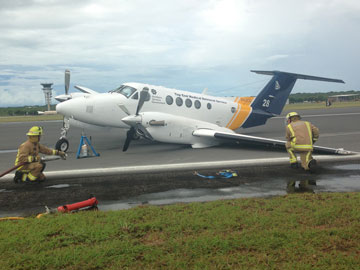
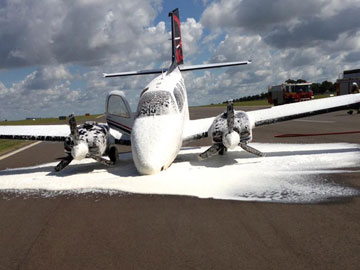
After landing, the nose wheel tyre was punctured by foreign object debris (FOD)[1] on the runway. The nose wheel began to vibrate resulting in the pilot braking with caution and applying back pressure[2] to alleviate the pressure on the nose wheel. The rubber on the tyre started to disintegrate and the rim of the wheel dug into the soft asphalt, caused by the extremely hot conditions.

The tyre became caught between the rim and the fork of the nose gear, which acted as a brake and rudder causing the aircraft to veer to the right and off the runway resulting in a nose gear failure. The pilot shut down both engines to reduce the possibility of debris becoming projectiles and to minimise damage to the aircraft before both propellers struck the ground unpowered. 

A screw is suspected to have caused the tyre puncture as nuts and bolts were observed during the runway inspection after the occurrence.

Figure 1: Damage sustained to the aircraft after landing

Figure 1: Damage sustained to the aircraft after landing. Source: Operator

Source: Operator

Safety message

This occurrence highlights the importance of carrying out regular runway inspections as FOD has the potential to affect aircraft during critical phases of flight. Boeing, in Foreign Object Debris and Damage Prevention, estimate that FOD damage costs the aviation industry $4 billion per year.

All aerodromes are encouraged to have an active FOD management program in place. Aerodrome staff and pilots are reminded to keep an active lookout and retrieve any identified FOD before it becomes a hazard.

Further information about FOD management at aerodromes can be found on the Australian Airports Association website: Foreign object debris.

About this report

Decisions regarding whether to conduct an investigation, and the scope of an investigation, are based on many factors, including the level of safety benefit likely to be obtained from an investigation. For this occurrence, no investigation has been conducted and the ATSB did not verify the accuracy of the information. A brief description has been written using information supplied in the notification and any follow-up information in order to produce a short summary report, and allow for greater industry awareness of potential safety issues and possible safety actions.

__________

  1. Foreign object debris: Any object, live or not, located in an inappropriate location in the airport environment that has the capacity to injure airport or air carrier personnel and damage aircraft.
  2. Back pressure: The application of back pressure to the yoke to slowly raise the aircraft’s nose and increase its angle of attack.

Occurrence summary

Mode of transport Aviation
Occurrence ID AB-2018-130
Occurrence date 27/11/2018
Location Palm Island
State Queensland
Occurrence class Serious Incident
Aviation occurrence category Landing gear/indication
Highest injury level None
Brief release date 25/02/2019

Aircraft details

Manufacturer Piper Aircraft Corp
Model PA-31
Sector Piston
Operation type Charter
Destination Palm Island, Queensland
Damage Minor

Collision with terrain involving Ayres Corporation S2R, 5 km north of Dalby, Queensland, on 21 December 2018

Brief

Occurrence Briefs are concise reports that detail the facts surrounding a transport safety occurrence, as received in the initial notification and any follow-up enquiries. They provide an opportunity to share safety messages in the absence of an investigation.

What happened

On 21 December 2018, the pilot, and sole occupant of the Ayres Corporation S2R departed Dalby, Queensland to conduct aerial agriculture spraying.

During initial climb, at about 200 ft above ground level, the aircraft did not respond to control inputs to climb further. The pilot turned right to avoid hitting obstructions but found the aircraft was not performing in the way he expected. The pilot attempted to climb by increasing the throttle to maximum and lowering the nose of the aircraft to increase airspeed, but the aircraft was unable to maintain height.

As the aircraft’s airspeed decreased, the pilot experienced wallowing[1]. The pilot attempted to drop the chemical load to lighten the aircraft’s weight, but the aircraft did not respond. The pilot then lowered the nose of the aircraft to conduct a forced landing. The aircraft entered a stall and subsequently impacted a row of trees resulting in substantial damage and minor injuries to the pilot.

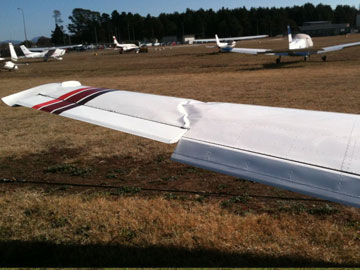
Figure 1: Ayres Corporation S2R post-accident

Figure 1: Ayres Corporation S2R post accident. Source: Chief Pilot

Source: Chief Pilot

Safety message

This accident highlights the importance of monitoring and checking instruments during flight, to ensure aircraft speed and performance is maintained. As aircraft speed reduces and approaches Vmca[2], low speed controllability of the aircraft becomes very difficult. Pilots and operators are also reminded of the need to ensure that the aircraft’s weight is within limits and maximum take-off weight to ensure the on-going safety of the aircraft and operations.

The pilot involved in this accident was required to make important decisions in a short period of time, including where to land and how to manage the remaining altitude. Pre-flight self-briefing is an important tool in reinforcing planned emergency actions.

About this report

Decisions regarding whether to conduct an investigation, and the scope of an investigation, are based on many factors, including the level of safety benefit likely to be obtained from an investigation. For this occurrence, no investigation has been conducted and the ATSB did not verify the accuracy of the information. A brief description has been written using information supplied in the notification and any follow-up information in order to produce a short summary report, and allow for greater industry awareness of potential safety issues and possible safety actions.

__________

  1. Wallowing - Uncommanded motion about all three axes of an aircraft occurring simultaneously.
  2. Vmca - Minimum control speed in the take-off configuration minimum control speed.

Occurrence summary

Mode of transport Aviation
Occurrence ID AB-2018-132
Occurrence date 21/12/2018
Location 5 km north of Dalby
State Queensland
Occurrence class Accident
Aviation occurrence category Collision with terrain
Highest injury level Minor
Brief release date 19/02/2019

Aircraft details

Manufacturer Ayres Corporation
Model S2R
Sector Piston
Operation type Aerial Work
Departure point Dalby, Queensland
Damage Substantial

VFR into IMC involving Piper Aircraft Corp PA-28-161, 9 km east of Newcastle Airport, New South Wales, on 19 January 2019

Brief

Occurrence Briefs are concise reports that detail the facts surrounding a transport safety occurrence, as received in the initial notification and any follow-up enquiries. They provide an opportunity to share safety messages in the absence of an investigation.

What happened

On 19 January 2019, the pilot of a Piper Aircraft Corp PA-28-161 departed Bankstown, New South Wales (NSW), to conduct a return solo training flight to Taree, NSW. The weather en-route at the time of departure included low cloud and reduced visibility. The adverse weather and amended flight plan options were discussed with the instructor prior to departure.

On the return leg to Bankstown, the pilot observed cloud building along the coast and en-route. When the aircraft reached Anna Bay, 23 km east of Williamtown Aerodrome, NSW, the pilot attempted to descend below cloud to remain visual, but was unsuccessful due to the low cloud coverage resulting in the pilot climbing back to 1,500 ft above mean sea level (AMSL). At this stage, the cloud cover was overcast[1] with base approximately 600 ft AMSL and tops of 1,500 ft AMSL.

Air traffic control (ATC) contacted the pilot to determine why the aircraft was descending and climbing. The pilot advised ATC that he was trying to get below the cloud but was unable. ATC advised the pilot that further adverse weather was at the destination and provided options to divert to an alternate landing area. The pilot declined the diversion and elected to continue to Bankstown. Shortly after, the pilot asked ATC for further assistance and requested a suitable alternate landing area. ATC advised that Williamtown Aerodrome, NSW was available with favourable weather.

The pilot accepted the diversion and ATC instructed him to track east of Williamtown, over the coast and climb to 2,400 ft. Once over the coast, ATC further instructed the pilot to descend through cloud to 500 ft. ATC further assisted the pilot with instructions to keep wings level, to trust the artificial horizon[2], not to exceed 1,000 ft per minute rate of descent while in cloud to prevent spatial disorientation and to control a stable descent.

As the aircraft descended through cloud, the pilot became visual over the water at 600 ft AMSL. The pilot then advised ATC that he was out of cloud and visual with ground and water. ATC issued a clearance to track direct to the aerodrome.

Visual Meteorological Conditions (VMC) requirements

Table 1: VMC criteria for aeroplanes below 3,000ft above mean sea level

Class of AirspaceFlight VisibilityVertical and Horizontal distance from cloudConditions
Class G 
(Uncontrolled) or within 1,000 ft of ground
5,000MClear of cloud and in sight of ground or waterRadio must be carried and used on the appropriate frequency
Class D 
(Controlled)
5,000M

600M horizontal 1,000FT vertically above cloud

Or 500FT vertically below cloud

ATC may permit operations in weather conditions that do not meet these criteria

(Special VFR).

Source: Aeronautical Information Publication (AIP) Australia: ENR 1.2-4 10 November 201

Safety message

The ATSB SafetyWatch highlights the broad safety concerns that come out of our investigation findings and from the occurrence data reported to us by industry.

Pilots are encouraged to make conservative decisions when considering how forecast weather may affect their flight. If poor weather is encountered en-route, timely and conservative decision making may be critical to ensuring a safe outcome.

VFR[3] pilots are also encouraged to familiarise themselves with the definition of VMC criteria and carefully consider available options where forecast or actual conditions are such that continued flight in VMC cannot be assured.

Flying with reduced visual cues and Inflight decision making such as in this occurrence remains one of the ATSB’s major safety concerns.

Number 4 in the Avoidable Accident series published by the ATSB titled ‘Accidents involving pilots in Instrument Meteorological Conditions’ lists three key messages for pilots:

  • Avoiding deteriorating weather or IMC[4] requires thorough pre-flight planning, having alternate plans in case of an unexpected deterioration in the weather, and making timely decisions to turn back or divert.
  • Pressing on into IMC conditions with no instrument rating carries a significant risk of severe spatial disorientation due to powerful and misleading orientation sensations in the absence of visual cues. Disorientation can affect any pilot, no matter what their level of experience.
  • VFR pilots are encouraged to use a ‘personal minimums’ checklist to help control and manage flight risks through identifying risk factors that include marginal weather conditions.

About this report

Decisions regarding whether to conduct an investigation, and the scope of an investigation, are based on many factors, including the level of safety benefit likely to be obtained from an investigation. For this occurrence, no investigation has been conducted and the ATSB did not verify the accuracy of the information. A brief description has been written using information supplied in the notification and any follow-up information in order to produce a short summary report, and allow for greater industry awareness of potential safety issues and possible safety actions.

__________

  1. Overcast - Overcast or overcast weather, as defined by the World Meteorological Organization, is the meteorological condition of clouds obscuring at least 95% of the sky.
  2. Artificial Horizon - Is a flight instrument that informs the pilot of the aircraft orientation relative to Earth's horizon, and gives an immediate indication of the smallest orientation change.
  3. Visual Flight Rules
  4. Instrument meteorological conditions (IMC): weather conditions that require pilots to fly primarily by reference to instruments, and therefore under Instrument Flight Rules (IFR), rather than by outside visual reference. Typically, this means flying in cloud or limited visibility.

Occurrence summary

Mode of transport Aviation
Occurrence ID AB-2019-003
Occurrence date 19/01/2019
Location 9 km east of Newcastle Airport
State New South Wales
Occurrence class Serious Incident
Aviation occurrence category VFR into IMC
Highest injury level None
Brief release date 25/02/2019

Aircraft details

Manufacturer Piper Aircraft Corp
Model PA-28-161
Sector Piston
Operation type Flying Training
Departure point Bankstown, NSW
Destination Taree, NSW
Damage Nil

Contact by a general cargo ship with a berthed ship, Newcastle, New South Wales, on 14 June 2018

Brief

Occurrence Briefs are concise reports that detail the facts surrounding a transport safety occurrence, as received in the initial notification and any follow-up enquiries. They provide an opportunity to share safety messages in the absence of an investigation.

What happened

At 1015 Eastern Standard Time on 14 June 2018, a harbour pilot boarded a 180 m general cargo ship, off Newcastle. The ship was to berth at West Basin berth 4 in the port. Another ship, a Dredger, was already berthed there. The general cargo ship was to moor port side alongside the wharf, about 20 m astern of the Dredger.

At 1120, the general cargo ship was approaching berth 4 at minimal speed. The pilot pointed out an orange bollard near the wharf’s edge to the ship’s master (Figure 1). The pilot intended to line up the ship’s navigation bridge (bridge) with this ‘bridge marker’[1] to position the ship at the berth, clear of the Dredger.

Figure 1: Orange bollard (left hand corner of photo, and generic image – below right)

Figure 1: Orange bollard (left hand corner of photo, and generic image – below right)

Source: Pilot & ATSB

Shortly afterwards, the port officer on the wharf called the pilot via radio to advise him that the general cargo ship’s bridge was 20 m ahead of the bridge marker. The pilot was surprised as the orange bollard was still some distance ahead but he immediately ordered full astern on the ship’s main engine. He also ordered the assisting tugs to pull the ship away from the wharf.

However, at 1126, the ship’s bow contacted Dredger’s stern. Soon after, the ship moved clear of the berthed ship, and the pilot manoevered it into the correct position. This position was indicated by an orange cone that the port officer had placed on the wharf (Figure 2).

Figure 2: Orange cone (left hand corner of photo, and generic image – below right)

Figure 2: Orange cone (left hand corner of photo, and generic image – below right)

Source: Pilot & ATSB

The orange cone was located much further back from the wharf’s edge than the bollard, which the pilot mistook for the bridge marker. As the bollard was closer to the Dredger’s stern than the cone, the general cargo ship got further ahead than it should have, and made contact with the berthed ship. The pilot did not see the cone until after the incident.

By 1146, the ship had been securely moored alongside the wharf in the correct position. Visual damage assessments indicated minor damage to both vessels – largely limited to paintwork.

Pilot’s comments

  • The orange bollard on the wharf appeared to have been placed there as a bridge marker with nothing to suggest any other purpose (for example, as a hazard marker).
  • The orange cone was located unusually distant from the wharf’s edge, where its small size and shadow made identification difficult.
  • The only information that alerted the pilot to the situation came from the port officer.

Safety action

As a result of this occurrence, the Port Authority of New South Wales has advised the ATSB that following safety action has been taken.

Traffic control cones used as bridge markers in the port have been fitted with strobe lights, which will be activated for both day and night berthing.

Internal investigation(s) to identify necessary measures to avoid a similar incident.

Safety message

The ATSB SafetyWatch highlights the broad safety concerns that come out of our investigation findings and from occurrence data reported by industry. Marine pilotage is one area of those safety concerns.
This pilotage incident was the direct result of incorrectly identifying a marker as the bridge marker. Such incidents can be avoided by deploying conspicuous, identical bridge markers that are readily and unmistakably identifiable to the port’s pilots. Therefore, the size, colour and unique features of bridge markers, such as strobe lights, and effective communication between the pilot and person(s) responsible for deploying a marker are important considerations.


About this report

Decisions regarding whether to conduct an investigation, and the scope of an investigation, are based on many factors, including the level of safety benefit likely to be obtained from an investigation. For this occurrence, no investigation has been conducted and the ATSB did not verify the accuracy of the information. A brief description has been written using information supplied in the notification and any follow-up information in order to produce a short summary report, and allow for greater industry awareness of potential safety issues and possible safety actions.

__________

  1. A bridge marker on the wharf is used to longitudinally position a ship alongside the wharf by lining up the ship’s bridge with the marker. The marker’s colour, size and other features depend on local practice but ready portability and high visibility is preferred, which makes traffic control cones (witches hats) or similar markers a common choice.

Occurrence summary

Mode of transport Marine
Occurrence ID MB-2018-002
Occurrence date 14/06/2018
Location West Basin berth 4, Port of Newcastle
State New South Wales
Occurrence class Incident
Highest injury level None
Brief release date 08/02/2019

In-flight fire involving Jabiru J170-D, 22 km west-north-west of Launceston, Tasmania, on 21 October 2018

Brief

Occurrence Briefs are concise reports that detail the facts surrounding a transport safety occurrence, as received in the initial notification and any follow-up enquiries. They provide an opportunity to share safety messages in the absence of an investigation.

What happened

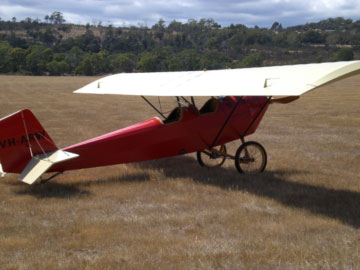
On 21 October 2018, an experimental Jabiru J170-D departed Launceston Airport, Tasmania for a local flight. In cruise between 1,500 ft and 2,500 ft above ground level (AGL), a fire began in the cockpit. The pilot, who was the sole occupant on board, conducted an emergency landing into a paddock. The aircraft struck a fence and fire destroyed the aircraft. The pilot sustained serious injuries and received first aid from the landowners until emergency services arrived.

On the morning of the accident, the aircraft was difficult to start. The pilot reported that the aircraft was started using an external portable power supply. This power supply remained connected from inside the cockpit for the duration of the flight, and the pilot reported switching this off after the start. During the flight, the pilot observed the electrical overvoltage alarm both visually and audibly activate on a Dynon D10 engine management system.

It indicated that the electrical system was charging the battery above normal capacity and possibly greater than 15 volts (normal range is 13-13.5v). The pilot had never encountered this problem previously and dismissed the alarm. However, about 5-10 minutes later the fire was observed entering the cockpit.

The pilot began an emergency descent into a paddock as fire began to engulf the cockpit. He opened his door to provide some outside visibility given cockpit windows were no longer transparent, which also assisted with cooling the flames. However, the pilot’s clothes had caught alight. During a high-speed landing, the aircraft bounced and the pilot exited the aircraft prior to the aircraft touching down again. The aircraft collided with a fence and was consumed by fire. (Figure 1).

The pilot found a cattle trough, immersed himself and called for help to a nearby farmhouse. The residents rendered first aid until emergency services arrived.

Figure 1: J170-D consumed by fire

Figure 1: J170-D consumed by fire. Source: Tasmanian Fire Service, Fire investigation Report Aircraft Fire TFS Incident Number 18033397- Photograph 2, annotated by the ATSB

Source: Tasmanian Fire Service, Fire investigation Report Aircraft Fire TFS Incident Number 18033397- Photograph 2, annotated by the ATSB

The Tasmanian Fire Service, Fire Investigation Report[1] established the area of fire origin on the engine side of the aircraft firewall[2] in front of the passenger’s feet position and within 400 mm radius of the battery (Figure 2).

Figure 2: J 170-D area of fire origin

Figure 2: J 170-D area of fire origin. Source: Tasmanian Fire Service, Fire investigation Report Aircraft Fire TFS Incident Number 18033397- Photograph 23, annotated by the ATSB, indicating fire origin.

Source: Tasmanian Fire Service, Fire investigation Report Aircraft Fire TFS Incident Number 18033397- Photograph 23, annotated by the ATSB, indicating fire origin.

The pilot reported that the engine did not exhibit any abnormal vibration and continued to run until impact with the fence. The pilot stated that the spread of the flames in the cockpit was sustained by a fuel source. This hastened the rapid spread of flames into the cockpit.

The aircraft had about 760 hours total time and had a Deltran 330 Lithium-iron Phosphate battery installed in September 2016, which had recently developed problems. The pilot recalled accidentally flattening the battery a month or two prior by leaving the master switch on. He had experienced problems with the battery since that time. The pilot reported that he used a Deltran trickle charger when the aircraft was not in use. However, the battery was not holding sufficient charge to start the engine consistently. The aircraft then required elevated RPM[3] in order to get sufficient voltage for the radios to be serviceable during taxi.

The J170-D Pilot’s Operating Handbook indicates that below 2000 RPM the alternator cannot supply sufficient power output to run ancillaries. This power then comes from the battery. Jabiru Service Letter JSL021 further identifies charging system limitations and risks of overvoltage situations. Operating the aircraft with a low voltage battery or one that will not accept electrical system charge may increase this risk.

Thermal runaway in a Lithium-ion battery is a dynamic chemical reaction accompanied by the release of heat. The temperature of the affected cell increases exponentially, triggering nearby cells to also increase their temperature and continue the reaction.

Lithium-ion battery thermal runaway is a known aviation safety hazard and can be initiated by mechanical, thermal of electrical abuse. Over discharge and overcharging of battery cells are two factors that can lead to an electrically induced thermal runaway and subsequent fire.

Safety message

In retrofitting Lithium-ion batteries to experimental aircraft, operators should consider the risks and to be aware of the appropriate charge and discharge requirements for the battery. They may not be suitable for the existing aircraft electrical systems.

Operators should also be aware of the potential risk of damage to Lithium-ion batteries should they be discharged below their minimum cell voltage.

Should a pilot notice any performance change in a fitted Lithium-ion battery, they should take action immediately to remove and replace the battery. This may prevent irreversible damage that may instigate a thermal runaway situation while in use.

In-depth knowledge of individual aircraft systems and regular emergency procedures practice is essential to ensure that pilots provide the most appropriate responses to uncharacteristic warnings or emergencies in flight.

About this report

Decisions regarding whether to conduct an investigation, and the scope of an investigation, are based on many factors, including the level of safety benefit likely to be obtained from an investigation. For this occurrence, no investigation has been conducted and the ATSB did not verify the accuracy of the information. A brief description has been written using information supplied in the notification and any follow-up information in order to produce a short summary report, and allow for greater industry awareness of potential safety issues and possible safety actions.

__________

  1. Tasmanian Fire Service, Fire investigation Report Aircraft Fire TFS Incident Number 18033397
  2. A wall made of fireproof material, designed to prevent the spread of a fire, as in buildings, aircraft, motor vehicles, etc.
  3. Revolutions per minute of engine speed

Occurrence summary

Mode of transport Aviation
Occurrence ID AB-2018-124
Occurrence date 21/10/2018
Location 22 km WNW from Launceston Airport
State Tasmania
Occurrence class Accident
Aviation occurrence category Fire
Highest injury level Serious
Brief release date 12/02/2019

Aircraft details

Manufacturer Jabiru Aircraft Pty Ltd
Model J170-D
Sector Sport and recreational
Operation type Private
Departure point Launceston Airport, Tasmania
Damage Destroyed

Fuel exhaustion involving Cessna 152, Bankstown Airport, New South Wales, on 21 November 2018

Brief

Occurrence Briefs are concise reports that detail the facts surrounding a transport safety occurrence, as received in the initial notification and any follow-up enquiries. They provide an opportunity to share safety messages in the absence of an investigation.

What happened

On 21 November 2018, the crew of a Cessna Aircraft Company 152 departed Bankstown, New South Wales to conduct a training flight with two crew members on board.

Returning from the Bankstown training area, the aircraft was cleared by air traffic control (ATC) to join downwind for runway 29R. Whilst on downwind, at 1,500 ft above ground level, the aircraft’s engine RPM started to reduce uncommanded. The instructor took over from the student and applied full throttle and carburettor heat to attempt to increase engine RPM and performance. The engine’s RPM increased momentarily and reduced again.

The instructor advised the tower of the engine issues and requested a glide approach. ATC cleared the aircraft for a glide approach for runway 29R. During the glide approach, the engine failed and the propeller stopped windmilling.[1] The aircraft landed safely on the runway.

Engineering inspection

Following the incident, the engineering inspection revealed the right fuel tank was empty and the left fuel tank had 15 L of fuel remaining. The remaining fuel failed to feed through the fuel lines, resulting in fuel being starved from the engine. The engineers inspected the fuel lines and vents for blockages but could not find any fault or blockage in the fuel system.

The Cessna 152 has a gravity fed fuel system that does not have a fuel tank selector switch. Asymmetric (uneven) fuel delivery is a well known phenomenon in single engine Cessna aircraft. It is very common for a 10 to 15 L difference to be found between left and right tanks. Once the aircraft reaches a fuel level equal to or below this common difference, and one tank is dry, the likelihood of fuel starvation increases significantly.

A company investigation identified a non-vented fuel cap on the left tank as a possible contributing factor. The right tank had a vented fuel cap. The Cessna 152 has an underwing vent on the left-hand side. The dual vented caps have become standard as a back up to this vent due to complicated pressure forces created within the fuel system and the tendency of the underwing vent to become blocked.

Airworthiness Directives have been released previously regarding the replacement of non-vented caps on Cessna 150 aircraft (predecessor to Cessna 152), however none have been released for the Cessna 152 as all but the very early models (first year of production) were released from the factory with dual vented fuel caps; and Cessna no longer provides the non-vented fuel cap as a replacement part. Although the majority of Cessna 152 were released from the factory with dual vented caps, many fuel system diagrams still show a vented cap on the right-hand tank only.

Figure 1: Example of Cessna unvented fuel cap

Figure 1: Example of Cessna unvented fuel cap

Source: Google Images

Figure 2: Example of Cessna vented fuel cap

Figure 2: Example of Cessna vented fuel cap

Source: Google Images

Safety action

As a result of this incident, the operator has advised the ATSB that they are taking the following ongoing safety actions:

  • They will be replacing the left fuel cap with a vented fuel cap.
  • They will also inspect their entire Cessna fleet to ensure all aircraft have vented fuel caps on both tanks.
  • Additional training for staff and students in measuring fuel levels on uneven ground will take place.
  • Additional training for staff regarding total fuel and fixed fuel reserves will be implemented.

Safety message

Simulated total loss of power and a subsequent practice forced landing is at the core of a pilot’s emergency training. It is important that pilots remain aware that despite conducting comprehensive pre-flight checks, unanticipated failures can still occur during flight. Following a complete engine failure, a forced landing is inevitable. In this instance, the crew followed standard emergency procedures to ensure a safe outcome was achieved.

About this report

Decisions regarding whether to conduct an investigation, and the scope of an investigation, are based on many factors, including the level of safety benefit likely to be obtained from an investigation. For this occurrence, no investigation has been conducted and the ATSB did not verify the accuracy of the information. A brief description has been written using information supplied in the notification and any follow-up information in order to produce a short summary report, and allow for greater industry awareness of potential safety issues and possible safety actions.

__________

  1. Windmilling - The continued rotation of a propeller after the engine is shut down in flight. Aerodynamic forces act on the propeller to keep it turning, or windmilling, with no power from the engine.

Occurrence summary

Mode of transport Aviation
Occurrence ID AB-2018-131
Occurrence date 21/11/2018
Location Bankstown Airport
State New South Wales
Occurrence class Serious Incident
Aviation occurrence category Fuel exhaustion
Highest injury level None
Brief release date 08/02/2019

Aircraft details

Manufacturer Cessna Aircraft Company
Model 152
Sector Piston
Operation type Flying Training
Departure point Bankstown Airport, NSW
Damage Nil

Anchor loss involving general cargo ship, Port of Bunbury, Western Australia, on 25 May 2018

Brief

Occurrence Briefs are concise reports that detail the facts surrounding a transport safety occurrence, as received in the initial notification and any follow-up enquiries. They provide an opportunity to share safety messages in the absence of an investigation.

What happened

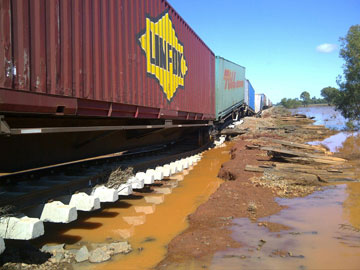
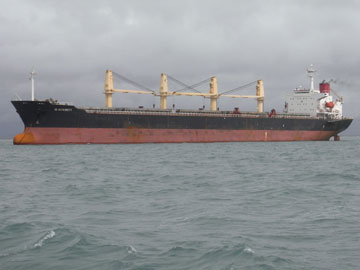
On 25 May 2018, a 178 m general cargo ship was anchored at Anchorage B, at the Port of Bunbury. At 0800 Western Standard Time, the ship was dragging its anchor due to weather. The ship’s master requested permission from Southern Ports pilots to heave up the anchor and return to the anchorage. At 0808, the Bureau of Meteorology issued a severe weather warning for the Bunbury coast, with damaging winds and very rough seas forecast in the evening. At 1120, Southern Ports pilots also issued this warning, citing expected gale force winds,[1] with ships at anchorage given permission to take their ships to sea, due to the poor holding ground. The ship was contacted by the Southern Ports pilots at midday by VHF radio, and warned the weather was expected to worsen. The ship’s master elected to remain at the anchorage.

At 1730, west-north-west winds had increased to over 34 knots[2] and swell to 3.5 m and the ship began to drift. The ship’s master then requested permission from Southern Ports pilots to heave up the anchor and head to sea. The heavy pitch and roll[3] of the ship resulted in the anchor chain being tensioned, preventing release of the anchor chain cable stopper bar. At 1738, the main engine was started and was used to manoeuvre the ship ahead, thereby releasing tension on the anchor chain. Shortly afterwards, the chief mate advised the master that the anchor chain had parted, resulting in loss of the anchor and 12 shackles of chain.[4] Subsequent to the incident, the deputy harbour master advised that the ship’s anchor and chain had been located and was awaiting retrieval. At the time of the occurrence brief, the southern portion of Bunbury Anchorage B was unavailable for use due to the hazard posed by the detached anchor and chain.

Figure 1: Anchorage B at Port of Bunbury

Figure 1: Anchorage B at Port of Bunbury

Source: Australian Hydrographic Office, annotated by Australian Transport Safety Bureau (ATSB)

Safety message

A lost anchor and chain can pose a hazard to other ships at anchorage through entanglement during anchoring. In addition, the loss of an anchor reduces the options of a ship to anchor safely. The ATSB investigation report into the Collision between Royal Pescadores and Da Heng Shan (308-MO-2014-003) is one such example, and is available from the ATSB website.

About this report

Decisions regarding whether to conduct an investigation, and the scope of an investigation, are based on many factors, including the level of safety benefit likely to be obtained from an investigation. For this occurrence, no investigation has been conducted and the ATSB did not verify the accuracy of the information. A brief description has been written using information supplied in the notification and any follow-up information in order to produce a short summary report, and allow for greater industry awareness of potential safety issues and possible safety actions.

__________

  1. Wind speeds between 34 to 40 knots, or 8 on the Beaufort scale.
  2. One knot, or one nautical mile per hour equals 1.852 kilometres per hour.
  3. Rotation along the lateral and longitudinal axes respectively.
  4. One shackle equals 90 feet or 27.43 m.

Occurrence summary

Mode of transport Marine
Occurrence ID MB-2018-001
Occurrence date 25/05/2018
Location Anchorage B, Port of Bunbury
State Western Australia
Occurrence class Incident
Highest injury level None
Brief release date 08/02/2019

Incorrect configuration involving Airbus A330, Melbourne, Victoria, on 2 December 2018

Brief

Occurrence Briefs are concise reports that detail the facts surrounding a transport safety occurrence, as received in the initial notification and any follow-up enquiries. They provide an opportunity to share safety messages in the absence of an investigation.

What happened

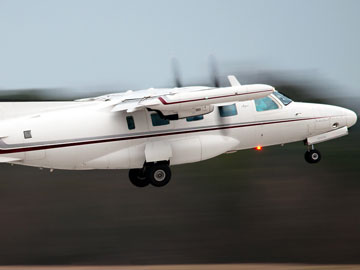
On 2 December 2018, an Airbus A330 aircraft departed Melbourne, Vic. on a scheduled passenger service to Kuala Lumpur, Malaysia.

Prior to take-off, the crew noted prevailing weather conditions could be challenging and it was decided that the captain would be pilot flying for the take-off and hand over to the first officer later during climb. The crew received a departure clearance from runway 16 on the BISON 5 Standard Instrument Departure (SID).

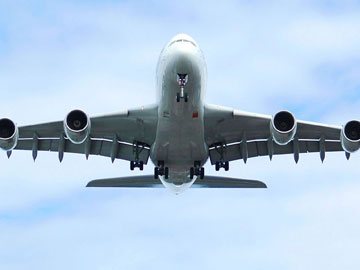
As the aircraft lined up, the crew received a report that the last aircraft to land encountered windshear. The captain assessed that it was safe to depart. Due to possible windshear, it was decided to use maximum take-off thrust[1]. The crew reported a normal take-off. Passing 500 ft above mean sea level (AMSL), the captain engaged the autopilot and reduced the power to climb thrust. The climb rate of the aircraft then reduced and the aircraft levelled off around 760 ft AMSL. The crew, suspecting windshear, retracted the flaps and then set take-off/go around (TOGA)[2] power. The ground proximity warning system “DON’T SINK” alert triggered and the airspeed increased beyond the flap retraction speed up to a maximum of 236 kts until the flaps fully retracted.

The aircraft continued to fly level to a position 4 NM from the airport, 400 ft above ground level, with an airspeed of 276 kts. 45 seconds after initial engagement of the autopilot, the captain then disengaged the autopilot and flew the aircraft manually. The captain commenced a climbing turn to follow the SID. During the turn, the angle of bank increased to a maximum of 46 degrees. The aircraft regained the SID, the autopilot engaged, and the flight continued to depart for Kuala Lumpur.

Post-flight, it was determined that altitude (ALT) mode[3] was selected on the autopilot. This caused the aircraft to level off and accelerate. The crew were not aware of this at the time. It is suspected that the captain inadvertently pushed the ALT button which was not detected by the crew. This resulted in the aircraft levelling off at low altitude and allowed the speed to increase, resulting in an airframe overspeed.

Safety action

As a result of this occurrence, the operator has advised the ATSB that they have taken the following safety actions:

The details of the event have been shared with all crews to highlight the incident and the need for crews to be autopilot mode aware.

The operator has also conducted further simulator training for the crew involved.

About this report

Decisions regarding whether to conduct an investigation, and the scope of an investigation, are based on many factors, including the level of safety benefit likely to be obtained from an investigation. For this occurrence, no investigation has been conducted and the ATSB did not verify the accuracy of the information. A brief description has been written using information supplied in the notification and any follow-up information in order to produce a short summary report, and allow for greater industry awareness of potential safety issues and possible safety actions.

__________

  1. Maximum take-off thrust: the maximum thrust the engine can deliver for a maximum of 5 minutes.
  2. Take-off go around (TOGA): A setting that can be selected by the pilots to increase power to maximum.
  3. Altitude (ALT) mode: When ALT mode is selected, the autopilot will hold the current altitude.

Occurrence summary

Mode of transport Aviation
Occurrence ID AB-2018-133
Occurrence date 02/12/2018
Location Melbourne
State Victoria
Occurrence class Incident
Aviation occurrence category Incorrect configuration
Highest injury level None
Brief release date 25/01/2019

Aircraft details

Manufacturer Airbus
Model A330
Sector Jet
Operation type Air Transport High Capacity
Departure point Melbourne, Vic.
Destination Kuala Lumpur, Malaysia
Damage Nil

Landing gear failure involving Cessna 210, near Katherine, Northern Territory, on 22 November 2018

Brief

Occurrence Briefs are concise reports that detail the facts surrounding a transport safety occurrence, as received in the initial notification and any follow-up enquiries. They provide an opportunity to share safety messages in the absence of an investigation.

What happened

On 22 November 2018 a Cessna 210 was conducting a freight charter flight to Kilarney Station, Northern Territory (NT). The pilot was the sole occupant on board.

During approach to Kilarney Station, the landing gear failed to extend. The pilot attempted to extend the landing gear using emergency procedures with no success. The pilot then decided to conduct a return to Tindal Airport, NT and contacted the chief pilot and engineer in-flight. After unsuccessfully conducting troubleshooting procedures, it was decided the pilot would have to conduct a wheels up landing at a private airstrip with a grass runway area near Katherine, NT.

While the runway was prepared and emergency services were organised, the pilot entered a holding pattern to burn off fuel. At 1400 Central Standard Time, after multiple practice approaches, a wheels up landing was conducted on the grass strip resulting in a propeller strike and minor damage to the fuselage.

Engineering inspection

Following the incident, an inspection of the landing gear revealed that the hydraulic line connected to the nose wheel actuator had separated from its fitting. This subsequently resulted in a loss of hydraulic fluid in the gear down hydraulic line.

Figure 1: Damage sustained to aircraft after landing

Figure 1: Damage sustained to aircraft after landing. Source: Operator

Source: Operator

Figure 2: Broken hydraulic line from nose wheel actuator

Figure 2: Broken hydraulic line from nose wheel actuator. Source: Operator

Source: Operator

Safety message

Unanticipated failures can occur at any given time during flight. In this instance, the pilot took all appropriate actions by following non-normal procedures, communicating and coordinating with ground staff to conduct additional checks to assess the situation, and ensuring that he was well prepared for the wheels up landing resulting in a safe outcome.

This accident not only highlights the importance of comprehensive and periodic maintenance inspections, but also the importance of following emergency checklists and procedures and using every resource available to help resolve an issue.

About this report

Decisions regarding whether to conduct an investigation, and the scope of an investigation, are based on many factors, including the level of safety benefit likely to be obtained from an investigation. For this occurrence, no investigation has been conducted and the ATSB did not verify the accuracy of the information. A brief description has been written using information supplied in the notification and any follow-up information in order to produce a short summary report, and allow for greater industry awareness of potential safety issues and possible safety actions.

Occurrence summary

Mode of transport Aviation
Occurrence ID AB-2018-128
Occurrence date 22/11/2018
Location Near Katherine
State Northern Territory
Occurrence class Incident
Aviation occurrence category Landing gear/indication
Highest injury level None
Brief release date 22/01/2019

Aircraft details

Manufacturer Cessna Aircraft Company
Model 210
Sector Piston
Operation type Charter
Destination Kilarney Station, Northern Territory
Damage Minor

Fuel starvation and forced landing involving Beechcraft A36, Euroa, Victoria, on 30 September 2018

Brief

Occurrence Briefs are concise reports that detail the facts surrounding a transport safety occurrence, as received in the initial notification and any follow-up enquiries. They provide an opportunity to share safety messages in the absence of an investigation.

What happened

On 30 September 2018, a Beechcraft A36 was conducting a flight from Lilydale, Victoria (Vic.) to Euroa, Vic.

At about 1800 Eastern Standard Time, at approximately 800 ft, the pilot turned onto the base leg of the circuit in preparation to land at Euroa, at which time the engine lost power. The pilot reported that he suspected fuel exhaustion in the right tank, currently in use, and changed tanks. He was unable to get the engine re-started. Due to the low altitude, he did not have enough time to troubleshoot or turn the aircraft back to the Euroa aircraft landing area. He selected a nearby paddock as a suitable location for his emergency landing; however, due to the high sink rate he was unable to make this location and instead landed early in a rough area.

The aircraft skidded about 70 m upon landing and the impact caused the front wheel to buckle and the nose to impact with the ground, bending the propeller blades. The pilot was uninjured.

After landing, the pilot called a nearby friend. The pilot’s phone battery ran out before he gave details of his exact location. The pilot’s friend contacted the chief pilot of Euroa airstrip, who called emergency services. Emergency services attended the site and foamed the aircraft as a precautionary measure.

The pilot said that he likely forgot to change fuel tanks because he was distracted – he was trying to land before last light and he was checking the runway for kangaroos.

Figure 1: Beechcraft A36 after landing

Figure 1: Beechcraft A36 after landing. Source: Victoria Police

Source: Victoria Police

Safety message

Accidents involving fuel mismanagement are an ongoing aviation safety concern. Pilots need to:

  • understand how their aircraft fuel system works
  • know how much fuel they have in each tank
  • ensure that the appropriate tank is selected at all times.

In this instance, and others like it, selecting the appropriate fuel tank during pre-descent checks would avoid having to manage fuel during the higher workload period of approach. This would reduce the risk of a fuel starvation event.

For more information on fuel management, see ATSB research report, Starved and Exhausted: Fuel management aviation accidents (AR-2011-112).

About this report

Decisions regarding whether to conduct an investigation, and the scope of an investigation, are based on many factors, including the level of safety benefit likely to be obtained from an investigation. For this occurrence, no investigation has been conducted and the ATSB did not verify the accuracy of the information. A brief description has been written using information supplied in the notification and any follow-up information in order to produce a short summary report, and allow for greater industry awareness of potential safety issues and possible safety actions.

Occurrence summary

Mode of transport Aviation
Occurrence ID AB-2018-117
Occurrence date 30/09/2018
Location 2 km N of Euroa ALA
State Victoria
Occurrence class Incident
Aviation occurrence category Fuel starvation
Highest injury level None
Brief release date 22/01/2019

Aircraft details

Manufacturer Hawker Beechcraft Corporation
Model Beechcraft A36
Sector Piston
Operation type General Aviation
Departure point Lilydale, Victoria
Destination Euroa, Victoria
Damage Substantial