Runway excursion involving Cirrus SR22, Darnley Island (Erub), Queensland, on 24 November 2021

Brief

Occurrence Briefs are concise reports that detail the facts surrounding a transport safety occurrence, as received in the initial notification and any follow-up enquiries. They provide an opportunity to share safety messages in the absence of an investigation.

What happened

The occurrence

On 24 November 2021, the pilot of a Cirrus SR22 aircraft conducted a business flight from Northern Peninsula to Darnley Island (Erub), Queensland, with one passenger on board. The flight was conducted under the visual flight rules[1] and in visual meteorological conditions.[2]

At 0913 local time, the aircraft joined the downwind leg of the circuit for runway 10 at Darnley Island. The pilot reported conducting a stabilised approach. Once aligned with the runway, the pilot reduced the airspeed to about 3 kt slower than normal, to compensate for encountering less headwind than anticipated.

The aircraft landed long and ballooned,[3] touching down about 100 m beyond the runway threshold. The pilot initially assessed that there was still sufficient runway remaining to stop. However, when the nose wheel contacted the runway, it started to ‘wobble’. In response, the pilot pulled back on the elevator control to lift weight off the nose wheel and reduced pressure on the brakes. The pilot then realised the end of the runway was approaching and applied full braking, and the wheel wobble resumed.

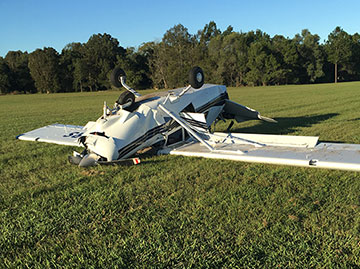
The aircraft overran the runway and rolled down a steep embankment beyond the eastern threshold. The aircraft flipped over, coming to rest inverted (Figure 1). The pilot sustained minor injuries, and the passenger sustained serious injuries. Both were wearing the fitted four-point harness. The aircraft was substantially damaged.

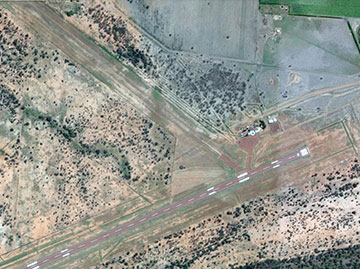
Figure 1: Darnley Island aerodrome and accident site

Figure 1: Darnley Island aerodrome and accident site

Source: Babcock Aviation & Critical Services

Pilot qualifications and experience

The pilot was appropriately qualified for the flight and held a private pilot licence (aeroplane). The pilot’s aeronautical experience totalled nearly 5,000 hours, including about 1,600 hours in SR22 aircraft. The pilot had landed at Darnley Island 17 times previously, 5 of which were in the accident aircraft.

Darnley Island aerodrome

The runway on Darnley Island is 528 m long, 18 m wide, has a 2% slope down in the landing direction and lies 220 ft above mean sea level.

Airport reporting officer comments

The airport reporting officer (ARO) was at the aerodrome at the time of the accident and assisted in extricating the pilot and passenger from the aircraft. The ARO commented that there was no wind at the time and the windsock was drooping down. The ARO observed the aircraft touch down long and the nose wheel ‘wobbling all over the place’.  

Nose wheel wobble

The pilot reported that the nose wheel wobble previously occurred on about 1 in 10 landings in the aircraft and had been investigated by aircraft maintainers. The recommended action in response to the wobble was to pull back on the elevator control and stop braking, then release back pressure and recommence braking. In this occurrence, the pilot performed those actions but in doing so, was distracted from initiating a go-around. The pilot also assessed that when braking heavily, the wobble had contributed to reduced braking effectiveness.

Pre-flight planning

Based on the area forecast, the pilot expected, and planned for, an easterly wind of 7–15 kt. The pilot calculated the aircraft’s weight and balance to be in the middle of the operating envelope. The aircraft landing distance charts did not specify a required runway length for the calculated landing weight, so the pilot used the closest (higher) available weight. Based on nil wind and a landing weight 226 kg heavier than the actual landing weight, the landing distance required was 378 m. This reduced to 340 m with a 15 kt headwind. Factoring in the 2% downslope increased the landing distance required to 524 m (with a 15 kt headwind). The pilot used this figure for planning, having assessed the wind would likely be stronger than forecast based on previous experience with the local conditions. The pilot therefore anticipated that with a stronger headwind and lighter landing weight than used for planning, there would be a safe margin between landing distance available and required.

Density altitude

The pilot reported the conditions at the time of the accident included an easterly wind of about 7 kt and visibility greater than 10 km. The nearest Bureau of Meteorology weather station was at Coconut (Poruma) Island, 89 km to the south-east, where the temperature at 0900 was 32 °C and the atmospheric pressure 1,009 hPa at sea level.

Assuming the conditions at Darnley Island were similar to Coconut Island, the pressure altitude at the aerodrome was about 340 ft above mean sea level and the density altitude about 2,380 ft. Effects of increased density altitude include increased landing roll distance and reduced performance in the event of a go-around.

Runway end safety areas for aircraft landing areas

Darnley Island aerodrome was uncertified and unregistered. Aerodromes that have not been approved to the regulated requirements are referred to as aircraft landing areas (ALA). An ALA is not required to comply with any aerodrome standards, and it is a pilot’s responsibility to determine the aerodrome’s suitability for the intended flight.

The Civil Aviation Safety Authority’s Civil Aviation Advisory Publication 92–1

, provides guidance for pilots operating at ALAs and considerations for ALA owners regarding obstacle clearance proximal to the runway. The publication does not include guidelines regarding an overrun area beyond the runway ends. In this occurrence, the steep embankment at the eastern end of the runway increased the risk of aircraft damage and occupant injury in the event of a runway overrun. There was also an escarpment beyond the runway’s western end.

Previous accident

In 1993, a Piper PA-23 aircraft overran the western end of the runway at Darnley Island (ATSB investigation 199303915). The pilot initiated a ground loop to stop the aircraft falling down the 50 ft escarpment beyond the western end of the runway strip.

Safety message

Pre-flight preparation includes understanding the destination aerodrome and environmental conditions and establishing a plan to manage identified hazards. The United States Federal Aviation Administration’s Advisory Circular 91-79A Mitigating the risks of a runway overrun upon landing listed the following hazards associated with runway overruns:

  • unstabilised approach
  • high airport elevation or high-density altitude, resulting in increased groundspeed
  • excessive airspeed or height over the runway threshold
  • airplane landing weight
  • landing beyond the touchdown point
  • downhill runway slope
  • delayed use of deceleration devices
  • landing with a tailwind
  • a wet or contaminated runway.

The circular recommends that once the actual landing distance is determined – taking into consideration the compound effects of multiple factors – a minimum 15% safety margin should be added.

About this report

Decisions regarding whether to conduct an investigation, and the scope of an investigation, are based on many factors, including the level of safety benefit likely to be obtained from an investigation. For this occurrence, no investigation has been conducted and the ATSB did not verify the accuracy of the information. A brief description has been written using information supplied in the notification and any follow-up information in order to produce a short summary report, and allow for greater industry awareness of potential safety issues and possible safety actions.

__________

  1. Visual flight rules (VFR): a set of regulations that permit a pilot to operate an aircraft only in weather conditions generally clear enough to allow the pilot to see where the aircraft is going.
  2. Visual Meteorological Conditions (VMC): an aviation flight category in which visual flight rules (VFR) flight is permitted – that is, conditions in which pilots have sufficient visibility to fly the aircraft while maintaining visual separation from terrain and other aircraft.
  3. Ballooning occurs when the pilot flares and the aircraft climbs instead of descending onto the

Occurrence summary

Mode of transport Aviation
Occurrence ID AB-2021-030
Occurrence date 24/11/2021
Location Darnley Island
State Queensland
Occurrence class Accident
Aviation occurrence category Runway excursion
Highest injury level Serious
Brief release date 14/01/2022

Aircraft details

Manufacturer Cirrus Design Corporation
Model SR22
Sector Piston
Operation type Business
Departure point Northern Peninsula Airport, Queensland
Destination Darnley Island, Queensland
Damage Substantial

Rotor wash event, AgustaWestland AW139, The Alfred hospital, Victoria, on 28 October 2021

Brief

Occurrence Briefs are concise reports that detail the facts surrounding a transport safety occurrence, as received in the initial notification and any follow-up enquiries. They provide an opportunity to share safety messages in the absence of an investigation.

What happened

On 28 October 2021 at about 1550 local time, an AgustaWestland AW139 helicopter was conducting a landing at The Alfred hospital helipad, with two crew on board. The crew approached the helipad from the west, using a steep approach profile aligned with Commercial Road.

During the approach, a pedestrian walking along Commercial Road, about 50 m west of the helipad, was blown over by rotor wash from the helicopter which resulted in serious injuries. The pedestrian was taken to The Alfred hospital for treatment.

The helicopter crew were unaware that downwash from the landing had resulted in any injury to the pedestrian.

The Alfred helicopter landing site is located on an elevated platform approximately 8 m above Commercial Road, a publicly accessible thoroughfare with both vehicular and foot traffic. This design is unique in Australia, exposing public vehicles and pedestrians to the possibility of helicopter downwash on landing.

Figure 1: The Alfred hospital HLS

Figure 1: The Alfred hospital HLS

Source: OzRunways HLS database

The ATSB has received reports of 5 rotor wash events at various hospital helicopter landing sites since 2016. Of these, 3 occurred at The Alfred hospital helicopter landing site and all involved AW139 helicopters.

Safety action

The operator immediately ceased operations to The Alfred hospital helicopter landing site following the incident. Before re-commencing operations at the helipad, the operator:

  • reduced the maximum number of helicopters on the helipad from two to one, removing the requirement to hover taxi away from the centre of the helipad
  • implemented pedestrian marshalling procedures for all helicopter movements, so that operations will only occur when no pedestrians are within 30 m of the helipad.

Further, The Alfred hospital has engaged a helipad consultant to review the design of the helipad.

Safety message

Helicopters produce significant main rotor downwash, especially during hover taxi, take-off and while approaching to land. It is important that the risk of downwash related injuries, either by direct exposure or by being struck by loose items, be assessed prior to using a helicopter landing site (HLS).

As pilots have limited ability to reduce rotor downwash during these phases of flight, securing loose items in the vicinity of the HLS and keeping people a safe distance away are the most effective ways of preventing injury.

About this report

Decisions regarding whether to conduct an investigation, and the scope of an investigation, are based on many factors, including the level of safety benefit likely to be obtained from an investigation. For this occurrence, no investigation has been conducted and the ATSB did not verify the accuracy of the information. A brief description has been written using information supplied in the notification and any follow-up information in order to produce a short summary report, and allow for greater industry awareness of potential safety issues and possible safety actions.

Occurrence summary

Mode of transport Aviation
Occurrence ID AB-2021-028
Occurrence date 28/10/2021
Location The Alfred Hospital, Melbourne
State Victoria
Occurrence class Accident
Aviation occurrence category Jet blast/prop wash
Highest injury level None
Brief release date 14/01/2022

Aircraft details

Manufacturer Agusta, S.p.A, Construzioni Aeronautiche
Model AW139
Sector Helicopter
Operation type Aerial Work
Departure point Unknown
Destination Alfred Hospital Helicopter Landing Site, Victoria

Near collision, BAE Systems Avro RJ100 and Ayres S2R, Port Augusta, South Australia, on 26 May 2021

Brief

Occurrence Briefs are concise reports that detail the facts surrounding a transport safety occurrence, as received in the initial notification and any follow-up enquiries. They provide an opportunity to share safety messages in the absence of an investigation.

What happened

On 26 May 2021, a BAE Systems Avro RJ100 (RJ100) aircraft was inbound to Port Augusta, South Australia, conducting a regular public transport service from Adelaide, South Australia, with 37 passengers and 4 crew on board. Also inbound to Port Augusta at about the same time, was an Ayres Corporation S2R-T34 (S2R) agricultural aircraft on a positioning flight from Broken Hill, New South Wales, with the pilot as the sole person on board.

The weather was reported as being generally good and suitable for a visual approach,[1] with a visibility in excess of 10 km, no cloud below 5,000 ft and a southerly wind at approximately 10 kt.

At 1337:06 Central Standard Time,[2] the RJ100 was 30 NM south of Port Augusta Airport at flight level 140,[3] and the crew made their first broadcast on the common traffic advisory frequency (CTAF), stating their intention to join the downwind leg of the runway 15 circuit with an estimated arrival time of 1345.

About 2 minutes later, while 14 NM north-east of the aerodrome and passing 2,500 ft on descent, the pilot of the S2R made their first broadcast on the CTAF advising of the aircraft’s position and estimated arrival time in the circuit area also of 1345 (Figure 1).

Figure 1: Inbound flight paths

Figure 1: Inbound flight paths

Flight path of the Avro RJ100 and Ayres – positional data of Ayres S2R estimated.

Source: Google Earth and Flight Radar 24, annotated by the ATSB

The crew of the RJ100 reported hearing two radio transmissions simultaneously at this time, rendering both transmissions unreadable, but heard the end of the S2R pilot’s transmission stating ‘…Port Augusta’. In response to this, the RJ100 crew reported repeating their inbound radio call but did not receive a response. The pilot of the S2R did not recall hearing that broadcast from the RJ100 crew.

The crew of the RJ100 and the S2R both reported difficulty in being able to make or receive radio calls due to frequency congestion originating from an aircraft conducting circuit operations at Port Pirie aerodrome, which shared the CTAF.

Shortly after repeating their inbound call, and having not received a response, the crew of the RJ100 observed proximate traffic on the aircraft’s traffic alert and collision avoidance system (TCAS) 8 NM south-east of Port Augusta. The S2R was not equipped with a transponder, and as such was not visible to the crew of the RJ100 on their TCAS traffic display. However, the crew of the RJ100 stated that they believed that the TCAS traffic was the same aircraft that had made the previously unreadable radio transmission ending in ‘…Port Augusta’, and assessed that the aircraft did not pose a conflict to their arrival.

At 1343:18, the RJ100 was 5.9 NM south of the aerodrome at 1,500 ft above ground level (AGL) approaching the downwind leg of the circuit, and the crew broadcast on the CTAF that they were joining downwind for runway 15. At this time, the S2R was 9 NM north-east of the aerodrome. The pilot of the S2R reported hearing the transmission but believed the RJ100 was established on the downwind leg of the circuit, and therefore estimated it would be on the base or final leg of the circuit by the time the S2R reached the circuit area.

The pilot of the S2R planned to overfly the circuit at 1,500 ft AGL, descend on the non-active side of the circuit (Figure 2), and then join the circuit at 1,000 ft AGL for a landing on runway 15.

Figure 2: Overfly circuit joining procedure

Figure 2: Overfly circuit joining procedure

Source: CASA Visual Flight Guide

A short while later, as the S2R approached the circuit area, the pilot observed an RJ100 aircraft parked on the tarmac and concluded that it was the same aircraft that had previously reported joining the downwind leg and thought it must have landed. This was, however, another (company) aircraft that had operated into Port Augusta that day.

At 1345:03, the RJ100 was in a mid-downwind position for runway 15 at 1,500 ft. The S2R was approaching the circuit from the north-east also at approximately 1,500 ft. The captain of the RJ100 reported seeing the S2R from their window on the left side of the aircraft, as it passed from right to left about 50 ft directly below the aircraft (Figure 3).

Figure 3: Point of closest proximity

Figure 3: Point of closest proximity

Flight path of the Avro RJ100 and Ayres S2R – positional data of Ayres S2R estimated.

Source: Google Earth and Flight Radar 24, annotated by the ATSB

The crew of the RJ100 expressed surprise on sighting the S2R, and broadcast on the CTAF ‘…did you see us?’ to verify if the other pilot had them in sight prior to the aircraft passing below. In response to this, the pilot of the S2R reported that they saw the aircraft pass behind them and had not been aware of the aircraft before then.

Operational factors

Non-towered aerodromes

The majority of aerodromes within Australia operate without the provision of air traffic control services. These aerodromes rely upon pilots broadcasting their positions and intentions on a CTAF and then implementing separation actions that are agreed directly between the pilots.

To guide pilots in interpreting the Civil Aviation Regulations relating to operations within a CTAF area, the Civil Aviation Safety Authority has promulgated guidance in Civil Aviation Advisory Publications (CAAP)

and 166-2(1) Pilot’s responsibility for collision avoidance in the vicinity of non-towered (non-controlled) aerodromes. CAAP 166-01 states that aircraft should fly at a circuit height that is based upon their relative performance category (Figure 4).

Figure 4: Recommended circuit height based on aircraft performance

Figure 4: Recommended circuit height based on aircraft performance

CAAP 166-01 also states that:

where a pilot is unfamiliar with the aerodrome layout, or when its serviceability, wind direction, wind speed, or circuit direction cannot be ascertained prior to arrival, the overfly procedure should be used.

To mitigate the risk of a potential conflict between two aircraft of differing performance categories, and therefore circuit heights, where one aircraft is planning to overfly the aerodrome, the CAAP recommends that:

At aerodromes with high performance traffic in the circuit, the overfly height should be no lower than 2,000 ft above aerodrome elevation.

In this occurrence, the relative performance of each aircraft would mean that the RJ100 should fly a circuit at 1,500 ft AGL, and the S2R should fly a circuit at 1,000 ft AGL (Figure 5). In which case, the pilot of the S2R should conduct the overfly procedure at 2,000 ft AGL to remain safely above the RJ100’s circuit altitude.

Figure 5: Relative circuit heights of aircraft of different performance categories

Figure 5: Relative circuit heights of aircraft of different performance categories

Source: CASA Visual Flight Guide

The pilot of the S2R reported being unfamiliar with Port Augusta Airport, and as such elected to overfly the circuit prior to joining – in line with the requirements of CAAP 166-01. Unfortunately, the pilot of the S2R was unfamiliar with the operation of high-performance aircraft and the differing circuit heights stipulated in CAAP 166-01, and erroneously believed that the RJ100 would be conducting their circuit at 1,000 ft AGL. This resulted in the S2R conducting the overfly procedure at 1,500 ft, which was the same height at which the RJ100 was conducting its downwind leg.

Communications

Most non-towered aerodromes use a standard frequency for the CTAF. Some aerodromes that experience higher volumes of traffic, or are located close to other aerodromes, are assigned a discrete frequency. At the time of the occurrence, Port Augusta shared a frequency with the nearby aerodrome of Port Pirie. The crews of the RJ100 and S2R reported that the pilot of an aircraft operating at Port Pirie Aerodrome broadcast their position at each leg of the circuit being flown. This does not conform to the recommended broadcasts contained in

166-01 or align with its recommendation that the fundamental principle of operating in the vicinity of a non-controlled aerodrome is to only make the broadcasts necessary to ensure other aircraft are aware of your operation. The excessive and unnecessary transmissions contributed to the crew of the RJ100 being unaware of the S2R’s position and limited their opportunity to implement satisfactory separation.

Traffic alert and collision avoidance system

The TCAS enhances a pilot’s situation awareness by displaying traffic information regarding the position and altitude of other aircraft operating nearby. For aircraft equipped with a TCAS unit, the system will alert the pilot to aircraft in close proximity through a traffic advisory, and then issue an avoiding action to prevent a collision through a resolution advisory if required. The TCAS system gathers position and altitude data through an aircraft’s transponder output to display and generate traffic information to the pilot of a TCAS-equipped aircraft. In this occurrence, the RJ100 was fitted with an integrated TCAS unit, however the S2R was not fitted with a transponder. This resulted in the crew of the RJ100 not receiving any traffic information or resolution advisories regarding the S2R from the TCAS unit throughout the occurrence.

Safety action

In response to this occurrence, the operator of the RJ100 advised the ATSB that further advice had been disseminated to the company’s pilots regarding operations at non-towered aerodromes. Specifically, pilots had been requested to ensure that positional broadcasts are as accurate as possible and include the provision of ‘early, mid or late’ to best describe the aircraft’s position when broadcasting joining the downwind leg of the circuit. Pilots have also been encouraged to verify their intended circuit altitude in circumstances where any doubt exists as to the awareness of this among other aircraft.

The operator of the S2R advised the ATSB that they have reviewed the relevant CAAP regarding operations at non-towered aerodromes and ensured that all company pilots are familiar with the possibility of aircraft operating at differing circuit heights depending on their performance category.

Prior to this occurrence, safety concerns around frequency congestion and broadcast interference in the Port Augusta area had been reported to the ATSB through REPCON, the aviation confidential reporting scheme. This report and the ATSB’s comments are available as REPCON AR2020-0066.

Safety message

This incident highlights one hazard associated with operations at non-controlled aerodromes and reinforces the importance of pilots being thoroughly familiar with the recommended procedures and the likely traffic mix operating at the aerodrome. It is also a reminder to pilots to make clear and concise radio calls and eliminate unnecessary broadcasts, particularly within the CTAF environment.

Further, this incident serves as a reminder of the risk of confirmation bias during operational decision making. Confirmation bias is defined as the tendency to interpret new information as confirmation of existing hypotheses, and as such is a threat to situational awareness and sound decision making in the aviation environment.


logo

In this occurrence, a company RJ100 on the ground at Port Augusta led the pilot of the S2R to erroneously conclude that the aircraft they heard joining the circuit had landed. While the conclusion drawn by the pilot was not unreasonable, it likely reduced the vigilance of the S2R pilot who reported then turning their attention to other tasks of navigation and communication.

The ATSB SafetyWatch highlights the broad safety concerns that come out of our investigation findings and from the occurrence data reported to us by industry. One of the safety concerns is Communication and self-separation in non-controlled airspace.

About this report

Decisions regarding whether to conduct an investigation, and the scope of an investigation, are based on many factors, including the level of safety benefit likely to be obtained from an investigation. For this occurrence, no investigation has been conducted and the ATSB did not verify the accuracy of the information. A brief description has been written using information supplied in the notification and any follow-up information in order to produce a short summary report, and allow for greater industry awareness of potential safety issues and possible safety actions.

__________

  1. Visual approach: A visual approach is an approach when either part or all of an instrument approach procedure is not completed and the approach is executed with visual reference to the terrain.
  2. Central Standard Time (CST): Coordinated Universal Time (UTC) + 9.5 hours.
  3. Flight Level: at altitudes above 10,000 ft in Australia, an aircraft’s height above mean sea level is referred to as a flight level (FL). FL 140 equates to 14,000 ft.

Occurrence summary

Mode of transport Aviation
Occurrence ID AB-2021-017
Occurrence date 26/05/2021
Location Port Augusta
State South Australia
Occurrence class Serious Incident
Aviation occurrence category Near collision
Brief release date 24/11/2021

Aircraft details

Manufacturer British Aerospace
Model Avro RJ100
Sector Jet
Operation type Air Transport High Capacity
Departure point Adelaide, South Australia
Destination Port Augusta, South Australia
Damage Nil

Aircraft details

Manufacturer Ayres Corporation
Model S2R
Sector Turboprop
Operation type General Aviation
Departure point Broken Hill, New South Wales
Destination Port Augusta, South Australia
Damage Nil

Landing gear malfunction, Gates Learjet Corporation 36, Nowra, New South Wales, on 21 June 2021

Brief

Occurrence Briefs are concise reports that detail the facts surrounding a transport safety occurrence, as received in the initial notification and any follow-up enquiries. They provide an opportunity to share safety messages in the absence of an investigation.

What happened

At about 2000 local time on 21 June 2021, the crew of a Gates Learjet Corporation Model 36 aircraft taxied to depart from Nowra, New South Wales. During the taxi, the crew had difficulty turning the aircraft.

After take-off, the crew received an unsafe landing gear indication when the wheels were retracted and in response, elected to extend the landing gear. When the landing gear was extended, the crew observed a normal cockpit indication and returned the aircraft to Nowra. A fly-by inspection revealed that the nose landing gear, while extended, was oriented side on to the direction of travel. Upon touchdown the nose wheel quickly straightened, and the landing roll proceeded without further incident.

After the flight, maintenance engineers inspected the aircraft. Their assessment was that during landing gear retraction, the uplock roller failed to engage the uplock latch because the roller was facing downwards after rotating through 180º during taxi. Prior to landing, the nose wheel was reportedly oriented side-on to the direction of travel. This is likely to have occurred when the crew extended the landing gear and the centring mechanism attempted to correct the orientation of the nose wheel.

Figure 1 shows the normal operation of the nose wheel landing gear when it is retracted. The uplock roller attached to the lower portion of the nose wheel landing gear leg is captured by the uplock latch in the wheel well. This closes a switch which provides the crew with a landing gear up and locked indication in the cockpit.

Prior to the flight, the aircraft’s nose wheel landing gear steering was marked on the maintenance release[1] with a Minimum Equipment List[2] (MEL) entry to notify the crew of a known fault with the system. The crew had signed the maintenance release and were aware of the defect. This fault affected the pilots’ ability to manipulate the nose wheel, however, steering was still possible through the use of differential braking. The flight manual specified that while operating with degraded steering performance, tight turns were to be avoided. The difficulty the crew experienced while positioning for take-off is likely due to the castoring lower portion of the nose wheel landing gear arm rotating through 180º to face in the opposite direction.

Figure 1: Normal operation of the nose wheel landing gear uplock

Figure 1: Normal operation of the nose wheel landing gear uplock

Source: ATSB

Safety action

As a result of this occurrence, the operator has advised the ATSB that they have taken the following safety actions:

  • The crew were alerted to the potential risks of the nose wheel being reversed due to sharp turns and the likelihood of experiencing turning difficulties.
  • Procedures were introduced to manage a possible reversed nose wheel during taxi.
  • Updated guidance was provided regarding the positioning of aircraft for dispatch when nose wheel steering was unserviceable.
  • Engineering held a meeting to highlight the importance of correct strut servicing and the identification of potential traps or error points.

Safety message

This incident highlights the importance of adhering to manufacturers’ recommended operating procedures, especially those imposed by Minimum Equipment List conditions. The Civil Aviation Safety Authority publication

explains the intention of the MEL process.

Its purpose is not to encourage the operation of aircraft with inoperative equipment. Such operations are permitted only as a result of careful analysis of each item to ensure the required level of safety is maintained.

A thorough understanding of aircraft systems is required for a crew to accurately assess the effect a particular defect has on normal operations.

About this report

Decisions regarding whether to conduct an investigation, and the scope of an investigation, are based on many factors, including the level of safety benefit likely to be obtained from an investigation. For this occurrence, no investigation has been conducted and the ATSB did not verify the accuracy of the information. A brief description has been written using information supplied in the notification and any follow-up information in order to produce a short summary report and allow for greater industry awareness of potential safety issues and possible safety actions.

_________

  1. Maintenance release: an official document, issued by an authorised person as described in Regulations, which is required to be carried on an aircraft as an ongoing record of its time in service (TIS) and airworthiness status. Subject to conditions, a maintenance release is valid for a set period, nominally 100 hours TIS or 12 months from issue.
  2. Minimum equipment list: A document created specifically to regulate the continued operation of an aircraft with inoperative equipment under certain conditions or limitations. /a>

Occurrence summary

Mode of transport Aviation
Occurrence ID AB-2021-021
Occurrence date 21/06/2021
Location Nowra
State New South Wales
Occurrence class Incident
Aviation occurrence category Landing gear/indication
Brief release date 23/11/2021

Aircraft details

Manufacturer Gates Learjet Corp
Model 36
Sector Jet
Operation type Aerial Work
Departure point Nowra Aerodrome, New South Wales
Destination Nowra Aerodrome, New South Wales
Damage Nil

Low fuel, Cessna 172N, Kalgoorlie-Boulder, Western Australia, on 2 August 2021

Brief

Occurrence Briefs are concise reports that detail the facts surrounding a transport safety occurrence, as received in the initial notification and any follow-up enquiries. They provide an opportunity to share safety messages in the absence of an investigation.

What happened

On 2 August 2021 at about 0900 local time, the student and instructor of a Cessna 172N aircraft, planned to conduct a one-hour local flight from Kalgoorlie-Boulder Airport, Western Australia.

The instructor and student held a pre-flight briefing, which included discussing fuel requirements for the flight including fuel reserves. The student calculated the fuel required based on a fuel burn rate of 38 L/hour and 30 minutes fixed reserve, in accordance with the company operations manual.

The student then dipped the aircraft’s fuel tanks using the approved dipstick to ascertain the fuel on board. The student determined there was 50 L of fuel in the tanks, although the recorded fuel remaining from the previous flight in the daily flight log was 55 L. The student assessed that this amount was sufficient for the flight and relayed the fuel required and fuel onboard to the instructor who replied that ‘sounded about right’.

Although the student believed there was enough fuel, they suggested a refuel to the instructor prior to departure, however, as another flight was planned after the occurrence flight, the instructor determined there would not be sufficient time to do so.

The flight was conducted for approximately one hour and the aircraft was landed without incident.

The aircraft’s usable fuel capacity was 195 L. After the flight, the aircraft was refuelled with 182 L, indicating the aircraft completed the flight with approximately 13 L of usable fuel remaining. This was 6 L short of the fixed reserve of 19 L.

Operator investigation findings

The aircraft operator conducted an internal investigation into the occurrence. Its findings included the following.

  • The minimum fuel required for the flight was approximately 65 L. This was made up of the 38 L flight fuel for 1 hour plus the 19 L fuel reserve and taxi fuel 5L (calculated on a consumption rate of 38 L/H)
  • As the student was nearing licence stage, the instructor felt some degree of confidence that the student had made the correct calculation. The student had conducted fuel calculations many times prior to the occurrence flight. Post-incident discussion revealed the student may have confused the reserve quantity required for the flight, however it could not be ascertained why the student made an error in calculation.
  • It was possible that perceived time pressure resulted in not refuelling prior to the flight. However, the student and instructor thought there was sufficient fuel on board.
  • The method of ascertaining the fuel on board is by way of approved clear plastic capillary tube. The tube, called a ‘fuel hawk’, is calibrated specifically to the individual aircraft. The student had been trained and was confident in the used of this device. The student stated that at lower fuel levels the device was harder to read. A survey of the company flight instructors revealed that some error was possible when dipping lower fuel levels. If the aircraft fuel state was found to be near the minimum fuel required, it was common practice to add fuel as a buffer.
  • Following the occurrence, it was found that the fuel dipstick had a calibration error. This error made any fuel reading below approximately 20 L harder to read and inaccurate.

Safety action

The aircraft operator advised the ATSB of the following safety actions.

Reinforcement of standard operating procedures

A safety alert will be sent out to remind all company instructors that confirming the amount of fuel required is onboard and is the responsibility of the pilot in command in accordance with the company operations manual. The issue will also be raised at the next instructor meeting.

Recalibration of aircraft dipsticks and fuel tanks

Following the occurrence, the aircraft’s fuel dipstick was recalibrated by the chief engineer. This recalibration and rectification of the error should improve the reliability of the dip sticks when reading lower fuel quantities. It will be recommended that the company’s other Cessna 172 aircraft dipsticks be recalibrated.

Safety message

This incident highlights the importance of correct fuel quantity management. It is the responsibility of the pilot in command to ensure adequate fuel is available for each flight. Also, operators are reminded of the importance of checking fuel quality and quantity before each flight and to use correctly calibrated fuel tank quantity measuring devices.

The Civil Aviation Safety Authority advisory publication,

, provides guidance for fuel quantity crosschecking, specifically that the crosscheck should use at least two different verification methods to determine the quantity of fuel on board the aircraft.

The incident also highlights the importance of clear communication between instructors and students.

About this report

Decisions regarding whether to conduct an investigation, and the scope of an investigation, are based on many factors, including the level of safety benefit likely to be obtained from an investigation. For this occurrence, no investigation has been conducted and the ATSB did not verify the accuracy of the information. A brief description has been written using information supplied in the notification and any follow-up information in order to produce a short summary report, and allow for greater industry awareness of potential safety issues and possible safety actions.

Occurrence summary

Mode of transport Aviation
Occurrence ID AB-2021-022
Occurrence date 02/08/2021
Location Kalgoorlie-Boulder Aerodrome
State Western Australia
Occurrence class Serious Incident
Aviation occurrence category Low fuel
Highest injury level None
Brief release date 27/10/2021

Aircraft details

Manufacturer Cessna Aircraft Company
Model 172N
Sector Piston
Operation type Flying Training
Departure point Kalgoorlie-Boulder Aerodrome, Western Australia
Destination Kalgoorlie-Boulder Aerodrome, Western Australia
Damage Nil

Icing, Raytheon Aircraft Company B200, 141 km north of Brisbane, Queensland, on 1 May 2021

Brief

Occurrence Briefs are concise reports that detail the facts surrounding a transport safety occurrence, as received in the initial notification and any follow-up enquiries. They provide an opportunity to share safety messages in the absence of an investigation.

What happened

On 1 May 2021, at about 1200 Eastern Standard Time,[1] a Raytheon B200 aircraft was being prepared for a flight from Brisbane to Rockhampton, Queensland. The forecast weather indicated light showers of rain; however, prior to departure, heavy rain showers passed over the airport.

Upon reaching the planned cruise level of flight level[2] 260, the pilot discovered that the rudder trim was ‘frozen solid’ and could not be manipulated. The outside air temperature was -25 °C. Suspecting icing, the pilot commenced a descent and noted progressive improvement in the operation of the rudder trim once the aircraft descended into positive temperatures.

The pilot reported that normal trim operation resumed during the approach and landing. A post-flight inspection was conducted and no defects were found with the trim system.

Icing history

B200 aircraft have a known history of elevator trim icing. This has generally been found to be attributable to water freezing in the trim actuator gears and bushes, which were then redesigned to minimise the effects of ice accretion with a design that allowed the gears to crush formed ice.

Water freezing in the hinges was a problem first raised in 1981 in King Air Communique 57, and later Communique 98-002 identified piano hinges as an area prone to icing. This type of hinge is also used in the rudder trim tabs (Figure 1). The solution was to incorporate a regular lubrication schedule with a suitable grease that prevented water penetration of the hinges. Communique 90-002 included:

We have found that pressure washing of the elevator trim tab hinge washes out the lubricant, allowing moisture to enter the hingeline lugs and freeze at altitude. Even if you don't pressure wash, effects of the environment can cause the lubricant to dissipate over time and be replaced by water during foggy, misty, or rainy conditions. It is very important to re-apply the lubricant on a regular basis and lubrication schedules will vary according to the environment in which the aircraft is operated.

Both the elevator trim and rudder trim hinges have a standard lubrication interval of 200 hours, which the operator was complying with. The operator experienced a similar occurrence earlier in the year in a different B200 aircraft. It advised that although the incident aircraft were within the recommended lubrication interval, both occurrences of suspected icing followed periods of heavy rainfall on the ground prior to take-off.

Figure 1: B200 Rudder trim tab hinge location

What happened On 1 May 2021, at about 1200 Eastern Standard Time,  a Raytheon B200 aircraft was being prepared for a flight from Brisbane to Rockhampton, Queensland. The forecast weather indicated light showers of rain; however, prior to departure, heavy rain showers passed over the airport.  Upon reaching the planned cruise level of flight level  260, the pilot discovered that the rudder trim was ‘frozen solid’ and could not be manipulated. The outside air temperature was -25 °C. Suspecting icing, the pilo

Source: Textron Illustrated Parts Catalogue, annotated by the ATSB

Previous similar occurrences

In the 10 years prior to this occurrence, the ATSB received 48 airframe icing notifications, 22 of which involved icing of the flight controls. Aircraft that are part of the King Air series[3] accounted for approximately 15 per cent of total airframe icing reports but over a quarter (27 per cent) of all incidents that involved the icing of control surfaces. There were no records related to icing in the Civil Aviation Safety Authority defect register for the same period.

Two thirds of the aircraft that encountered control icing were regional airline turboprops and utility aircraft (such as the King Air) that typically operate at flight levels. Table 1 shows the aircraft that have reported icing control events since 2011.

Table 1: Control icing events by aircraft type

Aircraft manufacturerAircraft modelNumber of occurrences
De Havilland CanadaDHC-84
Raytheon Aircraft CompanyB3003
Raytheon Aircraft CompanyB2002
Raytheon Aircraft CompanyC901
The Boeing Company7372
Israel Aircraft IndustriesII-11242
LearjetL361

Operational exposure

The Bureau of Meteorology has produced educational material on the hazards associated with airframe icing, which stated that icing conditions are only present in temperatures between 0 ºC and -40 ºC, with the highest risk occurring between 0 ºC and -20 ºC. These temperatures occur at the flight levels where turboprop aircraft typically operate (Figure 2).

Figure 2: The icing environment

Figure 2: The icing environment

Source: Bureau of Meteorology

Tail icing

Ice accumulation on the tail is not uncommon in known icing conditions[4] and many light turboprop aircraft such as the B200 are fitted with de-ice equipment. This is typically installed on the leading edge of the wing or horizontal stabiliser but does not afford any useful protection to trim tabs located at the rear of the aerodynamic surface. Icing is often visible on the wings or windscreen, but tail icing is harder to diagnose due to the lack of visibility the pilot has of the tail section from the cockpit. As part of NASA’s in-flight icing research program, an Aircraft Icing Training course was developed that included early indicators and recovery techniques from ice-contamination tail stalls. Although this training focussed on the hazards of aerodynamic interruption due to ice accumulation, it did not refer to trim icing.

Safety action

The operator contacted the manufacturer’s field representative to confirm the correct grade of lubricant was being used and the maintenance schedule was in line with the manufacturer’s recommendations. Information about lubrication is contained in chapter 12 SERVICING – LUBRICATION SCHEDULE of the manufacturer’s maintenance manual.

Safety message

Without post-flight evidence of a defect, icing of control surfaces could go unreported. The ATSB encourages all pilots to report significant icing incidents to improve understanding of the impact icing-related occurrences may have on flight safety. This incident highlights the importance of operators tailoring service schedules to suit the environment in which the aircraft are operating.

About this report

Decisions regarding whether to conduct an investigation, and the scope of an investigation, are based on many factors, including the level of safety benefit likely to be obtained from an investigation. For this occurrence, no investigation has been conducted and the ATSB did not verify the accuracy of the information. A brief description has been written using information supplied in the notification and any follow-up information in order to produce a short summary report, and allow for greater industry awareness of potential safety issues and possible safety actions.

__________

  1. Eastern Standard Time (EST): Coordinated Universal Time (UTC) + 10 hours.
  2. Flight level: at altitudes above 10,000 ft in Australia, an aircraft’s height above mean sea level is referred to as a flight level. (FL). FL 370 equates to 37, 000 ft.
  3. King Air Series: Produced by Beechcraft (and now Raytheon), the King Air family of aircraft is comprised of various twin-engine turboprop variants including the B200.
  4. Icing conditions: Icing conditions typically exist in flight when the static outside air temperature is 5 ºC or below, and visible moisture (clouds, fog, rain, snow or sleet) are present.

Occurrence summary

Mode of transport Aviation
Occurrence ID AB-2021-016
Occurrence date 01/05/2021
Location 141 km north of Brisbane
State Queensland
Occurrence class Incident
Aviation occurrence category Icing
Brief release date 04/11/2021

Aircraft details

Manufacturer Raytheon Aircraft Company
Model B200
Sector Turboprop
Operation type Medical Transport
Departure point Brisbane Aerodrome, Queensland
Destination Rockhampton Aerodrome, Queensland
Damage Nil

Foreign object damage, Eurocopter AS350 B3, Mount Difficult, 38 km south-east of Horsham, Victoria, on 30 June 2021

Brief

Occurrence Briefs are concise reports that detail the facts surrounding a transport safety occurrence, as received in the initial notification and any follow-up enquiries. They provide an opportunity to share safety messages in the absence of an investigation.

What happened

On 20 June 2021, the Eurocopter AS350 helicopter was involved in lifting operations transporting materials to a worksite on Mount Difficult, approximately 38 km south-east of Horsham, Victoria. The lift operations were conducted by a single pilot, using a 100 ft line, and supported by a second pilot acting as ground crew. The ground crew member was also an experienced long line pilot. The two crew had swapped roles and worked extensively together throughout the project.

The pilot had completed eight lifts that day and at 1350 local time, after all required lifts had been completed, the helicopter returned to the Mount Difficult Helicopter Landing Site (HLS) near the worksite. The landing site was a confined area on the edge of a rock ledge with trees and shrubs nearby (Figure 1). The established procedure was to lower the remote hook and line to the ground before releasing the line from the belly of the aircraft at the lowest safe height. The helicopter would then reposition for an approach. This allowed the helicopter to approach the HLS without the 100 ft line attached.

The pilot placed the line to the south of the HLS and re-positioned to land. Most of the line was lying on the ground, but a small section of the line was suspended in a sapling 10­­­­­–12 ft right front of the aircraft nose. The aircraft landed clear of the line, and after receiving confirmation from the ground crew member that the landing position looked safe, the helicopter was shut down.

As the engine spooled down the ground crew member commenced sorting and coiling the line into the back of the aircraft. This placed tension on the line between the coiled section in the helicopter and the looped section in the tree, thereby bringing the line into the path of the rotor disc. This was caught by a blade and subsequently entangled the rotor head. The line pulled the ground crew member’s arm upwards, snared their lower leg and body, before pulling them sideways along the ground.

The crew member sustained minor bruising to their face, right elbow, left leg and foot and was later cleared of concussion or serious injury. The line was later found to have wrapped around the mast, resulting in minor damage to the swashplate, mast, rotor head and main rotor blades.

Figure 1: Mount Difficult HLS

Figure 1: Mount Difficult HLS

Source: Supplied by operator, annotated by the ATSB

Safety action

The ATSB has been advised the operator has implemented the following safety action in response to this occurrence:

  • A safety briefing was conducted with all company pilots, which included an incident analysis, review of procedures and safety measures. A new requirement was introduced that now states that objects should not be raised above shoulder height while under the rotor disc.
  • The Flying Operations Manual and relevant Aircraft Operations Plans (including Daily Safety Briefing and Emergency Plan) were updated to specifically clarify that:
    • movement of equipment, including aerial work equipment, into and out of aircraft should be conducted while the rotor is stationary unless strictly necessary; and
    • coiling of lines and the assembly of equipment must be completed outside the rotor disc unless the rotor is completely stationary.

Safety message

Despite having produced detailed safety assessments and extensively documented operating procedures, an unintentional decision error resulted in a serious incident. Operators involved in complex operations need to remain vigilant when monitoring potential hazards around the area of operations, especially when equipment is to be stored or positioned close to operating aircraft.

About this report

Decisions regarding whether to conduct an investigation, and the scope of an investigation, are based on many factors, including the level of safety benefit likely to be obtained from an investigation. For this occurrence, no investigation has been conducted and the ATSB did not verify the accuracy of the information. A brief description has been written using information supplied in the notification and any follow-up information in order to produce a short summary report, and allow for greater industry awareness of potential safety issues and possible safety actions.

Occurrence summary

Mode of transport Aviation
Occurrence ID AB-2021-019
Occurrence date 30/06/2021
Location 38 km south-east of Horsham
State Victoria
Occurrence class Serious Incident
Aviation occurrence category Foreign object damage / debris
Brief release date 12/11/2021

Aircraft details

Manufacturer Eurocopter
Model AS350 B3
Sector Helicopter
Operation type Aerial Work
Departure point Mount Difficult, Victoria
Destination Mount Difficult, Victoria
Damage Minor

Propeller/rotor wash and prevailing weather events, Bankstown Airport, New South Wales, on 24 August 2021, and Jandakot Airport, Western Australia, on 31 August 2021

Brief

Occurrence Briefs are concise reports that detail the facts surrounding a transport safety occurrence, as received in the initial notification and any follow-up enquiries. They provide an opportunity to share safety messages in the absence of an investigation.

What happened

On the 24 August 2021, at about 1853 Eastern Standard Time,[1] the flight crew and an associated ground crew of a Finmeccanica Helicopter Division AW139 were conducting night vision winch training at the main helipad of Bankstown Airport, New South Wales. The recorded wind was gusting to 25 kt. The pilot of the AW139 was conducting a hover at approximately 15 ft above the helipad when a ground crew member alerted the flight crew of a loose gable marker about 20 m from the hovering helicopter.

The pilot landed the helicopter and requested the ground crew to investigate the gable marker. The ground crew identified a Cessna Aircraft Company 152 upside down approximately 55 m from the helipad. The Cessna 152’s right main wing tie down rope had snapped and the left tie down rope had pulled through the wing tie down point. The pilot of the helicopter ceased the training activity and taxied back to the apron.

In a separate incident on 31 August 2021 at about 1325 Western Standard Time,[2] the pilot of a Cessna Aircraft Company 152 taxied to the runway 24 runup bay for pre-flight engine runs at Jandakot Airport, Western Australia. The pilot parked in the runup bay approximately 15 m behind a Piper Aircraft Corp PA-42 that had its engines shut down. The PA-42 was parked in a south‑west direction with its nose into wind. The pilot of the Cessna 152 noticed two engineers working on one of the PA-42 engines. During the subsequent Cessna 152 engine checks, the pilot felt a gust of wind and noticed that the PA-42 had started both engines. This resulted in the Cessna 152 being flipped over onto its roof by the propeller wash from the PA‑42. There were no injuries to the pilot of the Cessna 152 but the aircraft sustained significant damage.

Safety message

Although it could not be determined that the rotor wash was a factor in the incident at Bankstown Airport, these two incidents highlight the significant effect propeller, rotor wash, and prevailing wind conditions can have on light aircraft. Flight and ground crews are reminded to remain aware of their surroundings at all times during operation or testing of an aircraft, particularly when other aircraft or personnel are nearby. This can include the re-evaluation of aircraft positioning during engine testing to prevent propeller wash from affecting nearby aircraft.

Crews are also reminded of the importance of a regular inspection of tie down ropes and chains, and to use sufficient tie down techniques when securing aircraft at the end of flight activities.

About this report

Decisions regarding whether to conduct an investigation, and the scope of an investigation, are based on many factors, including the level of safety benefit likely to be obtained from an investigation. For this occurrence, no investigation has been conducted and the ATSB did not verify the accuracy of the information. A brief description has been written using information supplied in the notification and any follow-up information in order to produce a short summary report, and allow for greater industry awareness of potential safety issues and possible safety actions.

  1. Eastern Standard Time (EST): Coordinated Universal Time (UTC) + 10 hours
  2. Western Standard Time (WST): Coordinated Universal Time (UTC) + 8 hours/a>

Occurrence summary

Mode of transport Aviation
Occurrence ID AB-2021-025
Occurrence date 31/08/2021
Location Bankstown Airport, New South Wales and Jandakot Airport, Western Australia
State New South Wales
Occurrence class Accident
Highest injury level None
Brief release date 14/10/2021

Aircraft details

Manufacturer Cessna Aircraft Company
Model 152
Sector Piston
Damage Substantial

Aircraft details

Model AW139
Sector Helicopter
Operation type Flying Training
Departure point Bankstown airport, New South Wales
Destination Bankstown airport, New South Wales
Damage Nil

Aircraft details

Manufacturer Cessna Aircraft Company
Model 152
Sector Piston
Operation type Flying Training
Departure point Jandakot airport, Western Australia
Destination Jandakot airport, Western Australia
Damage Substantial

Aircraft details

Manufacturer Piper Aircraft Corp
Model PA-42
Sector Turboprop
Operation type Aerial Work
Damage Nil

Landing craft contact with shoreline Smiths Creek, Cairns, Queensland, on 3 August 2021

Brief

Occurrence Briefs are concise reports that detail the facts surrounding a transport safety occurrence, as received in the initial notification and any follow-up enquiries. They provide an opportunity to share safety messages in the absence of an investigation.

What happened

On 3 August 2021, a 63 m landing craft prepared to depart Masons Wharf in Smiths Creek, Cairns, where the craft was berthed starboard side alongside with a patrol vessel berthed immediately astern and downstream of it (Figure 1, position 1). To proceed to sea, the landing craft needed to turn downstream off the wharf and then sail out of the creek.

Figure 1: Sequence of events

picture1-mo-2021-002.png

Relative size and position of vessels in diagram are approximate indications only

Source: Maritime Safety Queensland

At 1615 local time, the landing craft cast off from the wharf. The tide was flooding with high tide predicted at 1925. From the landing craft’s navigational bridge, the master initially manoeuvred the craft about 8 m laterally off the wharf. The master then altered the craft’s heading slightly to starboard before operating astern propulsion on both main engines. This plan involved allowing the flooding tide to act on the craft’s starboard quarter to assist with the manoeuvring away from the wharf as it came astern (Figure 1, position 2). 

Moments later, the master observed that the south-easterly wind acting on the landing craft’s port side was counteracting the effect of the tidal stream, making it difficult to manoeuvre away from the wharf and the patrol vessel as planned. Consequently, in an effort to drive the craft’s stern further into the channel where it could be safely turned around, the master increased astern propulsion (Figure 1, position 3).

At that time, a crew member stationed aft with a radio began reporting the distance from the creek’s eastern shoreline, thickly wooded with mangroves, to the master. Another crew member with a radio was stationed forward to report clearances from the bow. As the radios of the master and crew were on the same simplex frequency,[1] transmissions from aft were interfering with those from forward. Consequently, the master resorted to making his own visual appraisal of the clearance from the patrol vessel ahead and remained focused on executing the turn, but not the decreasing clearance from the mangroves being reported. Shortly after, the landing craft’s stern ran into the mangroves (Figure 1, position 4 and Figure 2) before the master took action to manoeuvre clear and sail down the creek. The landing craft was found to remain in good working order afterwards and proceeded on its voyage. 

Figure 2: Landing craft running into mangroves

picture2-mb-2021-002.jpg

Source: Landing craft operator

Safety action

The landing craft’s manager advised that as a result of this occurrence, a review of mooring procedures has been commenced, including communication protocols between crew members during operations.

Safety message

This occurrence highlights the importance of appropriate planning and risk assessment prior to vessel manoeuvring operations while also underscoring the importance of effective onboard communication procedures. These measures are relevant even for familiar, routine operations. A comprehensive appraisal might include an assessment of wind, tide and sea conditions in relation to the proximity of navigation hazards and the available manoeuvring room. 

About this report

Decisions regarding whether to conduct an investigation, and the scope of an investigation, are based on many factors, including the level of safety benefit likely to be obtained from an investigation. For this occurrence, no investigation has been conducted and the ATSB did not verify the accuracy of the information. A brief description has been written using information supplied in the notification and any follow-up information in order to produce a short summary report and allow for greater industry awareness of potential safety issues and possible safety actions.

__________

  1. Simplex operation means the radio stations are communicating with each other directly, on the same simplex radio frequency. Each station must take turns transmitting on the same frequency and only one radio transmission can be received by another station at a time.

Occurrence summary

Mode of transport Marine
Occurrence ID MB-2021-002
Occurrence date 03/08/2021
Location Smiths Creek, Cairns
State Queensland
Occurrence class Incident
Marine occurrence category Contact
Highest injury level None

Ship details

Name Landing craft
Ship type Cargo
Departure point Port of Cairns
Destination Port of Weipa

Partial pilot incapacitation involving a Piper PA-28, Wagga Wagga Airport, New South Wales, on 16 August 2021

Brief

Occurrence Briefs are concise reports that detail the facts surrounding a transport safety occurrence, as received in the initial notification and any follow-up enquiries. They provide an opportunity to share safety messages in the absence of an investigation.

What happened

On 16 August 2021, a flight instructor and student pilot prepared a Piper PA-28 aircraft for a training flight departing from Wagga Wagga Airport. 

At about 0900 local time, during taxi and prior to take-off, the instructor opened the cabin heater vent to demist the cabin windows. At approximately 0930, during initial climb, with the student at the controls, the instructor began feeling slightly dizzy and unwell. They inspected the aircraft’s disposable carbon monoxide (CO) chemical spot detector and observed that it had darkened, indicating the presence of elevated CO levels in the cabin (Figure 1).

Figure 1: The aircraft’s CO spot detector during the flight (left) and after landing (right)

Figure 1: The aircraft’s CO spot detector during the flight (left) and after landing (right)

Source: Aircraft owner

The instructor immediately alerted the student to the indication, closed the cabin heater vent and opened the cockpit’s fresh air vents and storm window. Upon being alerted by the instructor, the student informed the instructor that they were not experiencing any symptoms of CO poisoning. The student continued to fly the aircraft while the instructor provided directions to return to the airport, where the aircraft was landed safely.

After landing, the instructor continued to feel the effect of CO poisoning and was taken to hospital for treatment and released soon after. 

An inspection of the aircraft’s exhaust and cabin heater systems did not identify any defects. Prior to returning the aircraft to service, engine ground runs were carried out to determine cabin CO levels. During these runs, cabin CO levels were low at all power configurations and heater settings.  

Safety action

As a result of this occurrence, the owner of the aircraft is assessing the feasibility of installing active-alarm cockpit CO detectors throughout its fleet of piston-engine aircraft.

Safety message

Carbon monoxide is a colourless, odourless and poisonous gas which is formed through the incomplete combustion of carbon-containing materials, including aviation fuel. The exhaust fumes from piston engines contain high concentrations of CO. The presence of dangerous CO levels within a confined aircraft cabin may not be detected until the occupants begin to develop physical symptoms such as nausea, headaches, dizziness, shortness of breath and blurred vision along with cognitive effects such as confusion and impaired judgement. ATSB Safety Advisory notice AO-2017-118-002 Are you protected from carbon monoxide poisoning? strongly advises that piston-engine aircraft be equipped with a digital cockpit CO detector with an active warning to alert pilots to elevated CO levels in the cabin. 

If a pilot detects any abnormal odours or experiences symptoms consistent with CO poisoning, they should ensure that the cabin heat vent is closed, open all fresh air vents and windows and take action to land as soon as possible using all available resources for assistance.

About this report

Decisions regarding whether to conduct an investigation, and the scope of an investigation, are based on many factors, including the level of safety benefit likely to be obtained from an investigation. For this occurrence, no investigation has been conducted and the ATSB did not verify the accuracy of the information. A brief description has been written using information supplied in the notification and any follow-up information in order to produce a short summary report, and allow for greater industry awareness of potential safety issues and possible safety actions.

Occurrence summary

Mode of transport Aviation
Occurrence ID AB-2021-023
Occurrence date 16/08/2021
Location Wagga Wagga Airport
State New South Wales
Occurrence class Incident
Aviation occurrence category Flight crew incapacitation
Highest injury level Minor
Brief release date 14/10/2021

Aircraft details

Manufacturer Piper Aircraft Corp
Model PA-28
Sector Piston
Operation type Flying Training
Departure point Wagga Wagga Airport, NSW
Destination Wagga Wagga Airport, NSW
Damage Nil