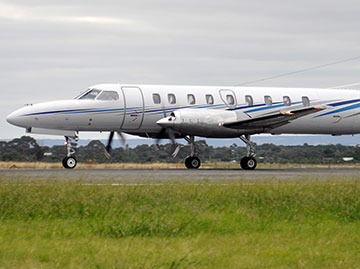
Piper Navajo VH-MZK wreckage to be salvaged

As a further step to establishing what led to the crash of Whyalla Airlines flight 904 last Wednesday 31 May, the Australian Transport Safety Bureau and the South Australia Police are arranging to salvage the wreckage of the Piper Chieftain from Spencer Gulf.

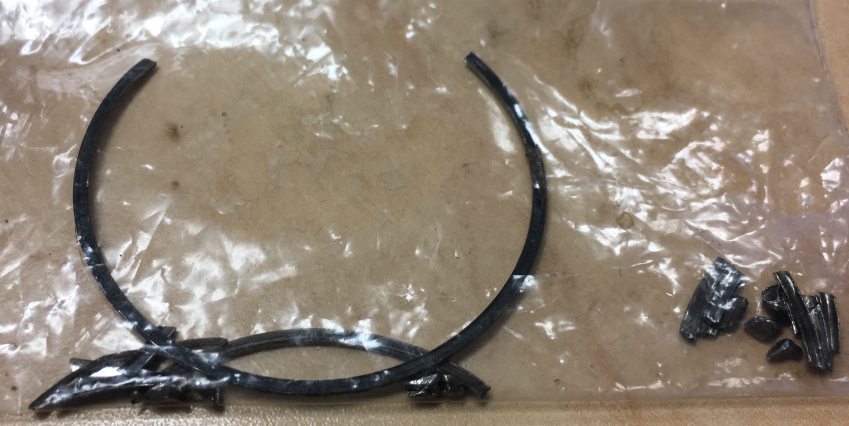
Although only one facet of the investigation, specialist examination of the wreckage is important to assist in establishing the airworthiness of the aircraft immediately prior to the accident. In addition, the crashworthiness of the aircraft, and its effect on the surviveability of its occupants will be examined.

In the meantime, collection and analysis of other evidence associated with the accident continues.

Cessna 206 crashes into the ocean off South Australia

The Australian Transport Safety Bureau is waiting for further information on the crash of a Cessna 206 in the ocean off South Australia yesterday.

Mr Kym Bills, Executive Director of the Australia Transport Safety Bureau said that the aircraft's wreckage has not yet been discovered.

'At this stage we are making preliminary inquiries, and we won't know the extent and direction of further investigations until we have more information', Mr Bills said.

Piper Navajo VH-MZK missing after distress call enroute Adelaide to Whyalla SA

Last night, 31st May 2000, the Australian Transport Safety Bureau (ATSB) was notified that the crew of a Piper Navajo Chieftain, registered VH-MZK, enroute Adelaide to Whyalla had initiated a distress call indicating engine failure.

Reportedly, there were eight persons on board the aircraft.

A Royal Australian Air Force aircraft in the area initiated an immediate search for the aircraft.

At 6.00am this morning, 1 June 2000, Australian Search and Rescue confirmed with the Bureau that wreckage from the aircraft has been located.

The ATSB has dispatched a team of three investigators specialising in operations, air traffic services and engineering to investigate the occurrence.

Taxiing collision, Bell 206L, Newman Airport, Western Australia, on 30 July 2022

Brief

Occurrence Briefs are concise reports that detail the facts surrounding a transport safety occurrence, as received in the initial notification and any follow-up enquiries. They provide an opportunity to share safety messages in the absence of an investigation.

What happened

On 30 July 2022, at about 1632 local time, the pilot of a Bell 206L LongRanger was relocating the helicopter from the fuel bowser to the operator’s parking area on the north-east side of a hangar at Newman Airport, Western Australia.

While lining up with marking aids on the taxiway, the pilot directed their attention towards a nearby parked helicopter to the right to ensure adequate clearance from the Bell 206L’s main rotor blade. As the pilot moved the 206L forward into the parking bay, there was a loud bang. The pilot reported there was no loss of control or abnormal movement after the sound and continued to land and shut down the helicopter without further incident.

During the post-flight inspection, it was identified that one main rotor blade had contacted the end of the gantry which supports the sliding doors of the hangar (Figure 1). The helicopter sustained minor damage to the rotor blade tip cap spanning about 10 cm (Figure 2).

Figure 1: Damage to hangar gantry

Figure 1: Damage to hangar gantry

Source: Operator, annotated by the ATSB

Figure 2: Damage to main rotor blade

Figure 2: Damage to main rotor blade

Source: Operator

Safety action

The operator has advised that it suspended helicopter operations around the apron area where the incident occurred, pending the outcomes of an internal investigation into the incident.

The operator will also review the risk analysis of the apron parking in the vicinity of the hangar and assess the current helicopter parking configuration.

Safety message

The FAA helicopter flying handbook[1](2022) advises that when taxiing near hangars or obstructions, the distance between the rotor blade tips and obstructions is difficult to judge.

To reduce collision risk, operators should consider human limitations in assessing the hazards and ensure crews maintain situational awareness of the aircraft’s established safe distance for separation from all objects during taxi.

Risk assessments on apron parking areas should be reviewed periodically to re-evaluate risks and mitigations. 

About this report

Decisions regarding whether to conduct an investigation, and the scope of an investigation, are based on many factors, including the level of safety benefit likely to be obtained from an investigation. For this occurrence, no investigation has been conducted and the ATSB did not verify the accuracy of the information. A brief description has been written using information supplied in the notification and any follow-up information in order to produce a short summary report and allow for greater industry awareness of potential safety issues and possible safety actions.

__________

  1. Helicopter Flying Handbook (FAA-H-8083-21B) Chapter 8, Federal Aviation Authority, 2022.

Occurrence summary

Mode of transport Aviation
Occurrence ID AB-2022-007
Occurrence date 30/07/2022
Location Newman Airport
State Western Australia
Occurrence class Serious Incident
Aviation occurrence category Taxiing collision/near collision
Highest injury level None
Brief release date 14/09/2022

Aircraft details

Manufacturer Bell Helicopter Co
Model 206L-3
Sector Helicopter
Operation type Part 133 Air transport operations - rotorcraft
Departure point Newman Airport, Western Australia
Destination Newman Airport, Western Australia
Damage Minor

Fuel starvation involving a Quest Kodiak 100, 65 km west of Camden Airport, New South Wales, on 1 May 2022

Brief

Occurrence Briefs are concise reports that detail the facts surrounding a transport safety occurrence, as received in the initial notification and any follow-up enquiries. They provide an opportunity to share safety messages in the absence of an investigation.

What happened

On 1 May 2022, at about 1558 local time, the pilot of a Quest Kodiak 100 departed Orange Airport, on a private flight, to Mittagong, New South Wales.

At 1620, while cruising at 9,500 ft, the pilot observed the ‘reservoir fuel’ warning light illuminate. They immediately put the fuel pump on, checked both fuel cocks were on, checked the fuel quantity and balance and reduced the power to preserve fuel. Shortly after, the pilot then received a fuel starvation imminent warning followed by low fuel pressure warnings.

At the time of the warnings, the aircraft was overflying a remote sandstone escarpment region that contained deep gorges and large cliff lines, and was approximately 30 NM (56 km) away from any open land. Due to limited options to conduct a precautionary landing, the pilot continued to cycle the fuel pump, further reduced the power and turned towards an area suitable for a forced landing. During this time, the pilot heard multiple loud bangs.

The pilot continued to cycle the fuel pump and after a few minutes the fuel messages stopped. When the pilot was satisfied that the engine had enough fuel, they tracked direct to Mittagong and landed the aircraft safely at about 1651.

Engineering inspection

Following the incident, the pilot conducted a post-flight inspection and observed the upper skin on the right wing had crumpled and collapsed. To relieve the vacuum in the wing, the pilot attempted to open the fuel cap by forcing a piece of laminate under the cap. After partly opening the cap, a large amount of air was sucked into the tank and the upper skin of the wing popped back out once the pressure was relieved. However, there was still a large depression of about 11 mm (Figure 1).

Figure 1: Fuel tank depression on the right wing

Figure 1: Fuel tank depression on the right wing

Source: The pilot, annotated by ATSB

An engineering inspection of the right wing revealed the ribs and stringers had failed and the wing was no longer airworthy. Further inspection of the fuel tank vent line inlet recess also revealed mud wasp nests deep inside the vent lines for both wings, which were unable to be inspected or seen visually during the pre-flight inspection (Figure 2 and Figure 3).

Figure 2: Fuel tank vent line NACA inlet recess on the wing

Figure 2: Fuel tank vent line NACA inlet recess on the wing

Source: The pilot

Figure 3: Diagram of the fuel tank vent line within the wing

Figure 3: Diagram of the fuel tank vent line within the wing

Source: Pilot, annotated by ATSB

Fuel tank vents are used to ensure the pressure inside the tank is maintained when fuel is being used by the engine. If a fuel tank vent becomes blocked while fuel is being pumped out, it will create a vacuum due to the inability of air not being vented in to replace the fuel, which can cause the tank to collapse.

Pilot comments

The pilot advised:

  • The aircraft was parked in a hangar and had been flown on the Thursday and Friday prior to the occurrence. No abnormalities during those flights were detected.
  • They would typically only fill the fuel tanks halfway, but while at Orange they had filled them up to the top. They postulated that the vacuum occurred in this flight because there was less air in the tank compared to when the tanks are half full.

Safety action

As a result of this occurrence, the pilot advised the ATSB that they made a protective plug for the fuel tank vent lines to prevent wasps from building nests (Figure 4). The plug consists of a clear plastic tube that is long enough to be inserted into the vent line, which can be used to detect an obstruction in the line if resistance is felt. At the end of the tube is a masonry plug with a screw to seal the tube and streamers to ensure the plug is not missed during the pre-flight inspection. In addition to this, the pilot has also informed other operators at the aerodrome of the potential hazard.

Figure 4: Devised plug to protect the vent line inlet recess

Figure 4: Devised plug to protect the vent line inlet recess

Source: Pilot

Safety message

Blocked, or even partially blocked, pitot tubes and fuel tank vents can compromise the safety of the flight. Wasps can begin to build a nest rapidly and significantly block a fuel vent line or pitot tube within 30 minutes. Regardless of whether an aircraft has a short turn-around time or is parked overnight, protective covers and screens should be used on both fuel vent lines, fuel caps and pitot tubes. In addition to visually inspecting pitot tubes during pre-flight inspections, pilots should also inspect fuel vent lines. Moreover, operators and aerodrome personnel should monitor and remove any wasp nest sites in the general area of where the aircraft is stored and maintained to further reduce the risk.

For further information on wasp nest infestations please refer to the CASA Airworthiness Bulletin AWB-02-052.

About this report

Decisions regarding whether to conduct an investigation, and the scope of an investigation, are based on many factors, including the level of safety benefit likely to be obtained from an investigation. For this occurrence, no investigation has been conducted and the ATSB did not verify the accuracy of the information. A brief description has been written using information supplied in the notification and any follow-up information in order to produce a short summary report, and allow for greater industry awareness of potential safety issues and possible safety actions.

Occurrence summary

Mode of transport Aviation
Occurrence ID AB-2022-002
Occurrence date 01/05/2022
Location 65 km west of Camden
State New South Wales
Occurrence class Accident
Aviation occurrence category Fuel starvation
Highest injury level None
Brief release date 01/07/2022

Aircraft details

Manufacturer Quest Aircraft Company
Model Kodiak 100
Sector Turboprop
Operation type General Aviation
Departure point Orange Aerodrome, New South Wales
Destination Mittagong Aerodrome, New South Wales
Damage Substantial

Propellor blade defect, Diamond Aircraft Industries DA-40 near Moorabbin Airport, Victoria, on 1 December 2021

Brief

Occurrence Briefs are concise reports that detail the facts surrounding a transport safety occurrence, as received in the initial notification and any follow-up enquiries. They provide an opportunity to share safety messages in the absence of an investigation.

What happened

On the morning of 1 December 2021, a flight instructor was preparing for a proficiency check flight in a Diamond Aircraft Industries DA-40 aircraft at Moorabbin Airport, Victoria. While completing the daily inspection of the aircraft, the instructor identified an anomaly with one of the propellor blades. The painted surface surrounding the leading edge of the blade had cracked. In addition, an associated portion of the adhesively bonded metallic strip had partially detached from the blade body, approximately 5 cm from the propellor blade tip.

The instructor notified another more senior company pilot (also an instructor) of the defect. However, while discussing the problem, assurance was provided that company engineering was aware of the problem and that the aircraft was considered airworthy.

Preparations for the flight were subsequently completed. The instructor, along with the assessment pilot, departed Moorabbin Airport in the Diamond DA-40 for the proficiency check flight. About 20 minutes into the flight, and while operating in the designated training area, a metallic ‘ping’ was heard by both pilots along with the detection of an airframe vibration (that lasted 1 to 2 seconds). The instructor recalled no abnormality with the engine indications or flight controls. The proficiency check flight proceeded without further issue and concluded approximately 60 minutes later.

After the return landing at Moorabbin Airport, and during the post-flight inspection of the aircraft, the flight instructor identified damage to the previously inspected propellor blade (Figure 1). The bonded metallic erosion strip from the leading edge of the blade had detached and fractured.

Figure 1: The damaged propellor blade showing a fractured erosion strip along the leading edge (left) and impact damage to the leading edge (right)

Figure 1: The damaged propellor blade showing a fractured erosion strip along the leading edge (left) and impact damage to the leading edge (right)

Source: Operator

Operator’s investigation

The operator removed the propeller and submitted it to an overhaul facility for examination and repair. The engineering report identified that the propellor blade had sustained impact damage to the composite blade structure in the region of the partially missing metallic strip. The report concluded that the pre-existing impact damage was from runway debris which had compromised the adhesive bonding of the metallic strip, leading to its eventual failure.

Operator’s safety action

The operator’s investigation of this occurrence identified that, although the flight instructor had identified then reported the propellor damage to a senior company pilot, a communication error between the parties led to confusion regarding the nature of the defect. As a result, on 10 December 2021, the operator issued an advisory notice to their pilots stating:

  • Crew, where possible and safe to do so, are to use their phones to take photos of any defects/concerns during an aircraft inspection.
  • All concerns and supporting evidence are to be presented to the HAAMC or their delegate.
  • Composite propellers tap tests are now conducted by the HAAMC and/or their delegate at the end of each flying day across the Diamond fleet.

Safety message

This incident serves as a reminder to pilots of the importance of contacting appropriate maintenance engineering personnel if a defect is found during pre- or post-flight inspections. In this situation, although a propellor defect was identified that affected the airworthiness of the aircraft, company engineering personnel were not made aware of the damage. An inspection by a licensed engineer would have provided an opportunity to inspect and further assess to then make an appropriate decision regarding the seriousness of the damage.

Pilots, operators, and maintainers should note that it is a civil aviation regulatory requirement for all aircraft defects, whether major or minor, to be endorsed on Part 2 of the maintenance release. The maintenance release is a document considered central to the safe operation of an aircraft. The aircraft must not be flown if the defect or damage is assessed as major, and, if the defective/damaged item is required for the intended flight. The aircraft maintenance release ceases to be valid until such a defect is rectified.

About this report

Decisions regarding whether to conduct an investigation, and the scope of an investigation, are based on many factors, including the level of safety benefit likely to be obtained from an investigation. For this occurrence, no investigation has been conducted and the ATSB did not verify the accuracy of the information. A brief description has been written using information supplied in the notification and any follow-up information in order to produce a short summary report, and allow for greater industry awareness of potential safety issues and possible safety actions.

Occurrence summary

Mode of transport Aviation
Occurrence ID AB-2021-031
Occurrence date 01/12/2021
Location near Moorabbin Airport
State Victoria
Occurrence class Incident
Brief release date 20/05/2022

Aircraft details

Manufacturer Diamond Aircraft Industries
Model DA-40
Sector Piston
Operation type General Aviation
Departure point Moorabbin Airport, Victoria
Destination Moorabbin Airport, Victoria
Damage Minor

Fuel starvation, Cessna 172, Gold Coast Airport, Queensland, on 16 March 2022

Brief

Occurrence Briefs are concise reports that detail the facts surrounding a transport safety occurrence, as received in the initial notification and any follow-up enquiries. They provide an opportunity to share safety messages in the absence of an investigation.

What happened

On 16 March 2022, at about 1025 local time, a Cessna 172 RG was on approach to Gold Coast Airport, Queensland. The pilot was conducting a solo navigation training exercise.

As the aircraft approached the circuit area, the pilot actioned the before-landing checks, moving the fuel selector from the RIGHT to BOTH indent. Shortly after, the engine stopped. The pilot assessed that the aircraft was not in a position to glide to the runway and prepared the aircraft to conduct a forced landing onto a beach. They made a MAYDAY call on the Gold Coast Tower frequency. 

An instructor from the same flying school, flying at the time, advised the pilot to ‘check the fuel selector’. The pilot adjusted the position of the selector and felt it click into the BOTH indent and the engine subsequently restarted. The pilot subsequently conducted a normal circuit and landed at Gold Coast Airport.

Maintenance actions

The aircraft’s fuel system was inspected by a licenced aircraft maintenance engineer and no faults were found.

Fuel system

The Cessna 172 RG has an integral fuel tank in both the left and right wing. Fuel is gravity fed to a four-way selector valve, then through a strainer to the engine-driven fuel pump and on to the carburettor. The fuel selector allows fuel to be fed from the left tank, right tank, both fuel tanks, or to be selected to OFF.

The pilot’s operating handbook (POH) stated:

The fuel selector valve should be in the BOTH position for take-off, climb, descent, landing, and maneuvers that involve prolonged slips or skids. Operation from either LEFT or RIGHT tank is reserved for level cruising flight only.

Operator’s investigation

Cessna 172 RG POH top-of-descent and before-landing checklists required the fuel selector valve be selected to BOTH. However, the operator’s internal investigation into the incident identified that neither its top-of-descent nor before-landing checklist accurately reflected this requirement.

The operator conducted a survey of its staff and students and identified that, while the majority were aware of the requirement to ensure the fuel selector was selected to BOTH at the top of descent, a small minority changed tanks as part of the before-landing checklist.

Safety action

As a result of this incident the operator has:

  • held a staff discussion to discuss the incident and standardise procedures based on the POH
  • raised a safety bulletin to highlight the issue and the dangers of changing fuel tanks at low altitudes
  • reviewed and updated the quick reference handbook and abbreviated checklist to follow the manufacturer’s POH
  • briefed all students as part of their pre-flight briefings to ensure awareness of following correct procedures.

Safety message

The ATSB continues to receive reports of engine failures due to fuel starvation. Effective fuel management during flight along with knowledge of the aircraft’s fuel system and proficiency in its use will ensure fuel is continuously supplied to the engine. The ATSB publication, Avoidable Accidents No. 5 - Starved and exhausted: Fuel management aviation accidents (AR-2011-112), is available from the ATSB website.

Operators are advised to ensure their operating procedures and checklist closely align with the aircraft manufacturer’s published materials. This will ensure flight crews consistently operate the aircraft in a method appropriate for the aircraft type. 

About this report

Decisions regarding whether to conduct an investigation, and the scope of an investigation, are based on many factors, including the level of safety benefit likely to be obtained from an investigation. For this occurrence, no investigation has been conducted and the ATSB did not verify the accuracy of the information. A brief description has been written using information supplied in the notification and any follow-up information in order to produce a short summary report, and allow for greater industry awareness of potential safety issues and possible safety actions.

Occurrence summary

Mode of transport Aviation
Occurrence ID AB-2022-001
Occurrence date 16/03/2022
Location Gold Coast Airport
State Queensland
Occurrence class Incident
Aviation occurrence category Fuel starvation
Highest injury level None
Brief release date 01/07/2022

Aircraft details

Manufacturer Cessna Aircraft Company
Model 172 RG
Sector Piston
Operation type Part 141 Recreational, private and commercial pilot flight training
Departure point Gold Coast Airport, Queensland
Destination Gold Coast Airport, Queensland
Damage Nil

Engine failure and ditching, Socata TB-20, 20 km west of Perth Airport, Western Australia, on 13 November 2021

Brief

Occurrence Briefs are concise reports that detail the facts surrounding a transport safety occurrence, as received in the initial notification and any follow-up enquiries. They provide an opportunity to share safety messages in the absence of an investigation.

What happened

On 13 November 2021, a Socata TB-20 Trinidad aircraft departed Jandakot Airport, Western Australia at about 1510 local time, for a private flight with two people on board. The flight was intended to be a 30-minute flight along the coast, at an altitude of no more than 1,500 ft.

About 15 minutes after take-off, the pilot noticed the engine was running ‘rough’. Believing it similar to a previous experience of vapour lock, the pilot began the relevant procedure by turning on the electric fuel pump and switching fuel tanks. This alleviated the rough running, however the engine continued to feel ‘different than normal’, so the pilot turned to return to Jandakot. About 2 minutes later, the rough running returned and shortly after the aircraft’s engine lost power. The aircraft was at 1,000 ft, about 1 km offshore.

The pilot assessed that the likelihood of a successful landing inland (past the sand dunes) was remote due to the aircraft’s altitude and position. The beach was being heavily used by the public, so the pilot decided to ditch in the water, as close to the shore as possible, and away from swimmers. The pilot radioed Perth air traffic control to notify them of the engine failure and intent to commence a ditching. The pilot manoeuvred to flare and touch down at 65­—70 kt, which they judged to be the slowest safe approach speed, with landing gear retracted.

A forced landing was conducted approximately 50 m from the shore. The pilot and passenger sustained no injuries during the ditching and evacuation from the aircraft. The aircraft initially sustained cracks to the fuselage and was subsequently destroyed by wave action and salvage activities.

Figure 1: Aircraft wreckage

Figure 1: Aircraft wreckage

Source: Pilot of the aircraft

Pilot comments

The pilot attributed the successful outcome to their familiarity with the area and mental preparation, having previously considered the options available in a situation such as this. They also noted that prior research and discussion with other pilots gave them an understanding of how to minimise impact forces and the risk of becoming inverted during ditching.

Safety message

When experiencing a rough running engine, pilots should focus on flying the aircraft and continually assess landing options available in case of a complete engine failure during a turnback. Focus mainly on the arc where you would be able to land if the engine had fully failed — this is the current landing option. CASA recommends that scanning the environment should take 85% of the time available, 10% on checking aircraft attitude including lookout, and 5% of the time scanning of the altitude and airspeed indications.[1]

About this report

Decisions regarding whether to conduct an investigation, and the scope of an investigation, are based on many factors, including the level of safety benefit likely to be obtained from an investigation. For this occurrence, no investigation has been conducted and the ATSB did not verify the accuracy of the information. A brief description has been written using information supplied in the notification and any follow-up information in order to produce a short summary report, and allow for greater industry awareness of potential safety issues and possible safety actions.

__________

  1. ATSB booklet: ‘Avoidable Accidents No. 3 – Managing partial power loss after takeoff in single-engine aircraft’

Occurrence summary

Mode of transport Aviation
Occurrence ID AB-2021-029
Occurrence date 13/11/2021
Location 11 NM west of Perth Airport
State Western Australia
Occurrence class Accident
Aviation occurrence category Engine failure or malfunction
Highest injury level None
Brief release date 04/02/2022

Aircraft details

Manufacturer SOCATA-Groupe Aerospatiale
Model TB-20
Sector Piston
Operation type Private
Departure point Jandakot Airport, Western Australia
Destination Jandakot airport, Western Australia
Damage Destroyed

Flight preparation, Robinson R44, Hervey Bay, Queensland, on 13 October 2021

Brief

Occurrence Briefs are concise reports that detail the facts surrounding a transport safety occurrence, as received in the initial notification and any follow-up enquiries. They provide an opportunity to share safety messages in the absence of an investigation.

What happened

On 13 October 2021, at about 1400 local time, the pilot of a Robinson R44 helicopter was conducting a private flight from Tyagarah New South Wales to Rules Beach Queensland via Hervey Bay Queensland to re-fuel. After landing at Hervey Bay aerodrome, the pilot attached the fuel static cable[1] from the fuel bowser to the helicopter skid prior to commencement of refuelling (Figure 1). The pilot then became aware the fuel bowser was not serviceable and returned to the helicopter to plan the next stage of the flight to Rules Beach. A current NOTAM[2] had been issued at the aerodrome stating, ‘Avgas not available’.

The pilot then started the engine and became airborne. As the helicopter taxied prior to departure, the pilot was focused on another aircraft landing on the runway and then reported hearing a loud bang. The pilot banked the helicopter to the right and noticed the fuel static cable on the ground. The pilot reported there was no effect on flight and departed for Rules Beach. The pilot called the re-fueller en route to advise of the incident. The re-fueller informed the pilot that the fuel static cable was found in multiple pieces across the fuel facility apron and nearby taxiway. After landing at Rules Beach, the pilot inspected the helicopter and discovered minor damage to the tail boom, the tail rotor and main rotor which had made contact with the fuel static cable (Figure 2).

Figure 1: Fuel static cable attachment point

Figure 1: Fuel static cable attachment point

Source: Operator

Figure 2: Damage to main and tail rotors

Figure 2: Damage to main and tail rotors

Source: Operator

Safety message

This incident highlights the importance of ensuring that all pre-flight checks and procedures are carried out systematically as detailed in the flight manual. If interrupted, it is best practice to start again from the beginning to ensure that nothing is missed.

Pilots detecting sounds or control inputs that are not associated with normal aircraft operations, in particular during the critical phases of flight, should land and complete a thorough inspection of the aircraft as soon as it is safe and practical to do so.

The incident also highlights the importance for pilots to review all NOTAMs relevant to the planned flight.

About this report

Decisions regarding whether to conduct an investigation, and the scope of an investigation, are based on many factors, including the level of safety benefit likely to be obtained from an investigation. For this occurrence, no investigation has been conducted and the ATSB did not verify the accuracy of the information. A brief description has been written using information supplied in the notification and any follow-up information in order to produce a short summary report, and allow for greater industry awareness of potential safety issues and possible safety actions.

__________

  1. A fuel static cable ensures electrical continuity between the aircraft and the fuel bowser, preventing sparks when the ground operator connects the refuelling hose to the aircraft filling point.
  2. A Notice to Airmen is a notice filed with an aviation authority to alert aircraft pilots of potential hazards along a flight route or at a location that could affect the flight.

Occurrence summary

Mode of transport Aviation
Occurrence ID AB-2021-026
Occurrence date 13/10/2021
Location Hervey Bay Aerodrome
State Queensland
Occurrence class Incident
Aviation occurrence category Aircraft preparation
Brief release date 04/02/2022

Aircraft details

Manufacturer Robinson Helicopter Co
Sector Helicopter
Operation type Private
Departure point Hervey Bay Aerodrome, Queensland
Destination Rules Beach, Queensland
Damage Minor