ATSB Supplementary Whyalla Airlines Investigation Report

The supplementary ATSB investigation report into the Whyalla Airlines fatal accident tabled in the Senate today confirms the likelihood of the ATSB's accident scenario in its December 2001 report in contrast to the findings of the SA State Coroner in July 2003.

In November last year the ATSB formally re-opened its investigation into the VH-MZK accident after possible significant new evidence about a potential manufacturing defect in the left engine crankshaft steel became available from the US engine manufacturer:

- ATSB re-testing of the crankshaft, including using independently witnessed destructive testing and the input of external laboratories, found no problems with the steel that could have led to it fracturing under normal operating conditions
- in contrast to the Coroner's findings, this confirmed the ATSB's earlier conclusions
- the Coroner's solicitor has advised the ATSB that the Coroner did not receive expert advice on the ATSB 50-page test report before concluding it took the matter no further.

The ATSB does not agree with the SA Coroner that the pilot of VH-MZK would have allowed, ahead of any stressful flight situation, his right engine to overheat to the point of melting a hole in the number 6 piston eight minutes into the cruise phase of the flight, especially when the temperature monitoring probe is on top of the number 6 cylinder:

- the SA Coroner conceded that 'it is difficult to form definite conclusions on this issue'
- the ATSB's latest report confirms the much greater likelihood that the left engine failed first and then the right engine overheated when power was boosted in response
- as the ATSB told media when releasing its report on 19 December 2001, it is not appropriate to blame the young pilot in this scenario and the ATSB did not do so.

As in December 2001, the ATSB's report does not criticise Whyalla Airlines for its fuel leaning settings in climb that were in accordance with aircraft manufacturer guidelines:

- the ATSB continues (since October 2000) to urge industry to use conservative (rich) fuel climb settings in Piper Chieftains to minimise the possibility of engine damage
- the Bureau report also reinforces other areas of safety action accepted by the Coroner.

It is most unfortunate that damages proceedings in the US cast a long shadow over the inquest and exacerbated problems in gaining access to the scant available evidence.

In light of the detailed material in the ATSB's 170-page supplementary report strongly supportive of its December 2001 report, the ATSB finds the sharp criticism of its investigation by the South Australian State Coroner last July to be deeply regrettable.

The ATSB will be prepared to further explain and, if necessary, defend its conclusions in Senate Legislation Committee public hearings next week.

For the future, the ATSB will continue to seek to work cooperatively with state and territory coroners around Australia because of the public interest in transport safety.

ATSB Epping rail accident report has broad safety significance

The ATSB's report into the Epping rail accident reinforces the limitations of reliance on automatic train stops and 'deadman's handle' devices in the event of driver incapacitation and highlights the importance of improving these defences as well as medical standards and processes for train crew.

The sole purpose of ATSB investigations is to improve future safety and the Bureau acknowledges the safety actions taken through the Victorian Department of Infrastructure as a result of ATSB's investigation such as reviewing signalling systems and defences, developing new medical standards and setting up an inquiry into pilot valves such as the 'deadman's handle'.

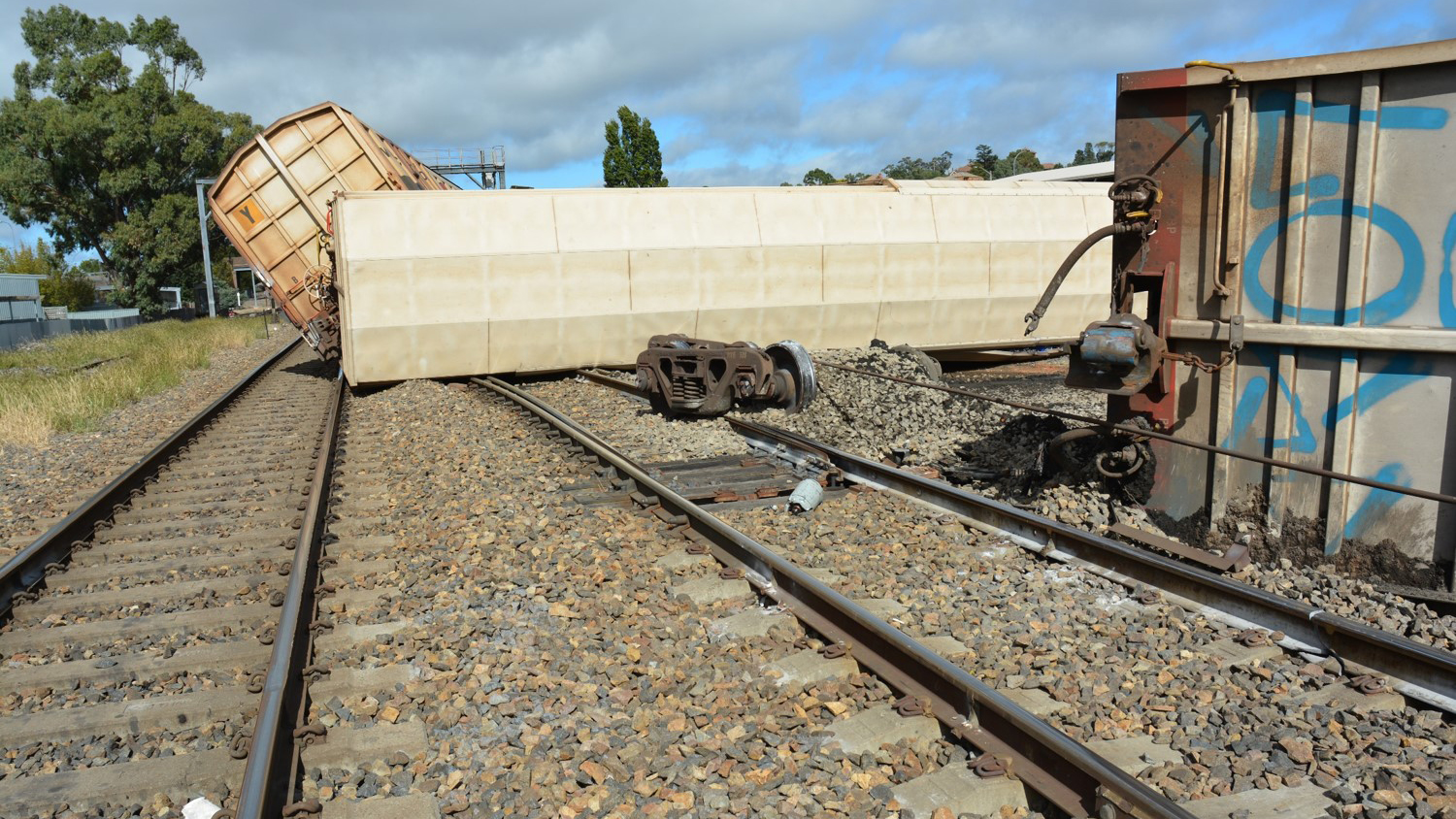
At 0914 on 18 June 2002, a suburban electric train with passengers collided with a suburban electric train without fare-paying passengers at Epping. Both the trains and the rail infrastructure sustained damage as a result of the collision. There were no major injuries to either passengers or crew. The Victorian Government asked the Australian Transport Safety Bureau to conduct an independent investigation of the collision. The team of ATSB investigators were supplemented by consultants engaged to provide technical expertise on specific aspects of brake systems and transport medicine.

The ATSB established that train maintenance was not a factor in the accident. While the signalling system, which incorporates automatic train stops, operated within its design criteria, it could not maintain a minimum safety margin between trains to prevent the collision at the speed involved.

Trains are fitted with pilot valve devices (including the 'deadman's handle') so that in the event of driver incapacitation an additional defence operates so that the train should brake and be brought to a halt. On this occasion the driver of train 1648 had become incapacitated but the pilot valve did not activate to apply the train's emergency brakes. Because train 1648 was travelling at about double the posted speed of 40 km/h, the subsequent application of automatic braking after passing a red stop signal could not stop the train in time before it reached the collision point.

The report also addresses factors that contributed to the driver working when unwell and recommends improved medical standards and procedures in addition to other recommendations.

The Investigation Team reviewed the factors surrounding the Footscray collision on 5 June 2001 (available on the ATSB Web Site) which involved some similar safety issues including with respect to driver incapacitation and pilot valves such as the deadmans handle.

The issue of drivers becoming incapacitated whilst driving a train, and the train pilot valves not activating, are also factors currently being considered in the Special Commission of Inquiry into the Waterfall Rail Accident (New South Wales). In February, the ATSB briefed officers of the Commission on the possible significance of the Footscray and Epping accidents, including the limitations of pilot valves.

Aviation Accident Bankstown Airport

The Australian Transport Safety Bureau has been advised of a fatal aviation accident involving a Piper Seneca aircraft, VH-CTT which occurred at Bankstown Airport at about 12.52 (AEDST) today.

At this point in time details available to the Bureau are sketchy.

A team of Transport Safety Investigators is enroute to Bankstown and is expected to arrive on-site this evening.

Any further Information as to the Bureau's involvement will be released as it becomes available.

Witnesses to this accident are asked to call the Bureau on 1800 020 616

Chiefs of Aircraft Accident Investigation Singapore

Partnerships & Cooperation in an Environment of Resource Constraints & Security Imperatives

  • There is a tension between independent safety investigation with accident site control and other legitimate investigation that entails cooperation
  • Also, resource constraints affect most States
  • The tension is exacerbated by growth of security in terms of resources and uncertainty whether an event is the result of unlawful interference
  • Cooperation with other investigations with appropriate boundaries will be critical, also bilateral and regional partnerships/MOUs

<?UMBRACO_MACRO attachment="1613" macroAlias="AttachmentLink" />

Access to and Protection of Confidential Data - Annex 13, Legislation, Liability and Litigiousness

<?UMBRACO_MACRO attachment="1614" macroAlias="AttachmentLink" />

ATSB initial response to Whyalla Airlines inquest findings

The ATSB supports safety recommendations the SA Coroner has made today that reinforce those by the ATSB, but disagrees with some of the Coroner's key conclusions.

The ATSB formally re-opened its investigation in November last year after possible significant new evidence about a potential manufacturing defect in the left engine crankshaft became available from the US engine manufacturer (Textron Lycoming)

- the ATSB has since re-tested the crankshaft, including using destructive testing open to non-Bureau witnesses and the input of external laboratories, and found no problems with the steel that could have led to it fracturing under normal operating conditions;
- in contrast to the Coroner's conclusion, this confirmed the ATSB report findings.

The ATSB does not agree with the SA Coroner that the pilot of VH-MZK would have allowed, ahead of any stressful situation, his right engine to overheat to the point of melting a hole in a piston and then be unlucky enough that a deep-seated long-term problem in the left engine crankshaft would have suddenly caused that engine to fail
- the ATSB continues to believe that the left engine failed first and then the right engine overheated when power was boosted in response, when seeking to reach Whyalla;
- as the ATSB told media when releasing its report on 19 December 2001, it is not appropriate to blame the young pilot in this scenario and the ATSB did not do so.

The ATSB report also did not criticise Whyalla Airlines for its fuel leaning settings in climb, finding that they were in accordance with the aircraft manufacturer's guidelines
- the ATSB continues (since October 2000) to urge industry to use conservative (rich) fuel climb settings in Piper Chieftains to minimise the possibility of engine damage.

The December 2001 ATSB investigation report was released after a major 18 month investigation and was based on the evidence available at that time
- there were no survivors or any aircraft flight data or cockpit voice recordings to assist the ATSB with the very complex investigation;
- the recommendations that the ATSB made in 2000 and 2001 to improve future safety have been widely regarded, including by the US Federal Aviation Administration.

The ATSB cooperated fully with the South Australian State Coroner's inquiry in the 18 months since the Bureau's report was released but found the inquest unduly adversarial
- parties seeking US civil damages money used the inquest to attack the ATSBs report into what are very complex issues, and this was supported by the Coroner's assistants;
- the ATSB has no financial or 'blame' agenda and is only interested in future safety;
- in hindsight any complex report can be improved and the ATSB's is no exception.

The Executive Director of the ATSB, Mr Kym Bills, has today written to the SA Coroner seeking any significant material that he may have relied upon that the ATSB has not seen. The Bureau will carefully review any new material provided before publicly releasing a supplementary report to close its re-opened investigation.

ATSB fatality investigations in Australia and the Asia Pacific

Speech delivered to Asia-Pacific Coroners' Conference, Hobart, Tasmania on ATSB fatality investigations in Australia and the Asia Pacific by Mr Kym Bills, Executive Director, Australian Transport Safety Bureau.

Transport Safety in Australia: Data, investigations, challenges

Overview

  • Australia has a very safe transport system in international terms across all modes
  • However, major accidents are low probability, high consequence events and we can never afford to be complacent
  • Human factors associated with well-known human performance continue to dominate
  • Systemic investigations remain crucial but pro-active reporting and data analysis also provide for evidence-based risk reduction.

ATSB Role &amp; Business 2006-07: Graduate overview

Presentation given by Mr Kym Bills,
Executive Director
Australian Transport Safety Bureau
Department of Transport and Regional Services

Speech presented 7 Aug 2006

<?UMBRACO_MACRO attachment="1607" macroAlias="AttachmentLink" />