ATSB Response to WA Coroner's Findings on VH-SKC Accident

The ATSB is pleased that Coroner Hope has adopted much of the material in ATSB's final report on the tragic VH-SKC accident and stated that "ultimately it appears that the ATSB report was based on a substantial amount of scientific investigation and many issues were diligently pursued" (p21). The Coroner also cites (eg p6) the evidence of Dr Brock who was a consultant to the ATSB and part of the ATSB investigation team.

The Coroner concludes (p55) that: "It appears that the aircraft was unpressurised for a significant period of its climb and for the subsequent flight. While it is possible that the occupants died as a result of hypobaric hypoxia, I cannot exclude the possibility that some unknown and unidentified toxic fumes caused their incapacity and death".

The ATSB final report (p29) conclusion was very similar: "Due to the limited evidence available, it was not possible to draw definitive conclusions as to the factors leading to the incapacitation of the pilot and occupants of VH-SKC. The aircraft was probably unpressurised for a significant part of its climb and cruise for undetermined reasons. The pilot and passengers were incapacitated, probably due to hypobaric hypoxia, because of the high cabin altitude and their not receiving supplemental oxygen."

ATSB reported that testing established that carbon monoxide and hydrogen cyanide were unlikely to have been factors - there was no evidence of another toxic substance.

The WA Coroner has also supported the safety recommendations that the ATSB had either already made or had proposed in submissions and that is very welcome.

While an investigation report into a remote 440km/h impact crash and subsequent fire which destroys much of the evidence is always open to criticism, based on its initial reading of the 75-page report, the ATSB does not accept the Coroner's criticisms concerning the ATSB.

The ATSB cannot prepare an investigation report that is suitable for an adversarial legal process because this is contrary to its 'no blame' legislation based on Annex 13 to the Chicago Convention. The proposal to share investigation information with those who may use it in blame proceedings also has limitations. The Coroner, police or regulators could have undertaken their own parallel inquiries for such purposes.

The ATSB investigation report was prepared to satisfy the Bureau's Commonwealth legislation (which it did), not to satisfy the WA Coroner or any other parties who may have had an agenda related to blame or litigation. The ATSB nevertheless provided extensive expertise at its expense to assist the Coroner during the Inquest.

The Coroner criticises the ATSB for deficiencies and delays with the forensic tests done in Brisbane - however, coroners not ATSB have control/powers with respect to autopsies and forensic testing. The ATSB relies on coroners to authorise the conduct of such testing and has no powers to do so itself. Improving cooperation with coroners in relation to sharing evidence is a key element of a memorandum of understanding currently under discussion with coroners across Australia. Coroner Hope's final remark (p75) that "The various Coronial jurisdictions clearly have a role to play in this context to ensure that sensible co-operation can take place." is welcome.

The Coroner's criticism (pp 9-10) of the letter written by the ATSB Executive Director to the Coroner on 26 March 2002 (copy attached) is noted. The letter was written and sent only after the Executive Director had obtained legal advice that it would be appropriate to do so given that the Inquest was in the nature of an inquiry.

The Bureau is deeply concerned at the personal criticism directed towards its senior Perth-based investigator (pp17ff). It does not agree that there is evidence to conclude that the investigator "demonstrated an unfortunate lack of compassion for grieving families who were searching for answers." The investigator had the difficult job of finalising the investigation report after several staff had resigned/retired from the Bureau and had to face aggressive cross-examination.

The Coroner refers to the Transport Safety Investigation Bill 2002 that is before the Commonwealth Parliament and suggests that this may need to be amended. This Bill has been extensively discussed with representatives of the Coroners and their suggestions have been incorporated. There is positive and helpful ongoing discussion with Coroners on draft regulations and a future memorandum of understanding.

Important Editorial Information

ATTENTION: Editors/Chief of Staff, Aviation/transport writers

The Australian Transport Safety Bureau (ATSB) is Australia's prime transport safety investigation agency and conducts independent investigation of civil aviation accidents, incidents and safety deficiencies. The ATSB also has safety roles in other transport modes including maritime and rail investigation, statistical analysis and research, and coordination of the National Road Safety Strategy.

A small dedicated Communications & Information (C&I) team handles inquiries from local, interstate and international media, coordinates media conferences and issues news releases.

Journalists Can Register For Regular ATSB Media Updates

Journalists are invited to register their contact information on the ATSB web site to receive - via e-mail - an alert to advise that we have released a new report or a media event has been planned by the ATSB.

Both local and international journalists may take advantage of this opportunity to receive up-to-the-minute information as it is released.

The media registration form is set in a secure environment to protect your personal details. All information is encrypted and stored in such a way that only the ATSB C&I Team has access to the information. This information will only be used for sending media releases and in accordance with privacy principles will not be released to any other organisation.

You can access the latest news releases from this site.

ATSB releases report on microburst windshear serious incident

The Australian Transport Safety Bureau (ATSB) today released a report on the circumstances of a serious incident where a fare-paying scheduled passenger flight encountered microburst windshear near Brisbane last year.

Windshear is a change in wind speed and/or direction, including updrafts and downdrafts. An aircraft may experience a significant deterioration in flight performance when exposed to windshear of sufficient intensity or duration.

On 18 January 2001, a Boeing 737-476 aircraft (VH-TJX) encountered microburst windshear at 7.29am while conducting a go-around from runway 19 at Brisbane aerodrome.

The aircraft was operating a scheduled fare-paying passenger service from Sydney to Brisbane when it encountered an intense thunderstorm.

The report states:

  • As the aircraft passed 1,000 feet during the landing approach, it encountered rain and some isolated hail. The approach lights for runway 19 were visible to the crew, and the pilot in command elected to continue the approach.
  • At about 500 feet, the weather deteriorated rapidly, and the aircraft encountered hail and turbulence.
  • At a height of 171 feet above ground level, the pilot in command discontinued the approach and applied go-around engine thrust.
  • The aircraft commenced to climb normally at about 3,600 feet/minute, however, shortly after the go-around was initiated, the climb performance substantially reduced to less than 300 feet/minute due to the effects of the microburst downdraft and from flight through heavy rain.
  • The pilot in command applied maximum engine thrust to improve the aircrafts heavy climb performance, and advised the Aerodrome Controller that the aircraft had encountered severe windshear.
  • The crew then diverted the aircraft to Maroochydore where it landed without further incident.

The occurrence highlights that thunderstorms and convective activity in terminal areas are a significant issue in Australian and international aviation.

This incident also highlights that without extensive Doppler weather radar capabilities, and in the absence of appropriate systems designed to detect hazardous windshear in Australia there is a need for collaborative decision making among forecasters, controllers, pilots and operators during periods of intense or severe convective weather.

In its report, the ATSB made a number of recommendations to Airservices Australia, the Bureau of Meteorology and the Civil Aviation Safety Authority (CASA). It also notes that a number of safety actions have been initiated or implemented by the operator, Airservices and CASA as a result of the investigation.

The safety actions include:

  • CASA is developing regulatory requirements and standards for organisations providing meteorological services in support of air navigation and air traffic services within Australia and its territories.
  • Airservices Australia will develop a refresher training module based on the circumstances of this occurrence and will mandate its completion for all Full Performance Controllers.

The operator has initiated or implemented a number of safety actions as a result of the ATSB investigation, including:

  • The development of a weather radar training package for flight crews and enhancement of flight crew education on the performance deterioration of aircraft in heavy rain.
  • Undertaking a project to integrate qualified meteorologists into its dispatch processes in order to initiate best practice improvements.

Investigation into British Airways cargo hold fire under way

The Australian Transport Safety Bureau (ATSB) investigation into a reported fire in the cargo hold of British Airways Flight 16 is under way.

An ATSB engineer visited the incident site on Saturday night, 10 August.

Aircraft components are being transported to the ATSB laboratory in Canberra for analysis.

The ATSB anticipates there will be a preliminary report into the incident issued in 21 days.

However, it may take several months for the investigation to be completed.

The ATSB will not make any further statements at this time.

ATSB Releases Report on VH-SKC Burketown Fatal Accident

The final report on the Beech Super King Air 200 VH-SKC accident, in which all eight occupants died when a charter flight from Perth on 4 September 2000 overflew Leonora and then the NT before crashing near Burketown QLD, was released today by the Australian Transport Safety Bureau.

ATSB Executive Director, Kym Bills, made the following statement:

"Based on the available evidence, including voice analysis of air traffic control tapes, the investigation concluded that the pilot and passengers were probably incapacitated as a result of hypobaric (altitude) hypoxia due to the aircraft being unpressurised and their not receiving supplemental oxygen.

The extent of damage to the King Air after it impacted the ground at about 240 kts (445 km/h) and the constraints associated with the subsequent autopsies as a result of the hot, remote crash site, made this investigation particularly difficult.

However, testing established that carbon monoxide and hydrogen cyanide were unlikely to have been factors.

The reason for the aircraft probably being unpressurised (such as lack of hull integrity and/or bleed air not operating) or why the pilot and passengers did not receive supplemental oxygen to prevent hypobaric hypoxia, could not be determined from the evidence.

The investigation concluded that setting the aircraft's visual alert to operate when the cabin altitude pressure exceeded 10,000 feet rather than 12,500 feet and adding an aural warning to operate in conjunction with the visual alert, may have prevented the accident.

In December 2000 the ATSB made recommendations to CASA along these lines based on an earlier occurrence, which the regulator has accepted."

Final report on the grounding of the Wyuna released

The final report into the investigation of the grounding of the Wyuna in the Tamar River, Tasmania on 19 October 2000, has concluded that crew fatigue may have been a contributing factor. The report was released today by the Australian Transport Safety Bureau.

The Australian training vessel had grounded on Shear Rock after the master gave a series of incorrect course orders to a student under training.

The vessel was carried northward by the tide and grounded again on Middle Bank before the master was able to manoeuvre the vessel into the channel. There were no injuries and no pollution of the river.

The master took the vessel back to its anchorage at Bell Bay while continuously checking for damage. Numbers 10 and 11 tanks were slowly taking water which indicated a leak through sprung seams and rivets.

The report concluded there was insufficient oversight of the vessel's operation by the Australian Maritime College. The master's loss of concentration and inability to identify the vessel's correct position was possibly due to fatigue.

It is also possible that fatigue was the reason for the master setting an incorrect course and insistence that the course be maintained.

It was noted in the report that the three students on the bridge at the time of the accident did not challenge the master's divergence from the voyage plan.

The investigation has recommended that the Australian Maritime College implement an appropriate safety management system for the vessel, and that a daily record of hours worked by each crew member be maintained. This would facilitate the monitoring of fatigue levels of individual members of the crew.

The report can be downloaded from the website: or by telephoning 1800 020 616.

ATSB releases final Ansett 767 Safety Investigation Report

The Australian Transport Safety Bureau (ATSB) will release its final report into the systemic factors behind the groundings of Ansett B767 aircraft, tomorrow.

Several of Ansett's B767 aircraft were grounded in December 2000 and again in April 2001. While Ansett has ceased flying, the ATSB continued its investigation because of the importance of the issues involved for the safety of 'Class A' aircraft around the world.

Executive Director Kym Bills will speak to the media at 10.30am tomorrow, at the ATSB headquarters at 15 Mort St, Braddon.

Who: ATSB Executive Director Kym Bills.
When: 10.30am, Friday 15 November.
Where: 15 Mort Street, Braddon.

The report will then be available from 10.30am, as will a broadcast-quality recording of the ATSB statement.

Note: Mr Bills will not be available for interviews following the media conference.

Heavy rain a key factor in shipping accident

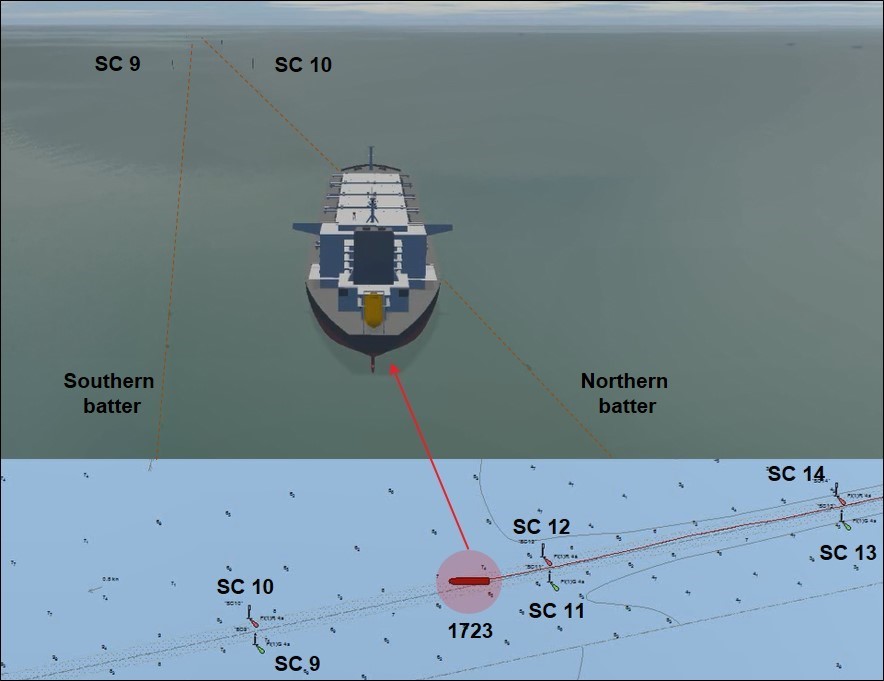
A report released today by the Australian Transport Safety Bureau (ATSB) has found that limited visibility in heavy rain was a significant factor in a collision involving the Australian fishing vessel Chinderah Star and the Liberian flag bulk carrier Silver Bin.

The collision occurred at 1209 local time on 25 March 2000, 0.6 nautical miles west of Chapman Island in the inner route of Queensland's Great Barrier Reef.

Approximately 24 minutes before the collision, Chinderah Star was heading north when its skipper identified Silver Bin, 8.6 nautical miles to the north and heading south. The skipper realised that the two vessels would pass at close quarters in a narrow section of the shipping channel but did not make radio contact with the ship or alter the vessel's course.

Twelve minutes later Chinderah Star and Silver Bin were enveloped in heavy rain when a tropical rainsquall entered the shipping channel. The crew of Silver Bin had not identified Chinderah Star before entering the rainsquall and despite the estimated visibility of 160 metres neither vessel reduced speed or sounded any audible signals.

The report concluded that the crew of both vessels did not properly assess the risks of collision in the heavy rain, with the limitations of marine radar in such conditions being a contributing factor in the collision.

Since 1 July 1999, the ATSB has investigated six collisions involving ships and fishing vessels or small craft. Such collisions keep occurring despite the widespread circulation of ATSB reports and safety bulletins as well as media coverage.

The report on the collision between Silver Bin and Chinderah Star emphasises the importance of maintaining an effective lookout in all conditions and navigating at a safe speed in conditions of reduced visibility.

ATTENTION EDITOR and CHIEF-OF-STAFF - Media Conference

ATTENTION: Editors/Chief of Staff, Aviation/transport writers

The Australian Transport Safety Bureau will be conducting a Media conference to discuss aspects of the Coroner's findings of the inquest into the Beech Super King Air aircraft which crashed 65km SE of Burketown on 5 September 2000 with eight fatalities.

The conference will be held at 4 PM TODAY, Thursday 12 September.

When: 4 pm. Please arrive in the foyer no later than 3.45pm as we need to escort you to our conference room
Where: The Australian Transport Safety Bureau at 15 Mort Street, Canberra City.

ATSB releases final report on Newman fatal aircraft crash

At 3.30pm today, the Australian Transport Safety Bureau will release its final investigation report on the fatal aircraft crash near Newman, WA.

On 26 January 2001, a Cessna 310R operated by the Western Australian Police Air Support Unit crashed at night near Newman aerodrome.

The four occupants sustained fatal injuries. Impact forces destroyed the aircraft.

Who: ALAN STRAY (ATSB Deputy Director of Air Safety Investigation)
When: 3.30pm (Eastern Standard Time)
Where: ATSB Headquarters, 15 Mort Street, Canberra

The report, titled Air Safety Investigation Report 200100348, will be available online at www.atsb.gov.au.

Note: Media will then be able to download an audio statement from approximately 3.40pm.