Final ATSB investigation report into the Boeing 767 uncontained engine failure near Brisbane, 8 December 2002

The Australian Transport Safety Bureau (ATSB) has found that fatigue cracking in the blade slots of a high-pressure turbine disk led directly to the uncontained failure of the left engine of a Boeing 767 aircraft that occurred near Brisbane on 8 December 2002.

The aircraft was operating a scheduled passenger service to Auckland, New Zealand and was forced to return to Brisbane airport after the failure. Damage to a wing leading-edge flap from engine debris and the weight of the fuel being carried for the trans-Tasman flight led the flight crew to perform a prepared emergency landing, during which the passengers were instructed to adopt the 'brace' position.

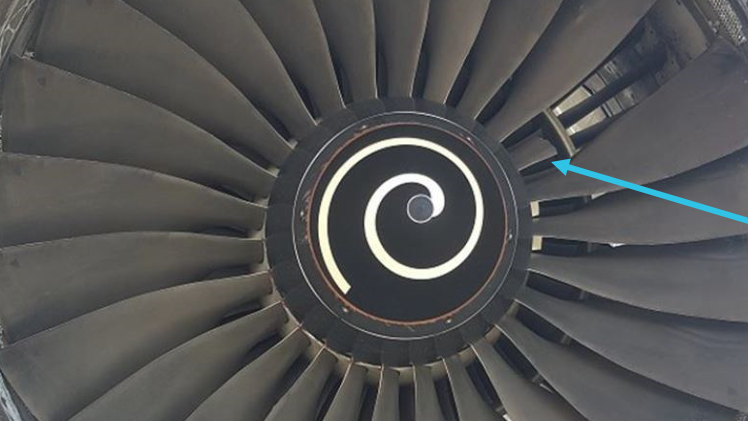
In its investigation report released today, the ATSB found that growth of the slot cracking resulted in the fracture and release of a large segment of the first-stage high-pressure turbine disk, puncturing the engine casing and nacelle, before striking the engine pylon and an adjacent leading edge flap panel. While the reasons for the disk cracking were not conclusively established, the ATSB found that several aspects of the disk manufacturing process or subsequent repair operations could have contributed to crack formation.

As a result of the investigation findings, the engine manufacturer has implemented changes to the disk manufacturing and repair processes and has revised the inspection requirements for the disks fitted to the affected engine model. Both the US Federal Aviation Administration and the Australian Civil Aviation Safety Authority have mandated the new inspection requirements.

The full investigation report 200205780.

Cabin Door

The Australian Transport Safety Bureau (ATSB) is seeking assistance from the public to locate a door that fell from an aircraft at about 0715 EST Tuesday 7 September 2004.

The aircraft, a Raytheon Beechcraft King Air B300, was en route from Brisbane to Central Queensland at position 149 degrees 51 minutes East, 25 degrees South (approximately 14 NM WSW of Theodore township) and descending through 17,000 ft when the cabin door separated from the aircraft.

The door is curved, coloured white and about 1.5 m by 0.8 m by 15 cm. The likely area of interest is bounded by Theodore, Glenbar Station, Flagstaff Hill and Forest Hills Station.

Anyone locating the door is requested not to move the door but to mark the location and to contact the ATSB on Freecall 1800 011 034 (24 hour number).

Media Briefing - Robinson R44 Fatal Accident Near Roma, QLD on 8 September 2004

A media briefing on the circumstances of the 8 September 2004, Robinson R44 Helicopter, VH-JWX near Roma, Queensland will be held in the Roma airport car park, outside the terminal at 6.00pm today, 10 September 2004.

The Investigator in Change, Mike Cavenagh, will provide factual events that are known to the investigation team at this point in time.

With the exception of this media briefing all media contact will continue to be addressed by the Bureau's central office, details below.

ATSB Preliminary Report of Benalla accident finds aircraft off course from Jervis Bay

The ATSB investigation Preliminary Report into the accident in which six lives were lost when a privately operated Piper Cheyenne aircraft crashed near Benalla, Victoria, on 28 July 2004, found that the aircraft was off course for a substantial period.

The aircraft departed Bankstown, NSW that morning, and travelled via Jervis Bay. The pilot then contacted air traffic control requesting a track from abeam Ulladulla to Benalla. The route flown did not pass directly over any ground based navigation aids and the pilot relied on the global positioning system (GPS) for navigation and for the approach, through cloud, to Benalla.

Recorded radar data indicated that the aircraft's track was a consistent 3.83 degrees left of the direct track from Jervis Bay.

After an extensive search, the aircraft wreckage was located in mountainous terrain, 34 km south-east of Benalla. The impact and an intense post-impact fire destroyed the aircraft, including its instruments and GPS navigation equipment. On-site examination found that the aircraft had collided with trees when in a wings-level, climbing attitude and with the landing gear and flaps extended for a landing approach.

Examination of the aircraft's maintenance records has not identified any mechanical or systems defect that might have influenced the circumstances of the accident.

The investigation is examining a number of issues of possible safety significance. The ATSB expects to release an Interim Factual report by February 2005.

Copies of the Report Aviation Safety Investigation Report 200402797

Ship and Fishing Boat Collisions Continue

Failure to keep a proper lookout by either vessel has been identified as the immediate cause of the ninth collision in five years between a fishing vessel and a ship off the Australian coast.

In the early hours of 21 August 2003, the fishing vessel Jenabar collided with the bulk carrier Lancelot off Diamond Head on the New South Wales coast. The report on the collision by the Australian Transport Safety Bureau (ATSB) also identifies that over-reliance on board Lancelot on information from the automatic radar plotting aid contributed to the collision.

On this occasion nobody was hurt, though the fishing boat sustained damage and had to return to Forster, where it arrived safely.

The collision occurred while Jenabar, in company with three other fishing vessels, was heading for fishing grounds to the north of Forster. On board Jenabar, the deckhand on watch was seated at a table in the wheelhouse.

The mate on the bulk carrier, which was southbound for Newcastle, was using the automatic radar plotting aid (ARPA). Despite indications from the ARPA that the fishing vessels were passing clear, they were in fact on collision or near-collision courses.

After the collision, the ship turned around to assist the fishing vessel but, on learning that assistance was not required, resumed its passage to Newcastle.

Since July 1999, the ATSB has released nine reports on similar collisions. It has also released two safety bulletins for crews of ships and fishing vessels with advice on the avoidance of collisions. The reports and safety bulletins have emphasised the need for a proper lookout and the limitations of radar and the report on this latest collision concludes that:

  • The mate on Lancelot did not check the compass bearings of the approaching vessels to assess the risk of collision;
  • The moderate seas and the size and construction of Jenabar would have had an adverse effect on its radar detectability; and,
  • The deckhand on watch on Jenabar at the time of the collision was not keeping an adequate or effective lookout.

The report's recommendations include the need for:

  • Vessels to keep a proper lookout at all times;
  • The National Marine Safety Committee (NMSC) and State and Territory marine authorities to review the minimum qualifications for watchkeepers on fishing vessels;
  • NMSC and State and Territory marine authorities to ensure that guidance on procedures for watchkeeping and safety of navigation applies to all vessels.

Copies of the report can be downloaded from the website, or obtained from the ATSB by telephoning (02) 6274 6478 or 1800 020 616.

Final ATSB report into the Coffs Harbour CFIT accident

The ATSB has found that a stabilised approach and a ground proximity warning system would have reduced the risk of the controlled flight into terrain (CFIT) accident that occurred at Coffs Harbour on 15 May 2003.

The final Australian Transport Safety Bureau (ATSB) investigation report was released today. According to the ATSB, the King Air aircraft hit the sea or a reef near the Coffs Harbour boat harbour during an instrument approach in heavy rain and poor visibility. Although the aircraft was damaged and the left main landing gear was broken off, the aircraft kept flying and just cleared a nearby restaurant.

The pilot was able to carry out an emergency landing at Coffs Harbour and there were no injuries.

The reason the pilot allowed the aircraft to descend below the minimum descent altitude (MDA) for the approach when the runway was not in sight was unclear. However, the ATSB investigators believe there were a number of factors that contributed to the inadvertent descent including high pilot workload related to hand flying a steep descent in bad weather and the absence of adequate defences against CFIT. The aircraft's rate of descent may also have been accelerated by downdrafts associated with the heavy rain.

Defences against CFIT include adequate standard operating procedures, stabilised approach criteria, missed approach criteria and ground proximity warning systems.

Copies of the report (Aviation Safety Investigation Report 200302172) can be downloaded from the website.

Final ATSB report: fatal accident at Camden on 7 February 2003

The ATSB has found that the fatal accident at Camden aerodrome on 7 February last year was the result of a simulated engine failure during a flight test at night that was initiated at too low a height to ensure safety.

The Beech Duchess twin engine aircraft, VH-JWX, crashed shortly after takeoff, seriously injuring the trainee pilot and fatally injuring the pilot in command who was an Approved Testing Officer (ATO) authorised by the regulator.

The aircraft was recovering after the engine failure simulation when the right wingtip collided with a tree. Shortly after, the aircraft impacted the ground.

While the cabin area remained intact during the accident sequence, an intense fire started and both occupants were seriously burnt as they escaped and the ATO did not survive his injuries.

The engine-failure simulation was initiated from a point where the crew could not be confident that they would clear all obstacles. As it was dark, they could not see any obstacles that needed avoiding.

Guidance was provided in aeronautical information publications recommending against low-level asymmetric operations at night below 1500 feet, however such operations were not prohibited.

The Civil Aviation Safety Authority (CASA) has advised ATSB investigators that new regulations are presently being drafted which will enhance the consistency of flight test operations for the future.

ATSB report Aviation Safety Investigation Report 200300224 can be downloaded from the website, or obtained from the ATSB by telephoning 1800 020 616.

Media Briefing - Benalla Fatal Aviation Accident 28 July 2004

A media briefing to discuss the circumstances of the 28 July 2004 Piper Cheyenne, VH-TNP accident near Benalla, Victoria will be held at Myrrhee Hall off Boggy Creek Road at 4.00pm today, 29 July 2004.

The Investigator in Change, Alex Hood, will discuss factual events as are known to the investigation team at this point in time.

With the exception of this media conference all media contact will continue to be addressed by the Bureau's central office, details below.

Benalla Fatal Aviation Accident 28 July 2004

The Australian Transport Safety Bureau has dispatched a team of four investigators and support staff to determine the circumstances surrounding the tragic accident near Benalla, Victoria, on 28 July 2004.

The factual circumstances to hand are that at about 11 am on the 28th of July, a Piper Cheyenne, VH-TNP, en-route Bankstown (NSW) to Benalla (Victoria) with six people on board disappeared from radar about 33km south-east of Wangaratta, where weather conditions were low cloud and rain. Airservices Australia will be providing these radar and air traffic control tapes to the Bureau to aid in the investigation.

The Australian Search and Rescue organisation, AusSAR undertook a major search of the area and while hampered by extreme weather conditions located the aircraft wreckage at about 5.50pm. Sadly, all six occupants of the aircraft perished in the accident and our sympathies are with family and friends of the victims.

The investigation team is expecting to arrive at the site mid morning today. The team will not be discussing the accident with media at this point in time.

A media conference will be held in the area today, the precise location and time to be advised, where the Investigator in Charge will outline the factual information we have to hand at that point in time. Until further notice all media contact will be with the Bureau's central office, details below.

Breakdown in communications and teamwork leads to grounding

The failure of officers to use modern navigation bridge management principles was the major factor in the grounding of the Bahamas registered passenger ship Astor during the ship's departure from Townsville at around 7 pm on 26 February 2004, according to an Australian Transport Safety Bureau (ATSB) investigation report released today.

The ATSB report into the Astor grounding released today states that the ship grounded on its port side as it was turning from Townsville harbour into Platypus Channel. The ship heeled about three degrees to starboard and, after about three minutes, slid clear of the bank without assistance and continued out of the channel. No injuries or pollution resulted from the grounding.

The report concludes that, after the Astor left its berth, the ship's master did not accept the advice of the Townsville harbour pilot on board. By failing to take the pilot's advice, the master incorrectly positioned the ship for a turn to starboard into Platypus Channel, part of the approach channel to the port, resulting in the ship running aground during the turn. The report also concludes that the pilot was unable to understand the Ukrainian language of the officers and crew on the navigation bridge.

The ship's managers stated six days after the grounding that an onboard investigation had found a steering malfunction caused the grounding. This was the first time a steering gear malfunction had been mentioned by ship's staff or shore management to any Australian authorities or organisations.

The ATSB carried out a thorough examination of the ship's steering system and consulted with the manufacturers of the steering equipment. The investigation has been unable to determine the degree, if any, to which the reported malfunction contributed to the grounding.

The investigation was also complicated by the fact that information from the Astor's 'black box' data recorder was not backed up immediately after the grounding and by the fact that company procedures were not followed with respect to the keeping of bridge records.

Copies of the report can be downloaded from the website, or obtained from the ATSB by telephoning 1800 020 616.