ATSB Supplementary Aviation Safety Investigation Report Whyalla Airlines Fatal Accident, Spencer Gulf SA

The Australian Transport Safety Bureau's supplementary investigation report into the fatal accident involving Whyalla Airlines Piper Chieftain registration VH-MZK on 31 May 2000 is expected to be tabled in the Senate before Question Time today. The report includes a detailed response to the South Australian State Coroner's critical findings on 24 July 2003.

After the tabling, ATSB Executive Director Kym Bills will address the media at 1.00pm today on key aspects of the Bureaus report.

Mr Bills will then be available for questions.

Who: ATSB Executive Director, Mr Kym Bills.
When: 1.00pm, Tuesday 28 October.
Where: 15 Mort Street, Canberra City.

The report will then be available on the website www.atsb.gov.au.

Note: Media are requested to assemble in the foyer at 15 Mort Street 15 minutes prior to the conference, from where they will be escorted to the conference venue.

Investigation of TransAdelaide signal passed at danger incident

The ATSB has found that a TransAdelaide passenger train passed a red stop signal last year, which placed it on a collision course with an interstate passenger train because of a combination of human error and sub-optimal procedures.

The Australian Transport Safety Bureau has today released its final report into the investigation of the factors that contributed to TransAdelaide passenger train H307 passing signal 161, at the end of a platform at Adelaide Railway Station, while it was displaying a red stop aspect, (an event commonly referred to as 'Signal Passed at Danger' or SPAD), on 28 March 2006.

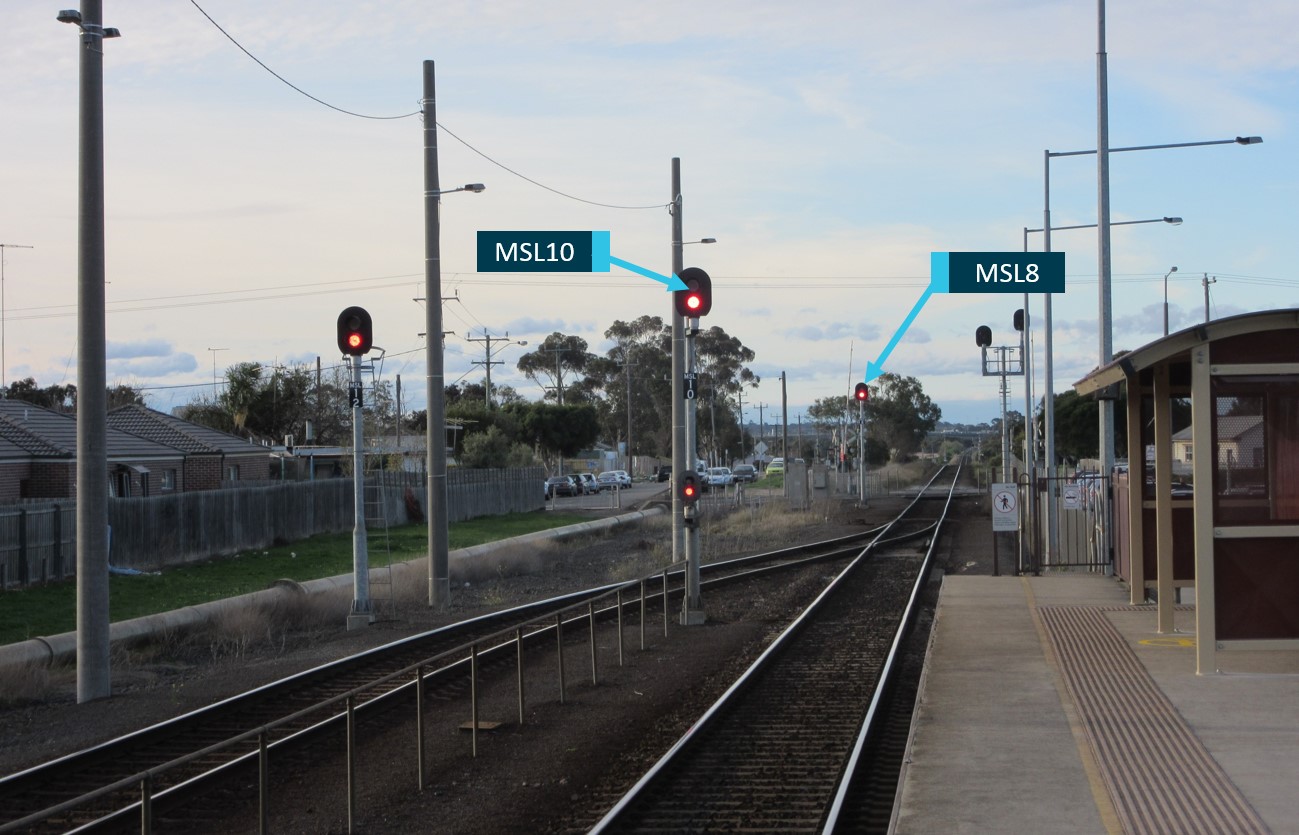
The initial SPAD at signal 161 was typical of SPADs categorised as 'Starting Against Signal'. This type of SPAD typically occurs at railway stations where signals are positioned at the departure end of station platforms and the stationary train starts to move away from the platform before the signal displays a proceed indication. In this case, it placed train H307 on a collision course with the Indian Pacific which was on a crossing line 1.6 km from Adelaide station.

The investigation found that a conversation with station staff probably distracted the train driver's departure preparation. When scheduled to depart, a steady green light used by station staff to signal 'Right of Way' was a 'cue' which was in direct conflict with the red light displayed by signal 161. The investigation concluded that it was possible that the driver responded to the cue to proceed represented by the green Right of Way light and completed some minor tasks shortly after starting the journey but did not check the indication displayed by signal 161.

At the time of the incident, TransAdelaide's train control system did not provide a clear SPAD alarm. It is likely that an inexperienced controller, a period of high workload and the absence of a clear SPAD alarm contributed to a delay in train control personnel identifying that a SPAD had occurred.

The driver of train H307 believed that he had departed from the platform at Adelaide station under the correct signal indication and had been deliberately routed onto another track. The train had continued for two minutes and 610 m before the driver stopped the train. The driver's limited experience, his level of uncertainty regarding the unusual route and the absence of any information from the train controller to the contrary probably contributed to a delayed decision to stop and seek verification of the train's route.

The investigation noted that a new train control system was commissioned not long after the occurrence. The new system has audible and visual alarms to ensure that a similar SPAD should very quickly be recognised by train controllers. The investigation concluded that there were further opportunities for improvement. The ATSB recommended that TransAdelaide undertake further work to address safety issues relating to the SPAD investigation process and develop a clear understanding of SPAD causal factors such as potential underlying contributors to signal anticipation.

Copies of the report can be downloaded from the ATSB's internet site at www.atsb.gov.au

Poor packing led to toxic marine incident through Great Barrier Reef

The ATSB has found that a leakage of dangerous goods on board the Liberian registered container ship Kota Pahlawan, off the coast of Australia, on 16 June 2006, occurred because the dangerous goods were not packaged properly.

The Australian Transport Safety Bureau investigation found that packaging deficiencies in similar past shipments of xanthates, the dangerous goods being shipped, were commonplace but not reported. It was also found that Kota Pahlawan transited the northern part of the Great Barrier Reef Inner Route before authorities made an appropriate risk assessment.

On the morning of 16 June, a foul odour was found to be coming from two containers of xanthates on board Kota Pahlawan. Xanthates, on contact with moisture, produce foul smelling, highly flammable and toxic carbon disulphide vapours and can spontaneously combust. Duct tape was used to seal the containers' doors and the master reported the incident to the ship's manager.

In the evening on 16 June, the master informed the ship's charterer that the packaging of the xanthates was not vapour-tight in accordance with international rules. He demanded that the containers be unloaded in Brisbane, the next port.

At 0411 on Sunday 18 June, a few hours before entering the Torres Strait, Kota Pahlawan's master reported the emission of odours to the Australian Maritime Safety Authority (AMSA). At 0720, the ship embarked a coastal pilot for its transit of the northern part of the Great Barrier Reef Inner Route.

At 0907 on Monday 19 June, AMSA issued a defect report for Kota Pahlawan and notified relevant areas within AMSA and Maritime Safety Queensland (MSQ). Both AMSA and MSQ then started collecting more information to make a risk assessment.

On 22 June, the ship berthed in Brisbane after an emergency was declared and exclusion zones were established. Emergency services attending the ship had confirmed a dangerous goods leakage. All eight xanthates containers on board the ship were unloaded and purged with nitrogen gas.

On 24 June, the emergency services declared the purged containers to be fit for transport and Kota Pahlawan's master was asked to reload them. The master agreed to reload the containers after AMSA provided its written acceptance.

On 25 June, Kota Pahlawan sailed from Brisbane with an emergency services scientific officer aboard to monitor the xanthates containers. The ship continued its voyage to Sydney, Bell Bay and Fremantle where the last of the containers were discharged on 6 July.

The ATSB report includes safety actions already taken and a number of recommendations and safety advisory notices with the aim of preventing similar incidents in the future.

Copies of the report can be downloaded from the ATSB's internet site at www.atsb.gov.au

ATSB study reviews spatial disorientation

An ATSB research report released today examines the problem of spatial disorientation.

Flying an aircraft is a challenging activity that exposes pilots to many potential hazards. One of the most significant of these is spatial disorientation. Spatial disorientation is a condition where the pilot is unable to correctly interpret aircraft attitude, altitude or airspeed in relation to the Earth. The resulting disorientation can lead to a loss of control of the aircraft.

Spatial disorientation is a very common problem. It is vitally important that pilots are aware that it can affect any pilot, any time, anywhere, in any aircraft, on any flight, depending on the prevailing circumstances. It has been estimated that the chance of a pilot experiencing spatial disorientation during their career is in the order of 90 to 100 per cent. In other words, if a pilot flies long enough as a career, or even a hobby, there is almost no chance that he/she will escape experiencing at least one episode of spatial disorientation.

The Australian Transport Safety Bureau (ATSB) commissioned aviation medicine specialist, Dr David Newman, to explore the various types of spatial disorientation in the aviation environment, and to suggest strategies for managing the risk associated with these events.

The ATSB report explains that the chances of a spatial disorientation event occurring in flight can be reduced by a series of simple preventive measures, many of which can be attended to before flight. These include flying when fit and well to do so, not flying under the influence of alcohol or medications, avoiding visual flight rules into instrument meteorological conditions, increasing awareness of spatial disorientation illusions and planning for their possible appearance at different stages of flight in the pre-flight planning process.

The ATSB report encourages pilots who have had a spatial disorientation event to share their experiences with their aviation colleagues, either informally, or through magazines, journals and web-based forums.

A more open approach to acknowledging and discussing spatial disorientation and its various causes will make a valuable contribution to a better understanding of this common human factor.

Copies of the report can be downloaded from the ATSB's internet site at www.atsb.gov.au

ATSB analysis of increased accident and incident data

ATSB analysis shows that an increase in reported airline accident and incident data since 2001 is mainly due to industry expansion, and the rates of many types of occurrence have fallen.

The Australian Transport Safety Bureau research report released today covered more serious airline Immediately Reportable Matters in the 5 years from mid 2001 to mid 2006.

Despite the increased activity in scheduled public transport operations, the number of Immediately Reportable Matters has generally either remained stable or declined. When measured in relation to airline activity, the trend rate is generally downwards.

Violations of controlled airspace involve aircraft entering controlled or restricted airspace without appropriate clearances from air traffic control. There was a total of 82 airspace violations recorded over 5 years, and the ATSB found a downward trend for these incidents.

A breakdown of separation occurs when the distance between aircraft is less than that required. In many cases where separation breaks down the aircraft will still be some considerable distance apart. Of the 462 incidents recorded, only two per cent were serious enough to warrant further investigation by the ATSB. Breakdown of separation events have become more common, but only at about the same rate that airline activity has increased.

Other incidents examined by the ATSB include reports of crew incapacitation and cabin fumes. Serious crew injury or illness was rare, supporting the findings from an earlier study by the ATSB. The ATSB also received 140 notifications of fumes. Sources of fumes included oil or solvent residues following maintenance activities, failed or overheated electrical or mechanical components, or passenger's luggage. Smoke or fumes from burning food in the galley was also common.

The ATSB confirmed that accidents in Australian regular public transport operations are extremely rare. Only one accident involved fatalities, with the loss of all 15 people on board a regional airliner near Lockhart River. All other accidents were limited to damage to the aircraft, including damage to aircraft by service vehicles before flight, or injury to crew or passengers, including from unexpected turbulence during a flight.

The study highlights the value of a strong safety reporting culture and provided encouraging data concerning safety trends in Australian airline operations.


Media Release 2007/04 - Level crossing Collision at Lismore, Victoria

The Australian Transport Safety Bureau has found that heavy fog and the inappropriate speed of a truck in the conditions were the main contributors to a collision with a freight train at the Lismore Skipton Road level crossing at Lismore, Victoria on 25 May 2006. The 34 year old driver of the truck was fatally injured in the accident which closed the main Adelaide to Melbourne rail line for a period of six days with the total damage bill estimated at $13.5 million.

The collision occurred when the truck drove into the side of the second locomotive while the train was on the level crossing. This collision occurred shortly before sunrise with visibility in the fog as low as 20 metres and certainly no greater than 50 metres. The passive level crossing was fitted with give-way signs for road users and was not protected by lights or bells to indicate the presence of a train.

The truck was a 19 metre loaded rigid tipper/quad axle combination that was travelling south on the Lismore Skipton Road. The train was 1.3 kilometres long, weighed over 4300 tonnes, and was being hauled by three locomotives travelling east from Adelaide to Melbourne.

The locomotive data logger revealed that the speed of the train at impact was 112 km/h, that the locomotive horn was sounded twice before the collision and that the train's headlight was illuminated. The ATSB calculated the speed of the truck as being between 53 and 78 km/h, with the likelihood that it was towards the upper end of this range.

The force of impact was such that the second and third locomotives of the train were derailed and this resulted in a 'domino' effect that subsequently derailed 41 of the train's 64 freight wagons.

Other safety factors identified in the investigation that did not directly contribute to the collision were the possibility that the truck driver may have been suffering some effects of fatigue and also that the level crossing approach signage and sighting distances did not comply with relevant standards and guidelines. The investigation also noted that in times of reduced visibility it may not be possible for a motorist to safely negotiate a level crossing protected only by give way or stop signs based on sighting distances alone.

The report acknowledges the work being undertaken by the Australian Transport Council and the Australasian Railway Association in regard to the National Railway Level Crossing Safety Strategy and the safety actions already taken or underway by the National Transport Commission and VicRoads.

Recommendations are made to VicRoads and the Department of Infrastructure in relation to ensuring that other passive level crossings in Victoria are to standard, ensuring that road and rail authorities jointly assess the risks of large road vehicles traversing level crossings, and increasing road user education regarding the risks of passive level crossings.

Undetected failure disabled ship in Bass Strait

The ATSB has found that an undetected flaw, and the subsequent failure of a critical main engine component, led to the bulk carrier Enterprise being disabled in Bass Strait on 10 July 2006 and drifting for nearly three days.

The Australian Transport Safety Bureau investigation has found that a microscopic flaw led to the failure of a main engine gudgeon pin. The investigation also found that the engine manufacturer did not provide sufficient guidance for monitoring the fatigue life of gudgeon pins and that the planning and execution of maintenance on critical items of equipment was inadequate.

At about 1540 on 10 July 2006, while Enterprise was en route from Adelaide to Newcastle, the main engine low lubricating oil pressure alarm sounded, indicating that the main engine's lubricating oil filter was choked. While the duty engineer was changing over to the spare lubricating oil filter, oil pressure was lost, causing the engine to stop. The engine was restarted and the voyage was resumed.

At 1805, the alarm sounded again and the engineers stopped the engine. At 2000, after inspections had been undertaken, the chief engineer advised the master that there was probably damage to the engine's bearings and that the ship would need to be towed to the nearest port for repairs.

At 1400 on 13 July, Enterprise was taken in tow by the tug Keera and towed to Melbourne, where it berthed at 1900 on 15 July. During the engine repairs in Melbourne it was discovered that one gudgeon pin had failed.

The ATSB has made three safety recommendations with the aim of preventing further incidents of this type.

Copies of the report can be downloaded from the ATSB's internet site at www.atsb.gov.au

Level Crossing Protection System Inoperative Prior to Collision

The ATSB has found that a collision between a freight train and motor car occurred because the flashing lights, bells and boom gates failed to operate as the train approached the level crossing.

The Australian Transport Safety Bureau has today released its final report into the investigation of a collision that occurred at the Chapple Street level crossing at Kalgoorlie in Western Australia on 14 May 2007.

At the time of the collision the Chapple Street level crossing was controlled by flashing lights, bells and boom gates. The investigation established that the level crossing protection system did not operate as intended because a temporary wiring strap had inadvertently been left in place by engineering staff while making modifications to signalling circuitry.

The investigation established that although WestNet Rail had procedures governing the use of the temporary wiring strap this did not prevent the mistake from occurring.

In the interest of enhancing future road/rail safety WestNet Rail has been proactive in adopting a number of recommendations that address various safety issues including the need to re-examine risk assessment and engineering maintenance/testing procedures in relation to rail signal systems.

Copies of the report can be downloaded from the ATSB's internet site.

Crew members burned by a series of boiler explosions

The ATSB has found that four crew members who were injured on board the bulk carrier Shirane on 2 April 2007 were not aware of similar previous boiler explosions (flashbacks) which could have fore warned them.

The Australian Transport Safety Bureau investigation also found that the ship's crew were not aware of all of the hazards associated with servicing the boiler burner and that the personal protective equipment they were using did not provide them with adequate protection.

On the morning of 2 April 2007, Shirane was off Newcastle, New South Wales and the ship's third engineer had been assigned the task of replacing the Osaka OECV2 auxiliary boiler burner with a clean spare unit. When he finished the job, he attempted to fire the burner to check its operation but it failed to ignite. A few moments later, at 1013, while he was removing the burner to inspect it, there was a flashback from the boiler furnace.

The third engineer ran into engine control room and, as it was clear to the chief engineer and the first engineer that he had been burned, he was taken to the ship's hospital for first aid treatment.

The master was informed and, shortly after 1015, he telephoned the ship's agent in Newcastle and requested a medical evacuation.

After purging the boiler furnace for about an hour, the chief engineer and the second engineer removed the burner to inspect it. A few moments later, there was another flashback from the boiler furnace. The chief engineer, the second engineer and the fitter were burned by the second flashback.

The flashback had also caused a small fire on the deck, which was quickly extinguished. The three men then went to the ship's hospital for first aid treatment.

By 1324, a rescue helicopter had evacuated the second engineer, the third engineer and the fitter from the ship and, at 1729, it returned for the chief engineer.
The ATSB report found that the flashbacks were caused by unburnt fuel being deposited in the furnace when the burner misfired. The fuel was then vaporised and ignited by the hot surfaces inside the furnace.

The ATSB is pleased to report safety action already taken by the shipping company and the boiler manufacturer and has also issued three safety advisory notices with the aim of preventing similar occurrences.

ATSB re-opens Whyalla Airlines VH-MZK Investigation

The Executive Director of the Australian Transport Safety Bureau has today authorised the re-opening of the investigation into the crash of Whyalla Airlines VH-MZK. This is to enable the ATSB to seek the assistance of the US National Transportation Safety Board (NTSB) to conduct further testing of the MZK left engine crankshaft, which is currently in the US, including destructive testing at the site of the fracture.

The ATSB did not undertake such destructive testing in its original investigation because the detailed tests that were conducted indicated no crankshaft material problems and the ATSB did not wish to unnecessarily damage important evidence.

Clause 5.13 of Annex 13 to the Chicago Convention, as enacted in Australia through section 19DF(1) of the Air Navigation Act includes the requirement that: "If, after an investigation of an accident, serious incident or incident has been completed, new and significant information relation to the accident, serious incident, or incident becomes available, the Director must (a) if the investigation was conducted by the Director - conduct a further investigation of the circumstances surrounding the accident serious incident or incident". The ATSB has been assisting with, and closely monitoring, the progress of the Whyalla Airlines inquest in South Australia with this in mind.

The issuance by US engine manufacturer Textron Lycoming on 16 September 2002 of 'Mandatory Service Bulletin' No.553 for the first time included the MZK left crankshaft serial number V537912936 among the list of crankshafts possibly affected by a materials problem in the crankshaft manufacturing process.

Prior to the Whyalla inquest hearings in the US, it was hoped and expected that comprehensive testing of the left crankshaft fracture site would be jointly agreed and undertaken by McSwain (on behalf of the relatives of the deceased) with Lycoming in a timely manner. The engines are in the US as part of civil damages proceedings. The Coroner and parties had agreed to a protocol regime to allow for destructive testing as required. On that basis, the ATSB was prepared to await the outcome and formally re-open the ATSB investigation only if a significant material defect was established.

Ongoing delay with such testing has led to ATSB formally re-opening the investigation based on the 16 September 2002 service bulletin alone. The ATSB has also been told that some US litigation settlements require that engine parts be destroyed - such a loss of evidence would, of course, undermine the current inquest and future aviation safety. ATSB wishes to ensure that every effort is made to test the crankshaft without delay to resolve the question of whether a manufacturing material problem was a causal factor.

The US NTSB has informally advised today that as the engines are in the US, it would be prepared to test the left crankshaft in its laboratories for a materials defect at the site of the fracture if the ATSB re-opens its investigation and requests this assistance under Chicago Convention protocols. The ATSB would do so following the SA Coroner's agreement. The NTSB will not become involved in Australian or US legal proceedings.