Cabin depressurisation involving Airbus A330-303, 233 km north-east of Forrest Airport, Western Australia, on 14 April 2018

Brief

Occurrence Briefs are concise reports that detail the facts surrounding a transport safety occurrence, as received in the initial notification and any follow-up enquiries. They provide an opportunity to share safety messages in the absence of an investigation.

What happened

On 14 April 2018, at about 0158 Western Standard Time (WST), an Airbus A330-303 was en-route from Perth, Western Australia (WA) to Sydney, New South Wales (NSW) with 297 passengers and 11 crew members on board.

At the time of departure from Perth Airport, there was a known fault with one of the engine bleed air systems on the aircraft, which was permitted under the minimum equipment list. During cruise at flight level (FL) 390[1], the crew received an ECAM[2] ‘ENG 2 BLEED FAULT’ message, indicating a fault with the second engine bleed air system. The crew followed the ECAM actions to reset the system, but this was unsuccessful in restoring cabin pressurisation. Loss of the second bleed air system resulted in the depressurisation of the cabin.

The crew declared a PAN PAN[3] and received clearance from air traffic control (ATC) to conduct a descent to 10,000 ft. Shortly after commencing the descent, the crew received an ECAM ‘CAB PR EXC CABIN ALT’ message, indicating an increase in cabin pressure, which requires a mandatory emergency descent. Oxygen masks deployed in the cabin, and the crew initiated the descent to 10,000 ft. Flight and cabin crew conducted regular passenger announcements throughout to keep passengers informed of the situation.

Once the aircraft was level at 10,000 ft, the flight crew continued to follow the non-normal procedure checklists and were able to reset the no. 2 engine bleed air system. The cabin crew manager informed the flight crew that there were no passenger injuries during the descent, however they had observed fumes and mist in the cabin, both of which dissipated after a short time.

The flight crew had initially intended to divert the aircraft to Adelaide, however, due to poor weather conditions and the fact that the no. 2 engine bleed air system was reset, the decision was made to divert the aircraft to Melbourne. The flight crew contacted ATC and received a clearance to climb to FL170, as requested.

The flight crew updated the cabin services manager with the latest information, and regular passenger announcements were made to keep passengers informed throughout the remainder of the flight. The aircraft landed at Melbourne without incident, where engineers subsequently replaced the no. 2 engine bleed valve and solenoid.

Safety message

This occurrence provides a good example of effective handling of non-normal, in-flight indications. It demonstrates that a positive outcome can be achieved through a combination of following documented procedures, information sharing between flight and cabin crew and regular, clear passenger communications.

About this report

Decisions regarding whether to conduct an investigation, and the scope of an investigation, are based on many factors, including the level of safety benefit likely to be obtained from an investigation. For this occurrence, no investigation has been conducted and the ATSB did not verify the accuracy of the information. A brief description has been written using information supplied in the notification and any follow-up information in order to produce a short summary report, and allow for greater industry awareness of potential safety issues and possible safety actions.

__________

  1. Flight level: at altitudes above 10,000 ft in Australia, an aircraft’s height above mean sea level is referred to as a flight level (FL). FL 390 equates to 39,000 ft.
  2. Electronic centralised aircraft monitor (ECAM): Electronic system used to monitor and display aircraft systems information and provide required flight crew actions in most normal, abnormal and emergency situations.
  3. PAN PAN: an internationally recognised radio call announcing an urgency condition which concerns the safety of an aircraft or its occupants but where the flight crew does not require immediate assistance.

Occurrence summary

Mode of transport Aviation
Occurrence ID AB-2018-056
Occurrence date 14/04/2018
Location 233 km NE of Forrest Airport
State Western Australia
Occurrence class Incident
Aviation occurrence category Air/pressurisation
Highest injury level None
Brief release date 04/07/2018

Aircraft details

Manufacturer Airbus
Model A330-303
Sector Jet
Operation type Air Transport High Capacity
Damage Nil

Wheels up landing involving a Piper PA-32R-301, Bacchus Marsh, Victoria, on 16 March 2018

Brief

Occurrence Briefs are concise reports that detail the facts surrounding a transport safety occurrence, as received in the initial notification and any follow-up enquiries. They provide an opportunity to share safety messages in the absence of an investigation.

What happened

On 16 March 2018, the crew of a Piper PA-32R-301 was conducting a series of circuits at Bacchus Marsh, Victoria (Vic). Following approximately seven circuits, the instructor reduced power on the aircraft to allow the student to fly a practice forced landing on runway 27.

As the aircraft neared the runway, the student pilot reduced the power to idle and the landing gear position warning sounded. The instructor reported that both he and the student mistook this for the stall warning[1] and the aircraft subsequently landed with the gear retracted.

Prior to the circuits, the aircraft departed Essendon, Vic. for a navigation training flight. Despite having flown approximately 5 to 6 hours, the student wanted to practise circuits. The instructor reported that the student did not require a great deal of instruction in circuits, having performed previous circuits to a very good standard.

Pilot comments

The Instructor provided the following comments:

  • The instructor felt confident with the student’s performance, resulting in relaxed supervision.
  • Both pilots were focusing outside the aircraft at 300 ft, when they should have been focused on completing the final landing checks.
  • Distraction also played a part in both pilots missing the final landing checks, as they had been following the progress of a student who had conducted their first solo flight and had landed on a different runway to the one from which they had taken off.
  • The landing gear warning was mistaken for a stall warning due to the higher than normal landing attitude.

Safety action

As a result of this occurrence, the instructor and student undertook a full debrief and formulated a plan to continue the student’s training. The instructor’s self-debrief focused upon maintaining vigilance regardless of the performance of the student.

Safety message

This occurrence highlights the importance of vigilance during critical phases of flight. Distraction and complacency can result in critical tasks being omitted and not being detected until it is too late.

Pilots should also familiarise themselves with aircraft warning systems to ensure correct responses to those warnings.

The Flight Safety Australia article, Those who won’t: avoiding gear-up landings includes valuable information to assist pilots in avoiding these incidents.

About this report

Decisions regarding whether to conduct an investigation, and the scope of an investigation, are based on many factors, including the level of safety benefit likely to be obtained from an investigation. For this occurrence, no investigation has been conducted and the ATSB did not verify the accuracy of the information. A brief description has been written using information supplied in the notification and any follow-up information in order to produce a short summary report, and allow for greater industry awareness of potential safety issues and possible safety actions.

__________

  1. Stall warnings indicate to the flight crew that the aircraft will approach a stall if action is not taken to reduce the angle of attack (ATSB AR-2012-172). A stall occurs when the smooth airflow over an aeroplane’s wing is disrupted, and it loses lift rapidly. This causes the aircraft to descend. This is caused when the wing exceeds its critical angle of attack (the angle of the wing relative to the direction of the airflow). This can occur at any airspeed, at any attitude, and at any power setting (FAA, 2004).

Occurrence summary

Mode of transport Aviation
Occurrence ID AB-2018-037
Occurrence date 16/03/2018
Location Bacchus Marsh
State Victoria
Occurrence class Serious Incident
Aviation occurrence category Wheels up landing
Highest injury level None
Brief release date 04/07/2018

Aircraft details

Manufacturer Piper Aircraft Corp
Model PA-32R-301
Sector Piston
Operation type Flying Training
Damage Minor

Smoke event involving Boeing B787-8, Bali International Airport, Indonesia, on 28 March 2018

Brief

Occurrence Briefs are concise reports that detail the facts surrounding a transport safety occurrence, as received in the initial notification and any follow-up enquiries. They provide an opportunity to share safety messages in the absence of an investigation.

What happened

On 28 March 2018, a Boeing 787-8 departed Melbourne, Victoria (Vic.) on a scheduled passenger flight to Bali, Indonesia. On arrival into Bali, while the aircraft was being unloaded, the ground crew noticed smoke emanating from the cargo hold and identified a burnt passenger bag as the potential source. The ground crew subsequently removed the bag from the aircraft. Following further inspection, it was found that a power bank[1] (Figure 1) contained within the passenger bag was the cause of the smoke.

Figure 1: Power bank removed from passenger bag

Figure 1: Power bank removed from passenger bag

Source: Operator

Safety message

Spare lithium and lithium-ion batteries can present a significant hazard when carried in the cargo hold of an aircraft. If a battery is damaged or overheats, it can result in a fire. Such fires require the device or battery to be cooled with non-alcoholic liquids. Cabin crew and flight crew are specifically trained in the management of lithium battery smoke and fire incidents in the cabin. If a battery in the cargo hold catches fire, however, it might not be possible to extinguish the fire, with potentially catastrophic results.

Power packs and power banks are classified as spare lithium-ion batteries, therefore only permitted in a passenger’s carry-on baggage. The Civil Aviation Safety Authority (CASA) provides guidance on their “Travelling safely with batteries and portable power packs” webpage and via the ‘Can I pack that? dangerous goods app for passengers.

About this report

Decisions regarding whether to conduct an investigation, and the scope of an investigation, are based on many factors, including the level of safety benefit likely to be obtained from an investigation. For this occurrence, no investigation has been conducted and the ATSB did not verify the accuracy of the information. A brief description has been written using information supplied in the notification and any follow-up information in order to produce a short summary report, and allow for greater industry awareness of potential safety issues and possible safety actions.

__________

  1. A power bank is a portable device that can supply power to another device through a USB port.

Occurrence summary

Mode of transport Aviation
Occurrence ID AB-2018-052
Occurrence date 28/03/2018
Location Bali International Airport, Indonesia
State International
Occurrence class Incident
Aviation occurrence category Smoke
Highest injury level None
Brief release date 22/06/2018

Aircraft details

Manufacturer The Boeing Company
Model 787-8
Sector Jet
Operation type Air Transport High Capacity
Damage Nil

Collision with terrain involving Robinson R22, Delamere Station (ALA), Northern Territory, on 27 March 2018

Brief

Occurrence Briefs are concise reports that detail the facts surrounding a transport safety occurrence, as received in the initial notification and any follow-up enquiries. They provide an opportunity to share safety messages in the absence of an investigation.

What happened

On the morning of 27 March 2018, a Robinson R22 helicopter landed at Delamere Station, Northern Territory (NT) to conduct a refuel from the drum stock.

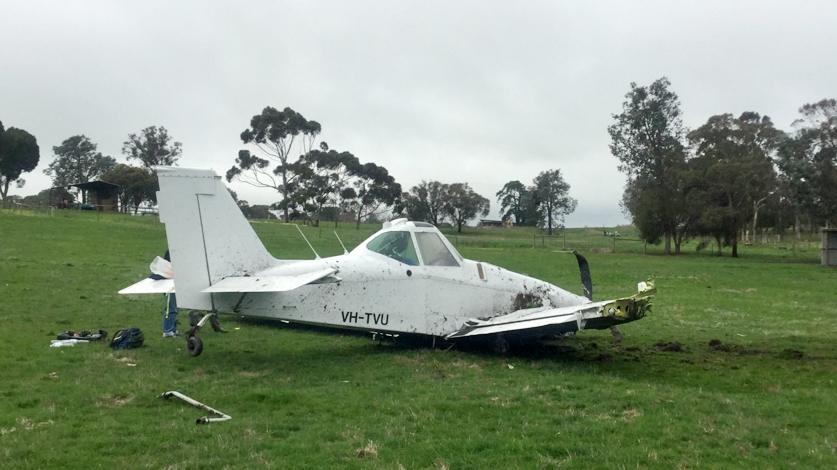
At about 0730 Central Standard Time (CST), after the refuelling was complete, the pilot proceeded to take-off from the station. During the take-off, the downwash from the main rotor blade spun the fuel pump around the top of the fuel drum resulting in the fuel hose hooking over the helicopter’s skid. The fuel hose subsequently pulled the helicopter to one side causing dynamic rollover.[1] The helicopter collided with the ground resulting in substantial damage (Figure 1).

Figure 1: Robinson R22 post-accident, in the vicinity of the fuel drum

Figure 1: Robinson R22 post-accident, in the vicinity of the fuel drum

Source: Operator

Safety message

The pivoting of the helicopter with the skid in contact with the fuel hose, and subsequent loss of control is consistent with the phenomenon known as dynamic rollover.

Once started, dynamic rollover cannot be stopped by application of opposite cyclic[2] control alone. Even with full opposite cyclic applied; there is not sufficient control authority to arrest the roll once it is developed and the main rotor thrust vector and its moment serves to accelerate the roll. Quickly reducing collective[3] pitch is the most effective way to stop dynamic rollover from developing.

This occurrence serves as a reminder for pilots to never hover close to fences, sprinklers, bushes, runway lights or other obstacles a skid could catch on.

The R22 Pilot's Operating Handbook includes a safety notice (SN-9) which provides advice about how to avoid dynamic rollover situations.

About this report

Decisions regarding whether to conduct an investigation, and the scope of an investigation, are based on many factors, including the level of safety benefit likely to be obtained from an investigation. For this occurrence, no investigation has been conducted and the ATSB did not verify the accuracy of the information. A brief description has been written using information supplied in the notification and any follow-up information in order to produce a short summary report, and allow for greater industry awareness of potential safety issues and possible safety actions.

__________

  1. Dynamic rollover: A rolling tendency, when close to the ground. For dynamic rollover to occur, some factor has to cause the helicopter to roll or pivot around a skid or landing gear wheel until its critical rollover angle is reached.
  2. Cyclic: a primary helicopter flight control that is similar to an aircraft control column. Cyclic input tilts the main rotor disc, varying the attitude of the helicopter and hence the lateral direction.
  3. Collective: a primary helicopter flight control that simultaneously affects the pitch of all blades of a lifting rotor. Collective input is the main control for vertical velocity.

Occurrence summary

Mode of transport Aviation
Occurrence ID AB-2018-043
Occurrence date 27/03/2018
Location Delamere Station (ALA)
State Northern Territory
Occurrence class Accident
Aviation occurrence category Collision with terrain
Highest injury level None
Brief release date 22/06/2018

Aircraft details

Manufacturer Robinson Helicopter Co
Model R22
Sector Helicopter
Operation type Aerial Work
Damage Substantial

Wirestrike involving Robinson R44, Whitton, New South Wales, on 24 March 2018

Brief

Occurrence Briefs are concise reports that detail the facts surrounding a transport safety occurrence, as received in the initial notification and any follow-up enquiries. They provide an opportunity to share safety messages in the absence of an investigation.

What happened

On the morning of 24 March 2018, the pilot of a Robinson R44 was conducting aerial application operations on a crop near Whitton township, New South Wales (NSW). The pilot was aware of a powerline in the vicinity of the paddock and was verbally calling ‘wire at the end’ on each run towards the powerline in order to heighten his awareness of the obstacle and focus on its location.

After about ten minutes of operation over the crop at about 40 ft above ground level, the pilot commenced a run towards the powerline. As he did so, he noticed an unusual obstacle protruding about half a metre above the crop canopy and 20 m to the right of the helicopter’s track. The pilot focussed his attention on the obstacle, momentarily interrupting the verbal annunciation of the position of the powerline at the end of the spray run.

The obstacle was a water moisture probe located approximately 100 m from the end of the spray run. Although it posed no immediate danger to the operations of the helicopter, the pilot was distracted by its presence and watched it as it passed the aircraft, which was enough to interrupt his situational awareness.

As the pilot turned his focus back to the front of the aircraft at the end of the spray run and pitched the helicopter up to commence a turn, the aircraft struck the wire. After contact, the helicopter was able to proceed straight ahead for approximately 100 m with the wire dragging behind it before contacting the ground and rolling over.

The pilot exited the aircraft and sustained minor injuries in the accident. The helicopter was substantially damaged.

Figure 1: Helicopter final resting site

Figure 1: Helicopter final resting site

Source: Aircraft operator

Safety action

As a result of this occurrence, the operator has advised the ATSB that they are taking the following safety actions:

  • requesting customers to detail any potential obstacles prior to operation
  • conducting a site inspection prior to commencing the operation
  • debriefing and discussing with pilots the use of unbroken situational awareness techniques to enhance awareness of obstacles and distractions.

Safety message

This accident highlights that distractions can arise unexpectedly during any phase of flight and demonstrates the dangers of such, especially in the low-level environment.

The ATSB research report B2004/0324, Dangerous distraction: An examination of accidents and incidents involving pilot distraction in Australia between 1997 and 2004, is available from the ATSB website.

The ATSB has also released, in association with the Aerial Agriculture Association of Australia, an educational booklet, Wirestrikes involving known wires: A manageable aerial agriculture hazard (AR-2011-028). This booklet contains numerous wirestrike accidents and the lessons learnt from them. It also highlights the role of landholders and utility owners in contributing to safe operations. This includes installing markers on wires, particularly where regular low-level flying takes place.

About this report

Decisions regarding whether to conduct an investigation, and the scope of an investigation, are based on many factors, including the level of safety benefit likely to be obtained from an investigation. For this occurrence, no investigation has been conducted and the ATSB did not verify the accuracy of the information. A brief description has been written using information supplied in the notification and any follow-up information in order to produce a short summary report, and allow for greater industry awareness of potential safety issues and possible safety actions.

Occurrence summary

Mode of transport Aviation
Occurrence ID AB-2018-041
Occurrence date 24/03/2018
Location 2.6 km NE Whitton
State New South Wales
Occurrence class Accident
Aviation occurrence category Wirestrike
Highest injury level Minor
Brief release date 22/06/2018

Aircraft details

Manufacturer Robinson Helicopter Co
Model R44
Sector Helicopter
Operation type Aerial Work
Damage Substantial

Collision with terrain involving Aeroprakt A22LS Foxbat, 250 km east of Carnarvon, Western Australia, on 25 February 2018

Brief

Occurrence Briefs are concise reports that detail the facts surrounding a transport safety occurrence, as received in the initial notification and any follow-up enquiries. They provide an opportunity to share safety messages in the absence of an investigation.

What happened

On 25 February 2018, an Aeroprakt A22LS Foxbat departed a station on a flight to observe local floodwaters. At the time of departure, the dirt runway was wet and covered in part by standing water. On return from the local flight, the pilot attempted to land the aircraft on a part of the runway without standing water as close to the station as possible. The aircraft was configured with half-flap on approach and bounced on landing while negotiating the short length. Before applying power to go around, the aircraft impacted heavily on the nosewheel. The aircraft climbed out and the pilot reversed the direction of landing, in order to have greater runway available without standing water when he attempted a second landing. There was no wind at the time.

On touchdown the pilot noticed that the rudder pedals were locked and little control authority was evident. During the ground roll, the aircraft began to veer to the right towards a drum marking the edge of the runway. The pilot increased power with the intention to gain height and avoid the obstacle, and then to climb away so as to ascertain the nature of the control difficulty at a safe height.

The increase in power and upwards pitching movement of the aircraft with a groundspeed below 20 kts increased slipstream[1], torque[2] and gyroscopic effect[3] at a critical phase of flight. The resultant forces rolled the aircraft to the left which could not be corrected with control input before the left wing contacted the ground. The right main undercarriage subsequently impacted a large rock, causing the aircraft to ground loop[4] and to sustain substantial structural damage (Figure 1)

The pilot sustained minor injuries including bruising and neck pain but was unable to seek immediate medical attention due to the station being isolated by floodwaters.

Figure 1: A22LS Foxbat post-impact

Figure 1: A22LS Foxbat post-impact

Source: Aircraft owner

Initial post-flight investigation revealed a suspected cause: a soft water bottle, previously unrestrained on the passenger seat, had lodged under the rudder pedals on the passenger side and hidden from view. Further inspection by the owner the next day revealed that the soft water bottle could not have been the cause. The bottle was trial-fitted under the rudder pedals and rudder movement was established. The pilot reported that the water bottle had most likely lodged under the pedals during the resultant accident sequence.

The pilot identified that the most likely cause of the rudder control difficulty may have come from damage sustained to the nosewheel on the first landing. The A22LS Foxbat has rudder pedal controls that are linked by a series of connecting rods to the nosewheel in order to provide easy steerage on the ground. Damage to the nosewheel assembly may have restricted rudder control input during the second landing.

Safety message

Pilots are reminded that operations from unprepared runways can be hazardous. Particular care should be given to ensure sufficient take-off and landing distance is available to effect safe operation without distraction, especially when hazards exist.

Understanding the low-speed reaction of a particular aircraft in go-around situations is also of particular importance. Safe buffers between take-off safety speed[5] and rotation for take-off should be maintained in all normal and emergency situations. Accepting a low consequence runway excursion may be preferable to a high consequence loss of control and collision with terrain event.

Pilots and passengers are reminded of the hazard of loose objects in the cockpit, before or during flight. Not only can loose objects distract pilots during critical phases of flight, but they may also lodge in control systems, physically impact pilots and passengers, or create a fire hazard if inappropriately stored.

Pilots should routinely assess environmental and other possible external hazards prior to flight in order to fully understand the risks that may be encountered during the operation.

About this report

Decisions regarding whether to conduct an investigation, and the scope of an investigation, are based on many factors, including the level of safety benefit likely to be obtained from an investigation. For this occurrence, no investigation has been conducted and the ATSB did not verify the accuracy of the information. A brief description has been written using information supplied in the notification and any follow-up information in order to produce a short summary report, and allow for greater industry awareness of potential safety issues and possible safety actions.

__________

  1. Spiralling airflow from the propeller that strikes the side of the vertical fin, most pronounced at high power settings.
  2. Rotational reaction opposite to the direction of rotation of the propeller, most pronounced at high power settings.
  3. Rotational reaction acting in the yaw axis during a pitch change, due to rotation of the propeller.
  4. The aircraft enters a rapid rotation on the ground and spins until it comes to rest.
  5. A speed which provides adequate control of the aircraft for flight, normally greater than 1.2 times the aircraft stall speed.

Occurrence summary

Mode of transport Aviation
Occurrence ID AB-2018-029
Occurrence date 25/02/2018
Location 250 km E of Carnarvon
State Western Australia
Occurrence class Accident
Aviation occurrence category Collision with terrain
Highest injury level Minor
Brief release date 04/06/2018

Aircraft details

Manufacturer Aeroprakt Ltd
Model A22LS Foxbat
Sector Sport and recreational
Operation type Private
Damage Destroyed

Wirestrike involving Bell Helicopter 206L, Pappinbarra, New South Wales, on 19 March 2018

Brief

Occurrence Briefs are concise reports that detail the facts surrounding a transport safety occurrence, as received in the initial notification and any follow-up enquiries. They provide an opportunity to share safety messages in the absence of an investigation.

What happened

On 19 March 2018, at 1340 Eastern Daylight-saving Time (EDT), a Bell Helicopter 206L conducting an aerial weed survey struck an 11 kV powerline.

On board the helicopter was a pilot and three passengers. The scope of work was to track small creeks and rivers in search of noxious weeds. The pilot met the passengers earlier that day at a local airport. Prior to the flight, the crew conducted a job hazard analysis and discussed proposed routes for identification of anticipated hazards. The pilot also gave a detailed passenger brief. During the brief, one passenger was instructed to assist the pilot in identifying hazards such as wires.

Approximately 2 hours 10 minutes into the second flight of the day, at a height of 200 ft, the aircraft struck an unknown and unseen 11 kV powerline. The powerline had a span of 650 m. In addition to the long bay length, trees on one side and a building on the other obscured the poles from sight. The span also ran perpendicular to the main flow of powerlines that ran along the valley.

The powerline was severed by the aircraft’s wire strike protection system (WSPS). The pilot announced the emergency to the passengers and immediately landed the helicopter in a paddock below. The time frame of the incident prevented the pilot from making an external emergency transmission.

Upon landing, the pilot assessed the passengers and found that one had sustained minor injuries. The pilot and one of the passengers walked to a nearby farmhouse, called emergency services and reported the event to the aircraft operator. Emergency services attended the scene 50 minutes later.

Figure 1: Close up of WSPS showing witness marks from wirestrike

Figure 1: Close up of WSPS showing witness marks from wirestrike. Source: Operator

Source: Operator

Safety message

It is near impossible for the human eye to detect a thin wire at the distance needed to avoid it in flight. For this reason, pilots often depend on sighting and reading the poles and hardware over which the wire is strung. There are also limits to the field of view of the human eye, meaning a constant scan is required to identify poles. A bay length of 650 m with obscured poles leaves scarce opportunity to identify the hazard.

In aerial survey and spotting work, a pilot must make a trade-off between flying as high as possible to avoid hazards and flying low enough to allow the observers the best opportunity to successfully identify targets. Survey flight will often be below 500 ft. Because wires are so difficult to detect, their presence must be assumed at all times. All helicopter pilots are encouraged to attend a course in wire hazards; these courses teach techniques such as self-briefing, “I can’t see the wires yet” to help maintain a mindset of precaution.

The WSPS served a vital function in protecting the aircraft following the wirestrike. Though effectiveness requires contacting the wire at a suitable angle and airspeed which may not be the case in all low-level work, WSPS should be considered essential equipment in operations below 500 ft.

The pilot was able to land the helicopter immediately in an open paddock, delivering the helicopter to a safe place. When flying at low level, choosing a flight path to maximise availability of suitable forced landing areas is another vital element of protection should the aircraft experience an adverse incident.

ATSB Report Wire-strike Accidents in General Aviation: Data Analysis 1994 to 2004 and the ATSB’s booklet Avoidable Accidents No. 2 - Wirestrikes involving known wires: A manageable aerial agriculture hazard provide further information and guidance.

About this report

Decisions regarding whether to conduct an investigation, and the scope of an investigation, are based on many factors, including the level of safety benefit likely to be obtained from an investigation. For this occurrence, no investigation has been conducted and the ATSB did not verify the accuracy of the information. A brief description has been written using information supplied in the notification and any follow-up information in order to produce a short summary report, and allow for greater industry awareness of potential safety issues and possible safety actions.

Occurrence summary

Mode of transport Aviation
Occurrence ID AB-2018-039
Occurrence date 19/03/2018
Location Pappinbarra
State New South Wales
Occurrence class Accident
Aviation occurrence category Wirestrike
Highest injury level Minor
Brief release date 05/06/2018

Aircraft details

Manufacturer Bell Helicopter Co
Model 206L-3
Sector Helicopter
Operation type Aerial Work
Damage Minor

Loss of separation involving a Bombardier DHC-8-402 and a Boeing 737-838, 92 km south-west of Balranald Airport, Victoria, on 4 March 2018

Brief

Occurrence Briefs are concise reports that detail the facts surrounding a transport safety occurrence, as received in the initial notification and any follow-up enquiries. They provide an opportunity to share safety messages in the absence of an investigation.

What happened

On 4 March 2018, a Bombardier DHC-8 (DHC-8) departed Mildura Airport, Victoria (Vic.), for Melbourne Airport, Vic. During climb, the flight crew requested clearance to climb to FL 250[1] and were approved by ATC to climb to FL 240.

A Boeing 737 (737) was en route from Adelaide Airport, South Australia (SA), to Sydney Airport, New South Wales (NSW), maintaining FL 250 on a crossing track.

At 1744 Eastern Standard Time (EST), ATC cleared the DHC-8 to climb from FL 240 to FL 250 resulting in a loss of separation with the 737. ATC subsequently received a short-term conflict alert (STCA). ATC instructed the crew of the DHC-8 to maintain FL 240 but as the DHC-8 was already climbing through FL 245, ATC instructed the crew to descend and turn left onto heading 090. They then instructed the crew of the 737 to turn right immediately onto heading 180 for separation. Once the separation standard was regained, the DHC-8 was cleared to climb to FL 250 and both aircraft continued without incident.

Separation reduced to 900 ft between the aircraft when they were 5 NM apart. Neither flight crew received a TCAS resolution alert (RA).

Safety message

This incident shows the effectiveness of the ATC short term conflict alert (STCA) system and conflict resolution training received by ATC for loss of separation events. It also highlights the importance of flight crews responding immediately to ATC instructions.

About this report

Decisions regarding whether to conduct an investigation, and the scope of an investigation, are based on many factors, including the level of safety benefit likely to be obtained from an investigation. For this occurrence, no investigation has been conducted and the ATSB did not verify the accuracy of the information. A brief description has been written using information supplied in the notification and any follow-up information in order to produce a short summary report, and allow for greater industry awareness of potential safety issues and possible safety actions.

__________

  1. Flight level: at altitudes above 10,000 ft in Australia, an aircraft’s height above mean sea level is referred to as a flight level (FL). FL 250 equates to 25,000 ft.

Occurrence summary

Mode of transport Aviation
Occurrence ID AB-2018-030
Occurrence date 04/03/2018
Location 92 km SW of Balranald Airport
State Victoria
Occurrence class Incident
Aviation occurrence category Loss of separation
Highest injury level None
Brief release date 29/05/2018

Aircraft details

Manufacturer Bombardier Inc
Model DHC-8-402
Sector Turboprop
Operation type Air Transport High Capacity
Damage Nil

Aircraft details

Manufacturer The Boeing Company
Model 737-838
Sector Jet
Operation type Air Transport High Capacity
Damage Nil

Landing gear failure involving Piper PA-44-180, Jandakot Airport, Western Australia, on 23 February 2018

Brief

Occurrence Briefs are concise reports that detail the facts surrounding a transport safety occurrence, as received in the initial notification and any follow-up enquiries. They provide an opportunity to share safety messages in the absence of an investigation.

What happened

On 23 February 2018, at about 0933 Western Standard Time (WST), a Piper Aircraft Corp PA-44-180 was conducting a training flight from Jandakot Airport, Western Australia (WA) to Rottnest Island Airport, WA with two crew members on board.

During the approach to Rottnest Island, the landing gear was extended. The gear unsafe light illuminated during the extension process and turned off when the left and nose gear lights turned green to indicate they were locked, however, the right gear light did not illuminate. The crew conducted a missed approach and began to troubleshoot the issue during the return flight to Jandakot.

On approach to Jandakot, the crew followed the emergency gear extension procedure. The light for the right-hand gear did not illuminate to indicate the landing gear had locked, however the gear unsafe light remained off.

The crew requested a fly-by of the tower for a visual inspection of the landing gear. Air Traffic Control (ATC) reported that all three wheels appeared down, with no differences between left and right observed.

The crew requested emergency services to be on standby and once confirmed, made their final approach. On landing, the right landing gear collapsed, and the aircraft came to a stop to the right of the runway, at 90 degrees. ATC activated the crash alarm and full emergency procedures were conducted. The crew disembarked the aircraft unharmed.

Engineering inspection

Following the incident, inspection of the right-hand landing gear revealed that the gear actuator seals were not correctly functioning and that the pivots on the down lock mechanism were stiff. The faulty seals resulted in a loss of actuator pressure in the down position. When emergency procedures were followed for gear extension, the gear could not free fall and lock into position due to the resistance at the pivot. It was noted that retraction and free fall of the landing gear was tested during maintenance in November 2017 with no non-normal indications. However, the aircraft was not returned to service until February 2018, during which time it is suspected that the pivots became stiff.

Repairs to the aircraft were carried out in accordance with the aircraft maintenance manual to:

  • reseal the actuator with new O-rings
  • replace the down lock springs
  • dismantle, grease and reassemble the down locks.

Testing of the landing gear was conducted, and the aircraft was returned to service.

Safety message

Where an aircraft has been out of service for an extended period of time, it is important to verify the functionality of all critical aircraft components before returning it to service. These checks should be conducted in addition to the routine, pre-flight checks.

It is important that pilots remain aware that despite conducting comprehensive pre-flight checks, unanticipated failures can still occur during flight. In this situation, the flight crew took all possible precautions prior to landing by:

  • following non-normal procedures
  • conducting additional checks to assess the situation
  • providing clear communications to ATC.

About this report

Decisions regarding whether to conduct an investigation, and the scope of an investigation, are based on many factors, including the level of safety benefit likely to be obtained from an investigation. For this occurrence, no investigation has been conducted and the ATSB did not verify the accuracy of the information. A brief description has been written using information supplied in the notification and any follow-up information in order to produce a short summary report, and allow for greater industry awareness of potential safety issues and possible safety actions.

Occurrence summary

Mode of transport Aviation
Occurrence ID AB-2018-024
Occurrence date 23/02/2018
Location Jandakot
State Western Australia
Occurrence class Accident
Aviation occurrence category Landing gear/indication
Highest injury level None
Brief release date 17/05/2018

Aircraft details

Manufacturer Piper Aircraft Corp
Model PA-44-180
Sector Piston
Operation type Flying Training
Damage Substantial

Partial engine failure involving Bell 206B, near Kulreepa, Queensland, on 30 January 2018

Brief

Occurrence Briefs are concise reports that detail the facts surrounding a transport safety occurrence, as received in the initial notification and any follow-up enquiries. They provide an opportunity to share safety messages in the absence of an investigation.

What happened

On 30 January 2018, a Bell 206B helicopter departed Sunshine Coast Airport, Queensland (Qld), to conduct a navigational training flight. The crew consisted of an instructor and a student.

At approximately 1500 Eastern Standard Time (EST), on the final leg of the flight, the crew heard a noise followed by a high frequency vibration. The instructor elected to conduct a precautionary landing. At approximately 200 – 300 ft above ground level (AGL), the engine chip detector[1] light illuminated on the warning panel. Due to the low altitude, the instructor elected to land with power on and conducted an emergency engine shut down after landing.

As the crew shut down the engine, smoke was identified emanating from the right side of the engine area and the crew subsequently observed a large quantity of oil was identified in this area.

Maintenance engineers identified a number one bearing failure of the engine compressor assembly.

Safety message

Simulated total loss of power and a subsequent practice forced landing is at the core of a pilot’s emergency training. This incident highlights the importance of flight crews maintaining awareness of all system states and being prepared to act at the first sign of trouble. Unusual noises and vibrations during flight have the potential to rapidly propagate unless it is quickly identified and managed, and the aircraft landed at the earliest opportunity.

About this report

Decisions regarding whether to conduct an investigation, and the scope of an investigation, are based on many factors, including the level of safety benefit likely to be obtained from an investigation. For this occurrence, no investigation has been conducted and the ATSB did not verify the accuracy of the information. A brief description has been written using information supplied in the notification and any follow-up information in order to produce a short summary report, and allow for greater industry awareness of potential safety issues and possible safety actions.

__________

  1. Chip detector: a magnetic device used to gather chips of metal from engine or transmission oil to provide early warning to maintenance personnel of impending engine failure. Depending on the installation, it can be linked to an in-cockpit indicating light to provide immediate advice to aircrew.

Occurrence summary

Mode of transport Aviation
Occurrence ID AB-2018-017
Occurrence date 30/01/2018
Location 6 km WNW of Nambour (Kulreepa)
State Queensland
Occurrence class Incident
Aviation occurrence category Engine failure or malfunction
Highest injury level None
Brief release date 17/05/2018

Aircraft details

Manufacturer Bell Helicopter Co
Model 206B
Sector Helicopter
Operation type Flying Training
Damage Minor