Fisherman dies in ship collision

The Australian Transport Safety Bureau (ATSB) investigation report released today deals with the collision between a ship, Asian Nova, and a fishing vessel, Sassenach, off Townsville on 29 May 2003 in which a local fisherman lost his life.

The fishing vessel's skipper lost his life as a result of the collision, his body was recovered from the sunken trawler on 5 June 2003. The boat's other crew member, the deckhand, was able to jump clear at impact and was rescued some five hours later by a searching fishing boat.

Poor watch handover practices and a poor lookout were identified as major contributing factors in the collision which occurred at about 0001 on 29 May 2003. The 225 m long, fully loaded, Panamanian bulk carrier fouled the trawl warps of the Australian registered fishing vessel and the prawn trawler was dragged against the hull of the bulk carrier, damaging its port quarter and causing it to capsize and sink.

The report concludes that the handover of watch on the bulk carrier should not have occurred until the ship had passed the fishing vessel and that neither of the officers on watch had followed internationally recommended practice or company requirements when changing watch. In addition, the oncoming officer of the watch did not adequately assess the navigational and traffic situation before altering course as he approached the fishing vessel.

On Sassenach the assessment that the ship would pass clear was made on scanty information.

The report makes recommendations about watch changeovers, lookouts, and about correct use of navigational recording devices.

Copies of the report ( Marine Safety Investigation Report 195) can be downloaded from the website, or obtained from the ATSB by telephoning 1800 020 616.

Final ATSB report into fatal EMS helicopter accident near Mackay, Qld

The ATSB's final report into the tragic helicopter accident near Mackay that killed all three crewmembers found that spatial disorientation of the pilot was likely and includes a number of safety recommendations to prevent a recurrence.

The Bell 407 helicopter, operating under the night Visual Flight Rules (VFR), was en-route from Mackay to Hamilton Island, to pick up a patient, when it crashed into the sea.

The report found that the circumstances of the accident combined most of the risk factors known to be associated with helicopter Emergency Medical Services (EMS) accidents. These included pilot experience and training, organisational and operating environment issues.

While the ATSB could not conclusively determine why the helicopter departed controlled flight, it found that spatial disorientation of the pilot in dark night conditions over water was likely.

As a result of the investigation, safety improvements related to helicopter EMS operations, particularly operations at night, have been taken or are planned by the organisations involved in the operation and oversight of the flight.

These include:

  • a revision of standard operating procedures for helicopter emergencies and the requirement for pilots to hold a command instrument rating, have received crew resource management training
  • the establishment of centralised clinical coordination and tasking of aero-medical operations for Southern Queensland through a centre in Brisbane with a parallel system planned for North Queensland by July 2005.

The ATSB is bringing this report to the attention of the Australian Health Ministers' Advisory Council and copies of the report ( Aviation Safety Investigation Report 200304282) can be downloaded from the website, or obtained from the ATSB by telephoning 1800 020 616.

A leaking water ballast line, and crew's unfamiliarity with the on board ballast system, disabled bulk carrier in the Coral Sea

A leak in the main water ballast line in the engine room of the Panamanian registered bulk carrier Harmonic Progress led to the ship becoming disabled in the Coral Sea at 1230 on 16 April 2004, according to an Australian Transport Safety Bureau (ATSB) investigation report released today.

The ATSB report into the disabling of Harmonic Progress states that the flow of water ballast into the engine room bilges was not sufficiently controlled before it reached a depth of 1.5 metres. At that depth, the water entered the motors for the main engines lubricating oil pumps and caused them to short circuit. The lack of lubricating oil prevented the main engine from being able to be operated, resulting in the ship drifting westward towards the outer edge of the Great Barrier Reef for 43 hours before assistance arrived. The ship was in ballast, making for Hay Point when the incident occurred.

A harbour tug from Townsville and a large salvage tug from Brisbane were able to take Harmonic Progress in tow about 40 nautical miles from the Great Barrier Reef. Harmonic Progress was towed to the port of Gladstone, where initial repairs were undertaken in order to enable the ship to proceed under its own power to Brisbane. At Brisbane, the ship entered dry dock, where inspection, repair and testing of ballast valves and pumps took place. No one on board was injured during the incident and no pollution resulted.

The ATSB investigation report concludes that leaking valves in two water ballast tanks resulted in the main ballast line being pressurised following ballast water exchange operations which took place a week before the leak in the engine room was found. The report also concludes that the crew had failed to identify that a critical valve had been left open after the ballast water exchange when they were attempting to isolate the leak prior to the ship becoming disabled.

The entire ship's crew, with the exception of the chief engineer, had joined the vessel about two weeks before the flooding, when new owners and managers took over the ship. The crew were unfamiliar with the ballast system and did not use a systematic approach to find the source of the water leaking from the ballast line. In addition, the pre-delivery inspection of the ship prior to the change of ownership is suspected of being inadequate.

Copies of the report (Marine Safety Investigation Report 202) can be downloaded from the website, or obtained from the ATSB by telephoning 1800 020 616.

Final ATSB report into Boeing 747 brake fire accident at Sydney Airport

The ATSB's final report into a Boeing 747 brake fire accident that resulted in the serious injury of three passengers and one pilot found that incorrect grease had been applied to the aircraft's landing gear and that one of the over-wing evacuation slides had failed due to overload of its fabric fibres during the evacuation.

The aircraft had just arrived at the Sydney terminal after a flight from Singapore.

The factors that contributed to the three small brake fires included: the presence of incorrect and excessive amounts of grease on the aircraft's landing gear axles, the inadvertent de-selection of reverse thrust and the heat generated by the aircraft's brakes during the landing roll and subsequent taxiing.

The ATSB could not determine when the incorrect grease was applied to the aircraft axles, but a number of maintenance issues were identified that contributed to the incorrect grease being applied.

The ATSB also found that one of the over-wing evacuation slides failed during the passenger evacuation as a result of tearing of the slide's fabric fibres. The object that punctured the slide was not identified, but it was most likely a blunt edged item carried or worn by a passenger during the evacuation.

As a result of the investigation, the aircraft operator has made safety improvements in the quality control of maintenance equipment, flight and ground crew operating and handling procedures, as well as passenger and flight crew emergency procedures.

The ATSB has also issued recommendations to the operator and to the Civil Aviation Safety Authority (CASA) concerning the use of over-wing slides during known brake fires.

Copies of the final ATSB report ( Aviation Safety Investigation Report 200302980) can be downloaded from the website, or obtained from the ATSB by telephoning (02) 6274 6425 or 1800 020 616.

Groundings of the sail training ship Leeuwin II

Sail training ship groundings

An Australian Transport Safety Bureau (ATSB) investigation report released today states that on two occasions the Australian registered sail training ship Leeuwin II grounded on uncharted shoals in poorly or inadequately surveyed areas.

On 22 July 2005 Leeuwin II grounded on an uncharted shoal during a voyage under motor from Careening Bay to the Hunter River in the Kimberly region of Western Australia. Just under two months later, on 16 September 2005, Leeuwin II grounded on an uncharted shoal in Shark Bay, Western Australia, during a passage from Denham to Monkey Mia.

Both groundings were investigated by the ATSB, and because of the similarities in the key factors which led to both incidents, the reports have been combined.

The ATSB investigation report concludes that the masters' lack of local knowledge of the areas may have led to an over reliance on the survey information presented on the navigation charts.

The report also concludes that proper passage planning was not used in the preparation of the voyages and that an effective risk management strategy could have led to the development of procedures and practices which may have reduced the risk of the groundings occurring.

Bulk carrier and sailing vessel collide off Newcastle, New South Wales

Failing to keep a proper lookout and poor radar detectability were the major contributing factors to a collision between a bulk carrier and a private yacht, according to an Australian Transport Safety Bureau (ATSB) investigation report released today.

The ATSB report into the incident states that, at about 0440 on Tuesday, 19 February 2005, a collision occurred between the bulk carrier, Goa and the sailing vessel, Marie Chocolat. Goa was approaching the anchorages offshore from the port of Newcastle, NSW while Marie Chocolat was on a recreational trip down the NSW coast.

The bulk carrier did not detect the yacht due to the weather conditions at the time and although the yacht saw the ship, its skipper did not realise that the ship was on a collision course until too late. No one was injured in the collision and there was no pollution.

Marie Chocolat sustained damage to its hull, mast, rigging and deck in the collision and sailed into Newcastle for assessment and repair. The bulk carrier sustained only slight scratching to the paintwork on the ship's side and continued to its designated anchorage. The report, like many ATSB collision investigations in the past, identifies the failure to keep a proper lookout as the most significant contributing factor. The poor radar detectability of small craft was also a factor.

The report recommends that small boat owners consider fitting radar reflectors to aid in the detection of their vessels by ship's radars. Copies of the report can be downloaded from the ATSB's internet site.

ATSB preliminary report into 2 January 2006 fatal aircraft accident.

A preliminary report by the ATSB into the five-fatality parachuting centre accident near Willowbank, QLD on 2 January has found several areas of safety interest in the engine's turbocharger and the fuel used that will require further detailed analysis.

The Australian Transport Safety Bureau preliminary findings reveal that the aircraft struck a 23 metre tree about 1,200 metres from the runway then crashed into a small dam 47 metres from the tree. Witness reports indicated that the engine apparently had a partial power loss that prevented it from climbing normally.

The aircraft had been fitted with a higher powered Lycoming engine in April 2004 in accordance with US regulatory approvals. The investigation found no defect with the engine itself and in particular, the crankshaft was serviceable.

Fuel tests conducted on a sample of the fuel used in the aircraft have indicated that further examination of the fuel is required. The turbocharger was disassembled and that examination has indicated several areas of interest that will also require further detailed examination.

The aircraft was being flown by one pilot as a Private flight, carrying three sport parachutists and three passengers for a tandem parachute jump. Of the seven on board all but two were fatally injured. The two survivors were severely injured.

The investigation is continuing and will include further detailed examination of the fuel, and turbocharger components, recorded air traffic control radar and audio information, aircraft maintenance and pilot records, sports parachuting operational and regulatory aspects, and video information retrieved from on board camcorders.

The full report is available on the ATSB website.

Qantas tyre burst incident in Singapore 8 March 2006

The ATSB has reviewed safety information on a Qantas 747 tyre burst incident on take-off at Singapore Airport on 8 March 2006 and agrees with the Singapore and German authorities that there was no safety concern warranting a major investigation.

In March 2006, specialist investigators in Australia, Singapore and Germany determined after preliminary investigation that a full investigation was not warranted. From September 2006, the ATSB and Singapore Air Accidents Investigation Branch reviewed detailed material received with the full cooperation of Qantas and again determined a major investigation was not required.

While tyre burst incidents can be potentially very serious, in the Singapore incident the aircraft crew was not aware of any damage to the aircraft as a result of the loss of one of its 18 tyres on take-off until about 6 hours into the flight to Frankfurt when a problem with the number 4 hydraulic system became apparent. The crew managed the problem and landed safely in Frankfurt where the damage to the aircraft wing-to-aircraft body fairing (fibreglass non-structural) outer skin was seen. Repairs were made and appropriate safety authorities notified.

Under international aviation law (the Chicago Convention and its Annex 13) the country of occurrence is responsible for any safety investigation. Singapore assessed that the occurrence was not an accident or serious incident as defined by Annex 13 and decided not to investigate.

Modern passenger aircraft have many redundant safety systems and while damage to the aircraft's fairing may look very worrying to the general public, it was superficial and did not affect the structural integrity of the aircraft. There is also no suggestion of a systemic problem with 747 tyres or the aircraft's hydraulic systems.

The ATSB investigates aircraft accidents and serious incidents in Australia and has to apply judgement as to which of the more than 7000 occurrences reported annually warrant investigation within a budget that allows for about 30 larger and 60 smaller new investigations. Similar judgements are made by other professional investigation bodies around the world.

The ATSB investigates all fatal accidents (except sport aviation) which are overwhelmingly in the general aviation sector and all accidents involving international carriers in Australia. A number of recent ATSB investigations have involved aircraft in the Qantas group, which is in line with Australian passenger airline activity levels.

After further review of the circumstances of the tyre burst, the ATSB agrees with the Singapore authorities that a major investigation would not contribute to future safety in a manner that would be likely to lead to an improvement in 747 or tyre design, manufacture or operations.

ATSB Final Report into fatal accident near Benalla on 28 July 2004.

The ATSB has reported substantial safety action to seek to ensure off-course 'RAM' alerts are routinely passed by air traffic controllers to pilots in future to help avoid a repeat of the fatal accident near Benalla in 2004 that claimed the lives of all six people on board. The ATSB has also urged pilots not to rely on a single source of navigation information and to pay careful attention to the use of automated flight systems.

However, the Australian Transport Safety Bureau in its Final Investigation Report was unable to find why the pilot descended a Piper Cheyenne aircraft into terrain when nearly 30km off-course. Cloud obscured terrain that could have alerted the wrong top-of-descent position.

The investigation was particularly difficult due to the destruction of evidence during the impact and post-impact fire and lack of flight recording devices. Extensive examination and testing of the recovered components from the aircraft's GPS system was conducted utilising the expertise of international safety agencies, including the French Bureau d'Enquetes et d'Analyses, the US National Transportation Safety Board, system component manufacturers and the Australian Defence Science and Technology Organisation. Unfortunately, despite these prolonged efforts, the reason for the tracking error could not be determined.

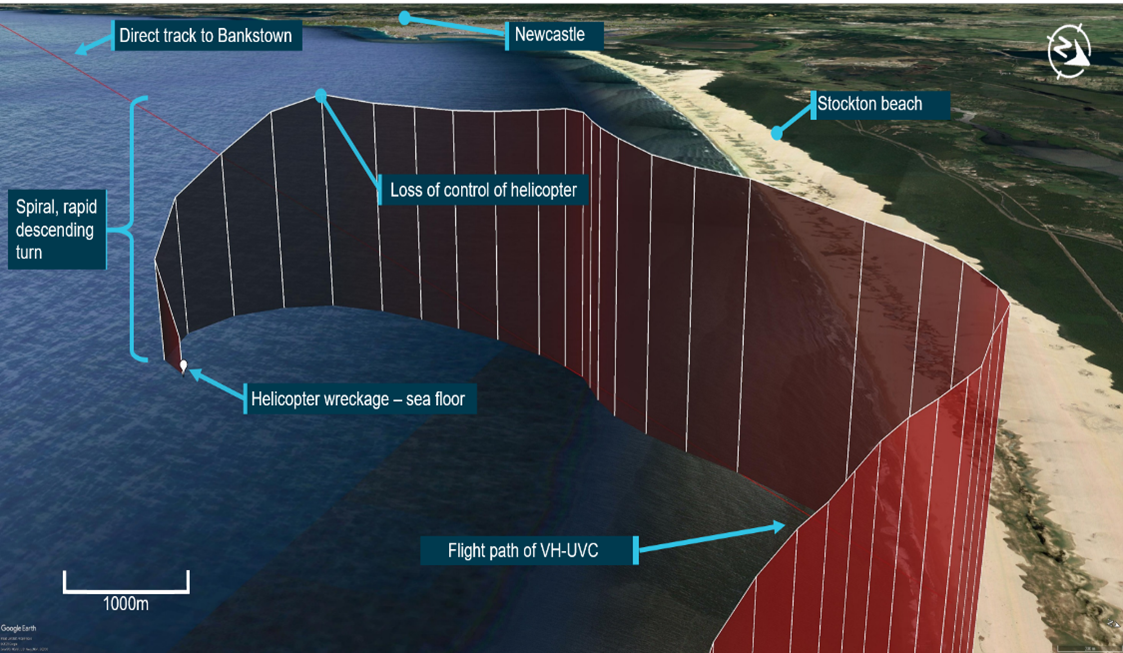
The aircraft was on a private flight from Bankstown to Benalla and did not follow the usual course taken by the pilot, but diverted south along the east coast before tracking directly to Benalla. During that part of the flight, the aircraft diverged between 3.5 and 4 degrees left of track, with the pilot apparently unaware of the tracking error. The aircraft was fitted with a Global Positioning System (GPS) navigation system and the flight was being monitored by Air Traffic Control until it left radar coverage near Benalla.

During the flight, the air traffic control system's Route Adherence Monitoring (RAM) system triggered alerts to indicate that the aircraft was deviating from its planned route, but controllers did not question the pilot about the aircraft's position. The investigation found that the instructions to controllers relating to RAM alerts were ambiguous and that the sector controller involved wrongly assumed that the pilot was tracking to another waypoint.

The pilot reportedly often disabled the radio altimeter during a flight. That equipment may have indicated the aircraft's unsafe proximity to terrain in time to prevent the controlled flight into terrain accident (CFIT) if it had been operating.

In addition to the extensive safety action by Airservices Australia to seek to avoid a repeat of the accident, the ATSB has issued a safety recommendation to the Civil Aviation Safety Authority to review the requirements for the carriage of on-board recording devices in Australian registered aircraft which could assist investigators establish the reasons for any accidents that may occur in the future.

Freight train derailment at Glenalta (SA) in November 2004

The placement of three empty rollingstock platforms immediately behind the locomotive was one of a number of key factors that combined to cause a freight train to derail at Glenalta, South Australia on 21 November 2004, according to an ATSB investigation report released today.

The Australian Transport Safety Bureau report states that the accident occurred after a single freight wagon bogie derailed over a set of points at Belair. A wheel contacted and lifted on top of a check-rail. The check-rail is designed to guide a wheel in the correct direction through the points. However, in this case the wheel was no longer retained by the check-rail and it travelled in the wrong direction subsequently derailing. No one was hurt as a result of the derailment. There was extensive damage to property, both public and private.

The ATSB engaged experts in advanced rail simulation modelling to test the hypothesis that the marshalling of the train and the placement of the empty platforms was the major factor in the derailment. The simulation provided compelling data to suggest that the weight configuration of the train was not of itself sufficient to cause the derailment. Other factors such as braking in such a way that compressive forces were accentuated, the suspension of the empty platforms, and a track geometry which resulted in wheel oscillation, also combined to induce the derailment.

The crew was not immediately aware that a bogie had derailed, and the freight train continued for 3.7 km, progressively derailing other bogies before the derailment became apparent. The locomotive drivers realised that some wagons had derailed as the train reached Glenalta and immediately applied braking. The train finally stopped some 200m beyond the Glenalta railway station. A total of 10 freight wagons were derailed, with five obstructing TransAdelaide's passenger line and four coming to rest down an embankment into private residential properties.

While the report concludes that safety actions implemented immediately following the derailment are likely to have prevented any similar accidents, the investigation identified further opportunities to improve railway operational safety and made seven safety recommendations.