Final ATSB report: Aircraft landing at Sydney in fog conditions

The ATSB's final investigation report has found that an Airbus A330 passenger aircraft that landed at Sydney in fog on 6 April last year did so because the adverse weather conditions were unforecast and the flight crew continued to manoeuvre the aircraft for a landing at Sydney past the time they had previously nominated as the latest time for a diversion to Canberra.

Since the occurrence safety action has been taken by the air traffic services provider and the Bureau of Meteorology to improve the reporting of weather information to flight crews and to improve the accuracy of fog forecasting at Sydney airport.

On 6 April 2004, at about 0625 EST, an Airbus A330-301 aircraft, registered VH-QPC, landed on runway 34L at Sydney airport in weather conditions that were below the landing minima. The aircraft was being operated on a scheduled passenger flight from Perth to Sydney and it had departed Perth with sufficient fuel for the flight based on the current Sydney aerodrome forecast. This forecast indicated that, when the aircraft was due to arrive at Sydney, the weather conditions would be adequate for a landing. However, when the aircraft was about 110 km southwest of Sydney the weather conditions deteriorated due to unforecast fog.

The crew used weather information provided by controllers when making decisions in response to the deteriorating visibility at Sydney airport. However, not all of the weather information was passed to the crew. This resulted in a reduction in the level of appreciation by the crew about the dynamic weather situation and, in particular, the rapid progression of fog across the runway complex.

The crew initially required an instrument landing system approach to runway 16 Right based on runway visual range information from Sydney Airport runway observers which did not reflect the actual visibility conditions. After being advised of a report from the crew of another aircraft about the visibility being better at the threshold of runway 34 Left, the crew of VH-QPC then decided to conduct an approach to that runway.

The crew had previously advised the air traffic controller that they would need to divert to Canberra at 0618. On the basis of the information available to them, the crew decided to continue manoeuvring the aircraft for an approach to runway 34L past that nominated time. However, while the crew were making the approach the fog moved across the threshold of runway 34L. The crew then conducted an autoland onto that runway in conditions that were worse than the landing minima specified by the Civil Aviation Safety Authority.

The report (Aviation Safety Investigation Report 200401270) can be obtained from the website.

Final ATSB report into the double fatality in a Piper Seneca accident at Bankstown Airport on 11 November 2003

The ATSB investigation into the fatal Piper Seneca accident on 11 November 2003, at Bankstown Airport has found that the aircraft departed from controlled flight at a height from which recovery was not possible. The reason for the loss of control could not be determined.

The aircraft was being operated on a multi-engine aircraft training flight with a flight instructor and student pilot on board. After commencing a go-around, the aircraft was observed to diverge to the right of the runway centreline, climb and bank steeply to the right before impacting the ground in a steep nose-down attitude.

The aircraft was destroyed by impact forces and the post-impact fire. The student was fatally injured in the accident and the instructor received severe burns and died three and a half weeks after the accident.

On 1 December 2003, the Minister for Transport and Regional Services signed an Instrument of Direction to the Australian Transport Safety Bureau (ATSB). That instrument directed the ATSB to 'investigate the effectiveness of the firefighting arrangements for Bankstown Airport, as they affected transport safety at Bankstown Airport on 11 November 2003'. That investigation was conducted in conjunction with the accident investigation and a separate report (200305496) was issued on 24 December 2004.

The final investigation report (Aviation Safety Investigation Report 200304589) can be downloaded from the ATSB website.

Ship imperilled in Bass Strait

The engineers placed themselves in danger to save a ship in gale force weather conditions in Bass Strait after its main engine became disabled according to an Australian Transport Safety Bureau (ATSB) investigation report released today. The ATSB report states that the Hong Kong registered container ship, Maersk Tacoma, spent 19 hours adrift before being taken in tow on 8 August 2001.

The incident is still the subject of legal action in London between the ship's owners and various other parties. The ATSB waited for 34 months to obtain the engineering report from the owner's representatives on the main engine failure.

Maersk Tacoma had departed Melbourne in the afternoon of 7 August 2001 heading to Brisbane. In the early hours of 8 August one of the ship's main engine bottom end bearings failed which left the ship drifting in Bass Strait in deteriorating westerly weather conditions. After being informed of the situation, the ship's management company in Hong Kong implemented their emergency response plan to arrange the salvage of the ship.

While awaiting the towing vessel, Maersk Tacoma drifted 45 miles eastward passing very close to both Cutter Rock and the Hogan group of islands. On both occasions the damaged main engine had to be run for short periods to prevent the ship from grounding. By 2125 on 8 August, Pacific Conqueror, an offshore towing and supply vessel based in Gippsland, had taken the ship in tow. By the following afternoon, the ship had been towed to a safe anchorage on the eastern side of Wilson's Promontory.

The ATSB report concludes that main engine was disabled when the main engine bottom end bearing failed as a result of its pre-existing condition in combination with reduced lubricating oil flow. It also concludes that Maersk Tacoma's engineers placed themselves in significant danger by running the damaged main engine to save the ship on two occasions and that Australian authorities should have been notified of the ship's situation sooner.

The report recommends that ship owners and operators should ensure that they have procedures for notifying local rescue coordination authorities promptly if their ship becomes disabled.

Copies of the report (Marine Safety Investigation Report 171) can be downloaded from the website.

Seaman killed when a large wave broke over a container ship

One seaman died and another was severely injured when a large wave broke over the bow of the container vessel Aotearoa Chief on 14 August 2004, according to an Australian Transport Safety Bureau (ATSB) investigation report released today.

The ATSB report into the incident states that the Hong Kong registered Aotearoa Chief disembarked its harbour pilot at about 6 pm, shortly after the ship had cleared the entrance to Melbourne's Port Philip Bay. The master then ordered an alteration of course to take the ship away from the coast. While on this new course, an abnormal wave broke over the forecastle head, where three crew members were working to secure the ships anchors for the intended voyage to Sydney. One man was thrown against the mooring machinery and suffered injuries from which he later died. Another sustained severe lacerations to one leg and the third man was unhurt.

The report concludes that the instruction given by the master to the crew members to secure the pilot ladder and anchors on the forecastle head was not clear in conveying his claimed intent for the crew only to secure the pilot ladder and not to go forward to the anchors until the master was satisfied it was safe to do so

The report also concludes that a strong southerly wind, combined with an opposing ebb tide and shoaling waters, probably caused an 'abnormal wave' which was larger than ones either preceding or following.

The report mentions a similar occurrence which happened off the NSW port of Newcastle in January 2005. This incident, with a number of similarities, occurred on board the Cyprus registered bulk carrier Nordrhine, and resulted in the death of another seaman.

Copies of the report (Marine Safety Investigation Report 206) can be downloaded from the ATSB website.

ATSB Preliminary Factual Report: Metroliner fatal accident near Lockhart River

The ATSB's Preliminary Aviation Safety Investigation Report into the 7 May 2005 Lockhart River accident in which two pilots and 13 passengers perished has found that the Metroliner had descended about 1000 ft below the minimum obstacle clearance altitude when it collided with terrain. The aircraft had cut a swath of less than 100 m through heavy timber on the steep slope.

Preliminary information recovered from the flight data recorder and on-site examination of components indicates that both engines were producing about 30 to 35% torque. This is consistent with an approach power setting.

The aircraft was en route from Bamaga to Cairns via Lockhart River. The weather conditions in the Lockhart River area at the time of the accident were reported by the Bureau of Meteorology and people at Lockhart River as being broken low cloud with squally showers and drizzle. The crew reported that they were conducting the instrument approach to runway 12. It is unclear which of the two pilots was flying the aircraft at the time of the accident.

The wreckage was located in the Iron Range National Park about 90 ft below a 1300 ft tree covered ridge on the north-west slope of South Pap, a hill approximately 11 km north-west of Lockhart River on the final instrument approach track for runway 12.

The flight data recorder contained approximately 100 hours of useful data which has been assessed as being of reasonably good quality and contains data relating to the accident flight. Preliminary analysis of the data indicates that the aircraft had been descending at a constant rate, but with some turbulence evident, over the 50 seconds prior to the impact.

One of two former senior pilots who resigned from Transair PNG in mid 2002, who had previously raised some concerns about alleged regulatory breaches in PNG, has advised the ATSB that he has no knowledge of the accident and believes he cannot help the investigation. The other pilot has provided the ATSB with no information relevant to this investigation.

The investigation is continuing and will include analysis of recorded data, collation and analysis of operational, maintenance and regulatory records, other data and statements, recovered instruments and analysis of instrument approach procedures. The ATSB will release an Interim Factual Aviation Safety Investigation Report by December 2005.

Copies of the Preliminary Aviation Safety Investigation Report 200501977 can be downloaded from the website.

Ship and Fishing Vessel collision off Port Botany

Fatigue was a major contributing factor to the longline fishing vessel Ocean Odyssey collision with the side of the container ship P&O Nedlloyd Taranaki. The ship was drifting while assessing its engine problem when the fishing boat ran into it, according to an ATSB investigation report released today.

The Australian Transport Safety Bureau report states that the N.S.W registered Ocean Odyssey collided with the port side of the container ship at about 0244 local time on 29 June 2004 near the entrance to Port Botany, after the boat's skipper had fallen asleep on watch. The boat was returning from its fishing grounds off the N.S.W coast at the time and was on autopilot. The container ship had had a main engine breakdown prior to the incident and was unable to get out of the way of the approaching fishing vessel.

A local port pilot had just boarded the container ship which was preparing to enter port when the engine breakdown occurred. The crew on the bridge of the ship had illuminated the ship and switched on the correct signal lights after the breakdown. As they watched the fishing vessel approach, they sounded the ship's whistle in an attempt to alert the fishing vessel to the impending collision but were powerless to prevent the boat from running into the ship's side.

After the collision, the pilot requested that the pilot boat meet with the fishing boat to ensure that its crew were safe. The fishing boat then returned to its berth at the Sydney Fish markets where an investigation into the collision was initiated.

The report concludes that the skipper was fatigued at the time of the collision due to his work schedule and that his wheelhouse environment at the time was conducive to sleep.

Neither vessel used their VHF radio before or after the collision.

Copies of the report ( Marine Safety Investigation Report 203)can be downloaded from the ATSB website.

Final ATSB report into the 24 July 2004 Boeing 737 ground proximity caution near Canberra

The ATSB's final report into the terrain proximity caution incident to the south-south-east of Canberra at 0544 am on 24 July 2004 has found that the flight crew of the Boeing 737 were affected by fatigue and they misinterpreted the instrument approach chart and entered incorrect data into the flight management computer.

The aircraft was being operated on an overnight service from Perth to Canberra, when it proceeded beyond the limits of the Church Creek Holding pattern, 10.9 NM south of Canberra. In doing so the crew manoeuvred the aircraft closer to terrain than intended. As a consequence the aircraft received a 'Caution Terrain' message from the aircraft's enhanced ground proximity warning system.

The crew had commenced a right turn back to the north towards Canberra shortly before the 'Caution Terrain' message. They then climbed the aircraft to a higher altitude.

The flight crew's fatigue was partly the result of an airconditioning fault that led to hot cockpit conditions from Perth to Canberra. Normal air traffic assistance was unavailable in Canberra until 40 minutes after the scheduled 0530 am opening time.

The aircraft operator has amended its procedures to require a higher altitude for aircraft holding to the south of Canberra and the chart publisher is amending charts to reduce the likelihood of misinterpretation.

The ATSB initiated a category 3 investigation, which was subsequently noted on the ATSB website in early August. The Bureau released a preliminary report on this occurrence on 22 September 2004.

The final ATSB investigation report ( Aviation Safety Investigation Report 200402747) can be downloaded from the website, or obtained from the ATSB by telephoning (02) 6274 6478 or 1800 020 616.

Lockhart River 'Black Box' flight data recorder and cockpit voice recorder data

The ATSB's preliminary examination of recorders from the fatal Metroliner accident has found good data on the aircraft flight data recorder but not on the cockpit voice recorder.

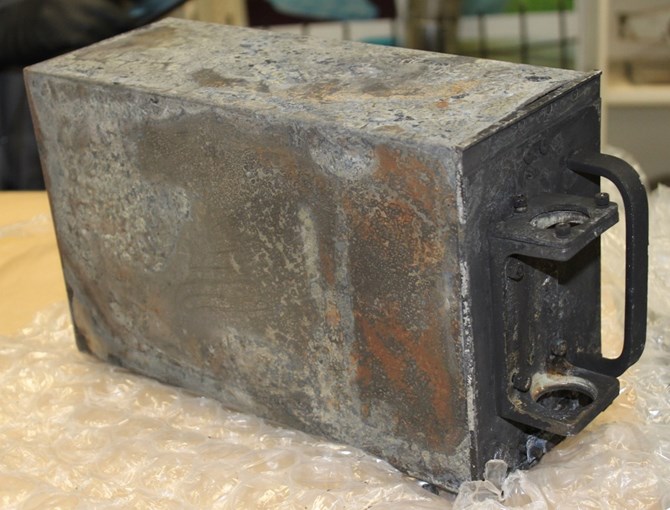
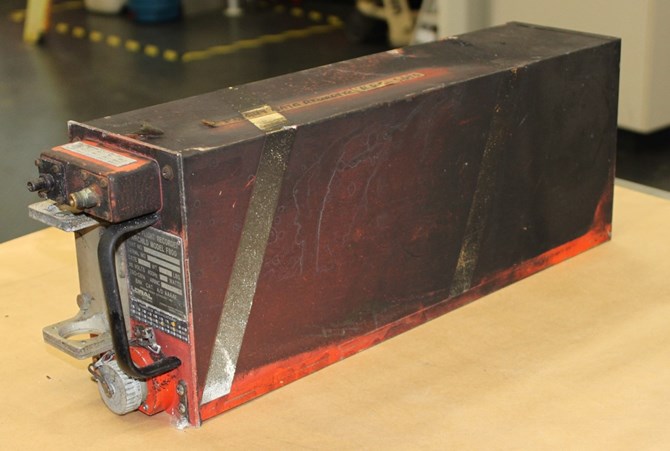
The two recorders were located in the aircraft wreckage on the afternoon following the accident and carried to the ATSB Canberra laboratories, arriving at 7 pm on Monday. Both recorders were heat affected from the post-accident fire.

Useful data of reasonably good quality has been retrieved from the flight data recorder (FDR) and detailed verification and analysis of that information has commenced. The FDR contained a little over 100 hours of recorded aircraft operation.

Unfortunately, no useful information about the accident flight appears to have been recorded on the cockpit voice recorder (CVR). Preliminary analysis of the 30 minute CVR tape indicates that it contains a mixture of electrical pulses and fragments of conversations, some identified from previous flights. The CVR tape is subject to ongoing investigation.

While the lack of CVR information to help the investigation is very disappointing, the FDR data includes a number of flight parameters* and will be of major assistance.

Other ATSB investigators continue to work at the accident site near Lockhart River, interview relevant personnel, review documents and records, and plan lines of inquiry.

The ATSB expects to release available and verified factual information, including from the FDR, in a Preliminary Factual Air Safety Investigation Report, by early June 2005.

The ATSB will not be releasing detailed data from the FDR until the complex and painstaking process of verification and analysis has been completed. This may take a number of months and speculation in the meantime should therefore be avoided.

*FDR parameters for VH-TFU include:

  • Elapsed Time Counter
  • Pressure Altitude
  • Indicated Airspeed
  • Magnetic Heading
  • Flap Position
  • Roll Attitude
  • Stabiliser Position
  • Acceleration: Longitudinal Axis
  • Acceleration: Vertical Axis
  • Left Propeller (% RPM)
  • Left Engine Torque (%)
  • Right Propeller (% RPM)
  • Right Engine Torque (%)
  • VHF radio microphone keying

Report on adventure cruise vessel grounding in the Kimberley region of WA

Over reliance on the accuracy of Global Positioning System (GPS) derived positions by a watchkeeper contributed to the grounding of the 35 m adventure cruise vessel True North at about 2300 on 7 August 2004, according to an Australian Transport Safety Bureau (ATSB) investigation report released today.

The ATSB report into the grounding of True North in the approach passage to St. George Basin, in Western Australia's Kimberley region, states that the vessel grounded on or near Strong Tide Point after a voyage from Prince Frederick Harbour. On board at the time of the grounding were 26 passengers and 12 crew. No pollution resulted from the grounding.

The report concludes that the vessel grounded while being navigated by an auto helm unit and an Electronic Chart System (ECS) receiving position information from GPS satellites. The GPS derived positions plotted on the ECS differed from the vessels true position by about 300 m. This error was possibly caused by a combination of factors, including GPS system inaccuracy, geodetic datum ambiguity, and a possible recent change in the ECS operating systems computer or GPS receiver parameters.

The report finds that the vessel's master, who was alone in True Norths wheelhouse at the time of the grounding, was probably suffering from some effects of fatigue as a result of his work routine. The master did not adequately cross check the GPS positions on the ECS by other navigational means, nor did he maintain an adequate visual or radar check to ensure the vessel remained in safe water.

The report also concludes that there were deficiencies in the procedures which dealt with the mustering of passengers in the event of an emergency.

Copies of the report ( Marine Safety Investigation Report 205) can be downloaded from the website, or obtained from the ATSB by telephoning 1800 020 616.

Final ATSB report into Cessna 404 accident at Jandakot Airport

The ATSBs final report into the fatal aircraft accident at Jandakot on 11 August 2003 has determined that the aircrafts right engine lost power soon after take-off when its engine driven fuel pump seized.

The Cessna 404 was being operated by one pilot and had five passengers who were to operate specialised equipment on the aircraft during maritime operations approximately 40 NM west of Jandakot. One passenger did not vacate the aircraft and was fatally injured. The pilot and the other four passengers sustained serious injuries as they vacated the aircraft. One of those passengers died from his injuries 85 days later.

In challenging circumstances, and with high-voltage powerlines crossing the aircrafts flight path 2,400 metres beyond the runway, the pilot turned the aircraft back to the aerodrome for an emergency landing. During the manoeuvring the pilot was unable to prevent the aircraft descending towards trees and scrub-type terrain, where it crashed and caught fire. Fuel from the ruptured wing tanks fed the fire.

A number of factors affect an aircraft's one-engine inoperative performance, including any variation from the airspeed to achieve the one-engine inoperative best rate of climb, control inputs made by the pilot to manage the situation and the effect of manoeuvring/turning the aircraft. One-engine inoperative climb performance significantly reduces during turns.

Jandakot did not have a dedicated aerodrome rescue and firefighting service and the first local firefighting unit arrived at the aerodromes emergency gate, about 1,500 m from the accident site about 12.5 minutes after being notified by the police. The Fire and Emergency Services Authority records showed that the first information from the accident site indicating that firefighting was underway was received about six minutes later.

The investigation found that the engine-driven fuel pump failed when its spindle shaft and sleeve bearing seized. Although the auxiliary fuel pumps were being used during the take-off, the low-pressure supplementary fuel was not sufficient to sustain engine operation at the take-off power setting.

A review of maintenance documentation revealed that a sleeve bearing replaced during the last overhaul of the engine driven fuel pump was not of the same material specification as the original bearing material. That material selection had the unintended consequence of increasing the likelihood of bearing seizure.

Following the occurrence, the operator modified other Cessna 404 aircraft in its fleet to incorporate a warning light to indicate low fuel pressure. The ATSB has previously issued safety recommendations to CASA regarding pilot training for engine-out operations, which are relevant to the circumstances of this accident.

Copies of the report ( Aviation Safety Investigation Report 200303579) can be downloaded from the website, or directly from the ATSB by telephoning 1800 020 616.