On the morning of 28 October 2023, a SOCATA-Groupe Aerospatiale TB-20, registered, VH-JTY, departed Montpelier aircraft landing area, Queensland, for a visual flight rules private flight to Palmyra aircraft landing area, Queensland. The flight was to be just over one hour duration and the pilot and their passenger were familiar with the route.
During the flight, the pilot contacted a friend at the destination for an appreciation of the weather. After the friend advised them of the prevailing conditions including cloud, the pilot replied that they would need to go through some cloud before arriving.
Around 30 NM from the destination, shortly after commencing descent for the intended landing, the aircraft began a steep descending turn to the left towards mountainous terrain. During this descent, the aircraft exceeded the airframe’s designed maximum airspeed before pitching up and passing over the top of Bull Mountain. The aircraft then entered a second steep descending turn, this time to the right, before the recorded flight path data ceased.
The wreckage was located nearby in dense forest on the north-east face of Bull Mountain. The accident site indicated that the aircraft had collided with terrain at a steep angle, and with significant forward velocity. The aircraft was destroyed and both occupants received fatal injuries.
What the ATSB found
The ATSB found that, after encountering cloud en route, the pilot elected to continue along the intended flight path through cloud instead of diverting around or remaining on top of it. Shortly after, it is very likely the pilot entered weather conditions not suitable for visual navigation, leading to spatial disorientation and a descent into mountainous terrain.
Safety message
One of the key risk controls for a visual flight rules (VFR) pilot to avoid entering instrument meteorological conditions (IMC) is appropriate pre-flight preparation and planning. Pilots should always obtain up-to-date weather information before and during flight. While forecasts will assist in selecting the route to be flown, pilots should plan an alternate or be prepared to make necessary deviations from the planned route should actual weather conditions indicate the possibility of not being able to comply with the VFR.
For a non-instrument rated pilot, even with basic attitude instrument flying proficiency, maintaining control of an aircraft in IMC by reference to the primary flight instruments alone entails a very high workload that can result in narrowing of attention and loss of situational awareness. While autopilot can be used to reduce workload, it is not infallible and should not be relied upon or used by VFR pilots as a risk mitigator to decide to fly into unsuitable conditions.
Unapproved mobile devices displaying charts and data from an approved data service provider are a useful supplement to navigation, but they cannot be used as a navigation device, and must not be the sole means of navigation when operating under the VFR. Pilots should use navigation equipment approved for aviation and maintain skills in navigating by reference to approved charts.
The investigation
Decisions regarding the scope of an investigation are based on many factors, including the level of safety benefit likely to be obtained from an investigation and the associated resources required. For this occurrence, a limited-scope investigation was conducted in order to produce a short investigation report, and allow for greater industry awareness of findings that affect safety and potential learning opportunities.
The occurrence
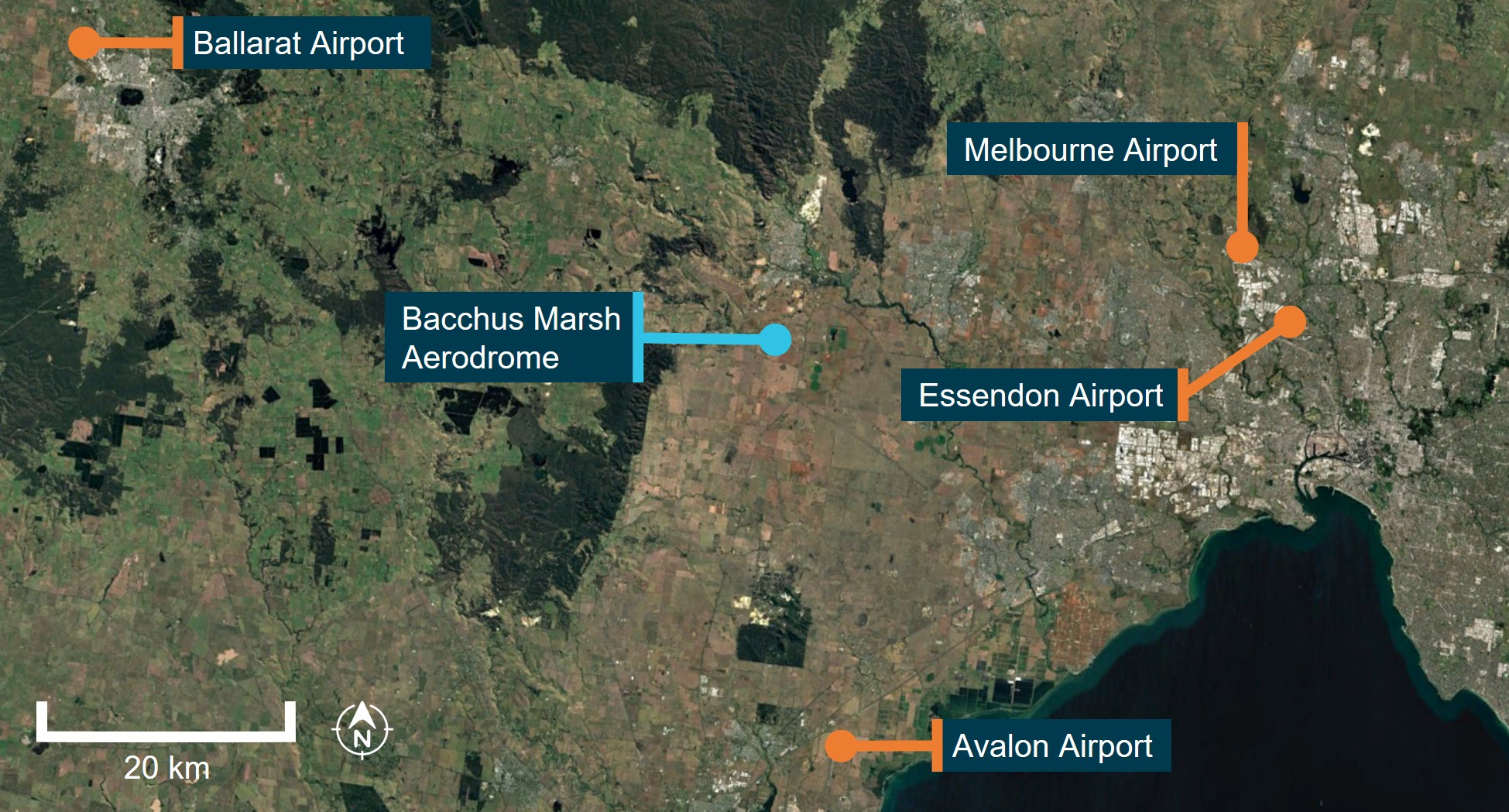
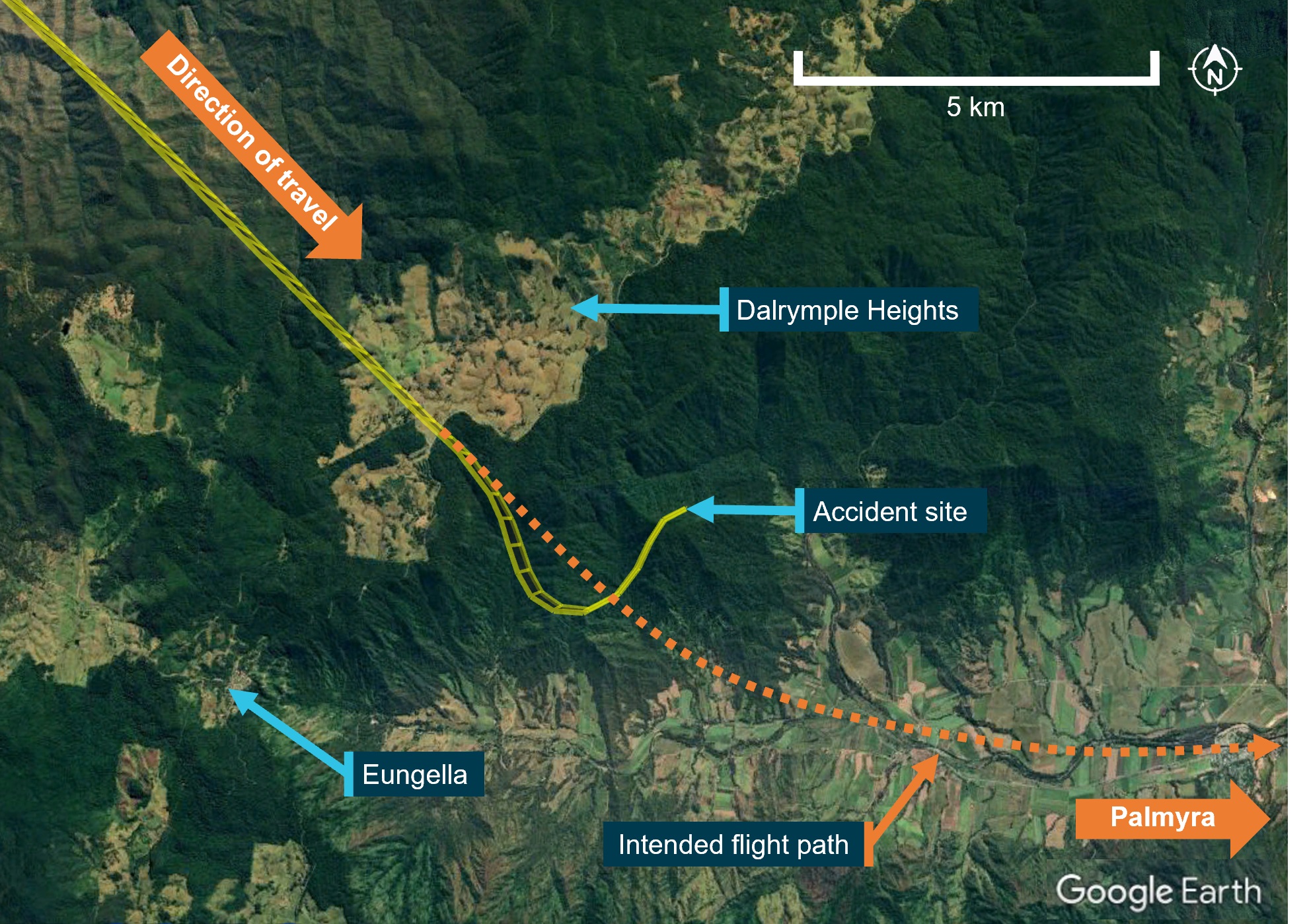
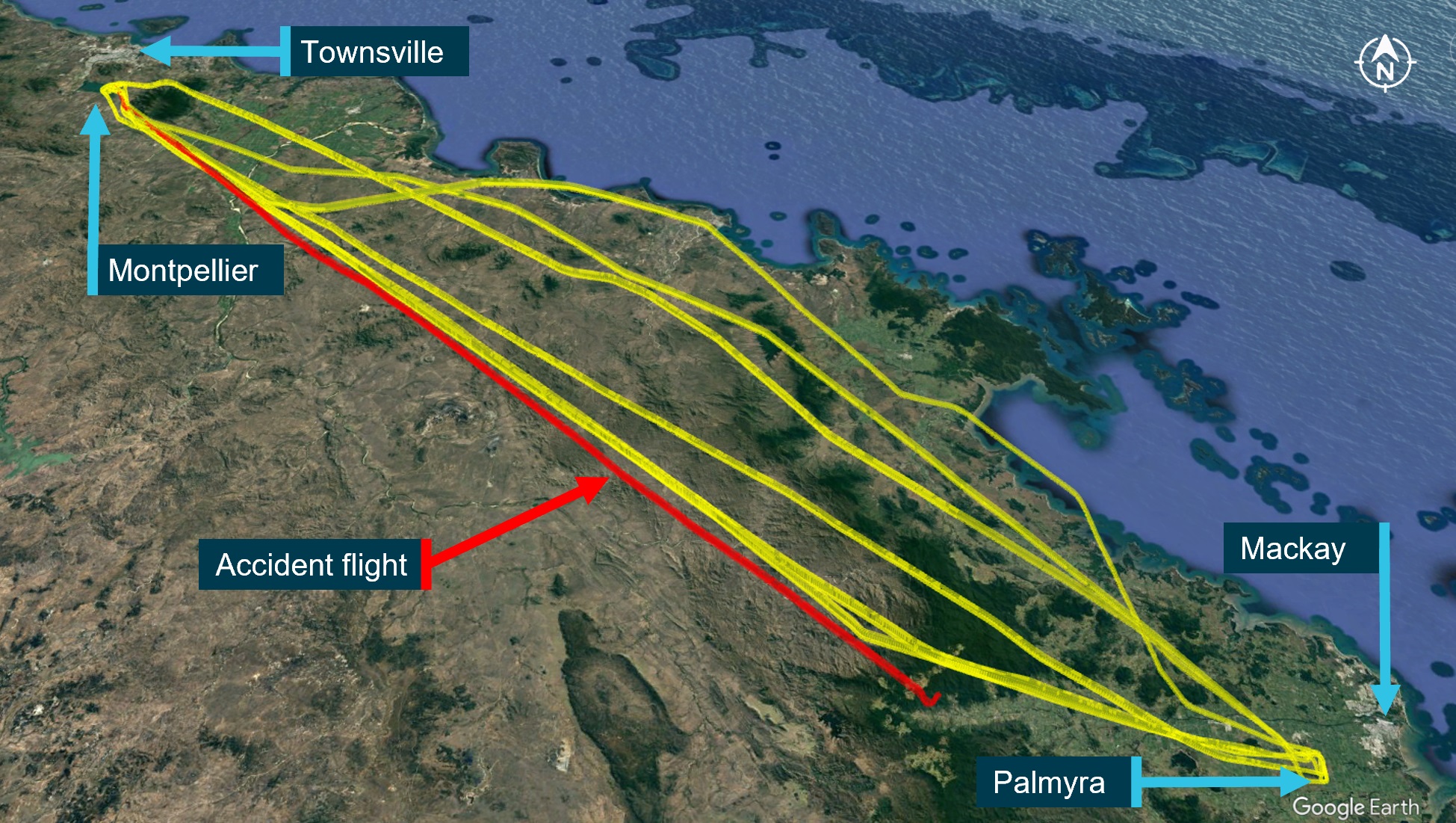
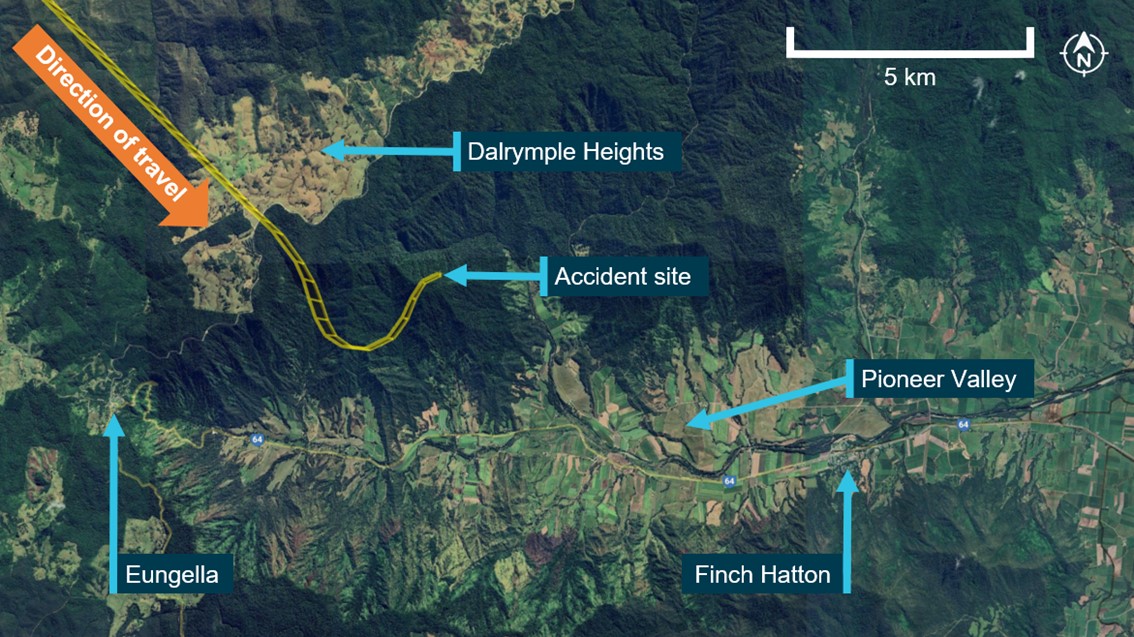
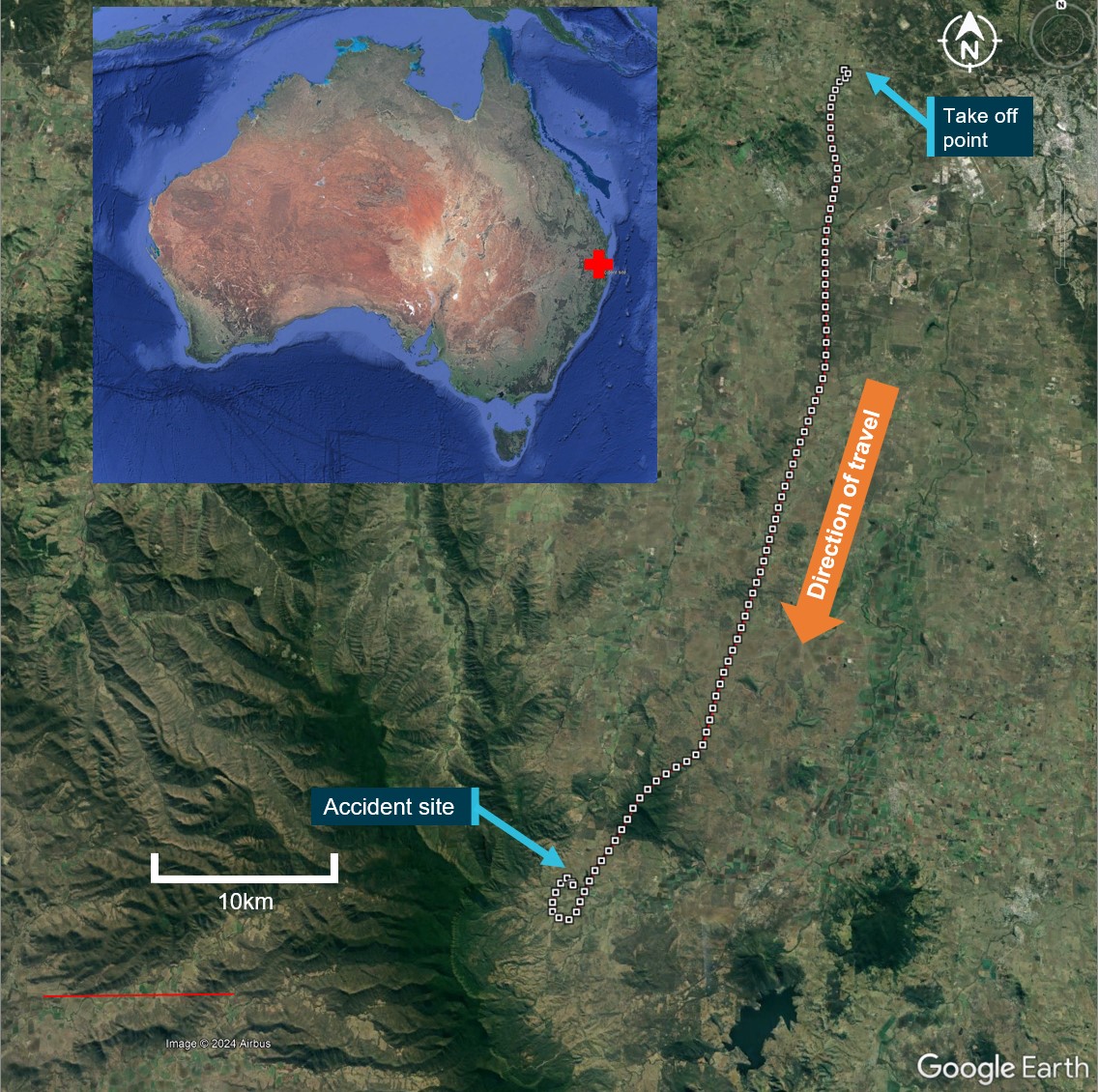
On 28 October 2023, at about 0735 local time, a SOCATA-Groupe Aerospatiale TB-20 (TB-20) registered VH-JTY, departed from Montpelier (Antill Plains) aircraft landing area,[1] Queensland, for a private flight to Palmyra aircraft landing area,[2] Queensland. The flight was to track via Dalrymple Heights, near Eungella before descending into the Pioneer Valley to the west of Mackay, and then track direct to Palmyra (Figure 1). On board were the pilot and a passenger, who was also a licenced pilot.
Figure 1: VH-JTY fight path
Source: Google Earth and OzRunways, annotated by the ATSB
OzRunways[3] data showed the aircraft was flown to 5,500 ft above mean sea level (AMSL) where it maintained a steady track without any significant deviations during the cruise phase of flight.
At 0814, approximately 20 minutes prior to commencing descent for the intended landing at Palmyra, the pilot made a phone call to a friend, another licenced pilot, in Mackay. It was reported that the pilot enquired about the weather at the destination. The friend recalled advising of the presence of cloud at Palmyra and blue sky to the south of the landing area. The pilot replied that they would have to go through some cloud.
The same friend called the pilot at 0833 to confirm their estimated time of arrival so they could meet the pilot in Palmyra. They stated that the pilot reported being over Eungella at 5,500 ft and was about to commence their descent. The friend reported ending the phone call so as not to cause any distraction.
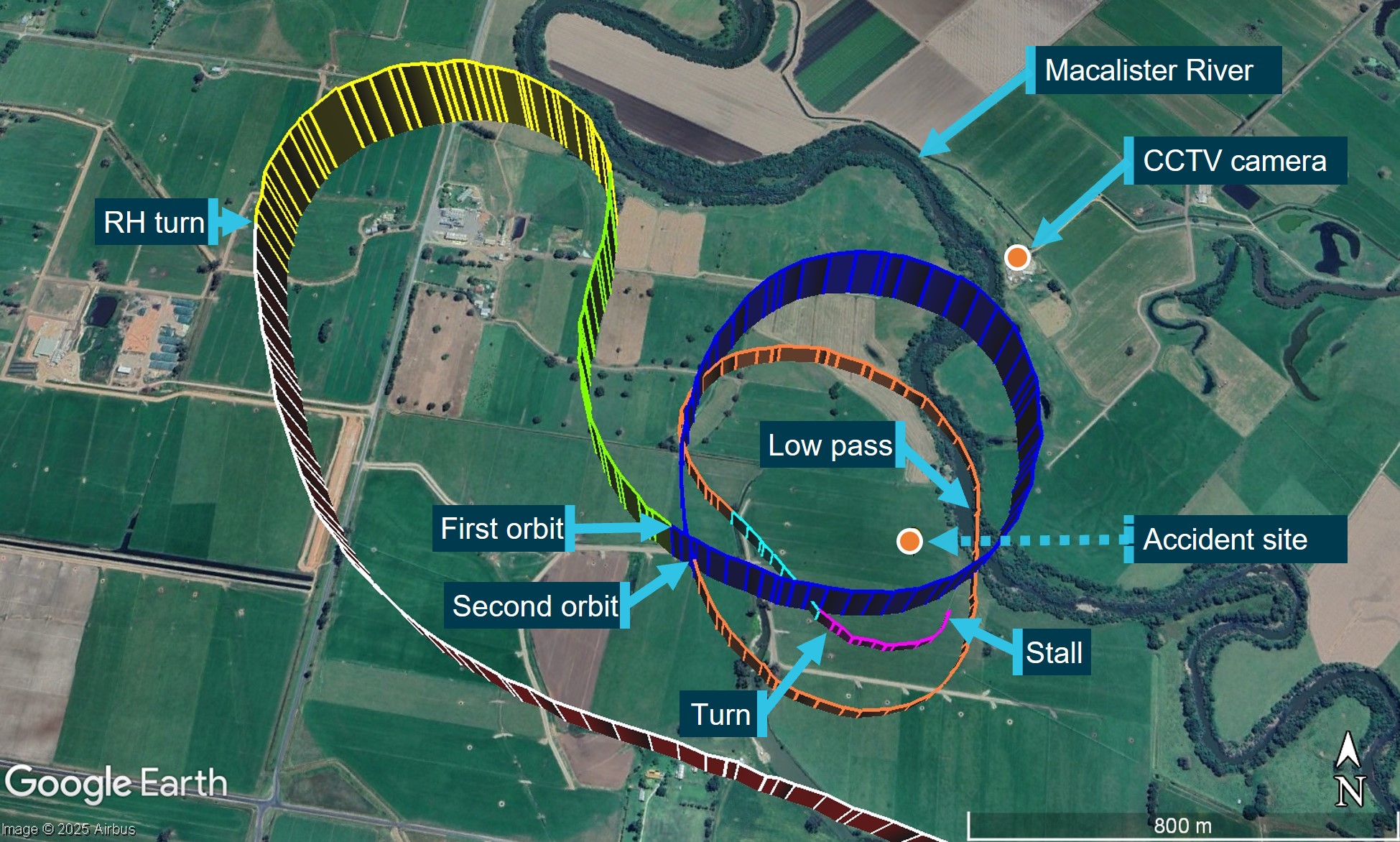
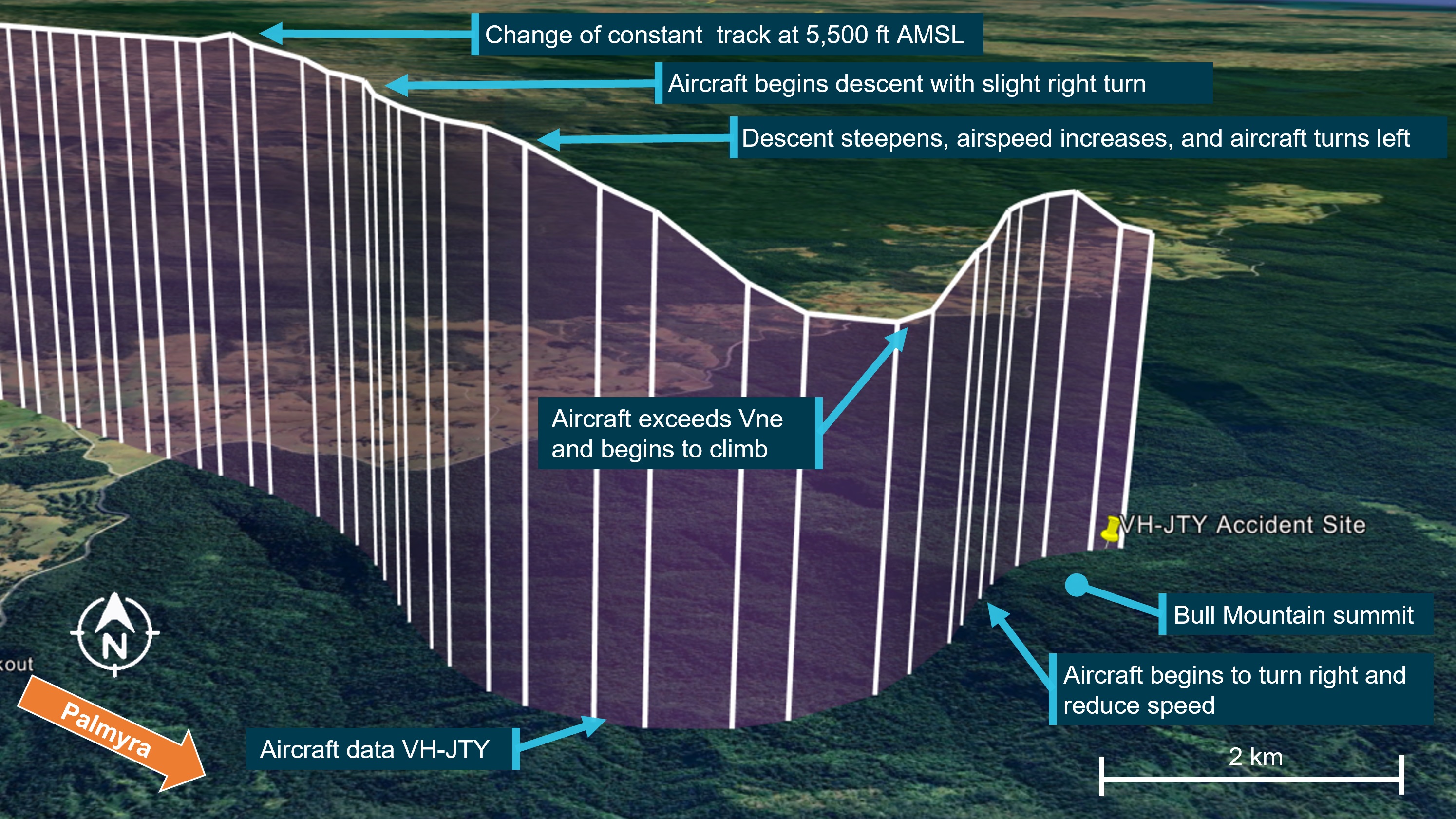
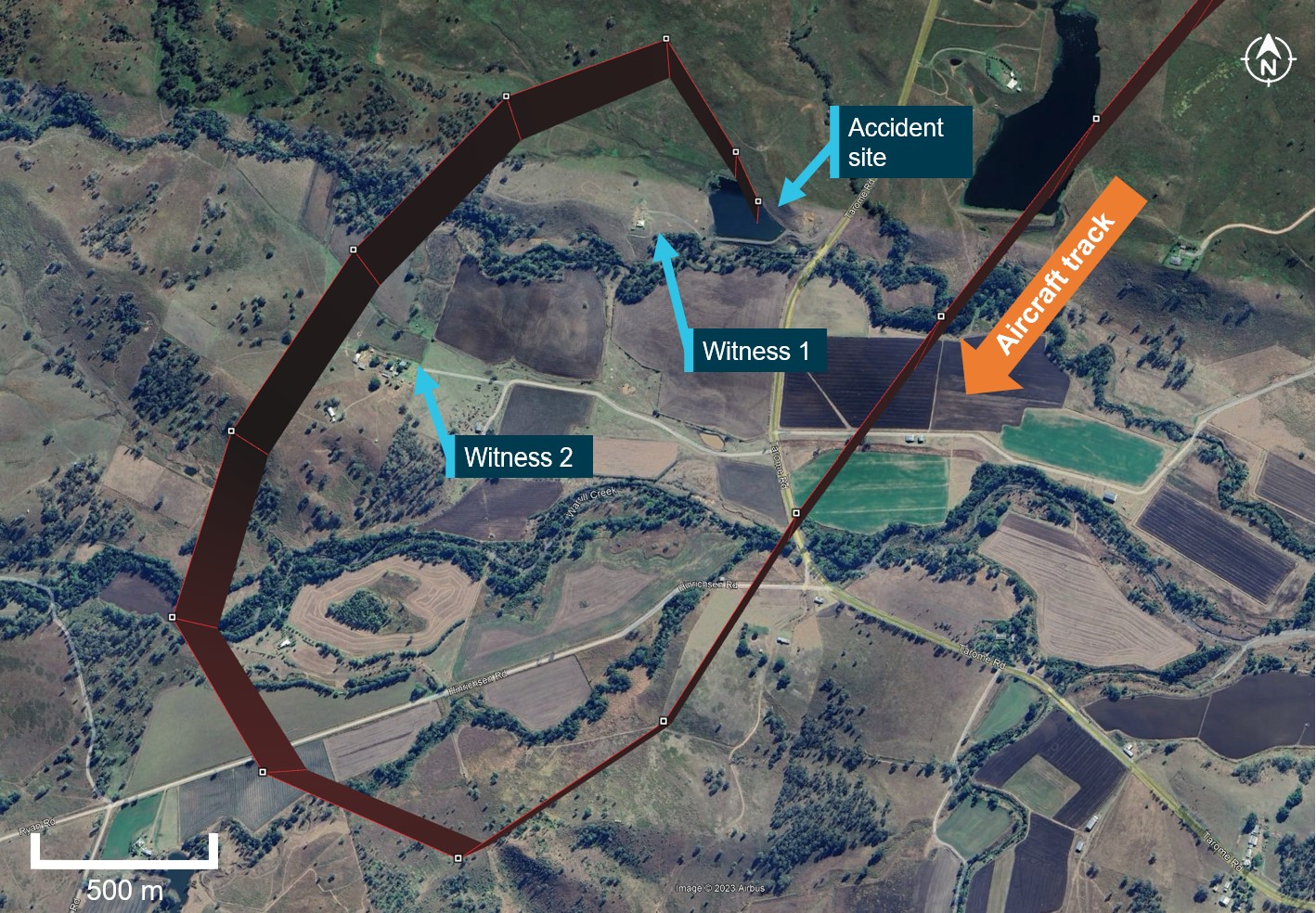
At 08:34, there was a change to the previously stable flight path. The aircraft initially climbed about 100 ft and entered a slight right turn before turning left towards Bull Mountain in a shallow descent. As the turn continued, the aircraft’s descent rate increased, descending about 1,600 ft in 13 seconds (average descent rate of 7,400 ft/min) (Figure 2).
Figure 2: VH-JTY descent
Source: Google Earth with overlaid OzRunways data, annotated by the ATSB
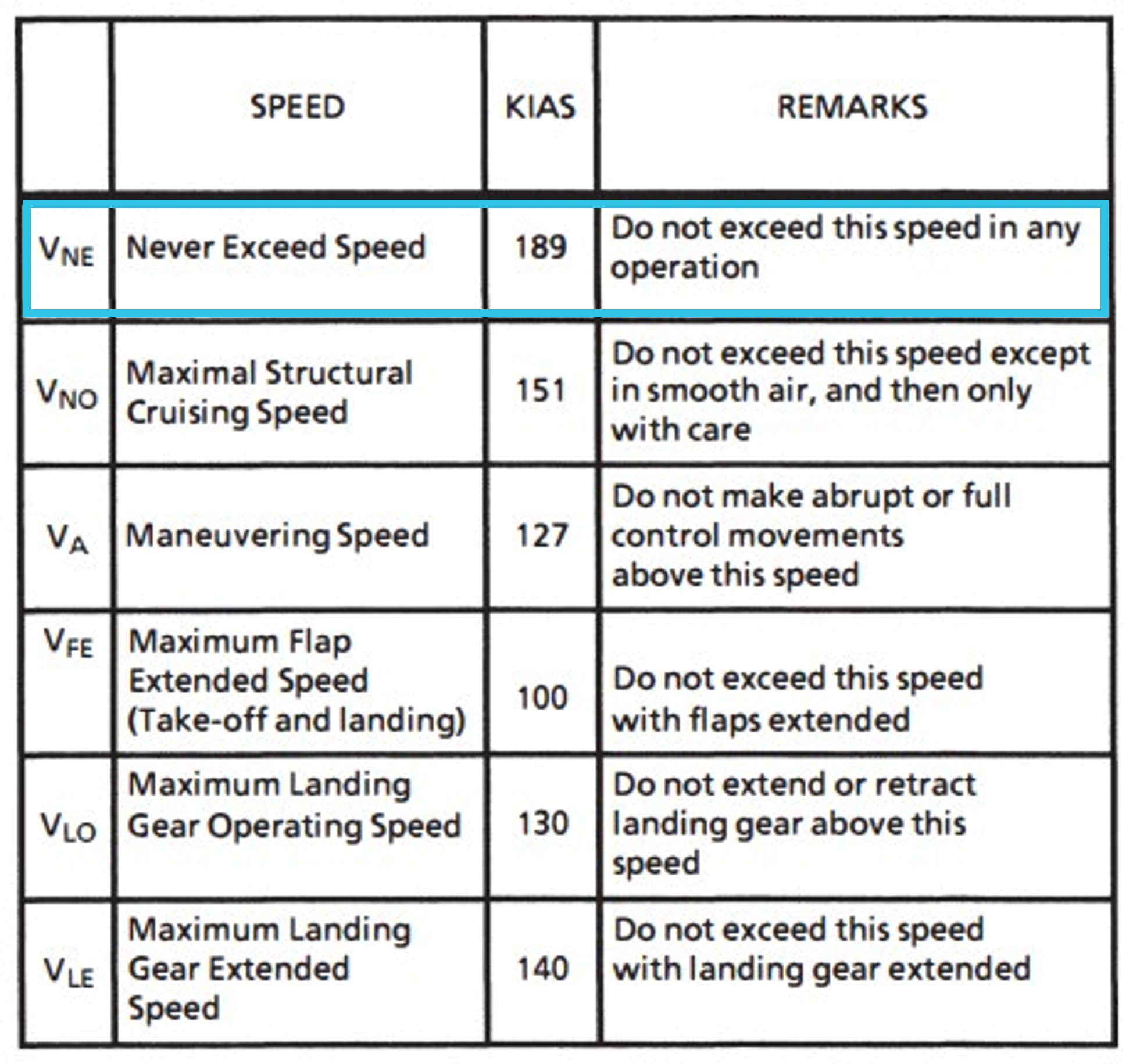
During this descent, the aircraft accelerated to about 218 kt, 29 kt above the aircraft’s published VNE[4] (velocity never exceed) of 189 kt (Figure 3).
Figure 3: TB-20 airspeed limitations
Source: Aircraft manufacturer, annotated by the ATSB
In the 10 seconds that followed, the aircraft pitched up steeply, climbed approximately 600 ft, and passed overhead Bull Mountain at 4,200 ft AMSL. The aircraft then slowed to 132 kt before entering a steep descending right turn to the east. The recorded data stopped at 0835, 3,655 ft AMSL with the aircraft estimated to be descending at around 6,000 ft/min in a right turn with 36° angle of bank and increasing roll angle.
The aircraft collided with terrain in dense forest on the north-east face of Bull Mountain 1,900 ft AMSL, not far from where the recorded data stopped. The aircraft was destroyed, and the pilot and passenger were fatally injured.
Context
Pilot information
The pilot was qualified and authorised to fly VH-JTY. They held a valid Private Pilot Licence (Aeroplane), issued on 4 May 2004. In addition, the pilot held a single engine aeroplane rating, and endorsements for manual propeller pitch control and retractable undercarriage. Their last flight review was conducted in July 2023 and valid to 30 September 2025. At the time of the accident the pilot had about 2,100 hours total aeronautical experience of which about 1,500 hours were in VH-JTY.
The pilot held a valid class 2 medical certificate that was issued on 12 December 2022 and valid to 7 October 2024. The class 2 was issued with the restrictions that both distance and reading vision correction was available during flight. A review of the pilot’s medical records showed that a chronic medical condition was being appropriately managed by the pilot and their designated aviation medical examiner (DAME). It required annual review and there were no additional restrictions placed on the pilot’s class 2 medical certificate.
A copy of the coroner’s toxicology and pathology reports were not available to the ATSB at the time of publishing this report.
Passenger information
The passenger was familiar with VH-JTY. While a licensed pilot, they had not renewed their medical certification for flight and had not conducted a recent flight review.
Aircraft information
General information
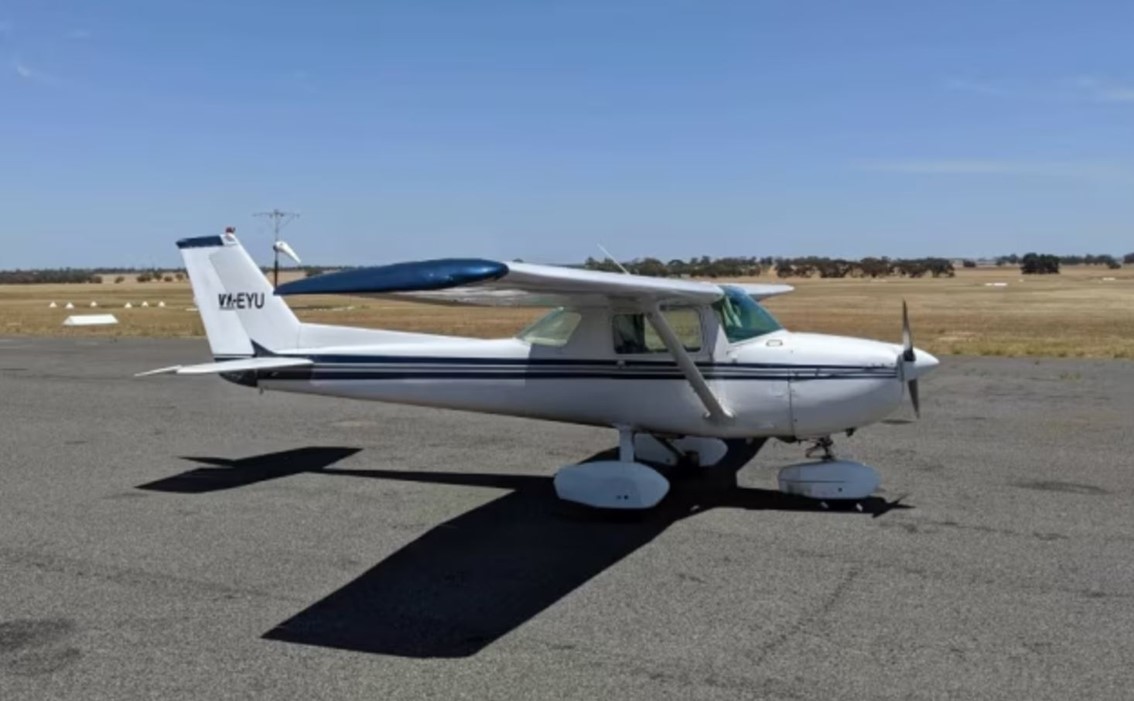
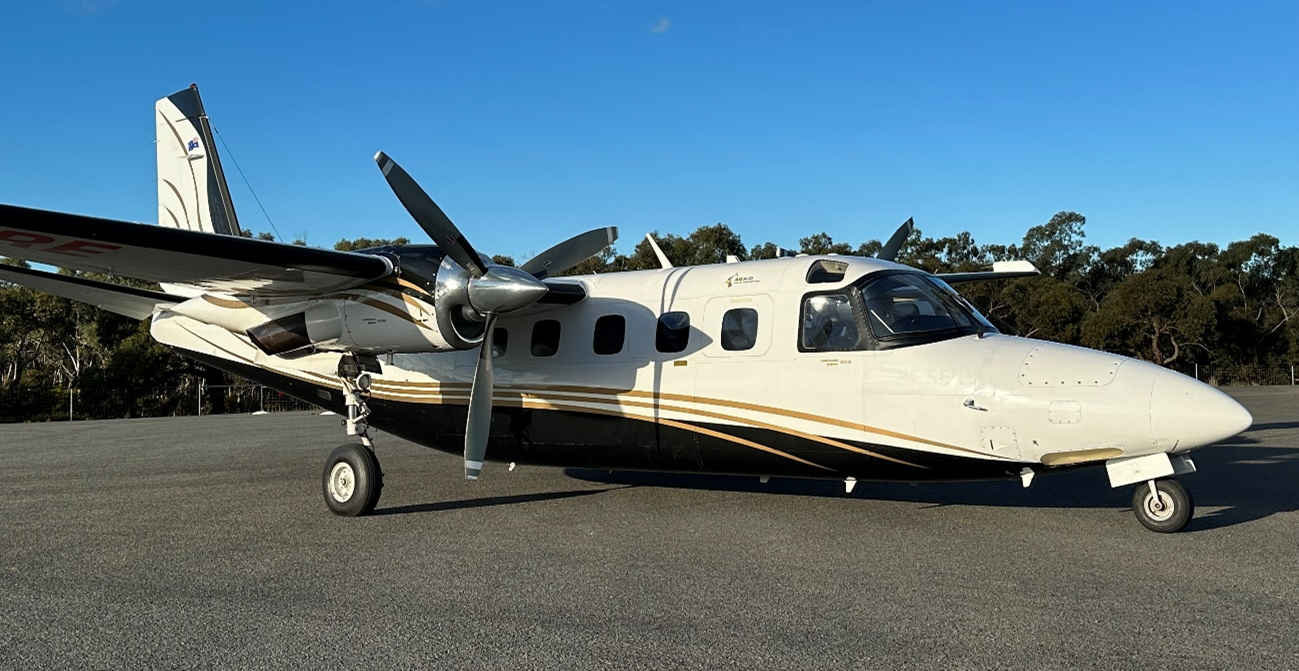
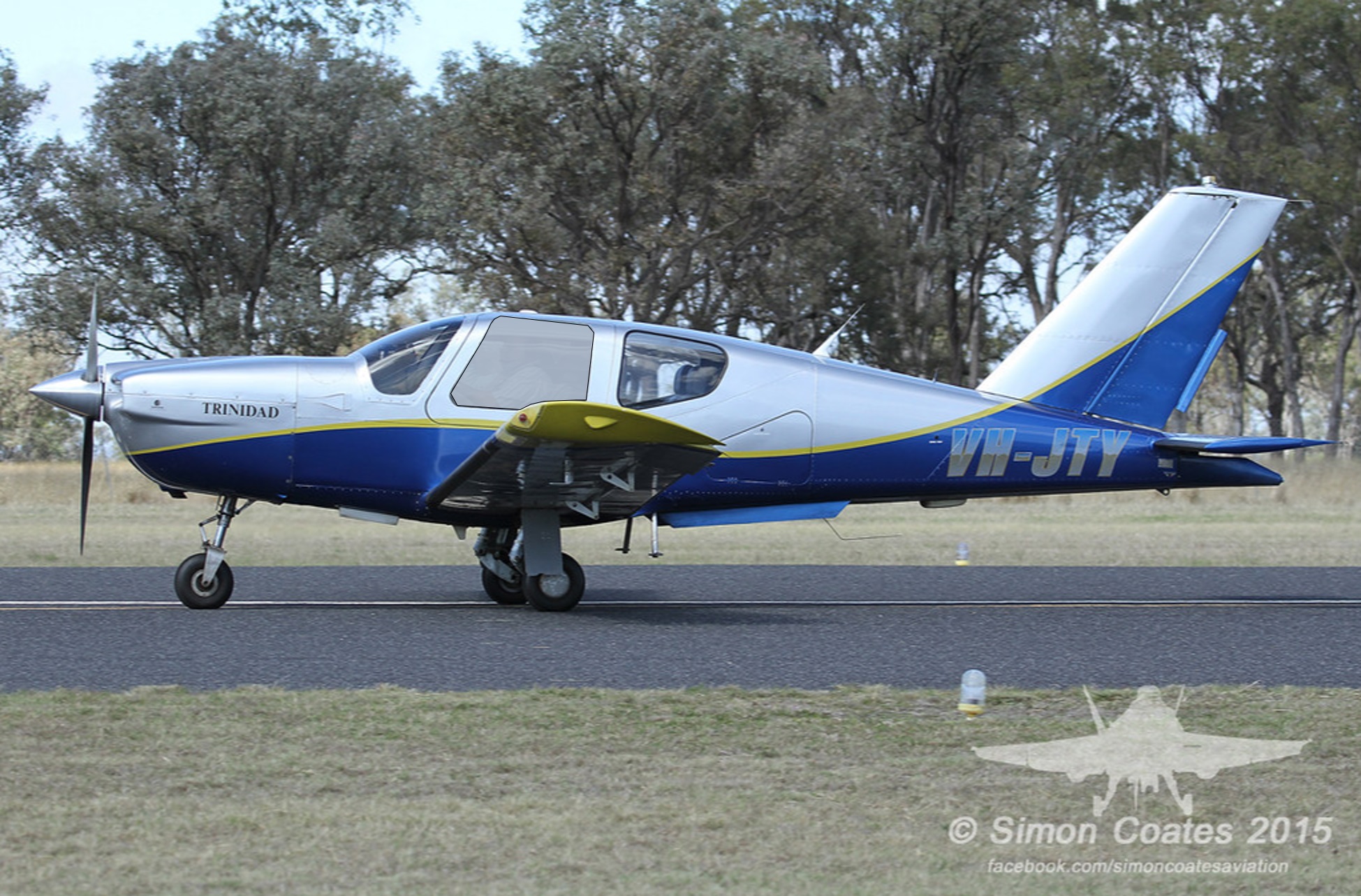
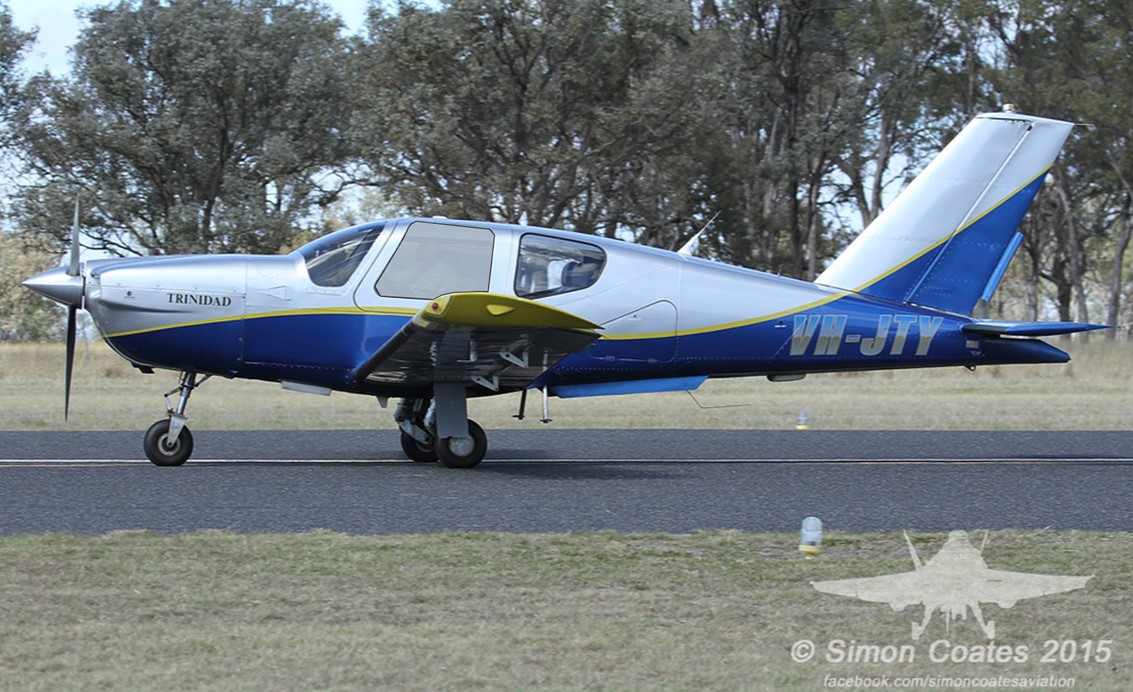
The TB-20 is an all-metal, 5-place, single engine aircraft with fully retractable landing gear. It was powered by a 6-cylinder Lycoming IO-540 fuel-injected engine, driving a 3-blade constant-speed propeller and equipped[5] for visual flight rules (VFR)[6] (Day) flying only. VH-JTY was manufactured in France in 1985 and was first registered in Australia in April 1987. The pilot had owned VH-JTY since April 2008 (Figure 4).
Figure 4: VH-JTY
VH-JTY as it appeared in 2015. The yellow lines and wingtips were later painted dark red.
Source: Simon Coates, modified by the ATSB
Maintenance history
The aircraft was maintained in accordance with the CASA system of maintenance defined in Civil Aviation Regulations 1988 - Schedule 5 and the last periodic inspection was conducted on 14 December 2022. A review of the maintenance records and history for VH-JTY did not show any outstanding defects. The active maintenance release was not recovered from the accident site.
The aircraft was equipped with a Bendix/King KLN 90 GPS navigation system and a Bendix/King KAP 150 2-axis (pitch and roll) autopilot system that had been installed since the aircraft was manufactured. A review of the maintenance history and comments of the approved maintenance organisation showed minor issues with the autopilot consistent with its age. The faults were reported to have resulted in the uncommanded disconnection of the autopilot in flight. The unit was repaired in March 2022 and there were no records of any further maintenance on the autopilot after this date.
In January 2023, a ground handling incident damaged VH-JTY’s vertical fin and rudder. Structural repairs were carried out and following inspection of the flight controls, the aircraft returned to service on 25 May 2023. At the time of the accident, VH-JTY had a total time in service of about 5,233.4 hours and had flown about 35 hours since return to service.
King KAP 150 Autopilot
The pilot information manual supplement for the autopilot did not provide a minimum activation airspeed for the TB-20 but did contain a maximum airspeed limitation of 175 kt for autopilot use. Automatic flight could be activated by pressing the AP ENG (autopilot engage) button on the control panel and disengaged by pressing the AP ENG button again, or by pressing the AP DISC (autopilot disconnect) button on the pilot’s control wheel. When the autopilot is disengaged, an aural alert sounds for 2 seconds to alert the pilot.
The supplement also provided maximum altitude losses that may be encountered following an autopilot malfunction. In a cruise, climb or descent configuration, the maximum altitude loss would be 450 ft.
Recorded data
ADS-B
The aircraft was equipped with a SkyEcho portable automatic dependant surveillance broadcast (ADS-B) antenna capable of receiving information from ADS-B equipped aircraft and transmitting positional information to nearby stations. A review of available flight track history revealed that this antenna did not transmit any positional information during the accident flight.
Mobile devices
There were almost certainly 2 iPads and 2 telephones onboard the aircraft. Queensland Police located and recovered one telephone from the accident site. ATSB data recovery specialists determined that the phone was too heavily damaged to recover the data from the phone’s internal memory. At least 2 mobile devices were running the OzRunways app.
OzRunways data
OzRunways is an electronic flight bag (EFB) provider in Australia that also provides a ‘TX’ service that tracks device location and uploads it to OzRunways servers over the cellular network every 5 seconds. This service displays the device’s location on a user‑selected chart and also plots location data from other aircraft utilising OzRunways. The pilot used the OzRunways application on an iPad for en route planning and navigation. The pilot’s passenger also carried a second iPad with OzRunways when they flew together.
OzRunways is an approved source of aeronautical charts, but it must not be used as a primary means of navigation. The iPad GPS does not meet technical standard order[7] (TSO) specifications for aviation use (OzRunways, 2022). Additionally, there are limitations to the data provided via OzRunways. Altitude information has a resolution of 100 ft, a change in altitude from 190 ft to 210 ft will be displayed as a change from 100 ft to 200 ft. Additionally, filtering applied to smooth the data can affect the accuracy of analysis of small sections of data.
Tracking data obtained from OzRunways provided latitude and longitude as well as time, speed and heading. The last data point was at an altitude of about 1,700 ft above ground level in the vicinity of the accident site (Figure 2). When the OzRunways data ended, the aircraft was shown heading east in a steep descending right turn. The lack of any further data points was probably due to a loss of cellular signal among the mountains.
Accident site
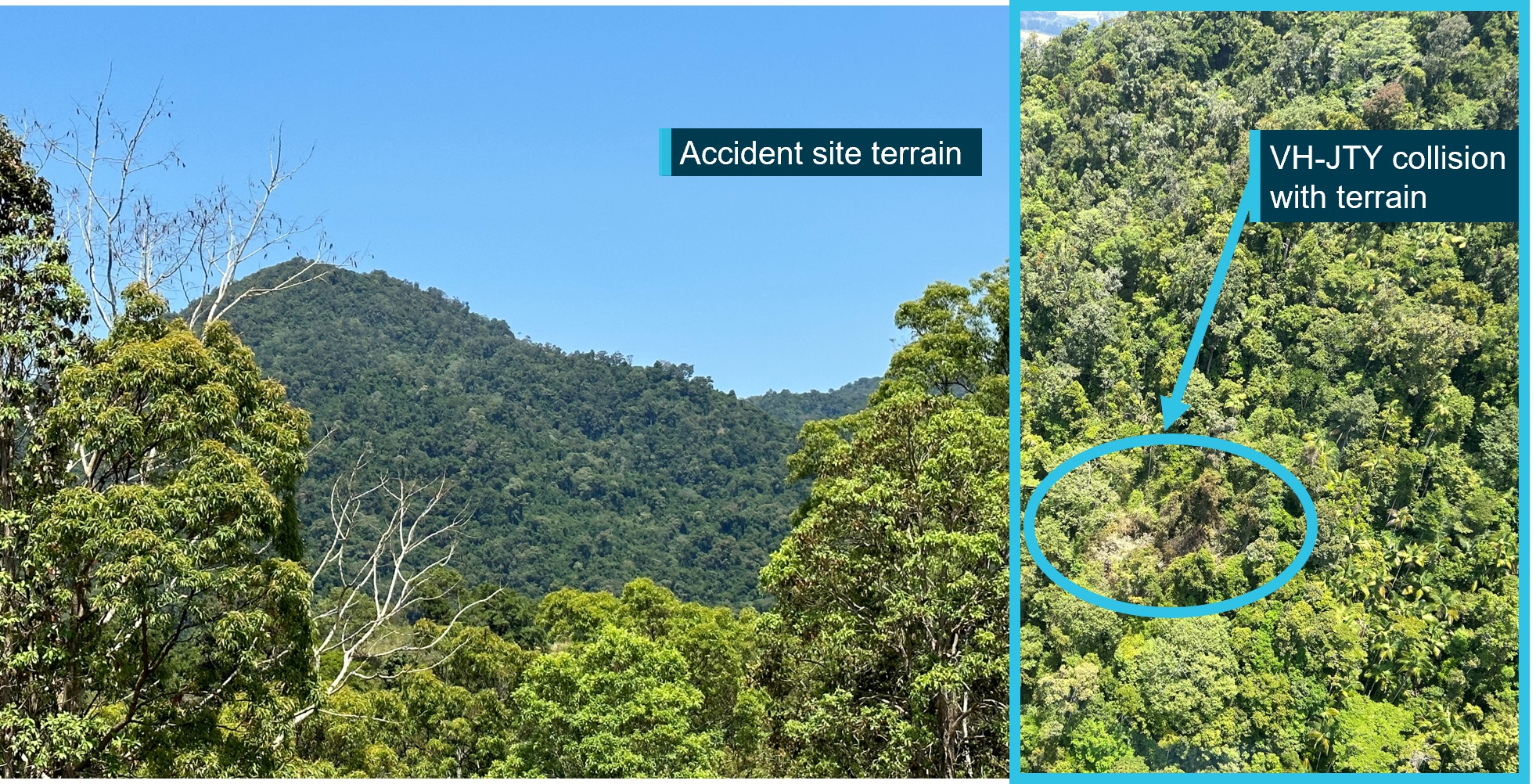
The aircraft wreckage was located in heavily vegetated steep mountainous terrain, north-east of Bull Mountain (Figure 5). A Central Queensland Rescue helicopter located the wreckage at 1113 on 28 October and first accessed the site by winch at about 1400 on the day of the accident. The rescue crew confirmed that both occupants were deceased and took preliminary photographs of the wreckage.
The ATSB was unable to access the accident site. ATSB investigators provided a briefing to Queensland Police Service (QPS) forensic officers prior to them attending site on 27 November. With the support of specialists trained in high angle rescue operations the QPS officers collected evidence and provided it to the ATSB.
Figure 5: Accident site terrain
Source: Central Queensland Rescue, annotated by the ATSB
Wreckage examination
The ATSB’s review of the accident site photographs, and evidence provided by QPS, showed that the aircraft impacted the terrain at a steep angle while tracking 036° (close to north-east). The aircraft was destroyed by the impact and consumed by a post-impact fuel‑fed fire. Several components were buried by shifting soil after the accident.
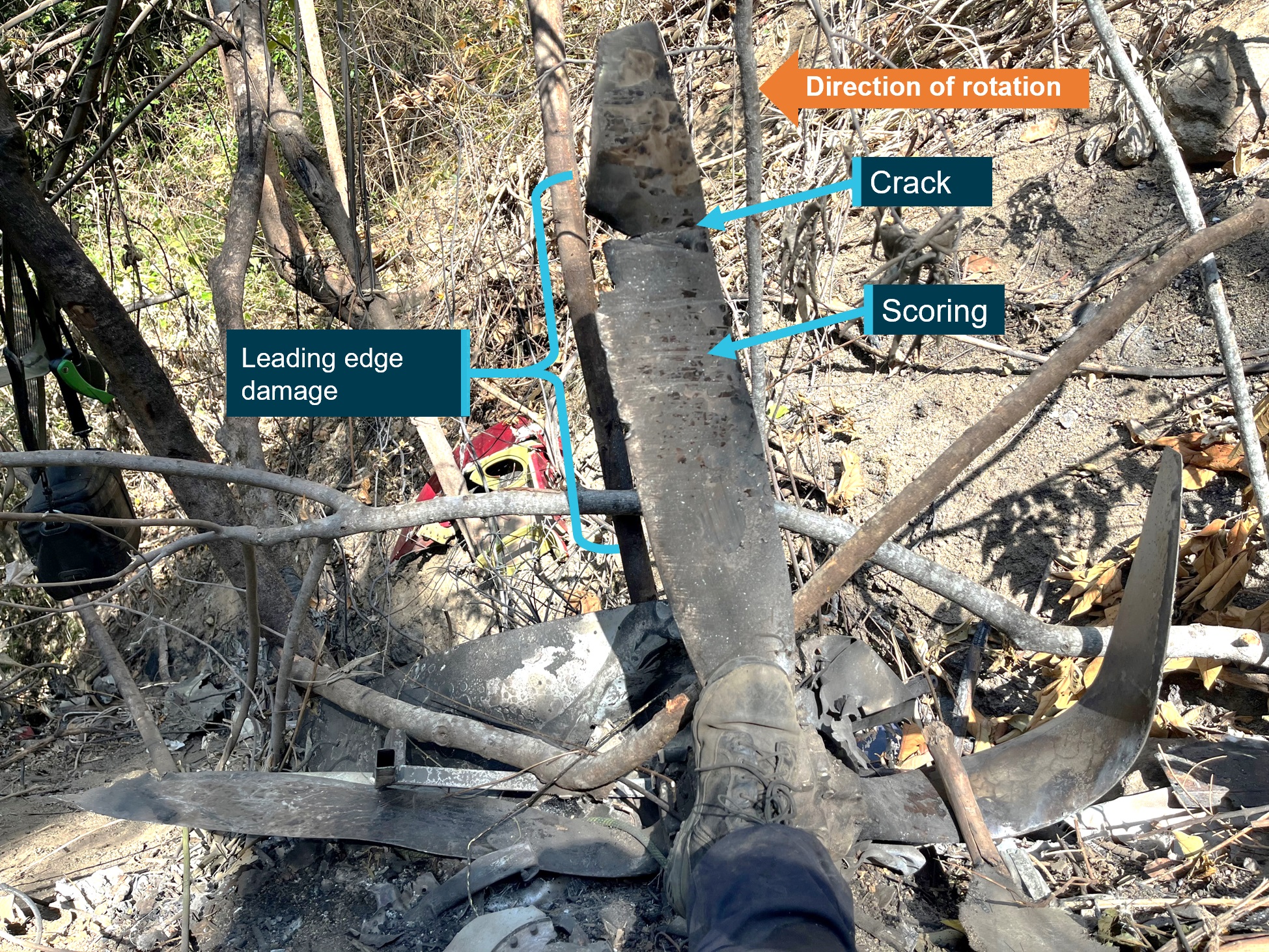
Figure 6: Propeller damage
Source: Queensland Police Service, annotated by the ATSB
The following observations were made from the wreckage examination:
Impact marks on engine and propeller components indicated that the propeller was turning with power applied when it impacted terrain, indicating the engine was almost certainly operational at that time (Figure 6).
The extremities of the aircraft, the wing tips and stabilator were found at the accident site indicating that the aircraft was complete at the time of collision.
Communications
Police contacted Mackay air traffic control tower following the report of a missing aircraft. The controller confirmed that they did not hear a radio transmission from VH-JTY and that aircraft operating in the area at the time did not hear a distress call from the aircraft.
Operational information
General
Peers of the pilot reported that the pilot would often climb to operate VFR over the top of cloud. The pilot would generally fly the cruise portion of the flight on autopilot and would use the autopilot if they ever had to fly through cloud. While VFR over the top of cloud is permitted under the VFR, a minimum separation from cloud is required when flying under the VFR (see section Visual meteorological conditions).
The Civil Aviation Authority of New Zealand safety publication Vector contained an article called Who’s really flying your aircraft?The article discussed the potential downfalls of relying on automation in the cockpit, and its prevalence in VFR into instrument meteorological conditions (IMC) accidents.
VH-JTY was fitted with an approved GPS. The pilot was not known to program flight plans into the unit, instead relying on OzRunways for navigation. The CASA Visual Flight Guide provided the following note to VFR pilots utilising GPS in their aircraft:
An approved GNSS system may be used under the VFR:
• to supplement map reading and other visual navigation techniques
• to derive distance information for enroute navigation and traffic separation.
The positioning and navigational tools featured in the OzRunways application rely on equipment such as mobile phones or iPads that do not meet the required standard for operational use in aircraft. OzRunways acknowledges this limitation and advises users that the OzRunways application shall not be used as a primary means of navigation. It can, however, be used to supplement traditional visual navigation methods such as map reading.
Previous flights
Data obtained for the previous 3 months showed a number of previous flights between the two locations consistent with logged flight records (Figure 7). Each flight took about 1.2 hrs depending on the route taken.
Flights would often depart Palmyra, tracking inland towards Townsville where they would descend outside the Townsville control zone steps and land at Montpelier Airfield. On return to Palmyra, the pilot routinely flew inland past Collinsville and would descend down the Pioneer Valley approaching Palmyra from the west below the Mackay control zone steps.
Figure 7: Previous flight data
Source: Google Earth and OzRunways, annotated by the ATSB
Selection of route
The pilot and their passenger were familiar with the route between Montpelier and Palmyra, completing the return journey as often as once a fortnight for the last few years. When they considered the weather unsuitable for flight, they would make the trip by car, and had a vehicle at their disposal in both locations.
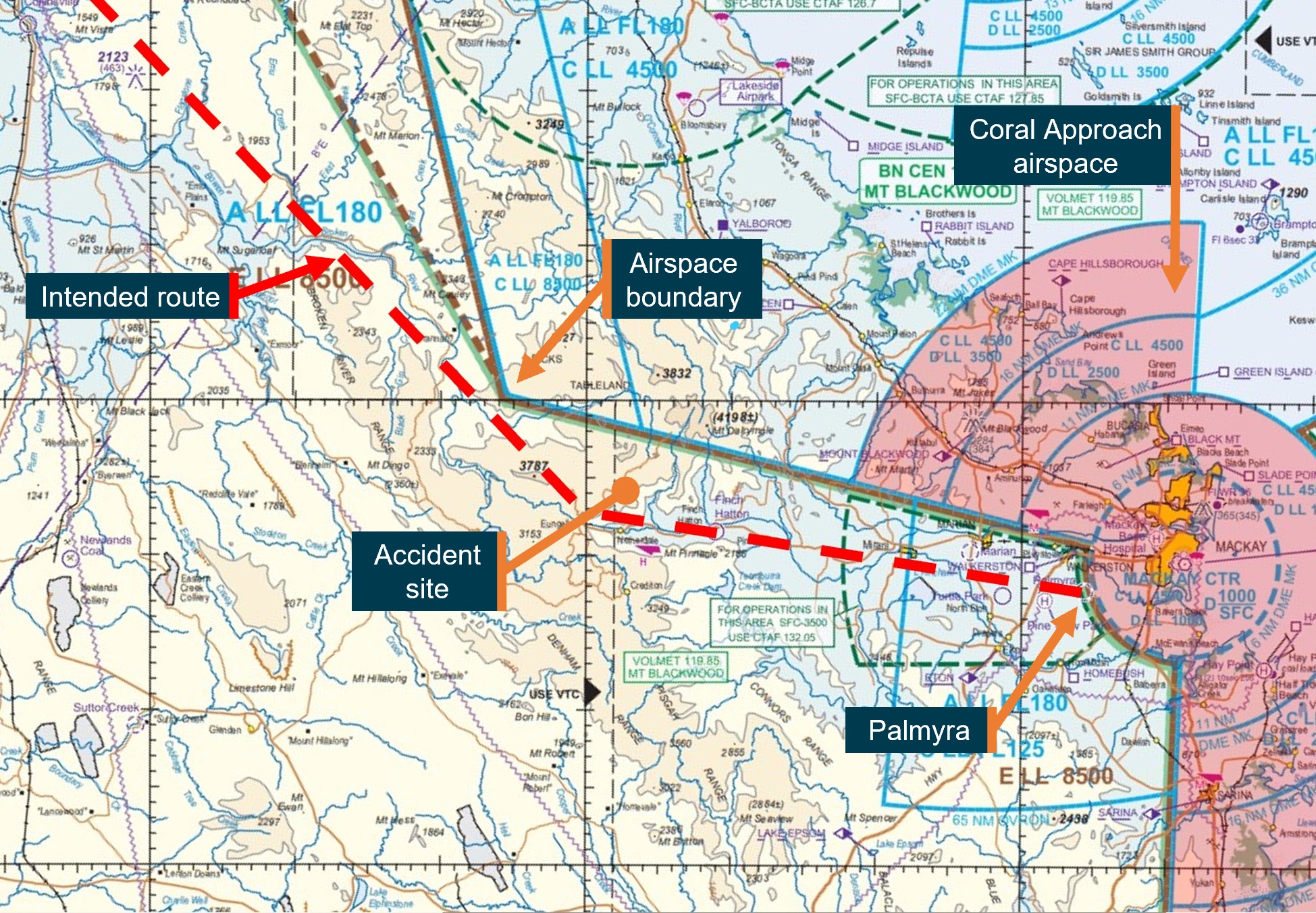
The pilot was known to plan routes that were outside controlled airspace (Figure 8). Witnesses interviewed advised this was common practice among local pilots due to the potential of encountering delays in access to controlled airspace in that region.
Figure 8: Intended flight path
Source: Visual Navigation Chart, annotated by the ATSB
Visual meteorological conditions
Visual meteorological conditions (VMC) are expressed in terms of in-flight visibility and distance from cloud (horizontal and vertical) and are prescribed in the Civil Aviation Safety Regulations (CASR) Part 91 (General Operating and Flight Rules) Manual of Standards 2020: 2.07 VMC criteria. A VFR flight can be conducted above cloud provided VMC can be maintained for the entire flight, including climb, cruise, and descent.[8] The CASA Visual Flight Rules Guide included the following notes for VFR flight:
Pilots should not initiate VFR flight on top of more than SCT [scattered][9] cloud when weather conditions are marginal. Before committing to operate VFR flight on top of more than SCT cloud, pilots should be confident that meteorological information used is reliable and current, and clearly indicates that the entire flight will be able to be conducted in VMC.
And:
When navigating by visual reference to the ground or water, you must positively fix the aircraft’s position by visual reference to features marked on topographical charts at intervals not exceeding 30 minutes.
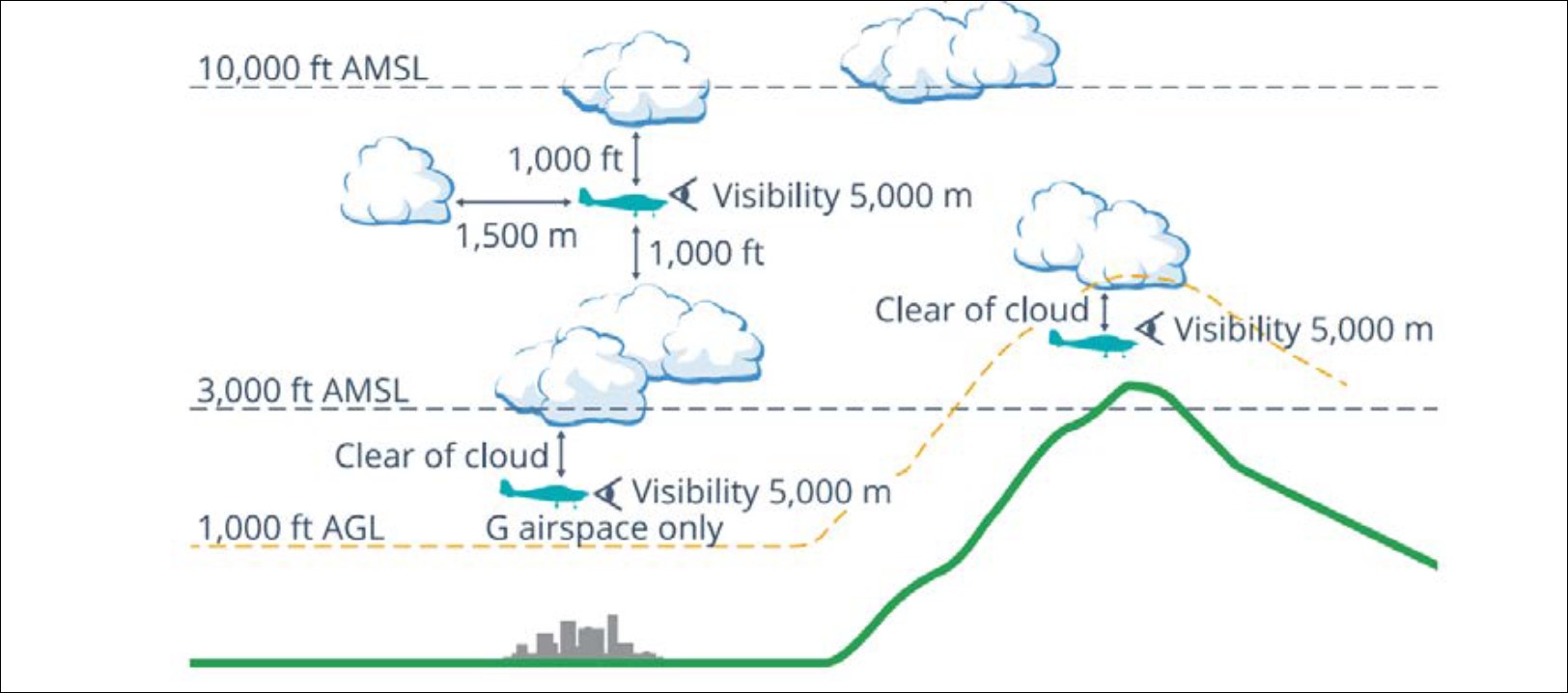
Figure 9, taken from the CASA Visual Flight Rules Guide, provides a visual depiction of the VMC criteria for aeroplanes below 10,000 ft.
Figure 9: VMC criteria below 10,000 ft
Source: Civil Aviation Safety Authority
Weather reports obtained by the pilot
According to CASR Part 91 (General Operating and Flight Rules) Manual of Standards 2020: 7.02 Forecasts for flight planning, an authorised weather forecast must cover the whole period of the flight, and include a wind and temperature forecast and, for a flight at or below 10,000 ft AMSL, a general aviation meteorological area forecast (GAF).
Airservices Australia conducted a review of the pilot’s national aeronautical information processing system (NAIPS)[10] account activity. Two accounts were linked to the pilot. On the day of the flight, one account had expired, and the other had not been accessed since a password update 2 months earlier. Weather requests through OzRunways use the user’s NAIPS login credentials to retrieve the requested information. A third account, linked to the passenger, was last accessed through OzRunways 5 days prior to the flight to obtain an area briefing.
While other third party information such as weather radar overlays, satellite imagery and wind observations are available without an NAIPS login,[11] NAIPS is the only source through which OzRunways obtains weather forecasts for flight planning.
Notwithstanding the requirement of a forecast for flight planning, CASR Part 91 (General Operating and Flight Rules) Manual of Standards 2020: 7.03 Flights unable to obtain an authorised weather forecast before departure states that a flight can still depart without an authorised forecast provided other conditions are met. These include:
The pilot in command reasonably considers that the weather conditions at the departure aerodrome will permit the aircraft to return and land safely at the departure aerodrome within 1 hour after take-off.
The pilot in command of a Part 91 flight must return to the departure aerodrome if:
(a) the authorised weather forecast required for the planned destination aerodrome is not obtained within 30 minutes after take-off; and
(b) the pilot in command has not nominated a destination alternate aerodrome if required to do so by subsection 8.04 (3).[12]
CASA defined what constituted an approved weather report and a list of who could provide one.[13] Licenced pilots were included in the list. The pilot obtained a weather update for the destination from their friend en route. While the accuracy of the information could not be verified, as a licenced pilot, the weather report provided by the pilot’s friend would have been considered an approved weather report for the destination. Based on the pilot’s phone records, this report was obtained about 39 minutes after departure.
Meteorological information
Forecast weather
The planned flight from Montpelier to Palmyra was within the QLD north (QLD-N) Graphical Area Forecast (GAF)[14] region. Forecast weather conditions in the GAF, valid from 0300 to 0900 on 28 October 2023, included average conditions of greater than 10 km visibility with areas of scattered stratocumulus clouds between 2,000 and 4,000 ft. The cloud was forecast to lift and become scattered cumulus and stratocumulus between 4,000 and 8,000 ft with moderate turbulence below 8,000 ft in thermals later in the day.
The Bureau of Meteorology aerodrome forecast (TAF)[15] for Mackay Airport, issued at 0435 and valid at the time of the accident showed an expected visibility of greater than 10 km, few cloud at 3,000 ft and a wind of 17 kt from the south-east.
Based on the forecasts, local pilots interviewed by the ATSB described the conditions as being conducive to mechanical turbulence around the ranges.
Actual weather
The meteorological aerodrome report (METAR)[16] for Mackay Airport reported wind from the east at 17 kt (100°), visibility greater than 10 km and cloud scattered at 3,300 ft and broken[17] at 5,500 ft. There was no rainfall recorded in the previous 24 hours.
The ATSB requested an assessment of the weather from the Bureau of Meteorology who provided the following observations for the morning of the accident:
• Cloud extended from the coast to the ranges and was clear west of ranges.
• South easterly winds persisted which often bring cloud between 2,000 – 3,000 ft, being lower earlier in the day and climbing as the day warms up.
• Over the accident site, cloud was overcast to broken.
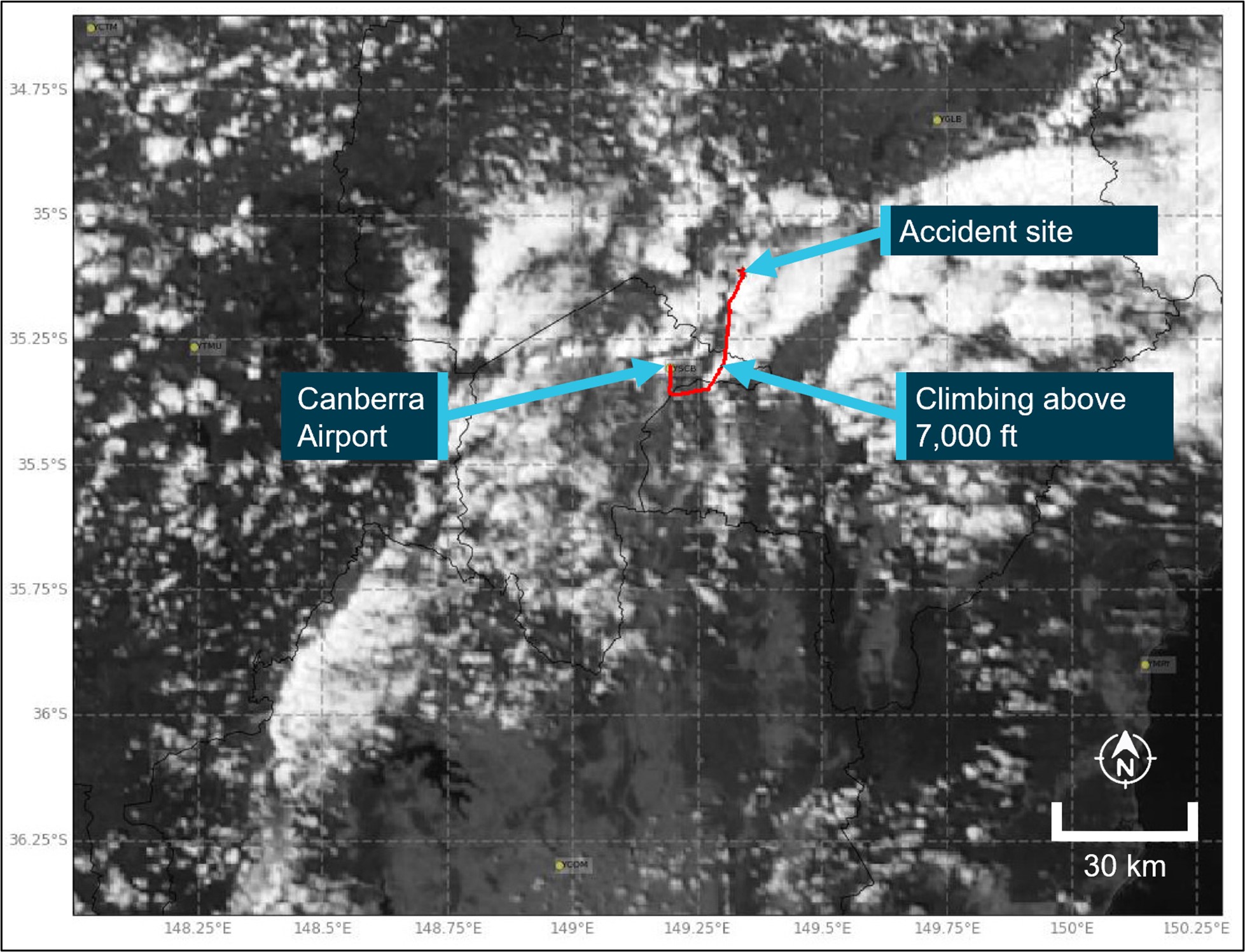
• Cloud extended 25 NM south of accident site.
• Eungella Dam was visible to the west on satellite images.
• Closer to the coast cloud was scattered to broken.
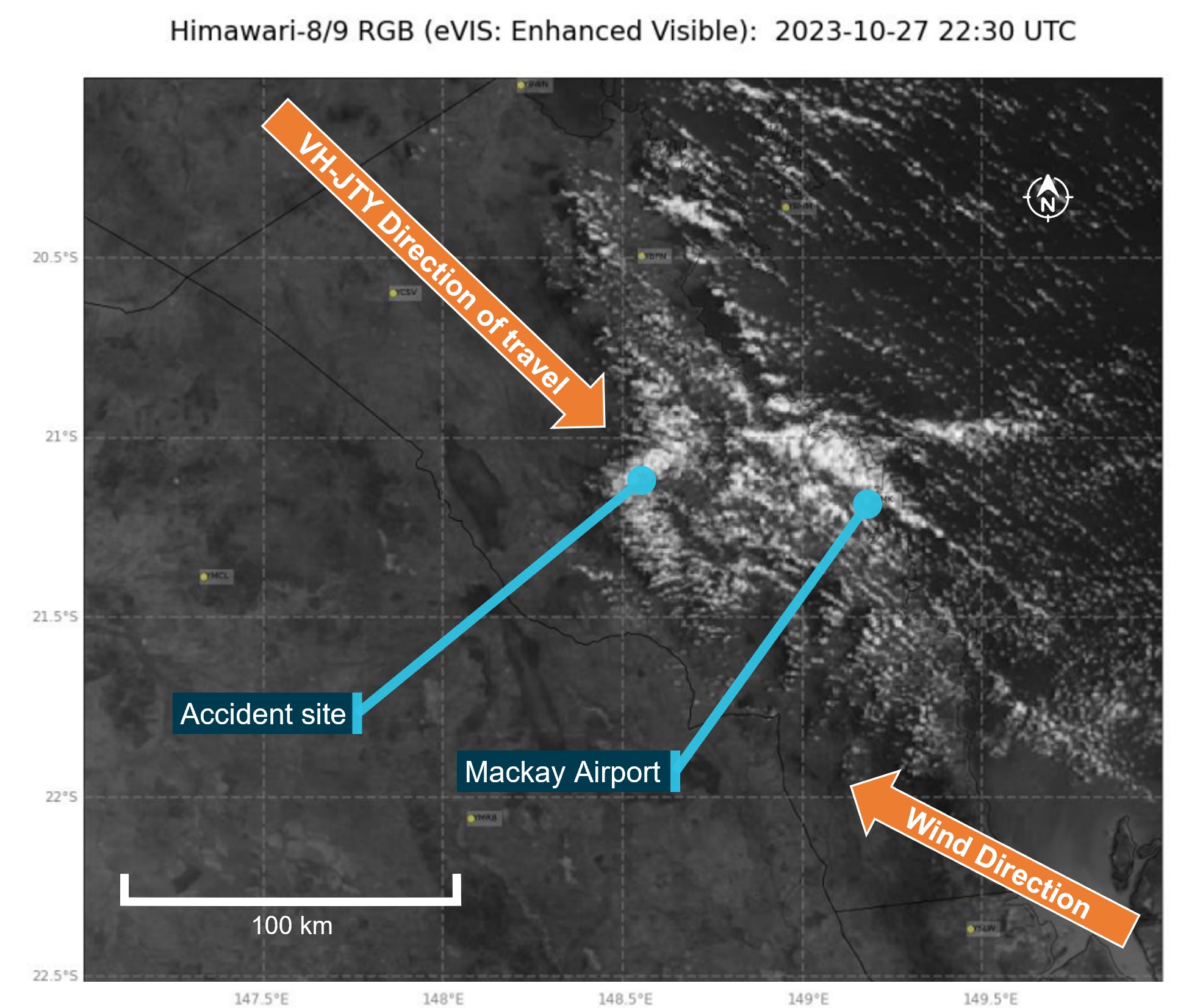
Bureau of Meteorology satellite images showed cloud building in the Pioneer Valley east of the ranges from 0600, covering the mountains to the north of the Pioneer Valley by 0800. Figure 10 shows cloud cover at 0830, 3 minutes before the accident.
Figure 10: Satellite image showing cloud formation on 28 October at 0830 local time
Source: Source: Bureau of Meteorology, annotated by the ATSB
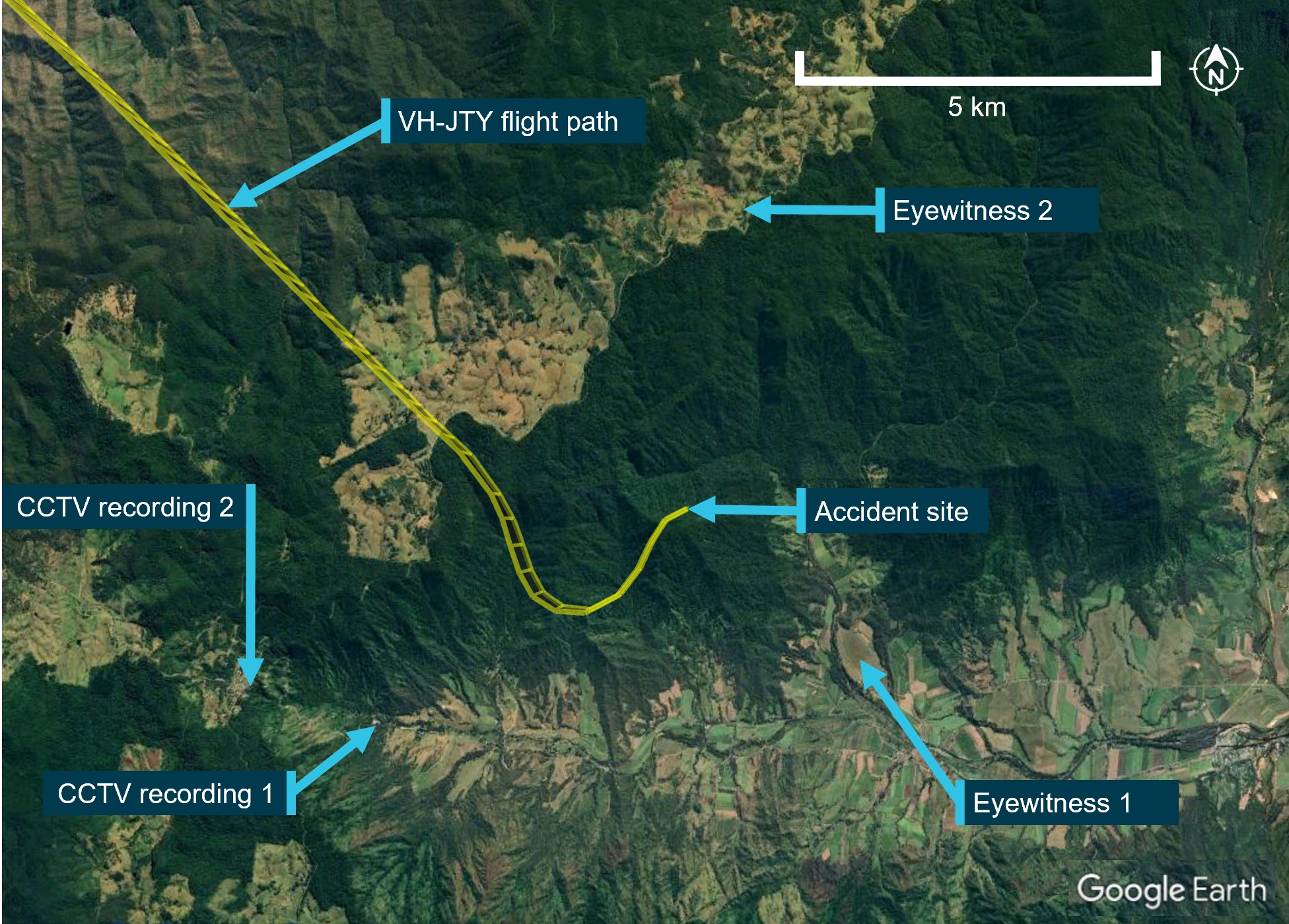
Figure 11 shows the location of witnesses and CCTV recorded at the time of the accident.
Eyewitness 1 located near Bull Mountain heard a low flying aircraft that stopped suddenly. They stated that the top of the mountain was visible around the time of the accident.
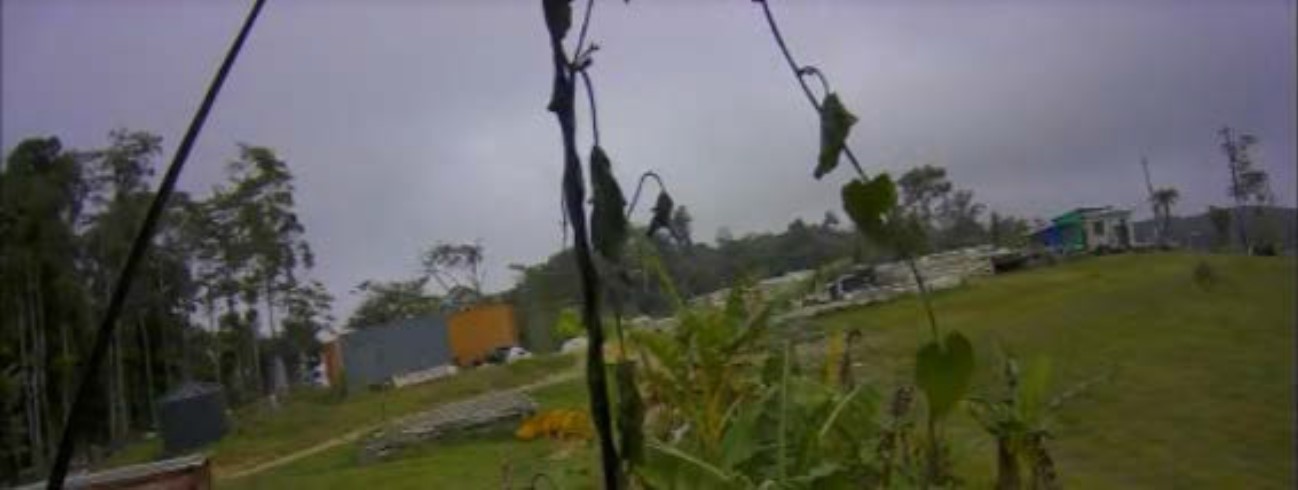
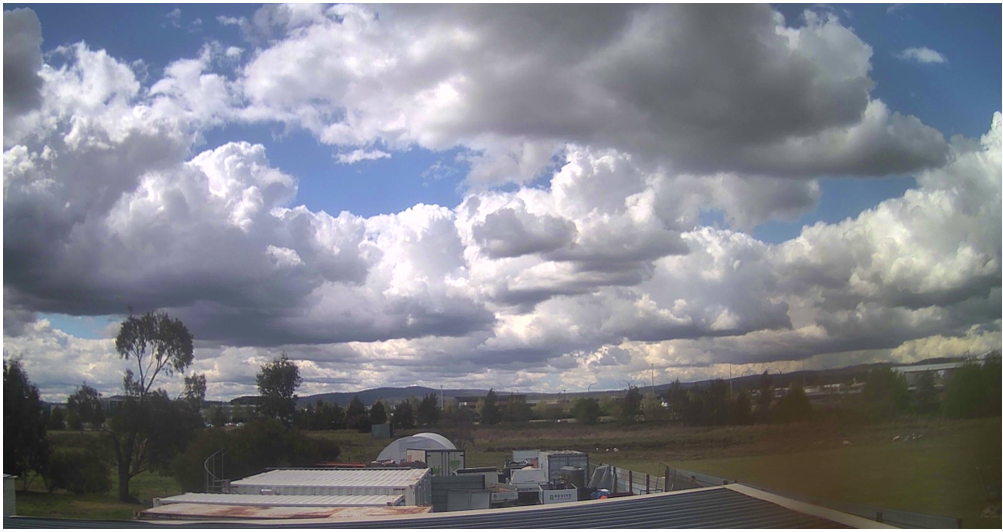
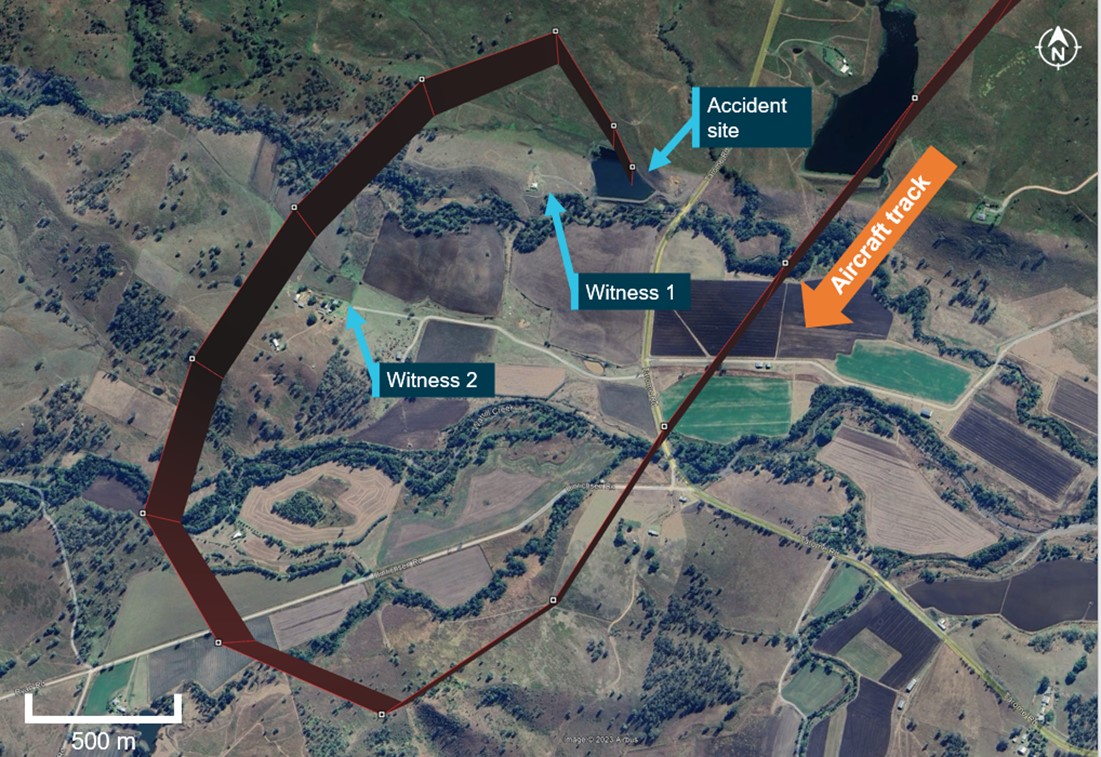
Eyewitness 2 described the cloud as being very thick that morning from when they woke at 0500. The cloud started to rise around 0800 but still produced limited visibility of their paddock until around 1000. They also described a ‘good breeze’ on the ground during the morning with occasional gusts but did not recall strong winds on the day. CCTV footage from that location showed low cloud close to where the pilot commenced their descent (Figure 12).
CCTV recording 1 obtained from a business 5 km south-west of the accident site showing diffuse light indicating cloud cover at the time of the accident.
CCTV recording 2 facing north from an elevated position at the head of the valley. That footage showed low cloud to the east and tree movement equivalent to a fresh breeze.
Additionally, a large bushfire around 70 km to the south-east had filled the Pioneer Valley with smoke which was yet to dissipate. The pilot of the rescue helicopter advised that during the search for VH-JTY at around 1000, the cloud base was scattered at 3,000 ft with poor visibility in smoke haze.
Figure 11: Witness locations
Source: Google Earth, annotated by the ATSB
Figure 12: Closed circuit footage from Dalrymple Heights
Source: Supplied
Decision making
Flight under the VFR requires minimum conditions of visibility and distance from cloud. Variation from the expected weather conditions en route may prevent a pilot from reaching their destination under this ruleset. Flying into instrument meteorological conditions[18] (IMC) can occur in any phase of flight. However, a 2005 ATSB research publication – General Aviation Pilot Behaviours in the Face of Adverse Weather (B2005/0127) – concluded that the chances of a VFR into IMC encounter increased as the flight progressed, with the maximum chance occurring during the final 20 per cent of the planned flight. It stated:
This pattern suggests an increasing tendency on the part of pilots to ‘press on’ as they near their goal. To turn back or divert when the destination seemed ever closer became progressively more difficult.
The CASA Resource Booklet 7 Decision making contained the following:
A non-instrument rated pilot who proceeds with a flight in marginal weather and ends up in instrument meteorological conditions (IMC) decides to firstly, proceed with the flight and secondly, not turn back when the weather indicated visual flight rules were not able to be maintained
Dejoy (1992, cited in Hunter, 2002) suggests that a person’s propensity to engage in risky behaviour is the result of lower perceived risk in the outcome. Studies have shown that pilots who do not perceive the risks with adverse weather are more likely to engage in higher risk activities when dealing with weather (Cooper, 2003).
A Transportation Safety Board of Canada report A23O0028 into a VFR into IMC accident looked at pilot decision making and the acceptance of unsafe practices.
Pilot decision making is a cognitive process used to select a course of action between alternatives. Several factors, circumstances, and biases can affect pilot decision making, including the flight objective or goal, and the pilot’s knowledge, experience, and training. These factors can lead to situations where pilots might prioritize the achievement of the goal over the management of threats, likely resulting in a reduced safety margin.
A focus on achieving a goal or outcome may lead to a reduced sensitivity to risk, especially when high-risk activities repeatedly result in no negative outcomes. Flight crew members may grow accustomed to these risks, altering their perception and acceptance of such risks over time (Hollenbeck and others 1994).
In conditions where visual cues are poor or absent, such as in poor weather, up to 80 per cent of the normal orientation information is missing. Humans are then forced to rely on the remaining 20 per cent, which is split equally between the vestibular system and the somatic system. Both of these senses are prone to powerful illusions and misinterpretation in the absence of visual references, which can quickly become overpowering.
Pilots can rapidly become spatially disoriented when they cannot see the horizon. The brain receives conflicting or ambiguous information from the sensory systems, resulting in a state of confusion that can rapidly lead to incorrect control inputs and resultant loss of aircraft control.
For non-instrument rated pilots, statistics show they may not be able to recover at all. Research has shown the pilots not proficient in maintaining control of an aircraft with sole reference to the flight instruments will typically become spatially disoriented and lose control of the aircraft within 1 to 3 minutes after visual cues are lost.
The FAA Advisory Circular FAA AC60-4A Pilot’s spatial disorientation discussed the challenges associated with recovering from spatial disorientation. The results of a test conducted with qualified instrument pilots found that it took as much as 35 seconds to establish full control by instruments after the loss of visual reference with the ground or surface.
The ATSB report AR-2011-050 was updated in 2019 and found that in the 10 years prior, there were 101 VFR into IMC occurrences in Australian airspace reported to the ATSB. Of these, 9 were accidents resulting in 21 fatalities. An almost 10% chance of the encounter ending in a fatal accident.
A search of the ATSB Aviation Occurrence Database shows that in the 5 years since 2019, there have been 56 VFR into IMC occurrences reported to the ATSB. Of these, 10 resulted in accidents with 16 fatalities. The dangers of spatial disorientation following a loss of visual cues remains one of the most significant causes of concern in aviation safety.
Similar Occurrences
The risks of visual flight rules (VFR) pilots flying from visual meteorological conditions (VMC) into instrument meteorological conditions (IMC) are well documented, and have been the focus of numerous ATSB reports and publications. VFR pilots flying into IMC is a significant cause of aircraft accidents and fatalities.
AO-2022-016 – VFR into IMC, loss of control and collision with terrain involving Airbus Helicopters EC130 T2, VH-XWD, near Mount Disappointment, Victoria, on 31 March 2022
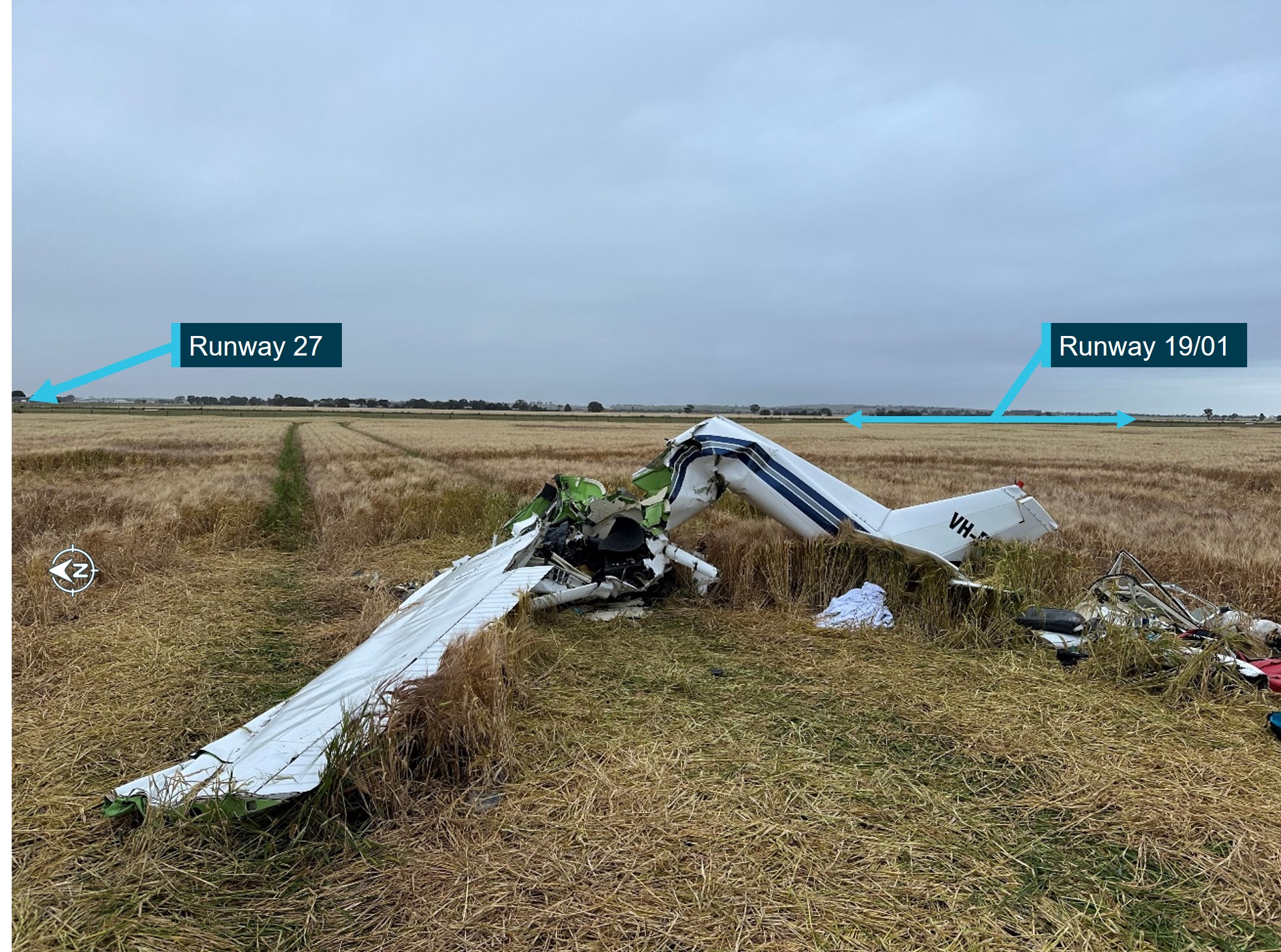
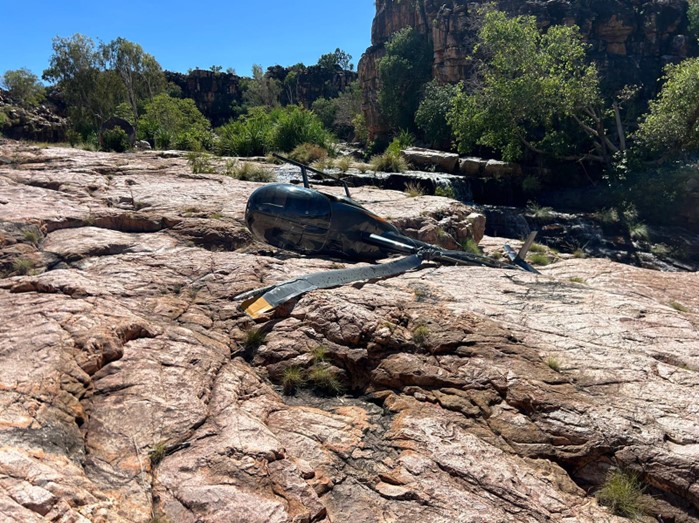
On 31 March 2022, at about 0741 local time, 2 Microflite Airbus EC130 helicopters, registered VH‑WVV and VH-XWD, departed the Batman Park helicopter landing site in Melbourne, for the town of Ulupna, Victoria. Both helicopters were operated in accordance with the VFR and departed in VMC conditions. Cloud was forecast along the route, but the pilots elected to continue to the destination. The helicopters encountered instrument meteorological conditions (IMC) over Mount Disappointment and VH-WVV conducted a U-turn to avoid entering cloud. While also attempting to conduct a U-turn, VH-XWD entered cloud, developed a high rate of descent, and collided with terrain. The helicopter was destroyed, and the 5 occupants were fatally injured.
AO-2021-017 – VFR into IMC and in-flight break-up involving Van's Aircraft RV-7A, VH-XWI 90 km south of Charters Towers, Queensland, on 23 April 2021
On 23 April 2021, a Van’s Aircraft RV-7A, registered VH-XWI, was being operated on a private flight under the visual flight rules (VFR) from Winton to Bowen, Queensland. During the flight, the pilot most likely entered IMC and lost control of the aircraft several times. This led to the airspeed limitations for the aircraft being exceeded and the aircraft sustained an in-flight break-up. The pilot was fatally injured, and the aircraft was destroyed.
VFR into IMC resources
The 2011 ATSB publication, Accidents involving Visual Flight Rules pilots in Instrument Meteorological Conditions, updated in 2019, includes a selection of weather-related general aviation accidents and incidents that show weather alone is never the only factor affecting pilot decisions that result in inadvertent IMC encounters. The documented investigations consistently highlight that conducting thorough pre-flight planning is the best defence against flying into deteriorating weather.
CASA also released a collection of resources related to this type of occurrence on its website titled Preventing VFR into IMC and other related resources on its pilot safety hub under Weather and forecasting.
For more information on VFR into IMC occurrences, recognising inadvertent entry into IMC, and what to do to recover, refer to the following publications:
Civil Aviation Authority United Kingdom: Safety sense booklet VFR flight into IMC
Data collected by the OzRunways electronic flight bag (EFB) application indicated that shortly after commencing descent from 5,500 ft, VH-JTY made a series of turns that displayed excessive sink and climb rates before colliding with terrain. This manoeuvring indicates that the autopilot was not being used during this part of the flight. Site and wreckage examination indicated that the aircraft was complete, had significant forward velocity, a high angle of entry and the engine was producing power. Those items of evidence indicated that the aircraft was most likely in an uncontrolled state when it collided with terrain.
The analysis considers the limited evidence available and discusses possible explanations for the departure from controlled flight:
pilot incapacitation
technical failure or malfunction
decision making
spatial disorientation.
Pilot incapacitation
Pilot incapacitation following a medical event was considered unlikely based on the short timeframe between ending the phone conversation prior to descent and the apparent departure from controlled flight. Medical records indicated that the pilot’s pre-existing condition was being appropriately managed and in the absence of any additional evidence, that was excluded.
Additionally, the passenger was also a pilot, although not current at the time, and they would have been capable of assuming control if the pilot had a medical episode.
Technical malfunction
Structural failure was considered as a possible explanation for the departure from controlled flight. The propeller, wing tips, stabilator, and vertical stabiliser/rudder were all located in site photographs. This was significant in determining that the recent repair to the vertical stabiliser had not failed. With the main components identified at the accident site, the possibility of an in-flight break‑up was excluded. Further, the damage to the engine and propeller indicated the engine was producing power at the time of the accident, eliminating engine malfunction as a possible explanation for the rapid descent.
The autopilot was installed in the aircraft from new and the pilot had owned the aircraft for close to 15 years. The pilot was almost certainly familiar with basic operation of the autopilot. The design of the autopilot servos that moved flight control surfaces incorporated a clutch so a pilot could override the autopilot in the event of a malfunction. The unit also incorporated a design whereby the autopilot would disengage if excessive pitch or roll rates were encountered. The autopilot had been repaired almost a year prior with no record of any additional maintenance, and the nature of the previous autopilot failures would not induce a loss of control.
If a technical malfunction occurred that would have affected the immediate safe continuation of the flight, it is very likely the pilot would have made a radio call declaring an emergency. No radio call was detected.
With no evidence of a failure or malfunction that would have induced uncommanded control inputs, it is considered unlikely that the autopilot contributed to a loss of control.
Pilot decision making
After excluding pilot incapacitation and technical failure, the ATSB considered pilot decision making and the flight path through cloud during the final minutes of the flight.
There was no record that the pilot obtained relevant aviation weather forecasts prior to the flight, and it could not be determined if additional weather information was obtained from other non‑approved sources. However, as the flight was a relatively short distance, and the pilot was very familiar with the route and destination, it is almost certain that they had knowledge and experience of weather behaviour and conditions to be expected. Additionally, the weather report obtained over the telephone while en route provided an accurate assessment of the prevailing conditions along the intended flight path.
Weather observations showed that at the cruising altitude of 5,500 ft, VH-JTY would have been in VMC above cloud before commencing descent. While there was variation in the witness reports concerning the lower level of the cloud, evidence showed there was significant cloud present, and that the pilot planned to pass through it. Witness statements related that it was common practice for the accident pilot to intentionally fly through cloud with the autopilot on. While this action would represent intentional non-compliance with aviation regulations, the main advantage of doing so would be to avoid loss of control following loss of visual references. The hazard being that if the autopilot or any of its input sensors failed or were inadvertently disengaged, loss of control would reasonably ensue.
This behaviour without previous consequence may have affected their perception of the associated risk of continuing through cloud and influenced their decision to continue along the intended flight path instead of diverting around the cloud en route (Cooper, 2003). Personal bias and misperception of the risks associated with VFR flight into IMC (Hollenbeck and others, 1994) is a factor frequently seen in aircraft accidents (Hunter, 2002).
The Bureau of Meteorology assessment of the conditions and analysis of satellite imagery matched the report of the pilot’s friend on conditions at the destination. While cloud existed around to the east of Mackay and around the mountains of the Pioneer Valley, the west and south of the destination were clear of cloud. It was determined that in this context, it is highly likely that the pilot chose to fly through cloud rather than continue visual flight over the top of cloud, divert around weather, or plan flight through controlled airspace.
Spatial disorientation
The flight path from Montpelier to top of descent was compared to previous flights. It was determined to be consistent with the way the pilot would normally conduct cross-country flights in VH-JTY and was almost certainly being flown on autopilot during cruise. The sudden change in flight path prior to descent indicated disconnection of the autopilot and resumption of hand flying.
The weather on the day of the flight was conducive to poor or absent visual cues and turbulence, factors which are known to contribute to spatial disorientation. The pilot was not trained or experienced in flying in low visibility. In these conditions, the pilot would have been required to reference the aircraft’s flight instruments to maintain control. In this case the aircraft was not equipped with the instruments required for flight in IMC.
The accident site showed that the aircraft collided with terrain tracking north-east, indicating that the turn to the right continued after the flight path recording ended. The instability of the flight path with excessive rates of descent and climb are markers commonly observed in spatial disorientation occurrences where pilots are aware of a departure from controlled flight and attempt to correct the unusual flight attitude.
Due to the limited information available, it is not known whether the autopilot disconnect was intentional or why the pilot’s reported strategy of using autopilot when flying through cloud failed on this occasion. Following the commencement of the turn to the left, the significant deviation of pitch attitude during the turn was likely unintentional. The high rate of descent was consistent with the pilot becoming spatially disoriented after flying into weather conditions not suitable for visual navigation. As a result, the aircraft collided with terrain.
Findings
ATSB investigation report findings focus on safety factors (that is, events and conditions that increase risk). Safety factors include ‘contributing factors’ and ‘other factors that increased risk’ (that is, factors that did not meet the definition of a contributing factor for this occurrence but were still considered important to include in the report for the purpose of increasing awareness and enhancing safety). In addition ‘other findings’ may be included to provide important information about topics other than safety factors.
These findings should not be read as apportioning blame or liability to any particular organisation or individual.
From the evidence available, the following findings are made with respect to the VFR into IMC, loss of control and collision with terrain involving SOCATA-Groupe Aerospatiale TB-20, VH‑JTY, 65 km west of Mackay Airport, Queensland, on 28 October, 2023.
Contributing factors
The pilot made the decision to descend through cloud rather than remain VFR over the top or divert around weather.
The visual flight rules pilot very likely entered weather conditions not suitable for visual navigation, leading to spatial disorientation and collision with terrain.
Sources and submissions
Sources of information
The sources of information during the investigation included the:
Queensland Police Service
accident witnesses
recorded data from the OzRunways navigation application
CCTV video footage and other photographs taken on the day of the accident
Cooper D. (2003). Psychology, Risk and Safety: Understanding how personality & perception can influence risk taking. Professional Safety. Journal of the American Society of Safety Engineers, November 2003, 39-46.
Hunter DR. (2002), Risk Perception and Risk Tolerance in Aircraft Pilots. Federal Aviation Administration, DOT/FAA/AM-02/17, 2002.
Hollenbeck, J. Ilgen, D. Phillips, J. Hedlund J. (1994) Decision risk in dynamic two-stage contexts: beyond the status quo. Journal of Applied Psychology, Vol.79, Issue 4, pp. 592–598.
OzRunways. (2022). How can OzRunways be used for navigation? On-line, Retrieved 19 August
Under section 26 of the Transport Safety Investigation Act 2003, the ATSB may provide a draft report, on a confidential basis, to any person whom the ATSB considers appropriate. That section allows a person receiving a draft report to make submissions to the ATSB about the draft report.
A draft of this report was provided to the following directly involved parties:
maintenance organisation for VH-JTY
aircraft manufacturer
Civil Aviation Safety Authority
Airservices Australia
Bureau of Meteorology
OzRunways.
Submissions were received from:
the aircraft manufacturer.
The submissions were reviewed and, where considered appropriate, the text of the report was amended accordingly.
Purpose of safety investigations
The objective of a safety investigation is to enhance transport safety. This is done through:
identifying safety issues and facilitating safety action to address those issues
providing information about occurrences and their associated safety factors to facilitate learning within the transport industry.
It is not a function of the ATSB to apportion blame or provide a means for determining liability. At the same time, an investigation report must include factual material of sufficient weight to support the analysis and findings. At all times the ATSB endeavours to balance the use of material that could imply adverse comment with the need to properly explain what happened, and why, in a fair and unbiased manner. The ATSB does not investigate for the purpose of taking administrative, regulatory or criminal action.
Terminology
An explanation of terminology used in ATSB investigation reports is available here. This includes terms such as occurrence, contributing factor, other factor that increased risk, and safety issue.
Publishing information
Released in accordance with section 25 of the Transport Safety Investigation Act 2003
Ownership of intellectual property rights in this publication
Unless otherwise noted, copyright (and any other intellectual property rights, if any) in this report publication is owned by the Commonwealth of Australia.
Creative Commons licence
With the exception of the Commonwealth Coat of Arms, ATSB logo, and photos and graphics in which a third party holds copyright, this report is licensed under a Creative Commons Attribution 4.0 International licence.
The CC BY 4.0 licence enables you to distribute, remix, adapt, and build upon our material in any medium or format, so long as attribution is given to the Australian Transport Safety Bureau. Copyright in material obtained from other agencies, private individuals or organisations, belongs to those agencies, individuals or organisations. Where you wish to use their material, you will need to contact them directly.
[1]Montpelier aircraft landing area is located about 20 km south-south-east of Townsville Airport and is the site of the former military airfield Antill Plains.
[2]Palmyra aircraft landing area is located about 12 km west-south-west of Mackay Airport.
[3]OzRunways is an electronic flight bag app that provides planning, briefing, flight plan filing and moving map navigation services.
[4]VNE (Never Exceed Speed): the speed limit that may not be exceeded at any time. The calculation of this speed is driven by structural or aerodynamic limitations; however, control system flutter is typically one limitation that factors heavily into the calculation of VNE.
[5]The aircraft is equipped with the flight and navigation equipment listed in the aircraft’s flight manual and any additional equipment required for the type of operation in accordance with Civil Aviation Order 20.18.
[6]Visual flight rules (VFR): regulations that permit a pilot to operate an aircraft in conditions whereby navigation and orientation of the aircraft by visual reference is possible.
[7]Technical Standard Order (TSO) – a TSO is a minimum performance standard for specified materials, parts, and appliances used on civil aircraft.
[8]VFR flight above more than 4/8 cloud cover is known as ‘VFR over the top’, as the phrase ‘VFR on top’ is a clearance provided to an instrument flight rules flight to operate at a VFR level in visual conditions.
[9]Scattered: describes cloud covering three or four eighths (oktas) of the sky.
[10]The National Aeronautical Information Processing System (NAIPS) is a multi-function, computerised, aeronautical information system. It processes and stores meteorological information and operational notices and enables the provision of briefing products and services to pilots and the Australian Air Traffic Control platform.
[11]Radar weather overlays and satellite imagery is downloaded from the Bureau of Meteorology. Wind observations obtained through the private company Windy.com are obtained from publicly available weather databases produced by worldwide weather agencies (including the BoM).
[12]CASR Part 91 (General Operating and Flight Rules) Manual of Standards 2020: 8.04 Destination alternate aerodromes — weather.
[13]CASR Part 121 Chapter 9 Division 2 –Dictionary.
[14]GAF (Graphical Area Forecast): provides information on weather, cloud, visibility, icing, turbulence and freezing level in a graphical layout with supporting text.
[15]TAF (Aerodrome Forecast): a statement of meteorological conditions expected for the specified period of time in the airspace within 5 nautical miles (9 km) of the aerodrome reference point.
[16]METAR (Meteorological Aerodrome Report) is a routine aerodrome weather report issued at half hourly time intervals. The report ordinarily covers an area of 8 km radius from the aerodrome reference point.
[17]Broken: used to describe an amount of cloud covering the sky of between 5 and 7 oktas (eighths).
[18]Instrument meteorological conditions (IMC): weather conditions that require pilots to fly primarily by reference to instruments, and therefore under instrument flight rules (IFR), rather than by outside visual reference. Typically, this means flying in conditions of limited visibility.
Preliminary report
Report release date: 14/12/2023
This preliminary report details factual information established in the investigation’s early evidence collection phase and has been prepared to provide timely information to the industry and public. Preliminary reports contain no analysis or findings, which will be detailed in the investigation’s final report. The information contained in this preliminary report is released in accordance with section 25 of the Transport Safety Investigation Act 2003.
The occurrence
On 28 October 2023, at about 0735 local time, a SOCATA-Groupe Aerospatiale TB-20 (TB-20) registered VH-JTY, departed from Montpellier aircraft landing area,[1] Queensland, for a private flight to Palmyra aircraft landing area[2] (Figure 1). On board was the pilot and a passenger, who was also a pilot.
A friend of the pilot stated that they made a phone call to the pilot at 0814. The pilot stated that they were at 5,500 ft above cloud and asked about weather conditions at Palmyra airfield. The pilot stated they were passing Dalrymple Heights and on descent and that their intentions were to fly along the Pioneer Valley to Palmyra airfield.
At about 0834, the OzRunways[3] flight track (Figure 1) showed that the pilot made a right turn, followed by a left turn before colliding on the northern side of Bull Mountain, at about 1,900 ft above mean sea level. The aircraft was destroyed, and the pilot and passenger were fatally injured.
Figure 1: VH-JTY flight track
Source: Google Earth, OzRunways, annotated by the ATSB
Context
Pilot information
The pilot held a valid Private Pilot Licence (Aeroplane) and a Class 2 aviation medical certificate, valid until October 2024. The pilot held a single engine aeroplane rating, and endorsements for manual propeller pitch control and retractable undercarriage. Their last flight review was conducted in July 2023, and at the time of the accident the pilot had about 2,100 hours total aeronautical experience of which about 1,500 hours were in VH-JTY.
Aircraft information
General information
The TB-20 is an all-metal, 5-place, single engine aircraft with fully retractable landing gear. It was powered by a 6-cylinder Lycoming IO-540 fuel-injected engine, driving a 3-blade constant-speed propeller. VH-JTY was manufactured in France in 1985 and was first registered in Australia in April 1987. The pilot had owned VH-JTY since April 2008 (Figure 2).
The last periodic inspection was conducted on 14 December 2022. In January 2023, VH-JTY sustained rudder and vertical fin damage in a ground handling incident. Structural repairs were carried out and the aircraft returned to service on 25 May 2023. At the time of the accident, it had accrued a total time in service of about 5233.4 hours and had flown about 35 hours since the repairs were carried out.
Figure 2: VH-JTY
Source: Simon Coates, modified by the ATSB
Site and wreckage information
The aircraft wreckage was located in steep mountainous terrain with heavy vegetation, to the north-east of Bull Mountain.
The aircraft fuselage sustained a heavy impact initially with vegetation and then terrain before becoming significantly disrupted with some components sliding downhill and being consumed by fire.
Wreckage examination
Due to the remote location, extreme terrain, and degradation of the accident site, ATSB has not been able to attend the site. However, Queensland Police Service specialist forensic officers have provided detailed on-site photographic evidence. This has assisted the ATSB with gaining an understanding of the accident site location and layout, as well as an appreciation of the level and type of damage to the aircraft’s structure and components.
Photographic evidence review of engine and propeller components indicated that the propeller was under a significant level of power when it impacted with terrain, indicating the engine was almost certainly operational at that time.
Further investigation
To date, the ATSB has:
examined photographs of the aircraft wreckage
conducted witness interviews
examined the maintenance history of the aircraft
reviewed historic flight data
reviewed air traffic control recordings.
The investigation is continuing and will include:
further review of recorded data and recovered components from the accident site
analysis of available flight data
analysis of aircraft maintenance and repairs.
Should a critical safety issue be identified during the course of the investigation, the ATSB will immediately notify relevant parties so appropriate and timely safety action can be taken.
A final report will be released at the conclusion of the investigation. Should a critical safety issue be identified during the course of the investigation, the ATSB will immediately notify relevant parties so appropriate and timely safety action can be taken.
Acknowledgements
The ATSB would like to acknowledge the assistance provided by the Queensland Police Service who provided site information and photographs in the course of the on-site phase of this investigation.
Purpose of safety investigations
The objective of a safety investigation is to enhance transport safety. This is done through:
identifying safety issues and facilitating safety action to address those issues
providing information about occurrences and their associated safety factors to facilitate learning within the transport industry.
It is not a function of the ATSB to apportion blame or provide a means for determining liability. At the same time, an investigation report must include factual material of sufficient weight to support the analysis and findings. At all times the ATSB endeavours to balance the use of material that could imply adverse comment with the need to properly explain what happened, and why, in a fair and unbiased manner. The ATSB does not investigate for the purpose of taking administrative, regulatory or criminal action.
Terminology
An explanation of terminology used in ATSB investigation reports is available here. This includes terms such as occurrence, contributing factor, other factor that increased risk, and safety issue.
Publishing information
Released in accordance with section 25 of the Transport Safety Investigation Act 2003
Ownership of intellectual property rights in this publication
Unless otherwise noted, copyright (and any other intellectual property rights, if any) in this report publication is owned by the Commonwealth of Australia.
Creative Commons licence
With the exception of the Coat of Arms, ATSB logo, and photos and graphics in which a third party holds copyright, this publication is licensed under a Creative Commons Attribution 3.0 Australia licence.
Creative Commons Attribution 3.0 Australia Licence is a standard form licence agreement that allows you to copy, distribute, transmit and adapt this publication provided that you attribute the work.
The ATSB’s preference is that you attribute this publication (and any material sourced from it) using the following wording: Source: Australian Transport Safety Bureau
Copyright in material obtained from other agencies, private individuals or organisations, belongs to those agencies, individuals or organisations. Where you wish to use their material, you will need to contact them directly.
[1] Montpellier aircraft landing area is located about 20 km south-south-east of Townsville Airport.
[2] Palmyra aircraft landing area is located about 12 km west-south-west of Mackay Airport.
[3] OzRunways is an electronic mobile application, utilising approved data for electronic maps, and used for navigation.
Occurrence summary
Investigation number
AO-2023-052
Occurrence date
28/10/2023
Location
65 km west of Mackay Airport
State
Queensland
Report release date
02/10/2024
Report status
Final
Investigation level
Short
Investigation type
Occurrence Investigation
Investigation status
Completed
Mode of transport
Aviation
Aviation occurrence category
Collision with terrain, Loss of control, VFR into IMC
On 6 October 2023, a Cirrus Design Corporation SR22 aircraft, registered VH-MSF, was being operated on a private instrument flight rules flight from Canberra, Australian Capital Territory, to Armidale, New South Wales. On board the aircraft were the pilot and 3 passengers.
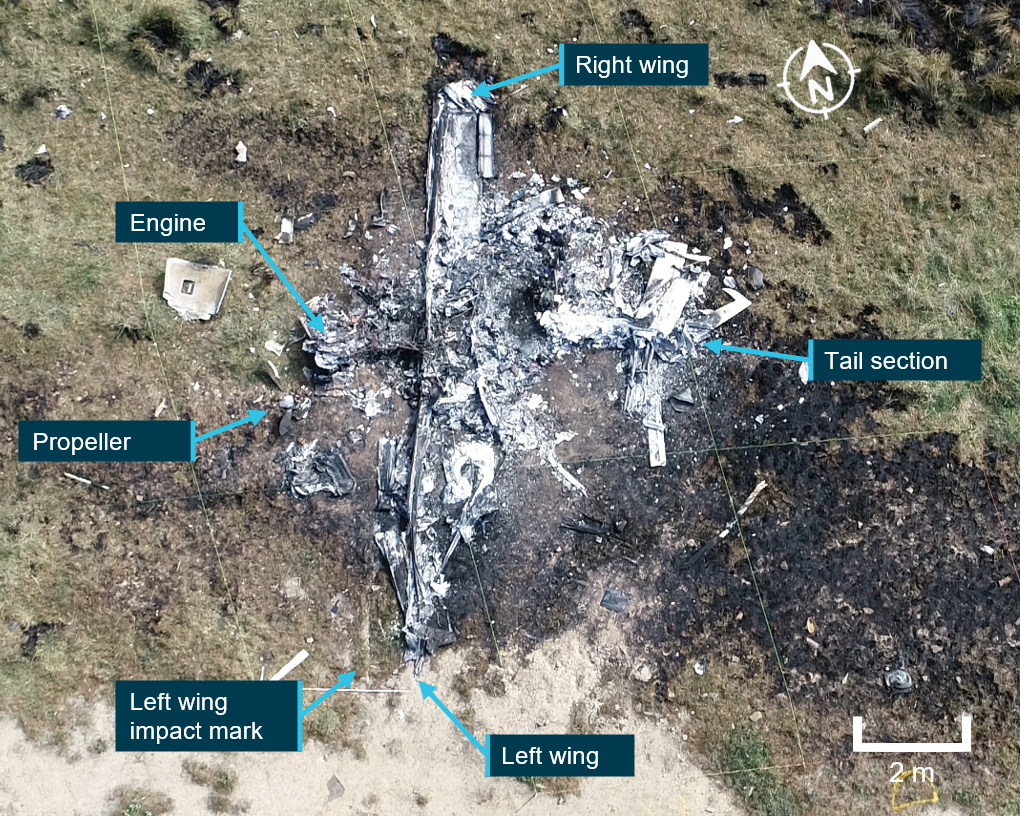
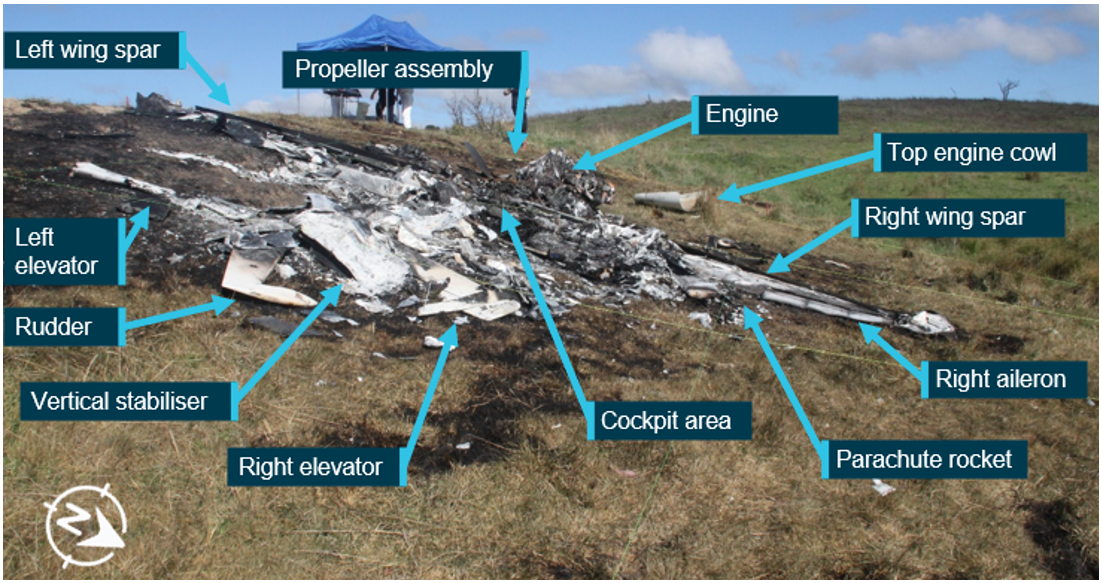
About 12 minutes after take-off, at an altitude approaching 10,000 ft above mean sea level, the aircraft aerodynamically stalled, departed from controlled flight, entered a high vertical descent developing into a spin, and impacted with terrain. All occupants were fatally injured, and the aircraft was destroyed by a post‑impact fire.
What the ATSB found
The ATSB found that the flight track data showed that, at about 8,000 ft, the aircraft had begun to deviate from its flight track, with heading, altitude and airspeed deviations. Those deviations coincided with reports from ear witnesses located below the aircraft’s flight path of sounds consistent with engine surging.
The data also showed that the aircraft had a high rate of climb (up to 1,500 ft/min) coupled with a low and decreasing airspeed, which led to an aerodynamic stall and rapid descent. Recovery actions from the aerodynamic stall did not occur and the Cirrus aircraft parachute system was not deployed in-flight. It was also noted that no radio calls were received from the pilot to indicate there was a problem prior to the stall.
VH-MSF was not fitted with an anti-icing system and was prohibited from operating in icing conditions. Moderate icing conditions were forecast along the aircraft’s flight path from 7,000 ft to 10,000 ft when in cloud. It was likely that the aircraft had encountered icing conditions prior to the aerodynamic stall. However, the ATSB was unable to determine if these conditions were sufficient to have adversely affected the aircraft’s performance and/or handling.
The ATSB considered several scenarios to establish the reason for the deviations in flight track, subsequent stall and absence of recovery actions. These included in-flight icing, pilot incapacitation and possible aircraft issues. However, due in part to a significant post-impact fire, which limited the collection of evidence, the circumstances preceding the stall and impact with terrain could not be determined.
Safety message
Although it could not be established that icing contributed to the accident, operating in these conditions in aircraft that are prohibited from doing so increases the risk of a loss of control event leading to an accident. Aircraft flying through cloud in sub-freezing temperatures are likely to experience some degree of icing. A pilot can reduce the chance of icing becoming an issue by selecting appropriate flight routes, remaining alert to the possibility of ice formation and knowing how and when to operate de-icing and anti-icing equipment if fitted.
The occurrence
Accident flight details
On 3 October 2023, a Cirrus Design Corporation SR22 aircraft, registered VH-MSF, was operated on a private flight from Redcliffe, Queensland, to Armidale, New South Wales, and then on to Canberra, Australian Capital Territory, the following day.
On 6 October 2023, the return sectors were planned to operate from Canberra to Armidale, with a planned return to Redcliffe. On board the aircraft were the pilot and 3 passengers.
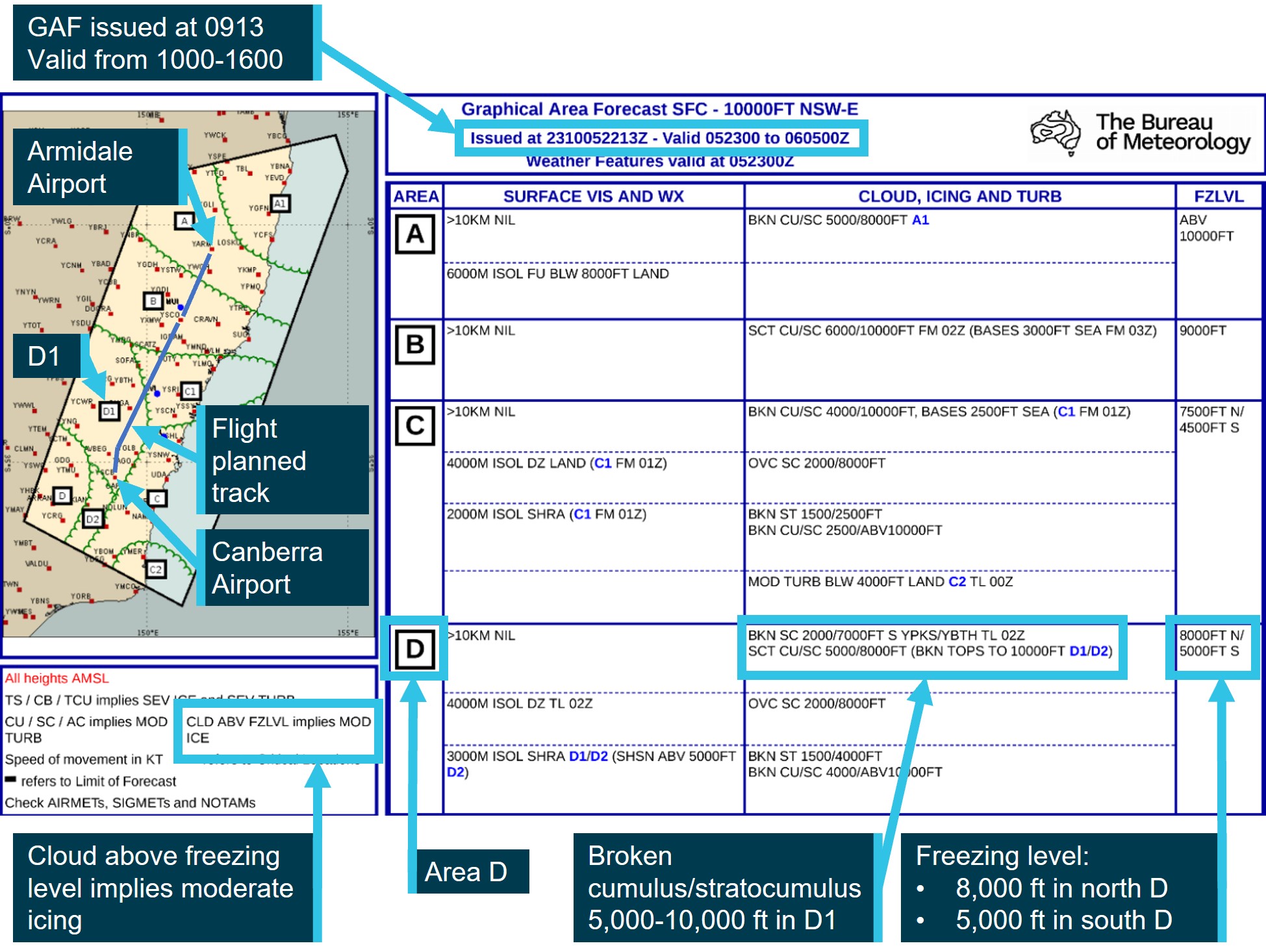
At about 0648 local time, the pilot submitted an instrument flight rules[1] flight plan to Airservices Australia to fly from Canberra to Armidale with an estimated departure time of 1430. The flight planned track was via waypoint[2] ‘CULIN’ (about 31 km west of Goulburn) and Scone, New South Wales, at a cruising altitude of 10,000 ft above mean sea level (AMSL), using RNP 2[3] navigation performance. The lowest safe altitude from Canberra to CULIN was 4,600 ft. While there was no published instrument flight rules route from CULIN to Scone and from Scone to Armidale, the pilot’s flight planning software application provided a lowest safe altitude of 6,000 ft from CULIN to Scone and 6,300 ft from Scone to Armidale using RNP 2 performance.
On contact with Canberra ground air traffic control at 1422, the pilot was provided an airways clearance to track to Armidale via their flight planned route at 10,000 ft.
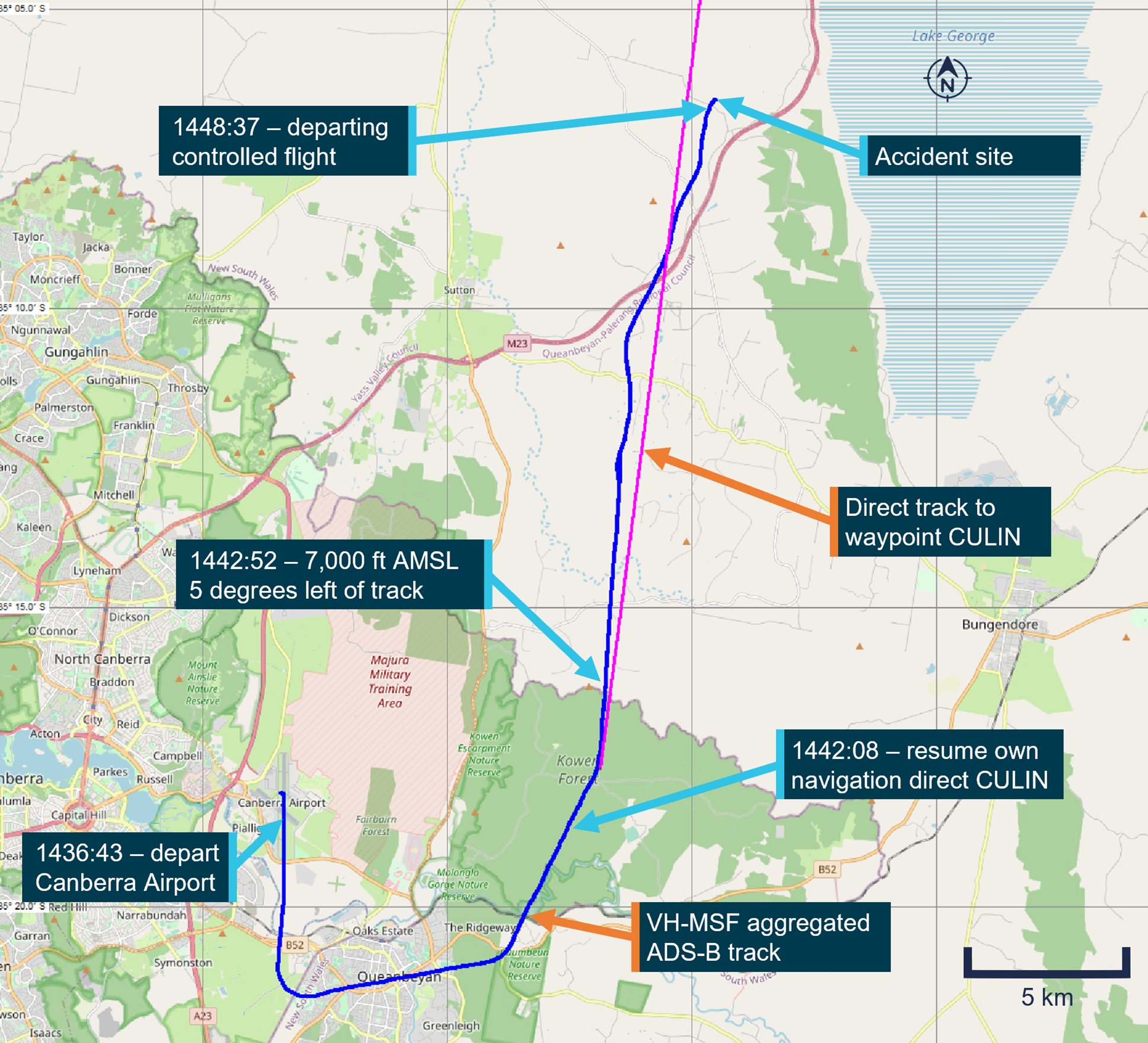
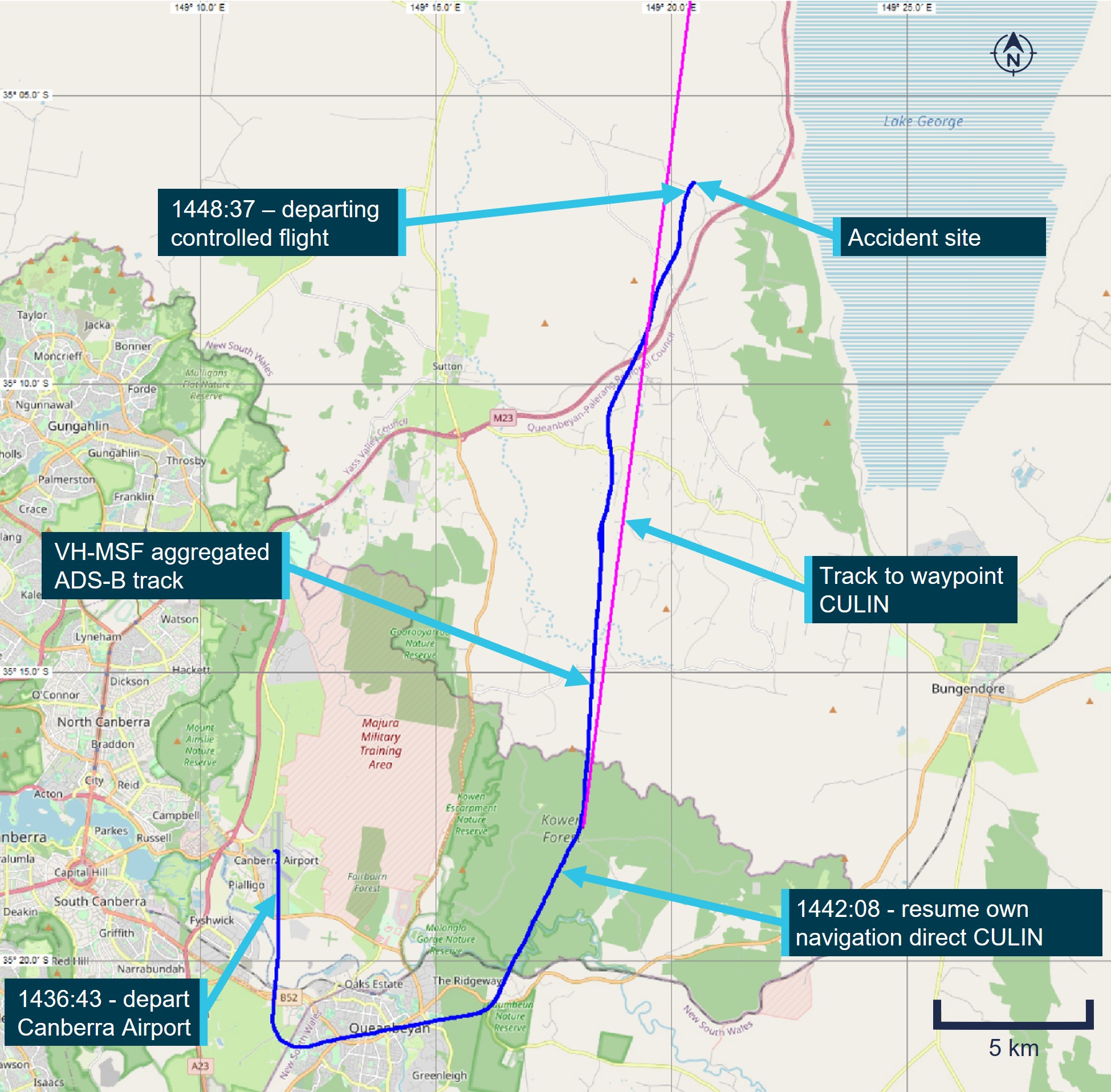
At about 1437, the aircraft departed Canberra Airport. Soon after take-off, the pilot was transferred to, and established radio communication with, the approach controller, reporting that they were on climb through 3,400 ft (to their assigned cruise altitude) and turning left onto their assigned radar heading of 070°. A short time later, the controller instructed the pilot to turn left onto a heading of 010° and the pilot completed readback of the instruction. About 1 minute 30 seconds later (at about 1442), the controller cleared the pilot to resume their own navigation and track direct to waypoint CULIN. The pilot completed readback of that instruction, which was the last transmission received from the pilot. All transmissions made by the pilot were clear and concise. Flight data showed that the aircraft turned 5° to the left of the direct track to waypoint CULIN.
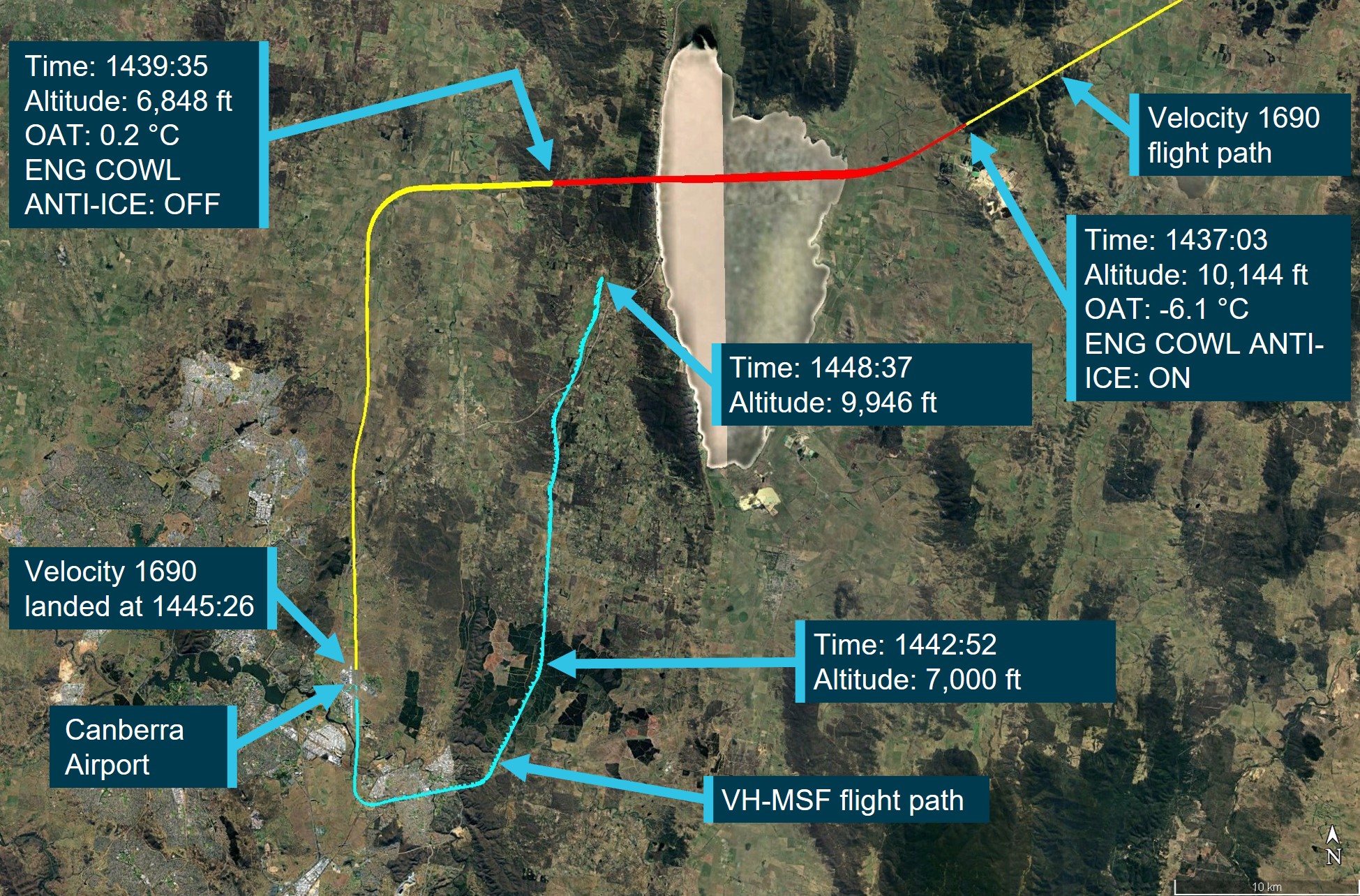
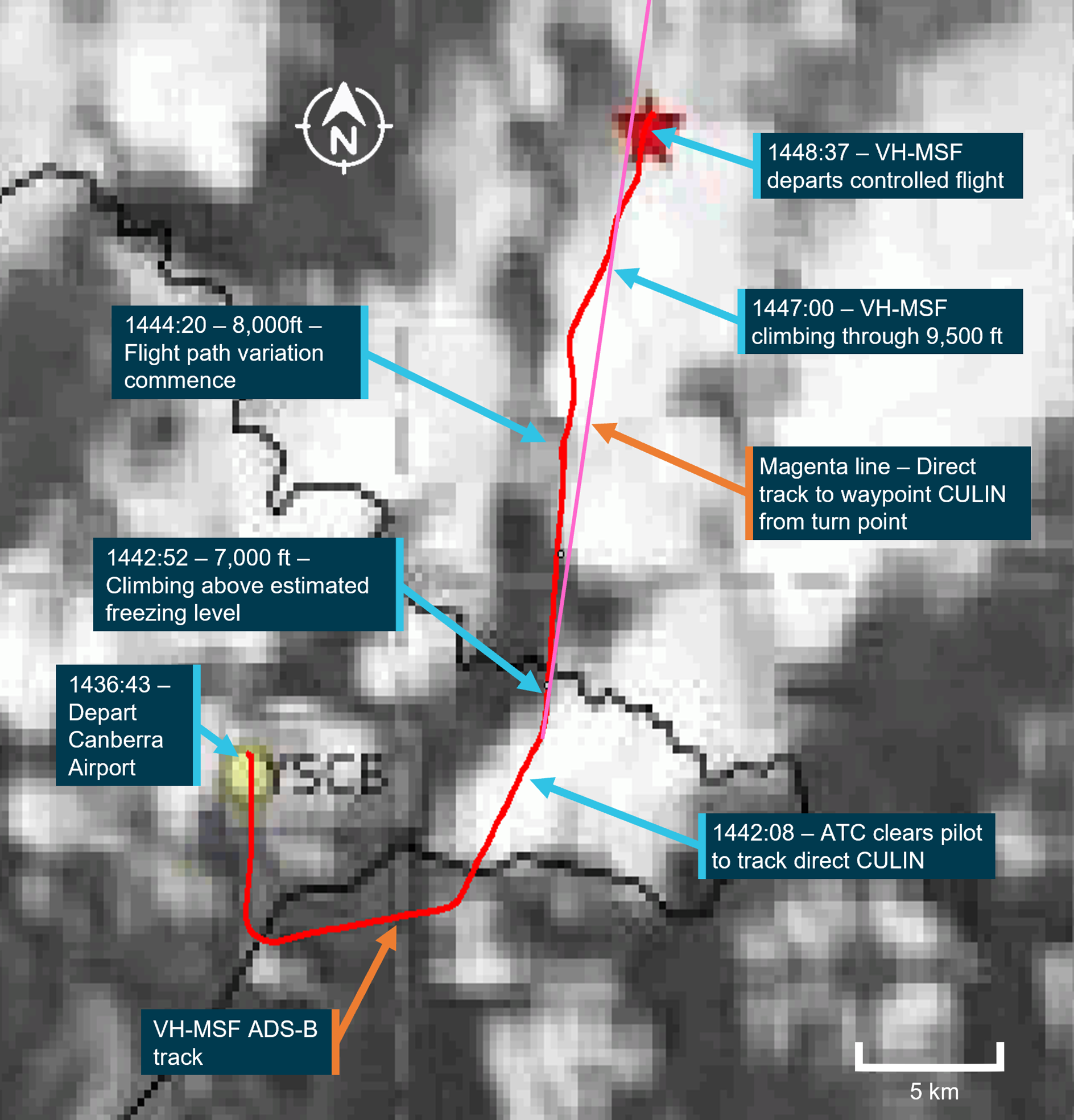
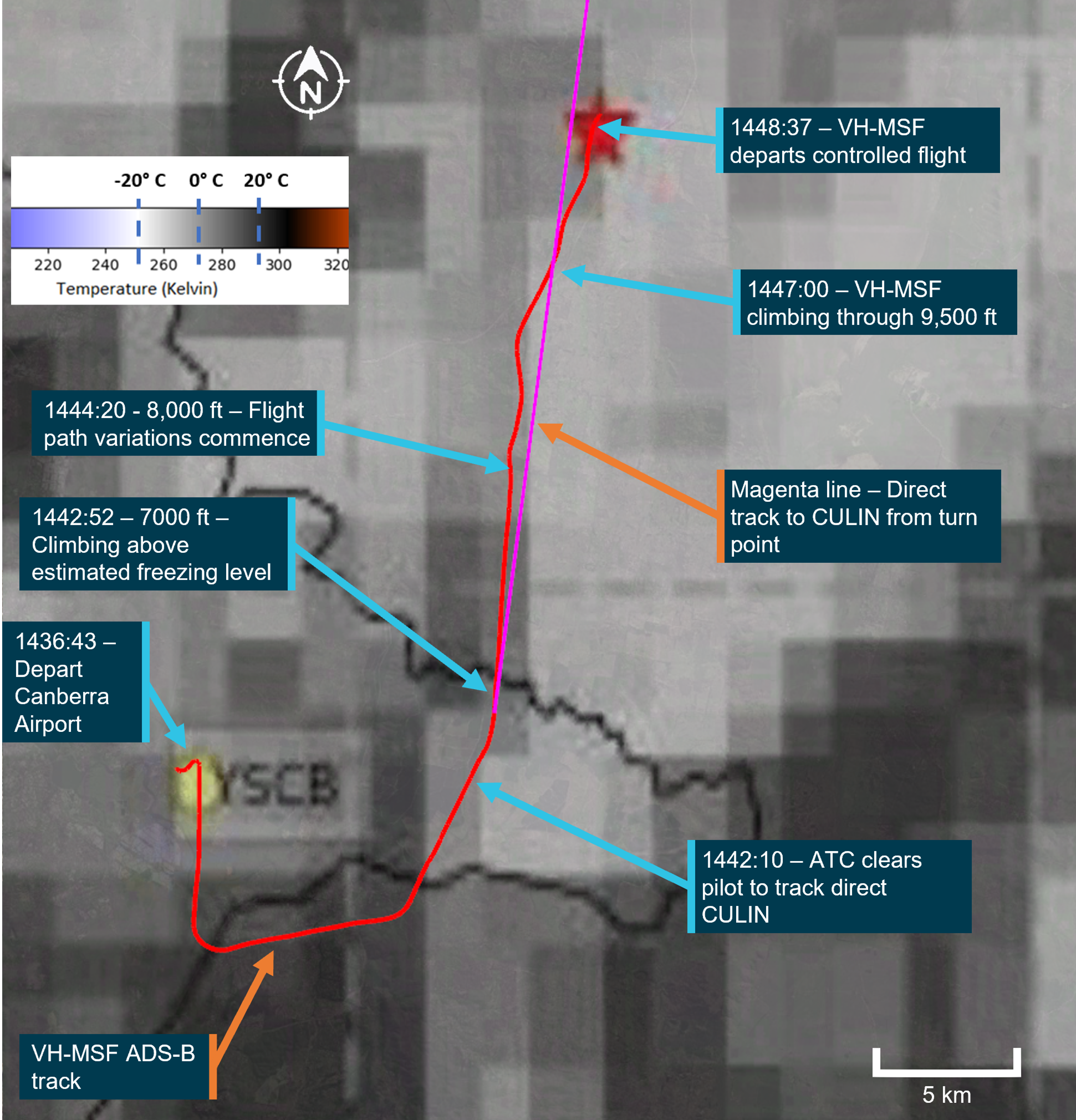
During the flight, data was being transmitted by the aircraft’s automatic dependent surveillance broadcast (ADS-B) equipment.[4] A review of that data indicated that the aircraft was climbing through about 7,000 ft AMSL as it turned to track towards CULIN. During that turn, the ground speed increased, over a period of about 30 seconds, from about 110 kt (204 km/h) to 135 kt (250 km/h).
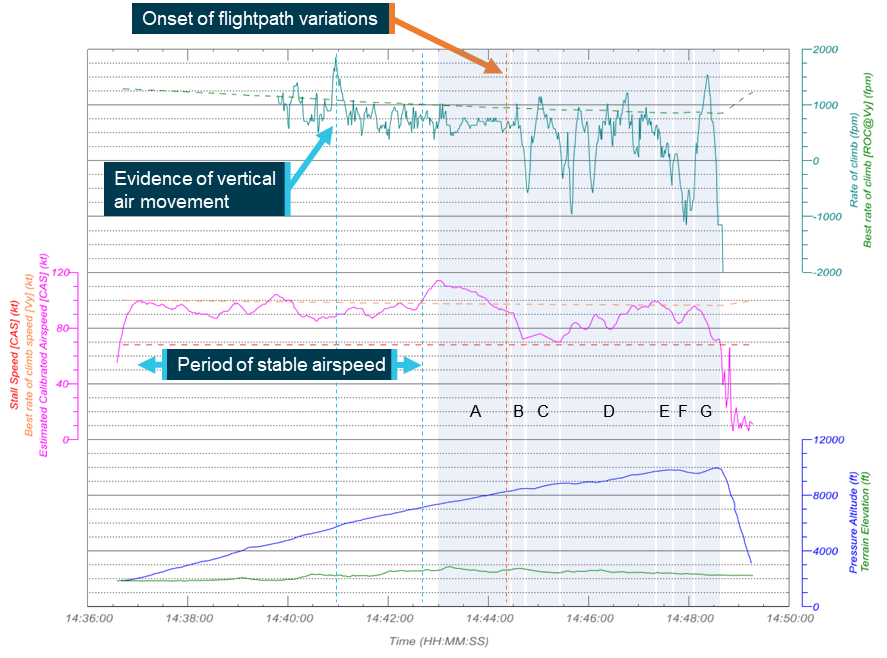
Climbing above 7,500 ft, the data indicated the aircraft’s ground speed had started to reduce, at an approximately linear rate, with a reduction of about 22 kt (41 km/h) over a 65‑second period. At that time, the data showed a relatively constant rate of climb generally between 550–750 ft/min.
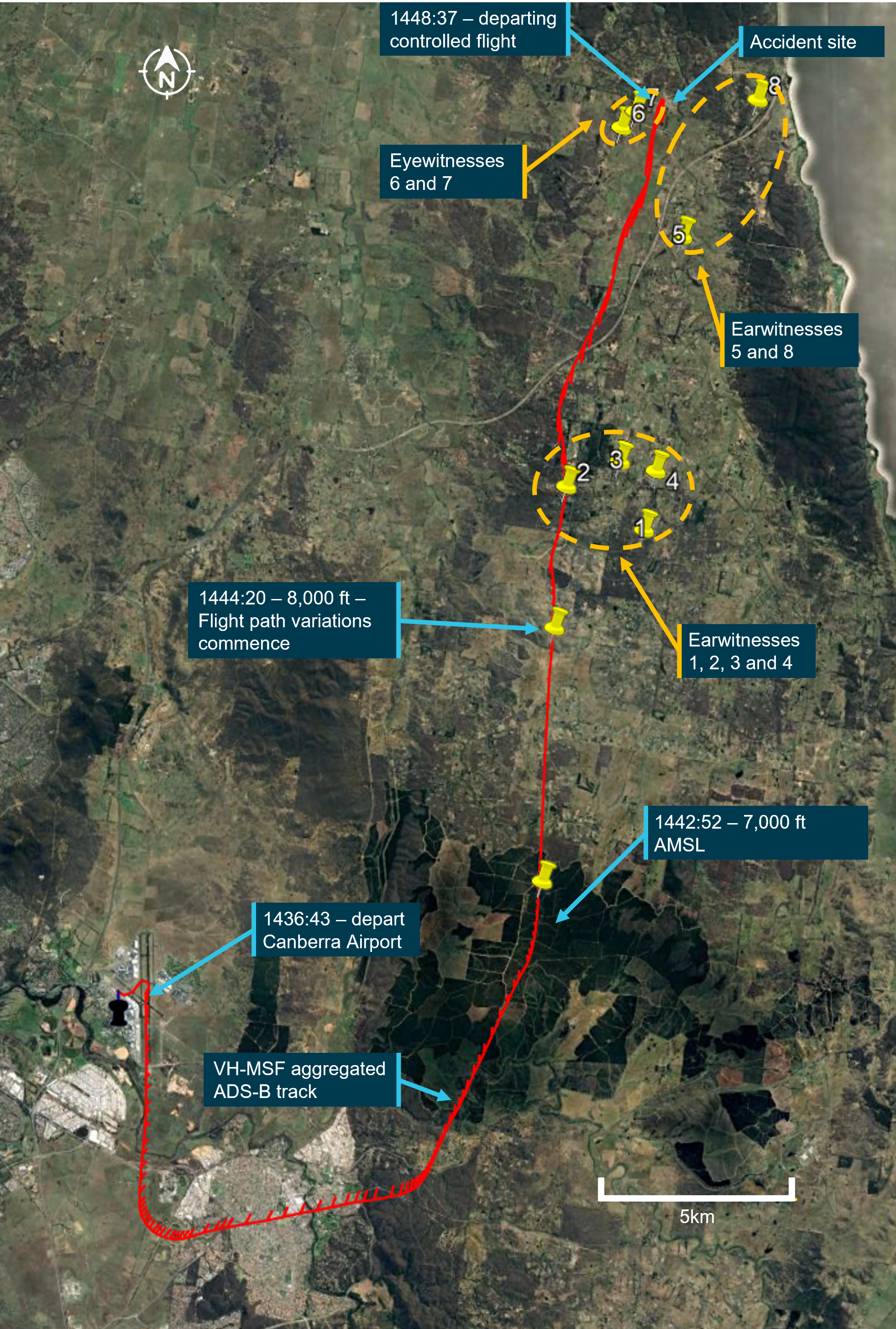
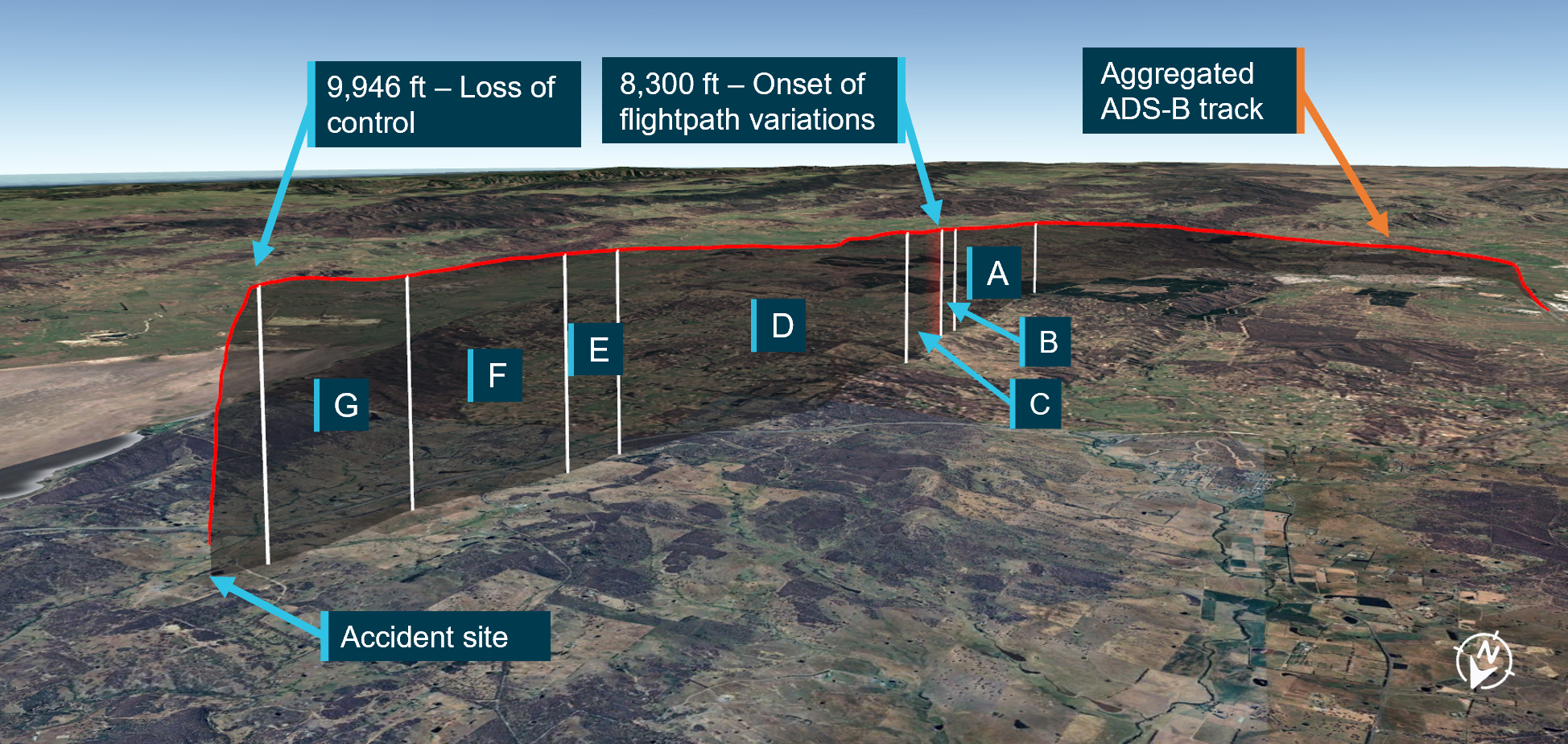
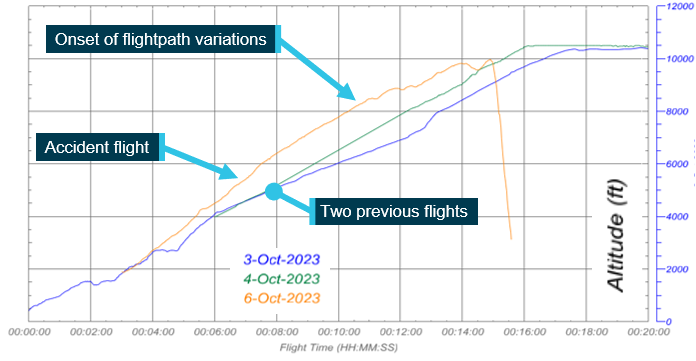
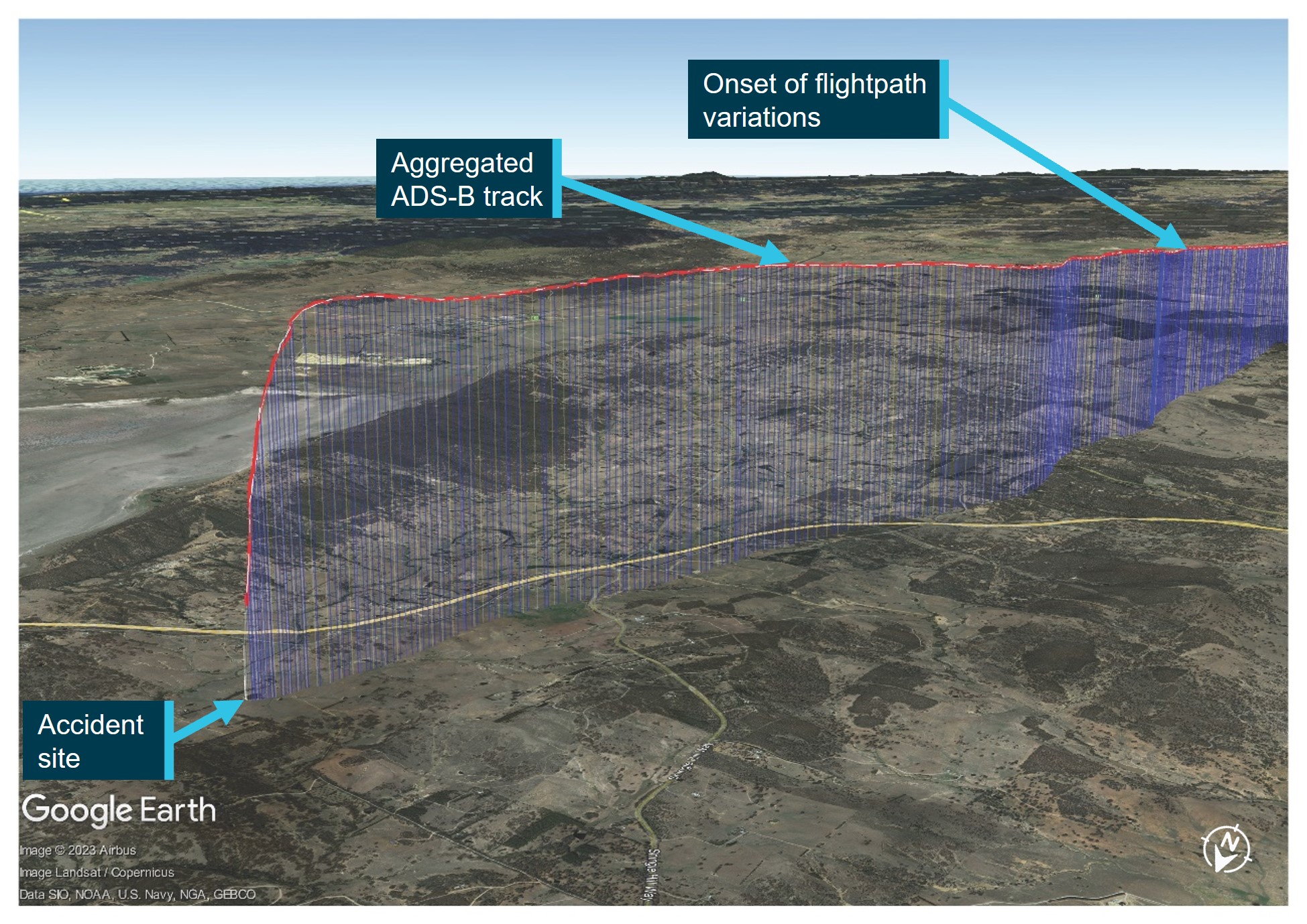
Passing through 8,300 ft, the somewhat linear flight track altered to an onset of heading, altitude and airspeed variations. The ADS-B data indicated the ground speed then started to increase as the aircraft entered a slight descent. Over the next 4 minutes, the aircraft’s track varied up to 35° and the ground speed fluctuated between 93 kt and 121 kt (172–224 km/h). During this period, the altitude was generally increasing, although at a varying rate, with shorter periods where the altitude and reported rate of altitude change indicated that the aircraft had started to descend.
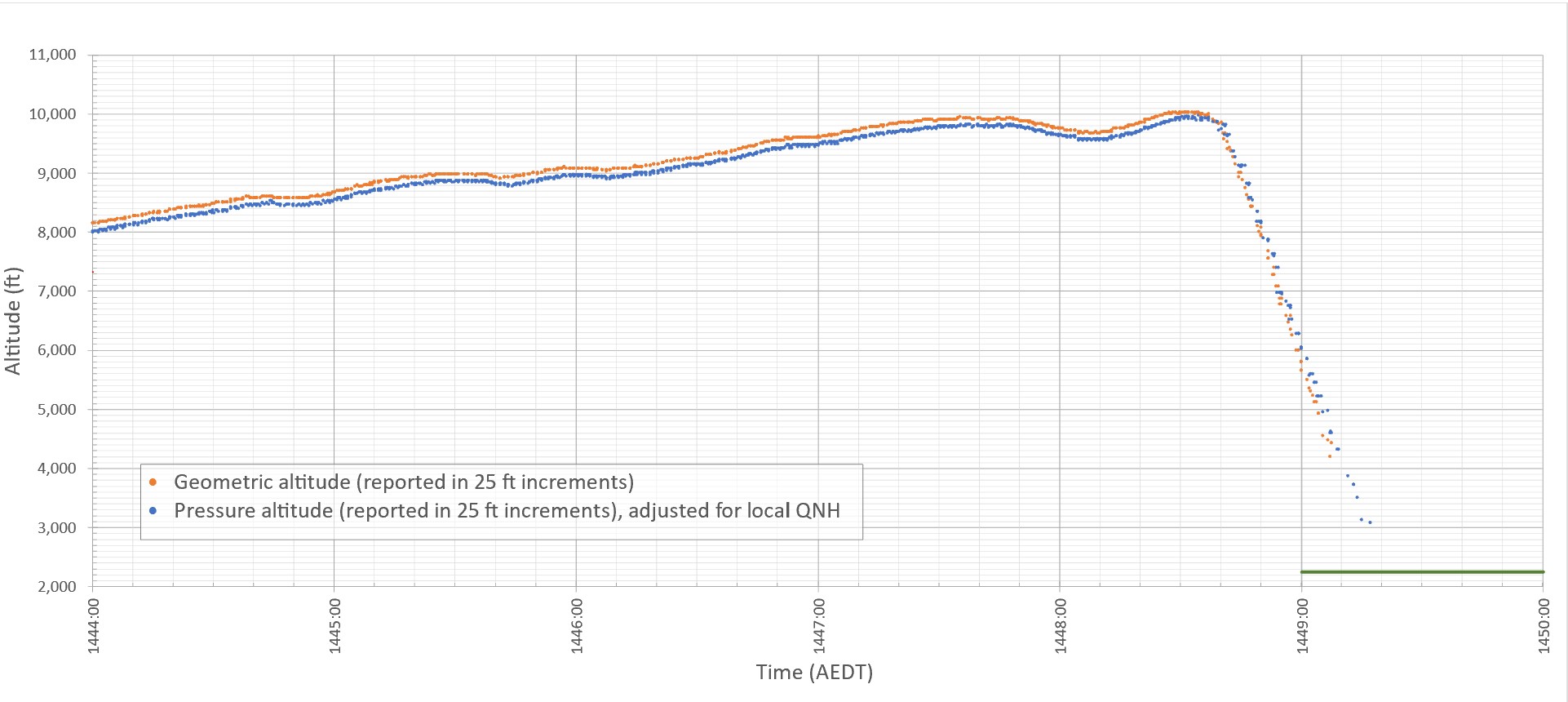
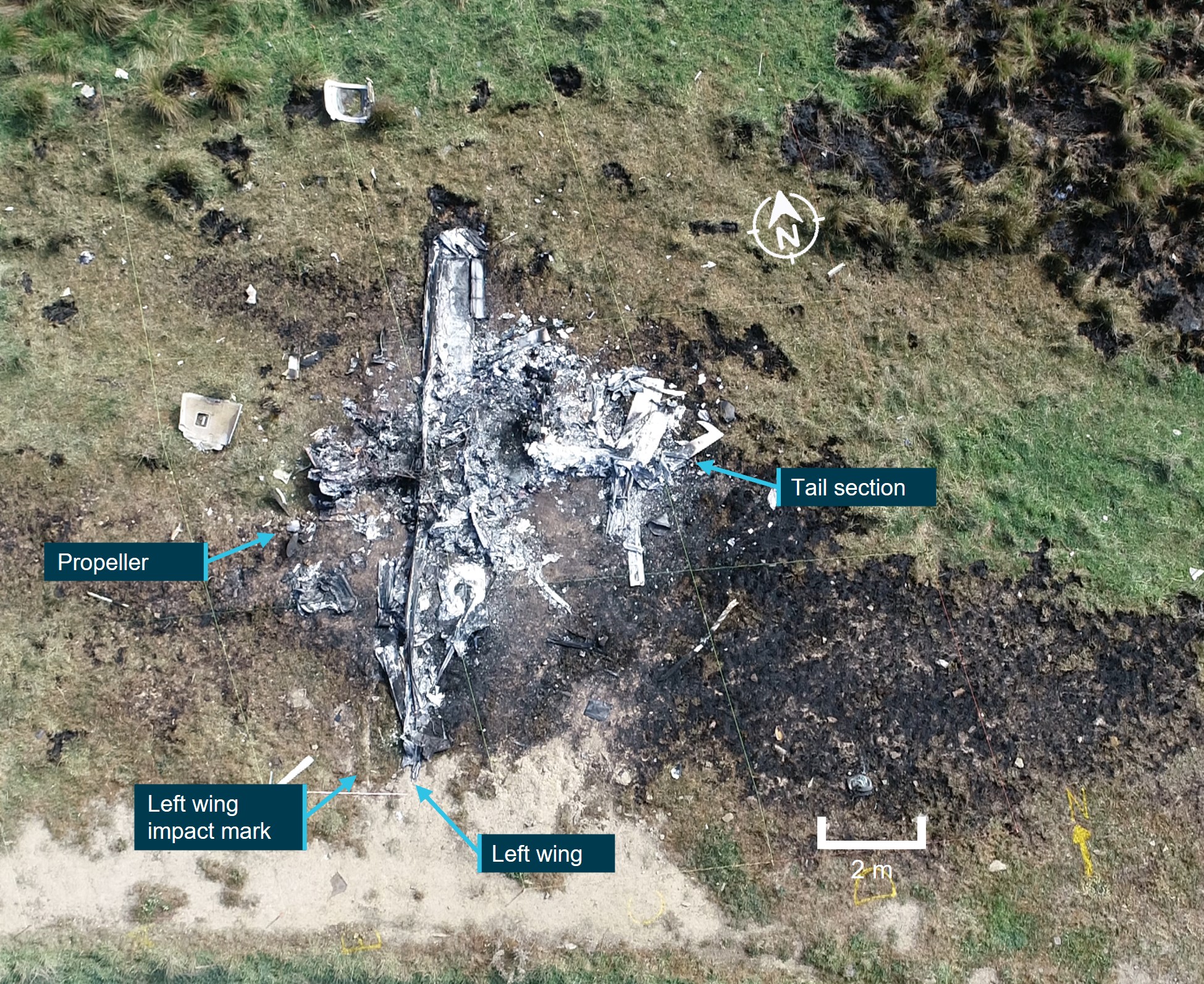
The ADS-B data showed that, at about 12 minutes into the flight, the aircraft descended by about 250 ft, increased speed by about 13 kts and then climbed at a rate up to about 1,500 ft/min. While in that climb, the airspeed reduced significantly and from a calculated pressure altitude of 9,946 ft, at 1448:37, the aircraft departed controlled flight and descended rapidly towards the ground. For more details on the aircraft’s movements refer to the Recorded information section. About 44 seconds after the onset of the departure from controlled flight, the aircraft collided with terrain (at a ground elevation of about 2,250 ft) and was destroyed by impact forces and a post-impact fire. All occupants were fatally injured. An eyewitness was the first responder on the scene and notified emergency services.
Figure 1 illustrates the ground track of the aircraft departing Canberra while assigned radar vectors and the direct track to CULIN.
Figure 1: Ground track of VH-MSF (in blue) from take-off to the accident site
The aircraft ground track overlaid on this map is referenced to a latitude and longitude grid aligned to true north. The headings assigned by air traffic control are referenced to magnetic north. In the Canberra region, magnetic north is about 12° less than true north. An aircraft’s ground track relevant to the assigned heading can also be affected by wind. Source: OpenStreetMap with ADS-B data from Airservices Australia and aggregated ADS-B data from FlyRealTraffic.com, annotated by the ATSB
Witness observations
Figure 2 and Table 1 show the witness locations and observations along the aircraft’s flight path; earwitnesses reported hearing aircraft engine noises and 2 eyewitnesses reported seeing the aircraft in its final moments before the impact with terrain.
Four independent ear witnesses (1 through 4 in Table 1) in the local area where the aircraft was climbing through about 8,000 ft described hearing a rough running or surging (revs increasing and decreasing) light aircraft engine, which was likely to be VH-MSF. Another 2 earwitnesses located closer to the accident site reported hearing varying engine sounds (5 and 8 in Table 1).
Two eyewitnesses (6 and 7 in Table 1) in the local area of the accident site described seeing the aircraft at a low altitude, descending rapidly with its nose pitched down and rotating like a corkscrew (spiral descent). One of these witnesses stated that they heard the aircraft approaching with the engine noise fluctuating[5] and the engine running during the descent, but went quiet just before impact. The other eyewitness was seated on a tractor with the engine running and did not hear the aircraft engine.
Table 1: Ear and eyewitnesses summaries with reference to Figure 2
Ear/eyewitness
Description
1 - Earwitness
Heard a light aircraft heading in a north-east direction. It was dropping engine revs and returning to normal revs. I heard this happen several times.
2 - Earwitness
Heard a small aircraft that seemed to be having engine problems overhead. The engine was revving then stuttering – they could not see the aircraft (cloud).
3 - Earwitness
Heard a small aircraft making sounds like it was cutting out and restarting – they could not see the aircraft (cloud).
4 - Earwitness
Engine sounded rough, sputtering. It did not sound like the abrupt silence of a mechanical failure. Sounded like the engine might be starving for fuel – they could not see the aircraft (cloud).
5 - Earwitness
Unusual aircraft noise like engine cutting in and out – they could not see the aircraft (cloud).
6 - Eyewitness
Heard the aircraft approaching with engine noise fluctuating but they could not see the aircraft until it exited below cloud in a steep nose down spiralling descent – the engine was running during the descent but went quiet just before impact.
7 - Eyewitness
Eyewitness to the last couple of steep nose down spiral turns below the cloud before impact. They did not see any smoke coming from the aircraft. Was on a tractor and did not hear the aircraft at any time.
8 - Earwitness
I heard a light plane revs of the engine gradually increasing to its maximum revs and then I heard a loud metal on metal clunking sound and then I heard the explosion about 4 seconds later and saw smoke coming up from a neighbouring property.
Figure 2 shows the aircraft flight track, and the location of each ear/eyewitnesses summarised in Table 1.
Figure 2: Aircraft flight path with ear and eyewitnesses’ locations
Source: Google Earth, with ADS-B data from Airservices Australia, annotated by the ATSB
Context
Pilot information
The pilot held a valid private pilot licence (aeroplane), issued in 1985 (re-issued as a Civil Aviation Safety Regulations Part 61 licence in August 2016), and class ratings for single‑ and multi‑engine aeroplanes. The pilot was initially issued with a command instrument rating for single‑engine aeroplanes in 1987 and their most recent flight review, on 29 August 2023, was an instrument rating proficiency check with an endorsement for multi-engine aeroplanes.
Insurance documentation indicated that the pilot had accumulated about 800 hours total flying experience, with about 180 hours in Cirrus SR22 aircraft, including 12.5 hours in VH‑MSF. The owner of VH-MSF had conducted several flights with the pilot and described them as being a good and careful pilot with no problems entering cloud and utilising the instruments.
Aircraft information
General information
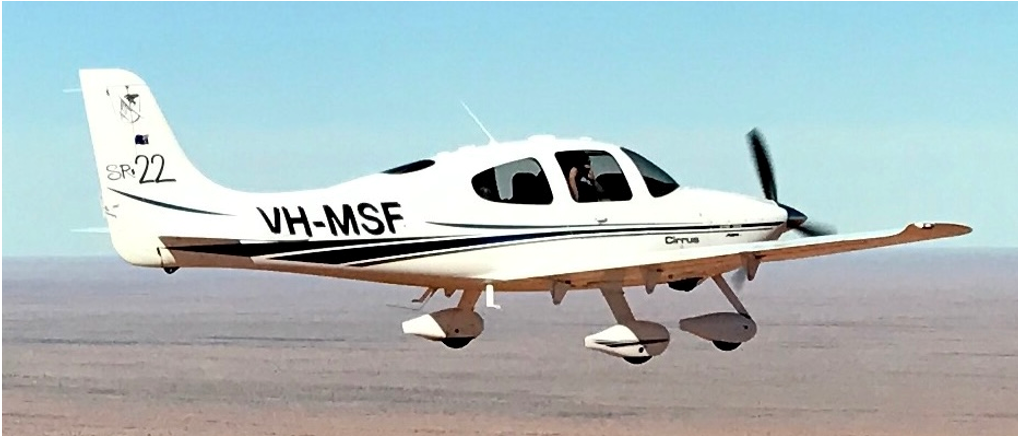
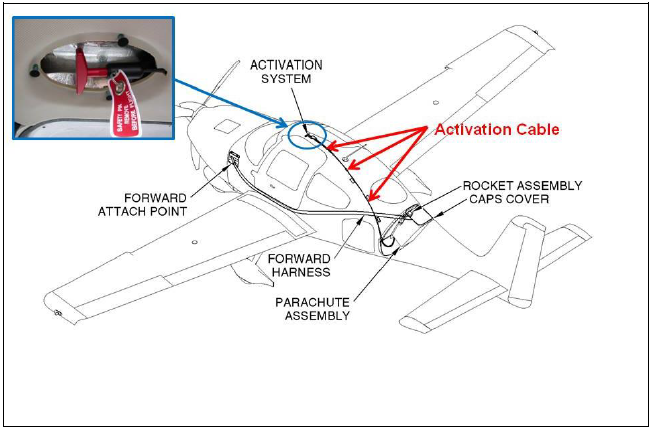
VH-MSF was a Cirrus Design Corporation SR22 low-wing aircraft with 4 seats and a fuel‑injected piston engine driving a constant speed 3‑blade propeller. It had a ballistic parachute system (Cirrus airframe parachute system – CAPS) fitted as standard. The aircraft was fitted with a cabin and windshield heating system, which utilised warm air ducted from the engine exhaust shroud.
The aircraft (S/N 0153) was manufactured in the United States in 2002 as a G1 model. It was purchased by the owner in the United States and first placed on the Australian aircraft register in 2017. It was issued a standard certificate of airworthiness in the normal category. Since then, it had been operated by its owner for private use, community service flights and had been leased to other private pilots (Figure 3).
The current maintenance release was on board the aircraft and was destroyed. A carbon copy of the maintenance release was provided by the aircraft maintainer. It showed that the required 100‑hour/annual inspection was conducted and a maintenance release was issued on 9 November 2022 at an aircraft time-in-service of 2,558.9 flight hours. Inspection of the maintenance release copy, aircraft logbook and worksheet records showed there were 2 items of maintenance that were past their calendar due date. They were a standby compass calibration and an outside air temperature/clock back-up battery replacement, both due about 2 months before the accident. The aircraft owner advised that the overdue maintenance items were an oversight.
The aircraft was certified for use in the private category and for instrument flight rules (IFR) operations. Maintenance documentation showed that the CAPS was inspected, and the parachute and rocket motor assemblies were replaced due to time expiry in January 2023. At the time of the accident flight, the airframe, engine and propeller had accumulated the following hours:
airframe – 2,635.5 hours total time-in-service
engine – 1,192.0 hours’ time since overhaul
propeller – 133.3 hours’ time since overhaul.
It was reported that, in September 2023, the aircraft was hard to start, and the starter motor was replaced, which resolved the issue. The aircraft owner also advised that, in the days prior to the accident flight the pilot had reported that the power lever was stiff to operate. In response to this, the owner checked the lever and determined that the reason for the stiffness was due to the friction adjustment, which had been wound up to a high friction setting. Following readjustment, when the friction was wound off, the power lever was free to move with no issues.
Two and 3 days prior to the accident, post-flight at Armidale and Canberra, the pilot had reported to their family and the owner that the aircraft had operated with no issues. The ATSB did not identify any maintenance issues that may have contributed to the accident.
Flight instrumentation
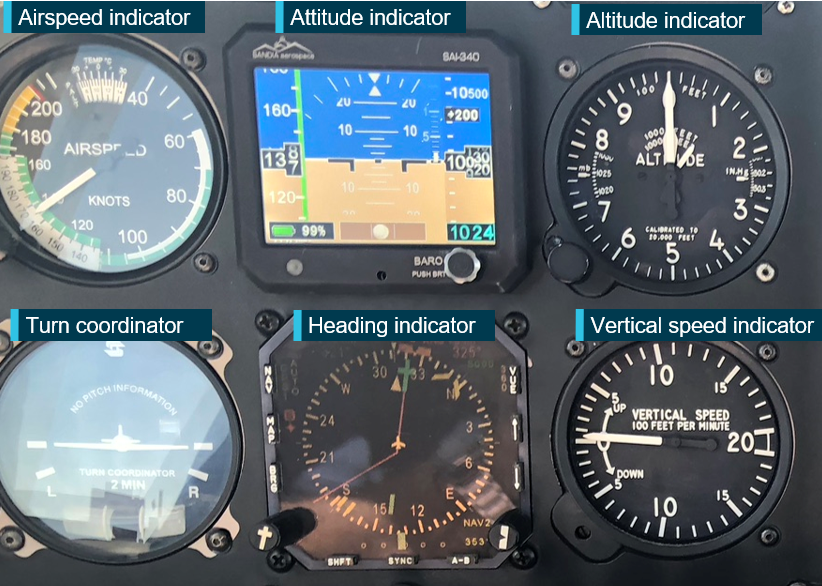
There were 6 primary flight instruments fitted to the aircraft. They were the airspeed indicator, attitude indicator, altitude indicator, turn coordinator, heading indicator, and vertical speed indicator (Figure 4). The aircraft was fitted with a Sandia SAI-340 model attitude indicator, which also incorporated airspeed, altitude and slip indicators. The unit contained a rechargeable battery capable of providing continued operation in the event of aircraft electrical failure. Maintenance documentation showed that the attitude indicator had been replaced in 2018 with a repaired model that had a software upgrade to include the addition of a vertical speed function.
Figure 4: VH-MSF flight instruments with Sandia attitude indicator top centre
Source: Aircraft owner
The United States Federal Aviation Administration issued an emergency airworthiness directive (AD), AD‑2020‑18‑51, for Sandia attitude indicators in 2020. That directive stated the applicability as being for Sandia attitude indicator part number 306171‑10 and 306171‑20. These attitude indicators may be marked as Bendix King Model KI‑300 or Sandia Model SAI‑340A. They may be installed on aircraft certificated in any category. It also stated that the AD was prompted by reports of 54 failed attitude indicators, which produced erroneous attitude data to the pilot and autopilot, if equipped. The FAA issued the AD to prevent aeronautical decision-making based on erroneous attitude information, which may result in loss of control of the aircraft.
The attitude indicator fitted to VH-MSF was the Sandia SAI-340, part number 306171-00, which was outside the applicability of the emergency AD. Further, the aircraft owner reported that the attitude indicator had not had any issues since it was installed in 2018.
Electric trim control system
The aircraft was fitted with an electric pitch, roll and rudder trim system. Electric trim buttons for pitch and roll were located on the top of each control yoke, while the rudder trim switch was mounted in the console next to the wing flap control switch.
The SR22 Pilot’s Operating Handbook (POH) stated that the pitch trim could be controlled by manually moving the switch forward, which would initiate nose‑down trim and moving the switch aft would initiate nose-up trim. This occurred via an electric motor, which changed the neutral position of the spring cartridge attached to the elevator control horn. The pitch trim also provided a secondary means of pitch control in the event of a primary pitch control failure not involving a jammed elevator. The electric pitch trim was used by the autopilot.
For roll trim, moving the switch left would initiate a left-wing-down trim and moving the switch right would initiate a right-wing-down trim. The trim also provided a secondary means of roll control in the event of a failure with the primary roll control system not involving jammed ailerons. The electric roll trim was also used by the autopilot. The rudder trim was not connected to the autopilot.
Autopilot
The aircraft was equipped with a 2-axis (pitch and roll) S-TEC-55X autopilot system that received roll axis control inputs from an integral electric turn coordinator and altitude information from an altitude transducer connected to the pitot-static system. A multifunction control panel was fitted above the altitude indicator, which provided mode selection, disengage, and turn command functions. The autopilot controller or a button on each control yoke handle could be used to disengage the autopilot. The autopilot features included:
roll stabilisation
turn command
navigation localiser and GPS tracking
altitude hold
vertical speed
GPS steering (GPSS) for smoother turns onto a course or during course tracking.
The limitations section of the SR22 POH stipulated that the autopilot should be disconnected when moderate to severe turbulence was experienced.
According to the aircraft owner, when either the altitude hold or vertical speed modes were selected, the autopilot would not disengage automatically. Also, when in these modes and the flight controls were manually manipulated, the system would apply trim in the opposite direction to maintain the selected altitude or vertical speed.
Electric trim and autopilot failure
The POH indicated that, any failure or malfunction of the electric trim or autopilot could be overridden by manually manipulating the control yoke. Further, if a trim runaway occurred, the pilot was to de‑energise the circuit by pulling the circuit breaker (PITCH TRIM, ROLL TRIM, or AUTOPILOT) and land as soon as the conditions permitted.
Icing protection system
The United States Federal Aviation Administration approved the Cirrus SR22 for flight into icing conditions in 2009 based on the introduction of an optional anti-ice system for the wings, windshield, propeller, vertical and horizontal stabiliser leading edges and the stall warning system. This was known as a FIKI (flight into known icing) approval. The accident aircraft was manufactured in 2002, which predated the FIKI approved modification, and the owner confirmed there was no anti-icing system fitted. Further, pilots were required to undergo an online Cirrus training course in icing awareness and use of the FIKI fitted to the SR22 aircraft before the system could be utilised. The manufacturer confirmed that the pilot of VH-MSF had not undergone that training.
VH-MSF was fitted with windshield defrost, pitot heat[6] and an alternate induction air system, which offered some protection against windshield, pitot and engine air intake icing. Each of those items had to be manually selected on by the pilot as required. According to the SR22 POH, the pitot heat was to be turned on for flight into instrument meteorological conditions, flight into visible moisture, or whenever ambient temperatures were 5 °C or less.
Stall warning system
The aircraft was equipped with an electro-pneumatic stall warning system to provide audible warning of an approach to aerodynamic stall.[7] When a slight negative pressure was sensed by the pressure switch from an inlet in the wing leading edge, a warning horn activated. The warning sounded at approximately 5 kt above the stall with full flaps and power off in wings level flight and at slightly greater margins in turning and accelerated flight.
Cirrus airframe parachute system
The Cirrus airframe parachute system (CAPS) was designed to lower the aircraft and its occupants to the ground in the event of a life‐threatening emergency where activation was determined to be safer than continued flight and landing. The system consisted of the following primary components:
parachute
solid-propellant rocket to deploy the parachute
rocket activation handle and cable
harness embedded in the fuselage structure.
The parachute and rocket were located in the empennage behind the rear baggage compartment. The rocket activation handle was mounted in a cabin ceiling enclosure between the 2 front seats and the cable was routed through the cabin ceiling and angled towards the left side of the CAPS compartment.
A safety pin with a remove before flight flag was fitted to the activation handle when operating on the ground. Part of a pilot’s pre-flight checks included a requirement to remove the safety pin prior to engine start. To initiate the CAPS, the pilot was to remove the access cover on the ceiling and pull the rocket activation handle out and down (Figure 5). Movement of the cable compressed the igniter steel spring and cocked the plunger. When one half inch of plunger travel was reached, the primary booster was ignited, which then ignited a secondary booster and the rocket motor.
Figure 5: Activation handle (top left) and parachute system as fitted to the aircraft
Source: Cirrus Design Corporation, annotated by the ATSB
For aircraft with an electronic ignition for the booster (as was fitted to VH-MSF), both aircraft batteries were connected to the system and either could actuate the booster in response to cable movement. Once ignited, the rocket impacted and dis-bonded the parachute compartment cover situated behind the rear cabin window and pulled the deployment bag from the enclosure. The deployment bag then staged the suspension line deployment and inflation of the parachute.
Meteorological information
Accessing weather information
On the morning of the accident, the pilot submitted a location briefing request at 0615 to the National Aeronautical Information Processing System[8] (NAIPS), which included Canberra and Armidale Airports. This was followed by 5 area briefing requests between 0622 and 0635, which included meteorology information, notices and advisories (NOTAMs),[9] and charts. This would have provided the pilot with the New South Wales east (NSW-E) graphical area forecast (GAF) and the NSW grid point wind and temperature (GPWT) charts.
At 1105, the pilot submitted another NAIPS area briefing request for the same weather information requested previously. This was the pilot’s last briefing request to NAIPS.
Bureau of Meteorology
Initial weather forecast
When the pilot submitted their flight plan at 0648, the current NSW GPWT chart was issued at 0454 and valid from 1100. Canberra was located near the intersection of 4 areas on the chart. Interpolation of the data between these 4 areas indicated the freezing level was forecast to be about 5,500 ft above mean sea level. The current NSW‑E GAF was issued at 0302 and valid from 1000 to 1600, which included the pilot’s planned departure time of 1430. Canberra was in subdivision C1 of area C on the GAF, which included the following weather:
broken[10] stratocumulus cloud from 2,000 ft to 7,000 ft in C1 until 1600
scattered drizzle in C1 with visibility reduced to 3,000 m and overcast stratocumulus cloud from 1,000 ft to 8,000 ft
a freezing level[11] of 4,000 ft in the south and 7,000 ft in the north [Canberra was centrally located within the south region].
The remarks field on the GAF provided additional information of operational relevance and included:
cloud above the freezing level implied moderate icing[12]
stratocumulus cloud implied moderate turbulence.
The estimated freezing level of 5,500 ft at Canberra and forecast broken stratocumulus from 2,000 ft to 7,000 ft, indicated an icing layer of about 1,500 ft overhead Canberra. Armidale was in area B, which included broken cumulus/stratocumulus cloud from 6,000 ft to 9,000 ft from 1300, and a freezing level of 9,000 ft.
Subsequent weather forecast
When the pilot submitted their last NAIPS area briefing request at 1105, the current NSW GPWT chart was issued at 0559 and valid from 1400. It indicated the freezing level overhead Canberra was forecast to be at about 7,000 ft with south‑westerly winds increasing from 6 kt at 5,000 ft to 19 kt at 10,000 ft. The NSW-E GAF was issued at 0913 and valid for the period 1000-1600. Canberra and the accident site were in the south of subdivision D1 of area D. The forecast for area D included the following conditions relevant to the pilot’s departure time of 1430:
visibility greater than 10 km, scattered cumulus/stratocumulus cloud from 5,000 ft to 8,000 ft, with broken tops to 10,000 ft in D1/D2 – the Bureau of Meteorology advised the ATSB that this should be interpreted as being broken cumulus/stratocumulus cloud from 5,000 ft to 10,000 ft in D1/D2
visibility reduced to 3,000 m in isolated showers of rain, with broken stratus cloud from 1,500 ft to 4,000 ft and broken cumulus/stratocumulus cloud from 4,000 ft to above 10,000 ft
freezing level of 5,000 ft in the south and 8,000 ft in the north of area D.
The remarks field stated:
cloud above the freezing level implied moderate icing
cumulus and stratocumulus cloud implied moderate turbulence.
The estimated freezing level of 7,000 ft at Canberra and forecast broken cumulus/stratocumulus from 5,000 ft to 10,000 ft indicated the forecast depth of the icing layer overhead Canberra had increased to 3,000 ft. Figure 6 depicts the NSW-E GAF, current at the time of the pilot’s last NAIPS area briefing request. Information relevant to the flight is labelled and highlighted. This forecast included a freezing level of 9,000 ft for the area containing Scone (area B) and a freezing level of above 10,000 ft for the area containing the destination of Armidale (area A).
Figure 6: Graphical area forecast for New South Wales – East
Source: Bureau of Meteorology, annotated by the ATSB
Assessment of the local conditions
The ATSB requested an analysis of the weather conditions by the Bureau of Meteorology applicable to the aircraft’s track. The following is a summary of that analysis:
Satellite observations at 0400Z [1500 local time] indicated that the IR [infrared] cloud top temperature was ‑7°C which corresponds to a cloud top height of 10,000 ft…Taking the base and cloud top estimates, this gives a depth of cloud of approximately 3,000ft.
The weather conditions observed for the area between Canberra and the accident site were consistent with the forecasts for the afternoon of 6 October 2023. The cloud cover was scattered to broken cumulus/stratocumulus, with a freezing level at approximately 7000ft. Cumulus and stratocumulus cloud were forecast on the GAF and observed on satellite imagery. Showers were forecast and observed over the ranges to the north and northeast of Canberra, including just north of the accident site at 0349Z [1449 local time].
These conditions would have been conducive to moderate icing conditions (most likely of the clear icing type) between approximately 7000ft to 10,000ft above mean sea level. The severity of any icing experienced would depend on how long the aircraft is in the cloud layer between these heights, however, the existence and/or type of airframe icing is very difficult to verify, particularly with the absence of any aircraft icing reports from the area at the time.
Based on Himawari-9 satellite imagery and observations from the aerological diagram at Wagga there is high confidence of moderate icing within the cumulus and stratocumulus field that extended across the Canberra region on 6/10/2023. This is consistent with forecast cloud and weather referenced on the NSW-E GAFs and reinforces the GAF statement (noted on all GAF issued by the Bureau of Meteorology) of "CLD ABV FZLVL implies MOD ICE".
Weather observations
Canberra Airport automatic terminal information service
When the pilot contacted Canberra ground air traffic control for an airways clearance, they reported receipt of the automatic terminal information service[13] ‘Golf’. The recording for information ‘Golf’ stated the following regarding the current weather conditions at Canberra Airport:
Expect instrument approach runway 17, wind 200° 8 kt, visibility greater than 10 km, cloud few 3,000 ft scattered 3,500 ft,[14] temperature 18, QNH[15] 1025.
Camera footage of cloud cover at Canberra Airport
A fixed camera was located about 1.3 km to the west of Canberra Airport showing an aspect to the north-north-east. The footage, coupled with other stills taken around the time the aircraft took off to the south and then tracked to the north-north-east, showed broken cumulous/stratocumulus cloud as per the forecast (Figure 7, taken at 1439).
Figure 7: Footage taken near Canberra Airport with a north-north-east aspect at 1439
Source: Aus Web Cams/myairportcams.com
First responders
Shortly after the accident occurred, first responders took a video around the aircraft in the hope that it could assist with the investigation into the accident. Consistent with the forecast, that video showed broken cloud overhead the accident site to the south-west, which was the direction the aircraft had come from (Figure 8).
Figure 8: Video image taken shortly after the accident viewed to the south-west
Source: Supplied
Pilot report of weather
The pilot of a Cirrus SR22T aircraft fitted with a flight into known icing (FIKI) kit was conducting an IFR flight from Wagga to Moruya, New South Wales, via Canberra on the day of the accident, flight planned at 9,000 ft. The pilot recalled using the anti-icing fluid, first to the west of Canberra when the aircraft was in the tops of the clouds at 9,000 ft. The pilot requested and received a clearance from air traffic control to climb to 10,000 ft to clear the cloud. They turned the anti-icing off and passed overhead Canberra at about 1358 (about 50 minutes prior to the accident) where they entered higher level cumulus cloud. The pilot then turned the anti-icing on again for the leg from Canberra to Moruya.
The pilot observed ice build-up on the aircraft in areas that did not receive the anti-icing fluid directly but did not notice any icing on the wings or any loss of engine performance. The pilot reduced the power and speed for turbulence penetration during the trip and assessed their aircraft was experiencing light icing. They also commented that it would have built up rapidly on an aircraft without an anti-icing system.
The pilot was able to recall one prior experience of icing when on descent into Moruya from Dubbo in their previous SR22, which was not fitted with a FIKI kit. The pilot reported that the ice built up quickly on the wings for about 2,000 ft but dissipated rapidly when the aircraft entered warmer air. They did not notice any loss of engine performance but acknowledged they were using a low power setting for the descent.
Airline flight data
A Virgin Australia Boeing 737-800 aircraft, callsign Velocity 1690, transited and descended through airspace and altitude bands close to the outbound flight track of VH‑MSF and at a similar time.
Velocity 1690 was being operated on a flight from the Gold Coast, Queensland, to Canberra with a landing time of 1445:26, about 4 minutes prior to the accident. Runway 17 was the active runway and Velocity 1690 approached Canberra from the north. On descent, at 1437:03, the aircraft data recorded the engine anti-icing system (ENG COWL ANTI-ICE) being turned on by the flight crew at an altitude of 10,144 ft and an outside air temperature (OAT) of −6.2°C (6°C total air temperature (TAT)).[16] The operator reported that the flight crew could not provide a detailed recollection of the approach but that the selection of the anti-ice would be consistent with the aircraft in cloud above the freezing level during the descent. At 1439:35, the flight crew turned the engine anti-icing off at 6,848 ft and an OAT of 0.2°C (10.5°C TAT). Figure 9 depicts the approach flight path of Velocity 1690 with the times, altitudes and temperatures when the engine anti-icing was turned on and off. The flight path of VH-MSF includes the positions that corresponded with the altitude band (shown in red) in which Velocity 1690 used engine anti‑icing.
Figure 9: Relative positions of Velocity 1690 and VH-MSF
Source: Google Earth and Virgin Australia, annotated by the ATSB
ATSB review of satellite imagery
Introduction
The Bureau of Meteorology provided the ATSB access to various satellite imagery of the Canberra region during the afternoon of the accident, which had been processed from the geostationary satellites Himawari-8 and 9, operated by the Japanese Meteorological Agency. Imaging sensors carried on board the satellite would make progressive scans of the Earth’s full disk at 10-minute intervals.
Cloud coverage
Figure 10 is the enhanced visible satellite image showing cloud coverage for the Canberra region for the 10-minute acquisition period commencing 1440, which was the closest image relative to the time of the accident. The areas of cloud are represented by the lighter pixels, where the darker pixels are areas without (or with less) cloud coverage. This image is overlaid with VH-MSF’s flight track, the direct track to waypoint CULIN, the estimated position and time the aircraft climbed through the 0°C estimated freezing level (at about 14:43 and 7,000 ft).[17] It also showed the aircraft’s position at 8,000 ft where flight path variations commence in relation to cloud coverage.
While this shows cloud coverage along parts of the aircraft’s track, it does not provide information about the depth of the cloud or the height of the cloud tops, and whether those tops were above or below the aircraft’s operating altitude.
Figure 10: VH-MSF track (in red) overlaid on an enhanced visible satellite image, taken close to the time of the accident
Source: Bureau of Meteorology and Japan Meteorological Agency, modified by the ATSB
Temperature of reflective surfaces
To assist with the estimation of cloud heights in the vicinity of the aircraft’s flight path, the Himawari‑8 and 9 RGB infrared enhancement image[18] was reviewed for the same period commencing at 1440. For the infrared images, the colour of the pixels is an indicator of the average temperature of the reflecting surface measured by the infrared imaging sensors.
The lighter coloured pixels represent lower temperature (colder) reflecting surfaces and could reasonably be used to infer higher cloud tops in those regions. The darker pixels were consistent with warmer average temperatures of the reflecting surfaces and could suggest lower cloud tops in those areas. Based on the infrared images, the Bureau of Meteorology assessed the cloud conditions as being scattered to broken with a 3,000 ft cloud band between 7,000 and 10,000 ft, with moderate clear icing likely when in cloud from 7,000 ft.
Figure 11 shows a temperature scale, the flight path, times and altitudes with the position of the aircraft at an estimated freezing level of 7,000 ft. It also shows the point at which the aircraft flight path variations commence and the lighter grey areas indicating cloud tops at 10,000 ft. Based on the infrared image, it was considered likely that the aircraft entered cloud above the freezing level. However, the exact amount of time the aircraft spent in cloud could not be determined.
Figure 11: VH-MSF track overlaid on RGB infrared enhancement image, taken close to the time of the accident
Source: Bureau of Meteorology and Japan Meteorological Agency, modified by the ATSB
Comparison with the airline flight data
The infrared imagery for VH-MSF (Figure 11) was compared with the imagery applicable to the Boeing 737-800 (acquisition period commencing 1430) and the corresponding altitude and temperature data for when this aircraft likely entered cloud during descent into Canberra. This indicated that the lightest coloured pixels in the image represented average temperatures of about −6 °C, with the tops of the reflecting surfaces (clouds) being about 10,000 ft as per the forecast.
Recorded information
General information
The aircraft’s Avidyne multi-function display and EMax engine monitoring system had been significantly damaged by the post-impact fire. Technical assessment and X-ray images of the unit’s compact flash data storage card showed considerable thermal damage, which precluded recovery of onboard recorded data. The aircraft was not equipped with a data transfer unit and recoverable data module, which was available as a fitted option in later models of Cirrus aircraft. Therefore, no onboard recording devices were available for data download to assist the investigation.
Flight data performance assessment
The ATSB obtained digital data that had been broadcast by the aircraft’s automatic dependent surveillance broadcast (ADS-B)[19] equipment and which had been recorded by Airservices Australia and other flight tracking websites.[20] That data included information about the aircraft’s position, ground track, ground speed and altitude.
The ADS-B data transmitted by the aircraft did not include parameters such as airspeed, altitude rate of change, heading or temperature. However, the transmitted data could be integrated with other sources of information (such as wind velocity, air temperature and atmospheric pressure), to derive estimates for other relevant performance data. For the purpose of analysing the ADS-B data and to derive estimates of the aircraft’s calibrated airspeed (CAS)[21] during the accident flight, wind and temperature data was obtained from several sources, which included:
the Bureau of Meteorology’s NSW GPWT chart, valid from 1400, providing wind and temperature forecast data in 1.5 by 1.5° grids
the Bureau of Meteorology’s vertical wind profiler observations (averaged over the preceding 30-minute observation period) for Canberra Airport, issued 1430 and 1500
wind and temperature information from the Boeing 737-800 (Velocity 1690) flight data when transiting through the airspace north of Canberra and passing close abeam the accident site about 10 minutes prior
the United States National Centres for Environmental Prediction global forecast system and global data assimilation system in 0.25 by 0.25° grids, valid at 1400.
Evaluation of those sources demonstrated a reasonable correlation between datasets, particularly during the latter stages of the climb and immediately prior to the departure from controlled flight. For the main analysis task, the investigation used the Canberra Airport vertical wind profiler observations, and the wind velocity and temperature data recorded for Velocity 1690. The estimate for CAS was derived from ADS-B recorded ground speed and ground track, using the sources for wind velocity (from Velocity 1690 data and vertical wind profiler observations), and recorded atmospheric pressure at Canberra Airport and temperature (from Velocity 1690 data).
Further, this information, along with published aircraft performance data was used to determine the required engine power and propellor thrust to meet the performance seen in the recorded data. However, due to the limitations of ADS-B broadcast data (such as position errors, recording resolution, and broadcast dropouts) and at times dynamic manoeuvring of the aircraft, the aircraft trajectory and power required analysis was indeterminate for much of the aircraft’s flight.
Figure 12 depicts the ADS-B data for the accident flight, together with an estimate of the aircraft’s airspeed. The initial climb was conducted on reasonably stable headings and climb rates at airspeeds that were estimated to be generally between 85 kt and 105 kt CAS, to an altitude of about 7,000 ft above mean sea level. At one point during this climb, at about 1441 when approaching 6,000 ft, the aircraft appeared to have passed through an area of rising air (Figure 12 ‘vertical air movement’). This was evidenced by the aircraft substantially exceeding the POH published maximum rate of climb performance while the aircraft additionally accelerated slightly.
At 1442:08, the air traffic controller cleared the pilot to resume their own navigation and track direct to CULIN, where the estimated airspeed increased to about 115 kt. At 1443, the airspeed began to progressively reduce as the aircraft continued to climb. For a full‑page view of Figure 12 refer to Appendix A.
The following provides a summary of the data (in sections A to G, as annotated on Figure 12 and Figure 13) from just prior to passing through 8,000 ft until the departure from controlled flight:
A: Over a period of about 90 seconds, the airspeed reduced by about 25 kt at a relatively linear rate.
B: Climbing through 8,300 ft, the airspeed continued to reduce, with a reduction of about 20 kt occurring over a 15‑second period. The aircraft was estimated to have slowed to around 72 kt, which was 5 kt above the calculated stall speed for the flight.
C: The airspeed recovered slightly but, 40 seconds later, the airspeed reduced again to an estimated 70 kt. During this time, the aircraft was passing overhead several witnesses who had reported hearing unusual revving or stuttering from an aircraft engine.
D: The aircraft then accelerated to the best rate of climb speed for about 45 seconds, and the altitude increased by almost 800 ft. This also included what appeared to be a controlled turn (based on a relatively constant turn radius) to the right, changing heading by about 35° (as shown on Figure 1 and Figure 2).
E: At 1447:20, the aircraft entered a final period of unstable flight. The aircraft decelerated from 100 kt to 94 kt while the climb rate reduced to zero.
F: The airspeed then further decreased by 11 kt, before the aircraft descended 250 ft and recovered to an estimated airspeed of 96 kt. A power required analysis suggested the speed loss and descent were possibly conducted with low or idle power, or due to a downdraft.
G: Over the next 30 seconds, the recorded data showed that the aircraft then climbed above the best rate of climb to about 1,500 ft/min while the airspeed reduced.
At 1448:31–33, about 12 minutes after take-off from Canberra, the aircraft reached a maximum altitude of 9,946 ft at an airspeed of 71 kt. Following this, the flight data showed the aircraft’s airspeed and altitude declined, and rapidly so from 1448:37. The descent rate increased to 13,000 ft/min, the ground speed reduced to less than 32 kt and became erratic, and the aircraft track aligned somewhat with the estimated wind direction, all of which indicated the aircraft had likely entered a spin.[22] As the aircraft passed through about 8,000 ft, the rate of descent started to reduce, which was indicative of the increased drag from an increasing air density as the aircraft descended. When the aircraft had reached ground level the descent rate had reduced to around 10,000 ft/min.
Figure 12: Aggregated ADS-B altitude data for VH-MSF, together with estimated airspeed (CAS)
Source: ATSB, using ADS-B data aggregated from Airservices Australia and FlyRealTraffic.com
Figure 13 depicts the aircraft’s flight track looking back along the flight path with A through G labelled to the relevant sections of the flight as shown in Figure 12. As the aircraft climbed through 8,300 ft, the somewhat linear flight track changed, with heading, altitude and airspeed variations commencing.
Figure 13: Aggregated ADS-B data for VH-MSF, looking back along the flight path
Source: Google Earth, with ADS-B data from Airservices Australia and aggregated ADS-B data from FlyRealTraffic.com, annotated by the ATSB
Performance comparison between flights
Figure 14 illustrates ADS-B altitude data from initial climb to about 10,000 ft for the accident flight and the 2 prior flights (on 3 and 4 October 2023)[23] conducted by the pilot in VH-MSF. The data showed the aircraft climb performance for the accident flight was initially similar or better than the prior flights. During the period of flight path variations, the aircraft performance reduced, potentially due to manoeuvring, but then momentarily returned to comparable performance after passing 9,000 ft.
Figure 14: Comparison of ADS-B altitude data for the accident and 2 prior flights
Flight start times have been adjusted to allow for comparison. Source: ATSB, using ADS-B data aggregated from Airservices Australia and FlyRealTraffic.com
The manufacturer was provided a copy of the flight track data for assessment. That assessment was conducted by one of their senior investigators and a senior test pilot. While no definitive conclusions were able to be made based on the data provided, the manufacturer indicated that the aircraft had slowed, aerodynamically stalled and, after a short period of time, entered into a spin.
Wreckage and impact information
Site and wreckage
The aircraft came to rest in an open field adjacent to a dam wall with a 10° downward slope towards the right wing. Although post-impact fire damage precluded examination of a significant proportion of the aircraft, inspection of the site and wreckage showed (Figure 15 and Figure 16):
The impact marks and wreckage distribution indicated that the aircraft impacted with terrain upright, with a slight nose low attitude and no forward momentum. Although the impact evidence was indicative of a spin, it was difficult to ascertain the spin direction.
All of the aircraft extremities (wings and tail section) were accounted for and there was no evidence of an in-flight break‑up.
There were no identified structural defects in the evidence available.
All flight controls systems were inspected to the degree possible with no pre-accident defects identified.
The flap actuator was identified within the wreckage and was in the flap zero position.
The fuel selector was tested and assessed to be in the right tank position.
The fuel tank caps were located and found secured in the filler point opening of each fuel tank.
The engine cowl was located forward of the aircraft outside the fire zone. It did not have any residue to indicate an in-flight loss of oil.
Due to the destruction of the wreckage, cockpit switch settings and circuit breakers, flight/engine control, autopilot or trim positions were unable to be determined.
The engine power lever and mixture control positions could not be determined.
Figure 15: Overview of the accident site and remaining wreckage
Source: ATSB
Figure 16: Aircraft wreckage viewed from the rear showing downslope to the right
Source: ATSB
The cabin heat position was unable to be ascertained, and the engine exhaust and shroud that was utilised for cabin heat was removed so that the exhaust could be examined for pre‑impact defects. No cracks or pre-impact defects were identified in the exhaust that may have led to carbon monoxide[24] being introduced into the cabin by an exhaust leak.
Cirrus aircraft parachute system
The CAPS fuselage cover was located adjacent to the wreckage, but outside the fire zone. Inspection of the cover showed an impact mark on the internal surface at the rocket head location. The cover did not display any thermal or smoke damage (Figure 17). The parachute deployment rocket was not in its original position and was located about 3 m to the right of the fuselage and had dispensed its propellent. The cover and rocket position indicated that the rocket had deployed due to ground impact forces before the post-impact fire had initiated.
The parachute was located in its normal fitted position, remaining in its pack. After an extensive search throughout the remaining wreckage, the parachute deployment handle and safety pin could not be located. Therefore, the ATSB could not establish if an attempt was made to deploy the parachute in-flight.
Figure 17: CAPS external cover showing internal impact mark
Source: ATSB
Propeller and engine examinations
Propeller
The propeller was partially buried at the front of the aircraft. The propeller flange had separated from the engine crankshaft and remained attached to the propeller hub. Two of the 3 propeller blades (Figure 18, blades A and B) were undamaged and showed no signs that they had passed through the ground during the impact with terrain.
Figure 18: Propeller as found at the accident site
Source: ATSB
Propeller blade C was buried in the earth directly under the hub and showed some signs of rotational scoring, some leading-edge gouges, and slight chordwise twisting. A fracture surface at the base of the blade was from back bending overload as a result of the impact with terrain (Figure 19).
Site photographs of the propeller and fractured crankshaft were examined further and blade C was physically examined at the ATSB’s technical facilities in Canberra to determine the level of engine power being produced at the time of impact. The materials failure analysis identified that the propeller hub had fractured from the engine crankshaft at the propeller flange, in a manner consistent with ductile overstress due to bending. The examination determined that propeller blade C exhibited minor compound bending through its section and had a slight twist at the blade tip. Chordwise gouging observed on the front face of the blade was a characteristic of propeller rotation.
With respect to the engine power output, typically, windmilling or an engine at idle power will stop very rapidly when the propeller blades contact the ground. There is often minimal ground entry and little to no distortion to the blade sections. In this case, when blade C entered the ground, the propeller stopped suddenly. Therefore, the ATSB’s analysis concluded that, while there were some signatures that would indicate that the propeller was rotating at the time of impact, there was no evidence of appreciable power being produced by the engine. Rather, the damage to the propeller blades indicated that the engine was operating at low power when it impacted terrain.
Figure 19: Blade C as recovered from the accident site
Source: ATSB
Propeller governor
The propeller governor remained attached to the engine. Impact and fire damage precluded functional testing. The governor was disassembled and inspected at the ATSB’s technical facilities with no pre-impact defects identified.
Engine
The engine was removed from the accident site and taken to an approved engine overhaul facility for disassembly and inspection under the supervision of the ATSB. Sections of the engine were consumed by the intense post-impact fire, which precluded functional testing of specific areas such as the ignition and fuel systems.
The oil filler cap was secured to the crankcase fill adapter. The engine and accessories were completely disassembled. The engine was found to be mechanically sound, with the crankcase section intact and all the cylinders present and securely mounted to the crankcase. No defects were identified in any of the cylinder assemblies that may have provided an indication of a malfunction contributing to a loss of engine power. There was no distress of the main or connecting rod bearings due to oil starvation or loss.
The engine sump was pushed upwards during the impact with terrain, bringing it in contact with the cam shaft drive gear. That contact perforated the sump with gear teeth impressions, indicating that the engine camshaft was not rotating and the engine had stopped by the time the imprints were made (Figure 20).
Figure 20: Camshaft drive gear and impressions made in the engine sump
Source: ATSB
Medical and pathological information
General information
The pilot held a class 2 aviation medical certificate valid to 22 October 2023, with 2 restrictions. These were a requirement for reading and distance vision correction to be worn while flying and that a continuous positive airway pressure (CPAP) machine be used for the sleep period before flying.
The pilot’s last Civil Aviation Safety Authority (CASA) required medical assessment was conducted on 22 October 2021. That documented assessment showed that the pilot had:
been prescribed medication for high cholesterol for over 10 years
an electrocardiogram stress test (heart trace) in 2016 with nil issues reported
their appendix removed in 1980
a computed tomography (CT) angiogram and CT calcium test in 2019 with nil issues reported
a CT chest X-ray in 2019, which was all clear
blood tests in 2016, 2017, 2019 and 2021
a sleep study performed in 2016, which resulted in the use of a CPAP machine (details below).
In 2016, the pilot was identified with moderately severe obstructive sleep apnoea and used a CPAP machine to manage that condition. Downloaded CPAP data showed that the pilot was consistently using the CPAP machine. It was reported that the pilot had their CPAP machine with them during the trip to Canberra and given the previous continuous use it was concluded that the pilot likely utilised the machine during the trip, including the night prior to the accident.
The pilot was reported to have been well rested and had consumed a salmon bowl meal from a local restaurant about 1 hour before the flight. In general, the pilot was reported by their family to be fit and healthy with no known illnesses.
Post-mortem and toxicology results
A full post-mortem[25] of the pilot was conducted. The pilot received extensive thermal injury as a result of the post-impact fire and multiple other injuries from the accident.
The pathologist noted that the pilot had a right coronary artery angulation with an ostium (opening of the artery) that had a slit-like appearance. They stated that it is a rare congenital coronary artery anomaly that, in most cases, does not present with clinical symptoms and may be considered an incidental post-mortem finding in asymptomatic patients. In approximately 20% of cases, the anomaly may result in symptoms such as angina (chest pain), dyspnoea (shortness of breath), syncope (fainting), myocardial ischaemia (reduced blood flow to the heart), ventricular fibrillation (irregular heart rhythm), and sudden death. According to the literature, symptoms generated by congenital coronary artery anomalies are predominantly associated with athlete patients or after intense physical exercise and are rarely present in sedentary individuals.
Toxicology testing was conducted to detect common therapeutic medicines and illicit drug use, and these tests were found to be negative for all substances. The toxicology report noted that a low, insignificant blood alcohol concentration was detected that may have been attributed to post‑mortem decomposition changes (0.006 g per 100 mL). A carbon monoxide saturation level of 2% was also detected in the pilot’s blood, but the report stated that this did not suggest that carbon monoxide poisoning contributed to the accident and death, nor did it suggest a significant survival period after the impact. As previously discussed in ATSB investigation AO‑2017‑118, the physical symptoms and cognitive effects of carbon monoxide exposure generally start to occur at levels of around 10%.
In their concluding remarks the pathologist stated that:
No definite answer can be provided based on the post-mortem findings alone regarding whether the possible sudden incapacitation of the pilot may have contributed to the aviation fatalities. The post‑mortem findings must be correlated carefully with all other available evidence, not least the findings arising from examination of the scene and other relevant evidence as unearthed by detective officers and other investigative authorities.
Specialist medical assessment
Due to the circumstances of the accident and the indeterminate results of the pilot’s post‑mortem, the ATSB requested the assistance of a specialist doctor of forensic pathology to assess the information obtained by the ATSB, which included:
post-mortem and toxicology report
the sequence of events detailed in the ATSB preliminary report
CASA medical records relating to the pilot
Medicare and pharmaceutical benefits scheme records relating to the pilot
compliance and therapy report for the pilot’s ResMed Airsense 10 Elite CPAP machine.
A summary of the specialist’s assessment of the information provided was as follows:
The pilot sustained fatal injuries due to the impact with terrain prior to the post-impact fire.
The blood alcohol level detected was from a sub-optimal sample taken from the chest cavity (often the only choice with severe trauma). Although alcohol consumption could not be ruled out, it was entirely possible that the alcohol was produced post-mortem and could be expected under the given circumstances.
The pilot was known to take rosuvastatin medication for high cholesterol treatment. The drug was not detected in the pilot’s toxicology results and is generally not detectable in routine screening. While it could not be determined if the medication was in the pilot’s blood, the drug would not be expected to have a psychoactive effect or cause incapacitation.
Regarding the identified 3 heart abnormalities in the pilot’s post-mortem, the specialist indicated that:
In the case of the right coronary artery angulation, the specialist indicated that it is an anatomical abnormality in 2% of hearts where one of the 2 main blood vessels suppling the heart muscle is abnormally angled at its origin from the aorta and often presents as a slit‑like opening (as was the case with this pilot), as opposed to the normal opening, which has a round profile. In the majority of cases, it is considered an incidental finding of no clinical significance. In a small percentage of cases, this abnormality is determined to be a cause for heart muscle abnormalities, including the development of cardiac arrhythmias, scarring of heart muscle, and potentially incapacitation and death. It was noted that the pilot had a CT coronary angiogram performed in January 2019, which was reported to be normal. It was considered likely that had a coronary artery abnormality been a clinically significant issue at the time it would have been identified. Also, an absence of fibrosis (scarring) or other changes typical of chronic ischaemia in the distribution of the right coronary artery argues against this being clinically significant in this case.
The second heart abnormality identified was the narrowing of the left anterior descending coronary artery without obvious atherosclerosis. It was considered likely that post‑accident heat effect caused the change rather than natural disease. It was noted again that the pilot had a CT scan in 2019 that was reported as normal, and it would be unlikely that coronary artery disease would have progressed to the extent of being capable of causing incapacitation in that time period.
The third heart abnormality identified was contraction banding in association with lacerations of the heart muscle and was seen in areas supplied by widely patent coronary arteries such as the right coronary artery. In the absence of other indicators, it was considered likely that the contraction banding was a result of the aircraft accident rather than incapacitation due to cardiac disease.
The specialist advised that many natural medical conditions that can result in pilot incapacitation would generally not be detectable from a post-mortem, especially where there have been very extensive injuries, and therefore could not be ruled out. Examples of such conditions include the pilot losing their corrective eyewear at a critical time, the pilot having a coughing fit, the development of many gastrointestinal illnesses including diarrhoea, vomiting, and stomach cramps, and diverse conditions such as fainting spells, kidney stone passage and cardiac arrhythmias.
In conclusion, the specialist stated that it was unlikely that natural disease caused or contributed to the events leading up to the accident. There were no indications of toxicological abnormalities causing incapacitation and/or death. In common with many aircraft accident fatalities, a definitive comment in relation to cause of death could not be made in this case.
Operational information
Icing conditions
The limitations section of the POH stated ‘Flight into known icing conditions is prohibited’. The abnormal procedures section stipulated that, if a pilot inadvertently entered icing conditions, the following abnormal checklist procedure for Inadvertent Icing Encounter was to be applied:
Pitot Heat…ON
Exit icing conditions. Turn back or change altitude.
Cabin Heat…MAXIMUM
Windshield Defrost…FULL OPEN
Alternate Induction Air…ON
The use of alternate induction air was described further in the emergency procedure for Engine Partial Power Loss as follows:
A gradual loss of manifold pressure and eventual engine roughness may result from the formation of intake ice. Opening the alternate engine air will provide air for engine operation if the normal source is blocked or the air filter is iced over.
Aerodynamic stall
A wing generates lift as a result of the pressure differential created by airflow over the wing’s surface. The angle between the incoming or relative air flow and wing chord is known as the angle of attack (AoA). As the AoA increases, lift increases up to a certain angle, known as the critical AoA. At this point, the airflow over the upper surface of the wing becomes separated. This condition is referred to as an aerodynamic stall (or simply a stall) and results in a significant loss of lift and an increase in drag. Due to the sudden reduction in lift from the wing and rearward movement of the centre of lift, typically an uncommanded aircraft nose-down pitch results.
Most general aviation aircraft typically have a critical AoA of around 16°. This critical AoA can be exceeded at any airspeed, any (pitch) attitude and any power setting. However, as most small aircraft are not fitted with an AoA indicator, the AoA at which the stall occurs may be referenced to an airspeed.
A loss of altitude also occurs during the recovery from a stall and it is possible to stall with insufficient height above the ground to recover. The POH stated that the altitude loss during a wings level stall may be 250 ft or more.
The Cirrus SR22 performance data showed that, at the maximum weight of 3,400 lbs (1,542 kg) with 0° bank angle and flaps full up, the power-off stall speeds at the forward and aft centre of gravity limits were 70 kt and 68 kt (indicated airspeed) respectively. The calibrated airspeed (CAS) for each limit was 1 kt less than the indicated.
The stall speed was calculated for a mid-centre of gravity position and corrected for an operating weight of 3,300 lb (1,497 kg), generally representative of the accident flight is mid centre of gravity given the take-off weight was close to the maximum take-off weight. The estimated stall speed was 68 kt (indicated) and 67 kt CAS.
The POH normal procedure for stalls stated:
SR22 stall characteristics are conventional. Power-off stalls may be accompanied by a slight nose bobbing if full aft stick is held. Power-on stalls are marked by a high sink rate at full aft stick.
…
When practicing stalls at altitude, as the airspeed is slowly reduced, you will notice a slight airframe buffet and hear the stall speed warning horn sound between 5 and 10 knots before the stall. Normally, the stall is marked by a gentle nose drop and the wings can easily be held level or in the bank with coordinated use of the ailerons and rudder. Upon stall warning in flight, recovery is accomplished by immediately reducing back pressure [on the control yoke] to maintain safe airspeed, adding power if necessary and rolling wings level with coordinated use of the controls.
Spins
A spin can result when an aircraft simultaneously stalls and yaws.[26] A spin is characterised by the aircraft following a downward, corkscrew path and requires significantly more altitude for recovery compared to a wings level stall (Federal Aviation Administration, 2021).
The limitations section of the POH stated ‘Aerobatic manoeuvres, including spins, are prohibited’. The emergency procedures stipulated that the SR22 was not approved for spins and had not been tested or certified for spin recovery characteristics. The only approved and demonstrated method of spin recovery was the activation of the CAPS (refer to the section titled Cirrus aircraft parachute system deployment). Specifically, the POH stated:
If, at the stall, the controls are misapplied and abused accelerated inputs are made to the elevator, rudder and/or ailerons, an abrupt wing drop may be felt and a spiral or spin may be entered. In some cases, it may be difficult to determine if the aircraft has entered a spiral or the beginning of a spin.
…
In all cases, if the aircraft enters an unusual attitude from which recovery is not expected before ground impact, immediate deployment of the CAPS is required.
…
The minimum demonstrated altitude loss for a CAPS deployment from a one turn spin is 920 feet. Activation at higher altitudes provides enhanced safety margins for parachute recoveries. Do not waste time and altitude trying to recover from a spiral/spin before activating CAPS.
Wood and Sweginnis (2006), Aircraft Accident Investigation – 2nd edition, provides the following description of the wreckage from an aircraft that had spun into the ground, with reference to Figure 21:
There is little or no evidence of forward motion. Although the fuselage probably impacted at a steep nose down attitude [spins can be anywhere between nose up, flat, but most commonly nose down], it is likely that there is evidence of a wing tip striking the ground before the nose. The down-going wing will normally strike the ground before the up-going wing, providing one clue as to the direction of the spin. Both the fuselage and the wings will probably have damage which reflects both a high sink rate and yaw. Tall thin objects on the ground, like trees and fence posts, are likely to penetrate the airplane almost from bottom to top, reflecting the almost vertical trajectory of the airplane. Undamaged objects may be found immediately behind the trailing edges, again indicating the vertical path of the airplane.
Figure 21: Example wreckage pattern from a spin
Source: Wood and Sweginnis (2006)
Cirrus aircraft parachute system deployment
Procedures for deployment
For the deployment of the CAPS, the POH stated:
*Warning*
CAPS deployment is expected to result in loss of the airframe and, depending upon adverse external factors such as high deployment speeds, low altitude, rough terrain or high wind conditions, may result in severe injury or death to the occupants. Because of this, CAPS should only be activated when any other means of handling the emergency would not protect the occupants from serious injury.
*Caution*
Expected impact in a fully stabilized deployment is the equivalent to a drop from approximately 13 feet.
*Note*
Several possible scenarios in which the activation of the CAPS would be appropriate are discussed in section 10 – Safety information of this handbook. These include:
- Mid-air collisions
- Structural failure
- Loss of control
- Landing in inhospitable terrain
- Pilot incapacitation.
The POH also noted that the maximum demonstrated deployment speed was 133 kt (indicated airspeed). Once a decision was made to deploy the CAPS, the airspeed should be reduced to the minimum possible, the mixture should be moved to cutoff, the activation handle cover should be removed and the handle pulled down with both hands. Pull forces up to, or exceeding, 45 lbs (20 kg) may be required. After deployment, the fuel selector, fuel boost pump, battery and alternator master switch and ignition switches were to be turned off and the emergency locator transmitter turned on.
In regard to a CAPS deployment altitude, the POH indicated that:
No minimum altitude for deployment has been set. This is because the actual altitude loss during a particular deployment depends upon the airplane’s airspeed, altitude and attitude at deployment as well as other environmental factors. In all cases, however, the chances of a successful deployment increase with altitude. As a guideline, the demonstrated altitude loss from entry into a one-turn spin until under a stabilized parachute is 920 feet. Altitude loss from level flight deployments has been demonstrated at less than 400 feet. With these numbers in mind it might be useful to keep 2,000 feet AGL in mind as a cut-off decision altitude. Above 2,000 feet, there would normally be time to systematically assess and address the aircraft emergency. Below 2,000 feet, the decision to activate the CAPS has to come almost immediately in order to maximize the possibility of successful deployment. At any altitude, once the CAPS is determined to be the only alternative available for saving the aircraft occupants, deploy the system without delay.
Cirrus, in its guidance document CAPS Guide to the Cirrus Airframe Parachute System, advised that, while the POH noted a maximum demonstrated deployment speed, it was possible for the parachute to withstand deployments at higher speeds. The guide provided examples where the CAPS had been deployed at speeds up to 187 kt (indicated airspeed) with a successful outcome. The guidance reiterated that the maximum demonstrated speed was not intended to be a limitation.
Cirrus also encouraged pilots to conduct a take-off briefing that incorporated when to activate the CAPS, as well as the inclusion of a passenger briefing that included the use of the CAPS. The briefing should include:
- Engage the autopilot using the level button (if equipped)
- Attempt to revive the pilot
- Follow the deployment procedures detailed on the CAPS placard
- Prepare for CAPS touchdown
- Follow egress procedures
The ATSB could not confirm what take-off or passenger briefings were undertaken by the pilot on the day of the accident. Further, nor could it be determined with certainty that the passenger seated adjacent to the pilot would have had the physical capability to undertake the required actions if they had received the briefing on the use of the CAPS.
Deployment history
At the time of writing this report, the aircraft manufacturer reported that there had been 126 in‑flight CAPS deployments. They also stated that there had been 3 CAPS anomalies where the parachute failed to deploy. A recent issue where the rocket did not deploy was related to a batch of rocket motor initiating devices (squibs) manufactured in 2015 and 2016 that would not fully ignite. There was a mandatory service bulletin to have those squibs replaced. The squib on VH‑MSF was replaced when the parachute assembly was replaced in its entirety in January 2023.
The ATSB reviewed several aircraft accident reports, which indicated that there had been a number of CAPS deployments above the maximum recommended indicated airspeed of 133 kt resulting in an overload and separation of the chute from the aircraft. Further, there have been a number of documented accidents where the parachute had not been deployed in‑flight but had ground impact initiations of the rocket.
Loss of control
The POH safety information section listed potential reasons for a loss of control and an associated response to such a situation:
Loss of control may result from many situations, such as: a control system failure (disconnected or jammed controls); severe wake turbulence, severe turbulence causing upset, severe airframe icing, or sustained pilot disorientation caused by vertigo or panic; or a spiral/ spin. If loss of control occurs, determine if the airplane can be recovered. If control cannot be regained, the CAPS should be activated. This decision should be made prior to your pre-determined decision altitude (2,000’ AGL).
Engine issue in-flight
In the event of an engine failure in-flight, the POH emergency procedure checklist stipulated:
If the engine fails at altitude, pitch as necessary to establish best glide speed. While gliding toward a suitable landing area, attempt to identify the cause of the failure and correct it. If altitude or terrain does not permit a safe landing, CAPS deployment may be required.
The emergency procedures section of the POH detailed that, for a partial engine power loss, indications of such include fluctuating revolutions per minute, reduced or fluctuating manifold pressure, low oil pressure, high oil temperature, and a rough-sounding or rough-running engine.
The procedure required that, if a partial engine failure permitted level flight, land at a suitable airfield as soon as the conditions allowed. If the conditions did not permit safe level flight, use partial power as necessary to set up a forced landing pattern over a suitable landing field. It was also advised that a pilot should be prepared for a complete engine failure and consider CAPS deployment if a suitable landing site was not available.
To troubleshoot, the POH advised to select the fuel boost pump on, switch fuel tanks, check the engine controls, and cycle the ignition switch left and right to ensure both magnetos were working. Select alternate induction air on, as a gradual loss of manifold pressure and eventual engine roughness may result from the formation of intake ice. Opening the alternate engine air would provide air for engine operation if the normal source was blocked or the air filter was iced over.
Fuel uplift
The aircraft had a total fuel capacity of 318 L (159 L per wing tank) as stipulated in the POH. According to fuel company records, the aircraft was refuelled on 5 October 2023 (one day prior to the accident) at about midday with 110 L of Avgas from a fuel bowser at Canberra Airport. The fuel remaining in each tank before the refuelling commenced was unable to be determined. However, the fuel uplift was close to the estimated fuel consumption of 118 L for the previous flight from Armidale to Canberra. The estimated fuel consumption from Canberra to the accident site was 22 L.
As part of the Canberra Airport fuel company procedures, a sample of fuel was tested for clarity and water content on the morning the aircraft was refuelled and on the afternoon of the accident, with no issues identified. Several other aircraft utilised the same batch of fuel with no issues reported. Therefore, fuel quality and quantity was not considered to be a factor in the accident.
Weight and balance
The aircraft load data sheet indicated that the empty weight was recorded as 1,045 kg and the gross weight limit for the SR22 was 1,542 kg. For the purpose of calculating the weight and balance for the accident flight, the ATSB assumed full fuel and used average weights for each of the occupants and their luggage, based on 4 separate estimates provided by their relatives. This produced an estimated engine start weight of 1,494 kg, which was 48 kg below the gross weight limit. The centre of gravity was within limits for the entirety of the flight.
Flight into icing
Bureau of Meteorology pilot guidance on icing conditions
The accumulation of ice on an aircraft is ‘one of the most significant hazards to the safe and efficient operation of aircraft as it can reduce aircraft performance in a number of ways’ (Bureau of Meteorology, 2015). This includes:
increased stall speed of the aircraft by increasing its weight with the accumulation of ice
difficulty operating control surfaces and landing gear
increased drag and decreased lift due to ice accumulation on the airframe (tests have shown that icing no thicker or rougher than a piece of coarse sandpaper can reduce lift by 30% and increase drag by 40%)
engine power reductions (intake and carburettor icing)
propeller vibrations due to ice accumulation on the blades
errors in instrument readings of airspeed, altitude and vertical speed due to ice contaminated pitot static systems
interference with communications systems (icing on antennas)
reduced visibility due to icing on the windshield and side windows.
The Bureau of Meteorology aviation weather services brochure titled Hazardous Weather Phenomena – Airframe Icing has informative content for pilots. Included in that brochure was a depiction of the icing environment and the various levels of icing risk based on temperature and water content. As shown in the icing environment depiction (Figure 22), aircraft operating within the 0 to −10°C higher risk range if/when in cloud could experience clear ice conditions.
Figure 22: Icing environment depiction
Source: Bureau of Meteorology
The Bureau of Meteorology classifies icing severity as trace, light, moderate or severe. Moderate icing (as identified on the VH-MSF flight route) means the rate of accumulation is such that even short encounters become potentially hazardous, and the use of de‑icing/anti‑icing equipment or a diversion is necessary. An area forecast will include any expectation of moderate or severe icing, while a SIGMET[27] is only required when severe icing is predicted.
There are 4 types of icing which are clear, rime, mixed ice (a combination of clear and rime icing) and hoar frost. Clear ice is formed when supercooled water droplets impact the aircraft. As the droplets freeze, heat is released, slowing the freezing process. This causes some of the water droplets to flow back over the exposed surfaces and freeze as clear ice. Therefore, clear ice tends to cover a large area of the aircraft and can disrupt the airflow and affect the performance of the aircraft. Clear ice forms most readily in temperatures between 0 ºC and −10ºC but can occur, with reduced intensity, at lower temperatures.
Impact of icing on aircraft performance
Baars et al. (2010) conducted research titled A review on the impact of icing on aircraft stability and control. The research stated that:
Structural ice formation on leading edges of wings and control surfaces initiate significant regions of unsteady flow. This change in performance of the lifting surfaces can result in a major change in the handling of aircraft; the aircraft may stall at higher speeds, the stall angle of attack may decrease and irreversible upset events can be initiated.
In the period of 1990-2000, a total of 3,230 aircraft accidents were recorded by the Air Safety Foundation. Twelve percent of those were related to icing.
…
Studies on ice-related accidents of small general aviation aircraft have revealed that in many cases even the most experienced pilots have less than 5 to 8 minutes to escape the harmful icing conditions before their aircraft experience violent upsets. This suggests that in cruise the accumulation of ice, and its effect on stability of aircraft, remain mostly unobserved. Upon changing the attitude of the aircraft, the formation of ice induces unsteady flow phenomena capable of upsetting the aircraft in a catastrophic manner.
United States Federal Aviation Administration – Pilot Guide: Flight in Icing Conditions
The purpose of the United States Federal Aviation Administration’s advisory circular AC 91‑74B, Pilot Guide: Flight in Icing Conditions, was to provide pilots with a convenient reference guide on the principal factors related to flight in icing conditions and the location of additional information in related publications. It included the following information:
Flight planning
If an aircraft is not certificated for flight in icing conditions, each flight should be planned carefully so that icing conditions are avoided…In the event of an inadvertent icing encounter, the pilot should take appropriate action to exit the conditions immediately, coordinating with ATC [air traffic control] as necessary, and declaring an emergency.
Effects of icing on unprotected wings
…The ice causes an increase in drag, which the pilot detects as a loss in airspeed or an increase in the power required to maintain the same airspeed. (The drag increase is also due to ice on other parts of the aircraft). The longer the encounter, the greater the drag increase; even with increased power, it may not be possible to maintain airspeed. If the aircraft has relatively limited power (as is the case with many aircraft with no ice protection), it may soon approach stall speed and a dangerous situation.
Effects of icing on critical systems
Because contamination of the wing reduces lift, even an operational, ice-free stall warning system may be ineffective because the wing will stall at a lower AOA [angle of attack] due to ice on the airfoil. Heated or unheated, if the wing is contaminated in any way, an AOA will become unreliable. The stall onset would occur prior to activation of stall warning devices leading to a potential pitch or roll upset. It is imperative that pilots maintain airspeed and monitor AOA closely when in icing conditions.
Induction icing
Fuel-injected aircraft engines usually are less vulnerable to icing, but still can be affected if the engine’s air source becomes blocked with ice. Manufacturers provide an alternate air source that may be selected in case the normal system malfunctions.
Moderate icing accretion rate
…
The rate of accumulation is such that anything more than a short encounter is potentially hazardous. A representative accretion rate for reference purposes is 1 to 3 inches (2.5 to 7.5 cm) per hour on the unprotected part of the outer wing. The pilot should consider exiting the condition as soon as possible.
General advice
Avoidance - The pilot of an aircraft that is not certificated for flight in icing conditions should avoid all icing conditions. This guide provides guidance on how to do this, and on how to exit icing conditions promptly and safely should they be inadvertently encountered.
Vigilance - The pilot of an aircraft that is certificated for flight in icing conditions can safely operate in the conditions for which the aircraft was evaluated during the certification process, but should never become complacent about icing. Even short encounters with small amounts of rough icing can be very hazardous.
Guidance - The pilot should be familiar with all information in the AFM [airplane flight manual] or POH concerning flight in icing conditions and follow it carefully. Of particular importance are proper operation of ice protection systems and adherence to minimum airspeeds during or after flight in icing conditions. Monitor airspeed, pitch attitude, and do not rely on the airplane’s autopilot or stall warning system in icing conditions. There are some icing conditions for which no aircraft is evaluated in the certification process, such as SLD [supercooled large droplets] conditions within or below clouds, and flight in these conditions can be very hazardous. The pilot should be familiar with any information in the AFM or POH relating to these conditions, including aircraft-specific cues for recognizing these hazardous conditions.
Cirrus SR22 flight in known icing conditions information
Although not fitted to VH-MSF, the approval and specifications for FIKI (flight into known icing) were reviewed as they provided specific guidance for icing on the Cirrus SR22.
The approved POH and airplane flight manual supplement for the FIKI system recommended that the minimum airspeed for flight into known icing conditions was 95 kt (indicated airspeed). The emergency procedures section contained the following information when discussing an observed or suspected failure of the anti-ice system:
An unobserved failure may be indicated by a decrease in airspeed, anomalous handling characteristics, or airframe vibrations.
Note: Significant loss in cruise or climb performance may be an indication of propeller ice accretions that are not visible to the naked eye. Operation of the engine at 2700 RPM [revolutions per minute] will help shed ice in severe icing conditions.
The performance section of the FIKI supplement further stated:
Airplane performance and stall speeds without ice accumulation are essentially unchanged with the installation of the Ice Protection System. Significant climb and cruise performance degradation, range reduction, as well as buffet and stall speed increase can be expected if ice accumulates on the airframe.
Propeller icing
The adverse effects of propeller icing have been explored for several decades, which included the United States National Advisory Committee for Aeronautics producing a report in 1950 (NACA TN 2212), on the subject of The effects of ice formation on propeller performance. Its report included the following observations:
- when a propeller accumulates ice, the resulting changes in propeller performance are reflected in corresponding changes in aircraft performance
- the combined action of centrifugal force and kinetic heating resulting from an increase in propeller rotational speed is often effective in reducing the extent of the ice accumulation
- thus, it appears that in operation of unprotected or inadequately protected propellers in icing conditions, periodic attempts should be made to throw off the accretions by increasing propeller speed.
The propeller manufacturer for VH-MSF, Hartzell, stated on its website that ‘ice typically appears on propeller blades before it forms on the wings, so it’s important to address propeller icing as quickly as possible’. While the NACA (1950) report and the Cirrus FIKI supplement both indicated that increasing the propeller speed was a technique to address propeller icing, another similar technique, published as an online instructional video, was to cycle the propeller lever forwards and backwards. This would vary the propeller blade angle and propeller speed to promote shedding of ice. As the Cirrus aircraft combine the propeller pitch control and engine power control in one lever, the use of propeller blade angle and rotational speed changes to shed ice would be accompanied by associated engine power changes. The ATSB was unable to establish if the pilot was aware of these techniques to remove ice accumulation on the propeller.
Related occurrences
There have been a number of loss of control accidents involving Cirrus SR22 aircraft with contributors including flight in icing conditions, autopilot control issues, pilot incapacitation and loss of control during stall demonstration to name a few. A varied sample of those events is listed below from the United States National Transportation Safety Board (NTSB) and the ATSB.
NTSB investigation (ATL06LA035)
While climbing on autopilot, the airplane entered clouds at 5,000 ft at an airspeed of 120 kt. Upon reaching 7,000 ft, the airplane encountered icing conditions. The pilot informed air traffic control and requested a clearance to climb to 9,000 ft, which was approved. As the airplane reached the cloud tops at 8,000 ft when in visual flight conditions, the airplane began to buffet. The pilot looked at the airspeed indicator and it showed 80 kt. The airplane subsequently aerodynamically stalled, started to spin and re‑entered instrument flight conditions. The pilot deployed the ballistic parachute system and informed the air traffic controller of his actions. The airplane descended under the parachute canopy into the trees.
The NTSB determined the probable cause of the accident to be:
The pilot’s inadequate pre-flight planning, failure to obtain a current weather briefing, and his decision to operate the airplane into known icing outside the airplanes certification standards resulting in the aircraft accumulating ice, loss of airspeed, an inadvertent stall/spin and subsequent collision with trees.
NTSB investigation (ERA20LA129)
While conducting an instrument landing system approach, the airplane flew through the localizer course, and as it passed outside of the outer edge of the localizer, the autopilot turned off. The pilot could not recall turning the autopilot off, and the reason for the autopilot turning off could not be determined from the available evidence. Over the next minute, a series of altitude excursions occurred during which the airplane repeatedly climbed and descended. The pilot reported that, when he added power, he had difficulty maintaining control of the airplane and that it was unstable. Subsequently, the pilot sensed that he was fighting the airplane and in an unusual attitude, he deployed the airframe’s parachute system. The airplane descended under canopy and touched down in the backyard of a house.
While off course with the autopilot engaged and the vertical speed mode selected, the pilot likely applied and held pitch control input that was sensed by the autopilot auto trim system as an out‑of-trim condition. The autopilot auto trim system responded by trimming the airplane, resulting in the corresponding altitude excursions.
The NTSB determined the probable cause of the accident to be:
The pilot’s incorrect use of the autopilot while approaching the initial approach fix and his subsequent improper primary pitch control input while a pitch mode of the autopilot was engaged, which resulted in pitch excursions and subsequent departure from controlled flight.
NTSB investigation (NYC05LA110)
The airplane was in cruise flight at 3,000 ft when the pilot experienced a seizure and lost consciousness. When the pilot awakened, the airplane was in a high-speed descent. In addition, the pilot felt disoriented and numbness in his right leg. The pilot recovered from the descent at an altitude of about 1,700 ft and elected to deploy the CAPS. The airplane descended via the parachute and impacted in a river. The airplane sustained substantial damage to the underside of the composite fuselage. The pilot sustained a fractured vertebra and was able to egress from the airplane before it sank. Subsequent medical examinations on the pilot revealed the presence of a brain tumour.
The NTSB determined the probable cause(s) of this accident to be:
The pilot's physiological condition, which resulted in his incapacitation during the flight, and subsequent loss of aircraft control.
The aircraft was being operated on a private flight from Archerfield to Kingaroy, Queensland, with the pilot and one passenger on board. On approach to Kingaroy, at about 500 ft above ground level, the pilot extended the flaps and, shortly after, disconnected the autopilot (AP). Upon disconnecting the autopilot, the pilot reported that the aircraft pitched-up violently due to trim runaway.
The AP pitch trim was trimming the aircraft for a nose-up position, even though the AP was disconnected. This required the pilot to use a large amount of forward physical force to maintain stable flight. The pilot attempted to resolve the problem several times by pressing and holding the autopilot disconnect switch located on the control yoke, however, this had no effect.
The pilot then conducted a go-around. They then used the manual electric trim (MET) hat switch located on the control yoke, in an attempt to trim the aircraft nose-down. As the pilot was using the MET to trim the aircraft, which was going against the AP pitch trim runaway, the trim adjusted at a slow rate.
The pilot was able to regain sufficient control of the aircraft and land safely at Kingaroy. The pilot reported that, upon parking the aircraft and after releasing the MET, the pitch trim was at full nose‑up deflection.
When at about 6,000 ft above ground level, the pilot in command (PIC) was demonstrating the aircraft stall and recovery to a prospective purchaser of the aircraft. They selected 50% flap, rolled the aircraft into a left turn at about 25° angle of bank, reduced the power to idle, and raised the nose. As the aircraft approached the stall, the PIC pointed to the vertical speed indicator. As they did this, the right wing dropped rapidly, and the aircraft entered a spin to the right. The PIC reported that, at this time, they performed their normal recovery procedure for this manoeuvre.
The passenger in the front seat reported that, on about the third rotation of the spin, the PIC said ‘I’m sorry’, and realised that the PIC had lost control of the aircraft.
When at about 2,000 ft, the PIC was unsure whether they had enough height remaining to recover control of the aircraft, so they successfully deployed the CAPS, and the aircraft came to rest in a residential backyard. All 3 occupants were uninjured.
Downloaded flight data indicated that the aircraft stalled at an indicated airspeed of 62 kt and the vertical descent rate in the spin increased to a maximum of 14,000 ft/min before the parachute was deployed.
Safety analysis
Introduction
Flight track data showed that, about 12 minutes after take-off and during the climb phase of the flight from Canberra, Australian Capital Territory, to Armidale, New South Wales, VH‑MSF departed controlled flight and entered a rapid descent just prior to reaching the planned cruising level of 10,000 ft. The aircraft subsequently impacted with terrain. The 4 occupants were fatally injured, and a post-impact fire destroyed the aircraft.
This analysis will consider the events leading up to the departure from controlled flight and the possible explanations for this. It will also consider why the pilot did not recover the aircraft from the rapid descent and the forecast and actual meteorological conditions along the aircraft’s flight track.
Aerodynamic stall
Consistent with the 2 previous flights, the aircraft’s flight tracking data showed a normal, stable take-off and climb out of Canberra Airport towards Armidale until about 7,000 ft above mean sea level. This suggested that the pilot may have been using the aircraft’s autopilot system. Also, up to this point, all radio exchanges between the pilot and air traffic control were clear and readback correctly.
Climbing through about 8,300 ft, the flight track data changed from a relatively steady state to variations in heading, altitude and airspeed. This suggested that the aircraft had likely changed from operating with the autopilot on to manually controlled flight. Potential reasons for this change may have included the avoidance of cloud, turbulence or issues with the autopilot. It was around this time that 4 independent witnesses located below the aircraft’s flight track reported that an aircraft obscured by cloud could be heard making engine surging sounds (see Possible explanations for the contributing factors below for further explanation).
Over the next couple of minutes, while the general trajectory of the aircraft remained in a climb, the aircraft slowed to almost the stall speed on 2 occasions. If working as designed, the stall warning system should have sounded when the aircraft’s airspeed deteriorated to about 5 kt above the stall speed, alerting the pilot to an impending stall condition. Additionally, as a precursor to the stall, a slight buffet might have been felt by the pilot through the airframe. The pilot’s operating handbook (POH) stipulated that, when the stall warning sounds, recovery was accomplished by immediately reducing back pressure on the control yoke to reduce the angle of attack, maintain a safe airspeed, and add power as required. Following these 2 occasions, the flight data showed a slight descent and an increase in airspeed, which may have been representative of a possible pre-stall recovery and then the climb continued.
Following a descent, the performance data indicated a climb rate of up to about 1,500 ft/min and the airspeed decreased from an estimated 96 kt to 70 kt past the point of a pre-stall recovery. At a maximum altitude of 9,946 ft, the airspeed and altitude rapidly decreased, which was consistent with the aircraft aerodynamically stalling and departing controlled flight.
Contributing factor
When approaching 10,000 ft above mean sea level, the aircraft climb rate increased significantly combined with a decreasing airspeed, resulting in an aerodynamic stall and departure from controlled flight.
Recovery actions
The POH procedure for a recovery from an aerodynamic stall required the pilot to reduce back pressure on the control yoke to un-stall the wings and apply power, as necessary, to accelerate the aircraft. However, the flight data showed that, following the stall at about 9,900 ft, the rate of descent increased to about 13,000 ft/min, which was inconsistent with a stall recovery. While descending through around 8,000 ft, the ground speed reduced while the variations in the track became larger, and the rate of descent started to reduce towards 10,000 ft/min by ground level. This, combined with the witness observations, wreckage examination, and manufacturer’s assessment of the flight data, indicated the aircraft had likely entered a spin before the impact with terrain.
The POH stipulated that, following a loss of control when recovery may not be possible, the Cirrus airframe parachute system (CAPS) should be used. The POH further indicated that the only method of recovery from a spin was to deploy the CAPS. The decision to activate the CAPS should be made prior to an altitude of 2,000 ft above ground level. The POH also suggested that when no other survivable options were available, the CAPS should be activated regardless of altitude. That said, the ATSB considered there was adequate time (about 44 seconds) to deploy the CAPS following the departure from controlled flight. However, the inspection of the wreckage indicated that the CAPS had not deployed in-flight, but rather due to ground impact forces. That examination also found that the pre‑deployment procedure of shutting down the engine was not conducted.
It was also determined that a deployment failure was unlikely given the system’s recent replacement, high reliability and the ground impact initiation of the rocket. Therefore, the ATSB was unable to ascertain why the aircraft was not recovered from the stall or if an attempt was made to deploy the CAPS in-flight.
Contributing factor
Following the loss of control, for undetermined reasons, an aerodynamic stall recovery did not occur nor was the Cirrus aircraft parachute system deployed before the impact with terrain.
Possible explanations for the contributing factors
The flight data showed aircraft performance and handling that was beyond what was considered normal, particularly the maintained climb at reducing airspeed leading to the stall. As such, the following section will discuss several scenarios that were considered by the ATSB, which may explain the stall and subsequent loss of control, with no recovery action taken. Those factors include whether there was an aircraft issue, if the pilot had some level of incapacitation, or if in‑flight icing was experienced.
Aircraft issue
There were no reported problems with the aircraft on the 2 flights in the days that preceded the accident. A review of the maintenance documentation revealed 2 items of maintenance that were overdue, which were the standby compass calibration and an outside air temperature/clock back-up battery replacement. However, neither of those items were of significance and should not have contributed to the loss of control. All major aircraft components were identified in the general area of the accident site with an in-flight failure of the airframe structure ruled out. While the post‑impact fire prevented examination of a significant proportion of the aircraft, an inspection of the remaining aircraft structure and flight controls did not identify any pre-accident anomalies.
There have been previous occurrences related to the autopilot and pitch trim systems. However, in this case, the position of the relevant switches and trim could not be established due to the extent of damage.
Witnesses reported hearing surging or a rough running engine along the aircraft flight path in the minutes prior to the departure from controlled flight. If the sound heard was from VH‑MSF, this could potentially suggest an engine issue or alternatively, the pilot manipulating the engine power lever. There were also short periods in the flight track that indicated possible power reductions and loss of altitude, but the general trajectory of the aircraft remained in a climb until the aerodynamic stall.
The engine was disassembled and inspected by the ATSB with no pre-impact mechanical defects identified. The inspection of the propeller damage and crankshaft fracture indicated evidence that the engine was running at low power when it impacted with terrain, although the ATSB was unable to ascertain if the engine controls were set at a low power setting (matching the observed propeller damage). It was also noted that no radio call was received from the pilot advising of a problem, nor had they attempted a diversion to a nearby airfield or return to Canberra, which would be expected if an aircraft issue was experienced.
Therefore, while there were no observable indications of an issue, due to the limited remaining aircraft structure and systems that were available for inspection, an unidentified mechanical failure or anomaly could not be discounted.
Pilot incapacitation
Partial or complete incapacitation can adversely affect a pilot’s psychological and/or physiological capacity to operate an aircraft. Research has shown that pilot incapacitation occurs for a variety of reasons including acute medical conditions (such as food poisoning and gastroenteritis) and pre‑existing medical conditions (such as heart disease, leading to a heart attack). While pilot incapacitation in general aviation accounted for only 13% of all reported occurrences between 2010 and 2014, 70% of those influenced flight operations, namely a return to the departure aerodrome or in the worst case, a collision with terrain (ATSB, 2016). In this accident, indicators of a potential incapacitation were:
the absence of radio calls to indicate a problem or phase of distress
the lack of stall recovery actions with ample altitude and time to recover
the non-use of the CAPS as a procedural recovery action when there was sufficient altitude for deployment.
The pilot’s post-mortem identified a heart anomaly, however, it was noted that in most cases symptoms do not present. Overall, the post-mortem report concluded that the cause of death was undetermined and that an assessment should be made in consideration of the other available evidence to determine if sudden incapacitation may have contributed to the accident.
Therefore, to further examine the possibility of an incapacitating event, the ATSB requested the assistance of an independent doctor of forensic pathology to undertake an assessment of the pilot’s post‑mortem, toxicology and medical history. However, that assessment did not identify any underlying medical conditions, natural disease or toxicological abnormalities that could have led to an incapacitation event.
In addition, records indicated the pilot consistently used a continuous positive airway pressure machine to manage sleep apnoea. As the pilot had taken the machine on their trip, it was likely that they had used it the night before the accident. Also, it was noted that the pilot had lunch just prior to departure, and as the research has shown, gastroenteritis related incapacitation can occur and therefore could not be discounted.
Further, there was no evidence to suggest that the pilot's general health on the day of the accident was degraded. Similarly, the pilot was reported to be fit and healthy and had no identified health conditions that were not being appropriately treated. Consequently, there was insufficient evidence to determine if incapacitation was a contributing factor. That said, medical incapacitation can result for many reasons that may have been undetectable in the post-mortem, toxicology and review of the available medical information.
Icing conditions
The subsequent graphical area forecast accessed by the pilot, which was valid for the flight, indicated broken cloud was expected from 5,000 ft to 10,000 ft along the aircraft’s flight path after departing Canberra. The Bureau of Meteorology’s post-accident analysis concluded that the actual conditions experienced were consistent with the forecast conditions. This analysis estimated a cloud depth of 3,000 ft, with a top height of 10,000 ft, which was the pilot’s nominated cruising altitude. The ATSB’s analysis of the satellite imagery also showed cloud coverage along parts of the aircraft’s track. Likewise, the camera footage and automatic terminal information service at Canberra, and video from first responders at the accident site also noted cloud in the vicinity.
The Bureau of Meteorology’s analysis also determined an approximate freezing level of 7,000 ft. On that basis, it was concluded that the conditions would have been conducive to moderate icing between about 7,000 ft and 10,000 ft, when in cloud. The presence of icing was consistent with pilot observations and data from other aircraft operating in the vicinity of Canberra. The pilot of another Cirrus aircraft reported using the icing protection system when operating at about 9,000 ft. Likewise, the flight data from Velocity 1690 showed that, on descent, the engine anti-ice system had been used from about 10,000 ft down to 7,000 ft, indicating the aircraft was operating in cloud above the freezing level during that time. Therefore, considering the flight path and cruising altitude, VH-MSF likely entered cloud at some point during the flight and was subject to icing conditions.
Operations in icing conditions can lead to performance degradation and changes in aircraft handling due to ice accretion on the wings and control surfaces, and a reduction in engine power due to blocked engine air intakes and ice‑affected propeller blades. It can also result in erroneous airspeed and altitude information due to blocked pitot static systems, loss of visibility due to ice on the windshield, render a stall warning system ineffective, and weaken radio signals due to ice accretion on antennas.
The propeller will likely accumulate ice faster than the airframe and there are techniques for shedding propeller ice, which involve increasing the propeller speed and varying the propeller blade angle. In the Cirrus SR22 aircraft, the propeller lever is combined with the engine power lever and therefore the use of propeller speed and blade angle variations to shed ice would be accompanied by engine power changes. While this technique might have produced the engine power fluctuations heard by witnesses, who were located where the aircraft’s flight path was above the freezing level, the ATSB was unable to determine if the pilot was aware of this technique.
Consistent with the United States Federal Aviation Administration’s guidance, the POH stipulated that, when icing was encountered, the pilot should immediately exit icing conditions by turning back or changing altitude. However, the flight data showed that, overall, the aircraft continued to climb toward the cruising altitude. Also, while there were some variations in the aircraft’s track with a more observable change up to 35° later in the flight, there was no indication of a turnback towards Canberra. Likewise, there was no radio call received from the pilot advising of an intention to change altitude, divert from track or turnback due to icing. Although it was noted that icing has the potential to interfere with communication systems.
The POH also stated that a gradual loss of engine manifold pressure and eventual engine roughness due to intake icing could result, like what was heard by witnesses. However, the ATSB was unable to ascertain if the change in engine sound was from the pilot manipulating the engine control or uncommanded surging of the engine. Despite this, and as previously noted, there was no radio call received from the pilot advising of an engine issue nor was there an attempted diversion or return.
The Federal Aviation Administration’s guidance also indicated that, in moderate icing, a representative accretion rate for reference purposes was about 2.5 to 7.5 cm per hour on the outer wing. If the aircraft was in cloud for the entire period above the freezing level, the maximum amount of time spent in icing conditions before the loss of control would have been about 5 minutes. Therefore, a worst-case scenario was that the aircraft’s outer wings accumulated between 2.1 mm to 6.2 mm of ice. That said, satellite imagery with a flight track overlay showed some flight above the freezing level was likely to have been clear of cloud. Therefore, it was likely that the amount of time spent in icing conditions was less than 5 minutes. However, the exact amount of time spent in these conditions was unable to be determined due to the dynamic nature of the cloud on the day of the accident and the 10‑minute capture between local area satellite images.
When about 1,000 ft above the freezing level, the heading, altitude and airspeed variations had commenced, which might suggest performance effects from icing or cloud avoidance. However, the general trajectory of the aircraft was a climb up to the point of the stall. Also, the aircraft went through a period of about 45 seconds where it achieved the best rate of climb, which was about 1 minute and 30 seconds before the stall. That rate of climb would likely be unachievable if the aircraft had significant icing accretion. Further, as shown in the SR22 ice accretion accident example in this report, if an aircraft was affected by ice the stall speed for the aircraft would likely be much higher than the normal stall speed.
In summary, icing may explain the rough running engine, the variations observed in the flight data, and reduction in airspeed to the point of a stall. However, from the available evidence, it could not be established with a reasonable degree of probability that the aircraft experienced icing for a duration sufficient to result in performance degradation or other known icing issues and, therefore, contributed to the accident. Also, experiencing icing did not explain why the CAPS was not deployed following the loss of control and entry into a spin.
Flight plan
On the morning of the accident, the pilot lodged an instrument flight rules plan with a cruising altitude of 10,000 ft. Canberra Airport was within an area that had a forecast for broken cloud with a layer of moderate icing present below the pilot’s planned cruising altitude. At the time the pilot submitted the flight plan, the cloud tops along the planned route from Canberra to waypoint CULIN were forecast to be 7,000 ft and the layer of icing was expected to be about 1,500 ft deep with the top 3,000 ft below the planned cruising level. However, when the pilot checked the weather later in the morning the cloud tops were forecast to reach 10,000 ft and the icing layer was expected to be about 3,000 ft deep, which could only be avoided if the aircraft remained clear of the broken cloud. The aircraft was not fitted with anti‑icing equipment and was prohibited from operating in icing conditions. Therefore, the only way for the pilot to ensure that icing conditions would be avoided (if they did not amend their planned flight track) was to avoid flying the aircraft in cloud at those levels where icing was forecast.
Noting the lowest safe altitude from Canberra to CULIN was 4,600 ft, the pilot had the opportunity to amend their flight plan to fly this sector at 6,000 ft, below the freezing level. Alternatively, before departing Canberra, the pilot could have requested from air traffic control either a change of cruising altitude and/or a change in track. Likewise, a clearance to manoeuvre left or right of the planned track, or to climb or descend clear of cloud if icing became an issue after take-off, was a possibility. Neither of those options occurred and while the satellite imagery, and recorded images from Canberra and the accident site, indicated there were patches of clear sky, it was considered unlikely that the pilot was able to avoid all cloud above the freezing level.
Noting that the aircraft would have likely been subject to moderate turbulence during the climb, it was possible the pilot was expecting smooth and clear flying conditions on top of the cloud at 10,000 ft. While this might have been a consideration for the pilot’s plan, it could not be confirmed if that was the reason. Despite this, and as discussed above, the ATSB was unable to determine if the aircraft experienced icing to an extent that affected performance and handling.
However, aircraft flying through cloud in sub-freezing temperatures are likely to experience some degree of icing. Operating in these conditions in aircraft that are prohibited from doing so increases the risk of a loss of control event leading to an accident. A pilot can reduce the chance of icing becoming an issue by selecting appropriate routes during the flight planning stage.
Other factor that increased risk
The flight was planned and flown through forecast moderate icing conditions from about 7,000 ft in an aircraft that was prohibited from operating in those conditions. It was therefore likely that the aircraft encountered icing, however, there was insufficient evidence to determine if it was at a level sufficient to affect aircraft performance and/or handling.
Findings
ATSB investigation report findings focus on safety factors (that is, events and conditions that increase risk). Safety factors include ‘contributing factors’ and ‘other factors that increased risk’ (that is, factors that did not meet the definition of a contributing factor for this occurrence but were still considered important to include in the report for the purpose of increasing awareness and enhancing safety). In addition ‘other findings’ may be included to provide important information about topics other than safety factors.
These findings should not be read as apportioning blame or liability to any particular organisation or individual.
From the evidence available, the following findings are made with respect to the loss of control and collision with terrain involving Cirrus SR22, VH-MSF, near Gundaroo, New South Wales, on 6 October 2023.
Contributing factors
When approaching 10,000 ft above mean sea level, the aircraft climb rate increased significantly combined with a decreasing airspeed, resulting in an aerodynamic stall and departure from controlled flight.
Following the loss of control, for undetermined reasons, an aerodynamic stall recovery did not occur nor was the Cirrus aircraft parachute system deployed before the impact with terrain.
Other factors that increased risk
The flight was planned and flown through forecast moderate icing conditions from about 7,000 ft in an aircraft that was prohibited from operating in those conditions. It was therefore likely that the aircraft encountered icing, however, there was insufficient evidence to determine if it was at a level sufficient to affect aircraft performance and/or handling.
Glossary
ADS-B
Automatic dependant surveillance broadcast
AGL
Above ground level
AMSL
Above mean sea level
AoA
Angle of attack
CAPS
Cirrus airframe parachute system
CAS
Calibrated airspeed
CPAP
Continuous positive airway pressure
FIKI
Flight into known icing
GAF
Graphical area forecast
GPWT
Grid point wind and temperature forecast
IFR
Instrument flight rules
NAIPS
National Aeronautical Information Processing System
NOTAM
Notice to airmen
NTSB
United States National Transportation Safety Board
POH
Pilot’s operating handbook
RNP
Required navigation performance
Sources and submissions
Sources of information
The sources of information during the investigation included:
Cirrus Design Corporation
the aircraft owner
the maintenance organisation
witnesses
Airservices Australia
Bureau of Meteorology
Civil Aviation Safety Authority
forensic pathology specialist
NSW Police Force
United States National Transportation Safety Board.
National Transportation Safety Board. (2022).Investigation ERA20LA129 - Autopilot issue and loss of control - Cirrus SR22 – Conway, South Carolina USA – March 17, 2020. https://data.ntsb.gov
National Transportation Safety Board. (2006). Investigation ATL06LA035 - Icing conditions and loss of control - Cirrus SR22 – Childersburg, Alabama USA. https://data.ntsb.gov
National Transportation Safety Board. (2006). Investigation NYC05LA110 - Pilot incapacitation and loss of control - Cirrus SR22 - Haverstraw, New York USA – June 30, 2005. https://data.ntsb.gov
Under section 26 of the Transport Safety Investigation Act 2003, the ATSB may provide a draft report, on a confidential basis, to any person whom the ATSB considers appropriate. That section allows a person receiving a draft report to make submissions to the ATSB about the draft report.
A draft of this report was provided to the following directly involved parties:
Cirrus Design Corporation
aircraft owner
maintenance organisation
Bureau of Meteorology
Airservices Australia
Civil Aviation Safety Authority
forensic pathology specialist
United States National Transportation Safety Board.
Submissions were received from the:
aircraft owner
Civil Aviation Safety Authority
Bureau of Meteorology.
The submissions were reviewed and, where considered appropriate, the text of the report was amended accordingly.
Appendix A
VH-MSF aggregated ADS-B altitude data for the accident flight, together with the estimated airspeed.
This image depicts selected ADS-B data and derived estimates of calibrated airspeed and altitude for VH-MSF during the accident flight. The airspeed has been estimated using data from a Boeing 737 descending into Canberra, Australian Capital Territory, a short time prior to the accident. Source: ATSB, using ADS-B data aggregated from Airservices Australia and FlyRealTraffic.com
Purpose of safety investigations
The objective of a safety investigation is to enhance transport safety. This is done through:
identifying safety issues and facilitating safety action to address those issues
providing information about occurrences and their associated safety factors to facilitate learning within the transport industry.
It is not a function of the ATSB to apportion blame or provide a means for determining liability. At the same time, an investigation report must include factual material of sufficient weight to support the analysis and findings. At all times the ATSB endeavours to balance the use of material that could imply adverse comment with the need to properly explain what happened, and why, in a fair and unbiased manner. The ATSB does not investigate for the purpose of taking administrative, regulatory or criminal action.
About ATSB reports
ATSB investigation reports are organised with regard to international standards or instruments, as applicable, and with ATSB procedures and guidelines.
Reports must include factual material of sufficient weight to support the analysis and findings. At all times the ATSB endeavours to balance the use of material that could imply adverse comment with the need to properly explain what happened, and why, in a fair and unbiased manner.
An explanation of terminology used in ATSB investigation reports is available here. This includes terms such as occurrence, contributing factor, other factor that increased risk, and safety issue.
Publishing information
Released in accordance with section 25 of the Transport Safety Investigation Act 2003
Ownership of intellectual property rights in this publication
Unless otherwise noted, copyright (and any other intellectual property rights, if any) in this report publication is owned by the Commonwealth of Australia.
Creative Commons licence
With the exception of the Commonwealth Coat of Arms, ATSB logo, and photos and graphics in which a third party holds copyright, this report is licensed under a Creative Commons Attribution 4.0 International licence.
The CC BY 4.0 licence enables you to distribute, remix, adapt, and build upon our material in any medium or format, so long as attribution is given to the Australian Transport Safety Bureau.
Copyright in material obtained from other agencies, private individuals or organisations, belongs to those agencies, individuals or organisations. Where you wish to use their material, you will need to contact them directly.
[1]Instrument flight rules (IFR): a set of regulations that permit the pilot to operate an aircraft in instrument meteorological conditions (IMC), which have much lower weather minimums than visual flight rules (VFR). Procedures and training are significantly more complex as a pilot must demonstrate competency in IMC conditions while controlling the aircraft solely by reference to instruments. IFR-capable aircraft have greater equipment and maintenance requirements.
[2]The pilot’s flight plan comprised a series of defined geographic positions (waypoints) via which the pilot intended to navigate the aircraft to Armidale. The flight notification’s first waypoint after departing Canberra was CULIN.
[3]RNP: Required navigation performance for en route use, which can be met with a single global navigation satellite system receiver.
[4]The ADS-B equipment transmitted flight data that enabled air traffic service providers to track aircraft when operating outside coverage of conventional air traffic control radar. Airservices Australia recorded the transmissions received by their network of ground-based ADS-B receivers. That data could also be received by other aircraft with suitable equipment and privately-operated ground-based equipment, feeding information to flight tracking websites.
[5]When an aircraft is in a spin, propeller, engine induction and exhaust will often sound like they are fluctuating due to rotating directional noise sources and the doppler effect, which is the shift in intensity of the sound waves due to relative motion of the wave source and the observer.
[6] Pitot probes provide the flight instruments with airspeed information and are ineffective if covered or blocked.
[7]Aerodynamic stall: occurs when airflow separates from the wing’s upper surface and becomes turbulent. A stall occurs at high angles of attack, typically 16˚ to 18˚, and results in reduced lift.
[8]The National Aeronautical Information Processing System is a multi-function, computerised, aeronautical information system that allows users, such as pilots, to obtain weather information and submit flight plans into the air traffic system.
[9]Notice to airmen (NOTAM): a notice distributed by means of telecommunication containing information concerning the establishment, condition or change in any aeronautical facility, service, procedure or hazard, the timely knowledge of which is essential to personnel concerned with flight operations.
[10]Cloud cover: in aviation, cloud cover is reported using words that denote the extent of the cover – ‘scattered’ indicates that cloud is covering between a quarter and a half of the sky and ‘broken’ indicates that more than half to almost all the sky is covered.
[11]The freezing level is the height in feet above mean sea level where the air temperature is 0 °C.
[12]The rate of accumulation of moderate icing is such that even short encounters become potentially hazardous and the use of de-icing/anti-icing equipment or a flight diversion is necessary.
[13]ATIS: an automated pre-recorded transmission indicating the prevailing weather conditions at the aerodrome and other relevant operational information for arriving and departing aircraft.
[14]The cloud height broadcast on the automatic terminal information service is above aerodrome elevation.
[15]QNH: the altimeter barometric pressure subscale setting used to indicate the height above mean sea level.
[16]Engine cowl anti-ice is activated when the OAT on the ground, or TAT in-flight, is less than 10 °C in visible moisture.
[17]This estimate was based on the forecast and the temperature data from an inbound Boeing 737 to Canberra, which transited through airspace close to the outbound track for VH-MSF.
[18]Composite image produced by composing satellite images coloured in red, green and blue.
[19]The aircraft was fitted with on-board ADS-B equipment, transmitting real-time operational data from the aircraft’s global positioning system and pressure-sensitive altimeter, which enabled air traffic service providers to track aircraft. Airservices Australia recorded the transmissions received by its network of ADS-B receivers. That data could also be received by privately-operated equipment used to feed information to flight tracking websites.
[20]ADS-B data was obtained from various sources, including Airservices Australia, FlyRealTraffic.com and FlightRadar24.
[21]CAS: calibrated airspeed is indicated airspeed corrected for the aircraft’s pitot and static source position errors. Correcting calibrated airspeed for density altitude and air compressibility effects gives true airspeed.
[22]A spin occurs when an aircraft simultaneously aerodynamically stalls and yaws, resulting in a downward, corkscrew path.
[23] The flight on 3 October 2023 was from Redcliffe to Armidale and the flight on 4 October 2023 was from Armidale to Canberra.
[24]Carbon monoxide is a colourless, odourless, tasteless and poisonous gas that is produced as a by-product of burnt fuel. Exposure to a leak from the exhaust of an aircraft engine into the cabin can lead to elevated levels of carbon monoxide, which can impair cognitive function.
[25]A full post-mortem involves a detailed external examination, and a gross and histological examination of organs and tissues contained in the abdominal, thoracic and cranial body cavities. A limited post-mortem is one in which restrictions are placed on the examination, for example, limited to an external examination only with X-rays, computed tomography or magnetic resonance imaging or restricted to an examination of the tissues in only one or 2 body cavities (https://www1.health.nsw.gov.au/pds/ActivePDSDocuments/PD2013_051.pdf).
[26]Yaw: the motion of an aircraft about its vertical or normal axis.
[27]Significant meteorological information (SIGMET): a weather advisory service that provides the location, extent, expected movement and change in intensity of potentially hazardous (significant) or extreme meteorological conditions that are dangerous to most aircraft, such as thunderstorms or severe turbulence.
Preliminary report
Report release date: 15/12/2023
This preliminary report details factual information established in the investigation’s early evidence collection phase, and has been prepared to provide timely information to the industry and public. Preliminary reports contain no analysis or findings, which will be detailed in the investigation’s final report. The information contained in this preliminary report is released in accordance with section 25 of the Transport Safety Investigation Act 2003.
The occurrence
On 6 October 2023, a Cirrus Design Corporation SR22 aircraft, registered VH-MSF, was being operated on a private flight from Canberra, Australian Capital Territory to Armidale, New South Wales. On board the aircraft were the pilot and 3 passengers.
Prior to departing, the pilot had submitted a flight notification to Airservices Australia, detailing their planned track to Armidale, operating under the instrument flight rules.[1] The pilot was provided an air traffic control clearance to track to Armidale via their flight planned route at an altitude of 10,000 ft above mean sea level.
At 1437 local time, the aircraft departed Canberra. Soon after take-off, the pilot was transferred to, and established radio communication with the approach controller, reporting that they were on climb through 3,400 ft (to their assigned cruise altitude) and turning left onto their assigned radar heading of 070°.
A short time later, the controller instructed the pilot to turn left onto a heading of 010° and the pilot completed readback of the instruction. About 1 minute 30 seconds later, the controller cleared the pilot to resume their own navigation and track direct to waypoint[2] ‘CULIN’. The pilot completed readback of that instruction, which was the last transmission received from the aircraft. Figure 1 illustrates the ground track of the aircraft departing Canberra while assigned radar vectors and the direct track to CULIN.
During the flight, data was being transmitted by the aircraft’s Automatic Dependent Surveillance Broadcast (ADS-B) equipment.[3] A review of that data indicated that the aircraft was climbing through about 7,000 ft as it turned to track towards CULIN. During that turn, the groundspeed increased, over a period of about 30 seconds, from about 110 kt (204 km/h) to 135 kt (250 km/h).
Climbing above 7,500 ft, the data indicated the aircraft’s groundspeed had started to reduce, at an approximately linear rate, with a reduction of about 22 kt (41 km/h) over a 65-second period. At that time, the data showed a relatively constant rate of climb generally between 550–750 ft/min.
Passing through 8,500 ft, a further 21 kt reduction in groundspeed occurred over a 14-second period, which was accompanied by a short increase in the reported rate of climb. The data indicated the groundspeed then started to increase as the aircraft entered a slight descent.
Over the next 4 minutes, the aircraft’s track varied up to 35° and the groundspeed fluctuated between 90 kt and 120 kt (167–222 km/h). During this period, the altitude was generally increasing although at a varying rate, with shorter periods where the altitude and reported rate of altitude change indicated that the aircraft had started to descend. Several people at locations along the aircraft’s flight path during this time reported hearing noises that they described as a rough running or surging light aircraft engine.
Twelve minutes after take-off, the aircraft was about 25.5 km north-north-east of Canberra, at an altitude of about 10,000 ft, when it abruptly departed from controlled flight and descended steeply towards the ground. Two eyewitnesses in the local area described seeing the aircraft at a low altitude, descending rapidly with its nose pitched down and rotating like a corkscrew. One of the witnesses stated that they heard the engine running rough and then stop just before the accident. The other eyewitness was seated on a tractor with the engine running and did not hear the aircraft engine.
The aircraft collided with terrain (at a ground elevation of about 2,250 ft) and was destroyed by impact forces and a post-impact fire. All occupants were fatally injured. The eyewitness on the tractor was the first responder on the scene and notified the emergency services.
Figure 1: Ground track of VH-MSF from take-off to the accident site
Note: The aircraft ground track overlaid on this map is referenced to a latitude and longitude grid aligned to true north. The headings assigned by air traffic control are referenced to magnetic north. In the Canberra region, magnetic north is about 12° less than true north. An aircraft’s ground track relevant to the assigned heading can also be affected by wind.
Source: OpenStreetMap with ADS-B data from Airservices Australia and aggregated ADS-B data from FlyRealTraffic.com, annotated by the ATSB
Figure 2 depicts the aircraft’s altitude and ground track during the last part of the flight after the pilot was cleared to resume their own navigation and includes the position where the flightpath variations commenced.
Figure 2: Aggregated ADS-B data for VH-MSF, looking back along the flightpath
Source: Google Earth, with ADS-B data from Airservices Australia and aggregated ADS-B data from FlyRealTraffic.com, annotated by the ATSB
Context
Pilot information
The pilot held a Private Pilot Licence (Aeroplane), issued in 1985, and with class ratings for single‑ and multi-engine aeroplanes. The pilot was initially issued with a command instrument rating for single-engine aeroplanes in 1987 and their most recent flight review, on 29 August 2023, was an instrument rating proficiency check with an endorsement for multi-engine aeroplanes. The pilot had reportedly accumulated about 800 hours total flying experience.
The pilot held a Class 2 Aviation Medical Certificate valid to 22 October 2023 with 2 restrictions. A requirement for reading and distance vision correction to be worn while flying and that a continuous positive airway pressure (CPAP) system be used for the sleep period before flying. The pilot was reported to have been well rested before the flight and was utilising the CPAP while sleeping as required.
Aircraft information
The Cirrus Design Corporation SR22 is a low wing aircraft with 4 seats and a single piston engine driving a constant speed propeller. It has a ballistic parachute system fitted as standard. The aircraft (S/N 0153) was manufactured in the United States in 2002 as a G1 model. It was purchased as a second-hand aircraft in the United States in 2017 and then placed on the Australian register with the registration VH-MSF. Since then, it has been operated by its owner for private use, community service flights and private charter operations.
Recent maintenance included the completion of a 100-hour/annual inspection and maintenance release issue on 9 November 2022 at an aircraft time-in-service of 2,558.9 flight hours. The Cirrus Airframe Parachute System (CAPS) was inspected, and the parachute and rocket motor assemblies were replaced due to time expiry in January 2023.
The limitations section of the Cirrus SR22 Pilot’s Operating Handbook stated ‘Aerobatic manoeuvres, including spins, are prohibited.’ The note associated with the manoeuvre limits stated, ‘Because the SR22 has not been certified for spin recovery, the CAPS must be deployed if the airplane departs controlled flight.’
The United States Federal Aviation Administration approved the Cirrus SR22 for flight into icing conditions in 2009 based on the introduction of an optional anti-ice system for the wings, windshield, propeller, and vertical and horizontal stabilizer leading edges. This was known as a flight into known icing approval. As VH-MSF was manufactured in 2002, which predated this approval, the aircraft owner confirmed there was no anti-icing system fitted. Therefore, the aircraft was prohibited from flying into known icing conditions. This limitation was documented in both the Pilot’s Operating Handbook and also stated in current aviation regulations.
Meteorological information
Canberra Airport is located near the intersection of 4 areas in the grid-point wind and temperature chart for New South Wales. The chart issued at 1105 on 6 October 2023 and valid from 1400, indicated the freezing level overhead Canberra was forecast to be at about 7,000 ft with south‑westerly winds at 6-17 kt. The graphical area forecast for ‘NSW-East’, issued at 0913 on 6 October 2023, was valid for the period 1000-1600. Canberra Airport and the accident site were in the south of subdivision D1. The forecast for area D, which included subdivision D1, had the following conditions:
visibility greater than 10 km, scattered cumulus/stratocumulus cloud[4] from 5,000 ft to 8,000 ft with broken tops to 10,000 ft in D1
visibility reduced to 3,000 m in isolated showers of rain, with broken stratus cloud from 1,500 ft to 4,000 ft and broken cumulus/stratocumulus cloud from 4,000 ft to above 10,000 ft
freezing level[5] of 5,000 ft in the south and 8,000 ft in the north
cumulus and stratocumulus cloud implies moderate turbulence
cloud above the freezing level implies moderate icing.[6]
Figure 3 illustrates the ADS-B ground track of the aircraft, overlaid on a satellite image of cloud in the local area at 1450, about 1 minute after the accident.
Figure 3: Aircraft flight track overlaid on satellite image
Note: This image depicts the Himawari-8/9 visible satellite imagery just after the accident, including the ADS-B track of VH-MSF and the position which the aircraft climbed above 7,000 ft.
Source: Satellite image originally processed by the Bureau of Meteorology from the geostationary satellite Himawari-8/9 operated by the Japan Meteorological Agency and modified by ATSB and using aggregated ADS-B data from FlyRealTraffic.com
Recorded information
Figure 4 depicts ADS-B altitude data broadcast from the aircraft during the final 5 minutes of the flight. This includes the several relatively minor altitude excursions/descents, together with the larger altitude excursion/descent that occurred immediately before the departure from controlled flight.
Preliminary analysis of the aircraft’s reported groundspeed, together with sources of meteorological data[7] indicated that the aircraft’s calibrated airspeed[8] was about 70 kt (130 km/h) at the time it departed from controlled flight.
The Pilot’s Operating Handbook provided performance data for the aircraft, including information about the aircraft’s aerodynamic stall[9] speeds. At the maximum take-off weight (1,542 kg), idle power and nil wing flap, the published wings-level stall speed was 67-69 kt (124–128 km/h) calibrated airspeed, depending on the centre of gravity position.[10] The Pilot’s Operating Handbook also indicated that the aircraft had conventional stall characteristics, and that power‑on stalls were marked by a high sink (descent) rate at full aft stick.
The altitude and reported rate of altitude change, indicated an accelerating rate of descent, that increased above 13,000 ft/min before reducing back towards 10,000 ft/min prior to the impact with terrain.
Figure 4: Aggregated ADS-B altitude data
Note: The green line at the bottom right corner of the plot depicts the elevation of terrain in vicinity of the accident site.
Source: ATSB, using aggregated ADS-B data from Airservices Australia and FlyRealTraffic.com
Site and wreckage information
The aircraft came to rest on a private property in an open field adjacent to a dam. Although post‑impact fire damage precluded examination of a significant proportion of the aircraft, inspection of the site and wreckage showed that (Figure 5):
The impact marks and wreckage distribution indicated that the aircraft impacted with terrain upright, with a slight nose low attitude and with little forward momentum, suggestive of a spin.[11]
All the aircraft’s extremities and flight controls were present in the immediate area of the accident site.
There were no identified structural defects in the evidence available.
The CAPS cover, deployment system and parachute were all located within the wreckage and had not been deployed before impact. However, based on the available evidence, the ATSB was unable to determine if an attempt had been made by the pilot to deploy the parachute system before the impact.
The damage to the propeller blades indicated that the engine had low or no power at impact. It should be noted though, that spin recovery, icing, un-porting of fuel tank outlets in a spin, preparation for use of the parachute, and an engine mechanical issue could all be reasons for a power reduction.
Figure 5: Overview of the accident site
Source: ATSB
Further investigation
To date, the ATSB has:
examined the aircraft and accident site
recovered aircraft components
interviewed relevant parties
collected aircraft, pilot, and operator documentation
conducted a preliminary analysis of flight track data.
The investigation is continuing and will include:
examination of recovered aircraft components
further review of aircraft, pilot, and operator documentation
analysis of pilot medical information
an assessment of the aircraft’s performance based on flight track data
analysis of meteorological information
a review of similar occurrences.
Should a critical safety issue be identified during the course of the investigation, the ATSB will immediately notify relevant parties so appropriate and timely safety action can be taken.
A final report will be released at the conclusion of the investigation.
Acknowledgements
The ATSB would like to acknowledge the significant assistance provided during the initial investigation response by the New South Wales Fire Service, the accident site property owner and the local community of Gundaroo.
Purpose of safety investigations
The objective of a safety investigation is to enhance transport safety. This is done through:
identifying safety issues and facilitating safety action to address those issues
providing information about occurrences and their associated safety factors to facilitate learning within the transport industry.
It is not a function of the ATSB to apportion blame or provide a means for determining liability. At the same time, an investigation report must include factual material of sufficient weight to support the analysis and findings. At all times the ATSB endeavours to balance the use of material that could imply adverse comment with the need to properly explain what happened, and why, in a fair and unbiased manner. The ATSB does not investigate for the purpose of taking administrative, regulatory or criminal action.
Terminology
An explanation of terminology used in ATSB investigation reports is available here. This includes terms such as occurrence, contributing factor, other factor that increased risk, and safety issue.
Publishing information
Released in accordance with section 25 of the Transport Safety Investigation Act 2003
Ownership of intellectual property rights in this publication
Unless otherwise noted, copyright (and any other intellectual property rights, if any) in this report publication is owned by the Commonwealth of Australia.
Creative Commons licence
With the exception of the Coat of Arms, ATSB logo, and photos and graphics in which a third party holds copyright, this publication is licensed under a Creative Commons Attribution 3.0 Australia licence.
Creative Commons Attribution 3.0 Australia Licence is a standard form licence agreement that allows you to copy, distribute, transmit and adapt this publication provided that you attribute the work.
The ATSB’s preference is that you attribute this publication (and any material sourced from it) using the following wording: Source: Australian Transport Safety Bureau
Copyright in material obtained from other agencies, private individuals or organisations, belongs to those agencies, individuals or organisations. Where you wish to use their material, you will need to contact them directly.
[1] Instrument flight rules (IFR): a set of regulations that permit the pilot to operate an aircraft in instrument meteorological conditions (IMC), which have much lower weather minimums than visual flight rules (VFR). Procedures and training are significantly more complex as a pilot must demonstrate competency in IMC conditions while controlling the aircraft solely by reference to instruments. IFR-capable aircraft have greater equipment and maintenance requirements.
[2] The pilot’s flight notification comprised a series of defined geographic positions (waypoints) via which the pilot intended to navigate the aircraft to Armidale. The flight notification’s first waypoint after departing Canberra was CULIN.
[3] The ADS-B equipment transmitted flight data that enabled air traffic service providers to track aircraft when operating outside coverage of conventional air traffic control radar. Airservices Australia recorded the transmissions received by their network of ground-based ADS-B receivers. That data could also be received by other aircraft with suitable equipment and privately-operated ground-based equipment, feeding information to flight tracking websites.
[4] Cloud cover: in aviation, cloud cover is reported using words that denote the extent of the cover – ‘scattered’ indicates that cloud is covering between a quarter and a half of the sky and ‘broken’ indicates that more than half to almost all the sky is covered.
[5] The freezing level is the height in feet above mean sea level where the air temperature is 0 °C.
[6] The rate of accumulation of moderate icing is such that even short encounters become potentially hazardous and the use of de-icing/anti-icing equipment or a flight diversion is necessary.
[7] This includes data from the Bureau of Meteorology’s vertical wind profiler at Canberra Airport, wind and temperature data from recorders on an aircraft descending into Canberra close to the time of the accident and data from a similar aircraft that passed overhead Canberra a short time before.
[8] Airspeed was not a parameter transmitted by the aircraft’s ADS-B equipment. The calibrated airspeed was derived from the ADS-B recorded groundspeed and track using the available measurements of wind velocity, atmospheric pressure and temperature.
[9] Aerodynamic stall: occurs when airflow separates from the wing’s upper surface and becomes turbulent. A stall occurs at high angles of attack, typically 16˚ to 18˚, and results in reduced lift.
[10] The actual stall speed on any given flight depended on a number of variable factors including the aircraft’s operating weight/centre of gravity, flap setting, engine power, bank angle and/or load factor.
[11] Spin: a sustained spiral descent of a fixed-wing aircraft, with the wing’s angle of attack beyond the stall angle.
On the afternoon of 20 September 2023, the pilot of a Bell Helicopter Company 204B, registered VH‑EQW, was tasked with firefighting operations utilising a 1,230 L (Bambi Max) water bucket with a 5 m line. The helicopter departed on a 25-minute flight from a private property near Amberley, Queensland, and tracked to another property in Tarome, about 48 km to the south‑west.
While picking up a full bucket of water from the dam, the helicopter lost control, impacted the water, and subsequently sank to the bottom of the dam. The pilot extricated themselves with only minor injuries, however, the helicopter was destroyed.
What the ATSB found
The ATSB found that the Bambi Bucket suspension cables were caught over the left rear skid when the helicopter was on approach to the dam and during the water collection into the bucket. As the load of water was lifted, it was almost certain that the helicopter’s centre of gravity moved aft and left due to the tethered weight over the left rear skid. This resulted in asymmetric lift loads, loss of control and collision with water.
The ATSB’s examination of the wreckage did not identify any pre-impact defects with the helicopter. Also, the pilot had completed helicopter underwater escape training (HUET) about 2.5 years prior to the accident.
Safety message
Conducting helicopter external load operations over water is a complex task, with the risk of an accident shown to be over twice as high as private helicopter operations. There can be a lack of visual references, visual illusions over water, limited visibility and vertical reference of the hook and external load through mirrors and bubble windows.
As shown in this accident, fouling of external load suspension cable(s) on the airframe can lead to rapid changes in weight distribution, asymmetric lift and loss of control. This investigation reinforces that correct cable positioning is vital to the safety of external lift operations. Further, this accident highlights the importance of conducting HUET to increase the occupants’ chances of post-accident survival in the event of impact with water.
The investigation
Decisions regarding the scope of an investigation are based on many factors, including the level of safety benefit likely to be obtained from an investigation and the associated resources required. For this occurrence, a limited-scope investigation was conducted in order to produce a short investigation report, and allow for greater industry awareness of findings that affect safety and potential learning opportunities.
The occurrence
Summary of events
On the afternoon of 20 September 2023, the pilot of a Bell Helicopter Company 204B, registered VH‑EQW, was tasked with firefighting operations utilising a 1,230 L water bucket (Bambi Max) with 5 m cables.
The helicopter departed from a private property near Amberley, Queensland, on a 25-minute flight to another property near Tarome, about 48 km away (Figure 1) with the intention of uplifting water from a dam (dip site) with the water bucket slung under the helicopter for firefighting operations. The flight track data indicated that the helicopter had an average cruise ground speed of about 85 kt (78 kt indicated airspeed (IAS)), with a maximum of 93 kt (85 kt IAS).[1]
After arriving overhead the property, the pilot aligned the helicopter with the dam, descended over the water to the dip site and submerged the bucket. As the pilot began to initiate the bucket lift, control of the helicopter was lost, and it impacted the water surface and sank. The pilot sustained minor injuries, but exited and swam to shore, and the helicopter was destroyed.
Figure 1: VH-EQW flight track from the take-off point to the accident site
Source: Google Earth, modified by the ATSB
Pilot account of events
The pilot was operating the helicopter from the left seat for increased visibility from the bubble window while conducting the external load operation. The pilot recalled that, after arriving at the property at Tarome, they commenced filling their first load of water from a dam. The pilot reported that, during water collection, they heard an unusual noise and that the helicopter ‘kicked a bit’. Remaining in the hover, the pilot checked that all engine indications were normal and that the bucket and line were in the appropriate place. However, the pilot reported that something still did not feel right. As a result, they elected to dump the water from the bucket and initiate a climb out. The pilot stated that, within about 10–15 seconds, as engine power was being applied and the water was being released (dumped) from the bucket, the pilot heard what they described as a ‘loud roaring’ sound and the helicopter pitched up, yawed, rolled left, and impacted the water at low speed.
Witness observations
The accident was observed by 2 witnesses (Figure 2). Witness 1 observed the helicopter circle, move towards the dam on their property to collect water, and observed the entire accident sequence. They also photographed and videoed the helicopter’s movements up until moments before the accident. The witness did not see or hear anything unusual before the helicopter impacted the water. Witness 2 was on an adjacent property; they noted a definitive increase in what they thought may have been engine noise just before the accident occurred.
Figure 2: VH-EQW flight track with accident site and witness locations
Source: Google Earth, modified by the ATSB
Witness video
Recorded video taken by witness 1 just prior to the accident showed the helicopter on approach to the dam. It captured the water bucket suspension cable caught over the rear of the left skid when on the approach (from the start of the video – Figure 3 top) until the helicopter was initiating lift‑off with the external load of water (Figure 3 lower). The video ended as the helicopter started to take the weight of the bucket, which contained a large quantity of water. The helicopter was recorded starting to pitch up and roll left before the video stopped. There was no discernible change in sounds emanating from the helicopter for the duration of the video.
Figure 3: Sequence of water pickup from dam showing bucket cable position from approach (top) to lifting off (lower)
Source: Still photographs taken from witness video, annotated by the ATSB
Pilot egress
The pilot recalled that, after the surface impact, the helicopter almost immediately became inverted, filled with water, and sank to the bottom of the dam. The pilot stated that they removed their seatbelt and helmet and attempted to open the front left door but could not open it with either the normal or emergency release handles. The helicopter was almost fully submerged when the pilot swam to the rear of the cabin and tried to open the rear right door. They made further unsuccessful attempts to egress by kicking the helicopter windows.
The pilot then moved to the rear left door, and applying considerable force, was able to successfully open it. The pilot recalled that, when they initially attempted to open the emergency exits, they may have been trying to operate the door handles in the incorrect (opposite) direction due to the helicopter being inverted.
The pilot escaped the sinking helicopter and swam a few metres to the surface and then to the side of the dam.
Context
Pilot information
The pilot held a Commercial Pilot Licence (Helicopter) with ratings for single and gas turbine engine helicopters. Prior to the accident flight, the pilot had accumulated 2,599.4 hours of total flying experience. They had 220.8 hours total on the Bell 204/205/UH-1 helicopter. Of this, 22.8 hours was pilot in command of the Bell 204, which was accrued in the 2 months prior.
The pilot was qualified to conduct helicopter firefighting operations and had low‑level and sling operation ratings. The pilot last completed an aerial application proficiency check on 29 June 2023, which was valid until 20 June 2024, and a low-level helicopter flight review on 12 August 2023.
The pilot held a Class 1 Aviation Medical Certificate, valid to 12 June 2024, with no restrictions.
Helicopter information
General information
The Bell Helicopter Company 204B (and 205) is the civilian version of the UH-1 Iroquois. It was designed in the mid‑1950’s as a utility helicopter. The helicopter had a 2-blade main rotor and 2‑blade tail rotor and was powered by an Ozark Aeroworks T53-L-13B turboshaft engine. The helicopter was manufactured in the United States in 1965 and first registered in Australia in 2014 as VH-EQW. It had accumulated about 23,515 flight hours total time in service and had a current certificate of airworthiness and registration. The helicopter’s technical log had no outstanding defects at the time of the accident.
VH-EQW was fitted with an external load hook located directly underneath the main rotor transmission, in line with the helicopter’s centre of lift.
Bucket and suspension cable information
The Bambi Max water bucket fitted to VH-EQW was manufactured by SEI industries and weighed 67 kg empty and 1,300 kg when full, with a capacity of 1,230 L. The bucket was connected to the helicopter’s external load hook by several stainless steel suspension cables, separated fore and aft by a triangular spreader bar (Figure 4). A dump switch on the collective[2] was connected through a black electrical cable to control the dump valve located in the base of the bucket. The suspension cables used on the day had a length of 5.05 m and the total length including the bucket was 6.27 m.
Figure 4: Photo of exemplar Bambi Max bucket in the stored configuration showing the triangular spreader bar and suspension cables
Source: SEI industries, annotated by the ATSB
External load visibility
The helicopter was fitted with 2 rear vision mirrors that were located under each of the Perspex chin bubbles to provide visibility of the external hook, suspension cables and bucket. The bubble window fitted to the pilot’s left door also allowed for better visibility downwards and, to a limited extent, the rear of the helicopter (Figure 5). In response to this draft report, the pilot reported that the mirrors provided a full and clear view of the external hook and bucket.
Source: Operator, annotated by the ATSB
Bear paw modification
The helicopter had a pad like modification to the skids called ‘bear paws’, which are supplied as a kit of 2. The pads fit under and to the rear of each of the skids and are designed for landings off airport, on uneven or unstable terrain, helping with overall landing stability and to prevent the rear of the skids from sinking into soft surfaces. The bear paws are made from a polymer plastic and feature high impact resistance, durability and flexibility. They are secured to the skid utilising 4 metal clamps (Figure 6).
Figure 6: VH-EQW left skid with bear paw fitted
Source: ATSB
Weight and balance
The helicopter was within weight and balance limits during the transit flight to Tarome. However, when lifting the load, with the suspension cables caught over the left rear skid and a full bucket of water (weighing 1,300 kg), the load shifted significantly to the rear and to the left. In this configuration, ATSB calculations showed that the helicopter was outside its balance limitations with the addition of just a 300 kg external load and well outside the balance limitations with the addition of a full bucket of water.
Meteorological information
The weather at the time of the accident was described by the pilot as clear and calm. The Bureau of Meteorology forecast showed visibility was greater than 10 km and the wind was from the north‑west at 11 kt.
The flight was to the south-west and had a calculated tail wind component of about 3 kt. The meteorological conditions were not considered a factor in this event.
Wreckage examination
General engine and airframe examination
The helicopter was retrieved from the dam and taken to a secure facility for detailed examination. The rotor systems, drive shafts, transmissions, flight controls, exits, and engine were visually examined by the ATSB. The fuel control and overspeed governor units were removed from the engine and sent to the engine type certificate holder for functional testing. That testing did not identify any issues with the unit.
The engine drive to main rotor transmission shaft had broken out of its retaining couplings likely due to the impact. The engine manufacturer stated that the damage to the drive couplings was indicative of significant engine power driving the main rotor transmission at the time when the main rotors impacted with water, creating a sudden stoppage.
The pilot’s left front door emergency jettison system was tested and worked as designed by releasing the door from its hinges.
No pre-impact defects in the engine, flight controls or emergency exits were identified.
Skid examination
The left and right skid had their bear paw pads removed to facilitate the transport of the wreckage to the storage facility. The right skid did not have any notable damage. The left skid had several striation type wear marks at the rear of the skid (Figure 7).
Figure 7: Rear of left and right skid sections with the left skid showing wear marks
Source: ATSB
The left bear paw was refitted to the left skid to facilitate inspection as an assembly. It was noted that the bear paw had permanent deformation damage that indicated that it had rotated counterclockwise (viewed from the rear) until it had come into contact with the rear skid support. There was also damage to one of the attachment clamps, which had been forced forward at its upmost point. That clamp was directly in front of the forward set of wear marks on the rear of the skid. There was further abrasion damage that indicated the left bear paw had flexed downward under significant load on its outboard side (Figure 9).
Figure 8: Left rear skid showing corresponding skid and bear paw damage
Source: ATSB
The ATSB conducted testing with string lines and a spreader bar configured in a similar manner to the water bucket suspension cables. It was identified that, if both sets of cables were caught over the left skid, the position of the forward and rear cable positions was consistent with the locations of the striation type wear damage found on the left skid[3].
Figure 9 shows the left rear skid, viewed from an outboard direction, showing projected alignment with the hook, cable spreader and multiple bucket suspension cables. Detail A and B show close‑up wear patterns consistent with numerous stainless-steel cable wear striations that aligned with the direction of the external cargo hook attachment point.
Figure 9: Outboard of left rear skid showing hook position and likely position of spreader with forward and rear cables aligned with wear damage
Source: ATSB
Pre-flight checks with an external load
Wagtendonk (1996), in Principles of Helicopter Flight, stated that:
When a cable or strap has been attached to the helicopter hook it is most important to ensure that the cable does not pass over the skid or undercarriage leg. As the aircraft rises and the strain is taken on the load, this could cause a serious rolling sequence. Use the mirror or look directly at the cable. Sadly, non-compliance with this simple rule continues to cause problems.
Common best practice is for the bucket to be positioned at the front of the helicopter and for the suspension cables to be routed from the hook between the skids to the front. This gives the pilot the best view of the bucket during take-off and reduces the chances of the suspension cables fowling. If the cables are routed and connected from the back of the helicopter, there is potential that the cables can be caught by the skid and not seen during take-off.
The pilot reported that, during their pre-flight check, the bucket was placed at the front of the helicopter and was functionally tested.
Helicopter underwater escape training
Helicopter underwater escape training (HUET) has been in use around the world since the 1940s and is considered best practice in the overwater helicopter operating industry. HUET is designed to improve survivability after a helicopter ditches or impacts into water. Research of such accidents has shown that occupants who survive the initial impact will likely have to make an in‑water or underwater escape, as helicopters usually rapidly roll inverted post-impact due to the position and mass of the engine/s, transmission and main rotor system. The research has also shown that drowning is the primary cause of death following a helicopter accident into water.
Fear, anxiety, panic, and inaction are the common behavioural responses experienced by occupants during a helicopter accident. In addition to the initial impact, in-rushing water, disorientation, entanglement with debris, unfamiliarity with seatbelt release mechanisms and an inability to reach or open exits have all been cited as problems experienced when attempting to escape from a helicopter following an in-water accident (Rice & Greear, 1973).
HUET involves a module (replicate of a helicopter cabin and fuselage) being lowered into a swimming pool to simulate the sinking of a helicopter. The module can rotate upside down and focuses students on bracing for impact, identifying primary and secondary exit points, egressing the wreckage and surfacing. HUET is normally part of a program of graduated training that builds in complexity, with occupants utilising different seating locations, exits and visibility (via the use of ‘blackout’ goggles). This training is conducted in a controlled environment with safety divers in the water.
HUET is considered to provide individuals with familiarity with the crash environment and confidence in their ability to cope with the emergency situation (Ryack et al., 1986).Interviews with survivors from helicopter accidents requiring underwater escape frequently mention they considered that HUET was very important in their survival. Training provided reflex conditioning, a behaviour pattern to follow, reduced confusion, and reduced panic (Hytten, 1989).
The pilot conducted HUET training in March 2021, with a renewal due in 2024. The pilot reported that familiarity with the helicopter, the open area in the cabin (all seats removed) and HUET assisted with their ability to successfully escape from the sinking helicopter.
Helicopter water bucket operation accidents
The helicopter manufacturer stated that, between 1974 and 2017, there were 6 accidents involving Bell Helicopters conducting external lift operations where the suspension cable became entangled with the skids and the helicopter lost control during water uplift. Two of those accidents involved the Bell 204/205 helicopter and 4 were Bell 206s.
The Flight Safety Foundation conducted a study titled External loads, powerplant problems and obstacles challenge pilots during aerial fire-fighting operations. The study utilised data from helicopter accident reports in the United States between 1974 and 1998.
The study showed that, it was over twice as likely for a firefighting helicopter to be involved in an accident when compared to private helicopter flights. Of the 97 accidents studied, 4 instances were due to water bucket cables being caught on the skids leading to a loss of control during uplift. Further, there were 2 instances where the unloaded water bucket or external load cable came into contact with the tail/tail rotor due to excessive speed, turbulence and manoeuvring.
Two recent accidents, one in 2017 (New Zealand Transport Accident Investigation Commission report AO-2017-001) and one in 2019 (French Bureau d'Enquêtes et d'Analyses report 2019‑0023) also involved helicopter buckets coming into contact with the tail rotor. Those accidents were partly attributed to operating at airspeeds above the manufacturers’ velocity never exceed speeds.
Safety analysis
Suspension cable caught on left rear skid
Video evidence showed the Bambi Bucket suspension cables were caught over the left rear skid when the helicopter was on approach to the dam and remained attached to the skid during the water uplift. This evidence was consistent with:
The ATSB’s wreckage examination, which identified that the left rear skid and bear paw showed multiple areas of damage including striation marks indicative of contact with the bucket suspension cables.
Testing of the striation marks alignment with the fore and aft cable positions when attached to the external cargo hook with the triangular load spreader.
The video ruled out the capture of the cables over the skid during the water collection phase. However, the ATSB was unable to identify if the cables had become captured due to pre-flight bucket and cable positioning, take-off manoeuvring or during the transit flight to the dam.
Just before the video ceased, it showed the initiation of the full water bucket uplift followed by the helicopter pitching up and rolling left slightly. The ATSB weight and balance calculations concluded that any bucket weight above 300 kg (full is 1,300 kg) acting over the left rear skid, would be sufficient to move the centre of gravity outside of the helicopter’s balance limit. Therefore, it was almost certain that as the load of water was lifted, the helicopter’s centre of gravity moved aft and left as a result of the suspension cables being caught over the skid. The tethered weight created an asymmetric lifting point, which resulted in a rapid loss of control and subsequent collision with water.
Helicopter underwater escape training
The pilot conducted HUET about 2.5 years prior to the accident. This likely assisted their ability to egress the helicopter through a rear door while inverted and underwater. HUET has been shown to significantly increase the chances of survival in the event of collision with water.
No pre-impact defects
The ATSB wreckage examination did not identify any pre-impact mechanical issues with the helicopter. Further, the engine manufacturer concluded that the engine was supplying significant power to the transmission at the time of the impact with water.
Findings
ATSB investigation report findings focus on safety factors (that is, events and conditions that increase risk). Safety factors include ‘contributing factors’ and ‘other factors that increased risk’ (that is, factors that did not meet the definition of a contributing factor for this occurrence but were still considered important to include in the report for the purpose of increasing awareness and enhancing safety). In addition ‘other findings’ may be included to provide important information about topics other than safety factors. These findings should not be read as apportioning blame or liability to any particular organisation or individual.
From the evidence available, the following findings are made with respect to the loss of control and collision with water involving Bell Helicopter Company 204B helicopter, near Tarome, Queensland, on 20 September 2023.
Contributing factors
The Bambi Bucket suspension cables were caught over the left rear skid. Consequently, as the load of water was lifted, it was almost certain that the helicopter’s centre of gravity moved aft and left, the tethered weight over the skid created an asymmetric lifting point. This resulted in a loss of control and the helicopter collided with water.
Other findings
The pilot conducted helicopter underwater escape training 2.5 years prior to the accident. This training increased the pilot's chances of survival when the helicopter became submerged in the dam.
There were no pre-impact defects identified with the helicopter.
Sources and submissions
Sources of information
The sources of information during the investigation included:
pilot
operator and chief pilot
Civil Aviation Safety Authority
Queensland Police Service
aircraft manufacturer
aircraft maintenance organisation
Airservices Australia
witnesses
video footage of the accident flight and other photographs and videos taken on the day of the accident.
References
Hytten, K. (1989). Helicopter crashing in water: Effects of simulator escape training. Acta Psychiatrica Scandinavica, Suppl. 355: 73-78. Cited in Coleshaw, S. (2010). Report for the Offshore Helicopter Safety Inquiry. Report No SC176.
Rice, E, V., & Greear, J. F. (1973). Underwater escape from helicopters. In Proceedings of the Eleventh Annual Symposium, Phoenix, AZ: Survival and Flight Equipment Association, 59-60. Cited in Brooks C., (1989). The Human Factors relating to escape and survival from helicopters ditching in water. AGRAD.
Ryack, B. L., Luria, S. M., & Smith, P. F. (1986). Surviving helicopter crashes at sea: A review of studies of underwater egress from helicopters. Aviation, Space, and Environmental Medicine, 57(6), 603-609.
Wagtendonk, W.J. (1996). Principles of Helicopter Flight, Aviation Supplies & Academics, Inc. Washington, USA.
Veillette, P. R. (1999). External loads, powerplant problems and obstacles challenge pilots during aerial fire-fighting operations (Flight Safety Foundation). https://flightsafety.org
Submissions
Under section 26 of the Transport Safety Investigation Act 2003, the ATSB may provide a draft report, on a confidential basis, to any person whom the ATSB considers appropriate. That section allows a person receiving a draft report to make submissions to the ATSB about the draft report.
A draft of this report was provided to the following directly involved parties:
pilot
chief pilot
aircraft maintenance organisation
National Transportation Safety Board
aircraft and engine manufacturers
Civil Aviation Safety Authority.
Submissions were received from the pilot and chief pilot. The submissions were reviewed and, where considered appropriate, the text of the report was amended accordingly.
Purpose of safety investigations
The objective of a safety investigation is to enhance transport safety. This is done through:
identifying safety issues and facilitating safety action to address those issues
providing information about occurrences and their associated safety factors to facilitate learning within the transport industry.
It is not a function of the ATSB to apportion blame or provide a means for determining liability. At the same time, an investigation report must include factual material of sufficient weight to support the analysis and findings. At all times the ATSB endeavours to balance the use of material that could imply adverse comment with the need to properly explain what happened, and why, in a fair and unbiased manner. The ATSB does not investigate for the purpose of taking administrative, regulatory or criminal action.
Terminology
An explanation of terminology used in ATSB investigation reports is available here. This includes terms such as occurrence, contributing factor, other factor that increased risk, and safety issue.
Publishing information
Released in accordance with section 25 of the Transport Safety Investigation Act 2003
Ownership of intellectual property rights in this publication
Unless otherwise noted, copyright (and any other intellectual property rights, if any) in this report publication is owned by the Commonwealth of Australia.
Creative Commons licence
With the exception of the Commonwealth Coat of Arms, ATSB logo, and photos and graphics in which a third party holds copyright, this report is licensed under a Creative Commons Attribution 4.0 International licence.
The CC BY 4.0 licence enables you to distribute, remix, adapt, and build upon our material in any medium or format, so long as attribution is given to the Australian Transport Safety Bureau. Copyright in material obtained from other agencies, private individuals or organisations, belongs to those agencies, individuals or organisations. Where you wish to use their material, you will need to contact them directly.
[1]The wind information, density altitude and recorded ground speed was used to calculate the indicated airspeed.
[2]Collective: a primary helicopter flight control that simultaneously affects the pitch of all blades of a lifting rotor. Collective input is the main control for vertical velocity.
[3]On 27 October 2024 after directly involved party submissions were completed the pilot advised that they were going to carry out their own testing and reenactments on a Bell 204 helicopter with a Bambi Bucket fitted to ascertain what had occurred.
Preliminary report
Report release date: 06/12/2023
This preliminary report details factual information established in the investigation’s early evidence collection phase, and has been prepared to provide timely information to the industry and public. Preliminary reports contain no analysis or findings, which will be detailed in the investigation’s final report. The information contained in this preliminary report is released in accordance with section 25 of the Transport Safety Investigation Act 2003.
The occurrence
On the afternoon of 20 September 2023, the pilot of a Bell Helicopter Co 204B, registered VH‑EQW, was tasked with fire-fighting operations utilising a 1,200 L bucket with a short line. The helicopter departed from a private property near Amberley, Queensland, and tracked to another property in Tarome, about 26 NM (48 km) away. The pilot was operating the helicopter from the left seat for visibility while conducting the operation.
After arriving at Tarome, the pilot commenced picking up their first load of water from a dam. The pilot reported that, during water collection, they heard an unusual noise and that the helicopter ‘kicked’. Remaining in the hover, the pilot checked that all engine indications were normal and that the bucket and line were in the appropriate place. However, the pilot reported that something still did not feel right. As a result, they elected to dump the water from the bucket and initiate a climb out. Within about 10-15 seconds, as engine power was being applied, and the water was being released from the bucket, the pilot heard what they described as a ‘loud roaring’ sound and the helicopter pitched up, yawed, and subsequently had a reduction in power. The helicopter rolled left and impacted the water at low speed. The pilot sustained minor injuries and the helicopter was destroyed.
Witness observations
The accident was observed by 2 witnesses (Figure 1). ‘Witness 1’ observed the helicopter circle, move towards the dam on their property to collect water, and the entirety of the accident sequence. They photographed and videoed the helicopter’s movements up until a few seconds before the accident (Figure 2). That witness did not see or hear anything unusual before the helicopter impacted the water. ‘Witness 2’ was on an adjacent property; they noted a definitive increase in what they thought may have been engine noise just before the accident occurred.
Figure 1: VH-EQW flight track with accident site and witness locations
Source: Google Earth, modified by the ATSB
Figure 2: VH-EQW picking up water from the dam just prior the accident
Source: Supplied
Pilot egress
Almost immediately after the impact, the helicopter inverted, started to fill with water, and sink rapidly. The pilot removed their seatbelt and helmet, and attempted to open the front left door but could not open it with either the normal or emergency release handles. When the helicopter was almost fully submerged, the pilot swam to the rear of the cabin and tried to open the rear right door but could not open it either, making further attempts to get out by kicking the helicopter windows. The pilot then moved to the rear left door and, utilising considerable force, was able to successfully open it. The pilot noted in interview, that when they initially attempted to open the doors, they may have been trying to move the door handles in the incorrect (opposite) direction due to the helicopter being inverted.
The pilot escaped and swam a few metres to the surface and then to the side of the dam. The pilot stated that familiarity with the helicopter, the open area in the cabin (all seats removed) and HUET (helicopter underwater escape training) all assisted with their ability to successfully escape from the helicopter.
Context
Pilot information
The pilot held a Commercial Pilot Licence (Helicopter) with ratings for single and gas turbine engine helicopters. Prior to the accident flight, the pilot had accumulated 2,599.4 hours of total flying experience and 220.8 hours on the Bell 204B type helicopter.
The pilot last completed an aerial application proficiency check on 29 June 2023, which was valid until 20 June 2024. The pilot was qualified to conduct helicopter fire-fighting operations and had both low‑level and sling operation ratings.
The pilot held a Class 1 Aviation Medical Certificate, valid to 12 June 2024, with no restrictions.
Aircraft information
The Bell Helicopter Company 204B is the civilian version of the UH-1 Iroquois. It was designed in the mid 1950’s as a utility helicopter. The helicopter had a 2-blade main rotor and 2-blade tail rotor and was powered by an Ozark Aeroworks T53-L-13B turboshaft engine. The accident helicopter (S/N 2038) was manufactured in the United States in 1965. The helicopter was first registered in Australia in 2014 as VH-EQW and had accumulated about 23,515 total time-in-service. It had a current airworthiness certificate and maintenance release with no outstanding defects at the time of the accident.
Wreckage examination
The helicopter was recovered from the dam and taken to a secure facility for detailed examination. The helicopter’s rotor systems, flight controls, exits, and engine were visually examined. No pre‑accident damage was identified. The pilot’s left front door emergency jettison system was tested serviceable.
Further investigation
To date, the ATSB has interviewed the pilot, the witnesses, and conducted a preliminary examination of the helicopter wreckage.
The investigation is continuing and will include review and examination of:
the pilot’s training and records
maintenance documentation
key components of the helicopter.
Should a critical safety issue be identified during the course of the investigation, the ATSB will immediately notify relevant parties so appropriate and timely safety action can be taken.
A final report will be released at the conclusion of the investigation.
Purpose of safety investigations
The objective of a safety investigation is to enhance transport safety. This is done through:
identifying safety issues and facilitating safety action to address those issues
providing information about occurrences and their associated safety factors to facilitate learning within the transport industry.
It is not a function of the ATSB to apportion blame or provide a means for determining liability. At the same time, an investigation report must include factual material of sufficient weight to support the analysis and findings. At all times the ATSB endeavours to balance the use of material that could imply adverse comment with the need to properly explain what happened, and why, in a fair and unbiased manner. The ATSB does not investigate for the purpose of taking administrative, regulatory or criminal action.
Terminology
An explanation of terminology used in ATSB investigation reports is available here. This includes terms such as occurrence, contributing factor, other factor that increased risk, and safety issue.
Publishing information
Released in accordance with section 25 of the Transport Safety Investigation Act 2003
Ownership of intellectual property rights in this publication
Unless otherwise noted, copyright (and any other intellectual property rights, if any) in this report publication is owned by the Commonwealth of Australia.
Creative Commons licence
With the exception of the Coat of Arms, ATSB logo, and photos and graphics in which a third party holds copyright, this publication is licensed under a Creative Commons Attribution 3.0 Australia licence.
Creative Commons Attribution 3.0 Australia Licence is a standard form licence agreement that allows you to copy, distribute, transmit and adapt this publication provided that you attribute the work.
The ATSB’s preference is that you attribute this publication (and any material sourced from it) using the following wording: Source: Australian Transport Safety Bureau
Copyright in material obtained from other agencies, private individuals or organisations, belongs to those agencies, individuals or organisations. Where you wish to use their material, you will need to contact them directly.
On 6 September 2023, following departure from Brisbane, Queensland and while approaching cruise altitude, the flight crew of a B737 registered VH‑YQR, received a call from the cabin crew requesting entry to the flight deck. The aircraft captain, who was the pilot monitoring (PM), reached across the centre aisle stand to activate the flight deck door switch.
Immediately after, the aircraft appeared to momentarily roll and/or yaw, which drew the crew’s attention but, as nothing abnormal was apparent, the PM continued to maintain the switch selection while looking at the door and waiting for it to open. After about 5 seconds, the aircraft began to roll to the left. The first officer, who was the pilot flying (PF), unsuccessfully attempted to correct the roll with autopilot input, and subsequently applied a large manual corrective roll input to bring the wings back to level while the PM released the switch. The aircraft’s bank angle peaked at about 42° left angle of bank and the bank angle alert was triggered.
As the flight crew sought to determine the cause of the inflight upset, the PF needed to maintain significant right wing down aileron input to maintain an approximate wings level attitude. At the PF’s suggestion, the PM checked the aircraft’s rudder trim which was identified as being displaced to the left by about 5°. The trim was returned to neutral and the aircraft continued the flight without further incident, landing at Melbourne, Victoria about an hour later. A cabin crew member sustained a minor injury as a result of the upset.
What the ATSB found
The ATSB investigation found that, after visually identifying the flight deck door unlock switch, the PM diverted their attention to the door, and instead of grasping the door switch, the rudder trim control was selected. The PM then activated that control, and inadvertently applied full left rudder trim for about 8 seconds instead of unlocking the door.
The autopilot responded to the resultant left yaw and induced left roll by applying increasing right wing down aileron input, which was replicated on the pilots’ control wheels. While the autopilot was initially able to maintain an approximate wings level attitude, it reached the limit of its authority after 5 seconds of left rudder trim application and the aircraft began to bank left, with the rate of bank increasing rapidly and resulting in an inflight upset.
Despite the large right wing down aileron input required to recover and maintain the aircraft in an approximate wings level attitude, the flight crew were unable to promptly identify the significant left yaw as the primary initiator of the upset, which delayed the restoration of balanced flight.
What has been done as a result
Following the incident, Virgin Australia implemented changes to the flight deck door entry procedures that limited the time that the door unlock switch was to be held in the unlock position. It also provided a briefing on the event to flight crews and made changes to the non-technical skills program addressing this type of occurrence.
Safety message
When selecting and activating any control or switch, it is critical that flight crew ensure that the intended control or switch is positively identified and actually selected before activating it. Further, it is important that any mis-selection of switches be reported not only to the operator, but also to the manufacturer, as a continuing record of switch mis-selection across a fleet type may indicate a design error that needs correcting.
The investigation
Decisions regarding the scope of an investigation are based on many factors, including the level of safety benefit likely to be obtained from an investigation and the associated resources required. For this occurrence, a limited-scope investigation was conducted in order to produce a short investigation report, and allow for greater industry awareness of findings that affect safety and potential learning opportunities.
The occurrence
At 1605 local time on 6 September 2023, a Virgin Australia Boeing 737-8FE (B737) aircraft registered VH‑YQR departed Brisbane, Queensland for Melbourne, Victoria. The flight crew consisted of the aircraft captain, who was performing the pilot monitoring duties (PM) from the left seat, and the first officer (FO), who was performing the pilot flying (PF) duties from the right seat.[1]
Inadvertent application of rudder trim
Following an uneventful take-off, the aircraft was being controlled through the autopilot for the climb to the intended cruise altitude of flight level (FL) 380.[2] The PF did not have their hands and feet on the flight controls but was in a seating position that enabled full access to those controls.
As the aircraft approached FL 370, with the flight crew engaged in conversation, they received a call from the cabin crew requesting entry into the flight deck. Following completion of security procedures, the PM proceeded to enable entry into the flight deck using the flight deck door switch (FLT DK DOOR). The PM looked to the centre aisle stand, identified the FLT DK DOOR switch, and simultaneously reached across the stand to activate that switch.
However, just prior to grasping the switch, the PM transferred their gaze from the aisle stand to the rear of the flight deck and to the door. In doing so, they inadvertently grasped and, at 1625:22, activated the rudder trim control to the full left position instead of selecting the FLT DK DOOR switch.
On activation of the rudder trim control, both pilots felt the aircraft briefly roll and/or yaw and queried each other on what had occurred. The PM immediately looked forward and outside the aircraft, and then scanned the instruments, while continuing to maintain the input on the rudder trim control. The PF scanned the flight instruments and noted that the position trend vector[3] on the navigation display had begun to indicate a slight left turn. As neither pilot identified anything abnormal, the PM looked back to the cabin door, waiting for it to open, while maintaining the full‑left rudder trim control selection, and the PF continued to monitor the flight instruments.
Autopilot response
The autopilot responded to the increasing left rudder trim and resultant left yaw with an opposing and increasing right wing down aileron input. This was replicated on the control column’s control wheel as an increasing right wing down control wheel displacement. However, a slight left bank began to develop.
After 5 seconds of full left rudder trim input, the autopilot’s application of aileron input to counter the increasing rudder trim and yaw reached the limit of its authority – that is, the autopilot had applied the maximum aileron input available to it. This was also replicated on the control wheel, which by then was displaced to a 22° right wing down position. The aircraft, however, still had a left roll bank angle of about 5°. As the left rudder trim input continued, and in the absence of any further autopilot counter-input, the aircraft responded with an increasing left roll.
Inflight upset and recovery
Identifying the increasing left roll and turn, the PM again looked forward and queried whether the aircraft was supposed to be turning. The PF responded in the negative. At about the same time, about 8 seconds after first applying the unintended input, the PM released the rudder trim control. About 5° of left rudder displacement had been applied and the aircraft was now banked about 10° to the left.
Due to the significant rudder displacement, the aircraft’s left turn bank angle began to rapidly increase. As it passed about 25°, the PF attempted to counter the turn using the heading mode and heading changes on the mode control panel. This had no effect, and with the bank angle increasing past 35°, the PF announced and disconnected the autopilot and autothrottle, taking manual control of the aircraft. Almost simultaneously, the PF briefly applied about two-thirds deflection of the control wheel right wing down input to oppose the left roll.
Almost immediately after, the aircraft’s ground proximity warning system (GPWS) bank angle alert triggered, which the PM responded to by calling ‘upset’. The PF acknowledged the upset call and responded by verbalising and appropriately actioning the upset recovery procedure. A large application of opposite (right) right wing down roll stopped and then reversed the increasing left roll, but not before the aircraft had attained 42° left bank angle. The aircraft was recovered to an approximate wings level attitude of less than 10° bank angle about 18 seconds after the rudder trim input was first applied. Shortly thereafter, the aircraft was banked to the right with the intent to regain tracking.
The flight crew immediately initiated troubleshooting to determine the cause of the uncommanded roll, with the initial focus on an engine‑related issue. The aircraft had not lost any height during the upset, and the required tracking was quickly regained. However, during this period of troubleshooting, the PF needed to hold about 35° of right wing down control wheel displacement to maintain an approximate wings level attitude. The PF stated that, in recovering manual control after disconnecting the autopilot, both hands and feet were returned to the manual flight controls.
While the PM was checking for the cause of the upset, the PF called for the rudder trim to be checked, as there were no alerts or other apparent sources causing the large roll input. The PM checked the trim indicator and identified the inadvertently applied trim. At 1626:34, right rudder trim was then applied to neutralise the rudder position.
Events in the cabin
At the time of the occurrence, the cabin crew had commenced a food service, with service carts moving through the cabin. Due to the movement of the aircraft during the upset, a cabin crew member at the rear of the aircraft sustained a minor injury while stabilising a cart.
Context
Personnel information
The captain held an air transport pilot licence (aeroplane), while the FO held a commercial pilot licence (aeroplane). Both pilot licences included appropriate aircraft ratings, operational ratings and endorsements for operating the B737 aircraft type. Both pilots held a current Class 1 aviation medical certificate. The ATSB found no indicators that increased the risk of the flight crew experiencing a level of fatigue known to affect performance.
The captain had about 19,500 hours of flight experience, of which 13,500 hours were on the B737 type. The FO had about 2,700 hours of flight experience, of which about 350 hours were on the B737. The captain had flown 165 hours, and the FO 178 hours, on the B737 type in the previous 90 days.
Aircraft information
Flight controls
The B737 flight control system uses a conventional control wheel, column and rudder pedals (Figure 1) at each pilot’s station, linked mechanically to hydraulically‑powered control units at each flight control surface. These control units move those flight control surfaces in response to inputs from either pilot or the autopilot. The 2 sets of pilot flight controls are manually linked, such that an input on one control is replicated at the other station.
Control of the aircraft along its 3 axes (Figure 2) is achieved through:
ailerons supplemented by flight spoilers for roll control on the longitudinal axis
rudder for yaw on the vertical axis
elevators for pitch on the lateral axis.
Figure 2: B737 flight control surfaces
A 3-dimensional depiction of the B737 aircraft identifying the 3 axes of motion and the relevant control surfaces for those axes. Source: JTSB investigation AI2014-4, modified by the ATSB
The ailerons/flight spoilers are controlled by the pilots' control wheel. The 4 flight spoilers on the upper surface of each wing supplement roll control when the control wheel is displaced by more than about 10°. The flight spoilers on the up-aileron wing rise with the aileron, while those on the down-aileron wing remain faired. The rudder is controlled through the pilots’ rudder pedals. Rudder displacement is restricted at airspeeds greater than about 135 kt by reducing the amount of hydraulic pressure available to control the rudder.
Rudder trim
The rudder trim control (Figure 3), located on the aft electronic panel (Figure 1), adjusted the rudder’s neutral position by electrically positioning the rudder. The rudder pedals are also displaced proportionately to any rudder trim adjustment. The rudder trim indicator displayed the rudder trim position in non‑dimensional units.
Figure 3: Rudder trim and door lock switch
An image of the normal aisle stand configuration for the operator’s B737 aircraft, with the rudder trim control and position indicator, and the flight deck door switch identified. Source: Virgin, annotated by the ATSB
The rudder trim control was spring‑loaded to return to the neutral (centre) position and activation was through rotating the control in the direction of required trimming. The trim control was a circular rotary switch with segmented straight knurling.
Autopilot flight control
The aircraft was fitted with 2 autopilots (or flight control computers) that could be engaged using controls on the mode control panel (MCP) (Figure 1). Only one autopilot was able to be engaged at a time (except when the approach mode was selected on the MCP). The engaged autopilot controlled the aircraft’s flight path through commands to pitch and roll control units, which then moved the relevant flight control surfaces.
Boeing advised that the autopilot had limited flight control input in certain modes. In particular, during single autopilot operations, there was limited roll input authority, and therefore there was a limit to the maximum aileron input that could be applied. During the occurrence, the recorded data showed the autopilot input for the roll control surfaces reached the allowable limit, while rudder trim input and the resultant roll continued to increase. Upon disconnecting the autopilot, the aileron displacement rapidly increased with the pilot’s input.
The operator’s B737 flight crew operations manual (FCOM) did not document the limitation to the autopilot’s control surface inputs in single autopilot operation. The FCOM did, however, indirectly indicate an autopilot control input limitation in the section on the Roll/Yaw Asymmetry Alert.
Flight deck door lock
The flight deck door switch was a spring‑loaded, elongated, hexagonally (blade) shaped, rotary switch with 3 positions:
UNLKD, which unlocked the door while the selector was maintained in this position
AUTO, which locked the door automatically when closed
DENY, which overrode the alternate method of opening the door.
The switch was spring‑loaded to the AUTO position and had to be pushed in before rotating from AUTO to UNLKD.
Primary flight display with bank angle and slip/skid indicators
The outboard display unit for both pilots (Figure 1) is normally used as the primary flight display (PFD). It provides the information and parameters necessary to monitor and control the aircraft’s flight path. Central to the display is the attitude indicator, which provides an indication of the aircraft’s pitch and roll attitude referenced to the horizon (Figure 4). The following features of the attitude indicator are relevant to this occurrence:
the pitch scale is in 2.5° increments
a bank angle pointer indicates bank angle, and always points to the vertical (a white-outlined triangle in the left panel of Figure 4 and a solid amber triangle in the right panel)
the bank angle pointer turns solid amber when the bank angle is 35° or more
a roll scale is marked to indicate bank angle increments of 10°, 20°, 30°, 45° and 60°.
Figure 4: PFD with bank angle pointer and slip/skid indicator highlighted
Immediately below, and adjacent to, the bank angle pointer is the slip/skid indicator (Figure 4). It is normally represented by a white-outlined rectangle. The slip/skid indicator will displace to the left or right of the bank angle pointer to indicate lateral acceleration (g), with maximum displacement of the indicator occurring at 0.21 g or greater of lateral acceleration.
The outline of the slip/skid indicator will turn amber when the aircraft is banked to 35° or more (see right panel of Figure 4). The indicator turns solid white when at full scale deflection and the bank angle is less than 35°, and solid amber when at full scale deflection and bank angle is 35° or more.
Boeing provided a simulated recreation of the occurrence event’s PFD indications at the maximum bank angle of 42° (right panel of Figure 4). The recreation showed that the bank angle indicator and outline of the slip/skid indicator had turned amber, but the slip/skid indicator was not at its maximum displacement and therefore not solid amber.
GPWS bank angle alert
The aircraft’s ground proximity warning system (GPWS) provided an aural BANK ANGLE, BANK ANGLE alert when roll angle exceeded 35°, 40°, and 45°. Once sounded, the alert was silent for that respective bank angle (35°, 40°, or 45°) until the system was reset by the bank angle decreasing to 30° or less.
Roll/yaw asymmetry alert
Seven of the operator’s B737 aircraft were fitted with a roll/yaw asymmetry (R/YA) alert, although the occurrence aircraft was not. The R/YA alert notified flight crew of an asymmetry issue that had led to yaw-induced roll, through the provision of alerts that identified the level of autopilot roll authority that had been used to counteract the yaw. These alerts were:
the ROLL/YAW ASYMMETRY alert displayed at 75% of the autopilot’s roll authority limit
the ROLL AUTHORITY alert displayed when the autopilot’s roll authority limit reached 100%, which was also accompanied by an aural ROLL AUTHORITY alert.
The asymmetry alerts also caused the bank pointer and slip/skid indicator to become outlined in amber. The slip/skid indicator would also become solid amber when it was displaced by more than 25% of its width (Figure 5).
The captain’s preflight procedure included checking all trim controls for trim’s freedom of movement, and then ensuring that the aileron and rudder trims were set to zero units. The flight crew training manual contained a section on recommended rudder trim technique. This provided guidance and procedures to ensure that the rudder trim was set for minimum drag and zero roll/heading change. Trimming the rudder for minimum drag was a normal and regularly practiced procedure, mostly used early in the cruise phase of flight.
Operation of switches on the flight deck
The operator’s operating policies and procedures (OPP) manual required specific procedures be applied when changes were made to a safety critical system’s switch or control. A critical control or switch was defined as one that controls or alters the configuration, operating mode or function of an aircraft system. A safety critical system was one where mis-selection may lead to an undesired aircraft or system state, incident or accident. The flight deck door lock switch did not fall into these categories and were therefore not subject to the relevant procedures in the OPP. However, the OPP also stated that controls and switches must not be changed or activated prior to positive visual identification.
Flight deck door lock
The OPP manual included a procedure for entering the flight deck, which included a method of communicating and then coordinating entry through the locked flight deck door. The procedure required the use of the flight deck door switch and did not contain any restriction or limitation on the use of that switch.
Bank angle
The OPP manual specified policies for passenger comfort and wellbeing, which limited bank angle to a maximum of 30°.
Inflight upset
The OPP manual defined an ‘upset’ as:
an undesired aircraft state characterised by unintentional divergences from parameters normally experienced during operations.
There was no specific procedure for upset recovery. Instead, the flight crew operating manual (FCOM) quick reference handbook (QRH) provided:
…actions that represent a logical progression for recovering the airplane. The sequence of actions is for guidance only and represents a series of options to be considered and used dependent on the situation.
The upset recovery sequence of actions was included within the non-normal manoeuvres section of the QRH, and contained a preliminary statement that ‘flight crews are expected to do non‑normal maneuvers from memory’. Similar guidance material was also contained in the flight crew training manual (FCTM).
Information on sideslip
The operator published a flight crew information manual, the purpose of which was to provide a consolidated source of training, reference or flight technical information for flight crew. That manual contained the following guidance on pilot-commanded sideslip:
The rudders on modern jet transport aircraft are sized to counter the yawing moment associated with an engine failure at very low take-off speeds and to ensure yaw control throughout the flight envelope, using up to maximum pedal input. This very powerful rudder is also capable of generating large sideslips. An inappropriate rudder input can produce a large sideslip angle, which will generate a large rolling moment that requires significant lateral control input to stop the aircraft from rolling. The rudder should not normally be used to induce roll through sideslip because the transient sideslip can induce very rapid roll rates with significant time delay...
Recorded data
Recorded data from the aircraft’s quick access recorder (QAR), which contained data from the aircraft’s flight data recorder, enabled a detailed examination and recreation of the occurrence event. The ATSB also sought Boeing advice on the aerodynamics of the occurrence event, which stated the following:
Analysis of the QAR data indicates that a roll to the left from wings-level to a peak of -42 °s (left wing down) with the autopilot B channel engaged was the result of a left rudder trim input that persisted for approximately 8 seconds. The rudder trim input remained for approximately 90 seconds during which time an average control wheel deflection of approximately 35 °s (right) was maintained along with a sustained, non-zero lateral acceleration (uncoordinated flight) of around -0.06 g’s (left). As the autopilot reached its maximum control wheel authority to the right with the airplane continuing to increase bank to the left, the flight crew intervened and commanded the control wheel further to the right, causing the autopilot to disconnect and resulting in bank angle returning back towards wings-level. Margin to stall warning activation was generally reduced as a result of elevated normal load factor from the non-zero bank angle and sustained right-wing-down control wheel deflection sufficient to raise the flight spoilers, leading to reduced lift on the wing and elevated angle of attack while the non-zero rudder trim input was maintained. When the rudder trim was returned to near zero °s (neutral), the airplane returned to normal flight; the rudder deflection and control wheel deflection subsequently reduced leading to reduced angle of attack and increased margin to stall warning activation. The airplane systems functioned as expected with no observed anomalies.
Table 1 contains data extracted from the recorded data for specific parameters covering the period from the commencement of the trim application until the aircraft was recovered and stabilised at an approximate wings level attitude.
Table 1: Selected DFDR data for the occurrence event
Boeing advice on the effect of rudder
In May 2002, Boeing published a flight operations technical bulletin[4] (FOTB) on the use of rudder in transport category aircraft. The FOTB provided both generic information applicable to all of its swept wing jet transport aircraft, and specific information relevant to the B737:
Maneuvering an airplane using the rudder will result in a yaw and roll response. The roll response is the result of sideslip. For example, if the pilot applies left rudder the nose will yaw left ... This yawing response to the left will generate a sideslip (right wing forward). The resulting sideslip will cause the airplane to roll to the left (i.e., roll due to sideslip). The actual force on the vertical tail due to the rudder deflection tends to roll the airplane right, but as the sideslip moves the right wing forward, the net airplane roll rate is to the left.
It is difficult to perceive sideslip and few modern transport airplanes have true sideslip indicators. In older transport instrument panels the “ball” was an indicator of side force or acceleration, not sideslip angle. Some newer models have electronic flight displays with a slip/skid indication, which is still an indication of side force or acceleration; not sideslip. As the pilot applies more rudder, more sideslip is generated and a greater roll response will result...
...Because sideslip must build up to generate the roll, there is a time lag between the pilot making a rudder input and the pilot perceiving a roll rate. This lag has caused some pilots to be surprised by the abrupt roll onset and in some cases to interpret the rapid onset of roll as being caused by an outside element not related to their rudder pedal input...
On [the Boeing 737], as the airplane speeds up, the rudder authority is limited, but the gearing between the rudder and the rudder pedal does not change. Since rudder authority is limited, rudder pedal travel is also limited; i.e., full rudder pedal deflection is not required to get full available rudder deflection. Rudder pedal force is a function of rudder pedal deflection, so less force will be required to achieve maximum available rudder deflection as airspeed increases.
Included within the FOTB was a table detailing rudder deflection and force required at various airspeeds (Table 2).[5]
Table 2: Rudder movement parameters for Boeing aircraft
V1 (135 kts)
250 kts
MMO at FL 390
Pedal force (lbs)
Pedal travel (in)
Rudder deflection (degrees)
Pedal force (lbs)
Pedal Travel (in)
Rudder deflection (degrees)
Pedal force (lbs)
Pedal travel (in)
Rudder deflection (degrees)
B737
70
2.8
18
50
1.0
4
50
1.0
4
B747
80
4.0
30
80
4.0
12
80
4.0
8
B767
80
3.6
26
80
3.6
8
80
3.6
7
The PF stated that, immediately on disconnecting the autopilot, they placed their feet on the rudder pedals. However, the displacement of those pedals due to the inadvertent trim input was not detected. This was most likely the result of that displacement being less than about 2 inches (5 cm) despite that displacement corresponding to a significant rudder position change from the neutral. This relatively small pedal displacement in proportion to rudder position is a unique feature of the B737. This factor as well as the PF’s limited experience on the aircraft type likely influenced the rudder pedal displacement associated with the inadvertent rudder trim not being detected.
History of inadvertent rudder trim application events on B737 aircraft
JTSB investigation AI2014-4
On 6 September 2011, a B737-700 operating into Tokyo, Japan experienced an inflight upset during which it deviated significantly from track, reached a bank angle of 131°, lost about 6,000 ft in altitude, and exceeded the aircraft’s load factor limitation during the recovery. The subsequent Japanese Transport Safety Board (JTSB) investigation found that, as the aircraft approached Tokyo at FL 410, the captain briefly left the flight deck and, on notifying the first officer (FO) to allow re‑entry, the FO inadvertently operated the rudder trim switch instead of the flight deck door switch, resulting in left rudder trim being applied.
The trim input exceeded the autopilot’s capacity to control the aircraft’s attitude, resulting in an unusual attitude developing. The FO’s recognition of the unusual attitude was delayed, and the subsequent recovery was insufficient, resulting in the aircraft’s entering a nosedive before being recovered to normal flight about 60 seconds after trim application commenced.
The inadvertent selection of the trim control was partially attributed to the FO having previously flown B737 aircraft with a different trim control/door switch arrangement. In particular, the investigation identified that the rudder trim switch on the occurrence aircraft was in approximately the same location as the flight deck door switch on the B737-500, the type from which the FO had recently transitioned. There were many recommendations arising from this investigation, including the following (JA16AN) to the Federal Aviation Administration (FAA) of the United States:
The aircraft designer and manufacturer shall study the need to reduce or eliminate the similarities between the rudder trim control and the switch for the door lock control of the Boeing 737 series aircraft, in terms of the shape, size and operability as mentioned in this report. In particular, it shall consider the effectiveness of changing the shape and size of the rudder trim control to the design adopted for the rudder trim control for Boeing models other than those of the Boeing 737 series, in which the switch has a cylindrical shape about 50mm in diameter without a brim, so that the difference of the size and shape can be recognized only with a touch.
Boeing human factors analysis of the Tokyo occurrence
Following the Tokyo occurrence, Boeing human factors subject matter experts (SME) conducted a comprehensive analysis of the 2 error types that led to that event. The first error type concerned variation in aisle stand layout across the operator’s fleet and related to the pilot’s transfer from an older B737 model with a different aisle stand layout. This variability in layout was found to have contributed to the inadvertent selection of the rudder trim instead of the door lock switch. To mitigate against that, the SMEs recommended consistency in aisle stand configurations across the various B737 fleet types.
The second error type was substitution, where once having operated the incorrect switch, the pilot continued to believe that the rudder trim knob was the door control knob. To address this error, the SMEs fitted different knob shapes to a simulator to determine if they would more clearly differentiate between the 2 switches. The study found that none of the alternative knob styles prevented confusion in all circumstances, and changing styles could introduce a further inconsistency risk through the period of adoption over the full fleet. The SMEs also considered alternative actions for those controls to further distinguish between them but noted that the 2 switches already had a distinct difference in activation methods.
Boeing’s analysis determined that switch location was more important than shape, and that the most important factor to minimise inadvertent activation was consistency in aisle stand configuration across an operator’s fleet type. While both switches had a similar feel and operation, a standard location and sufficient separation between these controls was recommended. The recommended switch locations were those consistent with the generic Boeing-delivered aircraft (Figure 1). Having the controls placed in these recommended locations:
created a distinctive reach posture for both pilots
provided sufficient separation in relation to reach direction from both seats
provided adjacent tactile landmarks[6] to assist in distinguishing between the switches.
Boeing response to Tokyo occurrence
On 16 July 2012, in response to the Tokyo occurrence, Boeing transmitted a multi operator message (MOM-MOM-12-0489-01B) titled Information – Inadvertent Activation of Rudder Trim. The message was addressed to a broad scope of addressees, including all 737 customers, and had an Engineering and Flight Operations categorisation. It summarised the JTSB incident and alerted operators to the potential for confusion between the rudder trim control and the flight deck door switch on certain models of B737 aircraft. This was based on variability in switch locations on the aisle stand across the B737 fleet, and the similarity in the operation of the 2 controls. It recommended several actions to mitigate the potential for inadvertent rudder trim activation, including:
ensuring flight crew awareness of this specific potential for error and the need for visual identification prior to operating a control
ensuring that no aircraft in their fleet had the rudder trim control in the same location as the flight deck door switch on another aircraft of the same type.
Boeing 737-SL-27-238
Also in response to the Tokyo occurrence, Boeing released service letter 737-SL-27-238, titled Inadvertent Activation of Rudder Trim, dated 19 September 2012.[7] The purpose of the service letter was to notify operators of the potential for confusion of the rudder trim knob and the secure flight deck door knob located on the aisle stand. It contained a description of the Tokyo occurrence, Boeing’s actions in response to this occurrence, and recommendations to operators to prevent any future occurrences. The recommendations reflected those stated in the July 2012 multi operator message.
FAA SAIB NM-15-03
In November 2012, the FAA issued a Special Airworthiness Information Bulletin (SAIB) to advise all owners of Boeing transport category aircraft of an airworthiness concern regarding inadvertent actuation of flight deck controls. The SAIB summarised the Tokyo occurrence and identified the varying locations of the rudder trim control and flight deck door switch across various B737 models. It stated the potential for confusion when pilots transferred between similar model aircraft, but with variation in the switches’ location, and discussed the differences in the switch shapes and similarities in their operation. It referenced Boeing’s MOM and service letter published in response to the event.
The SAIB identified that the potential for error may not be applicable to many operators due to differences in their flight deck procedures to that of the Tokyo occurrence operator. One of those differences was where operators did not use the flight deck door switch to enable fight deck entry, but instead used alternate methods of entry.
The bulletin also provided a summary of Boeing’s human factors analysis on the switch mis‑selection and possible methods to mitigate it.
The SAIB concluded with recommended procedural changes for operators. Where operators did not adopt those procedural changes, the SAIB recommended they should undertake certain configuration changes in the aisle stand location of those controls and where operators did modify their procedures as recommended, they should still undertake the recommended configuration changes.
FAA response to JTSB recommendation
The FAA formally responded to JTSB recommendation JA16AN in May 2015. That response stated that the FAA determined that the risk associated with the Tokyo occurrence warranted the issue of an SAIB and a Continued Airworthiness Notification to the International Community (CANIC). Prior to their issue, the FAA had requested the JTSB review those documents. As publication of the SAIB and CANIC had been finalised, the FAA considered the JTSB recommendation JA16AN had been effectively addressed.
An update of 737-SL-27-238
With the introduction of the B737MAX, Boeing became aware that the issue addressed by 737‑SL-27-238 could also apply to the new model. In May 2017, Boeing issued service letter 737‑SL-27-238-A, a re-issue of the original service letter but modified to include the B737MAX aircraft. The substance of the original service letter remained unchanged.
FOTB 737 21-03 Erroneous Use of Rudder Trim Control
In 2021, Boeing received a report concerning a B737-800 pilot who had mis-selected the rudder trim control and applied left rudder trim while attempting to use the flight deck door switch. The autopilot countered the resultant roll, but the authority limit was reached, after which the aircraft continued to roll. The aircraft was recovered, but not before a BANK ANGLE alert was triggered and the aircraft rolled to nearly 50° bank angle. The occurrence was not subject to an official state‑based investigation, however, the similarities with the Tokyo occurrence prompted Boeing to issue an FOTB on erroneous use of rudder trim.
The FOTB identified the similarities between the new 2021 event and the event reported in the July 2012 MOM and the May 2017 service letter. The FOTB identified that risk of these types of events was elevated when there was variability in the switch locations on the aisle stand across the airline fleet, and due to the similarity in the control operation. As a result, Boeing recommended that operators standardise aisle stand configuration across its B737 fleet, and conduct awareness training for flight crews about the prevention of unintended operation of flight deck controls. This included an emphasis on visual identification of controls and switches prior to operation.
Virgin response to Boeing alerts concerning inadvertent rudder trim activation
Virgin advised that the MOM and service letters had been reviewed by its engineering department, and that while there were some B737 aircraft fitted with a variation in aisle stand layout to the generic configuration, the various aircraft ages and types did not enable exact same aisle stand configurations. Further, the advice in those documents specifically focused on configurations where the rudder trim on one type was in the same location as the door lock on another, and this was not the case for the Virgin fleet. As such, Virgin complied with the advice stated in the MOM and service letters. Virgin did not provide any advice on how the MOM, service letters or FOTB was actioned by the flight operations department.
Safety analysis
In response to a request for entry into the flight deck, the pilot monitoring (PM) intended to activate the flight deck door lock switch. The operator’s policy and procedures manual required flight crew to positively identify any control or switch before manipulating them. The PM visually identified the flight deck door switch, but in reaching for it, did not visually confirm selection or manipulation of the correct switch, instead mis-selecting and activating the rudder trim switch.
A human-factors analysis of the mis-selection of the rudder trim control found that the error was consistent with an unintentional slip. The action occurred during a period of possible distraction when the PM was talking to the pilot flying (PF) and monitoring the aircraft as it approached cruise altitude. The PM’s action of looking away from the panel when selecting the switch was also an example of attention diversion. The distraction and attention diversion were both likely factors that could lead to an unintentional slip. Furthermore, the act of twisting the door switch was a substitution error, predicated by a prior intention to act, and was therefore a routine action which did not go as planned.
As it was routine to operate the door switch, the PM probably did not give sufficient attention to this task. This was further compounded by the physical similarities in the switches and their operation, and their co-location on the aisle stand panel. However, a Boeing human factors examination of possible mitigations to these factors in response to a similar previous occurrence found that changing the switch design was unlikely to mitigate the mis-selection risk, and that the current generic aisle stand configuration and an emphasis on confirmation of switch selection prior to manipulation was the most effective control measure. Finally, Boeing identified the risk of unintentional rudder trim application in an FOTB issued to operators 2 years prior to the occurrence. The FOTB specifically acted as an alert to flight crew of the risk of mis-selection of rudder trim in circumstances identical to those in this incident.
On the initial application of the rudder trim, both pilots felt the aircraft’s immediate yaw/roll response, but were unable to identify the likely cause. Over the following 5 seconds, while the captain maintained activation of the switch and waited for the door to open, the rudder trim progressively increased to the left, causing the rudder to correspondingly move to the left. The autopilot was initially able to compensate for the increasing left yaw input and induced left roll through application of increasing right wing down roll input. This right wing down input was replicated on the pilots’ control wheel.
After 5 seconds of trim input and increasing induced left roll, the autopilot reached its authority limit – that is, the autopilot had reached the maximum roll control input it could apply and maintain. Up to this point, the autopilot had managed to limit the induced roll to a bank angle of less than 5° to the left. However, on reaching the roll authority limit, the increasing rudder trim resulted in the aircraft’s bank angle to the left increasing. As the trim input continued for a further 3 seconds, the aircraft responded with a rapidly increasing rate of roll to the left.
The unexpected and increasing bank angle alerted both pilots to the developing aircraft upset. The PF initially responded by attempting to control the increasing left roll through the use of the mode control panel heading selections and the autopilot. As this had no apparent effect, and with the bank angle continuing to increase, the PF applied a large right wing down control input while almost simultaneously disengaged the autopilot and autothrottle. At about the same time the bank angle alert triggered. The PM responded with an ‘upset’ call, and the PF responded by executing the upset recovery procedure. The aircraft was quickly recovered to about straight and level flight.
Having recovered the aircraft to an approximate wings level attitude, the PF was required to hold about 35° of right wing down control wheel displacement to maintain that attitude. While this large roll input required to maintain a wings level attitude strongly indicated a yaw‑related issue, the crew continued to investigate the cause of the inflight upset unsuccessfully for a further minute. About 70 seconds after the initial misapplication of rudder trim, the PF requested the PM check the rudder trim. Shortly after, the rudder trim was returned to a neutral position. While large right wing down aileron input required to maintain a wings level attitude provided a strong indicator that the upset was linked to a yaw related issue, a combination of the very small displacement of the rudder pedals at the point of maximum trim application, and the PF’s limited experience on the aircraft, probably contributed to some of the delay in identifying the unintended rudder trim.
Findings
ATSB investigation report findings focus on safety factors (that is, events and conditions that increase risk). Safety factors include ‘contributing factors’ and ‘other factors that increased risk’ (that is, factors that did not meet the definition of a contributing factor for this occurrence but were still considered important to include in the report for the purpose of increasing awareness and enhancing safety). In addition ‘other findings’ may be included to provide important information about topics other than safety factors.
These findings should not be read as apportioning blame or liability to any particular organisation or individual.
From the evidence available, the following findings are made with respect to the inadvertent rudder trim activation resulting in an in-flight upset involving Boeing 737-8FE, VH-YQR, 143 km west of Ballina/Byron Gateway Airport, New South Wales on 6 September 2023.
Contributing factors
While actioning a request for entry into the flight deck, the pilot monitoring mis-selected the rudder trim switch instead of the intended flight deck door switch and inadvertently applied rudder trim for about 8 seconds.
The autopilot responded to the trim input and its consequential yaw and roll with application of opposing roll. The maximum roll that the autopilot could apply and maintain (the roll authority limit) was reached after 5 seconds of left rudder trim input, after which the continuing rudder trim input resulted in a rapidly increasing rate of roll and an inflight upset.
During the period of the development and recovery from the upset, and despite the need to use a large right wing down aileron input to maintain an approximate wings level attitude, the flight crew were not able to promptly identify the significant left yaw as the primary initiator of the upset, which in turn delayed the restoration of balanced flight.
Safety actions
Whether or not the ATSB identifies safety issues in the course of an investigation, relevant organisations may proactively initiate safety action in order to reduce their safety risk. The ATSB has been advised of the following proactive safety action in response to this occurrence.
Virgin Australia Airlines advised that, following this occurrence, the flight deck door unlock procedure was reviewed and modified. The new procedure is designed to indicate that the crewmember requesting entry is at the door and ready to enter, thereby limiting the time required for the door unlock switch to be held in the unlock position. Other safety action included a briefing on the event for flight crews, and changes to the non-technical skills program.
Sources and submissions
Sources of information
The sources of information during the investigation included:
the flight crew
Virgin Australia Airlines
Boeing
recorded data from the aircraft.
References
Heckhausen, H and Beckmann, J (1990). Intentional Action and Action Slips. Psychological Review, 97(1), 36–48.
Reason, J (1990). Human Error. Cambridge University Press, New York.
Salvendy, G and Karwowski, W (2021). Handbook of Human Factors and Ergonomics. John Wiley & Sons Incorporated, New Jersey.
Wickens, CD, Helton, WS, Hollands, JG and Banbury, S (2022) Engineering psychology and human performance. Routledge, New York.
Submissions
Under section 26 of the Transport Safety Investigation Act 2003, the ATSB may provide a draft report, on a confidential basis, to any person whom the ATSB considers appropriate. That section allows a person receiving a draft report to make submissions to the ATSB about the draft report.
A draft of this report was provided to the following directly involved parties:
the flight crew
United States National Transportation Safety Board
Boeing
Civil Aviation Safety Authority
Virgin Australia Airlines.
Submissions were received from:
the flight crew
Boeing
Civil Aviation Safety Authority
Virgin Australia Airlines.
The submissions were reviewed and, where considered appropriate, the text of the report was amended accordingly.
Purpose of safety investigations
The objective of a safety investigation is to enhance transport safety. This is done through:
identifying safety issues and facilitating safety action to address those issues
providing information about occurrences and their associated safety factors to facilitate learning within the transport industry.
It is not a function of the ATSB to apportion blame or provide a means for determining liability. At the same time, an investigation report must include factual material of sufficient weight to support the analysis and findings. At all times the ATSB endeavours to balance the use of material that could imply adverse comment with the need to properly explain what happened, and why, in a fair and unbiased manner. The ATSB does not investigate for the purpose of taking administrative, regulatory or criminal action.
Terminology
An explanation of terminology used in ATSB investigation reports is available here. This includes terms such as occurrence, contributing factor, other factor that increased risk, and safety issue.
Publishing information
Released in accordance with section 25 of the Transport Safety Investigation Act 2003
Ownership of intellectual property rights in this publication
Unless otherwise noted, copyright (and any other intellectual property rights, if any) in this report publication is owned by the Commonwealth of Australia.
Creative Commons licence
With the exception of the Commonwealth Coat of Arms, ATSB logo, and photos and graphics in which a third party holds copyright, this report is licensed under a Creative Commons Attribution 4.0 International licence.
The CC BY 4.0 licence enables you to distribute, remix, adapt, and build upon our material in any medium or format, so long as attribution is given to the Australian Transport Safety Bureau.
Copyright in material obtained from other agencies, private individuals or organisations, belongs to those agencies, individuals or organisations. Where you wish to use their material, you will need to contact them directly.
[1]Pilot flying (PF) and Pilot monitoring (PM): procedurally assigned roles with specifically assigned duties at specific stages of a flight. The PF does most of the flying, except in defined circumstances such as planning for descent, approach and landing. The PM carries out support duties and monitors the PF’s actions and the aircraft’s flight path.
[2]Flight level: at altitudes above 10,000 ft in Australia, an aircraft’s height above mean sea level is referred to as a flight level (FL). FL 380 equates to 38,000 ft.
[3]The position trend vector provides a 3-segment vector extending from the aircraft symbol on the pilot’s navigation display. It predicts the aircraft’s position at the end of 30, 60 and 90 second intervals, based on the aircraft’s bank angle and ground speed.
[4]The FOTB had various reference numbers depending on the aircraft type for which it was issued. For the B737 it was B737 02-2, dated 13 May 2002, and titled ‘Use of rudder on transport category airplanes’.
[5]Data for aircraft of a similar generation (B747 and B767 airplanes) has been included for comparison.
[6]These landmarks included the guarded switch located between the 2 controls, and the railing immediately adjacent to the right side of the flight deck door switch.
[7]Service letters provided non-mandatory advice to operators. Service letters were received by the engineering department at Virgin, for determination of action and forwarding to other departments where necessary.
Occurrence summary
Investigation number
AO-2023-042
Occurrence date
06/09/2023
Location
143 km west of Ballina/Byron Gateway Airport
State
New South Wales
Report release date
29/11/2024
Report status
Final
Investigation level
Short
Investigation type
Occurrence Investigation
Investigation status
Completed
Mode of transport
Aviation
Aviation occurrence category
E/GPWS warning, Loss of control
Occurrence class
Serious Incident
Highest injury level
Minor
Aircraft details
Manufacturer
The Boeing Company
Model
737-8FE
Registration
VH-YQR
Serial number
41011
Aircraft operator
Virgin Australia Airlines Pty Ltd
Sector
Jet
Operation type
Part 121 Air transport operations - larger aeroplanes
On 16 July 2023, a Bell 206B‑1 helicopter, registered VH‑ZDI, was being operated on a private flight from a rural property near Tumbarumba to Khancoban, New South Wales, with the pilot and 3 passengers on board. Shortly after take‑off, the pilot brought the helicopter into a hover around 7 ft above the helipad located near a hangar. The pilot then initiated a hovering turn to the left and reported that they were able to complete around 90º of an intended 180º turn before they experienced a shudder, and the helicopter began to rotate to the right. While continuing to rotate to the right for around 2 full rotations, the pilot attempted several pedal control inputs and was unable to regain directional control. The pilot elected to lower the collective, reducing height, and later closed the throttle. As the helicopter descended, the left skid contacted the soft earth beside the pad and broke off. The helicopter rolled over. The occupants were uninjured, and the helicopter was substantially damaged.
What the ATSB found
The helicopter was hovering in ground effect near an obstacle, the hangar. The high all-up weight of the helicopter would have strengthened the recirculation of downwash from the main rotor blades generated by the proximity to the hangar. The hovering left turn, initiated by the pilot, brought the tail of the helicopter from its position away from the hangar, where recirculation would be less, closer to the hangar where recirculation would be greater. It was likely that the flow of air through the tail rotor was disturbed, resulting in a loss of tail rotor effectiveness, which manifested as a right yaw.
The ATSB found that a miscalculation of fuel led to the helicopter being operated about 15 kg above the maximum take-off weight.
The ATSB also noted that the occupants were wearing 4- and 5-point restraints, and a helmet was worn by the pilot. The use of such items reduces the risk of injury to occupants in the event of an accident.
Safety message
Helicopter pilots should remain cognisant of the factors that may induce unanticipated yaw (a loss of tail rotor effectiveness), and that helicopter performance can be adversely affected by the proximity to obstacles, including terrain, vegetation, and buildings. If unanticipated yaw is encountered, prompt and correct pilot response is essential.
This accident also illustrated the importance of operating within the weight and balance limitations prescribed in the flight manual. A weight and balance calculation tool, such as a mobile application, can be a useful way to check hand calculations, but it must be validated to ensure that it accurately reflects the flight manual limitations.
The investigation
Decisions regarding the scope of an investigation are based on many factors, including the level of safety benefit likely to be obtained from an investigation and the associated resources required. For this occurrence, a limited‑scope investigation was conducted in order to produce a short investigation report, and allow for greater industry awareness of findings that affect safety and potential learning opportunities.
The occurrence
On 16 July 2023, a Commonwealth Aircraft Corporation Pty Ltd manufactured Bell 206B‑1 helicopter, registered VH‑ZDI, was being operated on a private flight from a rural property near Tumbarumba to Khancoban, New South Wales, with the pilot and 3 passengers on board. This flight was the third time the pilot had taken off from that helipad in VH‑ZDI, and the first time with more than 2 occupants.
The pilot completed pre‑flight checks and did not identify any defects or outstanding maintenance issues with the helicopter. Following this, the pilot assisted the passengers to board the helicopter and secure their seatbelts. The pilot then briefed the front left seat passenger regarding the seatbelt mechanism and emergency locator transmitter activation. The front passenger had been in the pilot's other helicopter on previous occasions and the pilot stated that the passenger knew not to touch the anti-torque control pedals.[1]
Following a normal engine start, the take‑off commenced at about 1300 local time. As per their normal procedure when departing from this location, the pilot brought the helicopter into a hover around 7 ft, in ground effect,[2] above the helipad facing the hangar. They then initiated a left turn, which initially progressed as the pilot expected. There was no evidence to suggest that the rate of yaw was rapid or deviated from normal. The pilot reported that they were able to complete around 90° of an intended 180° turn before they experienced a shudder, which could be felt through the flight controls and airframe. The helicopter then began to rotate to the right.[3]
In response, the pilot reported that they first applied left, and then both right and left pedal inputs, in an attempt to control the right rotation. They did not recall if either of the left or right pedal stops were reached, nor did they notice any unusual resistance associated with the pedals. The pilot was unable to regain directional control and recalled that ‘nothing could stop’ the right yaw, when describing the pedal control inputs. After about 2 full rotations, the pilot lowered the collective,[4] reducing height, and closed the throttle just prior to the helicopter touching the ground.
Initially, the left skid contacted the soft earth beside the helipad and broke off. The helicopter then rolled over coming to rest on the left side. The pilot reported that they switched the fuel valve into the ‘off’ position as the helicopter contacted the ground. The front passenger was able to exit the helicopter with the assistance of the pilot. They then assisted the rear passengers to exit, whereupon all occupants moved away from the helicopter. The pilot collected fire extinguishers and discharged them into the engine exhaust. There were no injuries. The helicopter was substantially damaged.
The pilot initially reported the accident as a loss of tail rotor effectiveness,[5] but later stated that they believed that there had been a mechanical issue with the helicopter.
Figure 1: VH‑ZDI in final resting position
Source: McClaren Aviation, annotated by the ATSB
Context
Pilot information
The pilot obtained a private pilot licence (helicopter) in 2018. Their flying experience totalled around 300 hours, with about 260 hours on Bell 206 variants. In the 90 days prior to the accident, the pilot had flown 20 hours, all on VH‑ZDI. The pilot’s latest flight review was on 15 March 2023. The pilot reported feeling fully awake immediately preceding the accident, so fatigue was not considered as a contributing factor to the accident.
Helicopter information
VH‑ZDI was a Bell 206B‑1 helicopter, manufactured in 1976, by the Commonwealth Aircraft Corporation Pty Ltd for the Australian Army, powered by a single-engine Allison Gas Turbines 250‑C20 engine. In 2020, a special certificate of airworthiness in the ‘limited category’[6] was issued for the helicopter. At the time of the accident, the total time-in-service was 9,856.5 hours.
The helicopter was maintained in accordance with the Australian Warbirds Association Limited[7] Bell 206B‑1 Kiowa maintenance program. The latest maintenance was performed 15.4 flight hours (20 days) prior to the accident, on 26 June 2023. An engine power assurance check[8] was performed at that time, but the conditions under which this check was conducted could not be validated by the ATSB. The maintainer conducting this check assessed that the minimum acceptable torque requirement was met. A previous engine power assurance check performed on 11 March 2022, 16 months prior to the accident, also indicated the engine was producing above the minimum acceptable torque. No defects were noted in the technical logs.
The helicopter was fitted with an anti-torque control pedal lock‑out kit on the left pedal assembly. The kit is designed to disconnect the passenger pedals without the use of tools, allowing pilots the ability to quickly isolate the pedals to prevent passenger interference with the tail rotor during flight.
Helipad information
The helipad (Figure 2) was a concrete pad, large enough to accommodate the helicopter. It adjoined a hangar, with the terrain sloping downwards to the west, away from it. The centre of the helipad was around 16 m from the hangar. The elevation of the pad was about 1,962 ft.
Figure 2: Helipad location
Source: Google Earth, annotated by the ATSB
The method used to conduct a take‑off from the helipad was to push the helicopter out of the hangar tail first (towards the west) and position it such that the tail was over the downhill slope, affording the helicopter the greatest possible clearance from the hangar. The pilot would initiate a hover while facing the hangar, rotate left 180º, before commencing forward flight.
The pilot described experiencing helicopter-building interference from the hangar on other occasions. They stated that they had only experienced interference when they came into land and did not position the helicopter on the ground quickly. They likened the experience to rotor-head shake, bad turbulence, and bad air.
The pilot also stated that, though there was a lot of wildlife around the property, they did not observe any at the time of the accident. Furthermore, they ensured that items were stowed away and clear of the helipad.
Meteorological information
The Bureau of Meteorology analysis of weather observations around the Tumbarumba area found that a large high‑pressure system commonly associated with light winds and clear skies was present. This was consistent with the pilot’s recollections that it was not a windy day, that the wind was barely registering on the windsock, and it was about 15 ºC.
The Bureau of Meteorology did not have observations for Tumbarumba, the nearest airport. Instead, they provided observations for Wagga Wagga and Albury with the note that these airports were located on the same side of the ranges as Tumbarumba and experienced similar weather. Winds were very light, tending to a light to moderate north to north‑easterly and QNH[9] pressure was between 1026 and 1027 hPa. Visibility was greater than 10 km and no significant cloud was detected. Both airports recorded the temperature to be 15 ºC.
Wreckage examination
The ATSB’s examination of the site photographs provided by the pilot and the insurer found that the damage to the helicopter was consistent with a heavy landing and rollover event. The relative locations of the major components were consistent with power being supplied to the main rotor just prior to, or during, impact. The proximity to the ground and integrity of the occupant space contributed to a high probability of occupant survival.
ATSB investigators did not deploy to the site but inspected the wreckage once it was transported to a storage facility. No mechanical issues were identified during that inspection and there was no indication of pre-accident failure. The tail rotor and associated controls were inspected and showed no signs of failure, no restriction of normal operation, and no contact marks indicating a strike with a foreign object or animal. The exception to this was the inspection of the tail rotor control rigging, where system functionality was unable to be confirmed due to the airframe disruption. As a result, the possible contribution of a tail rotor control rigging error could not be eliminated.
While the helicopter was fitted with a pedal lock‑out kit on the left pedal assembly, the kit was not configured such that the passenger was ‘locked-out’. The pilot stated that they had never used the pedal lock‑out kit and were unfamiliar with its use. The passenger side cyclic control[10] was not present and there was no cover. The pilot stated that they removed the cyclic and that there was no cyclic control stub cover available. The passenger side collective was present.
The insurer’s assessment reported that they were not able to confirm the pre‑event serviceability of the tail boom attachment bolts. The tail boom was attached to the fuselage by 4 bolts. Two of the bolts had fractured and laboratory examination conducted by the ATSB identified that the failure of the bolts was consistent with overstress. There was no evidence of pre‑existing flaws or fatigue. Overall, the insurer concluded that the tail boom exhibited damage consistent with impact from a main rotor blade on the left side.
Weight and balance
Limits
The flight manual included forward and aft centre of gravity limits and specified that the maximum take-off weight (MTOW) for the helicopter was 3,200 lbs (1,452 kg). A type‑specific weight and balance assessment was performed on VH-ZDI on 30 June 2020. The resulting load data sheet listed the MTOW as 1,452 kg, the forward centre of gravity limit as 2,672 mm and the aft limit as 2,901 mm (Figure 4).
Calculations by the pilot
The pilot performed a weight and balance assessment prior to commencing the flight. In their handwritten calculations, the pilot included the weight and position of the 4 occupants and 430 lbs of JetA1 fuel. Calculation of the weight and centre of gravity required converting the fuel amount from the indicated units of lbs to kg, as all other amounts were measured in kgs. When converting the fuel from lbs to kg, the pilot mistakenly substituted volume, L, for mass, kg, and believed they had converted 430 lbs to 195 L (with the conversion factor of ÷2.2) (Figure 3). They subsequently converted 195 L to weight (with the conversion factor x0.8), arriving at 156 kg of fuel. This resulted in the pilot calculating the weight of the helicopter to be 1,428 kg (Figure 4). The pilot also listed the MTOW for the helicopter as 1,455 kg. This led the pilot to believe the helicopter was 27 kg under its MTOW.
Figure 3: JetA1 fuel conversion chart
Source: Airservices Australia, the pilot, annotated by the ATSB
The pilot used a third‑party application (App), iBal Rotary, as a secondary check to ensure that the helicopter was appropriately loaded. The pilot had selected ‘Sample Bell 206B3 (Bell 206B3 Jet Ranger)’ from the available models and input the 4 occupant details and 156 kg for fuel. The pilot was aware that this model selection did not represent VH‑ZDI and, to compensate, included an additional centre aft passenger weighing 100 kg as an adjustment to account for the unrepresentative model selection. The App indicated that the weight and balance of the selected model, which did not reflect the limits specified in the flight manual, was within limits.
According to the developer of the App, a more representative model selection for VH‑ZDI was the ‘Bell OH‑58A/C’.[11] The weight and balance envelope for the App ‘Bell OH‑58A/C’ model was sourced from the Operator's Manual Army Model OH-58 A/C Helicopter (Department of the Army (United States), 1989). This differed to the weight and balance envelope specified in the VH-ZDI flight manual but more closely resembled the flight manual than the model selected by the pilot. When the 4 occupants and 156 kg of fuel was input into the App with ‘Bell OH‑58A/C’ selected, the App indicated that the loading was within MTOW, but that the forward centre of gravity limit was exceeded. When the 4 occupants and 195 kg (430 lbs)[12] of fuel was input into the App, the App indicated that the helicopter loading had exceeded the MTOW.
Calculations by the ATSB
The ATSB performed a weight and balance calculation with the information provided by the pilot and determined the take‑off weight to be 1,467 kg with an associated moment arm of 2,715 mm (Figure 4). This exceeded the MTOW of the helicopter by 15 kg.
Figure 4: VH‑ZDI weight and balance limits and calculations
Source: Flight manual, load data sheet, and pilot, annotated by the ATSB
Operational information
Engine torque required and available
From the flight manual, the minimum engine torque required to hover for the accident conditions was about 61.9 psi and the minimum acceptable torque that the engine should produce under those conditions was about 68.6 psi.
Factors affecting performance
According to the United States Federal Aviation Administration (2019) Helicopter Flying Handbook:
A helicopter’s performance is dependent on the power output of the engine and the lift produced by the rotors, whether it is the main rotor(s) or tail rotor. Any factor that affects engine and rotor efficiency affects performance. The three major factors that affect performance are density altitude,[13] weight, and wind.
An increase in density altitude can affect helicopter performance by reducing the hovering ceiling, operating margins, and rate-of-climb performance. The higher the gross weight, the greater the lift or rotor thrust required for hovering or climbing. Therefore, the margin between the engine power available and the power required to hover at higher weights and density altitudes may often be small for helicopters (Civil Aviation Authority of New of Zealand, 2020). The Helicopter Flying Handbook noted that, while more engine power was required during the hover than in any other phase of flight, if a hover could be maintained, a take-off could also be made.
Recirculation and helicopter-building interference
Recirculation is a type of interference between a helicopter and its surroundings (Royal Air Force (UK), 2010). According to the UK AP3456 Central Flying School (CFS) Manual of Flying, Volume 12 – Helicopters:
Whenever a helicopter is hovering near the ground, some of the air passing through the disc is recirculated and it would appear that the recirculated air increases speed as it passes through the disc a second time (Figure 5). This local increase in induced flow near the tips gives rise to a loss of rotor thrust.
Recirculation will increase when any obstruction on the surface or near where the helicopter is hovering prevents the air from flowing evenly away. Hovering close to a building, wire link fencing or cliff face may cause severe recirculation (Figure 6).
Figure 5: Helicopter hovering near the ground with recirculated air
Source: Royal Air Force (UK) (2010), annotated by the ATSB
Figure 6: Recirculation near a building
Source: Royal Air Force (UK) (2010), annotated by the ATSB
The section of the rotor disc largely affected by recirculation was the side closer to the obstruction (right side of disc in Figure 6). A tail rotor positioned on the far side of the helicopter relative to the obstacle would experience less recirculated air than a tail rotor positioned on the near side.
Łusiak et al. (2009) described wind tunnel testing of a model helicopter with surrounding elements (buildings). Their paper stated:
The phenomenon of interference between the helicopter and the surrounding elements appears with a visible intensity when the helicopter operates at a low speed in the near vicinity of objects with specific geometrical shapes, such as buildings or ship hulls.
All computational analyzes and experimental investigations which were performed in order to study the mutual helicopter-building interaction indicate that in the considered specific situations the phenomenon of aerodynamic interference can seriously disturb the flow around the helicopter and change the loading of some of its elements. Substantial changes in the value of the resulting loads can make the helicopter difficult to control.
Wagtendonk (2011) discussed recirculation within the context of confined area operations, which included the following points:
As rotor downwash strikes the surface it splits, and a large part diffuses horizontally. If obstructions such as buildings or trees interfere with the escaping airflow, it moves vertically up the obstruction and re-enters the disc from above, increasing the induced flow.
The greater the gross weight, the stronger the downwash and the greater the degree of recirculation.
The lower the hover height, the stronger the outbound flow and the greater the degree of recirculation.
The more solid the obstruction, the greater the recirculation. Hovering close to large buildings (such as hangars) creates more recirculation than hovering near trees.
The highest velocity of horizontal outflow escaping from beneath the helicopter occurs at a distance that is roughly 30 percent of the disc diameter beyond the disc tip. For example, with a 30-foot disc the highest velocity occurs about 10 feet away from the tips. Although the velocity beyond that distance decreases sharply, substantial horizontal velocity values can still be encountered.
Recirculation can occur when obstructions are reasonably far away from the disc tip, but in general, the shorter the distance, the greater the risk of recirculation.
Not always is the entire disc involved in recirculation. For instance, when hovering close to a building, only half the disc may be affected by recirculation and a roll or pitch movement may develop, depending on the aircraft’s heading. In all likelihood, however, the air hitting the building will surge out in all directions, disturbing the entire airflow through the disc, resulting in random roll, pitch and yaw.
Loss of tail rotor effectiveness
The emergency procedures section of the flight manual for VH‑ZDI identified loss of tail rotor effectiveness[14] as an anti‑torque system malfunction. As the main rotor rotated in the anti‑clockwise direction when viewed from above, in instances of anti-torque system malfunction the helicopter will most likely yaw to the right.
a. Tail Rotor Vortex Ring. This condition may be encountered with wind azimuths caused by crosswinds, left sidewards flight, or right pedal turns.
b. Weather Cock Stability. Wind azimuths aft of the beam will cause the helicopter to weather cock.
c. Main Rotor Vortex Interference. Certain wind azimuths will cause the tail rotor to ingest main rotor vortices.
d. Tail Rotor Precessional Flapping. High yaw rates will cause the tail rotor to precess. This, coupled with the pitch change characteristics of the tail rotor flapping hinge, will reduce tail rotor thrust.
e. High Gross Weight. High gross weights require increased torque and reduce tail rotor operating margins.
f. High Density Altitude. High DAs[16] require increased torque and reduce tail rotor operating efficiency.
g. Ground Vortex Interference. Interaction between the main rotor vortex and the ground can reduce tail rotor efficiency.
h. Limited Directional Control Margin. Right relative wind azimuths reduce left pedal travel margins.
i. Governor Droop. Governor droop leads to main rotor RPM droop. This requires increased torque to accelerate the rotor and also reduces tail rotor efficiency.
j. Low Airspeed. The aircraft is dynamically unstable in the yawing plane at low airspeed.
The best recovery technique detailed for ‘Loss of Tail Rotor Effectiveness’ was:
1. Pedal – Full left.
2. Cyclic – Forward.
3. Collective – Reduce if altitude permits.
4. Adjust controls for normal flight as control is regained.
If yaw cannot be controlled and an uncontrolled landing is imminent:
5. Throttle – CLOSED.
6. Collective – Autorotate.
7. Pedal – Full left until yaw stops.
The United States Federal Aviation Administration has produced advisory circular 90-95 that related to loss of tail rotor effectiveness, which they also term ‘unanticipated yaw’. The recommended recovery techniques in the circular were:
a. If a sudden unanticipated right yaw occurs, the pilot should perform the following:
(1) Apply full left pedal. Simultaneously, move cyclic forward to increase speed. If altitude permits, reduce power.
(2) As recovery is effected, adjust controls for normal forward flight.
b. Collective pitch reduction will aid in arresting the yaw rate but may cause an increase in the rate of descent. Any large, rapid increase in collective to prevent ground or obstacle contact may further increase the yaw rate and decrease rotor rpm.
c. The amount of collective reduction should be based on the height above obstructions or surface, gross weight of the aircraft, and the existing atmospheric conditions.
d. If the rotation cannot be stopped and ground contact is imminent, an autorotation may be the best course of action. The pilot should maintain full left pedal until rotation stops, then adjust to maintain heading.
Survival aspects
Seatbelts
The helicopter was fitted with 5‑point turn‑to‑open restraints in the front seats and 4‑point lift‑latch‑to‑open restraints in the rear seats. Zimmermann and Merritt (1989) stated that:
The overall probability of survival in an accident depends to a large extent on the manner of the restraint.
The use of upper and lower torso restraints to prevent such critical body parts as the head and chest from striking surrounding structure can significantly reduce the probability of serious or fatal injury under given accident conditions.
Studies have shown the addition of a shoulder harness greatly reduced injuries from head impacts and maintain proper spinal alignment. The further addition of a lab belt tie down strap (crotch strap on a 5-point harness) may nearly double the tolerance to impact forces.
Helmets
The Flight Safety Foundation (2022) stated that the primary purpose of a helmet was to provide impact protection and thereby reduce the risk of head injury in the event of an accident. The helmet worn by the pilot was damaged (Figure 7), indicating that the helmet sustained an impact during the accident sequence.
Figure 7: Top view of helmet worn by the pilot of VH‑ZDI showing damage
Source: Pilot, annotated by the ATSB
Similar occurrences
A search of the ATSB’s occurrence database for helicopter incidents, serious incidents, or accidents with the occurrence category ‘loss of control’ or ‘control issues’ from 2013 onwards returned 151 results. Eight of these occurrences contained sufficient information to be identified as unanticipated yaw or loss of tail rotor effectiveness. None of the occurrences related to helicopter‑building interference.
The 3 examples detailed below include an occurrence where the pilot was able to recover directional control, one that took place in a confined landing site with nearby obstacles, and an international event where helicopter-building interference was a probable factor.
On 20 July 2015, the pilot of a Bell 206L3 (LongRanger) helicopter, registered VH-BLV, conducted a charter flight from Essendon Airport to Falls Creek, Victoria, with 5 passengers on board. The pilot refuelled at a property near Lake Eildon and departed close to its MTOW.
On approach to the helipad at Falls Creek, the pilot assessed that there was insufficient power available to continue to land and elected to abort the approach. The pilot pushed forward on the cyclic to increase the helicopter’s airspeed and conducted a left turn towards the valley whereupon the helicopter started to yaw rapidly to the right.The pilot applied full left pedal to counteract the yaw, but the helicopter continued to yaw. The helicopter turned through one and a half revolutions, as the pilot lowered the collective. Lowering the collective reduced the power demand of the power rotor system, thereby increasing the ability of the anti-torque pedals to stop the right yaw. The combination of lowering collective and applying forward cyclic to gain forward airspeed, allowed the pilot to regain control of the helicopter. The pilot then conducted a left turn towards the helipad and made an approach to the helipad from an easterly direction. The helicopter landed following the second approach without further incident.
On 19 November 2022, the pilot of a Robinson Helicopter Company R44, registered VH-TKI, was conducting a private flight from a nearby property to a function centre at Forresters Beach, New South Wales with 2 passengers onboard. The proposed landing site was the carpark of the venue and was considered a confined area due to the proximity of roads, powerlines, and palm trees.
During the approach, the pilot reported an uncommanded yaw to the right, which was unable to be recovered. The ATSB found that, during the approach to a confined area landing site, the helicopter experienced a loss of tail rotor effectiveness and accompanying right yaw. The pilot’s response was ineffective at recovering control. The position of the helicopter on approach to the confined area was such that it could not be established if control of the helicopter could have been recovered before colliding with powerlines and terrain. The occupants received minor injuries and the helicopter was substantially damaged.
Federal Safety Investigation Authority (Austria) investigation reference: 2020-0.701.771
On 20 July 2018, a privately‑owned Airbus Helicopters AS350B, registered N36033, was destroyed while the pilot attempted to hover taxi closer to a fuelling station at Wolfsberg airfield in Austria (Aerossurance, 2020; Federal Safety Investigation Authority (Austria), 2020). The pilot, who did not hold a valid licence, sustained a minor leg injury. At the time the wind was 1 to 2 kt.
After lifting into a 1 m hover there were excessive pitching movements forwards and backwards and the helicopter yawed around 90° to the right. The pilot reported feeling turbulence from the side of the fuelling station building, which was a 5.2 m x 5.2 m, flat‑roofed building, 3.2 m high. The Austrian Federal Safety Investigation Authority determined the probable cause was a loss of lateral control during hover in ground effect. The probable factors were:
excessive control inputs
flight crew induced oscillations about the helicopter longitudinal axis
lack of corrective action to stop flight crew induced oscillations
proximity of obstacles
formation of ground effect air vortices in ground effect.
Safety analysis
Loss of tail rotor effectiveness
The ATSB considered several reasons to explain the unanticipated right yaw. Although the pilot described a shudder immediately prior to the right yaw, which could have indicated a mechanical issue, examination of the helicopter and maintenance documents did not reveal any anomalies. A wildlife strike or contact with a foreign object was considered but there was no indication of strikes on the rotors, a strike on the hangar, or animal remains to support this hypothesis. Inadvertent interference from the front seat passenger was also explored. This possibility was unlikely as the pilot did not feel any resistance when manipulating the anti-torque pedals.
While the helicopter was loaded above the MTOW, at the estimated density altitude for the time of the accident, the helicopter likely had sufficient power available to sustain a hover in-ground effect. Additionally, the left turn was not likely to be at a rapid yaw rate, and the weather conditions were calm.
During the hover, the helicopter was in a position close to an obstacle, the hangar, where helicopter-building interference was known to have occurred in the past. As described by Wagtendonk (2011), the obstacle would have prevented downwash from the main rotor escaping and the air would have recirculated. This recirculation would have been strengthened by the high all-up weight of the helicopter.
The literature indicated that the side of the main rotor disc closest to the obstruction would be more affected than the side further from the obstruction. Furthermore, recirculation from obstacles, such as buildings, can disturb the airflow though the disc, which can result in random movements and controllability difficulties. The hovering left turn, initiated by the pilot, brought the tail of the helicopter from its position away from the hangar, where recirculation would be less, closer to the hanger where recirculation would be greater. This was a position where the air flow through the tail rotor was more likely to be disturbed. Disturbance to the flow through the tail rotor, to an extent that the anti-torque forces could no longer overcome, likely account for the unanticipated right yaw. The pilot had likened their previous experience to turbulence or ‘bad air’, which could potentially explain the shuddering.
Helicopter-building interference is a variation on one of the contributors to a loss of tail rotor effectiveness described in the flight manual, specifically, ground vortex interference. Instead of the interference being generated from the proximity to the ground, it is generated by close proximity to a building. Therefore, with insufficient evidence to support other potential reasons for the unanticipated right yaw, it was likely that, as the left turn brought the tail rotor closer to the hangar, with recirculation strengthened by the high all-up weight, the flow of air through the tail rotor became disturbed. As a result, a loss of tail rotor effectiveness occurred, and the helicopter began to yaw right.
Once the right yaw initiated, the pilot’s control input included both left and right pedals. This was not consistent with the recommended procedures in the flight manual and advisory circular 90-95 for loss of tail rotor effectiveness, which stated that full and sustained left pedal input was required. This did not give the pilot the best opportunity to regain directional control. Ultimately, the pilot reduced the throttle, but this did not prevent the helicopter from colliding with the terrain.
Maximum take-off weight (MTOW) exceedance
When manually calculating the weight and balance of the helicopter, the pilot inadvertently made an error when converting the fuel load from lbs to kg. Their calculation indicated that the helicopter weight was 27 kg under the MTOW.
When the hand calculation appeared to be acceptable, the pilot used the third-party App for verification. The pilot was aware that the model selected in the App did not represent VH‑ZDI and added an unverified correction factor. Under these conditions, the App confirmed that the loading of the helicopter was within limits. Had the pilot selected the model that the App developer stated more closely reflected VH‑ZDI, the App would have shown that the centre of gravity was beyond the forward limit, even with the fuel conversion error. It is worth noting that third‑party applications are not a controlled source of information, and the flight manual and manufacturer’s documentation is the authoritative source of information.
Applying the required conversion factor, the ATSB weight and balance calculation established that the helicopter was loaded in a way that exceeded the MTOW by around 15kg. Had the pilot not made the conversion error and instead identified that the MTOW was exceeded, it was unlikely that they would have proceeded with the planned flight.
Operation at higher helicopter weights can affect performance and controllability, and potentially exacerbate other conditions such as helicopter-building interference. It is not known what loading configuration would have been sufficiently conservative such that the helicopter-building interference would not have resulted in a loss of control for the conditions. Regardless, compliance with the limitations set out in the flight manual remains vital for safe helicopter operation.
Survivability
The front occupants of the helicopter were wearing 5‑point turn‑to‑open restraints, while the rear occupants were wearing 4‑point lift‑latch‑to‑open restraints. The pilot was also wearing a helmet, on which only minor damage was observed. There was no comparative evidence, such as, one occupant with a seatbelt and one without to determine whether the severity of the accident was such that the occupants would have sustained greater injury if they were not wearing seatbelts. Nevertheless, the literature indicated that the use of upper and lower torso restraints and helmets reduces the risk of injury.
Findings
ATSB investigation report findings focus on safety factors (that is, events and conditions that increase risk). Safety factors include ‘contributing factors’ and ‘other factors that increased risk’ (that is, factors that did not meet the definition of a contributing factor for this occurrence but were still considered important to include in the report for the purpose of increasing awareness and enhancing safety). In addition ‘other findings’ may be included to provide important information about topics other than safety factors.
These findings should not be read as apportioning blame or liability to any particular organisation or individual.
From the evidence available, the following findings are made with respect to the collision with terrain involving Bell 206B‑1, VH‑ZDI, 9.3 km south-south‑east of Tumbarumba, New South Wales, on 16 July 2023.
Contributing factors
After lift-off and initiating a hover turn to the left, while operating at a high all-up weight, it was likely that the helicopter’s tail rotor encountered helicopter-building interference from the hangar, which resulted in a loss of tail rotor effectiveness, and a subsequent collision with terrain.
Other factors that increased risk
Errors when calculating the weight and balance for the flight likely resulted in the maximum take-off weight being exceeded by 15 kilograms.
Other findings
The helmet worn by the pilot and the use of 4- and 5-point restraints reduced the risk of injury to the occupants.
Sources and submissions
Sources of information
The sources of information during the investigation included:
Australian Transport Safety Bureau. (2015). Loss of control involving a Bell 206L3, VH-BLV Falls Creek, Victoria, on 20 July 2015 [ATSB Transport Safety Report](Aviation Occurrence Investigation AO-2015-091). /publications/investigation_reports/2015/aair/ao-2015-091
Australian Transport Safety Bureau. (2023). Collision with terrain involving Robinson Helicopter Company R44, VH-TKI, Forresters Beach, New South Wales on 19 November 2022 [ATSB Transport Safety Investigation Report](Aviation Occurrence Investigation (Short) AO-2022-060). /publications/investigation_reports/2024/report/ao-2022-060
Department of the Army (United States). (1989). Operator's Manual Army Model OH-58 A/C Helicopter [Technical Manual](TM 55-1520-228-10).
Federal Safety Investigation Authority (Austria). (2020). Accident involving the helicopter type AEROSPATIALE AS350B on 20.07.2018 at approximately 06:33 UTC at Wolfsberg airfield, A-9400 Wolfsberg, Carinthia [Investigation report](Reference: 2020-0.701.771).
Łusiak, T., Dziubiński, A., & Szumański, K. (2009). Interference between helicopter and its surroundings, experimental and numerical analysis. Task Quarterly, 13(4), 379-392.
Royal Air Force (UK). (2010). AP3456 The Central Flying School (CFS) Manual of Flying (Volume 12 - Helicopters). Revised November 2013.
Wagtendonk, W. J. (2011). Principals of Helicopter Flight (Second revised ed.). Aviation Supplies & Academics, Inc.
Zimmermann, R. E., & Merritt, N. A. (1989). Aircraft crash survival design guide: Volume I Design criteria and checklists [Final Report](AD-A218 434, TR 89-D-22A). Aviation Applied Technology Directorate.
Submissions
Under section 26 of the Transport Safety Investigation Act 2003, the ATSB may provide a draft report, on a confidential basis, to any person whom the ATSB considers appropriate. That section allows a person receiving a draft report to make submissions to the ATSB about the draft report.
A draft of this report was provided to the following directly involved parties:
the pilot
the maintenance organisations for VH‑ZDI
the weight and balance application developer
Civil Aviation Safety Authority.
Submissions were received from the weight and balance application developer. The submission was reviewed and, where considered appropriate, the text of the report was amended accordingly.
Purpose of safety investigations
The objective of a safety investigation is to enhance transport safety. This is done through:
identifying safety issues and facilitating safety action to address those issues
providing information about occurrences and their associated safety factors to facilitate learning within the transport industry.
It is not a function of the ATSB to apportion blame or provide a means for determining liability. At the same time, an investigation report must include factual material of sufficient weight to support the analysis and findings. At all times the ATSB endeavours to balance the use of material that could imply adverse comment with the need to properly explain what happened, and why, in a fair and unbiased manner. The ATSB does not investigate for the purpose of taking administrative, regulatory or criminal action.
Terminology
An explanation of terminology used in ATSB investigation reports is available here. This includes terms such as occurrence, contributing factor, other factor that increased risk, and safety issue.
Publishing information
Released in accordance with section 25 of the Transport Safety Investigation Act 2003
Ownership of intellectual property rights in this publication
Unless otherwise noted, copyright (and any other intellectual property rights, if any) in this report publication is owned by the Commonwealth of Australia.
Creative Commons licence
With the exception of the Commonwealth Coat of Arms, ATSB logo, and photos and graphics in which a third party holds copyright, this report is licensed under a Creative Commons Attribution 4.0 International licence.
The CC BY 4.0 licence enables you to distribute, remix, adapt, and build upon our material in any medium or format, so long as attribution is given to the Australian Transport Safety Bureau.
Copyright in material obtained from other agencies, private individuals or organisations, belongs to those agencies, individuals or organisations. Where you wish to use their material, you will need to contact them directly.
[1]Anit-torque control pedals: A primary helicopter flight control that changes the pitch of tail rotor blades and thereby affects thrust to provide heading control in the hover and balanced flight when the helicopter is in forward flight.
[2]When hovering within about one rotor diameter of the ground, the performance of the main rotor is affected by ground effect. A helicopter hovering in ground effect requires less engine power to hover than a helicopter hovering out of ground effect. That is, when hovering close to the ground, the air being drawn down through the rotor collects under the helicopter and provides a ‘cushion’ of air, requiring slightly less power than would otherwise be required.
[3]In a single main rotor helicopter, where the main rotor rotates in the anti-clockwise direction when viewed from above, the main rotor generates lift but also generates a torque that causes the body of the helicopter to turn in the nose right direction. A tail rotor is a common means to provide the anti-torque needed to counteract this effect, such that the heading of the helicopter can be controlled.
[4]Collective: a primary helicopter flight control that simultaneously affects the pitch of all blades of a lifting rotor. Collective input is the main control for vertical velocity.
[5]Loss of tail rotor effectiveness, also called unanticipated yaw, is a critical, low‑speed aerodynamic flight characteristic, which can result in uncommanded rapid yaw rate that does not subside of its own accord and, if not corrected, can result in the loss of control (United States Federal Aviation Administration, 1995).
[6] The ‘limited category’ permits the use of helicopters (ex-military) in a civil environment with regulations that prescribe how, where, and by whom these helicopters may be operated in order to ensure that public safety is not compromised by their civil operations. (Civil Aviation Safety Authority, 2018).
[7]Australian Warbirds is the administering body for all limited category (ex-military and historic) aircraft operations in Australia. Through delegations granted by the Civil Aviation Safety Authority, Australian Warbirds issues certificates of airworthiness, oversees maintenance systems for limited category aircraft, provides safety guidance, manages adventure flight operations, and facilitates permit index assessments.
[8]Power assurance checks compare the torque gauge reading with the minimum acceptable torque value for the particular power setting, pressure altitude, and temperature. If the torque achieved exceeds the minimum acceptable torque value, then the engine is producing sufficient torque.
[9]QNH: the altimeter barometric pressure subscale setting used to indicate the height above mean seal level.
[10]Cyclic: a primary helicopter flight control that is similar to an aircraft control column. Cyclic input tilts the main rotor disc, varying the attitude of the helicopter and hence the lateral direction.
[11]The Bell 206B‑1 Kiowa was a helicopter acquired by the Australian Army in 1971 (Royal Australian Navy, n.d.), whereas the OH‑58 Kiowa is a different model and was manufactured by Bell Helicopters for the U.S. Army (Vietnam Helicopter Museum, 28 March 2016).
[12]The 430 lbs fuel value was converted to 195 kg and used in the calculation.
[13]Density altitude: the altitude in the standard atmosphere corresponding to a particular value of air density.
[14]While loss of tail rotor effectiveness was included under the heading ‘anti‑torque system malfunctions’, the phenomena is not related to a maintenance malfunction (Federal Aviation Administration, 1995).
On the evening of 14 July 2023 an aerial light display was scheduled to be conducted over the waters of Victoria Harbour, Docklands, Victoria using a swarm of 500 Damoda Newton V2.2 remotely piloted aircraft (RPA).
At 1830 the Remote Pilot in Command (RPIC) launched the swarm. Shortly after, the RPIC identified both visually and from multiple errors on the ground control station (GCS) computer, that multiple aircraft were out of position.
Despite this, the aircraft automatically commenced the transition from the launch location towards the show area. As the aircraft transitioned, further errors with increasing severity appeared on the GCS computer. Aircraft were observed to be out of position and colliding in the air, with multiple aircraft breaching the geofence.
As the errors cascaded, the RPIC commanded the aircraft in the swarm to loiter (hold position) and attempted to return those with the most significant errors to the launch site individually. Whilst multiple aircraft were in the loiter, the GCS computer lost connection to almost 400, with the majority descending into the harbour below.
427 of the 500 aircraft in the swarm were lost into the water, with divers subsequently recovering 236.
What the ATSB found
The ATSB determined that shortly after launch, the swarm encountered wind conditions that exceeded the aircraft’s published capability. That was not identified by the RPIC as they were unaware that the wind speed affecting the aircraft was displayed on the GCS computer. Additionally, while the GCS computer displayed the wind speed, it did not have the functionality to actively alert the pilot to exceedances.
Consequently, the RPIC allowed the flight to continue toward the show area, where wind speeds more than twice the published limit were encountered. In these conditions the aircraft were unable to maintain position, resulting in aircraft collisions, breaches of the operating area, and activation of failsafe modes that led to most of them descending to the water.
The RPIC did not make use of all processes available to them to collect relevant wind information prior to launching the swarm. There were also a number of factors on the day that caused the RPIC to have a higher than normal workload that affected their decision‑making capacity, and was likely to be under pressure to conduct the show. It was also found that the operator had no procedure in place to verify that pilots were familiar with all relevant functions of the GCS software.
Finally, while not contributory to the accident, the investigation also identified that the flight crew did not comply with operational limitations set by the regulator and contained within their own documentation.
What has been done as a result
Operator
The operator advised that in response to this accident it undertook a detailed review of its operating procedures and made several changes, including:
changes to the crewing requirements to have 2 Civil Aviation Safety Authority‑approved pilots operating every show
introduction of wind speed test flights using individual aircraft prior to show launch to establish actual conditions in the show area
establishment of multiple go/no-go points during the launch sequence allowing for more clearly defined stop points
introduction of sterile cockpit procedures to limit outside interactions with the flight crew in critical phases in the lead‑up to show launch.
Additionally, the ATSB issued a safety recommendation that the operator develops a process to ensure that future software changes are communicated and understood by all pilots before commencing operations.
Manufacturer
The manufacturer advised that updating the ground control station software to include an active alert for wind speed exceedances was technically possible and that this feature was being considered for future software releases. The ATSB issued a safety recommendation to the manufacturer that such alerting be implemented.
Safety message
In Remotely Piloted Aircraft System (RPAS) swarm operations the flight crew are highly dependent on the ground control station software, its functionality and the data it provides for safe operation. It is therefore critical that the flight crew be familiar with all functionalities and understand the information being presented to them. Functionality that actively alerts crew to exceedances in flight‑critical parameters can assist crew awareness.
Operators should have systems in place to ensure that pilots are familiar with new functionality when introduced. To assist flight crews, operators should ensure that operational documentation, including checklists, carry the relevant prompts for flight crews to gather all necessary information to assist their decision‑making processes.
Additionally, the impact of human factors on RPAS operations should be actively considered and managed. While the risk profile may differ from that of crewed operations, factors such as workload and operational pressure can equally impact RPAS operations.
As RPAS operations continue to rapidly develop and diversify, compliance with operational guidelines and limitations set or approved by the regulator are critically important to minimise risk to both the operation and the public. This is particularly important where RPAS are being operated in higher risk environments, such as public displays in built‑up areas.
Summary video
The occurrence
Test flight
Late in the evening of 13 July 2023, the Remote Pilot in Command (RPIC) and copilot of a Damoda Newton V2.2 Remotely Piloted Aircraft (RPA) swarm operated by the Australian Traffic Network Pty Limited (ATN) arrived at a pre-arranged launch site on North Wharf at Docklands, Melbourne, Victoria (Figure 1). They were to conduct a limited test of a swarm RPA display (drone show) which was to take place the following evening in support of a sporting event at the Docklands Stadium.
Figure 1: Operational area and launch site
Source: Google Earth, annotated by the ATSB
The RPIC and copilot set out 10 aircraft [1] on the launch site and prepared the ground control station (GCS) to test the show program. The primary function of the flight was to test for potential interference from the launch site and the surrounding area. Shortly before the launch time, the RPIC identified that the wind conditions were well above the 15.6 kt limit that the aircraft could safely operate in and the test was downscaled to a hover test. The hover test involved 10 aircraft launching to a height of 10 m and hovering for a short time before landing.
The hover test was successfully completed with the GCS system recording minimal interference from the launch site. However, the RPIC reported that as part of this process the launch location programmed for the show was identified to be incorrect and that this location needed to be updated before the show the following evening.
Flight preparation
At approximately 1400 local time on 14 July 2023 the RPIC and copilot returned to the launch site to prepare for the show that was scheduled for 1830. On surveying the intended operating area, the RPIC identified that the mast of a boat moored on the wharf directly adjacent to the launch area was an obstacle for the swarm as it transitioned from the launch area to the show area. The mast was measured at approximately 15 metres tall, requiring the height of the swarm’s transition between the launch and the show to be increased.
Shortly after arriving, the copilot and RPIC were met onsite by 4 members of the show support crew. A fifth member, who was to assist in setting up and conducting safety checks on the 500 aircraft, was late. Following launch, the support crew were to monitor the exclusion zone [2] surrounding the show area for intruders.
The RPIC briefed the crew on several topics, including the operational plan for the display, the requirements for the launch grid and setting up the aircraft. The support crew then commenced setting out the launch grid and aircraft as per the show plan. The RPIC recalled that setting out the aircraft took slightly longer than anticipated due to the wind interfering with the process of measuring out the grid. During the set‑up the RPIC took multiple ground level wind readings with a handheld anemometer. The pilot recalled that these readings were returning 8–10 kt of sustained wind, with frequent gusts up to 12 kt.
Throughout the set‑up the RPIC was interrupted on multiple occasions by tasks normally assigned to the copilot. This included:
additional briefings to support personnel
multiple interactions with the client who wanted to confirm whether the show would be able to go ahead in the prevailing conditions
interactions with other stakeholders and senior management of the operator’s company who were in attendance to view the show.
Setting up the grid took approximately 2 hours, after which the RPIC gave the support crew a 30‑minute break while they completed a walkthrough of the grid to ensure that the location and identification of each aircraft aligned with the set‑up plan.
At 1740, the RPIC started screen recording on the ground control station (GCS) computer. This recorded all activity on the screen of the GCS computer and audio within range of the computer’s microphone (see the section titled Ground Control Station).
Throughout the 50 minutes leading up to the show the recording captured interactions between the RPIC and copilot, and with support crew and stakeholders. It also recorded a range of operationally critical information. A detailed summary of events captured in the recording can be found in Appendix A, with key events summarised below.
At 1750 the first recorded wind speed reading was taken, giving 14 kt. At 1754 and 1817 further readings are taken at 12 kt and 14 kt respectively. At 1805 and following the 1816 reading the pilot and copilot discussed the prevailing wind conditions. The copilot stated that they believed that conditions were suitable to launch the swarm. In response, the RPIC identified that the readings they had were only at ground level and they had not tested for gusts at the intended height of the show. No further wind speed readings were taken and there was no further discussion of the wind speed recorded before the show.
At 1756 the RPIC was recorded dictating a voice to text message to the client’s representative with an update regarding the status of the show. They advised that the conditions were on trend with the forecast and they expected the show to go ahead at that point. At 1816 the RPIC identified that the representative had asked them for an update by 1815 as to whether the show would go ahead. At 1817 the RPIC was recorded dictating a further text message to the client that they were good to launch.
At 1759 the RPIC identified that to reprogram the show position to avoid the boat mast in front of the launch area required the assistance of another company pilot as they had not used that software functionality before. However, they were unable to contact the other company pilot for a further 8 minutes, despite prearranging for them to be available at 1800 to assist.
Between 1807 and 1817 the RPIC and the other company pilot went through the process of moving the show, performing the show virtual preview and interpreting the results of the preview. The RPIC applied the relevant correction to the show position, increasing the show height and moving the show to the left. The RPIC identified that the increased show height now exceeded the 120 m limit of the approval, but the other company pilot identified that the surrounding buildings provided some shielding. The RPIC elected to continue the show.
At 1817, following the completion of the show repositioning, the RPIC identified that they needed to work through the pre‑flight checklist prior to launch. The pilot and copilot worked through the items on the pre‑flight checklist. On multiple occasions they are interrupted by external communications from stakeholders and support crew.
At 1827 the RPIC instructed the copilot to make an airband broadcast in accordance with the pre‑flight checklist. The copilot questioned the need for the broadcast but was overruled by the RPIC and made the relevant transmission. The RPIC then completed the verification that the show program had been successfully uploaded to all 500 aircraft. At 1829 the copilot read out the last pre‑launch items on the checklist and the RPIC confirmed that they had been completed.
Flight
Launch
The aircraft were programmed to take off and ascend into a hover in a series of 10 layers of 50 aircraft (Figure 2). The aircraft would then move out over the water transitioning into the show area flying through a series of waypoints to make the relevant patterns of the show before returning and landing back on the grid. The whole show was planned to take about 10 minutes from take-off to return.
At 1830:15 the RPIC commanded the show to launch on the GCS. Following a 10 second countdown the aircraft powered up and the take‑off sequence commenced. The aircraft took off as programmed, with the 10 layers of aircraft stacked over the take‑off grid (Figure 2). However, 15 seconds after the first aircraft launched the GCS recorded 45 aircraft with errors, indicating that aircraft were out of position. Over the following 30 seconds the GCS recorded a further 78 aircraft showing as out of position.
Transition to the show area
At 1831:11 the swarm commenced its transition into the show area, but within 30 seconds more than half of the aircraft in the show were indicating errors, most for being out of position. At 1831:43 and 1831:48 the RPIC attempted to command the swarm to loiter, the first attempt was unsuccessful as they had not selected the aircraft to send the command to. The second attempt was successful with the loiter command reaching all the aircraft that were connected to the GCS computer.
At approximately the same time as the second loiter command was issued, multiple aircraft presented with critical errors indicating an autopilot failure. This was shortly followed at 1831:55 by the RPIC identifying that there was a ‘fly‑away’. Further errors of varying severity levels continued to present on the GCS. After confirming that the copilot had the fly‑away aircraft under their control, the RPIC directed the copilot to disarm[3] that aircraft.
By this time over 400 aircraft were presenting errors on the GCS. Between 1832:30 and 1832:50 the GCS rapidly lost connection to almost 400 of the aircraft in the swarm. When the connection was lost aircraft were in multiple different modes, with many showing loiter as per the RPIC’s command, some attempting to return to the launch area and others, predominantly those with critical errors, showing land in place.
Of the remaining aircraft connected to the GCS, 7 aircraft were attempting to continue with the show, which the RPIC then commanded to return home, while the remainder were indicating varying levels of errors.
Nine minutes and 56 seconds after the show was commanded to launch, the last operational aircraft returned to the launch point.
Divers contracted by the operator attempted to recover the aircraft from the harbour over the following days. The divers recovered 236 of the 427 aircraft that entered the water, with 191 unrecovered.
Figure 2: CCTV footage of show
Source: City of Melbourne, cropped and annotated by the ATSB
Context
Aircraft information
Overview
The swarm consisted of 500 Newton V2.2 remotely piloted aircraft manufactured by Shenzhen Damoda Intelligent Control Technology Co., Ltd. (Damoda).
The Newton V2.2 is a quadcopter designed specifically for light show operations (Figure 3). It measured 360 mm square, sat 109 mm high, and weighed 725 grams. Mounted centrally on the bottom of the aircraft was a single colour‑changing LED light outputting a maximum of 16 watts. With a single battery the aircraft was designed for a show time of between 16 and 18 minutes and with a maximum hover endurance of approximately 26 minutes. The number of aircraft within the swarm could be varied depending on the individual show requirements, up to a maximum of 1,024.
Figure 3: Damoda Newton V2.2
Source: Operator, annotated by the ATSB
To conduct a show each aircraft was programmed with a series of timed waypoints and light colour changes. The aircraft operated independently through these waypoints with minimum separation distances of approximately 1.5 m during the show. Aircraft were not fitted with sensors to allow independent collision avoidance, relying on positional and time‑based accuracy to prevent collisions.
The aircraft were installed with a firmware package to enable operations. Due to the flight critical nature of the firmware, the operations manual required a flight test be conducted following a firmware update and that a record of this flight be made in the aircraft maintenance log.
Batteries
For the show each aircraft was fitted with a removeable Lithium Polymer (LiPo) battery that weighed 300 g and had a maximum energy capacity of 42.56Wh. Upon installation the aircraft had a red button that would protrude from the body of the aircraft to indicate that the battery was mounted correctly. For a swarm of 500 RPA these batteries equated to a total energy capacity of 21.28kWh.
Aircraft limitations
The manufacturer’s wind speed limit for the Newton V2.2 was 8 m/s (equivalent to 15.6 kt or 29 km/h), this wind limit was common to all Damoda aircraft. In addition to the wind speed limit the aircraft also had an ingress protection or IP[4] rating of 63. This rating indicated that the aircraft were dust tight and could resist water spray but were not designed to operate in rain or be immersed in water and they would not float.
Aircraft positioning
Due to the close proximity of the swarm aircraft, uncorrected GNSS position information was not sufficiently accurate. To obtain high accuracy GNSS positions the aircraft were connected to a network containing a Real Time Kinematic (RTK) receiver. By using an independent stationary receiver in proximity to the aircraft the positional accuracy can be improved from several metres to centimetres as required for show operations. At 1822, 8 minutes before the show was due to launch, all aircraft were showing between 23 and 28 satellites connected and a high accuracy RTK position fix.
Prior to the show, the operator set up a spectrum analyser to identify potential interference in the GNSS signal that may cause the aircraft to malfunction or be out of position. The RPIC advised that prior to the show no abnormalities were identified in the signal that could have affected the aircrafts’ ability to accurately position themselves.
GNSS spoofing
GNSS spoofing is the process of tricking a receiver into reporting an incorrect position. Spoofing a signal requires 2 steps, first the incoming signal to the receiver needs to be jammed and then the receiver must lock onto an independently generated false signal providing incorrect information. In the lead‑up to the display the GCS computer shows the position of each aircraft on the ground and in flight. These positions were shown over a base map and corresponded with locations recorded by CCTV footage (Figure 4). If the signal to the aircraft had been spoofed these locations would not have aligned.
Figure 4: Comparison of GCS and recorded aircraft positions
Note: The satellite basemap image as shown on the GCS is not an accurate representation of the actual structures around the launch site. This image was taken earlier in 2023 but the ATSB was unable to confirm the exact date. Source: City of Melbourne and operator annotated by the ATSB.
Aircraft modes
The Newton V2.2 could be operated in 6 different flight modes, G (guided), S (stabilised), L (loiter), R (return to launch), LD (land) and AH (altitude hold). A mode could be selected for an individual aircraft, it could be commanded for all aircraft in the swarm or it could be automatically changed by logic within the aircraft in the event that certain conditions were met. Manual mode changes could be commanded via the ground control station computer or a backup manual controller (see the section titled Ground control station).
In guided mode the aircraft was positioned based on the corrected GNSS position and transited through a series of pre‑programmed waypoints, before returning to the launch location.
In stabilised mode the GNSS positioning was disabled and the aircraft was manually flown using the hand controller. This mode was used if the aircraft had an error that rendered it unable to return to home automatically.
In loiter mode the aircraft held both lateral and vertical position until a further command was provided by the pilot, either via the GCS or using the hand controller.
In return to launch (RTL) mode the aircraft automatically tracked back to a position over the launch location. As the aircraft did not have obstacle avoidance sensors, this option was preferred only for individual or small groups of aircraft as commanding RTL for the whole swarm was likely to result in multiple aircraft collisions and loss of aircraft.
In land mode the aircraft landed directly below its current location.
Aircraft errors
The Newton V2.2 had 6 error modes that could be presented on the ground control station. These were:
EKF (autopilot failure)
W (waypoint issue)
B (battery voltage was low)
F (aircraft had breached the geofence)
T and S (Too far and Static) both indicated that the aircraft was not at the planned position. Too far indicated that the aircraft was more than 0.8 m from its target position. The distance from the target position required to activate a static error was not identified in the aircraft documentation.
These errors were broken into 3 categories depending on the required pilot response when they are presented.
EKF or W errors required the pilot to return the aircraft to launch.
B error - the aircraft should activate RTL automatically.
F error - the aircraft would automatically activate RTL and re-enter the geofence. If it did not return within the geofence the motors would be automatically shut down.
T and S errors were for information and monitoring. The pilot was only to intervene and manually activate RTL if the distance between the planned and actual locations continued to increase.
The display of these errors on the GCS is discussed further in the section Flight control software - Warnings. The RPIC identified that there were up to 10 aircraft presenting with EKF errors, and that they had never experienced more than one EKF error simultaneously.
Fleet
At the time of the occurrence the operator had a total Damoda V2.2 fleet of 1,136 aircraft registered with the Civil Aviation Safety Authority (CASA). The first 515 of these were registered with CASA at the end of October 2022. The remaining aircraft were registered in April of 2023, shortly after their purchase.
Along with these additional aircraft, the operator also purchased additional support equipment for a second complete GCS layout. This enabled the operator to either operate 2 independent fleets of 500 aircraft or to combine the 2 fleets for a single show of up to 1,024 aircraft. When the operator purchased the additional aircraft, it was supplied with the latest version of the aircraft firmware and the manufacturer’s latest GCS software (see the section titled Flight control software).
Ground control station
The ground control station (GCS) consisted of 4 elements:
a laptop computer running Damoda’s flight control software
a Wi-Fi network to which all the aircraft were connected, enabling communications and data transfer between the aircraft and flight control software before and during the show
a differential ground station for real time correction of the GNSS signal
a spectrum analyser used to identify abnormalities or issues in the frequency bands that the aircraft and the GNSS signal were operating.
These elements were brought to the show location by the operator and were set up by the flight crew.
Flight control software
Operating on a laptop computer, the flight control software provided all command and control actions for the swarm through the local network. Common to all Damoda aircraft types, the software allowed flight crew to monitor the status of all aircraft before and throughout the show. It was used to upload, manipulate and test the proposed show, control the aircraft either through the software itself or by tethering them to the hand controller.
The flight control software also displayed errors and warnings affecting the aircraft or the software. The flight control software was not used for the development of the show flight paths or ‘drama’. This was completed in a different software package and a drama file containing the show flight paths for each aircraft was imported into the flight control software for uploading to the individual aircraft.
When the operator received the first 500 aircraft in October 2022 these were provided with version 2 of the manufacturer’s flight control software. Prior to the acquisition of the operator’s second 500 aircraft in April 2023, the manufacturer introduced an updated version of the flight control software (version 3), and this was provided to the operator, along with an updated version of the aircraft firmware.
Wind speed monitoring
A wind monitoring function was introduced with version 3 of the flight control software. This function displayed the maximum wind speed and direction encountered by aircraft in the swarm, in the upper right corner of the screen (Figure 5). To provide a reading, at least one aircraft had to be active and connected to the GCS software.
The wind monitoring function remained visible and its position constant on the screen throughout the operation of the GCS. Other functionality could be selected or deselected depending on the pilot’s information preference. Wind speed and direction were calculated and displayed in real time through the interpretation of aircraft bank angle and motor speed, combined with the planned and actual positions of the aircraft.
When the wind speed limit was exceeded, there was no audible, visual or tactile alert presented to the pilot. As such, the flight crew needed to actively monitor the parameter to be aware of an exceedance of the wind speed limit. Figure 6 shows the wind speed indicator at 3 moments during the show with the wind speed below, just above and significantly exceeding the 8 m/s published wind speed limit of the aircraft.
Figure 5: GCS software display with wind speed readout highlighted
Source: Operator, annotated by the ATSB
Figure 6: Wind speed display below, just above and significantly exceeding the wind speed limit
Source: Operator, cropped and annotated by the ATSB
The flight crew advised that at the time of the show they were not aware that this functionality was available to them. The RPIC reported that they only became aware of it when they were reviewing the incident with another one of the operator’s pilots who identified the indicator to them. The RPIC stated that if they had identified this information at the time of the show then they would have likely terminated the show when the wind speed limit was reached.
Warnings
The GCS software could present 2 different types of warnings depending on whether an individual or multiple aircraft were affected.
Errors related to individual aircraft presented on the GCS computer in an individual box as shown in Figure 7. These boxes showed the aircraft identifier, the error or errors and the mode the aircraft was operating in. They were then grouped by colour coded category depending on the required pilot response. Errors requiring immediate action were coded red, those that resulted in an automatic RTL were coded orange and those that only required monitoring were coded blue.
Where an aircraft showed errors from multiple different categories the aircraft was placed in the highest category of urgency encountered. Figure 8 shows all 3 of the categories appearing on the GCS for this occurrence, shortly after the aircraft transitioned towards the show area.
Figure 8: GCS recording showing the 3 error categories as they appeared on the night of the show
Source: Operator annotated by the ATSB
Errors that affected multiple aircraft were presented as a pop‑up over other windows on the GCS screen (Figure 9) and required acknowledgement before any other action could be taken. These warnings were presented in instances such as a failure of data to successfully upload to aircraft or failure of a command to reach the aircraft.
Figure 9: GCS screenshot showing a multi-aircraft warning pop‑up
Source: Operator, annotated by the ATSB
Both types of warnings relied on data processed by the GCS to display the relevant information to the pilot. The errors were then presented in such a way that the pilot could rapidly interpret the meaning and respond appropriately.
Adjusting the show
The GCS software had the capability to adjust the position, height and orientation of the drama file to ensure that the flight paths could be executed safely. The flight crew had multiple options for making the adjustment, which could be used independently or simultaneously. They could change the height or position of the whole drama file or they could adjust the launch and landing profiles, which changed the position and altitude that the aircraft moved to before they transitioned into the show area.
Due to the boat mast hazard the RPIC, in consultation with one of company’s other pilots, elected to adjust the position of the transition into the show area by increasing the height by 11 m and moving all aircraft 2 m to the left (Figure 10). To accommodate for these changes the total height of the show was also adjusted up by 8 m taking the maximum show height to 126 m.
Figure 10: Drama adjustment functionality as set by the RPIC
Source: Operator, annotated by the ATSB
Setting the geofence and exclusion zone
The geofence is a polygon made of a series of GNSS locations surrounding the show area (Figure 11). It was manually created in the flight control software and then uploaded to the aircraft. Once in flight, if an aircraft passed through the geofence it automatically activated the RTL mode to bring it back inside the geofenced area and return to land. If the aircraft remained outside the geofence then the motors were shut down and the aircraft fell to the ground or water uncontrolled.
Figure 11: Development and placement of Geofence
Source: Operator, annotated by the ATSB
The flight control software had a measurement feature that allowed the operator to identify and measure approximate distances over the base map. This allowed the determination of the size of both the geofence and the subsequent size of the exclusion zone (see the section titled Exclusion zone).
Hand controller
Swarm operations are conducted autonomously with the aircraft moving through a series of pre‑programmed waypoints or in the relevant failsafe modes. In the event of a system issue or error that prevented the automated system from effectively controlling the swarm, manual control could be taken using a hand controller. The controller allowed the operator to fly the swarm, command mode changes and activate relevant failsafe modes on the aircraft. For the hand controller to be used it must be tethered to the relevant aircraft in the swarm. It could be tethered to all aircraft in the swarm or to certain aircraft independently.
The manual controller employed by the operator was a VANTAC Taranis hand‑held controller, manufactured by FrSky. The VANTAC (Figure 12) was a programmable, 24 channel, 2.4 GHz transmitter that could be used to control a range of remote devices, including RPA. The controller had 8 programable control switches, (6 3‑position and 2 2‑position) that the user could assign to modes or operational settings. In support of the Damoda swarm operations the switches were assigned as per Figure 12. The mode switch allowed the operator to change the mode between land, loiter and stabilised modes. As part of the operator’s pre-flight checklist the throttle (vertical movement on the left control stick) on the controller was to be set to 50% so that if the controller was required the aircraft would have sufficient power to hover.
The emergency kill switch was a 2‑position switch. When activated it immediately shut down the motors, causing the aircraft to fall to the ground. This was the command that the copilot implemented once the RPIC instructed them to disarm the fly‑away aircraft.
Figure 12: FrSky VANTAC Taranis controller
Source: Operator
Crew information
The operator’s manuals listed the crew for a light show operation in 3 distinct groups, all under the oversight of the RPIC, as follows:
flight crew, responsible for the safe setup and operation of the fleet of drones
ground/support crew, assisted in the set-up of the fleet and operational area and monitoring the ground and airspace around the show for potential intruders
additional security or other personnel involved in securing the operational area, such as water police for a show over water.
Flight crew
For light show operations involving up to 500 aircraft the company operations manual required a flight crew of 2 – a mission commander (RPIC) and a copilot. The CASA permission for the operation (see the section titled Operational approval) listed specific pilots who were approved to operate more than one RPA at a time. The CASA permission did not specifically require a second pilot, however the operator’s manuals contained a requirement for a 2 or 3 pilot operation depending upon the swarm size.
Remote pilot in command
The RPIC was authorised and qualified to act as the mission commander for the operation that was being undertaken. They held a Remote Pilot License (RePL) for multi‑copter operations up to 25 kg. Upon joining the operator in October 2022, they had completed the Damoda training program and subsequently been endorsed by CASA to operate more than one RPA at a time.
At the time of the operation the RPIC had approximately 6 hours on type consisting of 32 training or operational shows varying in size from 10 to 1,050 aircraft conducted at a range of locations, including over water, and in both day and night conditions. The RPIC’s most recent show flight was the rehearsal for the Docklands operation, which was carried out 4 days prior to the show.
The RPIC held ultimate responsibility for the safe operation of the show in accordance with the relevant permissions and operator’s manuals. The operations manual outlined the specific responsibilities of the RPIC to include but were not limited to:
• Conducting an operational safety briefing on items relevant to the RPA operation.
• RPA crew co-ordination.
• Ensuring the RPA is in CASA approved airspace.
• Ensuring operations are conducted in accordance with company operating procedures including the JSA [job safety assessment] and Flight Authorisation.
• Maintaining communication with the RPA crew throughout the entire operation using Local Comms Handheld Radios.
• Confirming responsibilities of all flight crew members
• Reviewing the show design and verify operational area, exclusion area, and minimum drone separation distance (1.0 m) prior to flight.
• Confirming proper set-up of base station.
• Operation of the RPA.
• Post-flight data recording.
• Confirm all crew fitness for duty.
• Reporting incidents to the Chief Pilot.
Copilot
The copilot for this operation was authorised and qualified to operate in the role of copilot. They held a RePL for multi‑copter operations up to 25 kg and had completed the operator’s Damoda training program following the introduction of the aircraft type in October 2022.
The copilot had previously completed 17 lightshow training flights operating in either the RPIC or copilot role, the most recent of which was as a copilot 3 days prior to the occurrence flight at Sydney Olympic Park. The operator’s flight logs identified that prior to that operation they had not completed a show in more than 6 months. The copilot had not been endorsed by CASA as qualified to operate as mission commander (RPIC) in one‑to‑many operations, however under the operator’s manuals this was not required to operate in the role of copilot.
The copilot’s role as outlined in the operator’s manuals was to assist the RPIC in the conduct of the show. The manual delegated specific responsibilities to the copilot. While not specifically stated in the manual, one of the aims of this was to reduce the RPIC’s workload. The responsibilities of the copilot included:
• conducting an operational safety briefing on airspace items
• management of stakeholders
• management of show support crew
• monitoring operating area Airband VHF frequencies throughout the entire operation
• broadcasting on VHF frequency when needed
• immediately advising Mission Commander of any relevant airspace traffic
• show timing
• co-ordinating incident response
• assist the Remote Pilot in Command and be co-located during the show unless attending to an emergency
• activate emergency procedures in event of RPIC incapacitation
• Hold direct communication with the all crew throughout the entire operation using Local Comms Handheld Radios (or co-location).
• Visual observation of swarm
• Alert of drone flyaway
• Control of drone flyaway Drones IDs 1-500
The copilot was also the operator’s chief remote pilot (CRP). As such, they had overall responsibility for the RPAS operation, including the approval of operations planned by the other pilots. The copilot had completed training on the V2.2 aircraft and GCS software when it was introduced, however they stated that they normally left the planning and operation of the shows to the other pilots who were more proficient in swarm operations. This allowed them to focus on other areas of their role in the organisation.
Due to staffing changes at the operator (see the section titled Staffing changes) the chief remote pilot had been brought into this operation as a copilot. As they were not endorsed by CASA, they could not assume the role of RPIC.
Ground crew
In support of the flight crew the operator’s manual required that one ground crew member be present for every 100 aircraft within the display. Under the operations manual these crew members were responsible for a range of tasks. These included:
ground handling of the RPAs
pre- and post-flight checks of the RPAs
battery management
monitoring of the ground and airspace around the show area for potential breaches
maintaining direct communications with the flight crew throughout the entire operation.
The operator sourced ground crew members from a labour hire company. Ground crew members were briefed by the RPIC and required to complete a consent and compliance declaration acknowledging that they understood their role. Once briefed by the RPIC the management of the show support crew was the responsibility of the copilot.
Additional personnel
As this show was to be conducted over water, the operator was required to ensure that water traffic was maintained clear of the show area exclusion zone. To enforce this zone the operator had engaged vessels from Parks Victoria, Victorian water police and a private contractor to monitor the show area perimeter. Communications between these vessels and the flight crew was maintained by UHF radio.
Multi-crew operations
Cockpit gradient
A cockpit or authority gradient refers to how balanced power and decision‑making authority is within a team. Authority is not necessarily defined by experience or competence in a role but may be through the role that a person holds (SKYbrary, 2025). Where a cockpit gradient is too steep, team members may not be willing to challenge or express concerns over a leader’s decisions, and where too shallow it can slow decision‑making processes.
A negative gradient is where a team member in a subordinate role has more power or authority than the team leader. This can undermine the team leader’s authority and lead to the leader deferring to, or placing additional weight on, that team member’s opinions or ideas.
In crewed operations, to be endorsed to fly multi‑crew, pilots must undertake multi‑crew coordination (MCC) training. Part of this training required the candidate to demonstrate effective management of flight deck gradient for tasks that were being performed. Neither the CASA approval nor the operator’s documentation required this or equivalent training for swarm operations.
Operator information
Operations manual
The operator maintained an operations manual and operations library in accordance with the requirements of Part 101 of the Civil Aviation Safety Regulations 1998 (CASR); both had been approved by CASA. The operations manual contained the operator’s overarching processes and procedures and outlined various regulatory compliance requirements. The operational library contained more specific aircraft information and operational processes.
For example, the operator’s manual contained information about the conduct of RPAS display operations, however the specific process for carrying out the pre‑show checklist was contained in the operational library. Similarly, the basic and overarching emergency procedures were contained within the operations manual but specific responses and processes for different emergencies were in the operational library.
The operations manual outlined that the chief remote pilot was responsible for all operational matters and remote pilot training affecting safety. This included:
ensuring that operations were conducted in compliance with relevant regulations
responsibility for applications, permissions and approvals to facilitate operations
maintaining a reference library of operational documents
developing checklist and procedures relating to flight operations.
Checklists
To support show operations using Damoda aircraft the operator maintained and utilised several checklists contained within the operations library. The show day and flight checklists were the primary documents used by the crew in preparations for a show. There were different versions of these checklists depending on whether more or less than 500 drones were being used in the show.
For a show of up to 500 drones, the show day checklist consisted of 10 items, taking the crew through the set‑up of the GCS and the laying out of all drones in preparation for the show. It also included guidance on the set‑up of the network and RTK equipment and environmental monitoring including electromagnetic and wind conditions.
The final item on this checklist (Figure 13) was for a weather inspection. This item required the pilot to check the current weather forecast and measure the wind speed at 5‑minute intervals for the 30 minutes before the show start ‘if the pilot has capacity’. The checklist did not identify a specific location where these wind readings are to be taken. The checklist was dated 7 March 2023, which was before the introduction of the wind management plan and weather drone (see the section titled Wind management plan).
Figure 13: Item 10 on the operator’s show day checklist
Source: Operator
At interview both the RPIC and copilot identified that this checklist was available to assist them in the lead‑up to the show. The RPIC stated that they and other pilots were familiar with the content and they did not always refer to the checklist during preparations for the show.
For a show of up to 500 drones the flight checklist consisted of 20 items taking the flight crew through the set‑up of the aircraft and GCS equipment, a review of the emergency procedures and final checks. Item 17 was the final item before launch and it required the RPIC to consider their confidence in the fleet and assess the overall risk factors before deciding whether to launch the show. The RPIC stated that the flight checklist was mandatory and was always used in the lead‑up to the show.
Emergency procedures
The operator’s manuals outlined the procedures in the event of an emergency during the swarm display. It defined procedures for a range of non‑swarm related emergencies including fire on the ground, crew medical event and non‑cooperative traffic (aircraft or bird) interacting with the swarm.
The general response to any of these emergencies was to respond to the immediate threat (if required) and then place the swarm on the ground as quickly and safely as possible either using an RTL or land command sent to all aircraft or manually controlling aircraft to the ground.
The operator maintained specific emergency procedures for aircraft producing EKF (autopilot failure) and W (waypoint issue) errors. These errors required an immediate response from the pilot to select RTL and if the RTL command failed the aircraft were to be flown back manually using the hand controller.
Item 2 of the operator’s flight checklist required that the RPIC and copilot reviewed the emergency procedures prior to flight. The GCS recorded that the RPIC stated that the response to these errors would be to RTL, take control of the aircraft manually and if neither of these were successful, land the aircraft in the water.
In response to this occurrence, the RPIC activated the emergency procedure for EKF errors and fly away aircraft. While initially the RPIC activated a loiter command, at that time neither the fly away nor the first EKF error had occurred. When these occurred the RPIC instructed the copilot to control and then deactivate the aircraft and attempted to RTL each aircraft showing an EKF error on the GCS.
Training and checking
With the introduction of the Damoda aircraft all the operator’s pilots, including the copilot (CRP) undertook initial training with the manufacturer’s Australian agent. The CRP identified that there were some gaps in the training so the operator’s pilots undertook further in‑house familiarisation and testing with the show software to understand the relevant capabilities and features.
When version 3 of the GCS software was introduced, no formalised training was undertaken with the manufacturer or its Australia agent. The operator and RPIC reported that the manufacturer had provided a document with installation guidance and some differences between the old and new versions of the software. They further identified that prior to starting operations with the new software the pilots undertook familiarisation with it, identifying updates to existing features and some of the new features.
There was no documented process for ensuring that all pilots had the same level of competence or were aware of all the relevant features of the software.
Prior to commencing show operations, the RPIC was required to complete the operator’s internal training program and be checked by CASA for approval to operate multiple aircraft simultaneously. The training syllabus for operations using the Damoda aircraft involved 8 sessions. The first required the pilot to demonstrate correct set‑up and operation of all the show hardware, including the GCS and aircraft.
The following sessions involved incremental increases in the number of aircraft from a single aircraft through to a 1,050 aircraft flight. Each session required the pilot to identify the relevant configuration, set‑up and crewing changes for the number of aircraft being operated. The CASA check for approval to the operational instrument was built into this training syllabus and was completed as part of session 7. Session 8 was a final demonstration flight with 1,050 RPA.
The operator’s manual required show‑qualified RPICs, copilots and ground crew members to undertake proficiency checks to ensure that they were operationally capable. Proficiency checks covered a range of items applicable to each of these roles. They were required every 12 months unless the candidate had carried out a minimum of 4 relevant light show operations in the last 12 months, whereby the time between the proficiency checks could be extended to 24 months.
The RPIC had joined the operator less than 12 months previously and had completed more than the required 4 light show operations as RPIC meaning that a proficiency check was not required until October 2024.
Proficiency checks were required for each aircraft type and additional proficiency checks were not required in the event of significant changes to the software.
Wind management plan
In response to a specific request from an earlier client the operator had developed a wind management plan. Introduced on 21 May 2023, the plan was ‘…to ensure the safe and successful execution of a drone light show event in windy conditions’. While initially developed for that specific client the plan made no specific reference to that client or event, generally identifying the set‑up and operational wind limits and specifying how weather could be monitored. The set‑up limit was 18 kt (9.2 m/s) measured 3 hours before the flight and the operational limit was 14 kt (7.2 m/s) measured 5 minutes before the flight. The wind management plan also contained higher level statements about how the use of certain aircraft, training of pilots, engagement with stakeholders, an emergency response plan and post‑event evaluation was used to achieve the purpose of the plan.
Despite containing operationally relevant information related to wind management and responses to adverse conditions the plan was only included in the event plan for the show and was not integrated into the organisation’s operational processes and procedures.
Version 1.1 of the wind management plan was dated 6 June 2023, approximately 5 weeks before the accident flight. The updated version increased the operational wind limit from 14 to 15.3 kt (7.2 to 7.9 m/sec) and introduced, at the RPIC’s discretion, the use of a weather drone to test the conditions in the show area before the show was launched. The plan did not detail how the weather drone could be used, but the CRP identified that it could be conducted with a separate aircraft or an aircraft from the swarm could be tethered to the controller and flown manually for the weather check. As with the earlier version, the updated version of the plan was only included in the event operational plan and not integrated into show processes and procedures.
The wind management plan did not refer to the wind speed readout on the GCS display.
The RPIC advised that they were aware of the wind management plan and that, to their knowledge at the time of the occurrence, it did not contain the option for the launch of a weather drone. They further stated that this was only introduced post this accident.
Staffing changes
In the weeks leading up to the show there were several staffing changes that impacted how the show was planned and carried out. Firstly, the operator’s chief executive officer (CEO) had left and this show was the first opportunity for the new CEO to see the company’s drone swarm operation in practise. Secondly, the operations manager, who had been the main point of interaction between the client and flight crew during show preparations had left the company and had not been replaced.
As a result of the departure of the operations manager, the RPIC had taken on this role and subsequently was involved in preparation of multiple shows, including the Docklands show. This included liaising directly with the client and other stakeholders. The RPIC stated that having the pilot operating the show involved in client interaction during operational planning was normally avoided. This was to ensure that the RPIC on the night could focus on operating the show and not have to worry about engaging with the client.
Normally, once a show had been planned, contact with the client would be handed over to the copilot for them to manage on the night of the show. For this show that did not occur due to the already established relationship between the RPIC and client.
The reduction in team size brought about by the operations manager’s departure reduced the personnel available for this show. Subsequently the CRP who was copilot‑qualified, but stated that they weren’t ‘recent’ in the operation, stepped into the role of copilot. The RPIC commented that this resulted in a different dynamic between the RPIC and copilot than if the copilot had been more experienced.
Operator’s review
Following the accident the operator conducted a review into the occurrence and identified the following:
The flight crew did not consider the conditions in the show area at altitude.
RPIC was under unrealistic pressure to complete the show in the allotted time.
The copilot’s limited experience increased pressure on the RPIC.
Requirement to move the show reduced time available for show preparations.
The RPIC had significant confidence in the reliability and functionality of the operational fleet.
Operational information
Operational approval
In Australia RPAS operations are governed by Part 101 of the CASR. Under regulation 101.300 a person may not operate more than one RPA without a specific approval from CASA. On 12 May 2023 CASA issued a 12‑month approval for the operator and specified pilots to operate more than one RPA at a time and at night, subject to a series of conditions. Some of the conditions listed on this approval were that the:
• operator must have an active notice to airmen (NOTAM) advising when and where the operation was taking place
• operator must operate in accordance with their operations manual
• operator may only operate Damoda multirotor aircraft up to 750 g
• RPA must have appropriate failsafe functionality in the event the data link to it was lost.
• operator must maintain an appropriate exclusion distance to non-essential personnel as outlined in the specific revision of their operations library.
Provided that these conditions could be met, the operator was permitted to plan shows at any location in Australia.
Show planning
Once a potential show location had been identified, an operational self‑assessment was to be carried out on the site using the process outlined in the operations library. The assessment was to include hazards within the operational area, including the show airspace, the launch and recovery area and the traversal airspace between these 2 areas. The assessment also determined the exclusion zone requirements.
The self-assessment required consideration of the access to both the ground and airspace in these areas, clearance and obstacles, the potential for RF interference, ground topography and other potential users. The manual specifically identified that waterways were a preferred operational area as the water provided a natural barrier to public access. Waterways without vessel access were preferred, however where vessel access was possible then an exclusion zone needed to be set up and enforced by the relevant authorities.
Docklands
The show planning for the Docklands operation was carried out by the RPIC and one of the operator’s other pilots. Part of the planning process was engagement with the harbour authority to organise a harbour closure and enforcement of the exclusion zone around the show. In the days leading up to the show, the operator requested that the 15‑minute closure window for the show be moved later due to forecast wind conditions. The operator advised that the harbour authority had stated that this was not possible.
Event operational plan
The event operational plan contained all the relevant information that the crew required to conduct the show, such as timings, location, relevant stakeholder contact details and plans for traffic and crowd control. Listed as attachments to the operational plan were 5 appendices (labelled A through E). Appendix A was the wind management plan. The event operational plan did not specify which version was attached, however at the time v1.1 was current. Appendix D contained the operator’s risk assessment. This document identified the loss of aircraft into the water as a hazard that required treatment. Most of the treatments were related to management of batteries and inspection of aircraft, the final treatment was the availability of divers onsite to recover any RPAS that were lost into the water.
The event operational plan and its appendices were available to the flight crew on the day of the accident. However, the RPIC reported that in the lead‑up to the show the crew would normally refer to the checklists rather than the event operational plan for relevant processes. In the 50 minutes leading up to the show the only reference that was recorded to the event operational plan was associated with obtaining the frequency for the nearby Essendon air traffic control tower.
Operational area
Victoria Harbour is located approximately 1 km south‑west of the Melbourne CBD. The area surrounding the harbour is a mixed residential and commercial precinct with the Docklands Stadium on the northern end and several high‑rise buildings adjacent to the harbour, with the tallest being approximately 140 m.
South of the harbour the Bolte Bridge crosses the Yarra River with two 140 m tall support towers. The selected launch site had previously been used by another operator to launch a swarm display. That display had encountered issues with magnetic interference close to the ground, which was believed to be due to the large volume of steel reinforcing of the concrete at the launch site associated with its previous use as an operational dock.
The operator had identified this as a potential hazard and expected that there may be some magnetic interference with the aircraft, however there were minimal impacts identified in the GCS recording or reported by the flight crew prior to or during the initial launch of the swarm.
As shown in Figure 1 there were multiple jetties where pleasure craft were moored extending up to 90 m into the harbour. As the operator did not have access controls in place for these jetties, to ensure safety for anyone on them at the time of the show, they needed to be outside of the exclusion zone around the show area.
Exclusion zone
An exclusion zone ensures that, in the event of an aircraft operational issue, it will be contained and not pose a risk to non‑essential personnel. The zone is calculated from the geofence, based on the aircraft’s maximum operational speed and its wind speed limit. Therefore, an aircraft operating at maximum operational speed with a tail wind at the aircraft’s wind speed limit will still be contained. The exclusion zone was calculated at 50 ft operating height increments between 100 ft and 400 ft (maximum allowable show height).
Table 1, reproduced from the operations library, shows the calculated minimum exclusion zones for Damoda V2 aircraft between 100 ft and 400 ft.
Table 1: Damoda V2 minimum exclusion zones by aircraft height
Prior to setting the geofence, the pilot measured the distance between the edge of the show area and a publicly-accessible jetty on the opposite side of the harbour to be 62 m. The RPIC then set the geofence around the show area manually using a buffer of 8–15 m, resulting in an effective exclusion zone between 47–54 m (Figure 14).
Figure 14: Exclusion zone positioning
Source: Operator, modified and annotated by the ATSB
Based on the operator’s exclusion zone calculation process, the ATSB assessed the size of zone required to contain aircraft operating at maximum show speed and subject to a tailwind of twice the approved limit of the aircraft (16 m/s) at a height of 126 m (the maximum planned height of the show). In that scenario, an exclusion zone of more than 100 m would have been required.
Meteorological information
Operator accessed information
The flight crew advised that, throughout the afternoon and in the lead‑up to the show, they had accessed meteorological information from several sources. This included the Bureau of Meteorology (BoM), Windy and Willy Weather applications and aviation meteorological forecasts, including the relevant graphical area forecast and terminal area forecast for Essendon Airport (6 nautical miles to the north-west of Docklands). In discussing the wind conditions the flight crew noted that they were above the limit of the aircraft, but expected them to ease leading up to the show time.
Ground‑based monitoring
The flight crew were monitoring the wind speed on the ground using a handheld anemometer[6]. The flight crew reported that during the set‑up for the show the wind had been recorded in excess of the aircrafts’ limit.
Table 2 shows the recorded wind readings that were taken in the 40 minutes leading up to the show, ending at 1817.
Table 2: Wind speed measurements taken at launch site recorded by GCS
Local time
Wind Speed (knots)
Wind Speed (m/s)
Notes
1750
14
7
1752
11
5.5
1754
12
6
1754
29
15
Crew member recorded advising ‘only for a second but then it went back down to 12’
1817
14
7
1830
-
-
Show launch
Aircraft wind limit
16
8
Bureau of Meteorology aviation forecasts and observations
The graphical area forecast issued by the BoM, valid at the time of the show for the Docklands area, identified surface visibility exceeding 10 km and severe turbulence below 6,000 ft for most of south‑eastern Victoria.
At 0927 on the day of the show the BoM issued a terminal area forecast (TAF) for Essendon Airport (YMEN)[7]. The TAF was valid between 1000 and 2200 local time on the day of the show. It forecast winds from the north at 18 kt gusting to 28 kt, strengthening to 20 kt gusting 32 kt from 1100, with severe turbulence below 5,000 ft from 1000.
At 1507 the BoM issued an amended TAF valid from 1600 till 0400 the day after the show. From 1600 it forecast winds from the north at 18 kt gusting 28 kt and severe turbulence below 5000 ft. From 2200 winds were forecast from the north at 14 kt with the turbulence reducing to moderate.
Corresponding observations
METAR and SPECI information for YMEN for the period from the start of the amended TAF at 1600 until 1830 (the show launch time) was consistent with the forecast conditions. The wind direction was consistently from the north and wind speeds varied around the aircrafts’ limit, with gusts between 25–30 kt (Figure 15).
Figure 15: YMEN wind speed observations
Source: ATSB using BOM data
Aircraft
While airborne and connected to the GCS the aircraft reported wind speed and direction information, which was displayed on the wind monitor. The wind speed was manually extracted from the GCS recording and plotted at 5 second intervals showing the changes in wind speed throughout the occurrence (Figure 16).
Within 10 seconds of the first data being recorded, the aircraft were operating in excess of the wind speed limit. As the aircraft climbed during the transition to the show area the wind speed increased rapidly progressing to more than double the 8 m/s limit of the aircraft.
Over the following 35 seconds the wind speed decreased and remained at or close to the limit until 1833:30, approximately 2 minutes after the show was launched. At the time the wind speed decreased most of the aircraft had activated their failsafe mode and were attempting to land in the water. Notwithstanding the potential effect of wind gusts, at these lower heights the wind speeds were likely closer to the speeds recorded on the ground before launch.
Figure 16: Wind speeds displayed on the GCS
Source: ATSB based on operator data
Recorded data
Aircraft
Following the occurrence the operator downloaded the flight logs from the aircraft that were not submerged and provided these, along with the screen recording and logs from the GCS software to the manufacturer for further analysis.
The manufacturer identified that up to 397 aircraft simultaneously reported ‘T’ errors. Further analysis of the available logs indicated that aircraft throttled to 100% and that the recorded pitch angle of the aircraft (max 53°) exceeded the normal flight angle (Figure 17).
The manufacturer concluded that the aircraft had encountered wind conditions exceeding their capability.
Figure 17: Aircraft pitch, roll and throttle parameters
Source: Manufacturer, annotated by the ATSB
Specifically, while most of the aircraft were showing the commanded loiter mode, the manufacturer identified that:
Due to the influence of the wind speed, the power of the motors was no longer able to provide the required lift for the drones, so they moved up and down and slowly landed.
Without the capacity to provide the required lift the aircraft could not maintain position in the loiter as the RPIC had commanded and subsequently descended. This resulted in most of the aircraft ditching into the harbour. The GCS recording did not show evidence of a mode change, with most aircraft still showing the ‘L’ indicating they were in loiter mode on the GCS when connection was lost.
The manufacturer’s report also stated that the pilot was responsible for testing the wind speed and should be aware that the winds at height may be greater than that on the ground.
Ground control station
In accordance with the operator’s show day checklist the RPIC started screen recording on the GCS laptop computer at 1740, 50 minutes before the show was launched. The recording captured all activity that was displayed on the screen, including command inputs and selections, errors and function displays through until 1920, 50 minutes after launch.
The recording only captures what was displayed on the screen and not the information that the software used to generate the visual display. For example, during the show an aircraft status window was open over the location map so the location of the aircraft during and after transition into the show area was not visible.
The software used to record the screen also recorded the input from the computer’s microphone, capturing the interactions and communications between various crew members that were within range. Appendix A summarises the recording leading up to the show.
Closed circuit television
A series of 6 closed circuit television (CCTV) cameras around Victoria Harbour (Figure 18) captured the show’s launch, transition to the show area and some of the show. The footage captured the uncommanded movement of multiple aircraft, aircraft collisions, the aircraft landing in the water and the fly away aircraft (Figure 2).
Camera 1 captured the location of the boat mast that the RPIC had identified as presenting an obstacle to the swarm (Figure 2). Camera 4 captured multiple flags showing full extension at the time that the show was launching in the background. Noting that wind conditions varied with height, this camera was used to gain a general understanding of the conditions around the show site in the lead‑up to, and at the time of, the show.
Figure 18: CCTV cameras around Docklands
Source: Google Earth, annotated by the ATSB
Safety analysis
Introduction
At 1830 on 14 July 2023, the remote pilot in command (RPIC) of a swarm of 500 Damoda Newton V2.2 aircraft commanded the aircraft to launch to conduct a light show. Shortly after launch, and before the aircraft transitioned to the show area, the RPIC was presented with an increasing number of errors. The swarm continued towards the show area where further errors presented with multiple aircraft entering failsafe modes and landing or falling into the water. A total of 427 aircraft were submerged, with only 236 recovered.
The following analysis will consider the conduct of the show from the launch to the aircraft ditching into the water, including the factors that impacted the decision to launch. It will also review several safety issues that increased the risk to the operation.
Launch decision
Available information
Prior to the show the flight crew monitored wind conditions by referencing various weather sources and taking wind speed measurements at ground level. The conditions on the ground were below the limit of the aircraft with gusts exceeding the limit. The flight crew expected that, based on their interpretation of the available forecasts, wind conditions would ease in the lead‑up to the show time.
However, at 1817, 13 minutes before the show launch, a wind speed of 7 m/s was recorded on the ground, only 1 m/s below the allowable wind limit. At this time there was a conversation between the RPIC and the copilot about the wind conditions. The RPIC identified that the conditions on the ground were near the limit of the aircraft and that the wind speed in the show area was likely to be higher than that at ground level. The copilot responds that it’s only gusting and that they just have to get off the ground. In the following 13 minutes prior to the launch the RPIC was occupied with other tasks and no further wind speed assessment was undertaken.
Contributing factor
The remote pilot in command launched the show with the wind speed close to the limit of the aircraft and aware that conditions in the show area were likely to be worse than those on the ground.
Wind management plan
The version of the operator’s wind management plan current at the time of the accident provided guidance for the collection of wind information within the show area using a weather drone. The RPIC was aware of the wind management plan but not that it contained the option to use a weather drone. That understanding was consistent with the content of the previous version of the plan that did not contain that option.
As the wind management plan was attached to the event operational plan, which was prepared by the RPIC and approved by the copilot in their role as CRP, both flight crew should have been aware of the plan’s availability to them on the night of the show and its contents. However, in response to the draft report, both advised that they were unaware of its attachment to the event operational plan. Further, as the wind management plan had not been included in any operational process or procedure there was no prompt for the flight crew to review or access the plan prior to the show for guidance in the windy conditions. Subsequently, neither the plan nor the weather drone option it contained were used.
If a weather drone had been launched it is highly likely that it would have encountered conditions like those experienced by the swarm. That would then have provided the flight crew with confirmation that conditions were unsuitable for the light show to proceed.
Contributing factor
In the lead‑up to the show, the flight crew did not use a weather drone to conduct a wind check at show altitude as outlined in the operator's wind management plan. As a result, the remote pilot in command did not have accurate information about the conditions within the show area at the time they launched the swarm.
Control issues and ditching
Show launch
Ten seconds after the RPIC commanded the swarm to launch, the wind speed displayed on the ground control station (GCS) was equal to the aircrafts’ limit of 8 m/s. A further 10 seconds later the readout was showing a wind speed of 9.9 m/s. At this time 85 aircraft were displaying errors on the GCS. Of these, the 20 where the error type was visible were all showing ‘T’ errors indicating that they were out of position. The manufacturer’s analysis of the flight data identified that these ‘T’ errors were presented due to the aircraft motors being unable to hold position against the prevailing wind.
Having ruled out interference with or spoofing of the GNSS signal the ATSB also considered the possibility of a malicious actor attempting to take control of the swarm. However, the GCS computer showed no unexpected changes to aircraft mode or any commands received by the aircraft that were not commanded either by the RPIC or automatically through aircraft logic. Additionally, if the aircraft had been interfered with and tasked to alternate positions then they would likely not have recorded out of position errors.
Contributing factor
Shortly after launch, before transitioning to the show area, the swarm encountered wind conditions that exceeded the aircrafts’ operational manoeuvring capability. This resulted in multiple aircraft being out of position and errors presenting on the ground control station computer.
Ground control station wind speed display
There was no indication from the discussion, comments or actions recorded on the GCS computer that the flight crew identified a wind limit exceedance. They did not equate the 85 aircraft indicating ‘T’ errors to a limit exceedance or identify the wind speed readout. The RPIC and copilot were both unaware of the GCS wind speed display functionality so were not monitoring it for limit exceedances. They stated that if they had identified that the wind was in exceedance of limit that they would have taken actions to terminate the show.
Once the show had launched the copilot’s responsibilities as outlined in the operations manual were to monitor the airspace for relevant traffic, visually observe the swarm and to monitor it for fly aways. These 3 tasks required the copilot’s attention to be on the swarm and the surrounding airspace rather than detail displayed on the GCS computer. While the copilot visually identified aircraft out of position, they did not associate it with a wind speed limit exceedance.
Contributing factor
The flight crew were both unaware that the ground control station had a wind speed monitoring function. The remote pilot in command did not use it to monitor the wind conditions after take-off. As a result, they did not identify that the wind exceeded the aircrafts’ limits and continued with the transition to the show area.
Movement into the show area
As the aircraft moved into the show area along the pre‑programmed flight paths, the wind speed increases noticeably from 8.3 m/s to 18.5 m/s 40 seconds later. CCTV footage showed multiple aircraft in the upper layers of the show drop into the lower layers and collide with one another. The GCS displayed an increasing number of errors across all 3 categories. Not all errors were shown on the screen simultaneously so it was not possible to determine the exact number of aircraft presenting each error. However, the manufacturer’s analysis showed a maximum of 397 aircraft simultaneously recorded T errors indicating that they were out of position and the GCS recorded at least 11 aircraft presented with F errors indicating that they had breached the geofence.
The RPIC’s last command to the swarm was to loiter, the manufacturer’s analysis confirmed that this command was received by aircraft in the swarm. The manufacturer’s analysis further identified that, due to the wind conditions the motors were unable to provide the required lift to remain airborne while attempting to maintain their position. The manufacturer reported that they subsequently descended into the water below their location.
Contributing factor
Shortly after starting the transition into the show area, the swarm encountered wind conditions that were more than double the published capability of the aircraft. This led to multiple aircraft being unable to hold position, with at least 11 aircraft breaching the geofence, multiple aircraft collisions and most aircraft descending into the water.
Human Factors
Pilot workload
All tasks require a level of cognitive load to process the information and undertake the activity. Workload is a measure of the amount of mental effort that is needed or expended to process this information. Humans have a limited capacity to process information, where the information processing required is close to, or exceeds, the human capability this is referred to as overload and can have multiple negative effects on performance. These effects can include, task shedding, attentional focusing, reduction in situational awareness, increased fatigue and the increased chance of errors. (United Kingdom Civil Aviation Authority, 2016)
The level of workload that an individual task requires varies depending on a range of factors. These include the difficulty of the task, familiarity and recency with the task, the number of other tasks that are being conducted concurrently and the time available to complete the task. (United Kingdom Civil Aviation Authority, 2016)
The completion of an RPAS light show requires flight crew to be familiar and interact with multiple systems including:
the aircraft
the various hardware and software elements of the GCS
condition monitoring equipment
operational processes and procedures.
The flight crew also need to interact with and manage support crew and stakeholders. The operator had procedures to mitigate this through the implementation of the multi‑crew operation requiring at least 2 flight crew members for shows of more than 10 aircraft.
Workload review
A review of the operational environment in the lead‑up to and at the time the show was launched identified 2 factors that increased the RPIC’s workload above the normal level for show operations. These were the
copilot’s limited experience in show operations
RPIC’s lack of familiarity with adjusting the show position.
Copilot experience
For this operation the operator’s chief remote pilot (CRP) was performing the role of copilot. At the time of the show the RPIC had completed almost twice as many shows as the copilot, and the copilot had only conducted a single show in the previous 6 months, which was on the Wednesday night before this show. While not required to be, the copilot was also not approved by CASA to operate in the RPIC role.
At interview both flight crew identified that the copilot had less experience in show operations compared to the RPIC and the copilot themselves identified that, while current, they were ‘rusty’ when it came to show processes and procedures. As a result, some tasks that were normally assigned to the copilot were carried out by the RPIC. The GCS recording captured the RPIC:
actively managing various stakeholders and the show support crew
ensuring that the show timings were met
alerting the copilot of an aircraft fly away.
All these tasks were the responsibility of the copilot in the operator’s procedures. The RPIC reported that if they had been operating with a more current pilot the division of tasks would have been more equal, which would have reduced their mental load.
The increased tasks that the RPIC carried out meant that they had to move from task to task rapidly, and work on multiple tasks concurrently. Both of which are known to increase workload. (United Kingdom Civil Aviation Authority, 2016)
RPIC lack of familiarity
On the night of the show the presence of the boat mast hazard meant that the RPIC had to reposition the show. Being unfamiliar with the required process, the RPIC elected to consult, by phone, with another pilot who was familiar with the system.
The conversation between the RPIC and the other pilot had been prearranged for 1800, 30 minutes before the show launch time. However, the other pilot did not call back until 8 minutes later, leaving only 22 minutes before launch to effect the change.
Subsequently the RPIC was preoccupied with tasks of moving the show for 18 of the 30 minutes leading up to the show. Based on the required actions it was assessed that, for someone familiar with the process and site, the move of the show could have been completed in about 5 minutes.
In summary, the combination of task unfamiliarity, time pressure and extra tasks due to the copilot’s limited show experience significantly increased the RPIC’s workload in the lead‑up to launch. That reduced the effectiveness of the wind speed assessment vital for the safety of the launch decision.
Contributing factor
The remote pilot in command's workload was significantly increased due to their unfamiliarity with the process to make the necessary show position adjustment and the copilot’s limited knowledge and experience in show operations. This reduced the effectiveness of the wind speed assessment vital for the safety of the launch decision.
Operational pressure
Pressure refers to a feeling of internal or external stress, which may not necessarily be based on actual urgency or necessity. This pressure can stem from various sources, such as tight schedules, stakeholder expectations or personal standards of performance. It can lead to rushed decisions, cutting corners or taking of unnecessary risks that can impact the safety of operations. (Ramdeen, 2024)
Multiple ATSB investigations and other publications have discussed the impact that personal, social or organisational pressures (perceived or actual) can have on pilot weather‑related decision‑making. In their safety leaflet about visual flight rules into instrument meteorological conditions (VFR into IMC) occurrences, (UK CAA, 2024) the United Kingdom Civil Aviation Authority (CAA) identified that as a pilot:
‘You may feel pressure to commence or continue a flight due to factors such as time constraints, passenger expectations, disruption to your personal life or the continuation bias of wanting to execute the intended plan. The effect of these pressures is sometimes referred to as ‘get-there-itis’ and can lead to a disregard for weather conditions or an overly optimistic interpretation of the situation, increasing the likelihood of a VFR into IMC scenario’
As a large public event an RPAS light show will likely place a level of pressure on the flight crew, and particularly the RPIC, for the show to go ahead. The operator’s procedures went some way to mitigating this hazard by assigning the copilot the task of stakeholder engagement to isolate the RPIC from the potential pressures. On this occasion however, the RPIC conducted this task.
Factors known to increase pressure
A review of the operational environment on the night of the show identified a number of the factors that the CAA identified as likely to increase pressure. These, together with 2 other factors, are discussed in the following sections.
Time constraints
To conduct the show, the harbour needed to be closed to keep vessel traffic out of the exclusion area. To minimise disruption the port authority provided a 15‑minute time window, starting at 1830, for the 10‑minute show. In the days leading up to the show the operator identified that the forecast conditions at the show time were going to be marginal and had requested that the show time be moved later. The operator advised that the port authority would not allow them to move the show later due to the impact on the harbour’s operations. This meant that the RPIC had to launch at 1830, or the show could not go ahead.
Stakeholder expectation
RPAS light show operations do not involve passengers however there are other stakeholders who will have the same desire for a flight to go ahead and limited understanding of the operational requirements. In this case the client had expended significant capital and expected that the show would proceed.
The RPIC advised that they had been in contact with the client’s representative on multiple occasions in the lead‑up to the show giving updates on conditions and what that meant for the likelihood of the show going ahead. The RPIC stated that they were aware that the client had other people waiting on the decision as to whether the show would proceed.
Secondly, the recently appointed CEO and COO had limited experience with the light show operation and had travelled specifically to see this show and observe the operation in person. The RPIC advised that the CEO and COO had spoken with them in the lead‑up to the show and expressed a desire to see the show operate effectively.
Continuation bias
Continuation bias is ‘an unconscious cognitive bias to continue with the original plan in spite of changing conditions.’ (Transportation Safety Board of Canada, 2019) In a crewed operation continuation bias might appear as a pilot departing into questionable conditions on a route they have completed successfully a number of times before. It could also appear as a flight crew conducting multiple attempts to land at the destination airport rather than divert to a location where the conditions are more suitable. (Federal Aviation Administration, 2022)
The RPIC reported that the operator had never had to cancel a show due to wind conditions. Further, the RPIC’s records indicated that they had conducted more than 30 shows without incident. Therefore, continuing with the show launch was a familiar process and based on previous experience a negative outcome from this decision was not expected.
Additional factors
The light show was being conducted in a populated area, had been advertised by the client and was supporting a national sporting team’s fixture, which was expected to draw a large crowd. The show therefore had a higher than normal profile that provided significant publicity and an opportunity to demonstrate the operator’s capability.
On the night of the accident the copilot, as the operator’s CRP, held greater organisational authority than the RPIC. Despite the RPIC holding overall responsibility for the safe conduct of the flight, that pairing created a negative cockpit gradient. On multiple occasions during the lead‑up to the launch the copilot stated to the RPIC that they believed that the conditions are suitable for launch. While the RPIC identified that they were the ultimate authority onsite, the statements from the copilot potentially influenced their decision‑making.
Summary
The review of the operational environment identified that the RPIC was likely experiencing time pressure, expectations from the client and senior staff that the show would go ahead, an expectation bias as they had conducted many shows without a similar issue with these aircraft. As identified by the CAA these pressures can lead to a disregard or overly optimistic interpretation of the situation. Further increasing pressure the show had a higher than normal profile and there was a negative cockpit gradient between the RPIC and copilot.
The operator’s report into the accident identified that the RPIC had been placed under additional pressure by external factors including:
the client engagement
the time pressure from the time window available for the show to be carried out
confidence in the fleet due to the number of successful shows that had been completed.
Further, the RPIC identified directly that they had felt that there was pressure to have the show happen and for it to be successful.
Leading up to the show the RPIC had information that the weather conditions on the ground were near, but below, the limit of the aircraft but the conditions within the show area were unknown. An optimistic interpretation of conditions in the show area would be that the conditions were better or at least equivalent to those at ground level. Under this interpretation of the conditions they would have been acceptable for the show to go ahead.
In crewed operations a poor weather‑related decision can put the aircraft, crew and passengers at risk of a fatal outcome. In uncrewed operations the primary risks relate to financial and reputational damage in the event of an incident or accident. While present, the risk to personal safety of the crew was low, which may have altered the flight crew’s risk perception or tolerance.
Contributing factor
It is likely that the remote pilot in command perceived a higher than normal level of pressure for the show to go ahead. This combined with a higher than normal workload, contributed to their decision to launch the show into unknown wind conditions.
Operational requirements
To mitigate against the boat mast obstacle the RPIC elected to lift the entire show by 8 m above the originally planned maximum height of 118 m to a height of 126 m. The operator’s CASA permission required the RPIC to comply with their approved operations manual and subsequently operations library. The operations library stated that shows were not to be conducted at night above 120 m (400 ft) unless a specific approval had been approved by CASA, no such permission had been issued for this operation.
At the time that they changed the show height the RPIC identified that they were in exceedance of the 400 ft limit. The phone discussion with the other pilot who was assisting in the show move identified that this was a minor breach of the limit, and it was mitigated by the presence of buildings that exceeded the maximum show height.
The CASA permission also required that the operations be conducted within an exclusion zone, which was detailed in the operations library. The role of the exclusion zone was to ensure that in the event of an aircraft loss of control, bystanders were maintained at a safe distance. For a maximum show height of 400 ft a minimum exclusion zone of 70 m was required. The exclusion zone set by the RPIC was not able to be precisely determined but was estimated to be between 47 and 54 m, from a publicly accessible jetty.
The exclusion zone is calculated based on aircraft height and wind conditions. The RPIC’s decision to lift the show to avoid the boat mast meant that the planned exclusion zone of 70 m was no longer applicable. The zone should have been recalculated based on the new show height. For an 8 m (26 ft) increase in show height the exclusion zone should have been increased by about 4 m. Further, the wind speeds that the aircraft encountered, being more than twice the wind limit, increased the required exclusion zone to more than 100 m.
The available data did not identify the maximum height that aircraft reached or whether any aircraft exceeded the exclusion zone. However, as the flight was automated, if it had continued as planned it would have been in breach of both the maximum height and exclusion zone restrictions approved by the regulator. By not complying with these limitations safety defences built into the documentation and approval process were removed. While this did not contribute to the accident, it increased the risk of an adverse outcome.
Other factor that increased risk
The remote pilot in command programmed and launched the show with a maximum height which exceeded the 120 m limit and with an insufficient exclusion zone, both of which were limitations in accordance with the operator's CASA‑issued permission to conduct the shows. This increased the risk of injury to bystanders in the event of an aircraft malfunction.
Ground control station capability
Version 3 of the Damoda flight control software introduced a wind speed read out, showing wind speed and direction, in the top right corner of the display. Following launch, if the wind speed limit was exceeded, no active alert was shown on the GCS computer display. In its report, the manufacturer expressed a view that the flight crew should be actively monitoring the wind speed readout.
An alert, visual, audible or tactile, improves the chance that the operator will be made aware of this information, especially when under high workload. In crewed aviation there are multiple alerts that are provided to pilots despite information already being presented independently to them. For example, aircraft are required to have an airspeed indicator but active stall warnings are commonly used.
The software displayed multiple types of alerts, which varied from individual aircraft showing single or multiple errors, through to pop‑up boxes advising that a command had failed to reach one or more aircraft. All were clearly identifiable on the screen and were easily interpreted by someone who was familiar with the system.
For light show operations wind speed and direction are critical to the safety of flight. The small tolerances between aircraft and their relatively light weight means that changes in wind speed can significantly impact the aircraft position and lead to an increased risk of collisions.
The implementation of an active alert to the wind speed monitoring function would improve the pilot’s ability to both identify and respond to wind speed exceedances.
The RPIC stated that they were not aware of the wind speed readout at the time of the occurrence. Therefore, for an alert to have been effective in this instance it would have had to both identify the wind speed readout and the exceedance to the flight crew. As the alerting function did not exist, it was not possible to determine if it could have effectively done both these things. As such, the lack of an alert was not considered contributory to the accident.
Other factor that increased risk
Version 3 of the Damoda ground control station software included a wind speed readout, but did not actively alert the pilot if the wind speed limit was exceeded. This increased the risk that a pilot would fail to identify a limit exceedance and continue a show into unsafe conditions. (Safety issue)
Pilot training
Following the introduction of version 3 of the GCS software, the operator’s pilots undertook familiarisation flights with the new software, and the manufacturer was consulted about issues when they were encountered. However, there was no formalised training, as there had been for an earlier version of the software, and there was no system of assessment in place to ensure that all pilots had an equivalent understanding of the software before they started using it operationally.
The operator had both initial training and proficiency requirements for pilots to ensure that they were competent in the systems that they would be expected to use. The ongoing proficiency checks were only required on the introduction of new aircraft types or annually or biennially, depending on how recently a pilot had completed operational flights. As such, if a pilot had recently been checked and a new software version was then introduced it could be up to 2 years of operational flying before their proficiency on the new software and understanding of all its features would be assessed.
The flight crew for this show were not aware of the wind speed indication function or confident in the process of moving the show. However, at least one other pilot was aware of these systems and how to effectively use them.
Without a timely verification process in place there was no way for the operator to know whether their familiarisation process had been effective and if the pilots understood how to use the relevant features in an operational environment. Had such a system been in place, it is more likely that the flight crew would have identified the wind speed limit exceedance and that moving the show would have been done more efficiently.
Other factor that increased risk
The operator did not provide formal training on version 3 of the ground control station software to its pilots, instead relying on familiarisation flights and ad hoc advice from the manufacturer. This increased the risk that show-qualified pilots would fail to identify exceedances in flight critical parameters and experience increased workload. (Safety issue)
Operational document changes
The option of using weather drones to assess airborne conditions was introduced with version 1.1 of the wind management plan, dated 6 June 2023. This represented a significant change in the information gathering process for the wind speed information in the lead‑up to the show. The wind management plan, along with the event risk assessment, the emergency management plan and the maritime safety management plan, were available to the flight crew as attachments to the event operational plan. While the event plan was available, it was not a primary reference during preparations for the show. The show day and pre‑flight checklists were the primary references.
As neither of these documents contained reference to either the weather drone or the wind management plan, subsequently the flight crew were less likely to use a weather drone to collect relevant information from the show area. That increased the risk of launching into unsafe flight conditions.
It could not be determined whether inclusion of the information in the operator’s procedures would have altered the outcome of the accident as it was not known how or where this information would have been included in the operational procedures/documents. Additionally, as not all the procedures such as the show day checklist were routinely used, the inclusion of the weather drone option may not have been identified by the members of the flight crew, particularly given the high workload and time‑restricted environment in the lead‑up to show launch.
Other factor that increased risk
Following the introduction of a weather drone option to the wind management plan in June of 2023, the operator had not updated its operational procedures to include this option. As a result, flight crew were not prompted to use this method for gathering information on wind conditions in the show area prior to launch. (Safety issue)
Findings
ATSB investigation report findings focus on safety factors (that is, events and conditions that increase risk). Safety factors include ‘contributing factors’ and ‘other factors that increased risk’ (that is, factors that did not meet the definition of a contributing factor for this occurrence but were still considered important to include in the report for the purpose of increasing awareness and enhancing safety). In addition ‘other findings’ may be included to provide important information about topics other than safety factors.
Safety issues are highlighted in bold to emphasise their importance. A safety issue is a safety factor that (a) can reasonably be regarded as having the potential to adversely affect the safety of future operations, and (b) is a characteristic of an organisation or a system, rather than a characteristic of a specific individual, or characteristic of an operating environment at a specific point in time.
These findings should not be read as apportioning blame or liability to any particular organisation or individual.
From the evidence available, the following findings are made with respect to control issues and ditching involving RPA swarm of 500 Damoda Newton 2.2 RPA, Victoria Harbour, Docklands, Victoria on 14 July 2023.
Contributing factors
The remote pilot in command launched the show with the wind speed close to the limit of the aircraft and aware that conditions in the show area were likely to be worse than those on the ground.
In the lead‑up to the show, the flight crew did not use a weather drone to conduct a wind check at show altitude as outlined in the operator's wind management plan. As a result, the remote pilot in command did not have accurate information about the conditions within the show area at the time they launched the swarm.
Shortly after launch, before transitioning to the show area, the swarm encountered wind conditions that exceeded the aircrafts’ operational manoeuvring capability. This resulted in multiple aircraft being out of position and errors presenting on the ground control station computer.
The flight crew were both unaware that the ground control station had a wind speed monitoring function. The remote pilot in command did not use it to monitor the wind conditions after take-off. As a result, they did not identify that the wind exceeded the aircrafts’ limits and continued with the transition to the show area.
Shortly after starting the transition into the show area, the swarm encountered wind conditions that were more than double the published capability of the aircraft. This led to multiple aircraft being unable to hold position, with at least 11 aircraft breaching the geofence, multiple aircraft collisions and most aircraft descending into the water.
The remote pilot in command's workload was significantly increased due to their unfamiliarity with the process to make the necessary show position adjustment and the copilot’s limited knowledge and experience in show operations. This reduced the effectiveness of the wind speed assessment vital for the safety of the launch decision.
It is likely that the remote pilot in command perceived a higher than normal level of pressure for the show to go ahead. This combined with a higher than normal workload, contributed to their decision to launch the show into unknown wind conditions.
Other factors that increased risk
The remote pilot in command programmed and launched the show with a maximum height which exceeded the 120 m limit and with an insufficient exclusion zone, both of which were limitations in accordance with the operator's CASA‑issued permission to conduct the shows. This increased the risk of injury to bystanders in the event of an aircraft malfunction.
Version 3 of the Damoda ground control station software included a wind speed readout, but did not actively alert the pilot if the wind speed limit was exceeded. This increased the risk that a pilot would fail to identify a limit exceedance and continue a show into unsafe conditions. (Safety issue)
The operator did not provide formal training on version 3 of the ground control station software to its pilots. Instead, relying on familiarisation flights and ad hoc advice from the manufacturer. This increased the risk that show-qualified pilots would fail to identify exceedances in flight critical parameters and experience increased workload. (Safety issue)
Following the introduction of a weather drone option to the wind management plan in June of 2023, the operator had not updated its operational procedures to include this option. As a result, flight crew were not prompted to use this method for gathering information on wind conditions in the show area prior to launch. (Safety issue)
Safety issues and actions
Central to the ATSB’s investigation of transport safety matters is the early identification of safety issues. The ATSB expects relevant organisations will address all safety issues an investigation identifies.
Depending on the level of risk of a safety issue, the extent of corrective action taken by the relevant organisation(s), or the desirability of directing a broad safety message to the Aviation industry, the ATSB may issue a formal safety recommendation or safety advisory notice as part of the final report.
All of the directly involved parties were provided with a draft report and invited to provide submissions. As part of that process, each organisation was asked to communicate what safety actions, if any, they had carried out or were planning to carry out in relation to each safety issue relevant to their organisation.
Descriptions of each safety issue, and any associated safety recommendations, are detailed below. Click the link to read the full safety issue description, including the issue status and any safety action/s taken. Safety issues and actions are updated on this website when safety issue owners provide further information concerning the implementation of safety action.
No trigger in key operational documents to use weather drone
Safety issue description: Following the introduction of a weather drone option to the wind management plan in June of 2023, the operator had not updated its operational procedures to include this option. As a result, flight crew were not prompted to use this method for gathering information on wind conditions in the show area prior to launch.
Safety issue description: The operator did not provide formal training on version 3 of the ground control station software to its pilots. Instead, relying on familiarisation flights and ad hoc advice from the manufacturer. This increased the risk that show-qualified pilots would fail to identify exceedances in flight critical parameters and experience increased workload.
Safety recommendation to The Australian Traffic Network Pty Limited
The ATSB makes a formal safety recommendation, either during or at the end of an investigation, based on the level of risk associated with a safety issue and the extent of corrective action already undertaken. Rather than being prescriptive about the form of corrective action to be taken, the recommendation focuses on the safety issue of concern. It is a matter for the responsible organisation to assess the costs and benefits of any particular method of addressing a safety issue.
Safety recommendation description: The Australian Transport Safety Bureau recommends that The Australian Traffic Network Pty Limited develops a process to ensure that future software changes are communicated and understood by all pilots before commencing operations.
Safety issue description: Version 3 of the Damoda ground control station software included a wind speed readout, but did not actively alert the pilot if the wind speed limit was exceeded. This increased the risk that a pilot would fail to identify a limit exceedance and continue a show into unsafe conditions.
Safety recommendation to Damoda Intelligent Control Technology Co., Ltd
The ATSB makes a formal safety recommendation, either during or at the end of an investigation, based on the level of risk associated with a safety issue and the extent of corrective action already undertaken. Rather than being prescriptive about the form of corrective action to be taken, the recommendation focuses on the safety issue of concern. It is a matter for the responsible organisation to assess the costs and benefits of any particular method of addressing a safety issue.
Safety recommendation description: The Australian Transport Safety Bureau recommends that Damoda Intelligent Control Technology Co., Ltd implements active wind speed exceedance alerting in the ground control station software.
Safety action not associated with an identified safety issue
Additional safety action by The Australian Traffic Network Pty Limited
The Australian Traffic Network Pty Limited advised the ATSB that following this incident it implemented several changes to its show planning and conduct processes. These included:
changes to the crewing requirements to have 2 CASA-approved pilots operating every show
establishment of multiple go/no-go points during the launch sequence allowing for more clearly defined stop points
introduction of sterile cockpit procedures to limit outside interactions with the flight crew in critical phases in the lead‑up to show launch.
Glossary
ATN
The Australian Traffic Network Pty Limited
CAA
United Kingdom Civil Aviation Authority
CASA
Civil Aviation Safety Authority
CASR
Civil Aviation Safety Regulations
CCTV
Closed Circuit Television
CRP
Chief Remote Pilot
GCS
Ground Control Station
IMC
Instrument Meteorological Conditions
IP
Ingress Protection
JSA
Job Safety Assessment
LED
Light Emitting Diode
LiPo
Lithium Polymer
RePL
Remote Pilot License
RPA
Remotely Piloted Aircraft
RPAS
Remotely Piloted Aircraft System
RPIC
Remote Pilot in Command
RTK
Real Time Kinematic
RTL
Return To Launch
VFR
Visual Flight Rules
Sources and submissions
Sources of information
The sources of information during the investigation included:
the remote pilot in command and copilot
The Australian Traffic Network Pty Limited
the aircraft and ground control station software manufacturer
Civil Aviation Safety Authority
another Australian operator of the type
ground control station software screen recording
Bureau of Meteorology
video footage of the accident flight and other photographs and videos taken on the day of the accident
References
Federal Aviation Administration. (2022). CFIT and Plan Continuation Bias. Washington DC: United States Department of Transportation.
Ramdeen, A. (2024, 04). Performing Under Percieved Pressure in Aviation Maintenance. Naval Safety Command Aviation Safety Blog.
Transportation Safety Board of Canada. (2019). AIR TRANSPORTATION SAFETY INVESTIGATION REPORT A18P0031 Loss of control and collision with terrain Island Express Air Inc. Beechcraft King Air B100, C-GIAE Abbottsford Airport, British Columbia 23 February 2018. Quebec: Transportation Safety Board of Canada.
UK CAA. (2024). VFR Flight Into IMC - CAP 2562. London: UK CAA.
United Kingdom Civil Aviation Authority. (2016). Flight crew human factors handbook. West Sussex: United Kingdom Civil Aviation Authority.
Submissions
Under section 26 of the Transport Safety Investigation Act 2003, the ATSB may provide a draft report, on a confidential basis, to any person whom the ATSB considers appropriate. That section allows a person receiving a draft report to make submissions to the ATSB about the draft report.
A draft of this report was provided to the following directly involved parties:
remote pilot in command
Australian Traffic Network Pty Ltd chief remote pilot
Aircraft and GCS software manufacturer
Civil Aviation Safety Authority
Submissions were received from:
remote pilot in command
Australian Traffic Network Pty Ltd chief remote pilot
The submissions were reviewed and, where considered appropriate, the text of the report was amended accordingly.
Appendices
Appendix A – Ground control station recording summary
Time (local)
Speaker
Theme
Topic/ Quote
1740
Recording started
1742-1743
RPIC
Support crew management
RPIC demonstrated to crew members how to operate the radio and then directs what equipment they need to be taking with them.
1747
RPIC
Support crew management
RPIC directed support crew member what to be on the lookout for when monitoring airspace.
1749
Copilot
Flight crew interactions
Copilot noted that they have the Essendon Airport control tower VHF frequency ready if required.
1750
Support Crew member
Wind speed monitoring
Wind speed reading taken at 14 kt
1752
Support Crew member
Wind speed monitoring
Wind speed reading taken at 11 kt
RPIC
Support crew management
RPIC directed the support crew member to take a further wind speed reading on the grid.
1753
RPIC and copilot
Stakeholder interactions
RPIC directed the copilot to conduct a radio check with the waterway authority boat
1754
Support Crew member
Wind speed monitoring
Wind speed reading taken 11.9 kt
Copilot
Wind speed monitoring
Copilot responds that ’that’s ok it’s the 14 that we are worried about’
RPIC
Wind speed monitoring
RPIC identified that they have had multiple 29 km/h gusts and the threshold of the aircraft is 24-25 km/h
1756
RPIC
Client interactions
RPIC dictated text message identified that current wind is above limit but is in line with forecast which is predicting it to drop. Says that ‘we are still preparing for launch’
1757
RPIC
Show adjustment
RPIC’s first reference to needing to move the show to avoid the mast. Needed to work out how to lift the show over it.
RPIC
Support crew management
RPIC instructs support crew member on their role to ensure that unauthorised personnel are not in the area.
1758
RPIC and copilot
Show adjustment
Initial discussion between RPIC and copilot regarding moving the show. Copilot asked what will use less battery, RPIC identifies that isn’t there primary concern but that lifting the show will exceed the permitted show altitude.
1759
RPIC
Show adjustment
RPIC identified that this is not something they have done before and will need to call a third pilot who is not on site to assist. Makes call and no answer.
1801
RPIC
Show adjustment
RPIC performed a show test and identifies issue with the separation of the aircraft as they come back towards the recovery location at the end of the show.
1803
Copilot
Support crew management
Copilot confirmed with RPIC what the call signs of the support crew are for radio traffic and where they are located.
1805
RPIC and Copilot
Show adjustment
RPIC identified to copilot that the exclusion zone is 60.5 m which is short of the requirements.
RPIC and copilot
Wind speed monitoring
RPIC asked the copilot for their thoughts on the wind situation. Copilot responded that the aircraft will be able to hand the gusts but would be more concerned if it was constant.
1806
RPIC
Show adjustment
RPIC attempted to call third pilot again no answer, RPIC notably frustrated.
1807-1816
RPIC, copilot and third pilot
Show adjustment
Third pilot calls back RPIC they discuss how to effectively move the show to ensure that the boat mast is avoided.
1810
Wind speed monitoring
Microphone records audible wind noise.
1811
RPIC
Wind speed monitoring
Microphone again records audible wind noise. RPIC stated that if a gust like that happens on take-off this will be an issue.
1814
RPIC and third pilot
Show adjustment
RPIC identified that with the adjustment the show will now traverse to 135 m, above the maximum permitted height. Third pilot assured RPIC that there are buildings around higher than that so it is fine.
1816
RPIC
Client interactions
RPIC noted that the client has asked them to make a decision at 1815.
1817
Copilot
Wind speed monitoring
Copilot stated that they believe the show is good to launch.
RPIC & CoPilot
Wind speed monitoring
RPIC responded questioning the conditions at the height of the show. Copilot responded that they only have to get the show off the ground and over the dock.
RPIC
Client interactions
RPIC dictated voice to text transmission to client advising ‘at the moment we are good to go’
RPIC & waterway authority
Stakeholder interactions
Waterway authority contacted the RPIC via radio confirming the waterway closure at 1825
1817 - 1829
RPIC & CoPilot
Pre-flight checklist
RPIC and copilot worked through the pre-flight checklist. Including responses for emergencies including EKF and W errors which are RTL, fly manually or land in the river.
1823
RPIC & support crew member
Support crew management
Support crew member requested a radio check interrupting the pre-flight checklist.
RPIC & waterway authority
Stakeholder interactions
Waterway authority radio call stating that they are closing the river.
1824
RPIC & support crew member
Support crew management
Support crew member contacted RPIC and copilot about exit point access for a bystander.
1825
RPIC & support crew members
Support crew management
RPIC contacted support crew members advising them to close the exclusion zone.
1826
RPIC & support crew members
Support crew management
Support crew member contacted the RPIC requesting access to the exclusion zone for client personnel wishing to observe the show. After some confusion about what they were trying to do RPIC confirmed via copilot that they can come through.
1828
RPIC & CoPilot
Pre-flight checklist
RPIC requested airband call as per checklist, copilot inquired as to whether it’s necessary. RPIC responded that it’s their call and copilot completes the call.
1829
RPIC & CoPilot
Pre-flight checklist
RPIC and copilot completed the checklist. Copilot read out the last item ‘question PIC confidence’ RPIC response ‘terrified’
Copilot
Wind speed monitoring
Copilot identified that the wind has died off and they are ‘all good’.
1830
RPIC commands show launch
1830:36
RPIC
Observations
RPIC identified toilet bowling
1830:42
Copilot
Observations
Copilot identified 50+ T errors
1831:05
RPIC
Observations
RPIC alerted those around them to the fact that they might have drones fall on them.
1831:11
Aircraft commence transition to the show area
1831:33
RPIC
Observations
RPIC identified aircraft at the top falling into one another.
1831:36
Copilot
Observation
Copilot stated to pause it and switch off the lights.
1831:43
RPIC
Actions
RPIC attempted to loiter all aircraft in the show.
1831:46
RPIC
Observations
RPIC identified the fly away
1831:47
RPIC
Observations
RPIC identified that they loiter command has failed.
1831:48
First EKF (autopilot failure) Error is displayed
1832:10
RPIC and Copilot
Actions
RPIC asked copilot if they have control over the fly away. Copilot confirmed they do.
1832:15
RPIC
Observations
RPIC identified that there are now 10 EKF errors displaying.
1832:24
RPIC and Copilot
Actions
RPIC again confirmed that the copilot has control over the fly away and then says ‘disarm, disarm, disarm’
1832:40
RPIC and copilot
Observations
Copilot asked if the aircraft can be landed, RPIC stated that they are off line so they cannot be selected to send a command to.
1832:56
RPIC
Observations
RPIC stated that ‘all failed’ error has presented.
1833:11
RPIC
Observations
RPIC stated that status of most aircraft cannot be determined as they are off line. But they are attempting to RTL each aircraft that is still connected.
1836:19
RPIC
Observations
RPIC identified that the show has ended aircraft are continuing to come back.
1836:38
Copilot
Observations
Copilot identified that aircraft are still returning to the grid.
1837:05
RPIC and copilot
Actions
RPIC directed the copilot to point the access points controlling the network out towards the show area to attempt to reconnect with the aircraft still in the area.
1839
RPIC
Observations
RPIC identified 2 further aircraft are returning to the grid.
1840
All aircraft have returned or lost connection to the GCS
1841
RPIC & waterway authority
Stakeholder interactions
Waterway authority contacted the RPIC to confirm they are ok to open the river. RPIC confirmed.
1842-1844
RPIC & support crew members
Support crew management
Support crew members requested and are granted permission to open the road and RPIC requests that they all return to operations control.
Purpose of safety investigations
The objective of a safety investigation is to enhance transport safety. This is done through:
identifying safety issues and facilitating safety action to address those issues
providing information about occurrences and their associated safety factors to facilitate learning within the transport industry.
It is not a function of the ATSB to apportion blame or provide a means for determining liability. At the same time, an investigation report must include factual material of sufficient weight to support the analysis and findings. At all times the ATSB endeavours to balance the use of material that could imply adverse comment with the need to properly explain what happened, and why, in a fair and unbiased manner. The ATSB does not investigate for the purpose of taking administrative, regulatory or criminal action.
Terminology
An explanation of terminology used in ATSB investigation reports is available here. This includes terms such as occurrence, contributing factor, other factor that increased risk, and safety issue.
Publishing information
Released in accordance with section 25 of the Transport Safety Investigation Act 2003
Ownership of intellectual property rights in this publication
Unless otherwise noted, copyright (and any other intellectual property rights, if any) in this report publication is owned by the Commonwealth of Australia.
Creative Commons licence
With the exception of the Commonwealth Coat of Arms, ATSB logo, and photos and graphics in which a third party holds copyright, this report is licensed under a Creative Commons Attribution 4.0 International licence.
The CC BY 4.0 licence enables you to distribute, remix, adapt, and build upon our material in any medium or format, so long as attribution is given to the Australian Transport Safety Bureau.
Copyright in material obtained from other agencies, private individuals or organisations, belongs to those agencies, individuals or organisations. Where you wish to use their material, you will need to contact them directly.
[1]For a limited test a smaller set of 10 aircraft from the main fleet are used. They are used to test the system and location without the need for all 500 aircraft and the associated support crew.
[2]The exclusion zone around the show was a safety feature in case of an aircraft issue that ensured that spectators were not injured by falling aircraft. It was calculated based on the height and maximum speed of the aircraft performing the show.
[3]Disarming the aircraft switched off the aircraft’s motors.
[4]Ingress protection code is given by a sequence of 2 digits following the letters IP and indicates how well a device is protected against the ingress of dust and water. The first digit indicates the level of protection from solid particle ingress from 0 (no protection) to 6 (dust tight). The second digit indicates that level of protection against water ingress from 0 (no protection) to 9 (protected against high pressure water jets and immersion in water).
[5]The minimum exclusion zone was 30 m unless otherwise specifically approved by CASA.
[7]The terminal area forecast issued by the BOM is valid for areas within 5 NM of the aerodrome. Subsequently the forecast is not officially valid for the Victoria Harbour.
The Bendix/King KAP 140 autopilot fitted in the Cessna 172R on this flight was a single-axis system. The single-axis system requires the ‘AP’ button to be depressed for 0.25 seconds to engage, and defaults to ‘ROL’ (roll) mode. The aircraft is not fitted with a wing’s leveller function and therefore, when the autopilot is engaged in roll mode, it will attempt to maintain the current position from the turn and balance co-ordinator instrument. The autopilot will not automatically disengage when the controls are manually manipulated by the pilot.
Position of autopilot
It is common practice for pilots to place a finger on the dashboard to support and assist with small changes to the throttle position as shown in Figure 1. The placement of the autopilot system made it very easy to engage by accident.
As a result of this incident the operator has implemented aircraft differences training to ensure students have knowledge over all aircraft systems and varying avionics. This training includes troubleshooting techniques specific to autopilots.
Furthermore, the operator has added an ‘In-flight controllability issues’ checklist to assist pilots during solo flight exercises.
Safety message
When acting as pilot in command, the pilot should be familiar with all the systems of the aircraft. An understanding of the autopilot system can be a useful tool for inexperienced pilots in many situations including inadvertent activation. The autopilot can also assist competently trained pilots that inadvertently enter instrument meteorological conditions (IMC) when flying under the visual flight rules (VFR). The in-flight emergency response checklist ATC IFER checklist used by Air Services Australia suggests activation of the autopilot for VFR pilots that enter IMC where the aircraft is equipped, and the pilot has been trained to use it appropriately.
This incident has many similarities to a previous investigation conducted by the ATSB, Collision with terrain involving Cessna 172, VH-ZEW, near Millbrook, Victoria on 8 September 2015 | ATSB (AO-2015-105).
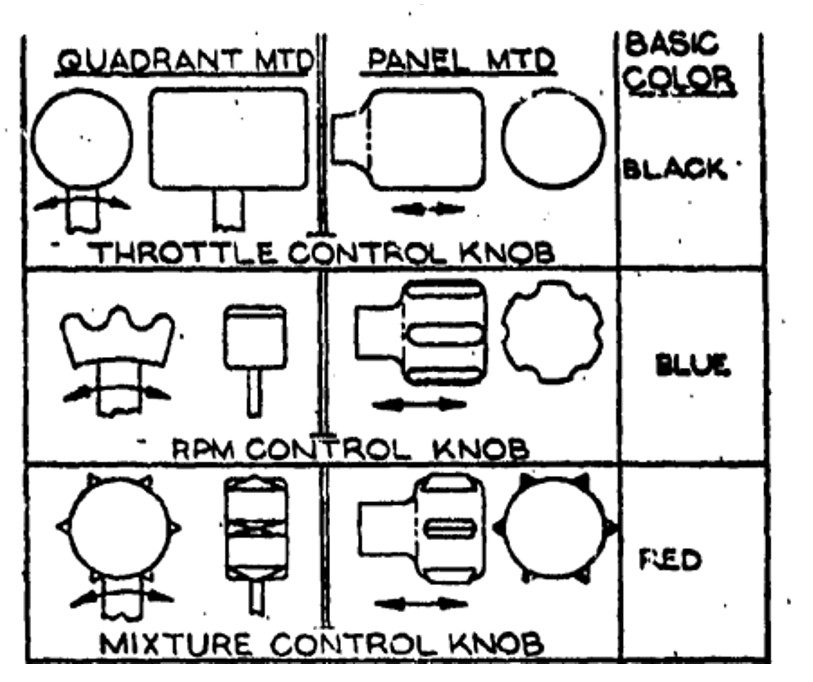
The aircraft’s pilot operating handbook can also be a valuable source of information to assist pilots in understanding or recalling vital information when required.
About this report
Decisions regarding whether to conduct an investigation, and the scope of an investigation, are based on many factors, including the level of safety benefit likely to be obtained from an investigation. For this occurrence, no investigation has been conducted and the ATSB did not verify the accuracy of the information. A brief description has been written using information supplied in the notification and any follow-up information in order to produce a short summary report, and allow for greater industry awareness of potential safety issues and possible safety actions.
Occurrence summary
Mode of transport
Aviation
Occurrence ID
AB-2023-001
Occurrence date
14/03/2023
Location
Stanthorpe
State
Queensland
Occurrence class
Serious Incident
Aviation occurrence category
Loss of control
Highest injury level
None
Brief release date
26/06/2023
Aircraft details
Manufacturer
Cessna Aircraft Company
Model
Cessna 172R
Sector
Piston
Operation type
Part 141 Recreational, private and commercial pilot flight training
On 11 March 2022, at about 1050 local time, the pilot of a Bell Helicopter Company B206L-1, registered VH‑BHF and operated by Heli Surveys Pty Ltd, departed Jindabyne aerodrome, New South Wales, to conduct a weed survey task on behalf of the New South Wales National Parks and Wildlife Service (NPWS). On board were the pilot and 4 NPWS officers. At about 1112, at a low level and low speed over the Snowy River, control of the helicopter was lost. While attempting an emergency landing in the river, the helicopter collided with a large boulder. Three of the occupants received serious injuries and 2 received minor injuries. The helicopter was destroyed.
What the ATSB found
The ATSB found that, to conduct the weed survey above the riverbank, the helicopter was flown at low-level, at a slow speed, and yawed to the right by about 45°. It was also noted that the helicopter was operating at a high gross weight and higher density altitude. In combination, these conditions were conducive to the onset of a loss of tail rotor effectiveness. As such, it was likely that a loss of tail rotor effectiveness occurred at an insufficient height to recover and avoid a collision with terrain. Following the collision into the river, the carriage of dedicated emergency locator transmitting devices allowed for a timely response for retrieving the occupants.
Further, one of those on board was not required for the survey task, which unnecessarily exposed them to the risks associated with low-level flight. While the client’s operating procedures referred to ‘essential personnel’, they did not provide a definition or specify the roles and responsibilities of these personnel.
The ATSB also identified that the operator’s risk assessment for low-level operations did not contain the hazard and control measures to avoid the likelihood of loss of tail rotor effectiveness. Further, there was no requirement for its pilots to conduct pre-flight risk reviews to ensure that operations could be conducted without unacceptable safety risk.
What has been done as a result
Heli Surveys conducted a review of its risk management processes and made changes to its operational conduct. Its changes focused on identifying flight‑related hazards that included loss of tail rotor effectiveness and compiling mitigation controls in a dedicated risk assessment. Other changes included the introduction of a ‘Hazardous Flight Conditions’ course for pilots and a requirement for flight crews to ensure that only essential crew were to be on board its helicopters.
The NPWS revised its aviation safety policy and developed an aviation safety management system to enhance safety and manage risk across its aviation activities and operations. To define essential personnel, the NPWS committed to developing detailed task profiles to ensure that the roles and responsibilities of all personnel were clearly defined and committed to the development of task‑specific risk profiles to manage risks associated with its aerial work activities.
Safety message
Survey flights, particularly when performed in alpine environments, are generally conducted at low level and slow speeds. This creates a high-risk operating environment that requires effective risk management. Risk management should include an overarching pre‑operational risk assessment to identify the hazards and risks common to that type of operation. This assessment can then be used to inform the management of risk for specific taskings including a pilot’s pre-flight risk review, to ensure the operation can be conducted safely.
This accident further highlighted the benefits of carrying multiple position transmitting devices. This not only eliminates potential doubt associated with transmissions generated from inadvertent beacon activation but can accelerate an emergency response.
The occurrence
On 11 March 2022, at about 1050 local time, the pilot of a Bell Helicopter Company B206L-1 helicopter, registered VH‑BHF and operated by Heli Surveys Pty Ltd, departed Jindabyne aerodrome, New South Wales, to conduct a low-level English Broom weed[1] survey task on behalf of the New South Wales National Parks and Wildlife Service (NPWS) (Figure 1). On board were the pilot and 4 NPWS officers.[2]
Following departure, the flight tracked north along the western side of Lake Jindabyne and at about 1055, the pilot turned north-west and tracked upstream along the Snowy River before turning south-west towards Island Bend. At about 1102, the helicopter passed overhead Island Bend where a clump of the weed was located. This local infestation provided an opportunity for the NPWS officers to familiarise themselves with spotting the target weed in the local environment, to assist with identification during the survey.
From Island Bend, the flight continued south-west, following the course of the river. At 1110:35, the helicopter approached Guthega (Munyang) hydro‑electric power station where the pilot commenced a left turn, to pass to the east of the power station.
Figure 1: VH-BHF flight path from Jindabyne aerodrome to Guthega power station with inset showing location relative to capital cities
Source: Google Earth and TracPlus data, annotated by the ATSB
At 1110:47, and now south of the power station, the pilot commenced a right, high orbit to remain clear of power lines in the area and return towards the river course.
By 1111:17, the helicopter was heading downstream above the southern riverbank and established in a descent towards the river in preparation for commencing the weed survey (Figure 2).
Corroborating reports from the occupants of the helicopter, which included the pilot, indicated that due to the seating position of the NPWS officers (3 seated on the left side of the helicopter), the later part of the descent was conducted with the nose of the helicopter yawed to the right about 45°. The right yaw was in response to the officers’ request to provide the best view of the riverbanks for them to identify and map the locations of the English Broom weed. The officers reported that they asked the pilot to fly lower and sideways to enhance their view. The pilot reported to the ATSB that, prior to setting up the right yaw position, the helicopter’s speed was about 30 kt and they noted they had sufficient power with no abnormal engine indications.
As the helicopter descended past Pipers Creek, the pilot reported that their vision of trees and other obstacles was obscured by the helicopter’s instrument console. To improve their vision for the final descent to the river, the pilot indicated that they ‘touched’ the left anti-torque pedal[3] to straighten the helicopter ‘a bit’, upon which the helicopter started an uncommanded yaw[4] to the right.
In interview with the ATSB, the pilot stated that they believed they had full and free movement of the anti-torque pedals until the uncommanded yaw to the right started. After the yaw started, they felt that the helicopter did not respond to their pedal inputs, but they could not recall exactly what inputs they made. The pilot did not recollect any shock loading of the tail rotor, such as from a bird or tree strike. The officers reported that, when the uncommanded right yaw started, they thought it was a pilot‑initiated turn and that they were clear of trees and there were no physical knocks or signs of a failure before the yaw commenced.
After the first turn, when the helicopter was facing downstream, the pilot attempted to gain forward speed, but the helicopter continued to yaw right, and the yaw rate started to accelerate. At 1111:58, when about 200 m past Pipers Creek, the pilot reported realising their only landing option was in the river and, to do so, they rolled the throttle to idle, which stopped the yawing motion. The helicopter entered an autorotation[5] with the pilot aiming for a spot in the river. The pilot attempted to cushion the landing but did not see a large boulder in the water at their aim point.
At 1112:04, the helicopter collided with terrain. Three occupants received serious injuries, and 2 sustained minor injuries. The helicopter was destroyed.
Figure 2: Approach to Guthega power station, orbit to the south, descent and collision with terrain
Source: Google Earth and TracPlus data, annotated by the ATSB
At the time of the accident, the operator had another helicopter in the local area conducting sling‑work operations. At around 1130, the pilot of that helicopter, who was also the head of flying operations, received a report[6] of an alert notification from the emergency locator transmitter on VH‑BHF, and a subsequent report of a personal locator beacon activation. Aided by their onboard resources, the pilot identified the last recorded position of VH-BHF that was transmitted by its satellite‑based tracking system (TracPlus) and immediately ceased the sling-work operation and departed for that recorded position. While enroute, the pilot notified emergency services and directed their ground‑based resources in the local area to the expected helicopter location.
The pilot located VH-BHF at about 1138 and confirmed the accurate position with emergency services. While surveying the scene from overhead, they were joined by another of the operator’s helicopters, and that pilot was able to unload an air crew person at the accident site. The air crew person was equipped with a first aid kit and provided a communications link between the ground and the overhead helicopters. At about 1210, the operator’s ground-based staff arrived to provide assistance and reported that emergency services had started to arrive. Following initial treatment, 3 of the injured persons were airlifted to hospital while the remaining 2 were able to walk from the site to awaiting ambulances.
Context
Personnel information
Pilot
Qualifications and experience
The pilot held a valid class 1 aviation medical certificate and a Commercial Pilot’s Licence (Helicopter) with single‑engine helicopter and low‑level rating, and a gas turbine endorsement. The operator’s pilot record sheet, dated 2 November 2021, indicated the pilot had accrued 900 hours turbine experience from a total of 2,065 flying hours experience. The pilot had also logged 530 hours aerial work and low flying, and 20 hours mountain flying. In the 28 days prior to the accident, the pilot had accrued 47.1 hours flight time, and 98.7 hours in the previous 90 days. In total, the pilot had 145 hours experience on the Bell 206L-1 helicopter, which included 9.3 hours in the previous 90 days.
Operator training
The pilot joined the operator, Heli Surveys, in early November 2021. On 21, 22 and 23 October 2021 they completed 6 pre-employment check flights on the AS350 helicopter with a contracted training and checking organisation. The syllabus for the checks included low flying within the normal procedures and tail rotor malfunction, autorotation, fire, jammed controls and system failures within the emergency procedures.
The pilot reported that a loss of tail rotor effectiveness (LTE) (refer to section titled Loss of tail rotor effectiveness) would have been covered in their training history at some stage but could not recall any specific occasion, and that they had never experienced it before in flight. The operator’s head of flying operations (HOFO) reported that they conducted a flight with the pilot before they were released to line and was impressed with their attention and focus on control of the helicopter during take-off and landing. The HOFO did not specifically discuss LTE during their flight with the pilot but did discuss mountain and survey operations. They further reported that they considered LTE a component of the low-level flying conducted in the pilot’s pre‑employment check flights.
National Parks and Wildlife Service officers
The National Parks and Wildlife Service (NPWS) team on board consisted of:
A task coordinator who had the lead role in terms of liaising with the pilot and the other officers and was logging the location of the English Broom weed on a hand-held electronic device.
Two officers designated as primary observers (spotters). Their role was to look for the weed, and when a plant was identified, advise the coordinator. One of these observers was logging the position of the weed on a hand-held electronic device.
Another NPWS officer had joined the group given their employment as the area ranger. The survey task had provided the opportunity for the officer to familiarise themselves with the area from the air and observe the conduct of the weed survey task. While the officer did not have a specific function to perform for the survey, they assisted the team in locating the English Broom weed.
Helicopter information
General
VH-BHF was a Bell Helicopter Company B206L-1 powered by a Rolls-Royce model 250‑C30P gas turbine engine driving a 2‑blade main and tail rotor system. It was manufactured in the United States in 1979 and assigned serial number 45164. The helicopter was issued with an Australian Certificate of Airworthiness on 7 April 1987 and first registered in Australia on the same date. Including the pilot, the helicopter provided seating for 7 occupants. At the time of the accident, the helicopter had accumulated about 11,849 hours, total time in service.
Recent maintenance history
At the last 100-hour periodic inspection on 27 November 2021, a maintenance release was issued, permitting night visual flight rules[7] operations. The maintenance release showed that an engine hot start defect had been recorded in December 2021. Rectifications for that included the replacement of the engine turbine assembly, and post‑repair power assurance checks that were certified as completed on 14 February 2022, deeming the engine serviceable. The maintenance release also showed that:
other than items that would be addressed during a daily inspection, no maintenance was due
there were no defects that required rectification before the next flight
the helicopter had been flown for about 22 hours from when the maintenance release was issued prior to the accident.
Modifications
The helicopter was fitted with Van Horn Aviation 2062200-101/-301 tail rotor blades with a United States Federal Aviation Administration (FAA) approved rotorcraft flight manual supplement (206L1‑FMS‑901). The supplement stated that the tail rotor blade design increased the stall margin, thereby improving high altitude performance:
Satisfactory stability and control has been demonstrated in relative winds of 30 MPH (26 knots) sideward and rearward at all loading conditions…
The helicopter was also fitted with main rotor yoke part number 206-011-149-101 allowing flight operations up to a gross weight limit of 1,882 kg (4,150 lb), up from 1,837 kg (4,050 lb) as stated on the type certificate data sheet.
Weight and balance
The ATSB completed weight and balance calculations for the helicopter, considering the pilot and 4 NPWS officers on board. Including fuel, baggage and cargo, the helicopter all‑up weight at take‑off was determined to be about 1,842 kg, 40 kg below its gross weight limit of 1,882 kg, and within its centre of gravity limits. Accounting for fuel burn-off, the helicopter’s all-up weight at the time of the accident was about 1,799 kg, 83 kg below its gross weight limit.
Meteorological information
The Bureau of Meteorology grid point wind and temperature forecast (relevant to the accident) for 1100 on 11 March 2022 was 5 kt of wind from the west (280°) and a temperature of 8°C at 5,000 ft. The graphical area forecast, valid from 1000, was for visibility greater than 10 km with scattered[8] stratus cloud between 2,000 ft and 3,500 ft until 1100.
The nearest aerodrome with an automatic weather information service was Cooma, New South Wales, located 50 km east of the accident site at an elevation of 3,106 ft. The recorded conditions at Cooma at 1100 were a wind of 9 kt from 030°, visibility greater than 10 km, no cloud detected, a temperature of 13°C and QNH[9] at 1021.
The pilot reported fine weather conditions with light winds from the south-west of no more than 5 kt when in the vicinity of the power station, dropping to nearly nil wind conditions once below treetop height on descent towards the river. The NPWS officers reported that the weather was calm. One of the first responders provided a similar report of light and variable winds, as they noted that the wind conditions allowed each rescue helicopter to assume a different heading while hovering as the injured persons were winched on board.
A similar report regarding local weather conditions was received from the operator who maintained an airborne presence during the initial discovery of the wreckage and throughout the rescue operation. They described the conditions on the day as very good with visibility greater than 10 km and wind speed predominantly below 5 kt. They added that there was a very light wind flowing in the downstream direction of the river at the accident site.
Recorded data
A TracPlus™ RockAIR tracking device was recovered from the helicopter following the accident. The device recorded global positioning system tracking information at a frequency of 1 Hz on a removable micro-SD card. ATSB analysis of the recorded data for the last 60 seconds of the flight is shown in Figure 3 for illustrative purposes.
For a period of about 32 seconds before the helicopter started to yaw, the recorded data indicated that its groundspeed was below 25 kt and further decreased below 20 kt about 5 seconds before the yaw began. About 3 seconds after the yaw commenced, and from a height of about 200 ft above ground level, the helicopter’s rate of descent (vertical speed) increased and reached a peak of about 2,500 ft/min, consistent with the pilot rolling off the throttle and entering an autorotational descent. The data indicated that the yaw lasted for about 5 seconds and was arrested within about 3 seconds of the start of the descent. When the yaw stopped, the helicopter’s height was about 65–100 ft above ground level.
Figure 3: Ground positioning system flight tracking data over the last 60 seconds of recording
Graphical representation of flight data showing helicopter forward and vertical speeds, altitude, height above terrain and helicopter track with descriptive comments added. Source: TracPlus data, accessed and annotated by the ATSB
Wreckage and impact information
The accident site was located less than 600 m downstream from the Guthega power station (Figure 2) and 20 km north-west of Jindabyne, New South Wales. The helicopter landed on top of a large boulder in the shallows of the Snowy River and came to rest on a heading of 310°, with the fuselage canted significantly to the right (Figure 4).
The helicopter struck the boulder at a point forward of the external cargo hook fuselage mount and slightly aft of the forward skid gear cross tube. The impact with the boulder structurally damaged the helicopter, breaking the forward cockpit section from the cabin area, and resulted in the tailboom partially fracturing near its fuselage attachment point.
The tailboom fracturing and subsequent deflection likely resulted in a tail rotor ground strike and loss of a portion of a tail rotor blade, which was not recovered from the site. Apart from the missing section of tail rotor blade, the rest of the helicopter was present at the accident site. No evidence of a bird or in-flight tail rotor strike was identified and there was no post‑impact fire.
The location of the helicopter in the riverbed and the surrounding environment precluded a complete examination of the wreckage at the accident site. The operator reported receiving advice that anticipated water inflows at Guthega Dam would result in increased water levels downstream of the dam from water exiting the uncontrolled spillway. In response, the wreckage was removed from the accident site at the earliest opportunity, airlifted from the riverbed and relocated to a secure site in Cooma for detailed examination.
Figure 4: VH-BHF following collision with terrain against large boulder in the Snowy River, New South Wales
Source: ATSB
The ATSB’s site examination did not reveal any pre-existing defects that may have affected the operation of the helicopter or its systems. The detailed examination of the flight control systems in Cooma did not identify any pre-existing defects that may have affected the control of the helicopter.
Where evidence of structural fractures and breaks were identified, the failures were found to be fresh and were attributed to being either collision‑related, or as the result of torsional overload forces. Of note was the torsional overload of the tail rotor driveshaft at the tail rotor gear box location. This indicated that the driveshaft was driving the tail rotor when the tail rotor experienced a sudden stoppage (Figure 5).
The engine presented as intact, securely mounted, and with controls functional but with restricted movement due to fuselage damage. The compressor and turbine were found to spin freely. No defects were identified with the supply, delivery and quality of the fuel that was available to the engine.
The seating configuration of the helicopter consisted of 2 cockpit seats and, in the cabin section, a centre row of 2 aft-facing seats and a rear row of 3 forward‑facing seats. For the accident flight, the pilot was in the front right seat with an NPWS officer (coordinator/recorder) in the front left seat, another officer (area ranger – observer) in the centre row left seat (facing rearwards), and the 2 remaining officers in the left (observer/recorder) and right (observer) seats of the rear row (Figure 6). Each seat was equipped with a 4-point restraint harness.
Figure 6: VH-BHF cockpit and cabin seating layout and NPWS officers’ functional positions
Bell 206 LongRanger III seating layout adopted for illustrative purposes only. Source: FlyFlapper.com annotated by the ATSB
Injuries
The pilot, task coordinator, and observer in the rear‑facing cabin seat sustained serious injuries. The 2 observers in the rear row received minor injuries.
Evacuation
While airborne above the accident site, the HOFO reported they contacted the power station and advised them of the accident downstream of their location and for consideration of the possible impact on power generation commitments. They were advised that power generation would be postponed, however, water levels downstream of Guthega Dam were dependent on natural inflows and outflows from the dam.
At interview, 2 of the NPWS officers advised that they were aware that the water level would likely rise in response to power generation activity. As a precaution, after assisting the injured with evacuating from the helicopter, they were immediately moved to higher ground.
Survival equipment
The NPWS aviation standard operating procedure for low-level flying specified that, when engaged in such activities, helicopters were to carry an emergency locator transmitter (ELT) and be fitted with a tracking system that could be tracked by the agency. As such, the helicopter was equipped with an ELT, and a survival pack that included a personal locator beacon (PLB), a first aid kit and a satellite phone. A TracPlus RockAIR device was also mounted on the instrument console, which provided real-time location tracking of the helicopter through GPS technology. The tracking device was designed to transmit an alert if a sudden impact of 16g or more for a period greater than 10 milliseconds was detected.
ELT and PLB emergency radio beacons are used to provide a location fix on a person, aircraft or other vehicle (ATSB, 2013). ELTs are usually fixed in an aircraft and are designed to activate automatically during an impact, typically by a g-force[10] activated switch but can also be wired to be manually activated by a cockpit-located switch usually mounted within reach of the pilot or a front‑seat passenger. PLBs are designed for personal use and may be carried on the person or carried as part of a survival kit. They are manually activated and may be used as an alternative to a fixed ELT, provided certain requirements are met.
In the event of an accident followed by beacon activation, the aircraft wreckage and its occupants can be located quickly by search and rescue authorities. Finding the aircraft wreckage quickly not only increases the chance of survival of the occupants but also reduces the risk to pilots of search and rescue aircraft who commonly need to operate in marginal weather conditions and over mountainous terrain (ATSB, 2013).
The collision resulted in both the ELT and tracking device activating. The collision alerts were received by the operator (HOFO) and were followed by a third report of a PLB that was manually activated by one of the NPWS officers. This allowed the HOFO to promptly identify the last known position of VH-BHF and commence an emergency response. The operator reported that the multiple transmissions from independent sources provided the surety that a distress situation existed.
Operational information
Helicopter performance
The out-of-ground effect performance chart in the B206L-1 rotorcraft flight manual indicated the helicopter had the performance required to hover out-of-ground effect at the elevation and temperature conditions for the accident. The accident site was located at an altitude of 4,308 ft. Accounting for temperature and QNH, the density altitude for the flight just prior to the accident was calculated to be about 4,500 ft.
The recorded data for the flight indicated that the groundspeed had dropped below 20 kt before the loss of control, and accounting for density altitude influence, this equated to a calibrated[11] airspeed of about 1–2 kt below the groundspeed in nil wind. The height and airspeed of the helicopter at this time placed it inside the avoid area of the height-velocity diagram[12] (Figure 7 – left). The helicopter’s weight and density altitude also placed the operation outside of the weight-altitude limit for the height-velocity diagram (Figure 7 – right).
Consequently, the helicopter was operating in a region of the flight envelope where there was no assurance that a safe autorotation could be made without damage and injuries to occupants. At interview, the operator advised that flight operations in the avoid area was common practice, and necessary to effectively and accurately conduct a weed survey task.
Figure 7: B206L-1 flight manual performance charts showing operational caution zones and VH-BHF relative position in preparation for survey task
Source: Bell Helicopter Company, annotated by the ATSB
Aerial work operations
Heli Surveys
Heli Surveys Pty Ltd was approved by the Civil Aviation Safety Authority (CASA) to conduct various flight operations including Civil Aviation Safety Regulation (CASR) Part 138 aerial work operations. Its aerial work operations were varied and included roles associated with feral animal control and survey flights of pest animals, weeds and power lines.
Part 138 aerial work operations
CASR Part 138 and the Part 138 (Aerial Work Operations) Manual of Standards (MOS) addressed the certification, operational and safety risk management requirements for operators engaged in aerial work operations (CASA, 2021e). At the time of the accident, aerial work encompassed the core activities of external load operations, dispensing operations or task specialist operations.[13] Advisory circular AC 138-01 v1.0 Part 138 core concepts defined task specialist operations as:
carrying out a specialised activity using an aircraft in flight and includes training for such an activity. An example of a task specialist operation is a low level weed survey or pipeline inspection.
Additional guidance for aerial work operations applicable at the time of the accident was provided in advisory circular AC 138-05 v1.1 Aerial work risk management (July 2021b) and the Part 138 Acceptable means of compliance and guidance material – Aerial work operations v2.2 (December 2021f).
Conducting the survey flight
At interview, the HOFO described the accident task as an ad hoc type survey in which the helicopter would be flown up-valley and then down-valley to view both sides of the river and that the airspeed, direction and height was not prescribed. The HOFO expressed the view that the optimum profile for survey flights was a height of 300 ft and airspeed of 55 kt. However, if adopting that profile, it would make it impractical to identify English Broom weed in surveys of the Snowy River.
The HOFO reported that, from experience, they did not consider that it was unusual when the client presented with 4 NPWS officers for the conduct of the survey flight. In terms of managing client requests, all pilots are provided with a ‘stop work authority’ and can therefore decline a client request if they perceive a safety of flight issue.
The NPWS officers indicated that, on the morning of the accident flight, they discussed their English Broom weed survey plan while waiting for the pilot and helicopter to return from a prior task. After the pilot arrived, they completed the operator’s online induction and a safety brief with the pilot and then briefed the pilot on their plan for the weed survey.
None of the officers had previously met the pilot who they understood was new to the company and had not previously done the English Broom weed survey task with them. They reported that the pilot was operating in a cautious manner and appeared to be safety‑conscious, advising them all to speak-up if they identified any hazards during the flight. On departure, the pilot made a radio call to their NPWS contact for flight‑following purposes, and they conducted a hazard identification for wires during the flight upstream to the Guthega Power Station.
Persons permitted on board during aerial work operations
For aerial work operations conducted under Part 138, CASA advisory circular 138-01 specified that persons who were permitted on board must be categorised as either:
crew members (including flight crew, air crew and task specialists)
passengers that meet the requirement to be aerial work passengers.
The advisory circular further defined an air crew member, task specialist and aerial work passenger as:
Air crew member
An air crew member…includes crew members who carry out a function during the flight relating to the safety of the aircraft.
Task specialist
A task specialist … includes crew members who carry out a function for the flight relating to the aerial work operation (as distinct from a safety related role).
Examples of a task specialist would include a camera operator that operates an external camera pod, or an aerial shooter used in an animal culling operation.
A task specialist will require training to be inducted into the operation and to ensure they are competent in carrying out their assigned function as a member of the operator's crew.
Aerial work passenger
…are persons who are closely associated with the purpose of the aerial work operation. Their presence in the aircraft must not be for mere convenience or enjoyment.
Examples of such persons would include: Personnel involved in carrying out or supporting a mustering activity carried on a positioning flight before or after the mustering operation, such as ground based personnel to assist with refuelling or for opening and closing of gates etc. and yarding of stock for the mustering operation…
In most circumstances aerial work passengers do not require training before their carriage on an aerial work operation or a positioning flight, but they will in all cases (except for some notable situations, such as a person being rescued) require a safety briefing prior to the flight...
On the accident day, as the helicopter was being used to conduct a low-level weed survey activity, it met the definition of a task specialist operation. In terms of the roles as defined above, the pilot was the only flight crew member and there were no air crew members. The 3 NPWS officers with the roles of task coordinator and primary observers would be classed as task specialists. While the area ranger assisted with the task, they reported that they were on the flight as an opportunity for familiarisation of the survey area.
Operational hazards
CASA flight crew licencing uses a competency-based training and assessment system for pilots. Various competencies are required to be demonstrated by pilots during both initial and recurrent licence testing. The competencies vary by aircraft type and licence type.
For pilots to achieve their helicopter rating, they are required to demonstrate that they have the skills and underpinning knowledge to manage abnormal and emergency situations in helicopters (CASA, 2021c). The range of situations include, but are not limited to:
key hazards – underpinning knowledge of their causal factors, contributing operational situations, avoidance and recognition of symptoms and recovery techniques that include:
the impact of high gross weight and high-density altitude on key hazards
techniques for how to avoid a potentially hazardous situation whilst in flight.
These competencies were consistent with the list of hazards detailed in the jointly developed CASA and Civil Aviation Authority of New Zealand helicopter flight instructor manual, issue 3 (CASA, 2012). The instructor manual differentiated hazards from emergencies, which are the technical failures particular to the helicopter model and addressed in the flight manual emergency procedures section.
To be licensed for low-level helicopter operations, pilots must demonstrate skills to safely conduct low‑level operations include managing variable terrain and weather, surface conditions, loose objects and personnel. The required underpinning knowledge related to critical operational conditions that included retreating blade stall,[17] vortex ring state, over pitching and loss of anti‑torque or tail rotor effectiveness (CASA, 2021c).
The ATSB reviewed the emergencies and hazards chapter of the FAA Helicopter Flying Handbook (2019) and found key operational hazards presented were the same as those that CASA required pilots to demonstrate. The FAA handbook provided a thorough description of each of the key hazards, which included techniques for avoidance and recovery. The FAA handbook also reported the following about LTE events:
Certain flight activities lend themselves to being more at high risk to LTE than others. For example, power line and pipeline patrol sectors, low-speed aerial filming/photography as well as in the Police and Helicopter Emergency Medical Services (EMS) environments can find themselves in low and slow situations over geographical areas where the exact wind speed and direction are hard to determine.
Loss of tail rotor effectiveness
Introduction
Loss of tail rotor effectiveness (LTE) or unanticipated yaw is a phenomenon that can occur in single main rotor, tail rotor-equipped helicopters. It is a condition that occurs when the air flow through a tail rotor is changed in some way, by altering the angle or speed at which the air passes through the rotating blades of the tail rotor disc (FAA, 2019). If uncorrected, LTE can result in loss of control of the helicopter and serious to fatal occupant injuries. In 1995, the FAA published advisory circular 90-95 Unanticipated right yaw in helicopters, which described a loss of tail rotor effectiveness as:
…a critical, low-speed aerodynamic flight characteristic which can result in an uncommanded rapid yaw rate which does not subside of its own accord and, if not corrected, can result in the loss of aircraft control.
Any manoeuvre which requires the pilot to operate in a high-power, low-airspeed environment with a left crosswind or tailwind creates an environment where unanticipated right yaw may occur.
LTE is not related to a maintenance malfunction and may occur in varying degrees in all single main rotor helicopters at airspeeds less than 30 knots.
Single-rotor helicopters manufactured in the US, such as the Bell 206, have main rotors that rotate anticlockwise when viewed from above. When powered, their rotation produces a torque reaction or tendency of the helicopter to turn in the opposite direction, which is a right yawing motion from the pilot’s view. The tail rotor thrust provides the anti‑torque control. An effective tail rotor relies on a stable and relatively undisturbed airflow in order to provide a steady and constant anti-torque reaction (FAA, 2019).
The FAA AC described 3 wind conditions conducive to the onset of LTE. One of these conditions refers to the relative wind[18] azimuth of 285° to 315°, which can produce ‘main rotor disc vortex interference’ with the tail rotor (Figure 8) and is described as:
As the main rotor vortex passes the tail rotor, the tail rotor angle of attack is reduced. The reduction in the angle of attack causes a reduction in thrust and a right yaw acceleration begins. The thrust reduction will occur suddenly and, if uncorrected, will develop into an uncontrollable rapid rotation about the [main rotor] mast.
The relative wind from the critical quadrant may present when the nose of the helicopter is pointing forward (Figure 8), or the condition is generated when the helicopter is flown with the nose sufficiently yawed to the right.
Figure 8: Main rotor disc vortex interference with tail rotor
Source: FAA Helicopter Flying Handbook (FAA, 2019), annotated by the ATSB
Factors affecting loss of tail rotor effectiveness
Other than main rotor blade action affecting the quality of the airflow about the tail rotor disc and impacting its ability to provide useful thrust, additional factors are also considered when discussing LTE. According to the FAA Helicopter Flying Handbook (2019):
The design of main and tail rotor blades and the tailboom assembly can affect the characteristics and susceptibility of LTE but will not nullify the phenomenon entirely.
FAA AC 90-95 also identifies other factors that influence the severity of the onset of LTE including:
Gross Weight and Density Altitude. An increase in either of these factors will decrease the power margin between the maximum power available and the power required to hover. The pilot should conduct low-level, low-airspeed manoeuvres with minimum weight.
Recovery technique
The Bell 206L-1 rotorcraft flight manual revision 14 did not have an emergency procedure for LTE but did have a procedure for a complete loss of thrust under the heading tail rotor control failure, which was a mechanical failure. Following the procedure for a complete loss of thrust, pilots were to reduce the throttle to idle and immediately enter an autorotation while maintaining a minimum airspeed of 52 kt during the descent.
The FAA AC 90-95 recommended recovery technique from LTE was:
a. If a sudden unanticipated right yaw occurs, the pilot should perform the following:
(1) Apply full left pedal. Simultaneously, move cyclic[19] forward to increase speed. If altitude permits, reduce power.
(2) As recovery is effected, adjust controls for normal forward flight.
b. Collective[20] pitch reduction will aid in arresting the yaw rate but may cause an increase in the rate of descent. Any large, rapid increase in collective to prevent ground or obstacle contact may further increase the yaw rate and decrease rotor rpm.
c. The amount of collective reduction should be based on the height above obstructions or surface, gross weight of the aircraft, and the existing atmospheric conditions.
d. If the rotation cannot be stopped and ground contact is imminent, an autorotation may be the best course of action. The pilot should maintain full left pedal until rotation stops, then adjust to maintain heading.
Heli Surveys operations manual
The Heli Surveys Operations Manual volume 10 – Specialist operations, prescribed the operator’s general low flying requirements. Paragraph 0.7.3, under Conduct of flight during low flying stated the following:
Pilots shall be aware of recovery techniques and avoid flight configurations which could include:
• Vortex ring/ settling with power.
• Tail rotor vortex ring or loss of tail rotor effectiveness.
• Downwind operations outside the aircraft performance envelope.
• Loss of close visual cues to indicate actual aircraft relative movement and out of wind operations (particularly over water), leading to possible unanticipated control difficulties.
The operations manual did not include any avoidance or recovery procedures for LTE nor any reference material to address this condition.
Safety risk management
Aerial work risk management
Pre-operational risk assessment
CASR Part 138 required an operator conducting aerial work to undertake risk assessments of its operations. The Part 138 MOS and corresponding advisory circular (AC 138-05 v1.1) detailed a layered approach to risk assessments. One of the key requirements was that an operator should undertake an overarching assessment (pre‑operational risk assessment) to consider and evaluate the risks associated with its proposed operations, in this case, low-level helicopter survey. This assessment recognised the underlying principles of CASR Part 138, where the risks and hazards associated with a type of aerial work operation are common to that type of operation. The MOS indicated that the matters to be considered for such an assessment included:
• the operation and its particular characteristics
• the location of the operation and its particular characteristics
• the aircraft to be used in the operation, its particular characteristics, and its performance
• the qualifications and experience of the crew members to be used in the operation
• the hazards, external to the aircraft, that may be met in the course of the operation.
The operator is required to gather data for inclusion in the pre-operational risk assessment using a range of sources. Acknowledging that certain risk factors may be common to all operators, may be particular to the aircraft type operated or may be unique to the operator; potential sources include, but are not limited to (CASA, 2021b):
CASA ‘sector risk profiles’ for the varying types of operations
ATSB incident and accident reports
industry association safety reports
manufacturers' safety bulletins and advisory notices
input from experienced pilots and other operators.
Once the pre-operational risk assessment has been populated, it should be updated over time to include lessons learnt from previous operations. It should also form part of the operator’s operations manual.
Flight risk management plan
The results of the pre-operational risk assessment were to be considered when preparing the flight risk management plan, which was specific to an individual flight or task within the type of operation. The plan should outline the specific mitigators or risk controls that were to be used during the flights.
Pre-flight risk review
The next step was for the pilot, on behalf of the operator, to conduct a pre-flight risk review, with reference to the pre‑operational risk assessment, flight risk management plan, and the most recent data for the operation. The review was to be completed prior to the commencement of the operation and was to consider the conditions and circumstances that existed at the site or area at the time of the proposed activities. This ensured that the operation could be conducted without unacceptable safety risk.
Operator risk management
As per CASR Part 138, Heli Surveys was required to undertake risk assessment and mitigation processes and include those processes in its suite of operational documents. The Heli Surveys Operations Manual described that the operator would address its risk management obligations via the use of Safe Work Method Statements (SWMS).
The Heli Surveys Safety Management Systems Manual further detailed how risk was identified, controlled and documented. Their safety risk management process started with hazard identification, which included internal sources and external sources. A hazard was defined in their SWMS as ‘what could result in harm’ and was used to describe both the hazard and associated risk.
Internal sources for hazard identification included, but were not limited to:
safety assessments of systems and operations
voluntary and mandatory safety reports
inspections and audits.
Its list of external sources included, but was not limited to:
accident and incident reports
safety information bulletins, safety alerts and other safety publications from CASA, Airservices Australia, the ATSB and other authorities worldwide.
The operator had prepared SWMSs to comply with the CASR Part 138 requirements which was equivalent to a pre-operational risk assessment. As the accident flight was a low‑level survey operation in the Snowy Mountains, the 2 SWMS relevant to the flight were Low level surveys and aerial photography (henceforth referred to as Low-level surveys) and Alpine operations.
The SWMS documents provided the means to record the specific tasking event, the equipment and approvals that were relevant, and any specific checks or personal protective equipment required to perform the task. A risk matrix was also included. The risk matrix described the likelihood and consequence of each identified hazard and provided the means to assess the initial and residual risk level following the implementation of suitable risk controls.
The ATSB reviewed the SWMSs that were developed by the operator. A summary of the internal and external hazards that were identified by the operator are below (Table 1).
Table 1: Summary of hazards related to Safe Work Method Statements for low-level survey tasking and alpine operations
Low-level survey hazards
Alpine operations hazards
intercom failure
adverse weather events
high communication workload/distraction
inadvertent flight into instrument meteorological conditions
loose articles exiting aircraft
collision with powerlines/aerials
collision with objects while airborne
heavy landing – exceeding power requirements
inadvertent flight into instrument meteorological conditions
exposure – inappropriate dress for conditions
restraint harness issues
aircraft door issue
turbulence/windshear
The heavy landing hazard associated with the alpine operations SWMS was assessed by the ATSB to be related to the CASA flight crew licensing competency requirement to manage the hazard associated with overpitching. The SWMS provided some control measures, such as a power check, landing into wind and monitoring environmental conditions between a landing and take-off.
With the exception of the relationship between overpitching and the operator’s heavy landing hazard in its alpine operations SWMS, the ATSB did not find references to hazards associated with abnormal situations and emergencies specific to the operator’s unique activities in its SWMS. Of note, there was no reference to LTE and vortex ring state, and the impact of flight regimes and operations at high gross weights and density altitudes that may affect such hazards.
The operator reported that pilots were required to have read and understood the suite of SWMS documents, which were provided during their induction process and at scheduled intervals thereafter. However, there was no requirement for pilots to conduct a pre-flight risk review for low-level survey operations and reference the relevant SWMS when conducting pre-flight tasks in preparation for the activity. As such, the pilot had not conducted a review prior to the accident flight.
Client risk management
The NPWS (the client) had contracted Heli Surveys to conduct the weed survey operation. Its Aviation Safety Policy and related documents were provided to the ATSB. The policy identified a range of aviation operations that utilised rotary wing aircraft.
The policy adopted a risk management approach to aviation operations and safety. Key elements of the policy were the development and observance of aviation‑related standard operating procedures and the use of a job safety analysis (JSA).[21] The JSA assessed the risks associated with each task, which was equivalent to a flight risk management plan.
Regarding vegetation‑related activities that necessitated low-level flight operations, the NPWS provided several task-related JSA documents that identified specific hazards. The documents also detailed the control measures to be implemented to manage the associated risks. The JSA documents that were provided related to low-level flying in general, low-level flying when undertaking Scotch (English) Broom survey and aerial application (spraying) activities.
When engaging in those activities, a key control measure specified in the JSA advised that only ‘essential personnel’ were to be on board the operating helicopter. The NPWS reported that the suite of documents supporting aviation operations did not provide a definition of essential personnel nor was there a procedure on record that detailed the roles and responsibilities of NPWS personnel reflected in the JSA control measure.
Related occurrences
Loss of tail rotor effectiveness
Between 2013 and 2022, the ATSB received 16 notifications where the reporter advised of an LTE or unanticipated yaw event. Of the 16 notifications, 12 were investigated by the ATSB. Most of these resulted in nil to minor injuries to those involved and one serious injury and one fatality. Some of these investigations are described below.
On 19 January 2013, a Bell 206B3 helicopter was being operated on an aerial filming task over hilly terrain on the north-eastern outskirts of Perth, Western Australia. After hovering and manoeuvring at about 500 ft above ground level to allow the camera operator to record footage of a truck accident, the pilot conducted a right orbit to complete filming and depart the area. The pilot had initiated the turn when the nose of the helicopter moved left, then suddenly and rapidly to the right as the helicopter yawed and developed a rotation of about 5 revolutions.
The ATSB found that, when the pilot turned to the right to commence the orbit, the helicopter was exposed to a crosswind from the left while at an airspeed around the 30 kt threshold value for susceptibility to LTE, precipitating an unanticipated right yaw and temporary loss of control. The pilot regained sufficient control for a forced landing.
On 20 July 2015, the pilot of a Bell 206L3 (LongRanger) helicopter, registered VH-BLV, conducted a charter flight from Essendon Airport to Falls Creek, Victoria, with 5 passengers on board. The helicopter took off from Essendon close to its maximum take‑off weight.
When at 700 ft above ground level and tracking from the north-west, the pilot conducted a shallow approach towards the helipad at Falls Creek. As the helicopter descended to about 50 ft above ground level, the pilot found that significantly more power was required to conduct the approach than anticipated. The pilot assessed that there was insufficient power available to continue to land and elected to abort the approach. The pilot pushed forward on the cyclic to increase the helicopter’s airspeed and conducted a left turn.
As the helicopter turned left, it started to yaw rapidly towards the right. The pilot applied full left anti-torque pedal to counteract the yaw, but the helicopter continued to yaw. The helicopter turned through one and a half revolutions, as the pilot lowered the collective. Lowering the collective reduced the power demand of the power rotor system, thereby increasing the ability of the anti‑torque pedals to stop the right yaw. The combination of lowering collective and applying forward cyclic to gain forward airspeed, allowed the pilot to regain control of the helicopter. The pilot then conducted a left turn towards the helipad and made an approach to the helipad from an easterly direction. The helicopter landed following the second approach without further incident.
The ATSB’s report highlighted the importance for pilots to understand and avoid conditions that are conducive to unanticipated yaw or LTE and noted that pilots can reduce their exposure to LTE by maintaining awareness of the wind and its effect on the helicopter. Further, if a pilot encounters unanticipated yaw, quick application of the correct response is essential to recover control of the helicopter.
On 28 January 2019, the crew of a Sikorsky S-64E Skycrane helicopter was conducting firebombing activities when it collided with water at Woods Creek Dam, Victoria. The collision occurred following an approach to the dam to fill an external tank with water. The helicopter was crewed by 2 pilots, and a maintenance crew chief was also on board. Following the collision, all the occupants were able to exit the helicopter and swim to shore. One crewmember was seriously injured and 2 were uninjured. The helicopter was substantially damaged.
The ATSB found that the helicopter was placed in a steep flare, which contributed to the helicopter entering vortex ring state when on approach to the dam.
It was also noted that the operator’s operations manual stated that only flight crew and crew essential to the operation could be carried aboard the aircraft during firefighting operations. The operation could be conducted without the crew chief, and not all company crew chiefs were on board their aircraft during firefighting operations. While the crew chief had significant system and task knowledge, they were not required to be on board the helicopter.
On this occasion, their presence on board subjected them to the significant hazards associated with underwater egress. More generally, the carriage of additional personnel during specialised operations like firefighting exposes them to unnecessary risk.
On 21 May 2019, while engaged in a planned cull of feral animals in Kakadu National Park, Northern Territory, a crew of 3 were using a Bell 206B3 JetRanger helicopter for aerial platform shooting. While the helicopter was operating at about 50 ft above the ground, the engine decelerated to idle, resulting in an immediate loss of power, and subsequent collision with terrain. The 3 occupants (pilot, shooter and spotter) were seriously injured.
The investigation identified that it was normal practice across industry that an aerial culling task was performed with just 2 persons on board the helicopter, the pilot and a shooter. Experienced aerial shooters interviewed after the accident expressed a preference for carrying just the pilot and shooter on board to reduce risk to crew, carry more fuel to improve endurance and to complete more work. In 2016, the aerial culling task was redesigned for 3 crew, including a spotter. There was no formal risk analysis of the inclusion of the spotter position, or consideration of the potential benefits of improved data collection when weighed against operational difficulties in recording data, reduced efficiencies in operation, and increased exposure of employees to risk.
The investigation identified that, given the increased complexity and risk in low-level operations, the number of crew should be kept to a minimum. That is, only personnel essential for conducting the task should be carried.
Safety analysis
Introduction
On the morning of 11 March 2022, a Bell B206L-1 helicopter, registered VH-BHF, departed Jindabyne aerodrome, New South Wales, to conduct a weed survey task on behalf of the National Parks and Wildlife Service (NPWS). On board were the pilot and 4 NPWS officers. While descending towards the riverbed in the vicinity of the Guthega power station, the helicopter started an uncommanded yaw to the right. The pilot was able to stop the yaw but was unable to arrest the descent before the helicopter collided with terrain. The helicopter was destroyed. Three occupants received serious injuries, and the remaining 2 occupants received minor injuries.
The following analysis will discuss the uncommanded yaw, and the carriage of persons on the flight. It will also consider the risk management practices of both the operator and its client and discuss the emergency response following notification of the accident.
Helicopter position
The weed survey task was a low-level, low-speed flight activity. On the accident flight, in addition to the pilot seated in the front right seat, there was an NPWS officer in the front left seat and 3 NPWS officers in the cabin area with 2 seated on the left of the helicopter. With 3 of the NPWS officers seated on the left, the pilot was asked if the helicopter could be flown sideways to provide the best view of the target vegetation for those officers. In response, the pilot yawed the helicopter about 45° to the right of their track. Forward flight with the helicopter yawed 45° to the right, in calm wind conditions, produced a relative wind opposite to the motion of the helicopter, from an angle of about 315°.
Weight and balance data indicated that with the 5 occupants on board, the helicopter was operating within 100 kg of its maximum all-up weight. It was also operating at a density altitude of about 4,500 ft. As weight and density altitude increase, the margin between the power available and power required for the flight is reduced. Further, the flight data identified that the groundspeed of the helicopter was below 25 kt and further reduced to less than 20 kt for several seconds prior to the uncommanded right yaw. As there was little wind, the airspeed was close to the recorded groundspeed.
As described by the United States Federal Aviation Administration in its Helicopter Flying Handbook and advisory circular 90-95, there are certain conditions that can change the air flow through a tail rotor, subsequently resulting in a loss of tail rotor effectiveness (LTE). In this case, the combination of a low speed and right yaw placed the helicopter inside the region of main rotor disc vortex interference with the tail rotor, a condition conducive to the onset of LTE. The severity of the onset of LTE was further influenced by the high gross weight and density altitude.
Contributing factor
The sideways movement of the helicopter during the weed survey operation, combined with the high-density altitude, high gross weight, and low airspeed, were conditions conducive to the onset of a loss of tail rotor effectiveness.
Loss of tail rotor effectiveness
The pilot’s description of flying the helicopter with a significant amount of right yaw at about 30 kt was consistent with the recorded data at the start of their run from the Guthega power station. However, the speed slowly decayed below 20 kt just prior to an uncommanded right yaw when the pilot applied some left anti-torque pedal to straighten the helicopter and improve their vision on their approach to the river below. After the helicopter started yawing to the right, the pilot identified a forced landing site in the river and rolled the throttle back to idle, which stopped the yawing motion. The cessation of the yawing motion when the engine power was reduced indicated the yaw was being driven by the reaction to the engine torque applied to the main gearbox and there was insufficient anti-torque to prevent it.
The ATSB determined that there was no evidence of a pre-existing mechanical issue, and the helicopter had the performance capability to operate at the altitude of the survey area. However, the helicopter was positioned in the region of main rotor disc vortex interference with the tail rotor just prior to the loss of control. As such, the ATSB concluded that the uncommanded right yaw was likely an LTE event.
At the time of the event, the helicopter was operating at about 150 ft above ground level in the avoid area of the height-velocity diagram, in addition to which, it was also outside the weight-density altitude limits for the height‑velocity diagram. Therefore, there was no assurance a safe forced landing with minimal damage and injuries could be achieved from the height that the autorotation was commenced.
Contributing factor
It was likely that a loss of tail rotor effectiveness occurred at a height that was insufficient for the pilot to recover before the helicopter impacted the ground.
Operator’s risk management
As a Part 138 operator, Heli Surveys was required to adopt a layered approach to risk management. This approach included conducting a pre-operational risk assessment, which considered all the generic risks and hazards common to the type of operation, in this case, low‑level survey. Heli Surveys achieved this requirement through the Safe Work Method Statements (SWMS).
To inform the pre-operational risk assessment, a range of internal and external data sources could be used that considered the risks common to all low-level survey operators, particular to the aircraft type operated, or unique to the operator. For example, for low-level helicopter operations this may include hazards such as a high-density altitude, retreating blade stall, LTE, vortex ring state and over pitching. Therefore, it was foreseeable that hazards influenced by the particular operating environment would be included in the operator’s SWMS for both Low-level surveys and Alpine operations.
The ATSB reviewed the SWMS accounting for the circumstances of the accident. The SWMS incorporated heavy landings, adverse weather events, collisions with obstacles and hazards associated with the carriage of passengers and task specialists. In consideration of the operation and activities, which included the carriage of passengers and task specialists, the hazards identified by the operator appeared to be relevant. However, their SWMS did not address LTE, although this was identified in its operations manual as a condition specific to low flying and is a known hazard as discussed by the Civil Aviation Safety Authority and the United States Federal Aviation Administration.
The English Broom weed survey operation was conducted at low level and low speed, which were conditions conducive to the onset of LTE. Therefore, and in establishing the context for the operation, LTE was relevant. However, while the risk of LTE was not considered in the SWMS, the accident pilot was familiar with LTE and indicated that it had been covered in their training at some point. As a result, the ATSB was unable to determine if having LTE identified in the SWMS would have influenced the accident outcome. That said, the absence of this consideration did not allow for formal mitigation strategies to be implemented, nor provide assurance that the risk level associated with LTE was as low as reasonably practical. Consequently, there was a reliance on the underpinning knowledge and operational experience of the individual pilot to manage the risk of LTE.
In addition, as a requirement for Part 138 operators, the pre-operational risk assessment, or in this case the SWMS, was to inform the pre-flight risk review. This review was to be performed by a pilot, on behalf of the operator, before a flight commenced. The operator reported that such a review was not conducted for its low-level survey operations nor was one performed by the accident pilot. The merits of this process would have provided the operator an opportunity to validate the SWMS against the proposed operation and allow pilots to determine that the operation could be conducted without unacceptable safety risk.
Documenting and detailing known hazards and the associated risk controls in a dedicated SWMS, reviewed pre-flight, would complement a pilot’s underpinning knowledge. In turn, this would raise immediate awareness of the possibility of encountering hazards such as LTE when conducting a low-level survey task. Further, the pre-flight risk review would provide the means for all the participants involved to consider these critical operational conditions and associated controls. This would complement the safety briefing provided by the pilot in conjunction with the NPWS officers as they prepared for the accident flight.
Other factor that increased risk
The Heli Surveys safe work method statements for low-level survey and alpine operations did not identify the operational factors that could affect the control of the helicopter. There was also no requirement for its pilots to conduct a pre‑flight risk review for low-level survey operations. Combined, this limited the operator’s ability to manage the possibility of loss of tail rotor effectiveness and ensure that the risks associated with low-level survey operations were as low as reasonably practicable. (Safety issue)
Helicopter occupants
There were 5 occupants on the helicopter, including the pilot. It was very likely that the weed survey could have been completed with just the NPWS coordinator in the front left seat and 2 officers in the left and right rear forward‑facing seats. As such, they would meet the criteria of a task specialist as described under Part 138. If not required as a task specialist, and excluding the pilot, all others on board would be regarded as aerial work passengers and would not be permitted. As such, it was likely that the additional NPWS officer on board (the area ranger) was not fulfilling the role of a task specialist. The additional person’s presence appeared to be motivated by opportunity, and while it was acknowledged that they could contribute as a survey team member, their involvement was not essential to a successful task outcome.
Given the nature of the task and the operating conditions under which it was being conducted, the inclusion of personnel who were not essential to fulfilling the task outcomes exposed them to the risks of low-level helicopter flight and, in the event of an accident or incident, potential injury. On this occasion, the occupant who did not have a specific role to perform, for either the spotting or logging activity, was seriously injured in the accident when operating at low level with limited landing options available due to the surrounding terrain.
Contributing factor
The carriage of an additional person on board the helicopter who was not essential to the tasking, exposed them to risks associated with low flying operations over inhospitable terrain.
Client’s risk management
The client (NPWS) arranged for the survey flight to be undertaken, and its officers presented at Jindabyne to board the helicopter on the appointed day. Risk assessments covering low-level flying operations and weed survey tasks in the form of a job safety analysis were on record, and a key risk control measure advised that only essential personnel were to be on board. However, no definition of essential personnel was available to potentially limit the number of persons that would be exposed to the identified risks. Defining essential personnel would also support informed distinctions between those who would appropriately fulfil roles as task specialists and those who were aerial work passengers.
Further, the procedure and roles of the persons conducting the survey were not documented. This likely allowed a degree of discretion to be applied by the participants, which resulted in others participating alongside task specialist(s) whose presence may, on occasion, be unnecessary. For example, for this accident one of the NPWS officers who did not have a specific role received serious injuries.
The client was also engaged in other activities such as aerial spraying and culling, both of which likely involved helicopter operations at low level. Having a definition of essential personnel and documenting their respective roles and responsibilities as task specialists would provide the necessary information for determining who should be involved. This would potentially confine the numbers to the minimum required to conduct the task thereby minimising risk exposure.
Contributing factor
The New South Wales National Parks and Wildlife Service operating procedures referred to, but did not define ‘essential personnel’, or specify their roles and responsibilities as task specialists when performing aerial work activities. (Safety issue)
Accident notification
The helicopter was equipped with a fixed emergency locator transmitter and an electronic flight tracking device (TracPlus), which provided active monitoring of the helicopter’s position. Additionally, a personal locator beacon and a satellite phone were carried on board as part of the operator’s survival kit.
Within a very short time of the accident occurring there were reports of the helicopter's fixed emergency locator transmitter activating, the TracPlus unit transmitting the helicopter’s last recorded position and manual activation of a personal locator beacon. The multiple reports removed any doubt of a spurious transmission from any of the units and, as a result, the operator and emergency services were able to respond with minimal delay.
The timely alerts also provided the means for the power station to be alerted to the presence of injured persons on the riverbank who required urgent medical assistance. Their recovery would likely have been impacted by an increase in water level and provided the opportunity for decisions to be made regarding water discharge into the river via the power station.
The extraction of the damaged helicopter from the Snowy River was also influenced following advice of water storage buildup and possible uncontrolled discharge from the Guthega Dam spillway. The early notification likely provided sufficient time to plan for and safely airlift the helicopter wreckage from the river for detailed examination and removed a potential environmental issue.
Other finding
The activation of the on-board emergency locator transmitter and a flight monitoring device, and manual activation of a personal locator beacon, resulted in an immediate emergency response.
Findings
ATSB investigation report findings focus on safety factors (that is, events and conditions that increase risk). Safety factors include ‘contributing factors’ and ‘other factors that increased risk’ (that is, factors that did not meet the definition of a contributing factor for this occurrence but were still considered important to include in the report for the purpose of increasing awareness and enhancing safety). In addition, ‘other findings’ may be included to provide important information about topics other than safety factors.
Safety issues are highlighted in bold to emphasise their importance. A safety issue is a safety factor that (a) can reasonably be regarded as having the potential to adversely affect the safety of future operations, and (b) is a characteristic of an organisation or a system, rather than a characteristic of a specific individual, or characteristic of an operating environment at a specific point in time.
These findings should not be read as apportioning blame or liability to any particular organisation or individual.
From the evidence available, the following findings are made with respect to the collision with terrain involving Bell 206L-1, VH-BHF, 20 km north-west of Jindabyne, New South Wales, on 11 March 2022.
Contributing factors
The sideways movement of the helicopter during the weed survey operation, combined with the high-density altitude, high gross weight, and low airspeed, were conditions conducive to the onset of a loss of tail rotor effectiveness.
It was likely that a loss of tail rotor effectiveness occurred at a height that was insufficient for the pilot to recover before the helicopter impacted the ground.
The carriage of an additional person on board the helicopter who was not essential to the tasking, exposed them to risks associated with low flying operations.
The New South Wales National Parks and Wildlife Service operating procedures referred to, but did not define ‘essential personnel’, or specify their roles and responsibilities as task specialists when performing aerial work activities. (Safety issue)
Other factors that increased risk
The Heli Surveys safe work method statements for low-level survey and alpine operations did not identify the operational factors that could affect the control of the helicopter. There was also no requirement for its pilots to conduct a pre‑flight risk review for low-level survey operations. Combined, this limited the operator’s ability to manage the possibility of loss of tail rotor effectiveness and ensure that the risks associated with low-level survey operations were as low as reasonably practicable. (Safety issue)
Other findings
The activation of the on-board emergency locator transmitter and a flight monitoring device, and manual activation of a personal locator beacon, resulted in an immediate emergency response.
Safety issues and actions
Central to the ATSB’s investigation of transport safety matters is the early identification of safety issues. The ATSB expects relevant organisations will address all safety issues an investigation identifies.
Depending on the level of risk of a safety issue, the extent of corrective action taken by the relevant organisation(s), or the desirability of directing a broad safety message to the aviation industry, the ATSB may issue a formal safety recommendation or safety advisory notice as part of the final report.
All of the directly involved parties are invited to provide submissions to this draft report. As part of that process, each organisation is asked to communicate what safety actions, if any, they have carried out or are planning to carry out in relation to each safety issue relevant to their organisation.
Descriptions of each safety issue, and any associated safety recommendations, are detailed below. Click the link to read the full safety issue description, including the issue status and any safety action/s taken. Safety issues and actions are updated on this website when safety issue owners provide further information concerning the implementation of safety action.
Safety issue description: The Heli Surveys Safe Work Method Statements for low-level survey and alpine operations did not identify the operational factors that could affect the control of the helicopter. There was also no requirement for its pilots to conduct a pre-flight risk review for low-level survey operations. Combined, this limited the operator’s ability to manage the possibility of loss of tail rotor effectiveness and ensure that the risks associated with low‑level survey operations were as low as reasonably practicable.
Safety issue description: The New South Wales National Parks and Wildlife Service operating procedures referred to, but did not define, ‘essential personnel’, or specify their roles and responsibilities as task specialists when performing aerial work activities.
Safety action not associated with an identified safety issue
Whether or not the ATSB identifies safety issues in the course of an investigation, relevant organisations may proactively initiate safety action in order to reduce their safety risk. The ATSB has been advised of the following proactive safety action in response to this occurrence.
Additional safety action taken by Heli Surveys
In addition to the safety action detailed above, Heli Surveys has revised its risk register detailing both flight-based and ground‑based threats in its operations and associated risk controls. It has also introduced a ‘Hazardous Flight Conditions’ ground-based course that was proactively developed in response to this accident. The intent of the course was to refamiliarize pilots with such conditions (for example, loss of tail rotor effectiveness) to ensure currency and assist with informed decision‑making and is to be completed every 12 months. The flying aspects discussed in the course will be covered in operator proficiency checks.
Additionally, Heli Surveys has defined ‘essential crew’ in its operations manual. It has also added a requirement that, prior to flight, the pilot in command is to confirm that when undertaking Part 138 operations, all persons on board are deemed essential and each person has a relevant and specific task.
Glossary
AC
Advisory circular
CASA
Civil Aviation Safety Authority
CASR
Civil Aviation Safety Regulations
ELT
Emergency locator transmitter
FAA
Federal Aviation Administration (United States)
HOFO
Head of flying operations
JSA
Job safety analysis
LTE
Loss of tail rotor effectiveness
NPWS
National Parks and Wildlife Service
MOS
Manual of Standards
PLB
Personal locator beacon
SWMS
Safe Work Method Statement
Sources and submissions
Sources of information
The sources of information during the investigation included:
the pilot
New South Wales National Parks and Wildlife Service officers
Heli Surveys Pty Ltd
New South Wales National Parks and Wildlife Service
Bureau of Meteorology
Civil Aviation Safety Authority
New South Wales Police Force
recorded data – TracPlus unit.
References
ATSB. (2013). A review of the effectiveness of emergency locator transmitters in aviation accidents (AR-2012-128). Australian Transport Safety Bureau, Canberra, ACT, Australia.
CASA. (2021c). Part 61 Manual of Standards Instrument 2014. Civil Aviation Safety Authority, Canberra, ACT, Australia.
CASA. (2021d). Part 91 (General Operating and Flight Rules) Manual of Standards 2020. Civil Aviation Safety Authority, Canberra, ACT, Australia.
CASA. (2021e). Part 138 (Aerial Work Operations) Manual of Standards 2020. Civil Aviation Safety Authority, Canberra, ACT, Australia.
CASA. (2021f). Acceptable means of compliance and guidance material, (Aerial work operations - Part 138 of CASR). Civil Aviation Safety Authority, Canberra, ACT, Australia.
CASA. (2023). Multi-part Advisory Circular: AC 91-30, AC 121-12, AC 133-03 and AC 135-14 V1.0, Emergency locator transmitters. Civil Aviation Safety Authority, Canberra, ACT, Australia.
FAA. (1995). Advisory Circular: Unanticipated right yaw in helicopters (AC 90-95). U.S. Department of Transportation, Federal Aviation Administration, Washington, D.C., USA.
FAA. (2019). Helicopter Flying Handbook (FAA-H-8083-21B). U.S. Department of Transportation, Federal Aviation Administration, Oklahoma City, OK, USA.
NTSB. (2017). Safety Alert SA-062: Loss of tail rotor effectiveness in helicopters. National Transportation Safety Board, Washington, D.C. USA.
Weeds Australia. (2019). Broom, English Broom, Scotch Broom, Common Broom, Scottish Broom, Spanish Broom,www.weeds.org.au accessed July 2024.
Submissions
Under section 26 of the Transport Safety Investigation Act 2003, the ATSB may provide a draft report, on a confidential basis, to any person whom the ATSB considers appropriate. That section allows a person receiving a draft report to make submissions to the ATSB about the draft report.
A draft of this report was provided to the following directly involved parties:
pilot of the accident flight
Heli Surveys Pty Ltd
National Parks and Wildlife Service officers
National Parks and Wildlife Service
Civil Aviation Safety Authority
Transportation Safety Board of Canada.
Submissions to the report were received from the following parties:
Civil Aviation Safety Authority
Heli Surveys Pty Ltd
National Parks and Wildlife Service
National Parks and Wildlife Service officers.
The submissions were reviewed and where appropriate, the text of the report was amended accordingly.
Purpose of safety investigations
The objective of a safety investigation is to enhance transport safety. This is done through:
identifying safety issues and facilitating safety action to address those issues
providing information about occurrences and their associated safety factors to facilitate learning within the transport industry.
It is not a function of the ATSB to apportion blame or provide a means for determining liability. At the same time, an investigation report must include factual material of sufficient weight to support the analysis and findings. At all times the ATSB endeavours to balance the use of material that could imply adverse comment with the need to properly explain what happened, and why, in a fair and unbiased manner. The ATSB does not investigate for the purpose of taking administrative, regulatory or criminal action.
About ATSB reports
ATSB investigation reports are organised with regard to international standards or instruments, as applicable, and with ATSB procedures and guidelines.
Reports must include factual material of sufficient weight to support the analysis and findings. At all times the ATSB endeavours to balance the use of material that could imply adverse comment with the need to properly explain what happened, and why, in a fair and unbiased manner.
An explanation of terminology used in ATSB investigation reports is available here. This includes terms such as occurrence, contributing factor, other factor that increased risk, and safety issue.
Publishing information
Released in accordance with section 25 of the Transport Safety Investigation Act 2003
Ownership of intellectual property rights in this publication
Unless otherwise noted, copyright (and any other intellectual property rights, if any) in this report publication is owned by the Commonwealth of Australia.
Creative Commons licence
With the exception of the Commonwealth Coat of Arms, ATSB logo, and photos and graphics in which a third party holds copyright, this report is licensed under a Creative Commons Attribution 4.0 International licence.
The CC BY 4.0 licence enables you to distribute, remix, adapt, and build upon our material in any medium or format, so long as attribution is given to the Australian Transport Safety Bureau.
Copyright in material obtained from other agencies, private individuals or organisations, belongs to those agencies, individuals or organisations. Where you wish to use their material, you will need to contact them directly.
[1]English Broom: also known as Broom, Scotch Broom, Common Broom or Spanish Broom and is a highly invasive, environmental weed of national significance that favours cooler, higher rainfall regions.
[2]Officers: denotes NPWS personnel and their job titles and includes officers, rangers and other staff members.
[3]Anti-torque control pedals: a primary helicopter flight control that changes the pitch of tail rotor blades to control thrust around the yaw axis. Acts to counterbalance the main rotor torque reaction and provides heading control in the hover and balanced flight when the helicopter is in forward motion.
[4]Yaw: the motion of an aircraft about its vertical or normal axis.
[5]Autorotation: a condition of descending flight where, following engine failure or deliberate disengagement, the rotor blades are driven solely by aerodynamic forces resulting from rate of descent airflow through the rotor. The rate of descent is determined mainly by airspeed.
[6]The operator reported that, as the registered owner of the beacons, the Australian Maritime Safety Authority contacted the nominated person and the head of flying operations was subsequently advised of the beacon activations.
[7]Visual flight rules: a set of regulations that permit a pilot to operate an aircraft only in weather conditions generally clear enough to allow the pilot to see where the aircraft is going.
[8]Cloud cover: in aviation, cloud cover is reported using words that denote the extent of the cover – ‘scattered’ indicates that cloud is covering between a quarter and a half of the sky.
[9]QNH: the altimeter barometric pressure subscale setting used to indicate the height above mean seal level.
[10]The force needed to accelerate a mass. G-force is normally expressed in multiples of gravitational acceleration (normal gravity = 1g).
[11]For flight operations at low airspeeds, there is a negligible difference between calibrated and indicated airspeed.
[12]The height-velocity diagram shows the combinations of indicated airspeed and height above the ground which will allow an average pilot to successfully complete a landing after an engine failure. By carefully studying the height-velocity diagram a pilot can avoid the combinations of altitude and airspeed that may not allow sufficient time or altitude to enter a stabilised autorotative descent (FAA, 2019).
[13]As of July 2025, the carriage of fireground personnel was also classified as an aerial work operation core activity.
[14]Vortex ring state describes an aerodynamic condition where a helicopter may be in a vertical descent with 20% up to maximum power applied, and little or no climb performance (FAA, 2019).
[15] Overpitching occurs when collective pitch is increased to a point where the main rotor blade angle of attack creates so much drag that all available engine power cannot maintain or restore normal operational revolutions per minute (ICAO, 2024).
[16]When a helicopter is hovering, some of the air passing through the main rotor disc is recirculated back into the disc from the top. This phenomenon is common to all airfoils and is known as tip vortices. As long as the tip vortices are small, their only effect is a small loss in rotor efficiency. However, operating in close proximity to obstructions can lead to an increase in recirculation and loss of performance (FAA, 2019).
[17]In forward flight, the relative airflow through the main rotor disc is different on the advancing and retreating side of the rotor blades. The relative airflow over the advancing side is higher due to the forward speed of the helicopter, while the relative airflow on the retreating side is lower. To generate the same amount of lift across the rotor disc, the advancing blade flaps up while the retreating blade flaps down. This causes the angle of attack to increase on the retreating blade, which increases lift. At some point, as forward speed increases, the low blade speed on the retreating blade, and its high angle of attack will result in a stall and loss of lift (FAA, 2019).
[18]Relative wind: the airflow relative to an aerofoil created by movement of an aerofoil through the air.
[19]Cyclic: a primary helicopter flight control that is similar to an aircraft control column. Cyclic input tilts the main rotor disc, varying the attitude of the helicopter and hence the lateral direction.
[20]Collective: a primary helicopter flight control that simultaneously affects the pitch of all blades of a lifting rotor. Collective input is the main control for vertical velocity.
[21]Job safety analysis: a form of risk assessment that details, step-by-step, how a task is to be performed safely.
On 4 December 2021, the pilot of an Air Tractor AT-400 aircraft, registered VH-ACQ and operated by Aircair Aviation Operations Pty Ltd (Aircair), was conducting aerial spraying operations on a property 75 km west-south-west of Moree, New South Wales.
At 0632 Eastern Daylight-saving Time, the aircraft took off from the property’s airstrip with the first spray load. The pilot then completed 10 spray loads, each time returning to the airstrip where the loader mixed about 1,250 L of chemical into the aircraft’s hopper. During that period, the loader also refuelled the aircraft twice.
Prior to departing with the eleventh load, the loader again refuelled the aircraft to full and mixed chemical into the hopper. The aircraft then returned to the western side of the target block, where the pilot had been spraying in a racetrack pattern on the previous load. After descending to recommence spraying towards the south, the aircraft climbed and turned away to track north and overfly a flood-affected area. The pilot radioed the company operations manager expressing concern about the weather conditions and the potential for chemical to drift onto a neighbouring property. About 5 minutes later, the aircraft returned to the target block, this time on the eastern boundary.
The pilot then conducted 2 ‘smoker’ runs to assess the drift, followed by 5 back-to-back (parallel) spray runs. At the end of the fifth spray run, the aircraft was observed to climb then enter a right procedure turn. During the turn, the aircraft descended rapidly, collided with terrain, and was subsequently destroyed by fire. The pilot sustained fatal injuries.
What the ATSB found
The ATSB found that the aircraft was too close to the start of the spray run during the turn, which probably resulted in the pilot tightening the turn. This almost certainly resulted in an aerodynamic stall at a height too low to recover before colliding with the ground.
Mishandling the turn was probably a result of the combined effects of the pilot experiencing high workload and fatigue due to long flight and duty times, inexperience, the complexity of the task and the weather conditions. The combination of these factors would likely have identified an elevated flight risk, had an aerial application-specific flight risk assessment been conducted. However, it was not a requirement to conduct a flight risk assessment or to have a flight risk assessment tool.
The pilot was almost certainly wearing a helmet and 4-point restraint increasing their chances of survival in an accident. However, the aircraft’s fuel tanks ruptured during the accident sequence resulting in a fire and fatal thermal injuries to the pilot.
The aircraft was not fitted with a crash-resistant fuel system, nor was it required to be under the standards in place at the time of manufacture. The current standards also do not require it. The ATSB found that on average, post-impact fire in VH-registered certified aeroplanes results in one fatality every 2 years in Australia. As such, post-impact fire presents a significant risk of fire-related injuries and fatalities to occupants of general aviation aeroplanes.
What has been done as a result
As a result of this accident, Aircair has implemented additional fatigue management measures, which include an assessment of other factors that may contribute to fatigue and flight risk, within the regulatory fatigue requirements.
In August 2022, the operator’s pilot group completed training with an expert instructor in advanced stall and spin prevention, recognition and recovery. The operator is investigating ways to incorporate such training into its pilot induction program.
Safety message
An aerodynamic stall occurs when the aircraft’s wing exceeds the critical angle of attack. The angle of attack of the wing is caused by the angle of deflection of the elevator, independent of the airspeed, pitch attitude, angle of bank, weight and power. Therefore, pilots should remain aware that if they pull the control stick (or column) back too far and deflect the elevator too far, it will increase the angle of attack of the wing beyond the critical angle and stall it. The control stick position at which an aircraft will stall is therefore also independent of airspeed, pitch attitude, angle of bank, weight and power, but specific to the aircraft and may change with flap configuration. To un-stall the wing, the pilot has to move the control stick forward to a position corresponding to an angle of attack below the critical angle of attack.
Aircair pilots who completed the advanced stall/spin training (after the accident), found that discovering the stall stick position and its independence of other factors was very beneficial, particularly because they frequently operated at low level in a loaded aircraft, often towards the margins of the aircraft’s flight envelope. They also identified that the stall stick position in Air Tractor aircraft was forward of other aircraft types they had flown.
The US Federal Aviation Administration’s Airplane Flying Handbook (2021) stated that reducing the angle of attack is crucial for all stall recoveries. As aerial application pilots are usually operating at a height too low to recover from a stall, stall prevention by maintaining an awareness of elevator control input is key to preventing similar accidents.
The 2014 US National Transportation Safety Board Special investigation report on the safety of agricultural aircraft operations identified that risk management guidelines and best practices specific to aerial application operations were necessary to help operators and pilots mitigate their unique risks. These practices should include checklists for performing flight risk assessments to identify hazards specific to the task. Mitigation strategies should then be implemented to support pilot decision-making, particularly during high-risk activities.
Post-impact fire has been found to present a significant risk to aircraft occupants, including those conducting aerial application operations. Crash-resistant fuel systems have been proven effective in helicopters and in automotive applications. Implementing requirements for similar engineering countermeasures in existing, newly manufactured and newly certified FAR 23 aeroplanes, would reduce the incidence of fire-related serious injuries and fatalities in otherwise survivable accidents (TSB, 2006).
The occurrence
On 4 December 2021, the pilot of an Air Tractor AT-400 aircraft, registered VH-ACQ and operated by Aircair Aviation Operations (Aircair), was conducting aerial application (spraying) operations on a property 75 km west-south-west of Moree, New South Wales.
At 0604 Eastern Daylight-saving Time,[1] the aircraft departed Moree Airport and tracked to the property’s airstrip, 43 km south-west of Moree Airport. A loader was stationed at the property’s airstrip, whose role was to mix and load chemical into the aircraft’s hopper, and to refuel the aircraft.
A GPS tracker onboard the aircraft recorded data at 15-second intervals. The data showed that commencing at 0632, the aircraft took off from the property airstrip and sprayed 11 loads over the course of the morning.
For the first 8 loads, the aircraft remained within sight of the loader. Those loads were sprayed using a racetrack pattern (Figure 1). Each of the 8 loads took about 20 minutes, except the third load, which took 32 minutes as it included clean-up spray runs (across the direction of the pattern) and tracking to the next target area. Each time the aircraft landed at the airstrip, the loader mixed chemical and water totalling 1,250 L into the hopper. On 2 of those occasions, the loader refilled the aircraft fuel tanks.
Figure 1: Racetrack spray pattern
Source: ATSB
At 0914, while the pilot conducted the seventh load, the operations manager sent the pilot a text message advising that 4 of the target fields marked on the map were no longer to be sprayed (marked in orange in Figure 2). On the next (eighth) load, the pilot overflew an area marked on their map to be sprayed that day, which was adjacent to a river and under water due to flooding. As a result, the pilot radioed the operations manager to ask whether to spray the flood-affected area. The operations manager reported that they contacted the property owner but were subsequently unable to communicate with the pilot via radio to provide a response.
Figure 2: Operating area including target spray blocks, location of airstrip, property boundary and neighbouring house
Source: Aircraft operator information overlaid on Google Earth, annotated by the ATSB
At 1053, the aircraft took off with the tenth load and continued to fly north-south racetrack patterns from the western side of blocks 127 and 128, followed by an inspection of the northern end of the target area, before returning to land at the airstrip again at 1120. The loader then filled the aircraft with fuel and loaded 1,250 L of chemical into the hopper. While the loader did those tasks, the pilot had a snack and a drink, and conducted a walk-around of the aircraft, which they had done consistently during refuelling breaks throughout the day.
At 1126:15, the aircraft departed on the eleventh load and tracked again towards blocks 127 and 128 to recommence spraying the next run from where they had left off (as can be seen in Figure 3), in the racetrack pattern. The pilot commenced a run to the south, but before reaching the target crop, the aircraft climbed and turned left. The aircraft then overflew the northern boundary of block 127, which was also the property boundary. The operations manager heard the pilot on the radio expressing concern about the potential for chemical spray to drift towards a house on the neighbouring property due to the wind. The aircraft then tracked north and again overflew the flood-affected area (top of Figure 2 and Figure 3), before returning to the north‑eastern end of block 127 (Figure 3).
Figure 3: GPS data showing the aircraft’s track on the accident load
Source: Aircraft operator TracPlus data overlaid on Google Earth, annotated by the ATSB
A witness reported that on the first and second runs along the eastern boundary, which were towards the south and north respectively, the pilot used smoke to assess the drift from the wind, before commencing spraying on the next (third) run. Instead of a racetrack pattern, the pilot conducted back-to-back spray runs with a procedure turn at each end. In a procedure turn, the aircraft is initially turned away from the direction of the turn, usually about 45°, before reversing the direction and completing the turn to position the aircraft on the reciprocal heading for the next spray run (Figure 4).
Figure 4: Back-to-back patterns with procedure turns
Source: Aerial Application Pilots Manual (Aerial Application Association of Australia, 2011), annotated by the ATSB
After the two ‘smoker’ runs, the aircraft sprayed 4 runs. At 1145, the aircraft commenced a spray run towards the south, at the end of which the aircraft climbed. The aircraft’s last recorded position was at 1145:30 about 170 m beyond the southern end of the field and 180 ft above the ground.
A witness (‘Witness 1’, Figure 5) located in the neighbouring paddock to the east, observed the aircraft turn slightly left then enter a right turn, consistent with a procedure turn. During the turn, the witness observed the aircraft’s nose pitch down and it descended rapidly, right‑wing low, then disappeared behind trees. The witness reported seeing a black plume of smoke rise almost immediately afterwards.
Figure 5: Aerial photo of target spray area taken 10 December 2021, showing accident site and witness location
Note: The yellow lines represent the block boundaries.
Source: Aircraft operator, annotated by the ATSB
Another witness positioned about 1 km south of the accident site, observed the aircraft’s distinct yellow colouring as it descended among trees and impacted the ground. The witness estimated this was followed within about 2 seconds by flames and smoke. The pilot was fatally injured, and the aircraft was destroyed.
Context
Pilot information
Medical, licence and qualifications
The pilot held a valid Class 1 Aviation Medical Certificate issued on 15 October 2021 with no recorded medical issues and was reported to have been fit and healthy. The pilot’s Commercial Pilot Licence (Aeroplane) was issued on 30 March 2021.
The pilot attained Spraysafe accreditation[3] through the Aerial Application Association of Australia (AAAA) on 2 July 2021 and had been issued a Pesticide Licence by the New South Wales Environment Protection Authority on 24 August 2021.
At the start of the accident day, the pilot had accumulated 372.5 flying hours, 203.3 of which were conducting aerial application operations (including training), 31.7 of which were in VH-ACQ.
Recent history
The pilot’s recent sleep-wake and work history was determined from a combination of interviews, text messages, logged flight times and recorded flight data.
The pilot lived about 30 km from their assigned base and about 70 km from the operator’s Moree base. In late November, the pilot’s commute was increased by about 1 hour as a road was inaccessible due to flooding.
On 2 December 2021 (2 days prior to the accident), the pilot left home at about 0600, returned at 2000 for dinner and was in bed by 2100. That day, the pilot recorded 13 hours of duty time and 8 hours of flight time. The pilot had described this as a huge day – the most spraying so far in one day – and was very tired at the end of the day.
The day prior to the accident, the pilot was awake by 0412 and left for work at 0530. That day, the pilot recorded 13 hours of duty time and 7.9 hours of flight time. At 1816, the pilot sent a text message to a friend stating that they were about to fall asleep in the aeroplane (but did not advise the operator), before ferrying the aircraft to Moree Airport for maintenance, arriving at about 1900. Rather than drive home, the night before the accident, the pilot stayed with another company pilot in Moree. The company pilot reported that the accident pilot was happy and was proud of having sprayed 1,100 hectares that day and 1,000 hectares the previous day. They went out for dinner at about 2100 and went to bed between 2200 and 2215. Others described the pilot that evening as a bit tired but nothing out of the ordinary.
The accident day was the pilot’s ninth consecutive day of duty. That morning, the pilot was awake by 0510 and picked up another company pilot at 0530. They purchased breakfast, snacks and lunch from a petrol station before heading to Moree Airport. The company pilot recalled that the pilot reported having had a good sleep, appeared fresh and not tired, and was very happy that morning. Other company pilots who had seen the pilot in the 24 hours prior to the accident reported that the pilot did not seem overwhelmed or stressed.
For the 3 days prior to the accident, the recorded flight times were the longest consecutive logged by the pilot (7.7, 8.0 and 7.9 hours) and the longest duty times (12, 13 and 13 hours).
Flight training
The pilot completed their commercial pilot licence flight test on 24 March 2021 with 166 hours total flying time. The pilot had completed an integrated training course, combining ground theory training with practical flight training for their private and commercial pilot licences. During this training, the pilot was described as a good student who was well-prepared, focused and dedicated. The pilot’s non-technical skills were assessed as being very good, and their aircraft handling skills were described as exceptional – including maintaining the aircraft well within the required tolerances in steep turns, practice forced landings and circuits.
Aerial application training
The pilot commenced training for aerial application and low-level ratings on 15 June 2021, and achieved those, along with a tailwheel endorsement, on 30 June 2021. At that time, the pilot had accrued 204.3 hours total flying time. This included the aerial application rating training, which consisted of 31.1 hours dual (including test) and 5.5 hours solo aerial application flight time, conducted in a Piper PA-25 two-seat dual-control aircraft.
The instructor who conducted the pilot’s aerial application rating and endorsement, noted in the second lesson (16 June) that the pilot had carried out stalls in all configurations at 1,000 ft above ground level. The pilot was reported to have handled these well for their total flying experience and achieved a good standard in recovery from stalls during climbing turns with left- and right-wing drops.
The lesson conducted on 20 June was conducted on a field similar to the accident field – with a diagonal boundary and trees – and included conducting back-to-back runs with procedure turns (Figure 6). On the training day, the wind was about 5 kt in the downwind direction at the diagonal boundary. The lesson notes indicated the pilot initially had difficulty lining the aircraft up on the spray run after the turn. The notes from the following day’s lesson (21 June) included ‘needs to back off on turns, pulling too tight…at times near stall’. A similar comment was made on 28 June. The instructor reported providing feedback to the operator of VH-ACQ (Aircair), to keep an eye on this aspect, but overall assessed that the pilot flew very well when taking into account the limited hours of experience at that time.
Figure 6: Diagonal boundary paddock example
Source: ATSB
Employment at Aircair
The pilot was inducted into Aircair Aviation Operations (Aircair) in July 2021, and initially commenced working as ground crew – mixing and loading chemical. On 9 September, the pilot satisfactorily conducted an operational proficiency check flight with the chief pilot in a Cessna 185 aircraft. The pilot’s first aerial application job at Aircair was on 15 September 2021 in a Cessna 188B (C188B) aircraft – a conventional single-seat, piston-engine, strut-braced low-wing agricultural aircraft – having completed 2.4 hours of familiarisation in the aircraft in the previous 2 days. The pilot’s emergency dump training[4] in the C188B aircraft was assessed satisfactory on 21 October 2021, although recorded in the pilot’s logbook as 13 October.
The pilot then conducted aerial application in the C188B aircraft and on 22 November 2021, the chief pilot signed off that the pilot had completed the required 110 hours of aerial application under supervision. At that time, the pilot had accrued 321 hours of flying time.
The pilot was described as having a natural ability to pick things up quickly, flew very nicely and did everything they were asked to. The chief pilot and general manager of Aircair assessed that the pilot was then ready to progress to turbine-engine aircraft.
Gas turbine design feature endorsement
On 26 November 2021, the pilot commenced gas turbine engine endorsement training. The Civil Aviation Safety Regulations Part 61 Manual of Standards Schedule 2 detailed the skills and knowledge required to operate a gas turbine powered aircraft on the ground and in the air during normal and abnormal operations. The elements specified in the Schedule were starting, stopping and managing a gas turbine engine, and managing abnormal and emergency actions applicable to a gas turbine engine.
The endorsement required the pilot to complete ground (theory) components including studying the applicable flight manual, and then submit a written exam on the engine and aircraft to the examiner, which the pilot completed on 26 November 2021.
The pilot also received ground familiarisation of the engine and aircraft, followed by 7.5 hours of flight time in a two-seat dual-control turbine Air Tractor AT-504 aircraft. This included normal and abnormal situations, stalls and steep turns, and aerial application operations. The pilot’s stall training in the AT-504 aircraft consisted of climbing to a safe height, at which the supervising pilot demonstrated a straight and level stall, with the accident pilot following on the controls. The supervising pilot pointed out the stall buffet and the stall stick position, then demonstrated recovery from the impending stall, by reducing back pressure on the control stick. The supervising pilot commented that the AT-504 always tended to drop the right wing about 5° in the stall. The accident pilot then conducted two stalls. On the second of those, during the recovery, the aircraft nose lowered, and, assuming the aircraft had recovered from the stall, the pilot reapplied back pressure. However, as the wing was still stalled at the time, this action resulted in a secondary stall, from which the pilot performed a successful recovery.
Having demonstrated the ability to identify and recover from stalls, the pilot then conducted their first aerial spraying activity under supervision in the AT-504. The supervising pilot reported that the pilot had initially applied too much back pressure on the control stick (‘pulled too hard’) during the turn. This was due to trying to keep the aircraft too close to the paddock and led to a stall buffet during the turn. The supervising pilot reported that they reiterated the importance of the stall stick position, and the need to reduce back pressure on the control stick. The amount of force required on the control stick depended on the trim setting. If the aircraft was trimmed such that forward pressure was required during a spray run, the back pressure required to stall the aircraft was small.
The supervising pilot also reported advising the pilot to increase the amount of initial turn (‘fade’) away from the direction of the turn in the procedure turn, so the resulting turn was not as tight. They commented that the pilot subsequently flew the spray pattern ‘beautifully’.
The pilot received their gas turbine endorsement on 27 November 2021. The pilot had completed the requirements of the endorsement; however, it was noted that the theory examiner had signed off the endorsement although the flying component was conducted by a different pilot. At the time the theory component was conducted, a dual-seat aircraft was not available to conduct the in-flight competencies, and as a result, the examiner would have had to observe the pilot solo in a single seat aircraft from the ground. The operator assessed it would be more effective and safer to wait until the dual-seat aircraft was available. The theory examiner was not available when the dual-seat aircraft became available and the flying component was supervised by a pilot whose instructor rating was not current as it had not been renewed, primarily due to COVID restraints. They had however, previously conducted 5 gas turbine endorsements before their rating lapsed, and subsequently renewed their instructor rating in 2022.
Transition to the AT-400
On the morning of 28 November, the pilot conducted circuits in the AT-504 in preparation for transitioning to the single-seat AT-400 aircraft.
The operator reported that they had put many less-experienced pilots in VH‑ACQ over the last 40 years, primarily because it never lacked take-off performance, even when fully loaded. They assessed that the biggest differences the pilot would have found in transitioning from the C188B to the AT-400, were that the operating speed of VH-ACQ was about 20 kt faster, it was heavier and had more inertia. Due to its inertia, it would take longer to recover from an impending stall than the C188B. The operator noted that the cockpit layout of VH-ACQ was very similar to the C188B but more ergonomic. The main difference was the Satloc GPS display, which had a touchscreen in the C188B, but a keypad in the AT-400. The pilot had reportedly noted during their endorsement that this was something they would have to get used to.
Before the accident pilot’s first flight in the AT-400 (VH-ACQ), the Aircair general manager reported briefing the pilot about the aircraft. This included cautioning the pilot to keep the airspeed up in the turns because of the shorter wings, without Hoerner wing tips (Appendix A – Hoerner wingtips), and higher wing loading[5] than the AT-504. As a result, VH-ACQ tended to give less pre-stall buffet indication before stalling. However, the general manager advised the pilot that the stall characteristics were similar to the AT-504, in that the AT‑400 would likely drop a wing in a stall and stall recovery required the pilot to reduce back pressure on the control stick. This was consistent with descriptions by other pilots who had flown VH-ACQ. They described it as providing a stall buffet later in an impending stall than an AT-502. Additionally, that it tended to drop a wing when close to the stall, and that all Air Tractors can produce a significant wing drop when close to the stall in an unbalanced turn.
On 29 November, the pilot conducted familiarisation and circuits in VH-ACQ, before commencing revenue operations with a reduced hopper load (1,000 L), mentored from the ground by the chief pilot. The next day, the chief pilot approved an increase to 1,200 L hopper loads for 3 days, before assigning a maximum hopper load of 1,300 L on 3 December. That was still the pilot’s assigned limit on 4 December.
The chief pilot reported that the pilot appeared to be coping well with the transition to VH-ACQ. The pilot had described the transition to the AT-400 as ‘like learning to fly again’ and had remarked that they loved flying VH-ACQ. The pilot had reportedly commented that because of the air conditioner in VH-ACQ, they did not get as tired as when flying the C188B. The pilot and chief pilot had spoken each day that the pilot flew VH-ACQ, up to the accident day. The chief pilot reported that this included discussion of general management of the turbine engine, and that the pilot had not indicated any deficiency in operating the aircraft.
Ongoing supervision and mentoring
During the pilot's flights at Aircair, they were typically supervised either by the chief pilot or the general manager flying in the same area or observing from the ground. Regardless of having completed the mandatory supervised hours, the chief pilot advised that inexperienced pilots were typically ‘spoon fed’ up until 800–900 hours of agricultural flying.
The pilot had been conducting aerial spraying on the same property on the 2 days before the accident. The chief pilot had briefed the pilot at the end of the day prior to the accident, and discussed what blocks had been done, which to do next and the expected weather noting the wind direction and forecast high temperature. The chief pilot was absent on the accident morning and did not speak to the pilot.
The chief pilot reported that they would have been on the radio with the pilot if they had not been called away on leave that day. As a result of that leave, on the day of the accident, the pilot was unsupervised for the first time. However, the Aircair general manager radioed the pilot at 0645 to check how they were going, and the pilot responded that they were good and had a plan for the day’s operation.
Aircraft information
VH-ACQ
VH-ACQ was an Air Tractor Incorporated AT-400 single-seat low-wing tailwheel agricultural aircraft manufactured in the United States (US) in 1980. It was first registered in Australia – to Aircair – in November 1980 to operate in the Agricultural category, and was later operated in the Restricted category.[6] The Certification basis was US Federal Aviation Regulation (FAR) 21.25(a)(1) and the aircraft met the structural requirements of FAR 23, basis February 1, 1965, through Amendment 23-9. The flight criteria, propulsion, system and equipment items met the requirements of Appendix B, Civil Aeronautics Manual (CAM) 8, November 15, 1951, as amended through January 10, 1956.
The aircraft was powered by a Pratt & Whitney PT6A-15AG turboprop engine, which drove a Hartzell HC-B3TN-3D three-blade constant speed reversible pitch propeller.
The aircraft was fitted with two fuel tanks, located in the inboard section of each wing and an integral part of the wing structure. Both tanks gravity fed into a small header tank, located behind the hopper. Their combined total fuel capacity was 476 L, of which 454 L was usable. This equated to a maximum usable fuel weight of 363 kg (using a specific gravity of 0.8 for Jet A1 fuel). The aircraft was also fitted with dispersal equipment for spraying and spreading, and a system that allowed the hopper contents to be dumped if required. The hopper had a capacity of 1,514 L.
Maintenance history
The aircraft was maintained by a Civil Aviation Safety Authority (CASA)-authorised maintenance organisation in accordance with a CASA-authorised system-of-maintenance. A periodic inspection, including annual, 150 and 300-hourly, was completed on 28 September 2021, with the current maintenance release issued at that time. Scheduled and preventative maintenance conducted during this time included:
engine overhaul and fitment of an overhauled propeller assembly
replacement of lower spar caps (due life limit), with wing disassembly allowing for wing repairs and hopper refurbishment
testing of the airspeed indicator, altimeter, compass and pitot/static system
corrosion treatment and repainting.
At the time of the accident, the aircraft had accrued 18,869.2 hours total time in service. The aircraft had flown 4 hours 42 minutes since maintenance, having undergone a scheduled 75-hour inspection the evening prior, which included checking air and fuel filters, tyres, brakes and governor. The maintenance release had likely been destroyed in the post-impact fire and was not recovered from the accident site. However, there was no report of any aircraft defects prior to the accident. Furthermore, a general review of the maintenance records did not identify any anomalies.
Aircraft operating weight
The AT-400 type certificate data sheet[7] specified a maximum weight of 2,722 kg (6,000 lb). For VH-ACQ to operate above that weight, Air Tractor Service Letter 304 – Establishing and operating with a special purpose operating weight for Air Tractor aircraft, applied. The Service Letter referenced methods described in CAM 8 to enable operations up to a maximum recommended weight of 3,565 kg (31% overload). A placard affixed to the aircraft stated the maximum take-off weight as 3,565 kg. The Service Letter stated:
When operating at weights above the certificated maximum weight, please note that the stall speeds will increase from the published stall speed numbers in the Airplane Flight Manual. For example, when operating at a 31% overload weight, the stall speed will be approximately 15% higher than at the certificated maximum weight. During the required flight check, the new stall speeds should be determined.
On 23 October 2018 at 18,098.2 hours total time in service, the airframe logbook included an entry stating that the aircraft was flight checked on that day in accordance with CAM 8.10-3(e). It was found to be safely controllable and to operate satisfactorily with the hopper load of 1,356 kg and aircraft total weight of 3,565 kg.
Accident load weight and balance
The Airplane Flight Manual (AFM)[8] for VH-ACQ included a load data sheet to calculate the aircraft’s weight and balance. The sheet contained a table with entries for the weight, arm and moment of the aircraft with sprayer and spreader configurations, pilot, baggage, hopper and fuel. The table also provided forward and aft centre of gravity (CG) limits for weights up to 2,269 kg and for 2,722 kg, with a straight-line variation between those points.
For the accident load, VH-ACQ had been refuelled to full and the hopper loaded to about 1,250 L. Using a fuel consumption rate of 225 L/hr for spraying based on the company’s operations manual, the probable fuel remaining was approximately 387 L (310 kg). The pilot had completed 4 spray runs about 1,700 m long at an 18 m wide swath, using a chemical application rate of 18 L/ha, which left about 1,030 L in the hopper. The accident weight was therefore approximately 3,066 kg, below the demonstrated maximum gross weight of 3,565 kg, and the CG was about 534 mm aft of the datum. This was within extrapolated CG limits.
The hopper load calculation table for VH-ACQ stated that with full fuel, the maximum permissible hopper load was 1,348 kg.
Fuel tank certification and testing
For the aircraft’s certification, CAM 8.3052 Tank Tests required that all fuel tanks should be pressured tested to 3.5 PSI to provide an indication of the ability of the tank to resist distortion and leakage under vibratory, accelerating, and surging loads, which may be encountered in flight and landing conditions.
FAR 23.967 (e)(1) stated that the fuel tank must withstand 9 G ultimate fore and aft load from emergency landing conditions. Air Tractor simulated this in testing by converting the acceleration to an internal pressure. Air Tractor provided an extract of the engineering report covering the fuel tank testing. Their testing found that using 20 PSI, the fuel tanks were capable of withstanding 27 G before leaking.
These two requirements were for flight, landing and emergency landing conditions, but did not assess the tank for tolerance to direct impingement. There was no requirement in the design standards for normal category aeroplanes to be tested for fuel tank crashworthiness.
Installed GPS systems
Systems
The aircraft was fitted with a TracPlus surveillance system, which provided real-time tracking through a satellite or mobile phone network. It reported position, altitude, and speed at set time periods, in this case every 15 seconds. The ATSB obtained TracPlus data for the accident day and several previous flights.
A Satloc aerial guidance system provided the pilot with guidance commands to fly accurate spray patterns. It was set to record at 2-second intervals. The Satloc data from the accident flight was unrecoverable due to extensive fire damage to the Satloc unit. However, the ATSB obtained Satloc data for several of the pilot’s previous flights.
Satloc increase/decrease
The Aircair Air Tractor fleet all had the same control stick switch configuration. The Satloc stick switch (button) provided a ‘remote’ function to increase or decrease the run number, which could also be done on the Satloc keypad (Figure 7).
Figure 7: Satloc stick switch and keypad
Source: ATSB
The Satloc keypad could be set to either increase or decrease the run numbers. When set to increase, pressing the stick switch (button) once, increased the run number by one, and when set to decrease, pressing the stick switch once decreased the run number by one. When a pilot had set up the Satloc GPS to spray a racetrack pattern, then changed to fly a back-to-back pattern, they would then be spraying every second run number (with the alternate numbers on the other side of the programmed racetrack pattern). Therefore, the next parallel spray run required the switch to be double-clicked at the end of each run to spray the adjacent, parallel run.
The stick switch could only make the run numbers go one way: up if increase was set or down if decrease was set. Therefore, if a pilot inadvertently clicked the button too many times and needed to go back, that would have to be done using the keypad.
When the Satloc was set to decrease, this swapped the direction function of the keypad buttons: the up arrow on the keypad (labelled ABC) would then decrease the run number and the down arrow on the keypad (labelled DECR) would increase the run number. Reportedly, this frequently resulted in pilots pressing the incorrect (for example, up arrow) button first, then having to press the correct one (for example, down arrow) multiple times. This would require ‘head in cockpit’ time and the potential for distraction from controlling the aircraft. The US Federal Aviation Administration (FAA) Advisory Circular 137-1A stated that pilots should ‘use extreme caution when using GPS swath-marking equipment to prevent diverting attention away from the task of flying the aircraft safely’.
Meteorological information
Bureau of Meteorology
Between 0600 and 1145 on the accident day, the pilot was operating within the NSW - West subdivision of the Bureau of Meteorology Graphical Area Forecast.[9]. The forecast for NSW - West issued at 0323 on 4 December and valid 0400–1000 was for visibility greater than 10 km and no cloud. The graphical area forecast issued at 0325 and valid 1000–1600 included scattered high cloud above 10,000 ft and, from 1100, isolated cumulonimbus clouds with visibility reducing to 2,000 m in isolated thunderstorms and rain. Moderate turbulence below 10,000 ft was forecast in thermals and dust devils[10] from 1200.
The nearest Bureau of Meteorology weather station was at Moree Airport, 80 km east-north-east of the property airstrip. The aerodrome forecast[11] for Moree Airport issued at 0424 and valid from 0600–1900 included wind from 360° at 8 kt, changing from 1100 to 240° at 14 kt and CAVOK.[12] Between 1100 and 1500, there was a 30% probability of variable winds at 20 kt gusting to 40 kt with visibility reducing to 2,000 m in thunderstorms with rain and associated scattered cloud at 800 ft above aerodrome elevation. The maximum temperature was forecast to reach 34 °C.
Oz Forecast
For more accurate local weather information (temperature and wind speed/direction), company pilots usually referenced the closest Oz Forecast weather station. The wind was measured 2 m above ground level and recorded in km/h and degrees true (°T). The nearest Oz Forecast weather station was located 11 km west of the property airstrip. Data from that weather station recorded at 15-minute intervals and converted to kt, is shown in Table 1.
Table 1: Weather recorded at 15-minute intervals from 0600–1200 EDT
Time
Temperature
Wind direction (°T)
Wind speed (kt)
Wind gust (kt)
0600
21.6
250
0.5
1.6
0615
21.5
227
2.4
5.4
0630
22
230
4.0
5.9
0645
22.8
227
4.1
5.9
0700
23.9
225
4.2
5.9
0715
24.8
219
4.6
7.0
0730
25.6
217
4.3
7.0
0745
26.3
196
4.5
5.9
0800
27.1
194
4.4
7.0
0815
27.5
195
5.1
7.6
0830
28.1
191
5.8
10.3
0845
28.4
192
6.6
11.3
0900
29.2
198
7.1
12.4
0915
29.6
190
7.6
11.3
0930
30
209
6.0
10.3
0945
30.3
192
5.3
9.7
1000
30.9
221
5.4
11.3
1015
31.3
221
5.4
10.3
1030
31.8
220
5.7
11.3
1045
32.2
228
8.2
14.0
1100
32.5
215
9.6
17.3
1115
32.3
230
10.6
17.3
1130
32.5
213
9.4
16.7
1145
32.6
225
10.2
18.4
1200
32.5
221
10.3
18.9
Source: Oz Forecast
At the time of the accident (1145), the wind was from the south-west at 10 kt gusting to 18 kt and the temperature was 32.6 °C. On the last spray run, as the aircraft had been tracking south, the wind was primarily a headwind. As the aircraft started to turn, it initially encountered more of a crosswind. The accident occurred as the wind became a quartering tailwind, but before completion of the turn to the north.
Other observations
A witness described the wind at about the time of the accident as ‘chopping and changing directions, was more stop and start again…gusts on and off’. The loader also described the weather as ‘windy’ and reported that the wind had become stronger throughout the morning.
At the time of the accident, the Aircair general manager was flying near Moree Airport, where the temperature was about 32 °C. They described the flying conditions as starting to get ‘bumpy and uncomfortable’ and about 30 minutes after the accident, as ‘quite windy and rough’. They reported that on the accident day, the wind had started from the north-east and went around to the north-west during the morning, in the usual summer pattern, but that it was stronger than normal, and increased around the time of the accident.
Another company pilot operating in the area that day recalled that it was the first hot, rough day of the season.
The chief pilot reported that on the evening before the accident flight, during their briefing with the pilot, they discussed the forecast 35 °C temperature. This included discussion of the associated increased thermal activity, which may lead the pilots to cease spraying operations.
At the time of the accident, the sun was not in a position to affect the pilot’s visibility.
Operational information
Work orders
The pilot had operated at the same property on 2–4 December. The blocks allocated to the pilot to be sprayed were depicted on multiple work orders for the property, one of which is depicted in Figure 8. Of the blocks depicted in Figure 8, on 4 December the pilot sprayed blocks M10, M11, M24, M25, M118, before commencing blocks 127 and 128. Block 117 was the wet area along the river and 123, 124 and 125 were not to be sprayed (although as they had powerlines in them, the pilot had been told not to spray them anyway).
Figure 8: Work order map depicting areas to be sprayed and location of the accident site
Source: Aircraft operator, annotated by the ATSB
Field selection
The operator reported that they selected blocks for spraying appropriate to a pilot’s experience and ability – including the block shape and whether there were powerlines in or near the target area. The accident pilot had not yet sprayed a block with a powerline in it, but had sprayed blocks with a powerline along one edge in the previous two weeks. Although not documented, it was reported that when any new aspects of the spraying task were introduced, the chief pilot or general manager would be there to mentor the pilots – either on the ground or flying next to them. The gradual progression to more complex blocks continued with the pilot’s transition to a more powerful, faster, heavier aircraft.
The field the pilot was spraying at the time of the accident (127 and 128 – Figure 8) was selected by the chief pilot because it was considered suitable for the pilot’s level of experience, with no powerlines or difficult obstacles. The blocks sprayed by the pilot the previous day were irrigated blocks – squarer and more defined. The accident field was a dry-land block with a few small trees. The field was near rectangular, but it had a diagonal border at the southern end, and the eastern and western fence lines were not quite parallel. The diagonal border angled down toward the western side, which would have made the back-to-back spray runs with a procedure turn at each end slightly more difficult for the pilot when incrementing runs from east to west. This is because with a diagonal end, each subsequent time the pilot pulled the aircraft up to make the procedure turn, the aircraft had to be further beyond the boundary to allow enough distance to line up for the next run (Figure 6).
Back-to-back pattern
According to the AAAA Aerial Application Pilot’s Manual (2011), the back-to-back pattern was the most common pattern flown prior to the availability of on-board GPS systems. It was usually the first pattern pilots learnt in their initial aerial application rating training. Flying back-to-back patterns was the preferred pattern when working around a hazard, such as a powerline, tree, susceptible crop, or house. This was because in a back-to-back pattern, the aircraft would be gradually moving towards a hazard. In contrast, when flying a racetrack pattern, the aircraft moves away from the hazard, which could be more easily forgotten on the next run. In a back-to-back pattern, during the procedure turn at the end of each run, the aircraft is turned through 180°. During the turn, ‘most of the speed is squandered and you arrive back on the same [reverse] heading at which you started the turn, with time and speed both going in the wrong direction’ (AAAA, 2011).
The operator reported that during a procedure turn, pilots judge how far to turn away (fade) by using the GPS light bar for guidance, counting (for example, for 3 seconds) in their head, or by feel, before banking the opposite way around the turn. If they do not get it right, it can be difficult to line up on the next run. In that case a pilot would normally skip that run and write the missed run number on their hand. They would then either return to spray it later or leave it and advise the operations manager at the end of the day, so that it would get done another day. The chief pilot reported having previously seen the pilot with missed run numbers written on their hand.
In a procedure turn, after the fade, as a pilot banked to turn the aircraft in the opposite direction, they would extend some flap during the turn, usually up to about 15° in the Air Tractor aircraft. They would then retract the flap as the aircraft lined up for the next spray run. The chief pilot reported that the key instrument referenced by a pilot during the turn was the airspeed indicator, while also cross-referencing the GPS light bar, and using the turn and balance indicator (ball) to ensure a balanced turn. The target airspeed they were referencing on the airspeed indicator depended on the aircraft weight.
Flight and duty review
Aircair flight and duty time limitations were in accordance with Civil Aviation Safety Regulations Part 137.Q. The key limitations were:
maximum flight time of 170 hours in 28 days and 1,200 hours in 365 days
daily tour of duty limit of 14 hours including a rest period of at least 8 hours after a duty of 10 hours or less, or 10 hours after a duty of more than 10 hours
following a tour of duty of more than 10 hours, a pilot was permitted to recommence after 9 hours off duty, if they believed they were mentally and physically fit to do so and would not breach any other regulation in the subpart
at least 36 hours continuous off duty in any 14 days
44 hours cumulative duty time limit in 3 days (72 hours) and 98 hours in 7 days (168 hours).
The Aircair Administration and Policy Manual stated that for aerial application operations, duty time was calculated from 30 minutes prior to the flight to 15 minutes after the flight. The regulations defined flight time as commencing when ‘the aircraft first moves under its own power for the purpose of taking off’.
On the accident morning, the aircraft engine started at 0553, take-off roll commenced at 0559 and it took off at 0600. According to Aircair’s procedures, recorded duty time would commence no later than 0529, although the pilot arrived at the airport at about 0550. According to the operator’s flight and duty records, the pilot had been on duty for 13 hours the previous day, having commenced duty at 0700 and ended at 2000. Recorded data showed the aircraft was shut down at 1919 that evening and duty time should therefore finish no earlier than 1934.
As the previous day’s duty time exceeded 10 hours, the pilot was required to have a rest period of 10 hours, but could recommence duty after 9 provided the pilot assessed themselves ‘mentally and physically fit to do so’. The pilot’s start time was close to the 10-hour rest period, accounting for imprecision of the recorded duty times. It could not be determined whether the pilot made this assessment, however, regulations required pilots to ensure they were fit for duty prior every flight. Civil Aviation Safety Regulation 137.300 described that a pilot was not fit for duty if they had not had adequate rest, food or drink; or was adversely affected by a medical condition or a psychoactive substance.
The pilot commenced flying for Aircair on 9 September 2021 and flew 15.5 hours total for the month. In October, the pilot flew 54.8 hours in the C188B aircraft, over 18 days, with the longest flight time 7.3 hours on 6 October followed by 6.3 hours on 7 October. From 1 to 24 November, the pilot conducted 50.4 hours in the C188B. In that period, the longest flight time was 6.6 hours on 16 November which was also the longest duty day of 10.5 hours. The previous longest flight time recorded was on 6 October (7.3 hours). Both those days had been preceded by significantly shorter flight times.
The pilot’s most recent day off work prior to the accident was 25 November. After their day off, on 26 November the pilot commenced the transition to turbine-engine aircraft. Figure 9 and Table 2 show the pilot’s flight and duty records from 26 November to 3 December. The first time (ever) that the pilot flew VH-ACQ, was 5 days before the accident on 29 November. On that day, the pilot was awake at 0454 and home at 2126, having logged 5.6 hours of flight time in VH-ACQ.
Figure 9: Recorded flight and duty times from 26 November to 3 December 2021
Source: Aircraft operator data analysed by the ATSB
Table 2: Flight and duty records from 26 November to 3 December 2021
Date
Aircraft
Flying hours
Activity
Duty hours (and times)
26 Nov
AT-504
0.9
Dual training
10 (0800–1800)
27 Nov
AT-504
CA188B
6.1 (dual)
1.7
2.6 training plus 3.5 spraying
Spraying
10 (0700–1700)
28 Nov
AT-504
CA188B
0.5
3.0
6 circuits ICUS
Spraying
6 (0800–1400)
29 Nov
VH-ACQ (AT-400)
5.6
5 circuits (Tracplus shows 4 circuits at Moree) plus spraying 1,000 L load limit
8.5 (0800–1630)
30 Nov
VH-ACQ
2.5
Spraying 1,200 L load limit
6 (0930–1530)
1 Dec
VH-ACQ
7.7
Spraying 1,200 L load limit
12 (0730–1930)
2 Dec
VH-ACQ
8.0
Spraying 1,200 L load limit
13 (0700–2000)
3 Dec
VH-ACQ
7.9
Spraying 1,300 L load limit
13 (0700–2000)
In the 8-day period since the pilot’s last rest day, there were some discrepancies between the logged flight and duty times and the recorded GPS data for the aircraft. On 3 December, the aircraft was rolling at 0647, 13 minutes prior to the recorded duty commencement. On 29 November, the aircraft landed at 1841 and on 26 November, the aircraft landed at 1932, both times after the recorded end of duty period. It was the pilot’s responsibility to enter the flight and duty times and it could not be determined how the inconsistencies occurred. The chief pilot reported that they checked the entered data occasionally.
Operational tempo
A review of text messages the pilot sent to a friend (but not to the operator) showed that since October and throughout November, the pilot had often mentioned that they felt tired, and had frequently been awake at or before 0500, and getting to bed after 2100.
The accident pilot had flown more than 30 hours in VH-ACQ in the 4 days prior to the accident. The chief pilot commented that the company pilots had been doing a lot of flying and were approaching the flight and duty limits every day. Other company pilots reported that they had been working long, but not excessive, days. Further, that although they had early starts, they were not finishing very late.
On the day before the accident, the chief pilot had reported being worried about the company pilots with the workload ahead. The chief pilot sent a text message to check they were all managing the workload and reminding them to work together with each other and the ground crew, stick to the routine and keep it simple. Later that day, a company aircraft struck a powerline, which resulted in minor damage and no injuries to the pilot.
In response, on the morning of the accident flight, the chief pilot sent a message to all company pilots, reminding them, among other things, to be aware of the effects of successive early starts and late finishes. The message advised pilots to manage their time and rest when they could, consider load sizes particularly following refuelling, maintain wire awareness, and to be safe, have fun and keep it simple.
Communications
The UHF radio in VH-ACQ had malfunctioned on the day prior to the accident and been fixed that evening. The UHF radio was used to communicate with the operations manager, other company pilots in the area and normally, with the loader. However, the loader did not have a radio that day as they were not driving a (company) vehicle fitted with one. Normal procedure involved the pilot communicating with the loader via radio so the loader could prepare the next chemical load prior to landing. The operator also had a procedure for loaders to operate with an unserviceable UHF, which required the loader to either mix load by load only, or to continue mixing until further notice, and to have a mobile phone. The loader had a mobile phone.
During refuelling prior to the accident load, the pilot sent a text message to the operations manager and received an immediate response. After departing with the accident load at about 1130, a company pilot operating in the area heard the accident pilot on the radio to the operations manager advising of their concern about drift onto neighbouring property and that the wind was picking up. That company pilot later reported that they thought the pilot sounded nervous. The operations manager reportedly responded suggesting they could spray a different area or cease operating.
Analysis of recorded data
The TracPlus data for 4 December 2021 indicated that the pilot had not flown a hazard check of any block before commencing spraying or conducting clean-up runs. This meant the pilot had not overflown the south-eastern area of the block (127 and 128) where the accident occurred.
For the accident load, several data points were recorded at the northern and southern ends during the turns. Analysis of these points indicated the maximum height reached during the turn at each end of the field was about 250 ft above the ground.
Analysis of Satloc data from the pilot’s flight the day prior to the accident, showed that in more than 75% of procedure turns, the peak angle of bank was 50–70° and peak acceleration was between 1.5 and 1.9 G. The angle of bank exceeded 80° three times and the peak G on average occurred at about the same time as the peak angle of bank. In the turn technique described in the AAAA’s Aerial Application Pilot’s Manual (AAAA, 2011), the peak G would be reached before the peak angle of bank:
A key pilot technique in aerial application is to unload the aircraft from excessive G before applying aileron to initiate a turn. This is most likely to be relevant during a pull out of a paddock at the end of a run. Pull back to get out of the paddock and establish the aircraft in a climb, unload the G, and then initiate the turn.
The Satloc data from the day prior to the accident also showed that during back-to-back spray runs with procedure turns, the aircraft was usually lined up (within half a swath width) on the next spray run about 200 m prior to the crop boundary.
Aerodynamic stall
A wing generates lift when the airflow around the upper and lower surfaces results in a pressure difference between those surfaces. At a certain angle of attack (the relative angle between the chord line of the wing and the approaching airflow), which is a characteristic of the wing design, the flow over the upper surface of the wing separates from the surface. This condition is known as an aerodynamic stall (or simply a stall) and results in a rapid reduction in the lift generated and an increase in drag. Due to the sudden reduction in lift from the wing and rearward movement of the centre of lift, an uncommanded nose-down pitch ensues.
A wing drop occurs when one wing stalls before the other, which can be exacerbated by uncoordinated (or ‘unbalanced’) flight. A cross-control stall occurs when the critical angle of attack is exceeded while aileron is applied in one direction and rudder in the opposite direction.
As a loss of altitude also occurs during recovery from a stall, it is possible to stall with insufficient height above the ground to recover. The AFM for VH-ACQ stated the altitude loss from a wings-level stall was 220 ft at 2,722 kg gross weight. The main indications of an impending stall in the AT-400 are airframe buffeting (vibration) and an aural stall warning (horn).
Aerofoils of the type used on aircraft such as the AT-400, typically stall at angles of attack of around 16°. This critical angle of attack can be exceeded at any airspeed, any (pitch) attitude and any power setting. As most small aircraft do not have an instrument that indicates the aircraft’s angle of attack, the angle of attack at which the stall occurs may be referenced to an airspeed. The AFM for VH-ACQ provided stall speeds at 2,722 kg gross weight, power off, wings level (0° angle of bank), in a balanced level turn at selected angles of bank, and with the flaps up (retracted) and flaps down (fully extended) (Table 3).
Table 3: Angle of bank and stall speed at 2,722 kg, power off (adapted from AFM)
Angle of bank
0°
15°
30°
45°
60°
Stall speed (kt) – flaps up
66
67
71
78
93
Stall speed (kt) – flaps down
59
60
63
70
83
However, the airspeed at which a stall will occur is not fixed to a single value, and varies with weight, centre of gravity, load factor,[13] and power setting. Tight turns and rapid pull-ups increase the load factor and therefore increase the stall speed. A stall that occurs at a stall speed greater than the +1 G stall speed, such as when turning or pulling up, is termed an accelerated stall. Increasing an aircraft’s weight by 25% will result in the stall speed being about 12% faster.
At the probable aircraft weight at the time of the accident (3,066 kg), the stall reference speeds in the AFM (Table 3) would increase by a factor of 1.06. For the referenced angle of bank stall speeds, if the pilot did not move the control stick aft to maintain level flight, and the aircraft descended while turning, (at the same radius), the G would be less, therefore the stall speed would be lower than when maintaining a level turn.
The primary control for angle of attack is the aircraft’s elevator. Pulling back on the control stick will increase the angle of attack and pushing forward will decrease the angle of attack. If a pilot pulls the stick too far back and deflects the elevator too far, it will increase the angle of attack of the wing to the critical angle and stall it. The elevator control stick (or column) position at which the critical angle of attack is reached is independent of factors including airspeed, angle of bank, power, and pitch attitude. Recovery from a stall requires reducing the angle of attack by moving the control stick forward, which normally means lowering the aircraft nose (pitching down). A secondary stall can result following a stall if, during the recovery, the pilot again pulls the stick past the position at which the critical angle of attack is reached in an effort to regain horizontal or climbing flight too quickly.
As VH-ACQ was the ‘first of type’ AT-400 registered in Australia, flight tests were conducted at Ballarat airfield, Victoria, on 31 October and 2 November 1980. At the flight-tested weight of 3,042 kg, the report concluded that the handling characteristics were acceptable. It found the airframe (pre-stall) buffet was felt at 76 kt indicated airspeed (IAS) with the flaps up (fully retracted) and was ‘not violent’. There was a ‘clear and distinctive’ stall warning onset at 80 kt IAS with flaps up (fully retracted) and at 68 kt with flaps down (fully extended). The stall characteristics were described as ‘satisfactory’.
Human performance considerations
Workload
Workload is defined as the sum of task demands placed on an individual’s cognitive resources that are used for attention, perception, decision making and action (Skybrary, 2010). Humans are limited in the amount of new information the brain can process at once. Once the limit of cognitive resources has been reached, performance starts to decline with increased error rates and/or delayed responses. Factors that can increase workload include excessive task demands, time pressures, a lack of operator skills and knowledge, or environmental conditions (NASA, 2010).
Task complexity and an individual’s level of experience and knowledge can have a significant impact on their workload (Li and others, 2021). Less experienced pilots typically have a higher cognitive workload compared to those that are more experienced due to their continual learning and development of skills. A more experienced and knowledgeable individual can rapidly interpret a situation based on past experiences and knowledge, and subconsciously pattern-match. This frees up cognitive capacity for a pilot to maintain vigilance and monitor performance, and, if they choose, reflect on their actions, whereas a less experienced individual may not (Byrne and others, 2013).
Green and others (1996) described the effect of practice on motor skills such as flying an aeroplane. With experience, skill acquisition progresses from the cognitive phase, in which the learner has to think consciously about the action, through the associative phase and on to become automatic, and the skill can then be executed without conscious control. Until this occurs, central processing capacity is needed to perform the task. Thus, a pilot with fewer hours in an aeroplane type would be expected to experience a higher workload than a more experienced one for the same task.
The instructor who conducted the pilot’s aerial application rating described the increase in workload for a pilot progressing from the C188B to the AT-400 as: ‘The workload is just so high for [the AT-400 aircraft] – they’re fast, nippy in the turn. If you are going to fly it on the edge, things are going to happen. It has more than double the weight and inertia’ of the C188B. They further reported that aerial application work is ‘not mundane’, that the pilot would be concentrating all the time, and has to consider other factors such as drift and temperature, in addition to flying. To conduct effective aerial application, while manoeuvring the aircraft at low altitude, a pilot must visually scan external cues and monitor internal resources (NTSB, 2014).
High workload is associated with increased error rates and reduced safety margins (Harris, 2011). It also leads to a degradation in performance and at extremely high levels of workload, important information may be missed due to the narrowing or focussing of attention onto only one aspect of the task (Green and others, 1996).
Fatigue
Overview
The Civil Aviation Safety Regulations define fatigue for a flight crew member (FCM) as:
a physiological state of reduced alertness or capability to perform mental or physical tasks, which:
may impair the ability of the FCM to safely operate an aircraft
is caused by 1 or more of the following:
the FCM’s lack of sleep;
the FCM’s extended wakefulness;
the FCM’s circadian phase at any relevant time;
the FCM’s workload of mental activities, or physical activities, or mental and physical activities at any relevant time.’
The International Civil Aviation Organization (ICAO) (2020) defines fatigue as:
… a physiological state of reduced mental or physical performance capability resulting from sleep loss or extended wakefulness, circadian phase, or workload (mental and/or physical activity) that can impair a person’s alertness and ability to perform safety-related operational duties.
Factors that can cause fatigue include (CASA, 2012):
emotional strain
mental workload
strenuous or sustained physical exertion
inadequate food and fluid intake
adverse environmental conditions, such as extremes of temperature, low light levels, vibration and confined spaces
disrupted and lost sleep.
Mental fatigue results from long periods of cognitive activity. Its effects can include reduced concentration and manual dexterity, increased reaction time, performance monitoring, error management and decision making (Boksem and others, 2005; Bafna & Hansen, 2021, CASA, 2012; Heywood 1999).
Self-assessment of fatigue
Although there are some known limitations of self-rated fatigue, research on airline flight crew has shown correlation between self-rated fatigue and performance in vigilance tasks, for example using the Samn-Perelli 7-point fatigue scale[14] (Garwon, 2016, Petrilli, 2007 and Roach, 2012). There was no regulatory or operator requirement for pilots to determine (or provide) a standardised fatigue estimation prior to, or during, operations.
Sleep and time of day
Inadequate quantity and quality of sleep is a contributor to fatigue. Most people generally require 7–8 hours of sleep to achieve a maximum amount of alertness and performance. Sleep debt can be cumulative and can result in degraded performance and uncontrolled sleep episodes (Orlady & Orlady, 1999; Hawkins, 1993). The pilot’s 72-hour history indicated they had adequate sleep opportunities in the preceding nights and the pilot was reported to have no sleeping issues.
Circadian rhythms are the body’s internal clock that regulates the sleep-wake cycle and repeats roughly every 24 hours. According to the International Civil Aviation Organization (2016) there are two times of peak sleepiness within a 24-hour cycle. The main peak is in the early morning between 0300–0500 known as the window of circadian low, another smaller peak around 1500–1700 is known as the afternoon nap window. For each individual these times can vary. The period between when the pilot arrived at Moree Airport and the accident was outside these peak sleepiness times.
Effect of multiple long days
The instructor who conducted the pilot’s aerial application rating, when asked what the effect of the previous long days would be, reported that it was not just the last couple of days; the season had effectively continued since July without a break. Research has found self-ratings of fatigue (Rithemeister and others 2021) and risks of successive incidents both increase for each consecutive day worked (Folkard and Akerstedt 2004).
As documented by ICAO (2020) biomathematical modelling is ‘a computer programme designed to predict aspects of a schedule that might generate an increased fatigue risk for the average person, based on scientific understanding of the factors contributing to fatigue…All bio-mathematical models have limitations that need to be understood for their appropriate use.’ Biomathematical models can only forecast the effects of sleep and circadian rhythms[15] on performance and cannot account for other factors known to impact performance such as training, experience, stress and illness. Additionally, the models were not designed for aerial agricultural operations and did not consider the pilot’s cognitive workload.
The ATSB used two software programs, Sleep Activity Fatigue Task Effectiveness-Fatigue Avoidance Scheduling Tool (SAFTE-FAST) and Fatigue Assessment Tool by InterDynamics (FAID) Quantum, which are biomathematical models to assess fatigue based on the pilot’s duty hours and sleep opportunity in the days leading up to the accident. Each model has specific applications and limitations.
SAFTE-FAST predicts future performance based on the recent sleep history of the projected population or individuals. The output is a performance score indicating a percentage of cognitive effectiveness at a point in time. The lower the performance score, the higher the effect of fatigue. The model is based on biological determinants of fatigue such as: hours of sleep, hours of wakefulness, current sleep debt, the circadian process and sleep fragmentation (awakenings during a period of sleep) that reduce quality (Hursh and others 2004). SAFTE-FAST indicated that the pilot’s performance was not affected by sleep history and circadian processes.
FAID uses work hours as its input to predict the effect on fatigue and performance of different duty periods or work schedules. The FAID output is a score indicating different levels of fatigue exposure for different work hours. The higher the FAID score, the higher the fatigue exposure. The FAID score is based on the following biological determinants of fatigue: time of day of work and breaks, duration of work and breaks, work history in the preceding 7 days, and biological limits on recovery sleep (InterDynamics n.d). FAID indicated a high fatigue exposure risk for the pilot on the accident day, but lower (although still high) at the time of the accident than the start of the day.
The outputs of the two models were inconsistent. The differences in results can be explained by the underlying parameters in each model.
Time on task
Agricultural operations are known to place high demands on the pilot’s attention for sustained work periods, which can result in a degradation of performance, even if the pilot has obtained adequate sleep. This is due to the continuous, repetitive, low altitude flying associated with this type of operation, while also managing the spray application (NTSB, 2014).
Rosa and others (2020) found that during a simulated 11-hour flight mission, participants' self-ratings of fatigue increased over time and their response time was slower after 7 hours. This demonstrates that sustained attention and vigilance were adversely affected by time on task.
Having started the aircraft’s engine at 0553, the pilot had been operating for nearly 6 hours when the accident occurred at 1145. Consistent with previous days and normal operations, the pilot took short breaks while the loader was refuelling, to get out of the aircraft, eat and drink. These breaks occurred approximately every hour and would last about 10 minutes. One fatigue countermeasure is activity breaks. These can reduce the impact of accumulating workload and alertness and performance will improve briefly due to providing a mental break from a continuous task (Caldwell 2008; Mallis and others 2022). Therefore, breaks can be temporarily beneficial in reducing the effects of fatigue.
Combined effects of workload and fatigue
Fatigue and workload can have similar effects on vigilance, perception and reaction/response times. A study of workload and fatigue in rail workers (Fan & Smith, 2017) found that both high workload and fatigue were associated with performance impairments. High workload was also found to increase fatigue, which then leads to a reduction in performance. The United Kingdom Civil Aviation Authority Flight-crew human factors handbook – CAP 737 (2016) described symptoms of increasing workload, including attentional and task focusing, task shedding, increased fatigue, and chance of error. It stated that:
Sustained workload contributes to fatigue. Very high workload (particularly fast onset) and feelings of not coping with the workload can cause high arousal or stress. All these things make error more likely.
The handbook lists effects of fatigue, similar to those associated with mental fatigue described earlier, including reduced awareness, easy distraction and increased slips and mistakes.
Accident site and aircraft damage
Accident site and impact
The wreckage was located at the southern end of a stand of trees and had been subject to a significant post-impact fuel-fed fire. There were no powerlines in the area and there was no evidence the aircraft struck a tree or bird prior to the collision with terrain.
On-site examination of the wreckage and surrounding ground marks indicated that the aircraft impacted terrain upright, in a nose-down attitude of about 40°, with the right wing down about 10°. The propeller, main wheels and wing leading edge impacted the ground first (Figure 10), during which the fuselage right bottom longeron[16] fractured and punctured the right wing main spar (Figure 11). Two propeller blades were located at the engine point of impact.
Figure 10: Initial impact points – right wing, main landing gear and propeller
Source: ATSB
Figure 11: Fuselage frame longeron fracture and associated impact damage with main spar damage to right wing
Source: ATSB
Forward momentum then collapsed the forward section of the fuselage and resulted in the main spar rotating about 120° and separating from the fuselage. The aircraft then continued a short distance rotating to the right, consistent with a right turn/spin, and came to rest facing approximately east.
The engine fractured in half around the flange ‘C’ area (ring of bolts joining the exhaust casing to the gas generator casing), with the gas generator module remaining near the fuselage. The propeller hub, with propeller blade, the engine power section module, including power turbine wheel, was recovered about 27 m from the impact point, in the direction of the target crop (north). The liberated compressor turbine disc was found a further 30 m beyond the hub in a similar direction (north-east), and at the edge of the fire zone (Figure 12).
The flame front and debris trail were in the direction of the wind (towards the north-east) and towards the target crop (north). The propeller hub displacement and fire zone were consistent with the aircraft’s trajectory prior to the loss of control, and with ignition at the final resting place. There was no evidence of fire at the initial impact point.
Figure 12: Overview of accident site and fire zone
Source: ATSB
Wreckage examination
Although the throttle position could not be determined from the wreckage, examination of the damage to the engine and propeller blades was consistent with the engine producing power at impact. Seat frame distortion was consistent with a nose-down attitude at impact. Although impact and fire/heat damage precluded inspection of some control tubes and cables, flight control continuity was established via examination of connections, for example steel rod ends securely attached to bellcranks.
Aircraft configuration
Flap actuator measurement and corresponding flap setting indicated the flaps were extended about 18°. Due to impact damage, the position of the dump lever and of the hopper door could not be determined.
Fuel testing
A fuel sample was collected from the operator’s fuel tank at the property. The fuel was tested for the presence of water with none identified. A visual inspection did not identify any particulate matter in the fuel. There were also no reports of fuel quality concerns with the operator’s other aircraft using the same fuel source.
Survivability
Post-mortem and toxicology results
An autopsy report was prepared for the NSW Coroner. The report provided to the ATSB included the results of a post-mortem examination conducted by a forensic pathologist and toxicology testing.
The post-mortem examination found one minor fracture and multiple heat-related injuries, with no (life-threatening) traumatic injuries identified. No natural disease pathology was identified and no substances likely to have contributed to the accident were found in the toxicology results. The cause of death was found to be the effects of fire.
Restraint and helmet
The pilot’s seat was fitted with a 4-point harness, the webbing of which was destroyed by the fire. Despite this level of damage, the left and right lap belt attach points were found secured and the lap belt and shoulder harness steel buckle was secured. Additionally, the lap belt and shoulder harness webbing had been replaced in January 2020, and therefore would be very unlikely to have failed due to deterioration.
The pilot was always known to wear a helmet and was almost certainly wearing it at the time of the accident.
Impact force analysis
The ATSB analysed deformation of the pilot’s seat frame to determine peak impact deceleration. The pilot’s seat frame was bent at the two seat attachment locations, but the seat pan was undeformed. This indicated that the angle of deceleration was mostly forward rather than vertical. It was assessed that the seat rail was at the lowest height adjustment. The 4-point restraint was being worn at impact.
In conducting a dynamic loads analysis, a conservative evaluation of the peak deceleration for the pilot seat was 75 G. Based on a stall speed with flaps retracted of 60 kt, this equates to a square wave deceleration pulse[17] duration of 42 milliseconds.
The Aircraft crash survival design guide Volume 2 – Impact conditions and human tolerance (Coltman and others, 1989) placed this forward deceleration in the ‘area of severe injury’. Severe injury included life-threatening injuries such as major haemorrhages, spinal, abdominal and thoracic injuries, multiple fractures, concussion and long-time unconsciousness (Eiband, 1959). This was based on experiments of whole-body impact tolerance conducted on human volunteers to (mostly) subcritical levels, and test animals. Whole-body tolerance criteria were assessed with subjects seated in the upright posture and wearing full-torso restraints (and in some cases head restraint). The tolerable magnitude of accelerative force is a function of the duration; higher G were tolerated for a shorter pulse duration.
Post-impact fire safety
Post-impact fire and survivability
A potentially survivable accident is one in which the impact forces are within the limits of occupant tolerance, the aircraft structure preserves the required survival space, and the occupant restraint is adequate. As detailed below, for aircraft (including fixed and rotary wing) with a maximum certified take-off weight of 5,700 kg or less, post-impact fire (PIF) has been shown to contribute significantly to injuries and fatalities in accidents that are otherwise potentially survivable (TSB, 2006).
Aircraft certification requirements
Aircraft certification is found primarily in three regulatory structures: the US Federal Aviation Regulations (FARs), the Canadian Aviation Regulations, and the European Aviation Safety Agency requirements. These requirements are harmonised such that light aircraft manufactured in the US, Canada and Europe all meet basically the same standards.
Part 23 of the FARs prescribes the airworthiness standards for aeroplanes in the normal, utility, aerobatic, and commuter categories. There are only three FAR 23 fuel system certification requirements designed to reduce the risk of PIF. These specifically apply to aircraft with retractable landing gear in the event of a wheels-up landing.
The AT-400 aircraft was certificated under FAR 21 in the restricted category. It met the structural requirements of FAR 23, and the flight criteria, propulsion, systems and equipment items of CAM 8, Appendix B (FAA TCDS A9SW).
Fuel tanks in accident impacts
In an accident impact, metal fuel tanks are prone to rupturing, allowing fuel to spill. The rupture of the tank causes the fuel to escape at high pressure and velocity which in turn causes the fuel to form a fine mist, which can be ignited by a source such as a hot engine or electrical arcing, and produces a very intense fire.[18]
The rupturing of the tanks results from high fluid pressures caused by inertial accelerations during the impact. The pressure distorts the tank walls and rupture will occur when the strain[19] of the distortion reaches the rupture strain (also known as the ‘ultimate’ or ‘fracture’ strain) of the tank wall material.
To improve crashworthiness, fuel bladders and cells have been constructed of materials that are less prone to rupturing, that is, they have a higher rupture strain. These are able to withstand more deformation and a puncture is less likely to expand or tear and form a larger opening from which fuel can escape.
The rupture strain for airframe aluminium (2024-T3 alclad sheet) is about 18%. Elastomers[20] tolerate severe deformation without rupturing – for a typical elastomer, the rupture strain is about 300% – significantly higher than metals. Additionally, even if elastomeric walls are punctured, the probability of fuel misting is very low because the flow rate for the puncture is much less than through a split tank wall. As an example, Robinson R44 helicopter bladder tanks are elastomer.
The resistance of elastomers to rupture and puncture can be substantially increased by incorporating high-strength fibres, such as Kevlar, into the material. For ultimate post-crash fire resistance (as in motor racing), fuel tanks (or cells) use double elastomeric walls with material such as Kevlar in the outer layer. This substantially reduces the probability of tank wall rupture, puncture and of fuel misting.
Prevention of post-impact fires
The US National Transportation Safety Board (NTSB) special study report General Aviation Accidents: Postcrash Fires and How to Prevent or Control Them (NTSB, 1980), found that PIF occurred in about 8% of the 22,002 general aviation accidents in the US during 1974–1978. Fatalities resulted from about 59% of the accidents involving PIF and 13.3% of the accidents without fire. The study tested the hypothesis that PIF occur more often in severe accidents. Severe accidents included collisions with the ground or objects such as trees/poles, stall/spin accidents, and some following engine failure/malfunction. These made up almost 80% of fatal accidents. In severe accidents, fatalities occurred in 18% of the accidents without PIF, but in more than 60% with PIF. For non-severe accidents, less than 1% involved fatalities without PIF and 19% involved fatalities with PIF. The report summarised that fire, rather than impact, was the major contributor to fatalities in general aviation accidents involving PIF.
The study found that PIF was occurring in survivable accidents. It noted that in contrast to civil aviation, the US Army had used fuel containment technology to dramatically reduce fire injuries and deaths. A crash resistant fuel system is designed to absorb energy in controlled failures of sacrificial structures to minimise impact loads on the fuel tank and eliminate the escape of flammable fluid in a crash. The intent was that the aircraft occupants would then have sufficient time to escape or be rescued without the threat of fire.
The report identified that technology for crash-resistant fuel systems existed (in 1980) suitable for general aviation aircraft. The 1980 NTSB special study report stated that ‘the concept of fuel containment is both feasible and achievable now’. The report Tests of Crash-Resistant Fuel System for General Aviation Aircraft (Perrella, 1978) concluded that lightweight, flexible, crash-resistant fuel cells used in combination with self-sealing break-away fuel-line couplings can effectively reduce PIF in general aviation aircraft equipped with wing tanks. Safety fuel cells were developed in the 1960s to prevent post-crash fuel-fed fires in race cars to improve survivability.
However, aircraft design and certification regulations did not reflect the technologies available. In response, the US NTSB issued 6 recommendations to the US Federal Aviation Administration (FAA) to implement regulations aimed at addressing the issue of post-crash fires – A-80-90 to A-80-95.
On 17 September 1985, the FAA issued an advance notice of proposed rulemaking that informed the public of the FAA’s intent to formulate rules to improve the crash-resistance of small airplanes' fuel systems and requested economic and technical information to assist in economic analysis and technical decisions for future rulemaking.
After several years of studies and discussions, on 20 May 1988, the FAA advised the NTSB that they had drafted a notice of proposed rulemaking (NPRM). On 14 February 1990, the FAA issued an NPRM proposing changes to the airworthiness standards to improve the crash resistance of fuel system on normal, utility acrobatic, and commuter category airplanes. These proposed design changes were to limit fuel spillage near ignition sources and would provide additional time for survivors of an accident to evacuate the aeroplane.
After some changes and review of the NPRM, in 1995, the FAA concluded that the recommendations could not be justified on a benefit-to-cost basis and therefore planned to take no action on these recommendations.
In 1996, the NTSB assessed that no tangible action had occurred in the 16 years since the issuance of these recommendations, and classified recommendations A-80-90 to -92 as closed with unacceptable safety action.
Since that time, crash-resistant fuel bladders/tanks have been introduced in rotorcraft. Crash-resistant fuel system technologies have also advanced significantly, particularly in motor sports.
Regulation of helicopter fuel systems
In 1994, US helicopter standards FAR 27.952 and FAR 29.952 introduced fuel system crash resistance tests and features for new design certification. These were introduced because it was estimated at the time that 5% of occupants in survivable rotorcraft accidents were killed or injured by PIF. There were no equivalent test requirements for fixed wing aircraft.
Research for ATSB investigation AO-2013-055, found that in Australia from 1993 to 2013, PIF occurred in 7 of 47 impact-related accidents (with usable fuel remaining) involving Robinson R44 helicopters not fitted with bladder tanks. Six of those accidents resulted in fatalities. The investigation found that PIF occurred in a significantly higher proportion of accidents involving R44 helicopters without bladder-type tanks than in other similar helicopter types. In response to ATSB safety recommendation AO-2013-055-SI-01, in April 2013, CASA issued an airworthiness directive requiring Australian operators of R44 helicopters to comply with the manufacturer’s service bulletin to replace all-aluminium fuel tanks with bladder-type tanks on R44 helicopters. Since then, there have been 68 R44 and R44 II accidents in Australia, 4 of which had PIF. There were no recorded fatalities as a result of PIF in R44 helicopters in that period.
Transportation Safety Board of Canada safety issues investigation
The Transportation Safety Board of Canada (TSB) conducted a safety issues investigation – Post‑impact fires resulting from small-aircraft accidents. The investigation examined TSB data for the 13,806 accidents involving aircraft weighing 5,700 kg or less, that occurred between 1976 and 2002. The TSB determined that PIF had occurred in 521 (3.8%) of those accidents, resulting in 728 (22%) of the 3,311 total fatalities. Of the 728 fatalities, 205 were assessed as due to fire as were 80 of the 231 total serious injuries. The aircraft included 382 production aeroplanes, 94 production helicopters, 27 amateur-built aeroplanes, 2 amateur-built helicopters, 1 gyroplane and 17 ultralights. Two of the accidents were mid-air collisions between 2 aeroplanes.
The investigation found that PIF presented a significant risk of fire-related injuries and fatalities to the aircraft occupants following a collision because of:
the proximity of fuel to the occupants
limited escape time
limited energy-absorption characteristics of the airframes in crash conditions
high propensity for immobilising injuries
inability of firefighters to suppress PIFs in time to prevent fire-related injuries and fatalities.
The investigation concluded that there should be improvements to prevent PIF and reduce fire-related injuries in otherwise survivable accidents. It found that ‘the most effective defence against post-impact fire is to prevent the fire from occurring at impact, either by containing fuel or preventing ignition, or both’.
The investigation also reviewed the history of post-impact fire safety action and identified that previous attempts to amend certification requirements for small aircraft had been unsuccessful. The report stated that post-impact fire-resistant fuel system technology had been demonstrated to be effective in race car and automotive applications, and in certified civilian helicopters. However, there was no requirement to incorporate these engineering countermeasures into new or existing small aeroplanes (or helicopters certified before November 1994).
While acknowledging the difficulty of implementing design improvements in new and existing (FAR 23 and equivalent) aircraft, the investigation found that doing so would reduce the incidence of fire-related injuries and significantly increase the rate of occupant survival.
ATSB post-impact fire occurrences
Post-impact fire data
As not all accidents were likely to have a post-impact fire risk, ATSB identified a subset of accidents, which were impact-related and therefore expected to be more likely to result in fire. The ATSB occurrence database held records of 316 collision with terrain or controlled flight into terrain (CFIT) accidents involving VH-registered (fixed-wing) aeroplanes between 2012 and 2021.
PIFs occurred in 34 (11%) of these accidents. Of the 316 accidents, 81 resulted in fatal injuries, 24 of which had PIF, in 36 the highest injury level was serious, 5 of which had PIF, and 199 resulted in only minor or nil injuries, 5 of which had PIF. As a proportion of PIF accidents, 71% were fatal, 15% were serious injury accidents and 15% resulted in minor or nil injuries. By comparison, 20% on non-PIF accidents were fatal, 11% resulted in serious injuries and 69% in minor or nil injuries.
Figure 13: Proportion of accidents with and without PIF
The 316 accidents resulted in a total of 137 fatalities and 61 serious injuries. The 34 PIF accidents accounted for 35 of the fatalities (26%) (similar to the TSB issues investigation which found 22%), and 10 (16%) of the serious injuries (Table 4).
Table 4: Number of fatal and serious injuries in PIF vs all aeroplane accidents 2012-2021
All collision accidents (316 total)
Injury category
Number
Rates per accident
Fatalities
137
0.43
Serious injuries
61
0.19
All accidents resulting in PIF (34 total)
Injury category
Number
Rates per accident
Total fatalities
35
1.03
Total serious injuries
10
0.29
Fatalities due to fire
5
0.15
Serious injuries due to fire
4
0.12
Survivability analysis
The ATSB analysed available information from the 34 PIF accidents to determine which fatalities and serious injuries were due to fire or impact. Information sources included post-mortem reports, coroners’ reports and published ATSB investigation reports. Post-mortem reports were not available for all the fatal accidents and were generally only of flight crew (not passengers). Further, for non-fatal injuries, recorded details of the injuries were limited. For this analysis, the severity was assessed as having been increased due to fire only where burns or smoke inhalation were specifically mentioned. Where information was unavailable, these were not counted as fire-related injuries/fatalities. As the NTSB found, fire rather than impact was the major contributor to fatalities in general aviation accidents involving PIF.
There were 2 accidents in which the cause of death was a combination of multiple injuries and fire, and where the injuries included head/skull injuries. These were assessed as probably not survivable because head injuries and skull fractures were significantly associated with mortality in studies of falls from heights and motor vehicle accidents (Liu and others, 2009, Papadimitriou-Olivgeris and others, 2020).
In 5 of the 34 PIF accidents (15%), a total of 5 fatalities were assessed as a result of fire following survivable injuries received in the impact. This was about 4% of all the VH-registered aeroplane impact-related accident fatalities. Two additional accidents resulted in a total of 4 serious injuries due to fire. Detail of the analysis is in Appendix B. In summary, analysis of the 34 PIF accidents found:
5 were considered survivable without the post-impact fire, where occupants were fatally injured
18 in which the accident impact was not considered survivable or were probably not survivable
2 resulted in serious fire-related injuries
9 in which occupants egressed and survived without further injury.
Five of those 34 accidents with a post-impact fire occurred during aerial application operations:
2 were probably not survivable as the occupants sustained multiple injuries including skull fractures
1 in which the occupant survived and exited the aircraft before it was destroyed by post-impact fire
1 in which the pilot died from the effects of fire
1 in which the pilot died from the effects of fire and sustained injuries that would probably have prevented the pilot extricating themselves from the wreckage.
Fuel tank type
Three types of fuel tanks were used in the accident aircraft – integral, rigid and bladder tanks:
Integral fuel tanks are part of the aircraft structure. They are manufactured by assembling parts of the aircraft structure with sealant to form a fuel-tight compartment, most commonly in the wings.
A rigid tank can be made of various materials including aluminium alloy, steel or composites. They are usually removable and mounted into the airframe structure.
A bladder type fuel tank is a rubber/elastomer cell dependent on the structure of the cavity it sits in to support the weight of the fuel within it. Bladder (or ‘bag’) tanks have historically been installed in the wing in lieu of sealing the structural components but not made of crash-resistant materials. Crash-resistant materials are capable of providing impact and puncture resistant fuel bladders and cells such as those used in helicopters and racing cars.
For the aircraft involved in the 34 PIF accidents:
Non-crash-resistant bladder tanks were fitted in 2 aircraft involving 6 fatalities. No serious injuries were recorded for those aircraft and neither accident was survivable.
Rigid tanks were fitted in 9 of the aircraft involving 7 fatalities, none of which were survivable. Two resulted in serious injuries that were not fire related.
Integral tanks were fitted in 23 of the aircraft involving 22 fatalities, 5 occupants of which would have survived without for the fire. In those aircraft, 8 serious injuries occurred, 4 of which were attributable to fire.
Organisational information
Aircair overview
Aircair was founded in 1980 and was one of the largest aerial application operators in Australia. The CASA-issued Air Operator’s Certificate current at the time of the accident was re-issued to Aircair on 11 June 2021, valid until 30 June 2024. Under the certificate, Aircair was authorised to conduct aerial application and aerial work operations. At the time of the accident, Aircair had a fleet of 13 aircraft conducting application operations and engaged 12 pilots. As well as VH-ACQ, the aircraft fleet included a radial-engine Air Tractor AT-301, turbine-engine AT-502, AT-504 and AT-802 type aircraft, and a piston-engine Cessna 188B, which the company had purchased specifically for the accident pilot to operate during their initial supervised hours of aerial application operations.
Safety management
At the time of the accident, although Aircair was not required to have a safety management system, they had implemented the AAAA’s Aerial Improvement Management System (AIMS). AIMS was designed to meet the safety management and quality assurance requirements of the multiple regulators that an aerial application employer is bound by, including CASA. AIMS incorporated safety management of all facets of the business, including aviation, and was designed to integrate with the company’s Operations Manual.
The AIMS section associated with planning and conducting an application detailed that the operations manager or general manager could select a particular pilot for a given application based on their experience. The section also included a detailed drift risk assessment, which was to be followed by a plan to manage the application risks, including identifying if a forecast temperature would result in a decision to cease spraying. There was no requirement for the risk assessment to be documented or retained. The chief pilot reported having discussed the application plan and forecast with the pilot the evening prior to the accident, and the pilot had confirmed the temperature spray limit with the operations manager while the aircraft was being refuelled shortly before the accident.
The AIMS section also required the pilot to complete a hazard check on arrival to the treatment area.
Similar occurrences
Loss of control in flight
The CASA Advisory Circular 61-16 – Spin avoidance and stall recovery training (CASA, 2020), stated that stall-spin accidents accounted for about a quarter of all general aviation accidents worldwide. Further, that other than those which occurred during dual flight instruction, most of those losses of control occurred at a height too low for recovery.
The ATSB occurrence database recorded 269 accidents that occurred due to a loss of control between 2010 and 2020 involving (fixed-wing) aeroplanes. Of those accidents, 32 occurred while manoeuvring or conducting airwork, 17 of which resulted in fatal injuries. Of the 32 accidents that occurred during manoeuvring/airwork, 14 were conducting aerial application or mustering operations.
The following is a sample of ATSB investigations into fatal accidents that resulted from an aerodynamic stall at a height too low to recover before the aircraft impacted terrain.
The pilot of a Piper Aircraft PA36-375 Pawnee Brave was conducting aerial baiting operations in the Pilton Valley, Queensland when the aircraft collided with terrain. The aircraft was seriously damaged by impact forces and a post–impact, fuel- and magnesium-fed fire. The pilot was fatally injured.
The investigation found that the topography of the area and the strong gusty wind conditions at the time, probably resulted in turbulence that increased the hazardous nature of the low-level application task. It is likely that the pilot lost control of the aircraft as a result of that turbulence, at a height from which recovery was not possible before the aircraft struck the ground.
The pilot of a Cessna A188B aircraft was fatally injured when the aircraft impacted terrain during spraying operations. The investigation determined that the aircraft stalled at an altitude from which the pilot was unable to recover before the aircraft impacted terrain.
A PZL-Mielec M18A Turbine Dromader aircraft impacted terrain on a cotton station near Dirranbandi, Queensland while conducting aerial spraying. The pilot was fatally injured, and the aircraft was destroyed by impact forces.
The ATSB found that, for reasons that could not be determined with certainty, the aircraft departed from controlled flight during a turn at low height and the pilot was unable to recover before impacting the ground.
The owner-pilot of a Cessna 150 aircraft was aerial stock mustering on a cattle station about 55 km north-east of Bourke, New South Wales. The aircraft was observed circling over an area (where cattle were not moving,) then entered a steep descent followed by the sound of an impact. The aircraft was seriously damaged, and the pilot sustained fatal injuries.
The ATSB found that, while manoeuvring at low level, the pilot inadvertently allowed the aircraft to aerodynamically stall, resulting in a high rate of descent and collision with terrain. There was insufficient information about pilot control inputs to establish the factors that precipitated the stall.
On 29 December 2014, a Cessna 172S aircraft departed Cambridge Airport, Tasmania to photograph yachts participating in the 2014 Sydney Hobart race. On board the aircraft were the pilot and a photographer.
At about 1815, the aircraft commenced low-level photographic runs on yachts. Shortly after completing a run on one yacht at a height of about 50 ft, the aircraft entered a steep climbing turn. The aircraft had almost completed a 180° turn when the upper (right) wing dropped sharply while the aircraft’s nose pitched down to almost vertical. The aircraft impacted the water’s surface in an almost vertical nose down attitude with wings about level. Both aircraft occupants were fatally injured, and the aircraft was substantially damaged.
As a result of the steep climbing turn, the aircraft’s upper wing aerodynamically stalled, resulting in a rapid rotation out of the turn. The steep pitch attitude indicated that, because of the stalled upper wing, the aircraft entered a spin. There was insufficient height for the pilot to recover the aircraft.
Addressing loss of control in flight occurrences
The US FAA Airplane Flying Handbook (2021) chapter 5 Maintaining aircraft control: upset prevention and recovery training, stated that a loss of control in flight (LOC-I) is the leading cause of fatal general aviation accidents in the US and commercial aviation worldwide. The text listed situations that increase the risk of loss of control, including uncoordinated flight, distraction, turbulence and poor risk management. It further stated that in situations where a LOC-I can occur, pilots must recognise when the aircraft is approaching a stall or has stalled and execute the correct procedure to recover the aircraft. This requires training that includes slow flight, stalls, spins, and unusual attitudes.
US FAA Advisory Circular 120-109 – Stall prevention and recovery training was aimed at reducing LOC-I accidents and incidents. The circular stated that a ‘recurring causal factor in LOC-I accidents and incidents is the pilot’s inappropriate reaction to impending stalls and full stalls’. Further, the circular advised that reducing the angle of attack was the most important pilot action to recover from an impending or full stall and therefore this should be emphasised in stall training.
Safety analysis
Introduction
On the morning of 4 December 2021, after completing the fifth spray run of the eleventh chemical load on a property near Moree, New South Wales, VH-ACQ was observed to climb, enter a right procedure turn, then descend rapidly and impact terrain, followed almost immediately by an intense fuel-fed fire.
The investigation found no evidence of a bird or tree strike, or anything likely to have jammed the flight controls affecting controllability. Continuity of the flight controls was established, the main wing spar was intact, and the engine was making power and driving the propeller when the aircraft impacted the ground. At the time of the accident, the aircraft was below the maximum take-off weight approved for aerial application operations and the centre of gravity was within the extrapolated limits.
This analysis will discuss development of the accident sequence and the effect of the environmental conditions. The pilot’s experience and how this contributed to workload and fatigue will also be examined. Further, it will consider the management of flight risk and factors affecting survivability.
Loss of control
Witness observations of the aircraft turning and descending rapidly were consistent with an aerodynamic stall and loss of control in flight. These observations were consistent with the accident site, in which the aircraft wreckage was confined in a small area, with evidence of a high vertical impact and low forward speed.
The last recorded GPS position left of the last spray run and about 180 ft above the ground, was consistent with the pilot conducting a right procedure turn – a shallower turn about 45° to the left, followed by a steeper right turn – at the end of the spray run. That last recorded height was very likely not the maximum reached, as the data from previous turns showed the aircraft generally climbed to about 250 ft above the ground.
The loss of control in flight was consistent with a rapid entry to the stall. That stall was a result of the angle of attack being too high from moving the elevator control stick position too far aft while increasing the bank angle during the turn. The stick force experienced by the pilot on the elevator control depended on the trim position, which could not be determined. Regardless of the stick force, the stick position that a pilot needs to set to recover from a stall will be the same. Stall prevention requires monitoring the position of the elevator control stick, awareness of its position at which the aircraft will stall, and to maintain the control stick forward of that position. Stall warning or buffet should alert the pilot to move the stick forward, but the pilot may have had very little warning. The pilot reportedly had the stall stick position demonstrated, and although they had on occasion pulled the stick back too far in a turn during training, this was a common training error, which the pilot had been observed to have rectified. Analysis of recorded GPS data from the pilot’s flights prior to the accident, showed the pilot generally employed sound technique in the turns.
The Airplane Flight Manual stated that the aircraft would lose 220 ft in recovering from a straight and level stall at the published maximum weight, based on flight testing. Recovery height would be increased by an accelerated stall and uncoordinated turn. Accident site analysis showed the aircraft impacted the ground nose-down and wings almost level, which suggested the pilot had acted to recover from the stall but had insufficient height to complete the recovery.
Effect of field shape
As evidenced by the recorded GPS data, the pilot had not flown hazard checks on the accident day. The operator assessed that as the pilot had overflown the accident block several times in the previous days, they were probably familiar with it. However, it could not be determined whether the pilot had identified the uneven southern boundary and shape of crop to be sprayed before commencing the accident turn.
Due to the shape of the target block, the pilot needed to turn the aircraft further beyond the southern boundary or wider than the previous turns, to line up on the next spray run at a suitable height to commence spraying. Consideration of additional turn radius was also required due to the 10–18 kt gusty south-westerly wind becoming a tailwind during the turn, thereby pushing the aircraft closer to the crop.
The recorded GPS data from the pilot’s flights on the day prior to the accident showed that the aircraft was usually lined up on the next spray run about 200 m prior to the crop boundary. The location of the accident and the position where the loss of control occurred was about 110 m south of the target crop. At that point, the aircraft was too high and too close to the southern boundary to manoeuvre safely to commence spraying the crop at the start of the next spray run. From this position, the pilot likely attempted to tighten the turn rather than miss the additional crop (and skip that spray run).
Experience, workload, and fatigue
Experience
The pilot had commenced aerial application training immediately after attaining a commercial pilot licence in the minimum timeframe. On achieving their aerial application and low-level ratings, the pilot commenced aerial application operations as an employee of the aircraft operator, in September 2021. The pilot then conducted the required supervised aerial application flight time in a piston-engine aircraft. One week before the accident, the operator assessed that the pilot was ready to transition to turbine-engine Air Tractor aircraft.
Although the pilot had demonstrated competence in the aircraft and aerial application to a high level of skill for their experience, at the time of the accident, they were still relatively inexperienced in overall flight time, aerial application, and particularly in the AT-400 aircraft. This inexperience likely affected many facets of the operation, including aircraft handling, workload and fatigue.
Workload
Agricultural pilots operating at low altitudes must visually scan external cues to control the aircraft and avoid obstacles, while also monitoring inside the cockpit including instruments, spray systems and property maps. Due to the close proximity to obstacles, terrain and the airspeeds at which the aircraft are flown, agricultural pilots have less time to respond to abnormal situations. As a result, any lapse in concentration or imprecision in control input could lead to catastrophic consequences (NTSB, 2014).
During the morning, the increased temperature, change in wind direction and increase in wind strength and gust speed, made the flying conditions increasingly turbulent. The conditions half an hour after the accident were described as quite windy and rough. Turbulence has been found to increase physical and mental workload, which can lead to degradation in the pilot’s ability to safely and effectively operate the aircraft. This is due to human perceptual systems breaking down, as a result performance can diminish, leading to fatigue, motion sickness and reduced mental performance. (Dodd and others, 2014). These conditions increased the pilot’s workload through additional physical aircraft handling and discomfort.
The pilot’s text message regarding the temperature, radio call regarding drift, and the aircraft’s track on the accident load, were indicative of the pilot making decisions in response to the changing conditions. While such decision-making is a usual part of spraying operations, it requires cognitive resources, thereby increasing workload. The pilot’s radio call about 20 minutes before the accident, suggested the pilot was experiencing stress and high workload. During the morning, the pilot had been in radio contact with the operations manager and other company pilots including the Aircair general manager. However, resources usually available to assist in managing the pilot’s workload and aid in decision‑making, were diminished on the accident day as the loader had no radio and it was the first day that the chief pilot was not supervising the pilot.
Without these resources to assist, the pilot was possibly assessing whether to cease flying due to the conditions, further adding to their cognitive load. Making such a decision may also have been more difficult while other company pilots were continuing to operate.
The pilot’s concern about drift precipitated a change of plan, whereby the pilot elected to move from the western to the eastern boundary, abandon the incomplete racetrack pattern and resume spraying in a back-to-back pattern. The change in spray pattern briefly required the pilot’s focus inside the cockpit to change GPS settings, introducing the potential for distraction and increasing workload. However, there was no evidence to demonstrate this distraction occurred at the time of the accident.
Due to a combination of inexperience, the environmental conditions, decision-making, and absence of supervision, the pilot’s workload was likely at a level known to increase error rates, reduce performance and lead to important information being missed (Green and others, 1996).
Fatigue
The pilot had several early starts and long days in the month prior to the accident, consistently reporting to a friend (but not to the operator) being very tired at the end of each day. As the accident day was the pilot’s ninth day of duty, there was an increased risk of cumulative fatigue. In the 3 days prior to the accident, the pilot had recorded their longest consecutive flight and duty times since commencing aerial application operations. Additionally, the pilot’s commute by car to and from the base was extended due to recent flooding, which reduced the opportunity for recovery between flight duties.
All the pilot’s recent flight time was cognitively demanding low-level aerial application with short breaks during refuelling. Additionally, the cognitive demands would have been higher than for a more experienced pilot, particularly the pilot’s very limited flight time in the turbine-engine aircraft. At the time of the accident, the pilot had been operating for approaching 6 hours, with several short (10-minute) breaks during refuelling, including one about 15 minutes prior to the accident. Research on sustained attention during a task has shown that decreases in performance and self-rating experiences of fatigue increase over time (Rosa and others, 2020). However, work breaks can be temporarily beneficial in reducing the effects of fatigue (Caldwell 2008; Mallis and others 2022).
The pilot’s sleep history and the accident time of day were unlikely to have affected the pilot’s performance. However, the consecutive long flight and duty times in the days leading up to the accident, in what would have been a high cognitive workload environment for the pilot, likely resulted in the pilot experiencing fatigue at a level known to affect performance.
Effects of workload and fatigue
Several factors increased the pilot’s workload at the time of the accident, including the conditions and inexperience. Those same factors and the high workload itself, combined with long flight and duty times in the preceding days, also likely contributed to the pilot experiencing fatigue.
The pilot had probably encountered similar environmental conditions while flying a piston-engine Cessna 188B aircraft in the previous weeks, but had more experience in that aircraft. That aircraft also had more docile stall characteristics and gave more warning of an impending stall. After commencing flying VH-ACQ 5 days before the accident, the pilot had demonstrated competence in that aircraft and operated it effectively, including spraying over 1,000 hectares in the previous 2 days. However, on the accident day, the pilot mishandled the aircraft during the turn. This handling error was likely a result of fixating on making the crop, and not monitoring the aircraft state or allowing adequate margin for the conditions. These errors and impaired awareness were consistent with the effects of both overload and fatigue.
Flight risk management
Management of fatigue is a shared responsibility between the aircraft operator and the pilot. Although the pilot had self-assessed as being tired on many occasions in the previous weeks, including the evening prior to the accident, there was no evidence this had been reported to the operator. Additionally, this tiredness had been noted in the evenings, following which there was a sleep opportunity for the pilot to recover (to some extent) before commencing the next morning.
Based on the regulatory duty time limitations, had the pilot been off duty for between 9 and 10 hours when they commenced on the morning of the accident, they were within a discretionary period that required a self-assessment of being mentally and physically fit to fly. The pilot commenced on the accident day close to the 10-hour rest period and it was unknown whether the pilot conducted this self-assessment. However, pilots were required to ensure they were fit to fly prior to every flight. There was also no evidence that the operator was aware the pilot had commenced duty on the accident day within or approaching the discretionary duty time window.
The aircraft operator’s operations manual stipulated that fatigue be managed in accordance with Civil Aviation Safety Regulations, which provided maximum flight and duty times (and minimum rest periods) for aerial application operations. However, there was no consideration of environmental conditions or experience – total aeronautical experience, aerial application flight hours, or hours in an aircraft model – nor how this may affect fatigue. Given inexperience and environmental conditions can increase fatigue, these factors in combination should be considered as part of fatigue risk.
Furthermore, fatigue risk is just one component of overall flight risk. A flight risk assessment provides a comprehensive assessment of factors that increase risk and the effect of combination of these factors. Although it was not required by regulations at the time, the aircraft operator had a safety management system. However, it did not include a flight risk assessment tool, which is a key component of a safety management system (FAA, 2016).
The 2014 US National Transportation Safety Board Special investigation report on the safety of agricultural aircraft operations outlined that risk management guidelines and best practices specific to agricultural aircraft operations were necessary to help operators and pilots mitigate their unique risks. These practices should include information and checklists for performing pre-flight risk assessments and identifying mitigation strategies.
A flight risk assessment tool specific for aerial application operations should include consideration of pilot (experience, recency, supervision, fitness to fly), aircraft (including role equipment), environment (weather, task, chemical, hazards) and operational pressures. Use of a flight risk assessment tool before commencing a flight also acts as a prompt for a pilot to reassess the risk when the considered factors change. Although the operator was attempting to manage the risk associated with inexperience, having a formal process may have integrated all the hazards present on the accident day. Had a flight risk assessment tool been available to the pilot on the accident morning, the combination of the weather conditions, inexperience, complexity of the task, absence of supervision, and probable fatigue, would have been expected to generate an elevated risk rating that would have required mitigation and/or approval for the pilot to conduct or continue the flight.
Survivability
The post-mortem examination identified that the pilot succumbed to the effects of fire. The fire was likely a hot, flash-over fire resulting from the rupture of the fuel tanks and misting of the fuel. Local workers who witnessed the accident were on site within minutes of the accident, however, the fire erupted within seconds of impact.
The tolerance of the human body to accident impact is a function of many variables, including individual characteristics, such as age, sex and general health. The restraint system significantly contributes to the overall probability of survival in an accident (Coltman and others, 1989). Contact injuries are reduced by 4-point (and 5-point) restraints and aviation-standard helmets. Restraints, energy-absorbing structure and seats reduce acceleration injuries. If these injuries do occur, they can contribute to fire-related fatalities and more serious injuries, by preventing self-extrication from an aircraft in the event of a post-impact fire.
An estimate of the impact forces, based on the bending of the pilot seat frame, indicated the accident would have likely resulted in severe injury. However, the pilot did not sustain impact-related injuries likely to have contributed to mortality. The pilot was almost certainly wearing a helmet and a 4-point restraint, and the cockpit maintained survivable space around the pilot’s torso. The crushing of the hopper and forward section of the aircraft likely absorbed a significant amount of the of the forward impact, aiding in reducing acceleration injuries.
Crash-resistant fuel systems
Air Tractor aircraft, like many others, use the aircraft wing structure as an integral fuel tank. The AT-400 fuel tank met or exceeded the certification requirements. In an impact with the ground, traditional aircraft wing structures are comparatively rigid and will rupture, allowing their fuel contents to escape. Due to the high fluid pressures generated inside the fuel tank in ground impacts, fuel forced through these ruptures tends to mist into a large cloud, which increases the risk of ignition and conflagrates quickly into a large encompassing fire.
An aircraft fuel tank lined with a crash-resistant bladder can be more resistant to spilling or leaking due to its ability to retain its contents if distorted. Being flexible, the bladder can withstand changes to its shape without rupturing or splitting. The bladder is also more tolerant of penetrating objects being able to deform around the intruding body to some extent. There have been no fatal or serious injuries to occupants as a result of post-impact fire in Robinson R44 helicopters in Australia since fitment of bladder tanks was mandated after a fatal accident in 2013. Prior to that time, accidents involving Robinson R44 helicopters without bladder tanks resulted in a significant proportion of post-impact fires. Of the (fixed-wing) aeroplanes involved in fatal accidents with post-impact fire in Australia between 2010 and 2022, 2 were fitted with fuel bladders. However, these were not made of crash-resistant materials.
Bladder tanks are one technology designed to improve crashworthiness of fuel systems. Crash‑resistant fuel systems reduce the risk of post-impact fire and provide occupants with more time to escape or be rescued. VH-ACQ was not fitted with crash-resistant fuel tanks or systems. The certification standards at the time the aircraft was manufactured did not require it, nor did the fixed-wing aircraft standards at the time of the accident. This differed from the requirements for rotary-wing aircraft.
The US National Transportation Safety Board and the Transportation Safety Board of Canada found a significant risk associated with post-impact fires in general aviation aircraft. As a result, they made recommendations to the US Federal Aviation Administration aimed at addressing the crashworthiness of fuel systems in these aircraft. A review of VH-registered aeroplane accidents in the ATSB occurrence database from 2010–2022 found a significant risk for post-impact fire fatalities, consistent with that previously identified in the US and Canada. Nearly 4% of the fatalities (5 fatalities in 10 years) in general aviation accidents in Australia were solely the result of the post impact fire. A fatality percentage of 5% was used by the Federal Aviation Administration to justify fuel system crash resistance tests and features for new helicopter designs.
The design principles and technologies for crash-resistant fuel systems exist and have been proven effective in helicopters and the automotive industry. Incorporating these in aeroplane design would reduce the risk of impact-induced fire in otherwise survivable accidents.
Findings
ATSB investigation report findings focus on safety factors (that is, events and conditions that increase risk). Safety factors include ‘contributing factors’ and ‘other factors that increased risk’ (that is, factors that did not meet the definition of a contributing factor for this occurrence but were still considered important to include in the report for the purpose of increasing awareness and enhancing safety). In addition, ‘other findings’ may be included to provide important information about topics other than safety factors.
Safety issues are highlighted in bold to emphasise their importance. A safety issue is a safety factor that (a) can reasonably be regarded as having the potential to adversely affect the safety of future operations, and (b) is a characteristic of an organisation or a system, rather than a characteristic of a specific individual, or characteristic of an operating environment at a specific point in time.
These findings should not be read as apportioning blame or liability to any particular organisation or individual.
From the evidence available, the following findings are made with respect to the loss of control and collision with terrain involving Air Tractor AT-400, VH-ACQ, 75 km west-south-west of Moree, New South Wales, on 4 December 2021.
Contributing factors
The aircraft was too close to the start of the spray run during the turn, which probably resulted in the pilot tightening the turn. This almost certainly resulted in an aerodynamic stall at a height too low to recover before colliding with the ground.
The pilot was likely experiencing high workload and fatigue due to long flight and duty times, inexperience, the complexity of the task and the weather conditions. The combined effects of these factors probably resulted in the pilot mishandling the turn.
The aircraft’s integral fuel tanks ruptured during the accident sequence. This resulted in a fire which led to the pilot’s fatal injuries.
Other factors that increased risk
The aircraft was not fitted nor required to be fitted with a crash-resistant fuel system under the current standards or those in place at the time of manufacture. As a result, post-impact fire presents a significant risk of fire-related injuries and fatalities to aircraft occupants. (Safety issue)
Other findings
A flight risk assessment tool is used in some aerial work operations, however for aerial application operations it is not a requirement and generally not used. A flight risk assessment tool tailored to aerial application would likely have identified an elevated risk on the day of the accident, due to the combination of the pilot’s inexperience, weather conditions, complexity of the task, absence of supervision and probable fatigue.
The pilot was almost certainly wearing a helmet and 4-point restraint increasing their chances of survival in an accident.
Safety issues and actions
Central to the ATSB’s investigation of transport safety matters is the early identification of safety issues. The ATSB expects relevant organisations will address all safety issues an investigation identifies.
Depending on the level of risk of a safety issue, the extent of corrective action taken by the relevant organisation(s), or the desirability of directing a broad safety message to the aviation industry, the ATSB may issue a formal safety recommendation or safety advisory notice as part of the final report.
The directly involved parties were provided with a draft report and invited to provide submissions. As part of that process, each organisation was asked to communicate what safety actions, if any, they had carried out or were planning to carry out in relation to each safety issue relevant to their organisation.
Descriptions of each safety issue, and any associated safety recommendations, are detailed below. Click the link to read the full safety issue description, including the issue status and any safety action/s taken. Safety issues and actions are updated on this website when safety issue owners provide further information concerning the implementation of safety action.
Safety issue description: The aircraft was not fitted nor required to be fitted with a crash-resistant fuel system under the current standards or those in place at the time of manufacture. As a result, post-impact fire presents a significant risk of fire-related injuries and fatalities to aircraft occupants.
Safety recommendation description: The ATSB recommends that the United States Federal Aviation Administration take action to address certification requirements for crash-resistant fuel systems for fixed wing aircraft to reduce the risk of post-impact fire.
Safety action not associated with an identified safety issue
Whether or not the ATSB identifies safety issues in the course of an investigation, relevant organisations may proactively initiate safety action in order to reduce their safety risk. All of the directly involved parties are invited to provide submissions to this draft report. As part of that process, each organisation is asked to communicate what safety actions, if any, they have carried out to reduce the risk associated with this type of occurrences in the future. The ATSB has so far been advised of the following proactive safety action in response to this occurrence.
Additional safety action by Aircair Aviation Operations Pty Ltd (Aircair)
Aircair has considered whether there could be a risk associated with fatigue that does not necessarily correlate to flight and duty hours worked. As such, they are investigating if other means of measuring fatigue risk can be developed, such as a point score system that includes any other contributory factors such as conditions, experience, overall wellbeing and difficulty of the task. Further, they intend to explore technology available in modern cars and machinery that measures operator fatigue.
In August 2022, Aircair’s pilot group underwent advanced stall and spin prevention, recognition and recovery training with an experienced aerobatic instructor. Due to its success, Aircair is investigating ways of incorporating such training into its new pilot induction program.
Aircair recommended that the risks associated with mobile phone use in the cockpit (as referenced in the Aircair Operations Manual) are reiterated to pilots on a regular basis by way of pilot meetings and safety notices.
Aircair intends to ensure that pilots are regularly reminded of the possibility of becoming distracted by guidance systems and the impact this may have on safe operations. As part of this process, pilots should be reminded to only attend to GPS related issues when at a safe height above the ground.
Pre-application field inspections form a critical component for a safe application operation (particularly for unfamiliar fields). The requirement to conduct such inspections is set out in the Aircair Operations Manual and is tested during Aircair Operator Proficiency Checks (OPC). The importance of pre‑application field inspections will be reinforced to pilots on a regular basis by way of pilot meetings and safety notices.
Glossary
AAAA Aerial Application Association of Australia
AFM Airplane Flight Manual
AIMS Aerial Improvement Management System
CAM Civil Aeronautics Manual
CAR Canadian Aviation Regulation
CAS Calibrated airspeed
CASA Civil Aviation Safety Authority
CASR Civil Aviation Safety Regulations
CG Centre of gravity
EDT Eastern Daylight-saving Time
FAA Federal Aviation Administration
FAR Federal Aviation Regulation
FCM Flight crew member
IAS Indicated airspeed
ICAO International Civil Aviation Organization
LOC-I Loss of control in-flight
NASA National Aeronautics and Space Administration
NPRM Notice of proposed rule making
NTSB National Transportation Safety Board
PSI Pounds per square inch
SMS Safety management system. A systematic approach to organisational safety encompassing safety policy and objectives, risk management, safety assurance, safety promotion, third party interfaces, internal investigation and SMS implementation.
TSB Transportation Safety Board (of Canada)
UTC Coordinated Universal Time
Sources and submissions
Sources of information
The sources of information during the investigation included the:
aircraft operator and chief pilot
other company pilots
Civil Aviation Safety Authority
New South Wales Police Force
aircraft manufacturer
aircraft maintainer
accident witnesses
recorded data from the aircraft’s GPS units
Bureau of Meteorology and Oz Forecast.
References
Air Tractor (2012). Service letter 304: Establishing and operating with a special purpose operating weight for Air Tractor aircraft.
Australian Transport Safety Bureau (2017). ATSB Safety Investigation. Canberra, Australia: ATSB.
Bafna, T. & Hansen, J. P. (2021). Mental fatigue measurement using eye metrics: A systematic literature review. Psychophysiology, 58(6), 13828-n/a. doi: 10.1111/psyp.13828
Beilock, S. L., Carr, T. H., MacMahon, C., & Starkes, J. L. (2002). When paying attention becomes counterproductive: Impact of divided versus skill-focused attention on novice and experienced performance of sensorimotor skills. Journal of Experimental Psychology: Applied, 8, 6-16.
Boksem, M. A. S., Meijman, T. F., & Lorist, M. M. (2005). Effects of mental fatigue on attention: An ERP study. Brain research. Cognitive brain research, 25(1), 107-116. doi: 10.1016/j.cogbrainres.2005.04.011
Byrne, A. J., Murphy, A., McIntyre, O., & Tweed, N. (2013). The relationship between experience and mental workload in anaesthetic practice: an observational study. Anaesthesia, 68(12), 1266-1272. doi: 10.1111/anae.12455
Caldwell, J. A., Caldwell, J. L., & Schmidt, R. M. (2008). Alertness management strategies for operational contexts. Sleep medicine reviews, 12(4), 257-273. doi: doi:10.1016/j.smrv.2008.01.002
Civil Aviation Safety Authority (2012). Fatigue Management Strategies for Aviation Workers: A Training & Development Workbook.
Civil Aviation Safety Authority (2020). Advisory Circular AC 61-16 v1.0: Spin avoidance and stall recovery training.
Coltman, J. W., Van Ingen, C., Johnson, N. B. & Zimmerman, R. E. (1989). Aircraft crash survival design guide: Volume II – Aircraft design crash impact conditions and human tolerance. US: United States Army Aviation Applied Technology Directorate.
Dawson, D., & Reid, K. (1997). Fatigue, alcohol and performance impairment. Nature, July 1997, 388:235.
Dodd, S., Lancaster, J., Miranda, A., Grothe, S., DeMers, B., & Rogers, B. (2014). Touch Screens on the Flight Deck: The Impact of Touch Target Size, Spacing, Touch Technology and Turbulence on Pilot Performance. Proceedings of the Human Factors and Ergonomics Society 58th Annual Meeting, 58(1), 6-10. https://doi.org/10.1177/1541931214581002
Eiband, A. M., Human tolerance to rapidly applied accelerations: A summary of the literature, NASA Memorandum 5-19-59E, National Aeronautics and Space Administration, Washington, D.C., June 1959.
Faber, L. G., Maurits, N. M., Lorist, M. M., & de Lange, F. P. (2012). Mental Fatigue Affects Visual Selective Attention. PloS one, 7(10), e48073-e48073. doi: 10.1371/journal.pone.0048073
Fan, J., & Smith, A.P. (2017). The impact of workload and fatigue on performance. Conference Paper in Communications in Computer and Information Science,June 2017. doi: 10.1007/978-3-319-61061-0_6
Fletcher, A., Lamond, N., van den Heuvel, C., & Dawson, D. (2003). Prediction of performance during sleep deprivation and alcohol intoxication by a quantitative model of work-related fatigue. Sleep Research Online, 5(2), 67-75.
Fletcher, A. (1999). Measurement and management of work-related fatigue: Development and preliminary validations of a predictive model. Ph.D. Thesis, 1999, The University of South Australia.
Folkard, S., & Åkerstedt, T. (2004). Trends in the risk of accidents and injuries and their implications for models of fatigue and performance. Aviation, space, and environmental medicine, 75(3), A161-A167.
Gawron, V. J. (2016). Overview of self-reported measures of fatigue. The International Journal of Aviation Psychology, 26:3-4, 120-131. doi: 10.1080/10508414.2017.1329627
Goode, J. H. (2003). Are pilots at risk of accidents due to fatigue?. Journal of safety research, 34(3), 309-313. doi: 10.1016/s0022-4375(03)00033-1
Green, R. G., Muir, H., James, M., Gradwell, D., & Green, R. L. (1996). Human Factors For Pilots (2nd ed.), Ashgate, England.
Harris, D. (2011). Human Performance on the Flight Deck. Ashgate, England.
Hawkins, F.H. (1993). Fatigue, Body Rhythms and Sleep. In H.W. Orlady (Eds.), Human Factors in Flight (2nd ed., pp. 56-83). Ashgate.
Hursh, S. R., Balkin, T. J., Miller, J. C., & Eddy, D. R. (2004). The fatigue avoidance scheduling tool: Modeling to minimize the effects of fatigue on cognitive performance. SAE transactions, 111-119.
InterDynamics (n.d.). FAID® Quantum Version 1.1 User Guide.
International Civil Aviation Organization (2020). Manual for the Oversight of Fatigue Management Approaches (Doc 9966).
Li, P. C., Wang, Y. X., Chen, J. H., Luo, Z. H., Dai, L. C. (2021). An experimental study on the effects of task complexity and knowledge and experience level on SA, TSA and workload. Nuclear engineering and design, 376, 111112. doi: 10.1016/j.nucengdes.2021.111112
Liu, C-C., Wang, C-Y., Shih, H-C., Wu, J. J-K., Huang, C-I., Hsu, H-S., Huang, M-H., Huang, M-H., Huang, M-S. (2009). Prognostic factors for mortality following falls from height. Injury,International Journal of the Care of the Injured, 40 (2009) 595–597.
Mallis, M., Banks, S., Dorrian, J., & Dinges, D. F. (2022). Aircrew fatigue, sleep need, and circadian rhythmicity. In Keebler, J.R., Wilson, K.A., Lazzara, K.H., & Blickensderfer, E.L. (eds) Human Factors in Aviation and Aerospace (pp. 309-339). Academic Press.
Orlady, H.W., & Orlady, L.M. (1999). Human Factors in Multi-Crew Flight Operations. Ashgate, England.
Papadimitriou-Olivgeris, M., Panteli, E., Koutsileou, K., Boulovana, M., Zotou, A., Marangos, M., Fligou, F. (2021). Predictors of mortality of trauma patients admitted to the ICU: a retrospective observational study. Brazilian Journal of Anesthesiology, 71 (2021) 23-30.
Perrella, W.M. Jr. (1978), Tests of Crash-Resistant Fuel System for General Aviation Aircraft, (FAA-RD-78-28), interim report prepared for the US Department of Transportation, Federal Aviation Administration.
Petrilli, R.M.A., Roach, G.D., Dawson, D., & Lamond, N. (2007). The sleep, subjective fatigue, and sustained attention of commercial airline pilots during an international pattern. Chronobiology International, 23(6): 1347–1362. doi: 10.1080/07420520601085925
Riethmeister, V., Matthews, R. W., Dawson, D., de Boer, M. R., Brouwer, S., & Bültmann, U. (2019). Time-of-day and days-on-shift predict increased fatigue over two-week offshore day-shifts. Applied ergonomics, 78, 157-163. doi: 10.1016/j.apergo.2019.02.010
Roach, G.D., Petrilli, R.M.A., Dawson, D., & Lamond, N. (2012). Impact of layover length on sleep, subjective fatigue levels, and sustained attention of long-haul airline pilots. Chronobiology International, 29(5): 580–586. doi: 10.3109/07420528.2012.675022
Rosa, E., Eiken, O., Grönkvist, M., Kölegård, R., Dahlström, N., Knez, I., ... & Willander, J. (2020). Effects of fatigue on cognitive performance in long-duration simulated flight missions. Aviation Psychology and Applied Human Factors, 10(2), 82. doi: 10.1027/2192-0923/a000191
Under section 26 of the Transport Safety Investigation Act 2003, the ATSB may provide a draft report, on a confidential basis, to any person whom the ATSB considers appropriate. That section allows a person receiving a draft report to make submissions to the ATSB about the draft report.
A draft of this report was provided to the following directly involved parties:
the aircraft operator
the aircraft maintainer
Civil Aviation Safety Authority
US National Transportation Safety Board
Transportation Safety Board of Canada
Pratt & Whitney Canada
US Federal Aviation Administration
Air Tractor Incorporated
Satloc.
Submissions were received from;
the aircraft operator
the aircraft maintainer
Civil Aviation Safety Authority
US National Transportation Safety Board
US Federal Aviation Administration
Pratt & Whitney Canada
Transportation Safety Board of Canada
Air Tractor Incorporated
Satloc.
The submissions were reviewed and, where considered appropriate, the text of the report was amended accordingly.
Appendix A – Hoerner wingtips
Hoerner wing tips
Hoerner wing tips were designed to increase wing efficiency, by increasing the effective wing span beyond the actual length of the wing. Effects of this include reduced stalling speed and improved take-off performance.
Hoerner wing tips were not an option for AT-400 aircraft, however, in subsequent Air Tractor models, they were either factory-fitted or offered as a post-factory modification. From Air Tractor regarding the AT-402B: ‘We designed a long, high-aspect ratio wing with Hoerner wing tips to increase wing efficiency, reduce drag and to lower stick and rudder forces so the controls are light and responsive, greatly reducing pilot fatigue.’
Appendix B – Post-impact fire mortality
Survivable w/out fire
Impact or Fire fatality
Reference
Injury Level
Aerial Application
Injury/death due to fire
Fatalities
Serious Injuries
Minor Injuries
Fuel Tank type
Yes
Nil injury. Self–extricated
OA2012-00151
Nil
0
0
0
Rigid
No
Impact then fire
OA2012-00374
Fatal
2
0
0
Rigid
No
Impact
OA2012-02789
Fatal
1
0
0
Integral
No
Impact. Restraint compromised
OA2012-03602
Fatal
Y
1
0
0
Rigid
No
Impact
OA2012-04925
Fatal
1
0
0
Rigid
No
Probably impact
OA2012-05096
Fatal
1
0
0
Integral
Yes
Impact and fire. 1 not wearing full restraint
OA2012-10258
Fatal
1
1
1
Rigid
No
Impact
OA2012-10597
Fatal
2
0
0
Integral
Yes
Unknown cause of injury
OA2012-12080
Serious
0
1
0
Rigid
Probably not
Unknown, probably not survivable
OA2012-12087
Fatal
1
0
0
Bladder
Yes
Fire
OA2013-08649
1
1
0
0
Integral
No
Impact and fire. Skull fractures
OA2013-08772
Fatal
*
1
0
0
Integral
No
Impact then bushfire
OA2013-09598
Fatal
1
0
0
Integral
No
Impact then fire
OA2013-09679
2
0
0
Integral
Yes – increased severity
Fire
OA2013-11507
2 fire-related serious injuries
0
2
0
Integral
No
Impact then fire
OA2014-00990
1
0
0
Integral
Yes
Fire (pilot), 4 parachutists inadequately restrained – impact
OA2014-01533
Fatal
1
5
0
0
Integral
Yes – increased severity
Fire increased severity
OA2014-01743
Serious
2 increased severity
0
2
0
Integral
Yes
Fire
OA2014-04896
Fatal
1
1
1
1
Integral
No
Impact
OA2014-07632
Fatal
1
0
0
Integral
Probably not
Impact (including skull fractures) and fire
OA2015-01029
Fatal
Y
*
1
0
0
Rigid
Probably not
Impact then fire
OA2015-03021
Fatal
1
0
0
Rigid
No
Impact
OA2015-04887
Fatal
1
0
0
Integral
Yes
Nil. Evacuated.
OA2016-02270
Nil
Y
0
0
0
Integral
Yes
Fire. Injuries would have prevented extraction
OA2016-04006
Fatal
Y
1
1
0
0
Integral
No
Unknown. Impact unlikely to be survivable
OA2016-04457
Fatal
Y
1
0
0
Integral
No
Impact
OA2017-00686
Fatal
5
0
0
Bladder
Yes
Evacuated before fire
OA2017-04954
Minor
0
0
1
Rigid
Yes
Unknown. Evacuated
OA2018-01892
Minor
0
0
1
Integral
Yes
Unknown. Pilot extracted self and instructor
OA2018-02254
Serious
0
2
0
Integral
No
Impact then fire
OA2018-02773
Fatal
1
0
0
Integral
Yes
Nil
OA2020-03747
Nil
0
0
0
Integral
Yes
Impact – pilot ejected
OA2020-05449
Serious
0
1
0
Integral
Yes
Fire
OA2021-05331
Fatal
Y
1
1
0
0
Integral
34
6
*Head injuries increase mortality
35
10
4
Purpose of safety investigations
The objective of a safety investigation is to enhance transport safety. This is done through:
identifying safety issues and facilitating safety action to address those issues
providing information about occurrences and their associated safety factors to facilitate learning within the transport industry.
It is not a function of the ATSB to apportion blame or provide a means for determining liability. At the same time, an investigation report must include factual material of sufficient weight to support the analysis and findings. At all times the ATSB endeavours to balance the use of material that could imply adverse comment with the need to properly explain what happened, and why, in a fair and unbiased manner. The ATSB does not investigate for the purpose of taking administrative, regulatory or criminal action.
Terminology
An explanation of terminology used in ATSB investigation reports is available here. This includes terms such as occurrence, contributing factor, other factor that increased risk, and safety issue.
Publishing information
Released in accordance with section 25 of the Transport Safety Investigation Act 2003
Ownership of intellectual property rights in this publication
Unless otherwise noted, copyright (and any other intellectual property rights, if any) in this report publication is owned by the Commonwealth of Australia.
Creative Commons licence
With the exception of the Coat of Arms, ATSB logo, and photos and graphics in which a third party holds copyright, this publication is licensed under a Creative Commons Attribution 3.0 Australia licence.
Creative Commons Attribution 3.0 Australia Licence is a standard form licence agreement that allows you to copy, distribute, transmit and adapt this publication provided that you attribute the work.
The ATSB’s preference is that you attribute this publication (and any material sourced from it) using the following wording: Source: Australian Transport Safety Bureau
Copyright in material obtained from other agencies, private individuals or organisations, belongs to those agencies, individuals or organisations. Where you wish to use their material, you will need to contact them directly.
[1] Eastern Daylight-saving Time (EDT): Coordinated Universal Time (UTC) + 11 hours.
[2] Aerial spraying is one type of aerial application operation.
[3] Accepted by NSW Environment Protection Authority, this accreditation for pilots requires demonstrated knowledge of the ‘Spraysafe Manual’, prepared by the University of Queensland’s Centre for Pesticide Application and Safety.
[4] Emergency dump or jettison is an essential part of emergency procedures for aircraft operating with a hopper load. The procedure releases the entire hopper contents from the aircraft within a few seconds.
[5] Wing loading is the aircraft weight divided by the wing area. The take-off weight of the AT-400 divided by the wing area is greater than that of the AT-502.
[6] The Civil Aviation Orders that permitted foreign aeroplanes certified in the Agricultural Category were repealed in 1998 and those aircraft were then operated in the Restricted Category. Restricted category aircraft are limited to operate and carry personnel only for specified purpose/s.
[7] The Type Certificate Data Sheet includes general information about the design (dimensions, wing loading, limiting airspeeds), required placards and markings, control surface travel, engine installations and, where applicable, approved engine/propeller combinations. (Source: Skybrary)
[8] A Flight Manual is a manual, associated with the Certificate of Airworthiness, containing limitations within which the aircraft is to be considered airworthy, and instructions and information necessary to the flight crew members for the safe operation of the aircraft. (Source: Skybrary)
[10] The Bureau of Meteorology described a dust devil as: a localised dust filled vortex similar in shape to a tornado but of much less strength…They form due to intense heating at the surface causing a rapid upward movement of parcel of air. This displacement of the surface air causes an inward movement of surrounding air, creating the common spiral shape of the dust devil. Dust devils are generally small in size compared with tornadoes, being about 3-100 m in diameter and up to 300 m high. Wind speeds inside the vortex reach a maximum of 100km/hr.
[11] Information about aerodrome forecasts is available on the Bureau of Meteorology website.
[12] CAVOK: visibility of 10 km or more, no cloud below 5,000 ft, no cumulonimbus or towering cumulus and no significant weather.
[13] Load factor or G (force) is conventionally defined as the lift divided by the weight. Pilot control inputs and external factors particularly wind gusts (turbulence) affect the load factor.
[14] The Samn-Perelli 7-point scale asks people to rate their fatigue right now: 1 = fully alert, wide awake; 2 = very lively, responsive, but not at peak; 3 = okay, somewhat fresh; 4 = a little tired, less than fresh; 5 = moderately tired, let down; 6 = extremely tired, very difficult to concentrate; 7 = completely exhausted, unable to function effectively.
[15] 24-hour internal clock in our brain that regulates cycles of alertness and sleepiness by responding to light changes in our environment.
[16] Longeron: a longitudinal structural component of an aircraft's fuselage.
[17] The dynamic loading applied to a person or object in an accident is complex, unknown and varies for different locations throughout the aircraft. For analysis purposes, simplified assumptions are made about the shape of the deceleration pulse over the entire impact (acceleration versus time). Typical assumptions are triangular, trapezoidal, sinusoidal or square.
[18] A mist is very small liquid droplets in a gas. When the droplets are very small, the droplet surface area to volume ratio is very large. The intensity of the fire is dependent on the surface area of fuel. Therefore, for fine mists, the rate of combustion is very high, and produces a very intense fire.
On the night of 19 August 2021, the pilot of a Hawker Beechcraft King Air B200C aircraft, registered VH‑VAH and operated by Pel-Air, commenced the take-off from Essendon Fields Airport, Victoria on a medical retrieval flight to Albury, New South Wales. During the take-off, there was a reduction in power on the left engine and an uncommanded left yaw. The pilot initially managed the situation as an engine power loss and focused on maintaining directional control. However, when troubleshooting, the pilot identified that the left engine power lever had migrated rearwards to the idle position. In response, the pilot moved the power lever back to take‑off power and adjusted the friction lock to prevent further movement. The flight continued to Albury without further incident.
What the ATSB found
The ATSB found that the left engine power lever had migrated rearwards as the friction lock had not been sufficiently adjusted during the pre-flight checks. It was also established that power lever friction locks fitted to the Beechcraft King Air series aircraft required careful adjustment to prevent power lever migration, particularly during take-off. This was more prominent on the left engine, which was a characteristic generally known among King Air operators and pilots.
What has been done as a result
The operator provided additional training to all King Air pilots to demonstrate how the power lever system operated, when power lever migration could occur, and how to check that the friction locks were adequately adjusted to ensure the levers remain at take-off power. A component on friction locks was also included in the King Air pilot ground school training. In addition, the operator published a notice to air crew, which stipulated that all take-offs on sealed runways must be conducted using a standing start take-off. Further, the operator amended the take-off checklist for a standing start to include checking the friction locks to prevent a power lever migration during the take-off sequence.
The ATSB has released a safety advisory notice to all operators and pilots of King Air aircraft advising of power lever migration and the need to be aware of the careful adjustment required for the power lever friction lock.
Safety message
This incident highlights the importance of having a detailed understanding of the characteristics that may be specific to an aircraft type. In the case of the King Air series of aircraft, the design of the power lever system meant that the friction locks required careful adjustment to prevent power lever migration particularly during take-off.
Decisions regarding whether to conduct an investigation, and the scope of an investigation, are based on many factors, including the level of safety benefit likely to be obtained from an investigation. For this occurrence, a limited-scope investigation was conducted in order to produce a short investigation report and allow for greater industry awareness of findings that affect safety and potential learning opportunities.
The occurrence
On 19 August 2021, a Hawker[1] Beechcraft B200C King Air aircraft, registered VH-VAH and operated by Pel‑Air, was scheduled to depart Essendon Fields Airport, Victoria on a medical retrieval flight to Albury, New South Wales. On board was a pilot, paramedic, and doctor.
At about 2300 Eastern Standard Time,[2] the pilot began to prepare the aircraft for departure as per the before engine starting checklist. One of the requirements was to set the power lever friction locks. The pilot recalled moving the power levers to the mid-range position to gauge their movement and adjusted the friction locks to establish adequate friction. They also recalled that their usual practice was to check the friction locks were correctly set before take-off.
Soon after, the aircraft was taxied to the runway and the pilot commenced a rolling take-off with their left hand on the control column and right hand on the power levers. When at about 94 kt, the pilot moved their right hand onto the control column and rotated the aircraft. When about 50 ft above ground level, the aircraft suddenly yawed left. Automatic dependent surveillance-broadcast data showed the aircraft tracking immediately left from the runway. The paramedic also recalled being pushed to the right and the aircraft not being aligned with the runway. The pilot looked at the engine instruments and observed that the left engine was showing a power loss, but the right engine appeared to be producing take-off power. Based on these indications, the pilot managed the situation as an engine power loss.
The pilot recalled focusing on maintaining directional control by applying right aileron and rudder. They then assessed the reason for the power loss and whether the propeller was feathered,[3] which they believed it was not. The pilot scanned the cockpit again and observed that the left power lever had migrated rearwards towards the idle position. While moving the left power lever back in-line with the right power lever, the aircraft yawed right as the pilot was still applying right rudder. The power increased on the left engine, the pilot reduced application of right rudder and retracted the landing gear. Immediately after, the left power lever started moving rearwards again. The pilot re‑tightened the friction lock on the left power lever, which resolved the issue. At that time, the aircraft was climbing through 200-300 ft. The paramedic reported that the pilot said the power lever had migrated as the friction lock had not been correctly set.
The flight continued to Albury without further incident. The pilot noted the power lever migration on the aircraft’s maintenance log as that they believed the friction lock was not adequately functioning. The subsequent engineering inspection did not find any technical issues with the power lever assemblies and friction locks.
The pilot held a valid Air Transport Pilot Licence (Aeroplane), multi-engine command instrument rating, and a type rating for the B200C obtained in July 2021. At the time of the incident, the pilot had accrued about 16,000 hours of total aeronautical experience, of which 42 hours were in the B200C.
Engine controls
The aircraft’s engines were controlled using 3 sets of levers located on the centre pedestal.
The 2 power levers controlled engine power from the idle position through to take-off power. When the levers were lifted and pulled aft over a gate, they controlled engine power for taxi operations, and over another gate for propeller reverse thrust to slow the aircraft after landing.
The 2 propeller levers controlled propeller speed (rpm). The propellers could be feathered by moving the relevant lever past detents and back to the aft most position.
Condition levers were used to select high or low idle, and to shut the engines down.
Friction locks
Four friction locks were located on the engine control pedestal. One each for the left and right power levers, one for the propeller levers, and one for the condition levers (Figure 1). The friction lock assemblies consisted of an adjustment mechanism, a phenolic drum, and a friction band. When the friction lock was rotated clockwise, the band around the phenolic drum tightened, which increased the friction between the 2 parts. The respective lever would become progressively resistant to movement, preventing the lever from moving out of position. When rotated counter‑clockwise, the lever moved freely. The design of the friction lock had been used since the 1965 model 88 Queen Air through to current production King Air aircraft.
Figure 1: Engine control levers and friction locks
Source: Pel-Air and Textron Aviation, annotated by the ATSB
A characteristic of the King Air friction locks was that they required careful setting as some aircraft had a narrow range between no friction and too much friction. The operator reported that there was no consistency in setting friction locks for a desired resistance between power levers in the same aircraft and other aircraft, and this changed over time due to wear. Worn friction locks were required to be replaced.
The maintenance log for the aircraft indicated that the left and right power lever assemblies, including both friction locks, were replaced in November 2020 after being observed to be worn, resulting in a reduced range of adjustment. Before the assemblies were replaced, pilots had reported to engineering staff that the friction locks were difficult to adjust.
The operator’s Flight Crew Operating Manual for the B200C aircraft included the following checklists where the friction locks were to be checked by the pilot prior to take-off:
Internal daily inspection: This checklist was completed prior to the first flight of the day[4] and included checking the power levers friction lock settings in the idle position.
Before engine starting: After the first flight of the day, the internal daily inspection was replaced by the ‘before engine starting’ checklist, which included a scan procedure beginning at the left side of the cockpit. This checklist required the power levers to be at idle and the friction lock setting checked. Further detail on how to adjust the friction locks was also included:
Place the power lever to the approximate position for take-off power and let go. If they roll back, set them again but tighten the friction.
The power levers have a spring retention configuration that increases resistance the more the levers are advanced. The result of this is the roll back of power levers if the friction lock is set too loose.
Before take-off: In the before take-off checklist, the pilot would check the friction locks were set. After this, there was no further requirements to check the locks.
These checklists were consistent with the manufacturer’s Pilot Operating Handbook. The ATSB noted that the handbook did not contain further detail on how to adjust the friction lock and the potential for power lever migration.
The operator advised the ATSB that in 2019, there were a number of reported rejected take-offs with serviceable aircraft with no faults found, which were assessed to be related to friction locks not being set correctly prior to take-off. As a result, the operator published an operations note to pilots about friction locks in the before take-off check for the King Air aircraft, with details about their proper adjustment. It was unknown if the incident pilot, who had commenced with the operator in 2021, was aware of this notice.
Power lever migration
Power lever migration on the King Air referred to an uncommanded spring back or migration of the lever towards the idle position. This was typically experienced when the pilot removed their hand from the levers during take-off. If unnoticed, this could result in the aircraft yawing towards the engine experiencing the power lever migration, a significant loss of propeller torque on that engine, and the auto-feather system disarming.[5]
This migration occurred when the friction locks were not appropriately set, and could affect King Air 90, 200 and 300 series aircraft. The propeller and condition levers were not susceptible to migration.
The cockpit to engine nacelle power lever control cables were connected to a cam assembly on the right side of each engine via a lever. This lever was spring loaded towards idle to prevent an uncommanded acceleration in the event of a power lever cable malfunction that could damage the engine when torque and temperature limits were exceeded. The springs also reduced the effect of hysteresis[6] when power was reduced, which could cause the rate one engine’s power reduced relative to the other to be different. An additional spring could be fitted during production or maintenance to further balance the rate of power reduction between both engines. This additional spring was not fitted to the incident aircraft. The effect of the springs migrating the power levers toward idle during normal operations was overcome by setting the friction locks.
In addition, as the power lever cables were connected to the right side of each engine, the cable for the left engine was shorter than the right, and therefore less affected by hysteresis. Due to this, if the friction locks were not correctly set, the left power lever could migrate further aft than the right, resulting in an uncommanded left yaw. The operator demonstrated this on the ground without the engines running. With both power lever friction locks loosened and the levers full forward, when they were released the left engine power lever migrated further aft than the right (Figure 2).
Prior to the incident, the operator’s training for pilots converting to the B200C was limited to the operation of the friction locks. At interview, the pilot reported that they were new to the B200C aircraft type and unaware that power lever migration could occur during take‑off. Another pilot from the operator noted that, until a pilot experienced a power lever migration, then it could be difficult to know how much to tighten the friction locks.
In addition, the King Air magazine included articles that emphasised the importance of adjusting the friction locks adequately to avoid power lever migration. The articles also described techniques to check that the friction locks were set sufficiently to prevent migration.
Similar occurrences
A review of the ATSB database did not find any reported occurrences involving power lever migration on the King Air series aircraft relating to the adjustment of the friction locks, but the manufacturer stated that they had received such reports. Likewise, the operator’s pilots interviewed recalled they had experienced or heard of others having a similar event. The operator’s senior base engineer also indicated that power lever migration was a known issue.
A review of the operator’s safety management system database found 10 reports from the previous 5 years, 6 of which involved VH-VAH. For example, on 18 August 2021 (the day prior to the incident), VH-VAH was being operated on a patient transfer flight. During take-off, the aircraft lost partial engine power and yawed left. This occurred due to the left power lever migrating aft when the pilot under check moved their hand to the control column to rotate the aircraft. Both the check captain and the pilot under check immediately identified the reason for the loss of power. The check captain moved the power lever forward to full power while the pilot under check applied right rudder to maintain control, retracted the landing gear, and adjusted the friction lock when the aircraft was at safe height. The flight continued without further incident.
In addition, the operator advised the ATSB of another power lever migration occurrence involving a B200 aircraft after the occurrence that was the subject of this investigation. On 31 September 2022, the aircraft was being operated on a patient retrieval flight. During the take-off roll, the pilot detected a migration of the left power lever, resulting in an uncommanded yaw left. This occurred at about the time when the pilot removed their hand from the control column. The pilot rejected the take-off and the aircraft subsequently impacted the runway edge lights. Engineers replaced the throttle quadrant and the throttle friction assembly. Based on this event, the operator is conducting a review of their take-off procedure including simulator testing and research.
The ATSB also contacted another B200 operator who recorded 4 reports of power lever migration over the previous 5 years.
A review of the United States Aviation Safety Reporting System database found 3 reported power lever migration occurrences due to friction lock adjustment since 1988. In addition, there have been 2 notable international investigations where this was identified as a potential factor that contributed to the accident involving a King Air (detailed below).
On 23 December 2000, a Beechcraft B200 aircraft departed Blackbushe, United Kingdom to Palma, Spain on a private flight. Shortly after take‑off, the aircraft was observed to bank left before colliding into a factory complex 13 seconds later, resulting in a fire. All on board were fatally injured.
An examination of the aircraft did not identify any technical issues that would have contributed to the accident. However, analysis of the cockpit voice recorder showed a reduction in one of the propeller’s rpm as the aircraft rotated, which would have led to thrust asymmetry. The investigation concluded that, it was probable a migration of a power lever due to insufficient friction being set had occurred. It was also noted that the friction control had been slackened during recent maintenance and it was possible that it was not adjusted adequately by the pilot when doing their checks prior to take-off. As a result of the investigation, a safety recommendation was made to Raytheon Aircraft Company:
The Raytheon Aircraft Company should ensure that reference to the correct adjustment of power lever friction is suitably emphasised in the Beech 200 Aircraft Operating Manual (AOM) and the consequences of insufficient adjustment are not only highlighted in the AOM but also included in the recommended Beech 200 type training syllabus.
The ATSB was unable to find any follow-up action on this recommendation recorded in the investigation site.
On 30 June 2019, a Beechcraft King Air 300 departed Addison, Texas, United States, on a private flight. During take-off, the aircraft was observed to roll left before reaching a maximum altitude of 100 ft above ground level. It then descended and collided with a hangar in an inverted attitude about 17 seconds after take-off. All on board were fatally injured.
Analysis of the cockpit voice recorder showed that 7 seconds after take-off, the propeller speeds diverged, with the left propeller speed decreased to 1,688 rpm and the right propeller speed decreased to 1,707 rpm. An engineering examination did not identify any technical issues with the aircraft, but other evidence suggested a loss of thrust in the left engine was most likely experienced shortly after take-off.
While the reason for the reduction in thrust could not be conclusively determined, the investigation considered inadequate friction setting the most likely cause. It was noted that other circumstances, such as a malfunction within the power control system could have also resulted in a loss of engine thrust. However, the extent of damage to the power control system precluded determining the position of the power levers at the time of the loss of thrust or the friction setting during the flight.
Safety analysis
Uncommanded left yaw
Just after take-off at night, the pilot reported that the aircraft suddenly yawed left. This was consistent with the recorded flight path and the paramedic’s observations. When the yaw occurred, the pilot’s immediate response was to manage the situation as a left engine failure by applying right rudder and aileron to maintain directional control. The pilot then noticed the left power lever had migrated to the idle position and responded by pushing the power lever forward. After resetting the power lever friction lock, the flight continued without incident.
Insufficient friction applied
The friction locks were adjusted by the pilot to a level they believed to be sufficient prior to take-off. However, as the post-flight engineering inspection did not find any technical issues with the power lever and friction lock assemblies, and the left power lever had migrated twice during the take-off sequence, it was likely that the friction lock had not been sufficiently set during pre-flight checks. This was consistent with the paramedic’s recollection of the pilot indicating that the friction lock had to be re-set.
King Air friction lock characteristics
Due to the spring loading of the power levers on the King Air series aircraft, there was a tendency for the levers to migrate towards the idle position, particularly during take-off, if the friction locks were not appropriately set. This was more prevalent on the left power lever due to the shorter length of its cable. There was also an awareness of the possibility of a narrow range of adjustment, inconsistency in friction lock settings between the left and right engines, and from aircraft to aircraft, which could change due to wear.
While the incident pilot was not aware of the possibility of power lever migration, the need to carefully adjust the friction locks to prevent migration was more broadly known by B200C pilots and operators. This characteristic had been experienced among different operators and pilots as demonstrated in the reported occurrences and had also been considered as a potential factor in two fatal accidents.
Findings
ATSB investigation report findings focus on safety factors (that is, events and conditions that increase risk). Safety factors include ‘contributing factors’ and ‘other factors that increased risk’ (that is, factors that did not meet the definition of a contributing factor for this occurrence but were still considered important to include in the report for the purpose of increasing awareness and enhancing safety). In addition ‘other findings’ may be included to provide important information about topics other than safety factors.
These findings should not be read as apportioning blame or liability to any particular organisation or individual.
From the evidence available, the following findings are made with respect to the uncommanded power reduction involving Hawker Beechcraft King Air B200C, VH-VAH, Essendon Fields Airport, Victoria, on 19 August 2021.
During a night take-off from Essendon Fields Airport, the left-engine power lever migrated to idle, which resulted in an uncommanded left yaw.
During the pre-flight checks, it was likely that the pilot applied insufficient friction to prevent the left power lever migrating.
The power lever friction locks fitted to the Beechcraft King Air series aircraft required careful adjustment to prevent power lever migration during take-off, particularly on the left engine. This characteristic was broadly known among operators and pilots.
Whether or not the ATSB identifies safety issues in the course of an investigation, relevant organisations may proactively initiate safety action in order to reduce their safety risk. All of the directly involved parties are invited to provide submissions to this draft report. As part of that process, each organisation is asked to communicate what safety actions, if any, they have carried out to reduce the risk associated with this type of occurrences in the future. The ATSB has so far been advised of the following proactive safety action in response to this occurrence.
Safety action by the Pel-Air
As a result of the incident, Pel-Air undertook the following safety actions.
Training
The engineering department and flight operations manager provided additional training to all King Air pilots demonstrating how the friction lock system worked, how power lever migration could occur, and how to check the friction locks were adequately adjusted. In addition, a course on power lever migration has now been included as part of the ground school pilot training for the King Air aircraft.
Revised take-off procedure
The day after the incident, the operator published a notice to air crew, which stipulated that all take-offs on sealed runways must be conducted using a standing start take-off. Further, the take‑off checklist for a standing start in the Flight Crew Operations Manual was amended to include a requirement for pilots to check that the friction locks were set to prevent power lever migration when take-off power had been set.
Safety advisory notice to King Air series aircraft operators
The Australian Transport Safety Bureau advises pilots and operators of the King Air series aircraft (90, 200, and 300) that the power lever friction locks require careful adjustment to prevent power lever migration towards the idle position, particularly during take-off. Inadvertent migration of one power lever towards idle can result in power reduction and yaw that, when occurring at low height, can result in catastrophic outcomes. Operators should ensure pre-flight checks provide opportunities to confirm friction lock settings before the take-off run, and ensure pilots have adequate knowledge of friction lock sensitivity to help prevent and recover from inadvertent power lever migration.
Sources and submissions
Sources of information
The sources of information during the investigation included:
United States National Transportation Safety Board.
Submissions
Under section 26 of the Transport Safety Investigation Act 2003, the ATSB may provide a draft report, on a confidential basis, to any person whom the ATSB considers appropriate. That section allows a person receiving a draft report to make submissions to the ATSB about the draft report.
A draft of this report was provided to the following directly involved parties:
the pilot
the paramedic
Pel-Air
Textron Aviation
United States National Transportation Safety Board.
A submission was received from Pel-Air. The submission was reviewed and, where considered appropriate, the text of the report was amended accordingly.
Purpose of safety investigations
The objective of a safety investigation is to enhance transport safety. This is done through:
identifying safety issues and facilitating safety action to address those issues
providing information about occurrences and their associated safety factors to facilitate learning within the transport industry.
It is not a function of the ATSB to apportion blame or provide a means for determining liability. At the same time, an investigation report must include factual material of sufficient weight to support the analysis and findings. At all times the ATSB endeavours to balance the use of material that could imply adverse comment with the need to properly explain what happened, and why, in a fair and unbiased manner. The ATSB does not investigate for the purpose of taking administrative, regulatory or criminal action.
Terminology
An explanation of terminology used in ATSB investigation reports is available here. This includes terms such as occurrence, contributing factor, other factor that increased risk, and safety issue.
Publishing information
Released in accordance with section 25 of the Transport Safety Investigation Act 2003
Ownership of intellectual property rights in this publication
Unless otherwise noted, copyright (and any other intellectual property rights, if any) in this report publication is owned by the Commonwealth of Australia.
Creative Commons licence
With the exception of the Coat of Arms, ATSB logo, and photos and graphics in which a third party holds copyright, this publication is licensed under a Creative Commons Attribution 3.0 Australia licence.
Creative Commons Attribution 3.0 Australia Licence is a standard form licence agreement that allows you to copy, distribute, transmit and adapt this publication provided that you attribute the work.
The ATSB’s preference is that you attribute this publication (and any material sourced from it) using the following wording: Source: Australian Transport Safety Bureau
Copyright in material obtained from other agencies, private individuals or organisations, belongs to those agencies, individuals or organisations. Where you wish to use their material, you will need to contact them directly.
[1] At the time of VH-VAH’s manufacture in 2010, the type certificate holder for the Beechcraft King Air series was Raytheon Aircraft Company, operating under the Hawker Beechcraft brand name. Textron Aviation has been the type certificate holder for the Beechcraft King Air series since 2014.
[2] Eastern Standard Time (EST): Coordinated Universal Time (UTC) + 10 hours.
[3] Feathering reduces drag following an in-flight engine failure or shutdown by increasing the angle of the propeller blades until they are parallel with the aircraft’s line of flight.
[4] The incident flight was the tenth flight of the day.
[5] The auto-feather system automatically feathered the propellers in the event of an engine failure. If the power lever moved back past the 90% engine speed position, the auto-feather system would disarm.
[6] In this context, hysteresis is the lost motion (or backlash) in the cables used in the power control system. For a given input by the pilot, the cable’s movement may be impeded mechanically by friction and/or non-linear movement of the cable within its housing.