Derailment of ore train 4413, Bonnie Vale, Western Australia, on 14 May 2014
Final report
Report release date: 27/03/2015
Safety summary
What happened
On 14 May 2014, train 4413 – a bulk iron ore service operated by Aurizon, derailed on the Defined Interstate Rail Network (DIRN) between Stewart and Bonnie Vale, about 54 km west of Kalgoorlie in Western Australia. As a result of the derailment there was significant damage to track and rolling stock. There were no injuries.
What the ATSB found
The ATSB determined that the derailment of train 4413 was most likely initiated by lateral harmonic vehicle oscillation induced by a combination of minor cyclic cross-level and lateral track irregularities just in advance of the point of derailment. As a result of these irregularities, it was likely that the roll of wagon WOE33548K caused the left hand wheels to unload at a time when the leading left wheel came into contact with the left rail face – resulting in flange climb and derailment.
While the wagon type that derailed (WOE class) had passed prescribed dynamic performance testing, and the wagons and track complied with mandated engineering requirements, post-derailment computer modelling showed the onset of lateral harmonic wagon oscillation of sufficient magnitude to increase the likelihood of derailment at this location. Simulations showed that iron ore wagons, with their short length, react more severely to 22 m wavelength cyclic irregularities (as evident at this site) than do the typically longer intermodal wagons. The ATSB concluded that undertaking computer modelling when changing rolling stock and/or track working conditions offers rail transport operators an opportunity to identify potential areas of risk exposure before implementing new service arrangements.
Track maintenance and inspection was found to be in compliance with engineering requirements, however the track leading into the derailment site was known (to train drivers) as an area of rough ride. It was found that the systems in place between the train operator and track maintainer for the reporting of track irregularities (in particular the rough riding of trains) was ineffective, and hence the opportunity was lost to check for uncharacteristic track qualities through the derailment site – before such qualities contributed to a derailment.
While not influencing the derailment, it was noted that the loss of the train’s brake pipe integrity (loss of air), including activation of the end-of-train monitor, had not resulted in the immediate and full automatic activation of the train brake.
What's been done as a result
Brookfield Rail and Aurizon have developed enhanced procedures for reporting track irregularities and have jointly committed, through the Rail Industry Safety and Standards Board, to ongoing industry support and research into the cause of this type of derailment. Aurizon is examining, with the intent of rectifying, the train braking irregularity (brakes not activating) that occurred following the loss of brake pipe integrity.
Safety message
To reduce the potential for unforeseen dynamic stability issues affecting the safety of rolling stock operations, it is essential that train operators and track maintainers:
Appropriately test and model rolling stock dynamic characteristics and the effects of changed track conditions before implementing new service arrangements.
Develop proactive interface management strategies that promote the prompt reporting, capture and feedback of uncharacteristic track qualities.
The occurrence
At 0100[1] on 14 May 2014, train 3416, a scheduled bulk iron ore service operated by Aurizon, departed from the Binduli Triangle, Western Australia (650 km),[2] for Koolyanobbing East (458 km). The train, crewed by two drivers,[3] travelled empty to Koolyanobbing East.
On arrival at Koolyanobbing East, the train was loaded with iron ore and made ready for departure as train 4413. At 0755, it departed Koolyanobbing East for the port of Esperance.
En route, train 4413 crossed with the Prospector passenger train at Beckwith (470 km) and then with train 3033 at Mount Walton (534 km). It continued its journey towards Esperance, stopping at the Wallaroo loop (562 km) to cross with empty ore train 4414.
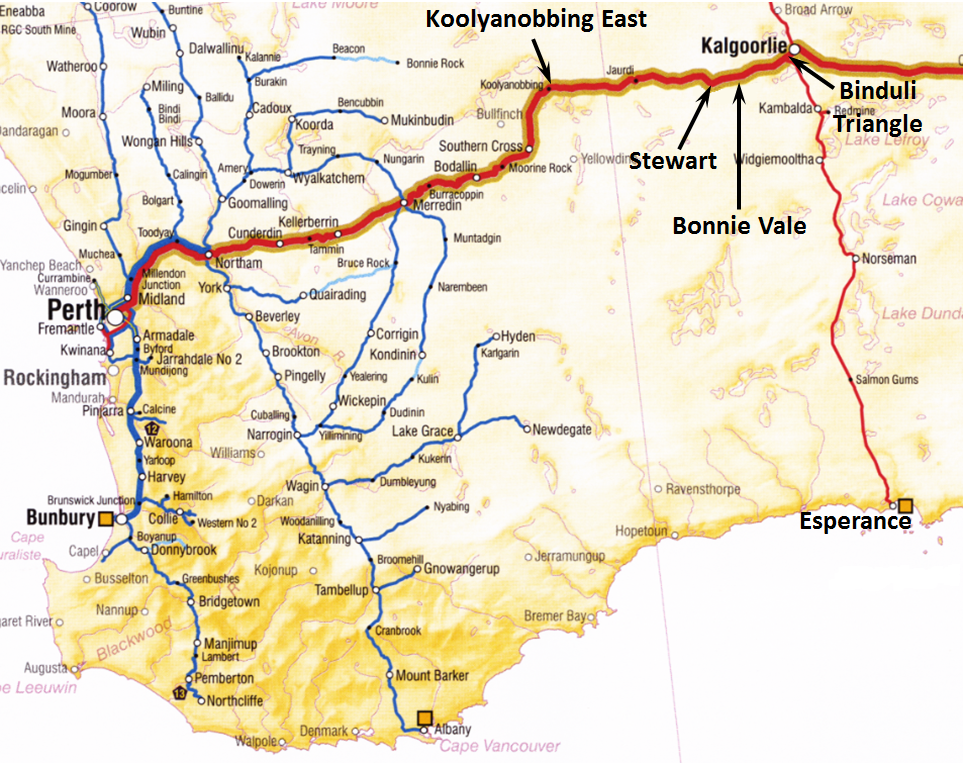
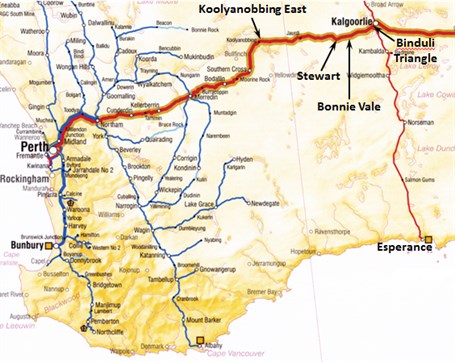
Figure 1: Location map –Western Australia
Source: NatMap Railways of Australia
While waiting for the empty ore train, the two drivers operating train 4413 exchanged their respective driver/observer roles. This was the last driver exchange before the occurrence.
At 1010, train 4413 departed the Wallaroo loop. The passage of the train through to Stewart (587 km) was uneventful. As the train entered the Stewart to Bonnie Vale section, the driver gradually accelerated towards 90 km/h, the maximum permitted track speed for loaded ore trains in this section. From the 596 km to 599 km mark the track grade descended slightly. To prevent the train from exceeding 90 km/h, the driver put the train into light dynamic braking.[4]
Just after traversing a culvert at 600.657 km, the locomotive shuddered. As the train continued, the second driver (observer) commented on the roughness of the ride and the likelihood of a temporary speed restriction (TSR) being required for that area in the future. The train then travelled about 2 km at which time the driver felt a series of jerks of increasing severity from the train. Almost immediately, at about 1048 the driver observed that the end-of-train monitor[5] (EoT) was showing an alert. He immediately checked the train’s brake pipe pressure on the driver’s cab controls, but did not observe any decrease which would normally accompany a train parting event.[6] However, on looking in the rear vision mirror he observed clouds of dust and realised that the rear portion of the train may have derailed. He slowed the train, using the dynamic brakes, bringing it to a stand about 2 km beyond the initial EoT alert. He then advised the train controller that the train was at stop within the Stewart to Bonnie Vale section, had probably derailed, and that the second driver was going back to investigate.
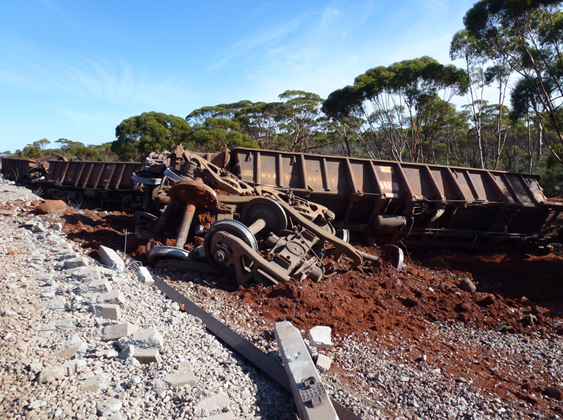
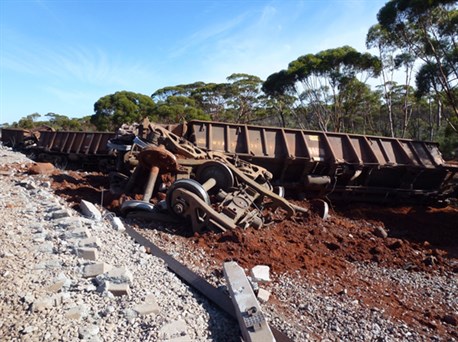
Figure 2: Derailed ore wagons and destroyed track infrastructure
Source: ATSB
Events post-derailment
The second driver walked towards the rear of the train and progressively reported to the driver the extent of the derailment and the damage sustained to the track infrastructure and rolling stock (Figure 2). The driver relayed the information to the train controller.
The Stewart to Bonnie Vale section was subsequently closed and recovery personnel were dispatched from Kalgoorlie. The two drivers were relieved and returned to Kalgoorlie.
On 15 May, track and train maintenance crews commenced recovery and restoration works. The track was re-opened to traffic on 17 May. Following the re-opening of the track a speed restriction of 60 km/h was put in place approaching and through the site until resolution of the underlying issues that caused the derailment were identified.
__________
- The 24-hour clock is used in this report and is referenced from Western Standard Time (WST)
- Distances are track kilometres measured from Perth terminus.
- Two drivers operate alternately as a driver/observer pair.
- The trains’ electric traction motors are used for regenerative/electric braking.
- The end-of train monitor works in conjunction with an end-of-train marker, a device fitted to the trailing end of the last vehicle of a train. The system is used to indicate that the train is intact by monitoring brake pipe pressure.
- A train parting event normally results in a loss of brake pipe integrity and an associated loss of brake pipe pressure.
Context
Location
The derailment occurred between Stewart and Bonnie Vale, about 54 km west of Kalgoorlie, at 600.729 km on the Defined Interstate Rail Network (DIRN) in Western Australia (Figure 1). The DIRN through this area runs in an east-west direction and links Western Australia with the eastern states.
Train crew and train information
Train 4413 was a regular Aurizon iron ore service that operated between Koolyanobbing East and the port of Esperance. The train was configured as a distributed power unit[7] and comprised two locomotives at the head of the train (AC4301 leading and ACB4404 trailing) followed by 106 wagons, two further locomotives (Q4017 leading and AC4304 trailing) and a final 54 wagons. The train had an overall length of 1,792 m and a gross mass 14,731 t.
Locomotives AC4301 and AC4304 were each equipped with data loggers (loco-log) and CCTV. These systems were used for capturing information such as date/time, speed, brake pipe pressure, throttle position, distance travelled and video imagery.
Rolling stock
Examination of the rolling stock primarily focused on wagon WOE33548K, located towards the rear of the train, at position 146 in a consist of 164 vehicles (count includes locomotives). It was determined that this was the first wagon to have derailed (leading wheel set of the lead bogie derailed to the left in the direction of travel). The wagon had travelled about 2.5 km past the point of derailment (PoD) by the time the train was brought to a stand.
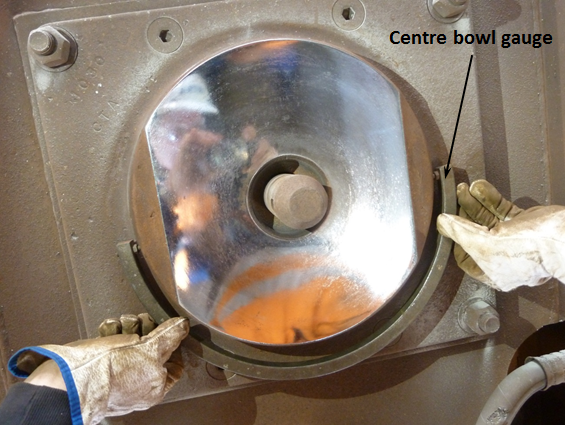
Figure 3: Gauging of centre bowl, wagon WOE33548K
Source: ATSB
The wagon was initially examined on site and later at Aurizon’s West Kalgoorlie maintenance facilities. The wagons were fully inspected including bogie frames, centre bowl centricity (Figure 3) sidebearer assemblies, friction wedges, lead bogie’s wheelsets and wheel profiles. All were found to be operationally fit for purpose and in compliance with maintenance specifications.
Examination of trackside monitoring data (RailBAM[8] and WILD[9]) did not uncover any evidence of wagon overloading or wheel defects that may have contributed to the derailment.
Train braking
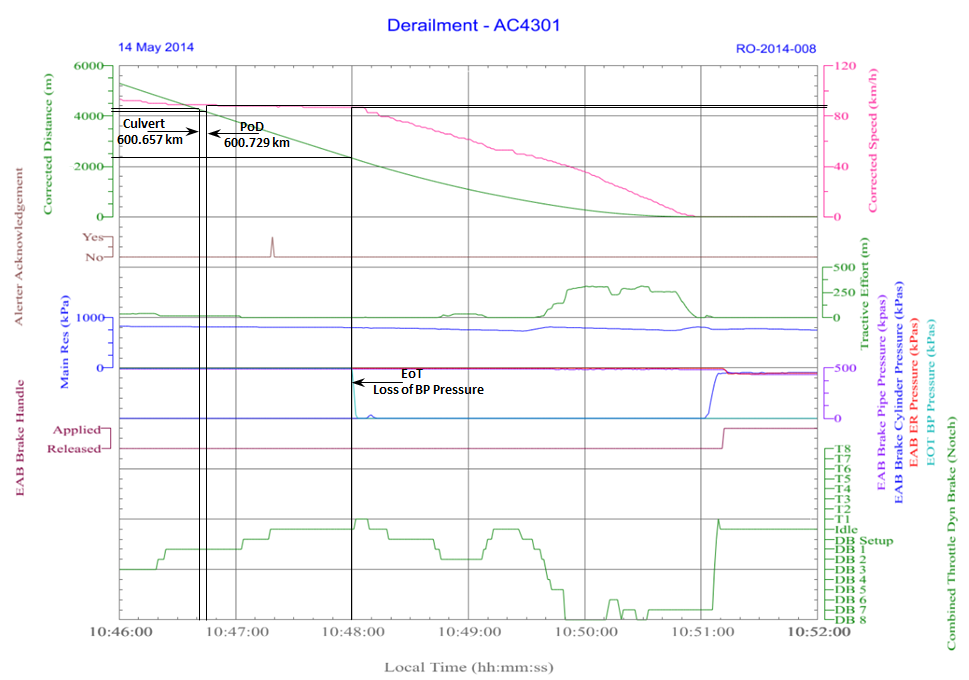
Analysis of data extracted from the train’s loco-log established:
- The train was travelling at 88 km/h (2 km/h below track speed) as the lead locomotive AC4301 passed over the PoD. The driver was actively controlling and maintaining the train’s speed by applying a range of throttle commands.
Figure 4: Graph derived from extract of loco-log data from AC4301
Source: Data source Aurizon, graphed by ATSB
- The train was travelling at 87 km/h as wagon WOE33548K (first to derail) passed over the PoD. At that time, locomotive AC4301 was in idle/coasting, after coming out from light dynamic braking.
- About 3 seconds after wagon WOE33548K passed over the PoD, the end-of-train monitor (EoT) registered a complete loss of brake pipe pressure. This event probably coincided with wagons breaking away from the main body of the train, and was about the time the driver recalled observing the EoT alert.
- Although the EoT provided an alert, this was not reflected as a loss of brake pipe pressure on the driver’s cab controls. The loss of brake pipe pressure that was registered by the EoT did not automatically activate entire train braking. As a consequence, the driver initially assumed a malfunction of the EoT until he observed dust in the train’s rear vision mirror.
- The driver slowed the train using dynamic braking, coming to a standstill about 2 km after the initial EoT alert.
While there was no apparent maintenance deficiency that contributed to the derailment, and recorded braking performance was consistent with the operation of the dynamic braking system, the fact that the loss of brake pipe integrity did not automatically activate the train brakes is an operational concern. The loss of brake pipe integrity (loss of air) should always result in the prompt activation of train brakes along the entire length of the consist.
Train crew
The driver in control at the time of the derailment had about 14 years train driving experience. The second driver (observer) had 9 years train driving experience. Both drivers held the required qualifications to operate the train and were route certified.
An examination of the drivers’ records confirmed that both had been assessed as meeting the medical standards prescribed by the National Standard for Health Assessment of Rail Safety Workers. Following interview and an examination of the drivers’ rosters, the ATSB determined that fatigue impairment was unlikely to have affected their performance. Both drivers said they felt well when signing on for duty and subsequently, at the time of the derailment.
After the derailment, both drivers underwent drug and alcohol testing, the results of which were negative.
Available evidence indicates that the drivers’ performance was unlikely to have been a factor in the derailment.
Environmental conditions
At the time of the derailment the weather at the Kalgoorlie-Boulder airport was fine. Temperature was about 21°C with the wind blowing from the south at a speed of 4 km/h. The recorded lowest temperature for the day (0600) was fractionally below 7°C. No rain had fallen in the preceding 24 hours.
Environmental conditions leading up to the derailment were not considered extraordinary and were unlikely to have contributed to the derailment.
Track information
The track from Koolyanobbing East through to West Kalgoorlie substantially comprised a single line (bi-directionally signalled) with crossing loops strategically located throughout its length.
The track through the derailment site was standard gauge (1,435 mm), 60 kg/m continuously welded rail[10] (CWR), fixed by resilient fastenings[11] to concrete sleepers at approximately 667 mm spacing. The rails were supported on a bed of ballast with a 300 mm nominal depth under the sleepers. The track leading into the derailment site was straight (tangent track) on a slight downgrade of about 0.2% in the direction of travel. When the track was re-laid with 60 kg/m rail about a year earlier, the infrastructure manager (Brookfield Rail) increased the maximum track speed to 90 km/h for loaded ore trains operating through the area.
Examination of the track
There was no evidence of track spread before the PoD, so gauge widening was not considered to have been a factor in the derailment. Similarly, there were no signs of any broken/fractured rail immediately at or before the PoD.
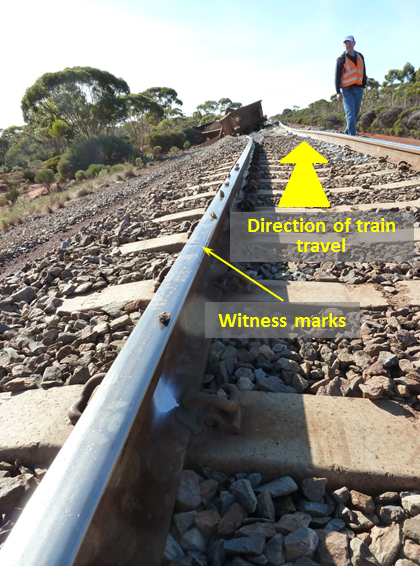
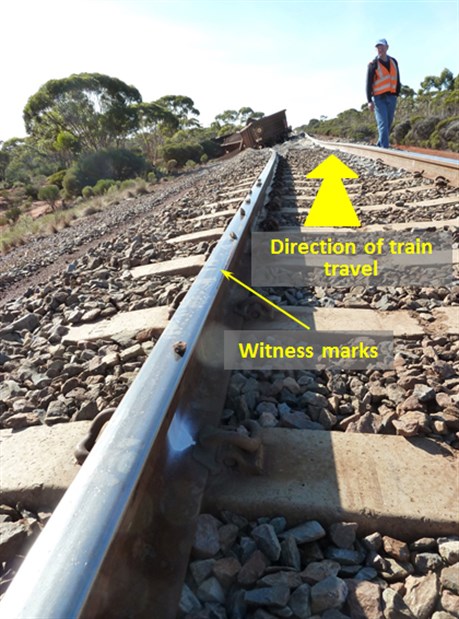
There was evidence of flange climb[12] on the left side running rail (direction of travel) at 600.729 km, followed by witness marks over a distance of about 5 m that were consistent with a wheel flange crossing over the rail head (Figure 5). Damage to sleepers was observed only after the point where the wheel(s) dropped off the rail head. Beyond the drop off point, the wheels and bogies of derailed wagons advancing along the sleepers had progressively damaged the track structure both within the four foot[13] and on the field side of the rail (left side direction of travel). This led to the loss of structural integrity and the subsequent destruction of the track, with rolling stock ploughing into the ballast giving rise to the multi-wagon pile-up shown at Figure 2.
Figure 5: Witness marks at PoD (600.729 km) shown by line of stones on rail head
Source: ATSB
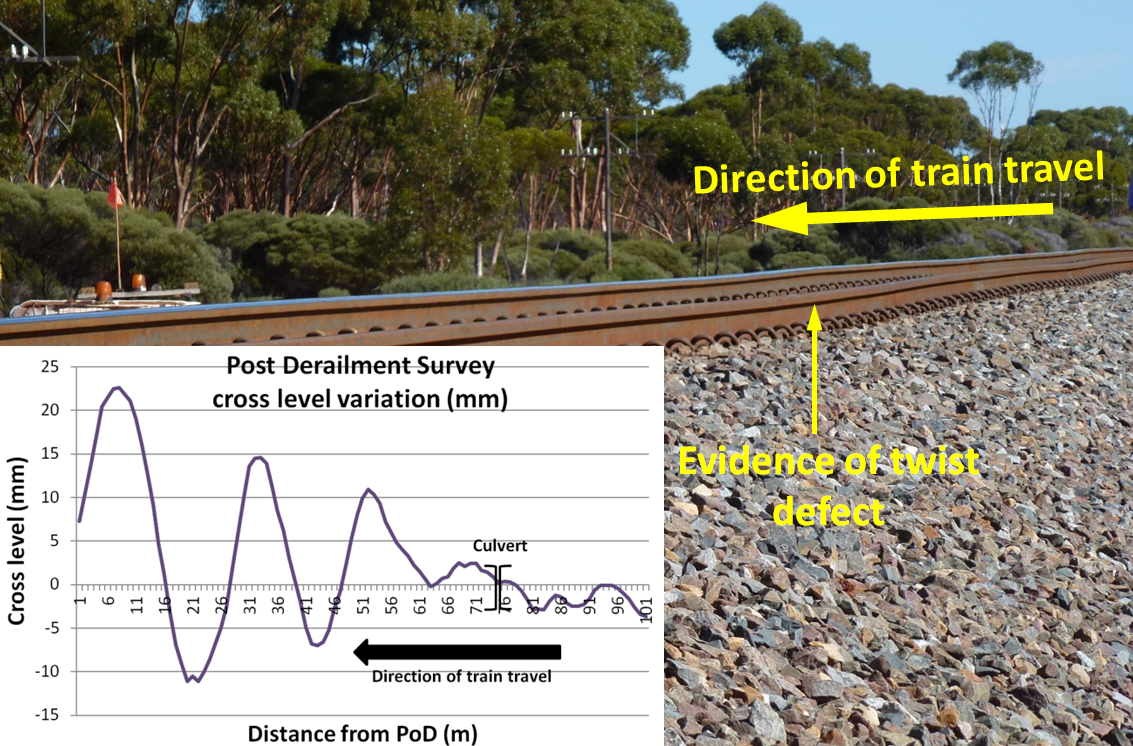
Although the track leading into the derailment site appeared to be in good condition, there were signs of pre-existing lateral vehicle oscillations (characterised by flange contact wear along the gauge face of the rails at regular intervals), and evidence of minor cyclic cross level (Figure 6) and lateral track irregularities before the PoD.
Figure 6: Evidence of minor twist defect in advance of PoD at 600.729 km
Source: ATSB
These observations were supported by:
- Statements from the train drivers, who both indicated that the track was rough (side-to-side oscillations) leading into the derailment site and that the train shuddered at or near the derailment site.
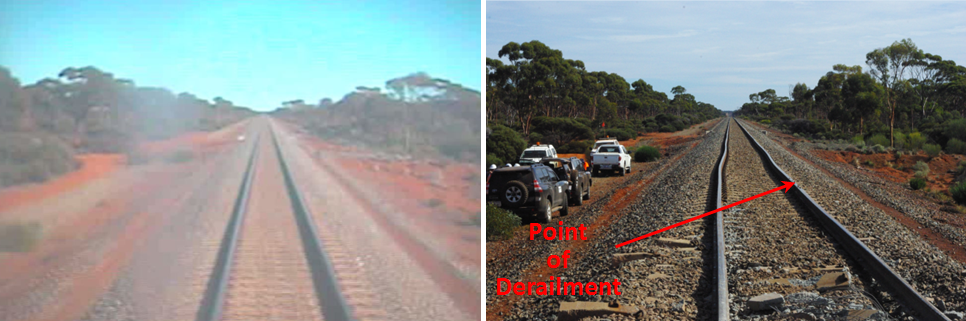
- Forward facing video (Figure 7) from train 4414,[14] which had passed through the site earlier that morning (about 0940), showed very little evidence of any lateral track misalignment at, or near the derailment site.
Figure 7: Video image from train 4414 (left) and photo post derailment (right)
Source: Aurizon (left image) and Brookfield Rail (right image)
- Rear facing video from train 4413[15] showed wagons directly behind AC4304 oscillating sideways (laterally) when approaching the derailment site, followed by heavy shuddering as wagons passed over (or near) the derailment site.
Post-derailment, the track was surveyed by Brookfield Rail (unloaded) for a distance of 100 m leading into the PoD. The plot at Figure 6 cross level variation (mm)[16] was derived from survey measurements and substantiated observations of a minor cyclic twist defect in advance of the PoD. The plot shows a cross level variation of near zero about 100 m before the PoD, which then increases in magnitude to about 22 mm at a location 6 m back from the PoD. Under the Westrail S.G. Code of Practice Track and Civil Infrastructure (CoP),it is unlikely that this specific magnitude of cross level variation would have triggered remedial action by Brookfield Rail. However, the CoP (Table 6.2, Note [7]) also identifies that the onset of a rough ride caused by a combination of laterally induced vehicle oscillations in an area of track with a cyclic twist defect may present a heightened derailment risk and should not be ignored.
Wagon - lateral stability
The conical shape of the railway vehicle wheel/tread tends to cause lateral oscillation of the wheelset along the length of tangent track. At low speed, these oscillations are effectively damped. As speed is increased, the lateral oscillations initiated by a minor track irregularity take longer to damp out, and above a critical speed, oscillations continue indefinitely until a curve or another track irregularity causes them to temporarily cease. This behaviour is commonly referred to as hunting.
If a vertical, lateral, or cross level track irregularity is cyclic and is encountered at a speed corresponding to the natural frequency of vehicles traversing the track, there is a risk of vehicle resonant harmonic oscillation developing. This can be particularly hazardous if the cyclic motion, set up by cross level variations, results in a wheel becoming sufficiently unloaded such that the guidance provided by the wheel flange is no longer adequate – allowing the flange to climb up onto the rail head. Harmonic behaviour is characterised by large amplitude oscillations at specific train speeds, with a significant sideways force that can damage the track and in severe cases result in derailment. Hunting can also exert high lateral forces on the track, but normally only results in derailment when a track irregularity causes the wheel to be unloaded at the same time as it is in contact with the rail.
Examination of the track (post-derailment) found that there was a pattern of wear on the rail gauge face corner at a regular interval of about 6 – 8 m (an indication of lateral vehicle oscillation in a consistent pattern at 12 to 16 m wavelength) and corresponding ballast disturbance along the length of the track leading into the PoD.
Although the ore wagons were determined to be in good condition and had passed mandated dynamic performance tests, it was likely that wagon excitation and associated resonant phenomenon induced by the track in advance of the PoD, was probably of sufficient magnitude for the lead wheel of wagon WOE33548K to unload, mount the rail head at 600.729 km and derail.
Post-derailment computer modelling
To assist in understanding the mechanism of derailment, the dynamic behaviour of the WOE class ore wagon was modelled using two computer simulation packages; Vampire[17] and NUCARS.[18] Track criteria was based on survey work undertaken post-derailment and assumed a continuation of the track shape beyond the PoD. The WOE class wagon was modelled at a range of simulation speeds, including the derailment speed of 87 km/h.
Inspection and measurements post-derailment showed that both the track and WOE class wagons met the required engineering and maintenance requirements. However, the computer modelling showed the WOE-class wagons were susceptible to the onset of lateral harmonic oscillation (increasing with speed) over track similar in characteristics to that through the derailment site. It was evident from the modelling that the dynamic behaviour of the WOE class wagon when traversing a cyclic track irregularity at about 86 km/h, could give rise to wheel unloading at a time when the wheel came into contact with the rail face, resulting in a flange climb derailment.
Actual on-track physical testing[19] of the WOE class wagon in 2001 had not identified issues with wagon instability; though dynamic wagon behaviour over cyclic track irregularities was not part of the test regime at that time. Post-derailment computer modelling showed that the wagon would also pass the current harmonic roll test specified in section 9.2.5 of AS7509.2. However, when modelled over a continuous cross level variation with a 22 m wavelength (as was measured at the derailment site), severe roll and wheel unloading was evident with conditions close to derailment at speeds of 87 km/h (similar to that of train 4413).
It is apparent that, when changing infrastructure (vehicle/track) working conditions, computer modelling offers rail transport operators a valuable opportunity to identify potential areas of elevated derailment risk before new service arrangements are implemented.
Track inspection
Inspection of track visually, and by use of mechanised track geometry vehicles, are two of the main methods for assessing track geometry and identifying defects. Brookfield Rail applies the CoP as the criteria for assessing and recording the condition of track and determining mandatory remedial maintenance actions. The CoP mandates that inspections are carried out weekly (intervals not exceeding 7 days) by track patrol (road/rail vehicle), and by train cab ride (foot-plate inspection) every 12 months. The interval between track geometry vehicle inspections is 4 monthly.
A review of maintenance records established that the track near the PoD (600.729 km) had been:
- Regularly inspected by track patrol (road/rail vehicle). The last inspection was done on 10 May 2014, four days before the derailment. No defects were identified, and it was unlikely that a track patrol would have identified the minor track irregularity near the PoD because of differing dynamic characteristic of the road/rail vehicle compared to a train.
- Examined by way of train cab ride on 10 May 2013, about 12 months before the derailment. While there were no defects (including rough ride) identified near the derailment site, it was evident from the cab ride inspector’s notes, that his observations were effective in detecting some other track irregularities that had been missed by other inspection regimes.
- Regularly examined using a track geometry car. The last inspection was done on 14 February 2014. No defects were identified, and it is possible that an inspection closer to the time of derailment may not have activated a maintenance response, as track measurements after the derailment did not exceed CoP alert criteria.
Other occurrences involving vehicle/track interaction
The ATSB has investigated several occurrences involving vehicle/track interaction, including the derailment of train 4VM9V near Benalla, Victoria on 23 September 2004 (RO-2004-005), the derailment of train 3MR2 near Roopena, South Australia on 22 May 2007 (RO-2007-003) and the derailment of train 5WX2 near Winton, Victoria on 31 July 2008 (RO-2008-009).
Interaction between rolling stock and track is complex, and mitigating the risk of derailment may not be fully achieved by applying standards and codes of practice in isolation. A common and recurring theme with the occurrences listed above and this latest derailment, relates to envisaging the dynamic performance of compliant, poorer ride quality rolling stock, over conforming track that exhibits low level cyclic track irregularity.
The analysis undertaken following each of these previous occurrences demonstrated that computer modelling/simulation was an effective way of examining and predicting derailment scenarios. Computer modelling/simulation may thus offer rail transport operators an effective tool in predicting and mitigating the risk of derailments when implementing new service arrangements.
__________
- The placing of additional locomotives at intermediate points within a train and remotely controlling these locomotives from the lead locomotive.
- RailBAM® is a predictive monitoring system that detects and ranks wheel bearing faults and out-of-shape wheels (wheel flats) by monitoring the noise they make.
- WILD is an acronym for ‘Wheel impact and load detection’. The WILD system is primarily used for detecting wheel flats but can be used for calculating the weight of rolling-stock.
- CWR – Track where the rail is joined by welding (and other non-moveable joints such as glued insulated joints) in lengths greater than 300 metres.
- A fastening that provides a degree of elasticity between the sleeper and rail with the aim of avoiding the loosening of the fastening due to vibration, as well as enhancing the ability of the fastening system to resist longitudinal creep forces and buckling forces associated with CWR.
- A derailment in which a wheel flange will climb to the rail head.
- The area between the rails of a standard gauge railway.
- Forward facing video evidence was not available from train 4413 (train that derailed) due to a technical failure of the train’s forward facing video recorder.
- The mid-section trailing locomotive AC4304 on train 4413 had a rear facing video camera.
- Cross level variation is a measurement of the difference in level of the two rails at a single point along the track.
- Vampire is a computer based rail vehicle dynamics simulation package allowing the modelling of a virtual rail vehicle traversing measured track geometry. Vampire modelling was done by Brookfield Rail.
- NUCARS is a computer program that simulates the dynamic response of railroad vehicles to specified track conditions. Both Vampire and NUCARS are recognised as world leading rail vehicle simulation packages. NUCARS modelling was done by Aurizon.
- Testing was done in accordance with the Railways of Australia (ROA) code ‘Road Worthiness Acceptance Standards for Rail Freight Vehicles’. The code did not include testing for cyclic track irregularities which has been included in the more recent Australian Standard AS7509.2.
Safety analysis
Vehicle dynamic behaviour
Based on the train driver’s observations and supported by site evidence and computer modelling, the ATSB concluded that the derailment of train 4413 was initiated by lateral harmonic vehicle oscillations induced in the consist’s WOE class wagons, by a cyclic track cross-level defect. It was found that although the WOE class wagons and track complied with engineering and maintenance requirements, the cyclic track twist defect in combination with the wagon oscillations was large enough to promote wheel unloading at a time when the leading left wheel of wagon WOE33548K came into contact with the left running rail, resulting in flange climb and derailment.
A review of evidence established that the WOE class of wagon had passed prescribed dynamic performance testing. While the wagons and track complied with mandated engineering requirements, computer modelling after the derailment showed the potential for an onset of lateral harmonic wagon oscillation of sufficient magnitude to result in derailment at the site of the event. As a result of these findings, it was apparent that undertaking computer modelling before changing infrastructure working conditions (vehicle/track), offers rail transport operators a valuable opportunity to identify potential areas of derailment risk exposure.
Track condition reporting
Although the track condition leading into the derailment site was compliant with the CoP, it was known to train drivers as an area of poor ride quality. The drivers of train 4413 stated that they thought the ride approaching and through the derailment site was quite rough. They went on to suggest that other drivers may also have complained about rough ride, but most did not lodge reports because of a perceived lack of response and feedback. The ATSB’s examination of driver reports confirmed that there had been no notification to the track owner that would have alerted them to the problem in the area of concern.
Unscheduled inspections by the track owner can be programmed at any time, in response to defined events, such as slips, flooding, irregularity reports and train driver reports. The lack of driver reporting in this instance resulted in missed opportunities for the track owner to undertake such unscheduled inspections (including train cab rides), which may have confirmed the track irregularity through this location and averted the subsequent derailment event.
Train braking
While the ATSB found that there was no maintenance deficiency with train 4413 that contributed to the derailment, a loss of brake pipe integrity (loss of air) should result in the immediate, automatic activation of the train brake. That this did not occur in this event warrants further investigation and resolution.
Findings
From the evidence available, the following findings are made with respect to train 4413 that derailed between Stewart and Bonnie Vale, about 54 km west of Kalgoorlie, Western Australia, on 14 May 2014. These findings should not be read as apportioning blame or liability to any particular organisation or individual.
Safety issues, or system problems, are highlighted in bold to emphasise their importance. A safety issue is an event or condition that increases safety risk and (a) can reasonably be regarded as having the potential to adversely affect the safety of future operations, and (b) is a characteristic of an organisation or a system, rather than a characteristic of a specific individual, or characteristic of an operating environment at a specific point in time.
Contributing factors
- The derailment of train 4413 was most likely initiated by lateral harmonic vehicle oscillation induced by a combination of minor cyclic cross level and lateral track irregularities, just in advance of the point of derailment.
- When travelling at speeds near 90 km/h on track having particular track irregularities, the WOE class wagons appear to be susceptible to harmonic oscillations of sufficient magnitude to produce wheel unloading, flange climb and derailment. [Safety issue]
- After re-railing the track, permitted train speed was increased without due consideration of the effects of cyclic track irregularities on the dynamic performance of the WOE class wagon. [Safety issue]
- The frequency of driver reporting and locomotive cab rides by track inspectors had been insufficient for identifying rough track through the derailment site. [Safety issue]
Other factors that increased risk
- The loss of brake pipe integrity during the derailment event did not result in the train brakes automatically activating. [Safety issue]
Safety issues and actions
The safety issues identified during this investigation are listed in the Findings and Safety issues and actions sections of this report. The Australian Transport Safety Bureau (ATSB) expects that all safety issues identified by the investigation should be addressed by the relevant organisation(s). In addressing those issues, the ATSB prefers to encourage relevant organisation(s) to proactively initiate safety action, rather than to issue formal safety recommendations or safety advisory notices.
All of the directly involved parties were provided with a draft report and invited to provide submissions. As part of that process, each organisation was asked to communicate what safety actions, if any, they had carried out or were planning to carry out in relation to each safety issue relevant to their organisation.
Where relevant, these safety issues and actions will be updated on the ATSB website as information comes to hand. The initial public version of these safety issues and actions are in PDF on the ATSB website.
WOE class wagon, dynamic performance
When travelling at speeds near 90 km/h on track having particular track irregularities, the WOE class wagons appear to be susceptible to harmonic oscillations of sufficient magnitude to produce wheel unloading, flange climb and derailment.
ATSB Safety issue: RO-2014-008-SI-01
Increasing train speed
After re-railing the track, permitted train speed was increased without due consideration of the effects of cyclic track irregularities on the dynamic performance of the WOE class wagon.
ATSB Safety issue: RO-2014-008-SI-02
Driver reporting and cab ride arrangements
The frequency of driver reporting and locomotive cab rides by track inspectors had been insufficient for identifying rough track through the derailment site.
ATSB Safety issue: RO-2014-008-SI-03
Train braking performance
The loss of brake pipe integrity during the derailment event did not result in the train brakes automatically activating.
ATSB Safety issue: RO-2014-008-SI-04
Sources and submissions
Sources of information
The sources of information during the investigation included the:
- Aurizon
- Data loggers and CCTV from locomotives AC4301 and AC4304
- Brookfield Rail
References
ARA Glossary for the National Codes of Practice and Dictionary of Railway Terminology
Bureau of Meteorology - Weather Observations for Kalgoorlie-Boulder (14 May 2014)
RISSB Glossary of Railway Terminology – Guideline
Track Stability and Buckling – Rail Stress Management, Zayne Kristian Ole (Oct 2008)
Submissions
Under Part 4, Division 2 (Investigation Reports), Section 26 of the Transport Safety Investigation Act 2003, the ATSB may provide a draft report, on a confidential basis, to any person whom the ATSB considers appropriate. Section 26 (1) (a) of the Act allows a person receiving a draft report to make submissions to the ATSB about the draft report.
A draft of this report was provided to Aurizon, Brookfield Rail, Office of the National Rail Safety Regulator, Office of Rail Safety Western Australia and the train drivers.
Submissions were received from Aurizon, Brookfield Rail, Office of the National Rail Safety Regulator, Office of Rail Safety Western Australia and train crew. The submissions were reviewed and where considered appropriate, the text of the report was amended accordingly.
Purpose of safety investigationsThe objective of a safety investigation is to enhance transport safety. This is done through:
It is not a function of the ATSB to apportion blame or provide a means for determining liability. At the same time, an investigation report must include factual material of sufficient weight to support the analysis and findings. At all times the ATSB endeavours to balance the use of material that could imply adverse comment with the need to properly explain what happened, and why, in a fair and unbiased manner. The ATSB does not investigate for the purpose of taking administrative, regulatory or criminal action. TerminologyAn explanation of terminology used in ATSB investigation reports is available here. This includes terms such as occurrence, contributing factor, other factor that increased risk, and safety issue. Publishing informationReleased in accordance with section 25 of the Transport Safety Investigation Act 2003 Published by: Australian Transport Safety Bureau © Commonwealth of Australia 2015 
Ownership of intellectual property rights in this publication Unless otherwise noted, copyright (and any other intellectual property rights, if any) in this report publication is owned by the Commonwealth of Australia. Creative Commons licence With the exception of the Coat of Arms, ATSB logo, and photos and graphics in which a third party holds copyright, this publication is licensed under a Creative Commons Attribution 3.0 Australia licence. Creative Commons Attribution 3.0 Australia Licence is a standard form licence agreement that allows you to copy, distribute, transmit and adapt this publication provided that you attribute the work. The ATSB’s preference is that you attribute this publication (and any material sourced from it) using the following wording: Source: Australian Transport Safety Bureau Copyright in material obtained from other agencies, private individuals or organisations, belongs to those agencies, individuals or organisations. Where you wish to use their material, you will need to contact them directly. |
Preliminary report
Report release date: 28/08/2014
The occurrence
The information contained in this Preliminary report is released in accordance with section 25 of the Transport Safety Investigation Act 2003 and is derived from the initial investigation of the occurrence. Readers are cautioned that new evidence will become available as the investigation progresses that will enhance the ATSB's understanding of the accident as outlined in this Preliminary report. As such, no analysis or findings are included in this report.
At 0100[1] on 14 May 2014, train 3416, a scheduled bulk iron ore service, departed from the Binduli Triangle (650 km[2]), Western Australia, for Koolyanobbing East (458 km). The train, crewed by two drivers,[3] travelled empty to Koolyanobbing East.
On arrival at Koolyanobbing East, the train was loaded with iron ore and made ready for departure as train 4413. At 0755, it departed Koolyanobbing East for the port of Esperance.
En route, train 4413 crossed with the Prospector passenger train at Beckwith (470 km) and then with train 3033 at Mount Walton (534 km). It continued on its journey towards Esperance, stopping at the Wallaroo loop (562 km) to cross with empty ore train 4414.
Figure 1: Location map – Western Australia
Source: NatMap Railways of Australia
At 1010, train 4413 departed the Wallaroo loop. The passage of the train through to Stewart (587 km) was uneventful. As the train entered the Stewart to Bonnie Vale section, the driver gradually accelerated towards 90 km/h, the maximum permitted track speed for ore trains in this section. From the 596 km to 599 km mark the track descended slightly. To limit the train from exceeding 90 km/h, the driver put the train into light dynamic braking,[4] to maintain a speed of about 85 km/h.
At about 1048, just after traversing a culvert at 600.657 km, the locomotive shuddered. The train travelled a further 600 m when the driver felt a series of jerks of increasing severity throughout the train. Almost immediately, he observed that the end-of-train monitor[5] was showing a zero reading. He did not observe a decrease in the train’s brake pipe pressure or hear any audible alarm which would normally accompany a train parting event.[6]
The driver looked back in the rear vision mirror and observed clouds of dust and realised that the rear portion of the train had probably derailed. He slowed the train, bringing it to a stand about 3 km beyond the initial point of derailment (PoD). He then advised the train controller that the train was at stop within the Stewart to Bonnie Vale section, had probably derailed and that the second driver was going back to investigate.
Figure 2: Train 4413 End of Train – Derailed Ore Wagons
Source: ATSB
Events post derailment
The second driver walked towards the rear of the train and progressively reported to the driver the extent of the derailment and associated damage (Figure 2). The driver relayed the information to the train controller.
The Stewart to Bonnie Vale section was subsequently closed and recovery personnel were dispatched from Kalgoorlie. The two drivers were also relieved and returned to Kalgoorlie.
On 15 May, track and train maintenance crews commenced recovery and restoration works. The track was re-opened to traffic on 17 May.
Context
Location
The derailment occurred between Stewart and Bonnie Vale, about 54 km west of Kalgoorlie, at 600.729 km on the Defined Interstate Rail Network (DIRN) in Western Australia (Figure 1). The DIRN through this area runs in an east-west direction and links Western Australia with the eastern States.
Environmental conditions
The environmental conditions leading up to the incident were not considered exceptional and were unlikely to have contributed to the derailment.
Train and train crew information
Train 4413 was a regular Aurizon iron ore service that operated between Esperance and Koolyanobbing East. The train was configured as a distributed power unit[7] (DPU) and comprised two locomotives at the head of the train (AC4301 leading and ACB4404 trailing) followed by 106 wagons then two locomotives mid-section (Q4017 leading and AC4304 trailing) followed by a further 54 wagons. The train had an overall length of 1,792 m and a gross mass 14,731 t.
Rolling stock
Examination of the derailed wagons primarily focused on wagon WOE33548K, which was considered as the first wagon to have derailed. It was evident that the leading wheel-set of its lead bogie had derailed to the left (in the direction of travel) and had travelled about 2.5 km past the PoD.
The wagon was examined by the ATSB both on site and at Aurizon’s West Kalgoorlie maintenance facilities and found to be in compliance with maintenance specifications and operationally fit for purpose.
The ATSB concluded that there was no obvious indication of any mechanical deficiency with the train that may have contributed to the derailment. However, post derailment braking performance requires further examination because the available evidence indicates that the loss of brake pipe integrity (loss of air) did not result in immediate brake activation.
Train crew
The train crew comprised two drivers. The driver at the time of the derailment had about 14 years train driving experience. The second driver had 9 years train driving experience. Both drivers held the required qualifications to operate the train, were route certified and assessed as medically fit for duty.
Following the derailment both drivers underwent mandatory drug and alcohol testing, the results of which were negative. The available evidence also indicates that the performance of the drivers was not affected by fatigue.
Track Information
The track from Koolyanobbing East through to West Kalgoorlie substantially comprised a single line (bi-directionally signalled) with crossing loops strategically located throughout its length.
The track through the derailment site was standard gauge (1,435 mm) and consisted of 60 kg/m continuously welded rail[8] (CWR). The rail was fixed to concrete sleepers at approximately 667 mm spacing and secured by resilient fastenings.[9] It was supported on a bed of ballast having a nominal depth of 300 mm under the sleepers. The track had been relayed with new 60 kg/m rail about 1 year earlier.
The track leading into the derailment site was straight (tangent track) with a slight downgrade of about 0.2% in the direction of travel.
Track condition
An examination of the track at the PoD showed evidence of flange climb on the left side running rail (direction of travel) and witness marks over a distance of about 5 m which indicated that the wheel flange crossed over the rail head (Figure 3).
Figure 3: Witness marks caused by a wheel flange at PoD (600.729 km) shown by line of stones on rail head
Source: ATSB
Damage to sleepers was observed only after the point where the wheel(s) subsequently dropped off the rail head. Beyond the drop off point, the wheels and bogies of derailed wagons advancing along the sleepers, progressively damaged the track structure both within the four foot[10] and on the field side of the rail (left side direction of travel). This resulted in the loss of track structural integrity and the subsequent destruction of the track, with rolling stock ploughing into the ballast and resulting in the multi-wagon pile-up (Figure 2 and 3).
There was no evidence of spread in the section of track leading up to the PoD, so gauge widening was not considered to have been a factor in the derailment. Similarly, there were no signs of any broken/fractured rail immediately at or before the PoD.
Although the track structure leading into/out of the derailment site appeared to be in good condition, there were signs of lateral vehicle oscillations along the length of track leading up to PoD. This was characterised by flange contact wear along the head of the rails at regular intervals. There was also evidence of a vertical twist defect immediately after a culvert at 600.657 km.
The potential influence of the observed track conditions were supported by:
- Statements from the train drivers, who both indicated that the track was rough (side-to-side oscillations) leading into the derailment site and that the train had kicked heavily at or near the PoD
- Forward facing video evidence from train 4414[11] which had passed through the site earlier that morning (about 0940) and showed evidence of a sizeable track misalignment at or near the PoD
- Rear facing video from train 4413 (mid-section trailing locomotive AC4304) showing evidence of a substantial sideways kick as wagons behind locomotive AC4304 passed over the PoD.
Derailment - summary
The available evidence, as detailed above, indicates that the derailment of ore train 4413 near Bonnie Vale in Western Australia was the result of flange climb.
There was evidence of lateral track vehicle oscillations along the length of track leading up to the PoD and a twist defect immediately after the culvert at 600.657 km. Although the locomotives and ore wagons appeared to be in good condition it is considered that the vehicle oscillations may have been of sufficient magnitude to cause the leading wheel of wagon WOE33548K to unload, mount the rail head at 600.729 km and derail.
Ongoing investigation activities
The ATSB investigation is continuing and will focus on:
- The dynamic behaviour of WOE class wagons.
- Train braking performance, in particular when configured with mid-power locomotives.
- Track inspection and maintenance procedures, including defect reporting processes used by the infrastructure manager and the rolling stock operator.
Purpose of safety investigationsThe objective of a safety investigation is to enhance transport safety. This is done through:
It is not a function of the ATSB to apportion blame or provide a means for determining liability. At the same time, an investigation report must include factual material of sufficient weight to support the analysis and findings. At all times the ATSB endeavours to balance the use of material that could imply adverse comment with the need to properly explain what happened, and why, in a fair and unbiased manner. The ATSB does not investigate for the purpose of taking administrative, regulatory or criminal action. TerminologyAn explanation of terminology used in ATSB investigation reports is available here. This includes terms such as occurrence, contributing factor, other factor that increased risk, and safety issue. Publishing informationReleased in accordance with section 25 of the Transport Safety Investigation Act 2003 Published by: Australian Transport Safety Bureau © Commonwealth of Australia 2014
Ownership of intellectual property rights in this publication Unless otherwise noted, copyright (and any other intellectual property rights, if any) in this report publication is owned by the Commonwealth of Australia. Creative Commons licence With the exception of the Coat of Arms, ATSB logo, and photos and graphics in which a third party holds copyright, this publication is licensed under a Creative Commons Attribution 3.0 Australia licence. Creative Commons Attribution 3.0 Australia Licence is a standard form licence agreement that allows you to copy, distribute, transmit and adapt this publication provided that you attribute the work. The ATSB’s preference is that you attribute this publication (and any material sourced from it) using the following wording: Source: Australian Transport Safety Bureau Copyright in material obtained from other agencies, private individuals or organisations, belongs to those agencies, individuals or organisations. Where you wish to use their material, you will need to contact them directly. |
[1] The 24-hour clock is used in this report and is referenced from Western Standard Time (WST), UTC + 8.0 hours.
[2] Distances are track kilometres measured from Perth terminus.
[3] Two drivers operate alternately as a driver/observer pair.
[4] The trains’ electric traction motors are used for regenerative/electric braking.
[5] The end-of train monitor works in conjunction with an end-of-train marker, a device fitted to the trailing end of the last vehicle of a train. The system is used to indicate that the train is intact by monitoring brake pipe pressure.
[6] A train parting event normally results in a loss of brake pipe integrity and an associated loss of brake pipe pressure.
[7] The placing of additional locomotives at intermediate points within a train and remotely controlling these locomotives from the lead locomotive.
[8] Continuous welded rail (CWR) – Track where the rail is joined by welding (and other non-moveable joints such as glued insulated joints) in lengths greater than 300 metres.
[9] A fastening that provides a degree of elasticity between the sleeper and rail with the aim of avoiding the loosening of the fastening due to vibration, as well as enhancing the ability of the fastening system to resist longitudinal creep forces and buckling forces associated with continuously welded rail (CWR).
[10] The area between the rails of a standard gauge railway.
[11] Forward facing video evidence was not available from train 4413, train that derailed, due to a technical failure of the train’s forward facing video recorder.
Occurrence summary
| Investigation number | RO-2014-008 |
|---|---|
| Occurrence date | 14/05/2014 |
| Location | Bonnie Vale |
| State | Western Australia |
| Report release date | 27/03/2015 |
| Report status | Final |
| Investigation level | Systemic |
| Investigation type | Occurrence Investigation |
| Investigation status | Completed |
| Mode of transport | Rail |
| Rail occurrence category | Derailment |
| Occurrence class | Accident |
| Highest injury level | None |
Train details
| Train operator | Aurizon |
|---|---|
| Train number | 4413 |
| Type of operation | Bulk Freight |
| Train damage | Substantial |