On 26 May 2021, the pilot of a Robinson R22 Beta helicopter, registered VH-KLY and operated by Stock & Station Aviation, was conducting mustering operations on a property 75 km west‑north‑west of Hay, New South Wales. The pilot was the only person on board. As the helicopter was flown towards cattle yards, it struck a powerline and collided with terrain. The pilot was fatally injured.
What the ATSB found
The ATSB found that, as it was not originally planned for the pilot to muster cattle to the yard, they did not do an aerial inspection and the hazards at the yard were likely not considered. During a turn most likely associated with an approach to land, the helicopter contacted a single wire earth return line, which was very difficult to detect. Control was subsequently lost, and the helicopter collided with terrain.
The ATSB also found the emergency locator transmitter (ELT) did not activate as the transmitter was selected to OFF. As the accident was witnessed, this did not affect the response.
Safety message
Mustering operations around yards and buildings are inherently dangerous due to low‑level hazards including powerlines. According to the ATSB’s Avoidable Accidents No. 1 - Low-level flying research report, about 63% of pilots involved in wirestrike accidents reported they were aware of the powerlines but had forgotten about them before they were struck.
As such, the Aerial Application Association of Australia has been working with landowners and energy suppliers to install markers on powerlines through their Powerline Safety Program. In addition, a number of power companies are making these markers available at reduced cost.
Operators are also reminded of the importance of regularly conducting a self-test of the emergency locator transmitter (ELT) system. Having a working ELT increases the likelihood that an aircraft and its occupants will be located quickly in the event of an accident.
The investigation
Decisions regarding whether to conduct an investigation, and the scope of an investigation, are based on many factors, including the level of resource required to obtain a safety benefit from an investigation. For this occurrence, a limited-scope investigation was conducted in order to produce a short investigation report and allow for greater industry awareness of findings that affect safety and potential learning opportunities.
The occurrence
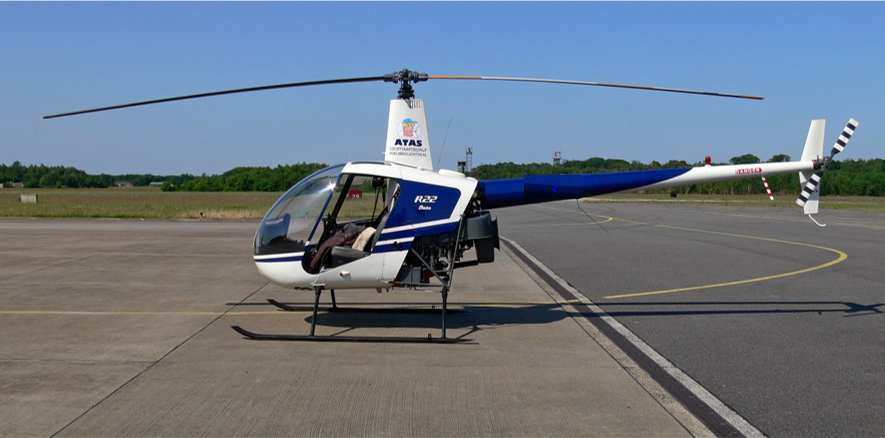
On Wednesday 26 May 2021, the pilot of a Robinson Helicopter Company R22 Beta helicopter (Figure 1), registered VH-KLY (KLY) and operated by Stock & Station Aviation, was conducting mustering operations on a property 75 km west‑north-west of Hay, New South Wales. The pilot was the only person on board.
Figure 1: Exemplar R22 helicopter
Source: Archangel12. Used under the Creative Commons Attribution 2.0 Generic license. Registration and company branding removed.
The pilot had arrived at the property on the preceding Sunday afternoon, to assist with a wild goat muster. This was to be conducted over a number of days, during which the mustering crew were staying at a house on the property. The goats were to be mustered to a set of temporary yards.
The muster began on the Monday and, during the day, the pilot observed a small herd of cattle, which were required to be removed after the completion of the goat muster. The following day, the weather deteriorated during the morning and the muster was called off early, with the pilot returning to the house at about lunchtime.
On Wednesday the muster re‑commenced and, at approximately 0707 Eastern Standard Time,[1] the pilot flew to the temporary yards, landed the helicopter and shutdown. The goats were being drafted[2] before being loaded on to trucks and the helicopter was not required for that work.
After a few hours, the pilot had a brief discussion with the lead contractor and a stockperson, following which the contractor instructed the pilot to find the previously detected cattle and direct the stockperson to them. The pilot was then to return to their accommodation, before beginning another muster on a different area of the property. The stockperson was instructed to move the cattle to the main yards on the property. Prior to this, there had been no plan to use these yards during the muster.
The helicopter took off at 1032 and, as the pilot was locating the cattle, they detected a second larger herd. The pilot advised the stockperson over the UHF radio and directed them to these cattle. The pilot then advised the stockperson that they would locate and move the original small herd to the main yards using the helicopter.
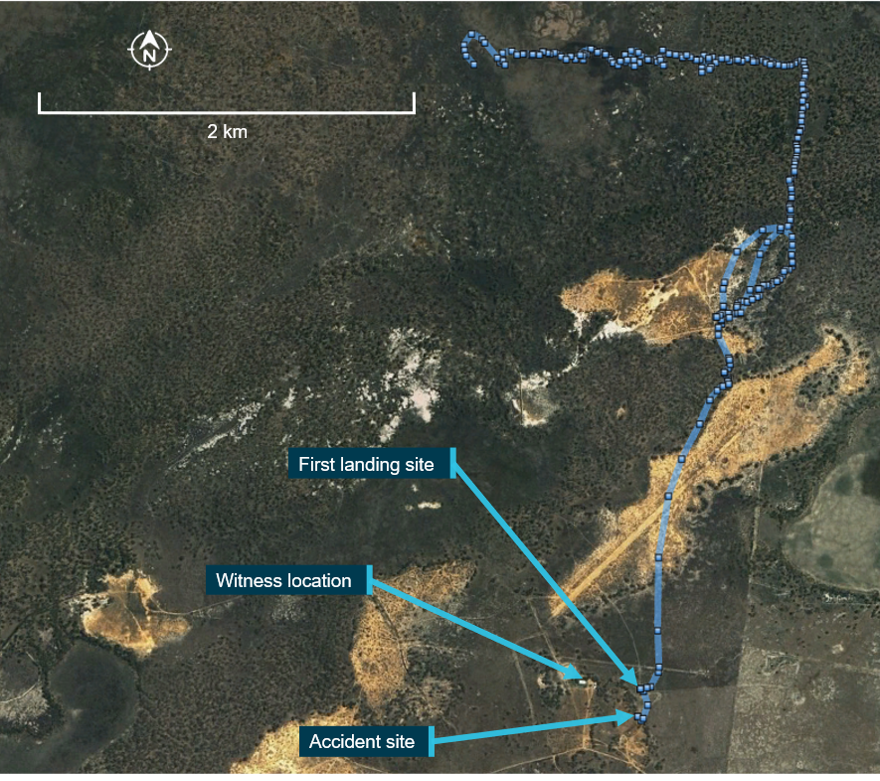
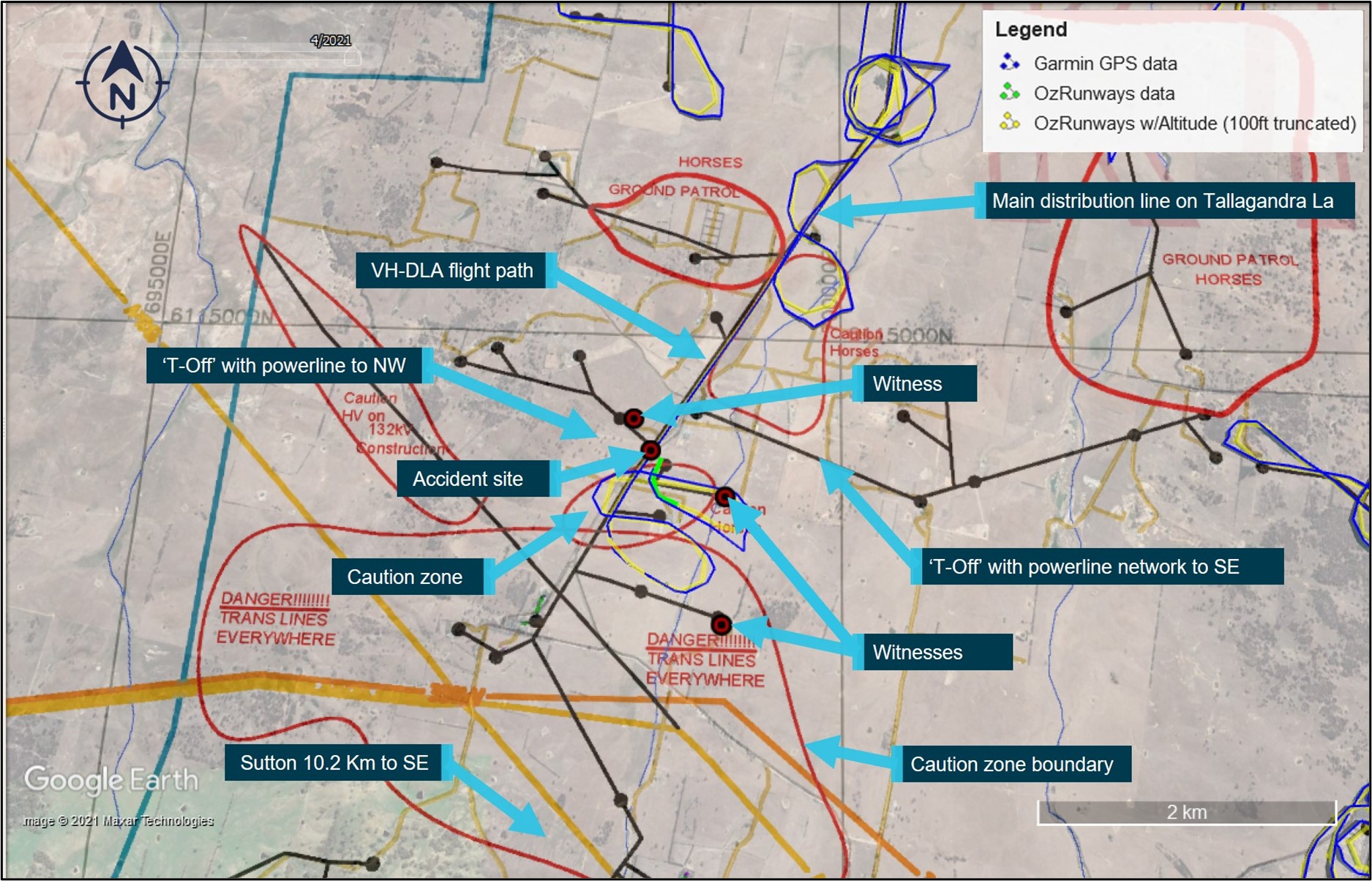
The pilot subsequently located the cattle and began moving them along a fence line toward the yards. They then flew ahead to open the gates to the yard. At about 1150, a witness located near the yards, observed the helicopter as it passed (Figure 2). The pilot landed the helicopter, exited and opened the first gate at the entrance to the yards.
Figure 2: Last section of flight from recorded GPS data
Source: Google Earth with data from onboard GPS, annotated by ATSB
A short time later, the witness heard the helicopter take-off and, very soon after, heard a loud bang. Suspecting that the helicopter had crashed, they drove initially to the front of the yards and, when they did not find it, they then drove around to the back of the yards and found the helicopter on its side. Shortly after, two more people arrived and first aid was rendered, however the pilot sustained fatal injuries. The helicopter was substantially damaged, with indications that it had sustained a wirestrike.
Context
Pilot information
The pilot held a Commercial Pilot Licence (Helicopter) and a class 1 aviation medical certificate, with no restrictions. They also held a single‑engine helicopter rating with grade 3 instructor rating, an aerial application rating with fire endorsement, and a low-level rating with sling and mustering endorsements.
An assessment of their logbook revealed the pilot had accrued approximately 3,017 flying hours with 2,525 on the Robinson R22. They had flown approximately 128 hours in the previous 90 days and 30 hours in the previous 30 days.
The pilot had completed a crew resource management, hazards and human factors course with the Aerial Application Association of Australia in 2018. This course covered the hazards involved in low level flying, including operations around powerlines.
The pilot was reported to be fit and healthy and there was no indication they were experiencing a level of fatigue known to affect performance.
Medical and pathological informational
The forensic pathologist who conducted the post-mortem examination concluded that the pilot succumbed to injuries sustained during the accident sequence. At the time of publication of this report, the finalised post-mortem and toxicology report were unavailable to the ATSB.
Aircraft Information
VH-KLY (KLY) was a two-seat Robinson Helicopter Company (RHC) R22 Beta helicopter, serial number 4424, and was powered by a Textron Lycoming O-360-J2A, four-cylinder piston engine. It was manufactured in 2009 and registered in Australia the same year. It was purchased by Stock & Station Aviation in July 2017 and had been maintained by the same maintenance organisation since that time.
The helicopter was maintained in accordance with the manufacturers’ maintenance schedule, which required a periodic inspection every 100 hours or 12 months, whichever came first. A periodic inspection was completed on 13 May 2021 and a review of the maintenance release issued at that time indicated no outstanding maintenance requirements or serviceability issues. KLY had accrued 2,633.4 total time in service.
The helicopter did not have wirestrike protection equipment fitted, nor was it available for this helicopter type due to a lack of securing structure. In addition, KLY was being operated with the doors removed.[3]
Flight data
The helicopter had a Garmin 660 GPS unit and a TracPlus surveillance system installed. TracPlus provided real-time tracking through a satellite or mobile phone network. It reported position, altitude, and speed at set time periods, in this case every 15 seconds.
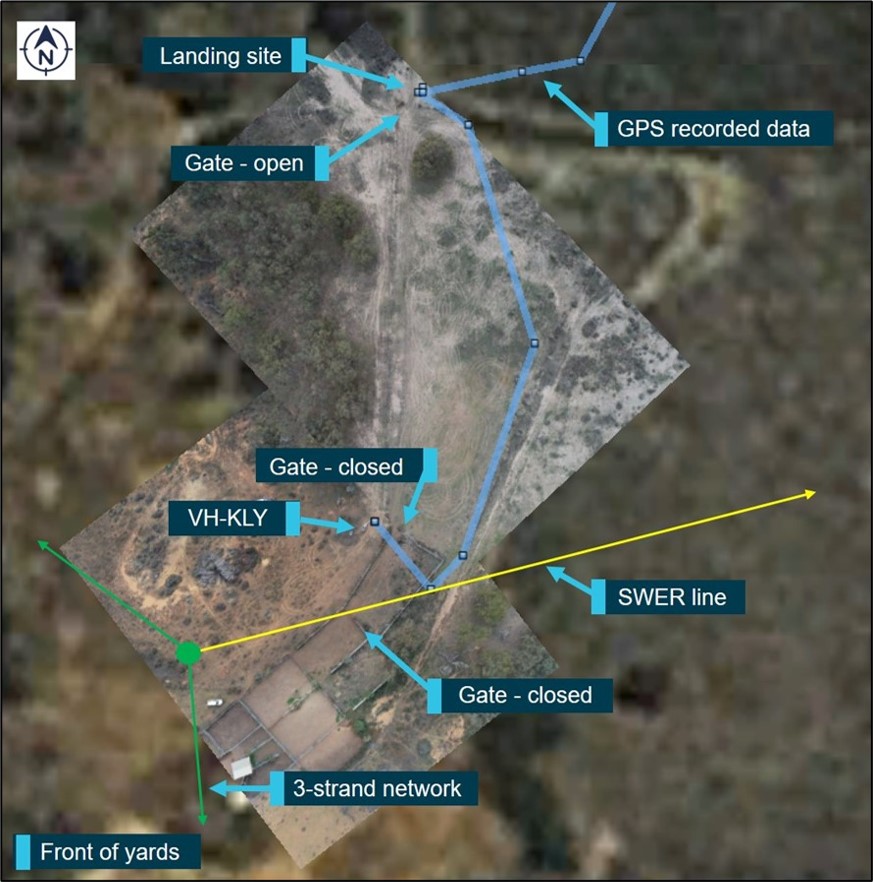
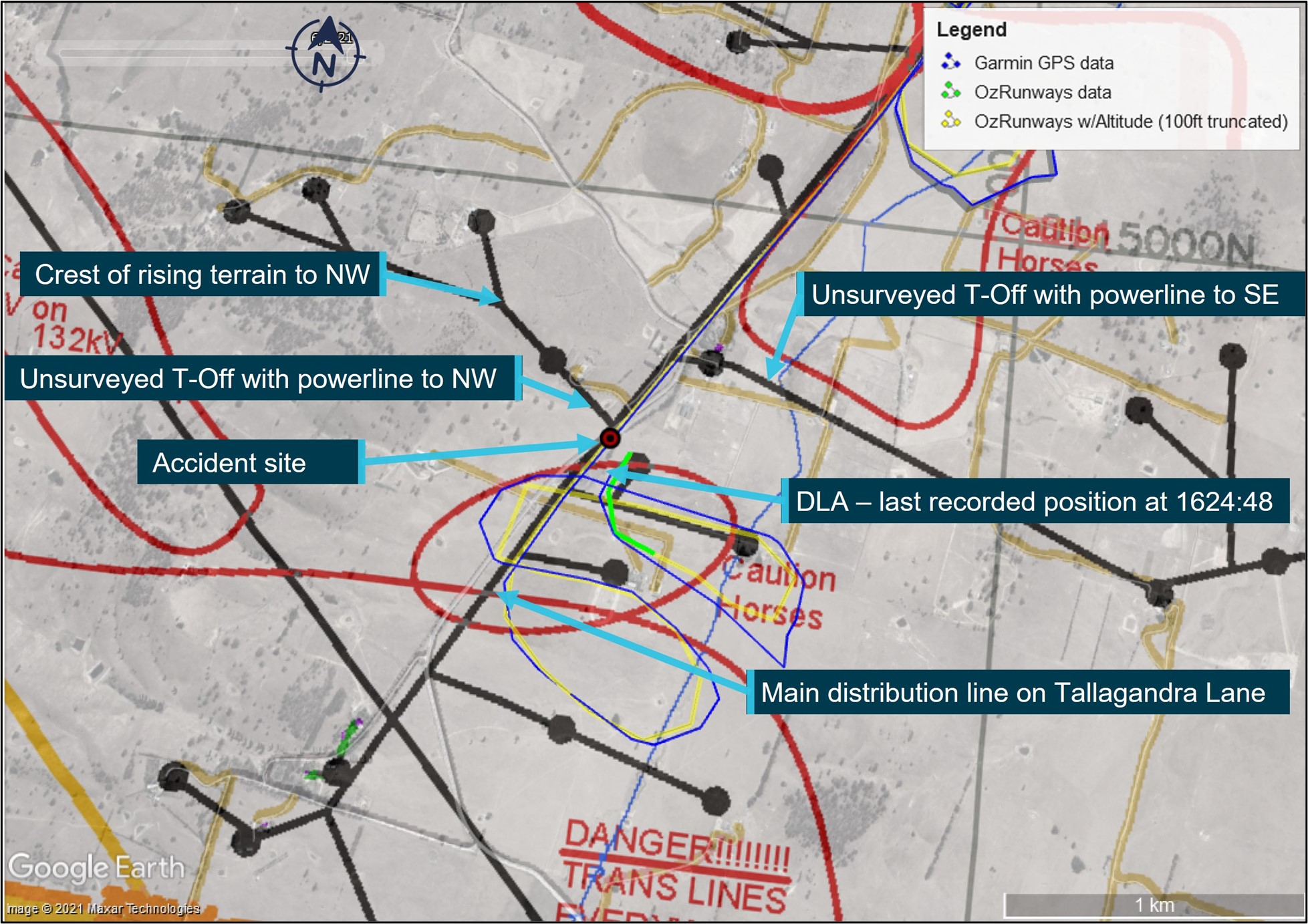
Analysis of the recorded flight data indicated KLY took off from the first gate at the yards and flew in a southerly direction, towards the second gate, at between 16–33 ft (5–10 m) above ground level (AGL) (Figure 3). The recorded groundspeed was about 22 kt, slowing to 15 kt[4] as the helicopter turned towards a closed gate adjacent to the accident site. This gate was required to be opened to allow the cattle access to the yards.
Analysis of the flight tracks flown during the previous days identified that the helicopter flew past the main yards once on the first day. On that flight, they flew in a northerly direction about 370 m east-south-east of the yards, passing over a single wire earth return (SWER) line (see the following section titled Powerline information) at approximately 280 ft AGL and at a speed of approximately 65 kt.
Figure 3: Flight track and powerline
Source: Google Earth, annotated by ATSB
Note: GPS data was recorded every 15 seconds so the line between track points was not necessarily representative of the actual flight path.
Powerline information
A power pole (green dot in Figure 3) was located about 75 m west-south-west of the accident site. It had one network consisting of 3-strands, which ran along the front of the yards. Above this, a SWER network ran across the northern side of the yards. The single strand was attached at the top of the pole at 10.48 m (34.4 ft) above the ground.
A SWER line is a single line of intertwined narrow-gauge steel wires. It spanned approximately 351 m to the next pole in the network. The minimum ground clearance of the SWER line was 7.23 m (23.7 ft). There were no markers or other devices installed on the powerline to enhance its visibility, nor was there a requirement to install such devices.
The power company advised there were no interruptions or surges reported in the electricity system at the time of the accident.
Visual cues during low-level flying
A key influence on the risk of a wirestrike when flying at low level is a pilot’s visual acuity in the given environmental conditions. According to Veillette (2015), the near invisibility of wires results from a number of factors including the:
size of the wire
viewing angle
sun position
condition of the aircraft’s transparencies (windscreen)
camouflaging effect of nearby vegetation.
Visibility of the powerline
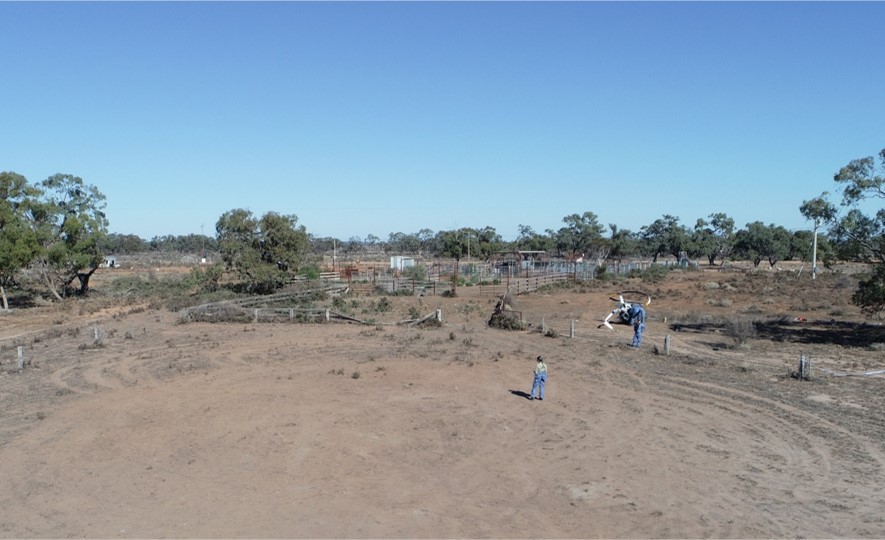
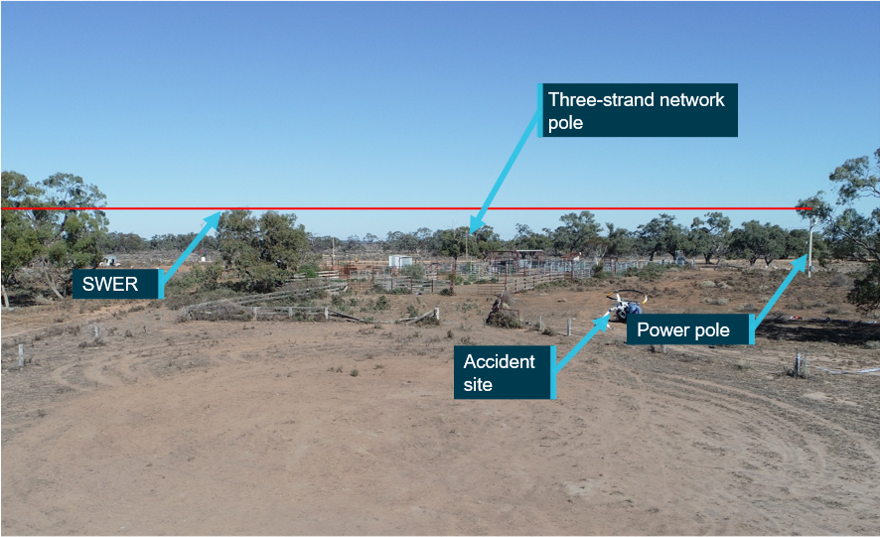
Using a remotely piloted aircraft system (RPAS), the ATSB recreated the approximate flight path of the helicopter at about the time of day the accident occurred. The RPAS was flown at a similar speed and height above the ground to provide an appreciation of the pilot’s perspective (Figure 4).
Figure 4: Image taken by RPAS along approximate helicopter flight path
Image source: ATSB
Figure 5: Approximate helicopter flight path perspective with the SWER marked
Image source: ATSB
Weather and sun position
The Bureau of Meteorology graphical area forecast for NSW–West valid at the time of the occurrence indicated that from 1200, the forecast visibility was greater than 10 km with scattered[5] cloud between 4,000 and 8,000 ft. The relevant grid point wind and temperature chart valid at the time, forecast a wind from 250° at 31 km/h (17 kt). Witnesses reported that there was no cloud cover and very little wind at the time of the accident.
At 1200 that day, the altitude[6] of the sun was about 34° and its azimuth[7] was about 005°. During the flight, the pilot was wearing an aviation helmet, fitted with a retractable sun visor, designed to reduce glare. It was reported the pilot was not using the visor however, given the position of the sun, there was minimal potential for it to have been a factor in the wirestrike.
Previous operations at the yards
It was reported that the pilot had first worked at the property in May 2020. Prior to beginning that muster, the pilot and the lead contractor flew over the yards noting the hazards, including both sets of powerlines. They had then mustered cattle to the yards over the following days, reportedly flying in from multiple directions.
The pilot had worked at the yards again in February 2021, mustering cattle to the yards over 3‑4 days. It was reported that during that muster, the pilot had been reminded of the SWER line while cattle were being mustered in the same direction as the accident flight.
Wreckage and impact information
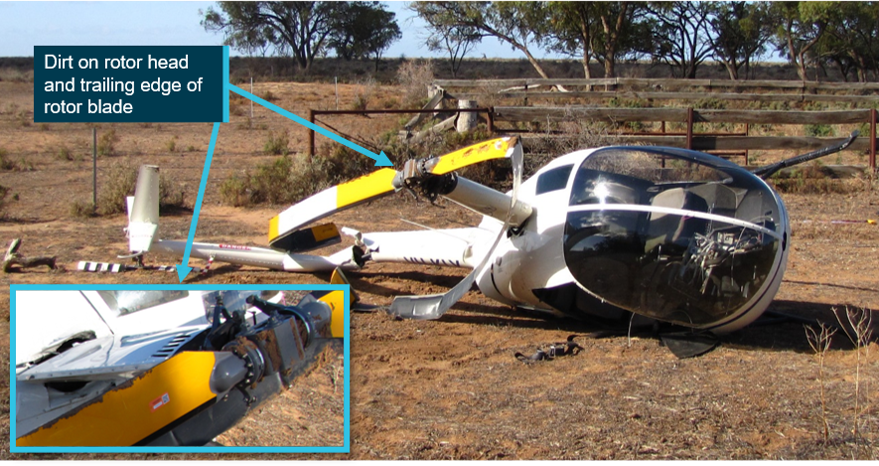
The wreckage was located on a dirt access road, just outside the fence at the north-west corner of the main yards. The area was clear flat ground with little grass and small shrubs (Figure 3). There was no evidence of a tree or bird strike, either on the helicopter, nor in the surrounding area.
All components of the helicopter were identified at the accident site. Examination of the site and wreckage indicated the helicopter collided with terrain largely inverted. Damage to the right side of the landing gear was consistent with a significant secondary impact, right side low and slightly nose up, before the helicopter came to rest on its right side, about 6 m from the initial impact point. The wreckage was located about 17 m from the SWER line.
Examination of the site and wreckage identified:
dirt embedded in the main rotor head assembly, the top and leading edge of one blade and the trailing edge of the second blade, along with ground scars consistent with the main rotor head and blades
the main rotor pitch links had failed in overstress
main rotor blade strike to the tail cone
no pre-existing defects with the rotors, drivetrain or flight controls that would have prevented normal flight
several indicators that the engine was providing power at the point of impact
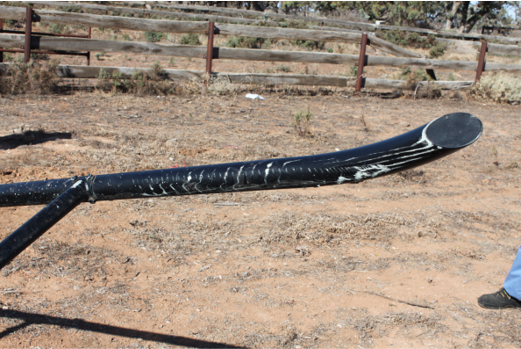
the left skid, forward of the crosstube, had marks consistent with a wirestrike.[8] The marks indicated that the relative contact had been both towards, and away from, the front crosstube (Figure 7)
the right skid had collapsed under the fuselage.
The windshield was noted to be clean and in good condition, thereby not hindering the pilot’s view. In addition, it was noted that the ELT transmitter was selected to the ‘OFF’ position (see the section titled Emergency locator transmitter).
Figure 6: VH-KLY
Source: ATSB
Figure 7: Landing gear front left skid
Source: ATSB
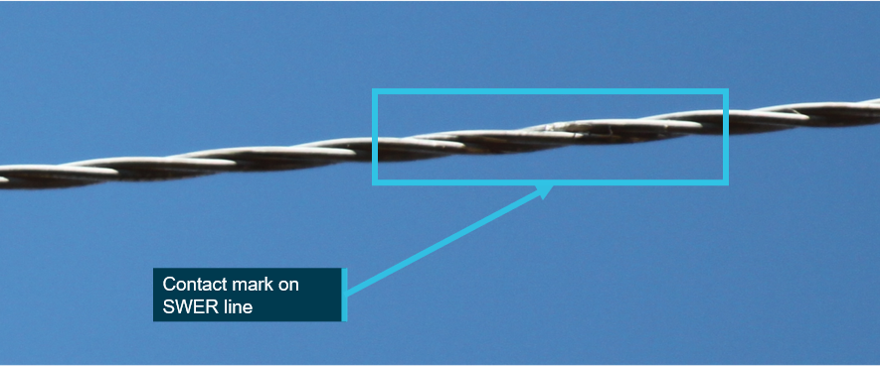
The SWER line was found intact and the insulators on the power poles at either end of the span were undamaged. A polished area was observed on the SWER line in the approximate location of the flight path, consistent with it being contacted (Figure 8). Equipment available to the ATSB during the initial site visit was not sufficient to enable a close inspection of the wire. This mark was not visible when the ATSB returned to the accident site approximately 4 weeks later.
Figure 8: Contact mark on SWER line
Source: ATSB
Survival aspects
The survivable space within the helicopter cabin was maintained throughout the accident sequence (Figure 6). The right (pilot) seat displayed minor creasing on the right side. The storage under the right seat was filled to the volumetric capacity,[9] however, as the helicopter was inverted when it collided with terrain, this was not considered to have contributed to the pilot’s injuries.
The pilot was wearing a three-point harness and aviation helmet, both of which were reported to have been fastened correctly.
There was evidence that the pilot may not been fully restrained within the structure of the helicopter during the accident sequence. The ATSB examined the pilot’s helmet at its Canberra technical facility and determined that it was structurally intact with no sign of cracking or fracturing of the composite outer shell and no damage to the inner shell. Dirt was identified on the back of the helmet with scratch marks which appeared to be recent, however it could not be established how or when they occurred.
Emergency locator transmitter
The optional emergency locator transmitter (ELT) fitted to the helicopter consisted of the transmitter, located in the main transmission bay and a remote switch/annunciator, which was located in the cabin, left of the cyclic. The ELT transmitter is normally selected to ‘ARM’.[10] With the transmitter selected to ARM, the three-position remote switch/annunciator, with indicator light, operated as follows:
ON – ELT activated
ARM – permitted ELT activation when subjected to high ‘G’ load
Test/RESET – allowed brief functional testing of the ELT or reset in case of inadvertent activation
Light – red light illuminated when the ELT was transmitting.
RHC recommended following the ELT manufacturer’s documentation for installation, operation and maintenance. The ELT manufacturer recommended a self-test ‘once a month but not more than once a week’. The ELT transmitter battery was to be replaced every 6 years, with the unit subject to specialised inspection and testing at the same time. The RHC periodic inspection included, ‘ELT (if installed): inspect condition and verify security’.
The maintenance organisation acknowledged that the ELT should be checked routinely during a maintenance inspection. They advised that they normally checked the security of the unit, battery expiry date, and conduct a self-test of the system. For reasons that could not be determined, the ELT had not been inspected by the maintenance organisation during the time they had maintained the helicopter.
Wreckage examination identified the remote switch/annunciator was in the ARM position and the transmitter was selected OFF. The position and orientation of the transmitter meant the switch position was unlikely to be discovered without performing a self-test. While it could not be determined if the pilot performed a self-test, it is most likely they did not as the test would have failed.
Testing of the ELT at the ATSB technical facilities, determined it was capable of activation and transmission. However, it was also determined that due to the angle the helicopter collided with terrain, it was possible the ELT would not have activated.
Calculations by the ATSB indicated the helicopter was within the prescribed weight and balance limits for the flight.
Related occurrences
A review of the ATSB database identified that, between 1 January 2010 and 31 December 2020 there were 350 reports of aircraft collisions with powerlines. Of these 12 resulted in fatal accidents, with an additional 25 accidents resulting in serious injuries.
Significantly, analysis of wirestrike accidents reported to the ATSB between 2001‑2010, showed that 63 per cent of the time pilots were aware of the presence of the wire before they struck it but had momentarily forgotten about it. Two such examples are detailed below.
On 13 March 2019, a Robinson R44 helicopter, registered VH-ZWK, was conducting aerial spraying operations at Bool Lagoon, around 20 km south of Naracoorte, South Australia. While spraying along a drainage channel, the pilot momentarily lost awareness of the powerline while manoeuvring over a bridge. Nearby vegetation, which reduced the pilot’s ability to see the power poles and visually identify the powerline, probably reduced the pilot’s ability to maintain this awareness. The helicopter was destroyed, and the pilot sustained minor injuries.
On the morning of 20 February 2016, the pilot of a Robinson R22 helicopter, registered VH-LYW, was conducting aerial cattle mustering operations on a property about 88 km north‑east of Roma, Queensland. The pilot had mustered in that paddock several times previously and was aware of a set of high voltage transmission wires that had been erected across the property in the previous 12 months.
Prior to commencing mustering, the pilot overflew the paddock, sighted the powerlines and formed a plan to muster the cattle from north to south, giving due consideration to the wires running east‑west. The pilot then mustered the mob from north to south, and the helicopter remained above the wires during that time. The pilot then saw another vegetated area near the dam, where cattle may have been hidden from view, and flew the helicopter towards it. While the pilot’s focus was on searching for cattle in the scrub below, the helicopter neared the powerlines. The pilot’s attention suddenly returned to the wires, sighting them close in front at the same level. The pilot attempted to avoid the wires however, the tail rotor struck the earth wire. The helicopter sustained substantial damage and the pilot was seriously injured.
These investigations, and others, highlight the dangers posed by powerlines during low-level operations. They emphasise importance of pre-flight planning and continual reassessment of where an aircraft is in relation to the wires.
Safety analysis
The pilot had been tasked to direct a stockperson to a small herd of cattle and then return to base. However, during the flight, the pilot changed this plan due to the identification of further cattle and decided they would muster the original herd to the main yards. The ATSB Avoidable accidents No.2 - wirestrikes involving known wires: A manageable aerial agricultural hazard advised pilots to reassess risks when plans are changed.
The pilot was aware of the powerline locations at the main yards from their previous operations however, that was a significant period of time before so their presence is unlikely to have been front of mind for the pilot as they flew towards the yard. Additionally, while the recorded flight data showed that the helicopter had passed the yards once in the previous days, it is considered unlikely that the pilot was assessing the hazards as there was no plan to use the yards during this muster and the helicopter overflew at a height significantly above the wire. Further, there was no indication of any subsequent flights over, or around, the yards that may have provided an opportunity to reassess known hazards, including during the accident flight.
On the accident flight, the pilot flew in a southerly direction from the entrance of the yards, most likely with the intention of landing and opening a second gate to allow cattle to enter the yard. The SWER line, which crossed the yard, was very difficult to detect due to the:
lack of contrast to the background
next power pole in the SWER network being outside the pilot’s normal field of view in the direction of flight
absence of markers on the SWER line to increase the line’s visibility.
In addition, the power poles from the 3-strand network were in the pilot’s forward view. While also difficult to detect, if the pilot had seen them, it may have given them a false assurance that the powerlines were not in their immediate operating area.
The direction of the marks on the left skid indicate that the left skid contacted the SWER line on an oblique angle. The marks indicated the wire had rubbed along the skid toward the front crosstube, and then away from the tube. This, and the relatively low forward airspeed, likely contributed to the SWER line not being severed. It could not be determined if the pilot had observed the wire prior to contact and was trying to avoid it, or if they reacted as the wirestrike occurred.
After contacting the wire, the helicopter collided with terrain in an inverted position. It then rolled over with the front of the right skid collapsing under the fuselage while coming to a rest on its right side.
The ELT remote switch in the cabin was in the ARMED position and, as such, it is likely the pilot would have believed the system was operational, unaware the transmitter was selected to OFF. Why the transmitter was deactivated, and not detected via periodic self-testing, could not be determined. In this instance however, there was no effect to the outcome as wreckage was located quickly due to the nearby witness.
Findings
ATSB investigation report findings focus on safety factors (that is, events and conditions that increase risk). Safety factors include ‘contributing factors’ and ‘other factors that increased risk’ (that is, factors that did not meet the definition of a contributing factor for this occurrence but were still considered important to include in the report for the purpose of increasing awareness and enhancing safety). In addition ‘other findings’ may be included to provide important information about topics other than safety factors.
These findings should not be read as apportioning blame or liability to any particular organisation or individual.
From the evidence available, the following findings are made with respect to the wirestrike and collision with terrain involving Robinson Helicopter Company R22, VH-KLY, 75 km west‑north‑west of Hay, New South Wales on 26 May 2021.
Contributing factors
The helicopter struck a powerline which was very difficult to detect, resulting in a loss of control and collision with terrain.
As there was no plan for the pilot to muster cattle to the main yard and they did not conduct an aerial inspection, it is likely the hazards around the yard had not been considered.
Sources and submissions
Sources of information
The sources of information during the investigation included:
the lead contractor for the muster
Stock and Station Aviation Pty Ltd
Robinson Helicopter Company
the maintenance organisation for VH-KLY
Civil Aviation Safety Authority
New South Wales Police Force
witnesses
recorded data from the helicopter.
References
Gibb, R., Scharff, L. and Gray, R., 2010. Aviation Visual Perception: Research, Misperception and Mishaps (Ashgate studies in human factors for flight operations). Ashgate Publishing Group.
Veillette, P., 2015. Wire wary: what you don't see can kill, and does. Business and commercial aviation.
Submissions
Under section 26 of the Transport Safety Investigation Act 2003, the ATSB may provide a draft report, on a confidential basis, to any person whom the ATSB considers appropriate. That section allows a person receiving a draft report to make submissions to the ATSB about the draft report.
A draft of this report was provided to the following directly involved parties:
the operator
lead contractor for the muster
Civil Aviation Safety Authority
Robinson Helicopter Company
United States National Transportation Safety Board.
A response was received from the Robinson Helicopter Company. The submission was reviewed and, where considered appropriate, the text of the report was amended accordingly.
Purpose of safety investigations
The objective of a safety investigation is to enhance transport safety. This is done through:
identifying safety issues and facilitating safety action to address those issues
providing information about occurrences and their associated safety factors to facilitate learning within the transport industry.
It is not a function of the ATSB to apportion blame or provide a means for determining liability. At the same time, an investigation report must include factual material of sufficient weight to support the analysis and findings. At all times the ATSB endeavours to balance the use of material that could imply adverse comment with the need to properly explain what happened, and why, in a fair and unbiased manner. The ATSB does not investigate for the purpose of taking administrative, regulatory or criminal action.
Terminology
An explanation of terminology used in ATSB investigation reports is available here. This includes terms such as occurrence, contributing factor, other factor that increased risk, and safety issue.
Publishing information
Released in accordance with section 25 of the Transport Safety Investigation Act 2003
Ownership of intellectual property rights in this publication
Unless otherwise noted, copyright (and any other intellectual property rights, if any) in this report publication is owned by the Commonwealth of Australia.
Creative Commons licence
With the exception of the Coat of Arms, ATSB logo, and photos and graphics in which a third party holds copyright, this publication is licensed under a Creative Commons Attribution 3.0 Australia licence.
Creative Commons Attribution 3.0 Australia Licence is a standard form licence agreement that allows you to copy, distribute, transmit and adapt this publication provided that you attribute the work.
The ATSB’s preference is that you attribute this publication (and any material sourced from it) using the following wording: Source: Australian Transport Safety Bureau
Copyright in material obtained from other agencies, private individuals or organisations, belongs to those agencies, individuals or organisations. Where you wish to use their material, you will need to contact them directly.
This preliminary report details factual information established in the investigation’s early evidence collection phase and has been prepared to provide timely information to the industry and public. Preliminary reports contain no analysis or findings, which will be detailed in the investigation’s final report. The information contained in this preliminary report is released in accordance with section 25 of the Transport Safety Investigation Act 2003.
The occurrence
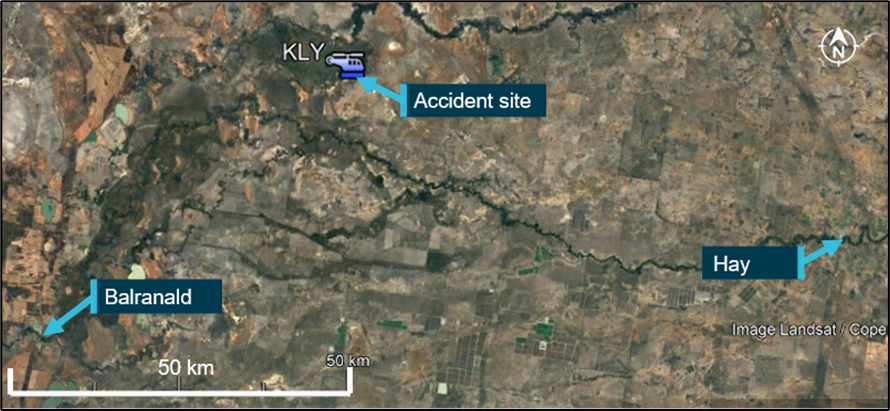
On 26 May 2021, the pilot of a Robinson R22 Beta helicopter, registered VH-KLY (KLY) and operated by Stock & Station Aviation, was conducting mustering operations on a property 75 km west‑north-west of Hay, New South Wales (Figure 1). The pilot was the only person on board.
Figure 1: Accident location
Source: Google maps annotated by the ATSB
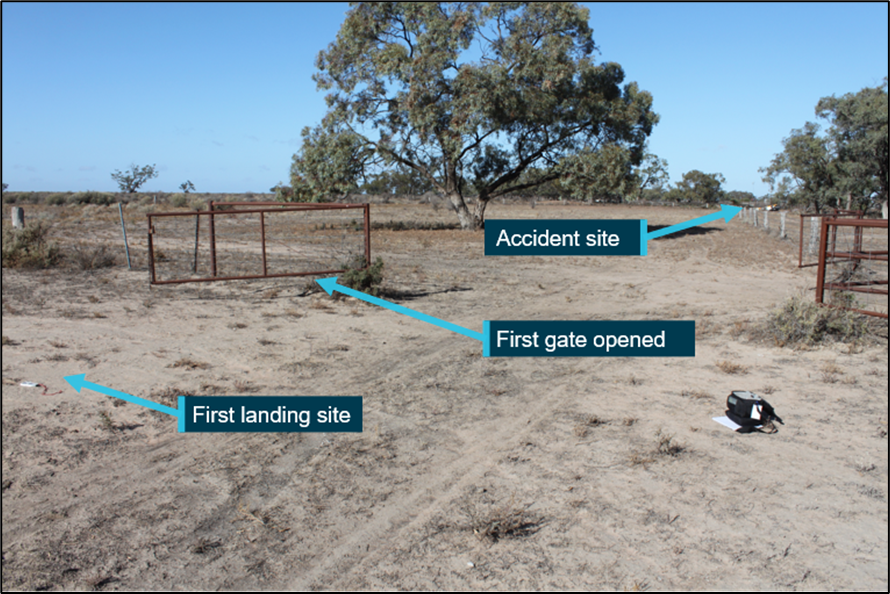
At about 1150 Eastern Standard Time,[1] the pilot was moving a small group of cattle along a fence line to yards, where they were to be loaded on to a truck and removed from the property. The pilot flew ahead of the cattle to open the gates to the yard, with witnesses observing the helicopter as it passed their house. The pilot landed and exited the helicopter, then opened the first gate at the entrance to the yards (Figure 2).
Figure 2: First landing site
Source: ATSB
A short time later, a witness at the house heard the helicopter take-off and, very soon after, heard a loud bang. Suspecting that the helicopter had crashed, they drove to the yards and found the helicopter on its side. First aid was rendered to the pilot however, they sustained fatal injuries. The helicopter was substantially damaged.
Context
Flight data
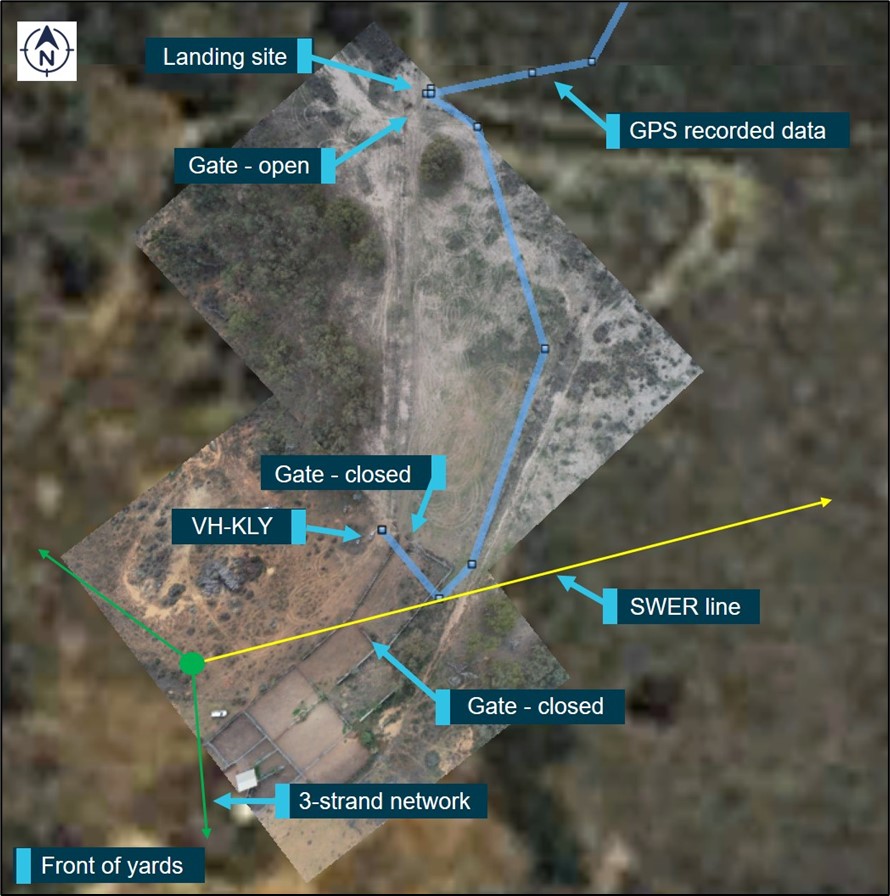
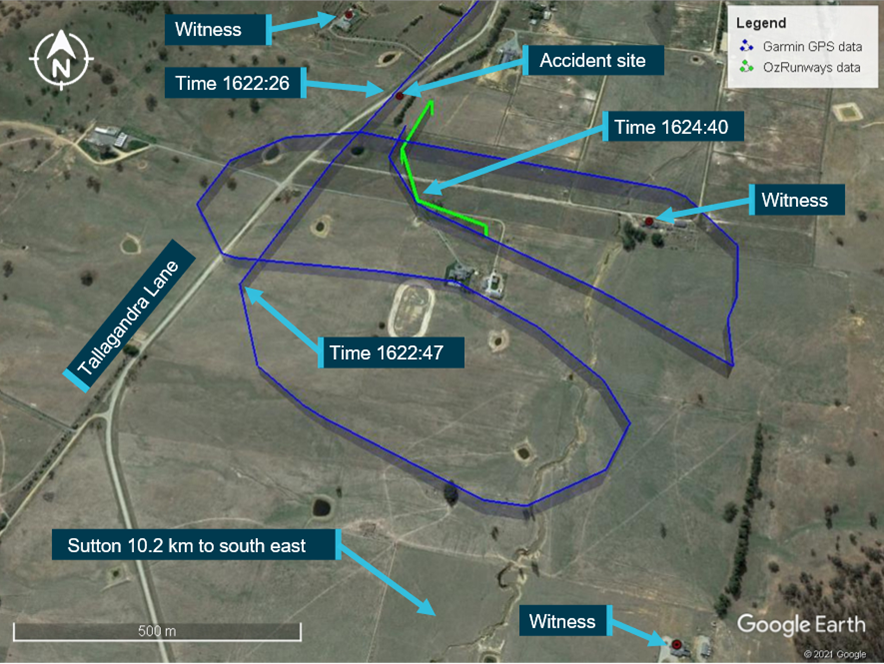
Analysis of recorded flight data indicated KLY took off from the landing site at the first gate and flew in a southerly direction toward the yards at between 20–30 ft (6–9 m) above ground level (AGL) and up to 27 kt (Figure 3). The track then turned slightly towards a gate which was required to be opened to allow the cattle through. This gate is adjacent to the accident site.
Figure 3: KLY flight data
Source: Google Earth, annotated by the ATSB
Wreckage information
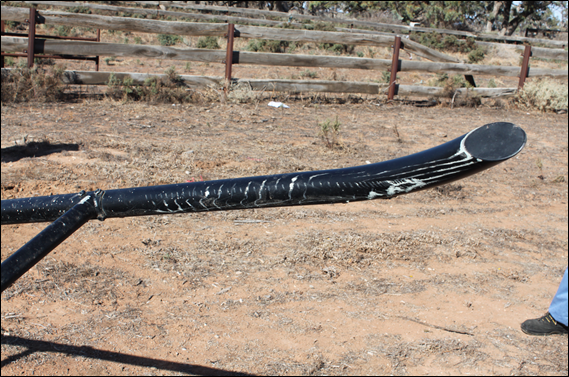
All of the major aircraft components were accounted for at the site. Examination of the aircraft’s flight controls, engine and aircraft structure did not identify any pre‑existing defects. However, there was evidence of wire strike marks on the front of the helicopter’s left skid (Figure 4).
Figure 4: Wire strike marks on left skid
Source: ATSB
Powerline
A single wire earth return (SWER) line runs across the yard (Figure 3). This line runs from a power pole adjacent to the yards to a pole approximately 351 m away. The wire is attached to the power pole closest to the yards at 34 ft (10 m) AGL and the minimum height of the wire as it spans between power poles is 24 ft (7 m) AGL. The helicopter came to rest about 27 m from the wire.
Ongoing investigation
The investigation is continuing and will include examination of:
aircraft maintenance documentation and operational records
recorded data
weather information
wire visibility
accident survivability
pilot qualifications and experience.
Should any safety critical information be discovered at any time during the investigation, the ATSB will immediately notify operators and regulators so appropriate and timely safety action can be taken.
A final report will be published at the conclusion of the investigation.
Purpose of safety investigations
The objective of a safety investigation is to enhance transport safety. This is done through:
identifying safety issues and facilitating safety action to address those issues
providing information about occurrences and their associated safety factors to facilitate learning within the transport industry.
It is not a function of the ATSB to apportion blame or provide a means for determining liability. At the same time, an investigation report must include factual material of sufficient weight to support the analysis and findings. At all times the ATSB endeavours to balance the use of material that could imply adverse comment with the need to properly explain what happened, and why, in a fair and unbiased manner. The ATSB does not investigate for the purpose of taking administrative, regulatory or criminal action.
Terminology
An explanation of terminology used in ATSB investigation reports is available here. This includes terms such as occurrence, contributing factor, other factor that increased risk, and safety issue.
Publishing information
Released in accordance with section 25 of the Transport Safety Investigation Act 2003
Ownership of intellectual property rights in this publication
Unless otherwise noted, copyright (and any other intellectual property rights, if any) in this report publication is owned by the Commonwealth of Australia.
Creative Commons licence
With the exception of the Coat of Arms, ATSB logo, and photos and graphics in which a third party holds copyright, this publication is licensed under a Creative Commons Attribution 3.0 Australia licence.
Creative Commons Attribution 3.0 Australia Licence is a standard form licence agreement that allows you to copy, distribute, transmit and adapt this publication provided that you attribute the work.
The ATSB’s preference is that you attribute this publication (and any material sourced from it) using the following wording: Source: Australian Transport Safety Bureau
Copyright in material obtained from other agencies, private individuals or organisations, belongs to those agencies, individuals or organisations. Where you wish to use their material, you will need to contact them directly.
On 23 April 2021, a Van’s Aircraft RV-7A, registered VH-XWI, was being operated on a private flight under the visual flight rules (VFR) from Winton to Bowen, Queensland. The pilot, the sole occupant and the owner of the aircraft, had been on a multi-day tour in company with 3 other pilots, each operating their own aircraft.
About 2 hours after departing Winton, and about 90 km south of Charters Towers, the aircraft sustained an in-flight break-up. The pilot was fatally injured, and the aircraft was destroyed.
What the ATSB found
The ATSB found that the pilot departed Winton with a high risk of encountering adverse weather conditions along the planned route. About 100 km into the flight, overhead Catumnal Station, the pilot most likely entered instrument meteorological conditions (IMC) and lost control of the aircraft several times, recovering control within 50 ft of the ground. The pilot then turned back towards Winton.
About 11 km into the return leg, the pilot resumed track to Bowen, climbing to above 10,000 ft. The pilot flew at multiple altitudes between 10,000 ft and 500 ft above the ground, most likely to avoid weather along the track. The pilot again likely entered weather conditions before becoming spatially disorientated, resulting in loss of aircraft control. This led to the airspeed limitations of the aircraft being exceeded before rudder flutter structurally compromised the tail group, leading to a catastrophic airframe failure and in-flight break-up.
There were no operational reasons for the pilot to continue the flight to Bowen, and the pilot probably had a self-imposed motivation or pressure to continue the flight.
Safety message
VFR into IMC accidents usually result in a fatal outcome, and they are one of the most common types of fatal accidents in general aviation. Safety lessons to minimise the risk have been published in many sources, including the ATSB publication Accidents involving Visual Flight Rules pilots in Instrument Meteorological Conditions. Some of these lessons for VFR pilots include:
Avoid deteriorating weather by conducting thorough pre-flight planning. Ensure you have alternate plans in case of an unexpected deterioration in the weather, and make timely decisions to turn back, divert or hold in an area of good weather.
If you encounter deteriorating weather, turn back or divert before you are caught in cloud. For a non-instrument rated pilot, even with basic attitude instrument flying proficiency, maintaining control of an aircraft in IMC by reference to the primary flight instruments alone entails a very high workload that can result in narrowing of attention and loss of situational awareness.
Recognise that weather often does not act as the forecast predicts. You must have alternatives available and be prepared to use them—even if it means returning to your departure point.
Use a ‘personal minimums’ checklist to help control and manage flight risks by identifying risk factors that include marginal weather conditions and only fly in environments that do not exceed your capabilities. A personal minimums checklist is an individual pilot’s own set of rules and criteria for deciding if and under what conditions to fly or to continue flying based on your knowledge, skills and experience. In other words, to be a competent pilot, you must know and fly within your own limitations.
The investigation: Decisions regarding the scope of an investigation are based on many factors, including the level of safety benefit likely to be obtained from an investigation and the associated resources required. For this occurrence, a limited-scope investigation was conducted in order to produce a short investigation report and allow for greater industry awareness of findings that affect safety and potential learning opportunities.
The occurrence
Events prior to departure
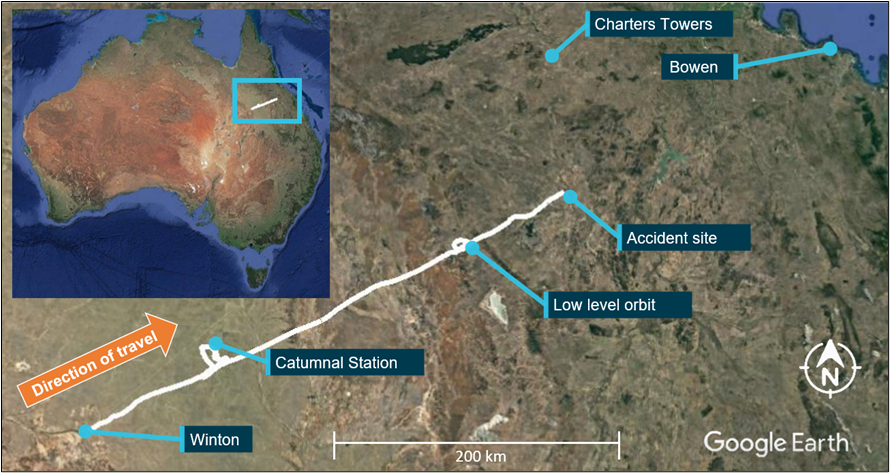
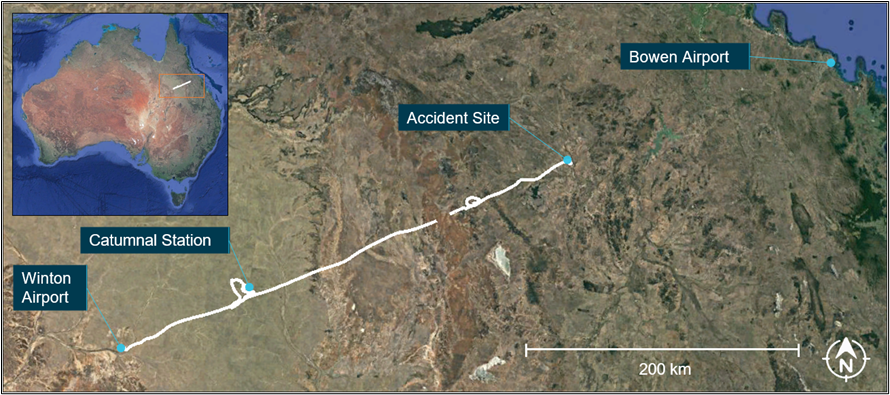
On 23 April 2021, a Van’s Aircraft RV-7A, registered VH-XWI, was being operated on a private flight from Winton to Bowen, Queensland (Figure 1).
The owner/pilot was the sole occupant and had been on a multi-day tour in company with 3 other pilots, each operating their own aircraft. The 4 aircraft were all travelling to the same event, being held near Bowen.
Prior to departing from Winton, the pilots discussed the forecast weather conditions for the planned flight, including their arrival at Bowen. Due to the likelihood of adverse weather towards the coast, the other pilots elected to operate to Bowen under the instrument flight rules[1] (IFR), while the pilot of VH-XWI, being restricted to operating in visual meteorological conditions[2] (VMC), departed under a daytime visual flight rules[3] (VFR) flight plan.
Figure 1: Flight track of VH-XWI from Winton to Bowen
Source: Google Earth with Aireon data, annotated by the ATSB
Accident flight
Witnesses stated that VH-XWI was last of the 4 aircraft to depart. Recorded data showed that the aircraft departed Winton at about 0751 local time and set a north-east course to track to Bowen, climbing to 7,500 ft above mean sea level (AMSL) for the 600-km flight.
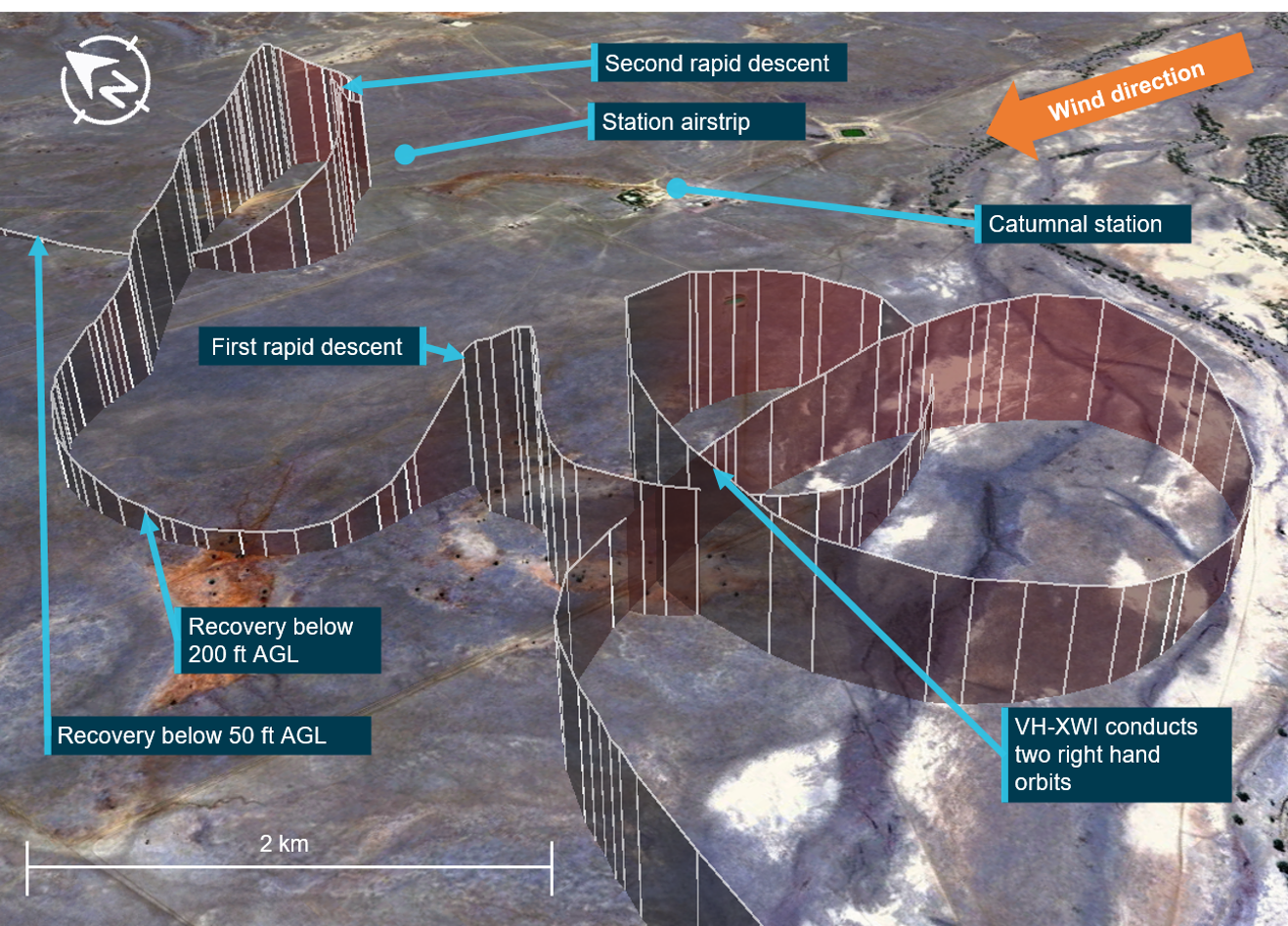
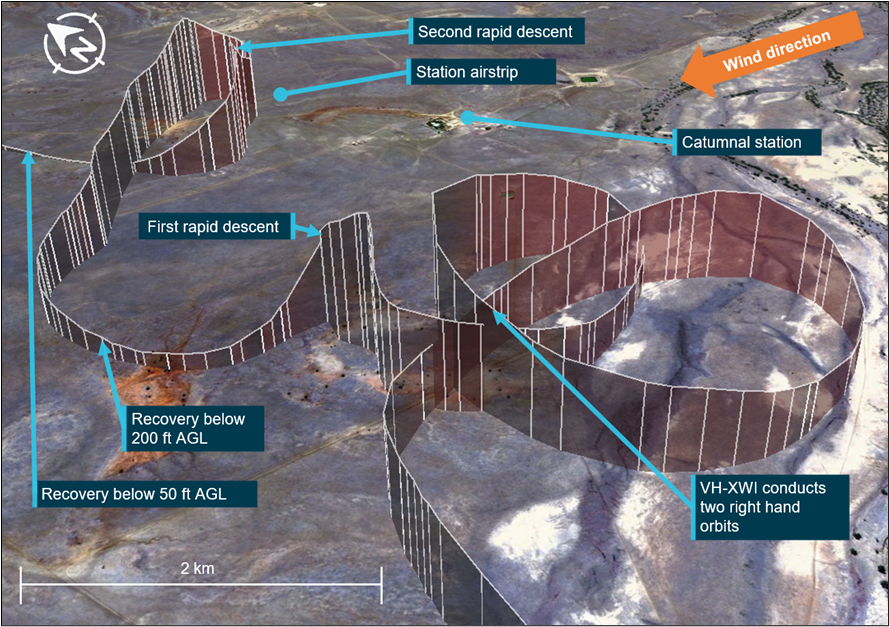
At 0826, when the aircraft was near Catumnal Station, about 100 km north-east of Winton, the aircraft descended to about 500 ft above ground level (AGL) (Figure 2). The aircraft conducted 2 right orbits about 7 km to the south-west of Catumnal Station at indicated airspeeds as low as 25 kt, before rapidly descending to less than 200 ft AGL.
Figure 2: Flight path of VH-XWI over Catumnal Station
Source: Google Earth with Aireon data, annotated by the ATSB
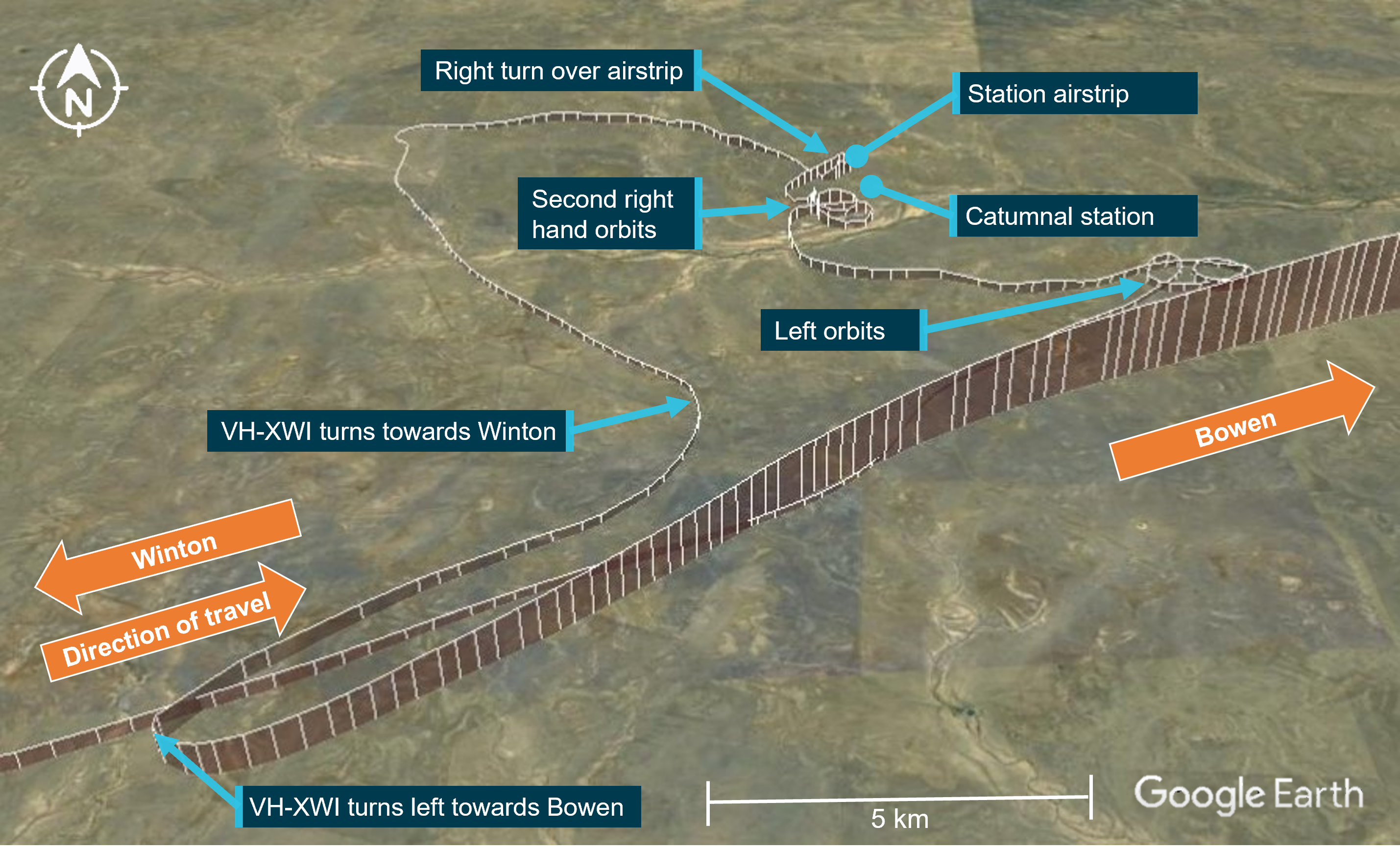
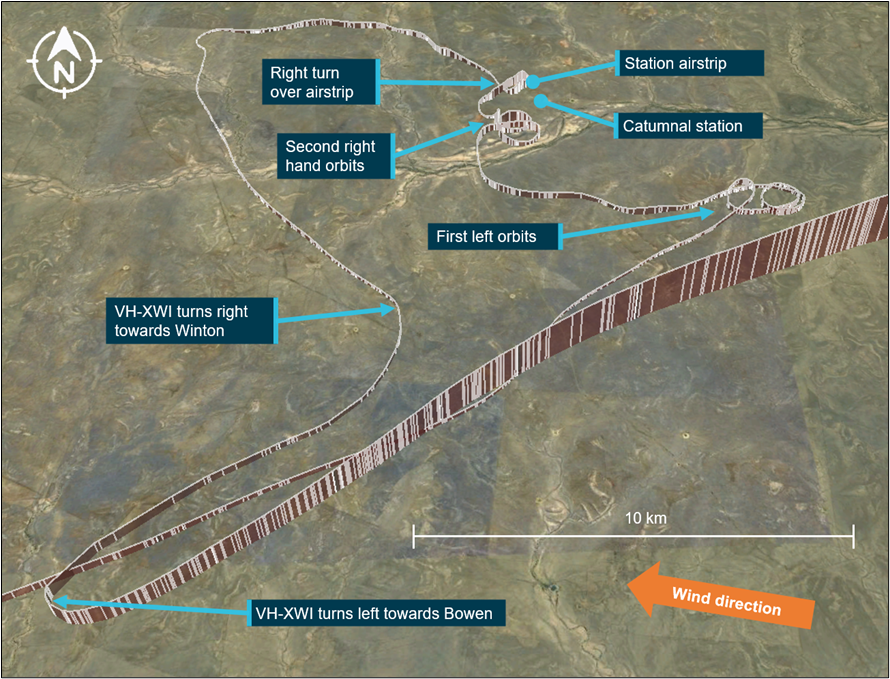
The aircraft then climbed back up to about 1,000 ft AGL. At about 0829, when overhead the station airstrip, the aircraft’s airspeed reduced to about 43 kt while the aircraft conducted a right turn. It then rapidly descended to less than 50 ft AGL before climbing away from the station, and turning back towards Winton (Figure 3).
Figure 3: Flight path of VH-XWI in the vicinity of Catumnal Station
Source: Google Earth with Aireon data, annotated by the ATSB
At 0838, about 11 km after turning towards Winton, the aircraft conducted a left climbing turn then commenced a track towards Bowen and climbed to about 10,500 ft AMSL.
At 0936, when about 290 km north-east of Winton, the aircraft descended to about 1,000 ft AGL. It then conducted a large left orbit before turning back towards Bowen and climbing to about 9,000 ft AMSL.
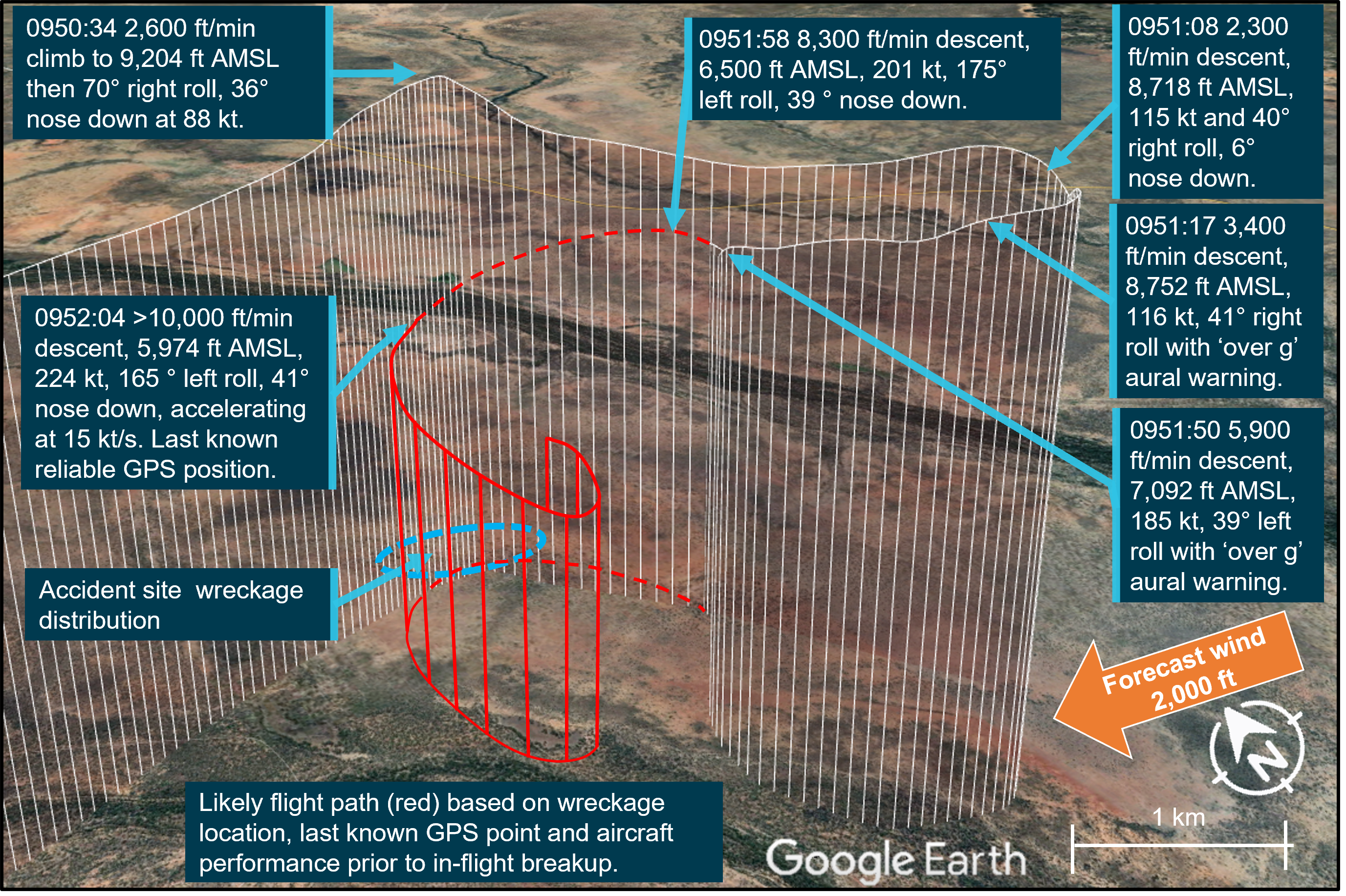
At 0950, when about 370 km north-east of Winton (and about 90 km to the south of Charters Towers), the aircraft conducted an abrupt 90° right turn, followed by a series of further turns, with airspeed and altitude fluctuations. Soon after, the aircraft was in a right descending turn. It then rolled to the left and continued until almost inverted, and then pitched towards the ground.
At the last recorded GPS position (0952:04), the aircraft was at a recorded altitude of about 6,000 ft, where it had rolled 165° to the left and pitched down 41°. It was descending at more than 10,000 ft/min at an indicated airspeed of 224 kt and was accelerating at 15 kt/s (Figure 4). This recorded airspeed was more than 20% over the never exceed speed (VNE) for the RV-7A.
Figure 4: VH-XWI accident sequence
Source: Google Earth with Dynon data, annotated by the ATSB
Based on the wreckage distribution and the nature of the wreckage, it was evident that VH-XWI sustained an in-flight break-up before the wreckage collided with terrain. The pilot was fatally injured, and the aircraft was destroyed.
Other information
In-flight radio contact between the pilot of VH-XWI and the 3 other pilots in company was made intermittently. These pilots recalled that, during the flight, the pilot of VH-XWI indicated that they would descend from 7,500 ft to 3,500 ft due to cloud. The pilot of VH-XWI then advised the group that they were unable to ‘get through’ and decided to descend below the cloud to continue the flight to Bowen. Sometime later the pilot of VH-XWI advised that they were ‘going to turn back’.
On landing at Bowen, the other pilots checked on the progress of VH-XWI using web-based aircraft tracking software and saw that VH-XWI’s track had stopped. They then alerted the Joint Rescue Coordination Centre.
Context
Pilot information
Qualifications and experience
The pilot held a valid private pilot licence (aeroplane), initially issued in August 1975, and was qualified to fly by day under the visual flight rules (VFR). Their licence was reissued as a Civil Aviation Safety Regulation (CASR) Part 61 licence on 3 May 2021, for single-engine aeroplanes, with endorsements for manual propeller pitch change and retractable undercarriage. The pilot had a total flying experience of 276.8 hours prior to the accident flight.
After receiving their private licence in 1975, the pilot flew several times a month until about 1981 before taking a break from flying for about 3 years. In 1984 they conducted a flight review and continued flying 3-4 times a year until January 1990. Most of their total flight time (216.1 hours) was conducted prior to January 1990. The remaining 60.7 hours was conducted in VH-XWI from July 2020 to March 2021.
In July 2020, the pilot accompanied a test pilot in 17 hours of initial flight testing of VH-XWI (in a non-flying capacity). When phase 1 flight testing of VH-XWI was finalised, the pilot began to undertake flight training in the aircraft with a flying school in September 2020. The pilot flew with a number of instructors and completed 9.4 hours of dual training. Flying school records indicated that there were a number of areas that remained inconsistent when not coached by instructors and therefore the chief flying instructor believed that the pilot was not yet of a standard to be considered ready for a flight review.
In February 2021, the pilot conducted a further 3.9 hours of flight time in VH-XWI with another flying school before passing a flight review on 18 February 2021. The instructor noted that the pilot seemed careful and made good decisions, however spent considerable time focussed on instrumentation inside the cockpit to the detriment of heading and altitude. The instructor further remarked that this was not uncommon for pilots presenting for flight reviews in aircraft such as the RV-7A that were equipped with glass cockpits.[4] The instructor added that the pilot was experimenting with the glass cockpit and demonstrated the use of the autopilot during one leg of the navigation exercise.
The instructor recalled that, during initial stalling exercises, the pilot overly pitched the aircraft forward during the recovery, however subsequent stalls were conducted to an acceptable standard. During advanced stalling, with full flaps selected, the aircraft had a wing drop that the pilot recovered with aileron. After discussion and a number of other recoveries with rudder, the instructor was satisfied that the pilot had met an acceptable standard.
During the flight review, the pilot was given an engine failure and conducted a practice forced landing to an acceptable standard. Navigation diversions and instrument flying scenarios were not conducted during the flight review. The instructor stated that these were optional during a day VFR flight review.
After completing their flight review, the pilot operated VH-XWI on numerous local and cross-country flights, leading up to the planned multi-day tour with the 3 other pilots.
Medical information and recent history
The pilot was 74 years old and held a valid basic class 2 medical certificate, with the last examination conducted on 1 February 2021. This type of certificate is based on the standard required for a commercial motor vehicle driver’s licence declaration, verified by a general practitioner.
A post-mortem examination and toxicological screen were performed, with no evidence of incapacitation or effects of alcohol or other drugs.
Due to the pilot being away from home for the days preceding the accident, a detailed recent history could not be obtained. However, from the limited information available, there were no fatigue-related concerns identified.
Aircraft information
General
The Van’s Aircraft RV-7A is a low-wing, all-metal, high-performance, amateur-built aeroplane. It has a 2-seat, side-by-side configuration. It is supplied in kit form and is designed to be constructed for the education and recreation of the owner. The RV-7A has a fixed, tricycle landing gear and is suitable for cross-country flying, with speed ranges from 56–200 kt, and can be operated between +6 g and -3 g,[5] making it suitable for flying aerobatic manoeuvres.
VH-XWI was registered in the experimental category. Pilots and passengers of experimental aircraft in Australia accept the risk that the aircraft may not meet the same airworthiness safety standards as certified aircraft, and therefore operate on the basis of informed participation.[6]
Airworthiness
The Special Certificate of Airworthiness issued to VH-XWI on 26 August 2020 indicated in the annexure, among other requirements, that the aircraft be operated ‘by day and under VFR only’.
The airframe hours prior to the accident flight were unable to be established as the maintenance release was not located at the accident site. The most recent entries in the aircraft and engine maintenance logs were on 10 April 2021, about 13 days prior to the accident. They showed that the aircraft had accumulated 84.8 hours total time in service. Prior to that, the aircraft had received an oil change and a new oil filter at 25.2 hours on 10 August 2020, with no evidence of contaminants found in the filter.
Operating limitations
Aircraft operating limitations were contained within the aircraft pilot’s operating handbook (POH), and the relevant airspeed limitations are detailed in Table 1.
Table 1: Airspeed limitations
Speed
Knots indicated airspeed (KIAS)
Remarks
VNE – never exceed
200
Do not exceed this speed in any operations.
VNO – maximum structural cruising speed
168
Do not exceed this speed except in smooth air.
VMA
123
Do not make full control movements above this speed. Full elevator deflection will result in a 6g load at this speed.
Stall speed (no flaps)
56
Stall speed (landing configuration)
50
Never exceed speed
The aircraft structure was designed to support aerobatic operations with a never exceed speed (VNE) of 200 kt. The calculation of this speed is driven by structural or aerodynamic limitations; however, control system flutter is typically one limitation that factors heavily into the calculation of VNE.
Flutter is an oscillatory motion of a wing or flight control. Aerodynamic vibration starts when aerodynamic forces cause a structure to deflect in a way that alters the aerodynamic force being generated, resulting in a feedback loop. This oscillation may be damped, stable (non-divergent) or unstable (divergent). Undamped forms of vibration are known as flutter. Small changes to conditions can change the mode of oscillation rapidly. The onset of flutter in aircraft is usually instantaneous and normally leads to catastrophic failure.
Factors that can contribute to flutter include high speed, a reduction in structural or system stiffness, or an incorrect or a change in control surface mass distribution. The flutter speed is dependent on many individual aspects of the aircraft and the way the aircraft is being flown at any time.
The RV-7A has an open-circuit rudder control system, and cable tension in a control circuit affects the flutter speed for that circuit. Flutter speed variation can be affected by the pressure on the rudder pedals, the centre of mass of the control surface or free play in a trim tab. Therefore, a VNE of 200 kt does not mean the aircraft will flutter immediately above this speed.
Fuel
The aircraft operated on aviation gasoline (avgas) and had a usable capacity of 159 L in 2 (80 L) wing tanks. The aircraft was refuelled prior to departure from Winton, with records indicating that about 75 L was uplifted.
Recorded data provided by the aircraft instrumentation indicated an average fuel burn across the entire flight of about 29 L/hour, with straight and level cruise sectors at about 75–80% power settings using about 35 L/hour. The data also indicated that the fuel pressure remained uniform throughout the flight, and, at the time of the accident, the aircraft had about 51 L in the left tank and about 43 L in the right.
The recorded data provided detailed fuel quantity readings that were consistent throughout the flight, leaving a high degree of certainty that 94 L of fuel remained on board the aircraft at the time of the accident. This equated to a further 2 hours flight time, which was sufficient to divert to another landing area or continue to Bowen.
Instrumentation and systems
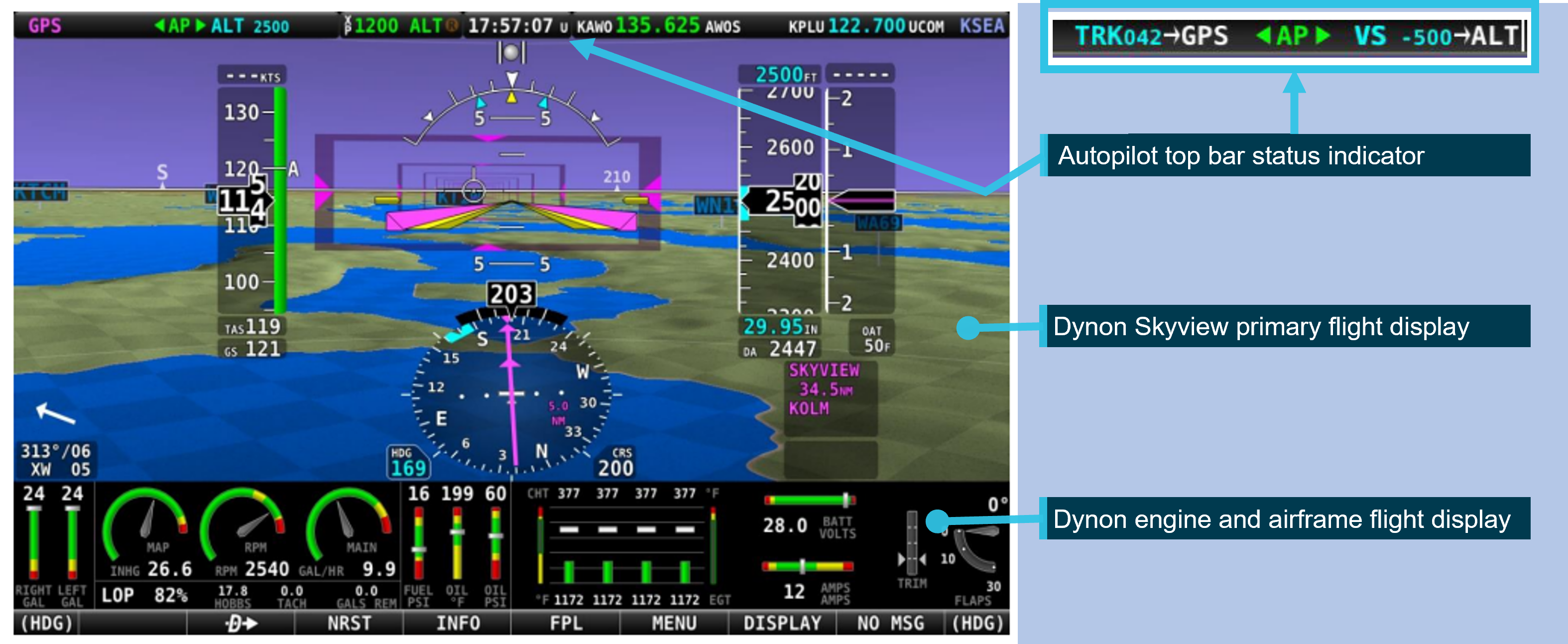
VH-XWI was fitted with a Dynon Skyview HDX primary flight display (Figure 5). The Skyview system incorporated various communication and GPS navigation systems.
The aircraft was fitted with a 2-axis Dynon Skyview autopilot which had multiple modes of operation, including a level mode. When selected, the autopilot’s level mode will immediately attempt to reach zero vertical speed and zero roll angle. It will not attempt to fly the aircraft to any previous pilot-selected altitude, track or other selected inputs. When activated, level mode will cause the autopilot to engage if it was not already engaged. Level mode is engaged by pushing the LEVEL button on the autopilot panel.
The Dynon Skyview HDX included a stall warning system that incorporated an angle of attack (AoA)[7] indicator to measure and provide an audio alert if the AoA increased significantly. The Dynon Skyview HDX pilot user guide stated:
AOA Alerts: When AOA audio alerting is enabled, it enables a progressive tone that increases in intensity as AOA increases. It is similar in nature to a conventional reed-type aircraft stall warning sound, although it is much more predictable in its progression. It can be set to start its progressive tones at either the border of the yellow/green marks on the AOA bars, the middle of the yellow, or at the yellow/red border. The tones start at the level selected and get progressively quicker and closer together until a solid tone is played at critical AOA (in the red).
The test pilot confirmed the correct operation of the AoA alert system during VH-XWI’s flight testing.
Meteorological information
Bureau of Meteorology forecasts indicated there was significant cloud, reduced visibility and adverse weather predicted for the intended duration of the flight from Winton to Bowen. Although generally better weather conditions existed inland of the east coast of Queensland, these were forecast to deteriorate from greater than 10 km visibility down to about 1,000 m in isolated thunderstorms with showers, rain and broken cloud from 800 ft to above 10,000 ft. Severe icing and turbulence were expected within the proximity of isolated thunderstorms and cumulonimbus.
A witness at Catumnal Station, about 100 km north-east of Winton, heard an aircraft overhead the station for a period of time, consistent with the recorded data from VH-XWI; however, they were unable to visually identify the aircraft due to the presence of fog.
A witness at Pajingo Station, about 17 km to the north-west of the accident site, recalled hearing an aircraft operating in the vicinity at about 1000. They did not see the aircraft in flight but indicated that the weather at the station was heavily overcast and raining on and off most of the morning.
The night before the flight to Bowen, the pilot contacted the test pilot, who had conducted the initial test flying of the aircraft. In general conversation about the trip, the weather forecast for the next day’s flight was discussed. The test pilot recalled that, despite the forecast, the pilot expressed a strong desire to remain with the group, even though predicted weather may not have been conducive to visual flight.
One of the pilots travelling in company with the pilot of VH-XWI indicated that all the pilots discussed the weather for the planned flight prior to departure from Winton as a point of concern. They recalled that the weather at Winton was clear with no fog or cloud, however significant weather was expected closer to the coast. Prior to departure, an offer was made to the pilot of VH‑XWI that, should the weather be too bad for VFR flight, one of the group would return to pick them up and take them to Bowen.
Another pilot travelling in company with the pilot of VH-XWI recalled the weather as initially good at 7,000 ft with little cloud. However, as the flight progressed, the weather deteriorated into instrument meteorological conditions (IMC)[8] with cloud and rain for the last 30–40 minutes of their flight to Bowen. They recalled becoming visual on the approach to Bowen below 2,000 ft with significant wind.
The pilots of the 3 aircraft travelling in company with VH-XWI, who were conducting IFR flights, tracked about 30 km to the south of VH-XWI’s accident location.
Recorded data
The pilot utilised a tablet with a flight planning software program. Some limited GPS data was able to be extracted for the first 5 minutes of flight, before no longer recording.
VH-XWI was fitted with an Automatic Dependant Surveillance – Broadcast (ADS-B) system, which provided ground-based aircraft tracking by digital data link on average once every 6 seconds. Airservices Australia described ADS-B on its website as:
The system involves an aircraft with ADS-B determining its position using GPS. A suitable transmitter then broadcasts that position at rapid intervals, along with identity, altitude, velocity and other data. Dedicated ADS-B ground stations receive the broadcasts and relay the information to air traffic control for precise tracking of the aircraft.
The last few parameters of ADS-B data from VH-XWI were erratic, most likely due to line-of-sight limitations with the associated antennas during the in-flight break-up sequence.
The Dynon Skyview HDX was capable of internally recording various types of data through numerous sensors and inputs, such as the GPS position, accelerometers, pressure transducers and magnetometers. This enabled recording of many aircraft and in-flight parameters, some of which included:
flight path direction, airspeed, groundspeed and altitude
engine data: pressures, temperatures, RPM, voltage
fuel quantity, usage and quantity remaining
autopilot activation
angle of attack (AoA).
The data was recorded at up to 16 times per second. The data was buffered for a short time, before being transferred the Dynon’s internal storage. Captured data over 10 minutes old was down sampled to a data point every second.
Onboard data recovered from the Dynon consisted of 1 second data from the start of the flight up until 11 minutes before the end of the flight, and then 16 times per second up until 1 minute before the end of the flight. The last minute or so was not recorded.
Combined data from the ADS-B and Dynon instrumentation provided detail relating to VH-XWI’s airspeed and altitude before the data stopped recording. Relevant data during the flight is presented in Figure 4. In addition:
at 0950:19, about 2 minutes before the in-flight break-up while climbing slowly through 8,700 ft at 120 kt indicated airspeed, the aircraft entered into an abrupt climb to 9,660 ft and reduced speed to 56 kt before turning right and tracking southwards in a descent with speeds increasing to 145 kt
at 0951:04, about 1 minute before the in-flight break-up, the aircraft had descended to 8,579 ft and stabilised airspeed at about 145 kt
at 0950:34, about 30 seconds before the in-flight break-up, the aircraft had climbed to 9,204 ft and slowed to 88 kt before entering a right descending turn with an increasing descent rate and airspeed
at 0951:58, about 6 seconds before the in-flight break-up, the aircraft had increased speed above VNE limitation of the aircraft and continued to accelerate
airspeed increased to 224 kt with an increasing trend before the data stopped being recorded.
Wreckage information
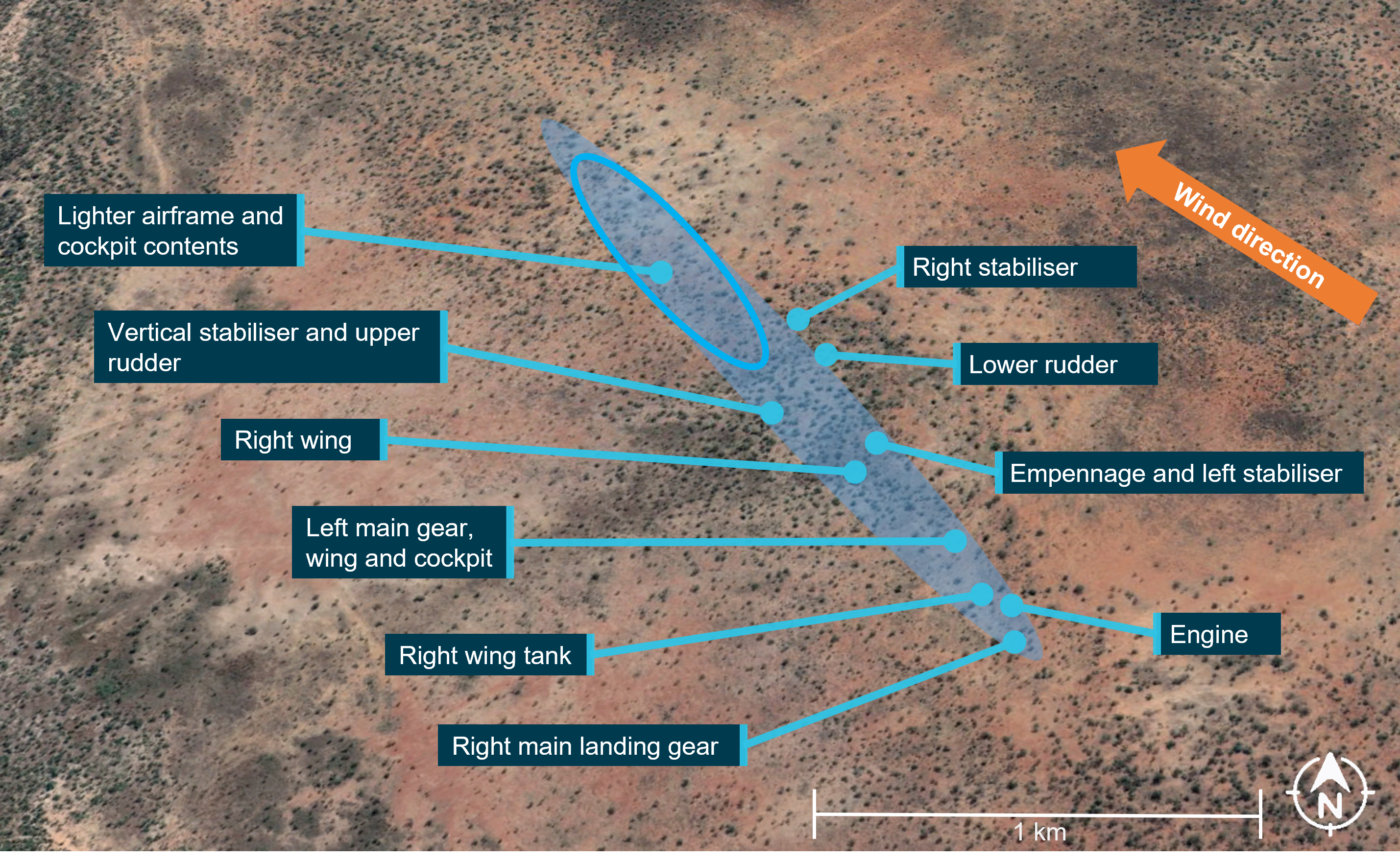
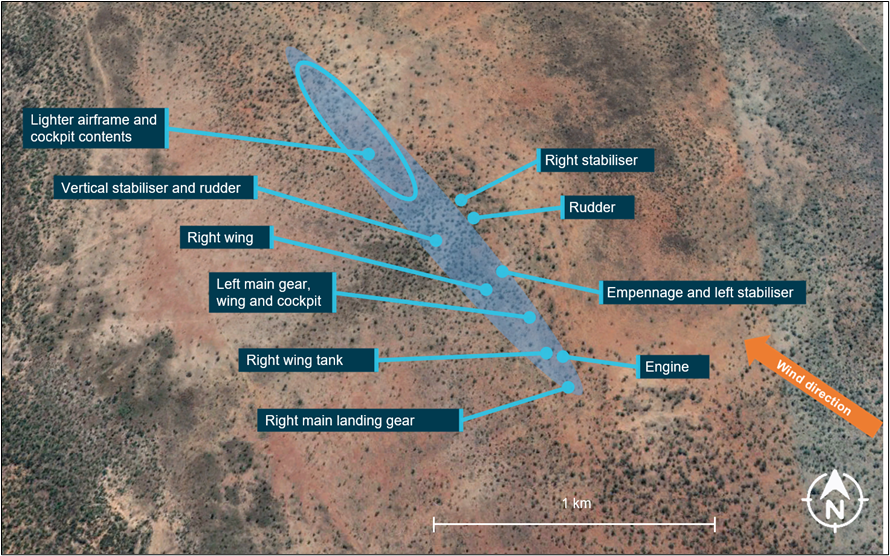
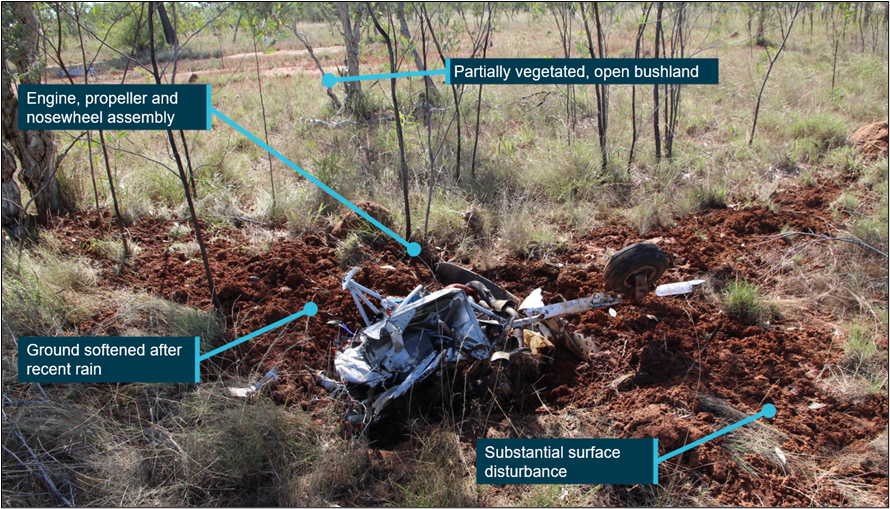
The accident site was located almost directly below the last known reliable recorded data point, on partially-vegetated, open bushland with the ground significantly softened by recent rainfall. The wreckage was distributed over a distance of about 1.5 km, with the larger and heavier aircraft sections located closer to each other, and lighter, smaller sections of wreckage found to the north-west of the main wreckage, consistent with the forecast wind direction (Figure 6). All major aircraft components were accounted for, and there was no evidence of pre-impact defects.
Figure 6: Accident site scatter pattern
Source: Google Earth, annotated by the ATSB
The propeller, engine, and associated structure was located separately to the rest of the wings, cockpit, and rear tail sections.
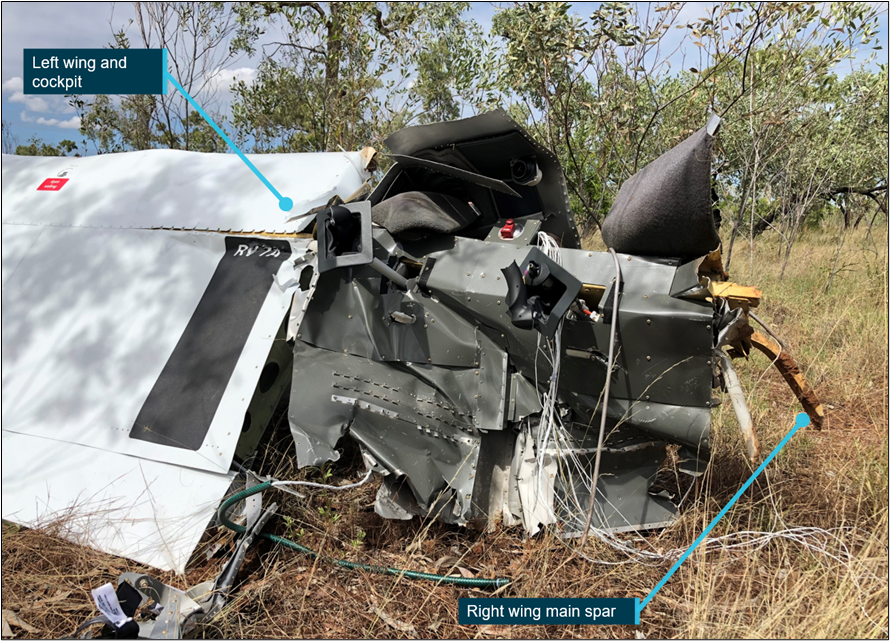
The left wing and centre section/cockpit floor with part of the right-wing spar remained attached to the fuselage and was deformed downwards. The right wing was found nearby and showed transfer marks on its lower surface from the right main landing gear tyre.
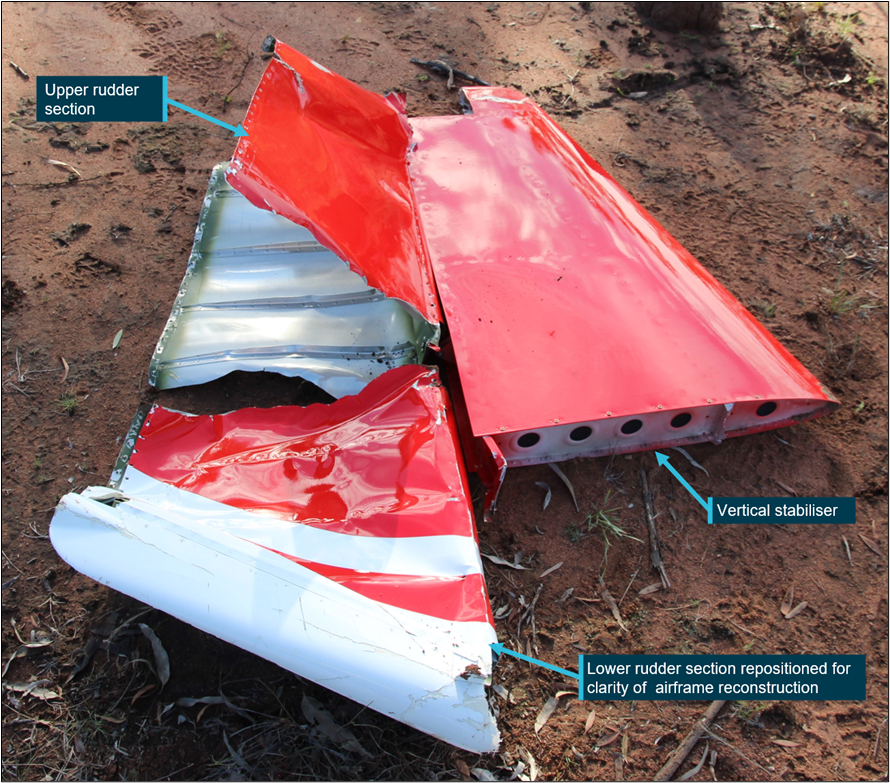
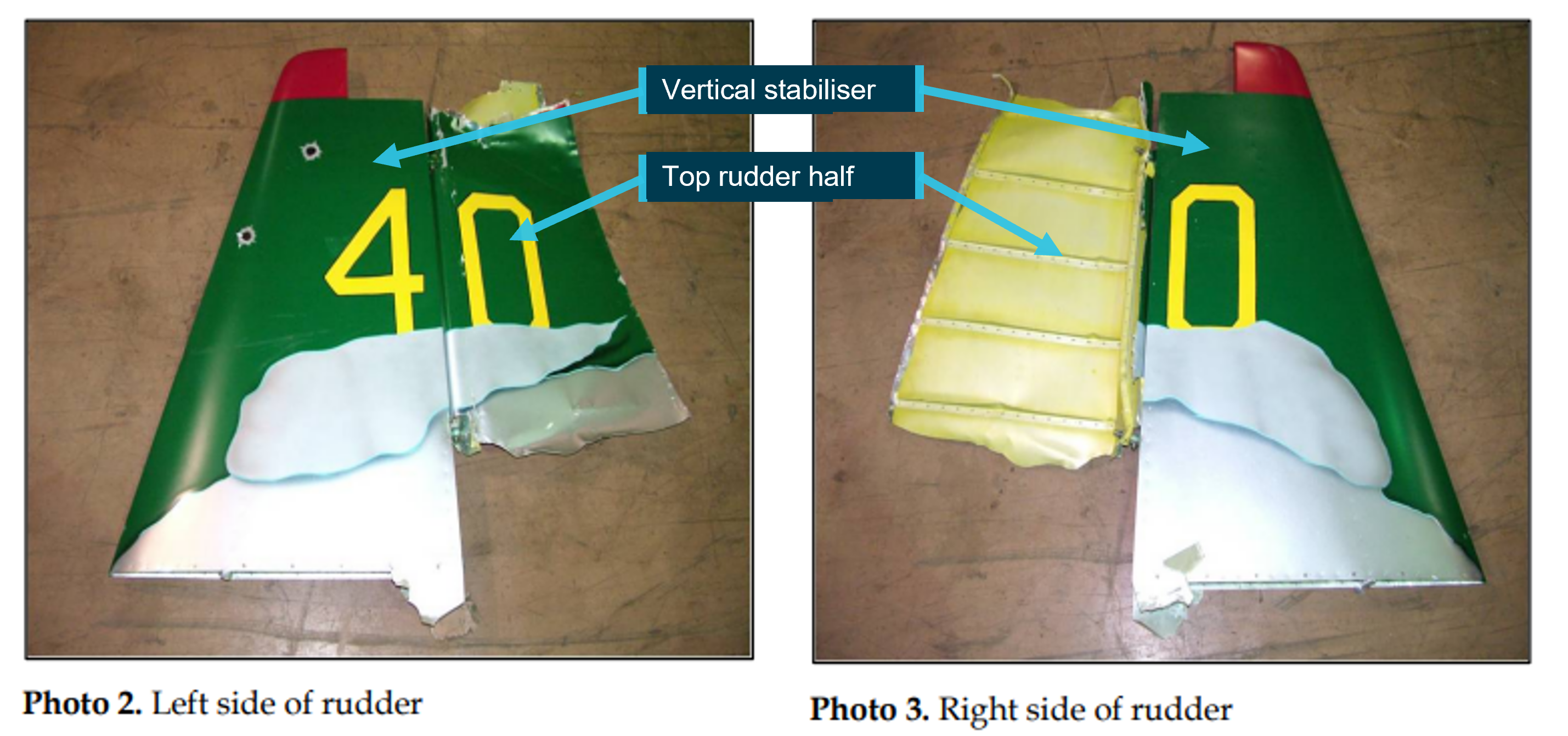
The vertical stabiliser and the upper rudder section had separated as an assembly from the main fuselage. The rivet line at the training edge of the rudder had burst open, and the aerodynamic mass balance (normally located on the top of the rudder) was not found at the accident site (Figure 7). The lower section of the rudder had torn away immediately below its centre hinge point and was located some distance away from the vertical stabiliser and rudder assembly.
Figure 7:Rudder and vertical stabiliser
Source: ATSB
The elevators remained with the rear fuselage, attached by the elevator control horns and pushrod. Sections of the right horizontal stabiliser main spar had been torn from the horizontal stabiliser and were attached to the elevator at its hinge points. The horizontal stabilisers had separated in flight and were located some distance away from the rear fuselage in the debris field.
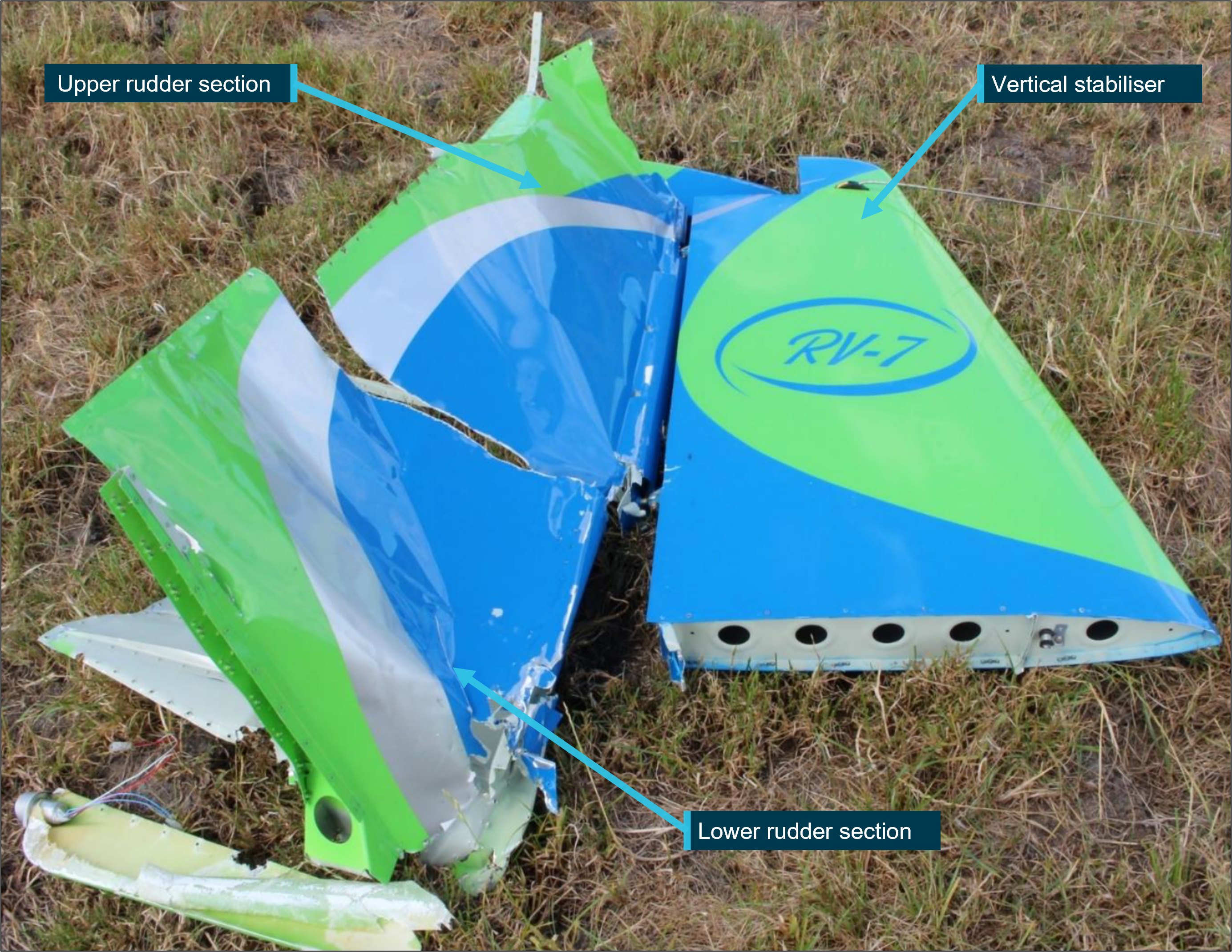
Appendix A provides details of 2 previous in-flight break-up accidents involving RV-7 aircraft. The damage to the rudder and vertical stabiliser exhibited similar damage and failure modes to that of VH-XWI. In both of those previous accidents, the aircraft’s speed had significantly exceeded VNE.
Visual flight rules requirements
Civil Aviation Regulation (CAR) 172 (Flight visibility and distance from cloud) outlined that a flight under the VFR could only be conducted in VMC.[9] The Australian Aeronautical Publication (AIP) ENR 1.2-4 contained the requirements for VMC. For flight in class G (uncontrolled) airspace below 10,000 ft above mean sea level (AMSL), these were stated as:
a flight visibility of 5,000 m
a minimum vertical distance of 1,000 ft and horizontal distance of 1,500 m from cloud.
In the case of aeroplane operations in Class G airspace at or below 3,000 ft AMSL or 1,000 ft above ground level (AGL) (whichever was higher), the following minimum conditions were stipulated:
a flight visibility of 5,000 m
the aeroplane be maintained clear of cloud and in sight of the ground or water.
In addition to minimum visibility and distance from cloud, a pilot was also required to maintain a minimum height above the ground.
CAR 157 (Low flying)[10] detailed that a pilot in command must not fly the aircraft over:
any city, town, or populous area at a height lower than 1,000 ft; or
any other area at a height lower than 500 ft.
This did not apply if, through stress of weather or any other unavoidable cause, when essential that a lower height be maintained.
Risks of flying in areas of reduced visual cues
When VFR pilots enter IMC (or similar environments) and lose sufficient external visual cues, this can result in various types of accidents, including a loss of control leading to a collision with terrain (most common), a loss of control leading to an in-flight break-up, or a controlled flight into terrain.
The loss of control is usually associated with spatial disorientation, which occurs when a pilot does not correctly sense the position, motion and attitude of an aircraft relative to the surface of the Earth. VFR pilots can rapidly become spatially disoriented when they cannot see the horizon and other external cues. The brain receives conflicting or ambiguous information from the sensory systems, resulting in a state of confusion that can rapidly lead to incorrect control inputs and resultant loss of aircraft control.
Spatial disorientation can either be unrecognised by the pilot (type I) or recognised (type II). When type II disorientation accidents occur, they generally involve erratic flight paths resulting from the pilot having difficulty maintaining control of the aircraft’s flight path (consistent with what was seen in this case).
The safety risk of VFR into IMC accidents are well documented. As noted by Wiggins and others (2012):
…pilots who are not authorized to operate outside [VMC] lose control of their aircraft within a relatively short period of time following entry into [IMC]… This loss of control tends to be associated with a high rate of descent and a collision with terrain, the outcome of which is typically not survivable…
For example, in the United States, there were 226 VFR into IMC accidents involving small non-commercial fixed-wing aircraft during 2010–2019, of which 194 (86%) were fatal accidents.[11] Detwiler and others (2008) found that VFR into IMC accidents were 4 times more likely to result in fatalities when compared to all other types of general aviation accidents.
In Australia, in the 11 years from 2011 to 2021, there were 14 fatal accidents involving VFR into IMC (with 29 fatalities).[12] In comparison, there were 26 fatal VFR into IMC accidents in 1991–2000 (58 fatalities) and 10 such accidents in 2001–2010 (18 fatalities).
Of the 14 VFR into IMC fatal accidents during 2011–2021, 13 involved private flights (including 2 community service flights) and 1 involved a charter operation. The list of these accidents is provided in Appendix B. Overall, they accounted for 11% of all fatal accidents and 18% of fatal accidents involving private flights. During 2011-2021, there were also 3 other fatal accidents (with 6 fatalities) involving VFR into other adverse weather conditions (such as storms) as well as several accidents involving VFR flights into dark night conditions.
Some characteristics of VFR into IMC accidents
A significant number of studies have examined VFR into IMC accidents, and a range of factors are involved, with no one factor being involved in all accidents. These include pilots incorrectly assessing weather conditions, pilots underestimating the risk of the conditions, pilots overestimating their ability (or the ability of their aircraft) to handle the situation, and motivational (personal and social) factors (NTSB 2005, Goh and Wiegmann 2001, Detwiler and others 2008, Harris and others 2022).
Weather-related decision making is best characterised as a dynamic, ongoing process (Batt and O’Hare 2005). Wiggins and O’Hare (1995) noted that weather-related decision making in some cases can be highly complex and therefore more prone to errors:
Because of the variable nature of operations in the aviation environment, weather-related decision making is often considered a skill that cannot be prescribed during training. Rather it is expected to develop gradually through practical experience. However, in developing this type of experience, relatively inexperienced pilots may be exposed to hazardous situations with which they are ill‑equipped to cope.
Most VFR into IMC accidents happen during the cruise phase of flight. Some research has shown that the chance of a VFR into IMC encounter increases as a flight progresses, with most occurring during the second half of a planned flight (Batt and O’Hare 2005). The United States National Transportation Safety Board (NTSB, 2005) also found that the chances of a weather-related general aviation accident increased as the length of a planned flight increased.
Various studies have shown that, compared to pilots involved in other types of accidents, pilots involved in VFR into IMC accidents are more likely to have a private pilot licence (as opposed to a higher-level licence), are less likely to have an instrument rating, and have less flight experience (Detwiler and other 2008, NTSB 1989, NTSB 2005). However, many pilots with a significant amount of experience are also involved in such accidents. Of the 14 pilots involved in VFR into IMC accidents in Australia during 2011–2021, most (12) had a private licence and 2 had a commercial licence. Only 4 pilots held a night VFR rating and none held an instrument rating (although 1 had previously held an instrument rating).
It is difficult to draw conclusions regarding research on pilot age and accident involvement, as it is often confounded with experience and other factors, and there are significant individual differences in a range of abilities (AOPA 2014). VFR into IMC accidents involve pilots from all age groups. Other information regarding pilot age includes:
The NTSB’s 1989 study noted that pilots in VFR into IMC accidents were, on average, older than comparison groups of all active pilots and older than pilots involved in other general aviation accidents.
The NTSB’s 2005 study compared pilots involved in weather-related general aviation accidents with a matched sample of pilots. It found that the non-accident group included a higher proportion of pilots less than 40, and the accident group included a higher proportion of pilots over 60. It also concluded that the age a pilot obtained their private licence was a better predictor of future accident involvement than age at the time of flight, with pilots obtaining their licence before 25 being less likely to be involved in a weather-related accident.
The age of pilots involved in VFR into IMC accidents in the United States appears to have increased over time, with the proportion being over 60 being 8% in 1983–1987, 25% in 1990–2004 (Detwiler and others 2008) and 39% in 2003–2012 (Major and others 2017).[13]
Of the 14 fatal VFR into IMC accidents in Australia during 2011–2021, at least 9 (64%) involved pilots aged over 60 (including 5 aged over 70) and at least 5 of these pilots (36%) were over 45 when they obtained their private licence (and 9 were over 35).[14],[15] This did not include the pilot of VH-XWI, who re-validated their licence at 74 after not flying for more than 30 years.
Safety analysis
In-flight break-up
The distribution and nature of the wreckage indicated that the aircraft experienced an in-flight break-up prior to colliding with terrain. Prior to the break-up, the pilot conducted a series of right turns with airspeed and altitude fluctuations before conducting a left turn and rolling almost inverted. The aircraft accelerated past its never exceed speed (VNE), and it was highly likely that this initiated rudder flutter, which led to catastrophic failures of the aircraft structure and subsequent in-flight break-up.
Examination of the aircraft wreckage did not identify any pre-existing defects, however wreckage at the accident site indicated cascading failures that likely followed the rudder and vertical stabiliser separating from the aircraft. Subsequently, the horizontal stabilisers likely failed and unbalanced the aircraft’s aerodynamic forces, rapidly pitching the aircraft downward. The aerodynamic overload on the main wing structure resulted in the right-wing main spar failing in a downwards direction, and the right wing separated from the aircraft.
The nature of the in-flight break-up was similar to 2 other accidents involving the same aircraft type. In all 3 cases, the aircraft significantly exceeded VNE while manoeuvring. In the 2 previous cases, the aircraft was involved in aerobatic activities. However, in the accident involving VH-XWI, the manoeuvres were the result of the pilot encountering adverse weather conditions.
Flight into non-visual conditions
The information available to the pilot in the evening before, and prior to departing from Winton on the morning of the accident, indicated that for at least part of that flight the conditions would not be suitable for flight under the visual flight rules (VFR).
After departure from Winton, the pilot likely entered instrument meteorological conditions (IMC) in the vicinity of Catumnal Station. This most likely led to spatial disorientation, and the subsequent stall, loss of control, and low-level recovery, as evidenced in the recorded data. On multiple other occasions during the flight, the pilot most likely attempted to avoid reduced visual conditions, as evidenced by the significant variations in altitude, from 10,000 ft to within 500 ft of the ground, orbits, and deviations from track.
When the aircraft was south of Charters Towers, it is likely that the pilot again entered into reduced visual conditions. Recorded data indicated abnormal flight manoeuvres, commencing with an abrupt turn to the south. Analysis of the recorded data, coupled with the increased likelihood of reduced visual cues, indicated that the pilot most likely experienced spatial disorientation in the period immediately prior to the in-flight break-up.
Continuing flight into IMC with no instrument rating significantly increases the risk of spatial disorientation due to the absence of visual cues and powerful and misleading orientation sensations altering the pilot’s perception of the aircraft’s position, motion and attitude. This disorientation can affect any pilot, no matter what their level of experience, and has been associated with many previous accidents.
In-flight decision making
It was very likely that after the near collision with terrain near Catumnal Station, the pilot decided to return to Winton. In most cases, return to an area of known good weather is a safe and prudent option.
However, for reasons that could not be established, about 11 km into the return journey towards Winton, the pilot elected to resume course for Bowen. This may have been prompted by airborne communications on weather and flight visibility at altitude from the pilots of the other aircraft in the group, travelling to Bowen. However, the pilot of the accident flight may not have been aware that the 3 other aircraft were tracking about 30 km to the south, and may have been less affected by the weather encroaching from the north. It is also possible that, having encountered IMC and being able to recover the aircraft, the pilot may have become more confident in their ability to operate near such weather.
Although the pilot was aware of the forecast weather, and had already encountered IMC, they still continued towards Bowen. Research has shown that many aviation accidents involve a ‘plan continuation bias’ or ‘plan continuation error’.[16] That is, pilots decide to continue with the original plan of action despite the presence of cues or information that suggests changing the course of action would be the safer option (Orasanu and others 2001, Dismukes and others 2007, Orasanu 2010). Plan continuation bias is often associated with situations involving dynamically changing risk and pilots underestimating the risk level (Orasanu and others 2001; Wiegmann and others 2002).
Research has also shown that many personal, social and organisational pressures can influence pilot decision-making, including in terms of whether to conduct or continue flights in unsuitable weather conditions (Paletz and others 2009, Michalski and Bearman 2014, Harris and others 2022). These can include observing other pilots successfully flying in the conditions and ‘reluctance to admit defeat’, as well as normalisation of deviance (or acceptance of risk with exposure).
In this case, a witness that spoke with the pilot the night before the accident about the forecast weather indicated that the pilot had a strong desire to remain with the group. Therefore, the pilot probably had self-imposed motivation or pressure to continue towards Bowen, despite the changing weather conditions. There was no operational reason for the pilot to continue the flight, given they had plenty of fuel to return to Winton or divert to other aerodromes away from the adverse weather.
Pilot experience and other characteristics
The pilot was 74 and relatively inexperienced, having only about 270 hours total flight hours, with much of this obtained over 30 years prior to the accident. The pilot had also had some difficulty regaining the level of skill required to pass a flight review. However, the extent to which flight experience, skill level, age or other factors was involved in this specific accident (as opposed to motivational factors) is difficult to determine.
All pilots of VFR flights need to understand the risks of conducting flights into deteriorating weather conditions, and a range of educational resources are available to help pilots appreciate these risks and improve weather-related decision making (see Appendix B for examples). There are also some indications that pilots who are older and obtained (or re-obtained) their private licence later in life, and/or have limited flight experience, may be at increased risk and should therefore pay particular attention to the guidance material that is available.
Findings
ATSB investigation report findings focus on safety factors (that is, events and conditions that increase risk). Safety factors include ‘contributing factors’ and ‘other factors that increased risk’ (that is, factors that did not meet the definition of a contributing factor for this occurrence but were still considered important to include in the report for the purpose of increasing awareness and enhancing safety). In addition ‘other findings’ may be included to provide important information about topics other than safety factors.
These findings should not be read as apportioning blame or liability to any particular organisation or individual.
From the evidence available, the following findings are made with respect to the VFR into IMC and in-flight break-up involving the Van's Aircraft RV-7A, VH XWI, 90 km south of Charters Towers, Queensland, on 23 April 2021.
Contributing factors
The pilot departed for the flight from Winton to Bowen, Queensland, knowing that the weather conditions en route were unlikely to be suitable for flight under the visual flight rules (VFR).
The pilot likely entered weather conditions not suitable for flight in visual meteorological conditions, leading to spatial disorientation and loss of aircraft control.
The aircraft’s airspeed exceeded VNE (never exceed speed or maximum airframe speed), leading to rudder flutter, airframe structural failures, and subsequent in-flight break-up.
Other factors that increased risk
Earlier in the flight, the pilot entered a degraded visual environment over Catumnal Station, most likely resulting in spatial disorientation. This resulted in a loss of control, stall, and subsequent low-level recovery.
Although the pilot turned back to Winton after the near collision with terrain at Catumnal Station, the pilot then resumed the flight towards Bowen and degrading weather conditions.
Other findings
There were no operational reasons for the pilot to continue the flight to Bowen, and the pilot probably had a self-imposed motivation or pressure to continue the flight.
Sources and submissions
Sources of information
The sources of information during the investigation included:
the flight training facilities
airborne and ground witnesses
Van’s Aircraft
the Civil Aviation Safety Authority
the Bureau of Meteorology
Airservices Australia.
References
Aircraft Owners and Pilots Association 2014, Aging and the general aviation pilot: Research and recommendations.
Batt R & O’Hare D 2005, General aviation pilot behaviours in the face of adverse weather, ATSB Aviation Research Investigation Report B2005/0127.
Detwiler C, Holcomb K, Hackworth C & Shappell S 2008, Understanding the human factors associated with visual flight rules flight into instrument meteorological conditions, Federal Aviation Administration, Washington, DC. (NTIS DOT/FAA/AM-08/12).
Goh J & Wiegmann DA 2001, ‘Visual flight rules flight into instrument meteorological conditions: An empirical investigation of the possible causes’, International Journal of Aviation Psychology, 11:359–379.
Harris MR, Fein EC & Machin MA 2022, ‘A systematic review of multilevel influenced risk-taking in heliciopter and small aeroplane normal operations’, Frontiers in Public Health, 10:1–18.
Major WL, Carney T, Keller J, Xie A, Price M, Duncan J, Brown L, Whitehurst GR, Rantz WG, & Nicolai D 2017, VFR-into-IMC accident trends: Perceptions of deficiencies in training’, Journal of Aviation Technology and Engineering, 7:50–57.
National Transportation Safety Board 1989, General aviation accidents involving visual flight rules into instrument meteorological conditions, Safety Report NTSB/SR-89/01.
Wiggins, MW, Hunter DR, O’Hare D & Martinussen M 2012, ‘Characteristics of pilots who report deliberate versus inadvertent visual flight into instrument meteorological conditions, Safety Science, 50:472–477.
Wiggins M & O’Hare D 1995, ’Expertise in aeronautical weather-related decision making: A cross-sectional analysis of general aviation pilots’, Journal of Experimental Psychology: Applied, 1:305-320.
Submissions
Under section 26 of the Transport Safety Investigation Act 2003, the ATSB may provide a draft report, on a confidential basis, to any person whom the ATSB considers appropriate. That section allows a person receiving a draft report to make submissions to the ATSB about the draft report.
A draft of this report was provided to the following directly involved parties:
a flight crew member of an accompanying aircraft
the Civil Aviation Safety Authority
the Bureau of Meteorology
Airservices Australia
Van’s Aircraft Incorporated
the National Transportation Safety Board.
Submissions were received from:
the Civil Aviation Safety Authority
Airservices Australia.
The submissions were reviewed and, where considered appropriate, the text of the report was amended accordingly.
Appendices
Appendix A – Other in-flight break-ups involving Van’s RV-7 aircraft
Two previous accidents involving Van’s RV-7/A variants involved in in-flight break-ups demonstrated similar airframe failure modes to that of VH-XWI.
New Zealand CAA investigation 17/8080
On 1 January 2018, a Van’s Aircraft RV-7, registered ZK-DVS, departed Whangarei, New Zealand, with 2 people on board. About 17 minutes after departing, the aircraft entered a high angle of bank (AoB) manoeuvre, achieving about 70° AoB. Five seconds later the AoB increased to about 130° and the aircraft began to pitch nose-down. During the resulting descent, the indicated airspeed was recorded at 244 kt, which exceeded the aircraft’s never exceed speed (VNE). About 30 seconds after entering the high AoB manoeuvre, witnesses observed the aircraft break up in flight and then impacted terrain.
The New Zealand Civil Aviation Authority (CAA) investigation concluded:
The aircraft entered a high-speed descent from an unusual attitude.
The pilot did not recover the aircraft from the unusual attitude or subsequent high-speed descent, which resulted in structural failure and in-flight breakup.
In-flight breakup occurred as a result of rudder flutter, as the aircraft airspeed exceeded the design limitations.
Figure A1 shows the damage to the aircraft’s rudder and vertical stabiliser.
Figure A1: Rudder and vertical stabiliser from ZK-DVS
Source: CAA New Zealand, annotated by the ATSB
The Civil Aviation Authority of New Zealand found that to avoid the potential of structural failure and in-flight break-up, pilots must fly within the aircraft limitations. Accidents can occur whenever the aircraft limitations and/or the pilot’s own capabilities are exceeded. It is important to understand and be familiar with the aircraft characteristics, limitations, and associated risks. These risks can be minimised by preparation, awareness, and training.
Canadian TSB aviation investigation report A10O0018
On 23 January 2010, a Van’s RV-7A, registered C-GNDY, was part of a formation of 3 aircraft that departed Lindsay, Ontario, Canada, on a flight to Smiths Falls. During the flight, 1 of the 3 aircraft diverted to Bancroft. The remaining aircraft continued with C-GNDY in tandem. The lead conducted a series of aerobatic manoeuvres, which C-GNDY was to film. While manoeuvring, the lead lost contact with the aircraft. The aircraft’s wreckage was subsequently located in a wooded area.
The Canadian Transportation Safety Board (TSB) concluded:
After painting, the rudder was not likely balanced, nor the aircraft reweighed. As a result, the rudder was susceptible to flutter at a lower speed than designed and the aircraft was over the maximum aerobatic gross weight during the manoeuvres.
During the manoeuvring sequence, the speed of the aircraft reached 234 knots, exceeding the 124-knot manoeuvring speed and the 200 knot never exceed speed (Vne).
The aircraft encountered either flutter or overstress of some rudder components. Subsequently, the vertical stabilizer and parts of the rudder separated from the empennage during flight. Consequently, the aircraft became uncontrollable resulting in the impact with terrain.
Figure A2 shows the damage to the aircraft’s rudder and vertical stabiliser.
Figure A2: Rudder and vertical stabiliser from C-GNDY
Source: TSB of Canada, annotated by the ATSB
Appendix B – VFR into IMC accidents and related resources
Recent VFR into IMC accidents in Australia
During the 11 years from January 2011 to December 2021, the ATSB investigated 14 fatal accidents (with 29 fatalities) involving VFR into IMC in VH-registered aeroplanes and helicopters in Australia:
Multiple additional accidents that involved VFR into IMC in 2022 are still under investigation. Additional fatal VFR into IMC accidents occurred during the same period that involved non VH-registered aircraft.
During the same period (2011–2021), there were also 3 other fatal accidents (with 6 fatalities) involving VFR flights into adverse weather conditions:
In addition, during the same period, there have been 10 fatal accidents involving VFR flights in dark night conditions, which carry the same risks as VFR into IMC. Some examples of these include:
A cue-based training system, called Weatherwise, was made available to pilots by the Civil Aviation Safety Authority (CASA). Additionally, CASA has produced:
Weather to fly, an education program which focused on topics such as the importance of pre-flight preparation, making decisions early, and talking to ATC
‘178 seconds to live’, a campaign on highlighting the dangers of VFR flight into IMC.
Purpose of safety investigations
The objective of a safety investigation is to enhance transport safety. This is done through:
identifying safety issues and facilitating safety action to address those issues
providing information about occurrences and their associated safety factors to facilitate learning within the transport industry.
It is not a function of the ATSB to apportion blame or provide a means for determining liability. At the same time, an investigation report must include factual material of sufficient weight to support the analysis and findings. At all times the ATSB endeavours to balance the use of material that could imply adverse comment with the need to properly explain what happened, and why, in a fair and unbiased manner. The ATSB does not investigate for the purpose of taking administrative, regulatory or criminal action.
Terminology
An explanation of terminology used in ATSB investigation reports is available here. This includes terms such as occurrence, contributing factor, other factor that increased risk, and safety issue.
Publishing information
Released in accordance with section 25 of the Transport Safety Investigation Act 2003
Ownership of intellectual property rights in this publication
Unless otherwise noted, copyright (and any other intellectual property rights, if any) in this report publication is owned by the Commonwealth of Australia.
Creative Commons licence
With the exception of the Coat of Arms, ATSB logo, and photos and graphics in which a third party holds copyright, this publication is licensed under a Creative Commons Attribution 3.0 Australia licence.
Creative Commons Attribution 3.0 Australia Licence is a standard form licence agreement that allows you to copy, distribute, transmit and adapt this publication provided that you attribute the work.
The ATSB’s preference is that you attribute this publication (and any material sourced from it) using the following wording: Source: Australian Transport Safety Bureau
Copyright in material obtained from other agencies, private individuals or organisations, belongs to those agencies, individuals or organisations. Where you wish to use their material, you will need to contact them directly.
[1] Instrument flight rules (IFR): a set of regulations that permit the pilot to operate an aircraft to operate in instrument meteorological conditions (IMC), which have much lower weather minimums than visual flight rules (VFR). Procedures and training are significantly more complex as a pilot must demonstrate competency in IMC conditions while controlling the aircraft solely by reference to instruments. IFR-capable aircraft have greater equipment and maintenance requirements.
[2] Visual meteorological conditions (VMC): an aviation flight category in which visual flight rules (VFR) flight is permitted – that is, conditions in which pilots have sufficient visibility to fly the aircraft while maintaining visual separation from terrain and other aircraft.
[3] Visual flight rules (VFR): a set of regulations that permit a pilot to operate an aircraft only in VMC.
[4] A glass cockpit is a cockpit where flight data is shown on electronic flight displays (EFDs) rather than separate gauges for each instrument.
[5] G load: the nominal value for acceleration. In flight, g load represents the combined effects of flight manoeuvring loads and turbulence and can have a positive or negative value.
[6] Informed participation relies on the premise that before the participant takes part, or pays for an activity, they are fully aware of the potential risks and consequences.
[7] Angle of attack: angle between the wings cord line and the relative airflow.
[8] Instrument meteorological conditions (IMC): weather conditions that require pilots to fly primarily by reference to instruments, and therefore under IFR, rather than by outside visual reference. Typically, this means flying in cloud or limited visibility.
[9] CAR 172 was in force at time of accident, CASR 91.270 now replaces the former regulation.
[10] CAR 157 was in force at time of accident, CASR 91.267 now replaces the former regulation.
[11] This was based on a review of data provided by the United States Aircraft Owners and Pilots Association (AOPA) annual review of general aviation accidents (known as the Nall Report)
[12] Only civil registered (VH- or equivalent) aeroplanes and helicopters were considered in these statistics.
[13] This would be due in part to the average age of general aviation pilots gradually increasing over time (see AOPA 2014). The sample of accidents in these 3 studies were slightly different, with NTSB examining general aviation accidents involving aeroplanes and helicopters, Detwiler and others examining general aviation accidents that involved pilot error, and Major and others examining private flights (Federal Aviation Regulation Part 91) involving aeroplanes.
[14] In one accident it was unknown which pilot was controlling the aircraft, with 2 pilots with private licences being aged 68 and 55 and obtaining their licences at 48 and 38 respectively.
[15] Of the 26 VFR into IMC accidents during 1991–2010, 4 pilots were aged over 60 and none were aged over 70. Nine pilots (35%) were over 45 when they obtained their private licence. This proportion was higher than for other types of fatal accidents (15%). Information about ages for these accidents was available from a previous ATSB research study General Aviation Fatal Accidents: How do they happen? (A review of general aviation accidents 1991 to 2000).
[16] In terms of continuing a flight to the original destination, plan-continuous bias is often known as ‘mission-it is’, ‘get-home-itis’ and ‘press-on-itis’.
Preliminary report
Report release date: 27/07/2021
This preliminary report details factual information established in the investigation’s early evidence collection phase and has been prepared to provide timely information to the industry and public. Preliminary reports contain no analysis or findings, which will be detailed in the investigation’s final report. The information contained in this preliminary report is released in accordance with section 25 of the Transport Safety Investigation Act 2003.
The occurrence
On 23 April 2021, a Van’s Aircraft RV-7A, registered VH-XWI, was being operated on a private flight from Winton to Bowen, Queensland.
The pilot, the sole occupant and the owner of the aircraft, had been on a multi-day tour in company with three other pilots, each operating their own aircraft. Prior to departing from Winton, the pilots discussed the forecast weather conditions for the planned flight, including their arrival at Bowen. Consequently, the other pilots elected to fly to Bowen under the instrument flight rules[1] (IFR), while the pilot of VH-XWI, being restricted to operating in visual meteorological conditions[2] (VMC), departed under a daytime visual flight rules[3] (VFR) flight plan.
Witnesses stated that VH-XWI was last of the four aircraft to depart. Recorded data showed that the aircraft departed Winton Airport at about 0751 EST [4] and set a north-east course to track to Bowen, climbing to 7,500 ft above mean sea level (AMSL) for the 600 km trip (Figure 1).
Figure 1: Track of VH-XWI from Winton to Bowen
Source: Google Earth with Aireon data, annotated by the ATSB
Near Catumnal Station, VH-XWI descended to about 500 ft above ground level (AGL) (Figure 2). At about 0820, the aircraft conducted two left orbits about 7 km to the south-west of Catumnal Station before flying closer to the station and climbing to about 1,000 ft AGL. VH-XWI conducted two right orbits, at speeds as low as 25 kt, before rapidly descending to less than 200 ft AGL.
Figure 2: Track of VH-XWI over Catumnal Station
Source: Google Earth with Aireon data, annotated by the ATSB
The aircraft then climbed back up to about 1,000 ft AGL before overflying the station airstrip. At about 0829, the aircraft’s airspeed reduced to about 43 kt while conducting a right turn, and descended to less than 50 ft AGL before climbing away from the station, and turning back towards Winton (Figure 3). About 11 km after turning towards Winton, VH-XWI conducted a left climbing turn, heading towards Bowen and climbing to about 10,500 ft AMSL.
Figure 3: Track of VH-XWI in the vicinity of Catumnal Station
Source: Google Earth with Aireon data, annotated by the ATSB
At about 290 km north-east of Winton, VH-XWI descended to about 1,000 ft AGL and then conducted a large left orbit before turning back towards Bowen and climbing to about 9,000 ft.
At about 370 km north-east of Winton, and about 90 km to the south of Charters Towers, VH-XWI conducted a right turn with a series of airspeed and altitude variations.
At about 0951, the aircraft sustained an in-flight break-up. The pilot was fatally injured, and the aircraft was destroyed.
Context
Pilot information
The pilot held a current private pilot licence (aeroplane), initially issued in August 1975. Their licence was reissued as a Civil Aviation Safety Regulation Part 61 licence on 3 May 2021, for single engine aircraft, with endorsements for manual propeller pitch change and retractable undercarriage.
The pilot’s logbook showed a total flying experience of 271.0 hours up to the last recorded flight on 22 March 2021. The majority of their total flight time (216.1 hours) was conducted prior to January 1990. The remaining 54.9 hours was conducted in VH-XWI from July 2020 to March 2021.
In July 2020, the pilot assisted a test pilot in 17 hours of initial flight testing of VH-XWI, and started familiarisation training in the aircraft in September 2020. The pilot logged 13.4 hours conversion training with a flying school in VH-XWI, before conducting a further 3.9 hours with another flying school, completing a single engine aeroplane flight review on 18 February 2021.
The pilot operated VH-XWI on numerous local and cross-country flights, leading up to the planned multi-day tour with three other aircraft.
The pilot held a valid basic class 2 medical certificate, with the last examination conducted on 1 February 2021. This type of certificate is based on the standard required for a commercial driver licence declaration, verified by a general practitioner.
Aircraft information
General
The Van’s Aircraft RV-7A is a low-wing, all-metal, high performance, experimental amateur-built aircraft. It is supplied in kit form and is designed to be constructed for the education and recreation of the owner. The RV-7A is suitable for cross-country flying, with speed ranges from 56 to 200 kt, and can be operated between +6 g and -3 g,[5] making it suitable for flying aerobatic manoeuvres.
Pilots and passengers of experimental aircraft in Australia accept the risk that the aircraft may not meet the same airworthiness safety standards as certified aircraft and operate these aircraft on the basis of informed participation.[6]
VH-XWI was fitted with a Dynon Skyview HDX primary flight display. The Skyview system incorporated various communication and GPS navigation systems, including a two-axis autopilot.
Airworthiness
The Special Certificate of Airworthiness issued to VH-XWI on 26 August 2020 indicated in the annexure, among other requirements, that the aircraft be operated ‘by day and under VFR only’.
The most recent entries in the aircraft and engine maintenance logs were on 10 April 2021, about 13 days prior to the accident. They showed that the aircraft had accumulated 84.8 hours total time in service.
Fuel
The aircraft operated on aviation gasoline (AVGAS) and had the capacity to carry 159 L in two 80 L wing tanks. The aircraft was refuelled prior to departure from Winton, with records indicating that about 75 L was uplifted.
Meteorological information
Bureau of Meteorology forecasts indicated there was significant cloud, reduced visibility and adverse weather predicted for the duration of the flight. While generally better weather conditions existed to the west of the east coast of Queensland, these were forecast to deteriorate from greater than 10 km visibility down to about 1,000 m in isolated thunderstorms with showers, rain and broken cloud from 800 ft to above 10,000 ft. Severe icing and turbulence were expected with isolated thunderstorms and cumulonimbus in the area.
A witness along the flight path at Catumnal Station, about 100 km north-east of Winton, heard an aircraft overhead the station for a period of time, consistent with recorded data from VH-XWI; however they were unable to visually identify the aircraft due to the presence of fog.
A witness at Pajingo Station, about 15 km from the accident site, recalled hearing an aircraft operating in the vicinity; however they did not see the aircraft in flight. That witness described the presence of steady continuous light rain for most of the morning prior to hearing the aircraft nearby.
Wreckage information
The accident site was located almost directly below the last known reliable radar data point. The wreckage of VH-XWI was located on partially vegetated, open bushland with the ground significantly softened by recent rainfall. The wreckage was distributed over a distance of about 1.5 km (Figure 4), with the larger and heavier aircraft sections located closer to each other, and lighter, smaller sections of wreckage found to the north-west of the main wreckage, consistent with the forecast wind direction.
Figure 4: Accident site scatter pattern
Source: Google Earth, annotated by the ATSB
The engine, propeller and forward airframe sections (Figure 5) departed the main aircraft structure in flight and impacted the ground at high speed, resulting in substantial surface disturbance.
Figure 5: VH-XWI engine location
Source: ATSB
The left wing and cockpit section (Figure 6) were located a short distance from the engine, with significant downwards bending of the right main spar occurring in-flight, resulting in the separation of the right wing from the airframe.
Figure 6: VH-XWI left wing and cockpit section
Source: ATSB
Other information
One of the pilots travelling in company with the pilot of VH-XWI indicated that all the pilots discussed the weather prior to departure from Winton as a point of concern. Witnesses recalled that the weather at Winton was clear with no fog or cloud, however significant weather was expected closer to the coast. Prior to departure, it was offered to the pilot of VH-XWI that, should the weather be too bad for VFR flight, one of the group would return to pick them up and take them to Bowen.
One of the IFR-rated pilots recalled the weather as initially good at 7,000 ft, with little cloud. However, as the flight progressed, the weather deteriorated into instrument meteorological conditions (IMC)[7] with cloud and rain for the last 30–40 minutes of their flight to Bowen. They recalled becoming visual on the approach to Bowen below 2,000 ft with significant wind.
In-flight radio contact with the pilot VH-XWI was made intermittently during the flight. The pilot of VH-XWI indicated that they would descend from 7,500 ft to 3,500 ft during the flight due to cloud. The pilot of VH-XWI then advised the group that they were unable to get through and would try to descend below the cloud. Sometime later the pilot of VH-XWI advised that they were going to turn back.
On landing at Bowen, the other pilots checked on the progress of VH-XWI on web-based aircraft tracking software and raised the alarm with search and rescue authorities.
Further investigation
To date, the ATSB has collected evidence from the accident site, interviewed a number of parties and examined retrieved data from aircraft components, radar and portable electronic devices.
The investigation is continuing and will include further review and examination of:
the aircraft builder’s log for VH-XWI
pilot training records and recent flights
available electronic data
meteorological conditions around the time of the accident flight
the in-flight break-up sequence.
Should a critical safety issue be identified during the course of the investigation, the ATSB will immediately notify relevant parties so appropriate and timely safety action can be taken.
A final report will be released at the conclusion of the investigation.
Purpose of safety investigations
The objective of a safety investigation is to enhance transport safety. This is done through:
identifying safety issues and facilitating safety action to address those issues
providing information about occurrences and their associated safety factors to facilitate learning within the transport industry.
It is not a function of the ATSB to apportion blame or provide a means for determining liability. At the same time, an investigation report must include factual material of sufficient weight to support the analysis and findings. At all times the ATSB endeavours to balance the use of material that could imply adverse comment with the need to properly explain what happened, and why, in a fair and unbiased manner. The ATSB does not investigate for the purpose of taking administrative, regulatory or criminal action.
Terminology
An explanation of terminology used in ATSB investigation reports is available here. This includes terms such as occurrence, contributing factor, other factor that increased risk, and safety issue.
Publishing information
Released in accordance with section 25 of the Transport Safety Investigation Act 2003
Ownership of intellectual property rights in this publication
Unless otherwise noted, copyright (and any other intellectual property rights, if any) in this report publication is owned by the Commonwealth of Australia.
Creative Commons licence
With the exception of the Coat of Arms, ATSB logo, and photos and graphics in which a third party holds copyright, this publication is licensed under a Creative Commons Attribution 3.0 Australia licence.
Creative Commons Attribution 3.0 Australia Licence is a standard form licence agreement that allows you to copy, distribute, transmit and adapt this publication provided that you attribute the work.
The ATSB’s preference is that you attribute this publication (and any material sourced from it) using the following wording: Source: Australian Transport Safety Bureau
Copyright in material obtained from other agencies, private individuals or organisations, belongs to those agencies, individuals or organisations. Where you wish to use their material, you will need to contact them directly.
In the early afternoon of 13 April 2021, a Cessna R172K aircraft registered VH-DLA (DLA) departed Canberra Airport, Australian Capital Territory, with a pilot and observer onboard to conduct powerline survey work to the north of Sutton township, New South Wales.
About 3 hours into the flight, while conducting powerline inspection in the vicinity of Tallagandra Lane, nearby witnesses observed the aircraft flying low above the trees before commencing a left turn that continued in to a steep descent and collision with terrain. The pilot and the observer were fatally injured, and the aircraft was destroyed.
What the ATSB found
The ATSB found that while manoeuvring to align the aircraft to inspect a powerline, the aircraft aerodynamically stalled and entered a spin at a height that was insufficient for recovery prior to the collision with terrain.
What has been done as a result
Following the accident, the operator amended the training and checking section of their Operations Manual to incorporate Threat and Error Management (TEM) and Situational Awareness (SA) training modules for powerline low‑level survey operations. The amendments enhanced existing topics in the operator’s crew resource management training and stipulated learning outcomes and assessment criteria specific to TEM and SA.
The operator also advised that they intended to introduce an airspeed ‘manoeuvre margin’ to take in to account the increased stall speed associated with steep turns.
Finally, the operator plans to modify their aircraft to include an angle of attack indicator to supplement the installed stall warning and a g‑meter with recording and data download capability to enable post flight review.
Safety message
This accident highlights the need for pilots to manage airspeed and bank angle to minimise the risk of an aerodynamic stall. This is particularly important when operating in close proximity to the ground, such as during take-off, landing and when conducing low-level air work, as recovery may not be possible.
The investigation
Decisions regarding whether to conduct an investigation, and the scope of an investigation, are based on many factors, including the level of resource required to obtain a safety benefit from an investigation. For this occurrence, a limited-scope investigation was conducted in order to produce a short investigation report and allow for greater industry awareness of findings that affect safety and potential learning opportunities.
The occurrence
On 13 April 2021 at 1324 Eastern Standard Time,[1] a Cessna R172K aircraft registered VH-DLA (DLA) departed Canberra Airport, Australian Capital Territory, with a pilot and observer onboard to conduct powerline survey work to the north of Sutton township, New South Wales.
At 1622 DLA crossed Tallagandra Lane (Figure 1) and the observer proceeded to inspect powerlines servicing properties to the east of the lane. Following the completion of two orbits, the pilot initiated a right turn and tracked to the north‑north‑east.
Witnesses in the area described that, following the right turn, the aircraft was flying low above the trees before commencing a left turn that continued into a steep descent and collision with terrain. The witness reports, including one from an experienced pilot, were consistent with a loss of control and entry into a spin preceding the ground impact. The pilot and the observer were fatally injured and the aircraft was destroyed.
Analysis of the final segment of recorded Garmin GPS[2] and OzRunways[3] flight data (see the section titled Recorded data) identified that the last Garmin GPS data point at 1624:48 showed the height of the aircraft was about 164 ft above ground level (AGL) about 115 metres from the accident site. The final OzRunways data point, recorded at 1624:50, was about 80 metres from the accident site and indicated that the aircraft was about 80 ft AGL (Figure 1).
Figure 1: Recorded flight path data shown relative to the accident site
Image description: DLA flight path – Garmin data is primarily referenced due to its higher sample rate and increased vertical accuracy. The final segment of OzRunways data is included as it provided the closest data point to the accident site.
Source: Google, with Garmin GPS and OzRunways data, annotated by the ATSB
Context
Pilot information
The pilot of VH-DLA (DLA) held a Commercial Pilot Licence (Aeroplane) issued in December 2019. The pilot also held a single engine aeroplane class rating, and a manual propeller pitch control design feature endorsement. The pilot completed a low-level aeroplane operational rating on 28 November 2019, valid for 2 years, and a single‑engine flight review on 15 March 2021, valid until 31 March 2023.
The pilot held a Class 2 Aviation Medical Certificate issued by the Civil Aviation Safety Authority, without medical restrictions, which was valid until 1 November 2023.
The operator’s records indicated the pilot had a total flying experience of 968.8 hours to the last recorded flight on 12 April 2021, of which about 572 hours were in the Cessna 172. In the previous 90 days, the pilot had flown 164.6 hours on type, and in the previous 30 days the pilot had flown 66.4 hours on type.
The pilot completed the operator’s low-level proficiency check on 9 February 2021 and was issued with a low-level, aerial survey certificate of competency to conduct powerline inspections without supervision. The pilot’s accumulated flight time conducting powerline survey work, following the operator’s approval, was about 135 hours.
Workload and fatigue
The operator had identified that aerial powerline survey work could be fatiguing for pilots and observers. To manage this, the operator applied work time limitations for pilots with fewer than 200 hours of powerline survey experience. Those pilots were limited to 6 hours of survey flight time per day with flights, conducted in sorties of 2‑3 hours duration.
After having 2 days off, the pilot had ferried the aircraft from Albury, New South Wales on the day prior to the accident and then logged about 5 hours of survey flight time over two sorties. On the day of the accident, the pilot had flown an earlier survey sortie of 1.3 hours duration and had been flying for about 3 hours when the accident occurred.
In flight, it was normal practice for the observer to direct the pilot to fly a pre-prepared route while the observer inspected the powerlines. To facilitate the observer’s work, the pilot was required to make constant changes to the aircraft’s heading and power setting to manoeuvre the aircraft into the optimum position for the observer. This resulted in a higher sustained pilot workload than that involved in flying an aircraft in straight and level flight. The operation of the aircraft at low level and relatively slow speeds also left little room for error. Research has shown that when an individual has to detect specific types of targets or stimuli over an extended period, their performance will decrease (Wickens and Hollands 2000).
The ATSB considered the effect of the sustained attention to flight parameters over the final sortie, but there was insufficient evidence to establish whether the pilot was affected by a level of fatigue that may have impacted their performance.
Post-mortem examination
The post-mortem and toxicology examinations did not identify any indicators of incapacitation or substances that could have affected the pilot’s capacity to perform the flight.
Aircraft information
DLA was a single engine, Cessna R172K aircraft. It was manufactured in the United States in 1977 with serial number R1722809 and was first registered in Australia in 1978. It was a four-seat, high-wing aircraft, with a non-retractable tricycle undercarriage. The aircraft was powered by a Teledyne Continental Motors IO-360, six-cylinder, fuel‑injected piston engine, driving a two-blade, constant speed propeller.
A maintenance release for the aircraft was issued following the completion of scheduled inspections on 2 March 2021 for day VFR[4] operations, at an aircraft time in service of 16,488.5 hours. There were no open defects recorded on the maintenance release and no outstanding or overdue maintenance was noted.
The aircraft’s maintenance records also showed that in the 6 months prior to the accident, DLA’s:
pitot static system had been checked for leaks
pressure altimeter had been checked for serviceability
fuel quantity system had been calibrated.
The airspeed indicator was tested in October 2018 and found to be serviceable. At the time of the accident, the instrument had accumulated 283 hours, time-in-service.
A weight and balance assessment identified that, at the time of the accident, the aircraft’s weight was about 979 kg, 178 kg below the aircraft’s maximum gross weight limit of 1157 kg, and the aircraft’s centre of gravity was within limits.
Aircraft stall and spin behaviour
The Pilot’s Operating Handbook for the Cessna R172K specified that, depending on the aircraft’s centre of gravity position, at its gross weight limit and with 10° of flap selected, the aircraft would stall[5] at between 41‑43 knots indicated air speed. The altitude loss during recovery from a wings level stall could be up to 160 ft.
A spin can result when an aircraft simultaneously stalls and yaws.[6] The yaw can be initiated by rudder application or by yaw effects from a range of factors that include aileron deflection, torque (engine power setting) and engine/propeller effects. A spin is characterised by the aircraft following a downward, corkscrew path and requires significantly more altitude for recovery compared to a wings level stall. The Cessna R172K Pilot’s Operating Handbook specified that at least 1,000 ft should be allowed for a one turn spin and recovery.
Further, should a stall occur during a turn, the aircraft’s behaviour becomes dependent on which wing stalls first. That is, it is possible for the upper wing to stall resulting in the aircraft rolling and yawing in the opposite direction to the turn.
Wreckage and impact information
The accident site was located about 10 km to the north-west of the township of Sutton in an open field about 30 metres east of Tallagandra Lane. From the accident site, the terrain sloped up to the north‑west by about 240 ft over a distance of about 600 m. The terrain dipped slightly to the east of the site, dropping about 50 ft over a distance of about 500 m.
Most of the aircraft wreckage was located next to the initial impact point. Larger items, including the propeller and the right undercarriage leg were found next to the fuselage. Items from the luggage locker were located within five metres of the aircraft’s initial impact point. The most distant item from the main wreckage was the aircraft battery which was found near the edge of Tallagandra Lane. The limited spread of wreckage indicated that the aircraft impacted the terrain with little horizontal speed.
Examination of the wreckage showed that the aircraft impacted the ground in a near‑vertical, nose‑down attitude. Damage signatures on the wing leading edges indicated that the right wing impacted the terrain first. The outboard section of the right wing, leading edge, near the tip was slightly deflected up, which was consistent with the aircraft spinning to the right at impact.
Compression damage to the forward fuselage reduced the available cabin space. While the occupants were secured with 4-point harnesses, the accident was non‑survivable.
Site and wreckage examination did not identify any aircraft defects that could have contributed to the accident and there was no evidence of birdstrike.
It was noted that the aircraft’s wing flaps were extended. Assuming a correctly rigged flap system, examination of the flap actuator screw jack extension determined that the flaps were set in the down position, at 18-20°.
Inspection of the aircraft’s stall warning system established that, other than damaged tubing attributed to the accident sequence, the warning horn sounded when suction was applied. The system was therefore considered serviceable prior to the accident.
Operational information
Powerline survey
The role of the observer was to coordinate the powerline survey work. The observer monitored the survey’s progress on a map depicting the electrical distribution network and directed the pilot to the sections of powerline to be inspected (Figure 2). The map was marked with warnings and cautions associated with network specific features and areas to avoid (no-fly areas) associated with dwellings, livestock and/or hazardous features.
The sequence in which the survey progressed was a combination of the flight crew’s pre‑departure planning and in-flight variations as determined by the observer. The pilot would fly the aircraft in response to the observer’s directions provided it was safe to do so. The observer would photograph any observed powerline defects and annotate their location on the distribution network map.
Figure 2: Aircraft flight path and electrical powerline network in the vicinity of the accident site
Source: Google, with operator supplied powerline network distribution map, and Garmin GPS and OzRunways data, annotated by the ATSB
To provide the right‑seat observer with the best opportunity to detect defects, the pilot would position the aircraft to keep the powerline to the right of the observer, at a height of about 150 ft above ground level and 150 ft horizontally from the powerline. According to the operator, the speed of the aircraft would preferably be maintained above 70 kt to maintain a margin above the aircraft’s stall speed and slow enough for the observer to note defects. The operator further advised that during survey operations the aircraft flaps were normally set at 10°.
The operator’s Aircrew Operational Procedures Manual instructed pilots that when surveying T‑Offs,[7] from a main distribution line that may require significant manoeuvring, the pilot should initiate a partial orbit of 270° commencing in the opposite direction to the T-Off orientation (Figure 3).
Source: Oberon Aviation Services and annotated by the ATSB
This was a standard re-positioning procedure that would result in a lower bank angle and wing load factor[8] while orientating the aircraft in the direction of the target T‑Off.
With respect to aircraft aerodynamics, the wing load factor or g-force on the wings varies with the angle of bank in a level turn and has a direct influence on the aircraft stall speed. Specifically, as the angle of bank increases, the load factor and the stall speed of the aircraft also increases.
To turn, an aircraft must roll in the desired direction, which increases the aircraft's angle of bank. Turning flight lowers the wing's vertical lift component. To compensate (and prevent the aircraft from descending), the lift force must be increased by pulling back on the control yoke to increase the angle of attack of the wings. If the angle of attack reaches a critical angle, loss of lift and increased drag occurs, and the wing will aerodynamically stall.
Final flight segment
On completing the survey work to the east of Tallagandra Lane, the pilot conducted a turn to the north-north-east and momentarily tracked parallel to the main distribution line that ran beside the lane (Figure 4). Based on flight path data and progress notations on the electrical network distribution map, the next powerline to be surveyed was the branch to the north-west which departed the main distribution line near the accident site.
Figure 4: VH-DLA flight path in the vicinity of the accident site
Source: Google, with operator supplied powerline network distribution map, and Garmin GPS and OzRunways data, annotated by the ATSB
The operator advised the ATSB that the standard procedure to establish the aircraft to survey that branch would have been for the pilot to conduct a partial right orbit through 270° prior to intercepting the powerline. However, the witness accounts indicated that the aircraft banked left towards the branch immediately before the accident. The operator was unable to provide advice as to why the orbit manoeuvre was not performed at this point. Flight path data showed the pilot had performed the 270⁰ partial orbit manoeuvre in similar situations earlier in the flight.
The ATSB considered whether the final turn may have been an evasive action by the pilot to avoid birdlife, however there was insufficient evidence to determine if that may have influenced the turn.
Meteorological information
The forecast meteorological conditions for the Canberra Airport area indicated winds from the north-west at 12-14 kt and no cloud below 5,000 ft AGL. Visibility was forecast to be 10 km or greater. The METAR[9] for Canberra Airport issued at 1600 was consistent with the forecast conditions, with recorded wind from the west-north-west at 10 kt with visibility of 10 km or greater and a temperature of 18⁰ Celsius.
Witnesses in the accident area reported that visibility was unlimited, and there was little to no wind.
Recorded data
DLA was not equipped with a flight data or cockpit voice recorder, nor was it required to be. Flight path data from the OzRunways application and Airservices Australia secondary surveillance radar was provided to the ATSB. Data was also retrieved from an on-board Garmin Aera 500 GPS and a Garmin GPSMAP 60Cx portable GPS unit for analysis.
Speed and position data from the Garmin 60Cx unit was used in the analysis of the aircraft’s movement as it offered better resolution and was recorded at a higher sampling rate than the other sources.
Due to a gap in data between DLA’s final recorded GPS position and the accident site, data from previous turns was used to estimate the performance of the aircraft during the final turn where the loss of control occurred.
Estimated values for speed, bank angle and stall margin during the final turn were derived from the analysis of data associated with a selection of turns conducted during the day’s flying. Turns with a distinct radius, generally through greater than 90° were identified and selected for analysis. Turns that displayed an irregular radius or inconsistent data points were excluded from the analysis. The final group of 19 turns that were analysed included all five turns prior to the accident turn, plus selected turns at various points earlier in the flight. The group also included three turns that met the selection criteria and related to the flight conducted earlier in the day.
Indicative values of DLA’s airspeed, angle of bank and stall margin were derived (Table 1). To facilitate the analysis, it was assumed that each turn was coordinated, at a constant altitude and at a constant speed. The aircraft weight and a wing flap position of 18° were also factored into the analysis.
The ATSB acknowledged the difference between the forecast winds and the local wind conditions observed by the witnesses. However, the analysis assumed nil wind speed as it was not possible to incorporate large changes in aircraft direction in the calculations. In order to assess the aircraft’s performance, it was also necessary to convert the Garmin GPS ground speed data to calibrated airspeed by correcting for density altitude.
For DLA’s final turn after its last recorded Garmin GPS position at 1624:48, and assuming that the speed of the aircraft did not vary from the previous turn, the analysis indicated that DLA was likely being manoeuvred in a 50° banked turn to the left and was flying at a speed that was very near to the stall speed (Table 2).
In contrast to the other analysed turns, the load factor during the final turn was also found to be the highest and had the lowest stall margin that was demonstrated in the other turns. Had the wind direction and strength been similar to conditions recorded at Canberra Airport the stall margin in the final turn would have been greater.
Table 2: Estimated values for DLA’s speed, bank angle and stall margin during the final turn
Following the accident, the operator amended their Operations Manual (Training and Checking) to incorporate Threat and Error Management (TEM) and Situational Awareness (SA) training modules as applicable to low-level, powerline survey operations. The amendments enhanced existing topics in the operator’s crew resource management training and stipulated learning outcomes and assessment criteria specific to TEM and SA.
The TEM module was intended to assist pilots and observers with the identification and management of threats associated with:
weather
operational considerations (including terrain, density altitude and power network complexity)
aircraft performance
time pressures
decision making
Go-No Go and escape options.
The SA training aimed to increase the maintenance of situation awareness as it related to the:
obstacle environment
aircraft performance and energy management
speed and manoeuvre management (continual management and monitoring of aircraft attitude, critical airspeeds and balance).
It was intended that the training would be initially delivered to the operator’s Training and Checking pilots who, in turn, would deliver briefings to pilots and observers at a standard equivalent to that of a flight instructor. An additional aircraft handling or ‘fly safe’ check will be conducted on all pilots and observers prior to the start of each powerline survey season.
The operator also provided detail of intended amendments to their low-level procedures to implement an airspeed ‘manoeuvre margin’ that will take in to account the increased stall speed associated with steep turns. The manoeuvre margin will be calculated by the pilot, and independently verified by the observer before each flight as part of the crew’s risk assessment procedure and recorded in the daily operations diary. For the pilot’s and observer’s in-flight reference, the minimum manoeuvre airspeed will be temporarily marked on the airspeed indicator.
Further, the operator plans to modify their aircraft to include an angle of attack indicator and a g‑meter with recording and data download capability. The instruments will supplement the aircraft’s stall warning device by providing additional warning of an impending stall. A record of the maximum and minimum in-flight readings will be downloaded post flight for review by the Chief Pilot.
Other occurrences
Between 2011 and 2021, the ATSB investigated 21 fatal accidents involving piston engine aeroplanes flown in visual meteorological conditions that involved a loss of control and collision with terrain. While none of the 21 accidents involved aircraft engaged in powerline survey work, 11 involved single engine aeroplanes that aerodynamically stalled at a height from which recovery was probably impossible before ground contact.
Safety analysis
Introduction
The pilot and observer onboard VH-DLA (DLA) were conducting powerline survey work to the north of Sutton, New South Wales. Following the completion of two orbits over properties to the east of Tallagandra Lane, the pilot initiated a right turn and tracked to the north‑north‑east. The aircraft was then observed by witnesses to commence a left turn to the north‑west followed by a steep descent and ground impact. Witness observations and wreckage characteristics were consistent with a loss of control and entry into an aerodynamic spin prior to the collision with terrain.
The ATSB found that the pilot was qualified to conduct low-level powerline survey work and was suitably rested to conduct the task. Further, while acknowledging that powerline survey work was more demanding on pilots than other flight activity, there was insufficient evidence to indicate that the sustained workload created a level of fatigue that affected the pilot’s performance.
Site and wreckage examination did not identify any aircraft defects that may have contributed to the accident. This analysis will examine possible reasons for, and the nature of, the manoeuvring that preceded the accident.
Manoeuvre to the north-west
Following the turn to the north-north-east, the pilot would likely have been receiving directions from the observer based on progress of the survey work, which was being monitored with reference to the electrical network distribution map.
The ATSB established that, on completion of the turn, the T-Off immediately to the left of DLA’s track linking a relatively short section of powerline to the north‑west was likely chosen as the next section to be surveyed. The witness reports and flight data indicated that a direct turn towards that T-Off was initiated, rather than the partial orbit advocated by the operator. While the reason for this could not be established, a review of the manoeuvring prior to the accident indicated that partial orbits had been previously used to position the aircraft parallel to other branch lines.
Significantly, the direct turn towards rising terrain probably resulted in a higher bank angle/wing load factor, and therefore a higher stall speed, than aligning the aircraft via a partial orbit.
Loss of control
From the recorded data and witness accounts, DLA transitioned from a level, right turn to the north-north-east into a tighter, possibly climbing, left turn. From the ATSB’s analysis of the turns conducted by the pilot earlier in the flight, it was estimated that the final turn was likely conducted at a comparatively high angle of bank and closer to the stall speed of the aircraft.
As the manoeuvre continued, the aircraft likely exceeded the critical angle of attack for the wing, causing the wing to stall. While no fault was identified with the aircraft’s stall warning system, had the manoeuvring been relatively dynamic, there may only have been a small time interval between the activation of the warning and the actual stall.
Analysis of the recorded flight data identified that the aircraft had been operated relatively close to the stall speed during previous turns without a consequential loss of control. However, from the available evidence it was not possible to determine why control was maintained during those earlier turns.
Following the stall, the aircraft entered a steep, nose down aerodynamic spin that continued until the collision with terrain. The reason for the lower airspeed than used in the majority of the previous turns could not be determined however it may have been the result of deceleration associated with manoeuvring and/or initiation of a climb due to approaching rising terrain. Although the wind appears to have been relatively light, it could also not be ruled out that the aircraft encountered some turbulence in the lee of the rising ground that may have contributed to the accident.
The collision point was to the north-west of DLA’s last recorded flight position and adjacent to the T‑Off. When the aircraft entered the spin, it was significantly below the required height above ground specified by the aircraft manufacturer for recovery from a spin.
Findings
ATSB investigation report findings focus on safety factors (that is, events and conditions that increase risk). Safety factors include ‘contributing factors’ and ‘other factors that increased risk’ (that is, factors that did not meet the definition of a contributing factor for this occurrence but were still considered important to include in the report for the purpose of increasing awareness and enhancing safety). In addition ‘other findings’ may be included to provide important information about topics other than safety factors.
These findings should not be read as apportioning blame or liability to any particular organisation or individual.
From the evidence available, the following findings are made with respect to the loss of control and collision with terrain involving Cessna R172K, registered VH-DLA near Sutton, New South Wales on 13 April 2021.
Contributing factors
While manoeuvring to align the aircraft to inspect a powerline, control of the aircraft was lost at a height that was insufficient for recovery prior to the collision with terrain.
Sources and submissions
Sources of information
The sources of information during the investigation included:
Airservices Australia
Bureau of Meteorology
Civil Aviation Safety Authority
OzRunways
the operator
the aircraft manufacturer
recorded data from the portable GPS unit in the aircraft
a number of witnesses.
References
FAA 2016, Airplane Flying Handbook, FAA-H-8083-3B, U.S. Department of Transportation, OK 73125
Wickens CD & Hollands JG, 2000, Engineering psychology and human performance, 3rd edition, Prentice-Hall International Upper Saddle River, NJ
Submissions
Under section 26 of the Transport Safety Investigation Act 2003, the ATSB may provide a draft report, on a confidential basis, to any person whom the ATSB considers appropriate. That section allows a person receiving a draft report to make submissions to the ATSB about the draft report.
A draft of this report was provided to the following directly involved parties:
Civil Aviation Safety Authority
the operator.
A submission was received from the operator. The submission was reviewed and, where considered appropriate, the text of the report was amended accordingly.
Purpose of safety investigations
The objective of a safety investigation is to enhance transport safety. This is done through:
identifying safety issues and facilitating safety action to address those issues
providing information about occurrences and their associated safety factors to facilitate learning within the transport industry.
It is not a function of the ATSB to apportion blame or provide a means for determining liability. At the same time, an investigation report must include factual material of sufficient weight to support the analysis and findings. At all times the ATSB endeavours to balance the use of material that could imply adverse comment with the need to properly explain what happened, and why, in a fair and unbiased manner. The ATSB does not investigate for the purpose of taking administrative, regulatory or criminal action.
Terminology
An explanation of terminology used in ATSB investigation reports is available here. This includes terms such as occurrence, contributing factor, other factor that increased risk, and safety issue.
Publishing information
Released in accordance with section 25 of the Transport Safety Investigation Act 2003
Ownership of intellectual property rights in this publication
Unless otherwise noted, copyright (and any other intellectual property rights, if any) in this report publication is owned by the Commonwealth of Australia.
Creative Commons licence
With the exception of the Coat of Arms, ATSB logo, and photos and graphics in which a third party holds copyright, this publication is licensed under a Creative Commons Attribution 3.0 Australia licence.
Creative Commons Attribution 3.0 Australia Licence is a standard form licence agreement that allows you to copy, distribute, transmit and adapt this publication provided that you attribute the work.
The ATSB’s preference is that you attribute this publication (and any material sourced from it) using the following wording: Source: Australian Transport Safety Bureau
Copyright in material obtained from other agencies, private individuals or organisations, belongs to those agencies, individuals or organisations. Where you wish to use their material, you will need to contact them directly.
This preliminary report details factual information established in the investigation’s early evidence collection phase and has been prepared to provide timely information to the industry and public. Preliminary reports contain no analysis or findings, which will be detailed in the investigation’s final report. The information contained in this preliminary report is released in accordance with section 25 of the Transport Safety Investigation Act 2003.
The occurrence
On 13 April 2021 at about 1324 Eastern Standard Time,[1] the pilot of a Cessna R172K aircraft registered VH-DLA (DLA), departed Canberra Airport, Australian Capital Territory with an observer on board to conduct power line survey work to the north of Sutton, New South Wales.
At 1622 DLA crossed Tallagandra Lane (Figure 1) and proceeded with survey work concentrating on power lines servicing properties to the east of the lane. Following the completion of two orbits, at 1624, the pilot initiated a right turn, and tracked to the north‑east.
Witnesses in the area described the aircraft flying low above the trees before commencing a left banking turn followed by a steep descent and collision with terrain. The witness reports indicated that a loss of control and entry into a spin preceded the ground impact. The pilot and the observer were fatally injured.
Analysis of recorded Garmin GPS and OzRunways flight data identified that the last Garmin GPS data point at 1624:48 showed the height of the aircraft to be about 164 feet above ground level and about 115 metres from the wreckage. The final OzRunways data point at 1624:50 was about 80 metres from the accident site.
Figure 1: Garmin GPS and OzRunways flight tracks shown relative to the accident site
Image description: DLA flight paths – Garmin data is primarily referenced due to its higher sample rate and increased vertical accuracy. The final segment of OzRunways data is included as it provided the closest data point to the accident site. Source: Google, with Garmin GPS and OzRunways data, annotated by the ATSB
Context
Wreckage and impact information
The wreckage was located in an open field about 30 metres east of Tallagandra Lane, and about 10 km to the north-west of Sutton. There was little spread of wreckage with few parts liberated in the accident sequence. Larger items, including the propeller and the right undercarriage leg were found next to the fuselage. Items from the luggage locker were located within 5 metres of the initial impact point. The most distant item from the main wreckage was the aircraft battery which was found near the edge of Tallagandra Lane.
Examination of the wreckage showed that the aircraft impacted the ground in a near vertical, nose down attitude.
Aircraft information
DLA was a single engine, Cessna R172K aircraft. It was manufactured in the United States in 1977 with serial number R1722809 and first registered in Australia in 1978.
Further investigation
To date, the ATSB has:
examined the wreckage
collected items for further examination
interviewed witnesses
retrieved flight‑related electronic data
collected weather data from the Bureau of Meteorology
interviewed the operator.
The investigation is continuing and will include further examination and analysis of:
the aircraft flight path, including analysis of recorded flight data
pilot qualifications, experience and medical history
pilot flight and duty periods
aircraft weight and balance
aircraft maintenance records
flight survey operational procedures.
Should a critical safety issue be identified during the course of the investigation, the ATSB will immediately notify relevant parties so appropriate and timely safety action can be taken.
A final report will be released at the conclusion of the investigation.
Acknowledgements
The ATSB acknowledges the assistance of the New South Wales Police Force in supporting the ATSB on‑site investigation team through the evidence collection phase of the operation.
Purpose of safety investigations
The objective of a safety investigation is to enhance transport safety. This is done through:
identifying safety issues and facilitating safety action to address those issues
providing information about occurrences and their associated safety factors to facilitate learning within the transport industry.
It is not a function of the ATSB to apportion blame or provide a means for determining liability. At the same time, an investigation report must include factual material of sufficient weight to support the analysis and findings. At all times the ATSB endeavours to balance the use of material that could imply adverse comment with the need to properly explain what happened, and why, in a fair and unbiased manner. The ATSB does not investigate for the purpose of taking administrative, regulatory or criminal action.
Terminology
An explanation of terminology used in ATSB investigation reports is available here. This includes terms such as occurrence, contributing factor, other factor that increased risk, and safety issue.
Publishing information
Released in accordance with section 25 of the Transport Safety Investigation Act 2003
Ownership of intellectual property rights in this publication
Unless otherwise noted, copyright (and any other intellectual property rights, if any) in this report publication is owned by the Commonwealth of Australia.
Creative Commons licence
With the exception of the Coat of Arms, ATSB logo, and photos and graphics in which a third party holds copyright, this publication is licensed under a Creative Commons Attribution 3.0 Australia licence.
Creative Commons Attribution 3.0 Australia Licence is a standard form licence agreement that allows you to copy, distribute, transmit and adapt this publication provided that you attribute the work.
The ATSB’s preference is that you attribute this publication (and any material sourced from it) using the following wording: Source: Australian Transport Safety Bureau
Copyright in material obtained from other agencies, private individuals or organisations, belongs to those agencies, individuals or organisations. Where you wish to use their material, you will need to contact them directly.
On 5 April 2021, a fire broke out in the port engine room of the Bahamas‑registered, 145 m multi‑purpose vessel MPV Everest while en route from Mawson Station, Antarctica to Hobart, Tasmania with 37 crew and 72 Australian Antarctic Division staff on board. The ship’s crew responded, and the fire was contained and eventually extinguished using the engine room water mist fixed fire-extinguishing system about 2.5 hours later. The port engine room sustained substantial damage with most of the power generation equipment and machinery located within rendered inoperable. There were no reported injuries or pollution of the sea as a result of the fire. Power and propulsion were subsequently restored using the starboard engine room’s machinery and the ship diverted to Fremantle, Western Australia, where it arrived without further incident about a week later.
What the ATSB found
The ATSB investigation found that during a routine fuel transfer operation, MPV Everest's port fuel oil settling tank overflowed into the port engine room exhaust ventilation casing and the port engine room below. The investigation identified that the chief engineer, who was conducting the manual fuel transfer, was experiencing a level of fatigue known to have an adverse effect on performance and probably experienced a lapse in attention which resulted in the manual fuel transfer not being monitored and in the tank overflowing, undetected. The investigation concluded that the fire was a result of the ignition of the overflowing fuel either contacting a hot surface within the casing or igniting due to electrostatic discharge, with the latter being more likely.
The ATSB found that inappropriate engineering watchkeeping practices and characteristics of the ship’s integrated automation system, among other factors, reduced the effectiveness of tank alarm(s) leading up to the overflow and that an error in the pump layout of the ship’s engine room water mist fixed fire extinguishing system increased the risk of an ineffective response to a fire in the engine room. Furthermore, a lack of engine room fire drills meant that opportunities to evaluate and ensure the ship's readiness to respond to engine room fires and to identify and remedy areas in need of improvement were lost.
The ATSB also identified that the positioning of the fuel oil settling tank air vent pipe terminations within the engine room ventilation casing was not compliant with international regulations and classification society rules. Bureau Veritas (the classification society responsible) design approval processes had not identified any potential risks associated with the positioning of the air vent pipe termination and consequently approved the design.
The investigation also found that the ship’s managers, Fox Offshore, had not ensured that MPV Everest was adequately prepared for the challenges of operations in the Southern Ocean and Antarctica, nor was the ship’s safety management system (SMS) sufficiently mature for these operations or effectively implemented. In addition, Australian Antarctic Division (AAD) pre-charter due diligence arrangements were found to be ineffective at accurately assessing the preparedness of the ship, its crew and SMS for operations in Antarctica. In identifying these factors and considering the events leading up to this accident, the ATSB also acknowledges that the COVID-19 pandemic at the time posed significant and unprecedented challenges to the maritime industry in general and to seafarers in particular.
What has been done as a result
In response to the fire, MPV Everest’s settling tank air pipes and other pipes within the engine room exhaust ventilation casings were modified and extended to terminate on an open deck above the casings in compliance with the rules. The ship’s electrical enclosures were inspected with deficiencies rectified by the manufacturer and modifications were also made to the water mist system piping to rectify the incorrect pump layout.
Maritime Construction Services (MCS — the parent company of the ship’s owners New Orient Marine), commissioned an independent, third-party investigation into the fire. Subsequently, Fox Offshore was relieved of its responsibilities as the ship’s managers and MCS took over its management as an interim measure. In February 2023, MCS appointed Northern Marine Ship Management (Northern Marine) as MPV Everest’s new managers with a view to improving the safety culture on board.
In addition, MCS advised that in preparing for similar future projects, greater emphasis was to be placed on enhancing the effectiveness of gap analyses and increasing reliance on the use of third‑party expertise to ensure ship readiness. Improved crew selection and redundancy processes were also adopted based on the principle that the risk exposure resulting from a crew that was entirely new to the ship was not acceptable.
The ship’s new managers, Northern Marine, implemented a new SMS on board, which required that fire drills be planned and conducted in the various spaces onboard on a ship in as realistic a manner as possible and that instruction in the use of safety processes and equipment was included in drills where possible. The SMS also required that drill reports be submitted into an internal system, which allowed shore management to oversee shipboard compliance with the drill requirements. Additionally, MPV Everest’s SOLAS fire training manual and fire control plan were amended to accurately reflect all relevant aspects of the water mist fixed fire-extinguishing system’s coverage, activation and operation.
Bureau Veritas (BV) presented a case study on the fire to managers of local plan approval offices (LPO) to educate and raise awareness of the accident and its associated contributing factors. According to BV, this resulted in proposed ship designs being assessed more closely and BV is working to implement a formal process to disseminate design review-related safety alerts to LPOs.
The Department of Climate Change, Energy, the Environment and Water and the AAD initiated improved processes to augment pre-charter due diligence arrangements and to manage the use of chartered ships. These included:
expert physical pre-charter inspections of ships through the engagement of independent maritime subject matter expertise
reviews of the proposed chartered ship’s SMS, historic safety performance and resumes of key vessel personnel
the engagement of independent maritime subject matter expertise to support the pre‑charter/brokering and pre-mobilisation stage
the development of bridging documents describing the functional links between the chartered ship’s SMS and the AAD’s SMS with the requirement that this document be appropriately customised and agreed to by the parties addressed in the charter party agreement
the completion of season and voyage-specific risk assessments and the development of a standard operating procedure for the implementation of the charter party agreement and the mobilisation of chartered ships into service
general improvements to voyage orders provided by AAD management to the chartered vessel’s master and the AAD voyage leader
the introduction of a biannual risk review into the Department’s audit and assurance process where AAD management review risks with the potential to result in fatalities and assess the efficacy of the associated controls
a restructure of the AAD shipping section to incorporate new roles including a senior person in the role of shipping manager and the introduction of compliance and technical support roles.
Additionally, the AAD introduced a requirement for the reporting of monthly key performance indicators (including incident reports and status of the planned maintenance system) from each chartered ship’s operator. The AAD also instructed Serco, the manager and operator of the new Australian Government-owned Antarctic icebreaker Nuyina (which arrived in Australia in October 2021) to review the findings of the ATSB investigation, and the fire investigation commissioned by MPV Everest’s owners to ensure that an incident arising from similar circumstances to those on board MPV Everest could not occur. In the event that similar hazards or risks were identified, Serco was asked to present a plan on how those matters were to be addressed.
Safety message
Ships operating in the harsh and remote Arctic and Antarctic environments are exposed to several unique hazards. Factors such as the weather, cold temperatures and ice pose significant challenges for mariners and can impact the effectiveness of engineering and deck machinery, emergency equipment, the hull, propulsion system and communication systems.
Additionally, the remoteness of these areas makes any potential rescue and shore response extremely challenging. Therefore, these risks and challenges are most effectively mitigated by ensuring that ships that venture into these waters are operated at the highest levels of preparedness in terms of crewing numbers, expertise, equipment availability and readiness, and emergency response.
The occurrence
Overview
On 5 April 2021, a fire broke out in the port engine room of the Bahamas‑registered, 145 m multi‑purpose vessel MPV Everest while en route from Mawson Station, Antarctica to Hobart, Tasmania with 37 crew and 72 Australian Antarctic Division staff on board. The ship’s crew mounted a response, and the fire was contained and eventually extinguished about 2.5 hours later using the engine room’s water mist fixed fire-extinguishing system. The port engine room sustained substantial damage with most of the power generation equipment and machinery located within rendered inoperable. Power and propulsion were subsequently restored using the starboard engine room’s machinery and the ship diverted to Fremantle, Western Australia (WA), where it arrived without further incident about a week later.
Departure from Antarctica
On the evening of 31 March 2021, the Bahamas-flagged multi-purpose vessel MPV Everest (Figure 1) departed from a location approximately 100 nautical miles (miles)[1] off Mawson research station in the Australian Antarctic Territory, bound for Hobart, Tasmania. There were 37 crew and 72 Australian Antarctic Division (AAD) staff[2] on board for the 3,328 mile passage to Hobart. The ship had been on location for the previous 17 days to effect a changeover of AAD expeditioners and conduct station resupply and refuelling operations by helicopter.
On the evening of 3 April, the ship exited polar waters, crossing the 60° S parallel of latitude northbound and continued its passage across the Southern Ocean with about 2,549 miles to go to Hobart.
Activity leading up to the fire
At about 0350 ship’s time[3] on 5 April 2021, the duty engineer (second engineer)[4] received a fuel filter high differential pressure alarm for main diesel generator (DG) number 4 in the starboard engine room. At the time, power for propulsion and other services was being provided by main diesel generator number 3 (DG3) in the port engine room and main diesel generator engine number 4 (DG4) in the starboard engine room.[5] The weather at the time was recorded in the bridge logbook as south-south-easterly winds at 18 knots with 2 m seas on a 6 m west‑north‑westerly swell. The ship was rolling moderately to heavily, as it had been for most of the night and over the preceding days.
In response to the pressure differential alarm, the second engineer stopped DG4, replaced its fuel filters, and restarted it. However, almost immediately, the engineer began receiving alarms including high jacket water temperature alarms, an oil mist pre-warning alarm and an oil mist high concentration alarm, following which the generator shut down. The second engineer started additional generators to maintain electrical power and propulsion before attempting to reset the alarms on DG4.
Shortly before 0600, the chief engineer came to the engine control room (ECR) to relieve the second engineer. The second engineer briefed the chief engineer and advised that while all the earlier alarms had been reset, further investigation was required to establish why DG4 shut down. The chief engineer suspected that there might have been damage to the generator’s crankshaft. After the second engineer left, the chief engineer performed a crankcase inspection which confirmed crankshaft damage in DG4 which rendered it inoperable.[6] The chief engineer decided that a priority task that morning would be to transfer the fuel booster pump from DG4 to DG5, thereby restoring at least one main generator in the starboard engine room to service. The chief engineer also recalled the second engineer to the ECR to draft an incident report for the damage to DG4.
By 0800, MPV Everest was about 1,075 miles north-east of Mawson station on a north‑north‑easterly course and making good a speed of 11 knots (Figure 2). The weather at the time was recorded as south-south-easterly winds at 20 knots with 2 m seas on a 6 m west‑north‑westerly swell. Power for propulsion and services was being provided by DG2 and DG3 in the port engine room and DG6 in the starboard engine room. At the time, the engine room team on duty comprised the chief engineer, a third engineer and an engine rating. In addition, the chief electrician and an electro-technical rating were also intermittently in the ECR, depending on their planned tasks.
Figure 2: Overview of MPV Everest’s area of operation and position at the time of the fire
Source: Australian Antarctic Division, modified and annotated by the ATSB
At about 0926, the chief engineer used the ECR’s integrated automation system (IAS) screens to initiate a manual transfer of fuel oil from the number 4 port fuel oil storage tank to the port engine room’s fuel oil settling tank (port settling tank). By this time, the second engineer had finished drafting the incident report relating to the damaged generator and left the ECR.
With the fuel transfer underway, the chief engineer and third engineer left the ECR for the starboard engine room to carry out the planned repairs to DG5 while the engine room rating left to carry out routine soundings of tanks. The chief electrician remained in the ECR seated in front of the IAS screens conducting further investigation into the morning’s shutdown of DG4 and, sometime later that morning, left to carry out a task on the bridge.
The fire
Recorded data from the ship’s IAS showed that, at about 1002, the port fuel oil settling tank’s high‑level signal activated, indicating that fuel levels in the tank had reached 85% of the tank’s maximum capacity. At about 1018, the port fuel oil drain tank (port drain tank) level began increasing indicating that fuel in the port settling tank had reached 90% of the tank’s capacity and was now overflowing into the port drain tank. At about 1031, the port drain tank’s high-level alarm activated indicating that fuel in the tank had reached 50% of the tank’s maximum capacity. The recorded data showed that by about 1043, the port drain tank probably reached maximum capacity.
Meanwhile, the ship’s master and doctor were in the master’s office, located one deck below the navigation bridge (bridge), which overlooked the main and upper accommodation decks aft. At about 1058, they saw large flames erupting from the open louvres in the port engine room’s exhaust ventilation casing located one deck above the upper accommodation deck, aft of the accommodation superstructure (Figure 3). At about the same time, AAD staff conducting seabird observations on the bridge also sighted flames aft of the bridge.
A few seconds later, smoke and flame detectors on B-deck in the ship’s port engine room activated, followed shortly after by the automatic activation of the B-deck section of the engine room’s water mist fixed fire-extinguishing system.
By this time, the master had arrived on the bridge and raised the alarm by making an announcement on the ship’s public address (PA) system. The announcement notified all personnel that there was a fire on the ship’s port side and instructed all personnel to proceed to their designated muster stations. Shortly after, the general emergency alarm was sounded.[7]
Note the location of the port engine room exhaust ventilation casing above deck.
Source: Maritime Construction Services, annotated by the ATSB
Outside the exhaust casing, the flames quickly engulfed 2 rubber watercraft and other equipment stowed inboard of the casing and set them alight (Figure 4). Meanwhile, the chief engineer, who was working on DG4 and DG5 (in the starboard engine room) heard the fire detector alarm and other alarms and went to the ECR. There, the chief engineer observed that the IAS indicated active fire detectors in the port engine room. Soon after, the chief engineer, accompanied by the third engineer, went to investigate and, on opening the watertight door to the port engine room, they saw thick smoke and burning material. The chief engineer also noted that the water mist fixed fire-extinguishing system was active. They retreated, shut the watertight door, and returned to the ECR.
Figure 4: Flames from the port engine room exhaust ventilation casing
Source: Jason Mawbey
At about 1100, the master called the chief engineer on the ship’s ultra-high frequency (UHF) radio and advised that they were starting the fire pumps. Shortly after, a UHF radio broadcast from one of the crew advised that the fire was in the ship’s emergency generator room (located one deck below and just aft of the port engine room exhaust ventilation casing). The master immediately ordered the ventilation to the emergency generator room be shut and for power to the space to be isolated.
Emergency response
As the AAD personnel began mustering at their stations on the forecastle deck, the engineers started the fire pump(s) while the ship’s crew began preparing fire-fighting equipment and worked to extinguish the burning watercraft, boundary cool the exhaust ventilation casing and douse the flames from it with fire hoses. By this time, the second engineer, off-duty third engineer, electro‑technical officer (ETO) and engine ratings had made their way to the ECR. On hearing the master’s orders to isolate the emergency generator room, the chief engineer instructed the ETO to go to the emergency generator room and shut its fuel quick closing valve (QCV).
Meanwhile the duty third engineer returned to the port engine room and used a portable fire extinguisher on the flames closest to the watertight door with little success. The third engineer then returned to the ECR to get another fire extinguisher, but the chief engineer ordered that there was to be no further entry into the port engine room. The chief engineer called the master on the UHF radio and advised that the fire was in the port engine room. The chief engineer then activated the emergency stops on DG2 and DG3 in the port engine room, isolated all power to the space (port engine room and adjoining spaces including the port medium voltage switchboard room), stopped the engine room supply fans and closed their dampers, and instructed the second engineer to shut the fuel QCVs for the port engine room. Almost immediately after, all UHF transmission on board became disabled and the ability to communicate by UHF radio was lost. The ship’s portable survival craft radios were then distributed, and communications between the various emergency response parties were gradually re-established using these very high frequency (VHF) radios.
At about 1106, DG6 in the starboard engine room shut down due to being overloaded. Despite the ship having an emergency generator that was intended to automatically provide electrical power following the loss of primary power generation (see the section titled Emergency generator), all power on board, including propulsion, was lost. Almost immediately, the fire pumps stopped, and water supply for the port engine room water mist system switched to water cylinders pressurised by the back-up nitrogen accumulator unit.
In response, the chief engineer went to the emergency generator room and restored the fuel supply to the generator while the chief electrician started it and connected its electrical output to the emergency switchboard. By about 1114, limited electrical power for services was restored using the emergency generator. While recorded data show the water mist system pumps starting automatically, the chief engineer also reported manually activating the water mist system’s local release function for the zones covering the engines in the port engine room. At about this time, the chief engineer was also informed that there was very low water pressure in the fire main which they assessed was probably due to an airlock. The chief engineer went to the emergency fire pump and bled the air out, thereby restoring water pressure in the fire main and fire hoses.
Meanwhile, the master used a portable VHF radio to inform the deck fire team (led by the chief mate) that the fire was in the port engine room and asked them to shut the ventilation to the space. The master also made a PA announcement advising all personnel of the location of the fire. Over the course of the next few hours, the master continued making regular PA announcements to provide updates on the situation, on the status of the fire and progress of firefighting activity.
At about 1116, MPV Everest’s master broadcast a distress alert[8] using high frequency digital selective calling. At about the same time, the AAD was notified using the ship’s satellite telephone. The AAD in turn notified the Australian Maritime Safety Authority’s (AMSA) Joint Rescue Coordination Centre (JRCC) of the fire.
At about 1115, the ship’s first mate reported that all AAD personnel had been accounted for at the foc’sle muster stations. The master acknowledged the report and requested that the ship’s doctor, 2 AAD doctors and ship’s crew with designated medical duties be sent to the bridge. Shortly after, the master again asked for an updated headcount as this was needed if they were ‘…going to use CO2’. At about 1121, the master tried without success to contact the chief engineer on the VHF radio and on the ship’s emergency telephone. The master then made 2 further PA announcements asking the chief engineer to account for all personnel in the engine room as a headcount was necessary ‘to release the CO2’ (see the section titled Emergency response).
At about 1123, the chief engineer made contact with the bridge using the emergency telephone and informed the master that there were 4 personnel in the ECR. Following this, the master continued to try to establish contact with the various emergency parties to get a full headcount. At 1133, the master made a PA announcement confirming that all personnel had been accounted for. By this time, boundary cooling had commenced on the main deck and upper accommodation deck with fire hoses manned by the ship’s crew, the AAD voyage leader and 2 AAD doctors who had been called to the bridge. The AAD doctors gradually became drenched by water spray from a damaged hose and nozzle and were stood down to change into dry clothing.
At about 1134, JRCC contacted MPV Everest by satellite phone. The master provided a situation report (SITREP) to AMSA, including the number of personnel on board and that firefighting efforts were ongoing. The master, assisted by the AAD voyage leader, continued to provide regular situation reports to JRCC over the course of the following hours and days (see the section titled Shore response).
Meanwhile, the chief mate instructed the bosun and an able seaman (who were the designated firefighters on the muster list) to don fireman outfits and self-contained breathing apparatus (SCBA), approach the port engine room’s ventilation louvres and close them. The bosun and able seaman refused, reportedly due to concern for their personal safety, so the duty second mate and off-duty third engineer volunteered. They donned fireman outfits and SCBA sets and, with the protection of a water fog blanket from fire hoses, approached the ventilation casing and partially shut 3 ventilation louvres. A fourth louvre on the aft side of the ventilation casing was not shut.
At about the same time, the chief engineer, who was concerned that water was not making it through to the water mist system’s nozzles in the port engine room, asked the second engineer to check the system’s pumps. The second engineer went to the water treatment room where the water mist system’s pumps were located and found that while the pumps were running, the solenoid valves leading to the relevant zones in the port engine room remained shut. The second engineer manually opened the valves to the water mist nozzles for the port engine room and confirmed from the pressure gauges on the lines that water was now flowing through. On the bridge, the master made a PA announcement advising all crew that the fire was being fought with ‘a water sprinkler system’ and that boundary cooling was underway (Figure 5).
Figure 5: Boundary cooling and firefighting operations on deck
Source: Fox Offshore
At about 1145, the emergency generator unexpectedly shut down, and the ship lost all electrical power for a second time. While the engineers worked to restore power, the duty second mate alerted the chief mate that one ventilation louvre remained open. At about 1151, the chief mate advised the master that the duty and off-duty second mates were preparing to close the aft ventilation louvre on the ventilation casing. Meanwhile, at the AAD voyage leader’s suggestion, 2 AAD personnel with firefighting knowledge and experience (including an AAD watercraft operator with professional firefighting experience ashore) were called to the bridge to assist with firefighting.
By about 1200, DG6 in the starboard engine room was started, and its electrical output connected to the emergency switchboard. Once again, recorded data showed the water mist system pumps starting automatically but the second engineer also reported manually activating the system for the zones covering the engines in the port engine room. By this time, the 2 second mates had used a hammer to attempt shutting the 3 inboard ventilation louvres further and also shut the aft ventilation louvre.
At about 1207, the chief engineer called the master and confirmed that the water mist system was operating. By this time, the engineers had also started monitoring the temperature of the port engine room at the watertight door and other access points using an infrared thermometer. Shortly after, the chief engineer advised the master that external monitoring showed that temperatures in the port engine room appeared to be decreasing.
At about 1227, the AAD watercraft operator volunteered to check the ventilation casing louvres were shut. The AAD volunteer firefighter donned a fireman outfit and SCBA set and found that the louvres remained partly open but could not be shut further as the louvres and their closing mechanism were distorted due to heat from the fire (Figure 6). The AAD firefighter also suggested using an AAD thermal camera to monitor the engine room externally and check for hot spots. The master agreed and notified the second engineer that the water mist system and boundary cooling was to be maintained for a further 20 minutes until the reducing temperatures stabilised.
At about 1250, the water mist system was stopped and, shortly after, the chief engineer reported a temperature of about 40° C, measured at the port engine room bulkhead. At about 1312, the master made a PA announcement advising all mustered personnel to stand down and have lunch but to remain alert, clothed for cold weather and ready to muster if required.
At about 1400, the chief engineer, electro-technical officer, and the volunteer AAD firefighter entered the engine room with fireman outfits, SCBA sets, a charged fire hose and a portable fire extinguisher. At about 1434, the chief engineer called the master and reported that the fire was extinguished and that they all had safely exited the engine room.
At about 1436, the master made a PA announcement advising all personnel that the fire was extinguished and ordering them to stand down. There were no reported injuries to anyone on board as a result of the fire. The ship’s crew began cleaning up and returning firefighting equipment and appliances to readiness. The crew also reported finding fuel in the port main deck save-all where the port drain tank air pipe vent was located (although there were no reports of overflowing fuel prior to the fire). As part of the clean-up after the fire, this fuel was transferred back to fuel storage tanks through the bunker manifold using a portable, compressed air-driven pump.
At about 1440, MPV Everest’s master advised JRCC that the fire had been extinguished and that efforts were underway to restore propulsion.
By about 1820 that evening, passage was resumed with power for propulsion and services being provided by DG5 and DG6, located in the starboard engine room (the port engine room and machinery within were unusable due to the fire damage). On the next day, 6 April, the master diverted MPV Everest to Fremantle, WA (1,545 miles away), rather than continue to the more distant Hobart (1,950 miles away).
The weather forecast for MPV Everest’s projected route over the following days predicted storm force winds, very rough seas (with forecast waves of over 16 m significant wave height), and heavy swells. The ship stopped or slowed down several times over the following days to effect repairs to keep DG5 and DG6 in service and thereby maintain power for services and propulsion. As MPV Everest sailed for Fremantle with its master trying to avoid the forecast heavy weather with the limited propulsion capability available, JRCCmaintained regular contact withthe ship. JRCC monitored the ship’s progress, including its stoppages for repairs, provided weather forecast information when required and issued regular SITREPs to the ATSB, AAD and other interested parties.
By 1600 on 9 April, MPV Everest was about 926 miles from Fremantle making good a speed of about 10 knots. On the afternoon of 12 April, GO Spica, an offshore support vessel contracted by MPV Everest’s owners as a precautionary measure to escort the ship to Fremantle, rendezvoused with it.
On the afternoon of 13 April, MPV Everest was safely alongside at berth 11 in Fremantle’s inner harbour.
Damage assessments
The fire resulted in 2 AAD watercraft being destroyed on deck along with some other associated equipment in the vicinity (Figure 7).
Figure 7: Fire damage on deck including the burnt-out watercraft adjacent to the casing
Source: Fox Offshore
The fire also resulted in substantial damage to the port engine room including to machinery, fixtures, wiring, and electrical enclosures (Figure 8).
Figure 8: Fire damage inside the port engine room
Source: ATSB
Shipboard investigation
After the fire was extinguished, the fire-damaged port engine room was ventilated, and inspected by the chief engineer and second engineer, among others. During these early inspections, the engineers observed fuel oil pooled in the port engine room as well as fuel dripping down into the engine room from within the exhaust ventilation casing above. On further investigation, the chief engineer identified several pipes passing through the exhaust ventilation casing, with some terminating externally on top of the casing while others terminated internally within the casing (Figure 9). One of the pipes that terminated inside the casing was identified as an air pipe for the port fuel oil settling tank that was being filled prior to the fire.
Figure 9: Port engine room exhaust ventilation casing (inset photo: close‑up of internal vent pipes)
Source: ATSB
The inspections also found quantities of liquid fuel pooled in the save-all around the port settling tank’s goose neck vent pipe termination (Figure 10). The chief engineer’s investigation concluded that the port settling tank that was being filled had overflowed from the tank’s goose neck air pipe termination in the upper level of the port engine room exhaust ventilation casing and that the fire had resulted from the ignition of this overflowing fuel.
Figure 10: Fuel in port settling tank air pipe save-all
Photo taken by shipboard staff following the fire showing liquid fuel in the port settling tank air pipe save-all.
Source: Fox Offshore
Activity in Fremantle
Following the ship’s arrival in Fremantle and disembarkation of all AAD staff, MPV Everest was attended by ATSB investigators, AMSA surveyors and representatives of several other interested parties, including the ship’s classification society and its flag State. MPV Everest was detained by AMSA pending work to repair some of the fire damage sustained by the ship and to restore the ship’s engine room fixed fire-extinguishing capability. The port engine room could not be repaired in Fremantle, nor could DG4 (in the starboard engine room) be restored to operational use. The ship was subsequently required to develop a passage plan and risk assessment for a single voyage to a repair yard in Singapore with an escort tug as a contingency.
On 2 May, AMSA released MPV Everest from detention. Early on 3 May, the ship departed Fremantle for Singapore accompanied by an escort tug, Lanpan 26. On 15 May, MPV Everest arrived safely off Singapore and anchored for about a week to meet Singaporean quarantine requirements. The ship then sailed to Sembawang shipyard and over the following weeks, underwent extensive repairs to rectify the damage sustained due to the fire.
Context
MPV Everest
The ship
MPV Everest is a Bahamas-registered, ice class, dynamically‑positioned, multi-purpose vessel, built by Keppel Singmarine in Singapore in 2017. The ship was owned by New Orient Marine,[9] a subsidiary of Luxembourg-based Maritime Construction Services (MCS) and, at the time of the fire, managed by Singapore-based Fox Offshore. In October 2021, about 5 months after the fire, MCS assumed direct responsibility for the safety management and operation for the ship.
MPV Everest was equipped with the necessary navigational, firefighting, lifesaving and communication equipment required by the International Convention for the Safety of Life at Sea (SOLAS)[10] for a ship of its size and operations. The ship was equipped with a Furuno VR-7000 voyage data recorder (VDR) from which information useful to the investigation was recovered.
Classification societies
During its design and construction phase, MPV Everest was ‘dual classed’[11] with Bureau Veritas (BV) and the Russian Maritime Register of Shipping (RMRS). A working agreement between BV and RMRS defined the responsibilities of the 2 classification societies with respect to various class notations required by the shipowner and specified which classification society’s rules would be applicable for their respective class notations. Among other matters, the working agreement delegated responsibility for plan approval and surveys relating to the ship’s hull and piping, fire safety and dynamic positioning (DP) to BV while RMRS was given responsibility for the ship’s ice class, electrical equipment and unattended machinery space (UMS) notations. Following construction, the ship was ‘double classed’[12] with BV and RMRS.
MPV Everest was built to the RMRS ‘Arc5’ standard, which indicated the ship’s capability for navigation in ice.[13] In accordance with the ship’s dual classification agreement, the ship was also issued with BV’s equivalent ice class notation of ‘ICE CLASS 1A SUPER’.
Polar Code compliance
The International Code for Ships Operating in Polar Waters (Polar Code) was developed to supplement existing International Maritime Organization (IMO) instruments in order to increase the safety of ships’ operations and mitigate the impact on the people and environment in remote, vulnerable and harsh polar waters. The code acknowledged that polar water operations may impose additional demands on ships, their systems and operation beyond the existing requirements of relevant binding IMO instruments.
The code is mandatory under both SOLAS and MARPOL[14] conventions. It covers a range of requirements related to design, construction, equipment, operations, training, search and rescue, and environmental protection matters relevant to ships operating in polar waters. The Polar Code entered into force on 1 January 2017.
The code identified several hazards that could lead to elevated risk for ships operating in polar waters including:
low temperatures and darkness
high latitudes (and their effect on navigation and communication systems)
remoteness and possible lack of accurate and complete hydrographic data and information
reduced availability of navigational aids and seamarks
limited readily deployable search and rescue facilities, delays in emergency response and limited communications capability
potential lack of ship crew experience in polar operations, with potential for human error
potential lack of suitable emergency response equipment, with the potential for limiting the effectiveness of mitigation measures.
In order to establish procedures or operational limitations, an assessment of the ship and its equipment was required to be carried out. The Polar Code stated that the risk level within polar waters could differ depending on factors such as the geographical location and time of the year and that mitigating measures required to address identified hazards could vary and be different in Arctic and Antarctic waters. The code also stated that while Arctic and Antarctic waters have similarities, there are also significant differences and, that the legal and geographical differences between the 2 areas need to be considered.
In September 2020, in preparation for the AAD charter, MPV Everest was assessed by RMRS for compliance with the structure, equipment, fittings, radio arrangements, and material requirements of the Polar Code. The ship was subsequently issued with Polar Code certification under the authority of the Bahamas flag administration. The ship’s Polar Code certificate categorised MPV Everest as a category B ship,[15] with a maximum expected time of rescue of 5 days.
Polar water operational manual
The Polar Code required ships to carry a polar water operational manual to provide the owner, operator, master and crew with sufficient information regarding the ship’s operational capabilities and limitations in order to support their decision-making process. The manual was required to include procedures for:
voyage planning (to avoid ice or temperatures exceeding the ship’s design capabilities)
means of addressing any limitations of the hydrographic, meteorological and navigational information available
operation of equipment required under the code
implementation of special measures to maintain equipment and system functionality under low temperatures.
A copy of MPV Everest’s polar water operational manual was provided to the ATSB by the ship’s owners on request. The 113-page manual provided a detailed description of the Russian Arctic, Arctic seas and straits, including information on Arctic geography, weather patterns, ports of refuge, routing and communication, and navigation performance.
There was no information in the manual about operations in the Southern Ocean or the Antarctic.
Training
The Polar Code also introduced minimum requirements for the training and qualifications of masters and deck officers of ships operating in polar waters which became mandatory under the International Convention on Standards of Training, Certification and Watchkeeping for Seafarers (STCW Convention)[16] on 1 July 2018. This introduced a requirement for basic and/or advanced polar waters training depending on factors such as the officer’s rank, type of ship and the nature of operating conditions.
Additionally, the Nautical Institute’s[17] Ice Navigator Training Accreditation and Certification Scheme complemented training required for masters and deck officers under the Polar Code. While participation in the scheme was not mandatory, it represented industry best practice and resulted in the award of internationally recognised qualifications. The scheme built upon the basic requirements of the Polar Code and accompanying STCW amendments, with a focus on ship handling and ice operations, aimed at ensuring that ships’ officers were not only trained but also experienced in operating in ice at sea.
Compliance with the scheme involved undergoing basic polar waters training and obtaining practical or simulated experience operating in ice conditions and initially resulted in the award of an Ice Navigator Level 1 certificate. Completion of the advanced polar waters training and further practical experience at sea in ice resulted in the award of an Ice Navigator Level 2 certificate, which was the highest level of qualification available under the scheme.
There were no mandatory or other training requirements for engineers of ships operating in polar waters.
History
MPV Everest was delivered in December 2017 but remained in the shipyard for another year while commissioning works progressed. The ship was managed by its owners (New Orient Marine) until January 2018 when Fox Offshore was engaged as the ship’s technical and safety manager. In December 2018, the ship was chartered for about a month to assist with the location and attempted recovery of the cockpit voice recorder from the wreckage of Lion Air Flight 610 in Indonesian waters before returning to anchor off Singapore. From September to December 2019, the ship was engaged in sub-sea construction work in Indonesia before returning to anchor. During the periods when the ship was at anchor, it was manned by a reduced crew complement.
In March 2020, MPV Everest was chartered by the Australian Antarctic Division (AAD) to undertake 2 voyages to Antarctica over the course of the southern summer to resupply and effect personnel changes at the Australian research stations in Antarctica (Casey, Davis, and Mawson stations).
In July 2020, MPV Everest departed Singapore for Busan, Republic of Korea (South Korea) and subsequently to Kholmsk, Russia. The ship then undertook sub-sea construction work in the Kirinskoye gas condensate field, off Sakhalin Island in the Sea of Okhotsk, until 20 November when it departed for dry dock. On 24 November, MPV Everest arrived in Samkang, South Korea where it was dry docked. On 1 December 2020, following 2 weeks of quarantine, most of MPV Everest’s crew for the AAD charter joined the ship while in dry dock.
Antarctic operations
On 7 December 2020, the ship was re-floated and, the following day departed South Korea for Australia. The ship’s previous master, second mate and chief electrician sailed with the new crew to Australia for an extended hand-over en route and to assist with familiarisation of the ship.
On 28 December, MPV Everest called at Burnie, Tasmania to take bunkers (fuel) before departing for Hobart, Tasmania. On 31 December, the ship arrived in Hobart. Over the following days, more crew joined the ship, AAD personnel embarked and supplies for the AAD Antarctic research stations were loaded.
On 9 January 2021, MPV Everest departed Hobart for Casey station in Antarctica. The ship arrived off Casey on 18 January and, by 27 January, had completed re-supply and changeover of Casey station personnel and departed for Hobart. On 29 January, while en route back to Australia, a fire broke out in the ship’s battery compartment (see the section titled Shipboard incidents and risk events). The fire was extinguished using portable fire extinguishers and the ship continued its voyage, arriving in Hobart without further incident on 4 February.
On 10 February, MPV Everest departed Hobart for Davis and Mawson stations in that order. By 23 February, the ship arrived off Davis and, by 8 March, had departed for Mawson. By 12 March, MPV Everest had arrived off Mawson, but ice conditions prevented the ship from getting closer than about 80 miles from the station. Over the course of the following 2.5 weeks, re-supply operations and changeover of Mawson station personnel were conducted using its helicopters over the ice.[18] On 31 March, MPV Everest departed Antarctica for Hobart and the fire occurred 5 days later.
Ship’s crew
MPV Everest had a multi-national crew of 37 from 12 countries, including Polish, Dutch, Russian, Finnish, Latvian, Estonian, and Indonesian nationals.
The ship’s crew complement for the Antarctic voyages exceeded the requirements in the ship’s minimum safe manning document. The deck crew complement comprised the master, a chief mate, a first mate, 2 second mates, an ice pilot, a bosun and 3 able seamen. All the ship’s deck officers joined the ship on 1 December 2020 while dry docked in South Korea, with the exception of the ice pilot who joined on 5 January 2021 in Hobart before its first voyage to Antarctica.
At the time of the fire (see the section titled Engineering challenges), the engineering crew complement comprised the chief engineer, a second engineer, 2 third engineers, a chief electrician, an electro-technical officer (ETO), and 3 engine ratings (an oiler, a motorman and an electro-technical rating). All the ship’s engineers joined the ship on 1 December 2020 in the dry dock, with the exception of the second engineer who joined the ship on 9 February 2021 in Hobart, after its first voyage to Antarctica.
Master
The master held Polish and Dutch master’s certificates of competency and the equivalent Bahamas certificate of recognition. The master had about 21 years of seagoing experience as a qualified deck officer with about 6 years’ experience as master. Their seagoing experience was generally on board vessels associated with the offshore oil and gas industry such as offshore supply vessels (OSVs), anchor handling tug supply (AHTS) vessels, drills ships, offshore installations and other specialised DP ships. This was the master’s first time working with Fox Offshore and also their first time on board MPV Everest.
The master had completed basic and advanced training for ships operating in polar waters in September 2020 (prior to joining MPV Everest). The master also held an Ice Navigator Level 2 certificate issued by the Nautical Institute (NI) although this was issued in October 2021 (after their time on board MPV Everest). The master had previous experience in ice on board research ships in the Arctic and about a month’s experience in the Antarctic on board a Polish sail training ship during a voyage to the Polish Antarctic Station Arctowski, located on King George Island.
Chief mate
The chief mate held a Russian master’s certificate of competency and the equivalent Bahamas certificate of recognition. The chief mate had about 23 years of seagoing experience with over 10 years as master on ships of various types, including roll-on/roll-off ships, offshore DP vessels and icebreakers. This was their first time working with Fox Offshore and also their first time on board MPV Everest.
The chief mate had completed basic and advanced training for ships operating in polar waters in June 2019. The chief mate also held an NI Ice Navigator Level 2 certificate and had previous ice experience in the Arctic. This was their first time working in the Antarctic.
First mate
The first mate held a Russian master’s certificate of competency and the equivalent Bahamas certificate of recognition. They had over 29 years of seagoing experience. The first mate had completed basic and advanced training for ships operating in polar waters, held an NI Ice Navigator Level 2 certificate and had previous experience working in ice in the Arctic. This was their first time working with Fox Offshore, their first time on board MPV Everest and their first time working in the Antarctic.
Ice pilot
The ice pilot held an Estonian master’s certificate of competency and the equivalent Bahamas certificate of recognition. They had completed basic and advanced training for ships operating in polar waters, held an NI Ice Navigator Level 2 certificate and had extensive experience working in ice in the Arctic. This was their first time working with Fox Offshore, their first time on board MPV Everest and their first time working in the Antarctic.
Other deck officers
The duty and off-duty second mates held Russian officer of the watch certificates of competency and the equivalent Bahamas certificates of recognition. This was their first time working with Fox Offshore, their first time on board MPV Everest and their first time working in the Antarctic.
Both second mates had completed basic training for ships operating in polar waters and had previous experience working in ice in the Arctic. The duty second mate had also completed advanced training for ships operating in polar waters and held an NI Ice Navigator Level 2 certificate.
Chief engineer
The chief engineer held a Dutch chief engineer’s certificate of competency and the equivalent Bahamas certificate of recognition. They had over 27 years of seagoing experience, with the last 15 years as chief engineer. Their seagoing experience was generally on board DP semi‑submersible drilling rigs, DP drills ships, sub-sea constructions vessels, heavy lift ships and other specialised DP ships.
This was their first time working with Fox Offshore, their first time on board MPV Everest and their first time working in polar waters and in ice.
Second engineer
The second engineer held a Latvian second engineer’s certificate of competency and the equivalent Bahamas certificate of recognition. They had over 18 years of seagoing experience with the last 8 years in the rank of second engineer. Their seagoing experience was served on board various types of merchant ships and DP vessels.
This was their second trip on board MPV Everest with Fox Offshore and their first time working in polar waters and in ice.
Other watchkeeping engineers
The third engineer on duty at the time of the fire held an Indonesian chief engineer’s certificate of competency and the equivalent Bahamas certificate of recognition. They had about 18 years of seagoing experience and this was their first time working with Fox Offshore, their first time on board MPV Everest and their first time working in polar waters and in ice.
The off-duty third engineer held an Indonesian second engineer’s certificate of competency and the equivalent Bahamas certificate of endorsement. They had about 13 years of seagoing experience and this was their second trip on board MPV Everest with Fox Offshore and their first time working in polar waters and in ice.
Chief electrician
The chief electrician held a Finnish electro-technical officer’s certificate of competency and the equivalent Bahamas certificate of recognition. They had over 44 years of seagoing experience with the last 21 years as chief electrician. The chief electrician had worked with Fox Offshore and on board MPV Everest since the ship was built and had been assigned to the ship for the previous 4 years.
The chief electrician had previous experience working in ice in the Arctic, but this was their first time in the Antarctic.
Electro-technical officer
The electro-technical officer (ETO) held a Russian electro-technical officer’s certificate of competency and the equivalent Bahamas certificate of recognition. They had about 19 years of seagoing experience and this was their first time working with Fox Offshore and their first time on board MPV Everest.
The ETO had previous experience working in ice in the Arctic, but this was their first time in the Antarctic.
Safety management system
MPV Everest was managed and operated by Singapore-based Fox Offshore from the time of the ship’s commissioning, with shore management personnel based in Singapore, the Netherlands, Indonesia, and South Korea.
The International Safety Management (ISM) Code[19] requires companies to provide for safe practices in ship operations, to assess all identified risks to ships, personnel and the environment and, to establish appropriate safeguards against these risks. The code aims to achieve this by requiring companies to develop, implement and maintain a safety management system (SMS), with instructions and procedures to ensure the safe operation of ships, to prepare for and respond to emergencies and to verify compliance with the SMS.
Fox Offshore held a valid document of compliance[20] and MPV Everest held a valid safety management certificate,[21] both issued by BV on behalf of the Bahamas’ Administration.
MPV Everest operated under the Fox Offshore SMS, titled the Vessel Management System. The SMS consisted of policies, statements and various manuals, with supporting plans, checklists, forms, documents and publications. The manuals were divided into generic manuals and ship‑specific manuals that were designed to be specific to MPV Everest. The generic manuals included a management manual, safety manual and operations manual while ship-specific manuals included an on-board emergency manual, SOLAS fire training and safety training manuals and the ship’s DP manual.
Management manual
Fox Offshore’s management manual stated that the company specialised in supporting ‘high-tech’ vessels within the offshore oil, gas and construction industry. The company’s senior management team comprised the chief executive officer, chief operating officer, technical superintendent and designated person ashore. The manual stated that the one of the principal objectives of the senior management team was to ensure that the SMS was effectively implemented, complied with, resourced and improved.
The management manual stated that all vessels were to be manned by certified, qualified and medically fit personnel and that, when transferred to a new vessel or position, crew were to be thoroughly familiarised with their new roles. It also required all new crew to be provided with an introduction to the company SMS. In particular, it stated that where the master was recruited externally, extra care was to be taken to ensure they were familiar with the SMS. Most of MPV Everest’s officers and crew who were engaged for the AAD charter, including the master and chief engineer, were new to the ship and Fox Offshore. However, there was no evidence of familiarisation with the SMS being provided before they joined the ship.
Examination of crew induction and familiarisation records indicated that all new crew had been familiarised with relevant firefighting and lifesaving information as well as their duties and work space on board.
The management manual required the master to review the SMS annually and report any findings, defects or request for change to the company. However, inaccuracies in several ship‑specific manuals (see the section titled Emergency preparedness and fire safety) indicated that this was not being carried out effectively.
The management manual also included procedures for compliance with fatigue management regulations (see the section titled Fatigue).
Operations manual
The operations manual provided further detail and procedures relating to the safe operations of the company and ship. The manual required ships to develop ship-specific emergency prompts for various emergency situations including fire (see the section titled Emergency preparedness and fire safety).
The operations manual required the master to develop standing orders setting out the master’s expectations of what was required of watchkeeping officers at sea and in port. The standing orders were required to be submitted to the operations manager ashore for review and all watchkeeping officers were to read, understand and sign the orders on board. On board MPV Everest, standing orders signed by the ship’s deck officers dating back to December 2017, were found on the ship’s bridge. However, the orders had not been developed by the new master but appeared to be existing standing orders developed by a previous master. While the orders appeared to have been endorsed by several of the ship’s previous masters (evidenced by their signatures), the document was not signed by the ship’s new master. The standing orders also did not include any reference to polar navigation or navigation in ice, nor was there any other substantial guidance or procedures in the operations manual or other manuals relating to operations in ice.
The operations manual also required the chief engineer to develop standing instructions covering their expectations on engineering practice. The chief engineer’s standing instructions also had to be submitted to the technical superintendent ashore for review. The manual directed the chief engineer to consider several principles in drafting their standing instructions including that maintenance and repairs could be carried out by the watchkeeping engineer provided it did not interfere with normal watchkeeping and that the chief engineer was to be informed of any abnormality in machinery performance. The chief engineer’s standing instructions largely reflected these considerations and were signed by the chief engineer and all engineering staff.
There was no evidence of the master’s standing orders and the chief engineer’s standing instructions being reviewed or approved by the operations manager ashore.
The operations manual also included procedures related to the management of critical spare parts on board and the planned maintenance system (see the section titled Engineering challenges).
Safety manual
The safety manual documented requirements for the systematic reporting of shipboard safety observations, the conduct of safety meetings and guidance on the requirements for drills and exercises on board (see the section titled Emergency preparedness and fire safety).
Some relevant safety observations documented on board during the time the ship was chartered by the AAD included:
the absence of de-icing equipment on board resulting in some life-saving and firefighting equipment being unavailable
the forward bridge window heater not being operational and with no spares on board
the installed search lights on the monkey island being unacceptable for ice navigation.
The safety manual required monthly safety meetings to be held and attended at a minimum by the master, the safety officer and department representatives. The safety meetings were intended to ensure safe operations across the various departments and also to provide a medium for all staff to present safety concerns.
A review of safety meeting minutes indicated that meetings were held monthly as required. Some relevant, recurring points of discussion recorded in consecutive monthly safety meeting minutes included:
the need to improve safety practice in the conduct of man overboard drills
the poor quality of internet on board resulting in difficulty downloading navigation chart and publication corrections and safety flashes as well as its impact on the crew’s ability to communicate with their families.
Shipboard incidents and risk events
In the time between MPV Everest’s departure from South Korea in December 2020 and the ship’s arrival at the repair yard in Singapore following the fire, the following incidents and risk events were recorded on board:
19 December 2020
On 19 December 2020, while at sea en route to Australia, the port fast rescue craft (FRC) was lowered and launched as part of a man overboard drill. Shortly after launching, the FRC crew advised that the engine had stopped, that the boat was taking on water in the engine compartment and that assistance was required. The FRC and its crew were subsequently recovered safely. The occurrence was not recorded as an incident although a drill report was filed. The occurrence was subsequently attributed to an unsatisfactory repair of a component in the engine compartment and poor maintenance.
20 December 2020
On 20 December 2020, while at sea en route to Australia, a smoke detector activated in the ship’s aft winch control room with smoke observed emanating from the compartment. The fire alarm was sounded, crew mustered, ventilation shut down and the space electrically isolated. A fire team, wearing fireman outfits and self-contained breathing apparatus, entered the space and found a smouldering circuit breaker thermal relay unit in a motor control centre (MCC) enclosure. The circuit breaker was removed and the thermal relay isolated.
The shipboard investigation found that one of the MCC’s breakers had likely come loose in the electrical enclosure as a result of a period of prolonged disuse. The investigation recommended a review and long-term isolation of all live but unused switchboards.
23 December 2020
On 23 December 2020, while at sea en route to Australia, the starboard FRC was prepared for launching as part of a man overboard drill. As the FRC davit was swung out, the FRC release hook wire was found twisted and was subsequently cut to facilitate the launching of the boat. Shortly after launching, the FRC crew advised that the engine had stopped, that the boat was taking on water in the engine compartment and that assistance was required. The FRC and its crew were subsequently recovered safely. The occurrence was subsequently attributed to an unsatisfactory repair of a component in the engine compartment and poor maintenance.
29 January 2021
On 29 January 2021, while in polar waters en route from Casey station to Hobart, a fire broke out in MPV Everest’s battery room located above the bridge deck. On activation of the battery room fire detector and the fire alarm on the bridge, the 2 second mates were sent to investigate and found smoke and flames emanating from the space. The ship’s fire alarm was sounded, public address announcement made, and all personnel (including AAD staff) mustered. While the deck fire team was readied, the second mates extinguished the fire using portable fire extinguishers.
The ATSB marine occurrence brief MB-2021-001 summarised the incident and the findings of the subsequent shipboard investigation. The investigation found that, as the ship rolled heavily in rough weather, metal straps securing several batteries failed resulting in the batteries falling to the deck. The fire was subsequently ignited by short circuits in the batteries. While most were secured by metal brackets, some batteries that had been received about 5 months earlier were secured by less robust metal straps.
4 April 2021
On the evening of 4 April 2021, while en route from Mawson station to Hobart in rough weather, a remotely operated vehicle (ROV) and its tether management system broke free of their securing in MPV Everest’s ROV hangar. In addition, 2 smaller ROVs also moved out of their stowed positions. Over the following hours, members of the ship’s crew assisted by AAD personnel, worked to restrain and re-secure the equipment. The incident resulted in damage to the ship’s railings, gratings, hydraulic oil drums and the ROV tether. The dive technician’s report on the incident noted that the equipment was not properly secured due to the absence of satisfactory securing points for the ROVs and the tether management system in the ROV hangar, and due to the lack of proper securing equipment.
There were several other reported instances of damage due to inadequately secured equipment in the accommodation (such as furniture, computers and printers) and on deck (such as the spare anchor and crane hooks). However, these were not recorded as incidents and were managed as part of the ship’s operations.
20 May 2021
On 20 May 2021 (following the fire), while at anchor off Singapore awaiting berthing at the repair yard, a failed pressure switch fitting on a seawater cooling pump in MPV Everest’s starboard pump room resulted in a pressurised jet of water being directed upwards at the deckhead. The water dispersed in all directions including downwards onto the top of a motor control centre (MCC) in the vicinity of the pump. Internal examination of the electrical enclosure found significant water ingress had drenched almost all internal circuitry and electrical components. The water ingress was found to have resulted in electrical arcing, short circuiting and a minor explosion resulting in a hole in the rear of the enclosure.
The shipboard investigation found that the enclosures were incorrectly constructed, that the top panels were not adequately sealed and that there were gaps between adjacent panels. Sealing gaskets intended to prevent the entry of fluids were located inboard of fastening holes thereby providing an unimpeded path for fluid ingress (Figure 11).
Figure 11: Top of pump room electrical enclosure
Note that only about 3 fastening holes on each side of the top panel are used to secure the panel to the enclosure leaving the remaining fastening holes empty.
Source: Fox Offshore, annotated by the ATSB
Further inspection found that other similar electrical enclosures, including those in the fire-affected port engine room, were likewise deficient. These were subsequently rectified by the manufacturer during the ship’s stay in the repair yard in Singapore.
Inspections
Flag State inspection
On 24 June 2020, the Bahamas Maritime Authority conducted an annual flag State inspection of MPV Everest. The inspection report noted that all statutory certificates were in order and that records relating to the ship’s SMS, planned maintenance system (PMS), safety meetings and drills were inspected and also found in order. The inspection included a fire drill (for a fire in the ship’s paint locker), a lifeboat drill and testing of the emergency alarms, emergency fire pump and emergency generator, all of which were recorded as being satisfactory. The report also noted that the water mist system was inspected, that it was set up to operate automatically and that the system’s nozzles were found to be in the correct positions to allow for immediate operation.
Port State inspection
On 5 February 2021, following MPV Everest’s return to Hobart after the first voyage to Antarctica, AMSA port State inspectors boarded the ship and conducted a port State inspection. The inspection included testing of various fire dampers, radio equipment, lifeboat engines, emergency steering, emergency fire pump and emergency generator. The inspection also included examination of random extracts from the ship’s emergency response manual and emergency drill records. The AMSA port State inspection did not identify any deficiencies.
The ship’s previous port State inspection was conducted by the Maritime and Port Authority of Singapore on 10 December 2018. The inspection identified 4 minor deficiencies.
Engine room and fuel oil system
Engineering redundancy
MPV Everest is a class 3, dynamically‑positioned (DP3) ship. Dynamic positioning (DP) is a vessel capability where a computer-controlled system automatically maintains a vessel’s position and heading by directing its propellers and thrusters accordingly. The ship’s DP3 equipment class required that the ship have redundancy such that no single fault in an active component or system would cause the system to fail and lose position. It also required the ship to be able to withstand fire or flooding in any one compartment without losing the ability to maintain propulsion.
MPV Everest’s DP system comprised 2 separate redundancy groups with thrusters distributed between the 2 so as to provide the necessary redundancy. Therefore, MPV Everest was designed and built with 2 separate engine rooms—port and starboard. Engines, switchboards, and fuel, lubrication, cooling, and ventilation systems were duplicated in each engine room and the engine rooms were segregated such that fire or flooding in a single engine room would only result in the loss of a single redundancy group.
Propulsion
MPV Everest’s propulsion is provided by 6 electrically driven thrusters as follows:
2 fixed-pitch 5,500 kW azimuth thrusters aft (port and starboard)
a controllable-pitch 600 kW tunnel thruster aft
a retractable 3,000 kW fixed-pitch azimuth thruster forward
The 2 secondary 1,825 kW diesel generators (DG) were numbered DG1 and DG6 while the 4 main 5,530 kW generators were numbered DG2, DG3, DG4 and DG5. These were evenly split between the port and starboard engine rooms with DG1, DG2 and DG3 in the port engine room and DG4, DG5 and DG6 in the starboard engine room. The layout of the port and starboard engine rooms and their components were mirror images of each other (Figure 12).
Port engine room
In the port engine room, DG1 was located outboard at the aft end of the engine room with DG2 and DG3 located side by side, forward and inboard of DG1 (Figure 12). The engine room floor was just above tank-top level with an upper mezzanine deck known as B-Deck. The upper deckhead of the engine room was formed by the underside of A-Deck. The primary means of access to the port engine room was a watertight door at the forward end of B-Deck that led into the port medium voltage switchboard room and then to the engine control room (ECR).
At the port, forward corner of the engine room B-Deck, there were 2 electrical cabinets—a 440 V motor control centre (MCC 3A) and a 440 V power distribution board (PDB 3).
Figure 12: MPV Everest – Engine rooms
Source: Fox Offshore, annotated and modified by the ATSB
Exhaust ventilation casing
At the port forward corner of B-Deck, almost directly above the MCC and PDB, was the opening of the port engine room’s exhaust ventilation casing. The casing extended vertically upwards from the deckhead to a deck just above the upper accommodation deck level (Figure 13). The intervening decks inside the casing were either open or composed of fibre-reinforced plastic (FRP) gratings.
The port engine room was equipped with 2 supply fans which created a positive pressure in the space. The resulting airflow created a strong updraft through the exhaust ventilation casing which exited through the ventilation louvres of the casing above the upper accommodation deck. The exhaust trunkings of all 3 generators led forward to the port corner of B-Deck where they turned upwards and entered the exhaust ventilation casing. The trunkings continued up to just above the main deck level where they turned and exited the ventilation casing through its forward bulkhead to continue to the ship’s funnels.
Figure 13: Port engine room and exhaust ventilation casing (looking forward)
Source: Fox Offshore, modified and annotated by the ATSB
In addition to the exhaust trunkings of the ship’s generators, air vent pipes for several engine room fuel oil tanks and other spaces also passed through the exhaust ventilation casing. These pipes ran vertically upwards with 5 pipes terminating inside the upper level of the casing while 11 pipes continued upwards, penetrated the deckhead and terminated externally above the ventilation casing. The following air vent pipes terminated in goose neck vents inside the upper level of the port engine room exhaust ventilation casing:
port fuel oil day tank
port fuel oil settling tank
number 1 fuel oil purifier air vent
number 2 fuel oil purifier air vent
port boiler fuel oil day tank.
The gooseneck ends of the settling tank, day tank and purifier vents were sited within a save-all with a capacity of about 150 L. The save-all had a small drainpipe that drained any accumulated fluid to the sludge tank. The boiler day tank vent was sited separately within a smaller save-all (Figure 14).
Figure 14: Arrangement of air pipes within port exhaust ventilation casing
Source: ATSB
Fuel oil tanks
MPV Everest’s fuel oil storage capacity consisted of 11 storage tanks, with a combined fuel storage capacity of about 4,448 cubic metres (m3). The ship’s DP3 redundancy arrangements meant that the port and starboard engine rooms each had their own independent, segregated fuel oil system.
From the storage tanks, fuel was transferred to the settling tanks using the diesel oil transfer pumps. The ship was equipped with 2 diesel oil transfer pumps, each with a rated capacity of 30 m3 per hour. Either pump could be used to transfer fuel to the port and starboard fuel oil settling tanks.
In the settling tanks, heavier impurities in the fuel settled to the bottom due to gravity. Fuel was then purified by 2 fuel oil purifiers in each engine room and delivered to each engine room’s day tank for supply to the generators and to the boiler day tanks for the boilers.
Port fuel oil settling tank
The port fuel oil settling tank (port settling tank) had a capacity of 122.7 m3 and was located in the port engine room extending from the main deck down to B-Deck and sited inboard of a void space on the port side (Figure 15).
Figure 15: Relative locations of port settling tank and port drain tank
Source: Fox Offshore, modified and annotated by the ATSB
The tank was fitted with level sensors and transmitters with high and low level alarms. The low level alarm sensor was set to activate when fuel levels in the tank reached 30% of tank volume and the high level alarm sensor level was set at 85% of tank volume. As a safety measure, when fuel levels in the tank reached 90% of tank volume, an outlet drained fuel via a non-return valve to the port fuel oil drain tank (Figure 16). The overflow line was also fitted with a sight‑flow glass (located in the engine room store) on a vertical section of the port settling tank’s overflow line. There was no flow alarm fitted to the overflow line, nor was one required.
An air pipe for the port settling tank ran upwards through the port engine room exhaust ventilation casing and terminated in a goose neck vent within a save-all inside the casing just above the upper accommodation deck level (see Figure 13 and Figure 17).
Figure 16: Port settling tank and drain tank schematic
Source: Fox Offshore, modified and annotated by the ATSB
Port fuel oil drain tank
The port drain tank was a double‑bottom tank located amidships to port of the centreline (Figure 15). The tank had a capacity of 17.3 m3 and a high level alarm sensor set at 50% of tank volume.
The port drain tank air pipe terminated in a vent head located externally on the main deck near the port accommodation ladder (Figure 17). The drain tank and its vent head were both respectively at a lower level than the settling tank and the settling tank’s air pipe in the ventilation casing. The vent head was fitted with an automatic closing device (float), a flame screen and an electric heating element. The vent head heating could be controlled automatically (by a thermostat located on the main deck aft) or operated manually from control cabinets. The vent head heater was most probably to have been in automatic mode at the time of the fuel transfer.
Figure 17: Relative positions of port settling tank and port drain tank air pipes
Source: Fox Offshore and ATSB
Fuel oil type
The fuel in use on board MPV Everest at the time of the fire was Special Antarctic Blend (SAB) diesel. SAB diesel is a fuel used for diesel engines operating in cold weather conditions. The SAB diesel was bunkered in Hobart and stored in the ship’s number 4 port fuel oil storage tank, with various quantities intended for delivery to the AAD’s Antarctic stations. Contractual agreements between the ship’s owners and the AAD allowed for the use of surplus SAB diesel as fuel on board the ship.
Integrated automation system
MPV Everest’s integrated automation system (IAS) was designed, manufactured and installed by ASEA Brown Boveri (ABB) in Singapore. The IAS’s functionality included:
alarms and monitoring of tanks, pumps, piping, machinery and other ship systems
remote operation of valves and pumps
control of bilge, ballast and fuel systems
automatic control of machinery including engines and drive systems.
The IAS was operated through interfaces comprising a screen, keyboard and mouse, which were located around the vessel including the ECR and bridge. There were 2 IAS interfaces in the ship’s ECR.
Fuel oil transfer
Fuel oil transfers on board MPV Everest were undertaken using the IAS. Fuel transfers to the port settling tank could be undertaken in 2 modes—automatic and manual.[22]
When the automatic transfer mode was selected, the diesel oil transfer pump started automatically when fuel levels in the port settling tank reduced to 50% of tank volume and stopped automatically when fuel levels reached 80% of tank volume. Tests conducted in the repair yard after the fire and interviews with the ship’s engineers established that the automatic transfer worked satisfactorily. The ship’s previous chief engineer also confirmed that the automatic transfer worked and that they generally conducted fuel transfers in automatic mode with a few exceptions (such as when stripping the last of the fuel from a storage tank).
When the fuel transfer was being conducted in manual mode, the pump was started manually using the IAS system. The person conducting the transfer (or another delegated person) had to monitor the tank’s level and stop the pump once the desired tank level was reached. If the pump was not stopped, the fuel transfer would continue, and tank levels would continue to rise.
Sequence of events
On the morning of 5 April 2021, the chief engineer used one of the ship’s IAS screens in the ECR to commence a routine fuel oil transfer from the number 4 port fuel oil storage tank to the port settling tank. The exact amount of fuel in the port settling tank at the time is not known, however it was estimated to be about 85 m3.
The chief engineer elected to conduct the fuel transfer in manual mode, as was their practice on board, by using the IAS to open the necessary valves and start the number 1 diesel oil transfer pump. At interview, the chief engineer stated that they preferred conducting fuel transfers manually because, in their opinion, the IAS’s 50% low level setting (which triggered the initiation of the automatic fuel transfer to the settling tanks) was too low and did not allow sufficient time for the fuel to settle satisfactorily.[23]
At about 0926, following the initiation of the fuel transfer, the chief engineer left the ECR with the third engineer to work in the engine room. About 90 minutes later, the chief engineer was alerted to the fire by the sound of several alarms in the ECR.
Table 1 below provides a brief sequence of events with respect to the fuel transfer based on ASTB analysis of the IAS logs, alarm data and other recorded data:
Table 1: Fuel oil transfer events and alarms
Ship’s time
Event/alarm
0926:00
Number 1 diesel oil transfer pump started
0927:30
Fuel level in port settling tank begins increasing
1002:40
Port settling tank high level signal active (indicating fuel at 85% of tank volume)
1018:00
Fuel level in port drain tank begins increasing (indicating fuel at 90% of port settling tank volume)
1030:53
Port drain tank high level alarm generated (indicating fuel at 50% of tank volume)
1043:30
Estimated time port drain tank was full
1052:50
Estimated time port settling tank was full and probably began to overflow from vent pipe
1058:21
Engine room B-deck flame detector activated, and alarm generated
1058:30
First engine room B-deck smoke detector activated, and alarm generated
1058:37
Second engine room B-deck smoke detector activated, and alarm generated
1058:38
Water mist system (forward port main engine sector) automatically activated
1106:26
Shipboard loss of power (black-out) and stoppage of number 1 diesel oil transfer pump
Analysis of the recorded data indicated that the port settling tank probably began to overflow just before 1053 (although it is possible that it started to overflow as early as 1051). The pump almost certainly continued to run until it was stopped by the shipboard loss of power at about 1106. Therefore, based on the pump’s rated capacity, it is likely that about 6,500 litres of diesel fuel overflowed from the port settling tank air pipe in that time.
Tank level alarms
The IAS was configured to monitor various system variables (such as tank levels, engine temperatures or oil pressures) and when the variable deviated from a pre-configured range or setpoint, the system generated an alarm.
When a variable such as a tank level sensor signal deviated from its normal range by either exceeding the high level setpoint or falling below the low level setpoint, an alarm was generated. This resulted in an audible alert being generated in the ECR, with the alarm displayed on the IAS screen and printed in the alarm log.
When the engine room was being operated in ‘attended’ mode, tank level alarms only sounded in the ECR as they were categorised as ‘non-critical’ alarms.[24]
The alarm’s audible alert was silenced by acknowledging the alarm at the IAS screen in the ECR. Acknowledged alarms remained displayed on the IAS alarm list. If the alarm was then accepted, it remained displayed while the monitored variable remained outside its normal range. When the variable returned within its normal range, the alarm disappeared from the alarm list. However, if the alarm was only acknowledged (silenced), but not accepted, the alarm remained displayed on the alarm list, even if the variable returned to within its normal range.
If an alarm that was acknowledged (but not accepted), had its associated variable return to its normal range and then deviate from it again, the alarm would sound again and need to be acknowledged again to silence it. If the variable then returned to its normal range a second time before deviating and generating an alarm for the third time (without the alarm being accepted), the alarm would sound again. However, after the variable triggered the alarm for the third time, the IAS designated the variable as ‘Abnormal’. Once a variable was assigned the ‘Abnormal’ status, the IAS stopped monitoring the variable, effectively isolating it. The variable would remain isolated with no further alarms being generated for that variable until the original alarm(s) were accepted.
IAS recorded alarm data indicated that while there was a port drain tank high level alarm in the time leading up to the fire, there was no port settling tank high level alarm generated, despite the tank’s high level sensor activating at about 1002.
Examination of the port settling tank’s alarm history showed that the tank’s high level alarm was triggered 3 times on the evening before the fire (probably due to the ship’s rolling) and resulted in the tank’s high level variable being designated ‘Abnormal’. The variable remained in an ‘Abnormal’ state at the initiation of, and during, the fuel transfer. Consequently, there was no alarm generated when the port settling tank’s fuel level exceed 85% because the variable was effectively isolated and not being monitored by the IAS.
Table 2 below lists recorded alarms associated with the port settling tank high level variable on the day of the fire and the previous evening.
Table 2: Port settling tank high level alarms
Date
Time
Alarm
Status
4 April 2021
1647:10
Fuel Oil Set Tank P (Alarm H)
ACT[1]
4 April 2021
1647:23
Fuel Oil Set Tank P (Alarm H)
RTN[2]
4 April 2021
1702:16
Fuel Oil Set Tank P (Alarm H)
ACT[3]
4 April 2021
1702:29
Fuel Oil Set Tank P (Alarm H)
RTN
4 April 2021
1707:26
Fuel Oil Set Tank P (Alarm H)
ACT
4 April 2021
1707:40
Fuel Oil Set Tank P (Alarm H)
ABL
5 April 2021
1108:29
Fuel Oil Set Tank P (Alarm H)
ACT
‘ACT’ indicates an alarm requiring operator attention.
‘RTN’ indicates that the variable being monitored has returned to within its normal range.
‘ABL’ indicates that the variable has been designated ‘Abnormal’ and is therefore not being monitored by the IAS.
There were no procedures, guidance, instruction or other administrative mechanism in place to ensure that ‘Abnormal’ variables were made active again before commencing an operation (such as a fuel transfer) where safety depended on the variable being monitored by the IAS.
Port drain tank high level alarm
The chief engineer recalled hearing several alarms sound in the ECR on the morning of the fire while they were working in the starboard engine room. They also noted that the alarms were being silenced which indicated that someone in the ECR was acknowledging the audible alarms. While there was no port settling tank high level alarm generated, a port drain tank high level alarm which had the potential to warn engineers of the situation, was generated at 1030:53 (about 22 minutes before the estimated time that the port settling tank overflowed) and was acknowledged without its significance being recognised.
The duty watchkeeping engineers (chief engineer and third engineer) were in the starboard engine room working and the off-duty second engineer and third engineer were resting. This meant that a non-watchkeeping member of the ship’s engineering team (probably the chief electrician or an engine rating) acknowledged the port drain tank alarm without investigating its significance or notifying the chief engineer.
The overflow
Shortly after the port settling tank’s high level sensor activated at 1002, fuel levels in the tank increased to 90% and began overflowing into the port drain tank. At about 1030, the port drain tank’s high level alarm activated and by 1043, the tank was likely full. Further fuel entering the tank should have overflowed through the drain tank vent head into the save-all on the main deck. Subsequently however, fuel levels began to rise past 90% in the port settling tank, and eventually overflowed through the goose neck vent into the port engine room’s exhaust ventilation casing (see Figure 16 and Figure 17).
While at the repair yard in Singapore, the ship’s owners engaged a marine surveyor to examine the drain tank, its air pipe and vent head. Examination of the drain tank vent head showed that the vent head was working normally with the wire gauze flame screen clear and unobstructed. Similarly, the drain tank air pipe was inspected by camera and checked by blowing compressed air through and found to be clear of any obstructions. The surveyor’s examination also concluded that there was no trace of fuel having ever entered the air pipe although shipboard accounts of the fire dispute this conclusion as fuel was found in the port main deck save-all after the fire.
Examination of the vent head heating system found the heater in working condition when operated in manual mode. However, it was identified that heat was not developed in the vent head when the heating system was operated in automatic mode. The investigation identified that the thermostat, which controlled the heater in automatic mode, was not working as it was incorrectly electrically terminated.
Inspection of the ship’s bridge logbook showed that air temperatures in the days leading up to the fire hovered around 0° C. Air temperatures the night before and the morning of the fire also remained just above freezing point. Weather entries also showed 6-7 m swells from the west‑north‑west (from the direction of the ship’s port beam) in the 12 hours before the fire. It is likely that the drain tank vent head on the main deck was subject to freezing spray and build-up of ice in the days and nights preceding the fire. The failure of the tank vent head heater system meant that any built-up ice on the vent head likely remained frozen, either partially or fully blocking the port drain tank air vent pipe. This likely restricted the flow of overflowing fuel out of the port drain tank air pipe resulting in fuel levels in the settling tank rising in the settling tank air pipe and overflowing within the exhaust ventilation casing.
Fuel oil management plan
MPV Everest’s SMS required the development of a fuel oil management procedure and that a fuel oil management manual was on board. While there was no evidence of these documents, there was a fuel oil management plan on board. The plan largely comprised procedures for bunkering and for ensuring compliance with international emission control regulations. The plan also included a section covering the internal transfer of fuel with some of the relevant guidance, requiring that fuel was to:
be tested for water and bacteria before being used on board
be transferred to the settling tanks, then to the purifier and to the day tanks
remain in the settling tanks for at least 12 hours.
Additionally, the fuel oil:
settling tanks were to be sampled at the drain cock and checked for water every 12 hours and the checks logged in the engine room logbook
day tank were to be sampled at the drain cock and checked for water every 12 hours and the checks logged in the engine room logbook.
The plan did not include any guidance on the conduct of fuel transfers either by manual or automatic means, or of the associated risks and safety measures. There was also no guidance or checklists covering any special precautions that might be necessary when conducting fuel transfers in polar waters, such as checking that the air pipe vent head heating element was operating as required or that tank vent heads were ice-free.
There were no entries in the engine room logbook to indicate that the required fuel sampling and water checks were being conducted as required.
Air pipe design
SOLAS regulations, specifically Chapter II-2, sets out the fire protection, fire detection and fire extinction regulations for ships. The stated objectives of the regulations included the prevention of fire and explosion, reducing the risk to life caused by fire and to reduce the risk of damage caused by fire to the ship, its cargo and the environment. Regulations in Part B of Chapter II-2 were directed at preventing the ignition of combustible materials or flammable liquids by, among other means, controlling leaks of flammable liquids and preventing the accumulation of flammable vapours. These regulations included arrangements for the storage, distribution, and use, of fuel, lubricating oil and other flammable oils.
Provisions shall be made to prevent overpressure in any oil tank or in any part of the oil fuel system, including the filling pipes served by pumps on board. Air and overflow pipes and relief valves shall discharge to a position where there is no risk of fire or explosion from the emergence of oils and vapour and shall not lead into crew spaces, passenger spaces nor into special category spaces, closed roro cargo spaces, machinery spaces or similar spaces.
SOLAS regulations also required that ships be designed, constructed and maintained in compliance with the structural, mechanical and electrical requirements of a classification society recognized by the Administration.
Classification society rules
MPV Everest’s dual classification working agreement between Bureau Veritas (BV) and the Russian Maritime Register of Shipping (RMRS) delegated responsibility for the ship’s fire safety and hull and piping arrangements to BV. Consequently, BV classification society rules applied to these arrangements and systems.
BV classification society rules were consistent with SOLAS regulations on the subject of preventing overpressure in oil tanks[26] and stated that:
Provisions are to be made to prevent overpressure in any oil tank or in any part of the fuel oil system. Any relief valve is to discharge to a safe position.
On board MPV Everest, the means to prevent overpressure in the port settling tank was the overflow pipe leading to the port drain tank which was fitted with a non-return valve (Figure 16). The port drain tank in turn was fitted with an air pipe which led to the open main deck. The design of the overflow system also complied with other classification society rules relating to the capacity of the drain tank, tank level alarms and installation of a sight-flow glass in the overflow line.
The use of the non-return valve on the settling tank’s overflow line necessitated another means of supplying air to the settling tank during fuel oil transfer operations. Consequently, a pipe from the settling tank was provided, sited within a save-all located inside the engine room exhaust ventilation casing. BV stated that the open end of the pipe was located well above the drain tank air pipe, situated close to ventilation louvres and was not intended for overflow or venting purposes.
The ATSB requested clarification from BV as to whether the pipe was an ‘air pipe’ for the purpose of class rules. In response, BV advised that the definitions and meanings of pipe-systems were based on the functionality and associated risk in the specific design. BV also stated that, during the review of the ship’s plans, no risk of fuel oil overflow from the settling tank air pipe was identified with regard to the normal operations of the ship.
Nevertheless, classification society rules for the arrangement of air pipes of flammable oil tanks[27] also reflected SOLAS regulations and stated that:
Air pipes from fuel oil and thermal oil tanks are to discharge to a safe position on the open deck where no danger will be incurred from issuing oil or gases.
RMRS rules were similarly consistent with SOLAS and BV rules for piping systems. However, RMRS advised that given the distribution of responsibilities under the dual classification working agreement, RMRS was not involved in the approval of arrangements for the fuel oil settling tank air pipe arrangement.
Class design approval processes
During the design and approval process of shipbuilding, the shipyard drafts plans for the ship and its various systems based on the shipowner’s requirements. These plans are submitted to the classification society for review and validation by surveyors at the society’s local plan approval offices (LPOs). LPO surveyors review plans against the society’s rules and, where required, challenge elements of the shipyard’s proposed design by issuing technical comments. The shipyard is then required to either justify or rectify the issues raised in the comment.
LPO surveyors are granted individual delegations under the authority of the classification society based on factors such as their theoretical and practical training, job experience and completion of qualifying examinations. There are 3 primary levels of delegations (levels 1, 2 and 3) each with different levels of autonomy with respect to the approvals of ship plans. Specifically, all LPO surveyors could carry out plan approvals however level 1 surveyors had 100% of their work supervised, level 2 surveyors had 50% of their work supervised and level 3 surveyors had 10% of their work supervised.
Approval of MPV Everest’s plans
The settling tank air pipes were originally designed by the shipyard to terminate externally above the engine room exhaust ventilation casings. However, the ship’s owners requested that the design be modified such that the pipes terminated inside the casing (to prevent icing). The shipyard modified the ship’s plans as requested by the owner and submitted the plans to BV for review and approval.
The technical comment document for the review of MPV Everest’s fuel oil transfer, overflow, purifier and auxiliary service piping system drawing showed no comments relating to the settling tank pipe and its location inside the exhaust ventilation casing.
The technical comment document for the review of the ship’s tank air vent piping system included a request for the shipyard to confirm that the location and arrangement of vent pipes for fuel oil settling tanks (among others) were such that there was no risk of ingress of seawater or rainwater in the event of a broken pipe. The yard’s response to this comment was that the settling tank vent was located inside the engine room exhaust ventilation casing and that consequently, there was no risk of seawater ingress. This justification was accepted and there were no further challenges made with regard to the siting of the settling tank air pipes.
Representatives of the ship’s builders advised the ATSB that, to the extent of their knowledge, this particular siting of the settling tank air pipes was a one-off design feature.
Engineering challenges
Hand-over in South Korea
The conduct and effectiveness of the hand-over from MPV Everest’s existing crew to the crew for the AAD charter was limited by restrictions imposed by the coronavirus disease 2019 (COVID-19) pandemic (see the section titled Influence of the COVID-19 pandemic). The chief engineer reported that there was limited face-to-face interaction during the hand-over, but that the departing chief engineer provided detailed hand-over notes.
The chief engineer reported several observations from the departing chief engineer’s hand-over notes that were indicative of the suboptimal state of the ship and its engineering systems. For example, the hand-over notes advised the relieving chief engineer that:
there was no permanent technical superintendent assigned to the vessel [a technical superintendent was assigned to the ship in late 2020 but it had largely operated without one until then]
the commissioning of the vessel had left a lot of open issues
new issues were being discovered regularly due to the poor commissioning of the vessel
the water mist system had a major error in pump layout and connections.
Planned maintenance system
The ISM Code required companies to establish procedures to ensure the ship was maintained in accordance with the relevant regulations. To achieve this, the company was required to ensure that inspections were held at regular intervals, that corrective action was taken to rectify any non‑conformances and that records of these activities were maintained. The code also required the company to identify equipment and technical systems, the sudden operational failure of which, could result in hazardous situations and provide specific measures in the SMS aimed at promoting the reliability of these systems. These responsibilities were generally met through the implementation and use of a planned maintenance system (PMS) on board comprising a risk‑based operational maintenance routine and a database of machinery, equipment and fittings, among others.
The SMS designated the chief engineer as the responsible person for ensuring timely completion of PMS jobs. The chief engineer was also required to compile and submit a list of overdue PMS jobs to the technical superintendent ashore on a monthly basis. The technical superintendent was responsible for oversight and monitoring of the PMS and for ensuring its effectiveness. However, there was no evidence that the progress of the PMS was monitored from ashore or that overdue PMS jobs were monitored on a monthly basis.
MPV Everest utilised a PMS software system known as ‘TM Master’. Evidence indicated that there were nearly 300 overdue PMS jobs by the end of January 2021 with the number reported to be increasing daily. An examination of the PMS system by the ATSB on 15 April 2021 found that over 1,800 PMS jobs had been completed between December 2020 and April 2021. However, the ATSB also found over 160 overdue PMS jobs extending into the previous year. Similarly, an examination conducted as part of the shipowner’s investigation on 29 April 2021 found 858 jobs due for completion with at least 650 jobs overdue, extending over the previous months and into 2020. These overdue jobs were not limited to the engineering department but included deck, safety and electrical jobs.
Tank inspections
The SMS required that the ship’s tanks be inspected as scheduled in the ship’s PMS. However, there was no evidence of scheduled tank inspections in the PMS for the fuel oil settling tanks, service tanks and the emergency generator fuel tank.
Spare parts
The relieving chief engineer was advised (in hand-over notes) that the ship’s PMS was challenging, with many spare parts listed multiple times or connected to the wrong or missing components, with information such as serial numbers missing. The system’s descriptions for many routine maintenance tasks were also reported to be wrong, incomplete or ambiguous.
The SMS’s operations manual required that the PMS be used to identify, monitor and maintain a satisfactory inventory of the ship’s critical spares. However, the chief engineer reported significant challenges relating to a general shortage of spare parts and equipment on board with some examples below:
In early March 2021, the fuel oil booster pump for DG5 in the starboard engine room was replaced with the sole available spare booster pump on board. About 2 weeks later, on 18 March, the pump failed again resulting in DG5 being rendered inoperative.
Following the fire, DG5 (operating with a fuel oil booster pump obtained from the damaged DG4) and DG6 were the sole remaining operational generators providing power for shipboard services and propulsion. However, there were several occasions during the ship’s passage to Fremantle when DG6 had to be shut down and repaired due to water leaks from the generator’s cooling water manifold. The manifold was temporarily repaired using a clamp from DG1 in the fire-affected port engine room.
In the port engine room, the pre-lubrication pump for DG3 was inoperative with no spare pump available on board. This meant that DG3 could not be kept in stand-by mode for DP operations and could only be started manually (the chief engineer used the stand-by lubricating oil pump to start DG3 when required).
The fuel filters on the ship’s diesel generators required replacement relatively frequently however, by the time MPV Everest arrived in Fremantle, the ship’s stock of filters had reduced to a critically low level.
There were also several other anecdotal accounts of a shortage of spare parts for the ship’s cranes, tugger winches, and FRCs. In addition, a general shortage of lashing and securing equipment on board was reported by the ship’s crew and AAD staff.
Workload and complexity
MPV Everest was a highly complex ship with a broad range of capabilities, including the various systems, equipment and machinery that allowed the vessel to operate in ice. The chief engineer reported that the workload and engineering situation on board was challenging from the outset.
MPV Everest was built in Singapore and largely operated in the tropics or in ice-free waters off Sakhalin Island. The voyages to Antarctica were the first time the ship was operated in ice and many challenging engineering issues emerged, including issues related to cooling systems, newly installed 3-way regulating valves, water production, steam systems, and icing of sea chests. This workload was further exacerbated by issues such as manning, the design of the ship’s IAS system, the PMS and weather conditions.
Engineering complement
The planned complement of engineering watchkeepers for MPV Everest’s AAD charter called for a chief engineer, 2 second engineers and 2 third engineers. An additional second engineer was added as a contingency in the event that one of the second engineers had to be relieved at short notice in the challenging crewing environment of the COVID-19 pandemic. The non-watchkeeping members of the ship’s engineering team comprised the chief electrician, ETO and engine ratings.
The working arrangements called for 2 second engineers to keep 12-hour watches (assisted by a third engineer and an engine rating) while the third second engineer undertook day work. The chief electrician kept the 0600-1800 watch assisted by the electro-technical rating while the ETO kept the 1800-0600 watch. The chief engineer was responsible for oversighting the engineering department, maintenance as per the ship’s PMS and procurement of spare parts among other things. During the port call at Hobart following the end of the first voyage to Antarctica, one of the second engineers disembarked on compassionate grounds and another was replaced as part of a planned crew change. The ship subsequently departed for Antarctica with 2 instead of 3 second engineers.
On 23 February, when the ship arrived at Davis station, one of the second engineers was declared unfit for engineering watchkeeping duties and relieved of their engineering duties. This left only one second engineer available for duty and, hence, the chief engineer assumed the other 12-hour watch.
From then on, the sole remaining second engineer kept the 1800-0600 watch while the chief engineer kept the 0600-1800 watch in addition to their other oversighting responsibilities.
Watchkeeping practices
MPV Everest’s SMS required the chief engineer to ensure that engine room watchkeeping arrangements were adequate to maintain a safe engineering watch and that the engineer in charge of the watch was not to be assigned, and did not undertake, any task or duty that could interfere with their watchkeeping duties.
On the morning of the fire, the chief engineer was aware that a non-watchkeeping engineer was acknowledging and accepting alarms. The chief engineer acknowledged that a non-standard practice had developed on board of allowing non-watchkeeping engine room staff, in particular the ship’s highly experienced chief electrician, to acknowledge and accept engineering alarms. The chief engineer reported that they tolerated this practice as it allowed the duty watchkeeping engineers to focus on work in the engine rooms without having to frequently attend to alarms in the ECR. The development and tolerance of this practice of convenience was attributed to several different factors including the:
high workload and complexity associated with the ship’s engineering systems
reduced manning of the engineering team
IAS design which restricted the audible alert for most alarms to the ECR
high number and frequency of engineering alarms.
Interviews with the ship’s engineers identified that a key factor that influenced engineering practice on board was the volume of alarms generated. For example, ATSB analysis of data showed that, in the 24-hour period of 4 April 2021, with the ship out of polar waters and steaming on passage for Hobart, there were 197 engineering alarms generated (an average of 1 every 7 minutes). The categorisation of tank level alarms as non-critical alarms meant that many alarms including ballast and fuel tank level alarms only sounded in the ECR. To effectively monitor these alarms would have required a watchkeeping engineer to be permanently stationed in the ECR which in turn reduced the number of personnel available for maintenance and repairs.
Alarm fatigue
Li and others (2017) explain that alarm fatigue refers to a distrust or neglect of triggered alarms.[28] Alarm fatigue occurs when a person is exposed to a large number of frequent alarms and becomes desensitised to them, potentially resulting in longer response times or crucial alarms being missed altogether. The research went on to explain that system design plays a large role in reducing alarm fatigue and restoring operators’ trust in the system.
In circumstances where an alarm sounds even if no actual failure conditions exists, it can result in operator mistrust in the system and consequently, disuse of the system (Wickens and Holland, 2000).[29] Incidents may then occur because a valid alarm was ignored or because an alarm drawing attention to a critical condition was never announced in the first place because the system had been turned off previously.
Of the 197 alarms recorded on 4 April 2021, about 30 resulted in the monitored variable being designated ‘Abnormal’ (including the port settling tank).
On board MPV Everest, fuel tank and ballast tank high level audible alarms were frequently generated in the ECR, particularly when the ship was rolling (due to the associated movement of fluid activating the tank’s high level sensors). The IAS’s application of the ‘Abnormal’ designation inhibited the generation of such repetitive alarms. Ship’s engineers, including the chief engineer, indicated that they were aware of the IAS’s application of the ‘Abnormal’ designation and the consequent isolation of the monitored alarm variable. Further, interview evidence indicated that frequently occurring alarms (such as tank alarms) were sometimes intentionally acknowledged (silenced) but not accepted and that this practice had developed so as to allow these alarms to be designated ‘Abnormal’ thereby reducing further incidence of such alarms.
Unattended machinery space operations
MPV Everest was approved and equipped for unattended machinery space (UMS) operations. Effective UMS operations use automation systems to allow for better fatigue management for engineers, flexibility in watchkeeping arrangements and the ability to better allocate resources to maintenance and other work. However, MPV Everest was operated exclusively in ‘attended’ mode, with engineering watchkeepers on duty at all times, including while steaming on passage. The high number and frequency of engineering alarms was one of the factors that made it impractical to operate the ship in UMS mode thereby necessitating attended engine rooms at all times.
Fatigue
The International Maritime Organization (2019)[30] defined fatigue as:
A state of physical and/or mental impairment resulting from factors such as inadequate sleep, extended wakefulness, work/rest requirements out of sync with circadian rhythms and physical, mental or emotional exertion that can impair alertness and the ability to safely operate a ship or perform safety-related duties.
Fatigue is a hazard because it affects everyone regardless of skill, knowledge and training and may affect a seafarer's ability to do their job effectively and safely. The effects of fatigue can be particularly dangerous in the transportation sector, including the aviation and maritime industry.
Fatigue can be caused by any one or more of a range of factors including:
lack of sleep (or inadequate restorative sleep)
poor quality of sleep and rest
staying awake for long periods
stress
excessive workload (strenuous or prolonged mental and/or physical exertion)
inadequate food and fluid intake
adverse environmental conditions (extremes of temperature, low light levels, vibration, rolling/pitching and confined spaces)
periods of monotony or boredom.
Fatigue can have a range of effects on human performance, including decreased short-term memory, slowed reaction time, decreased work efficiency, reduced motivational drive, increased errors of omission, lapses in attention, increased distractibility and reduced vigilance and reaction time.
Reviews of fatigue research have made the following observations:
a common symptom of fatigue is a change in the level of acceptable risk that a person tolerates, or a tendency to accept lower levels of performance and not correct errors
most people need 8 hours sleep each day to achieve maximum levels of alertness and performance
fatigue is cumulative
there is a discrepancy between self-reports of fatigue and actual fatigue levels, with people generally underestimating their level of fatigue.
An analysis of seafarer survey data dealing with the impact of fatigue on cognitive functioning and safety (errors of attention, memory and action), contained in a Cardiff University seafarer fatigue study,[31] showed that:
...those who reported high levels of fatigue were at a greater risk of making frequent cognitive failures. Frequent cognitive failures were also more likely to be reported by: those doing shorter tours of duty; those doing 6 or 12 hour shifts; those with poor sleep quality; those exposed to physical or environmental hazards; those with high job demands; those with high levels of stress at work; officers; and older workers.
These findings suggest that, as well as general fatigue risk factors, seafaring is subject to additional specific fatigue risk factors that are particularly linked to poorer cognitive function.
Fatigue management
MPV Everest’s management and safety manuals both addressed the subject of fatigue. The safety manual described the acute and chronic consequences of fatigue and emphasised that work was to be planned to ensure that personnel were receiving adequate hours of rest. The manual also described several measures that were to be taken into consideration to reduce the potential of personnel becoming fatigued including ‘minimising the possibility of extended rotations through effective crew management’.
The management manual required the master to ensure that the fitness for duty requirements of the STCW Code were complied with by ensuring that the ship's work and watchkeeping schedule allowed for each crew member to be satisfactorily rested. The SMS reflected the rest hour requirements of the STCW Code, specifying that minimum hours of rest should not be less than 10 hours in any 24-hour period and not less than 77-hours in any 7-day period, and required the master to ensure that hours of rest were recorded for all crew. Additionally, the chief engineer’s standing instructions also stated that all staff were to record their respective hours of rest.
Recorded hours of rest
The ATSB determined that the chief engineer’s rest hour records did not accurately reflect their hours of work and rest. Examination of the chief engineer’s rest hour records for the days in April leading up to the fire consistently showed the hours between 1800-0600 logged as hours of rest. However, the records also showed the chief engineer at rest between these hours on the day of the fire and in the days following the fire, which certainly was not the case. The chief engineer’s records for the months of January, February and March were similarly inaccurate and unrealistic and showed a uniform trend of the hours between 1800-0600 marked as rest hours without allowance for other activities such as drills, port calls and emergencies.
Assessment of the rest hour records of other crew showed similar unrealistic trends of their off‑duty hours logged as rest hours regardless of participation in other necessary work activities during those periods.
For example, the rest hours records for the off-duty second engineer and second mate showed them at rest on 29 January 2021 during the time of the battery room fire and ensuing emergency muster involving all personnel. Similarly, the second engineer’s rest hour records show them resting at the time of the fire on 5 April. Analysis of records for other crew similarly show them at rest during drills and emergency musters that were recorded as having been attended by all personnel.
Biomathematical fatigue models
Biomathematical models are tools for predicting crew fatigue levels based on a scientific understanding of the factors that contribute to fatigue.[32]
The ATSB primarily uses 2 software programs— Fatigue Avoidance Scheduling Tool (FAST®) and FAID Quantum—in seeking to quantitatively predict fatigue risk. Each tool has its own specific applications and limitations.
FAST
FAST is a software decision aid designed to assess and forecast performance changes induced by sleep restriction and time of day. No planning software, including FAST, can predict fatigue or fatigue-induced errors in all cases or for all individuals. The tool can only forecast the effects of sleep and circadian rhythms on performance and cannot account for other factors that alter performance such as training, experience, stress, illness, or other variables that are known to affect performance.
The FAST software predicted that, on the morning of the fire, the chief engineer would have started their watch with an effectiveness criterion of around 58%.[33] This improved for a brief period in the early morning, before declining to around 59% again at 0926 (the time the fuel transfer commenced). At this time, the model predicted a lapse index of 8.5 and a reaction time factor[34] of 171%.
Lapses are excessively long reaction times associated with ‘micro-sleeps’. As effectiveness decreases, the probability of lapses increases. During an average day in a well-rested person, the lapse index averages 1.0 and ranges from about 0.2 to 1.5. A lapse index of 8.5 means that lapses are 8.5 times more likely than would be expected during an average day in a well-rested person.
At 1058 (the time the fire broke out), the FAST model predicted an effectiveness of around 57%.
The FAST analysis flagged the low level of sleep in the previous 24 hours, the chronic sleep debt[35] and the hours awake as the primary contributing factors to the calculated score.
FAID Quantum
FAID does not predict fatigue but rather predicts sleep opportunity, based on the chief engineer’s interview evidence.
A FAID score indicates different levels of fatigue exposure for different work hours and can provide an indication of the likelihood of performance impairment associated with fatigue. The higher the FAID score the higher the fatigue exposure. For example, a standard 40-hour work week (Monday to Friday 0900-1700) results in a FAID score of 41 while a 40-hour week of night shifts (Monday to Friday 2300-0700) results in a FAID score of 97. Scores between 80-100 (high fatigue likelihood) have been compared to a level of fatigue-related impairment after 21-24 hours of continuous sleep deprivation. Performance at this level has also been argued to be comparable to performance at a blood alcohol content (BAC) of 0.05 percent (Dawson and Reid, 1997).[36]
The ATSB’s FAID analysis showed that from the time the chief engineer commenced work to the time of the manual fuel transfer and subsequent fire, they were operating with a peak FAID score of 106.
Conclusion
Biomathematical modelling using FAID and FAST both predicted a reduction in the chief engineer’s alertness around the time of the manual fuel transfer and the fire.
Sleep
Inadequate quantity and quality of sleep is a primary contributor to fatigue. Most people generally require 7-8 hours of sleep to achieve a maximum amount of alertness and performance. Inadequate sleep can result in acute or chronic sleep debt, which is the difference between the amount of sleep you should be getting, and the amount acquired below that. Sleep debt can be cumulative and can result in degraded performance (Orlady & Orlady, 1999, Hawkins, 1993). While many of the effects of fatigue generally only appear after substantial levels of sleep deprivation, even the loss of sleep for one night can have negative effects on several aspects of human performance.
The chief engineer kept the 0600-1800 watch and reported that on completion of their watch, they usually went to bed between 2000-2100 and typically obtained about 6 hours of sleep. They usually woke between 0330-0400 and worked for a while in their office before having breakfast and presenting in the ECR for their watch at about 0545.
The ATSB interview of the chief engineer included obtaining a 72-hour history of their work and rest hours. The night before the fire, the chief engineer reported not getting any sleep primarily due to the ship’s rolling and, by the morning of the fire, they had probably been awake for 25-30 hours. Over the previous 2 nights, it is likely that the chief engineer had obtained 5-6 hours of medium quality sleep each night.
Workload
Workload is described by Wickens and Hollands, 2000:[37]
Mental workload characterises the demands of tasks imposed on the limited information processing capacity of the brain in much the same way that physical workload characterises the energy demands upon the muscles. In any resource-limited system, the most relevant measure of demand is specified relative to the supply of available resources.
Humans are limited in the amount of new information their brain can process at once. Once this limit of cognitive resources has been reached their performance starts to decline with increased error rates and delayed responses, thus resulting in cognitive overload and thus mental fatigue. The relationship between workload and fatigue can be complex, predominantly as both underload and overload can contribute to fatigue (Grech, Neal, & Geo, 2009).[38] ATSB fatigue information outlines that both the cognitive and physical demands of the work, as well as pace/time pressure can all impact upon an individual’s fatigue levels.
In the 40 days before the fire, the chief engineer kept a daily 12-hour engineering watch in addition to their significant responsibilities as head of the engineering department. The chief engineer also reported that several factors contributed to an extremely challenging workload for the engineering department in general and for the chief engineer specifically. This included the:
limitations on the hand-over in dry dock in South Korea
fact that most crew, including the chief engineer were new to the ship and to polar operations
reduction in manning levels following the first voyage to Antarctica
design and set-up of the ship’s IAS and alarm systems as well as more general engineering issues.
On the morning of the fire, the damage to DG4 and the ensuing loss of power generation redundancy caused the chief engineer additional stress and increased their workload further.
Distraction
Distractions during the completion of a task increase the likelihood of error. Distractions can be related to the task or from some external, unrelated source or event. An individual, or team, can also become completely occupied (fixated) with one event or task and therefore distracted from other tasks or operations requiring attention.
On the morning of the fire, the chief engineer determined that there was significant, irreparable crankshaft damage to DG4. To restore redundancy on board, the chief engineer decided that repairing DG5 using parts from the damaged DG4 was a priority task. The chief engineer then commenced a routine fuel transfer before starting work to restore DG5 to service, which most probably distracted them from monitoring the ongoing fuel transfer.
Summary
Based on reported sleep history alone, it is likely the chief engineer was experiencing a level of fatigue known to have an effect on performance due to lack of recent sleep.
The chief engineer had been performing watchkeeping duties as well as chief engineer duties for 40 days prior to the fire and had been onboard the ship for about 4 months. It is likely that this influenced cumulative fatigue, however without accurate sleep and rest data for the weeks prior to the fire this aspect was not examined in detail. Nevertheless, it is likely that the chief engineer’s alertness was reduced due to a number of other factors including the high workload and high stress environment on board, lack of sleep and distraction by the task of repairing DG5.
Origin and cause of the fire
Examination of fire scene
Following MPV Everest’s arrival in Fremantle, ATSB investigators, including those with a background in marine operations and data recovery, attended the ship to conduct interviews and collect other evidence. ATSB investigators were also accompanied by a fire investigator from Airservices Australia (ASA)[39] engaged as a subject matter expert under the Transport Safety Investigation Act 2003. The fire investigator examined the port and starboard engine rooms, accessible areas of the port engine room exhaust ventilation casing and fire-affected areas outside the ventilation casing louvres. For reasons relating to safety and accessibility, areas of the port engine room and casing had been cleaned following the fire. This included cleaning of fuel and fuel residues and removal of some fire-affected materials, debris, and equipment. While this impacted to some extent on assessing the evidence, the following is a summary of relevant observations from these examinations.
Port engine room – Tank top
The port engine room tank top showed mild sooting increasing from aft to forward. There was increased sooting observed on the forward, upper surfaces of DG2 and DG3, with DG2 more heavily affected than DG3. Colour changes to polycarbonate light fittings on this deck indicated that temperatures had reached at least 145° C. At the forward end of the tank top, there was evidence of fuel at deck level and damage to plastic fixtures there indicated that temperatures had been higher forward than further aft.
Port engine room – B-Deck
B-Deck generally showed increasing thermal damage and soot density from aft to forward, increasing with height. Colour changes to light fittings on the centreline bulkhead (on the starboard side of the port engine room) indicated temperatures had reached at least 145° C with no evidence of thermal damage to electrical cabling and pipework in this area. In the middle of the engine room, melted light fittings indicated temperatures of up to 300° C with cabling showing signs of sooting but only minimal thermal damage. On the port side, the forward end of a light fitting was melted while the aft end was intact but deformed indicating increased temperatures forward (Figure 18). Similarly, paint on handrails on centreline of the engine room was heavily sooted but intact whereas paint on the handrails on the port side had either decomposed or blistered with the extent of the damage increasing moving forward.
At the forward end of the port engine room, light fittings located on the bulkhead displayed complete decomposition of the light fittings indicating temperatures here had exceeded 480° C. Soot density and thermal damage both increased moving from starboard to port towards the area where the exhaust ventilation casing ascended upwards from the engine room. Lagged pipework in this area displayed areas of thermal cracking increasing with height indicating rising thermal temperatures from deck to deckhead.
There was no fire or thermal damage to DG1, DG2 or DG3 although sooting density increased on DG2 and DG3 from aft to forward.
Figure 18: Light fitting on B-Deck
Source: ATSB
DG exhaust trunking
The exhaust trunkings for the 3 diesel generators comprised a metal exhaust duct surrounded by insulation material contained within an exterior galvanised sheet metal cover with brace joinery securing the trunking at various locations. The section of exhaust trunking emerging from DG3 showed sooting but no sign of oxidation while the corresponding section from DG2 showed sooting, unburnt diesel residue and some evidence of surface combustion on lagged areas. The exhaust trunking emerging from DG1 showed no thermal damage, with sooting increasing from aft to forward.
All 3 exhaust trunkings showed heavy sooting. The underneath of the trunking for all 3 generators had zinc oxide trails, particularly where the trunking bent upwards to enter the exhaust ventilation casing indicating localised surface temperatures above 450° C. The upper surfaces of DG2’s trunking showed evidence of increased oxidisation, presenting as orange oxides, indicating that the surface temperature was above 750° C, particularly around the location of the brace securing (Figure 19).
Figure 19: Upper surfaces of DG2 exhaust trunking
Source: ATSB
Electrical enclosures
The external surfaces of the power distribution board on B-Deck (PDB 3) showed thermal damage to all surfaces. Almost all indicators, lights and switches had fallen into the cabinet and the single intact switch had melted and charred indicating direct flame contact. The interior showed no signs of combustion within the cabinet, other than localised charred plastics and thermal damage to the upper door seals. There was no evidence of arcing of the lights, gauges, and switches. There was sooting present across the PDB’s bus bars but no signs of arcing. There were signs of diesel residue throughout the interior and pooled liquid diesel was present at the bottom.
The external surfaces of the 440 V motor control centre (MCC 3A) showed more thermal damage to the upper and aft-facing surfaces. The top of the enclosure showed increased thermal damage on the starboard side below the exhaust trunking of DG2 and DG3. The front of the enclosure (consisting of 5 columns of doors) showed more thermal damage to the starboard side than the port side. The port side doors showed more thermal damage to lower door surfaces, indicating combustion at deck level, while the starboard doors showed even thermal damage to both upper and lower door surfaces indicating combustion occurring above the cabinet and at deck level. The starboard end of the MCC presented with increased thermal damage radiating from lower to higher surfaces (Figure 20).
Figure 20: Electrical enclosures at forward end of B-Deck
Source: ATSB
The interior of the MCC had mild sooting throughout with intact door seals showing minor thermal damage. There was melting and charring of switches and indicator lights but no evidence of arcing. A bank of indicator lights in the third column showed deeper charring than others and was removed by the ATSB for analysis. However, further examination did not identify any obvious signs of arcing or short circuiting. There was liquid diesel at the bottom of the MCC enclosure.
Exhaust ventilation casing – A-Deck
The space within the port engine room exhaust ventilation casing at the A-Deck level generally showed sooting throughout, although bulkhead paint was intact and not blistered. The deck was constructed of FRP grating and showed increased thermal damage to its upper surfaces. Various pipes, including the port settling tank air pipe passed through this space and showed signs of sooting, but with paintwork largely intact.
The exhaust trunkings of all 3 generators passed upwards through this space and were covered in sections of synthetic fabric insulation. The insulation on DG1’s trunking showed signs of sooting but no combustion. The insulation on DG2’s trunking showed signs of sooting and combustion, with the upper section of insulation showing evidence of having been soaked in fuel. Similarly, the upper section of insulation on DG3’s exhaust trunking also showed evidence of soaked fuel. There was a gap between the upper and lower sections of insulation on DG3’s exhaust trunking, exposing a flanged joint where 2 sections of the trunking were bolted together (Figure 21). There was oxidisation present on the exposed section of the flange with the burn pattern indicative of being affected by airflow from right to left. The section of insulation located above the exposed flange showed signs of combustion with oxidisation and burn patterns radiating upwards and outwards indicative of an upwards airflow.
Figure 21: Gap in sections of insulation on exhaust trunking of DG3
Source: TMC Marine, modified and annotated by the ATSB
Exhaust ventilation casing – Main deck
At the main deck level, the exhaust trunkings of the 3 generators bent and exited the ventilation casing through the forward bulkhead thereby presenting a horizontal profile with respect to the vertical casing. The deck consisted of an FRP grating with a small section of steel deck bounding the space with evidence of liquid diesel present. The deckhead above was partially composed of FRP grating and a steel deck.
The exhaust trunking of DG1 showed mild signs of zinc oxidisation on the side facing DG2’s trunking, indicating surface temperatures were over 450° C. The exhaust trunking of DG2 and DG3 included a section of fabric insulation about midway through the space just below the bend. The insulation showed signs of combustion and evidence of being fuel soaked. The trunkings showed mild signs of zinc oxidisation below the insulation indicating surface temperatures of over 450° C. Above the insulation, the trunkings showed signs of increased oxidation evidenced by the presence of orange iron oxides indicating surface temperatures over 750° C. The increased oxidation continued along the horizontal sections of the trunking to their exit forward.
This section of the ventilation casing included a watertight access door which showed signs of combustion with decomposed paint, heavy sooting, and oxidisation but no fire penetration to the exterior. The bulkheads bounding the space showed a clear demarcation between lightly and heavily sooted areas indicating a boundary between areas affected by the fire plume and hot gas. Pipework in the forward end of the space were more heavily affected, with oxidisation greater near the deck increasing upwards indicating direction of the thermal source (Figure 22). Pipework located aft showed heavy sooting and accumulated unburnt diesel residue.
Figure 22: Interior of exhaust ventilation casing at lower forecastle deck level
FRP grating deck replaced on board prior to investigator access.
Source: ATSB
Cable trays located in the upper area of this space showed more combustion damage in the centre of the space (in the path of the airflow upwards) than near the bulkheads. Cables at the forward end of the space were the most fire-affected with the clean burning of the cable inner and outer sheath indicative of direct flame contact and surface temperatures exceeding 650° C.
Exhaust ventilation casing – Forecastle, accommodation and upper accommodation decks
The section of the ventilation casing comprising the forecastle, accommodation and upper accommodation decks had no FRP grating, although the space was partially delineated by a steel deck at the accommodation deck level (Figure 23). Several of the pipes transiting these levels bent at the accommodation deck level before continuing vertically upwards. Pipework at the forward end of the space showed even fire damage along their length with damage greater on the side facing the centre of the casing. Horizontal sections of pipe showed heavy oxidisation with minimal sooting, indicating this area was subject to direct flame and hot gases. The oxidisation was also heavier on the upper surfaces of these pipes with visible oxidised liquid trails to lower surfaces, indicative of combusting liquid fuel falling from above. Evidence of clean burn areas at the accommodation deck level and increased levels of sooting indicated areas affected by direct flame and hot gases.
Figure 23: Forecastle deck, accommodation deck and upper accommodation deck
Photograph taken looking upwards from the lower forecastle deck. The visible grating at the top of the uppermost level of the exhaust ventilation casing where the port fuel oil settling tank air pipe and save-all was located.
The engine room exhaust ventilation casing terminated in a compartment on the upper accommodation deck. Access to the interior of the casing was by a manhole on the aft bulkhead. The exterior of the outboard bulkhead (port side) showed a radiating fire pattern with the highest intensity of damage at the aft end decreasing moving forward.
Airflow from the engine room exited the ventilation casing by means of 4 ventilation louvres—3 on the starboard side of the casing facing inboard and one louvre aft of the casing. The louvres could only be opened or closed manually by means of levers on the exterior of the casing. The ventilation louvres on the inboard bulkhead showed greater oxidisation and thermal damage than the aft louvre. The lower sections of the inboard louvres showed heavy sooting while the upper sections showed evidence of clean burning and complete decay of paintwork indicating temperatures over 650° C and contact with direct flame and hot gas.
The external deck which formed the upper boundary of the ventilation casing contained goose‑neck terminations of 11 pipes with 3 each in 2 save-alls and the rest terminating on the open deck (Figure 24). The goose-neck pipe terminations showed heavy sooting particularly on the side facing inboard. The deck itself showed large areas of paint damage and oxidisation. Handrails around the deck showed evidence of metal deformation due to thermal stress.
Inside the exhaust ventilation casing, the deck was composed of FRP grating which showed increased thermal damage to its upper surfaces. Burnt fibres from the deck grating in an area of clean burn remained in a vertical position indicating airflow from below.
The interior showed heavy sooting forward on the port bulkhead with thermal damage and a clean burn pattern evident aft. There was heavy sooting on the starboard bulkhead below the louvres with evidence of a clean burn on the louvres themselves indicating direct flame contact. Similarly, all pipework including the port settling tank vent pipe in the save-all showed oxidisation, indicating direct flame contact (Figure 25). The deckhead showed heavy sooting and increased thermal damage in the centre and aft areas.
Figure 25: Interior of exhaust ventilation casing (upper level)
Source: ATSB
Area outside exhaust ventilation casing louvres
The area outside the exhaust ventilation casing was used as a storage area for various pieces of equipment. The equipment included 2 rigid hull inflatable boats (RHIB) with outboard motors, Yokohama fenders with attached chains and shackles and several pallet cages with smaller fenders, cordage, and other equipment (Figure 26). Examination of this area showed general fire damage extending about 5 m from the ventilation louvres. The RHIBs were located directly outside the 3 ventilation louvres and generally showed greater fire damage on the side facing the louvres.
Figure 26: Boats, fenders and other equipment outside casing
Source: Fox Offshore
CCTV footage
There were several closed-circuit television (CCTV) cameras sited at various locations on board, including in the engine room, beneath the port bridge wing, looking aft at the main deck port crane and on the forecastle. At the time of the fire, the engine room CCTV cameras were not operational.
The port bridge wing camera was pointed out to sea and did not cover the exhaust ventilation casing however footage from this camera captured a plume of black smoke after the initial eyewitness sighting of flames from the ventilation casing.
Witness accounts and mobile phone footage
On the morning of the fire, personnel on the bridge included the 2 second mates and 3 AAD staff stationed on the port side of the bridge conducting seabird observations. The AAD staff were the first to sight the fire and captured mobile phone footage and photos of the flames and smoke.
VDR audio and eyewitness accounts indicated that there was an initial deflagration[40] event, with flames emanating from the inboard ventilation louvres of the casing, 3-4 seconds before recorded data showed the activation of the smoke and flame detectors in the engine room. Shortly after, witnesses reported hearing the fire alarm sounding.
Photos and video footage captured after the initial deflagration showed the RHIBs on the upper accommodation deck alight and smoke (but no flames) issuing from the louvres.
Figure 27: Photo taken just after initial deflagration
Source: Jason Mawbey
Footage captured about 35 seconds later showed a further deflagration event with large flames issuing from the ventilation louvres. Based on the above evidence, it was estimated that the initial deflagration occurred at about 1058:17 and the second deflagration occurred about 40 seconds later, at about 1058:57 (Figure 4).
Fire investigation
Based on the available evidence, the investigation identified the following 4 potential ignition scenarios:
spontaneous ignition
electrical arcing and spark discharge
hot surface ignition
electrostatic ignition.
Spontaneous ignition
Spontaneous ignition occurs when an organic material reacts with oxygen to emit heat and continues to do so until thermal runaway[41] occurs, resulting in the ignition of the material.
The tendency of a liquid fuel to ignite due to spontaneous heating depends on its flash point temperature (FP)[42] and its relationship to the fuel’s automatic ignition temperature (AIT).[43] SAB diesel has a FP of 75° C and an AIT of about 232° C.[44] Generally, liquids with a FP below 80° C evaporate readily and therefore possess little to no tendency to self-ignite. Empirical calculations also indicated that SAB diesel does not have the propensity to undergo self-heating at normal temperatures.[45] Spontaneous heating of diesel could occur under elevated temperature conditions (such as fuel soaked insulation on generator exhaust trunking). However, the time required for such heating would generally be greater than the 5.5 minutes between the tank overflowing and the activation of the first flame detector. There was also no identified physical evidence of spontaneous combustion within the fire scene.
Therefore, it was considered unlikely that spontaneous ignition was the source of ignition.
Electrical arcing and spark discharge
Electric currents have the potential to deliver a charge that, if sufficiently high, can result in either an electric arc (sustained) or spark (unsustained), which can ignite flammable products.
Examination of electrical circuits, light fixtures and other cabling in the exhaust ventilation casing and on the engine room’s B-Deck did not identify any visible signs of arcing or short circuiting. The PDB and MCC on B-Deck were examined to check for signs of arcing or short circuiting. Both electrical enclosures were fire affected externally and showed signs of sooting and pooled diesel internally. However, there were no obvious signs of arcing or short circuiting and there was no evidence of internal combustion within these electrical enclosures. Furthermore, the flame detector on B-Deck in the port engine room did not activate until about 4 seconds after the first deflagration event above at the ventilation louvres.
Therefore, it was considered unlikely that electrical arcing or spark discharge was the source of ignition.
Hot surface ignition
Hot surface ignition is a type of ignition where evaporated fuel vapours are ignited by contact with a hot surface at or above the fuel’s AIT. In addition to the fuel’s AIT, hot surface ignition is dependent on several other variables including the shape and surface area of the heated surface, quantity of fuel exposed, fuel flow, air flow and the fuel’s residence time.
SAB diesel had a lower flammable limit (LFL) of 0.7% and an upper flammable limit (UFL) of 5%.[46] Overflowing fuel would have been agitated and rapidly dispersed by the upward, positive pressure airflow resulting in the formation of a vapour cloud. In most areas of the engine room and the ventilation casing, it is likely that the LFL of the fuel was not achievable primarily due to the strong airflow upwards. However, it is likely there were areas shielded by obstructions from the airflow, where fuel splashed or settled and where the fuel/air mixture may have been optimal.
In MPV Everest’s engine room, the exhaust trunkings of DG2 and DG3 within the exhaust ventilation casing were the primary hot surfaces of concern. At the A-Deck level, there was a gap between the upper and lower sections of insulation on DG3’s exhaust trunking exposing a flanged joint. Exhaust gas temperatures for DG2 and DG3 (which were operating on the morning of the fire) were recorded in the engine room logbook as being 374°–378° C. Examination of the exposed joint found a distinct oxidisation mark on the upper flange with the section of insulation above showing charring, signs of combustion and distinct fire patterns indicating combustion leading back to the oxidised area. While the temperature at the exposed joint would have been lower than the recorded exhaust gas temperatures of about 378° C, it is possible, with sufficient time, that ignition of the fuel occurred here. Fire development would initially have been localised but then progressed up to the horizontal section of the exhaust trunking at main deck level. Calculations show that it is unlikely that a fire at this level would have been capable of igniting the fuel vapour cloud within the ventilation shaft given the sustained airflow within.
It is possible that the fire on the exhaust trunking could have ignited other fuel deposits such as on the horizontal cable tray at the lower forecastle deck level which subsequently resulted in the deflagration observed by eyewitnesses. However, the initial ignition and fire on the exhaust trunking would have produced smoke which should have been visible to the eyewitnesses on the bridge and on CCTV footage prior to the deflagration event. There were no such eyewitness reports or CCTV footage of smoke. Furthermore, the fire developing on the trunking would likely have resulted in burning droplets of fuel raining down to the engine room B-Deck and setting off the flame and smoke detectors there. However, detector activation did not occur until after the first deflagration event.
Electrostatic ignition
Liquid hydrocarbons under certain conditions can accumulate static electricity, with the potential for subsequent static discharge in a flammable fuel/air mixture. Static electricity represents electric charges that are ’static’ with the charge collected on the surface and not continually flowing in an electrical current (current electricity). There are several identified mediums of static electrification in liquid hydrocarbons. For example, electrostatic charges can be generated in hydrocarbon liquids being pumped through pipes and during splashing or spraying of liquid hydrocarbons. Intense static electric fields, in particular, can be generated where the fuel is rapidly separated (such as by the airflow in the ventilation casing) resulting in the creation of drops, aerosols, or mists. If the generated charge is significant an electrical discharge may occur.
The conductivity of a liquid determines the liquid’s capacity to generate static charges with lower conductivity improving its ability to accumulate charge. Generally, diesel is an excellent static accumulator with very low conductivity, however SAB diesel had added conductivity improvers thereby allowing charge accumulation to be minimised.[47] Nevertheless, semi‑conductive liquids can accumulate charge if charging rates are extremely high, when they are rapidly separated or where they are effectively isolated from ground.
On the morning of the fire, fuel first overflowed from the port settling tank’s air pipe into the save-all, where it splashed and was agitated, probably resulting in foaming. Foams share similar traits to aerosols, are highly flammable, oxygen enriched and capable of holding intense electric charges. Splashing, agitation and foaming probably also occurred once the save-all was full and started to overflow. As the overflowing fuel flowed downward, it was subject to various forces which probably contributed to the rapid separation and intense static electrification of the fuel including the flow of fuel over and through the FRP grating of the decks and impacting surfaces within the casing. The upward airflow from the engine room ventilation almost certainly created fuel mists and aerosols which are also capable of intense electrification. Studies have shown that fuels mists and aerosols can ignite even where temperatures are below the FP of the fuel.
It is likely that the overflow of fuel gave rise to an electrostatically charged fuel vapour cloud within the ventilation casing and also extending externally in the vicinity of the ventilation louvres. It is also likely that the fuel vapour cloud outside the ventilation louvres contained a finer mist and aerosol than the cloud inside the casing.
The area outside the ventilation louvres was used as a storage area with several isolated conductors identified that were capable of accumulating a charge from the charged fuel vapour cloud. These isolated conductors included the propeller and shroud of the RHIB (stored using rubber tyres as dunnage) and shackles on other insulated equipment. These isolated conductors were in the vicinity of grounded metal conductors such as the ship’s superstructure, storage cages and other equipment thereby providing an avenue for an electrostatic discharge and spark to occur. Calculations showed that the charged vapour cloud had sufficient charge and time to transfer charge into numerous grounded and isolated conductors that were located within the boundary areas of the fuel vapour cloud. The calculated transferred charges were also found to have sufficient charge to produce discharge energies required to ignite the surrounding flammable vapours. It is possible that static discharge from conductors occurred numerous times during the 5.5 minutes between the tank overflowing and the first deflagration, although ignition probably only occurred when a spark discharge occurred within the flammable limits of the vapour cloud.
This electrostatic discharge within the flammable vapour cloud probably resulted in ignition of the cloud. This initial deflagration event probably resulted in rapid combustion of the available fuel aerosols, mist and droplets. It probably also resulted in flaming droplets making their way down to the engine room and activating the fire detectors. There were signs of localised sustained combustion outside the ventilation casing, notably around the RHIBs and there may have been localised sustained combustion within the casing as well.
Once a secondary flammable vapour cloud developed sufficiently, a second deflagration probably occurred. It is likely that ignition of the secondary vapour cloud was due to contact with a localised fire, located either internal or external to the ventilation casing, with sustained combustion occurring thereafter.
Static electricity has been identified as a factor in numerous incidents that have resulted in deaths, injuries, and property damage across a range of industries and settings worldwide.[48] A report published by the Fire Protection Research Foundation in August 2021 identified 89 incidents since 2001 where static electricity caused an ignition or an explosion.[49] The report’s findings also indicate that the number of incidents involving static electricity is probably far greater and more common than reported or documented. Static electricity is an ever-present hazard across many industries, although it is likely that most incidents are minor and result in little damage. However, when conditions align, such as when a flammable vapour mixture in the right concentration is exposed to a static discharge of sufficient energy, severe consequences can result.
Conclusion
It was considered unlikely that spontaneous ignition or electrical arcing (and associated spark discharge) was the source of ignition for the fire. While it was possible that the fire started as a result of hot surface ignition, as discussed above, electrostatic ignition was considered the more likely source of ignition.
Emergency preparedness and fire safety
Emergency manual
MPV Everest’s emergency response manual formed part of the ship’s SMS. The manual was intended to guide the ship’s master and crew in effectively responding to a shipboard emergency. The manual required the development and implementation of ship-specific emergency prompts for use as aide-memoires to ensure critical steps were not forgotten in emergencies. The manual also directed that these emergency prompts were to be utilised during emergency drills and training.
MPV Everest’s emergency response manual included prompts (in the form of checklists) for various emergency scenarios, including fire. While the manual’s cover page carried MPV Everest’s name, metadata from the document indicated a different ship (Jascon 25 - Emergency Response Manual).[50]
Furthermore, the emergency prompt for fire in MPV Everest’s emergency response manual contained incorrect information. For example, the prompt indicated that the ship’s engine room and paint locker were protected by a carbon dioxide (CO2) fixed fire-extinguishing system, and directed the discharge of CO2 in the event of fire in these spaces. However, the ship’s engine room and paint locker were protected by a water mist fixed fire-extinguishing system. Similarly, on the subject of fire drills, MPV Everest’s SMS directed that drills were to include assessment of, among other things, the ‘Use of CO2 in the engine rooms, danger involved and precautions to be taken…’.
The emergency prompt for fire also instructed all emergency response personnel to tune their ultra-high frequency (UHF) radios to channel 1 in an emergency whereas actual shipboard practice was to use channel 5.
Drills and training
MPV Everest’s SMS stated that shipboard drills were to be used for training and to assess the ship’s emergency response plans and the ability to respond to an emergency on board. It also directed that emergency plans and checklists were to be used during drills and exercises. These plans and checklists had to be reviewed by the master and other personnel, their accuracy and effectiveness assessed, and the plans improved, if necessary. In particular, the SMS specified that drills were to be varied, realistic and, so far as practicable, conducted as if there were an actual emergency.
Fire drills
MPV Everest’s SMS reflected SOLAS and the Bahamas Maritime Authority’s (BMA) requirements for mandatory drills. SOLAS required that every crew member participate in at least one abandon ship and one fire drill every month. SOLAS also required that fire drills be planned such that consideration was given to the various emergencies that could occur depending on the type of ship.
The Australian Maritime Safety Authority’s (AMSA) Marine Order 21[51] gave effect to SOLAS regulations relating to emergency drills and were applicable to foreign vessels in Australian waters. The marine order specified that the master was required to carry out drills for fires in the ship’s engine rooms and that drills were to include practice in shutting all ventilators for the area involved in the mock fire.
The frequency of fire, abandon ship and other emergency drills conducted on board MPV Everest were largely in compliance with the relevant requirements. However, MPV Everest’s record of drills showed that no engine room fire drills had been held in the 4 months of the ship’s AAD charter. The last drill held on board the ship involving a machinery space was on 31 January 2021 and involved the starboard boiler room. The record of the drill showed that the simulated fire was extinguished using portable extinguishers and that it did not involve familiarisation or training with the space’s water mist fixed fire-extinguishing system.
Analysis of on board training records going back to January 2020 similarly showed no fire drills involving either the port or starboard engine rooms.
Training sessions
SOLAS also required that all crew be provided with regular training and instruction in the operation and use of the ship’s fire‑extinguishing appliances at the same intervals as drills and that all the ship's lifesaving and fire-extinguishing appliances be covered within any period of 2 months. Analysis of on board training going back to January 2020 showed no training sessions involving the engine room’s water mist fixed fire-extinguishing system.
Fixed fire-extinguishing system
Design, functions and coverage
MPV Everest was equipped with a high pressure water mist fixed fire-extinguishing system designed and manufactured by Ultra Fog.
The water mist system, as designed, comprised a fresh water reservoir, a low pressure/high volume pump (600 litres/min at 3 bar) which transferred water to a feeder tank. From this tank, up to 4 high pressure pumps (with an additional spare pump) supplied water to a high pressure manifold which in turn supplied the required nozzles in the various firefighting zones (at a pressure no less than 100 bar).
In the event the fresh water reservoir ran dry, the system was capable of being supplied with sea water via the fire main. As a further contingency, the system included an accumulator unit consisting of 2 water cylinders (50 litres) and 3 nitrogen cylinders (67.5 litres) connected directly to the high pressure manifold on the pump unit. In the event power to high pressure pumps was lost or if there was an interruption of the water supply, the nitrogen propelled the water in the cylinders through to the nozzles and provided at least 1 minute of fire-extinguishing capability in the largest protected space.
SOLAS regulations required that the water mist system be capable of automatic (for ships approved for UMS operations) as well as manual release and that the water mist system be capable of rapid operation, while also reducing the risk of accidental discharge. The system was arranged to provide local application capability (to provide localised fire suppression in areas of fire hazard such as over the generators, fuel oil purifiers and boilers) as well as total flooding of protected space(s).[52]
The spaces protected by total flooding capability were: [53]
port engine room
starboard engine room
aft tunnel thruster room
port propulsion room
starboard propulsion room
retractable thruster room
diving chamber complex
diving equipment compartment
dive emergency generator room
number 1 bow tunnel thruster room
number 2 bow tunnel thruster room
emergency generator room
port boiler room
starboard boiler room.
The equipment and machinery protected by the water mist system’s local application capability had push button activation points located near these zones. Activation of these zones resulted in water being supplied only to the nozzles protecting the particular machinery and equipment. When total flooding was activated, all nozzles in the protected space were supplied with water. Local and total flooding could also be remotely activated from 3 control panels located on the bridge, ECR and fire control station, as well as locally from the water mist system pump starter panel (located in the engine room’s water treatment room).
In addition to the manual push-button release capability, MPV Everest’s system was also designed to activate water release automatically in the event a flame detector and a smoke detector activated in the same coverage area.
MPV Everest’s engine room fixed fire-extinguishing system also incorporated a bilge firefighting foam system which automatically activated when total flooding of the port or starboard engine rooms was activated. The bilge foam system consisted of a high pressure/low volume pump (290 litres/min at 12 bar) which supplied water through an eductor to the port and starboard engine room bilge section valves connected to the foam injector tanks. Each engine room was provided with 2 foam injector tanks, each containing 68 litres of foam concentrate.
Installation error
The engine room fixed fire-extinguishing system on board MPV Everest was incorrectly installed at the time of the ship’s commissioning and remained so at the time of the fire. The low pressure/high volume pump designed to supply the water mist system feeder tank was instead connected to the bilge foam system, while the foam system’s high pressure/low volume pump supplied the feeder tank.
Annual inspections of the system by authorised maintenance providers had failed to identify the incorrect installation, although hand-over notes to the ship’s chief engineer indicated that it was identified prior to the ship’s dry dock in South Korea in December 2020. A job to rectify the issue was included in the docking scope of work but was later cancelled for reasons that could not be determined. The ship subsequently went into service on the AAD charter with the incorrectly installed pumps, with the issue only rectified after the fire when the ship was in the repair yard in Singapore in June 2021.
Interviews with the ship’s chief engineers indicated that the error in pump installation was more likely to impact the operation of bilge foam system than the water mist system. Recorded data from the water mist system’s alarm log indicated that water mist was automatically released for the port engine room’s DG2 local application zone as a result of the activation of a flame detector and a smoke detector in the area. While the chief engineer reported manually activating other local zones within the port engine room during the response to the fire, it appears unlikely that total flooding of the space was activated. Consequently, it is unlikely that the bilge foam system was activated during the fire.
Drawings and pump technical data sheets in the water mist system installation and operation manual described the correct pump specifications and layout. However, the manual also included a specification sheet which attributed the wrong pumps to the 2 systems.
Documentation
There were 3 primary shipboard sources of documented information on the operation, coverage and functionality of MPV Everest’s water mist fixed fire-extinguishing system:
Water mist system manual
SOLAS fire training manual
Ship’s fire control plan.
Examination of these documents identified inconsistencies or incomplete information relating to the system. The fire control plan omitted to indicate that a water mist system release panel was located on the bridge. Additionally, the fire control plan and SOLAS training manual indicated that the aft transformer room was protected by the water mist system while the water mist system manual made no reference to this space. There was also no mention or description of the automatic release capability of the system in the engine rooms in any of these documents.
Additionally, similar to the ship’s emergency response manual, metadata from the SOLAS fire training manual indicated a different ship (Jascon 25 – SOLAS Fire Training Manual).
Emergency response
SOLAS required that activation of a water mist fixed fire-extinguishing system should not require engine shutdown, closing of fuel oil tank outlet valves, evacuation of personnel or sealing of the space.[54]
On the day of the fire, the water mist system was triggered automatically by the activation of the port engine room B-deck flame and smoke detectors. The activation of the system and release of high-pressure water mist was also visually confirmed by the chief engineer and third engineer when initially investigating the fire alarms.
However, analysis of bridge VDR audio showed that the master consistently requested information and made decisions in the belief that the ship was equipped with a CO2 fire‑extinguishing system. This included at least 8 references about the intention to use or release ‘CO2’ accompanied by requests for a head count and instructions to seal the engine room. While a head count and sealing of the space on fire are routine elements of any shipboard fire response, VDR audio clearly established that the master pursued these steps in the belief that CO2 was to be released. Early reports to AMSA’s Joint Rescue Coordination Centre (JRCC) as well as planning and briefings ashore similarly reflected the misunderstanding that the ship was equipped with a fixed CO2 system (this information was later corrected).
The master’s first mention of a ‘water sprinkler system’ was at 1146, about 48 minutes after the fire broke out. Following a telephone conversation with the chief engineer at 1207, the master made no further mention of a CO2 system and only referred to the ‘water mist system’. Interviews with other ship’s officers and engineers also showed varying levels of familiarity with the operation and functionality of the water mist system. For example, both the chief electrician and chief mate were unaware that the water mist system was capable of being activated automatically and believed it could only be activated manually.
Emergency muster
SOLAS regulations required ships to post a muster list detailing, among other things, the ship’s alarm signals, actions in the event of the various emergencies and emergency duties.
The muster list was also required to be revised if there was a change in the crew which necessitated an alteration. However, there was no amendment made to MPV Everest’s muster list to reflect the fact that there was only one second engineer available for duty. Consequently, the muster list in use designated the (unfit) second engineer as the commander of the engine room fire team and they accordingly mustered at their designated muster station in the ROV winch room. The engine ratings, who were also members of the engine room fire team, proceeded directly to the ECR instead of their muster station in the ROV winch room. The duty third engineer, whose muster station was also the winch room remained in the ECR while the off-duty third engineer, chief electrician and ETO reported to the ECR, which was their designated muster station. As a result, for a period of time during the initial response to the fire, almost the entire engineering complement of 9 personnel were in the ECR and separated from the fire only by the port medium voltage switchboard room.
On deck, the chief mate was the only member of the deck fire team who mustered at the designated muster station (the deck fire control station). The remaining members of the deck fire team responded variously by reporting to the bridge, the accommodation deck or by setting up hoses and commencing boundary cooling at their own initiative. The designated firefighters on the deck fire team were the bosun and an able seaman but when directed by the chief mate to don their fireman outfits and prepare to shut the ventilation casing louvres, both refused. This task was eventually carried out by the duty second mate and off-duty third engineer. However, only the 3 inboard ventilation louvres were initially closed as they were probably unaware of the existence of the aft louvre, which was not closed until much later.
Emergency generator
SOLAS regulations required that ships have an emergency source of electrical power capable of supplying electrical power, for a certain period, to services deemed essential for safety in an emergency. Where the emergency source of electrical power was an emergency generator, it had to be capable of starting automatically and supplying the required load to the emergency switchboard within 45 seconds of the failure of the main source of electrical power. The services required to be supplied by the emergency generator (for a period of at least 18 hours) included, among others, emergency lighting at key locations around the ship, a fire pump and communication systems.
MPV Everest was equipped with a Caterpillar C32 diesel engine-driven emergency generator with a rated power output of 800 kW at 1,800 rpm. The generator, its 16 m3 fuel tank and the emergency switchboard were located in a compartment on the accommodation deck (aft of, and one deck below, the upper level of the port engine room exhaust ventilation casing). The room was also fitted with an automatic polar air damper which controlled the flow of cooling air to the emergency generator.
MPV Everest’s emergency generator failed to perform as required during the response to the fire. The generator was initially isolated, and its fuel quick closing valve shut, on the master’s orders in the incorrect belief that the fire was in the emergency generator room. Following the first total loss of power on board at about 1106, fuel supply to the generator was restored and it was manually started. At about 1114, the emergency generator came on load and supplied the emergency switchboard for a short period however it failed to reach, and maintain, operating speed and subsequently shut down about 30 minutes later following several alarms.
It was subsequently found that the emergency generator’s fuel filters were clogged, probably as a result of bacterial contamination, which resulted in the generator being starved of fuel. Following the fire, the generator’s fuel tank was drained, re-filled and the emergency generator tested however the generator once again shut down following a high temperature alarm. Further investigation identified that an electrical issue with the compartment’s polar air damper restricted the flow of cooling air to the generator, resulting in high temperature alarms and the subsequent shutdown of the generator.
While records indicated that the generator was regularly tested as part of the ship’s planned maintenance and safety routines, it was generally not run on load for extended periods of time. Furthermore, there were no scheduled tasks in the ship’s PMS for the testing of the emergency generator fuel tank for the presence of bacterial contamination.
Radio communications
MPV Everest’s designated emergency communications system was channel 5 on the ship’s ultra‑high frequency (UHF) radio communication system. Shortly after the fire broke out, the chief engineer isolated all power to the port engine room, including to the port medium voltage switchboard room (adjoining the port engine room). This was immediately followed by the loss of the ship’s UHF communication system. The ship’s crew then transitioned to using the survival craft very high frequency (VHF) radios and communications were quickly re-established.
Subsequent investigation identified that the UHF system’s repeaters were supplied through the port engine room’s medium voltage switchboard room, but that this was not known to the ship’s crew at the time of the fire. The isolation of power to the port engine room and medium voltage switchboard room resulted in the loss of the UHF system, which hampered early efforts to communicate and coordinate the response to the fire.
The master reported that the reliability of emergency communications (both UHF radio and ship’s telephones) had been a recurring concern with shortcomings identified and communicated to the ship’s managers following the aft winch control room fire on 20 December 2020. However, there had been no corrective action implemented by the time of the engine room fire on 5 April 2021.
Electrical enclosures
ATSB examination of the fire-affected port engine room found liquid diesel fuel pooled inside the MCC and PDB electrical enclosures on B-Deck.
The classification society responsible for plan approvals and surveys of the ship’s electrical equipment (including surveys of materials, equipment and components) was RMRS. Its rules required electrical equipment such as switchboards, control gear and motor starters to comply with ingress protection (IP) ratings depending on their location on board.[55] For example, the required IP rating for electrical equipment and their enclosures located in engine and boiler rooms (such as MCC 3A and PDB 3 in the port engine room) was IP 22.[56] The IP 22 rating required the equipment enclosures to be constructed such that they were protected against drops of falling liquid, which should have no harmful effect when an enclosure was inclined up to 15° from the vertical.
Similarly, the required IP rating for electrical equipment located where there was an increased danger of liquid and mechanical damage (such as in ballast pump rooms) was IP 44. The IP 44 rating required the equipment to be constructed such that liquid splashed from any direction should have no harmful effect. Furthermore, installation of such equipment in spaces where there was danger of liquid spraying, cargo dust, serious mechanical damage, aggressive fumes and/or explosive vapour or gas mixtures (such as ventilation trunks) was not advised. Similarly, these IP rating requirements for electrical equipment were also reflected in BV classification society rules.[57]
While MCC 3A and PDB 3 in the fire-affected port engine room were not installed in a ventilation trunk, they were installed directly beneath the exhaust ventilation casing, where the enclosures were exposed to diesel droplets falling from above. The presence of liquid diesel inside the 2 electrical cabinets indicated that the cabinet was not adequately protected against fluid ingress in accordance with the required IP rating. Despite that, there was no evidence that the ingress of diesel into the MCC and PDB contributed to the fire, or any other harmful consequence.
Figure 28: Fuel pooled inside electrical enclosures on B-Deck in the port engine room
Source: ATSB
The MCC and PDB enclosures on board MPV Everest were designed, manufactured and installed by Z-Power in Singapore. The fire-affected electrical enclosures in the port engine room and the seawater affected cabinet in the starboard pump room were replaced and repaired respectively in the repair yard in Singapore. Subsequently, Z-Power was engaged to carry out a detailed inspection of other electrical switchboards and enclosures on board to ensure they were properly sealed against water ingress. The inspection identified 7 other MCCs and PDBs that required remedial work to ensure they were appropriately sealed.
Australian Antarctic Division
The Australian Antarctic Program (AAP) was established in 1947 as the National Antarctic Research Expeditions. The Program comprised a range of activities, interests and capabilities including scientific research, logistics, transport and administration of the Australian Antarctic Territory. The Australian Antarctic Division (AAD) is a division of the Australian Government’s Department of Climate Change, Energy, the Environment and Water (the Department),[58] based in Kingston, Tasmania, and it leads, coordinates and delivers the AAP.
Australia maintains 3 year-round research stations in Antarctica—Casey, Davis and Mawson—and one on sub-Antarctic Macquarie Island. The population at each station varies between 40‑100 expeditioners over summer, and between 15‑20 over the winter months. The AAD utilises air and sea transport to get expeditioners to and from the research stations. Flights[59] carrying passengers and cargo operate from Hobart, Tasmania to Wilkins Aerodrome, near Casey research station each summer and smaller fixed wing aircraft and helicopters enable travel within the continent. However, shipping is the primary means by which personnel, equipment, fuel and supplies are transported to and from Antarctica. In addition, ships are used as platforms to conduct scientific research as well as coastal and sub-sea surveys.
Australian Antarctic shipping
Since the establishment of the AAP, several ships have been chartered to support the delivery of the Program. In 1989, the Research Survey Vessel (RSV) Aurora Australis was built for the AAD at the Carrington Slipways in Newcastle, New South Wales. Aurora Australis served as the AAD’s primary supply vessel for over 3 decades, conducting over 150 scientific research and resupply voyages in that time.
In May 2017, the construction of a new Australian Antarctic icebreaker, Nuyina, commenced at the Damen Shipyards in Romania. Nuyina was to assume the role of the AAD’s primary supply vessel following the planned conclusion of Aurora Australis’ service with the AAD in early 2020. However, by November 2019, delays in Nuyina’s construction resulted in the AAD conducting contingency planning to seek alternate supply ship options for the next season, with the conclusion of Aurora Australis’s service occurring in March 2020.[60]
Request for Tender
On 26 November 2019, the Department published a request for tender (RFT) seeking a suitable ship to resupply Australia’s Antarctic stations for the 2020/2021 season. The Department’s RFT required that the:
proposed ship be Polar Code compliant
ship meet AMSA and international safety and environmental requirements appropriate to the work to be undertaken
tenderer provide details of their experience providing the services to other organisations that are similar or relevant to the services being sought
tenderer provide details of their management capability and capacity
tenderer should provide details of any shipping accidents and serious incidents relating to the tenderer or related entities within the last 5 years
tenderer was to ensure that the ship carried adequate equipment and spares for Antarctic service
Department may require the master to use any special Antarctic blend fuel stored on the vessel as fuel oil for the vessel.
Regarding the operating crew, the RFT further required that:
only crew experienced in operations in the Arctic or Antarctic would be employed, and that the tenderer would endeavour to maintain continuity of officers and crew for the duration of the charter
a full crew list and a resume of the experience of such proposed crew would be provided to the Department in advance
for navigation officers proposed for the vessel, the resume was to include their age, position on board, qualifications held and previous ice experience (particularly Antarctic) including the number of voyages undertaken (including the areas and the time of year).
Response to RFT
On 20 December 2019, MCS (the parent company of MPV Everest’s owners – New Orient Marine), submitted a response to the RFT proposing MPV Everest for the role of Antarctic supply ship. The MCS response to the RFT included general details about MPV Everest, the ship’s specifications and capabilities, proposed crew numbers, a summary of the company’s experience in managing offshore work and a description of 2 of MPV Everest’s previous charters. To demonstrate management capability and capacity, MCS provided an organisational chart and evidence of the existence of specific procedures related to:
business integrity
ethics policy
project management
risk assessment and management
emergency response
purchasing and procurement.
In response to the requirement that the tenderer should provide details of any shipping accidents and serious incidents, the MCS response noted that there was an incident investigation procedure in place.
The response to the RFT also noted that MPV Everest did not have a Polar Code certificate, but that this certification could be arranged. Additionally, in seeking to provide evidence of polar experience, MCS provided a brochure from its parent company, MRTS,[61] which had polar experience.
On 24 March 2020, the AAD and MCS signed an agreement to charter MPV Everest to undertake voyages to Antarctica at the end of 2020.
Suitability survey
In June 2020, the AAD commissioned a survey of MPV Everest to assess the ship’s suitability for its intended scope of operations. On 6 July 2020, the ship was attended by an AAD-appointed surveyor while alongside in Jurong, Singapore. The surveyor inspected the ship and examined its certificates, equipment and records. The surveyor made a few minor observations, but no deficiencies were noted and the report subsequently concluded that the ship was suitable for the intended purpose.
Planning and risk management
As part of the AAD’s planning for the use of MPV Everest, a risk assessment was conducted, which identified several potential risks. In addition to risks related to the management of COVID‑19 on board, some of the more relevant risks identified by the AAD included that:
MPV Everest would be unable to be mobilised into the AAP
the vessel would be unable to obtain Polar Code certification
the vessel would become beset in ice during Antarctic operations
the SMS used on board MPV Everest did not meet compliance
MPV Everest’s crew was not experienced in Antarctic operations.
While each identified risk was associated with several existing and proposed risk controls, some of the more relevant measures and controls documented by the AAD, to address the identified risks included:
the development of a project implementation plan and appointment of a project officer to manage the mobilisation of MPV Everest into the AAP
fortnightly meetings to discuss the mobilisation of the ship into the AAP and monitor progress against relevant implementation plans
the engagement of a surveyor to attend and undertake an inspection of the ship [with no issues subsequently identified]
MCS development of a Polar water operational manual
AAD provision of cold environment specialist assistance in the development of ship’s Polar water operational manual and monitoring of the development and submission of the manual to the classification society
MCS engagement of an experienced Australian ice pilot (with AAD input) to assist in Antarctic vessel navigation
that MCS had an SMS covering all aspects of vessel operations including vessel crewing, fatigue, maintenance, ship specific procedures, risk management processes and incident reporting
AAD review of MCS procedures and provision of AAD standard operating procedures to MCS
AAD standard operating procedures and the presence of an AAD voyage management team on board
crew to be used by MCS for the AAD charter would have extensive experience in operating this ship
MCS crew had extensive experience operating in remote and isolated Arctic regions off Russia and Europe
the conduct of AMSA port State control inspections.
Several of the proposed risk control measures were either not implemented or could not be achieved. For example, the contents of the polar water operational manual developed for the ship was not relevant to operations in the Antarctic and the crew used for the AAD charter were almost all new to the vessel, to Fox Offshore and to the Antarctic.
The AAD charter party agreement imposed strict polar medical requirements on the ship’s crew that were in excess of the medical standards generally applicable to seafarers. This resulted in several crew who were experienced with the ship being rejected by the AAD’s Polar Medicine Unit, amplifying existing difficulties such as uncertainty associated with crew movements and the duration of crew sea service periods on board caused by the pandemic (see the section titled Influence of the COVID-19 pandemic). These led to a significantly reduced recruitment pool of crew members who were familiar with the ship and its operations.
The AAD’s project implementation plan called for MCS to provide 2 teams to crew MPV Everest. The first team was to join the ship in South Korea, sail to Australia and operate the ship until it returned to Hobart following the first voyage to Antarctica. Meanwhile, the second team was to remain in Hobart as a contingency (see the section titled Influence of the COVID-19 pandemic). Following the first voyage, the second team was to relieve the first team for the next voyage to Antarctica while the first team remained ashore as a contingency.
The progress of the plan was reviewed at fortnightly meetings commencing in July 2020. Over the following months, it became increasingly evident that travel restrictions and other measures aimed at managing the spread of COVID-19 posed a significant challenge to implementing several of the proposed risk controls, particularly those related to crewing. In November 2020, the requirement to retain a contingency crew in Hobart was removed by the AAD due to logistical and cost considerations, and the relief of crews between the first and second voyages to Antarctica did not occur. While a second engineer did travel to Australia to join the ship after the first voyage, almost all of the crew who joined in South Korea remained on board for the entire charter.
The implementation plan identified Fox Offshore as the ship’s operational managers and noted that Fox Offshore’s shipboard SMS would be used.
Influence of the COVID-19 pandemic
The first human case of a novel coronavirus was identified in December 2019 in Wuhan, China and, by 13 January 2020, the first confirmed case of the virus outside China was reported in Thailand. On 30 January, the World Health Organization (WHO) declared the outbreak a public health emergency of international concern and, on 11 March, the WHO declared COVID-19 a pandemic. As the virus spread, nations introduced strict controls on the movement of people, including measures such as mandatory quarantine, testing, isolation and lockdown requirements.
The first case of COVID-19 in Australia was reported in Victoria on 25 January 2020, followed by 3 further cases in New South Wales on the same day. On 2 March, the first confirmed case of the virus in Tasmania was reported. By 12 March, every Australian state and territory had recorded confirmed cases of the virus. On 19 March, individual states in Australia, beginning with Tasmania, began implementing strict interstate border control measures and restrictions on the movement of people. On 20 March, Australia closed its borders to all non‑residents and non‑Australian citizens. The escalating situation and the measures introduced to control it had a profound effect on the maritime industry and seafarers over the following months.
In managing the mobilisation and integration of MPV Everest into the AAP, significant effort was directed at managing the risk posed by the COVID-19 pandemic and to preventing the virus’ entry into Antarctica. The AAD’s COVID-19 plan noted that MPV Everest presented a potential single, critical point of failure in the AAD’s COVID-19 strategy. A single confirmed case of the virus on board the ship would have necessitated aborting the ship’s voyage and returning to port, thereby risking the closure and evacuation of Antarctic research stations if they could not be supplied.
The AAD COVID-19 plan included specific risk controls directed at MPV Everest including that:
contact between outgoing and incoming crew was to be avoided in South Korea
any confirmed cases of COVID-19 among the ship’s crew required the affected individuals to be replaced
there was to be no shore leave during the ship’s port calls at Hobart
there were to be no crew changes during the ship’s port call in Hobart after the first voyage to Antarctica.
On board observations
The planning, coordination and management of the AAD station re-supply operations was overseen by an AAD voyage management team, led by a voyage leader and supported by several other personnel. The voyage leader had authority over all AAD personnel on board the ship and, while the master’s authority was absolute in matters of safety, they were required to work collaboratively with the voyage leader to achieve the objectives of the voyage.
The voyage leader’s report made several recommendations in response to concerning instances, anecdotal accounts and observations related to the:
master's knowledge of the ship's capabilities, navigation and operations in the Antarctic, and suitability for AAD operations
conduct of musters and drills on board
state of repair and condition of generators, availability of spare parts and their influence on redundancy
condition of MPV Everest’s fast rescue craft
inadequate securing of equipment on board and availability of securing and lashing gear
familiarity of shipboard crew with AAD standard operating procedures
sea-keeping ability and excessive rolling of MPV Everest and its suitability for operations in the Southern Ocean.
Post-accident action
Following the fire, the Department commissioned an independent investigation into the accident led by a third-party expert familiar with both charter party contract management and maritime safety. The findings of the investigation resulted in several changes to the Department’s chartering processes, including:
the introduction of an improved process for the completion of pre-charter due diligence arrangements
updates to the proforma contractual elements of the charter party agreement as used by the Department, with the revised agreement more directly speaking to a range of SMS requirements
the development of a proforma bridging document that describes the functional links between the charter party’s SMS and AAD’s SMS
the completion of season and voyage specific risk assessments
general improvements to voyage orders as provided to the vessel’s master and the AAD voyage leader including clarification of whom reports what to whom and when.
Additionally, the AAD commissioned an independent review of the effectiveness of its procurement process and procedures for current and future chartering processes. The review identified areas of process improvement relating to:
pre-qualification thresholds for tenderers/prime contractors, requiring demonstrable capability in ship operations
incorporating workplace health and safety requirements across the end-to-end procurement, evaluation, implementation and operation processes
augmenting of due diligence of prime and sub-contractor experience, capability and safety performance during the tender evaluation process
development of standard operating procedures for implementation and mobilisation of charter vessels
AAD emergency response procedures aboard charter vessels.
That review made recommendations with the objective of providing AAD with a framework to ensure that:
ice-class vessels chartered from the international shipping market were fit for purpose and delivered into service with appropriately trained crews, and with robust technical support
workplace health and safety obligations were integrated between AAD and the chartered vessel and provided AAD with visibility of safe voyage operations
risk was assessed, controlled and transparently reported throughout the deployment.
The review also recommended that the AAD engage a maritime subject matter expert to evaluate tenderer capability and experience, in conjunction with the technical evaluation of the vessel and that the scope of experience and capability evaluations should be expanded to include organisation structure, and comparable assets under management.
Shore response
Response to MPV Everest fire
At about 1128 on 5 April,[62] following receipt of MPV Everest’s distress alert and the AAD notification of the fire, JRCC notified the Australian Defence Force’s (ADF) Headquarters Joint Operations Command (HQJOC)[63] and Maritime Border Command (MBC)[64] of the incident. JRCC requested HQJOC and MBC transmit hourly high frequency (HF) and very high frequency (VHF) digital selective calling distress relays until further notice.
At about 1139, JRCC submitted a request for ADF assistance by email to HQJOC followed by a phone call about 2 minutes later. Having considered the request, at 1156, HQJOC responded stating there were insufficient factors driving an ADF response under the circumstances and that planning activity would proceed pending receipt of further information. HQJOC planning and scoping activity eventually identified very limited feasible ADF air or maritime options for rendering assistance to MPV Everest.
As JRCC continued to work to identify suitable options to assist MPV Everest, the ship continued to provide regular SITREPs on an approximately hourly basis. At the time of the fire, MPV Everest’s location in the Southern Ocean was about 1,100 miles from Mawson station and about 1,560 miles from mainland Australia (2,060 miles from Hobart and 1,720 miles from Fremantle).
JRCC activity included gathering ship’s plans and other details from the AAD, sourcing meteorological information, identifying suitable civilian aviation and maritime assets, and contacting other regional marine rescue coordination centres (RCC) capable of assisting in the Southern Ocean. These included South Africa, France, China, Russia, New Zealand, and the United States. Subsequent advice from these RCCs as well as from other national Antarctic programs indicated that there were limited options available for immediate assistance. At about 1235, JRCC tasked a Sky Traders[65] aircraft to prepare to deploy out of Perth, Western Australia to MPV Everest’s location.
At about 1303, following discussion with JRCC, Austral Fisheries directed the Australian fishing vessel Cape Arkona,located off Heard Island and McDonald Islands, (about 925 miles from MPV Everest’s position) to proceed to MPV Everest’s location. At about 1316, the AAD confirmed that AMSA maintained operational control and responsibility for the coordination of the response and the AAD continued to provide support and information as required.
At about 1440, MPV Everest’s master advised JRCC that the fire had been extinguished and that efforts were underway to restore propulsion. JRCC subsequently stood down Cape Arkona and the Sky Traders aircraft.
Australian search and rescue arrangements
The International Civil Aviation Organization (ICAO) and the IMO coordinate member States’ efforts on a global basis to provide an effective worldwide system of search and rescue (SAR) services. JRCC Australia in Canberra has responsibility for the coordination of SAR in the Australian search and rescue region (SRR). The Australian SRR region covers the Australian continent and large areas of the Indian, Pacific and Southern Oceans as well as the Australian Antarctic Territories, an area of about 53 million square kilometres encompassing one tenth of the earth’s surface.
In Australia, the national SAR system involves Commonwealth, State and Territory authorities and organisations. At the Commonwealth level, AMSA (the Australian SAR authority) and the ADF are the relevant SAR organisations, and the national search and rescue manual is the standard reference document for use by all Australian SAR authorities and agencies.
SAR in the Antarctic and Southern Oceans
A memorandum of understanding (MOU) between AMSA and the AAD set out the division of responsibilities for SAR activities in the Antarctic and Southern Oceans. The MOU acknowledged that the size of Australia’s Antarctic region, its remoteness from major centres, sparseness of available resources and extremes of weather meant that response options were generally limited and that SAR operations in these areas may be challenging and protracted.
The MOU essentially delegated responsibility for overall coordination of maritime SAR activities in the Antarctic and Southern Ocean areas of the Australian SRR to AMSA. While the MOU delegated responsibility to the AAD for maritime SAR activities related to AAD-sponsored operations, it also allowed for this responsibility to be transferred to AMSA in the event coordination of the response was beyond AAD capabilities (as occurred during this incident). Under the MOU, the AAD could also request ADF operational support for AAD-led SAR and emergency response operations.[66] For AMSA-led SAR operations, ADF support requests went through existing AMSA-ADF arrangements (by liaison between JRCC and the HQJOC).
ADF Southern Ocean SAR plan
The ADF Southern Ocean SAR Plan covered ADF responsibilities, capabilities and other factors that influence ADF’s ability to provide SAR response and support in Antarctic and Southern Ocean waters. Under the plan, the ADF is responsible for the provision of SAR response for all ADF and visiting foreign military forces in the Australian SRR as well as SAR for deployed ADF personnel and assets outside of the Australian SRR (subject to the approval of the relevant nations).
ADF assets may also be requested to assist in Australian-led civilian SAR operations. However, the ADF is not obliged to automatically respond to a request for assistance from JRCC for a civilian SAR incident that is not in the immediate response range of an ADF unit.
The plan noted that for the greater part of these waters, there were no dedicated SAR assets and in general, they would need to be deployed across long distances requiring up to 5-6 days’ sailing to reach some areas of the Southern Ocean depending on weather, sea and ice conditions. The plan also acknowledged that, in the Australian SRR, factors such as the particular circumstances of the Southern Ocean, Antarctica and its meteorological and ice conditions, the scarcity of support, and the limited infrastructure meant that there was added complexity to the deployment of SAR assets.
ADF aviation assets capable of responding to a Southern Ocean SAR incident were exclusively fixed wing aircraft, capable of equipment drop and search and observation functions but no 'rescue' capability.
Naval surface assets also face significant challenges when it comes to operating in and responding to SAR incidents in the Southern Ocean due to limitations on the availability of ice‑strengthened vessels, the need for winterisation of available vessels and the distances and duration involved in the response. Additionally, factors such as sea temperatures, sea state, and ice all place stresses on vessel hulls and engines and may significantly reduce the serviceable lifetime if operating in Antarctic or sub-Antarctic waters, even for short periods.
JRCC/ADF interaction
Generally, requests for military assistance in support of civilian SAR operations are to occur via the JRCC liaison with HQJOC.
In the event of a civil SAR response where JRCC considers that the ADF can assist, the practice was for JRCC to call the HQJOC joint operations room (JOR) watch commander to advise of the situation and the expected tasking. The watch commander was responsible for objectively analysing the situation and balancing any request for assistance against impacts to ADF operational capability. The JOR then scoped the circumstances of the SAR incident including location and expected tasking, contacted the service representatives to determine the disposition of appropriate forces and operational impacts and notified the chain of command as appropriate. The JOR watch commander decided if ADF assistance was feasible in the circumstances and advised JRCC of the outcome following which JRCC decides on whether to issue a formal request for ADF assistance.
In the MPV Everest accident, JRCC submitted a request for assistance to ADF followed by a phone call to HQJOC. The request resulted in the ADF undertaking planning and scoping activity to identify potential aviation and naval assets capable of assisting MPV Everest.
ADF planning subsequently identified that available aviation assets were unable to meet the scale of survival equipment that would have been required for MPV Everest’s complement of 109 personnel. While there was scoping activity conducted for an aircraft with basic capabilities deploying from Perth, Western Australia, ultimately very limited options were identified owing primarily to factors such as distance and aircraft capability.
ADF planning activity for a maritime response was similarly informed by the scope of potential response capabilities such as the possibility that all 109 personnel would need to be taken onboard, the need to tow MPV Everest and the need for medical assistance. However, it was subsequently concluded that a surface response was not feasible based on the available vessels and the transit time to MPV Everest.
Similar occurrences
Over the years, the ATSB has investigated 3 fires involving Antarctic re-supply ships. While the specific factors that contributed to these fires were different to those in this investigation, all 3 fires involved elements of the ship’s engines or fuel system.
Aurora Australis
22 July 1998
On 22 July 1998, a fire broke out in the engine room of the Australian-registered Antarctic research and supply vessel Aurora Australis. At the time, the ship was at the Antarctic ice edge about 1,300 miles south of Tasmania with 54 expeditioners and 25 crew on board. The fire, located at the forward end of the port main engine, around the turbocharger, was attacked by engineers using portable extinguishers and apparently extinguished while the engine was stopped, and the fire alarms sounded. However, a few minutes later, a fireball erupted, and the engineers were forced to evacuate the engine room.
The expeditioners and crew were mustered, fire teams deployed, the engine room’s Halon fixed fire-extinguishing system activated, and a distress message was broadcast. About 13 hours after the fire broke out, the engine room was ventilated, and inspected. Over the next 3 days, the ship’s crew carried out repairs to restore propulsive power to the starboard engine and electrical power to ancillary equipment. Aurora Australis arrived back in Hobart on 31 July, under its own power.
The ATSB transport safety investigation report number 135 found that the fire was caused by diesel fuel from a split in the flexible fuel hose in the spill line from the main engine coming into contact with a component of the port engine turbochargers. The investigation found that the failure of the hose was due to age and ‘wear and tear’, and there was no record of approval from the manufacturer, the classification society or AMSA regarding the fitting of the hoses. The investigation also identified that the Halon system had only partially discharged due to a poor electrical design and that a high turnover of engineering staff had resulted in lack of continuity in maintenance of the Halon system and a loss of knowledge relating to the fitting of the hoses.
14 January 1999
On 14 January 1999, a fire broke out in the engine room of Aurora Australis shortly after departing Fremantle for Antarctica with 16 expeditioners and 24 crew on board. The ship’s engines were stopped, alarm sounded, crew mustered, fuel quick closing valves shut, and vents and fans stopped. The engine room’s Halon fixed fire-extinguishing system was activated, and an urgency message was broadcast. Entry was made into the engine room about 3 hours later and several hours were spent checking the space and cooling any hot spots that were found with fire hoses. The port engine was eventually re-started, and the ship made its way back to Fremantle escorted by a tug, arriving without further incident the next day.
The ATSB transport safety investigation report number 143 found that the fire was caused by the failure of a flanged joint on the starboard main engine fuel supply pipework with the resulting spray of diesel fuel igniting on the turbochargers or exhaust pipework. The investigation identified that the flanged joint failed after 2 of its 4 screws failed in fatigue, and the other 2 had worked loose.
L’Astrolabe
On 11 November 2006, a fire broke out in the engine room of the French-registered Antarctic supply ship L’Astrolabe while en route from the French Antarctic base at Dumont d’Urville to Hobart. The ship’s crew operated the remotely operated fuel quick closing valves, which shut down the main and auxiliary engines, isolated all ventilation to the engine room, and then activated the engine room’s halocarbon gas fixed fire-extinguishing system. The fire was declared extinguished about an hour after it began and a few hours later, propulsion was restored and the ship resumed passage for Hobart, arriving without further incident 2 days later.
The ATSB transport safety investigation report number 234 found that the fire was the result of a spray of diesel fuel from a leak in the starboard main engine fuel system that had been ignited by contact with the hot surfaces on the engine. The investigation also found that the ship’s procedures for re-entry into the engine room after the operation of the fixed fire-extinguishing system did not adequately consider the time required to cool the fire scene and did not provide the master with adequate guidance about when to safely re-enter the space.
Safety analysis
On 5 April 2021, a fire broke out in the port engine room of the Bahamas‑registered, 145 m multi‑purpose vessel MPV Everest while en route from Mawson Station, Antarctica to Hobart, Tasmania with 37 crew and 72 Australian Antarctic Division staff on board. The ship’s crew responded, and the fire was contained and eventually extinguished using the engine room’s water mist fixed fire-extinguishing system about 2.5 hours later. The port engine room sustained substantial damage with most of the power generation equipment and machinery located within rendered inoperable. There were no reported injuries or pollution of the sea as a result of the fire. Power and propulsion were subsequently restored using the starboard engine room’s machinery and the ship diverted to Fremantle, Western Australia, where it arrived without further incident about a week later.
This analysis will consider the factors and circumstances leading up to the uncontrolled overflow of fuel oil in the ship’s engine room, the fire mechanism, the effectiveness of the shipboard response and general emergency preparedness on board. The analysis will also consider elements of the ship’s design, the effectiveness of MPV Everest’s safety management system (SMS), the extent to which the ship and its crew were prepared for Antarctic operations and the effectiveness of the Australian Antarctic Division’s (AAD) pre-charter due diligence and risk management arrangements.
Finally, in considering the circumstances of this accident, it is important to recognise that the impact of the COVID-19 pandemic and associated restrictions on the maritime industry was significant. Seafarers shouldered a heavy burden during the pandemic in maintaining global trade and sustaining operations that required maritime capabilities. Disruptions to travel and quarantine measures adversely affected the ability to relieve crews and effect crew changes in a timely manner leading to uncertainty and extended time served on board, while restrictions on shore leave forced seafarers to remain on board in port. These factors, along with the general operational hazards of seafaring, particularly in the Southern Ocean and Antarctica, all played a part in creating a stressful environment and increasing the risk of fatigue for all those on board MPV Everest.
The fire
Fuel oil overflow
On the morning of the fire, the chief engineer manually initiated a routine fuel oil transfer from a storage tank to the port settling tank using the integrated automation system (IAS) in the ship’s engine control room (ECR) to start the diesel transfer pump. The chief engineer then left the ECR to carry out repairs to a diesel generator in the starboard engine room.
The diesel transfer pump continued to run until it was eventually stopped by the loss of shipboard power about 1.5 hours after it was started. Recorded data from the IAS showed fuel levels in the port settling tank increased to 85% of the tank’s capacity, which activated the tank’s high level sensor signal (but not the associated high level alarm). The fuel level in the settling tank continued to increase until it reached 90% of tank capacity and overflowed to the port drain tank. IAS data showed the port drain tank level increasing, followed by the activation of the port drain tank high level alarm. Fuel levels continued to increase in the port drain tank until the tank was full and the settling tank level began to increase once again (see the section below titled Port fuel oil drain tank air vent).
Shortly after, personnel on the ship’s navigation bridge observed flames and smoke from the ventilation louvres of the port engine room’s exhaust ventilation casing. A few seconds later, the IAS recorded the activation of smoke and flame detectors, as well as the automatic release of the water mist system, on B-Deck in the port engine room in the vicinity of the exhaust ventilation casing.
After the fire was extinguished, inspections of the fire-affected engine room found fuel dripping down into the space from within the port engine room’s exhaust ventilation casing. Further investigation identified that the port settling tank air pipe terminated within the upper most level of the casing and that the save-all within which the pipe was located contained fuel. The upper level of the ventilation casing, where the settling tank air pipe termination was located, connected directly with the engine room several decks below. Fuel and fuel residue was also identified on all intervening decks and structures located within the casing leading down to the engine room below where fuel was also found.
The unchecked transfer of fuel to the port settling tank resulted in the overflow of fuel from the tank’s air pipe in the port engine room exhaust ventilation casing and provided the fuel for the fire.
Manual fuel transfer
Fuel oil transfers on board MPV Everest could be conducted manually or automatically. In the automated transfer mode, the IAS would initiate the fuel oil transfer when fuel levels in the settling tank dropped to 50% of tank capacity or below. The system would then automatically stop the transfer pump thereby ceasing the filling of the tank when fuel levels reached 80% of tank capacity. The automated transfer and its associated safety mechanisms were verified to be operating correctly and fuel transfers had been conducted safely in the past using the automatic transfer mode.
The chief engineer’s decision to conduct the fuel transfer manually was based on their personal and professional preference and was standard practice during their tenure on board. However, to be conducted safely, manual transfers required close supervision as the pump would continue to run and tank(s) would continue filling until the pump was stopped. The ship’s SMS and fuel oil management plan offered no specific guidance on the risks, benefits or safety measures associated with manual or automatic fuel transfers.
In this case, after starting the pump and initiating the transfer, the chief engineer left the transfer unmonitored to carry out other tasks. The chief engineer also did not delegate another engineer to monitor the operation, nor was anyone else informed of the transfer in progress. There were other safety measures in place to alert personnel that a tank was being filled past safe levels, such as tank high level alarms and the overflow drain tank. However, in this instance, these measures failed, and the transfer continued unchecked until the settling tank overflowed.
Design of port fuel oil settling tank air pipe
The main objective of the International Convention for the Safety of Life at Sea (SOLAS) is to specify minimum standards for the construction, equipment and operation of ships to ensure an adequate level of safety. In meeting these objectives, SOLAS included regulations aimed at controlling the leaks of flammable liquids, limiting the accumulation of flammable vapours and preventing the ignition of combustible materials or flammable liquids.
Flag States are responsible for ensuring that ships under their flag comply with the requirements of the Convention. In practice, this is achieved by designing, constructing and maintaining ships in compliance with the requirements of a classification society recognized by the flag State. MPV Everest was classed with Bureau Veritas (BV) and the Russian Maritime Register of Shipping (RMRS) under a working arrangement, with BV responsible for design plan approval and survey at the shipyard of the ship’s hull and piping systems, among others.
SOLAS regulations required that oil tanks be provided with a means of preventing overpressure. They also required that air pipes discharge to a position where there was no risk of fire or explosion from the emergence of oils and vapours, and that it should not lead to machinery spaces. BV rules were consistent with the SOLAS regulations and required that air pipes discharge to a safe position on the open deck where no danger would be incurred from issuing oil or gases.
MPV Everest’s fuel oil settling tanks were fitted with an overflow pipe (to prevent over‑pressurisation) which led to a drain tank fitted with an air pipe which terminated in a save-all on the open main deck. However, the settling tanks were also fitted with pipes whose purpose was to allow air into the settling tanks during fuel transfer operations. The settling tank air pipes were sited inside the engine room exhaust ventilation casing which were contiguous with the port and starboard machinery spaces several decks below. While the air pipes were situated in save‑alls, the capacity of the ship’s transfer pumps and limited volume of the save-all meant that, in the event fuel issued from the air pipe, it would inevitably overflow into the ship’s machinery spaces, as occurred during this fire.
According to BV, settling tank air pipes were not intended for the egress of fuel, nor was such a risk identified or foreseen in the course of the normal operation of the ship. Nevertheless, had the air pipes been sited to discharge to a safe position on the open deck, in compliance with the SOLAS regulations and class rules, it is likely that the engine room fire would have been prevented.
Port fuel oil drain tank air pipe
The port fuel oil drain tank, and its air pipe on the main deck, were mandated measures aimed at mitigating the risk of overfilling and over pressurisation of the port settling tank. However, in this case, the drain tank filled with fuel overflowing from the settling tank, followed by the fuel level in the settling tank increasing past the tank’s maximum capacity and overflowing into the ventilation casing and engine room.
Subsequent investigation identified that the thermostat for the port drain tank air pipe vent head’s heating element (installed to prevent the icing over of the vent head’s wire gauze flame screen) was not operational. Furthermore, weather and sea conditions in the hours and days before the fire were conducive to the port drain tank air vent head being subject to spray and icing. The drain tank vent head heating was believed to be in automatic mode which relied on the operation of the thermostat to initiate the generation of heat and melting of any ice blocking the vent head’s flame screen. In the absence of vent head heating, it is likely that any icing of the flame screen either partially, fully or temporarily obstructed the port drain tank vent head resulting in the overflow of fuel from the settling tank air pipe.
Shipboard accounts indicated that some fuel was found in the main deck save-all where the port drain tank air pipe vent was located. This allowed for the possibility that the overflow of the settling tank could not be exclusively attributed to the icing over the vent head alone but possibly to some other hydrostatic, environmental or mechanical factors, or combination of factors, either separately or in conjunction with the vent head icing. Nevertheless, the majority of evidence, including the inoperative thermostat, prevalent weather and IAS data leading up to the overflow support the likelihood that the port drain tank air pipe vent head was probably obstructed, by icing over of the vent head’s flame screen. This probably hindered, at least temporarily, the unobstructed flow of air and fuel through the port drain tank air pipe vent head and contributed to the overflow of fuel through the settling tank air pipe.
Ignition
The first indications of a fire on board MPV Everest were the sighting of flames issuing from the ventilation louvres of the port engine room’s exhaust ventilation casing. Following this initial deflagration, eyewitness accounts and mobile phone footage showed a brief lull during which there was smoke issuing from the louvres while watercraft and other equipment located just outside the louvres burned. This was followed by the activation of fire detectors on B-Deck in the port engine room and a further deflagration event with flames once again emanating from the louvres.
It is estimated that up to 6,500 litresof fuel probably overflowed from the port settling tank air pipe into its save-all. This fuel flowed out of the save-all, down into the casing and into the port engine room below. As the fuel made its way down, it settled on and in various structures within the casing, including on an exposed section of DG3’s exhaust trunking, on light fittings, cable trays and electrical enclosures in the port engine room below. The casing was also subject to a strong updraft of ventilation air which would have resulted in the rapid separation and static electrification of the fuel as well as the formation of fuel mists and aerosols which would have been expelled through the ventilation louvres.
Based on the available circumstances evidence, the investigation identified 4 potential ignition scenarios as follows:
spontaneous ignition
electrical arcing and spark discharge
hot surface ignition
electrostatic ignition.
The investigation considered it unlikely that either spontaneous ignition or electrical arcing (and associated spark discharge) was the source of ignition for the fire. There was no identified physical evidence of spontaneous combustion within the fire scene, nor did the investigation identify any obvious signs of arcing, short circuiting or internal combustion associated with electrical equipment in the affected spaces.
It was however considered possible that the fire was ignited as a result of hot surface ignition from exposure of fuel to the exposed surface of DG3’s exhaust trunking. Evidence of oxidation at the exposed section of exhaust trunking indicated that combustion had occurred at this location, and it was possible that the fire developed further and ignited a flammable vapour cloud in the casing. However, evidence associated with such a scenario, including early development of smoke and the activation of engine room fire detectors before the conflagration event was not supported by accounts and recorded data.
The investigation found that the available evidence supported the conclusion that electrostatic ignition was the probable source of ignition of the fire on board MPV Everest. The overflowing fuel subject to agitation and misting due to the strong airflow in the casing probably resulted in the formation of an electrostatically‑charged flammable vapour cloud. The area outside the ventilation louvres (where the vapour cloud was being expelled) was used as a storage area with several isolated and grounded metal conductors located in close proximity to each other. Calculations showed that the charged vapour cloud had sufficient charge and time to transfer charge into several grounded and isolated conductors located within the boundary areas of the fuel vapour cloud. An electrostatic discharge probably occurred with a grounded object, which ignited the vapour cloud and resulted in the fire.
Fatigue
In the time leading up to the fire, the chief engineer was experiencing a level of fatigue known to have an adverse effect on performance due to a lack of recent sleep.
The chief engineer reported that they obtained no sleep the night before the fire due to the ship’s rolling. By the time of the fire, they had probably been awake for about 25-30 hours and it is very likely the chief engineer was experiencing an acute sleep debt. Biomathematical modelling confirmed this, showing a predicted reduction in their alertness around the time of the fuel transfer and fire. This would almost certainly have impacted the chief engineer’s performance and would have contributed to fatigue‑related errors affecting memory, particularly short term memory (of the fuel transfer in progress) and attention (distraction by another task). In this case, the chief engineer probably suffered a lapse in attention and/or was distracted from the task of conducting the manual fuel transfer and forgot to monitor the progress of the manual fuel transfer.
It is also possible that the chief engineer was experiencing a cumulative sleep debt after performing watchkeeping duties as well as chief engineer duties for 40 days prior to the fire as well as having worked on board the ship in challenging conditions for 4 months. Additionally, other factors including high mental and physical workload, stress and distraction probably contributed to the chief engineer experiencing a reduced level of alertness.
Shipboard emergency response
Fire drills, training and emergency preparedness
In addition to the various factors that contributed to the fuel oil overflow and ignition of the fire, there were elements of the ship’s emergency preparedness and fire safety that made the response to the fire more challenging and less effective, and increased safety risk in general.
SOLAS and the ship’s flag State regulations required regular fire drills to be held with consideration given to the various potential emergencies on board. The Australian Maritime Safety Authority (AMSA) provided further clarity by specifying that shipboard fire drills were to include drills for fires in the engine room. The regulations were also consistent in requiring drills to be realistic and conducted as if there were an actual emergency on board. While MPV Everest’s SMS did not specifically mandate engine room fire drills, it was largely consistent with SOLAS regulations with regard to drills and instruction and reflected the general requirement that drills be realistic and varied. The regulations also required instruction in the use of the ship’s firefighting and life-saving appliances be provided at the same intervals as drills.
In the 4 months leading up to the fire, there had been no fire drills conducted in the ship’s engine rooms, nor was there evidence of training sessions covering the engine room’s water mist fixed fire‑extinguishing system. With a few exceptions, all the officers and crew who joined the ship for the duration of the AAD charter, were new to the ship. Consequently, when the fire broke out, most of the ship’s officers and engineers, including the master and chief engineer, had not participated in an engine room fire drill on board the ship.
The conduct of a realistic engine room fire drill would have offered an opportunity for the ship’s crew to practice the response to such an emergency and build confidence in their abilities to respond to a fire in that space. It would also have allowed the crew to identify any challenges associated with the response to a fire in the engine room.
For example, during the response, the designated firefighters in the deck fire team (bosun and able seaman) refused to carry out their duties. This resulted in the second mate and third engineer assuming their roles and proceeding to close 3 of 4 ventilation louvres on the casing. However, they omitted to close the fourth louvre on the aft side of the casing most probably due to not being familiar with the vents and their location.
Analysis of the ship’s voyage data recorder (VDR) audio, recorded during the emergency response, identified that the master consistently used the term ‘CO2’ (carbon dioxide) to refer to the engine room’s water mist fixed fire-extinguishing system. In addition to the demanding responsibilities of command, the master was subject to similar stress and fatigue risk factors as many of the crew, particularly during the emergency response. Although it is possible that, under these circumstances, inadvertent reference to ‘CO2’ could be made, VDR audio and interview evidence certainly indicated that this was not the case and the master’s decision-making and planning, at least initially, was based in the incorrect belief that the engine room was equipped with a CO2 system. The automatic activation of the engine room water mist system meant that the master’s misunderstanding had no impact on the overall response. However, it increased the risk of flawed decision-making resulting in inappropriate actions and response. It also initially resulted in incorrect information being provided to shore authorities and increased the risk of adversely influencing their planning and response.
The emergency prompt for engine room fires required by the SMS also incorrectly indicated that the ship’s engine room was equipped with a CO2 fixed fire-extinguishing system. Similarly, there were inconsistencies, relating to the coverage, operation and activation of, the water mist system, across the water mist system manual, SOLAS fire training manual and ship’s fire control plan. While it is possible the master’s misunderstanding was influenced by the incorrect emergency prompt, a realistic engine room fire drill would have allowed the crew to identify the error and to review the accuracy and effectiveness of the ship’s emergency prompts. It would also have allowed the master, other officers and crew the opportunity to familiarise themselves with the operation, coverage, capabilities and limitations of the water mist system and identify inaccuracies in supporting documentation.
Another example of a situation where a realistic fire drill would have allowed an opportunity for improvement was the failure of the ship’s ultra-high frequency (UHF) radio communication system. During the early stages of the response to fire, power to the engine room and adjacent medium voltage switchboard room was isolated. This inadvertently and unexpectedly resulted in power loss to the UHF system’s repeaters, which effectively disabled the system. While the crew re‑established communications quickly and effectively using survival craft radios, a drill involving simulated isolation of power to the affected spaces and subsequent analysis of affected services, would have allowed the crew to better prepare by designating a back-up communication system or by building additional redundancies into the system.
Water mist system
MPV Everest’s engine room water mist fixed fire-extinguishing system was incorrectly installed during the ship’s commissioning and remained so at the time of the AAD charter and fire. The error resulted in the bilge foam flooding system’s eductor pump being installed to supply the reservoir from which the water mist system’s high pressure pumps drew water and vice versa. This issue with the pump layout was known before the ship was dry docked in South Korea. However, the issue was not rectified, and the ship subsequently sailed to Antarctica with the incorrectly arranged pumps.
The general consensus among the ship’s engineers was that the incorrect arrangement was unlikely to have had a significant adverse effect on the operation of the water mist system. However, the potential effect of the incorrect pump arrangement on the performance and effectiveness of the bilge foam system was unknown. While this error did not adversely influence the water mist system’s performance in this fire, it increased the risk of an ineffective firefighting response in the event of a fuel oil fire in the engine room bilges.
Emergency generator
MPV Everest’s emergency generator failed to operate consistently for the required duration. While the generator was started, it ran for a short time before shutting down probably due to contamination in the generator’s fuel tank and an electrical issue with its automatic damper resulting in a restricted flow of cooling air. While the ship’s engineers were able to start a generator in the starboard engine room and supply the emergency switchboard, the failure of the emergency generator left the ship without power and without the means to fight the fire for a brief period of time.
Electrical enclosures
Electrical enclosures including motor control centres and power distribution boards in MPV Everest’s engine room were found to be inadequately sealed against ingress of fluids. During examination of the fire-affected port engine room, evidence of fuel ingress and pooled diesel fuel was found inside electrical enclosures in the ship’s port engine room. There was no evidence to indicate that the fuel inside was ignited by electrical arcing or spark discharge within the cabinets. However, a separate occurrence a few weeks after the fire resulted in seawater entering an electrical enclosure in the ship’s pump room causing a minor explosion, short circuiting and arcing. This incident highlighted the increased risk posed by electrical enclosures that were inadequately sealed against fluid ingress.
Engineering watchkeeping
In the time leading up to the fire, as fuel levels in the port settling tank rose, no high level alarm was generated. This was because the port settling tank level variable had been designated ‘Abnormal’ the previous evening, effectively isolating it. This feature of the IAS was known to ship’s engineers and was arguably a reasonable control measure intended to address alarm fatigue. It was also likely that practice on board had developed to allow the IAS to designate the alarm variables as ‘Abnormal’ thereby serving to reduce the incidence of alarms. However, there was no mechanism or process in place to ensure that ‘Abnormal’ variables were reinstated and monitored by the IAS before commencing an operation (such as a fuel transfer), the safety of which depended on IAS alarms. Consequently, the port settling tank high level variable remained isolated during the fuel transfer and an alarm that had the potential to alert the watchkeeping engineer to an imminent tank overflow was not generated.
On board MPV Everest, audible alerts for most alarms, including tank level alarms were only generated in the ship’s ECR. This design characteristic, combined with the high volume and frequency of engineering alarms, necessitated having an engineering watchkeeper in the ECR at all times to acknowledge, accept and manage alarms. However, the ship’s complement of available watchkeeping engineers was restricted to the chief engineer, second engineer and 2 third engineers. Further, the workload on board was generally high (and particularly so on the morning of the fire) and dedicating an engineer to managing alarms in the ECR would have reduced the resources available for planned maintenance and necessary work to keep machinery and systems operational. Consequently, it had become accepted practice on board for non‑watchkeeping engineers, such as the chief electrician, to acknowledge and accept alarms.
About 22 minutes before the port settling tank overflowed, a port drain tank high level alarm was generated. This would have triggered an audible alert in the ECR and a visual alert on the IAS screen. The chief engineer who was in the starboard engine room reported hearing audible alarms being generated in the ECR and subsequently being acknowledged (silenced). This almost certainly included the port drain tank high level alarm, although the ATSB could not conclusively establish who silenced the alarm. The significance of this alarm should have been immediately apparent to a watchkeeping engineer. However, the alarm was silenced, most probably by a non‑watchkeeping member of the ship’s engineering team, without consideration of its significance, and without further investigation.
Search and rescue in the Southern Ocean
The Southern Ocean is known for its strong winds, cold temperatures, intense storms and rough seas. Most of these waters are remote and offer limited access to safe harbours, ports or sheltered waters with very low volumes of other shipping traffic. All these factors contribute to the significant challenge of mounting effective search and rescue (SAR) operations for ships in distress in these waters.
Following notification of the fire, Australia’s Joint Rescue Coordination Centre (JRCC) assumed overall coordination of, and responsibility for, the shore response. Although the fire was eventually extinguished and propulsion restored, the initial scope of JRCC planning necessitated consideration of the need for towage assistance to recover the ship and its complement, and for SAR in the event the ship had to be abandoned.
JRCC efforts to seek and identify suitable surface and/or aviation assets in a position to render assistance to MPV Everest were timely, appropriate and expansive. However, despite these efforts, only very limited practical options could be identified. Coordination with the rescue coordination centres of other countries bordering Australia’s SAR region and with other nations’ Antarctic programs did not identify any merchant ships or other vessels in a position to assist. Similarly, planning by the Australian Defence Force (ADF) identified very limited aviation or maritime options owing primarily to factors such as distance, associated transit time to MPV Everest, and the availability and capabilities of aircraft and naval vessels.
Ultimately, a vessel of opportunity, the fishing vessel Cape Arkona which was about 3-4 days steaming from MPV Everest’s position, was the most suitable surface asset identified and was diverted to assist MPV Everest. While an aircraft was also readied, its utility would have been limited to observation, communication and possibly providing material aid. At the time, MPV Everest, with 109 persons on board, was over 1,500 miles from mainland Australia, without power or propulsion, with a major engine room fire and very rough weather forecast. In the event the fire could not be brought under control and/or MPV Everest had to be abandoned, any ensuing SAR and recovery operations would have been extremely challenging, with a successful outcome far from assured.
MPV Everest
Safety management system
MPV Everest was managed by Fox Offshore and operated under a Fox Offshore SMS from the time of the ship’s commissioning in 2017. The shipboard SMS, while comprehensive, showed evidence of being immature, subject to inadequate or ineffective review and was not effectively implemented on board.
Manuals in the ship’s SMS, such as the emergency response manual and SOLAS fire training manual included incorrect reference to other ships. The emergency response manual’s emergency prompt for engine room fires also incorrectly referred to a CO2 fixed fire-extinguishing system instead of the ship’s water mist system.
The SMS identified the technical superintendent as a key member of the senior management team ashore with several responsibilities related to ensuring shipboard compliance with the SMS. However, while a technical superintendent was appointed and assigned to the vessel for the AAD charter, the ship had largely operated without one until that time. The technical superintendent was responsible for maintaining oversight of the ship’s planned maintenance system (PMS), to identify outstanding work or overdue jobs, and to liaise with the chief engineer to identify solutions to complete the work or jobs. However, a significant number of overdue jobs steadily accumulated in MPV Everest’s PMS over the course of the AAD charter and Antarctic voyages.
MPV Everest was built as an ice-class ship and Polar Code certification was obtained in mid-2020 in preparation for the AAD charter. The ship’s polar water operational manual, intended to support the master and crew when operating in polar waters, was aimed solely at operations in the Arctic and included no information on operations in the Antarctic. Whilst Arctic and Antarctic waters have a number of similarities, there are also significant differences including the weather, seasonal extent and nature of ice and proximity of ports of refuge and rescue. The ship’s officers met the training requirements of the Code but had no experience operating in the Antarctic (with the exception of the master’s brief experience some 20 years previously). Furthermore, neither the SMS, nor the master’s standing orders included any guidance, instructions or procedures for operations in ice.
The SMS placed a responsibility on the ship’s master to ensure that the vessel's work and watchkeeping schedule allowed for each crew member to be satisfactorily rested. The SMS also required the master to ensure that hours of rest were accurately recorded for all crew. However, at the time of the fire, the chief engineer was experiencing a level of fatigue known to have an adverse effect on performance. Furthermore, records of hours of rest for the chief engineer and other crew were found to be inaccurate and unrealistic.
SMS directions on drills and training and instruction in the use of firefighting equipment were also found to be inconsistently complied with. There was also no familiarisation in the use or contents of the SMS provided to the ship’s crew, most of whom were working with Fox Offshore, and on board MPV Everest, for the first time.
Preparedness
Following MPV Everest’s delivery in December 2017, the ship had largely remained idle, at anchor off Singapore. The ship undertook 2 short charters in tropical waters and a 6-month charter in ice‑free waters off Sakhalin Island before mobilising for the AAD charter. However, evidence indicated that there were still several unresolved issues from the ship’s commissioning, including the ship’s IAS and alarm system, the PMS and the engine room water mist system.
The ship’s voyages to Antarctica were the first time that the ship, its equipment and machinery were subject to operations in ice. This resulted in many engineering challenges and a high workload environment on board, particularly for the ship’s engineering complement. However, stringent AAD medical requirements and other difficulties due to the COVID-19 pandemic resulted in a situation where almost all the ship’s officers and engineers were new to the ship and to operations in the Antarctic. In particular, the chief engineer had not worked on the ship or in ice previously. The ship’s owners and managers sought to mitigate this risk by providing an extended hand-over (during the voyage from South Korea to Australia) for some key shipboard roles and by including additional personnel (including an additional second engineer) in the crew complement. However, the chief engineer did not have the benefit of an extended hand-over and, by the time the ship arrived in Antarctica on its second voyage, the ship’s complement of 3 second engineers had reduced to a single second engineer capable of maintaining an engineering watch. Furthermore, the planned retention of a contingency crew in Hobart was cancelled and plans for crew relief after the first voyage to Antarctica did not eventuate, probably due to difficulties, restrictions and costs associated with the COVID-19 pandemic. These various factors combined with issues such as the design of the ship’s IAS alarm system and the inability to practically operate the ship in the unattended machinery space mode further contributed to the high workload environment and increased the risk of crew fatigue.
The ship’s SMS was not mature with incorrect information or incomplete information in several documents related to emergency response and firefighting. Furthermore, several elements of the SMS were not effectively implemented on board resulting in inadequate management of fatigue, difficulty complying with the ship’s PMS schedule and an inadequate stock of spare parts and securing equipment on board.
At least 2 relatively serious incidents on board (the battery room fire and damage to the remotely operated vehicle) were directly related to the inadequate securing and preparation of the ship for operations in the Southern Ocean. While the ship was certified as complying with the Polar Code, several safety observations identified inadequacies in the ship’s equipment for operations in polar waters. For example, the ship’s searchlights were not adequate for operations in ice and there was a lack of de-icing equipment and spares for the bridge window heaters. Additionally, the ship’s polar water operational manual did not include any information on the Antarctic.
The effectiveness of the engine room‘s water mist fixed fire-extinguishing system and the redundancy offered by the segregated starboard engine room were, respectively, instrumental in successfully extinguishing the fire and enabling the ship to restore propulsion. However, the unrectified error in the layout and installation of the ship’s water mist system meant that the ship deployed to the Antarctic with a potentially defective fixed fire-extinguishing system. Furthermore, at the time of the fire, only one of the 3 generators (a secondary generator – DG6) in the starboard engine room was operational. There were multiple repairs required to restore DG5 to service (using parts from the damaged DG4) and to maintain DG6 in service, to ensure that propulsion could be maintained en route to Fremantle.
The harsh weather and seas of the Southern Ocean and the significant challenges involved in finding refuge or obtaining assistance necessitate the highest levels of readiness and preparation for ships intending to operate in these waters. However, MPV Everest was inadequately crewed, equipped and prepared for the challenges of operations in the Southern Ocean.
Australian Antarctic Division
As detailed above, MPV Everest’s SMS was not mature and was inconsistently and ineffectively applied on board. Furthermore, the ship was inadequately prepared for the rigours of operations in the Southern Ocean. The ship had not operated in ice and none of the officers had operated in the Antarctic previously. Consequently, the ship encountered challenges in terms of machinery, equipment, crewing and workload. AAD pre-chartering vetting and due diligence processes and procedures were neither effective nor adequately scoped to identify indicators of the above safety factors associated with MPV Everest’s SMS and preparedness for Antarctic operations.
The Department’s post-fire investigation identified several areas requiring improvement and resulted in the introduction of an improved process for the completion of pre-charter due diligence arrangements. This included a review of any proposed chartered ship’s SMS and historic safety performance, the engagement of independent maritime subject matter expertise to support the pre-charter, brokering and pre-mobilisation stages of procurement and the review of qualifications of key shipboard personnel. The investigation also triggered a review of the effectiveness of the AAD’s procurement process and procedures for current and future chartering processes.
The review identified areas of process improvement relating to thresholds for tenderers requiring demonstrable capability in ship operations, augmentation of due diligence of sub-contractor capability and safety performance and developing standard operating procedures for implementation and mobilisation of charter vessels. The review also made recommendations intended to provide the AAD with a framework to ensure that chartered ice-class vessels are fit for purpose and delivered into service with appropriately trained crews, and robust technical support.
Findings
ATSB investigation report findings focus on safety factors (that is, events and conditions that increase risk). Safety factors include ‘contributing factors’ and ‘other factors that increased risk’ (that is, factors that did not meet the definition of a contributing factor for this occurrence but were still considered important to include in the report for the purpose of increasing awareness and enhancing safety). In addition ‘other findings’ may be included to provide important information about topics other than safety factors.
Safety issues are highlighted in bold to emphasise their importance. A safety issue is a safety factor that (a) can reasonably be regarded as having the potential to adversely affect the safety of future operations, and (b) is a characteristic of an organisation or a system, rather than a characteristic of a specific individual, or characteristic of an operating environment at a specific point in time.
These findings should not be read as apportioning blame or liability to any particular organisation or individual.
From the evidence available, the following findings are made with respect to the engine room fire on board MPV Everest that occurred in the Southern Ocean on 5 April 2021.
Contributing factors
During a routine fuel transfer operation, MPV Everest's port fuel oil settling tank overflowed resulting in the ingress of fuel oil into the ship's port engine room exhaust ventilation casing and into the port engine room below.
The fire started when overflowing fuel from the port fuel oil settling tank ignited. The ignition was either due to overflowing fuel contacting a hot surface within the port engine room exhaust ventilation casing or due to an electrostatic discharge igniting a flammable vapour cloud, with the latter scenario considered more likely.
The chief engineer's decision to conduct the routine fuel oil transfer in manual mode, without monitoring it or delegating another engineer to monitor it, circumvented the automated transfer mode's safety controls and resulted in the overflow of fuel.
In the time leading up to the fire the chief engineer was experiencing a level of fatigue, due to a lack of recent sleep, known to have an adverse effect on performance. Consequently, they probably experienced a lapse in attention, which resulted in the manual fuel transfer continuing unchecked and the port settling tank overflowing undetected.
Although unknown to the ship’s engineers at the time of the fuel oil transfer, the thermostat controlling the automatic operation of the port fuel oil drain tank air vent head's electric heating element was inoperative and probably had been so for some time. Consequently, during the filling of the port fuel oil settling tank, it was probably partially or fully obstructed by ice over the vent head’s flame screen. This probably hindered the unobstructed flow of air and fuel through the drain tank’s air vent head and contributed to the overflow of fuel through the settling tank’s air pipe.
Bureau Veritas’ (the classification society responsible) design approval processes had not identified any potential risks associated with the positioning of the fuel oil settling tank air vent pipe termination within MPV Everest's engine room ventilation casing. Consequently, it approved this design and siting of the air vent pipe that, in concert with other contributing factors, resulted in overflowing fuel from the pipe being directly introduced into the ship’s machinery spaces. (Safety issue)
Other factors that increased risk
MPV Everest's emergency generator failed to supply the emergency switchboard consistently and for the required duration probably due to contamination of the generator's fuel supply and a malfunction of its cooling system. Consequently, firefighting resources such as the emergency fire pump and the engine room water mist fixed fire-extinguishing system were unavailable for a short period of time until an alternative generator could be started to supply the emergency switchboard.
The shipboard ultra-high frequency radio communication system designated for emergency use failed unexpectedly during the fire due to the isolation of electrical power to the port engine room undertaken in the course of the emergency response. The loss of the communication system hindered shipboard emergency communications and the coordination of early firefighting efforts, including making it more difficult to account for all personnel.
The master had an incorrect understanding of the type of the ship's engine room fixed fire‑extinguishing system, believing it was a carbon dioxide system instead of the water mist system fitted. This increased the risk that firefighting efforts could have been hindered while unnecessary measures associated with the activation of a gas system were taken.
While fire drills conducted on board MPV Everest exceeded the minimum number required by regulations, none practised an engine room fire, nor was there was any evidence of onboard training and instruction being provided in the use of the engine room water mist fixed fire‑extinguishing system. Consequently, several crew members were unfamiliar with the operation of the system and opportunities to evaluate the ship's emergency preparedness and remedy areas in need of improvement were lost. (Safety issue)
Inappropriate engineering watchkeeping practices on board, influenced by factors such as workload, crewing, and the characteristics of the ship’s integrated automation system reduced the effectiveness of this system and increased the risk that appropriate personnel would not be alerted to engineering conditions and events requiring attention.
Electrical enclosures in MPV Everest's engine rooms allowed the ingress of fuel into the enclosures and did not meet the responsible classification society fluid ingress protection standards intended to reduce the associated risk of harmful effects and damage. (Safety issue)
The engine room water mist fixed fire-extinguishing system on board MPV Everest was incorrectly installed. This increased the risk of an ineffective response in the event of a bilge fire. (Safety issue)
Inconsistent, incorrect or missing information related to aspects of MPV Everest’s water mist fixed fire-extinguishing system, including the spaces covered by the system and its design/operation, in multiple ship’s documents increased the risk of the crew incorrectly responding to a fire. (Safety issue)
MPV Everest’s managers at the time of the fire, Fox Offshore, had not ensured that the ship was adequately manned, equipped or prepared for the hazards of operations in the Southern Ocean and Antarctica. (Safety issue)
MPV Everest's safety management system (SMS) was neither sufficiently mature for its operations nor had it been implemented effectively or consistently on board the ship at the time of the fire. Further, safety oversight by Fox Offshore, the ship’s managers, had not been effective in monitoring and ensuring compliance with the SMS. (Safety issue)
The Australian Antarctic Division's pre-charter due diligence arrangements were ineffective at accurately assessing the suitability and level of preparedness of MPV Everest, its crew and its safety management system for operations in Antarctica. (Safety issue)
Other findings
In the event of an abandonment, factors such as distance, weather, and availability of suitable search and rescue assets would have made any potential rescue of MPV Everest's complement extremely challenging, with a successful outcome far from assured.
Safety issues and actions
Central to the ATSB’s investigation of transport safety matters is the early identification of safety issues. The ATSB expects relevant organisations will address all safety issues an investigation identifies.
Depending on the level of risk of a safety issue, the extent of corrective action taken by the relevant organisation(s), or the desirability of directing a broad safety message to the marine industry, the ATSB may issue a formal safety recommendation or safety advisory notice as part of the final report.
All of the directly involved parties were provided with a draft report and invited to provide submissions. As part of that process, each organisation was asked to communicate what safety actions, if any, they had carried out or were planning to carry out in relation to each safety issue relevant to their organisation.
Descriptions of each safety issue, and any associated safety recommendations, are detailed below. Click the link to read the full safety issue description, including the issue status and any safety action/s taken. Safety issues and actions are updated on this website when safety issue owners provide further information concerning the implementation of safety action.
Safety issue description: While fire drills conducted on board MPV Everest exceeded the minimum number required by regulations, none practised an engine room fire, nor was there was any evidence of onboard training and instruction being provided in the use of the engine room water mist fixed fire‑extinguishing system. Consequently, several crew members were unfamiliar with the operation of the system and opportunities to evaluate the ship's emergency preparedness and remedy areas in need of improvement were lost.
Safety issue description: Electrical enclosures in MPV Everest's engine rooms allowed the ingress of fuel into the enclosures and did not meet the responsible classification society fluid ingress protection standards intended to reduce the associated risk of harmful effects and damage.
Safety issue description: The engine room water mist fixed fire-extinguishing system on board MPV Everest was incorrectly installed. This increased the risk of an ineffective response in the event of a bilge fire.
Safety issue description: Inconsistent, incorrect or missing information related to aspects of MPV Everest’s water mist fixed fire-extinguishing system, including the spaces covered by the system and its design/operation, in multiple ship’s documents increased the risk of the crew incorrectly responding to a fire.
Safety issue description: Bureau Veritas’ (the classification society responsible) design approval processes had not identified any potential risks associated with the positioning of the fuel oil settling tank air vent pipe termination within MPV Everest's engine room ventilation casing. Consequently, it approved this design and siting of the air vent pipe that, in concert with other contributing factors, resulted in overflowing fuel from the pipe being directly introduced into the ship’s machinery spaces.
Safety issue description: MPV Everest’s managers at the time of the fire, Fox Offshore, had not ensured that the ship was adequately manned, equipped or prepared for the hazards of operations in the Southern Ocean and Antarctica.
Safety issue description: MPV Everest's safety management system (SMS) was neither sufficiently mature for its operations nor had it been implemented effectively or consistently on board the ship at the time of the fire. Further, safety oversight by Fox Offshore, the ship’s managers, had not been effective in monitoring and ensuring compliance with the SMS.
Safety issue description: The Australian Antarctic Division's pre-charter due diligence arrangements were ineffective at accurately assessing the suitability and level of preparedness of MPV Everest, its crew and its safety management system for operations in Antarctica.
Safety action not associated with an identified safety issue
Whether or not the ATSB identifies safety issues in the course of an investigation, relevant organisations may proactively initiate safety action in order to reduce their safety risk. All of the directly involved parties are invited to provide submissions to this draft report. As part of that process, each organisation is asked to communicate what safety actions, if any, they have carried out to reduce the risk associated with this type of occurrences in the future. The ATSB has so far been advised of the following proactive safety action in response to this occurrence.
Additional safety action by Maritime Construction Services
On 18 November 2021, Maritime Construction Services (MCS) advised the ATSB that, during post-fire repairs in Singapore in June 2021, class-approved modifications were made to the air pipes of the port and starboard settling tanks, day tanks, boiler day tanks and purifier sludge tanks.
These air pipes, which previously terminated within the engine room exhaust ventilation casings were modified and extended to terminate externally on the open deck above the engine room exhaust ventilation casings in compliance with the rules. The air pipe terminations were located within a suitably sized save-all, water drains fitted to the pipes to prevent water ingress in the event of damage and tank vent heating systems installed to comply with the ship’s ice-class notations.
Additional safety action by Bureau Veritas
Bureau Veritas required that MPV Everest’smodifiedair vent pipes be fitted with de-icing systems as well as alarms to indicate faults in the de-icing systems. A condition of class was placed directing that the ship was not to be operated in arctic regions or in areas where there was risk of having frozen or blocked air vent pipes until such systems were in place.
Additional safety action by the Australian Antarctic Division
The Australian Antarctic Division (AAD) instructed Serco, the manager and operator of the new Australian Government-owned Antarctic icebreaker Nuyina (which arrived in Australia in October 2021) to review the findings of the ATSB investigation, and the fire investigation commissioned by MPV Everest’s owners to ensure that an incident arising from similar circumstances to those on board MPV Everest could not occur. In the event that similar hazards or risks were identified, Serco was asked to present a plan on how these matters were to be addressed.
Glossary
AAD
Australian Antarctic Division
AAP
Australian Antarctic Program
ADF
Australian Defence Force
AHTS
Anchor handling tug supply (vessel)
AIT
Automatic ignition temperature
AMSA
Australian Maritime Safety Authority
ASA
Airservices Australia
BAS
British Antarctic Survey
BMA
Bahamas Maritime Authority
BV
Bureau Veritas
CCTV
Closed-circuit television
CO2
Carbon dioxide
DG
Diesel generator
DP
Dynamic positioning
ECR
Engine control room
ETO
Electrical-technical officer
FAID
Fatigue assessment tool by InterDynamics
FAST
Fatigue avoidance scheduling tool
FP
Flash point temperature
FRC
Fast rescue craft
FRP
Fibre-reinforced plastic
HF
High frequency (radio)
HQJOC
Headquarters Joint Operations Command
HSEQ
Health safety environment and quality
IAS
Integrated automation system
ICAO
International Civil Aviation Organization
IMO
International Maritime Organization
IP
Ingress protection (standards)
ISM
International Management Code for the Safe Operation of Ships and for Pollution Prevention, 1995, as amended
JOR
Joint Operations Room
JRCC
Joint Rescue Coordination Centre
LFL
Lower flammable limit
LPO
Local plan approval offices
MARPOL
The International Convention for the Prevention of Pollution from Ships, 1973, as amended
MBC
Maritime Border Command
MCC
Motor control centre
MCS
Maritime Construction Services
NI
Nautical Institute
OSV
Offshore supply vessel
PA
Public address (system)
PDB
Power distribution board
PMS
Planned maintenance system
QCV
Quick closing valve
RCC
Rescue Coordination Centre
RFT
Request for tender
RHIB
Rigid hull inflatable boat
RMRS
Russian Maritime Register of Shipping
ROV
Remotely operated vehicle
RSV
Research Survey Vessel
SAB
Special Antarctic Blend (diesel)
SAR
Search and rescue
SCBA
Self-contained breathing apparatus
SITREP
Situation report
SMS
Safety management system
SOLAS
The International Convention for the Safety of Life at Sea, 1974, as amended
SRR
Search and rescue region
STCW
Standards of Training, Certification and Watchkeeping for Seafarers, 1995, as amended
UFL
Upper flammable limit
UHF
Ultra-high frequency (radio)
UMS
Unattended machinery space
VDR
Voyage data recorder
VHF
Very high frequency (radio)
Sources and submissions
Sources of information
The sources of information during the investigation included:
ABB Singapore
Airservices Australia
Australian Antarctic Division
Australian Defence Force
Australian Maritime Safety Authority
Bahamas Maritime Authority
British Antarctic Survey
Bureau of Meteorology
Bureau Veritas
Community and Public Sector Union
Department of Climate Change, Energy, the Environment and Water
directly involved Australian Antarctic Division staff and expeditioners onboard MPV Everest
directly involved officers and crew of MPV Everest
Fox Offshore
Keppel Singmarine
Kuiper International
Maritime Construction Services
recorded data from the ship’s voyage data recorder
Russian Maritime Register of Shipping
TMC Marine
video footage and other photographs taken on the day of the fire.
References
Australian Defence Force (ADF), 2020, Southern Ocean Search and Rescue Plan, Canberra, Australia.
Australian Maritime Safety Authority, 2016, Marine Order 21 – Safety and emergency arrangements, AMSA, Canberra. Available at www.amsa.gov.au
Australian Maritime Safety Authority, 2023, National Search and Rescue Manual, AMSA, Canberra. Available at www.amsa.gov.au
Battelle Memorial Institute. An Overview of the Scientific Literature Concerning Fatigue, Sleep, and the Circadian Cycle, 1998. (Report prepared for the Office of the Chief Scientific and Technical Advisor for Human Factors, Federal Aviation Administration, USA.).
Bureau Veritas, 2014, Rules for the classification of steel ships, Neuilly-sur-Seine Cedex, France.
Caldwell JA, Mallis MM, Caldwell JL, Paul MA, Miller JC, & Neri DF, 2009, Fatigue Countermeasures in Aviation, Aviation Space and Environmental Medicine 80:29-59
Civil Aviation Safety Authority (2012). Fatigue Management Strategies for Aviation Workers: A Training & Development Workbook. Available at www.casa.gov.au
Civil Aviation Safety Authority, 2014, Biomathematical Fatigue Models Guidance Document, Canberra, Australia. Available at www.casa.gov.au
Dawson, D., Reid, K. Fatigue, alcohol and performance impairment. Nature 388, 235 (1997).
Donges, DF, Graeber, RC, Rosenkind, MR, Samel, A, & Wegmann, HM. 1996. Principles and guidelines for duty and rest scheduling in commercial aviation. NASA: California.
Goode, J. H. (2003). Are pilots at risk of accidents due to fatigue?. Journal of safety research, 34(3), 309-313. doi: 10.1016/s0022-4375(03)00033-1
Grech M. R., Neal A., Yeo G., Humphreys M., Smith S. (2009). An examination of the relationship between workload and fatigue within and across consecutive days of work: Is the relationship static or dynamic? Journal of Occupational Health Psychology, 14, 231–242.
Hawkins, F.H. (1993). Fatigue, Body Rhythms and Sleep. In H.W. Orlady (Eds.), Human Factors in Flight (2nd ed., pp. 56-83). Ashgate.
International Civil Aviation Organisation (2016). Manual for the Oversight of Fatigue Management Approaches (Doc 9966). Available at www.icao.int
International Electrotechnical Commission (IEC), 2019, Standard 60529, Degrees of protection provided by enclosures (IP Code), IEC, Geneva, Switzerland.
International Maritime Organisation, 1995, Standards of Training, Certification and Watchkeeping for Seafarers (STCW) Code, 1995, as amended, IMO, London. Available at www.imo.org
International Maritime Organization, 1995, International Management Code for the Safe Operation of Ships and for Pollution Prevention (ISM Code) as amended, IMO, London. Available at www.imo.org
International Maritime Organization, 2010, MSC.1/Circular1387 – Revised Guidelines for the Approval of Fixed Water-Based Local Application Fire-Fighting Systems for Use in Category A Machinery Spaces. Available at www.imo.org
International Maritime Organization, 2014, The International Convention for the Safety of Life at Sea (SOLAS) 1974 as amended, IMO, London. Available at www.imo.org
International Maritime Organization, 2019, MSC.1/Circ.1598 Guidelines on Fatigue, London, United Kingdom. Available at www.imo.org
Ioana Sandu, Francesco Restuccia, 2021. Static Electricity Incident Review, Fire Protection Research Foundation (2021). Massachusetts, USA. Available at www.nfpa.org
Jesse Roman, 2022. ‘One spark’, National Fire Protection Association Journal (2022). Available at www.nfpa.org
Li F, Lee CH, Xu G, Chen CH, Khoo LP. A QFD-enabled conceptualization for reducing alarm fatigue in vessel traffic service centre. In Transdisciplinary Engineering: A Paradigm Shift 2017 (pp. 821-828). IOS Press.
National Aeronautics and Space Administration. (2010). Human Integration Design Handbook (HIDH).
Orlady, H.W., & Orlady, L.M. (1999). Human Factors in Multi-Crew Flight Operations. Ashgate.
Russo, MB and others 2002, Visual perception, psychomotor performance, and complex motor performance during and overnight air refuelling simulated flight. Aviation, space, and environmental medicine. 92-103.
Smith, A. Allen, P. Wadsworth, E. Seafarer fatigue: The Cardiff Research programme. Centre for Occupational and Health Psychology, Cardiff University. November 2006.
Transport Safety Board 2014, Guide to investigating sleep-relating fatigue, TSB: Quebec
Tucker, A. (2015). JHC Commanders’ Guide to Fatigue Management.
Wickens CD, and Hollands, JG, 2000. Engineering Psychology and Human Performance, Prentice Hall, New Jersey, USA.
Submissions
Under section 26 of the Transport Safety Investigation Act 2003, the ATSB may provide a draft report, on a confidential basis, to any person whom the ATSB considers appropriate. That section allows a person receiving a draft report to make submissions to the ATSB about the draft report.
A draft of this report was provided to the following directly involved parties:
ABB Singapore
Australian Antarctic Division (AAD)
Australian Defence Force (ADF)
Australian Maritime Safety Authority (AMSA)
Bahamas Maritime Authority (BMA)
Bureau Veritas (BV)
Department of Climate Change, Energy, the Environment and Water (DCCEEW)
directly involved Australian Antarctic Division staff and expeditioners onboard MPV Everest
directly involved officers and crew of MPV Everest
Fox Offshore
Maritime Construction Services (MCS)
Russian Maritime Register of Shipping (RMRS).
Submissions were received from:
AAD
AMSA
BMA
BV
DCCEEW
directly involved Australian Antarctic Division staff and expeditioners onboard MPV Everest
directly involved officers and crew of MPV Everest
MCS.
The submissions were reviewed and, where considered appropriate, the text of the report was amended accordingly.
Purpose of safety investigations
The objective of a safety investigation is to enhance transport safety. This is done through:
identifying safety issues and facilitating safety action to address those issues
providing information about occurrences and their associated safety factors to facilitate learning within the transport industry.
It is not a function of the ATSB to apportion blame or provide a means for determining liability. At the same time, an investigation report must include factual material of sufficient weight to support the analysis and findings. At all times the ATSB endeavours to balance the use of material that could imply adverse comment with the need to properly explain what happened, and why, in a fair and unbiased manner. The ATSB does not investigate for the purpose of taking administrative, regulatory or criminal action.
Terminology
An explanation of terminology used in ATSB investigation reports is available here. This includes terms such as occurrence, contributing factor, other factor that increased risk, and safety issue.
Publishing information
Released in accordance with section 25 of the Transport Safety Investigation Act 2003
Ownership of intellectual property rights in this publication
Unless otherwise noted, copyright (and any other intellectual property rights, if any) in this report publication is owned by the Commonwealth of Australia.
Creative Commons licence
With the exception of the Coat of Arms, ATSB logo, and photos and graphics in which a third party holds copyright, this publication is licensed under a Creative Commons Attribution 3.0 Australia licence.
Creative Commons Attribution 3.0 Australia Licence is a standard form licence agreement that allows you to copy, distribute, transmit and adapt this publication provided that you attribute the work.
The ATSB’s preference is that you attribute this publication (and any material sourced from it) using the following wording: Source: Australian Transport Safety Bureau
Copyright in material obtained from other agencies, private individuals or organisations, belongs to those agencies, individuals or organisations. Where you wish to use their material, you will need to contact them directly.
[2] AAD staff included expeditioners bound to or from AAD research stations in Antarctica, voyage management staff and logistics personnel, Australian Bureau of Meteorology forecasters and Helicopter Resources personnel.
[3] All times referred to in this report are ship’s time on the day of the fire, which was Coordinated Universal Time (UTC) + 7 hours.
[4]MPV Everest’s engine room was manned continuously. At the time of the fire, the second engineer kept the 1800-0600 watch while the chief engineer kept the 0600-1800 watch.
[5] The ship’s electrical power generating plant comprised 4 main 5,530 kW marine diesel generators and 2 secondary 1,825 kW generators distributed in 2 separate engine rooms. One secondary generator (DG1) and 2 main generators (DG2 and DG3) were in the port engine room, and the other main generators (DG4 and DG5) and secondary generator (DG6) were in the starboard engine room. The fuel used on board was marine gas oil, specifically Special Antarctic Blend diesel.
[6] At the time, main diesel generator number 5 (DG5 - the other main generator in the starboard engine room) was also inoperative as it required a fuel booster pump, for which no spares were available.
[7] The general emergency alarm signal is at least 7 short blasts followed by one long blast on the ship’s whistle and repeated on the ship’s alarm bell system.
[8] A distress alert or distress call indicates that a vessel or person is threatened by grave and imminent danger and requires immediate assistance.
[9] New Orient Marine, International Maritime Organization (IMO) Company Number 5903526. The IMO database identified MPV Everest as the sole ship owned by the company.
[10] International Maritime Organization, 2014, The International Convention for the Safety of Life at Sea (SOLAS) 1974, as amended, IMO, London.
[11] A ‘dual classed’ vessel is a vessel which is classed with 2 classification societies between whom there is a written agreement regarding sharing of the scope of work, reciprocal recognition of surveys carried out by each of the societies on behalf of the other and full exchange of information on the vessel’s class status and survey reports.
[12] A ‘double classed’ vessel is a vessel which is classed with 2 classification societies, where each classification society works as if it is the only society with which the ship is classed. Each classification society conducts the required surveys in accordance with its own requirements and schedule.
[13] The ‘Arc5’ ice category mark indicated that the ship was capable of independent navigation in young open arctic ice up to 0.8 m thick in winter and spring, and up to 1.0 m thick in summer and autumn as well as navigation in a navigable passage astern of an icebreaker in young arctic ice up to 0.9 m thick in winter and spring and up to 1.2 m thick in summer and autumn.
[14] International Maritime Organization, 2022, The International Convention for the Prevention of Pollution from Ships (MARPOL) 1973, as amended, IMO, London.
[15] A category ‘B’ ship is a ship not included in category ‘A’ and designed for operation in polar waters in at least thin first‑year ice (first-year ice from 30 cm to 70 cm thick), which may include old ice inclusions. A category ‘A’ ship is one designed for operation in polar waters in at least medium first-year ice.
[16] International Maritime Organization, The International Convention on Standards of Training, Certification and Watchkeeping for Seafarers 1978, as amended, IMO, London.
[17] The Nautical Institute is an international professional organisation for maritime professionals.
[18]MPV Everest carried 2 containerised Eurocopter AS350B3 helicopters (recovered on board after wintering at Davis station) as well as AAD-contracted personnel to maintain and operate these helicopters.
[19] International Maritime Organization, 1995, International Management Code for the Safe Operation of Ships and for Pollution Prevention (ISM Code) as amended, IMO, London.
[20] A document of compliance (DOC) is issued to a company (or organisation), which complies with the requirements of the ISM Code.
[21] A safety management certificate (SMC) is issued to a ship to signify that the company and shipboard management operate in accordance with the approved SMS.
[22] For the purposes of this report, the narrative will focus on the port engine room’s settling tank, piping and systems noting that the starboard engine room had an identical arrangement.
[23] Proprietary protections in the IAS software meant that amendments to system settings such as tank levels that triggered automatic transfers or delays for the activation of tank alarms could not be easily amended on board.
[24] Alarms categorised as ‘critical’ alarms included steering gear alarms, bilge alarms and machinery alarms and these sounded in the ECR as well as in the engine room. In the event the ship was operated in unattended machinery space (UMS) mode, all engineering alarms sounded in the ECR, engine rooms, public spaces, bridge and the duty engineer’s cabin.
[26] Bureau Veritas, 2014, Rules for the classification of steel ships, Part C - Machinery, Electricity, Automation and Fire Protection, Chapter 1, Section 10 – Piping systems, 11 Fuel oil systems, 11.3.2 Provision to prevent overpressure.
[27] Ibid. 9 Air, sounding and overflow pipes, 9.1.7 Special arrangements for air pipes of flammable oil tanks.
[28] Li F, Lee CH, Xu G, Chen CH, Khoo LP. A QFD-enabled conceptualization for reducing alarm fatigue in vessel traffic service centre. In Transdisciplinary Engineering: A Paradigm Shift 2017 (pp. 821-828). IOS Press.
[29] Wickens CD, and Hollands, JG, 2000. Engineering Psychology and Human Performance, Prentice Hall, New Jersey, USA.
[30] International Maritime Organization, 2019, MSC.1/Circ.1598 Guidelines on Fatigue, London, United Kingdom.
[31] Smith, A. Allen, P. Wadsworth, E. Seafarer fatigue: The Cardiff Research programme. Centre for Occupational and Health Psychology, Cardiff University. November 2006.
[33] An effectiveness criterion below 65% represents performance effectiveness after 2 days and a night of sleep deprivation. Under these conditions, no one can be expected to function well on any task (Paul, Hirsh and Miller, 2010).
[34] Reaction time factor is a value that is the average reaction time, expressed as a percent of the average reaction time of a well-rested person.
[35] Chronic sleep debt is the cumulative number of hours of sleep that have been missed since the last time the sleep reservoir was full.
[36] Dawson, D., Reid, K. Fatigue, alcohol and performance impairment. Nature 388, 235 (1997).
[37] Wickens CD, and Hollands, JG, 2000. Engineering Psychology and Human Performance, Prentice Hall, New Jersey, USA.
[38] Grech M. R., Neal A., Yeo G., Humphreys M., Smith S. (2009). An examination of the relationship between workload and fatigue within and across consecutive days of work: Is the relationship static or dynamic? Journal of Occupational Health Psychology, 14, 231–242.
[39] Airservices Australia is a government-owned organisation responsible for, among other things, aviation rescue firefighting services.
[40] Propagation of a combustion zone at a velocity that is less than the speed of sound.
[41] Thermal runaway: An unstable condition when the heat generated exceeds the heat losses within the material to the environment.
[42] Flash point temperature (FP) is the lowest temperature at which a liquid will emit sufficient vapours to support a momentary flash (but not sustained combustion) across its surface when an ignition source is introduced.
[43] Automatic ignition temperature (AIT) is the minimum temperature to which a flammable mixture must be raised to initiate combustion without any external ignition source (such as a spark or flame).
[44] The manufacturers of SAB diesel, British Petroleum (BP), could not provide an AIT for the product. Consequently, an AIT of about 232° C was estimated as being suitable based on an assessment of diesel products with a similar cetane index and flash point temperature.
[45] Linder and Seibring developed an empirical relationship whereby the tendency of a liquid fuel to ignite readily is expressed by the spontaneous heating parameter ‘Z’ (where Z=AIT÷[AIT-FP]). Fire hazard tests conducted by American, British, and European standards found that self-ignition occurred for all liquids having a Z value greater than 1.55. SAB diesel was estimated to have a Z value of about 1.40.
[46] The flammable range of a fuel, defined by the fuel’s LFL and UFL, describes the minimum and maximum concentrations of fuel vapour in air that will ignite in the presence of an ignition source.
[47] Liquids can be categorised by their electric conductivity which is measured in picosiemens/meter (pS/m). Conductive liquids are those with a conductivity greater than 10,000 pS/m, while semi-conductive liquids have a conductivity between 50 pS/m and 10,000pS/m and non-conductive liquids have a conductivity below 50 pS/m. Generally, diesel has a very low conductivity (less than 5 pS/m) while SAB diesel was classified as a semi-conductive liquid with a conductivity of about 437 pS/m.
[48] Jesse Roman, 2022. ‘One spark’, National Fire Protection Association Journal (2022).
[49] Ioana Sandu, Francesco Restuccia, 2021. Static Electricity Incident Review, Fire Protection Research Foundation (2021). Massachusetts, USA.
[50] The IMO database identified Jascon 25, currently named Telford 25 (IMO number 8770106), to be a 2007-built, Gibraltar-registered pipe-laying crane vessel with no known links to Fox Offshore.
[51] Marine Orders are legal instruments made by AMSA pursuant to powers under Commonwealth legislation. They are also described as regulatory instruments or legislative regulations.
[53] The paint locker and chemical lockers were also protected by the water mist system but the SOLAS fire training manual stated that they were restricted to automatic release only (on the detection of fire within those spaces).
[54] International Maritime Organization, 2010, MSC.1/Circular1387 – Revised Guidelines for the Approval of Fixed Water-Based Local Application Fire-Fighting Systems for Use in Category A Machinery Spaces.
[55] Russian Maritime Register of Shipping, 2014, Rules for the classification and construction of sea-going ships, Volume 2, Part XI - Electrical Equipment, Section 2 – General requirements, 2.4 Structural requirements and protection of electrical equipment, Table 2.4.4.2.
[56] The International Electrotechnical Commission (IEC) standard 60529 defines the degrees of protection provided by enclosures. The ingress protection (IP) code is composed of 2 numerals with the first numeral rating the protection against solid objects ranging from 0 (no protection) to 6 (no ingress of dust) and the second numeral rating the enclosure’s protection against liquids from 0 (no protection) to 9 (high-pressure hot water from different angles).
[57] Bureau Veritas, 2014, Rules for the classification of steel ships, Part C - Machinery, Electricity, Automation and Fire Protection, Chapter 2, Section 3 – System design, 4 Degrees of protection of the enclosures, Table 2 Minimum required degrees of protection.
[58] At the time of fire, the AAD’s parent Department was the Department of Agriculture, Water and the Environment, established on 1 February 2020. This Department was preceded by the Department of the Environment and Energy (19 July 2016 to 1 February 2020) and superseded on 1 July 2022 by the Department of Climate Change, Energy, the Environment and Water.
[59] The flights are operated by a Skytraders Airbus A319-115LR and a Royal Australian Air Force C17-A Globemaster III.
[60] The IMO database showed that, in September 2020, ownership of Aurora Australis passed from P&O Maritime Services (Australia) to P&O Maritime Logistics (United Arab Emirates) and that in March 2022, the ship was sold to Apeliga Holdings (Cyprus) and renamed Aurora Dubai. The database showed that, at the time of writing, the Cyprus-registered Aurora Dubai was owned by Apeliga Holdings and managed and operated by Felucca Maritime Services (United Arab Emirates).
[61] Mezhregiontruboprovodstroy Joint Stock Company (MRTS JSC) is a Russian subsea construction company headquartered in Moscow, Russia.
[62] The Australian Maritime Safety Authority’s Joint Rescue Coordination Centre (JRCC) is located in Canberra, Australian Capital Territory, which maintained Australian Eastern Standard Time (AEST: UTC + 10 hours). However, times relating to JRCC events, actions, and decisions are referenced to ship’s time in this report.
[63] Headquarters Joint Operations Command (HQJOC) is located in Bungendore, New South Wales. HQJOC plans, controls, and conducts military campaigns, operations, joint exercises, and other activities to meet Australia's national objectives.
[64] Maritime Border Command (MBC) is located in Canberra, Australian Capital Territory. MBC is a joint ADF and Australian Border Force agency responsible for Australian civil maritime security operations and may provide assets to assist during search and rescue operations.
[65] Sky Traders is a provider of specialist aviation services, including Antarctic aviation, to the Australian Federal Government.
[66] The ADF’s Operation Southern Discovery encompasses ADF support to the Australian Antarctic Program and the Australian Antarctic Division.
Preliminary report
Report release date: 19/05/2021
This preliminary report details factual information established in the investigation’s early evidence collection phase, and has been prepared to provide timely information to the industry and public. Preliminary reports contain no analysis or findings, which will be detailed in the investigation’s final report. The information contained in this preliminary report is released in accordance with section 25 of the Transport Safety Investigation Act 2003.
The occurrence
On the evening of 31 March 2021, the Bahamas-flagged multi-purpose vessel MPV Everest (Figure 1) departed a location approximately 100 nautical miles (NM) off Mawson research station in the Australian Antarctic Territory, bound for Hobart, Tasmania. There were 37 crew and 72 expedition staff[1] on board for the 3,328 NM passage to Hobart. The ship had been on location for the previous 17 days to effect a changeover of Australian Antarctic Division (AAD) station personnel and conduct station resupply and refuelling operations via helicopter.
Figure 1: MPV Everest in Antarctica
Source: Australian Antarctic Division
On the evening of 3 April, the ship exited polar waters, crossing the 60°S parallel of latitude northbound and continued its passage across the Southern Ocean with about 2,549 NM to go to Hobart.
At 0800 ship’s time[2] on 5 April, MPV Everest was about 1,075 NM north-east of Mawson station on a north-north-easterly course and making good 11 knots (Figure 2). Power for propulsion was being provided by engine numbers 2 and 3 in the port engine room, and number 6 in the starboard engine room.[3] Engine numbers 4 and 5 in the starboard engine room were out of service at the time. The weather at the time was recorded as south-south-easterly winds at 20 knots with 2 m seas on a 6 m west-north-westerly swell.
Figure 2: Overview of MPV Everest’s area of operation and position at the time of the fire
Source: Australian Antarctic Division, modified and annotated by the ATSB
At about 0925, recorded data from the ship’s integrated automation system (IAS) showed a routine fuel transfer to top-up the port fuel oil settling tank (located in the port engine room) was started. About an hour later, the ship’s master and doctor were in the master’s office, located one deck below the navigation bridge (bridge), which overlooks the main and upper accommodation decks aft. Shortly before 1100, they saw large flames erupting from the open louvres in the port engine room’s exhaust casing located one deck above the upper accommodation deck, aft of the accommodation block (Figure 3).
Figure 3: MPV Everest
Note the location of the port engine room exhaust casing above deck.
Source: Australian Antarctic Division/Maritime Construction Services, annotated by the ATSB
The flames quickly engulfed two rubber watercraft and equipment stowed inboard of the exhaust vent casing and set them alight (Figure 4). The master hurried up to the bridge and raised the alarm by announcing on the ship’s public address system that there was a fire, instructing crew and expedition staff to report to their emergency muster stations. As expedition staff began mustering at their stations on the forecastle deck, the ship’s crew were preparing fire-fighting equipment and hoses.
Figure 4: Flames from the port engine room exhaust casing
Source: Jason Mawbey
Meanwhile, the chief engineer, who was working on engine numbers 4 and 5 (in the starboard engine room) heard the fire alarm and went to the engine control room (ECR). There the chief engineer observed that the IAS indicated active fire detectors in the port engine room. The chief engineer, accompanied by the third engineer, went to investigate and, on opening the watertight door to the port engine room, they saw thick smoke and burning material.
The chief engineer noted the water mist fixed fire-extinguishing system was active. They retreated, shut the watertight door and returned to the ECR. The chief engineer broadcast a report on the ship’s ultra high frequency (UHF) radio emergency channel, activated the emergency stops for all three engines in the port engine room and instructed the second engineer to shut the fuel quick closing valves for the port engine room.
A few minutes later, number 6 engine in the starboard engine room also shut down due to being overloaded, and all power, including propulsion, was lost. Limited electrical power was restored using the emergency generator but there were problems with its use, including its location near the flames from the exhaust casing. As a result, the number 6 engine was restarted and its electrical output was connected to the emergency switchboard.
The crew attempted to extinguish the burning watercraft, boundary cool the exhaust casing and douse the flames from it with fire hoses. A team of two crew equipped with fireman suits, self-contained breathing apparatus (SCBA) and fire hoses attempted to shut the louvered fire dampers on the outside of the casing with limited success. Some expedition staff also joined the firefighting efforts by manning some hoses.
At about 1115, the master had confirmation that all personnel on board had been accounted for. Shortly after, the master instructed the chief engineer to manually re-activate the water mist system in the port engine room. A situation report was subsequently provided to the Australian Maritime Safety Authority’s (AMSA) Joint Rescue Coordination Centre (JRCC) Australia.
The chief engineer monitored the temperature at the port engine room watertight door with an infrared thermometer, and when the reducing temperature had stabilised, the water mist system was stopped. The chief engineer, electro-technical officer and an expedition staff member with professional firefighting experience ashore then entered the engine room equipped with fireman suits, SCBA sets, a charged hose and a fire extinguisher. They confirmed that the fire had been extinguished and safely exited the engine room.
Shortly before 1400, the mustered expedition staff were stood down. There were no injuries to anyone on board.
At about 1820 that evening, passage was resumed after restoring propulsion with two engines located in the starboard engine room (the port engine room and machinery within were unusable).
On the next day, 6 April, the master diverted MPV Everest to Fremantle, Western Australia, rather than continue to the more distant Hobart. Contact was maintained with JRCC Australia, which continued to monitor the ship’s progress toward Fremantle.
On 12 April afternoon, GO Spica, an offshore support vessel contracted by MPV Everest’s owners as a precautionary measure to escort the ship to Fremantle, rendezvoused with it.
On the afternoon of 13 April, MPV Everest was safely alongside at berth 11 in Fremantle’s inner harbour.
Context
MPV Everest
MPV Everest is a Bahamas-registered, ice class, multipurpose construction vessel, built at the Keppel Singmarine yard in Singapore in 2017. At the time of the fire, the ship was owned by New Orient Marine, a subsidiary of Luxembourg-based Maritime Construction Services (MCS), managed by Fox Offshore and classed with Bureau Veritas. MPV Everest had a multi-national crew of 37 personnel from 12 countries including Polish, Dutch, Russian and Indonesian nationals.
MPV Everest was chartered by the Australian Antarctic Division (AAD) to undertake two voyages to Antarctica to resupply and effect personnel changes at the Australian research stations in Antarctica (Casey, Davis and Mawson stations).
Initial damage assessment and inspection
The fire resulted in two AAD watercraft being destroyed on deck along with some other associated equipment in the vicinity (Figure 5). The fire also resulted in substantial damage to the port engine room including to machinery and electrical cabinetry (Figure 6).
Figure 5: Fire damage on deck including the burnt-out watercraft adjacent to the casing
Source: Fox Offshore
Figure 6: Fire damage inside the port engine room
Source: Fox Offshore
During initial inspections of the fire-damaged engine room, the crew observed fuel oil dripping down into it from within the exhaust vent casing above. In addition to the exhaust piping for the engines, air vent pipes for several engine room fuel oil tanks and other spaces are situated within the casing. Some of these vent pipes terminate on top of the casing while others terminate internally within the casing (Figure 7). Those that terminated inside the casing, included the port fuel oil settling tank that was being filled on the morning of the fire. The IAS data indicates that this tank probably overflowed sometime after 1030 that morning.
Figure 7: Port engine room exhaust casing (inset photo: close up of internal vent pipes)
Source: ATSB
Further investigation
Specialist ATSB investigators attended MPV Everest in Fremantle to collect relevant physical, documentary and electronic recorded evidence and interview the master and relevant crew. A number of AAD expedition staff were also interviewed and the collection of other relevant evidence is being progressed.
The investigation is continuing and will include the following subject areas:
origin and cause of the fire and its development, and all associated factors
operation of fuel transfer system, including pumps, piping, alarms and automation
performance of the ship’s firefighting equipment
effectiveness of the ship’s emergency response, including readiness and drills
shipboard communication systems (internal and external)
verification, interpretation and analysis of recorded data
analysis of relevant human factors
effectiveness of the ship’s polar operational capability.
Should a critical safety issue be identified during the course of the investigation, the ATSB will immediately notify relevant parties so appropriate and timely safety action can be taken.
A final report will be released at the conclusion of the investigation.
Purpose of safety investigations
The objective of a safety investigation is to enhance transport safety. This is done through:
identifying safety issues and facilitating safety action to address those issues
providing information about occurrences and their associated safety factors to facilitate learning within the transport industry.
It is not a function of the ATSB to apportion blame or provide a means for determining liability. At the same time, an investigation report must include factual material of sufficient weight to support the analysis and findings. At all times the ATSB endeavours to balance the use of material that could imply adverse comment with the need to properly explain what happened, and why, in a fair and unbiased manner. The ATSB does not investigate for the purpose of taking administrative, regulatory or criminal action.
Terminology
An explanation of terminology used in ATSB investigation reports is available here. This includes terms such as occurrence, contributing factor, other factor that increased risk, and safety issue.
Publishing information
Released in accordance with section 25 of the Transport Safety Investigation Act 2003
Ownership of intellectual property rights in this publication
Unless otherwise noted, copyright (and any other intellectual property rights, if any) in this report publication is owned by the Commonwealth of Australia.
Creative Commons licence
With the exception of the Coat of Arms, ATSB logo, and photos and graphics in which a third party holds copyright, this publication is licensed under a Creative Commons Attribution 3.0 Australia licence.
Creative Commons Attribution 3.0 Australia Licence is a standard form licence agreement that allows you to copy, distribute, transmit and adapt this publication provided that you attribute the work.
The ATSB’s preference is that you attribute this publication (and any material sourced from it) using the following wording: Source: Australian Transport Safety Bureau
Copyright in material obtained from other agencies, private individuals or organisations, belongs to those agencies, individuals or organisations. Where you wish to use their material, you will need to contact them directly.
General details
Occurrence details
Date and time:
5 April 2021 – 1058 ship’s time (UTC +7 hours)
Occurrence category:
Serious incident
Primary occurrence type:
Fire/explosion
Location:
Southern Ocean
Latitude: 57º 53.400' S
Longitude: 098º 10.400' E
Ship details
Name:
MPV Everest
IMO number:
9769130
Call sign:
C6CZ6
Flag:
Bahamas
Classification society:
Bureau Veritas
Departure:
Mawson Station, Australian Antarctic Territory
Destination:
Hobart, Tasmania
Ship type:
Multi-purpose construction vessel
Builder:
Keppel Singmarine
Year built:
2017
Owner(s):
New Orient Marine, Singapore
Manager:
Fox Offshore, Singapore
Gross tonnage:
21,943
Deadweight (summer):
7,189 t
Summer draught:
8.2 m
Length overall:
145 m
Moulded breadth:
30 m
Moulded depth:
13 m
Main engine(s):
4 x Bergen B32:40V (5,760 kW) and 2 x Bergen C25:33 (1,920 kW)
Total power:
26,880 kW
Speed:
13 knots
Injuries:
Crew – 0
Supernumeraries – 0
Damage:
Substantial damage to port engine room, two watercraft and other loose equipment destroyed on deck.
On December 7, 2020, at 1528 US central standard time, a Vans RV-4 airplane, N423WH, was substantially damaged when it was involved in an accident near Sadler, Texas. On approach to land, the pilot decided to initiate a go around. While the engine initially responded, the engine then rolled back to idle power. The aircraft landed, overran the runway and flipped over. The pilot was seriously injured.
The US National Transportation Safety Board (NTSB) investigated this occurrence. As Australia was the State of Manufacture of the fuel injection unit, the NTSB requested appointment of an Accredited Representative from the ATSB.
To facilitate this request, the ATSB initiated an external investigation under the provisions of the Transport Safety Investigation Act2003. The ATSB activity for this investigation is now complete.
In the early afternoon of 22 March 2021, a Piper PA‑31P‑350 Mojave aircraft, registered VH-XGW, departed Dubbo Airport, New South Wales (NSW), for a flight conducted under the instrument flight rules to Bankstown Airport, NSW, with one pilot and a crew member on board.
On arrival at Bankstown, the pilot commenced a GPS instrument approach for runway 11C. While the initial part of the approach proceeded normally, the aircraft was observed by the Bankstown tower controller to track 0.5 NM (0.9 km) to the south of the required track, and this was advised to the pilot. After the aircraft passed the final approach fix, due to continued deviation, the tower controller instructed the pilot to discontinue the approach.
The pilot initially acknowledged that instruction but then requested, and was approved by the controller, to continue the approach visually as the aircraft had descended clear of cloud. The pilot then conducted extensive manoeuvring, including two orbits, at low altitude that were not in accordance with the approach requirements, before landing the aircraft safely on runway 11C.
What the ATSB found
The ATSB identified that, while conducting an instrument approach into Bankstown Airport in instrument meteorological conditions, the pilot did not conduct a missed approach when the aircraft exceeded the tracking tolerance limits. That resulted in the aircraft operating significantly below the minimum allowable altitude.
Additionally, having descended visually below the minimum descent altitude and commenced manoeuvring to position the aircraft for a landing at Bankstown Airport, the pilot did not conduct a missed approach when the aircraft exited the circling area and the required visual reference with the runway was lost.
Safety message
Managing approaches is one of the ATSB’s SafetyWatch priorities. Adherence to operational procedures ensures consistency of pilot action and aircraft operation during the approach and landing phases of flight. This, along with careful monitoring of aircraft and approach parameters, ensures instrument approaches are conducted safely.
Most importantly, if the criteria for safe continuation of an approach are not met, the pilot should conduct a missed approach to negate the risk of colliding with obstacles or terrain.
The investigation
Decisions regarding whether to conduct an investigation, and the scope of an investigation, are based on many factors, including the level of safety benefit likely to be obtained from an investigation. For this occurrence, a limited-scope investigation was conducted in order to produce a short investigation report, and allow for greater industry awareness of findings that affect safety and potential learning opportunities.
The occurrence
On 22 March 2021 the pilot of a Piper PA-31P-350/A1 Mojave, registered VH-XGW (Figure 1) conducted pre-flight preparations for an early afternoon flight from Dubbo, New South Wales (NSW), to Bankstown, NSW. The flight was to preposition the aircraft at Bankstown for a medical transport flight planned for later that day. The crew for the flight from Dubbo comprised the pilot and a flight nurse. The aircraft was fitted with a Global Positioning System (GPS)[1] navigation unit and autopilot.
Figure 1: VH-XGW
A photo of VH-XGW.
Source: JETPHOTOS, Kynan Schneider
The aerodrome forecast for Bankstown,[2] which was obtained by the pilot and covered the period from 1100 Eastern Daylight‑saving Time[3] through to 2200, stated that the expected visibility was greater than 10 km with light rain showers and scattered[4] cloud at 1,500 ft above mean sea level (AMSL) and broken cloud at 2,500 ft.
The forecast included temporary changes, where visibility would reduce to 3,000 m in moderate rain showers and the cloud cover would include a broken layer at 800 ft. Having reviewed the forecast and other planning data, the pilot submitted a flight plan, which stated that the flight’s planned duration was 58 minutes, the aircraft had an endurance in excess of 4 hours, and that the flight would be conducted under instrument flight rules (IFR).[5] The flight plan also stated that the aircraft was performance category B (CAT B) (see the section titled Circling area).
At 1343, the aircraft departed Dubbo for Bankstown. As the aircraft approached Bankstown, the pilot was cleared to conduct an RNAV-Z(GNSS)RWY11C (RNAV-Z) instrument approach procedure into Bankstown (see the section titled Bankstown RNAV-Z approach). At 1448, the pilot called Bankstown tower and reported approaching the RNAV-Z intermediate approach fix at an altitude of 2,500 ft. In response, the tower instructed the pilot to report at the final approach fix (SBKWF). At this point in the flight the aircraft was in cloud. The pilot reported that the approach into Bankstown was predominantly flown with the use of the aircraft’s autopilot.
Figure 2 shows the aircraft’s flight path[6] in relation to the RNAV-Z instrument approach procedure’s required track. The aircraft passed abeam the intermediate approach fix (SBKWI) at 1449:30 and then began diverging from the RNAV-Z approach path as it tracked towards the final approach fix (SBKWF). Approaching SBKWF, the tower advised the pilot that the aircraft was tracking 0.5 NM (0.9 km) to the south of the approach path and enquired whether aircraft operations were normal. The pilot responded that operations were normal.
After the aircraft passed abeam SBKWF, the tower instructed the pilot to conduct the missed approach due to the continued significant deviation from the expected flight path. The pilot responded, ‘going around’–at that time the aircraft was descending through 1,100 ft. Despite the pilot advising the intention to commence the missed approach, further communications then ensued, during which the pilot requested to conduct a circling approach. In response the tower enquired about whether the pilot was visual, and the pilot advised that they were. The aircraft continued to descend and track towards the runway. About 30 seconds after the pilot called ‘going around’, the tower acknowledged the pilot’s ‘visual’ declaration and instructed the pilot to join final for runway 11C.
Figure 2: Aircraft flight path in relation to the RNAV-Z track and related key events
A Google Earth image of the aircraft’s approach track with significant events and locations marked.
Source: Google Earth and Airservices Australia, modified by the ATSB.
The pilot advised that, on receipt of the amended tracking instruction from the tower, they checked the GPS distance readout and confirmed that the aircraft was established within the CAT B circling area. Shortly after, the pilot stated that the aircraft entered a rain shower and visibility was momentarily reduced. To retain visual flight conditions, the pilot initiated a sharp left turn. Also, at about this time, the tower cleared the aircraft to land, which the pilot read back.
At 1452:28, as the aircraft was observed to be tracking away from the runway and at an altitude of 500 ft, the tower issued a safety alert for terrain to the pilot, which the pilot acknowledged. The tower followed this up with confirmation that the QNH[7] was 1019 (hPa), which the pilot read back. The aircraft continued the left turn to complete a full left orbit. During this orbit, the aircraft descended to an altitude of 400 ft as it crossed the RNAV-Z approach path the second time tracking south. The terrain elevation in that area is about 100 ft.
At 1453:05, as the aircraft exited the orbit to the west of the Warwick Farm racecourse at an altitude of 500 ft, the tower issued a second safety alert for terrain as they had lost sight of the aircraft. The pilot responded that the aircraft was over the Georges River (adjacent to Warwick Farm racecourse) and manoeuvring. Shortly after, the tower advised the pilot that they had regained sight of the aircraft.
The pilot then commenced a second left orbit at an altitude of between 5-600 ft. During this second orbit the tower requested confirmation that the pilot had the aerodrome in sight. The pilot responded in the affirmative, and that the intention was to ‘sort some things out’ while over the racecourse. The tower then instructed the pilot to join final, track as required and report established on final. The pilot acknowledged the instruction. The aircraft had, by then, completed the second orbit and commenced tracking towards the aerodrome. Shortly thereafter, the tower provided further advice concerning weather to the north of the airfield. In response, the pilot positioned the aircraft for a right circuit to runway 11C and landed at 1458.
The pilot later reported that the aircraft performed normally during the flight and that there were no faults with the aircraft or it’s navigation systems.
Context
Instrument approach requirements
Aeronautical Information Publication (AIP) ENR 1.1 paragraph 2.11.2.1[8] provided that, unless authorised to make a visual approach, an IFR flight must conform to the published instrument approach procedure nominated by air traffic control (ATC). A pilot can request ATC authorisation to deviate from an instrument approach procedure, and that subsequent authorisation is deemed an instruction from ATC.
The Bankstown automatic terminal information service (ATIS)[9] information valid at the time of the occurrence identified that an instrument approach procedure was required for the approach and landing into Bankstown. The relevant components of the information were that:
runway 11C was in use
instrument approach procedures were in place
visibility was 8,000 m, reducing to 3,000 m in rain showers
cloud comprised few at 1,000 ft, scattered at 2,000 ft and broken at 3,000 ft
the QNH was 1019 hPa.
Bankstown RNAV-Z approach
The RNAV-Z(GNSS)RWY11C approach procedure (Figure 3) is a non-precision approach (NPA) that uses GNSS signals for a 2-dimensional instrument approach procedure. The following features from the chart are relevant to the approach:
The approach is designed as a straight-in approach to runway 11C, with the option of conducting circling approaches to the airport’s runways.
The minima titles are shaded. This identifies that the published minima could be reduced by 100 ft when using an actual QNH, such as that provided by the Bankstown ATIS.
The approach minima, based on the aircraft’s performance category CAT B[10] as reported in the flight plan, were:
for the straight-in approach, the minimum descent altitude (MDA) of 580 ft AMSL
for the circling approach, the MDA of 650 ft AMSL.
The plan profile of the chart identified several obstacles around the approach and missed approach track. The highlighted obstacles had the potential to directly affect the approach and/or missed approach flight paths when below the approach minima.[11]
The minimum safe altitude within 15 NM of Bankstown Airport was 2,500 ft AMSL.
Figure 3: The RNAV-Z(GNSS)RWY 11C approach procedure chart
Source: Airservices
The circling area
The required obstacle clearance for circling approaches is established by applying a radius distance, which is based on the aircraft’s performance category, to the threshold of all runways usable by that category of aircraft. For a CAT B aircraft, that radius is 2.66 NM. Tangents are then drawn from the extremities of the arcs to complete the circling area (Figure 4). The circling minima is then determined by applying the required obstacle clearance value of 90 m, or approximately 300 ft, to the highest obstacle within that area.
The pilot reported that, during the conduct of the instrument approach and the subsequent visual manoeuvring, an available option was to remain inside the higher CAT C circling limits (based on a radius of 4.2 NM) and above the required obstacle clearance limit of 400 ft.
The pilot also stated that at no time was the aircraft’s barometric altimeter observed to go below 400 ft. However, with an accurate QNH set, that instrument measures height AMSL within defined accuracy tolerances. Consequently, operating at an altitude of 400 ft within the CAT C circling area for Bankstown Airport did not provide the required terrain clearance as it did not allow for the terrain elevation and obstacles.
Figure 4: CAT B circling area construction
Source: ICAO Doc 8168 Volume II.
Approach tolerances for the RNAV-Z approach
The following lateral approach tolerances applied to the RNAV-Z approach into Bankstown Airport:[12]
For the intermediate segment of the approach, the required navigation performance (RNP)[13] is 1.0 NM, which is displayed as full-scale deflection on a course deviation indicator (CDI)[14] to the pilot. The target level of safety performance for this segment is within half‑scale CDI deflection—that is 0.5 NM.
From 2 NM before the final approach fix, the GPS tracking display transitions to the final segment RNP of 0.3 NM, displayed as full‑scale CDI deflection. The target level of safety performance for the final segment is also half-scale CDI deflection—that is 0.15 NM.
Under Civil Aviation Order 20.91,[15] a missed approach must be executed if, during the segment of a procedure, the cross-track error/deviation equals or is reasonably likely to equal, the RNP for segment of the procedure.
The aircraft’s GPS unit automatically sets the aircraft navigation instruments’ CDI scale to the RNP limits for the various segments of the RNAV-Z procedure as described above.
An aircraft must be ‘established’ on the instrument approach procedure’s track before commencing descent on the approach procedure.[16] Established was defined as within half-scale deflection for GNSS type approaches.
Application of the approach tolerances to the occurrence flight path
The aircraft’s flight path with respect to the approach tolerances is displayed in Figure 5. The half‑scale and full-scale limits are displayed as a surface set to the segment’s minimum segment altitude of 1,400 ft. while the full-scale tracking limits are displayed as the outer red line. The transition from the intermediate segment’s RNP 1.0 NM to the final segment’s RNP 0.3 NM is displayed as a progressively decreasing maximum permissible displacement (decreasing tolerance) from 2.0 NM before final approach fix (SBKWF).
The aircraft’s track early in the intermediate approach segment was within tolerances, but progressively diverged from the required approach path. The decreasing tolerance from 2 NM before SBKWF and the divergent flight path resulted in the aircraft rapidly exceeding the required tracking tolerances for the intermediate segment. It was at around this point in the approach that the tower alerted the pilot to the aircraft tracking 0.5 NM south of the required instrument approach path. As the aircraft passed abeam SBKWF, it was significantly outside of the full-scale RNP limit at an altitude of 1,400 ft.
Figure 5: The aircraft’s initial approach flight path in relation to tracking tolerances
Source: Google earth and Airservices, modified by ATSB.
The aircraft’s flight path with respect to the approach tolerances in the final approach segment is displayed in Figure 6. After passing abeam the final approach fix the aircraft’s lateral displacement from the required approach track exceeded the full‑scale RNP limit.
During the final approach segment, the aircraft’s track converged with the required track, but the aircraft was not established within the required tracking tolerances until after the pilot reported being visual to ATC.
At the commencement of the left orbit, and as the aircraft crossed the approach track for the first time, the aircraft was above the straight‑in approach minimum descent altitude of 580 ft. As the orbit continued and the aircraft crossed the approach track for the second time, the aircraft was below the 930 ft segment minimum altitude and had descended below the 580 ft approach minimum descent altitude. The aircraft was also outside of the CAT B circling area (represented by the light blue arc).
Figure 6: The aircraft’s final approach flight path in relation to tracking tolerances
Source: Google earth and Airservices, modified by ATSB
Missed approach requirements
AIP ENR 1.5 paragraph 1.10.1[17] contained specific circumstances where a missed approach must be conducted. These included:
during the final segment of an instrument approach, where the aircraft is not maintained within the applicable navigation tolerance for the aid in use
when the required visual reference is not established at or before reaching the missed approach point from which the missed approach procedure commences
when a landing cannot be made from a runway approach, unless a circling approach can be conducted in weather conditions equal to or better than those specified for circling
when visual reference is lost while circling to land from an instrument approach.
In a note following these requirements, ‘visual reference’ was defined as meaning the runway threshold, or approach lights or other markings identifiable with the landing runway were clearly visible to the pilot, and for circling approaches, clear of cloud, in sight of the ground or water and with a flight visibility not less than the minimum specified for circling.
Descent from the minimum descent altitude to the runway
The aim of an instrument approach procedure is to position the aircraft so that the pilot can establish visual contact with the runway and land. The AIP detailed the requirements for the transition from the instrument approach procedure and descent from the MDA to positioning for a landing. These requirements varied depending on whether a straight-in approach or a circling approach was being conducted.
Straight-in approach
For a straight-in approach, AIP ENR 1.5 paragraph 1.8.2[18] stated that, provided the required meteorological minima are met, descent below the straight-in MDA may only occur when:
visual reference can be maintained and
the aircraft is continuously in a position from which a descent to a landing on the intended runway can be made at a normal rate of descent using normal flight manoeuvres that will allow touchdown to occur within the touchdown zone of the runway of intended landing.
The definition of ‘visual reference’ in this context is the same as previously detailed in the section titled Requirements for a missed approach.
Circling approach
The circling approach and visual circling rules are more complex than those for the straight-in approach. The following components of these rules are relevant:[19]
During visual circling, descent below the circling MDA may only occur when the pilot
a. maintains the aircraft within the circling area; and
b. maintains a visibility, along the intended flight path, not less than the minimum specified on the chart for the procedure; and
c. maintains visual contact with the landing runway environment (i.e. the runway threshold or approach lighting or other markings identifiable with the runway); and either ...
e. in daylight only, while complying with a., b. and c., maintains visual contact with obstacles along the intended flight path and an obstacle clearance not less than the minimum for the aircraft performance category until the aircraft is aligned with the landing runway.
Notes that followed these rules stated the following:
Note 1: The concept is as follows: ...
(2) When daylight exists and obstacles can be seen, the pilot has the option of descending from MDA from any position within the circling area while maintaining an obstacle clearance not less than that required for the aircraft performance category.
(3) Once the pilot initiates descent below circling MDA, the obstacle protection offered by visual circling at the MDA ends and they are responsible for ensuring the required clearance from obstacles is maintained visually.
Guidance on non-precision approaches
The Civil Aviation Advisory Publication (CAAP) 178-1(2)[20], provided guidance on the conduct of an NPA, such as the Bankstown Airport RNAV‑Z approach. The CAAP compiled all relevant regulation, standards, and practices into a single document, but also recommended that it be read in conjunction with those sources.
Straight-in approach
The CAAP stated that it is commonly acknowledged that straight-in approaches are significantly safer than circling approaches. For an NPA with a straight in approach, once the criteria for descent from the MDA are met, the required approach path from the MDA to the runway is protected from obstacles by aerodrome and instrument procedure design standards. The visibility requirement for the straight-in approach is based on the distance from the runway threshold where a normal 3-degree approach descent path to the runway intercepts the MDA.
Circling approach
Circling approaches normally require manoeuvring to align the aircraft with a suitable runway other than the designated straight‑in runway. Circling is a visual procedure that can be hazardous if not executed correctly. Visibility for circling operations is based on the relevant aircraft category’s radius of turn, in adverse wind conditions, to enable the aircraft to manoeuvre from a downwind position and align with the landing runway.
This visibility value will most likely be less than that required for a straight-in approach. This is due to the normal profile for the circling approach, which is to remain at or above the circling MDA until the aircraft is established within the aerodrome’s circuit area, and then to visually circle for landing within the circuit while maintaining visual contact with the runway. Obstacle clearance is guaranteed in the normal runway circuit pattern.
The pilot may elect to descend below the circling MDA by day, but only in accordance with specific rules. In doing so the pilot takes responsibility for obstacle clearance. As spot heights on instrument approach and landing charts do not necessarily indicate the highest terrain, or all obstacles in the circling area, pilots should only exercise this option when they are familiar with the terrain in the circling area. Without detailed local knowledge, it is a safer option to utilise the obstacle protection afforded by remaining at the circling MDA until within the circuit area.
Safety analysis
On the afternoon of 22 March 2021, the pilot of VH-XGW commenced a flight from Dubbo to Bankstown. The flight was conducted under instrument flight rules and, due to the prevailing weather conditions, an instrument approach procedure was necessary to enable a landing at Bankstown Airport.
Tracking tolerance exceedance
The ATC clearance for the approach into Bankstown required the conduct of a straight-in instrument approach to runway 11C. As the aircraft passed abeam the intermediate approach fix, the aircraft was within the required half-scale deflection to be established on the approach path, enabling the pilot to commence descent on the approach. However, from that point on the aircraft progressively diverged from the required track.
Approaching abeam the final approach fix, the combination of reducing track tolerance and continued track divergence resulted in the aircraft exceeding the tolerance limit of full-scale deflection, or 0.3 NM track displacement. Significantly, this tracking error resulted in the aircraft being displaced outside of the area that had been surveyed to be clear of obstacles at an altitude of 1,100 ft, well below the Bankstown 15 NM minimum safe altitude of 2,500 ft. Further, the pilot reported that, at this point in the approach, visual flight conditions had not yet been established.
Despite those circumstances, the requirements of the instrument approach and the ATC instruction, the pilot did not conduct the published missed approach procedure.
Descent below the minimum descent altitude
Following initial acknowledgement of the ATC missed approach instruction, the pilot requested a clearance for a circling approach while continuing the descent. During the ensuing 30 seconds of communications, the aircraft descended out of the cloud and the pilot reported being visual to ATC. The pilot also advised that they checked the distance readout to Bankstown Airport and confirmed that the aircraft was within the aerodrome CAT B circling area.
At about the same time, ATC cleared the aircraft to track for final runway 11C. The pilot then initiated descent from MDA at the CAT B circling boundary with the intention of maintaining visual contact with obstacles along the intended flight path at the minimum permitted obstacle clearance height. The pilot considered that this was the safest option, given the weather conditions and the aircraft’s absence of a weather radar.
Such manoeuvring at that position was contrary to the intention of a circling approach, which is normally performed within the surveyed environment of the circuit area as part of visual circling to other than the straight‑in approach runway. More importantly, when compared to the straight-in approach descent profile, it resulted in reduced obstacle clearance, increased pilot workload and an increased risk of an unstable approach.
Loss of visual reference while below MDA
Shortly after entering the CAT B circling area, and with the pilot having reportedly established visual contact with the runway environment, the aircraft entered a rain shower. To maintain visual flight conditions, the pilot commenced a left turn away from the runway. This turn continued in to the first of two left orbits, during which the aircraft exited the CAT B circling area and descended to an altitude of around 400 ft.
The pilot stated that the aircraft was maintained within the larger CAT C circling area and that the required separation with obstacles was maintained. However, flight surveillance data indicated that the aircraft descended below the minimum altitude required to maintain separation from the terrain below the aircraft. Further, ATC was expecting the aircraft to operate within the CAT B circling limits, as stated in the flight plan, and twice during the conduct of the orbits provided terrain alerts to the pilot.
When operating below MDA, collision with terrain or obstacles are the immediate threat. The AIP and CAAP 178 stated that not all terrain and obstacles are marked on aerodrome charts. Further, the only areas where obstacle clearance is assured are those associated with the straight-in approach path, and within the circling area. Outside of these areas, separation from terrain and obstacles while below the MDA is dependent on visual acquisition and avoidance. Additionally, continuation below MDA is predicated on the pilot continuously maintaining visual reference with the runway.
Almost immediately on declaring visual, visibility deteriorated sufficiently for the pilot to initiate a turn away from the runway. The pilot stated that visual reference was only lost momentarily, however, during the left turns away from the airport, the runway environment would have been obscured by the aircraft’s structure for significant periods of time. Despite that, the pilot persisted with the approach and landing rather than conducting the published missed approach. Continuation of the approach resulted in the loss of obstacle clearance assurance and an increased risk to the aircraft occupants.
Findings
ATSB investigation report findings focus on safety factors (that is, events and conditions that increase risk). Safety factors include ‘contributing factors’ and ‘other factors that increased risk’ (that is, factors that did not meet the definition of a contributing factor for this occurrence but were still considered important to include in the report for the purpose of increasing awareness and enhancing safety). In addition, ‘other findings’ may be included to provide important information about topics other than safety factors.
These findings should not be read as apportioning blame or liability to any particular organisation or individual.
From the evidence available, the following findings are made with respect to the flight below minimum safe altitude by VH-XGW on 22 March 2021.
Contributing factors
While conducting an instrument approach into Bankstown Airport in instrument meteorological conditions, the pilot did not conduct a missed approach when the aircraft exceeded the tracking tolerance limits. That resulted in the aircraft operating significantly below the minimum allowable altitude.
Having descended visually below the minimum descent altitude and commenced manoeuvring to position the aircraft for a landing at Bankstown Airport, the pilot did not conduct a missed approach when the aircraft exited the circling area and the required visual reference with the runway was lost.
Safety actions
Whether or not the ATSB identifies safety issues in the course of an investigation, relevant organisations may proactively initiate safety action in order to reduce their safety risk. All of the directly involved parties are invited to provide submissions to this draft report. As part of that process, each organisation is asked to communicate what safety actions, if any, they have carried out to reduce the risk associated with this type of occurrences in the future.
Sources and submissions
Sources of information
The sources of information during the investigation included the:
pilot
Civil Aviation Safety Authority
AIRMED Australia Pty Ltd
Airservices Australia.
Submissions
Under section 26 of the Transport Safety Investigation Act 2003, the ATSB may provide a draft report, on a confidential basis, to any person whom the ATSB considers appropriate. That section allows a person receiving a draft report to make submissions to the ATSB about the draft report.
A draft of this report was provided to the following directly involved parties:
the pilot
Civil Aviation Safety Authority
AIRMED Australia Pty Ltd
Airservices Australia.
Submissions were received from:
the pilot
Civil Aviation Safety Authority.
The submissions were reviewed and, where considered appropriate, the text of the report was amended accordingly.
Purpose of safety investigations
The objective of a safety investigation is to enhance transport safety. This is done through:
identifying safety issues and facilitating safety action to address those issues
providing information about occurrences and their associated safety factors to facilitate learning within the transport industry.
It is not a function of the ATSB to apportion blame or provide a means for determining liability. At the same time, an investigation report must include factual material of sufficient weight to support the analysis and findings. At all times the ATSB endeavours to balance the use of material that could imply adverse comment with the need to properly explain what happened, and why, in a fair and unbiased manner. The ATSB does not investigate for the purpose of taking administrative, regulatory or criminal action.
Terminology
An explanation of terminology used in ATSB investigation reports is available here. This includes terms such as occurrence, contributing factor, other factor that increased risk, and safety issue.
Publishing information
Released in accordance with section 25 of the Transport Safety Investigation Act 2003
Ownership of intellectual property rights in this publication
Unless otherwise noted, copyright (and any other intellectual property rights, if any) in this report publication is owned by the Commonwealth of Australia.
Creative Commons licence
With the exception of the Coat of Arms, ATSB logo, and photos and graphics in which a third party holds copyright, this publication is licensed under a Creative Commons Attribution 3.0 Australia licence.
Creative Commons Attribution 3.0 Australia Licence is a standard form licence agreement that allows you to copy, distribute, transmit and adapt this publication provided that you attribute the work.
The ATSB’s preference is that you attribute this publication (and any material sourced from it) using the following wording: Source: Australian Transport Safety Bureau
Copyright in material obtained from other agencies, private individuals or organisations, belongs to those agencies, individuals or organisations. Where you wish to use their material, you will need to contact them directly.
In the early hours of 25 March 2021, a fire broke out in the lower cargo hold of the general cargo ship BBC Rhonetal while it was alongside Port Hedland number two berth. The fire started during hot work to remove sea fastenings from the tween deck in preparation for cargo discharge operations.
Immediate efforts by the crew to extinguish the fire with deck hoses were unsuccessful and all persons safely evacuated the area before the hatch covers were closed and carbon dioxide using the ship’s fixed fire extinguishing system was released into the cargo hold. Shoreside fire authorities responded to the emergency and monitored the situation until the fire was declared extinguished on the morning of 28 March.
What the ATSB found
The ATSB found that the risk of fire had not been adequately assessed by the crew prior to commencement of the hot work. As a result, a continuous fire watch was not maintained and proper precautions were not taken to sufficiently protect vulnerable cargo from catching alight.
The ATSB also found that BBC Rhonetal’s managers had not effectively implemented the shipboard safety management system procedures to prevent the fire, which was the tenth such fire on a ship managed under the same parent company in the past 14 years, and the fourth investigated by the ATSB, identifying similar contributing factors.
What has been done as a result
BBC Rhonetal’s managers advised the ATSB that shipboard procedures for hot work will be amended to better describe the fire watch role, emphasising its importance in fire prevention. Fire watch requirements will be integrated into the hot work permit procedure and additional equipment for the fire watch is to be distributed across the fleet. The company also intends to educate ship crews on the amended procedures and the additional equipment through a training video with shore-based staff further reiterating safe hot work practices during shipboard inspections.
The ATSB considers that the proposed safety action has the potential to address the safety issue concerning the hot work procedures. However, as no timeline for implementation was provided, the ATSB issued formal recommendations to BBC Rhonetal’s managers, and the parent company, that the proposed safety action be implemented across their fleets.
Safety message
The continuing incidence of fires in the cargo holds of ships while performing hot work highlights the importance of adhering to shipboard procedures and recognised safe work guidelines for hot work.
Ship operators and managers must ensure that their safety management system protocols for hot work are suitable and properly implemented on board their ships. This requires regular verification that ships’ crew understand and follow prescribed safe work practices for hot work.
The occurrence
Overview
At 0420 Australian Western Standard Time[1] on 24 March 2021, the geared general cargo ship BBC Rhonetal (Cover image) berthed at number two berth in Port Hedland, Western Australia. The ship was to discharge cargo which consisted of project cargo[2] and large metal structures of various shapes and sizes.
While the ship had been at sea, the cargo had been lashed to sea fastenings; metal D-ring brackets that had been welded to the ship’s cargo areas at various locations to keep it from shifting (see the section titled Cargo securing arrangements). These fastenings needed to be removed through hot work such as cutting and gouging before the cargo could be discharged.
After arriving, the ship’s chief mate convened a safety meeting at 0430 to discuss removal of the sea fastenings using a plasma torch and to review the existing hot work risk assessment and procedure.[3] This 10-minute meeting was attended by the master, chief mate, second mate, a junior officer, the bosun, two ordinary seaman (OS), two able seaman and two deck cadets. A safety meeting form was printed out and each crew member signed it to confirm their attendance. The chief mate then issued a hot work permit which was to commence at 0500 and remain in effect for the following 24-hour period.
At about 2358 on 24 March, the bosun and an OS, along with the second mate as supervisor, arrived on deck to assume the cargo watch. Shortly after, they started preparations as planned to cut the sea fastenings. In anticipation of this hot work, several crew members on the earlier watch had opened the hatch covers to number two cargo hold and prepared firefighting equipment on the tween deck in the hold (Figure 1).
Figure 1: Profile view of BBC Rhonetal
Source: Briese Schiffarhts, modified and annotated by the ATSB
The firefighting equipment included three fire hoses which were pressurised (using the ship’s fire main line) and ready for immediate use by opening their fire nozzles. There were also two fire extinguishers, two spark arrester drums and four fire blankets close by. The fire blankets each measured about 2 m in length and were to be used to cover the gaps in the tween deck (Figure 2) near the work areas to prevent sparks and molten metal produced by the cutting work from falling through to the lower hold.
Figure 2: Tween deck gaps
Source: Pilbara Ports Authority
Cargo in the lower hold consisted of various metal structures as well as two large, linear vibrating screen assemblies with rubber internal components. The assemblies were located in the aft section of the hold and had been wrapped in protective plastic coverings for shipping (Figure 3).
At 0030 on 25 March, the bosun began using the plasma torch to remove sea fastenings at the forward end of the tween deck. The cutting gradually progressed towards the aft end of the deck. Stevedores followed the bosun’s progress aft, using the ship’s crane to discharge items of cargo as the fastenings were removed. Meanwhile, the OS maintained a fire watch in the lower hold, directly below the hot work progressing on the tween deck. He was ready with a fire extinguisher, two buckets of water, a flashlight and a handheld radio. During this time, the OS saw sparks from the plasma cutting above falling into the lower hold and extinguishing before reaching the bottom of the hold. As the work continued, the second mate remained on the tween deck to supervise and oversee both the hot work and the cargo operations.
At about 0250, the bosun called the OS using a handheld radio and instructed him to conduct a final inspection of the lower hold and then go to the tween deck to assist with removing the sea fastenings. At 0300, having checked that there were no sparks or signs of fire in the lower hold, the OS started working at the forward part of the tween deck, using a grinder to remove remnants of the fastenings left after the plasma cutting.
Meanwhile, the bosun continued using the plasma torch and had progressed to the aft part of the tween deck, located above the plastic-wrapped screen assemblies in the lower hold below. At that time, sparks from the plasma cutting were spreading across a broad area. A smaller quantity of sparks was also generated by the grinding work forward (Figure 3).
Figure 3: CCTV images of the hot work with the locations indicated on the stowage plan
Source: Briese Schiffahrts and Pilbara Ports Authority, modified by the ATSB
At 0309, the second mate on the tween deck saw smoke rising from the aft part of the lower hold. The smoke intensified quickly and began billowing over the cargo hold and the wharf (Figure 4). The stevedores also saw the smoke and quickly left the ship, leaving behind an item of cargo on the tween deck connected to the crane hook in preparation for discharge.
Figure 4: Intensifying smoke from the lower hold (CCTV frames at 0309 and 0310)
Source: Pilbara Ports Authority, annotated by ATSB.
The second mate, bosun and OS immediately directed water towards the area where the smoke was rising using the available fire hoses. Shortly after, they also saw flames coming through gaps in the tween deck.
At about 0312, the second mate rushed up to the navigation bridge, sounded the general alarm and made an announcement on the public address system. At about the same time, Port Hedland vessel traffic service (VTS) received a telephone call from security personnel on the wharf reporting the fire. At about 0315, the master and chief mate arrived on the bridge, and the master called VTS via VHF radio and requested harbour tugs to assist the firefighting efforts.
The crew’s attempts to extinguish the fire with hoses were unsuccessful, so the master ordered them to evacuate the hold, intending to use the ship’s fixed carbon dioxide (CO2) extinguishing system for the holds. The hatch covers, however, could not be closed due to the cargo connected to the crane’s hook. A short time later, the chief mate, wearing a self-contained breathing apparatus, climbed up to the crane operator cabin and landed the cargo onto the wharf.
Meanwhile, three harbour tugs had arrived and began directing water on to the ship for boundary cooling (Cover image). At 0337, firefighters from local units of the Western Australia Department of Fire and Emergency Services (DFES) also arrived.
At 0410, on the master’s orders, the ship’s crew closed the hatch covers and then released carbon dioxide into the hold. At about this time, the second mate began feeling unwell due to smoke inhalation and was taken to hospital (he was treated and discharged shortly afterwards).
Later that day, at 1530, a DFES contingent from Perth arrived to assist with the response, including planning entry to the hold for inspection and assessment.
Over the following 2 days, firefighters conducted routine monitoring of the temperatures and CO2 levels inside the hold. The tugs continued boundary cooling along the ship’s hull.
In the early hours of 27 March, DFES personnel entered the hold and reported that the fire appeared to have been extinguished. Following the assessment, they started ventilation by partially opening the hatch covers and stopped the boundary cooling.
Post-fire damage assessment
At 0804 on 28 March, DFES firefighters declared the fire extinguished. Post-fire inspections identified that the fire started on one of the linear vibrating screen assemblies stowed in the lower hold, directly below where the bosun was last seen plasma cutting before the smoke and flames were sighted (Figure 5).
Figure 5: Burnt remains of the vibrating screen assembly
Source: Western Australia Department of Fire and Emergency Services
The fire destroyed the vibrating screens. Photos taken after the fire showed that the intense heat from the blaze had left scorch marks on surrounding areas in cargo hold number two and on several items of cargo on the tween deck above the fire. The firefighting efforts had resulted in the accumulation of 600 cubic metres of water in the bottom of the hold. This wastewater was transferred into the ship’s water ballast tanks and later disposed of in compliance with marine pollution prevention regulations.
The ship remained in Port Hedland until 22 April to complete its cargo operations and to await the Australian Maritime Safety Authority’s confirmation of the ship’s seaworthiness.
BBC Rhonetal is a 161.5 m, multi-purpose, heavy-lift, general cargo ship registered in Antigua and Barbuda. The ship was built in 2013 by Taizhou Sanfu Ship Engineering, China and classed with DNV GL. It has three cargo holds with tween decks and can carry containers and/or general cargo. Each of the ship’s three cranes have a SWL of 80 t and two cranes can be used in tandem to lift loads up to 350 t.
At the time of the fire, BBC Rhonetal was owned by Briese Schiffahrts, managed by Briese Heavylift and operated by BBC Chartering & Logistic, all of Leer, Germany. Briese Schiffahrts[4] (Briese), the parent company, was established in 1984 and at the time of the fire was one of the largest providers of heavy-lift ships to transport project cargo. Briese and its subsidiary companies provide ship and crew management, chartering and other services. The company’s ship management arm was restructured in 2018, when Briese Heavylift[5] was formed to manage larger geared cargo ships.
The ship’s multi-national crew of 21, including the master, comprised Russians, Ukrainians, and Filipinos The master had 20 years of seagoing experience and held a Russian master’s certificate of competency, issued in 2007. Most of the master’s seagoing experience was on board Briese general cargo ships. He first joined BBC Rhonetal in March 2020 and sailed for one voyage as chief mate before re-joining the ship as master in November 2020 for another assignment.
The chief mate had 14 years of seagoing experience, including 5 as chief mate, and held a Russian master’s certificate of competency. All the chief mate’s experience had been gained on Briese bulk carriers and general cargo ships. The chief mate joined BBC Rhonetal for the first time on 27 October 2020.
The second mate had 10 years of seagoing experience and held a Russian chief mate’s certificate of competency. All the second mate’s experience had been on board Briese bulk carriers and general cargo ships. The second mate had also joined BBC Rhonetal on 27 October 2020 for the first time.
The bosun had 29 years of seagoing experience. He was also a qualified welder and the only crew member on board BBC Rhonetal trained to use the plasma cutting equipment. The bosun had worked on various types of ship in different companies during his career, including Briese, and joined BBC Rhonetal for the first time in October 2020.
The ordinary seaman (OS) had 5 years of seagoing experience. Having started his seafaring career with Briese, all of the OS’s seagoing experience had been accrued aboard bulk carriers and general cargo ships. The OS had joined BBC Rhonetal for the first time on 10 October 2020.
Cargo securing arrangements
BBC Rhonetal typically transported project cargo, including large items of machinery and components destined for the mining sector. These generally heavy items had to be secured to avoid shifting during the sea passage.
The common method to secure the cargo was to weld steel D-shaped rings, called sea fastenings, at specific locations on the cargo decks and then tightly lash the cargo to these fastenings using chains and straps. This technique was usually used in addition to welding steel brackets or lugs (often referred to as sea stoppers) to the deck, and directly against items of cargo, to prevent movement across the deck while at sea (Figure 6).
Figure 6: Example of project cargo securing
Source: Online image at admmarinesurvey.co.uk
Since the fastenings and stoppers were welded to the deck, hot work techniques including cutting and gouging were required to remove them whenever the cargo was discharged. As a result of this type of cargo securing arrangement, hot work operations were much more frequent on this type of multi-purpose general cargo ship than on many other types of cargo ships.
Shipboard safety management system
The International Safety Management (ISM) Code provides an international standard for the safe operation of ships at sea.[6] Its objective is to ensure the prevention of human injury or loss of life and the avoidance of damage to the environment and to property.
To help achieve this objective, the ISM Code requires companies to develop, implement and maintain a safety management system (SMS) that provides policies, procedures, instructions and guidance for the safe performance of all shipboard operations and the management of identified risks to the ship, personnel and the environment.
Under the ISM Code, a company must ensure its SMS is effective by periodically confirming that all shipboard personnel have an adequate understanding of its content.
BBC Rhonetal’s safety management system (SMS) included the following procedures for hot work (with associated forms and tools):
procedure for hot work
procedure for risk assessments
general risk assessment form for hot work
permit to work form with a section for hot work
safety meeting form for general hot work tasks.
Procedure for hot work
The SMS manual on board BBC Rhonetal included a section dedicated to hot work. It contained a requirement that a risk assessment be completed and reviewed periodically. Before starting hot work when in port, written permission was to be obtained from the relevant port authority, and the duty officer notified. The procedure further required that a permit to work be completed for all hot work on board, including welding and flame cutting, except when such work was performed in the welding space of the engine room workshop.
The hot work procedure stated that the ship must ensure a proper fire watch and fire precautions in addition to agreed procedures with shore workers or contractors. The procedure also directed crew to further guidance in the Code of Safe Working Practices for Merchant Seafarers (COSWP)[7], available on all Briese ships, including BBC Rhonetal.
This COSWP identified hot work as a task which should normally be the subject of a permit to work, and recommended that:
Procedure for risk assessment
BBC Rhonetal’s SMS included a procedure covering the conduct and management of risk assessments. The SMS included general risk assessments that were reviewed and updated by Briese on an annual basis with the master and officers responsible for the periodic review of these assessments.
Ship’s staff were required to notify the company of any additional hazards and risk controls identified as part of their onboard reviews for inclusion in the assessments. The procedure noted that the risk assessment process was to be initialised before implementing new processes or non‑routine tasks, and while reviewing existing processes.
It also explained that the occurrence of hazardous events on board might indicate weaknesses in the way risks have been assessed or mitigated. It required that any risk assessment be reviewed before implementation, and then periodically, to ensure risk controls remained effective and adequate.
Risk assessment for hot work
The general risk assessment form for hot work stated that, based on the outcome of the assessment, appropriate control measures were to be put in place while taking into account any relevant guidance contained in company fleet circulars.
The hot work risk assessment form contained a pre-filled risk matrix with several hazard scenarios, corresponding risk, control measures and resulting residual risk.
Among those identified scenarios, the risk matrix documented the hazard of molten metal from hot work on deck falling between gaps in the tween deck into the hold below. The assessment identified that this could result in major consequences, such as a fire on the cargo or in the hold and damage to cargo and other equipment.
The risk assessment identified several measures to mitigate the risk of fire. The measures included the issue of a hot work permit, the need for a safety meeting (toolbox meeting) prior to the commencement of hot work and the use of fire mats, fire blankets and other precautions in accordance with company circulars issued in response to past fires on board Briese ships (see the section titled Similar occurrences).
The risk assessment also identified additional measures related to fire response training and use of correct firefighting equipment. The outcome of the combined controls was indicated on the risk assessment tool as being effective in reducing the risk of fire from ‘major’ to ‘moderate’.
On BBC Rhonetal’s arrival in Port Hedland, the risk assessment and its pre-filled hazards, risks and control measures were reviewed, in preparation for the cutting of sea fastenings. The risk assessment form allowed for the capturing and recording additional hazards, risks or controls identified through a review immediately before work. No additional risks or precautions specific to the location of the intended hot work and the relative position of flammable cargo in the lower hold were recorded on the risk assessment form.
Permit to work system
The permit to work form consisted of a checklist for different types of special work tasks subject to the permit to work system, including hot work. The hot work section contained a list of checks and precautions required for the issue of the permit, including a prompt to check that surrounding areas were clear of dangerous materials and protected from sparks and weld splatter (Figure 7).
Figure 7: Hot work checklist section from the permit to work form
Source: BBC Rhonetal
A work permit for the cutting of sea fastenings was prepared during the safety meeting and was to remain in effect from 0500 for the next 24 hours. The permit was still valid when the hot work in hold number two began, about 19 hours after it was issued.
All the checklist items were marked as complete on an electronic version of the permit. It was then printed to allow crew members to sign that they understood and were able to fulfil the requirements of the permit. The bosun signed off as the person in charge of the work and the second mate signed off as the person in charge of fire watch.
Safety meeting
It was general procedure to use a company training record form to record safety meetings. Different versions of the form had been previously prepared on a computer as templates for regular use. These contained safety information and guidance specific to various shipboard tasks.
The version used to record the safety meeting held on 24 March had been pre-completed as a template for safety meetings prior to general hot work. It included a bullet point list identifying general precautions related to hot work, pertaining primarily to matters such as toxic fumes and personal health. The form did not contain any reference to the risk of fires.
Another version of the training record form, which contained information more specific to the removal of sea fastenings, was also available as a template. However, it was not the version used to record the safety meeting.
Similar occurrences
The fire on BBC Rhonetal was the tenth fire incident attributed to hot work on a Briese ship since 2007. Four of these fires occurred in Australian ports, three of which were investigated by the ATSB (summarised below). On each occasion, cargo was ignited or damaged by sparks and molten material generated from hot work.
BBC Islander
On 14 August 2007, a fire broke out on board the general cargo ship BBC Islander while anchored off Dampier, Western Australia. The ship’s crew were cutting sea stoppers on a cargo hold hatch cover with an oxy-acetylene torch when a hole was inadvertently cut in the hatch cover resulting in sparks and molten metal falling into the hold below and igniting cargo.
The crew’s attempts to extinguish the fire by flooding the cargo hold with carbon dioxide proved unsuccessful, so the ship was berthed on 16 August, where shore fire services attended. It took 2 days to extinguish the fire and only after the hold was flooded with water, resulting in severe damage to the cargo and the ship.
The ATSB investigation, report MO-2007-245, found that the ship’s SMS procedures had not provided sufficient guidance to ensure the crew appropriately assessed the risks associated with removing sea stoppers from hatch covers. As a result, proper precautions were not taken by the crew and a fire watch was not established inside the cargo hold before the hot work started.
BBC Baltic
On 26 January 2012, a fire broke out in the number one cargo hold of the general cargo ship BBC Baltic while discharging cargo in Port Hedland. Contractors from a local engineering company were using oxy-acetylene equipment to remove sea stoppers in the ship’s hold when sparks from the hot work set alight a tarpaulin covering an item of cargo adjacent to the work site.
The workers swiftly evacuated the area leaving the oxy-acetylene equipment on the tween deck, which then caught fire resulting in a large fire ball. The fire was extinguished about an hour later by the ship’s crew using fire hoses, with the assistance of two harbour tugs and the local fire brigade.
The ATSB investigation, report MO-2012-002, found that the ship's crew had not properly considered and mitigated the risk of fire before the hot work started. Precautions listed in the ship’s hot work permit had not been taken and a toolbox meeting before the hot work was not held.
As a result of the inadequate risk assessment, there was no fire watch in place, none of the ship's crew were at the hot work site and there was no clear understanding of the action to take in case of a fire.
In response to that fire, Briese advised that it had reviewed shipboard procedures for hot work with resulting improvements focused on the hot work permit system to ensure better coordination with shore workers through a toolbox meeting to identify risks, controls and responsibilities.
BBC Xingang
On 11 December 2017, a fire occurred aboard, BBC Xingang, while alongside in Newcastle, New South Wales. The incident occurred during the removal of sea stoppers from the tween deck by workers from a local engineering company using oxy-acetylene equipment. Sparks and molten metal generated by the hot work burned through protective fire mats covering gaps in the tween deck and onto unprotected cargo in the lower hold, resulting in the fire.
The fire watch was alerted to the fire over the radio by one of the contract workers who had seen smoke rising from the hold. The fire watch rushed to the location of the fire and quickly extinguished it using a water hose.
The ATSB investigation, report MO-2017-011, found that the flammable material covering the cargo in the hold below had not been identified as a fire risk and had not been adequately protected prior to the work commencing. Further, the fire watch had not been directed to closely monitor immediately below the work site and was not in position to quickly react when the cargo caught on fire.
As a result of the fire aboard BBC Xingang, Briese provided the ship with replacement fire blankets and convened a safety meeting on board the ship to review the circumstances of the incident. BBC Chartering & Logistics, the ship’s operator, advised the ATSB that gaps and holes in the tween decks would in future be fully covered by fire resistant tape prior to hot work, in addition to other measures such as using fire blankets, to protect areas below hot work.
The other six fires
In addition to this occurrence and the three previous fires above investigated by the ATSB, there have been six other similar fires involving Briese ships since 2007. The cause of each of the fires was attributed to welding, cutting or gouging work related to the cargo securing arrangements. These six fires involved the following ships.
BBC Barbarossa, 2007
BBC Everest, Campana (Argentina), 2013
BBC Fuji Baltimore (USA), 2014
BBC Bangkok, Rostock (Germany), 2014
BBC Seine Onslow (Australia), 2014
Jan, Tanjung (Malaysia), 2017
While the severity of each fire varied, such incidents have commonly resulted in significant economic impact. For example, Briese reported that the 2007 fire on BBC Barbarossa resulted in almost EUR 8,000,000 worth of claims relating to firefighting efforts, waste disposal and cargo damage. More significantly, as reported by Hong Kong’s Administration, this type of fire incident has previously resulted in fatalities.[8]
Company response to previous fires
In response to these previous fires, Briese issued numerous fleetwide communications, including fleet circulars and safety bulletins. The communications often described the fires and identified their causes as a failure of crew or contractors to observe basic shipboard procedures and controls for hot work.
The company used these communications to reinforce the SMS requirements for conducting hot work on deck, such as adhering to the risk assessment and work permit procedures, conducting proper inspections prior to work and, maintaining a fire watch at all times. For example, a fleet circular issued on 28 July 2010 recommended the use of fire-retardant blankets for stopping sparks from falling through gaps in the tween deck and for covering fire prone cargo.
On 25 March 2021, while discharging cargo in Port Hedland, a fire broke out in BBC Rhonetal’s number two hold. Immediate efforts by the ship’s crew to control the fire with fire hoses were not successful so the cargo hold was closed and flooded with carbon dioxide using the ship’s fixed fire-extinguishing system.
The fire was extinguished several days later with the assistance of shore emergency services. The fire caused significant damage to some cargo in the hold, but damage to the ship was restricted to localised paint damage. No one was seriously injured.
Origin
Shortly before smoke was observed rising from the lower hold, the bosun had been cutting fastenings with a plasma torch in an area on the tween deck which was located above a vibrating screen assembly stowed in the lower hold. The screen was later identified by firefighters from the Western Australia Department of Fire and Emergency Services as the origin of the fire.
The fire started when sparks and globules of molten metal generated by the plasma cutting fell through gaps in the tween deck and down onto the screen below. The hot material swiftly melted through the protective plastic covering on the screen and then onto its combustible internal components, which ignited shortly afterwards.
Fire watch
The shipboard safety management system (SMS) provided guidance for performing hot work safely. It required fire watches to be in place at all times during the work, including in adjacent compartments where appropriate, and fire rounds to be made for at least 2 hours following the conclusion of hot work.
However, the recall and reassignment of the ordinary seaman (OS) on fire watch to other duties meant that there was no fire watch in the lower hold while the bosun continued hot work activity above. At the time the OS was recalled, there was no sign of fire or smoke in the lower hold. This indicates that the fire almost certainly developed after the OS was recalled and left his post.
Had a continuous fire watch been maintained, it is likely that the sparks and molten metal falling from above would have been immediately identified and smothered by the OS before they ignited the combustible cargo. In the unlikely event that they did catch fire, the OS would have been stationed to promptly raise the alarm and attempt extinguishing the fire with the firefighting equipment at hand.
Fire risk assessment
Hot work practices on board indicated some general awareness of the fire risk associated with removing sea fastenings. This was evidenced by the completion of a hot work permit, availability and deployment of firefighting and fire prevention equipment and assigning a fire watch.
However, no efforts were made to assess or address specific fire risks associated with the flammability of vibrating screens in the lower hold. As a result, the cargo was not protected with specific, effective measures such as fire-retardant coverings and a continuous fire watch.
Safety management system implementation
During the 15 years preceding the fire on BBC Rhonetal, there had been nine similar fires on Briese ships. The ATSB investigated three of those fires and found that in each occurrence, fundamental risk controls such as maintaining a continuous fire watch and protecting combustible cargo from the hot work with suitable fire-retardant coverings were not followed.
In response to the previous fires, the company had undertaken action to improve relevant SMS processes and disseminate various fleet circulars highlighting the inherent dangers of hot work and the associated risk controls. As such, BBC Rhonetal’s SMS, consisting of dedicated procedures for hot work and associated tools such as work permit and risk assessment forms, in addition to relevant fleetwide circulars, should have provided sufficient guidance for the safe removal of sea fastenings.
However, factors that contributed to those earlier fires, such as inadequate risk assessment, not maintaining a continuous fire watch and not protecting combustible cargo with fire retardant coverings, also contributed to the fire on BBC Rhonetal.
The evidence shows that this fire resulted because the SMS procedure and guidance were not properly followed. A proper inspection for fire risks at the work site and surrounding areas was not undertaken. The risk assessment procedure was not followed to ensure specific risks associated with the task were identified, documented and mitigated and a continuous fire watch was not maintained for the duration of the hot work. While a safety meeting was held for the planned hot work, it was not effectively executed so as to prepare the crew for carrying out the task safely.
Non-adherence to basic safety precautions and hot work procedures have been a common factor in fires on board Briese ships. The number and frequency of these incidents in recent years, together with the circumstances of this fire, shows that the company had not effectively implemented its SMS procedures across its fleet.
Findings
ATSB investigation report findings focus on safety factors (that is, events and conditions that increase risk). Safety factors include ‘contributing factors’ and ‘other factors that increased risk’ (that is, factors that did not meet the definition of a contributing factor for this occurrence but were still considered important to include in the report for the purpose of increasing awareness and enhancing safety). In addition, ‘other findings’ may be included to provide important information about topics other than safety factors.
Safety issues are highlighted in bold to emphasise their importance. A safety issue is a safety factor that (a) can reasonably be regarded as having the potential to adversely affect the safety of future operations, and (b) is a characteristic of an organisation or a system, rather than a characteristic of a specific individual, or characteristic of an operating environment at a specific point in time.
These findings should not be read as apportioning blame or liability to any particular organisation or individual.
From the evidence available, the following findings are made with respect to the fire within cargo hold number two on board BBC Rhonetal, Port Hedland, Western Australia on 25 March 2021.
Contributing factors
Sparks and molten metal generated from the removal of sea fastenings from the tween deck using a plasma cutting torch fell through gaps in the deck and ignited combustible cargo stowed in the cargo hold below.
Hot work continued on the tween deck after the fire watch had been asked to leave the lower hold to perform other duties. As a result, no one was in a position to immediately identify and respond to the fire that developed in the lower hold.
Other factors that increased risk
Items of cargo stowed in the lower hold below the work site were not adequately assessed as a fire risk and protected before starting the hot work.
BBC Rhonetal’s managers had not effectively implemented the shipboard safety management system procedures in place to prevent the fire. This was the tenth such fire on a company ship in the past 14 years, and the fourth investigated by the ATSB, identifying similar contributing factors. [Safety issue]
Safety issues and actions
Central to the ATSB’s investigation of transport safety matters is the early identification of safety issues. The ATSB expects relevant organisations will address all safety issues an investigation identifies.
Depending on the level of risk of a safety issue, the extent of corrective action taken by the relevant organisation(s), or the desirability of directing a broad safety message to the marine industry, the ATSB may issue a formal safety recommendation or safety advisory notice as part of the final report.
All of the directly involved parties were provided with a draft report and invited to provide submissions. As part of that process, each organisation was asked to communicate what safety actions, if any, they had carried out or were planning to carry out in relation to each safety issue relevant to their organisation.
Descriptions of each safety issue, and any associated safety recommendations, are detailed below. Click the link to read the full safety issue description, including the issue status and any safety action/s taken. Safety issues and actions are updated on this website when safety issue owners provide further information concerning the implementation of safety action.
Safety Management System implementation
Safety issue number: MO-2021-002-SI-01 Safety issue description: BBC Rhonetal’s managers had not effectively implemented the shipboard safety management system procedures in place to prevent the fire. This was the tenth such fire on a company ship in the past 14 years, and the fourth investigated by the ATSB, identifying similar contributing factors.
Glossary
AMSA
Australian Maritime Safety Authority
AWST
Australian Western Standard Time
BBC
Briese Bischoff Company
CCTV
Closed-circuit television
CO2
Carbon dioxide
COSWP
United Kingdom Code of Safe Working Practices for Merchant Seafarers
DFES
Western Australia Department of Fire and Emergency Services
DNV GL
Det Norske Veritas, Germanischer Lloyd
EUR
Euro (European Monetary Unit)
IMO
International Maritime Organisation
ISM Code
International Safety Management Code
MCA
United Kingdom Maritime and Coastguard Agency
MSIN
Merchant Shipping Information Note (Hong Kong)
OS
Ordinary Seaman
PPA
Pilbara Ports Authority
SAR
Hong Kong Special Administrative Region
SMS
Safety Management System
SWL
Safe Working Load
UTC
Coordinated Universal Time
VHF
Very High Frequency
VTS
Vessel Traffic Services
WA
Western Australia
Sources and submissions
Sources of information
The sources of information during the investigation included the:
directly involved officers and crew of BBC Rhonetal
Briese Schiffahrts
Briese Heavylift
BBC Chartering and Logistics
Western Australia Department of Fire and Emergency Services
Australian Maritime Safety Authority
Pilbara Ports Authority
Flag administration of Antigua and Barbuda.
References
International Maritime Organization (IMO) 1995, International Management Code for the Safe Operation of Ships and for Pollution Prevention (ISM Code) as amended, IMO, London.
Maritime and Coastguard Agency (MCA), Code of Safe Working Practices for Merchant Seafarers, 2015.
Submissions
Under section 26 of the Transport Safety Investigation Act 2003, the ATSB may provide a draft report, on a confidential basis, to any person whom the ATSB considers appropriate. That section allows a person receiving a draft report to make submissions to the ATSB about the draft report.
A draft of this report was provided to the following directly involved parties:
directly involved officers and crew of BBC Rhonetal
Briese Schiffahrts
Briese Heavylift
BBC Chartering and Logistics
Western Australia Department of Fire and Emergency Services
Australian Maritime Safety Authority (AMSA)
Pilbara Ports Authority
The Department of Marine Services and Merchant Shipping for the ship’s flag State (Antigua and Barbuda) administration.
Submission were received from:
Briese Schiffahrts and Briese Heavylift
AMSA
The submissions were reviewed and, where considered appropriate, the text of the report was amended accordingly.
Purpose of safety investigations
The objective of a safety investigation is to enhance transport safety. This is done through:
identifying safety issues and facilitating safety action to address those issues
providing information about occurrences and their associated safety factors to facilitate learning within the transport industry.
It is not a function of the ATSB to apportion blame or provide a means for determining liability. At the same time, an investigation report must include factual material of sufficient weight to support the analysis and findings. At all times the ATSB endeavours to balance the use of material that could imply adverse comment with the need to properly explain what happened, and why, in a fair and unbiased manner. The ATSB does not investigate for the purpose of taking administrative, regulatory or criminal action.
Terminology
An explanation of terminology used in ATSB investigation reports is available here. This includes terms such as occurrence, contributing factor, other factor that increased risk, and safety issue.
Publishing information
Released in accordance with section 25 of the Transport Safety Investigation Act 2003
Ownership of intellectual property rights in this publication
Unless otherwise noted, copyright (and any other intellectual property rights, if any) in this report publication is owned by the Commonwealth of Australia.
Creative Commons licence
With the exception of the Coat of Arms, ATSB logo, and photos and graphics in which a third party holds copyright, this publication is licensed under a Creative Commons Attribution 3.0 Australia licence.
Creative Commons Attribution 3.0 Australia Licence is a standard form licence agreement that allows you to copy, distribute, transmit and adapt this publication provided that you attribute the work.
The ATSB’s preference is that you attribute this publication (and any material sourced from it) using the following wording: Source: Australian Transport Safety Bureau
Copyright in material obtained from other agencies, private individuals or organisations, belongs to those agencies, individuals or organisations. Where you wish to use their material, you will need to contact them directly.
On 8 March 2021, the crew of a Piper PA-28 aircraft, registered VH-PZG, were conducting a dual training flight from Bankstown Airport to the Bankstown training area, New South Wales.
At the top of climb, at about 4,000 ft near Warragamba Dam, the instructor detected a faint exhaust gas smell and recalled feeling a little more tired than when they took off and mildly lightheaded. The instructor then looked up at the carbon monoxide detector and observed a localised discolouration (indicating the likely presence of carbon monoxide in the cabin).
The instructor opened all fresh air vents and windows, and ensured the heater was off. They then advised the student of the positive indication and decided to return to Bankstown. The student continued to fly the aircraft back while the instructor monitored the situation and detector.
The aircraft landed safely at Bankstown and the crew were taken to hospital for medical examination.
What the ATSB found
The ATSB found that the disposable carbon monoxide detector had indicated elevated levels of carbon monoxide in the cabin during the flight. Positive carbon monoxide indications were also reported in two previous flights nine months prior. However, subsequent post-incident inspections and test flights were unable to replicate the conditions nor determine the source of the carbon monoxide.
Safety message
Carbon monoxide (CO) is a colourless and odourless gas, and its presence may not be detected until the development of physical symptoms and/or cognitive effects. Therefore, operators and owners of piston-engine aircraft are strongly encouraged to install a CO detector with an active warning to alert pilots to the presence of elevated levels of CO in the cabin. Should any smell or sensation of illness develop, pilots should check their CO detector, ensure cabin heat has been turned off, open all fresh air vents and windows, make prompt decisions to land as soon as possible, and use all available resources for assistance. Further information on CO poisoning and detectors can be found at the following:
Decisions regarding whether to conduct an investigation, and the scope of an investigation, are based on many factors, including the level of safety benefit likely to be obtained from an investigation. For this occurrence, a limited-scope investigation was conducted in order to produce a short investigation report and allow for greater industry awareness of findings that affect safety and potential learning opportunities.
The occurrence
On 8 March 2021, the crew of a Piper PA-28 aircraft, registered VH-PZG, were conducting a dual training flight from Bankstown Airport to the Bankstown training area, New South Wales. The student was sitting in the left-hand seat and the instructor in the right.
At about 0800 Eastern Daylight-saving Time,[1] the crew started the engine and taxied the aircraft to the run-up bay to carry out engine run-ups,[2] with the side window open, the fresh air vents closed and the heater off. Prior to take-off, the crew closed the side window, and switched the windscreen demister and carburettor heat off. No indication of carbon monoxide (CO) was observed on the disposable CO chemical spot detector while the aircraft was on the ground. At about 0815 the aircraft departed from Bankstown heading to the training area.
During climb, between 1,500 ft and 2,000 ft, the instructor noticed warm air coming from the right floor air vent. Soon after, at the top of climb, at about 4,000 ft near Warragamba Dam, the instructor detected a faint exhaust gas smell and recalled feeling a little more tired than when they took off and mildly lightheaded. The instructor then looked up at the CO detector card, that was located on the ceiling above their head, and observed a localised discolouration (Figure 1 left).
The instructor opened all fresh air vents, windows and ensured the heater was off. The instructor then advised the student of the positive indication and they both agreed to return to Bankstown. The instructor considered diverting to Camden Airport, which was closer, but they felt that their impairment was mild and could safely operate the aircraft to Bankstown. The student continued to fly the aircraft back while the instructor monitored the situation and the detector. The student recalled initially feeling normal, however, halfway back to Bankstown recalled feeling a little lightheaded and had a dry warm taste in their mouth that lasted a few of hours.
At 0845, the aircraft landed safely at Bankstown. The crew were subsequently taken to hospital for a medical examination. Both crew members reported feeling better after breathing fresh air for about half an hour before they left for the hospital.
Figure 1: Discoloured carbon dioxide detector during different stages of the flight
Source: Instructor
Context
Medical information
General health and fitness
Both crew members were well rested and felt fine on the day of the incident. They were non-smokers and did not have any pre-existing medical conditions that could have contributed to the incident.
Carboxyhaemoglobin
Blood samples were taken about an hour after the aircraft had landed at Bankstown. The results of the tests indicated a carboxyhaemoglobin (COHb) level of 1.4 per cent for the instructor and 1 per cent for the student. Neither crew members were administered oxygen.
Carbon monoxide is an odourless, colourless and tasteless gas formed by the incomplete combustion of carbon-containing materials. When inhaled, it preferentially binds to haemoglobin, the oxygen carrying molecule in red blood cells. This creates COHb compounds and prevents oxygen from binding to the molecule and being transported, resulting in oxygen starvation.
Recent ATSB investigations AO-2020-026 and AO-2017-118 have shown that normal endogenous levels of COHb are generally reported to fall within the range of 0.4-0.7 per cent. Smokers, and those living in an urban area, may have higher than average levels of COHb that fall within 1-6 per cent. Carbon monoxide has a half-life of 4-5 hours at sea level, meaning the COHb will reduce to half its initial value within that time, after the source of CO has been removed. The CO half-life can be reduced to 80 minutes with the administration of pure oxygen.
The physical symptoms and cognitive effects of CO poisoning can worsen with an increasing level of COHb, however, different individuals’ reactions to a given COHb level can vary (Lacefield et al., 1982). Researchers have found that a person’s ability to perform complex tasks can be adversely affected at levels of 10 per cent or less (Baselt, 2014). It has also been found that the effects of CO can begin to show with the deterioration of psychomotor function at COHb levels of about 3 per cent (Hawkins, 1993).
Many studies have stated that an individual should not experience physical symptoms below 10 per cent. Such studies reference very similar tables that illustrate a specific COHb level and their associated symptoms, starting from 10 per cent up to 60-80 per cent. However, Hampson et al. (2012) discovered that the widely used tables were unreliable and, though they may differ slightly, come from a 1920’s publication and are based on the symptoms experienced by three men who, between them, reached maximum COHb levels of up to 28 per cent during a total of 10 low level CO exposures.
In addition to this, various studies have found that the clinical symptoms presented by a patient can be inconsistent with their recorded COHb levels (Hampson & Hauff, 2007; Hampson et al., 2012; Widdop, 2002; Oliverio & Varlet, 2018). Curry (1972, as cited in Widdop, 2002) also found that in some forensic investigations, where the evidence strongly pointed to CO poisoning, the blood analysis indicated only low to normal COHb levels.
Post-incident aircraft inspection
After the incident, and prior to any maintenance activity, engineers conducted engine ground runs with a digital CO detector and were unable to detect CO leaking into the cabin. The engineers then inspected the aircraft and did not find any faults in the exhaust system or the heater and demister ducting.
A non-standard (improvised) gasket had been used between the cabin heat distributor box and firewall. The gasket material did not have any odour associated with it and appeared to have been in place for some time. The current maintainer could not find any record of when the gasket was installed. Due to the lack of smell, the ATSB determined that the material was unlikely to be the CO source.
The flapper valve for the heater system was also found to be out of adjustment and would not fully close. The ATSB contacted Piper Aircraft to determine if CO could leak into the cabin via the valve. They advised fresh air enters the engine compartment via the nose cowling and is vented to the heater muff through a flexible hose located on the baffling at the rear of the engine. The air is then heated and vented into the cabin area through a valve, which is controlled from the instrument panel. When the valve is completely closed off, the heated air is vented back into the engine compartment. As a result, the effect of an out of adjustment valve would act like partial heat was on. However, unless a fault was found within the exhaust system, it was unlikely that CO could leak into the cabin via the flapper valve.
Several weeks after the inspection, the operator took the aircraft for a test flight along with a digital detector. The highest concentration of CO obtained was 25 parts per million (ppm) during taxi (with the side window and door ajar) and take-off (with all windows and doors secured), while in cruise the highest indication was 3 ppm.
The maximum exposure level, as recommended by Safe Work Australia, is 30 ppm over an 8-hour period.
Previous carbon monoxide incidents
VH-PZG was the subject of two other reported CO events in the year before this incident on 12 June and 9 July 2020. In the first incident (which involved the same instructor, but a different student), a discolouration on the detector was observed by the instructor at the runway holding point. The instructor reported feeling lightheaded, had a headache and poor cognition, the student was unsure whether they were experiencing any symptoms. The training flight was aborted, and the aircraft was returned to the apron. The instructor reported they were taken to hospital and the blood analysis indicated the instructor’s COHb level was 0 per cent and the student’s was 1.8 per cent, noting that the student was a smoker.
In the second incident, a discoloration on the detector was observed by the crew after the engine rpm was increased to 2,000 for engine run-ups. The run-ups were aborted, and the aircraft was taxied back to the apron. Neither the instructor nor the student reported experiencing any symptoms and were not taken to hospital.
Two days before the second incident the CO card detector was replaced with a new one. Both post-incident inspections were unable to determine the source of the CO. The exhaust and heater systems were inspected, and no faults were found. Engine ground runs and test flights were conducted with a digital CO detector and no indication of CO was detected.
Carbon monoxide detector
The aircraft was fitted with an Aviation Supplies and Academics disposable CO chemical spot detector, attached to the ceiling just above the right seat. The detector was 8 months old and within the manufacturer’s 12-month replacement period. It consisted of an orange‑coloured circle (spot) in the middle of the card, which was designed to change colour to grey/black following a chemical reaction with CO in the immediate vicinity. The spot then returns to normal (orange) after it has been exposed to fresh air (Figure 1, bottom). The chemical reaction depends on the concentration of CO in the air and the time of exposure. This detector was designed to react to a minimum of 50 ppm of CO within 30 minutes, 100 ppm within 10 minutes and 200 ppm within 4 minutes.
A study conducted by the United States Federal Aviation Administration (FAA) (Hossein et al., 2009) noted the useful life range of these types of detectors are between 30-60 days. The manufacturer’s website advises the detector will last up to 12 months, however, they also recommend the detectors are replaced with a new one every 3-6 months depending on the environment they are being used in.
An additional limitation of this type of detector is that it does not actively alert the pilot to the presence of CO. Therefore, its effectiveness relies on the pilot regularly monitoring the detector throughout the flight. It is also dependent on the detector being easily visible and accessible, in a well-lit environment. In a low ambient light environment, the discolouration of the chemical spot, from orange to a grey/black colour, can be difficult to see.
Safety analysis
Elevated levels of carbon monoxide
The crew reported observing a discoloration of the carbon monoxide (CO) detector and experienced very mild symptoms and cognitive effects. While it was possible for CO card detectors to give an unreliable indication, the same aircraft was involved in two other incidents, nine months prior, and the detector was replaced with a new one two days before the second incident. In addition, the crew’s blood tests after this incident indicated mildly elevated carboxyhaemoglobin levels, which in conjunction with the card indication, was consistent with CO in the cabin.
Despite the above, the post-incident aircraft ground runs and subsequent flight tests were unable to detect elevated levels of CO in the aircraft cabin. While the inspection revealed a non-standard gasket and an out of adjustment flapper valve, the ATSB determined them both to be unlikely sources of CO due to the lack of smell from the foreign material and the absence of observed defects in the exhaust system. As a result, the source of the leak was not determined.
Findings
ATSB investigation report findings focus on safety factors (that is, events and conditions that increase risk). Safety factors include ‘contributing factors’ and ‘other factors that increased risk’ (that is, factors that did not meet the definition of a contributing factor for this occurrence but were still considered important to include in the report for the purpose of increasing awareness and enhancing safety). In addition, ‘other findings’ may be included to provide important information about topics other than safety factors.
These findings should not be read as apportioning blame or liability to any particular organisation or individual.
From the evidence available, the following findings are made with respect to the positive carbon monoxide indication involving a Piper PA-28, registered VH-PZG that occurred near Bankstown Airport, New South Wales on 8 March 2021.
Other factors that increased risk
The crew were exposed to elevated levels of carbon monoxide in the aircraft cabin.
Sources and submissions
Sources of information
The sources of information during the investigation included the:
flight crew
aircraft operator
maintenance organisation for VH-PZG.
References
Baselt, R.C. (2014). Disposition of Toxic Drugs and Chemicals in Man (10th ed.). Seal Beach: Biomedical Publications.
Hampson, N.B., Dunn, S.L., & Members of the UHMS/CDC CO Poisoning Surveillance Group. (2012). Symptoms of carbon monoxide poisoning do not correlate with the initial carboxyhemoglobin level. Journal of theUndersea & Hyperbaric Medical Society, 39(2): 657-665. PMID:22530449
Hampson, N.B., & Hauff, N.M. (2008). Carboxyhemoglobin levels in carbon monoxide poisoning: do they correlate with the clinical picture? American Journal of Emergency Medicine, 26(6): 665-669. https://doi.org/10.1016/j.ajem.2007.10.005
Hawkins, F. H. (1993). Human Factors in Flight (2nd ed.). Aldershot, England: Ashgate Publishing.
Hossein Cheraghi, S., Jorgensen, J., & Myose, R.Y. (2009). Detection and prevention of carbon monoxide exposure in general aviation aircraft (DOT/FAA/AR-09/49). Federal Aviation Administration. http://www.tc.faa.gov/its/worldpac/techrpt/ar0949.pdf
Oliverio, S., & Varlet, V. (2019). Total blood carbon monoxide: Alternative to carboxyhemoglobin as biological marker for carbon monoxide poisoning determination. Journal of Analytical Toxicology, 43(2): 79-87. https://doi.org/10.1093/jat/bky084
Under section 26 of the Transport Safety Investigation Act 2003, the ATSB may provide a draft report, on a confidential basis, to any person whom the ATSB considers appropriate. That section allows a person receiving a draft report to make submissions to the ATSB about the draft report.
A draft of this report was provided to the following directly involved parties:
flight crew
aircraft operator
maintenance organisation for VH-PZG.
No submissions were received from the directly involved parties.
Purpose of safety investigations
The objective of a safety investigation is to enhance transport safety. This is done through:
identifying safety issues and facilitating safety action to address those issues
providing information about occurrences and their associated safety factors to facilitate learning within the transport industry.
It is not a function of the ATSB to apportion blame or provide a means for determining liability. At the same time, an investigation report must include factual material of sufficient weight to support the analysis and findings. At all times the ATSB endeavours to balance the use of material that could imply adverse comment with the need to properly explain what happened, and why, in a fair and unbiased manner. The ATSB does not investigate for the purpose of taking administrative, regulatory or criminal action.
Terminology
An explanation of terminology used in ATSB investigation reports is available here. This includes terms such as occurrence, contributing factor, other factor that increased risk, and safety issue.
Publishing information
Released in accordance with section 25 of the Transport Safety Investigation Act 2003
Ownership of intellectual property rights in this publication
Unless otherwise noted, copyright (and any other intellectual property rights, if any) in this report publication is owned by the Commonwealth of Australia.
Creative Commons licence
With the exception of the Coat of Arms, ATSB logo, and photos and graphics in which a third party holds copyright, this publication is licensed under a Creative Commons Attribution 3.0 Australia licence.
Creative Commons Attribution 3.0 Australia Licence is a standard form licence agreement that allows you to copy, distribute, transmit and adapt this publication provided that you attribute the work.
The ATSB’s preference is that you attribute this publication (and any material sourced from it) using the following wording: Source: Australian Transport Safety Bureau
Copyright in material obtained from other agencies, private individuals or organisations, belongs to those agencies, individuals or organisations. Where you wish to use their material, you will need to contact them directly.
On the morning of 4 March 2021, the crew of a Leonardo Helicopters AW139, registered VH-PVO and operated by the Victoria Police Air Wing, were re-assigned from an aerial search near Coldstream to a search and rescue task in Orbost, Victoria. Due to the cloud conditions, the pilot upgraded the flight from visual to instrument flight rules. While en route to Bairnsdale at their cruising altitude of 5,000 ft, the helicopter entered cloud and shortly after the enhanced ground proximity warning system activated with the alert ‘caution terrain’. The pilot initiated a climbing left turn to avoid Mount Baw Baw, which had a maximum elevation of 5,138 ft.
What the ATSB found
The ATSB found that, while en route to Bairnsdale below the lowest safe altitude, the helicopter entered cloud in the vicinity of Mount Baw Baw, which resulted in activation of a ground proximity alert. The pilot identified the location of the terrain threat and conducted a climbing turn away.
The helicopter was below the lowest safe altitude as the pilot had incorrectly assessed the in-flight conditions as visual meteorological conditions after the helicopter reached 5,000 ft in the vicinity of Coldstream (based on their estimate of height above the cloud tops). As a result, the pilot elected to remain at 5,000 ft instead of recalculating the lowest safe altitude as the flight progressed.
The ATSB also found that the operator did not have a procedure for pilots when upgrading from visual to instrument flight rules in-flight. This would reduce the likelihood of an error when replanning in-flight, which was reported to be an infrequent task and higher-than-normal workload task, particularly in single-pilot operations.
What has been done as a result
After the incident, Victoria Police Air Wing developed an instrument flight rules upgrade procedure for inclusion in their operations manual. This procedure includes the acceptable methods for calculating lowest safe altitude and was circulated to all their pilots.
Safety message
This investigation highlighted the importance of lowest safe altitude calculations and to recalculate the lowest safe altitude appropriate for the area of operations.
Operators should also review their operations manual to ensure they have procedures in place to adequately capture their operating procedures in order to minimise the likelihood of decision‑making errors.
The occurrence
On 4 March 2021, at about 1120 Eastern Daylight-saving Time,[1] the crew of a Leonardo Helicopters AW139, registered VH-PVO and operated by the Victoria Police Air Wing, were tasked with a search and rescue in Orbost, Victoria. At the time of the tasking, they were assisting with an aerial search near Coldstream. On board was the pilot and two tactical flight officers.
After receiving the new task, the crew discussed whether there was sufficient fuel onboard to continue to Orbost without returning to their base at Essendon Airport. They decided that they could proceed with the re-tasking without returning to Essendon, but would have to refuel at Bairnsdale Airport, before commencing the task at Orbost. Due to the presence of cloud to the east, in the direction of Bairnsdale, the pilot decided to upgrade the flight from visual[2] to instrument flight rules[3] and contacted air traffic control (ATC) accordingly.
Part of the upgrade to instrument flight rules required the pilot to calculate the lowest safe altitude[4] (LSALT) for the flight. At the time of the upgrade, the helicopter was about 17 NM (31 km) to the north‑north-east of Moorabbin Airport. Therefore, the pilot initially calculated the LSALT of 5,000 ft above mean sea level (AMSL) based on the Moorabbin 25 NM (46 km) minimum sector altitude of 4,700 ft, with the intent to revise en route. The pilot knew they were within the 25 NM minimum sector altitude at the time as they were familiar with the area from previous training exercises. Once this was calculated and a clearance was received from ATC, the pilot set 5,000 ft as the target altitude in the autopilot altitude acquire function.
The helicopter’s forward-looking infrared camera footage recorded the helicopter entering cloud at about 2,800 ft and emerge on top of the cloud at about 4,475 ft (Figure 1), before leveling off at 5,000 ft. At interview, the pilot recalled the helicopter entered cloud at about 2,700 ft and emerged at 3,500–4,000 ft. The pilot turned the volume down on the intercom radios to focus on the other tasks associated with the upgrade, including filing a flight plan with Airservices Australia. The pilot also entered the flight path from Coldstream to Bairnsdale into OzRunways[5] and noted they would be flying through the East Sale restricted airspace[6] to reach Bairnsdale (Figure 2). The pilot was cognisant of the need to obtain an airways clearance for the East Sale restricted airspace early in the flight.
Figure 1: Camera footage exiting cloud at 4,475 ft on climb to 5,000 ft
Source: Victoria Police Air Wing
Figure 2: Exemplar flight plan showing the route from Coldstream to Bairnsdale
Source: The pilot, using OzRunways, annotated by the ATSB
Several minutes later, the pilot conducted the cruise checks while at 109 kt indicated airspeed[7] and recalled that they were below LSALT as they were now outside the Moorabbin minimum sector altitude. Further, they were below the published grid LSALTs[8] of 6,400 ft and 7,300 ft on their track to Bairnsdale (Figure 2). However, the pilot assessed that they were about 1,000 ft above a layer of cloud and that the conditions were day visual meteorological conditions,[9] which was an acceptable reason to operate below LSALT.[10] Based on this, the pilot decided to continue the flight at 5,000 ft and advised ATC accordingly (Figure 3).
Figure 3: Camera footage at cruising altitude above cloud at 4,998 ft
Source: Victoria Police Air Wing
The pilot turned up the intercom radio volume to communicate with the tactical flight officers about the police tasking and plan for the day. To assist the pilot, the tactical flight officer in the front-left seat entered the radio frequency for East Sale. At about 1139, the pilot made several attempts to contact the East Sale air traffic controller but was unsuccessful. The tactical flight officer checked the frequency in the En Route Supplement Australia[11] and confirmed it was correct. Shortly after, the pilot observed the cloud tops beginning to rise while trying to verify the East Sale radio frequency, but initially believed they would pass just over the cloud tops. However, as shown on the camera footage, the helicopter entered the cloud just below the tops while the pilot was continuing to attempt to contact East Sale (Figure 4).
Figure 4: Camera footage of the rising cloud near Mount Baw Baw just prior to the ground proximity alert
Source: Victoria Police Air Wing
Upon entering the cloud, the helicopter’s enhanced ground proximity warning system (EGPWS) alert for ‘caution terrain’ activated. In response, the pilot checked the primary flight display, which depicted ‘green hash’ terrain right of track (indicating the location of the terrain hazard). Therefore, the pilot initiated a climbing left turn to the north to avoid the terrain, which was Mount Baw Baw with a maximum elevation of 5,138 ft. Shortly after commencing the climbing turn, a second ‘caution terrain’ alert activated, and the pilot continued the climbing left turn. The helicopter exited the cloud to the north of Mount Baw Baw and the camera footage revealed the sky was clear to the east. The pilot contacted ATC to request a climb to 6,000 ft and the flight continued without further incident. Figure 5 depicts the flight path with the location of Mount Baw Baw and the EGPWS alerts.
Figure 5: Map showing VH-PVO’s flight path with key locations
The pilot held an Air Transport Pilot’s Licence (Helicopter), multi-engine helicopter instrument rating, a type rating for the AW139, and Class 1 Aviation Medical Certificate. At the time of the incident, the pilot had accumulated 5,094 hours of aeronautical experience, of which 144 hours were on the AW139. The pilot had completed an instrument proficiency check in October 2020 and had recorded 5.8 hours of instrument flight in the previous 90 days, including five instrument approaches.
The pilot reported being well rested on the day of the incident. A review of the sleep and roster information obtained found there was a low likelihood the pilot was experiencing a level of fatigue known to have an adverse effect on performance.
Radar altimeter setting
As part of the ‘after-start’ checklist, the radar altimeter (RADALT)[12] low height warning bug was required to be set to 400 ft. Around the time of the incident, there were known interference issues between the downlink from the camera and the RADALT, which could produce spurious low height RADALT indications. The pilot did not recall any spurious indications or recall referring to the RADALT during the incident flight. They also reported the low height warning bug was likely set to 400 ft as per the after-start checklist.
Recorded information
The helicopter was fitted with an enhanced ground proximity warning system (EGPWS), which would activate when terrain or obstacles were detected about 26 +/-5 seconds ahead of the helicopter. The ‘caution terrain’ alert indicated the helicopter had entered the ‘soft’ threshold for the terrain awareness mode (a ‘warning terrain’ alert would indicate the ‘hard’ threshold). The ‘green’ display reported by the pilot indicated terrain was at least 250 ft below the helicopter’s altitude.[13] According to the helicopter’s flight manual, if a caution alert occurred in-flight, the pilot should ‘verify the aircraft flight path and correct as necessary’.
The ATSB analysed the information from the flight data recorder. Key events included:
at 1140:11, the EGPWS alert ‘caution terrain’ activated when the aircraft was at 5,000 ft above mean sea level (AMSL) and 131 kt indicated airspeed
at 1140:13, a pitch up and left roll were initiated after the alert
at 1140:43 the EGPWS alert ‘caution terrain’ activated again when the aircraft was at 5,150 ft AMSL and 75 kt indicated airspeed.
at 1140:45 a pitch up and left roll were initiated again immediately after the second alert.
At the time of the first alert, the helicopter was about 1.8 NM (3.3 km) horizontally and 200 ft above terrain. At the time of the second alert, the helicopter was within 0.8 NM (1.5 km) horizontally and 350 ft above terrain. Figure 6 depicts the flight path with terrain contours and the relative positions of the EGPWS alerts.
Figure 6: Topographic map of flight path showing time of the alerts and altitudes
Source: Google Earth and flight data recorder, annotated by the ATSB
Meteorological conditions
The Bureau of Meteorology forecast conditions for the area around Mount Baw Baw for the time of the incident were for broken clouds between 1,000 ft and 3,000 ft. Footage from the forward‑looking infrared camera on the helicopter showed that the cloud base was about 2,800 ft and the cloud tops were about 4,500 ft near Coldstream. On approach to Mount Baw Baw, the helicopter entered cloud at about 5,000 ft, which was just below the cloud tops based on the camera footage. The footage also indicated the sky was clear immediately to the east of Mount Baw Baw.
A briefing occurred at the Victoria Police Air Wing each morning, which included the weather. The pilot recalled discussing the weather at that morning’s briefing and that it was ‘average’ [clouds present] inside the Melbourne basin, but clear outside the basin. In this situation, the pilot reported their standard brief would be, ‘weather is a bit average in the basin this morning…but outside the basin it’s pretty much green [clear] everywhere so we can go anywhere outside the basin, but we might have to fly IFR [instrument flight rules]’. The pilot recalled that the forecast freezing level was above 10,000 ft on the day of the incident and therefore did not expect icing to be a factor if an IFR flight was required.
Visual meteorological conditions
For the sector from Coldstream to Bairnsdale, the helicopter started in Class C (controlled airspace) before leaving Class C and entering Class G airspace (outside controlled airspace). The following criteria apply to visual meteorological conditions (VMC) below 10,000 ft in Class C and Class G airspace:
5,000 m visibility
1,000 ft vertical separation from cloud
1,500 m lateral separation from cloud.
In addition, if operating in Class G airspace at or below 3,000 ft above mean sea level or 1,000 ft above ground level, whichever is highest, the minimum flight visibility was 5,000 m, remaining clear of cloud and in sight of ground or water.
Calculating lowest safe altitude under instrument flight rules
Introduction
The Victoria Police Air Wing operations manual stated that obstacle/terrain avoidance below the lowest safe altitude (LSALT) or minimum sector altitude (MSA) is a pilot responsibility unless using an air traffic services assigned level, in accordance with air traffic surveillance service terrain clearance procedures. Further, responsibility returns to the pilot when the aircraft is being flown in visual meteorological conditions.
The operations manual also outlined that minimum altitudes for IFR operations shall be from one of three methods, in accordance with Aeronautical Information Publication (AIP):
pilot calculated
IFR charts (terminal area chart/en route chart)
departure and approach procedures for minimum sector altitudes and/or instrument approach landing procedures.
The AIP also stated that an aircraft must not be flown under the IFR, lower than the published lowest safe altitude or the pilot calculated lowest safe altitude, unless permitted by Civil Aviation Regulation 178 or otherwise approved by the Civil Aviation Safety Authority.
Civil Aviation Regulation 178: Minimum height for flight under I.F.R., stated that an aircraft cannot be flown below the lowest safe altitude calculated in accordance with published procedures except in accordance with subregulation (4). Subregulation (4)(d) permitted an aircraft to be flown below the lowest safe altitude if it was being flown by day in visual meteorological conditions.
Minimum sector altitude
The AIP stated that MSA was the lowest altitude that provided a minimum clearance of 1,000 ft above all objects located in an area contained within a sector of a circle of 25 NM (46 km) or 10 NM (19 km) radius centred on a significant point, the aerodrome reference point, or the heliport reference point. Moorabbin Airport had a 10 NM MSA of 3,700 ft and a 25 NM MSA in the north-east sector of 4,700 ft. As the helicopter was about 17 NM (31 km) to the north-north-east of Moorabbin Airport, the pilot requested clearance to climb to 5,000 ft as the initial cruise altitude with the intent to revise later when established on track to Bairnsdale.
Grid lowest safe altitude
The grid lowest safe altitude is the lowest safe altitude shown for a grid on an IFR chart (terminal area chart/en route chart). The AIP stated that a pilot using a grid LSALT for obstacle clearance is responsible for determining the allowance for navigation error that should be applied, considering the limitations of the navigation aids or method of navigation being used for position fixing. This navigation error allowance must be applied to the proposed track. The highest grid lowest safe altitude falling within the area covered by the determined navigation error must be used.
When the pilot loaded the flight plan into OzRunways, they were not in the vicinity of a published IFR route for the flight to Bairnsdale, so the pilot had the option to compute a pilot calculated LSALT or to use the published grid lowest safe altitude (Figure 2). The flight plan from Coldstream to Bairnsdale was across three lowest safe grid altitudes, which were 6,400 ft, 7,300 ft and 7,000 ft, with respect to the direction of travel. Therefore, the LSALT required for the route was 7,300 ft.
Instrument flight rules traffic travelling east were required to use the odd thousands of feet for their cruising levels. If the grid LSALT of 7,300 ft was selected, the flight required a cruising level of 9,000 ft to Bairnsdale to remain above LSALT and comply with the IFR cruising levels. The infrared camera footage indicated the sky was almost certainly clear at this level and icing would not have been a risk.
Pilot calculated lowest safe altitude
When the pilot upgraded the flight to IFR, air traffic control (ATC) was advised that the selected cruising level was based on the pilot calculated method for LSALT. The AIP stated that, if a route or route segment was not shown on an AIP aeronautical chart, the lowest safe altitude can be calculated by the pilot. Based on the area to be considered for RNP 2 navigation,[14] this must be within an area of 5 NM (9 km) surrounding and including the departure point, the destination and each side of the nominal track.
Furthermore, if the highest obstacle is more than 360 ft above the height determined for terrain, the LSALT must be 1,000 ft above the highest obstacle. Otherwise, 1,360 ft must be added to the highest terrain and the LSALT rounded up to the nearest 100 ft.
This required a pilot calculated LSALT of 6,500 ft from Coldstream to Bairnsdale, to account for the peak of Mount Baw Baw at 5,138 ft, which would have permitted a cruising level of 7,000 ft in accordance with the IFR cruising levels.
Instrument flight rules upgrade in-flight
Upgrading to IFR in-flight was a relatively infrequent task. The pilot reported that it happened about once every few months. The chief pilot estimated they upgraded once or twice a year, whereas other pilots were unable to provide a frequency. The nature of Victoria Police Air Wing operations required their helicopters to conduct taskings predominantly under visual flight rules in sight of ground or water. However, the nature of the weather and terrain across Victoria required them to have the capability to transit between tasks using IFR procedures over high terrain. Prior to the incident, Victoria Police Air Wing did not have a published procedure for upgrading to IFR in-flight. The tasks involved in an upgrade to IFR would include:
calculating the LSALT based on an applicable method
reviewing the freezing level and risk of icing
entering the LSALT and the destination in the navigation system
contacting and filing a flight plan with air traffic control
determine a method to climb to LSALT that ensures terrain clearance.
Regarding the last item, when an aircraft departs IFR from an airport, or conducts a missed approach from an instrument approach procedure, it is the compliance with the respective procedure that provides terrain clearance assurance until the aircraft reaches LSALT. Therefore, in the case of an IFR upgrade in-flight, the pilot must determine a suitable method to provide terrain clearance assurance until reaching LSALT.
Related occurrences
A review of the ATSB database found a recent similar occurrence of a helicopter entering instrument meteorological conditions while flying below LSALT.
ATSB occurrence 202002989
On 12 June 2020, a Bell 412 conducting aerial work departed Jandakot Airport, Western Australia under visual flight rules. During climb, the crew requested an upgrade to IFR and a clearance to the south-east. The crew entered cloud at 1,000 ft, which was below the minimum sector altitude of 2,500 ft. The controller issued a safety alert and cleared the helicopter to climb to 4,000 ft.
On the morning of 4 March 2021, the crew of a Leonardo Helicopters AW139, registered VH-PVO and operated by the Victoria Police Air Wing, received a ground proximity alert for ‘caution terrain’ while en route from Coldstream to Bairnsdale. As a result, the pilot initiated a climbing left turn to avoid terrain and the helicopter exited the cloud.
The analysis will discuss the calculation of the lowest safe altitude (LSALT), upgrading from visual to instrument flight rules in flight, and related procedures.
Flight into cloud below lowest safe altitude
While en route from Coldstream to Bairnsdale, the helicopter was operating at an altitude of 5,000 ft and was initially above the cloud tops. The peak of Mount Baw Baw, with an elevation of 5,138 ft, was located close to the planned track but was obscured by the formation of orographic uplift cloud for the flight path from west to east. As the required pilot calculated LSALT was 6,500 ft and the grid LSALT was 7,300 ft, the flight at 5,000 ft was below both the LSALTs available for this route. While they recognised the cloud tops were rising, the pilot initially believed the helicopter would clear the tops. This likely resulted in the pilot continuing along track, rather than requesting either a climb or diversion left/right of track, which resulted in the helicopter entering the cloud below LSALT. Almost immediately after entering cloud, the EGPWS alert ‘caution terrain’ activated. In response, the pilot identified the terrain and initiated a climbing left turn.
Assessment of in-flight conditions
As part of the instrument flight rules upgrade, the pilot was required to calculate a LSALT. The pilot used their current location and the 25 NM (46 km) Moorabbin Airport minimum sector altitude of 4,700 ft as the reason for selecting 5,000 ft. The pilot indicated this LSALT was sufficient at the time, with the intent to revise it later in-flight.
After establishing the helicopter in the cruise at 5,000 ft, the pilot completed the cruise checks, which included an altitude check. At the time, the pilot assessed the cloud tops were between 3,500 ft to 4,000 ft. Therefore, at 5,000 ft, the pilot perceived that they were about 1,000 ft above the cloud tops. Visual meteorological conditions require 1,000 ft vertical separation from cloud, which was consistent with the pilot’s assessment of the conditions at the time. Therefore, the pilot assessed that the conditions complied with the regulations permitting instrument flight below the LSALT. Based on this, the pilot decided to continue at 5,000 ft. However, recorded data from the forward-looking infrared camera indicated that the cloud tops were about 4,500 ft in the vicinity of Coldstream, and therefore the helicopter was not operating in visual meteorological conditions, which would have required the pilot to recalculate a LSALT. Therefore, the flight continued below LSALT as a result of the pilot incorrectly assessing the conditions.
IFR upgrade procedure
Although all pilots in the Victoria Police Air Wing maintain instrument ratings, the majority of the flights were operated under visual flight rules for tasking purposes. The incident pilot reported that they did not frequently upgrade from visual to instrument flight rules but needed to be prepared to do so if required by the conditions and tasking. The procedural requirements for an in-flight upgrade would therefore need to be recalled from memory while maintaining sufficient attentional resources on the task of flying and navigating the helicopter in a single-pilot environment. This results in an environment of concurrent task demands, with separate tasks competing for the pilot’s limited resources, which can increase the likelihood of a loss of awareness of the environment.
The purpose of a procedure is to provide the best way to operate the aircraft safely and efficiently by outlining the steps required to be completed at a point in time. This is a rules-based process to accomplish a task, which reduces the need to problem-solve. While the operator did not have an upgrade procedure at the time of the incident, such a procedure would incorporate both regulatory operating requirements and aircraft systems operating requirements. Therefore, a single dedicated procedure could improve the efficiency of recall, thereby reducing the cognitive task demands and likelihood of an error.
Findings
ATSB investigation report findings focus on safety factors (that is, events and conditions that increase risk). Safety factors include ‘contributing factors’ and ‘other factors that increased risk’ (that is, factors that did not meet the definition of a contributing factor for this occurrence but were still considered important to include in the report for the purpose of increasing awareness and enhancing safety). In addition, ‘other findings’ may be included to provide important information about topics other than safety factors.
These findings should not be read as apportioning blame or liability to any particular organisation or individual.
From the evidence available, the following findings are made with respect to the Flight below lowest safe altitude involving Leonardo Helicopters AW139, VH-PVO, 44 km north-north-west of Latrobe Regional Airport, Victoria, on 4 March 2021.
Contributing factors
While en route to Bairnsdale below lowest safe altitude, the helicopter entered cloud in the vicinity of Mount Baw Baw, which resulted in activation of a ground proximity alert. The pilot identified the location of the terrain threat and conducted a climbing turn away.
The pilot incorrectly assessed the in-flight conditions as visual meteorological conditions after the helicopter reached 5,000 ft in the vicinity of Coldstream and elected to remain at this altitude instead of recalculating the lowest safe altitude.
Other factors that increased risk
The operator did not have a procedure for pilots when upgrading from visual to instrument flight rules in-flight. This would reduce the likelihood of an error when replanning in-flight, which is a higher-than-normal workload task.
Safety actions
Whether or not the ATSB identifies safety issues in the course of an investigation, relevant organisations may proactively initiate safety action in order to reduce their safety risk. All of the directly involved parties are invited to provide submissions to this draft report. As part of that process, each organisation is asked to communicate what safety actions, if any, they have carried out to reduce the risk associated with this type of occurrences in the future. The ATSB has so far been advised of the following proactive safety action in response to this occurrence.
Additional safety action by Victoria Police Air Wing
As a result of the incident, Victoria Police Air Wing have developed an instrument flight rules upgrade procedure to be incorporated into their operations manual. This procedure was circulated to all their pilots and included the acceptable methods for calculating lowest safe altitude and the requirement to ensure terrain clearance while on climb to that altitude.
Glossary
AGL Above ground level
AMSL Above mean sea level
AIP Aeronautical Information Publication
ATC Air traffic control
CASA Civil Aviation Safety Authority
EGPWS Enhanced ground proximity warning system
IFR Instrument flight rules
MSA/LSALT Minimum sector altitude (MSA) and lowest safe altitude (LSALT)
RADALT Radar altimeter
VFR Visual flight rules
VMC Visual meteorological conditions
Sources and submissions
Sources of information
The sources of information during the investigation included the:
pilot
front and rear tactical flight officers onboard the flight
Victoria Police Air Wing
Bureau of Meteorology
Airservices Australia
Department of Defence
Civil Aviation Safety Authority.
Submissions
Under section 26 of the Transport Safety Investigation Act 2003, the ATSB may provide a draft report, on a confidential basis, to any person whom the ATSB considers appropriate. That section allows a person receiving a draft report to make submissions to the ATSB about the draft report.
A draft of this report was provided to the following directly involved parties:
The pilot, front and rear tactical flight officers, Victoria Police Air Wing, Airservices Australia, and the Civil Aviation Safety Authority.
Submissions were received from:
The pilot, front and rear tactical flight officers, and Victoria Police Air Wing.
The submissions were reviewed and, where considered appropriate, the text of the report was amended accordingly.
Purpose of safety investigations
The objective of a safety investigation is to enhance transport safety. This is done through:
identifying safety issues and facilitating safety action to address those issues
providing information about occurrences and their associated safety factors to facilitate learning within the transport industry.
It is not a function of the ATSB to apportion blame or provide a means for determining liability. At the same time, an investigation report must include factual material of sufficient weight to support the analysis and findings. At all times the ATSB endeavours to balance the use of material that could imply adverse comment with the need to properly explain what happened, and why, in a fair and unbiased manner. The ATSB does not investigate for the purpose of taking administrative, regulatory or criminal action.
Terminology
An explanation of terminology used in ATSB investigation reports is available here. This includes terms such as occurrence, contributing factor, other factor that increased risk, and safety issue.
Publishing information
Released in accordance with section 25 of the Transport Safety Investigation Act 2003
Ownership of intellectual property rights in this publication
Unless otherwise noted, copyright (and any other intellectual property rights, if any) in this report publication is owned by the Commonwealth of Australia.
Creative Commons licence
With the exception of the Coat of Arms, ATSB logo, and photos and graphics in which a third party holds copyright, this publication is licensed under a Creative Commons Attribution 3.0 Australia licence.
Creative Commons Attribution 3.0 Australia Licence is a standard form licence agreement that allows you to copy, distribute, transmit and adapt this publication provided that you attribute the work.
The ATSB’s preference is that you attribute this publication (and any material sourced from it) using the following wording: Source: Australian Transport Safety Bureau
Copyright in material obtained from other agencies, private individuals or organisations, belongs to those agencies, individuals or organisations. Where you wish to use their material, you will need to contact them directly.
Occurrence summary
Investigation number
AO-2021-010
Occurrence date
04/03/2021
Location
44 km north-north-west of Latrobe Valley Airport
State
Victoria
Report release date
02/12/2021
Report status
Final
Investigation level
Defined
Investigation type
Occurrence Investigation
Investigation status
Completed
Mode of transport
Aviation
Aviation occurrence category
Flight below minimum altitude
Occurrence class
Serious Incident
Highest injury level
None
Aircraft details
Manufacturer
Leonardo Helicopters
Model
AW 139
Registration
VH-PVO
Serial number
31878
Aircraft operator
Starflight Victoria PTY LTD contracted to Victoria Police Air Wing
On the morning of 20 February 2021, a Robinson R22 Beta helicopter, registered VH-HCX, was being repositioned from a storage depot near Geraldton Airport to Murchison House Station near Kalbarri, Western Australia. Shortly after lifting off, at about 30–40 ft above the ground, the engine’s performance reduced and the helicopter began to descend. The pilot completed a forced running landing in a yard adjacent to the point of departure. The pilot then elected to reposition the helicopter. However, on becoming airborne, the helicopter began to rotate nose‑right. In response the pilot landed the helicopter.
What the ATSB found
The ATSB found that an inlet valve in the engine’s number-four cylinder sustained thermal damage, which led to reduced engine performance and required the pilot to conduct a forced landing. The loss of directional control during the subsequent lift-off resulted from a loss of drive to the tail rotor due to the tail rotor drive shaft fracturing in torsional overstress close to its connection with the tail rotor gearbox.
Safety message
This occurrence serves as a reminder for pilots of piston engine helicopters, like the R22, to be alert for unexpected yawing and transient reduced engine performance during flight. These characteristics may be symptomatic of developing engine intake valve damage. If this condition remains unattended it can lead to an increased risk of induction backfire events, and significant loss of engine power.
Additionally, when a loss of engine power or abnormal operation is encountered, an appropriately licensed maintenance engineer should complete an engine cylinder inspection in accordance with the helicopter and engine manufacturer’s most recent service instructions before further flight. Maintenance organisations should note that when completing a differential compression test of the engine cylinders, an accompanying borescope inspection of the cylinders and valves will provide an effective method to visually assess the condition of these components.
The investigation
Decisions regarding whether to conduct an investigation, and the scope of an investigation, are based on many factors, including the level of safety benefit likely to be obtained from an investigation. For this occurrence, a limited-scope investigation was conducted in order to produce a short investigation report, and allow for greater industry awareness of findings that affect safety and potential learning opportunities.
The occurrence
On 20 February 2021, a Fortescue Helicopters‑operated, Robinson R22 Beta, registered VH-HCX, was to be repositioned from a storage depot near Geraldton Airport, to Murchison House Station, near Kalbarri Western Australia. Once at the station, the helicopter was to be utilised for aerial goat mustering.
At about 0830 Western Standard Time,[1] the pilot arrived to prepare the helicopter for flight. The pre-flight check was completed with no anomalies identified. The pilot reported that prior to departure the engine was started and allowed to warm-up. The helicopter was then maintained in a low hover, a few feet above the ground, for about 30 seconds. With no abnormalities detected, the pilot transitioned the helicopter to forward flight and commenced climbing away.
At approximately 30–40 ft above the ground, the pilot detected increased vibration and described the engine sound changing to like a ‘chaff cutter.’ The engine then emitted a loud backfire and the helicopter yawed[2] ‘savagely’ nose-left an estimated 40–45°. The pilot reported a significant reduction in engine power and the helicopter started to descend. A bystander at the depot, who was watching the departure, observed a plume of smoke behind the helicopter.
Aware that a forced landing was imminent, the pilot prepared to conduct a running landing onto a yard adjacent the departure point. The helicopter landed heavily, in a slightly nose high attitude, resulting in the skids rocking in a heel-toe manner several times along the gravel surface before coming to a stop in line with the helicopter’s flight path (Figure 1).
The pilot remained in the helicopter with the engine and rotor system running and completed several checks to determine the serviceability of the engine. The pilot identified that the rough engine running had eased. With no further engine issues evident the pilot elected to reposition the helicopter. Upon lifting off the pilot identified an uncommanded right yaw and a loss of anti-torque response from the tail rotor foot pedals. In response, with the helicopter having yawed through about 150°, the pilot landed and shutdown the engine.
Figure 1: VH-HCX at the landing site
Several heel-toe skid marks were created during the landing. The helicopter subsequently yawed right after the pilot attempted to reposition the helicopter.
Source: Fortescue Helicopters
Context
Helicopter damage
The pilot examined the helicopter after landing and identified that the tail rotor drive shaft had fractured at its connection to the tail rotor gearbox (Figure 2). The helicopter was grounded, and the operator contracted a maintenance organisation that specialised in Robinson helicopters to complete an engineering examination and damage assessment.
In their report, the maintenance organisation noted that the tail rotor gearbox was correctly installed and free to rotate with no internal damage. All hardware that attached the tail rotor drive shaft, rear flex plate, and tail rotor gearbox input coupling was in place and in the manufacturer’s specified assembly order. The tail rotor blades were inspected and found serviceable with no evidence of foreign object damage to their surfaces. There were no indications that the tail section had contacted the ground. Although assessed as non-contributory to the shaft fracture, the maintenance organisation also reported that the friction from a bolt within the tail rotor drive shaft damper assembly was found to be less than manufacturer’s specification. Excluding the fractured shaft, no significant defects were identified with the tail rotor drive line components.
Figure 2: Tail rotor drive shaft fracture and schematic of the general area of the fracture
Source: Fortescue Helicopters, Robinson Helicopter Company, annotated by ATSB
During the post-occurrence inspection of the engine, maintenance engineers identified that the number-four cylinder was unable to hold pressure when subjected to a compression check. That cylinder was removed and, on further inspection, localised thermal damage to the inlet valve was identified (Figure 3). Reduced cylinder compression and valve damage can lead to engine power reduction, induction backfires, and aircraft yawing. No further defects were identified with the helicopter.
Figure 3: Internal view showing localised heat damage to the inlet valve from the number‑four cylinder of the engine
Source: Azimuth Aviation, annoted by the ATSB
ATSB technical examination
Partial disassembly and examination of the helicopter’s tail rotor gearbox and the fractured tail rotor drive shaft was completed at the ATSB’s technical facilities in Canberra. No anomalies with the gearbox bevel gears and bearings that could have overloaded the drive shaft were identified. A runout check confirmed the drive shaft to be straight.
The fracture surfaces of the drive shaft were examined at high magnifications using both an optical and scanning electron microscope (SEM). The optical examination confirmed that the shaft fracture was located close to the welded flange with the entire section of shaft twisted and its cross-section inwardly necked in a ductile manner (Figure 4). The SEM examination confirmed the presence of gross ductile overstress features. There were no pre-existing defects identified from manufacture, or operational damage such surface scoring, fatigue cracking, denting or corrosion that might have otherwise weakened the shaft and predisposed it to fracture.
Figure 4: Gross ductile twisting and overstress fracture of the drive shaft
Source: ATSB
Operational and maintenance history
The helicopter was manufactured in the United States in 1991 and first registered in Australia in the same year. It was fitted with a Lycoming O-320-B2C four-cylinder reciprocating piston engine. The airframe had accumulated 9,700 hours total time in service. The helicopter had last been overhauled in December 2018 and had since accrued 1,484.2 hours in service to the occurrence flight. The tail rotor drive shaft was replaced with a new item at the overhaul in 2018.[3]
The operator advised the ATSB that in August 2020, approximately 320 hours prior to the occurrence flight, one tail rotor blade had sustained a dent to the leading edge that required replacement of the rotor blade assembly. The tail rotor drive shaft was inspected at that time and all shaft runout measurements were found to be within the manufacturer’s limits.
The operator further reported that in December 2020 the engine had been running roughly due to a fouled spark plug in the number-four cylinder. Additionally, in the few weeks prior to the occurrence, the helicopter had been flown in the Geraldton area, and during that time the engine had exhibited periods of reduced engine performance and associated momentary uncommanded yawing. On the day of the occurrence, the pilot had elected to conduct the precautionary 30‑second hover due to uncertainty associated with the previous period of intermittent engine performance.
Manufacturer’s advice
The helicopter manufacturer advised that the VH-HCX tail rotor drive shaft fracture was highly consistent with a slowing (extreme drag) or sudden stoppage of the tail rotor blades and that in certain instances, contact with a foreign object such as water, tall grass, plastic bags or small birds may not result in visible damage to the blades.
The ATSB sought further advice from the helicopter manufacturer as to whether the fracture could have resulted from the helicopter being operated at a resonant engine/shaft speed. They noted that it would require an extended operational period at a resonant speed for the shaft to become damaged. Resonant shaft vibrations of concern exist at engine speeds of 15 per cent (below engine idle speed), 60 percent and 132 per cent (above red line). The manufacturer advised that a tail rotor drive shaft will permanently bend and fracture if operated at the higher resonant speed. The damper bearing will dampen the resonance at the two lower speeds.
The manufacturer also indicated that there has been no recorded instance within their R22 fleet of damage to the tail rotor drive shaft due to a rough running engine.
Other occurrences
Cylinder head inlet valve distress
In 2018, prompted by increasing industry reports of engine issues involving Robinson R22 and R44 helicopters, the Civil Aviation Safety Authority issued an Airworthiness Bulletin (AWB) 85-025 Robinson R22/R44 Engine Intake Valve and Valve Seat Distress, which examined in detail many of the factors that may contribute to cylinder head intake valve damage. The AWB noted that intake valve wear, the formation of solid oil deposits (coke) on the valve stem, and valve leakage can be avoided by:
not exceeding the cylinder head upper temperature limit (red line) of 500 °F (260 °C) during operation
minimising the duration of extended ground operations in high-temperature ambient conditions
ensuring adequate engine cool down prior to shut down in accordance with the manufacturer’s recommendations. The R22 Pilot’s Operating Handbook noted that:
If ambient temperatures are greater than 38 °C, an extended cool down is recommended. Operate at cool down RPM for at least 1 minute before reducing to idle.
CASA advised that a failure to comply with these recommendations may result in an induction backfire, engine power loss and airframe yaw. In a severe event this could lead to a loss of engine power. The following maintenance recommendation was provided:
The LAME should listen for the sound of leakage at each intake valve while performing a differential compression test in accordance with the latest revision of Lycoming SI No. 1191. A cylinder borescope inspection should also be performed.
Tail rotor drive shaft fracture
A search of the Australian, Canadian and United States Federal Government aviation service difficulty reporting databases[4] identified only one other[5] similar reported instance of a Robinson R22 tail rotor drive shaft fracture event. The defect report noted that the failure occurred during take-off and that the helicopter may have sustained an overspeed or had been operated within a resonant speed range.
Safety analysis
Engine power loss
Shortly after the Robinson R22 departed from the Geraldton storage depot, the helicopter sustained an engine power loss that required the pilot to conduct a forced landing. The investigation of this occurrence identified that the power loss was due to thermal damage to an inlet valve from the number-four engine cylinder.
The clearance created by in-service thermal damage to the valve head reduced the inlet valve sealing capacity. This, in turn, likely permitted combustion gases to bypass the valve seat and extend back through the intake of the engine producing the reported backfire, power loss and associated airframe yaw. The previous instances of yawing and reduced engine performance while the helicopter was operated in the Geraldton region provided an indicator of the developing inlet valve damage.
Furthermore, the damage to the valve and its associated effects on engine performance was consistent with the information contained within the industry advice produced by the Civil Aviation Safety Authority.
Tail rotor drive shaft
The ATSB examination identified that the drive shaft fractured in overstress from torsional loading that led to total separation of the shaft from its connection to the rear flex plate and tail rotor gearbox. It was while attempting to reposition the helicopter following the forced landing that the pilot was unable to maintain directional control of the helicopter due to the complete loss of anti‑torque thrust from the tail rotor system. The ground contact marks created by the helicopter skids during the forced landing were relatively straight, which indicated that the drive shaft was probably intact at the time of ground contact.
The ATSB was unable to conclusively determine the reasons for the driveshaft fracture, which probably occurred during the running landing. The surfaces around the drive shaft fracture contained no evidence of pre-existing damage, mechanical rubbing or rotational contact damage. There was no evidence that the engine was operated at a resonant speed nor was there damage identified to the tail rotor blades from contact with a foreign object that could have overstressed the shaft. The previous damage to one of the rotor blades was considered unlikely to have been contributory as the shaft had been inspected following that occurrence and found to be serviceable.
A search of several databases revealed limited previous instances of similar failures in R22 helicopters. Additionally, the manufacturer reported no instances of tail rotor drive shaft fracture due to a rough running engine.
Findings
ATSB investigation report findings focus on safety factors (that is, events and conditions that increase risk). Safety factors include ‘contributing factors’ and ‘other factors that increased risk’ (that is, factors that did not meet the definition of a contributing factor for this occurrence but were still considered important to include in the report for the purpose of increasing awareness and enhancing safety). In addition ‘other findings’ may be included to provide important information about topics other than safety factors.
These findings should not be read as apportioning blame or liability to any particular organisation or individual.
From the evidence available, the following findings are made with respect to the engine failure and forced landing of a Robinson R22 Beta helicopter that occurred 4 km south‑west of Geraldton Airport on 20 February 2021.
Contributing factors
The inlet valve from the number-four cylinder of the engine sustained thermal damage, which led to reduced engine performance during the occurrence flight and the requirement for the pilot to perform a forced landing.
During subsequent repositioning, the pilot was unable to maintain directional control of the helicopter due to the tail rotor drive shaft fracturing in torsional overstress close to its connection with the tail rotor gearbox.
Sources and submissions
Sources of information
The sources of information during the investigation included:
Fortescue Helicopters
the pilot of VH-HCX
Heli-Flight
Azimuth Aviation
Robinson Helicopter Company
Civil Aviation Safety Authority
Lycoming Engines
Submissions
Under section 26 of the Transport Safety Investigation Act 2003, the ATSB may provide a draft report, on a confidential basis, to any person whom the ATSB considers appropriate. That section allows a person receiving a draft report to make submissions to the ATSB about the draft report.
A draft of this report was provided to the following directly involved parties:
Fortescue Helicopters
the pilot of VH-HCX
Heli-Flight
Azimuth Aviation
Robinson Helicopter Company
Civil Aviation Safety Authority
Lycoming Engines
Submissions were received from:
Heli-Flight
Azimuth Aviation
Robinson Helicopter Company
Civil Aviation Safety Authority
Lycoming Engines
The submissions were reviewed and, where considered appropriate, the text of the report was amended accordingly.
Purpose of safety investigations
The objective of a safety investigation is to enhance transport safety. This is done through:
identifying safety issues and facilitating safety action to address those issues
providing information about occurrences and their associated safety factors to facilitate learning within the transport industry.
It is not a function of the ATSB to apportion blame or provide a means for determining liability. At the same time, an investigation report must include factual material of sufficient weight to support the analysis and findings. At all times the ATSB endeavours to balance the use of material that could imply adverse comment with the need to properly explain what happened, and why, in a fair and unbiased manner. The ATSB does not investigate for the purpose of taking administrative, regulatory or criminal action.
Terminology
An explanation of terminology used in ATSB investigation reports is available here. This includes terms such as occurrence, contributing factor, other factor that increased risk, and safety issue.
Publishing information
Released in accordance with section 25 of the Transport Safety Investigation Act 2003
Ownership of intellectual property rights in this publication
Unless otherwise noted, copyright (and any other intellectual property rights, if any) in this report publication is owned by the Commonwealth of Australia.
Creative Commons licence
With the exception of the Coat of Arms, ATSB logo, and photos and graphics in which a third party holds copyright, this publication is licensed under a Creative Commons Attribution 3.0 Australia licence.
Creative Commons Attribution 3.0 Australia Licence is a standard form licence agreement that allows you to copy, distribute, transmit and adapt this publication provided that you attribute the work.
The ATSB’s preference is that you attribute this publication (and any material sourced from it) using the following wording: Source: Australian Transport Safety Bureau
Copyright in material obtained from other agencies, private individuals or organisations, belongs to those agencies, individuals or organisations. Where you wish to use their material, you will need to contact them directly.