

Rail Safety Week 2022
This Rail Safety Week, remember that a moment of distraction can change your life forever
The Australian Transport Safety Bureau is joining over 100 rail industry groups to support the key messages of Rail Safety Week 2022, from 8-14 August.
A community awareness initiative of the TrackSAFE Foundation, this year Rail Safety Week is stressing to passengers, workers and road users the need to play an active role in rail safety, to be aware of their surroundings, and to avoid distractions.
Viewing and listening to mobile devices may contribute to distraction and complacency in and around trains and rail infrastructure, and Rail Safety Week is asking rail workers and users to turn down distractions, take off your headphones and look up from your phone.
“It’s a simple and straight forward message that can be applied across the rail network,” said ATSB Chief Commissioner Mr Angus Mitchell.
“A moment of distraction in or around trains, level crossings and other rail infrastructure can change the life of a passenger, road user, or rail worker forever,” said Mr Mitchell.
As an example, Mr Mitchell pointed to an investigation the ATSB finalised earlier this year into a collision between a road-train and a freight train at a level crossing north-east of Kalgoorlie, WA, on 22 February 2021.
That investigation found the driver of the road-train had been distracted by reaffixing their mobile phone mount to their vehicle’s windscreen before the truck entered an active level crossing. Unable to stop, the train collided with the road train, derailing the train and seriously injuring the two train drivers.
“Given the size and weight of most trains, the onus to take action to avoid a level crossing collision rests almost entirely on the road vehicle user,” Mr Mitchell said.
“Distraction can significantly impair driving safety.”
Mr Mitchell noted that between July 2020 and June 2021 there were 11 collisions between heavy road vehicles and trains at level crossings across Australia.
In response last year, the ATSB commenced a safety study into level crossing collisions involving trains and heavy road vehicles in Australia
“The study, which is on-going, includes a review of previous collisions to determine their characteristics and circumstances, and will also determine any unidentified systemic safety issues or learning opportunities that could enhance safety,” said Mr Mitchell.
The ATSB is the nation’s independent ‘no-blame’ rail safety investigator.
ATSB investigations aim to determine how and why an accident happened, identify ongoing safety risks, and influence safety actions to address those risks.
For more information on how you can stay rail safe, visit the Rail Safety Week 2022 website.(Opens in a new tab/window)
A330 airliner evacuation
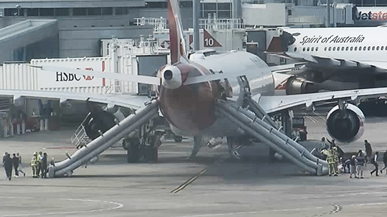
Evacuation highlights importance of clear safety instructions and commands to passengers
The evacuation of a Qantas A330 aircraft at Sydney Airport highlights the importance of clear passenger information and commands, an Australian Transport Safety Bureau investigation details.
On the morning of 15 December 2019, the Perth-bound Airbus A330-200 carrying 2 flight crew, 8 cabin crew and 222 passengers returned to Sydney shortly after take-off, due to a hydraulic leak.
As the aircraft arrived back at the terminal under tow, a haze began to form in the cabin and flight deck, and passengers and crew experienced physical symptoms including irritation to the eyes and throat. The captain confirmed with the first officer and the cabin service manager the need to evacuate, and commanded the evacuation.
During the evacuation, 129 of the passengers disembarked via aerobridges, while the remaining 93 used one of the three deployed escape slides.
“A number of passengers used the escape slides in a manner that increased the risk of injury, and unfortunately six passengers were injured,” ATSB Chief Commissioner Angus Mitchell said.
One passenger who used an escape slide sustained serious injuries including tendon ruptures in both knees, while others sustained minor injuries including knee sprains, friction burns, and elbow cuts and abrasions.
“The ATSB found limitations and inconsistencies in how Qantas’s safety video and briefing card described emergency slide use and what to do with cabin baggage in an emergency,” Mr Mitchell said.
“For example, the pre-flight video showed a passenger sitting down and placing their bag next to them, just prior to sliding.
“The management of passengers in an emergency situation is the last line of defence to avoid injuries and fatalities, so it is important passengers are well informed through the provision of sufficient and accurate communication about what they may be required to do.”
Additionally, CCTV and other video showed at least 40 passengers exiting via aerobridges with carry-on luggage and some of these retrieved their baggage after the evacuation command, which likely slowed the evacuation process.
“Some passengers also brought cabin baggage to the top of the emergency slides, and while some complied with cabin crew and left them behind, others were shown on CCTV with their luggage in-hand, after using a slide,” Mr Mitchell continued
“Passengers should always leave their belongings behind during an evacuation.”
The ATSB found primary commands practiced by Qantas cabin crew to instruct passengers in an evacuation did not include phrases such as ‘leave everything behind’ and ‘jump and slide’.
Since the incident, Qantas has amended its passenger safety briefing video, and is looking to incorporate ‘leave everything behind’ into its primary evacuation commands.
Mr Mitchell noted the timing of the evacuation – as the aircraft arrived at the terminal and cabin crew had disarmed doors – presented a complex challenge, and the investigation found two cabin crew members did not rearm their doors prior to opening them during the evacuation.
“Crew members must remain prepared to react to an emergency at any time, until everyone has disembarked the aircraft,” he said.
Qantas has subsequently introduced periodic training that requires cabin crew members to physically demonstrate the procedures for an evacuation at a terminal.
The ATSB investigation found the hydraulic failure, which triggered the return to Sydney, occurred when a rudder servo hydraulic hose ruptured in flight.
After landing and stopping on a taxiway to await engineers and a tow, the flight crew started the aircraft’s auxiliary power unit (APU), and the APU bleed air was turned on to maintain air conditioning and power in the cabin.
Leaking hydraulic fluid was subsequently ingested into the APU air intake, and the atomised hydraulic fluid was then distributed into the cabin and flight deck via the air conditioning system as the aircraft was towed back to the terminal.
Some cabin crew members had detected unusual smells both before and after the aircraft had been towed back to the terminal, but did not pass this information on to the flight crew at the time.
This may have prompted the flight crew to turn the APU bleed air off, as part of the smoke/fumes procedure.
“Communication between the cabin crew and flight crew is essential in abnormal situations, and it is important for information to be relayed as soon as it becomes available,” Mr Mitchell said.
Finally, the ATSB report notes Qantas did not have a procedure for ‘rapid disembarkation’, which would enable faster than usual deplaning, but at a slower and more controlled pace than an emergency evacuation.
“Accidents around the world continue to show there is a significant risk of injury to passengers when escape slides are used,” Mr Mitchell said.
“This risk is acceptable in a life-threatening situation where the alternative may be catastrophic, but in cases such as a fumes event – particularly if the aerobridge is already attached – a rapid disembarkation procedure may be preferable.”
Qantas advised in May 2022 it was undertaking a review of its current non-routine disembarkation procedure, and looking to incorporate a relevant procedural framework.
“In this case, given the information available and the physical symptoms being experienced by crew and passengers, the captain’s decision to evacuate was a sound one,” Mr Mitchell concluded.
Read the final report: Hydraulic system malfunction, return and evacuation, involving Airbus A330, VH-EBC, 94 km west-north-west of Sydney Airport, New South Wales, on 15 December 2019
Visibility study
Visibility study highlights how ADS-B IN can assist pilots to better identify potential traffic conflicts
A cockpit display or electronic flight bag app showing traffic information from ADS-B IN data would have alerted the pilots of two training aircraft involved in a fatal mid-air collision near Mangalore, Victoria to the position of the other aircraft much earlier compared to visual acquisition, an Australian Transport Safety Bureau study concludes.
In March, the ATSB released its final report from its investigation into the accident which found that, following receipt of verbal traffic information provided to both aircraft by air traffic control, the pilots of both aircraft did not successfully manoeuvre or establish direct radio communications to maintain separation, probably due to not recognising the risk of collision.
The accident was the first mid-air collision between two civil registered aircraft operating under the instrument flight rules (IFR) in Australia. As the collision occurred outside of controlled airspace, air traffic control (ATC) was required to provide traffic information on other IFR aircraft, but was not responsible for ensuring separation. This meant that the pilots were self-separating using radio communications and, where possible, the ’see and avoid’ principle.
‘See and avoid’ has known limitations, and central to the investigation was determining the likelihood that the pilots of each aircraft could detect the other visually in sufficient time to take avoiding action.
“To support the investigation, the ATSB initiated an aircraft performance and cockpit visibility study to determine when each aircraft may have been visible to the pilots of the other aircraft,” said ATSB Chief Commissioner Angus Mitchell.
“In addition, the study was undertaken to determine what effect an ADS-B IN system would have had on the pilots’ ability to detect traffic as they converged.”
Aircraft fitted with ADS-B OUT transmit positional and speed information derived from GPS to receivers including those used for air traffic control. Aircraft fitted with ADS-B IN equipment can receive this information on nearby aircraft, aiding pilot situational awareness.
Mr Mitchell said the investigation found that the pilots had insufficient time to visually acquire the opposing aircraft as cloud likely obscured the aircraft up until the collision, and added the study found that even in clearer conditions the aircraft were unlikely to have had sufficient time to visually acquire one another in time to avoid a collision.
“Analysis indicated that even in clearer conditions than experienced on the day of the accident, closing speeds and shielding by the aircraft structures would have limited the pilots’ opportunities to acquire the other aircraft, with two of the four pilots involved likely having the opposing aircraft shielded from their view at key moments prior to the collision,” he said.
As part of the study the ATSB developed scale three-dimensional models of the internal and external structures of representative aircraft using laser scanning technology, and determined the pilots’ approximate eye position within each model.
Investigators then developed animations using ADS-B position and aircraft performance data showing the cockpit view for both pilots in each aircraft overlaid with simulated cockpit traffic displays and alerts. This was supplemented by recorded air traffic control data.
These animations help illustrate the limitations of visual acquisition. Moreover, they demonstrate the significant additional alerting time that would be provided by an ADS-B IN display with an aural alert.
“The study has clearly shown that had the aircraft been equipped with ADS-B IN, the pilots would have been assisted in locating the other aircraft and alerted to its position much earlier than by visual acquisition,” Mr Mitchell said.
“The ATSB continues to strongly encourage the fitment and use of ADS-B transmitting, receiving and display devices in all general and recreational aviation aircraft, as these devices can significantly assist pilots with the identification and avoidance of conflicting traffic, and are available at relatively low-cost.”
While both aircraft involved in the mid-air collision were equipped with ADS-B OUT, neither aircraft were equipped with ADS-B IN systems, and nor were they required to be.
“Both a cockpit display of traffic information with an ADS-B traffic alerting system or an electronic conspicuity device connected to an electronic flight bag application could have provided this advance warning of a potential collision to the pilots of both aircraft,” Mr Mitchell said.
“While effective radio communication remains the primary means of self-separation in non-controlled airspace, the targeted and accurate information provided by ADS-B IN can provide pilots with significant assistance.”
Read the aircraft performance and cockpit visibility study: AS-2022-001 – Aircraft performance and cockpit visibility study supporting investigation into mid air collision of VH-AEM and VH-JQF near Mangalore Airport Vic. on 19 February 2020
Read the final report: AO-2020-012 – Mid-air collision involving Piper PA-44-180 Seminole, VH-JQF, and Beech D95A Travel Air, VH-AEM, 8 km south of Mangalore Airport, Victoria, on 19 February 2020
More information about ADS-B and the benefits of using the technology: Automatic Dependent Surveillance Broadcast - Airservices(Opens in a new tab/window)
UH-1H driveshaft
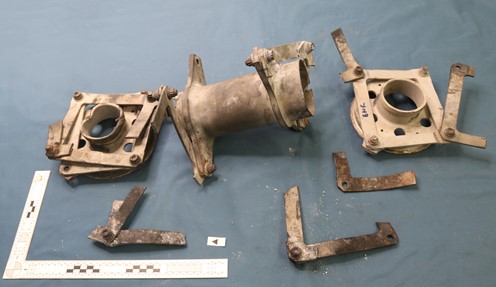
ATSB issues driveshaft failure Safety Advisory Notice to UH-1H helicopter operators
The Australian Transport Safety Bureau has issued a Safety Advisory Notice to operators of the UH-1H helicopter, recommending that they inspect the helicopter’s ‘KAflex’ driveshaft.
The Safety Advisory Notice stems from the ATSB’s on-going investigation into a fatal accident involving a UH-1H that was conducting firebombing operations at Labrina, near Launceston, Tasmania on 14 February 2022.
The ATSB previously released a preliminary report from the investigation on 28 April, however, ongoing examination of the wreckage has determined that the helicopter’s main driveshaft had failed, with evidence of severe frictional and wear damage to one portion of the shaft.
“It is important to note that this investigation is on-going and the ATSB is yet to make formal findings as to the contributing factors to this accident, and technical examination of the KAflex shaft is continuing,” said ATSB Director Transport Safety Stuart Macleod.
“However, the driveshaft’s manufacturer has advised the ATSB that the presence of frictional damage is evidence that the shaft had entered fail-safe mode during operation.”
The KAflex driveshaft was manufactured by Kamatics Corporation in the early 1980s as part of a US Army UH-1H driveshaft retrofit program. It uses flexible plates to accommodate relative movement between the engine and gearbox, and has a fail-safe mode intended to allow for uninterrupted drive for up to 30 minutes of helicopter operation.
However, the manufacturer has advised the ATSB that if a flex-frame attachment bolt were to release, the time before complete shaft failure may be significantly reduced.
Additionally, the Safety Advisory Notice notes that operators should be aware of the manufacturer’s concern of a certain serial number range of shafts for the UH‑1H that may be fitted with legacy flex-frame attachment hardware.
A number of previous KAflex driveshaft failures had already prompted the US Federal Aviation Administration to issue an airworthiness directive to UH-1H operators, which with effect from 25 February 2022 requires them to replace the KAflex before further flight.
“While the specific circumstances of this accident are still under investigation, the ATSB advises UH-1H operators to note the preliminary details of this accident, the FAA’s airworthiness directive, and to look for the presence of corrosion, fretting, frame cracking, and missing or damaged flex-frame attaching hardware during all inspections of the KAflex driveshaft,” Mr Macleod said.
The ATSB also advises UH-1H operators to familiarise themselves with Civil Aviation Safety Authority (CASA) Airworthiness Bulletin 63-004, which recommends closer inspection of the KAflex driveshaft.
The CASA AWB was re-issued in June 2021 in response to an ATSB investigation into a separate UH-1H accident where the helicopter conducted a forced landing after a driveshaft failure. The AWB was first issued in 2007.
“Any identified defects should be notified to CASA and the ATSB,” Mr Macleod said.
The UH-1H Iroquois (or ‘Huey’) was originally manufactured by Bell Helicopter for service with the United States Army and other militaries. A number of companies, including Garlick Helicopters, held supplement type certificates to convert the helicopter for civil operation and registration in the limited/restricted category.
Read the safety advisory notice: AO-2022-006-SAN-001 UH‑1H helicopter main drive shaft failure
Devonport ship collision
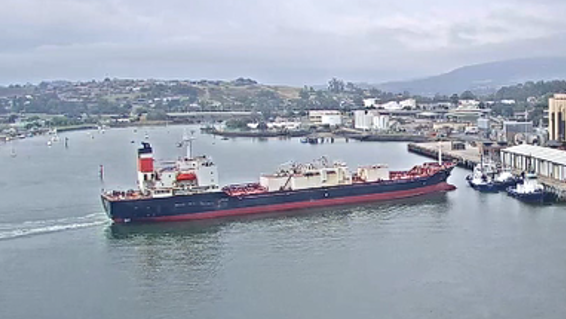
ATSB releases Devonport ship collision preliminary report
The Australian Transport Safety Bureau has released a preliminary report from its ongoing investigation into a cement carrier’s collision with two berthed tugs at Devonport, Tasmania on 28 January 2022.
The preliminary report describes the Australian-flagged Goliath’s entry into the port, radio calls with both the Devonport vessel traffic service (VTS) and a mooring lines boat (which was to assist in mooring Goliath as it would come alongside the wharf), the roles and movements of the ship’s crew on the bridge, and the ship’s manoeuvres in the lead-up to the collision.
“This preliminary report details factual information established in the investigation’s early evidence collection phase, but it does not detail analysis or findings, which will be outlined in the investigation’s final report,” ATSB Chief Commissioner Angus Mitchell noted.
The report outlines that, as the ship approached the port’s swing basin, the crew received two radio calls from the mooring boat. Goliath’s master asked the second mate to respond to the radio calls, so the second mate moved from beside the steering console to near the bridge front console to use the VHF radios located there. Meanwhile, the master commenced a slow turn to starboard in the swing basin as part of the final approach to its berth.
Shortly after, Goliath’s master re-positioned from the wheelhouse to the port bridge wing conning station, from where they manoeuvred the ship using main engine power settings (via the main engine telegraph*), the bow thruster and a joystick to input rudder angle commands to the ship’s VecTwin steering system.
“As the manoeuvre progressed, the master felt that the ship was not swinging as expected and was closing with two tugs moored at berth number Three West,” Mr Mitchell said.
To arrest the ship’s movement, the master set the VecTwin joystick to the ‘astern’ setting and placed the main engine telegraph to first ‘half ahead’ and then ‘full ahead’.
“Ships fitted with the VecTwin twin-rudder steering system can be manoeuvred at low speed with thrust from the propeller re-directed as required by the two rudders, controlled by a joystick,” explained Mr Mitchell.
“The system allows astern thrust to be generated using ahead inputs on the main engine without the need to stop the engine and engaging astern propulsion, as would be required for conventional ship manoeuvring.”
With the ship’s speed unexpectedly increasing, the master checked the rudder angle indicator and found that both rudders were still amidships and not at the angles corresponding to the VecTwin joystick’s ‘astern’ setting. The master called out to the second mate that the steering was not in VecTwin steering mode and immediately placed the engine telegraph to ‘stop’.
At about the same time, Goliath collided about halfway up the starboard side of the tug York Cove, at a speed of 4.7 knots (approximately 9 km/h).
York Cove was moored outboard of and alongside another tug, Campbell Cove. Both were severely damaged and began to take on water almost immediately.
On board Goliath, the second mate, who at that point was positioned by the wheelhouse door, re‑entered the wheelhouse and found the steering mode selector still in manual steering mode.
The second mate changed the steering mode over to VecTwin mode while the master began to move the ship astern using astern inputs on the main engine to get clear of the tugs before berthing the ship without further incident.
Within about five hours of the collision, both tugs had sunk in about 7 m of water and were subsequently declared constructive total losses. There was no-one on board the tugs, and no reported injuries on Goliath.
“The investigation is progressing and the ATSB will review and assess the ship’s safety management system and navigation procedures, the effectiveness of bridge resource management on board, and review past incidents involving Goliath,” Mr Mitchell said.
“Investigators will also examine TasPorts’ pilotage exemption processes and port procedures, as well as the shore pollution response.”
A final report will be released at the conclusion of the investigation.
“However, should a critical safety issue be identified at any time during the course of the investigation, the ATSB will immediately notify relevant parties so safety action can be taken,” Mr Mitchell said.
* The main engine telegraph communicates engine setting instructions from the bridge to the engine room.
Read the preliminary report: Collision involving the bulk carrier Goliath and tugs York Cove and Campbell Cove, Devonport, Tasmania, on 28 January 2022
Mt Disappointment prelim
ATSB releases preliminary report into Mt Disappointment helicopter accident
The Australian Transport Safety Bureau has released a preliminary report from its ongoing investigation into a fatal helicopter accident at Mount Disappointment, Victoria.
The report outlines factual information from the investigation’s early evidence collection phase, but contains no analysis or findings, which will be detailed in the final report.
The helicopter was one of two 7-seat EC130 helicopters operated by Microflite that departed from Batman Park Heliport in Melbourne, for a flight to Ulupna, on the NSW-Victoria border, on the morning of 31 March 2022. Each helicopter had a pilot and four passengers on board, and both were operating under visual flight rules (which permit pilots to operate only in visibility conditions generally clear enough to allow them to see where their aircraft is going).
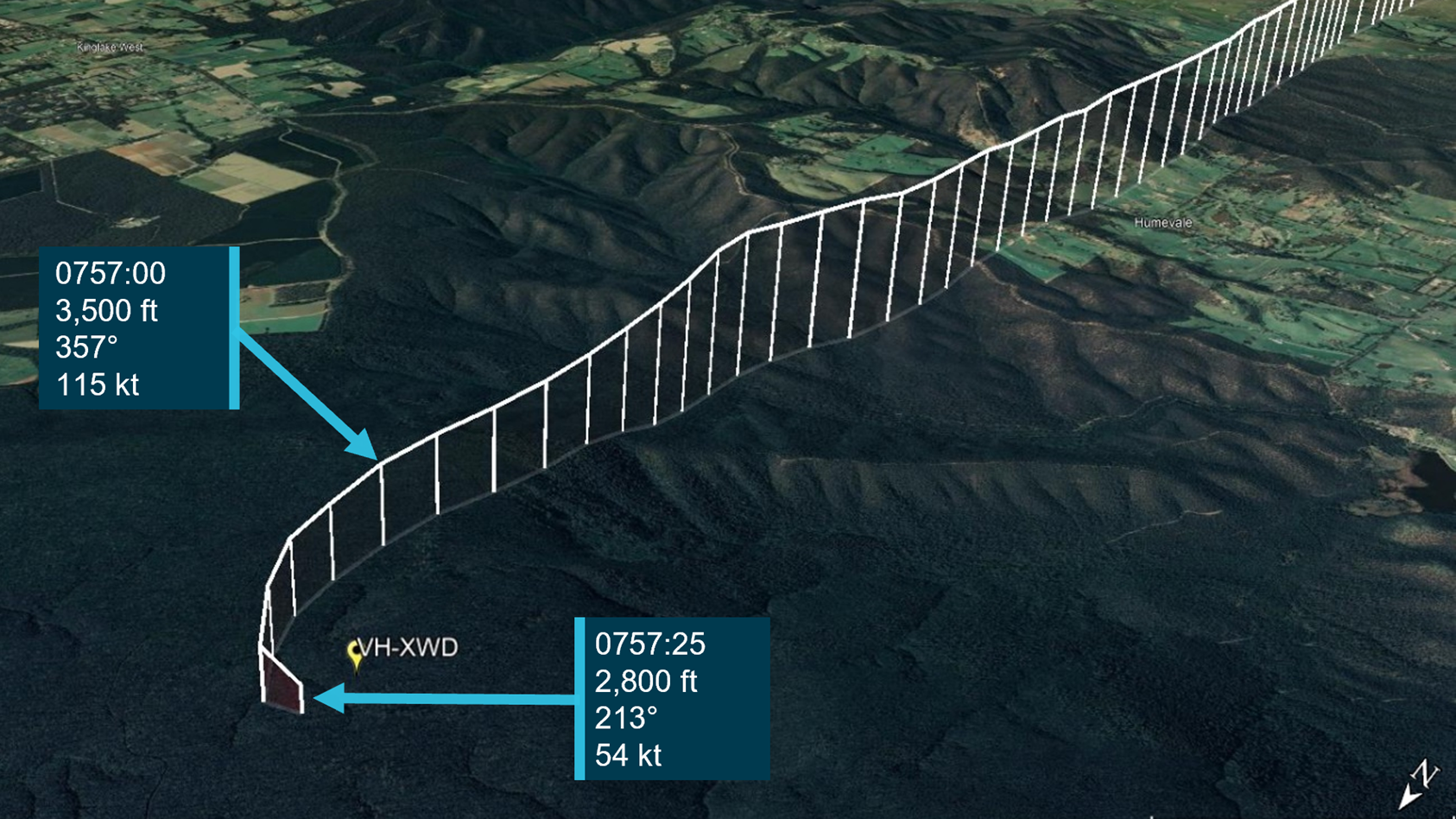
Travelling towards Mount Disappointment, the helicopters were cruising at 3,500 ft, between a layer of scattered* cloud at an estimated 2,500-3,000 ft and a layer of broken cloud at an estimated 4,500 ft.
“As they approached Mount Disappointment, the pilot of the first helicopter noted the layer of cloud below was rising and becoming broken, while the base of the cloud above appeared to be lowering, resulting in the clouds appearing to converge ahead of them,” ATSB Chief Commissioner Angus Mitchell said.
“The pilot reported they were then confronted with a ‘wall of cloud’ in front, and to the left and right of their track, and broadcast to the other pilot their intention to turn around.”
The pilot of the first helicopter later recounted that the pilot of the second helicopter, which was trailing about 3 km behind, may have been confused by this broadcast.
The pilot of the first helicopter then broadcast ‘U-turn, U-turn, U-turn’ to the second pilot, and conducted a sharp left turn onto a southerly track.
About 30 seconds later, while travelling south at 3,650 ft, the pilot and passengers on board the first helicopter saw the second helicopter pass below and to the left of them at about 3,500 ft, continuing in a northerly direction. This was the last visual contact they had with the second helicopter.
“A short time later, before the collision with terrain, flight track data showed the second helicopter in a left descending turn,” Mr Mitchell said.
The ATSB’s survey of the accident site subsequently determined that the helicopter collided with a large old growth tree trunk before impacting the ground about 250 m south of the last recorded data point. All five occupants were fatally injured.
Much of the wreckage was destroyed by a post-impact fire, however, investigators found no evidence of any pre-existing defects that would have affected the helicopter’s operation.
As well as site survey activities, to date ATSB investigators have also interviewed the pilot of the first helicopter, the operator’s chief pilot, and collected passenger statements, operational and maintenance data, onboard recording equipment, and meteorological data.
“As the investigation continues the ATSB will attempt to download and analyse data from the helicopter’s onboard Appareo camera, which may have recorded video and audio of the accident flight, plus the pilot’s iPad, which was being used to run an electronic flight bag flight planning app, as well as avionics equipment from the helicopter,” said Mr Mitchell.
Investigators will also analyse other aspects relevant to the accident including the weather data, the helicopter’s maintenance history, the pilot’s qualifications and experience, witness information, the operator’s management systems, and the training and flight review standards for commercial helicopter pilots.
“While a final report will be released at the conclusion of this investigation, should a critical safety issue be identified at any time, the ATSB will immediately notify relevant parties so appropriate and timely safety action can be taken,” Mr Mitchell concluded.
* Cloud cover: ‘scattered’ indicates that cloud is covering between a quarter and a half of the sky, ‘broken’ indicates that more than half to almost all the sky is covered.
Read the preliminary report: AO-2022-016: Collision with terrain involving Airbus Helicopters EC 130 T2, VH-XWD, near Mount Disappointment, Victoria, on 31 March 2022
TSI grad cert
Applications open for July 2022 Graduate Certificate in Transport Safety Investigation intake
Applications are now open for the next Graduate Certificate in Transport Safety Investigation intake, the award-winning qualification for transport accident investigation developed in partnership by RMIT University and the Australian Transport Safety Bureau.
RMIT University delivers the Graduate Certificate to both transport industry professionals and the ATSB’s own transport safety investigators.
“The Graduate Certificate program is ideal for professionals in transport safety-related roles who aspire to gain theory-based knowledge and skills to perform accident investigations in the aviation, rail and marine sectors,” said ATSB Chief Operating Officer Colin McNamara.
“The course is also the cornerstone of the training we provide to all newly-recruited ATSB transport safety investigators.”
“The Graduate Certificate in Transport Safety Investigation arose from a joint vision between RMIT University and the ATSB, Mr McNamara noted.
“That’s why we were thrilled to see RMIT University’s development and implementation of the course recently recognised with Aviation/Aerospace Australia’s Outstanding Leadership in Training award, right as we’re opening our next intake for July 2022.”
Courses in the program are offered intensively in one-week blocks, to help provide a better articulation between participants’ working and academic commitments. The program can be completed over a six month period and the courses can be attended in person at RMIT City campus (Melbourne) and/or on-line.
“The ATSB provides advice on the development of the program structure and the course material, and a significant number of topics are delivered by ATSB subject matter experts with in-depth industry experience,” Mr McNamara said.
“The ATSB and RMIT collaboration ensures the course is industry-relevant and work-integrated.”
Mr McNamara noted RMIT University and ATSB are also developing a Graduate Diploma in Transport Safety Investigation, to extend and deepen the knowledge and skills for this highly specialised profession.
Find out more about the program, and apply for the July 2022 intake, on RMIT’s website(Opens in a new tab/window).
King River preliminary
King River helicopter accident preliminary report released
The ATSB has released a preliminary report from its on-going investigation into a fatal accident involving a Robinson R44 helicopter at King River, in the Northern Territory’s West Arnhem Land.
The report notes the helicopter was one of three conducting crocodile egg collection, able to carry a crewmember (‘sling person’) attached to a 100 ft long line to access crocodile nests.
All three helicopters had departed a staging area at King River to start egg collection from nearby nests on the morning of 28 February 2022.
“Crewmembers of the other two helicopters became concerned when they had not heard any radio communications from the third helicopter,” ATSB Director Transport Safety Stuart Macleod said.
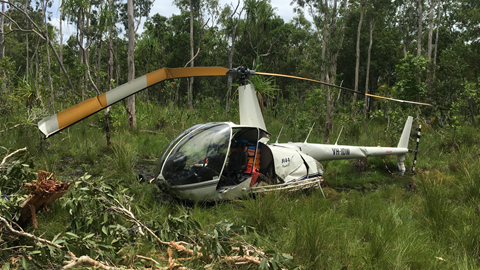
One of the pilots elected to return to the area the third helicopter was operating in, and found the wreckage at a paperbark swamp approximately 300 m from the staging area.
The sling person was found approximately 40 metres from the main wreckage, and was fatally injured. The pilot was seriously injured, and was airlifted to hospital.
“Preliminary analysis of the site by ATSB investigators indicated the accident sequence had occurred while the helicopter was travelling in a north-west direction, shortly after it left the staging area,” said Mr Macleod.
“Initial assessment indicated the engine had stopped prior to the helicopter colliding with the ground,” Mr Macleod continued.
There was no visible damage to the tail rotor blades and drive system and flight control continuity was established.
An examination of the engine and associated components found no defects likely to result in engine stoppage. The helicopter’s two fuel bladder tanks were intact despite breaches of the surrounding metal tanks, and there was no fire.
After initial assessment, the wreckage was removed from the site, and ATSB investigators drained about 250 ml of fuel from the main tank’s bladder.
It was possible fuel escaped into the creek that flowed beneath the wreckage as the fuel system was compromised in the accident, the report notes.
“This preliminary report details factual information established in the investigation’s early evidence collection phase, and as such does not detail analysis or findings, which will be outlined in the investigation’s final report,’ Mr Macleod said.
“As the investigation progresses, the ATSB will include review and examine of electronic components retrieved from the accident site.
“Fuel system components, refuelling practices and fuel quality will also be reviewed and examined, as well as relevant maintenance records, operational documentation and regulations.”
Survivability aspects of the accident will also be considered.
Read the preliminary report: Collision with terrain involving Robinson R44, VH-IDW King River, Northern Territory, on 28 February 2022