Investigation of Cessna 208 engine failure and forced landing on Lake Burbury

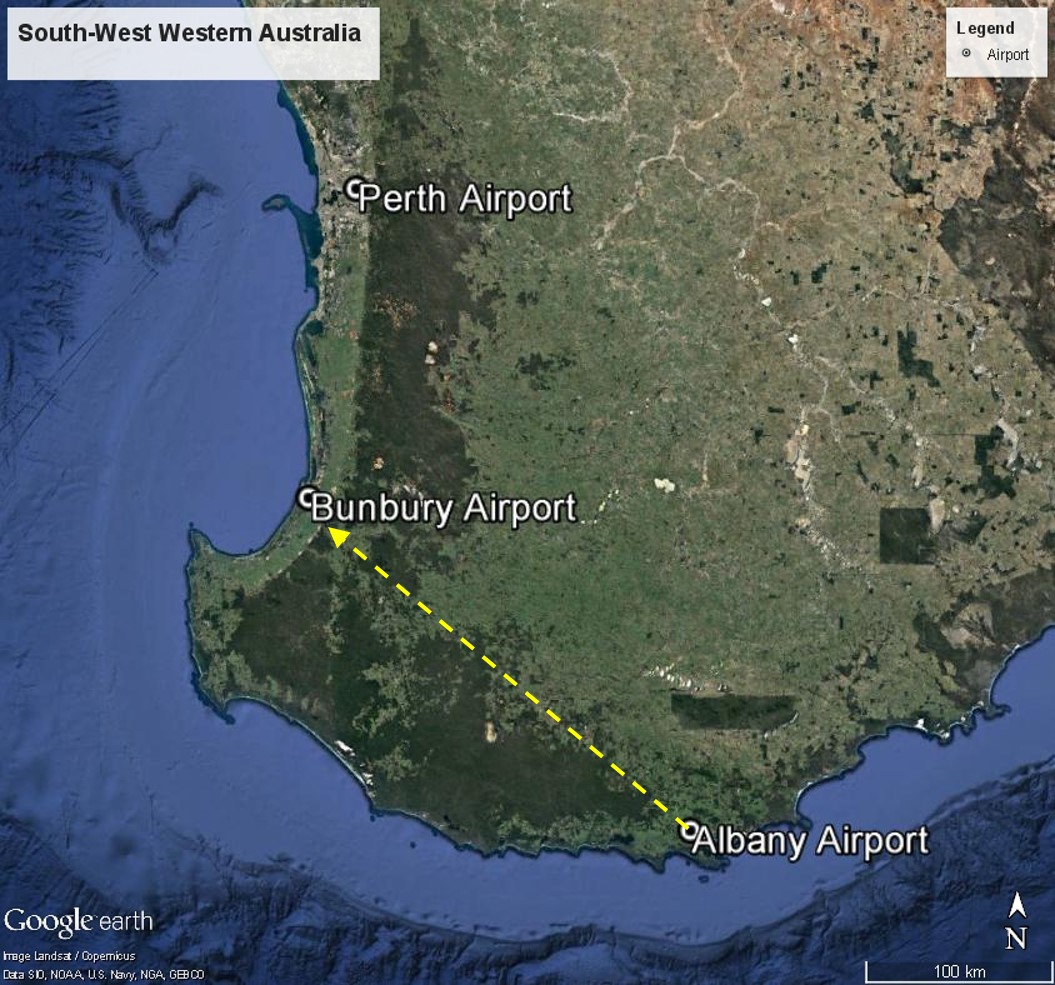
The ATSB has found that a Cessna 208 engine failure and forced landing onto a lake in a remote part of south-western Tasmania last year was due to a previous generator failure, has praised the pilots actions in landing the aircraft and ensuring passenger safety, and has made a number of safety recommendations to prevent a similar failure.

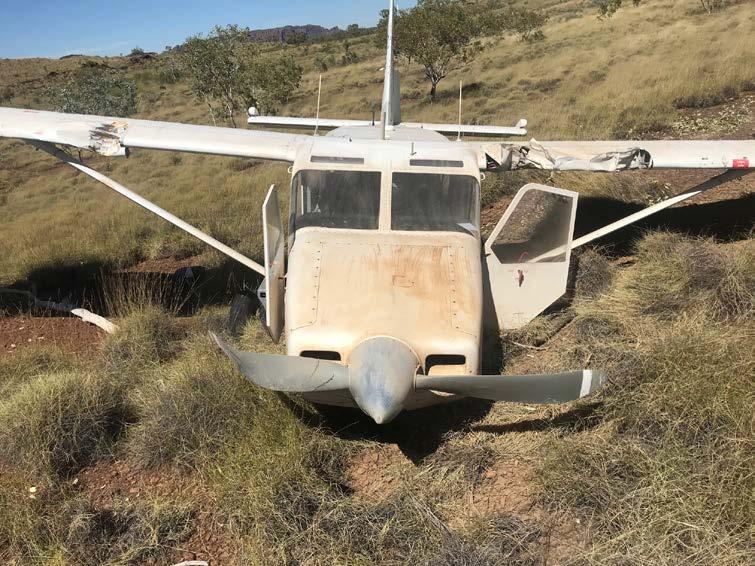
The Australian Transport Safety Bureaus final investigation report states that the aircraft, a single engine Cessna 208 floatplane was being operated on a commercial scenic flight over rugged terrain with a pilot and 10 passengers. The occupants were fortunate to escape unharmed, due to the pilots prompt actions in diverting to Lake Burbury when an engine chip-detector warning light came on. Within minutes of the warning light illuminating, the engine failed completely, and the pilot was able to conduct a forced landing onto the lake. The aircraft ended up on a mud bank on the edge of the lake and the occupants were able to walk away unharmed.

A previous generator failure led to electrical discharge damage (EDD) to the engine, resulting in its failure in-flight. EDD is a known problem with the Pratt and Whitney Canada PT-6 series turbo-prop engines fitted to this aircraft type. The ATSB has investigated similar events in Australia previously and the ATSB report cites 43 similar events reported worldwide since 1992. Some of these events have also been investigated by the US National Transportation Safety Board.

As a result of the ATSB investigation into this serious incident, a number of safety actions have been implemented by the aircraft and engine manufacturers as well as Australia's Civil Aviation Safety Authority (CASA). CASA has advised the ATSB that it will issue mandatory aircraft maintenance instructions and Airworthiness Bulletins to reduce the possibility of EDD occurring and will highlight the issue to the Australian aviation industry through its Flight Safety Australia magazine.

While the safety actions of all parties are to be commended, the ATSB remains concerned that there remain safety issues that need to be addressed to eliminate the possibility of EDD events leading to engine failures of this engine type. The ATSB final report therefore contains a number of safety recommendations to the aircraft and engine manufacturer, the Canadian and US airworthiness authorities, Transport Canada and the Federal Aviation Administration and CASA.

Copies of the report can be downloaded from the ATSBs internet site at www.atsb.gov.au

Final ATSB investigation report on fatal fire-bombing accident

The ATSB's final aviation investigation report into a fatal fire-bombing accident south of Cootamundra last year found that the pilot lost control of the aircraft during a low altitude turn and that his lack of experience on the modified Dromader turbine-engined aircraft may have been a contributing factor.

The Australian Transport Safety Bureau notes that this was only the second fatal accident involving a fixed-wing aircraft engaged in fire-bombing operations in Australia since they commenced in the early 1960s, despite the high risks associated with that type of flying.

In contrast to frequently experienced severe conditions, this accident on 16 February 2006 occurred in warm to mild weather with good visibility, gentle winds, and over relatively benign terrain.

The deceased pilot was an experienced agricultural pilot with previous fire-bombing experience. Although he had considerable flying experience on radial-engine Dromader aircraft, and in other turbine agricultural aircraft, his total flying experience in the modified turbine Dromader was only 4.7 hours. Prior to commencing duty two days previously, the pilot had not flown firebombing operations for three years.

The report concluded that the pilots limited familiarity with the handling characteristics of the modified and heavily-loaded aircraft might not have allowed adequate recognition of an impending stall. The pilot had not jettisoned the load of retardant and the aircraft stalled while the aircraft was being manoeuvred at a height that did not permit recovery before colliding with the ground. The possibility that the pilot was distracted by either a problem with the operation of the fire doors or some other activity could not be determined.

Subsequently, the State fire authority reviewed the minimum pilot experience levels for aerial fire suppression. That review included more accurately reporting a pilots experience on specific aircraft types to ensure minimum requirements were met prior to being rostered for fire-bombing operations and also introduced minimum recency requirements.

Copies of the report can be downloaded from the ATSBs internet site at www.atsb.gov.au

Survey of flying VH-registered Amateur-built ABAA and Experimental aircraft

The Australian Transport Safety Bureau (ATSB) is inviting owners of flying Amateur-built ABAA and Experimental (ABE) aircraft to participate in a survey. This is the first time in Australia that a constructive effort has been made to gather data on this growing segment of general aviation. ABE aircraft have become an increasingly popular alternative to the purchase of traditional certified aeroplanes. The strong growth in this segment of general aviation deserves greater attention.

This survey was developed with the assistance of members of the ABE aircraft community, and we thank them for helping us to construct this simple but informative survey. In the coming months, the ATSB will collate the survey responses, and using other data held by the Bureau, build a picture of the health of ABE aircraft in Australia. We hope that you will take the time to participate in our survey by sharing your experiences with us.

The survey will take only about 10 minutes to complete. Please complete the survey online or download and print a copy and send it to us, free of charge, using a Reply Paid envelope. Survey closed.

If you have any questions about the survey please contact us in the following ways

Mail: ATSB, Aviation Safety Research
ABE Survey
Reply Paid 967
Civic Square ACT 2608
Phone: 1800 621 372
Email: abe.survey@atsb.gov.au
Fax: 02 6247 3117

Shirley Strachan accident highlights mountain wave dangers

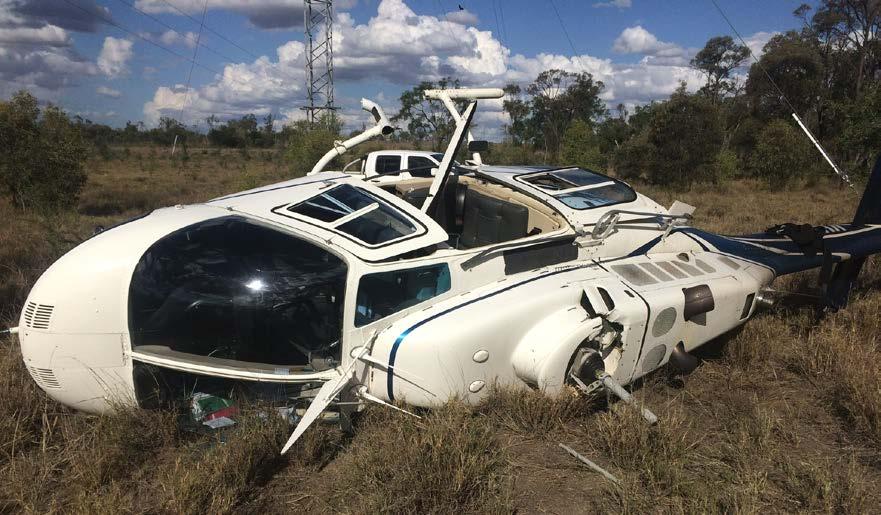
Pilot and media personality Graeme (Shirley) Strachan was fatally injured when he lost control of the helicopter he was flying after it was damaged in severe mountain wave turbulence and crashed on the north-east slope of Mount Archer, Queensland on 29 August 2001.

This was the main finding in the final accident report released today by the Australian Transport Safety Bureau.

"The extensive damage to the helicopter, severed tailboom and the location of parts on the ground, led transport safety investigators to conclude that the main rotor blade may have contacted the tailboom in flight," Air Safety Deputy Director, Alan Stray said.

"This type of damage was consistent with flying into mountain wave turbulence, and may have occurred from one of two events: blade flapping (divergence of the main rotor blade from its normal plane of rotation encountered during severe turbulence) or the pilot's instinctive reaction to pull up after a sudden nose-down pitch from a change in the helicopter control input (collective lever friction failure in turbulence causing the non-powered collective lever to drop).

"Weather conditions at the time were conducive to mountain waves on the north-east slope of Mount Archer near where the wreckage was found."

The pilot was on a training navigation flight and had not been briefed on the weather conditions by the flight training school before departure from Maroochydore. In addition, the pilot's flight planning notes did not take into account the forecast winds.

Encounters with mountain waves have led to catastrophic events in the past and pilots needed to be highly aware of their potentially deadly effects when interpreting weather forecasts and planning flight over mountainous terrain.

"In Australia mountain waves are experienced over and on the lee side of mountain ranges in the south-east of the continent and in westerly wind flows over the east coast in late winter and early spring. It is absolutely essential that aviators are aware of the wind and its potential effects on aircraft.

"We hope that out of this tragedy, a greater pilot awareness of mountain waves will save lives in the future," Mr Stray said.

The helicopter had no known maintenance deficiencies and was considered capable of normal flight prior to the accident.

ATSB report

Final ATSB investigation report on 4-fatality helicopter accident near Gunpowder, Queensland

The ATSBs final investigation report into the fatal crash of an R44 Helicopter west of the Gunpowder airstrip in Queensland on 21 February 2006 found that the operation of the helicopter at weights that did not allow for adequate performance in the high temperatures experienced in the area may have contributed to the development of the accident.

The Australian Transport Safety Bureau report states that the helicopter, with a pilot and three passengers on board was engaged in aerial survey operations between the Mt Gordon and Mt Kelly mines in northern Queensland. It was reported overdue at a scheduled stop and was located the following day, burnt out on the top of a hill. All four persons on board had received fatal injuries.

The helicopter had impacted the ground with significant force, with the main rotor displaying evidence of low rotational energy. Other than impact and fire damage, there were no identified mechanical defects or abnormalities found with the helicopter.

At the estimated helicopter weight and the prevailing atmospheric conditions, the helicopter did not have the performance to hover at the survey altitude, which was estimated to be about 1,000 ft above ground level.

The investigation found that the helicopter was also being operated at gross weights that exceeded the specified maximum take-off weight. In addition, the operators procedures did not provide a high level of assurance that a relatively low time pilot could conduct aerial survey operations safely.

While the ATSB could not conclusively determine the factors leading to the accident, as a result of this investigation, the helicopter manufacturer has commenced a revision of safety information that it provides to pilots highlighting the dangers of operations at low level in high temperatures.

Copies of the report can be downloaded from the ATSBs internet site www.atsb.gov.au

ATSB releases report on Chester and Hai Teng collision

A report released today by the Australian Transport Safety Bureau found that a significant factor contributing to a collision involving the Australian recreational craft Chester and the Chinese bulk carrier Hai Teng off Mooloolaba, Queensland, on 19 March 2000, was the absence of a lookout on one vessel and an ineffective lookout on the other.

Since 1 July 1999, the ATSB has investigated six collisions involving ships and fishing vessels or small craft. Such collisions keep occurring despite the widespread circulation of ATSB reports and safety bulletins as well as media coverage.

The report on Chester and Hai Teng, with two safety bulletins attached, emphasises the importance of maintaining an effective lookout at all times on all vessels, as well as the fact that small targets, such as Chester, can be difficult to detect in clutter on radar displays.

Chester was anchored about 28 miles off Mooloolaba, with its crew of two asleep, when Hai Teng collided with it in fine conditions shortly after midnight on 18 March. The bulk carrier was heading north from Newcastle, New South Wales, for China at the time and the watchkeepers on the bridge did not detect the small craft and were not aware of the collision. The collision caused minor damage to Chester, but its crew was not injured, and the vessel returned safely to Mooloolaba.

A contributing factor to the accident was that the bulb for the anchor light on Chester, which was designed for use as a road vehicle's stop and taillight, was not appropriate for use in an anchor light. The light should have been visible for at least two miles, but in certain sectors might only have been visible at half a mile.

In addition, Chester was anchored in shipping lanes and its small size might have made it difficult to detect either visually or by radar.

Bass Strait platform stopped by electrical fires

The ATSB has found that the self propelled accommodation platform Safe Concordia had been plagued by problems in its electrical systems since its construction and these problems had not been adequately addressed before the platform suffered two electrical fires in its propulsion system after entering Bass Strait in September 2005.

Safe Concordia is a dynamic positioning, self propelled, semi-submersible accommodation platform that uses four electrically driven thrusters to maintain its position. The platforms construction and delivery trials were completed in March 2005. The platform was used operationally for its first contract in the Timor Sea before modifications were made to address various electrical problems that had occurred within its propulsion system. After the modifications were completed, the platform sailed from Singapore, bound for Bass Strait, Australia, where it was to be positioned about 30 metres from the Yolla gas production platform.

On 12 September 2005, after the platform had entered Bass Strait, a fire started in one of the Safe Concordia's thruster transformers. The Australian Transport Safety Bureau investigation found that the transformer fire was probably the result of an internal short circuit that occurred when the transformer insulation failed due to overheating. The transformers had overheated because of flaws in the design of the propulsion electrical system.

On 18 September, while still in Bass Strait, a fire occurred in an electrical cabinet that was providing power to another thruster motor. The cabinet fire was probably the result of an electrical arc that occurred when electricians had bypassed part of the electrical system to try and diagnose the ongoing problems and the execution of the task of bypassing the equipment was not adequately completed.

The ATSB report also concluded that Safe Concordia was not fit to fulfil its charter obligations in view of the unresolved faults in the thrusters electrical power systems. The National Offshore and Petroleum Safety Authority had not been made aware of the problems and the design of the platform did not allow for effective and safe fire fighting in the thruster machinery rooms.

The ATSB has made several safety recommendations with the aim of preventing further incidents of this type.

Copies of the report can be downloaded from the ATSBs internet site www.atsb.gov.au

Antarctic ship fire the result of fuel leak

The Australian Transport Safety Bureau (ATSB) has found that an engine room fire that occurred on board the Antarctic resupply ship LAstrolabe, on 11 November 2006, was the result of a fuel leak on the starboard main engine.

On 5 November 2006, the Antarctic supply ship LAstrolabe sailed from the French Antarctic base at Dumont dUrville, bound for Hobart, Tasmania. On 7 November, the engineers discovered that the starboard main engines main fuel pump was leaking. They blanked off the main fuel pump and ran the engine using another fuel pump.

At about 0530 on 11 November, while the ship was still about 320 nautical miles south of Hobart, a fire started in the engine room when the blank that had been fitted to the starboard main engines fuel pipe worked loose, allowing fuel to spray out of the pipe. The leaking fuel ignited when it came into contact with the hot surfaces of the engine.

The ship's crew remotely operated the fuel system quick closing valves, which shut down all of the ships engines. They then isolated all ventilation to the engine room before activating the engine rooms fixed fire extinguishing system.

By 0620, the fire had been extinguished and the crew re-entered the engine room to restart the ships engines. By about 1200, LAstrolabe had resumed its passage to Hobart on its port main engine. The starboard main engine was back in service on 12 November.

The investigation found that the blank fitted to the engines fuel pipe was ineffective for the task.

The report also concludes that the practices and procedures used for re-entering engine room after the fire may have been risky.

The ATSB has issued one recommendation and three safety advisory notices with the aim of preventing further incidents of this type.

Copies of the report can be downloaded from the ATSBs internet site www.atsb.gov.au

Release of the Whyalla Airlines Piper Chieftain, VH-MZK report

The final report on the Whyalla Airlines Piper Chieftain VH-MZK accident on 31 May 2000, in which all eight occupants died, was released today by the Australian Transport Safety Bureau.

ATSB Executive Director, Kym Bills, made the following statement: "The VH-MZK accident occurred after mechanical failures involving both engines forced the pilot to ditch the aircraft in Spencer Gulf, about 26km from Whyalla, on a dark, cloudy and moonless night.

Based on careful analysis of the engine failures and recorded radar and audio data, it is likely that the left engine failed first as a result of a fatigue crack in the crankshaft. This was initiated about 50 flights before the accident flight due to the breakdown of a connecting rod bearing insert. The combined effects of high combustion gas pressures developed as a result of deposit-induced pre-ignition, and lowered bearing insert retention forces due to an 'anti-galling' lubricating compound used during engine assembly by the manufacturer, led to this breakdown.

Lean fuel practices used by the operator increased the likelihood of lead oxybromide deposit-induced pre-ignition but were within the engine operating limits set by the aircraft manufacturer.

It is likely that because of the increased power demanded of the right engine after the left engine failed, abnormal combustion (detonation) occurred and rapidly raised the temperature of the pistons and cylinder heads. As a result, a hole melted in the number 6 piston causing loss of engine power and erratic engine operation. The subsequent ditching involved great pilot skill.

The ATSB examined components from a further ten similar engines that have failed since January 2000 (including two engines from another manufacturer) in order to better understand the failure mechanisms. Combustion chamber deposits that may create lead oxybromide deposit-induced pre-ignition were found in these engines. The Bureau concluded that engines that were operated at lean fuel-air mixtures during climb, and towards best economy mixtures during cruise flight, were more likely to show signs of such deposit-induced pre-ignition than those engines operated at full rich mixture during climb and at best power mixture during cruise.

On 30 October 2000 ATSB released recommendations about the risks of detonation and lean running and in relation to the desirability of life jackets and other life-saving equipment on smaller passenger aircraft flying over water. Today, we release further recommendations to:

  • the US FAA in relation to engine deposits that may cause pre-ignition;
  • the US FAA and the engine manufacturer on the use of anti-galling compounds between connecting rod bearing inserts and housings during engine assembly;
  • CASA in relation to high power piston engine reliability more generally; and
  • CASA in relation to providing guidance to pilots on ditching.

While there were deficiencies with the Whyalla Airlines safety culture and gaps with the extent of the regulator's surveillance of the operator, neither were significant accident factors.

No-one should be blamed for this accident, but if the lessons from it are learned, both in Australia and internationally, some good will have come from the tragic deaths of eight people."