Pilot successfully conducted emergency autorotation landing on a beach after smelling burning rubber and noting the clutch warning light flicker;
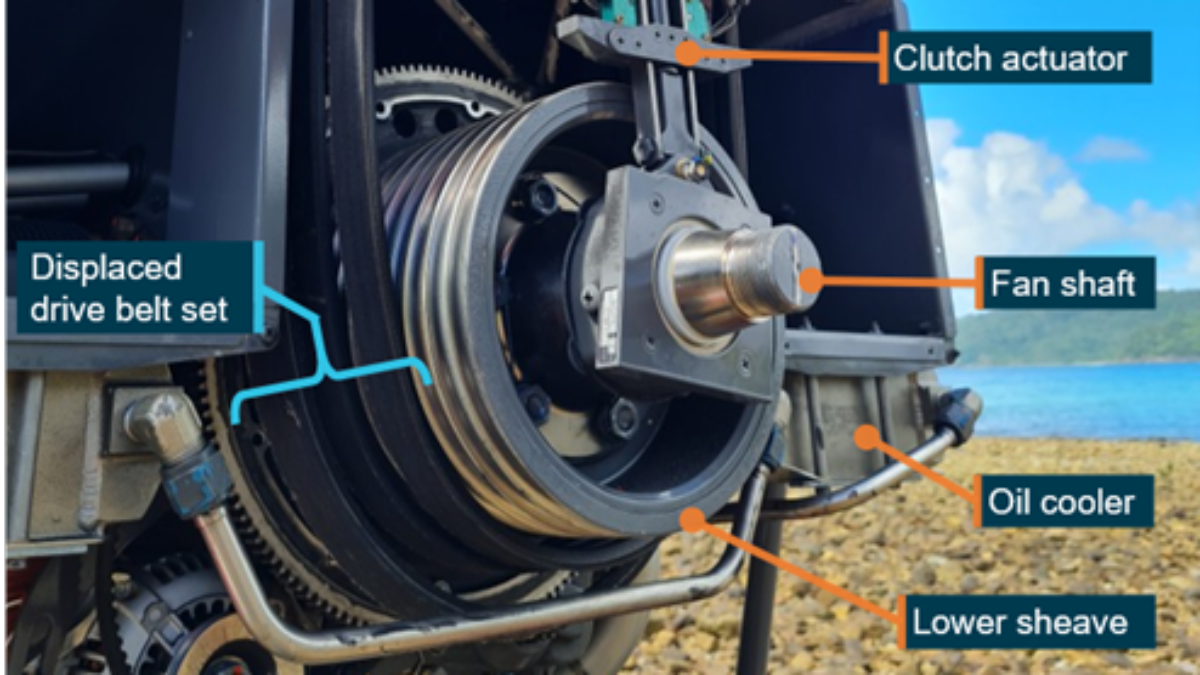
The drive belt set had disengaged from the sheaves, preventing effective drive from the engine to the rotor system;
After installing new drive belts, the aircraft’s maintainers had used the then-recommended practice of extending the clutch actuator to stretch the new drive belt set.
Robinson Helicopter Company has removed a drive belt stretching practice from its R22 and R44 helicopter handbooks in response to an ATSB investigation into a drive system failure and forced landing incident in Queensland’s Whitsundays region.
On 3 February 2021, a Robinson R44 conducting a charter flight with a pilot and two passengers on board was cruising at 1500 ft between Long Island and Hamilton Island when the pilot smelled burning rubber and saw the clutch warning light flicker briefly.
Shortly afterwards, and observing a reduction in main rotor RPM, the pilot turned the helicopter back toward Long Island and made a successful emergency autorotation landing on a beach.
A post-incident inspection found two of the helicopter’s four drive belts were dislodged and moved forward of the upper sheave of the helicopter’s drivetrain.
“The other two drive belts had also shifted forward such that they were not effectively engaged within their sheave grooves,” ATSB Director Transport Safety Stuart Macleod said.
“This meant there was a complete loss of effective drive from the engine to the rotor system.”
The ATSB’s investigation determined maintenance checks had found drive belt stretching both before and after the incident, each time within a short time of new drive belt sets being installed.
The report notes the helicopter maintainer, after installing new drive belts, used the then-recommended practice of extending the clutch actuator to stretch the new drive belt set.
“However, in light of this incident and other reports, Robinson has now identified that this practice may lead to overstretching and looseness in the drive belts during operation,” Mr Macleod said.
“Looseness can in turn result in the drive belts coming out of the sheave grooves while the helicopter is shut down, and disengaging drive to the rotor system in flight.”
Robinson has subsequently removed from its pilot’s operating handbooks for R22 and R44 helicopters the procedure of stretching new drive belts by extending the clutch actuator, and leaving it engaged with the engine off.
“Following the helicopter manufacturer’s latest advice, R22 and R44 operators and maintainers should not stretch new drive belt sets using the clutch actuator,” Mr Macleod summarised.
“This will avoid overstretching and reduce instances of drive belt disengagement and subsequent loss of rotor drive.”
Mr Macleod noted the pilot’s actions in quickly reacting to the loss of rotor drive led to the incident’s safe outcome.
“The pilot’s handling of this incident highlights the importance of efficiently managing an in-flight emergency by following flight manual emergency procedures, and having a pre-planned course of action,” he said.
“These fundamentals enabled the pilot to make a safe landing with no injuries or loss of the helicopter.”
The requirements for reporting aviation accidents and incidents to the ATSB are detailed in the Transport Safety Investigations Regulations (TSI Regulations).
The TSI Regulations(Opens in a new tab/window) set out the ATSB’s safety occurrence reporting scheme and prescribe what occurrences must be reported to the ATSB, the timeframes those reports must be made in, the ‘responsible persons’ who are required to make a report, and the particulars to be included in a report.
Guidance for the aviation industry on what and how to report to the ATSB as prescribed in the TSI Regulations is provided below. This guidance is also available in in the Aeronautical Information Package (AIP)(Opens in a new tab/window), Enroute 1.14, AirTraffic Incidents, on the Airservices Australia website.
Reporting of accidents and incidents
The Regulations define occurrences that must be reported to the ATSB as “immediately reportable”, which must be reported by telephone as soon as reasonably practical, and “routine reportable” matters, which can be notified to the ATSB by a written report within 72 hours.
The Regulations define 4 categories of aircraft operations, each with different reporting requirements, while types of reportable matters are defined in 7 broad classifications based on International Civil Aviation Organization definitions. Whether an event is to be immediately reportable, routine reportable or not reportable at all, is based on a combination of the 4 aircraft operation categories and the 7 classifications.
Higher categories, in particular passenger-carrying and commercial operations, have a greater reporting focus due to the greater public safety benefit that could be derived. Non-commercial aircraft operations and uncrewed RPA and balloons have lower reporting requirements.
Aside from being the basis for starting safety investigations, all occurrences reported to the ATSB are maintained in Australia’s official aviation occurrence database and used for safety research and analysis.
For routine reportable matters, complete the ATSB's online form.
Aircraft categories for reportable matters
The four aircraft operations categories comprise Category A (passenger transport), Category B (commercial non-passenger, including medium to large RPA), Category C (non-commercial) aircraft operation, and Category D (small non-excluded RPA and certain uncrewed balloons) aircraft operation. Further detail is provided below.
Category
Kinds of aircraft operations covered
Category A (passenger transport) aircraft operations
What is included in Category A?
(1) Passenger transport operation (within the meaning of the Civil Aviation Safety Regulations 1998 (CASR)) being an operation in an aircraft that involves the carriage of passengers[1], whether or not cargo is also carried on the aircraft.
Examples include: air transport operations (scheduled or non-scheduled), balloon transport operations,[2] mining fly-in-fly-out operations, scenic flights/joy flights, parachuting operations, future advanced air mobility passenger carrying operations, and aerial work operations that carry passengers who are not crew members.
(2)Medical transport operation (within the meaning of CASR) being an operation with the primary purpose of transporting medical patients, medical personnel, or supplies (blood, tissue etc), or an operation prescribed by CASA in the CASR Part 119 Manual of Standards as a medical transport operation.
Examples include: flights formerly known as air ambulance operations, Royal Flying Doctor Service flights and patient transport/transfer services using aircraft operated by State and Territory ambulance services.
(3) Repositioning flights prior to conducting a substantive Category A operation (passenger transport or medical transport) will also be treated as a Category A operation for the purposes of occurrence reporting.
What is excluded from Category A?
Category A aircraft operations will not include an operation in an aircraft with a special certificate of airworthiness, or a cost-sharing flight[3], or operation of an aircraft (where the registered operator is an individual) that carries passengers without payment or reward.
For example, if a scenic flight involves ‘cost-sharing’ – then any occurrences during that operation would be reportable under Category C (non commercial) aircraft operations. It is important to note that cost-sharing is limited to an aircraft configuration of not more than 6 seats (including pilot’s seat) and requires the pilot in command to directly contribute to equal costs for the flight.
Category B (commercial non-passenger) aircraft operations
What is included in Category B?
(1) Operation conducted for a commercial purpose – any non passenger carrying aircraft operation that is conducted for a commercial purpose will be included in Category B. A ‘commercial purpose’ is intended to have a general meaning and includes, among other things, operations conducted for hire or reward.
Examples include: aerial work operations such as surveying, spotting, surveillance, agricultural operations, aerial photography; search and rescue operations; flying training activities (such as training under a CASR Part 141 or CASR Part 142 training organisation).
(2) Cargo transport operation (within the meaning of CASR) being an operation of an aircraft that involves the carriage of cargo and crew only (excluding operation for the carriage of possessions of the operator, or pilot in command, for business or trade).
Examples include: air freight, air mail, and parcel/package delivery using aircraft operated by logistics companies.
(3) operating Type 1 RPA (defined in section 6 of the TSI Regulations and adopting CASR definitions) being a large RPA[4], medium RPA[5] or RPA which is type certificated (and which is not an excluded RPA or micro RPA).
Examples include: package delivery using large RPA, agricultural operations, other kinds of aerial work.
(4) Repositioning flights prior to conducting a substantive Category B operation will also be treated as a Category B operation for the purposes of occurrence reporting.
What is excluded from Category B?
To avoid doubt, Category B aircraft operations do not include Category A (passenger transport) aircraft operations or Category D (type 2 RPA and certain unmanned balloons) aircraft operations.
This means in practice, Category A operations (if applicable) take precedence for the purposes of occurrence reporting – if the operation is not Category A, then responsible persons (pilots, operators and others mentioned in section 13 of the TSI Regulations) should consider if the operation would then fall within the scope of Category B for commercial purposes (unless it would be Category D), and if not, then whether the other two remaining categories would apply.
For example, if an operator is contracted to conduct crop spraying for a client’s farmland, this would be considered a commercial purpose (Category B). However, if an operator undertakes crop spraying on their own land, there is no commercial purpose in relation to the aircraft operation and this would be considered an operation covered under Category C (non-commercial).
Category C (non-commercial) aircraft operations
What is included in Category C?
(1) Operation of an aircraft that is not Category A, Category B or Category D – this broad description has the aim of covering non-commercial operations (with a pilot on board) generally. This means Category C includes recreational flying, general aviation, and flights where the pilot shares equally in costs with passengers (cost sharing).
Examples include: flying activities at local aero clubs, solo flying, community service flights, gliding activities.
What is excluded from Category C?
The purpose of Category C is to cover every kind of remaining aircraft operation (with a pilot on board) that is not excluded from the aviation occurrence reporting framework under subsection 7(3) of the TSI Regulations.
Subsection 7(3) provides that Part 2 (aircraft operations) of the TSI Regulations do not apply to ‘excluded aircraft’ – being an Australian defence aircraft, an exempt foreign aircraft, or an RPA that is not type 1 RPA or type 2 RPA. The Amendment Regulations also extend the exclusions listed in subsection 7(3) to model aircraft, small balloons and light balloons and tethered balloons.
Category D (type 2 RPA and certain unmanned balloons) aircraft operations
What is included in Category D?
(1) operating type 2 RPA (defined in section 6 of the TSI Regulations) being an RPA that is not a type 1 RPA, not an excluded RPA, and not a micro RPA.
(2) operating a medium balloon (defined in Part 101 of CASR) being an unmanned free balloon with, among other things, a payload with combined mass of at least 4kg but less than 6kg.
(3) operating a heavy balloon (defined in Part 101 of CASR) being an unmanned free balloon with, among other things, a payload with combined mass of at least 6kg.
Examples include: commercial and non-commercial operation of a very small RPA (more than 250g but under 2kg) such as the DJI Phantom 4 or a small RPA (more than 2kg but under 25kg) such as the DJI Agras MG-1. Unmanned balloons capable of reaching stratospheric heights would also be included in Category D.
What is excluded from Category D?
Category D covers a subset of unmanned aircraft operations that are not already covered under earlier categories. If the aircraft operation is not using a type 2 RPA, medium balloon or heavy balloon, then Category D would not apply.
The framework clarifies that occurrences during repositioning flights for the purpose of conducting Category A aircraft operations must be reported as a Category A (passenger carrying) aircraft operation, and similarly for Category B (commercial non-passenger) aircraft operations. The rationale for including Category A and Category B repositioning flights is to ensure that occurrences for those operations with greater public safety impact and interest are included in categories that provide proper visibility of safety matters leading up to conduct of the substantive operation. The requirement for reporting occurrences during repositioning flights does not apply to Category C (non commercial) aircraft operations or Category D (type 2 RPA and certain unmanned balloons) aircraft operations.
Responsible persons
Reportable matters known by responsible persons must be reported to the ATSB by that person unless that person believes, on reasonable grounds, that one or more other responsible persons:
have already reported the matter, or
will as soon as is reasonably practicable report the matter.
However, the ATSB still encourages all responsible persons with information about a reportable matter to report that information to the ATSB.
The following are responsible persons:
a crew member of the aircraft concerned
the owner or operator of the aircraft
a person performing an air traffic control service in relation to the aircraft
a person performing a dedicated aerodrome rescue or firefighting service in relation to the aircraft
a person who is licensed as an aircraft maintenance engineer and does any work in relation to the aircraft
a member of the ground handling crew in relation to the aircraft
a member of the staff of CASA
the operator of an aerodrome
a sport aviation body that administers aviation activities in relation to the aircraft.
Reportable matters
Reportable matters are defined in the TSI Regulations via a combination of the type of safety occurrences (see below), and the type of operation. The combination determines whether a safety occurrence is an immediately reportable matter, routine reportable matter, or not reportable.
The TSI Regulations refer to the following types of safety occurrences:
an aircraft accident
a reportable serious aircraft incident
a loss of a separation standard between aircraft
a declaration of an emergency in relation to an aircraft
a serious property damage incident (external)
an aircraft incident
an aircraft incident (external).
The TSI Regulations refer to 4 categories of aircraft operations, each with different reporting obligations (see section above, Aircraft that must report reportable matters).
Reportable matters for each type of operation category
Category A operations have the most reporting requirements and Category D have the least reporting requirements. The below table shows the types of safety occurrences that are either immediately reportable matters (telephone as soon as reasonably practicable and written report within 72 hours), or routine reportable matters (written report within 72 hours), for each type of operation category.
Category
Immediately reportable matters (IRM)
Routine reportable matters (RRM)
Section 11A: Category A (passenger transport) aircraft operations
The following kinds of occurrences reported as IRMs:
aircraft accident;
reportable serious aircraft incident;
loss of separation standard between aircraft;
declaration of an emergency in relation to the aircraft; and
serious property damage incident (external).
The following kinds of occurrences reported as RRMs:
aircraft incident; and
aircraft incident (external).
Section 11B: Category B (commercial non-passenger) aircraft operations
The following kinds of occurrences reported as IRMs:
aircraft accident;
loss of separation standard between aircraft; and
serious property damage incident (external).
The following kinds of occurrences reported as RRMs:
reportable serious aircraft incident;
declaration of an emergency in relation to the aircraft; and
aircraft incident (external).
Section 11C: Category C (non-commercial) aircraft operations
The following kinds of occurrences reported as IRMs:
aircraft accident – limited to fatal aircraft-related injuries, serious aircraft-related injuries, or missing aircraft;
loss of separation standard between aircraft; and
serious property damage incident (external).
The following kinds of occurrences reported as RRMs:
aircraft accident other than reportable as an IRM;
reportable serious aircraft incident;
declaration of an emergency in relation to the aircraft; and
aircraft incident (external).
Section 11D: Category D (type 2 RPA and certain unmanned balloons) aircraft operations
The following kinds of occurrences reported as IRMs:
aircraft accident – limited to fatal aircraft-related injuries or serious aircraft-related injuries; and
serious property damage incident (external).
The following kinds of occurrences reported as RRMs:
aircraft accident other than reportable as an IRM; and
loss of a separation standard between aircraft.
Reportable matters definitions and examples
Reportable matters are safety occurrences that involve the operation of an aircraft, including preparation for departure and during disembarkation. Specifically, in relation to a particular crewed aircraft, reportable matters must occur during the period:
beginning when the aircraft is being prepared for take-off; and
ending when all passengers and crew members have disembarked after the flight.
For uncrewed aircraft, reportable matters must occur during the period:
beginning when the aircraft is ready to move with the purpose of flight; and
ending when the aircraft comes to rest at the end of the flight and the primary propulsion system is shut down. In the case of an uncrewed aircraft without a primary propulsion system (such as a gas balloon), the end of flight is when the aircraft comes to rest at the end of the flight.
Emergency declaration
A declaration of an emergency, in relation to an aircraft, means:
a declaration, by a flight crew member of the aircraft, of an alert phase (PAN PAN) or a distress phase (MAYDAY); or
a declaration by an air traffic service provider of a distress phase (DETRESFA) in relation to the aircraft.
Note: a PAN MED (Medical emergency) is excluded from an emergency declaration. Refer to Reportable serious aircraft incidents – ‘incapacitation of a flight crew member’, and Aircraft incidents – ‘flight crew incapacitation’, and ‘cabin injuries’ for definitions of reportable incidents.
Loss of separation standard between aircraft
A situation where the recognised separation standard (vertical, lateral or longitudinal) between aircraft that are being provided with an Air Navigation Service Provider separation service is infringed. This includes any of the following:
loss of procedural or surveillance separation standards
loss of prescribed runway or wake turbulence separation standards
visual reference is lost during visual separation by a pilot or air traffic controller in controlled airspace.
Serious property damage incident (external)
In relation to the operation of an aircraft, damage to property outside the aircraft that would cost at least $25,000 to repair or replace, that is caused by:
contact with any part of the aircraft, including anything that is attached to the aircraft or that has become detached from the aircraft; or
direct exposure to jet blast, propeller wash or rotor downwash from the aircraft.
Aircraft accident
An aircraft accident is defined as:
A person suffers a fatal aircraft-related injury in relation to the operation of the aircraft; or
A person suffers a serious aircraft-related injury in relation to the operation of the aircraft; or
The aircraft sustains damage or structural failure, or there are reasonable grounds for believing that the aircraft has sustained damage or structural failure, which:
adversely affects the structural strength, performance or flight characteristics of the aircraft; and
would normally require major repair or replacement of the affected component;
except for any of the following:
engine failure;
engine damage limited to a single engine (including damage to its cowlings or accessories);
damage to propellers, wing tips, antennas, probes, vanes, tyres, brakes, wheels, fairings, panels, landing gear doors or windscreens;
damage such as small dents or puncture holes to the aircraft skin;
minor damage to main rotor blades, tail rotor blades or landing gear;
minor damage resulting from hail or bird strike (including holes in the radome); or
The aircraft is missing; or
The aircraft is completely inaccessible.
For further detail on determining injury and damage level, see below section Guidance for determining injury and damage.
Reportable serious aircraft incidents
A serious aircraft incident is an incident involving circumstances indicating that there was a high probability of an aircraft accident (that is, a high probability of a fatal or serious aircraft-related injury and/or the aircraft sustaining damage or structural failure); or
An incident in the following list of incidents that have the potential to be classified as a serious incident.
Note that a reportable serious aircraft incident includes a serious aircraft incident (as per the first point above) even when not in the list of examples below, as well as any incident in the list of examples below (with clarifying notes) even if it might not meet the definition of a serious aircraft incident.
Examples of reportable serious aircraft incidents
Reportable serious aircraft incident as defined by the TSI Regulations
Clarifying notes
A near collision requiring an avoidance manoeuvre to avoid a collision or an unsafe situation, or when an avoidance action would have been appropriate.
Immediate evasive action was required or should have been taken to avoid a collision.
Includes during flight and on the ground.
A collision with anything other than an animal or a bird.
Unless the resulting damage or injury qualifies it as an accident, an aircraft collides with another aircraft or collides with terrain (including water, trees and wires), a person, structure or object.
Where controlled flight into terrain was only marginally avoided.
Includes any legitimate terrain avoidance system warning ‘pull up’ type annunciation.
Excludes anticipated or spurious annunciations that occur in VMC.
An aborted take‑off on a closed, engaged or unassigned runway, or on a taxiway (other than an authorised operation by a helicopter).
A take‑off from a closed, engaged or unassigned runway, or from a taxiway (other than an authorised operation by a helicopter).
A landing or attempted landing on a closed, engaged or unassigned runway, on a taxiway (other than an authorised operation by a helicopter), or on an unintended landing location (such as a road).
Excludes helicopter landings on taxiways by authorised helicopter operations.
The retraction of a landing gear leg during landing, or a wheels‑up landing.
Unless the resulting damage or injury qualifies it as an accident.
The dragging, during landing, of a wing tip, engine pod or any other part of the aircraft.
Unless the resulting damage or injury qualifies it as an accident. Includes during a go-around. Dragging includes any contact with the surface.
A significant failure to achieve predicted performance during take‑off or initial climb.
Fire or smoke in the cockpit, the passenger compartment or a cargo compartment, or engine fire, even if the fire was extinguished by the use of extinguishing agents.
Includes explosions.
Excludes events involving fumes only.
An event requiring the emergency use of oxygen by a flight crew member.
Includes oxygen use for fumes, depressurisation.
Aircraft structural failure, engine disintegration or uncontained turbine engine failure.
Significant structural airframe failures, excluding dents, missing panels and minor skin damage.
Multiple malfunctions of one or more aircraft systems seriously affecting the operation of the aircraft.
Incapacitation of a flight crew member: - during a single pilot operation; or - during a multi‑pilot operation, if the safety of the operation is compromised because of a significant increase in workload for the remaining flight crew members.
Incapacitation for any reason to the extent that their ability to perform any flight management role is significantly impaired. Includes remote pilots.
Fuel quantity level or distribution situations (such as insufficient fuel, fuel exhaustion, fuel starvation, or inability to use all usable fuel on board) requiring the declaration of an emergency by the pilot.
Includes when declaration of emergency would be expected but not done.
A runway incursion where a collision is narrowly avoided.
Only includes runway incursions classified with severity index A as per the ICAO Manual on the Prevention of Runway Incursions (Doc 9870)
A take‑off or landing incident such as under‑shooting, overrunning or running off the side of a runway.
-Over-running refers to either a landing or a rejected take-off where the aircraft continues beyond the effective operational length available for use by aircraft for landing at certified or registered aerodromes or the distance available for landing on an aircraft landing area.
-Under-shoot refers to a landing that touches down prior to the designated landing area on a runway within the aerodrome perimeter.
Any of the following which caused, or could have caused, difficulties controlling the aircraft: - system failures (including loss of power or thrust) - weather phenomena - operations outside the approved flight envelope - any other occurrence.
Relates only those circumstances that require immediate intervention. Includes system alerts such as engine indications requiring inflight shutdowns, stall warnings during critical phases of flight.
Includes complete or partial loss of engine power.
Failure of more than one redundant system mandatory for flight guidance and navigation.
The unintentional or emergency release of a slung load or any other load carried external to the aircraft.
Aircraft incident
An aircraft incident is any event that is associated with the operation of an aircraft and affects, or could affect, the safety of the operation of the aircraft.
The degree to which an occurrence “affects or could affect” the safety of the operation of the aircraft should be understood to mean occurrences that, if not corrected, could endanger the aircraft or its occupants. To be clear, a responsible person is required to report an aircraft incident whether or not it was actually corrected or able to be corrected.
If an event, without correction, does not endanger the aircraft or its occupants, then the ATSB would consider that it has not affected or could not affect the safe operation of the aircraft (and therefore is an event that does not need to be reported).
Below are typical examples of aircraft incidents. For completeness, the list also includes occurrences that are aircraft accidents and/or reportable serious aircraft incidents, with notes to indicate this. However, the list is not exhaustive, and other operational events not in the list that meet the definition of an aircraft incident must be reported as aircraft incidents.
Incident
Definition
Clarifying note
Aircraft control incidents
Hard landing
The vertical deceleration operational limits for the aircraft set out in the aircraft's flight manual are exceeded during the landing.
(Note damage criteria for accidents.)
Airframe overspeed
The airspeed limit has been exceeded for the current aircraft configuration as published in the aircraft manual.
General airframe limits such as VNE; Extension speeds for flaps, slats, spoilers; Undercarriage extension speed.
Minor overspeeds are not incidents. In determining whether the overspeed is minor, both the degree and duration of the overspeed event should be taken into account.
Stall warning
Any cockpit warning or alert that indicates the aircraft is approaching an aerodynamic stall.
Warnings and alerts that are reportable include:
aural stall warnings
stick shaker activations
stick pusher activations
alpha protection or alpha floor activations.
stall warnings that are intentionally generated during flying training or flight testing operations are not reportable.
Stall warnings are not reportable if the crew conclusively establish that the indication was false and provided that the false warning did not result in difficulty controlling the aircraft or a hazard arising from the response to the warning.
Note criteria for reportable serious aircraft incidents for stall warnings during critical phases of flight.
Incorrect configuration
Where an aircraft system is incorrectly set for the current and/or intended phase of flight.
Landing gear not extended in preparation for landing;
Inadvertent retraction of landing gear after landing;
Incorrectly setting the flaps or slats;
Incorrect application of carburettor heat (when carburettor icing occurred or was likely to have occurred).
Incorrectly setting the auto flight system mode;
Raising the flaps instead of the landing gear after becoming airborne.
Minor configuration issues that are not reportable include:
Momentary Enhanced Ground Proximity Warning System (EGPWS) flap and gear warnings related to incorrect settings in the EGPWS
Configuration warnings on the application of take-off power that are resolved by the crew and the aircraft subsequently departs without incident.
Control issues
Occurrences where there were difficulties controlling the aircraft either airborne or on the ground.
Minor control issues arising from:
Weather phenomenon (icing, severe turbulence, significant wind shear, thunderstorm encounter);
Wake turbulence;
Minor technical issues.
(Note criteria for reportable serious aircraft incidents.)
Weather events
Icing issue that affect the performance of the aircraft;
Lightning strikes;
Turbulence or windshear that affect aircraft performance;
(Note criteria for reportable serious aircraft incidents.)
Unstable approach
Flight crew continues an approach to landing when unstable (rather than conducting a go-around) when:
a. there is an approved operator-specific stabilised approach criteria and that criteria is not met; or
b. there is no approved operator-specific stabilised approach criteria, and one of the clarifying notes is not met under the following conditions:
(i) IMC at or below 1,000FT AGL;
(ii) VMC at or below 500FT AGL.
An approach is unstable when one or more of the following criteria is not met:
the aircraft is on the correct flight path;
only small changes in heading/pitch are necessary to maintain the correct flight path;
the airspeed is not more than VREF + 20 kt indicated speed and not less than VREF;
the aircraft is in the correct landing configuration;
sink rate is no greater than 1,000 feet/minute;
power setting is appropriate for the aircraft configuration and is not below the minimum power for the approach as defined by the operating manual;
all briefings and checklists have been conducted;
instrument landing system approaches flown within one dot of the glideslope and localiser;
a Category II or III instrument approach flown within the expanded localiser band;
a circling approach is flown with wings level on final approach when the aircraft reaches 300 feet above airport elevation.
Does not include when the approach was discontinued due to being unstable in the vicinity of 1,000 ft (IMC) or 500 ft (VMC).
Wheels-up landing
An aircraft contacts the intended landing area with the landing gear retracted.
Includes intentional and unintentional wheels-up landing.
Includes amphibious aircraft landing on water with landing gear not retracted.
(Note – all wheels-up landings are either accidents or reportable serious aircraft incidents.)
Aircraft loading incidents
Loading-related
Incorrect loading of an aircraft if the loading adversely affected, or could have affected, any of the following: (i) the aircraft's weight; (ii) the aircraft's balance; (iii) the aircraft's structural integrity; (iv) the aircraft's performance; (v) the aircraft's flight characteristics.
Incorrect load sheet provided to flight crew;
Incorrect weight data input into flight computers;
Incorrect passenger numbers or seating;
Incorrect freight or baggage or incorrect loading;
Freight shifting inflight or unrestrained freight;
Incorrect fuel quantity or tank usage.
Does not include events that were detected and corrected before flight.
Cabin safety incidents
Flight crew incapacitation
A flight crew member becomes incapacitated, such that their ability to perform normal flight duties is impaired.
Incapacitation may be due to illness, injury, physiological or psychological factors, or environmental or other factors. Incapacitations may be short term or persist for the duration of the flight, and includes both partial and total incapacitation.
(Note criteria for reportable serious aircraft incidents.)
Depressurisation
Air pressure inside the cabin of a pressurised aircraft reduces to an extent that requires action by the flight crew.
(Note criteria for reportable serious aircraft incidents.)
Cabin injuries
Crew and passenger injuries and incapacitations sustained as a direct result of an aircraft operation.
Injuries to flight crew, cabin crew or passengers if they are the result of:
the movement of the aircraft due to a weather phenomenon like windshear or turbulence;
an abrupt aircraft manoeuvre, either airborne or on the ground
unrestrained objects.
Does not include workplace health and safety related injuries like slips, trips, falls, spillage of hot beverages, bumping head on overhead lockers or passenger illness unless the injury or illness is a direct result of the operation of the aircraft.
Unrestrained occupants / objects
Aircraft occupants, equipment or objects are not appropriately restrained for the aircraft operation or phase of flight.
Includes crew or passengers standing during take-off or landing, passenger not wearing seatbelts when required, and unrestrained galley equipment during critical flight phases.
Fire, smoke, and Fumes
Fumes
Smells, odours or odourless fumes not generally associated with normal aircraft operations.
Includes fumes from:
dangerous goods
post compressor wash
oil / electrical smells
carbon monoxide from engine combustion or heating.
Excludes (if no other consequences):
fumes from galley oven contents or residual cleaning products
bird ingestion through air conditioning
passenger hand luggage contents.
(Note criteria for reportable serious aircraft incidents when incapacitation results from fumes.)
(Note separate reporting requirements for declaration of an emergency.)
Fire
Any fire that has been detected and confirmed in relation to an aircraft operation.
(All fire events are reportable serious aircraft incidents.)
Smoke
Smoke is reported to be emanating from:
a) inside the aircraft; or
b) an external component of the aircraft.
(All smoke related events are reportable serious aircraft incidents.)
Excludes passengers smoking inside the aircraft when the safety of the aircraft was not compromised.
Flight preparation / Navigation incidents
Lost / unsure of position
Uncertainty by flight crew in relation to an aircraft's position where the flight crew request assistance from an external source.
Applies to pilots that request navigational assistance from ATC, other aircraft, or other person outside the aircraft in determining their current position.
Pre-flight planning and preparation
Inadequate or incorrect pre-flight planning or preparation of an aircraft for flight that affected, or if not corrected, could have affected the safety of the operation of the aircraft.
Inadequate or incorrect fuel planning;
Navigation/flight planning issues including flight management computer data entry errors;
Deficiencies or erroneous data in navigation databases;
Inadequate pre-flight aircraft inspection.
Flight below safe altitude
An aircraft is operated below the designated or planned lowest safe altitude for the in-flight conditions and phase of flight.
Crew error to descend below the lowest safe altitude in IMC;
Aircraft operating below lowest safe altitude without knowledge of terrain in the vicinity;
ATC instruction to descend or operate below the lowest safe altitude;
Aircraft that continue the approach below minima with no visual reference to the runway;
Intentional unauthorised low flight.
VFR into IMC
An aircraft operating under the visual flight rules enters instrument meteorological conditions.
(Note criteria for reportable serious aircraft incidents.)
Fuel related incidents
Fuel contamination
The presence of a foreign substance in fuel loaded into an aircraft.
Fuel that is manufactured outside the technical specifications for the fuel grade or type;
Contamination of fuel in aircraft fuel tanks or aircraft fuel systems;
Incorrect fuel type for aircraft.
Fuel leak or venting
Unplanned loss of fuel from a fuel tank or fuel system.
Includes missing or insecure fuel cap.
Fuel starvation
Fuel supply to the engine(s) is interrupted although there is usable fuel on board the aircraft.
Mismanagement of the fuel system by the flight crew;
Mechanical failure involving the fuel system;
Unporting of the fuel standpipes during an aircraft manoeuvre.
(Note criteria for reportable serious aircraft incidents.)
Low fuel
The aircraft's supply of fuel becoming so low that the safety of the aircraft is compromised.
Any occurrence where fixed fuel reserves are compromised.
(Note the separate reporting requirements for a declaration of an emergency.)
Fuel exhaustion
When the engine stops because the aircraft has become completely devoid of useable fuel.
(All fuel exhaustion events are reportable serious aircraft incidents.)
Ground Proximity Warning
TAWS/GPWS
A Terrain Avoidance and Warning System warning or alert.
Any Terrain Avoidance and Warning System (TAWS) warning or alert, such as from a Ground Proximity Warning System (GPWS) and Enhanced Ground Proximity Warning System (EGPWS)
Excludes:
expected or spurious terrain warnings in VMC
momentary EGPWS flap and gear warnings related to incorrect settings in the EGPWS
momentary EGPWS glideslope warnings where a safe approach is continued.
(Note criteria for reportable serious aircraft incidents.)
Ground operations’ incidents
Near collision on ground
An aircraft has a near collision with another aircraft, vehicle, structure, person or object while it is operating on the ground or water.
Near collision on taxiway or apron with another aircraft, vehicle, person or object.
(A near collision on the runway strip is a reportable serious aircraft incident.)
(Note criteria for reportable serious aircraft incidents for near collisions.)
(Note – all actual collisions are either an aircraft accident or a reportable serious aircraft incident depending on the level of damage.)
Foreign object damage / debris
Loose objects on a runway or in an aircraft that have caused, or have the potential to cause, damage to an aircraft.
Aircraft panels/parts that have dislodged from aircraft or vehicles and are a potential hazard to other aircraft;
Tools or equipment left in an engine or avionics bay (found during prefight preparation);
Loose objects in the cockpit/aircraft that result a hazardous condition.
Excludes foreign objects on a runway that have had no interaction with an aircraft.
Ground handling
Aircraft ground handling and aircraft servicing that have caused, or have the potential to cause, damage to the aircraft or injury.
Any hazardous condition such as vehicles colliding with a stationary aircraft or fuel spillages resulting from ramp operations (after the aircraft is being prepared for flight and before all passengers and crew have disembarked).
(Note separate reporting requirement for Aircraft loading incidents.)
Jet blast / prop wash / rotor wash
Air disturbance from a ground-running aircraft propeller, rotor, or jet engine that have caused or have the potential to cause damage or injury.
Jet blast or propeller wash that has the likelihood of causing injury to persons, or damage to aircraft or other objects. Also includes instances of helicopter rotor down wash where helicopters are hover taxiing or flying at low level.
Runway events
Depart, approach, or lands on wrong runway
An aircraft approaches an area other than that authorised or intended for landing or departure.
(Note all take-off, aborted take-off, landing and attempted landings on closed or engaged runway, on a taxiway, or an unassigned runway, or roadway, are reportable serious aircraft incidents.)
Runway incursions
Incorrect presence of an aircraft, vehicle or person on the protected area of a surface designated for the landing and take-off of aircraft.
Incorrect presence means:
(a) anything within the confines of the runway strip, irrespective of having an appropriate clearance, which hinders the operation of an arriving or departing aircraft; or (b) an aircraft, vehicle or person entering the confines of the flight path without a clearance to do so, regardless of other aircraft operations.
(Note – a runway incursion where a collision is narrowly avoided is a reportable serious aircraft incident.)
Runway excursion
An aircraft veers off the side of the runway or overruns the runway threshold.
Over-running refers to either a landing or a rejected take-off where the aircraft continues beyond the effective operational length available for use by aircraft for landing at certified or registered aerodromes or the distance available for landing on an aircraft landing area.
(Note - a runway veer-off or overrun incident during take-off or landing is a reportable serious aircraft incident.)
Runway under‑shoot
An aircraft attempting a landing touches down prior to the designated landing area on a runway within the aerodrome perimeter.
Includes aircraft landing on the runway surface before a displaced runway threshold.
(Note – an aircraft touching down prior to the runway surface is a reportable serious aircraft incident.)
Terrain collisions
Collision with terrain and near collision with terrain
Any collision or near collision with terrain or water, including wirestrikes, or where controlled flight into terrain is only narrowly avoided
(Note – all collisions and near collisions (where avoidance manoeuvre was required or appropriate) are aircraft accidents or reportable serious aircraft incidents.)
Ground strike
Part of the aircraft drags on, or strikes, the ground or water in an unintended manner during take-off or landing.
A rotor or propeller makes contact with the ground during take-off or landing;
An engine pod, wingtip, or tail contacts the ground during take-off or landing.
(Note criteria for accidents and reportable serious aircraft incidents.)
Miscellaneous warning devices
Warning device other
An aural or visual aircraft warning device activates to alert the flight crew to a situation requiring immediate or prompt corrective action.
Includes chip detectors, propeller/rotor low RPM horns, fire warning devices, carbon monoxide detection.
(Note separate reporting criteria for stall warnings, EGPWS/TAWS, TCAS/ACAS, abnormal engine indications or low fuel warnings.)
Mechanical related aircraft incident examples
Incident
Definition
Inclusions / exclusions
Airframe related incidents
Doors /exits
An aircraft door (passenger, cargo, or emergency), or its component parts, has exhibited damage or has failed.
Excludes internal doors, like cockpit doors or lavatory doors.
Landing gear
An aircraft’s landing gear, brakes, their component parts or tyres have failed.
Landing gear collapse due to mechanical malfunction;
Use of emergency gear extension;
Tyre deflation;
Overheated or smoking brakes;
Faults with float type undercarriages;
Faults with emergency flotation devices in helicopters.
Excluded:
failure of landing gear indication bulbs
flat tyres while standing or taxiing.
(Note criteria for accidents and reportable serious aircraft incidents for landing gear collapse, and smoke and fire.)
Windows
A window of the aircraft has exhibited damage or has failed.
Separation of windows from the aircraft in flight;
Shattering, cracking, crazing, or delamination of a window;
Window heat arcing.
Wing/fuselage /empennage
Part of the fuselage, wing, or empennage has structurally failed.
Cracks;
Debonding;
Delamination.
(Note criteria for reportable serious aircraft incidents for near collisions.)
Objects falling from aircraft
Objects that are inadvertently detached or dropped from an airborne aircraft.
Detached aircraft parts;
Inadvertent release of towed banner
Cameras or phones lost during open door operations.
Excludes objects deliberately detached or dropped from an aircraft.
(Note criteria for reportable serious aircraft incidents loss of a slung load or any other load carried external to the aircraft.)
Powerplant / propulsion related incidents
Abnormal engine indications
Any indications that an engine is malfunctioning or operating outside normal parameters.
Abnormal engine instrument readings, such as engine power output or temperature, oil pressure or temperature, fuel pressure;
Observation of abnormal sights or sounds by a crew member;
Engine overspeed or over-torque warnings.
Engine failure or malfunction
An engine malfunction that results in a total engine failure, a loss of engine power or rough running engine.
Partial power loss (loss of RPM, surging, coughing);
Inflight shutdown of a failing engine;
Full power loss to an individual engine.
(Note criteria for accidents and reportable serious aircraft incidents.)
Propellers and rotor malfunctions
A failure or malfunction of any part of a propeller, helicopter rotor, or associated components.
Failure of associated propeller accessories, such as feathering mechanisms, constant speed units, and reduction gearboxes;
General reports of damage to a propeller or rotor including delamination.
Transmission and gearboxes
The failure or malfunction of an aircraft transmission or gearbox or associated components.
Systems related incidents
Systems failure
An aircraft system failure. This includes the following systems: (i) air/pressurisation (ii) avionics/flight Instruments (iii) electrical (iv) fire protection (v) flight controls (vi) fuel (vii) hydraulics (viii) anti-ice protection (ix) datalink (remotely pilot aircraft)
Includes only when the operation of the aircraft was compromised or had the potential to compromise safety.
(Note criteria for reportable serious aircraft incidents for failure of more than one redundant system.)
Airspace related aircraft incident examples
Incident
Definition
Inclusions / Exclusions
Aircraft separation related incidents
Collision or near collision
A collision or near collision between aircraft, either airborne or on the runway strip.
Near collision is where immediate evasive action was required or should have been taken.
(Note all aircraft collisions and near collisions are either accidents or reportable serious aircraft incidents.)
Airborne Collision Alert System warnings
An airborne collision avoidance system resolution advisory alert or equivalent.
Includes all systems, such as TCAS.
Excludes traffic advisories.
Loss of separation
A situation where the recognised separation standard (vertical, lateral or longitudinal) between aircraft that are being provided with an Air Navigation Service Provider separation service is infringed.
(Note separate reporting requirements for all loss of separation incidents.)
Loss of separation assurance
A separation standard existed, however, planned separation was not provided by the ANSP separation service.
LOSA is an occurrence where separation existed but:
The potential conflict was not identified; or
Separation was not planned or was inappropriately planned; or
The separation plan was not executed or was inappropriately executed; or
Separation was not monitored or was inappropriately monitored.
Other separation issues
Aircraft separation is a concern but does not meet the definition of near collision.
Includes separation issues inside and outside controlled airspace.
Aircraft incident (external)
This is defined as an aircraft incident (any occurrence associated with the operation of an aircraft that affects or could affect the safety of the operation of the aircraft) that originates from any of the following outside the aircraft:
infrastructure
flying and other objects
animals or birds.
Aerodrome related aircraft incident (external) examples
Incident
Definition
Inclusions/exclusions
Aerodrome related
Where aircraft safety has been compromised due to the failure or inadequacy of any aerodrome infrastructure used in conjunction with aircraft operations, including: (i) runway lighting (including approach and slope guidance lighting); (ii) runway, taxiway or apron surface areas; (iii) signs and markings.
Must impact on the operation of an aircraft to be reportable.
Airways facility
Where aircraft safety has been compromised due to the failure or inadequacy of a facility used in connection with an aircraft operation, including: (i) a navigation aid; (ii) communications; (iii) radar/surveillance (including ADS-B); (iv) air traffic services; or (v) general operational services (e.g. briefing, Unicom, etc).
Must impact on the operation of an aircraft to be reportable.
Navigation aids include ground-based and satellite-based aids.
Environment related aircraft incident (external) examples
Incident
Definition
Inclusions/exclusions
Birdstrike or animal strike
A collision between an aircraft and an animal or a bird.
Includes birdstrikes (including when the pilot suspects a birdstrike) where the aircraft is in flight, or taking off or landing anywhere.
Birdstrike and animal strikes where a carcass is found on a runway.
Excludes near strikes.
Collision or near encounter with flying object
Collision or near encounter with a flying object when the object interrupts flight or is sighted in the proximity of an aircraft.
Includes collision or near encounter with any RPA or model aircraft or parachute.
(Note – if an RPA is known to be a type 1 or type 2 RPA, then reporting requirements for collision and near collision apply.)
Interference from ground
Near encounter between an airborne aircraft and an object when the object interrupts the aircraft’s flight path, or
a laser or spotlight being directed at an airborne aircraft that affects the flight; or
any unauthorised communication, signal or system interference directed at an aircraft, air traffic control or air navigation aid.
Must impact on the operation of an aircraft to be reportable.
Includes interference from laser pointer lights, kites, yacht masts, weather balloons.
Other
Other environmental issues that affect the safety of a flight.
Includes insect nests or bodies, or dirt/sand blocking pitot tubes.
Determining injury and damage
Fatal aircraft-related injury
A fatal aircraft related injury is one where the person dies as a result of the injury within 30 days after the injury occurs, and the person suffers the injury as a result of:
being in the aircraft during the operation; or
direct contact during the operation with any part of the aircraft, including parts which have become detached from the aircraft; or
direct exposure to jet blast during the operation.
Fatal aircraft related injuries do not include:
the injury results from natural causes;
the injury is intentionally self- inflicted;
the injury is intentionally caused by another person;
the injury is to a person who is a stowaway in a part of the aircraft that is not usually accessible to crew members or passengers after take off.
Serious aircraft-related injury
A serious aircraft-related injury is when a person suffers a serious injury as a result of:
being in the aircraft during the operation; or
direct contact during the operation with any part of the aircraft, including parts which have become detached from the aircraft; or
direct exposure to jet blast during the operation.
A serious injury is defined as an injury where any of the following apply:
the injury requires, or would usually require, admission to hospital, for more than 48 hours, within 7 days after the day when the injury is suffered;
the injury involves a fracture of any bone (other than a simple fracture of fingers, toes or nose);
the injury involves lacerations which cause severe haemorrhage or severe nerve, muscle or tendon damage;
the injury involves injury to any internal organ;
the injury involves second or third degree burns, or any burns affecting more than 5% of the body surface;
the injury involves exposure to hazardous chemicals, infectious substances or injurious radiation.
Serious aircraft related injuries do not include when:
the injury results from natural causes;
the injury is intentionally self inflicted;
the injury is intentionally caused by another person;
the injury is to a person who is a stowaway in a part of the aircraft that is not usually accessible to crew members or passengers after take off.
Guidance for the determination of aircraft damage
The following excerpt from ICAO Annex 13 Attachment E should be used for guidance when determining if aircraft damage is considered to be an accident:
If an engine separates from an aircraft, the event is categorised as an accident even if damage is confined to the engine.
A loss of engine cowls (fan or core) or reverser components which does not result in further damage to the aircraft is not considered an accident.
Occurrences where compressor or turbine blades or other engine internal components are ejected through the engine tail pipe are not considered accidents.
A collapsed or missing radome is not considered an accident unless there is related substantial damage in other structures or systems.
Occurrences of missing flaps, slats and other lift augmenting devices, winglets, etc., that are permitted for dispatch under the configuration deviation list (CDL) are not considered accidents.
Retraction of a landing gear leg or wheels-up landing, resulting in skin abrasion only, when the aircraft can be safely dispatched after minor repairs or patching, and subsequently undergoes more extensive work to effect a permanent repair, would not be classified as an accident.
If the structural damage is such that the aircraft depressurises, or cannot be pressurised, the occurrence is categorised as an accident.
The removal of components for inspection following an occurrence, such as the precautionary removal of an undercarriage leg following a low-speed runway excursion, while involving considerable work, is not considered an accident unless significant damage is found.
Occurrences that involve an emergency evacuation are not counted as accidents unless someone receives serious injuries or the aircraft has sustained significant damage.
Note 1.— Regarding aircraft damage which adversely affects the structural strength, performance or flight characteristics, the aircraft may have landed safely, but cannot be safely dispatched on a further sector without repair.
Note 2.— If the aircraft can be safely dispatched after minor repairs and subsequently undergoes more extensive work to effect a permanent repair, then the occurrence would not be classified as an accident. Likewise, if the aircraft can be dispatched under the CDL with the affected component removed, missing or inoperative, the repair would not be considered as a major repair and consequently the occurrence would not be considered an accident.
Note 3.— The cost of repairs, or estimated loss, such as provided by insurance companies may provide an indication of the damage sustained but should not be used as the sole guide as to whether the damage is sufficient to count the occurrence as an accident. Likewise, an aircraft may be considered a ‘hull loss’ because it is uneconomic to repair, without it having incurred sufficient damage to be classified as an accident.
Details to be reported
The TSI Regulations outline details of immediately and routine reportable matters that are required to be reported to the ATSB. Practically, the below details should be reported when they are known to the reporter.
Investigation decision making and research using details of occurrences included in the ATSB database benefit from reporting as much detail about the reportable matters as is known. Reporters are encouraged to report all details known and to provide detailed descriptions.
Details to report during telephone notification of immediately reportable matters:
The type, model, nationality, registration marks and flight number (if any) of the aircraft the subject of the immediately reportable matter.
The kind of aircraft operation (with reference to the CASR Part number), and aircraft activity, that the aircraft was engaged in at the time of the immediately reportable matter.
The name and contact details of the operator of the aircraft.
As much detail as is known about the nature of the immediately reportable matter.
A description of any damage to the aircraft or any other property.
A description of any dangerous goods on board the aircraft.
Whether a person died, or was seriously injured.
Where the immediately reportable matter occurred (including a description of the location, or the geographical coordinates).
The aircraft’s place of departure and destination.
The day and local time when the immediately reportable matter occurred.
A description of the following, in as much detail as is known:
what happened;
how and why it happened.
In relation to the responsible person reporting the matter, their name and a method of contacting the person that will enable the person to be promptly contacted for ATSB to conduct further enquiries into the matter.
Details to report in written reports for both immediately and routine reportable matters Note: for bird/animal strikes, see next section.
The name and contact details of the person making the report.
The person’s role in relation to the aircraft concerned.
The type, model, nationality, registration marks and flight number (if any) of the aircraft.
The name of the owner of the aircraft.
The name and contact details of the operator of the aircraft.
If the aircraft was under hire when the reportable matter occurred, the name of the hirer.
The name and nationality of each flight crew member, and the type and licence number of the licence held by each of them (for example, a Recreational Pilot Licence Number).
The Aviation Reference Number of each flight crew member if one has been issued by CASA.
The day and local time when the reportable matter occurred.
The place where the flight started (or intended to start); and the place where the flight was intended to end, and if different, the actual place the flight ended.
The purpose of the flight.
Unless the reportable matter occurred at an airport, the location of the aircraft immediately after the occurrence of the reportable matter, including the geographical coordinates of that location.
The number of persons on board the aircraft when the reportable matter occurred (separately for crew and passengers).
The nature of the reportable matter, including:
its outcome or effect on the flight of the aircraft;
the phase of the aircraft’s flight when the matter occurred;
the weather conditions;
the airspace designation;
the altitude at which the matter occurred;
if the matter occurred at, or in relation to, an airport—the name of the airport;
if the matter occurred on, or in relation to, a runway—the runway number;
the causes of the occurrence (if known), including any human performance issues;
any safety action carried out to prevent a recurrence of the matter; and
the nature and extent of any damage to the aircraft.
The physical characteristics of the area where the reportable matter occurred (e.g. the terrain, vegetation cover, and existence and location of any buildings, runways or aerodromes).
The flight rules under which the aircraft was operating at the time of the reportable matter.
The kind of aircraft operation the aircraft was engaged in at the time of the reportable matter (including the CASR Part number and general activity).
If the matter resulted in a death or serious injury, and the aircraft carried an emergency locator transmitter—whether the emergency locator transmitter was fixed or portable and whether it was activated at the time the immediately reportable matter occurred.
If the aircraft’s pilot has died (and if available, for all accidents):
the pilot’s date of birth; and
the pilot’s total flying hours on all aircraft and flying hours on the same type of aircraft.
If any crew members, passengers and/or other persons have been fatally or seriously injured:
how many;
their names and nationalities; and
descriptions of their injuries.
Details to include in written reports concerning bird/animal strikes
The name and contact details of the person making the report.
The day and local time when the reportable matter occurred.
The nature of the reportable matter, including:
if the matter occurred at, or in relation to, an airport, the name of the airport, and if it occurred on, or in relation to, a runway, the runway number; and
the nature and extent of any damage to the aircraft.
Any other information that the person making the report considers appropriate such as the species, number of birds/animals seen and struck, weather conditions.
Jabiru aircraft’s propeller separated in flight during circuit training
Inspection of the propeller showed extensive fatigue crack propagation to the propeller bolts
Incident highlights importance of following manufacturer’s requirements and recommendations for maintenance and inspections
A Jabiru aircraft’s wooden propeller separated in flight due to extensive fatigue cracking resulting in the fracture of the propeller bolts, an ATSB transport safety investigation details.
An instructor and student pilot had been conducting circuit training in the Jabiru J120-C aircraft at Devonport Airport, Tasmania on 16 January 2022.
While on the downwind leg of a circuit, the student pilot (seated in the left seat) saw a white flash and called ‘seagull’, believing they saw a bird. At the same time, the instructor felt a jarring and saw that the propeller had separated from the aircraft.
The engine RPM immediately increased as the engine was unloaded, however there was no other unusual noise, vibration or indications associated with the propeller separation.
The instructor immediately took control of the aircraft, closed the throttle and conducted an unpowered landing onto the runway. The propeller was subsequently found, on the beach adjacent to the airport, with the tip of one of the blades separated.
“The ATSB’s investigation determined that the propeller separation occurred as a result of fracture of the propeller bolts,” said ATSB Director Transport Safety Dr Stuart Godley.
Examination of the propeller found no evidence of a defect at the fractured tip, while there was no observed organic matter or smearing to indicate a bird strike.
“The propeller bolts showed extensive fatigue crack propagation. Regardless of whether or not the propeller struck a bird, the extent of cracking was such that the propeller could have separated without an external influence, or would have separated with continued operation.”
The investigation also found that propeller washers had not been installed in accordance with the maintenance manual, and this may have contributed to accelerated wear and subsequent cracking of the bolts.
“This incident and investigation highlights the importance of conducting maintenance and thorough inspections of hardware in accordance with the manufacturer’s requirements and recommendations, as deviations can have unintended, and potentially hazardous consequences,” said Dr Godley.
“Particular attention should be paid to evidence of abnormal contact or movement between components as indications of loose or fretting components.”
Dr Godley noted that the ATSB did not typically investigate accidents and incidents involved recreational aircraft registered with Recreational Aviation Australia (RAAus), however Australia is the state of design and manufacture for the Jabiru aircraft. As such the ATSB investigated this incident to determine if there were broader implications of the international Jabiru aircraft fleet.
Flight crews of two separate 737 flights misinterpreted NOTAMs at Darwin Airport and believed a displaced threshold was in operation for runway 11;
Both crews conducted displaced threshold landings on runway 11, unnecessarily reducing available landing distance;
Incidents highlight the critical importance NOTAMS can have for flight planning.
Two 737 passenger flights landed at Darwin Airport in September 2021 with unnecessarily reduced landing distances available to them after their flight crews misinterpreted NOTAMs detailing that a displaced threshold was in place due to runway works.
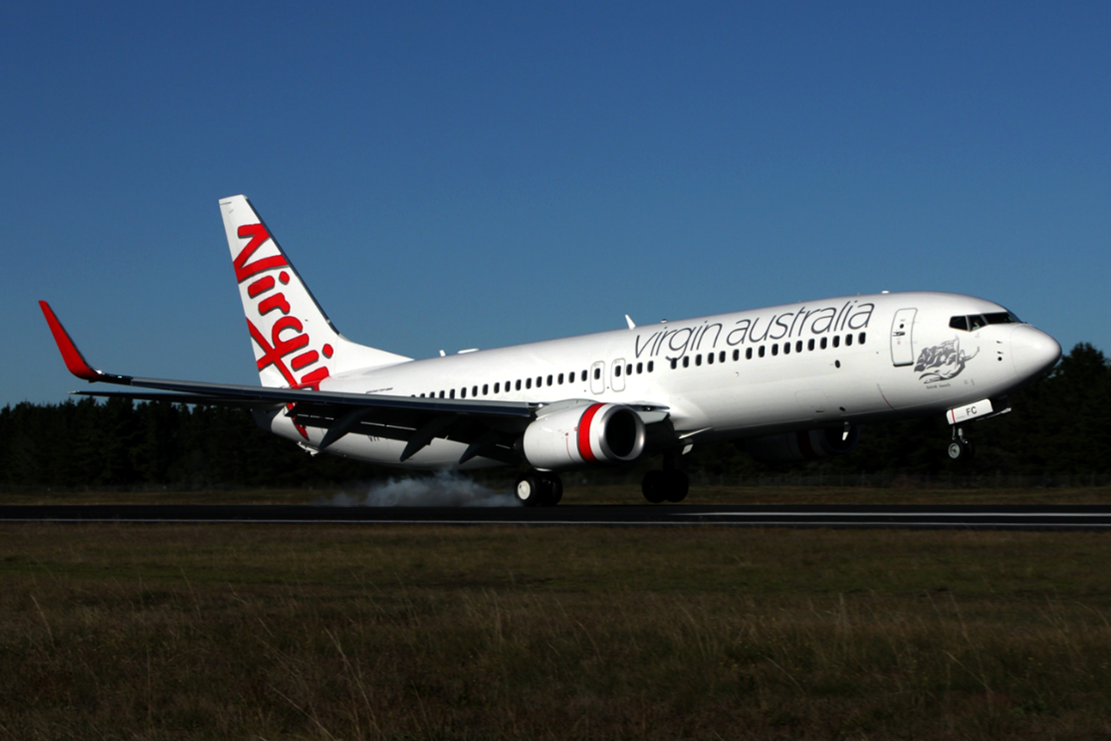
The incidents occurred on two flights operated by Virgin Australia Boeing 737-800s: the first on 3 September 2021, from Melbourne to Darwin, the second on 19 September 2021, from Brisbane to Darwin.
On both occasions, during pre-flight briefings, flight crews misinterpreted a NOTAM (notice to airmen) for Darwin Airport. The NOTAM stated that runway 29 (for landing from the east) had a displaced threshold of 765 metres due to works in progress and that the eastern end of the runway was not available due to the works.
Landing from the west on runway 11, however, did not require using the displaced threshold, although the landing distance available, due to the runway works at the eastern end, was reduced to 2,670 metres.
“On both occasions, the flight crews misinterpreted the NOTAM and conducted unnecessary displaced threshold landings, reducing the available runway for their landings.”
Both aircraft landed without incident.
“These incidents highlight the critical importance that operational information in a NOTAM can have for the planning and conduct of a flight,” ATSB Director Transport Safety Stuart Macleod said.
“Misinterpretation of NOTAM information can significantly affect flight safety.”
In addition, Mr Macleod noted correct and complete readback of air traffic control clearances are important to confirm information has been received and understood.
“Readbacks provide a valuable defence to detect and correct errors such as occurred during these incidents,” he said.
“Flight crews are also encouraged to seek clarification from air traffic control when there is uncertainty or ambiguity about the condition of a destination, such as a displaced threshold.”
After the first incident, Virgin Australia updated their Flight Crew Operational Notice for Darwin Airport. It then modified it further after the second incident, to specifically highlight the displaced thresholds.
The Australian Transport Safety Bureau (ATSB) has welcomed investigators from the United States to assist in the transport safety investigation into Monday’s large air tanker accident in Western Australia, in line with long-established international protocols.
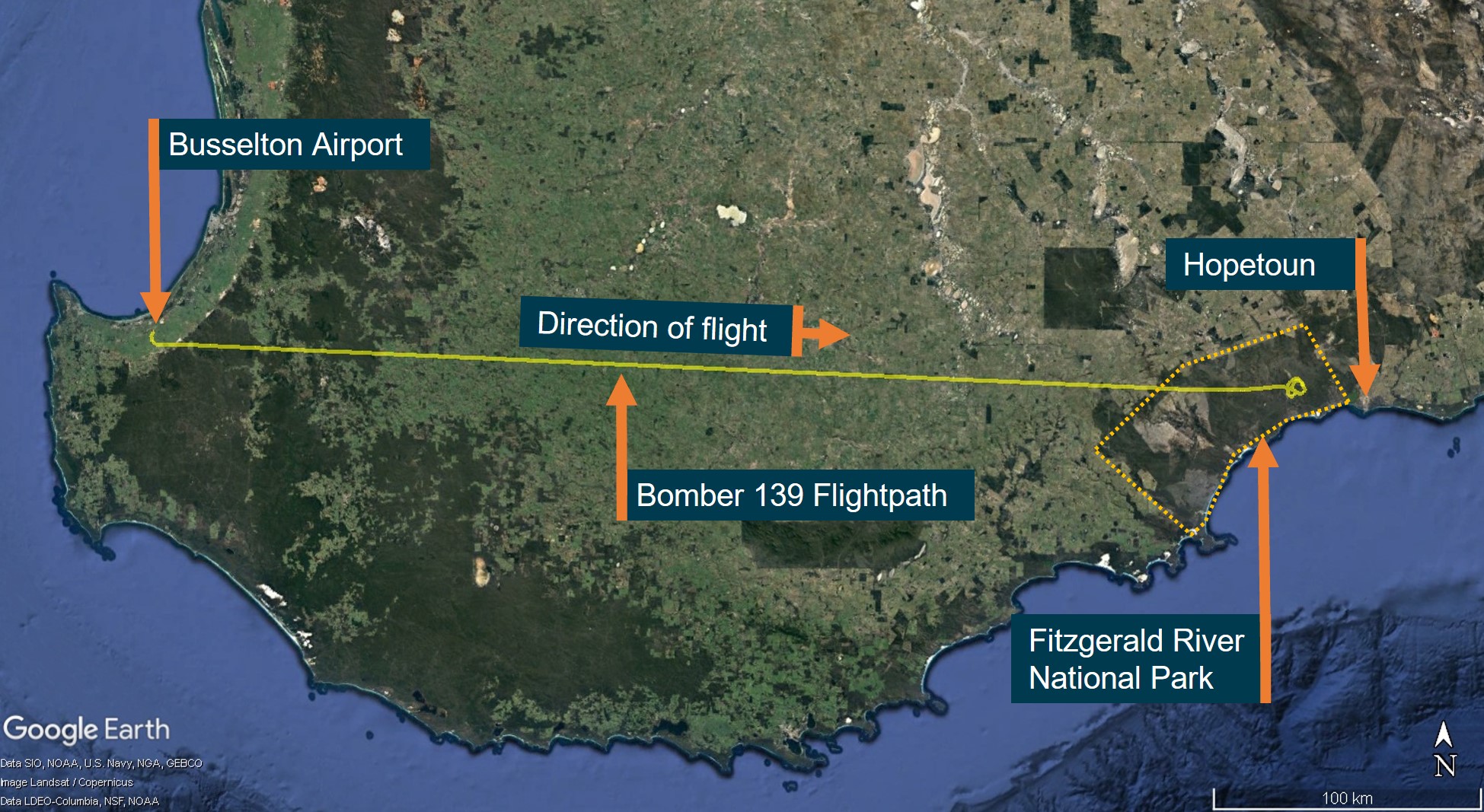
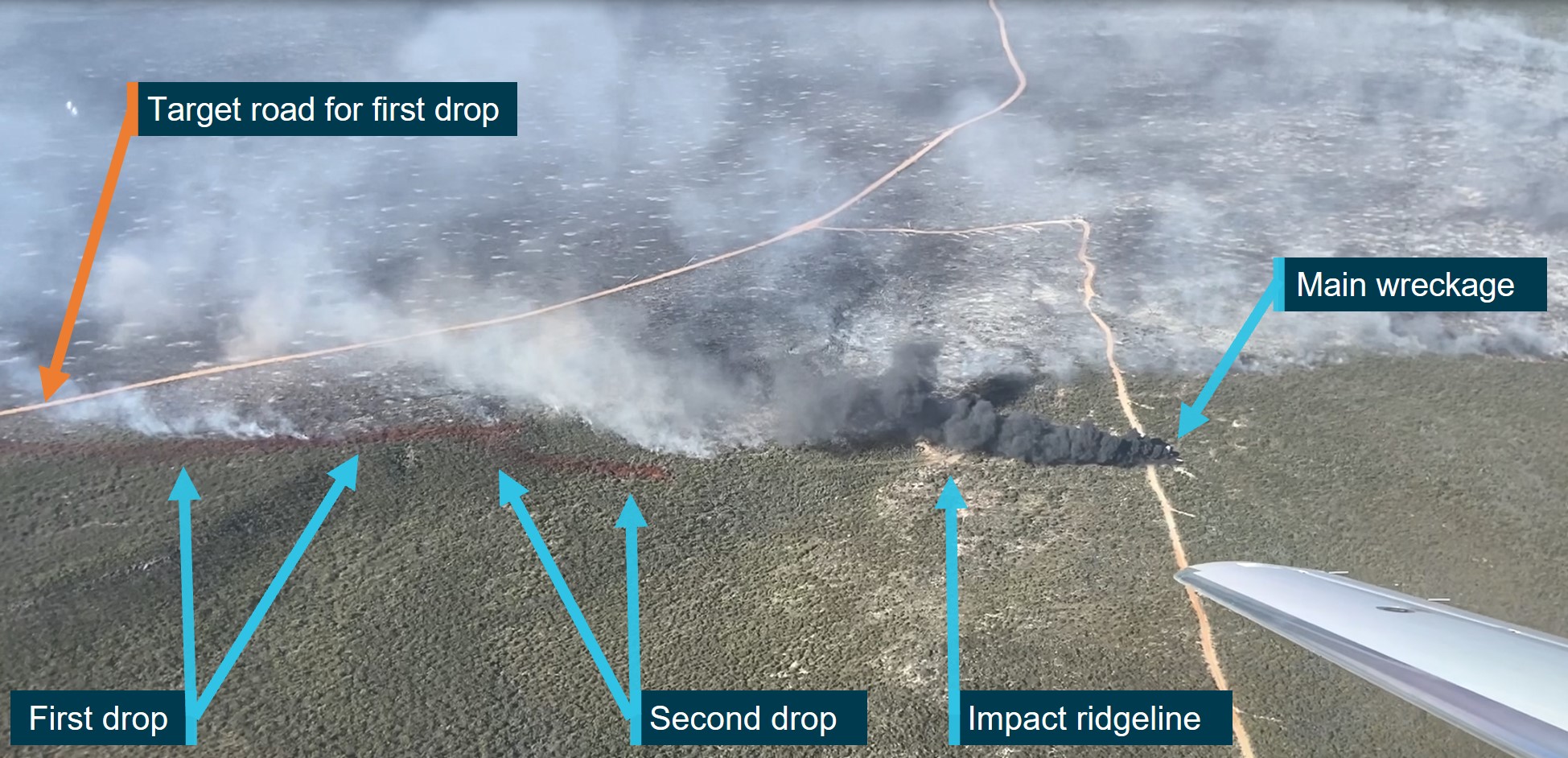
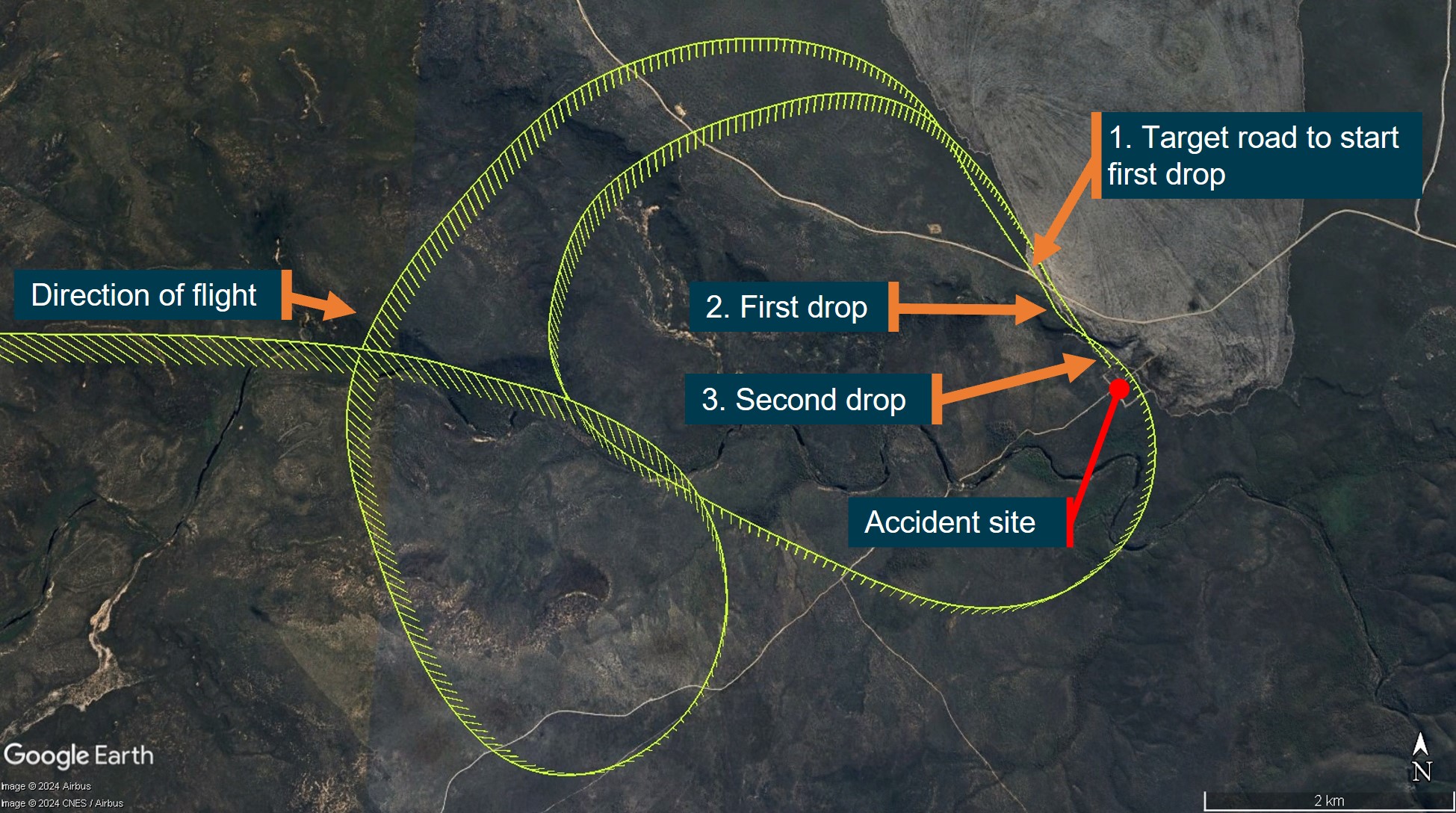
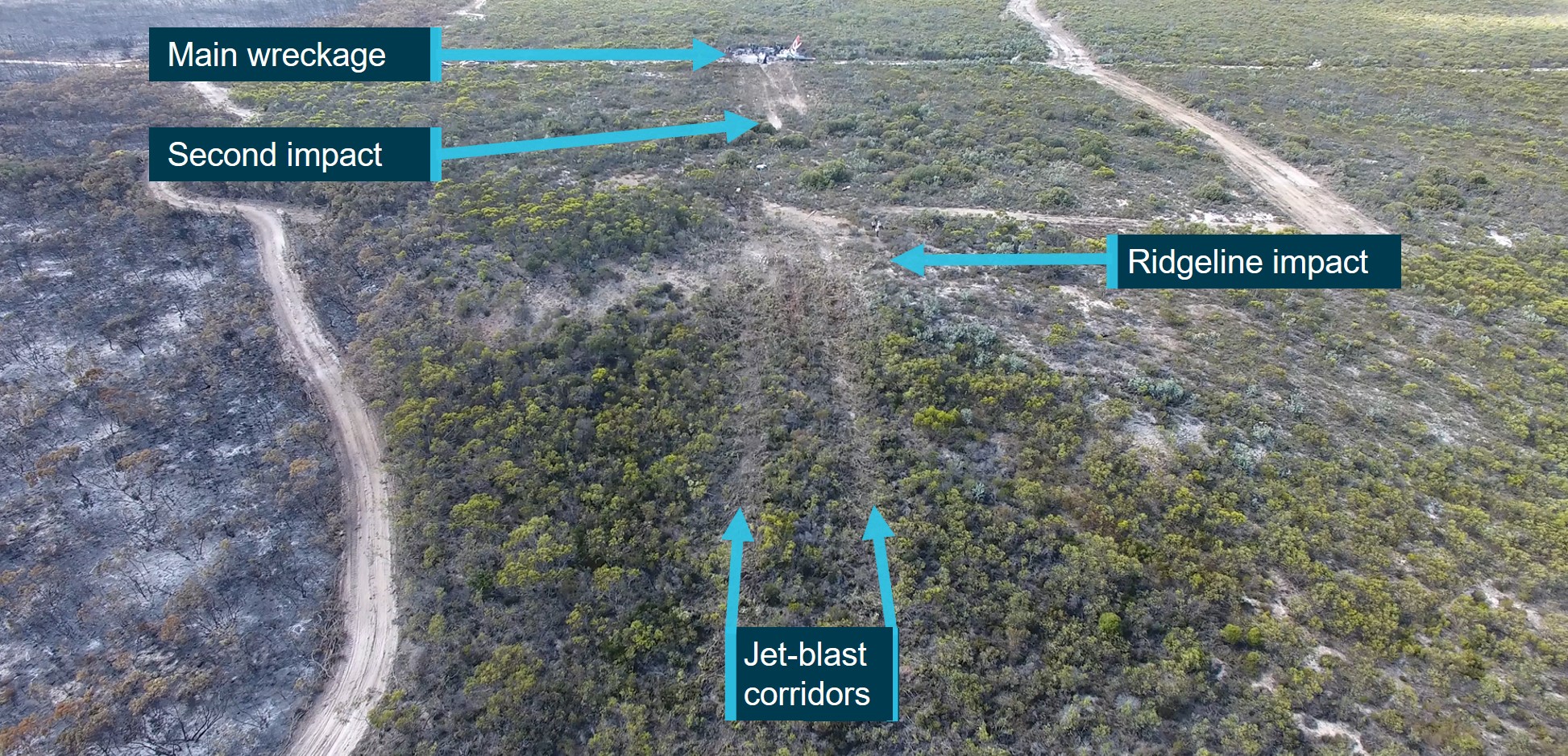
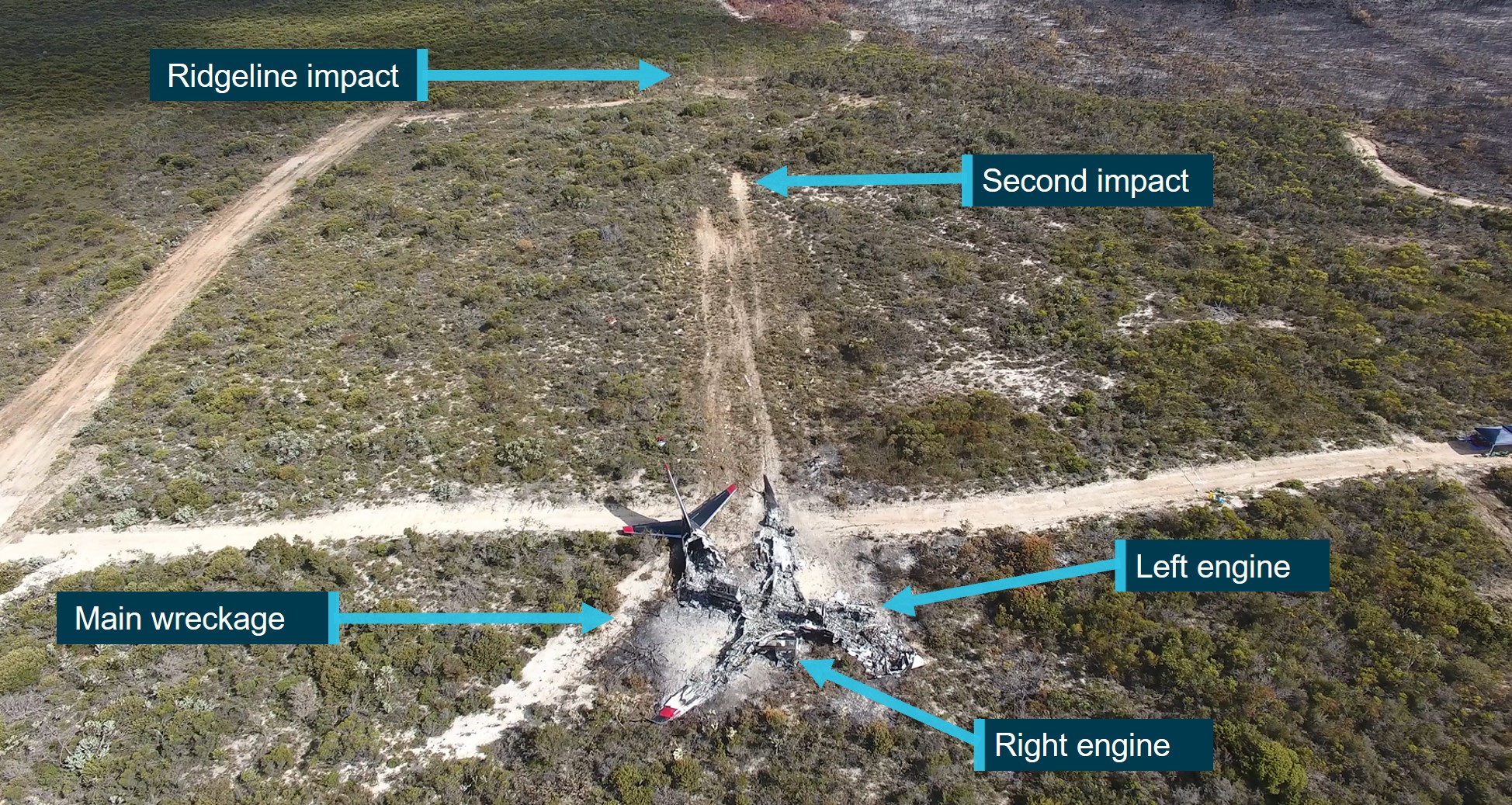
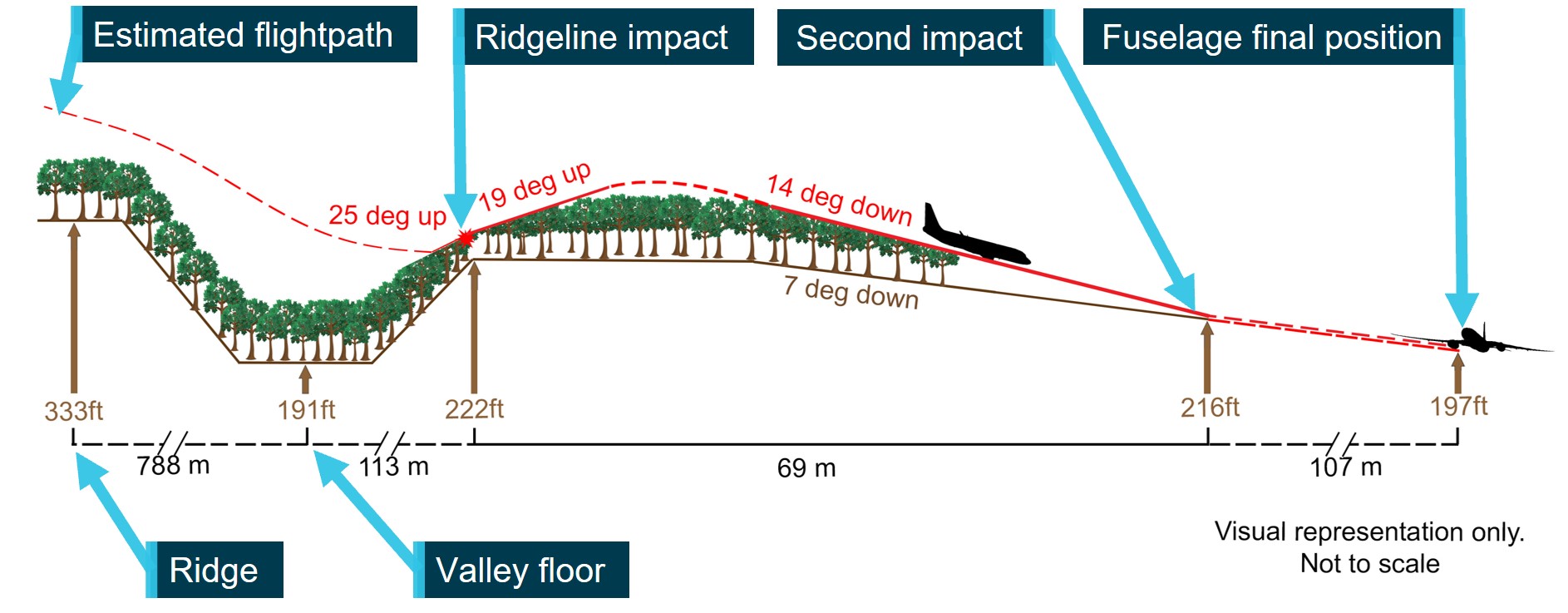
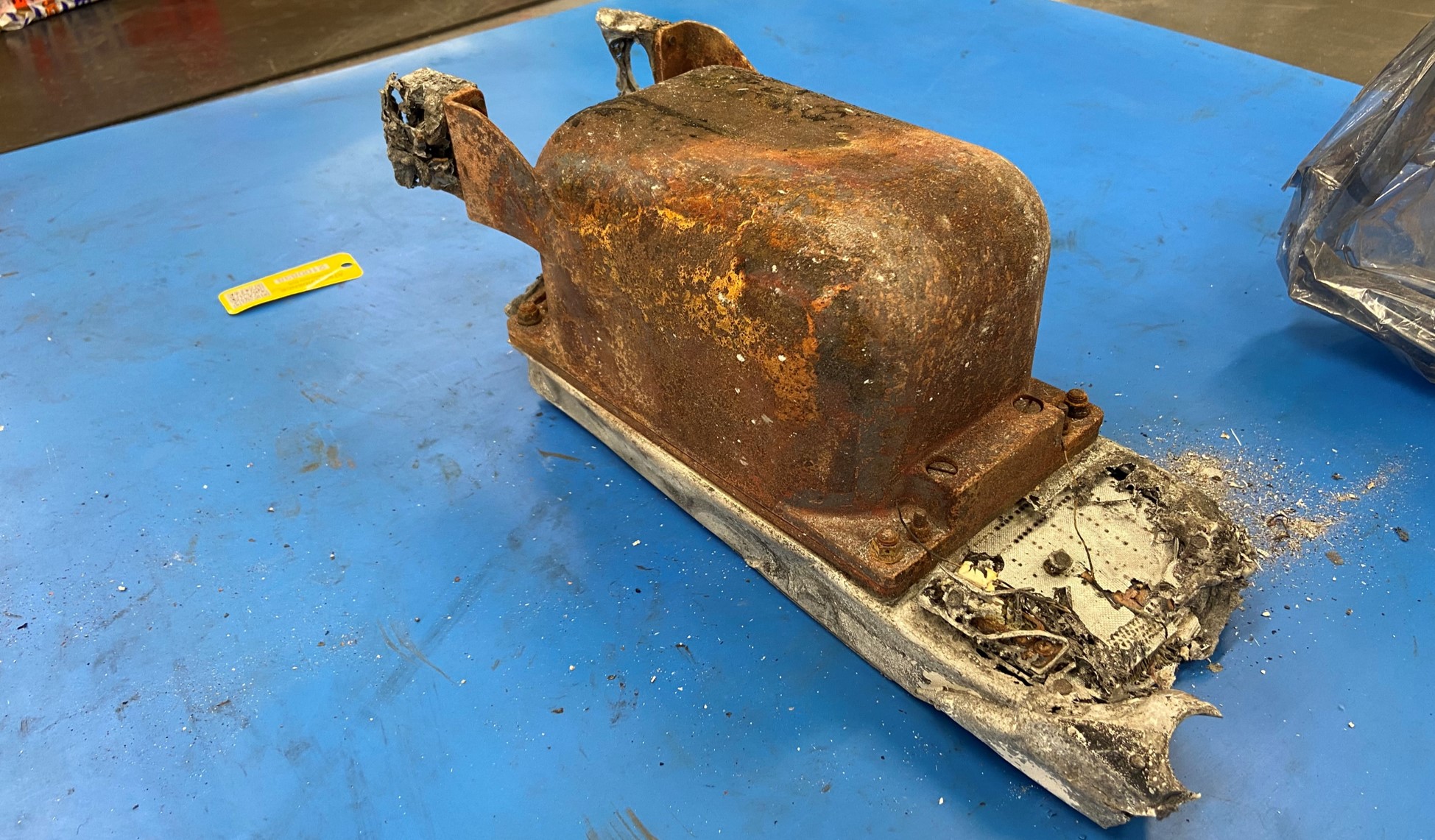
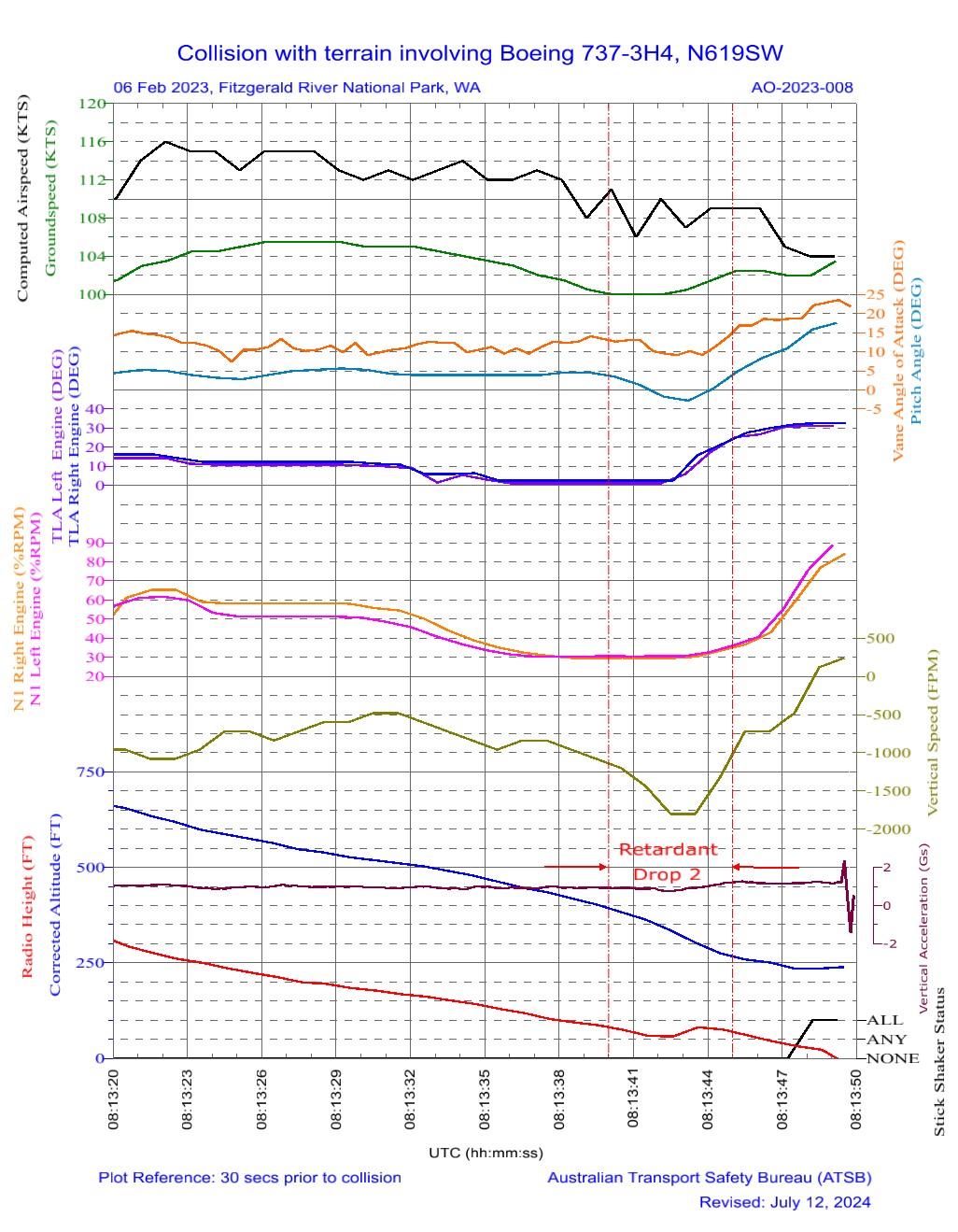
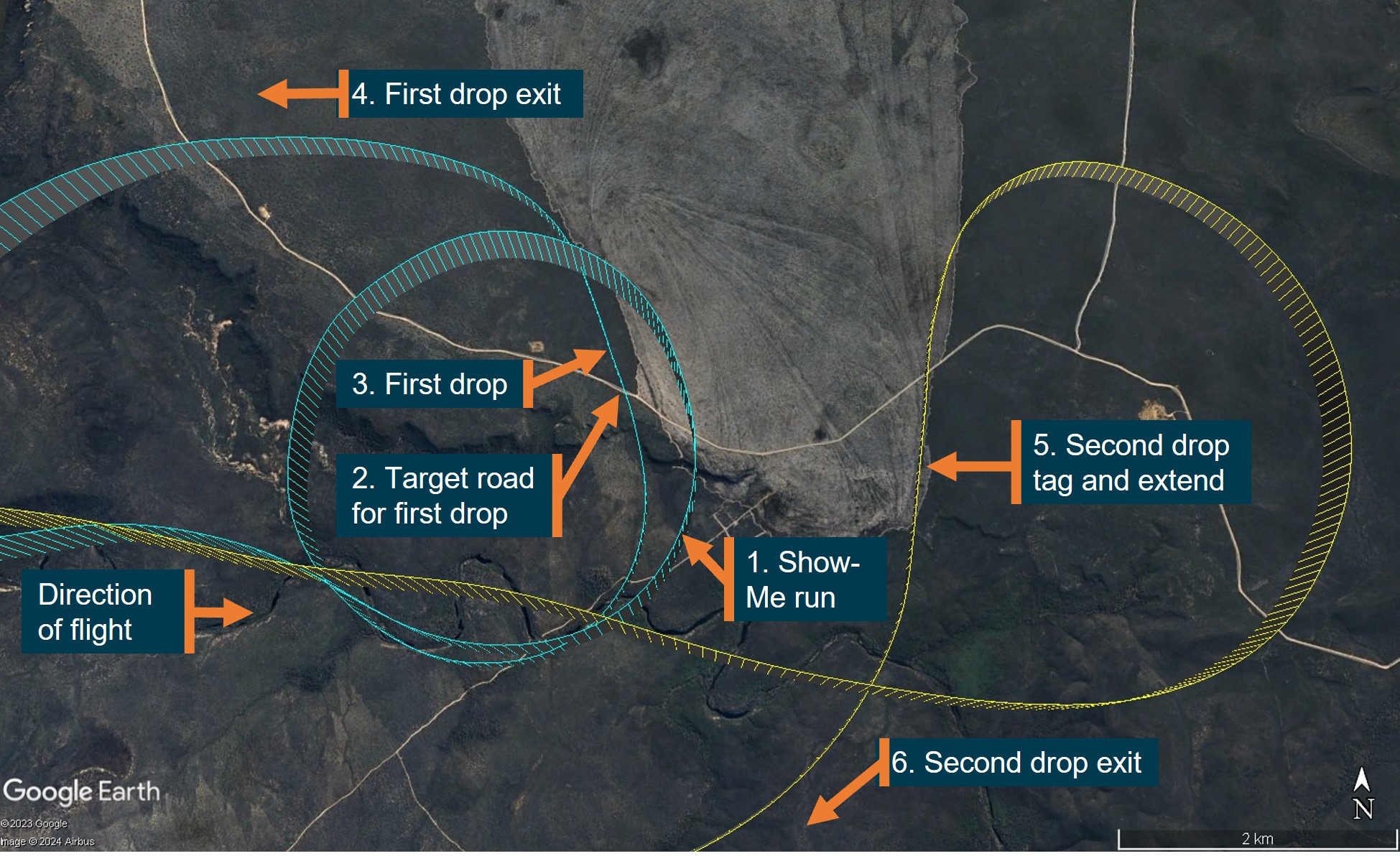
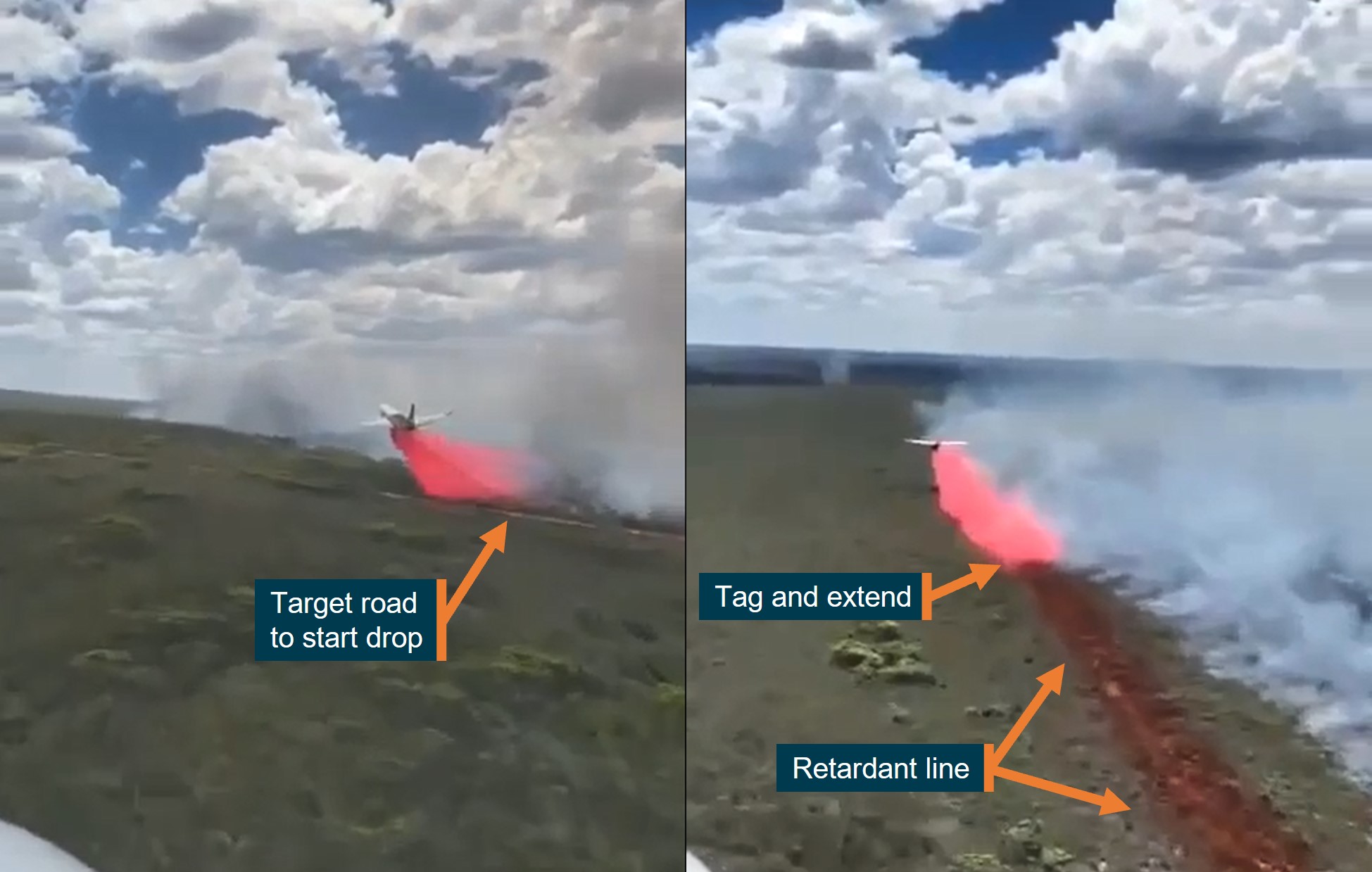
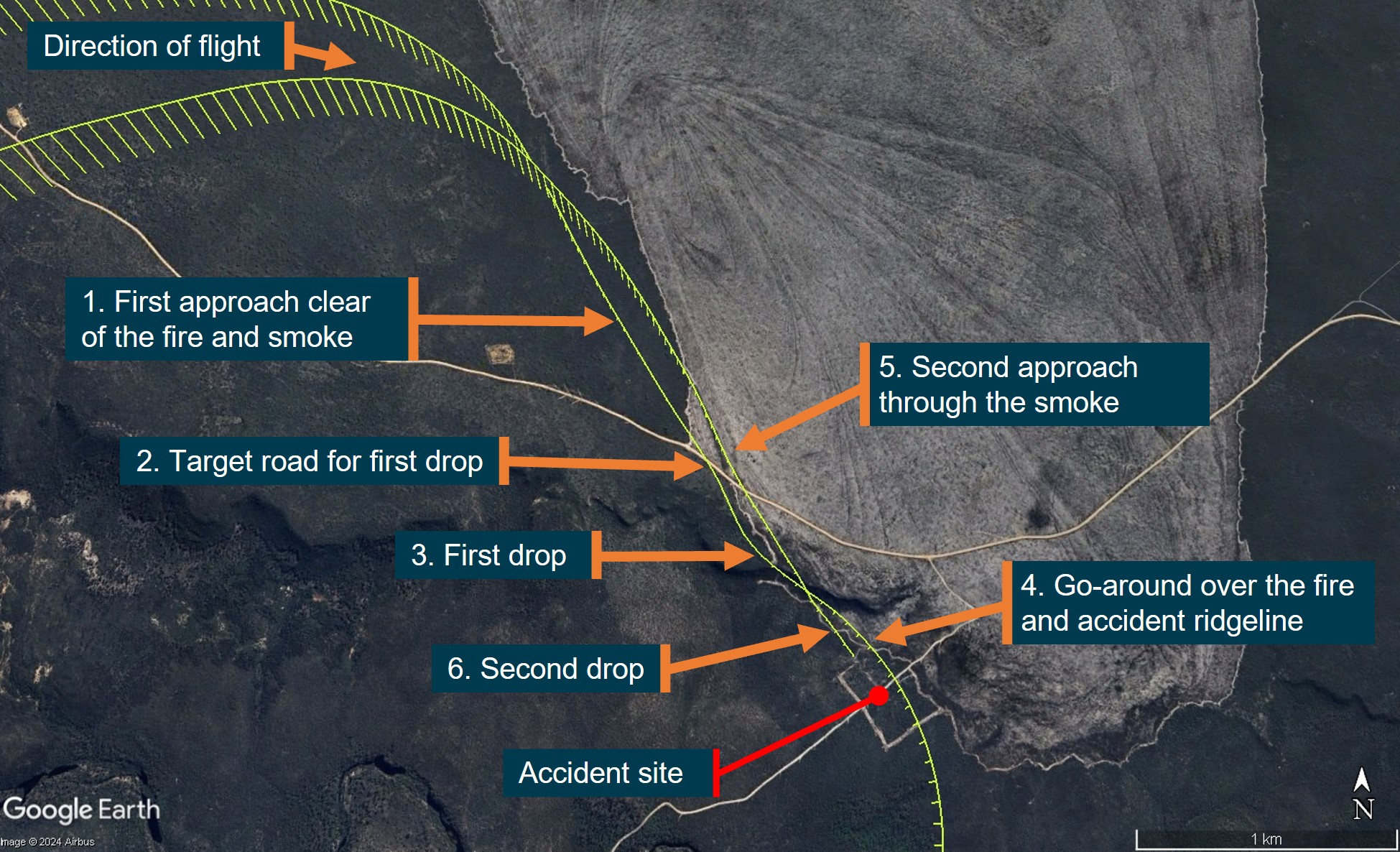
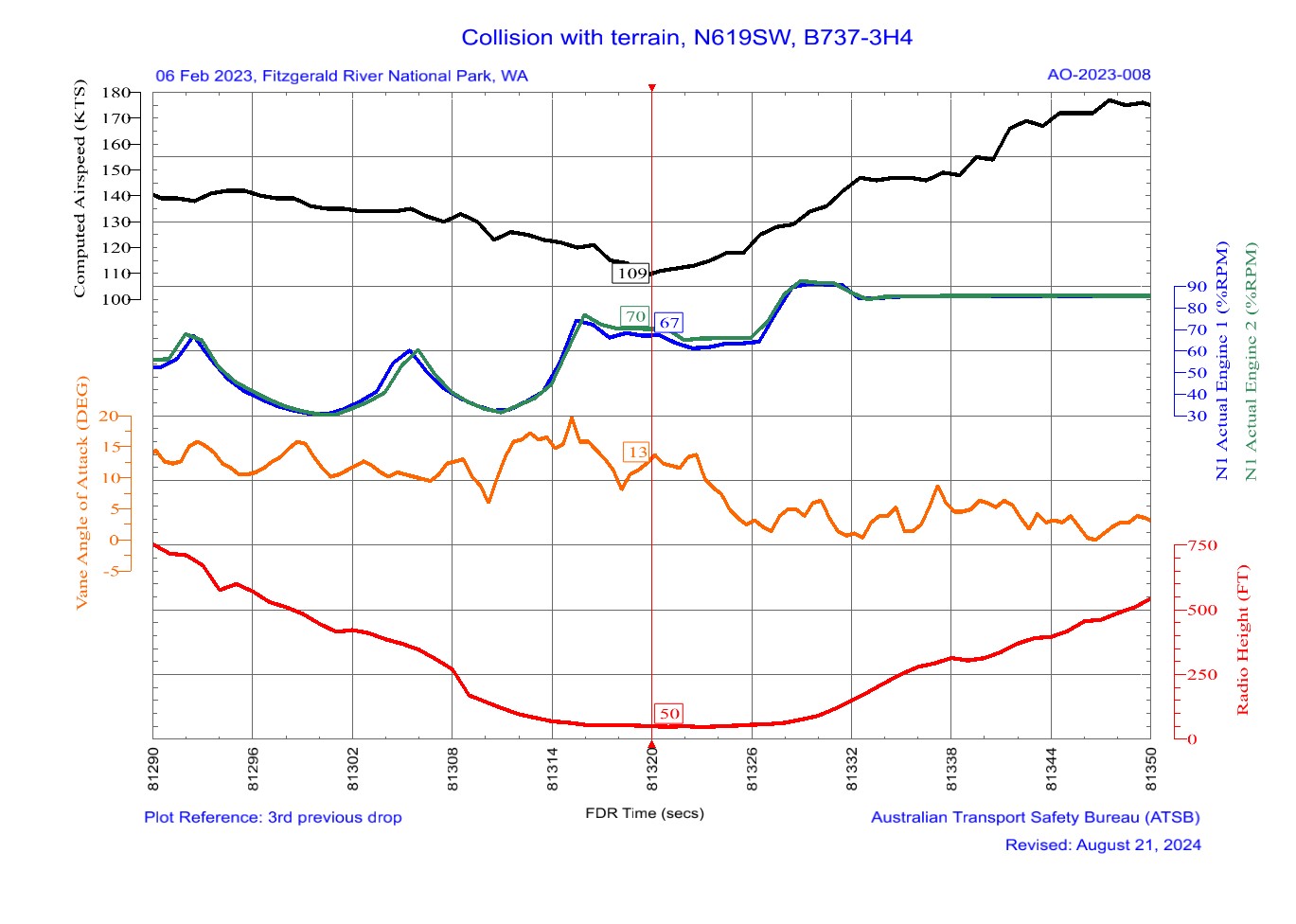
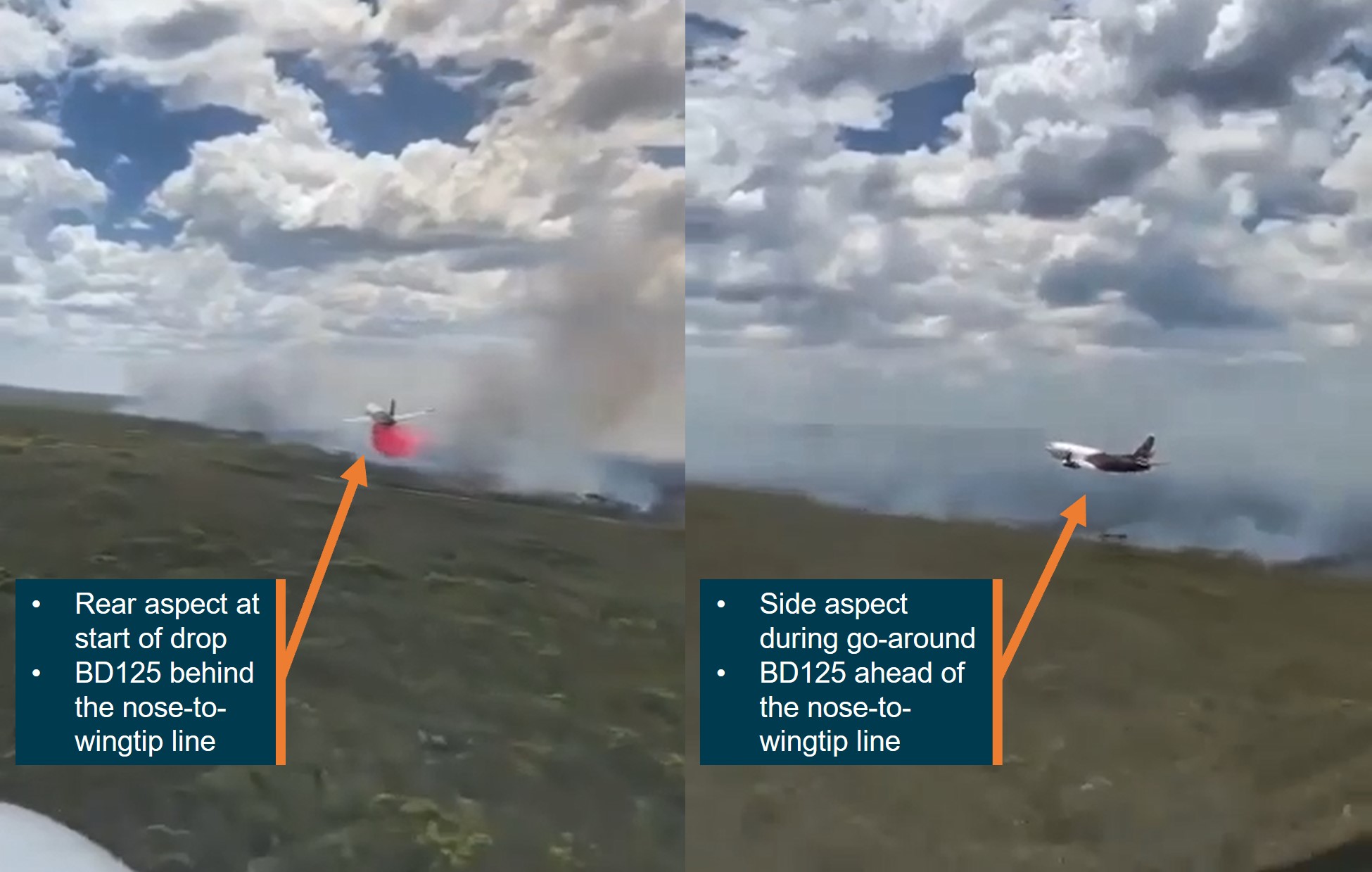
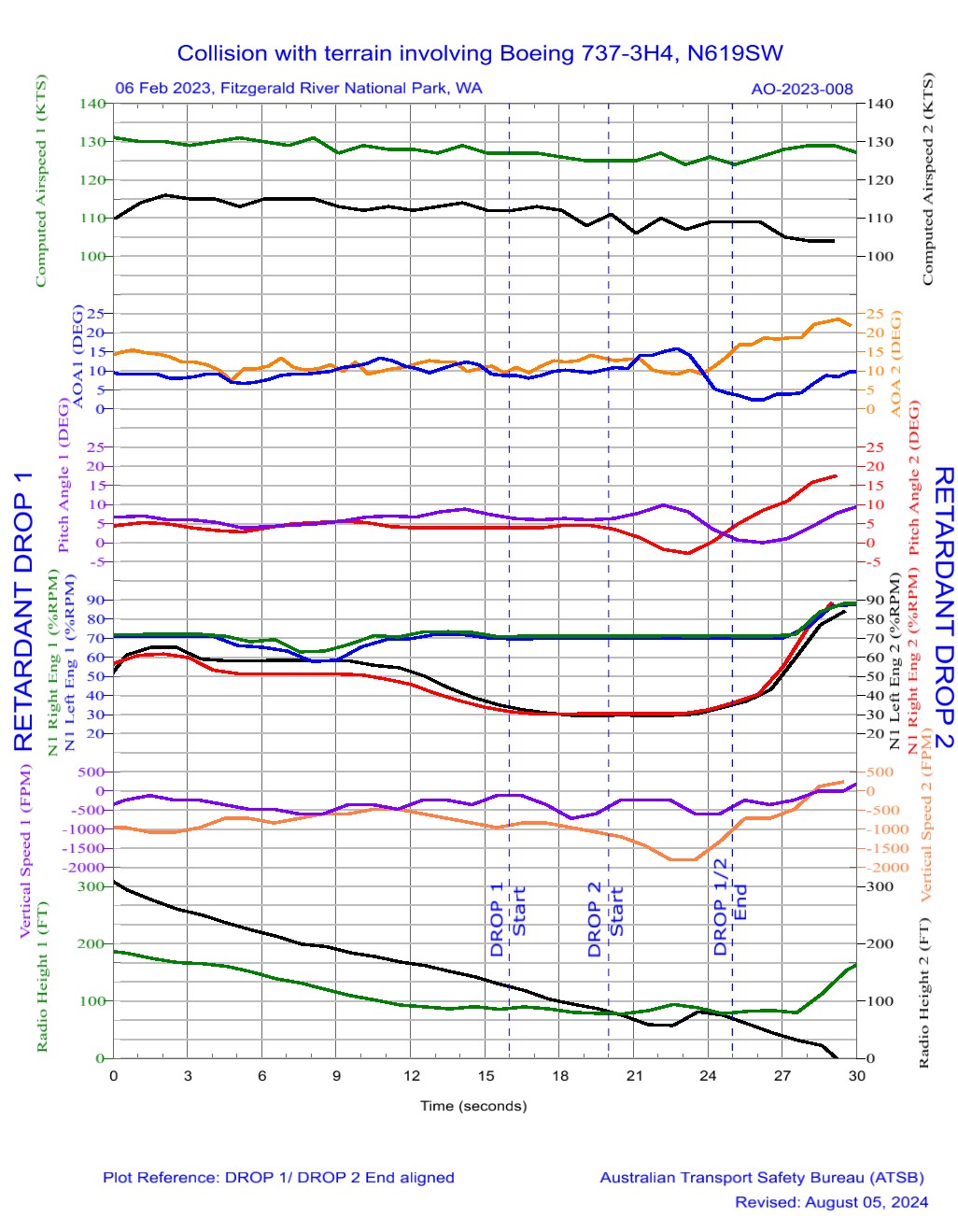
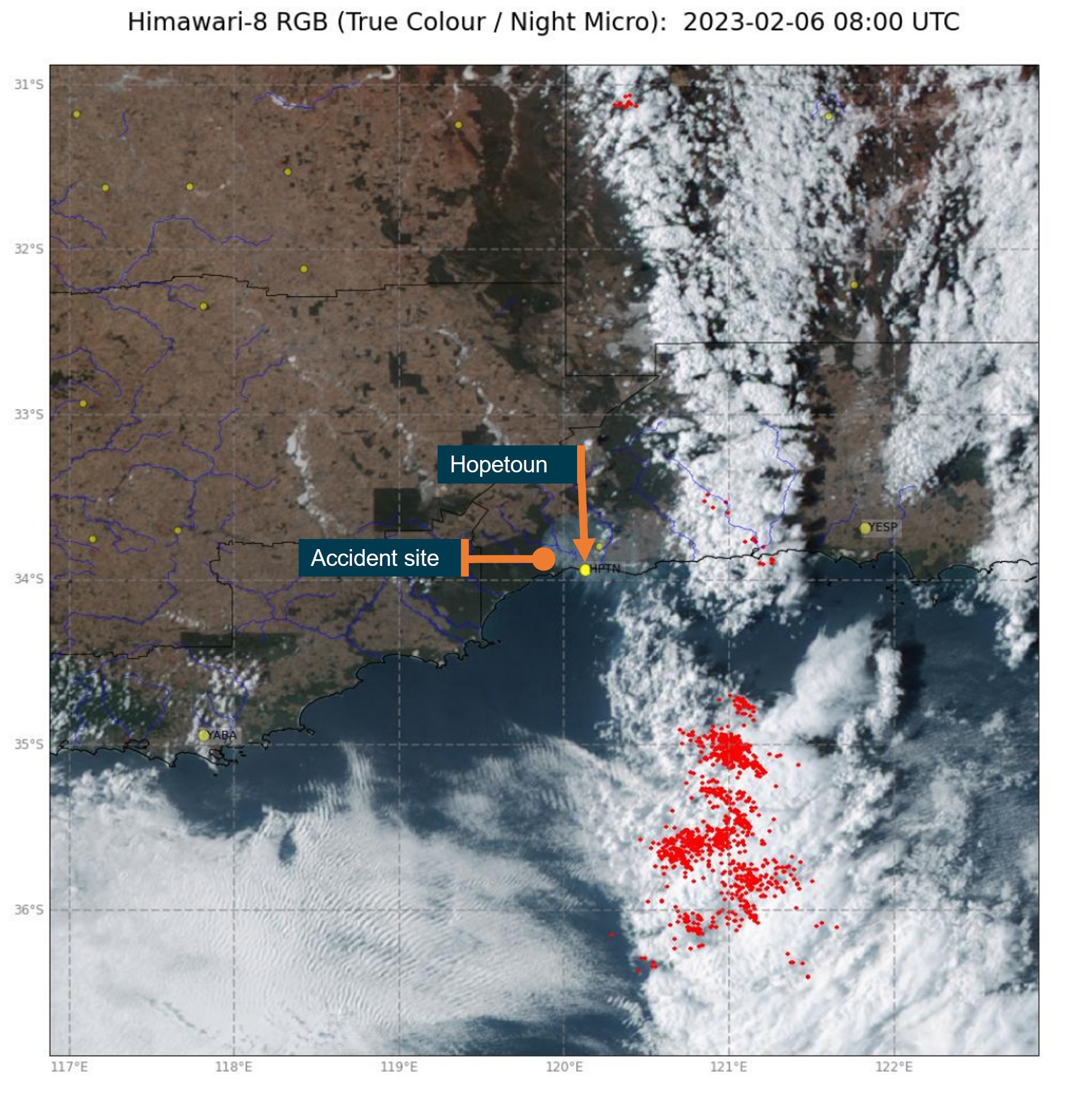
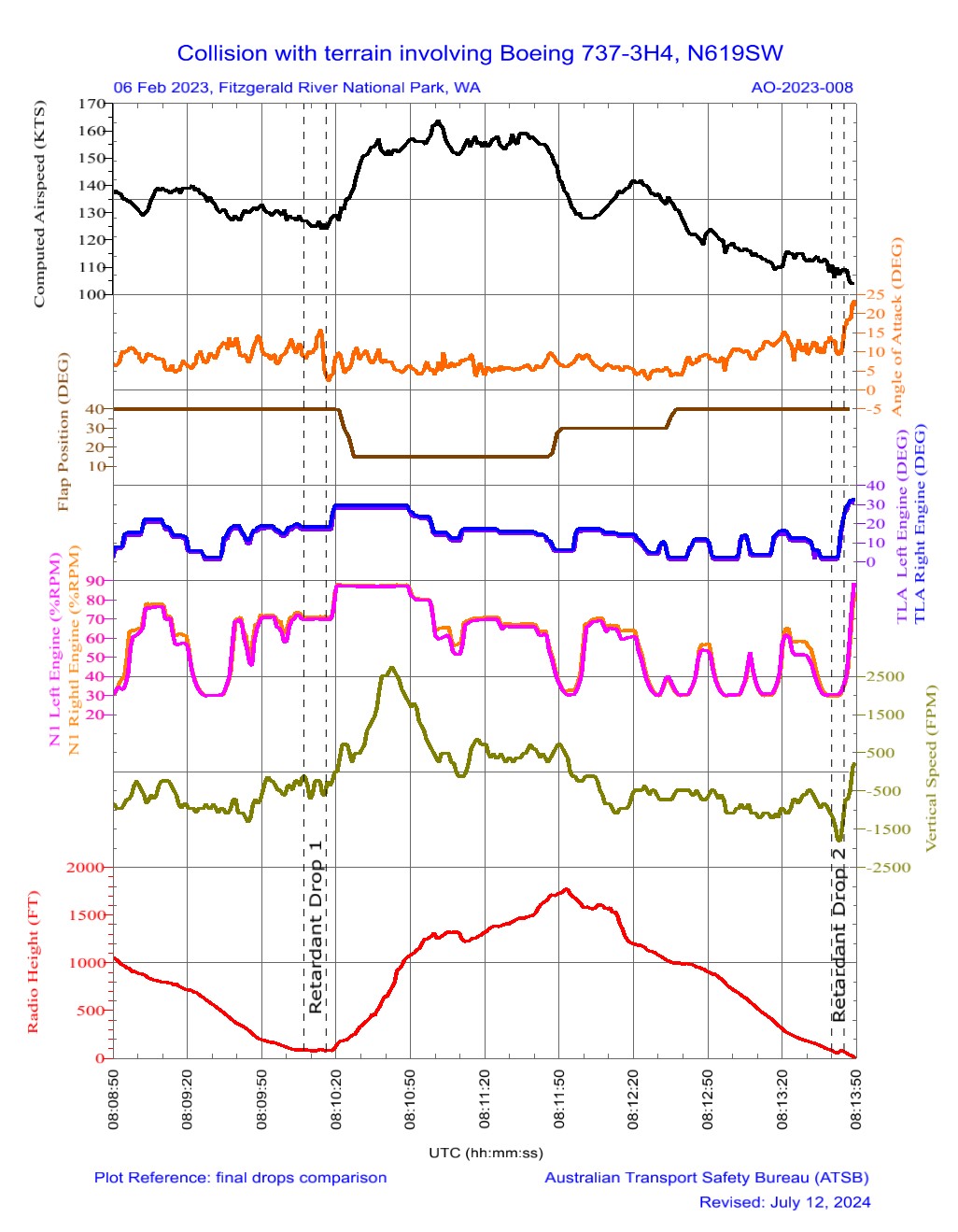
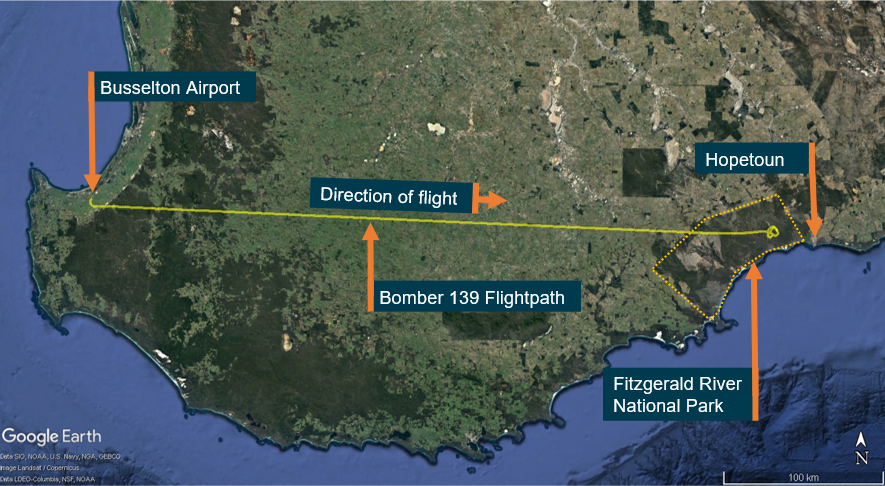
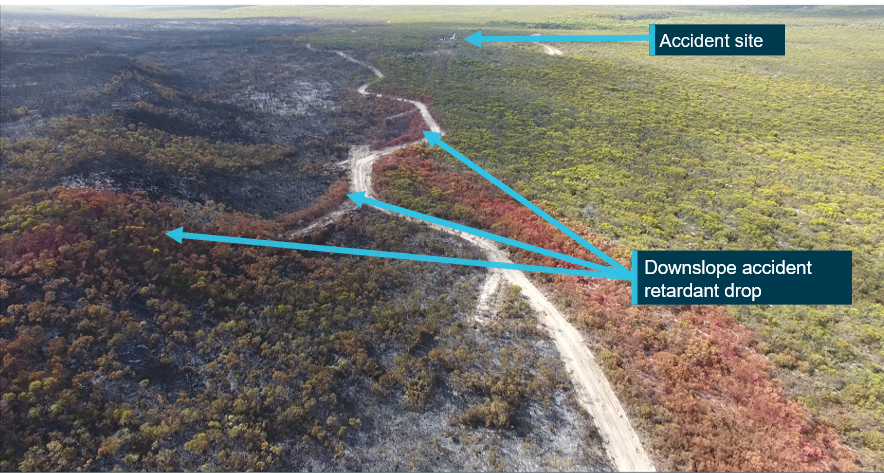
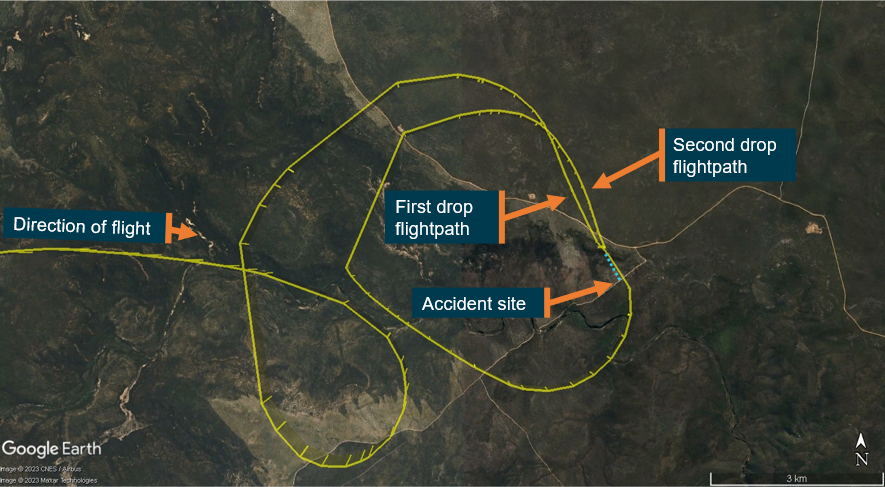
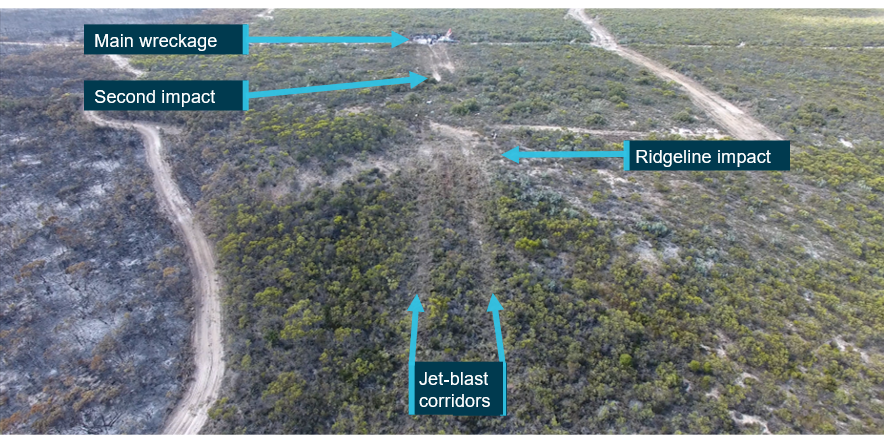
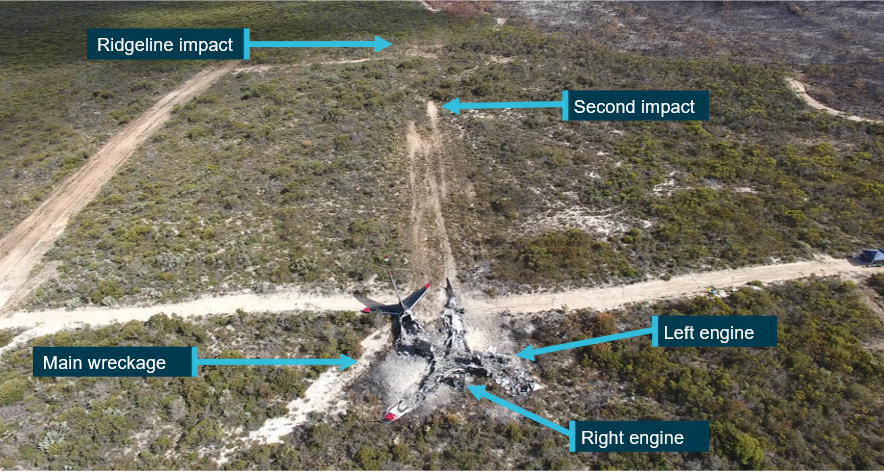
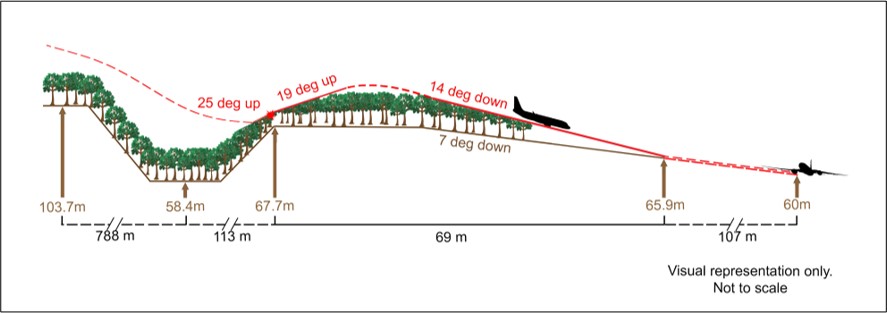
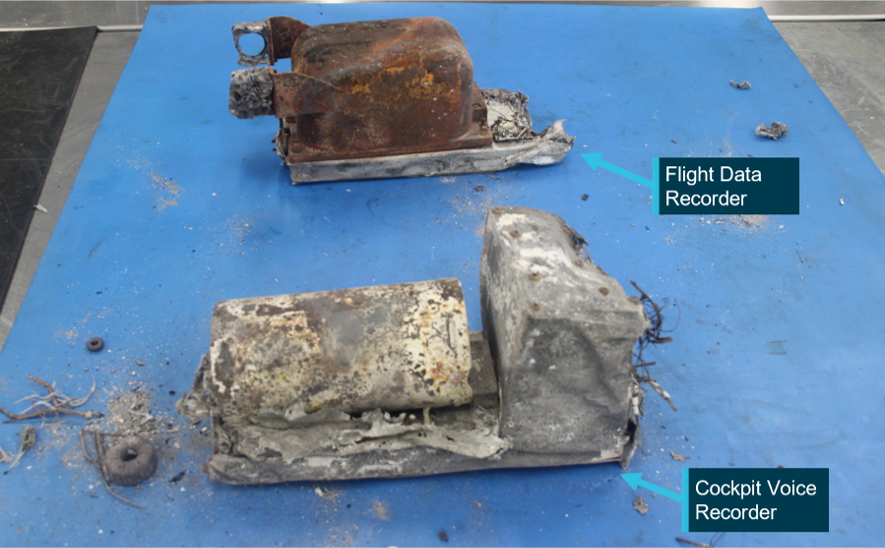
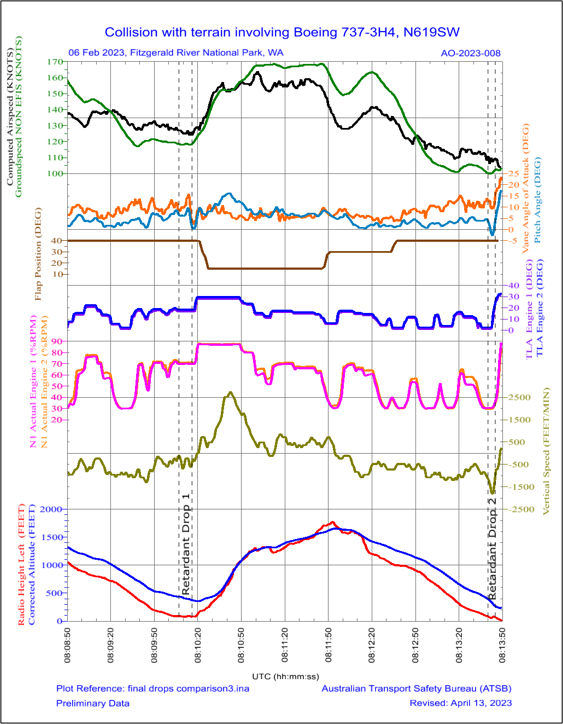
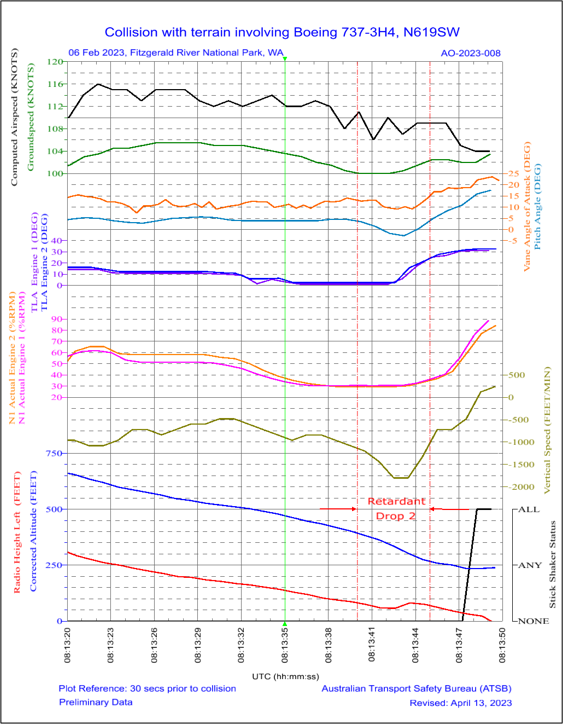
The Boeing 737-300 was modified by the operator for aerial firebombing, and had conducted retardant drops in the Fitzgerald River National Park when it collided with terrain. Thankfully, both aircrew were able to self-extract from the aircraft without serious injuries before the aircraft was consumed by a post-impact fire.
ATSB transport safety investigators began arriving on site on Wednesday, staging from Hopetoun, to commence the on-site phase of the investigation.
On Friday they welcomed a team of six investigators from the National Transportation Safety Board (NTSB - the US accident investigation agency and equivalent to the ATSB), the Federal Aviation Administration (FAA - the US aviation regulator) and Boeing.
“We are pleased to welcome to Australia our colleagues from the NTSB, FAA and Boeing,” said ATSB Chief Commissioner Angus Mitchell.
“Boeing’s in-depth technical and operational knowledge of the 737, and the NTSB’s and FAA’s experience in investigating large aircraft accidents, will be of valuable assistance to the ATSB as we progress this investigation.”
Mr Mitchell noted that the international standards and recommended practices for conducting and cooperating on aircraft accident investigation are set out by the International Civil Aviation Organization’s Annex 13.
Under those provisions, as the United States was the state of design, manufacture and registration of the 737, the NTSB has appointed an accredited representative to the ATSB’s investigation, with the FAA and Boeing as technical advisors to the NTSB.
“While the investigation is the responsibility of the ATSB, we welcome the important contributions the NTSB, the FAA and Boeing will make.”
Mr Mitchell noted that international accident investigation agencies regularly work closely together, to assist each other with their investigations, and to share knowledge on best practice for conducting transport safety investigations.
“The ATSB enjoys close working relationships with our counterpart agencies across the globe. The assistance we can provide each other regularly leads to meaningful improvements in transport safety, worldwide.”
Cessna 441 charter flight diverted and landed safely after right engine malfunctioned;
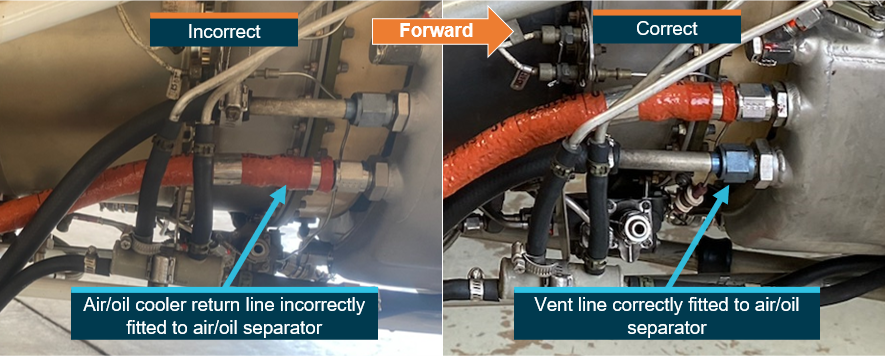
Checks identified air/oil cooler return and air/oil separator vent lines had been incorrectly transposed during a recent engine swap;
ATSB reminds maintenance engineers to check relevant documentation, rather than relying on experience and memory.
A Cessna 441 Conquest II turboprop aircraft, operating a charter flight in the Northern Territory, diverted after the pilot observed abnormal engine indications, later found to be caused by oil lines that had been mistakenly transposed, an Australian Transport Safety Bureau investigation report notes.
On 7 September 2021, the twin-engined aircraft was flying from Sawfish Camp to Darwin with nine passengers on board, when during the cruise the pilot observed abnormal torque fluctuations, as well as high oil pressure and high oil temperature indications, from the right TPE-331 engine.
The pilot diverted the aircraft to Tindal Airport and landed uneventfully, with maintenance checks identifying that the air/oil cooler return line and air/oil separator vent line had been incorrectly transposed during a recent engine change.
“The oil lines could be easily transposed, given they were long and flexible enough to each reach either port, and they were the same size, used the same thread, and were almost identical in appearance,” said ATSB Director Transport Safety Dr Mike Walker.
Dr Walker noted that since there was no record of which engineer had done the work, it was not possible to determine whether there were any individual or environmental factors associated with the error, or the extent to which the available maintenance documentation had been checked.
After the oil line issue was rectified, there were further abnormal indications from the right engine, during a flight about 3 weeks after the initial occurrence. After landing, the reduction gearbox scavenge pump was found to be unserviceable.
The ATSB’s final report notes the incorrect oil flow resulting from the transposed oil lines had damaged the engine’s air/oil separator, which then increased the reduction gearbox scavenge pump pressure. This compromised the structural integrity of the pump housing.
“These additional problems had not been detected during the initial maintenance,” Dr Walker noted.
The ATSB’s final report into the incident notes that in 1990 the engine’s manufacturer, Honeywell, issued a service information letter (SIL) advising the oil lines had been transposed on several previous occasions on similar aircraft.
Following this occurrence, the operator, Chartair, commenced a fleet-wide program to add markings to engine oil tanks, conducted toolbox talks with engineering staff about distractions during maintenance, and began documenting each stage of engine changes.
In addition, Honeywell reissued the SIL with additional information and guidance.
“This investigation highlights to maintenance engineers that it is important to check relevant documentation rather than relying on experience and memory, and to remain familiar with other data such as manufacturer service information letters,” Dr Walker said.
“Further, since maintenance documents do not always provide advice on non-routine technical situations, operators and maintainers should seek technical advice from the manufacturer to ensure that non-routine problems are fully rectified prior to releasing an aircraft to service.”
On 27 January 2023 a Boeing 777 aircraft, registered ZK-OKN, was conducting a scheduled passenger flight from Melbourne, Australia to Auckland, New Zealand. Shortly after touchdown at Auckland airport, the aircraft briefly lost directional control and the aircraft veered away from the runway centreline. There was damage reported to 6 runway edge lights and to the aircraft’s undercarriage assembly, including deflation of one tyre, there were no injuries to passengers or crew.
The Transport Accident Investigation Commission (TAIC) requested assistance from the Australian Transport Safety Bureau (ATSB) to download the aircraft’s cockpit voice recorder (CVR) and flight data recorder (FDR) to assist their investigation.
To facilitate this support and to provide the appropriate protections for the information, the ATSB appointed an accredited representative in accordance with paragraph 5.23 of ICAO Annex 13 and commenced an investigation under the Australian Transport Safety Investigation Act 2003.
The recorders were downloaded at the ATSB Canberra facilities on 9 February 2023 and the voice and flight data from the occurrence flight were retrieved and provided to the TAIC investigators in attendance. ATSB staff assisted with further analysis of the data as required.
The TAIC was responsible for the investigation and released the final investigation report regarding this occurrence on 29 May 2025. The report is available here.
Pilot was not qualified for night flight and continued flying in a remote area after last light;
Helicopter collided with the ground after the pilot was likely flying at low-level following roads for navigation;
Accident highlights the inherent risk of night flying in remote areas due to the absence or degradation of visual references for establishing an aircraft’s attitude and position.
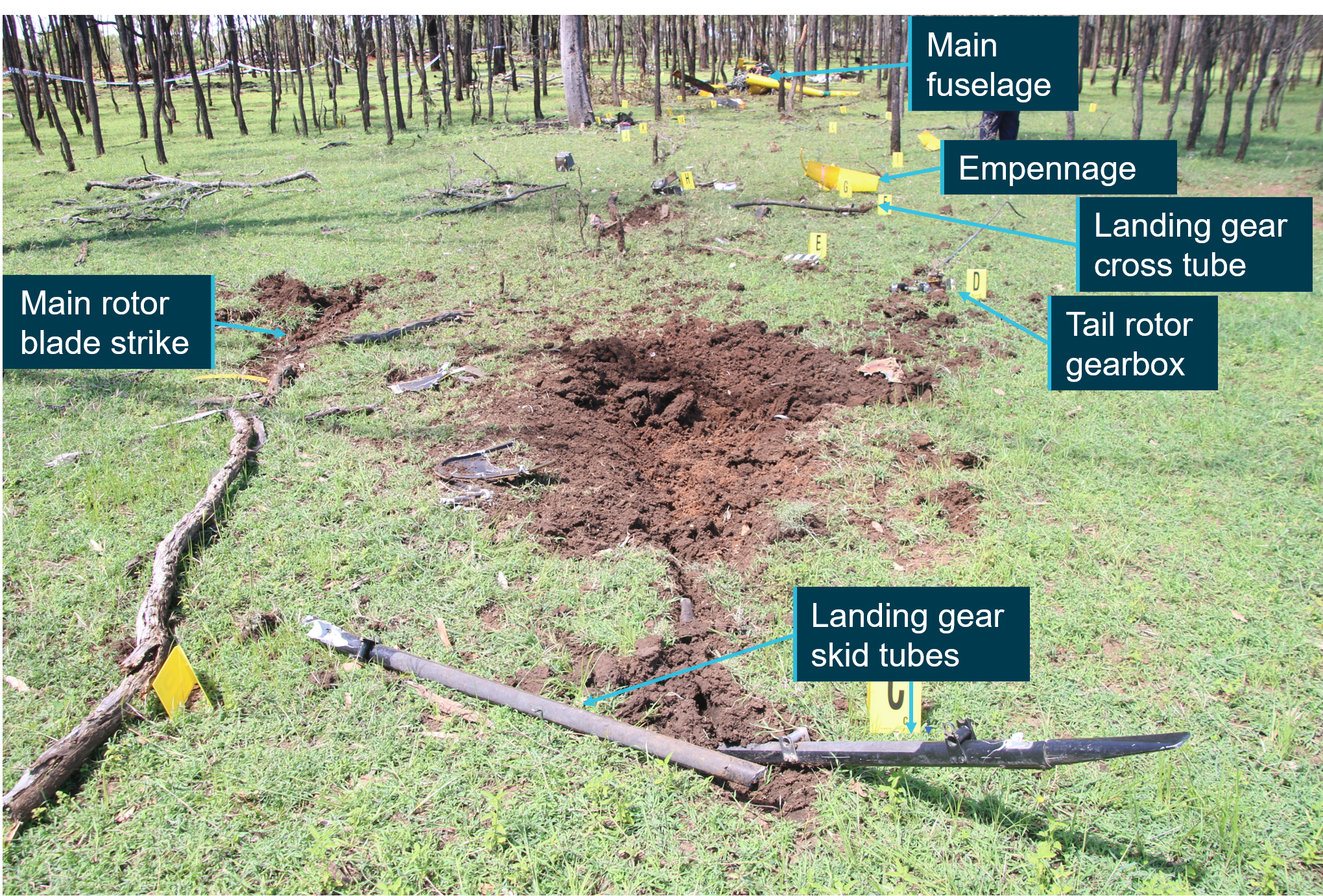
A fatal helicopter accident in North Queensland highlights the inherent risk of night flying in remote areas without the qualifications to do so, an Australian Transport Safety Bureau investigation details.
On the evening of 11 February 2021, the pilot of a Robinson R22 had flown from their station at Reedy Springs, south-west of Townsville to an area nearby to look for family members. Attempting to return to Reedy Springs, the pilot became lost, and landed at Camden Park Station, then Wongalee Station, to refuel and get directions.
“Different individuals at both stations suggested the pilot discontinue the journey, due to poor weather conditions and degrading light,” ATSB Director Transport Safety Dr Stuart Godley said.
“However, the pilot elected to continue to their planned destination, taking off from Wongalee five minutes before last light.”
Twenty-nine minutes after last light the helicopter contacted a powerline, which resulted in a loss of ground lighting in the direction of flight.
“Then, shortly after turning to follow an unsealed road in overcast, moonless conditions, the helicopter departed the road after a bend, before flying over open grassland and colliding with trees and terrain in a left bank, nose-down attitude.”
Conditions on the night of the accident were overcast, and just 1 per cent of the moon was illuminated. The severed powerline – which had been supplying electricity to a nearby station – further reduced the amount of ground lighting available to the pilot, who was already operating in a sparsely-populated area.
“Based on the nature and location of the wirestrike, and accident location, it was very likely that the pilot was flying at a low altitude, tracking over a sealed road, then an unsealed road, in an effort to navigate back to their property.”
Dr Godley said the accident highlighted the inherent high risk of night flying in remote areas, due to the absence or degradation of the visual references for establishing an aircraft’s attitude and position.
“Day visual flight rules (VFR) pilots need to plan to arrive at their destination at least 10 minutes before last light – and to not take off after this time under any circumstances.”
A transport safety investigation is underway into the collision and derailment of two trains in Port Botany on 13 January 2023.
At approximately 0605, Pacific National train 1150 (operated by Railtrain Services) and QUBE Logistics train T296 (operated by Sydney Rail Services) collided and derailed during a propelling movement. Both trains derailed and train 1150 came to rest in close proximity to a nearby building. There were no injuries but there was significant damage to both trains and local rail infrastructure.
This investigation is being led by the NSW Office of Transport Safety Investigations (OTSI). OTSI conducts rail investigations in NSW on behalf of the ATSB under the Transport Safety Investigation Act 2003.
OTSI has completed the evidence collection and analysis phases of the investigation and is drafting the final report.
The final report will be released at the conclusion of the investigation. However, should a critical safety issue be identified during the course of the investigation, OTSI and the ATSB will immediately notify relevant parties, so that appropriate and timely safety action can be taken.
On 6 February 2023 at about 1532 local time, a Coulson Aviation Boeing 737-3H4 large air tanker (LAT), callsign Bomber 139 and registered N619SW, departed from Busselton Airport, Western Australia (WA) on a firefighting task to Fitzgerald River National Park, WA. There were 2 pilots on board, the aircraft captain in the left seat as the pilot flying and a co‑pilot in the right seat as the pilot monitoring. At about 1614, during the go-around from a second partial retardant drop, the aircraft impacted a ridgeline at an elevation of about 222 ft. The pilots suffered minor injuries and the aircraft was destroyed.
What the ATSB found
The ATSB found that the accident drop was conducted at a low height and airspeed downhill, which required the use of idle thrust and a high descent rate. The delay in the engines reaching go-around thrust at the end of the drop resulted in the aircraft’s height and airspeed (energy state) decaying as it approached rising terrain, which was not expected or detected by the pilot flying. Consequently, the aircraft’s airspeed and thrust were insufficient to climb above a ridgeline in the exit path, which resulted in a controlled flight into terrain. The operator’s practice of recalculating, and lowering, their target drop speed after a partial load drop also contributed to the low energy state of the aircraft leading up to the collision with terrain.
The ATSB also found that the operator and tasking agency had not published a minimum drop height, which resulted in the co-pilot, who did not believe there was a minimum drop height, not making any announcements about the low energy state prior to the collision. The ATSB found the operator’s pilot monitoring duties were reactive to the development of a low energy state and did not include call-outs either before or at the minimum target parameters to reduce the risk of a low energy state developing.
The ATSB benchmarked the WA, New South Wales and National Aerial Firefighting Centre standards against the United States Forest Service and United States National Wildfire Coordinating Group standards and found inconsistencies between the Australian agencies’ standards but not among the United States agencies’ standards. This was likely a result of each Australian state participating in the LAT program independently producing their own standards.
What has been done as a result
As a result of this accident, the operator developed a master corrective action plan to address the following topics:
minimum drop speed and height
recalibration of airspeed during partial load drops
pre-drop planning and familiarisation
pilot situational awareness
flight training exercises
exit flight path
communication and coordination with Birddog
adherence to standard operating procedures
crew resource management
human factors
continuous training and proficiency assessment.
The Birddog operator reported that as part of their continuous improvement they removed their Lead Plane procedures from an annex in their Company Operations Manual and introduced a Lead Plane Standard Operating Procedures manual with expanded procedures in October 2023.
In November 2023, the WA Department of Fire and Emergency Services, and Department of Biodiversity, Conservation and Attractions released the Western Australian Aerial Fire Suppression Procedures 2023-2024. The draft version of this document was reviewed by their contracted operators and included a chapter for Large Air Tanker (LAT) Operating Procedures. The document included standard drop heights for all the aircraft types employed, procedures for task rejection, standdown and reinstatement of aviation resources after a safety incident, and a section on tactical flight profiles with the addition of the Lead and Chase-Position profiles.
In response to the draft report, the WA Department of Biodiversity, Conservation and Attractions reported they would review the 2024–25 published drop heights with the intent of prescribing a ‘minimum’ safe drop height, noting the actual drop height to safely achieve the objective is the pilot-in-command’s decision.
In response to the draft report, the Australasian Fire and Emergency Services Authorities Council committed to develop a national standard for LAT Operating Procedures. This was delegated to the Aviation Safety Group through the National Aerial Firefighting Centre Strategic Committee within the purview of the Consistent Doctrine working group.
Finally, the ATSB has issued a safety recommendation to Coulson Aviation to take safety action to address their crew resource management procedures for retardant drops to reduce the risk of the aircraft entering an unrecoverable state before the pilot monitoring alerts the pilot flying.
Safety message
The history of aerial firefighting includes collisions with terrain accidents during the descent, retardant (or water) drop and go-around that have primarily manifested as controlled flight into terrain and loss of control accidents. The history of accidents needs to be understood within the context of the effect of drop height and speed on the firefighting effort, and the environmental conditions at the fireground, which may lead to an elevated level of risk tolerance.
The lessons from this accident indicate that standard operating procedures and crew resource management should be implemented with the intent to prevent an unsafe situation from developing. While they should also include recovery actions, there may be insufficient safety margin available for a successful recovery and therefore the safety standards should not be solely dependent on the performance of the pilot flying and recovery call-outs.
At a large fireground, it is likely there will be personnel and assets from multiple organisations and jurisdictions interacting. In this scenario, non-standard procedures and practices may result in unforeseen risks emerging. It is therefore important for tasking agencies to take the lead, with the support of stakeholders, in developing the quality and safety standards they require for the firefighting effort to mitigate operational risks.
The occurrence
On 6 February 2023 at about 1532 local time, a Coulson Aviation Boeing 737-3H4 large air tanker (LAT), callsign Bomber 139 and registered N619SW, departed from Busselton Airport, Western Australia (WA) on a firefighting task to Fitzgerald River National Park, WA (Figure 1). There were 2 pilots on board, the aircraft captain in the left seat as the pilot flying and a co‑pilot in the right seat as the pilot monitoring.[1]
Figure 1: Bomber 139 flightpath from Busselton to Fitzgerald River National Park
Source: FlightAware, annotated by ATSB
Earlier in the day, at 1015, and then again at 1215 and 1310, the WA Department of Biodiversity, Conservation and Attractions (DBCA) submitted aerial fire suppression requests to the State Operations Air Desk (SOAD). The request was for fixed-wing assets to the location of a fire 24 km west-north‑west of Hopetoun, WA under the criteria of ‘known high fuel loads and likelihood of excessive ROS [rate of spread] and/or extreme fire danger’. In response, the SOAD:
identified the aerial assets available
established a fire common traffic advisory frequency (F-CTAF)
spoke to the pilots
sent tasking messages at 1012, 1127, 1407 and 1505.
Bomber 139 was included in the 1127, 1407 and 1505 taskings. The SOAD LAT SARWATCH log[2] recorded that Bomber 139 departed from Busselton on these taskings at 1208 and 1330 and returned to Busselton each time before departing on the accident flight at 1530.
At 1519 the Birddog[3] (BD) responsibility for the LATs at the fireground transferred from Birddog 125 (BD125) to Birddog 123 (BD123) due to BD125 refuel requirements, with Birddog 682 (BD682) stationed above as the primary air attack aircraft.[4] Before BD125’s departure, a familiarisation flight of the fire zone was conducted in company with BD123 to discuss the layout of the fire, tactics, retardant drops, and objectives for the drops. The pilot of BD123 reported that no hazards were discussed. Bomber 139’s captain contacted BD123’s crew when they were 15 minutes from the fireground, and the Birddog pilot acknowledged their call and advised an altimeter QNH[5] setting of 1003 hPa. The captain acknowledged the altimeter setting and informed BD123’s pilot they would contact BD682 when they were 5 minutes from the fireground.
The pilot of BD682 subsequently cleared Bomber 139 to enter the F-CTAF not above an altitude of 2,500 ft and the captain notified BD682 they would be working with BD123 on an altimeter setting of 1003. The crew of BD123 queried BD682 if the line was clear and were advised that no ground personnel had been sighted and that they were not expected for about another hour. At this stage, Bomber 139’s co-pilot advised the captain of their drop speeds, which included a target drop speed (VDROP) of 133 kt (1.25 Vs[6]).[7] When the captain reported BD123 in sight, the Birddog pilot asked Bomber 139 if they wanted a Show-Me[8] run or to follow BD123 straight to the drop, which would be a Lead profile.[9] The captain responded that they would follow BD123 straight to the drop. BD123’s pilot then obtained confirmation from the captain that right-hand circuits would be acceptable to avoid reduced visibility in smoke.
BD123’s pilot briefed Bomber 139 that the plan was to use a road (Figure 2) as the start point and tag and extend the existing line of retardant, while keeping the smoke off to the left side, and that the line for the drop was clear of ground personnel. Bomber 139’s captain subsequently reported to BD123 that they were in position and the captain called for the co-pilot to complete the pre-drop checklist, which included:
The captain notified BD123 that their target speed would be 135 kt for final and then set the flaps to flap-40 (full flap). BD123’s crew then briefed Bomber 139 on the drop, which included advice of:
a straight exit
no hazards
a downhill approach
target altitude initially of 500 ft descending to 400 ft.
Bomber 139’s co-pilot subsequently reported to the captain that the checklist was complete. The captain then queried the co-pilot about the flightpath BD123 was leading them on to the target and commented that their approach appeared to be high.
BD123’s pilot reported turning onto final for the drop, which was on a heading of 155º, and that visibility would be good after they cleared the smoke. About 15 seconds later, the captain queried the co-pilot where the road was for the start of the drop and the co-pilot responded that it was just ahead of them. BD123’s pilot then briefed Bomber 139 to ’start at the road and keep all smoke to the left, 3, 2, 1, start, your target altitude is 500 descending to 400’. The captain then confirmed sighting the road.
Bomber 139 descended to a minimum height[11] of 78 ft and completed a 9-second partial drop[12] of three-quarters of their tank at about 70% N1[13] with a minimum computed airspeed[14] of 124 kt before the captain stopped the drop because their retardant line was starting to enter area that was already burnt. The captain reported the partial drop to BD123, and another Lead profile was set up to tag and extend the first drop with the remaining retardant, with the captain remarking to the crew of BD123 ‘…and head down off the hill’.
The captain instructed the co-pilot to conduct the pre-drop checklist for the second drop and the co‑pilot recalculated and reported that 118 kt would be their revised drop speed. On the second circuit the captain again queried the co-pilot about the flightpath they were taking to the final approach. The captain requested BD123 slow to 120 kt for the next drop, which was acknowledged. The Birddog pilot then briefed Bomber 139 to ‘tag and extend all existing retardant, it is start at the hill as it pushes down, target altitude 500 descending 400’.
The co-pilot reported that flap-40 was set, and the pre-drop checklist was completed. The captain again reported uncertainty to the co-pilot about the approach path BD123 was taking. The Birddog pilot then provided the following commentary, ‘this is final, fully retardant drop out here in a second, standby, [pause], retardant’s right at our 12 o’clock, [pause], 3, 2, 1, tag and extend existing retardant’. The captain reported at interview that the second approach was conducted through drift smoke from the fire, and they were unable to identify the target until they exited from the smoke, which was at the start of the drop. The co-pilot reported not being able to see the target on final until BD123 deployed smoke over the location.
During the second drop, Bomber 139 descended to a minimum height of 57 ft at 110 kt and about 30% N1 (engines at high idle)[15] as the retardant line was extended downhill. The aircraft recovered to a height of 81 ft at 107 kt at the end of the drop at which stage the captain had started to advance the thrust levers as the rate of descent peaked at about 1,800 ft/min. The co‑pilot had their hand on the flap lever in anticipation of the flap retract call from the captain as soon as they started to climb for the go-around.
The engines did not immediately respond to the movement of the thrust levers and the captain started to pitch the nose up, which resulted in a reversal of the rate of descent and a decay of the airspeed. The captain then announced ’fly airplane’ followed immediately, at about 1614,[16] by the activation of the stick shaker[17] and an abrupt vertical acceleration associated with the aircraft impacting a ridgeline at an elevation of about 222 ft at 104 kt with the engines at 85–89% N1.
The co-pilot did not announce any deviations during the drop and accident sequence and later reported their focus of attention was likely on the airspeed indicator and radio altimeter, monitoring for any adverse trends. After the impact with the ridgeline, the aircraft cleared a small line of foliage before impacting the ground a second time and then sliding to rest (Figure 2). In response to the collision, BD123’s pilot broadcast an all-stations MAYDAY[18] call.
Figure 2: Bomber 139 retardant drops and accident site
Source: Department of Fire and Emergency Services, annotated by ATSB
After motion had ceased, the co-pilot started the evacuation checklist. Both pilots were unable to open the cabin door as it had buckled and the co-pilot was unable to open the right-side window. The captain observed out of the left side window that a post‑impact fire had started and managed to open that window on their second attempt. Both pilots then exited out of the left window and moved clear of the wreckage and fire. They were subsequently rescued by a helicopter involved in the fire control activities after 2 single-engine air tankers had dropped water with foam on the aircraft fire, believing the crew were still inside. The crew suffered minor injuries and the aircraft was destroyed. Figure 3 depicts Bomber 139’s recorded accident flightpath.
Figure 3: Bomber 139 recorded accident flightpath at Fitzgerald River National Park
Source: Google Earth, annotated by ATSB
Context
Personnel information
Aircraft captain
The aircraft captain joined the operator, Coulson Aviation, in 2016 with a United States Department of Agriculture Forest Service (USFS) Air Tanker Training Pilot qualification. The captain became their director of fixed-wing operations in 2017, having flown several multi-engine airtanker types over about 20 years. The captain held an airline transport pilot certificate, reissued by the US Federal Aviation Administration (FAA) on 6 October 2020 with a rating for Boeing 737 (B737) and a current first class medical certificate with no limitations. The captain had accumulated 8,233 hours of flying experience, which included 1,399 hours on the B737 and about 5,500 hours aerial firefighting experience. In the previous 90 days the captain had accumulated 84 hours, all on the B737.
The captain’s last pilot-in-command proficiency check on the B737 (in accordance with the FAA regulations) was on 30 November 2022, with a satisfactory result. The captain conducted 2 company check flights on 11 May 2022, which were simulated initial attack mission training flights for a new co-pilot. These flights were part of the operator’s annual northern hemisphere spring season training program. Both reports indicated no assistance was required and no deficiencies were recorded.
Co-pilot
The co-pilot joined Coulson Aviation on 18 April 2022 with prior aerial firefighting experience flying the air tactical group supervisor, but no previous low flying or large air tanker (LAT) experience. The co-pilot attended the operator’s 2022 spring season ground training and occupied the jump seat as an observer in the B737 for the flying training. Between 1–7 June 2022, the co-pilot completed a B737 type rating course with a satisfactory result recorded for the check on 7 June 2022. The co-pilot was issued with their USFS qualification on completion of their B737 type rating, which was an administrative process for co-pilots and did not require an evaluation flight.
The co-pilot held an airline transport pilot certificate, reissued by the FAA on 7 June 2022, with a rating for B737 and a current first class medical certificate with no limitations. On 12 September 2022, the co-pilot participated in an initial attack evaluation flight as the co-pilot on the B737. The co-pilot had accumulated 5,852 hours of flying experience, which included 128 hours on the B737, about 500 hours aerial firefighting experience and 36.9 hours on the B737 in the previous 90 days.
Crew work-rest history
The captain reported they had 6 and 14 hours sleep in the previous 24 and 48 hours respectively. They self‑assessed that their level of mental fatigue at the time of occurrence was 2 - Very lively. Responsive, but not at peak.[19] The co-pilot reported they had 8 and 18 hours sleep in the previous 24 and 48 hours respectively and a self‑assessed mental fatigue level at the time of occurrence of 2 - Very lively. Responsive, but not at peak.
The crew’s tour of duty started on 20 January 2023. They had flown 7.3 hours and conducted 13 drops (including partial drops) on the current tour prior to the day of the accident. The accident occurred on their third flight and fourth retardant drop of the last day of their tour after flying about 3.3 hours that day. The pilots’ self-assessments and work-rest history did not indicate that mental and physical fatigue were likely to have been contributing factors to the accident.
Aircraft information
General information
The aircraft was a Boeing 737-3H4, serial number 28035, registration N619SW, issued with a certificate of airworthiness in the transport category[20] by the FAA on 9 November 1995 and fitted with 2 CFM56-3 turbofan engines. It entered service with a US airline on 12 November 1995 and accumulated 69,016 hours before transfer of ownership to Coulson Aviation on 8 August 2017. The latest certificate of registration was issued on 14 November 2017 and was valid until 30 November 2023.
Tanker modification
On 10 November 2018, Coulson Aviation were issued with a supplemental type certificate (ST04050NY) by the FAA for the installation of the Coulson Aerial Firefighter Tanker Modification (retardant aerial delivery system – RADS) to Boeing model 737-300 series aircraft, which limited passengers to persons related to firefighting mission‑essential activities. The RADS modification was completed on 30 May 2022. At the time of the accident, the airframe had accumulated 69,187.6 hours.
The RADS incorporated 2 tanks on either side of the centre fuel tank with a total capacity of 36,000 pounds (lb).[21] The cockpit had a primary and secondary user interface installed and push button drop switches on both the pilot and co-pilot controls. According to the flight manual supplement:
When the flight crew activates either switch, the primary user interface software will produce a door position command based on the predefined Coverage Level (CL) requirement, drop quantity, tank levels, ground speed and aircraft height above the ground.
The RADS design included an emergency dump switch that provided full system hydraulic pressure to dump the full load in less than 2 seconds. To avoid nuisance audio alerts during a retardant drop, the RADS modification incorporated an audio inhibit switch, which inhibited the landing gear configuration, ground proximity warning system and traffic collision avoidance system for 5 minutes.
Flight instruments
The captain and co-pilot instrument panels were fitted with radio altimeter indicators to display the aircraft height above terrain when below 2,500 ft above ground level. A decision height (DH) could be set on each of the radio altimeters, which activated a DH light on the respective attitude indicator when that height was reached, but did not include an audio alert.
The altimeters and airspeed indicators incorporated bugs that could be set to reference altitudes and airspeeds. The operator reported that the orange airspeed bug was used for the target drop speed. The altimeter bug was not used because the retardant drop was conducted at a height above terrain and not at an altitude. Figure 4 illustrates the co-pilot’s instrument panel with the radio altimeter DH set at 50 ft.
Figure 4: Co-pilot’s partial instrument panel
Source: Operator, annotated by ATSB.
Head-up guidance system
Under previous ownership, the aircraft was fitted with a Rockwell Collins flight dynamics model 2300 head-up guidance system (HGS) for the left seat pilot (captain’s seat), which was approved for use as a supplemental display. The HGS permitted the flying pilot to scan the airspeed and radio height, while maintaining an external visual scan of the environment during the retardant drop. Consequently, the captain reported that they considered the DH light on the instrument panel to be of no benefit while flying the retardant drop with the HGS.
The HGS had 4 modes of operation. All 4 modes could provide an airspeed error symbol, to indicate the difference between the aircraft’s actual airspeed and the reference airspeed set by the pilot on the mode control panel. A DH annunciation was also available in the mode used by the captain. The captain set the target drop speed on the mode control panel to provide a reference airspeed during the retardant drop but did not use the DH setting.
Boeing 737-300 engine acceleration requirements
According to the engine manufacturer, CFM (GE and Safran partnership):
An acceleration check is defined in Boeing 737-300/400/500 AMM Task 71-00-00-715-015-C00. This demonstration test requires the engine to accelerate from high idle to the fan speed corresponding to approximately 95% of static take-off thrust within 7.4 seconds.[22] The target fan speed is corrected for pressure altitude and outside air temperature. However, there are multiple factors that can impact the expected engine acceleration time during flight, including but not limited to:
1) The 7.4-second requirement is for a rapid throttle movement (1 second or less) from idle to take-off power. Slower throttle movements may result in a longer acceleration time.
2) The 7.4-second requirement is with engine bleeds and electrical loads OFF. Engine bleeds ON can extend the acceleration time.
3) Mach number can impact the acceleration time, but an airspeed of 110 kts at low altitude would likely have an insignificant impact.
Meteorological information
On the day of the accident there was a low-pressure trough crossing southern WA, resulting in thunderstorms and wind direction changes from the north-east to the south-east to the south-west. The graphical area forecast for the accident site included moderate turbulence from the surface to 10,000 ft with thermals. A SIGMET[23] was issued at 1400 for frequent thunderstorms associated with the trough (Appendix A – SIGMET thunderstorm activity). While the north-western boundary of the SIGMET was close to the accident site, satellite and radar imagery indicated there were no thunderstorms in the vicinity of the accident site at the time of occurrence.
The Hopetoun North weather station, located about 24 km east‑north‑east of the site, did not record any rainfall and the 10-minute weather data from the station is provided in Table 1. With reference to Figure 2, the smoke from the fire and accident site indicated the retardant drops were conducted into wind, which the Bomber 139 captain reported was about 10–15 kt.
Table 1: Hopetoun North weather station recordings
Time (local)
Air temperature (ºC)
Dew point temperature (ºC)
Average 10-minute wind speed (kt)
Highest 10-minute wind speed (kt)
Average 10-minute wind direction
Rainfall in last 10 minutes (mm)
1550
23.4
18.7
14.8
20.4
ESE
0
1600
23.2
18.7
14.0
19.6
SE
0
1610
23.1
18.6
11.6
17.1
SE
0
1620
23.4
18.7
11.4
15.0
ESE
0
1630
23.1
18.8
11.5
14.4
SE
0
1640
23.1
19.0
9.9
15.0
SE
0
Pre-flight risk assessment
The aircraft captain completed the operator’s flight risk assessment tool (FRAT) at 1015. The FRAT score was 14, which was an acceptable level of risk with no mitigation or escalation required. If the FRAT had been reviewed between each flight, the SIGMET issued at 1400 would have added 8 points, resulting in a FRAT score of 22 for the accident flight that departed from Busselton at about 1530.
A score greater than 21 required mitigation or escalation, noting the operator’s procedures prohibited an elevated FRAT from being approved by the aircraft captain. While the weather conditions, including the thunderstorm activity advised in the SIGMET, were not considered to be a factor in this accident, this has been included in the report to raise awareness of how a risk management process could miss a developing flight hazard.
Wreckage and impact information
The aircraft’s approach to the ridgeline left 2 distinct jet-blast lines, evidenced by trees broken in the opposite direction of travel (Figure 5). Closer to the ridgeline, trees were broken in the direction of travel, likely from contact with the aircraft’s engines and airframe with evidence of retardant transfer from the airframe to the foliage just below the ridgeline. The length of the jet‑blast lines were about 74 m and 62 m respectively for the left and right engines. After contacting the ridgeline, the aircraft became airborne for about 69 m, shedding engine, wing, and fuselage debris before impacting a second time in a slight nose down attitude on a heading of about 140º.
Figure 5: Jet-blast corridors and ridgeline impact
Bulldozer fire tracks constructed after the accident. Source: ATSB
The aircraft came to rest about 176 m from the ridgeline and yawed left to the direction of travel onto a heading of about 080º. The fuselage had a main fracture near the tail and the left engine had separated from the left pylon and was resting adjacent to the forward fuselage (Figure 6). The left engine pylon exhibited a 70º upward bend, which was likely from the impact with the ridgeline, noting the left engine debris field started from the ridgeline and there was no evidence of left engine drag marks. The aircraft was consumed by fire, but there was no evidence of:
fire trail[24] or fuel spill before the aircraft came to rest
any debris separating from the aircraft before it impacted the ridgeline.
Figure 6: Second impact and main wreckage
Bulldozer fire tracks constructed after the accident. Source: ATSB
The flight data recorder (FDR) and cockpit voice recorder (CVR) were recovered on the first day of the site and wreckage inspection and retained by the ATSB for examination and download. Due to the extensive fire damage, only a limited inspection of the aircraft was achievable. This included establishing the positions of the leading-edge flaps, trailing-edge flaps, and horizontal stabiliser, with no anomalies found. The trailing-edge flap ballscrews were in the fully extended position, consistent with a flap-40 setting.
The left main landing gear was found adjacent to the aircraft and part of its support structure was in the debris field indicating it was torn from the aircraft prior to it coming to rest. The nose and right main landing gear were retracted in place. The extent of the fire damage precluded an inspection of the cockpit and flight instruments. Figure 7 depicts the horizontal distances and elevations (measured with a differential global positioning system), and the angles presented by the foliage damage associated with the accident sequence.
Figure 7: Accident sequence distances and elevations
Source: ATSB
Recorded information
The CVR (Honeywell SSCVR P/N 980-6022-001) and FDR (Honeywell SSFDR P/N 980‑4700‑001) were transported by a recorders specialist from the accident site to the ATSB’s Canberra technical facility. The condition of the CVR prior to disassembly is depicted in Figure 8. The condition of the FDR prior to disassembly is depicted in Figure 9.
Figure 8: CVR prior to disassembly
Source: ATSB
Figure 9: FDR prior to disassembly
Source: ATSB
As a result of fire damage to the recorders the data recovery process required disassembly, inspection, and repair of the memory boards inside the crash survivable memory unit. The FDR memory board exhibited discoloration, melting and flow of the conformal coating with multiple controller pins desoldered. The CVR exhibited discoloration of the heat indicator, several controller pins had separated from the memory board and multiple short-circuits were identified.
Following repairs to both memory boards, successful downloads of data were achieved. The FDR provided 25.5 hours of flight data and the CVR 30 minutes of audio on 4 channels (pilot, co-pilot, public address, and cockpit area microphone). The FDR plot of the final 30 seconds before the impact with the ridgeline, with the approximate position of the accident retardant drop inserted, is shown at Figure 10. The time parameter in the figure (UTC)[25] is an approximate calculation based on the aircraft’s auxiliary telemetry unit global positioning system recording of the retardant drops. Appendix B contains the FDR plot of the last 5 minutes of flight with the 2 drops conducted on the accident flight.
During the final low-level retardant drop the thrust levers were positioned at high idle (0°) while at a radio height above the ground of less than 100 ft. As the engine N1 speed decreased to about 30%, the rate of descent increased to 1,800 ft/min before the thrust levers were advanced while the aircraft continued to descend. About 2 seconds prior to impact, at a radio altitude of about 28 ft with the flaps at 40°, an increasing aircraft nose-up pitch attitude resulted in both angle of attack vanes exceeding 20° (maximum 23.6°), which triggered the stick shaker. The aircraft attained a positive rate of climb just before impact with terrain.
Boeing provided the ATSB with a copy of their preliminary flight data analysis report of the accident, which was used to validate ATSB flight data output. Noting the aircraft attained a positive rate of climb with high engine N1 speed just prior to impact, Boeing reported in their preliminary findings that ‘Had there been sufficient altitude remaining, the airplane would have likely climbed away without impacting the ground.’
Figure 10: FDR plot of final 30 seconds of accident drop
Final 30 seconds of flight data showing corrected altitude, radio height, pitch angle, angle of attack (same scale), thrust lever angle, engine N1 speed, computed airspeed, groundspeed, vertical speed, stick shaker and approximate position of the retardant drop. The vertical acceleration spike indicates the initial impact. Source: ATSB
Engine acceleration performance and drop times
According to the FDR data, the captain started to advance the thrust levers about 7 seconds before the collision and took about 5 seconds to advance them from 0° to 30° thrust lever angle. The engines started to accelerate from 30% N1 (high-idle) about 1 second after the captain started advancing the thrust levers and reached about 85–89% N1 in a 6-second acceleration period that coincided with the first impact. The acceleration performance depicted by the recorded data was consistent with the Boeing 737-300 engine acceleration check requirements, discussed previously.
According to the operator’s flight crew operations manual (FCOM) take-off procedure, after the pilot flying has aligned the aircraft with the runway, the thrust levers are initially advanced to 40% N1 and the engines allowed to stabilise, then TO/GA [take-off / go-around] is selected and thrust levers advanced to take-off N1. The accident FDR plots depicted a distinct change in the engine acceleration curve from about 40% N1 (at 0813:46 in Figure 10). The engines took about 4 seconds to accelerate to 41–43% N1 and another 3 seconds to accelerate to 85–89% N1.
Noting the FCOM take-off procedure and the distinct engine acceleration profile, the ATSB asked the operator if the take-off procedure was related to engine acceleration time and how this was managed during a retardant drop. The operator clarified that the FCOM take-off procedure to allow the engines to momentarily stabilise at 40% N1 before advancing to take-off thrust was in accordance with the Boeing 737 flight crew training manual, which provided the following explanation:
Allowing the engines to stabilize provides uniform engine acceleration to take-off thrust and minimizes directional control problems. This is particularly important if crosswinds exist or the runway surface is slippery. The exact initial setting is not as important as setting symmetrical thrust.
For the management of engine acceleration during retardant drops, the operator reported that if the terrain at a drop site was level, then the engines would likely be set at 60–65% N1 and they would quickly accelerate to the go-around thrust at the end of the drop. However, to control the airspeed during a downhill drop, they could not prescribe a minimum N1 setting, and the pilot flying may need to use flight idle thrust to control the drop speed.
In this situation pilots were trained to advance the thrust levers about halfway through the drop so that the engines could quickly accelerate to go-around thrust at the end of the drop. The operator acknowledged that if the pilot was late advancing the thrust levers from idle, it would result in a delay of about 3 seconds before the engines could be accelerated up to the go-around thrust setting.
On the accident drop, the FDR recorded that the captain advanced the thrust levers about halfway through the drop. However, the accident drop was a quarter load, which took 5 seconds to release. In comparison, the first partial drop of three-quarters of the load took 9 seconds to release. The 2 previous drops on the day of the accident were both full loads at coverage level 3 and took 12 and 15 seconds, respectively. Two days earlier, 7 full or partial drops were conducted at coverage levels 6 and 8. The full drops at coverage level 6 were released in 6–7 seconds and the full drops at coverage level 8 were released in 5 seconds. This indicated that, given the typical engine spool‑up time, either a partial drop or a drop at a high coverage level with the engines at idle could result in a post-drop delay in engine acceleration to go-around thrust.
Tactical flight profile
First and second flight taskings
The first retardant drop of the day for Bomber 139 at the fire ground was with BD125 and started with a left-hand circuit Show-Me profile about 500 ft above the subsequent drop height in a northerly direction on the western flank of the fire. The overfly of the target was followed by a close left-hand circuit with BD125 in the Chase-Position profile[26] and a full load release at coverage level 3 over 12 seconds.
On the second drop, on the eastern flank of the fire, another Chase-Position profile left-hand circuit was flown with a tag and extend full load release in a southerly direction at coverage level 3 over 15 seconds but without a Show-Me profile. Figure 11 depicts the flight profiles and Figure 12 shows imagery of the first drop, which started at the same road as the accident flight, and the second drop tag and extend an existing line of retardant.
Figure 11: First and second drop flight profiles on 6 February 2023
Source: Google Earth, annotated by ATSB
Figure 12: First drop (left) starting at road and second drop (right) tag and extend
Source: Department of Fire and Emergency Services, annotated by ATSB
Accident flight tasking
When Bomber 139 returned to the fire ground for the third drop of the day, BD123 had replaced BD125. The BD123 pilot reported having prior experience working in terrain with more extensive vertical relief in Canada and considered the accident flight target and exit to be relatively flat. They further advised being aware of a 40–50 ft change in the elevation and, as a matter of practice, would not conduct uphill drops.
The Birddog pilot assessed the altitudes for the drop were about 450 ft at the start and 400 ft at the end, which they estimated would provide 100–150 ft height above terrain. However, the pilot provided the altitudes in hundreds of feet and therefore briefed 500 ft as the start altitude. At follow-up, the pilot confirmed they briefed a safe altitude(s) for Bomber 139 to transit through the run and that they levelled their aircraft at their briefed altitude over the target as a visual reference for Bomber 139’s captain.
The Birddog pilot reported that it was not uncommon for the Show-Me profile not to be flown if the LAT had conducted previous drops in the area. A right-hand circuit was not their preferred option but they did not consider it would be a problem because they were providing a Lead profile to the target. However, they reported a ‘slightly longer final’ was conducted to ensure that they could line up on their visual cues and see the target.
After the first partial drop, BD123 conducted a sharp right turn to assess the drop while Bomber 139 conducted the go-around. When Bomber 139’s captain reported the need for a second drop the Birddog pilot offered the captain the choice of either another Lead or Chase-Position profile. The captain had no preference and the Birddog pilot elected to conduct another Lead profile, which required Bomber 139 extend their circuit until BD123 could regain the Lead position. The Birddog pilot reported that this resulted in another ‘slightly longer final’.
The Coulson Aviation fixed-wing flight operations manual did not include detail of the setup and conduct of retardant drops and the Bomber 139 captain referred the ATSB to the US National Wildfire Coordinating Group (NWCG) aerial supervision standards for how they expected a Lead Plane (Birddog) would conduct operations in the US. The Birddog operator’s standard operating procedures (SOPs) for Lead Plane Operations (2009 and 2023) provided the same tactical flight profiles and descriptions as those published by the NWCG.[27] Their SOPs also stated that drops ‘should be downhill’, that they were to provide ‘the final heading for the run and the altitude for the drop start point’, the drop height ‘minimum is 150 ft above the top of the vegetation for heavy tankers’ and that ‘The airtanker pilot is responsible for maintaining safe drop heights.’
Bomber 139’s captain’s preference for the circuit, and what they reported teaching, was to fly a close circuit that kept the target in sight. To achieve this, the captain would initiate a descending base turn abeam the drop start point and maintain visual contact with the target through the first half of the base turn. About halfway through the base turn, the captain would extend their visual scan from the target to include the exit and on roll-out to wings level, the aircraft would be positioned on short final close to the start of the drop.
On the first drop of the accident flight the captain reported the large circuit was due to the manoeuvring required to join up with BD123. The captain recalled that this resulted in a very wide base but final was flown clear of the smoke on the right side of the fire-line and at a normal angle of approach (Figure 13).
However, in the low ground of the depression the fire-line had extended further west, which resulted in a climbing right turn away from the fire before the downhill section of the drop and the captain did not see the exit before starting the second circuit. Subsequently, BD123 led them further east into the drift smoke for the next approach to turn the line in a more westerly direction. This resulted in Bomber 139 approaching the target through the smoke and the captain did not identify the target until they were at the start of the drop and had not seen the exit.
Figure 13: Accident flight first and second drops
Source: Google Earth, annotated by ATSB
Energy management
United States Federal Aviation Administration handbook
The FAA provided a description of aircraft energy management in their Airplane Flying Handbook (FAA-H-8083-3C) Chapter 4: Energy Management: Mastering Altitude and Energy Control. The introduction to the chapter described it as ‘about managing the airplane’s altitude and airspeed using an energy-centered approach.’ While this chapter was not written for a LAT rapid inflight weight reduction, it included 4 concepts of relevance to the accident. They were: Irreversible Deceleration and/or Sink Rate, Total Mechanical Energy,Energy Height or Total Specific Energy and Specific Excess Power, which were described as follows:
Irreversible Deceleration and/or Sink Rate
Unrecoverable depletion of mechanical energy as a result of continuous loss of airspeed and/or altitude coupled with insufficient excess power available under a given flight condition. Failure to recover above a certain critical AGL [above ground level] altitude results in the airplane hitting the ground regardless of what the pilot does.
Total Mechanical Energy
Sum of the energy in altitude (potential energy) and the energy in airspeed (kinetic energy).
Energy Height or Total Specific Energy
Measured in units of height (e.g., feet), it represents the airplane’s total energy per unit weight. It is found by dividing the sum of potential energy and kinetic energy by the airplane’s weight. It also represents the maximum height that an airplane would reach from its current altitude, if it were to trade all its speed for altitude.
Specific Excess Power
Measured in feet per minute or feet per second, it represents rate of energy change—the ability of an airplane to climb or accelerate from a given flight condition. Available specific excess power is found by dividing the difference between power available and power required by the airplane’s weight.
The FAA’s equation for specific excess power was Ps = (T-D) * V / W, where Ps = specific excess power, T = engine thrust, D = total drag, V = airspeed, and W = aircraft weight.
Flight data review
The ATSB reviewed the 4 retardant drops conducted by Bomber 139 on the day of the accident (including the third partial drop followed by the fourth accident drop), and analysed the height, vertical speed, airspeed, angle of attack and N1 parameters. The 2 states compared for each run were at the minimum drop height and at the go-around thrust lever setting on completion of each drop (based on the thrust levers reaching a stable setting after being advanced at the end of each drop). The data for the 4 drops was as follows:
On the first drop, Bomber 139 reached a minimum height of 46 ft with 120 ft/min rate of descent at 113 kt and 61–66% N1. Minimum airspeed was 109 kt at 50 ft and maximum angle of attack was 19.7° at 64 ft.[28] On reaching the go-around thrust lever setting, the height was 64 ft with 360 ft/min rate of climb at 128 kt and 77–86% N1. Idle thrust was employed intermittently near the start of the drop, which resulted in a V-shaped airspeed trace during the drop (Figure 14) and in BD125 closing on Bomber 139 during the drop (Figure 15).
On the second drop, Bomber 139 reached a minimum height of 69 ft with 120 ft/min rate of descent at 132 kt and 67–70% N1. Minimum airspeed was 129 kt at 77 ft. On reaching the go‑around thrust lever setting, the height was 140 ft with 480 ft/min rate of climb at 136 kt and 85–88% N1.
On the third drop, Bomber 139 reached a minimum height of 78 ft with 600 ft/min rate of descent at 126 kt and 70–71% N1. Minimum airspeed was 124 kt at 82 ft. On reaching the go‑around thrust lever setting, the height was 153 ft with zero vertical speed at 129 kt and 87–88% N1.
On the accident drop, Bomber 139 reached a minimum height (before initiating the go‑around) of 57 ft with 1,800 ft/min rate of descent at 110 kt and 30–31% N1. Minimum airspeed was 106 kt at 59 ft. On reaching the go-around thrust lever setting, the height was about 30 ft with 480 ft/min rate of descent at 105 kt and 55–60% N1.
Figure 14: FDR plot of first drop with minimum airspeed reference
Source: ATSB
Figure 15: Aspect change of Bomber 139 from start of first drop (left) to go-around (right)
Birddog 125 closing on Bomber 139 during the first drop. Source: Department of Fire and Emergency Services, annotated by ATSB
The effects of the FAA‑specific excess power equation were evident in the 4 retardant drops on the day of the accident. The high engine thrust (N1) and large weight reduction on the first 3 drops resulted in a positive reversal of the vertical speed and airspeed at the end of those drops. However, the idle thrust and smaller weight reduction on the accident drop resulted in the airspeed and height decaying at the end of the drop as the captain arrested the aircraft’s significantly higher rate of descent.
This was consistent with a negative specific excess power (drag greater than thrust) and the FAA’s description of an Irreversible Deceleration and/or Sink Rate. Table 2 summarises the parameters from the flight data review of the 4 drops.
Table 2: Summary of parameters
Drop
Minimum drop height parameters
(height; vertical speed; airspeed; N1)
Go-around parameters
(height; vertical speed; airspeed; N1)
1
46 ft; -120 ft/min; 113 kt; 61–66%
64 ft; +360 ft/min; 128 kt; 77–86%
2
69 ft; -120 ft/min; 132 kt; 67–70%
140 ft; +480 ft/min; 136 kt; 85–88%
3
78 ft; -600 ft/min; 126 kt; 70–71%
153 ft; 0 ft/min; 129 kt; 87–88%
4 (accident)
57 ft; -1,800 ft/min; 110 kt; 30–31%
30 ft; -480 ft/min; 105 kt; 55–60%
After the accident, the operator informed the ATSB that they had increased their minimum drop height from 150 ft to 200 ft and their target drop speed to 1.3 Vs for downhill drops with flaps-40 and 1.35 Vs for flat terrain drops with flaps-30. They later reported to the ATSB that they believed the recalculation and lowering of drop speeds between partial drops was a ‘significant contributing factor to the accident.’
The Bomber 139 captain reported that reducing the target drop speed (1.25 Vs) following a partial drop provided them with the same stall speed safety margin at the start of each drop as the stall speed also reduced following a partial drop.
If a performance problem occurred in the go-around from the first drop of a split load, the crew could jettison the remaining load to gain an airspeed safety margin equivalent to the loss of the full load. However, if a performance problem occurred on the final drop of a split load, then the additional safety margin was reduced as it was limited to the weight of the remaining partial load.
The release of the entire load on the first drop of the accident flight would have reduced the aircraft weight by about 28% (124,640 lb to 89,440 lb), whereas jettisoning the second drop reduced the aircraft weight by about 9% (97,850 lb to 89,440 lb).[29] In consideration of the implications of recalculating the drop speed between partial drops for a LAT, the ATSB used the FAA’s mechanical energy formulas to assess the potential gain in energy-height from higher drop speeds.
The drop speed at the end of the accident drop was used as the datum and compared with the target drop speed lower deviation limit (refer Figure 17), target drop speed, the previous end of drop speed, which was also the minimum airspeed during that drop, and previous target drop speed. The results are presented in the following table.
Table 3: Drop speed energy-height differences
Description
Drop speed
Energy-height difference
Accident end of drop speed
109 kt
datum
Accident target drop speed lower deviation limit (-5 kt)
113 kt
+39 ft
Accident target drop speed
118 kt
+90 ft
Previous end of drop speed
124 kt
+155 ft
Previous target drop speed
133 kt
+257 ft
From Table 3, the actual airspeed at the end of the accident drop resulted in a loss of about 90 ft in energy-height compared to the target drop speed. However, the recalculation of the target drop speed resulted in a loss of about 167 ft in energy-height from the full load target drop speed. Therefore, a comparison between the full load target drop speed and the accident drop speed found that about 65% of the energy-height loss was from recalculating and lowering the drop speed and about 35% of the energy-height loss was from flying slower than the target drop airspeed.
The divergence in the go-around performance of Bomber 139 between the end of the third drop and the final drop is presented in the following FDR plot (Figure 16), in which the parameters are aligned with the end of each drop. The ATSB noted the following from the plot:
the third drop (RETARDANT DROP 1) exits with a higher N1, airspeed, vertical speed, and lower angle of attack (AOA) than the final drop (RETARDANT DROP 2)
the pitch attitudes and radio heights diverge at the exit, noting the third drop overflew the depression
the airspeeds diverge as the vertical speeds and N1 converge.
Figure 16: FDR plot of the third (left labels) and final (right labels) drops
Source: ATSB
Crew resource management
Introduction
Crew resource management (CRM) and controlled flight into terrain (CFIT) prevention training were LAT contract requirements in Australia and the US. It was the responsibility of the contractor and not the contracting agency to deliver the training and provide evidence of completion. The operator, Coulson Aviation, delivered these training programs to their personnel during their northern hemisphere spring training in April 2022. The relationship between CRM and SOPs was described in FAA advisory circular AC 120‑71B (2017): Standard Operating Procedures and Pilot Monitoring Duties for Flight Deck Crewmembers, as follows:
Effective crew coordination and crew performance depend on the crew’s having a shared mental model of each task. That mental model, in turn, is founded on SOPs.
Monitoring performance can be significantly improved by: (1) developing and implementing effective SOPs to support monitoring and cross-checking functions, and appropriate interventions, (2) by training crews on monitoring strategies, and (3) by pilots following those SOPs and strategies.
Coulson Aviation standard operating procedures
Target drop height
The Coulson Aviation B737 flight crew operations manual (FCOM Volume 1, July 2019) RADS flight pre-drop checklist, included a step to ‘Set the DH REF [decision height reference]/radio altimeter minimums to target drop height.’ However, their B737 Fireliner quick reference handbook normal checklist (QRH - FCOM Volume 3, August 2019) abbreviated this checklist item to ‘Altimeters set’, as per the FAA approved flight manual supplement for the Fireliner modification. The CVR revealed several instances of the pilots cross-checking their altimeter pressure settings with each other and other aircraft, and confirming their drop speeds to bug, as per their QRH pre‑drop checklist. However, there was no reference to a target drop height or decision height setting.
The aircraft captain confirmed that the decision height setting on the radio altimeter was not used because it did not provide an aural alert and because the pilot flying is predominantly ‘eyes-out’ during the drop and therefore not monitoring the decision height light on the attitude indicator. The co-pilot did not use the decision height on the radio altimeter and did not believe it was a SOP to use it because it could cycle on-and-off during a retardant drop over undulating terrain.
The operator confirmed that, despite the documented FCOM requirement, the decision height setting was not used. They further stated that it could be a distraction if it activated intermittently during a retardant drop.
According to the aircraft captain, 150 ft was the standard target drop height, with the caveat that ‘drifting down’ to lower drop heights was not uncommon at lighter coverage levels. The operator confirmed that while they used the USFS LAT minimum drop height of 150 ft as their standard target drop height at coverage level 3 (accident drop setting), it was not published in their fixed‑wing flight operations manual or their B737 and C-130 FCOMs. The operator also reported that pilots may be tempted to drop below the standard target drop height at light coverage levels as the retardant will be subjected to less wind interference and this will improve the accuracy of the drop.
At their initial interview, the co-pilot stated they did not believe there was a minimum drop height, but also reported having limited industry knowledge.
At a follow-up interview, the co-pilot confirmed that none of the captains had briefed a target drop height and that they had flown with all the operator’s B737 captains. The co-pilot reported understanding that 150 ft was the standard drop height figure, but also stated that ‘150 ft is the highest you want to be for that coverage level [3] depending on wind drift.’ The co‑pilot also reported that the altitudes briefed by BD123 were for terrain clearance on the approach and exit and indicated it would be a downhill drop, and that they were not target drop heights. Finally, the co‑pilot advised that they felt confident about speaking up if something felt unsafe and, on that day, ‘there was nothing that seemed unsafe’.
Monitoring duties
The aircraft captain reported the co-pilot’s duty was to scan inside and out and call deviations, such as airspeed, if different from what was briefed, and confirmed the 150 ft drop height published by the USFS was a minimum height. The CVR indicated that the target drop speed was the only parameter briefed and the last announcement from the co-pilot was about 70 seconds before impact to inform the captain that the pre-drop checklist was complete. The co-pilot reported their focus of attention was inside on the airspeed, which they recalled was on their target drop speed of 118 kt, and on the radio altimeter, which they could not recollect but believed ‘would have been about 100 ft’. The co-pilot was listening to the engine noise but was not monitoring engine thrust and couldn’t recall the thrust lever settings.
A colleague of the co-pilot confirmed the operator’s CRM philosophy was not to overcommunicate – ‘brief first, then only communicate if there is a deviation from the brief’. Figure 17 depicts the operator’s B737 Fireliner FCOM Volume 1 Retardant drop procedure. With reference to the tolerances in Figure 17, the FDR data indicated that the aircraft descended below their standard target drop height deviation limit of -25 ft about 13 seconds before impact, and remained below it until impact. The airspeed was below their target speed deviation limit for about 11 seconds before impact and 4–5 seconds before the captain started to advance the thrust levers.
Figure 17: Retardant drop procedure
Source: Coulson Aviation
Crew resource management training
The operator’s CRM training package, delivered in April 2022, included material on the following topics:
training objectives
introduction to CRM
current SOPs
discussion
roles and responsibilities.
The training objectives topic highlighted one of the challenges in their industry as follows:
Given the dynamic nature of fire, SOPs allow a relatively wide range of individual preferences among captains, this can and does lead to a level of confusion within the cockpit, especially among new/inexperienced crew members…
The introduction to CRM topic indicated that human error is a contributing factor to most accidents, and highlighted the following factors:
Problems are associated with poor group decision making, ineffective communication, inadequate leadership and poor task or resource management.
The ‘current SOPs’ topic within the CRM training package included detail of the FCOM Volume 1 Retardant drop procedure (Figure 17) and the QRH Pre-drop checklist. The FCOM Volume 1 Pre‑drop checklist procedure, which included setting the radio altimeter decision height to the target drop height was not included.
The ‘discussion’ topic listed the following items:
callouts
calling a go-around
when and how to communicate discomfort
identifying hazards
when should FO/FE [first officer/flight engineer] hit the button [emergency dump]?
The ‘roles and responsibilities’ topic included, but was not limited to, the following:
captain – Position aircraft on Show-Me to observe line and start/stop point
co-pilot – Backup captain on configuration/altitude/airspeed/checklist/drop/escape.
Controlled flight into terrain prevention training
The operator’s CFIT prevention training package, also delivered in April 2022, included material on the following topics:
What is CFIT?
Why does it happen?
How can I avoid CFIT?
What are some of the contributing factors to CFIT?
CFIT accident reviews [which included a general aviation accident, an airliner accident and 3 airtanker accidents].
The first 3 topics were based on material from the FAA’s general aviation joint steering committee (GAJSC) that defined CFIT as follows:
CFIT is defined as an unintentional collision with terrain (the ground, a mountain, a body of water, or an obstacle) while an aircraft is under positive control.
The operator had highlighted several sections of the FAA’s material, which included the following:
…the General Aviation Joint Steering Committee (GAJSC) observed that a clear majority of the CFIT accidents in a typical year occur in daylight, and with visual conditions.
Other top causes of CFIT are…unrealistic aircraft performance expectations (e.g., high density altitude, tailwinds on approach).
While the operator’s accident case studies included multi-crew operations, their introductory material from the GAJSC was directed at single-pilot general aviation operations. Consequently, the avoidance strategies focused on assisting single-pilot operations, such as a FRAT and technological devices such as moving maps with terrain overlays. The slides in their CFIT training package did not include CRM and SOPs as prevention strategies in the retardant drop.
The role of multi-crew CRM to prevent CFIT was described in FAA advisory circular AC 120-51E (2004): Crew resource management training, as follows:
Effective monitoring and cross-checking can be the last line of defense that prevents an accident because detecting an error or unsafe situation may break the chain of events leading to an accident. This monitoring function is always essential, and particularly so during approach and landing when controlled flight into terrain (CFIT) accidents are most common.
The FAA advisory circulars (AC 120-51E and AC 120-71B) were directed towards the commercial transport sectors to assist operators with the development and implementation of their CRM training, SOPs, and pilot monitoring duties. Consequently, they addressed the multi-crew environment and followed recommendations from a 1994 US National Transportation Safety Board safety study (NTSB/SS‑94/01): A review of flightcrew-involved, major accidents of U.S. air carriers, 1978 through 1990. The NTSB’s review found that 23% of the contributing errors were monitoring and/or challenging errors, which occurred in 84% of the accident sequences. They reported that ‘Most of the errors that were not monitored or challenged played very important roles in the accidents.’
Tasking agency standard operating procedures
National Aerial Firefighting Centre
The National Aerial Firefighting Centre (NAFC) was formed by the Australasian Fire and Emergency Services Authorities Council (AFAC) in 2003 through a partnership between the federal and state/territory governments to deliver cooperative national arrangements for the provision of aerial firefighting resources. The states and territories recognised that if they had one contract for operators to follow then they could easily be moved around the country as necessary to facilitate the sharing of the resource and associated cost. To support this process, the NAFC produced Operational Standards, which provided the minimum standards for a NAFC contract. These were procurement standards, with the respective state/territory emergency services having responsibility for operational policies and procedures.
The NAFC contracted about 150 firefighting aircraft, including LATs, for use by state and territory emergency service and land management agencies across Australia. At the time of the accident, the NAFC Members participating in the LAT program were New South Wales (NSW), WA, Victoria, and Queensland.
The NAFC-contracted aircraft were assigned a nominated operational base where they were tasked by the NAFC Member’s emergency services. Each of the NAFC Members participating in the LAT program confirmed to the ATSB that they had developed their own SOPs for aerial firefighting, which included LAT SOPs.[30] A LAT service provider (such as Coulson Aviation) therefore operated under a NAFC contract, which required them to comply with the NAFC Standards and the Member state’s SOPs associated with their base.[31] However, their base could change throughout the season in response to the fire threat, which was acknowledged in the National Aerial Firefighting Strategy 2021–26 section on risk management and resource sharing, as follows:
During any single fire season, it is highly likely that risk factors will lead to Commissioners and Chief Officers wanting to redeploy assets within jurisdictions and potentially redeploy assets across jurisdictional borders. Aerial assets offer the greatest flexibility to redeploy both within and across jurisdictions. LATs and strategic mapping aircraft can operate in more than one jurisdiction on the same day.
To date all aircraft have been assigned to a state or territory in line with the co-contribution commitment which has been part of the NAFC Resource Management Agreement since its inception. The 2020 Royal Commission into National Natural Disaster Arrangements introduced the notion that national assets, particularly LATs and Type 1 Rotary Wing, be tasked according to ‘greatest need’ and their deployment and application would be considered on a national rather than jurisdictional basis.
The NSW Rural Fire Service (RFS), which had their own LAT and could have multiple additional LATs on contract in any season, reported that if one of their LATs was re-deployed to a non‑participating Member state or territory, then it would be operated in accordance with the NSW RFS LAT SOPs, but not inconsistent with local requirements. However, the RFS acknowledged that the non-participating Member state or territory would need to brief the LAT and Birddog operators on any differences, which would require that Member to be familiar with the NSW LAT SOPs.
The federal government contributed funding to the NAFC national fleet of firefighting aircraft but the primary responsibility for aerial firefighting remained with the states and territories and therefore, Member states produced their own SOPs. However, AFAC stated that their Member states and territories would be undertaking greater resource sharing in the future. Therefore, they concluded that the industry should develop national standards and that the NAFC business unit, under the AFAC banner, is a mechanism for this as they had existing areas of Member collaboration in contracts and innovation for aerial firefighting.
Following the C-130 LAT accident in NSW on 23 January 2020 (AO-2020-007), a statement of intent for aviation safety by the NAFC led to the formation of the Aviation Safety Group (ASG). The ASG was supported by the NAFC and had Members from agencies in all jurisdictions, including New Zealand and a representative from the Civil Aviation Safety Authority. During the B737 LAT accident investigation, the NAFC advised the ATSB that the ASG had developed a list of priorities that included:
airspace management, including cross-border operations
human factors and CRM training – for agency personnel, especially those who interface with aviation
consistent doctrine – review and national standardisation (where practical) of standards and operational procedures
safety information framework – reporting and sharing of safety information and messaging
common cross-border radio operations, including hardware innovations and frequency management
a national LAT Lead Plane pilot training standard.
At the time of writing, the ASG had not identified a national LAT SOP as a priority item.
United States Forest Service standards
The USFS has managed wildland fires on national forests and grasslands for over 100 years, working with federal, state, tribal and local partners. In 1976 the National Wildfire Coordinating Group (NWCG) was established to provide national leadership for these partners. The NWCG had an Executive Board comprised of 12 member entities and their role was described as follows:
The Executive Board works in a collective, collaborative and consensus-seeking manner to accomplish the NWCG mission. NWCG develops the interagency standards that are core to implementing its mission, which the member agencies then choose to implement through their own directive systems.
The USFS reported that federally‑owned lands made up most of the western US and some states had adopted the USFS SOPs as their de facto standard where they had a small area of state responsibility. Local requirements were addressed with a briefing package at each airtanker base. In illustrating the multi‑jurisdictional nature of aerial firefighting, the USFS provided an example operational scenario where a LAT could be employed on a fire in Montana in the morning, in Southern California in the afternoon and end the day in Washington state on another fire.
They reported that these movements across geographical boundaries required national standards to be in place, and that most of the aviation standards were lessons learned from accidents. The national standards were accepted as a better way of operating and they considered the first 30 days after an operator moved between jurisdictions to be a high-risk period due to the change in rules. Therefore, given the movement of aerial firefighting aircraft and operating personnel between the US and Australia, they considered that closer harmonisation of standards would likely bring safety benefits across the industry.
Benchmarking of tasking agency standards and procedures
Following the C-130 LAT accident in 2020, the ATSB obtained a copy of the NSW RFS LAT SOPs (Operating guidelines for air tankers operations 2018) for review. That review included benchmarking the NSW SOPs against the USFS SOPs, noting the accident aircraft was a US registered LAT and the operator was also contracted by the USFS during their fire season.
The ATSB found several procedures in the USFS SOPs, relevant to the C-130 accident, which were omitted from the NSW SOPs. They were a task rejection policy and procedure, known as a ‘turn down’ in the USFS SOPs under their policy of ‘Risk Refusal’, and procedures for deploying a LAT without aerial supervision. These omissions were raised as safety issues by the ATSB in August 2022 and directed to the NSW RFS for action. The safety issues were closed on 2 May 2023 as adequately addressed.
Following the B737 LAT accident, the ATSB reviewed the WA LAT SOPs (Large air tankers operational procedures 2021-22 version 3.3), current at the time of the accident. This was a joint publication between the WA Department of Fire and Emergency Services and the WA Department of Biodiversity, Conservation and Attractions. The ATSB compared procedures relevant to the C‑130 and B737 accidents from the WA SOPs with the 2018 NSW RFS LAT SOPs and the USFS airtanker SOPs (Standards for airtanker operations 2019) and NWCG aerial supervision SOPs (Interagency aerial supervision guide 2017).[32],[33] While the USFS airtanker and NWCG aerial supervision SOPs were separate documents, the WA and NSW LAT SOPs also incorporated the LAT aerial supervision procedures.
The WA SOPs included 3 target identification techniques (tactical flight profiles), but they did not include the Lead or Chase-Position profiles, which were employed on the day of the accident. They also did not include a drop height and there was no task rejection policy or procedure. However, they did include the following requirements:
The BRDG [Birddog] AAS [air attack supervisor] is to confirm the drop zone clear with the Primary AAS or Ground Controller prior to the LAT commencing the final drop run.
The LAT must not drop until DROP ZONE CLEAR has been confirmed.
The NSW SOPs included the same target identification techniques as the WA SOPs and therefore they also did not include the Lead or Chase-Position profiles. However, the NSW SOPs did include reference to a LAT drop height and stated the following:
The Birddog aircraft will assess the Air Tanker for drop height to ensure a height of approximately 150 feet above the canopy or bare ground is attained. Low drop heights should be avoided to minimise the risk during low level flight operations and ground crews in the vicinity of the drop.
The NWCG SOP tactical flight profiles consisted of the Show-Me profile, Chase-Position profile, and Lead profile. All 3 of these profiles were flown on the day of the accident. The USFS and NWCG SOPs both stated the drop height for a LAT was a ‘minimum’ of 150 ft above the top of the vegetation. Below the minimum drop height reference in the NWCG SOPs were the following notes:
It is important for the retardant to “rain” vertically with little or no forward movement. The airtanker pilot is responsible for maintaining safe drop heights.
The preference for downhill drops was captured in the NWCG and WA SOPs. The NWCG SOPs stated that the approach should be ‘downhill, down canyon, down sun’. The WA SOPs stated, ‘implement where possible that all exits are downhill’. The NSW SOPs did not include an explicit statement to this effect but their flight safety considerations included ‘Terrain may limit firebombing run directions and the availability of exits.’
While not a factor in either the C-130 or B737 accidents, the NWCG SOPs included emergency overrun procedures (as did the Birddog operator). In the Lead profile (accident flight profile), the Birddog pilot cannot see the LAT and therefore there is a risk of the LAT overrunning the Birddog. The WA and NSW SOPs did not include procedures for how to mitigate the risks associated with an overrun, which include wake turbulence-induced loss of control for the smaller aircraft, mid-air collision and terrain collision associated with an avoidance manoeuvre.
Development of the target drop height and speed
Background
The NAFC contract for the operator’s multi-engine airtankers required their aircraft to have US Interagency Airtanker Board (IAB)[34] approval in addition to any local NAFC Member approval requirements. Multi-engine airtankers were approved for use in the US by the IAB, which was a contract requirement of US government agencies at the federal, state, and local level. The current Interagency Airtanker Boardprocedures and criteria for evaluating aircraft and dispensing systems used in aerial firefighting were published in 2013. According to the USFS, the theory of aerial application of retardant was as follows:
For proper aerial application of retardant to the fuel (vegetation), all forward momentum of the retardant cloud should stop, and the liquid should rain down vertically. This allows an even coating and better vertical penetration into the tree or brush canopy.
Section 7 (B) of the IAB procedures on tank system criteria, described the retardant coverage levels as the gallons per 100 square feet (gpc) and that the flow rate from an aerial delivery system is ‘the most significant controllable factor’ in determining the level of coverage obtained. The USFS considered drop tests to be the most accurate means of measuring ground pattern performance. The IAB procedures defined a drop test as a ‘dynamic flying test of the aircraft retardant delivery system over a cup/grid matrix, which is used to determine the coverage level production of the system for each drop type.’ According to the USFS:
A balance of factors is required for airtankers to meet the coverage level requirements. This balance is established during the IAB testing and is done in a controlled environment with little to no wind on flat terrain. Multiple passes are made over a test grid at different tank controller settings, airspeeds, and heights. This establishes the flight profile and tank controller settings that produce acceptable ground pattern performance under test conditions.
Section 3 (H) of the IAB procedures on multi-engine airtanker requirements included a descent profile requirement as follows:
Aircraft shall be capable of descending at Board-approved maximum operating weight along a 13 percent (7.4°) slope for 30 seconds to 5,000 ft pressure altitude in the drop configuration without exceeding maximum drop speed. At the 25 second mark, a full load of water shall be dispensed at coverage level 6 and again at coverage level 8 and demonstrate no more than 7% difference in average flow rate from grid results.
Drop height requirements
Section 3 of the IAB procedures on multi-engine airtanker requirements did not include a minimum drop height. However, section 7 (B) of the IAB procedures on tank system criteria stated that the requirement was that drops ‘shall be made at a 200-foot drop height or the minimum safe drop height if greater than 200 feet.’ The operator had conducted IAB drop testing with their B737 Fireliner and described the process as follows:
The IAB grid test evaluates the performance of the drop tank in negligible wind conditions at various coverage levels, aircraft configurations, ground speeds, and drop heights. As part of that process, high speed video was evaluated to determine the optimal drop height which is the lowest height that allows the forward trajectory of the retardant to cease, thus minimizing shadowing effect so that the fuels are evenly coated.
As part of the grid test evaluation, the IAB provided the operator with a table of the recommended minimum grid test drop heights under the heading of ‘minimum altitude above the height of the fuel to eliminate the forward momentum, i.e. eliminate shadowing[35] (feet).’ Each drop height corresponded with a controller setting for the coverage level to be achieved. For the operator’s B737 Fireliner, the minimum drop heights were over the range of 150–200 ft for the controller settings 1–8 (150–185 ft for the C-130). For all the LATs listed in the table, the recommended minimum grid test drop height was 150 ft for controller settings 1–3 (setting 3 was used on the day of the accident). The operator reported that they adopted the heights in the table as their standard target drop heights for training and operations.
The USFS clarified that the table drop heights were for determining ground pattern performance during testing only and were not operational requirements. The operational drop heights were identified in the contracts, which may reference interagency operational handbooks. They reported that environmental variables, such as wind, terrain, fire behaviour and suppression tactics may require a drop height higher than was demonstrated during testing.
The USFS Airtanker Services contract standards[36] stated a minimum drop height of 150 ft, which was consistent with their airtanker SOPs and the NWCG aerial supervision SOPs. Their contract standards also stated that ‘Retardant shall be dropped as accurately as possible on the designated target areas of the fire.’ The USFS confirmed that if an operator conducted drops below 150 ft, they would be non-compliant with the contract. However, they acknowledged that operators have dropped lower to improve their accuracy or with the assumption that it will assist the ground firefighters by providing a thicker line of retardant.
In March 2000, the USFS published the results of a research project into safe drop heights for fixed-wing airtankers (Lovellette). The purpose of the project was to examine the cessation of the forward momentum of the retardant cloud, which served 2 purposes:
prevent shadowing of the fuel (as discussed above)
reduce the risk to ground personnel from flying debris struck by the retardant cloud.
Video analysis of drop tests from the project led to the development of a relationship between safe drop height, load size, and the peak flow rate (Lovellette, 2000). The danger to ground firefighters was minimised if the retardant lost its forward momentum and fell vertically (Lovellette, 2000). This provided a safe drop height that increased with higher controller settings that use a higher flow rate to achieve the required coverage level.
Another review of drop patterns by the USFS found that lower coverage level patterns showed distortion under higher wind speeds while the higher coverage levels were relatively unaffected (Suter, 2005). Suter (2005) noted that higher drops increased the retardant cloud susceptibility to wind erosion and the maximum coverage levels tended to decrease as the drop height increased. While the analysis of drop patterns showed disadvantages to increasing drop height, Suter (2005) also noted that increasing drop height is ‘safer for flight crew and ground personnel.’
The USFS confirmed that Lovellette’s (2000) safe drop height project was for the safety of ground personnel and not the airtankers. The focus on the safety of ground personnel was reinforced with their interagency aviation safety alert in 2019 (IASA 19-02)[37] on the subject: Retardant Safe Drop Height, area of concern: Safety of Ground Personnel. From the safety alert:
The force of the retardant dropped from too low of an altitude can topple trees up to 90 feet in height and a trunk a foot in diameter.
Pilots must remember that lower is not always better. Drops that are too low fail to provide retardant in an efficient manner with the desired coverage level. This is not only dangerous but fails to provide the support ground crews require.
Drop speed requirements
Section 3 (E*)[38] of the IAB procedures on multi-engine airtanker requirements included the following points about the effect on flight conditions from the release of retardant:
Release of retardant in all normal drop configurations and at all normal drop speeds does not result in dangerous or seriously objectionable flight conditions.
1. The minimum drop speed is not less than the Vmc (minimum control speed), nor 1.25 Vs (stall speed), both speeds being evaluated in the drop configuration.
2. The maximum drop speed does not exceed Va (design maneuvering speed).
According to the USFS, environmental variables may require an increase in the drop speed of 10–20 kt, but excessive drop speeds could adversely affect the firefighting effort as per the following description:
At higher airspeeds, the retardant can shear at the tank opening and not drop in a column, thus reducing coverage levels. If the retardant cloud has too much forward momentum the retardant will coat only one side and create a shadowing effect, allowing fire spread. Forward momentum creates a hazard to ground crews if they are inadvertently in the path of the drop. Too slow of a release speed is a safety of flight issue.
The USFS reported the drop test airspeed requirements dated back to 1976 and the rationale for the prescribed parameters could not be found. However, they reported that the speed is not limited to the maximum load the applicant is seeking approval for and the relevant condition was ‘Release of retardant in all normal drop configurations and at all normal drop speeds does not result in a dangerous or seriously objectionable flight condition.’ They further stated that:
Release can be one drop of the entire volume or split drops up to 4 drops so all normal drop configurations could be between the full volume down to a quarter volume. To produce the desired coverage level the speed may change but not go below the minimum drop Vmc nor 1.25Vs or above the maximum of Va.
The operator incorporated tables for weights and speeds in their B737 Fireliner QRH normal checklist. The weights column was based on 5,000 lb increments in the aircraft operating weight from 85,000 lb to 135,000 lb. There were 4 columns for airspeeds, which included a column for 1.25 Vs that was also annotated as V-drop (target drop speed). This table provided a quick reference for the crew to update their drop speed between partial drops and was consistent with the IAB minimum drop speed requirements for evaluating multi-engine airtankers.
Emergency dump
Section 7 of the IAB procedures on tank system criteria required ‘features that enhance safety in the event of an in-flight emergency.’ These features included an independently‑controlled emergency dump system. The operator’s flight manual supplement for the B737 RADS indicated the emergency dump system could jettison a full load in 2 seconds.
Previous controlled flight into terrain accidents
The ATSB reviewed several LAT and multi-engine water-bomber CFIT accidents during the investigation. The following 3 LAT accidents from Canada and the US were discussed with various personnel during the investigation.
Canada
Cranbrook, British Columbia – 2003
On 16 July 2003, a Lockheed L-188 Electra (Tanker 86) collided with terrain, fatally injuring the 2 crewmembers, during the go-around from a first partial retardant drop (A03P0194). In the final seconds before impact there were 2 separate retardant drops into the trees and ground witnesses heard the engine noise level increase significantly. The Transport Safety Board (TSB) of Canada noted that the ‘ridge that the aircraft struck blended into the rising terrain and was not obviously separate from its surroundings.’ The TSB published the following findings as to causes and contributing factors:
For undetermined reasons, the Electra did not climb sufficiently to avoid striking the rising terrain.
Given the flight path and the rate of climb chosen, a collision with the terrain was unavoidable.
The characteristics of the terrain were deceptive, making it difficult for the pilots to perceive their proximity and rate of closure to the rising ground in sufficient time to avoid it.
Lytton, British Columbia – 2010
On 31 July 2010, a Convair 580 (Tanker 448) collided with terrain, fatally injuring the 2 crewmembers, while crossing the edge of a ravine in the side of the Fraser River canyon before descending on the fire located in the ravine (A10P0244). The TSB findings as to causes and contributing factors included the following:
Visual illusion may have precluded recognition, or an accurate assessment, of the flight path profile in sufficient time to avoid the trees on rising terrain.
Visual illusion may have contributed to the development of a low energy condition which impaired the aircraft performance when overshoot action was initiated.
United States
Modena, Utah – 2012
On 3 June 2012, a Lockheed P2V-7 (Tanker 11) collided with terrain while following the Lead Plane onto final for its second retardant drop of the day at the same location (WPR12GA243), fatally injuring the 2 crewmembers. From their analysis of the 2 drops using the flight recorders, the NTSB made the following observation:
The most significant difference between the first drop approach and the accident drop approach was that Tanker 11's first approach into the drop zone was initiated from a higher altitude, about 1,000 feet above the ridge line surrounding the west side of the fire, and had a relatively steady rate of descent on to the final drop course. In comparison, the accident flight approached the final drop course from a lower altitude that approximated the elevation of the ridge lines surrounding the west side of the drop zone in level flight while it turned onto the final drop course.
The CVR revealed an ‘airspeed’ call from the first officer about 2 seconds before impact but no altitude or height calls. The NTSB determined the probable cause(s) of the accident to be:
The flight crew’s misjudgement of terrain clearance while maneuvering for an aerial application run, which resulted in controlled flight into terrain. Contributing to the accident was the flight crew’s failure to follow the lead airplane’s track and to effectively compensate for the tailwind condition while maneuvering.
The hidden hill visual illusion
The ATSB discussed previous LAT CFIT accidents and the topic of visual illusions in the low-level environment with the Bomber 139 captain. The TSB of Canada explored the problem of visual illusions during low-level flight in their reports of CFIT LAT accidents at Cranbrook, British Columbia (2003) and Lytton, British Columbia (2010). The Cranbrook accident was during the go‑around from a partial drop and the Lytton accident was during the approach to the drop zone. They concluded that visual illusion may have contributed to the accidents by delaying the crew’s recognition of the terrain.
The Bomber 139 captain presented lessons learned from the NTSB’s report into the LAT accident at Modena, Utah (2012) at the US National Aerial Firefighting Academy for a period of 3–4 years. During this period, the captain developed a belief that the crew of Tanker 11 experienced the ‘hidden hill’ illusion, which occurs when the terrain in the foreground blends into the terrain in the background, consistent with the TSB reports. The captain reported that ‘hidden hill’ was a common industry term they used in their annual CFIT prevention training and the ATSB noted the Tanker 11 accident was one of the case studies in the operator’s CFIT prevention training package.
While the ATSB was at the B737 LAT accident site in WA, the Bomber 139 captain visited the site with senior management personnel from the operator. At the start of the visit, the ATSB escorted them to the location of the start of the accident drop, which provided them with a view of the accident site from across the depression. The captain later reported the following observation:
If you looked away from where the airplane hit to where the vegetation still existed. It was hard to see any depth or any descent throughout that at all or the fact that there was a rise on the other side.
Safety analysis
Introduction
On 6 February 2023, a Coulson Aviation Boeing 737 large air tanker (LAT), callsign Bomber 139, was tasked to conduct fire retardant drops in the Fitzgerald River National Park, Western Australia (WA). The aircraft was tasked by the WA Department of Fire and Emergency Services (DFES) at the request of the WA Department of Biodiversity, Conservation and Attractions (DBCA). The captain was the pilot flying, in the left seat, and the co-pilot was the pilot monitoring, in the right seat.
Bomber 139 conducted 3 flights on that day, which was the last day of the flight crew’s tour of duty. The first 2 flights each comprised a single full load drop at the fire ground with a return to Busselton. On the third flight, following an initial partial drop, the crew conducted a second drop, which released all the remaining retardant. The aircraft collided with terrain during the go-around from the second drop. The wreckage and site examination, meteorological information, flight data recorder (FDR), cockpit voice recorder (CVR) and flight crew interviews found no technical fault with the aircraft, evidence of flight crew fatigue or hazardous weather condition that contributed to the accident.
This analysis will discuss the operational and human factors at the fire ground that influenced the accident, in addition to the operator and tasking agency standard operating procedures (SOPs). It will also discuss the need for national LAT SOPs following this accident and a previous collision with terrain of a Lockheed C-130 LAT during the go-around from a partial load drop in New South Wales on 23 January 2020 (ATSB investigation AO-2020-007).
Accident sequence
On Bomber 139’s arrival at the fire ground on the first flight of the day, Birddog 125 (BD125) provided a Show-Me profile for Bomber 139 before Bomber 139 conducted a close left-hand circuit to the target with BD125 in the Chase-Position. The fire was burning on the right side of the drop line, which kept the circuit clear of smoke.
On arrival for the second drop, BD125 once again set Bomber 139 up with a left-hand circuit to the target for a drop flown by BD125 in the Chase‑Position, but this time without a Show-Me profile. The left-hand patterns clear of the smoke provided Bomber 139’s captain with a clear view of the drop zone and exit during the approach to the target.
When Bomber 139 arrived at the fire ground on the third (accident) flight, BD123 had replaced BD125. In preparation for the drop, BD123 briefed Bomber 139 that the drop zone was clear of ground crew, there were no hazards, and that it was a downhill drop. The captain declined BD123’s offer of a Show-Me profile, consistent with the second flight. However, the captain accepted a Lead profile right-hand circuit, which was inconsistent with the earlier flights.
The right‑hand pattern was chosen to keep them clear of smoke, as the plan was to tag and extend an existing line of retardant downhill into a depression towards the south with the fire burning to the east of the line. It also meant that the captain, in the left seat, was sitting on the outside of the circuit, which made it more difficult to view the drop zone on the downwind and base legs.
Bomber 139 then followed BD123 on a ‘wide’ right-hand circuit pattern with a final approach and descent to the target down the right side of the smoke. The captain, who preferred a closer circuit pattern to maintain visual contact with the drop zone and exit during the approach, had trouble identifying the start of the drop (a road crossing) on the first approach. The captain’s difficulty identifying the road was likely due to the wide right-hand circuit pattern and resulted in the captain’s attention becoming focussed on sighting it for the start of the drop.
During the drop the captain detected that they were not on the correct line to keep the retardant drop clear of the burnt area. Therefore, they stopped the drop and conducted a go-around from the high ground with the fire in the depression burning across their path. The elevation of the terrain beneath at the time of that go-around was higher than the elevation of the terrain at the accident site, which was on the far side of the depression. Therefore, the accident ridgeline remained below the horizon for the crew on the first drop, potentially obscured by smoke from the fire in the depression and likely indistinguishable from the surrounding terrain due to the relatively consistent vegetation coverage.
The captain’s decline of the Show-Me profile, wide right-hand circuit, Birddog brief of a downhill drop and subsequent go-around from the high ground, meant that the captain did not expect, or detect, rising terrain in the exit path prior to attempting the second drop.
The operator had adopted 150 ft as their standard target drop height. However, a low drop height and speed would improve the accuracy of a drop at a low coverage level. The crew was using a low coverage level [3] throughout the day and on the 2 previous flights that day, Bomber 139 recorded minimum drop height parameters of 46 ft and 69 ft with the engines at 60–70% N1. When the thrust levers were advanced at the end of each drop, there was an immediate positive response in N1, airspeed and vertical speed. The minimum parameters on the first (partial) drop of the accident flight were 78 ft and 124 kt at about 70% N1. Following the partial drop, when the captain advanced the thrust levers for the go-around there was once again an immediate positive response in N1, airspeed and vertical speed.
The performance response from the aircraft on the previous drops, expectation of a downhill drop with no hazards and no personnel on the ground, likely contributed to the captain’s confidence that the aircraft could be safely flown and recovered from a low drop height and speed. The minimum parameters recorded on the accident drop were 57 ft and 106 kt. However, this time, the captain used the idle thrust setting of 30% N1 at the start of the drop to control the airspeed for the downhill run, which required a relatively high rate of descent that peaked at about 1,800 ft/min. At this setting, the engines required 7–8 seconds after the thrust levers were advanced before they would reach go-around thrust.
The captain was aware of the need to advance the thrust levers before the end of a drop if idle thrust was used. However, the accident drop was a partial load that only took 5 seconds and encompassed a downhill section with rising terrain in the exit that the captain was not aware of. Consequently, when the captain advanced the thrust levers about mid-way through the drop, there was a delay in the engines accelerating to go-around thrust which resulted in a low and decreasing aircraft energy state at the end of the drop and the collision with rising terrain in the exit path.
Energy management
A comparison of the drops conducted by Bomber 139 on the day of the accident indicated that N1 was a key parameter for a successful go-around and no performance problems were evident when N1 was in the region of 60–70% at the end of the drop. Variation in the N1 acceleration profile data at about 40% on the accident drop indicated that a slower engine acceleration occurred below this point, which was consistent with an idle thrust setting. However, the industry preference was for drops to be conducted downhill and consequently, the operator reported it was not practical to prescribe a minimum N1. Instead, they trained their pilots to advance the thrust levers during the drop if idle thrust was required at the start of the drop.
During the accident drop, Bomber 139’s captain advanced the thrust levers about mid-way through the drop, which provided insufficient time for the engines to respond. The ATSB found this would likely be the case for partial drops and drops conducted at higher coverage levels, due to the shorter drop time. If idle thrust was used in these scenarios, a safe go-around would depend on the LAT having sufficient energy, in terms of height and airspeed, to maintain terrain clearance until the engines accelerated to go-around thrust.
When considering the drop height parameter, the ATSB found that the US Interagency Airtanker Board (IAB) had investigated and determined that 150 ft was a LAT minimum safe drop height for their airtanker evaluation process. This was the reference drop height in the US airtanker and aerial supervision standards for a LAT.
Minimum drop heights were developed to reduce the forward momentum of the retardant cloud such that it would rain down vertically over the vegetation to prevent shadowing and minimise the hazard to ground personnel from falling debris. However, the retardant cloud can be subject to wind‑induced drift during the drop, which makes higher drop heights unsuitable due to the loss in coverage and incentivised lower drop heights over light fuel loads to improve accuracy.
Given the above factors, and noting that Bomber 139 was conducting drops significantly below 150 ft, there was no evident justification for changing the use of 150 ft as a LAT minimum drop height standard. Nevertheless, any increase in drop height would improve the aircraft energy state and therefore the safety of the flight crew.
The operator used a drop speed of 1.25 Vs for their drop configuration, which was based on the IAB minimum drop speed for their testing. The drop configuration was based on the flap setting and weight of the aircraft at the start of each drop. If a series of partial drops were conducted, then the flight crew would lower the target drop speed between each drop in accordance with the table of aircraft weights and speeds on their checklist.
While the IAB drop testing permitted drop speeds between 1.25 Vs and Va, the US Forest Service (USFS) explained that higher drop speeds can shear the retardant column at the tank opening and reduce the coverage level. Therefore, while an increase in the drop speed would improve the energy state of the aircraft, it would also require testing to ensure the required coverage level for effective fire suppression was maintained.
While the target drop speed was 1.25 Vs and the operator had published a lower deviation limit of ‑5 kt, the recorded data from the 4 drops on the day of the accident revealed that it was only on the second drop that Bomber 139 maintained the target drop speed within the tolerance. During the first drop, the airspeed decayed about 25 kt below the estimated target drop speed before recovering to within the tolerance at the end of the drop. On the third and fourth drops, the airspeed decayed about 9 kt below the target drop speed during the drops.
The retardant drop is a manually flown contour flight manoeuvre in potentially rough air and over undulating terrain across a drop zone that has not been formally surveyed for obstacle clearance and gradient. Therefore, airspeed and height deviations could be expected. If a performance problem developed before the entire load was released, then the crew had the option to conduct an emergency dump to reduce the weight and increase the airspeed safety margin. However, if the drop speed was recalculated and lowered between partial drops, the safety margin for the go‑around was also reduced.
During the investigation, the operator reported to the ATSB that they believed the recalculation and lowering of the target drop speed was a ‘significant contributing factor to the accident.’ It was also noted by Boeing, from their analysis of the recorded data, that had Bomber 139 avoided the ridgeline, there was nothing to preclude the aircraft climbing away from the ground.
The ATSB’s analysis of energy-height revealed Bomber 139 would have gained about 39–90 ft if the recalculated target drop speed lower tolerance of 113–118 kt was maintained during the final run. As such, even considering the low operating height of the final drop, if the aircraft had been flown at or above the lower deviation limit (113 kt) of the reduced target speed of 118 kt, the ground collision would probably have been avoided.
The energy analysis also identified that when the accident end-of-drop speed was compared with the previous drop, the recalculation of the drop speed was a greater proportion of the energy‑height loss (65%) than flying slower than the recalculated target speed (35%). The full load target drop speed would have provided them with +167 ft of energy-height to their target accident drop speed and +257 ft of energy height to their accident drop speed. Therefore, while the ATSB concluded that lowering of target drop speed between partial drops was not a contributing factor to the accident, it significantly reduced the terrain clearance energy‑height safety margin.
Crew resource management
Analysis of the cockpit voice recorder (CVR) for the accident flight revealed the Bomber 139 captain and co-pilot were working cooperatively with a division of duties during the set-up for the first drop. Between the first and second drop, they were again working cooperatively to track the position of BD123, update their checks and set their aircraft up for the second drop. However, the CVR also revealed that the co-pilot was silent in the cockpit for about the last 70 seconds of the flight, during which Bomber 139 was flown below the operator’s standard target drop height and speed deviation limits published in their flight crew operations manual (FCOM) Retardant drop procedure and with the engines at idle. In accordance with the FCOM procedure, deviating outside of the limits of either of these parameters required a ‘call-out’ from the pilot monitoring, which was the co-pilot.
The co-pilot had been employed by the operator for less than a year and was aware of the 150 ft standard for drop heights, although they also expressed a belief that the accident drop height was about 100 ft. The co-pilot also believed there was no minimum drop height and indicated that they had interpreted the 150 ft standard as a maximum drop height to mitigate the potential adverse effects of the wind on the fall of the retardant. On the day of the accident, all 4 drops were conducted significantly below 150 ft, which likely reinforced the co‑pilot’s interpretation of 150 ft as a maximum height and was consistent with the idea that the wind could reduce the accuracy and coverage level at higher drop heights.
The operator’s FCOM pre-drop checklist included setting the radio altimeter decision height bug to the target drop height. The 150 ft drop height was assumed knowledge in the operator’s organisation as they had adopted the IAB recommended minimum drop heights, which complied with their USFS contract requirements. However, the setting of the decision height bug to the drop height was not included in their quick reference handbook normal checklist and was not practiced by them.
Despite the published FCOM requirement, the operator believed that setting the decision height bug at their target drop height would result in a distraction if the decision height light cycled on and off over undulating terrain. Therefore, as the captain had not briefed a target drop height and the co-pilot had interpreted the 150 ft as a maximum drop height, the co-pilot did not have a minimum reference drop height to monitor against the deviation limits in the FCOM. This probably led to the co‑pilot’s silence about the low height during the accident drop.
The co-pilot reported the airspeed indicator was one of their primary flight instruments they were scanning during the drop, and that they believed it was indicating their target drop speed of 118 kt throughout the run. Recorded data indicated the airspeed went below, and remained below, the lower deviation limit about 2 seconds before the start of the drop after fluctuating intermittently above and below the lower limit during the approach. However, the co-pilot did not detect and announce the low and decreasing airspeed.
The second approach was flown through the smoke and the CVR indicated the captain was having trouble identifying the start of the drop. As the co-pilot was also looking for the target and observed BD123 deploy smoke over the target, they were potentially distracted from the airspeed indicator during the approach.
Within 2–3 seconds of the start of the drop, the captain started to advance the thrust levers at which stage the co-pilot was anticipating the flap retract call for the go-around. The ATSB was unable to determine why the co-pilot did not recognise the low and decaying airspeed. However, it is possible that the short duration of the drop might have resulted in the co-pilot shifting their attention to the vertical speed indicator, altimeter and flap lever in preparation for the go-around once the captain started to advance the thrust levers.
The operator reported their crew resource management (CRM) philosophy was to brief first and then only announce deviations as this minimised distractions during the retardant drop. However, this practice did not employ all the resources at their disposal to mitigate the risk of a low energy state developing. While they considered the decision height bug to be a distraction if it was set at the target drop height, they had not considered setting the bug at the lower deviation limit to assist the pilot monitoring duties. They also did not brief a target drop height if the captain planned to vary the drop height from their 150 ft standard, which resulted in the co-pilot being left ‘out‑of‑the‑loop’ in terms of their responsibility to monitor the target drop height.
The pilot monitoring call-outs in the operator’s retardant drop procedure were reactive to exceeding the target drop height or drop speed deviation limits. They did not include proactive ‘approaching target height/speed’ or ‘on height/speed’ call-outs. Proactive announcements confirm to other crewmembers that the pilot monitoring is conducting their duties and alerts the pilot flying to the flight path and energy state of the aircraft.
The operator’s expectations of pilot monitoring duties were presented in their CRM training but their controlled flight into terrain prevention training package did not present their CRM and SOPs as prevention strategies. Retardant drops are conducted to unsurveyed areas, which may result in lower safety margins than an approach to, or departure from, an airport. Hence the application of CRM and SOPs to managing the energy state of the aircraft should be as important for a retardant drop as for a departure or an arrival.
According to the US Federal Aviation Administration’s (FAA) advisory circular on standard operating procedures and pilot monitoring duties for flightdeck crewmembers, effective CRM is founded on SOPs. Therefore, while the operator’s pilot monitoring announcements were reactive to a low energy state, the ATSB could not conclude that this CRM-related aspect contributed to the accident due to the conflict between the operator’s procedures and actual practice. However, the ATSB concluded that the reactive nature of the pilot monitoring duties in their retardant drop procedure increased the risk of their aircraft entering an unrecoverable energy state and therefore have assessed it as a safety issue for Coulson Aviation.
Standard operating procedures
During the ATSB’s 2020 C-130 LAT accident investigation, it was apparent that the crew had developed an elevated level of risk tolerance for hazardous weather conditions. While the loss of the crews’ lives and lack of CVR data limited the ATSB’s ability to explore their pre-flight and tactical decision-making, the ATSB did note that there were no ‘circuit-breakers’ in the system to mitigate the crews’ acceptance of a task in the prevailing conditions. The operator had not imposed weather limits or a pre-flight risk assessment and the tasking agency did not have a policy and procedure to manage the task rejections that unfolded throughout the day.
Following the Bomber 139 accident, the co-pilot reported to the ATSB that they did not believe there was a minimum drop height. The ATSB subsequently found that neither the operator nor the tasking agency had published a drop height. While the operator had adopted their USFS contract standard of 150 ft as their standard target drop height, this was assumed knowledge within the organisation and was not published as a SOP. Consequently, captains could exercise their own judgement to improve accuracy if there was no contractual limit imposed. Their contract for services with the National Aerial Firefighting Centre (NAFC) did not impose a minimum drop height but required the operator to comply with the Member SOPs for their nominated operational base. The WA LAT SOPs did not impose a drop height limit and therefore the Bomber 139 crew could conduct their drops below 150 ft without breaching their contract or published SOPs.
The history of the development of airtanker drop heights revealed the primary aims were to minimise the risk to ground personnel from falling debris and prevent shadowing of the vegetation. The drop height safety requirement for ground personnel was published by the USFS in 2000 (Lovellette) and was later reiterated with a safety alert in 2019 following the fatal injury of a ground firefighter from a retardant drop in 2018. The WA LAT SOPs managed the safety risk to ground personnel by prohibiting drops before the drop zone was confirmed clear. This confirmation was communicated between the Birddog aircraft and Bomber 139 on the accident flight, which meant that the ground personnel safety requirement was not applicable to the drop height on this occasion.
The history of drop tests also revealed that wind speed and drop height affected the drop pattern and consequently the effectiveness of the drop. Greater wind speeds distorted the drop pattern at the lower coverage levels (Suter, 2005). When released from a sufficient height to stop the forward momentum of the retardant, Suter (2005) noted that the cloud was susceptible to wind erosion. Therefore, lower drop heights improve the drop pattern at low coverage levels. This knowledge may incentivise pilots to conduct lower drops, and operators and tasking agencies to accept this practice.
In this accident, the ATSB found that a low drop height was a contributory factor to the low energy state and collision with terrain during the exit from the drop. According to the FAA’s AC 120-71B (2017) Standard Operating Procedures and Pilot Monitoring Duties for Flight Deck Crewmembers, crew performance is founded on SOPs and pilot monitoring performance can be improved with the development of effective SOPs. Without a published SOP, the Bomber 139 captain could exercise drop height discretion and the co-pilot did not have a deviation parameter to monitor and call-out. Therefore, the ATSB has assessed the lack of a minimum drop height SOP as a safety issue for Coulson Aviation.
Furthermore, the fireground is an area of operations where multiple operators are required to interact. This introduces the problem of non-standard procedures between operators and the potential for unforeseen risks to emerge. In this accident, the Birddog operator had published a minimum drop height SOP. However, neither the LAT operator, nor the relevant WA government tasking agencies— the WA Department of Fire and Emergency Services and Department of Biodiversity, Conservation and Attractions—had published a minimum drop height.
The tasking agency SOPs provide a mechanism for the integration and standardisation of their aerial firefighting operation and for them to take the lead on setting the quality and safety criteria they require from the aerial firefighting effort. Therefore, the lack of a minimum drop height SOP is considered to be a safety issue for the WA Department of Fire and Emergency Services and Department of Biodiversity, Conservation and Attractions.
National large air tanker standard operating procedures
Aviation is a federally regulated activity but there is no federal authority with the operational responsibility for aerial firefighting. In 2003, the National Aerial Firefighting Centre (NAFC) was formed by the Australasian Fire and Emergency Services Authorities Council with the support of federal, state and territory governments. Their state and territory Members agreed that a single contract for each operator would facilitate the movement of assets between jurisdictions. However, the operating procedures that applied in each jurisdiction remained each Member’s responsibility.
While this may not increase risk for aerial firefighting assets that remain within a single jurisdiction throughout the season, LATs have been identified as having the capability to operate in more than one jurisdiction on the same day. Furthermore, the 2020 Royal Commission into National Natural Disaster Arrangements identified LATs as assets that should be tasked according to ‘greatest need’ on a national rather than jurisdictional basis.
The LATs and their aerial supervision do not operate in isolation and must be integrated into each jurisdiction where they operate. Therefore, any inconsistencies or omissions between tasking agencies’ SOPs will increase the complexity of risk management activities as it will be more difficult to assess and manage the associated risks. On the day of the Bomber 139 accident, the LAT and Birddog aircraft were conducting tactical flight profiles at the fireground, which were consistent with the Birddog operator and US National Wildfire Coordinating Group SOPs, but were not reflected in the WA LAT SOPs. Bomber 139 was also conducting drops without a prescribed minimum safe drop height or emergency overrun procedures under their contract for services.
The WA LAT target identification procedures (tactical flight profiles) were consistent with the 2018 NSW LAT procedures published at the time of the C-130 accident. However, NSW had published a LAT drop height of 150 ft but WA had not published a drop height, and where WA had prescribed the drop exits should be downhill, NSW had not made this explicit. Consequently, a different standard or no standard existed in each agencies’ document, which indicated an inconsistent approach to the development and implementation of LAT SOPs.
In contrast, the US standards for LAT and aerial supervision operations reviewed by the ATSB consistently reported a 'minimum drop height of 150 ft’ for LATs. The USFS reported that the move in 1976 towards the development of national standards was accepted as a better way of operating. They captured the lessons learned from accidents and facilitated the movement of airtankers across state borders to operate at multiple firegrounds on the same day.
The ATSB noted that the US aerial firefighting standards were a collaborative effort with multiple signatories on each document. One of the challenges in compiling a standard is understanding what should, and should not, be included. The current process of each NAFC Member developing their own standards hampers an inter-agency collaborative process with stakeholder consultation to develop a set of best-practice SOPs.
The differences in the NAFC Members’ LAT SOPs, noted by the ATSB, were not based upon a complete review, only the circumstances surrounding the C-130 and B737 accidents. A comprehensive review of all Member LAT SOPs, while beyond the scope of this ATSB investigation, would likely find further inconsistencies and omissions. This work is best conducted by the key stakeholders, who are the NAFC Members, with input from the LAT operators, aerial supervision operators and air attack supervisors.
At the time of the C-130 and B737 accidents, there was no agency responsible for producing national aerial firefighting SOPs. Following the Royal Commission into the 2019/2020 bushfire season, a national Aviation Safety Group (ASG) was formed from the NAFC Members and a priority list developed, which included standardised doctrine. However, the ASG’s list of priorities did not explicitly identify LAT SOPs, despite the 2 recent LAT accidents and the intent for them to be deployed on a national ‘greatest need’ basis.
The ATSB considers the absence of national LAT SOPs a safety issue and considers the Australasian Fire and Emergency Services Authorities Council collaboration model through the NAFC Strategic Committee the most appropriate pathway to address this deficiency. The safety issue has been raised with the understanding that the LAT SOPs will either incorporate the LAT aerial supervision procedures or that the LAT aerial supervision procedures will be developed and implemented concurrently, noting the ASG has already prioritised a national LAT Lead Plane pilot training standard.
Findings
ATSB investigation report findings focus on safety factors (that is, events and conditions that increase risk). Safety factors include ‘contributing factors’ and ‘other factors that increased risk’ (that is, factors that did not meet the definition of a contributing factor for this occurrence but were still considered important to include in the report for the purpose of increasing awareness and enhancing safety). In addition, ‘other findings’ may be included to provide important information about topics other than safety factors.
Safety issues are highlighted in bold to emphasise their importance. A safety issue is a safety factor that (a) can reasonably be regarded as having the potential to adversely affect the safety of future operations, and (b) is a characteristic of an organisation or a system, rather than a characteristic of a specific individual, or characteristic of an operating environment at a specific point in time.
These findings should not be read as apportioning blame or liability to any particular organisation or individual.
From the evidence available, the following findings are made with respect to the controlled flight into terrain involving Coulson Aviation Boeing 737-3H4, registered N619SW, at Fitzgerald River National Park, Western Australia on 6 February 2023.
Contributing factors
During the retardant drop downhill, the aircraft descended significantly below the operator’s standard target drop height and airspeed and entered a high rate of descent with the engines at idle. While the engines were starting to accelerate at completion of the drop, the airspeed and thrust were insufficient to climb above a ridgeline in the exit path, which resulted in the collision with terrain.
Prior to the retardant drop, the aircraft captain (pilot flying) did not detect there was rising terrain in the exit from the drop, which likely contributed to the captain allowing the aircraft to enter a low energy state during the drop.
After arrival at the fireground, the aircraft captain (pilot flying) declined a ‘Show-Me’ run and was briefed by the Birddog pilot that it would be a downhill drop. Bomber 139 then conducted a go-around from the high ground after the first drop and was led to the target through the smoke on the second drop. These factors likely contributed to the captain not expecting or detecting the rising terrain in the exit path.
The co-pilot (pilot monitoring) did not identify and announce any deviations during the retardant drop, which could have alerted the aircraft captain (pilot flying) to the low-energy state of the aircraft when it descended below the target drop height with the engines at idle.
The flight crew did not brief a target retardant drop height and, contrary to published standard operating procedures, did not set it as a decision height reference on the radio altimeter. Subsequently, the co-pilot (pilot monitoring), who did not believe there was a minimum drop height, did not alert the aircraft captain (pilot flying) to the low-energy state of the aircraft.
Coulson Aviation and the relevant Western Australian Government Departments had not published a minimum retardant drop height in their respective operating procedures for large air tankers. Consequently, the co-pilot (pilot monitoring), who did not believe there was a minimum drop height, did not alert the aircraft captain (pilot flying) to a drop height deviation prior to the collision. (Safety issue)
Other factors that increased risk
The Coulson Aviation practice of recalculating the target retardant drop speed after a partial drop reduced the post-drop stall speed and energy‑height safety margins. (Safety issue)
The Coulson Aviation crew resource management practice of limiting the pilot monitoring (PM) announcements to deviations outside the target retardant drop parameter tolerances increased the risk of the aircraft entering an unrecoverable state before the PM would alert the pilot flying. (Safety issue)
Australian states and territories that engage in Large Air Tanker (LAT) operations have developed their own separate standard operating procedures (SOPs) for LATs and aerial supervision assets. This can result in safety requirements being omitted or misunderstood by the different tasking agencies, such as a minimum drop height, resulting in inconsistencies in the development and application of LAT SOPs. (Safety issue)
Safety issues and actions
Central to the ATSB’s investigation of transport safety matters is the early identification of safety issues. The ATSB expects relevant organisations will address all safety issues an investigation identifies.
Depending on the level of risk of a safety issue, the extent of corrective action taken by the relevant organisation(s), or the desirability of directing a broad safety message to the aviation industry, the ATSB may issue a formal safety recommendation or safety advisory notice as part of the final report.
All of the directly involved parties were provided with a draft report and invited to provide submissions. As part of that process, each organisation was asked to communicate what safety actions, if any, they had carried out or were planning to carry out in relation to each safety issue relevant to their organisation.
Descriptions of each safety issue, and any associated safety recommendations, are detailed below. Click the link to read the full safety issue description, including the issue status and any safety action/s taken. Safety issues and actions are updated on this website when safety issue owners provide further information concerning the implementation of safety action.
Safety issue description: The Coulson Aviation practice of recalculating the target retardant drop airspeed after a partial drop reduced the post-drop stall speed and energy‑height safety margins.
Safety issue description: Coulson Aviation and the relevant Western Australian Government Departments had not published a minimum retardant drop height in their respective operating procedures for large airtankers. Consequently, the co-pilot (pilot monitoring), who did not believe there was a minimum drop height, did not alert the aircraft captain (pilot flying) to a drop height deviation prior to the collision.
Safety issue description: Coulson Aviation and the relevant Western Australian Government Departments had not published a minimum retardant drop height in their respective operating procedures for large airtankers. Consequently, the co-pilot (pilot monitoring), who did not believe there was a minimum drop height, did not alert the aircraft captain (pilot flying) to a drop height deviation prior to the collision.
Safety issue description: The Coulson Aviation crew resource management practice of limiting the pilot monitoring (PM) announcements to deviations outside the target retardant drop parameter tolerances increased the risk of the aircraft entering an unrecoverable state before the PM would alert the pilot flying.
Safety recommendation description: The Australian Transport Safety Bureau recommends that Coulson Aviation takes safety action to address their crew resource management procedures for retardant drops to reduce the risk of the aircraft entering an unrecoverable state before the pilot monitoring alerts the pilot flying.
National Large Air Tanker standard operating procedures
Safety issue description: Australian states and territories that engage in Large Air Tanker (LAT) operations have developed their own separate standard operating procedures (SOPs) for LATs and aerial supervision assets. This can result in safety requirements being omitted or misunderstood by the different tasking agencies, such as a minimum drop height, resulting in inconsistencies in the development and application of LAT SOPs.
Safety action not associated with an identified safety issue
Whether or not the ATSB identifies safety issues in the course of an investigation, relevant organisations may proactively initiate safety action in order to reduce their safety risk. The ATSB has been advised of the following proactive safety action in response to this occurrence.
Additional safety action by Coulson Aviation
3 May 2023
Coulson Aviation increased the safety margins for large air tanker drops in Australia from 150 ft and 1.25 stall speed to 200 ft and 1.35 stall speed. This was promulgated on Operations Bulletin 2023-01 on 8 February 2023 and their B737 Fireliner normal checklist was amended accordingly.
October 2023
In October 2023, Coulson Aviation provided the ATSB with a copy of their master corrective action plan (CAP) document, which they had developed in response to the Bomber 139 accident. This comprised flight activities, ground activities, Operations Bulletins and Flight Operations Manual amendments under the following topics:
CAP 1: raise minimum drop speed and height
CAP 2: recalibration of airspeed during partial load drops
CAP 3: pre-drop planning and familiarization
CAP 4: pilot situational awareness
CAP 5: flight training exercises
CAP 6: exit flight path
CAP 7: communication and coordination with Birddog
CAP 8: adherence to standard operating procedures
CAP 9: crew resource management
CAP 10: human factors
CAP 11: continuous training and proficiency assessment.
Additional safety action by the Birddog operator
The Birddog operator reported that as part of their continuous improvement they removed their Lead Plane procedures from an annex in their Company Operations Manual and introduced a Lead Plane Standard Operating Procedures manual with expanded procedures in October 2023.
Additional safety action by the Western Australian Department of Fire and Emergency Services and Department of Biodiversity, Conservation and Attractions
In November 2023, the Department of Fire and Emergency Services, and the Department of Biodiversity, Conservation and Attractions released the Western Australian Aerial Fire Suppression Procedures 2023–2024. The draft version of this document was reviewed by their contracted operators and included a chapter for Large Air Tanker (LAT) Operating Procedures. The document included standard drop heights for all the aircraft types employed, procedures for task rejection, standdown and reinstatement of aviation resources after a safety incident, and a section on tactical flight profiles with the addition of the Lead and Chase-Position profiles.
Additional safety action by the Western Australian Department of Biodiversity, Conservation and Attractions
The Western Australian Department of Biodiversity, Conservation and Attractions advised that published drop heights for 2024–25 will be reviewed with the intent of prescribing a ‘minimum’ safe drop height, noting the actual drop height to safely achieve the objective is the pilot‑in‑command’s decision.
Glossary
AC
Advisory circular
AFAC
Australasian Fire and Emergency Services Authorities Council
AGL
Above ground level
ASG
Aviation Safety Group
BD
Birddog
CFIT
Controlled flight into terrain
CRM
Crew resource management
CVR
Cockpit voice recorder
DBCA
Department of Biodiversity, Conservation and Attractions (WA)
DFES
Department of Fire and Emergency Services (WA)
DH
Decision height
FAA
Federal Aviation Administration (US)
FCOM
Flight crew operations manual
FDR
Flight data recorder
FRAT
Flight risk assessment tool
IAB
Interagency Airtanker Board (US)
LAT
Large air tanker
NAFC
National Aerial Firefighting Centre
NSW
New South Wales
NTSB
National Transportation Safety Board (US)
NWCG
National Wildfire Coordinating Group (US)
PF
Pilot flying
PM
Pilot monitoring
QRH
Quick reference handbook (FCOM Volume 3)
RADS
Retardant aerial delivery system
SOAD
State operations air desk
SOP
Standard operating procedure
US
United States
USDA
United States Department of Agriculture
USFS
United States Forest Service
WA
Western Australia
Sources and submissions
Sources of information
The sources of information during the investigation included:
Australasian Fire and Emergency Service Authorities Council
Birddog 123 pilot
Bomber 139 captain and co-pilot
Coulson Aviation
General Electric Aerospace
National Aerial Firefighting Centre
New South Wales Rural Fire Service
Queensland Fire and Emergency Services
The Boeing Company
United States Forest Service
United States National Transportation Safety Board
Victorian Department of Energy, Environment and Climate Action
Western Australian Department of Fire and Emergency Services.
References
Australian Transport Safety Bureau (2022), Collision with terrain involving Lockheed EC130Q, N134CG, 50 km north-east of Cooma-Snowy Mountains Airport (near Peak View), New South Wales, on 23 January 2020 (AO-2020-007). Retrieved from https://www.atsb.gov.au
Federal Aviation Administration (2004), Crew Resource Management Training (AC 120-51E). Retrieved from https://www.faa.gov
Federal Aviation Administration (2017), Standard Operating Procedures and Pilot Monitoring Duties for Flight Deck Crewmembers (AC 120-71B). Retrieved from https://www.faa.gov
Federal Aviation Administration (2018), Flight Test Guide for Certification of Transport Category Airplanes (AC 25-7D). Retrieved from https://www.faa.gov
Federal Aviation Administration (2021), Airplane Flying Handbook Chapter 4: Energy Management: Mastering Altitude and Airspeed Control (FAA-H-8083-3C). Retrieved from https://www.faa.gov
Interagency Airtanker Board (2013), Procedures and Criteria for the Interagency Airtanker Board (IAB). Retrieved from https://www.nwcg.gov
Lovellette G (2000), Safe Drop Height for Fixed-Wing Airtankers. Retrieved from https://www.fs.usda.gov
National Aerial Firefighting Centre (2021), National aerial firefighting strategy 2021-26. Retrieved from https://www.nafc.org.au
National Transportation Safety Board (1994), Safety study: A review of flightcrew-involved, major accidents of U.S. air carriers, 1978 through 1990 (NTSB/SS-94/01). Retrieved from https://www.ntsb.gov
National Transportation Safety Board (2014), Low altitude operation/event involving Lockheed P2V-7, N14447, Modena, Utah, 3 June 2012 (WPR12GA243). Retrieved from https://www.ntsb.gov
National Wildfire Coordinating Group (2017), Interagency Aerial Supervision Guide (PMS 505). Retrieved from https://gacc.nifc.gov
New South Wales Rural Fire Service (2018), Operating guidelines for air tankers operations. RFS, Sydney.
Suter A (2005), Aerial Delivery Systems User Information: Wind speed and drop height. Retrieved from https://www.fs.usda.gov
Transportation Safety Board of Canada (2004), Collision with Terrain, Air Spray (1967) Ltd., Lockheed L-188 Electra C-GFQA, Cranbrook, British Columbia 2.5 nm south, 16 July 2003 (A03P0194). Retrieved from https://www.tsb.gc.ca
Transportation Safety Board of Canada (2004), Collision with Terrain, Conair Group Inc., Convair 580 C–FKFY, Lytton, British Columbia, 9 nm SE, 31 July 2010 (A10P0244). Retrieved from https://www.tsb.gc.ca
United States Department of Agriculture Forest Service (2019), Standards for Airtanker Operations. Retrieved from https://www.fs.usda.gov
United States Department of Agriculture Forest Service (2019), Interagency aviation safety alert: Retardant safe drop height (IASA 19-02). Retrieved from https://www.fs.usda.gov
Western Australian Department of Fire and Emergency Services and Department of Biodiversity, Conservation and Attractions (n.d.), Large air tankers operational procedures 2021-22, v3.3.
Submissions
Under section 26 of the Transport Safety Investigation Act 2003, the ATSB may provide a draft report, on a confidential basis, to any person whom the ATSB considers appropriate. That section allows a person receiving a draft report to make submissions to the ATSB about the draft report.
A draft of this report was provided to the following directly involved parties:
Australasian Fire and Emergency Service Authorities Council
Birddog 123 pilot
Bomber 139 captain and co-pilot
Civil Aviation Safety Authority
Coulson Aviation
National Aerial Firefighting Centre
New South Wales Rural Fire Service
United States National Transportation Safety Board
Western Australian Department of Fire and Emergency Services
Western Australian Department of Biodiversity, Conservation and Attractions.
Submissions were received from:
Australasian Fire and Emergency Services Authorities Council
Birddog 123 pilot
National Aerial Firefighting Centre
Western Australian Department of Biodiversity, Conservation and Attractions.
The submissions were reviewed and, where considered appropriate, the text of the report was amended accordingly.
Appendices
Appendix A – SIGMET thunderstorm activity
Figure 18: Lightning strikes (red) at 1600
Appendix B – Flight data recorder plot
Figure 19: FDR plot of last 5 minutes of the accident flight with the last 2 drops
Purpose of safety investigations
The objective of a safety investigation is to enhance transport safety. This is done through:
identifying safety issues and facilitating safety action to address those issues
providing information about occurrences and their associated safety factors to facilitate learning within the transport industry.
It is not a function of the ATSB to apportion blame or provide a means for determining liability. At the same time, an investigation report must include factual material of sufficient weight to support the analysis and findings. At all times the ATSB endeavours to balance the use of material that could imply adverse comment with the need to properly explain what happened, and why, in a fair and unbiased manner. The ATSB does not investigate for the purpose of taking administrative, regulatory or criminal action.
Terminology
An explanation of terminology used in ATSB investigation reports is available here. This includes terms such as occurrence, contributing factor, other factor that increased risk, and safety issue.
Publishing information
Released in accordance with section 25 of the Transport Safety Investigation Act 2003
Ownership of intellectual property rights in this publication
Unless otherwise noted, copyright (and any other intellectual property rights, if any) in this report publication is owned by the Commonwealth of Australia.
Creative Commons licence
With the exception of the Commonwealth Coat of Arms, ATSB logo, and photos and graphics in which a third party holds copyright, this report is licensed under a Creative Commons Attribution 4.0 International licence.
The CC BY 4.0 licence enables you to distribute, remix, adapt, and build upon our material in any medium or format, so long as attribution is given to the Australian Transport Safety Bureau.
Copyright in material obtained from other agencies, private individuals or organisations, belongs to those agencies, individuals or organisations. Where you wish to use their material, you will need to contact them directly.
[1]Pilot Flying (PF) and Pilot Monitoring (PM): procedurally assigned roles with specifically assigned duties at specific stages of a flight. The PF does most of the flying, except in defined circumstances, such as planning for descent, approach and landing. The PM carries out support duties and monitors the PF’s actions and the aircraft’s flight path.
[2]SARWATCH log: record of movement times for managing aircraft search and rescue times.
[3]The birddog is an intelligence-gathering aircraft, used to assess the fireground, determine the best flightpath and then lead the air tankers across the fireground and show them where to drop with a smoke generator. It is crewed by a birddog pilot and air attack supervisor.
[4]The primary air attack aircraft maintains a strategic overview of the situation, which includes communications with ground personnel, objectives for the air tanker operation and aircraft separation protocols.
[5]QNH: the altimeter barometric pressure subscale setting used to indicate the height above mean sea level.
[6]Vs: The stall airspeed or the minimum steady flight airspeed for the aircraft configuration.
[7]Prior to the first drop, the recorded flight management computer gross weight was 124,640 lb before being re-entered and reduced to 89,440 lb. The difference of 35,200 lb was equivalent to the aircraft’s retardant payload.
[8]A Show-Me run or Show-Me profile is a low-level pass made over the target using the physical location of the aircraft to demonstrate the line and start point of the retardant drop.
[9]The Lead profile is a low-level (below 500 feet AGL) airtanker drop pattern, made with the lead plane [Birddog] approximately 0.25 miles ahead of the airtanker.
[10]Coverage Level: The amount of retardant covering the ground or foliage expressed in gallons per 100 square feet.
[11]Minimum heights are in reference to the recorded radio altimeter height.
[12]All report references to drop times are based on the aircraft’s auxiliary telemetry unit data.
[13]N1: the rotational speed of the low-pressure compressor in a turbine engine.
[14]Computed airspeed is the airspeed recorded from the airplane air data inertial reference unit, which is the airspeed source for the flight crew (analog synchro) and Flight Data Recorder (digital databus).
[15]HIGH IDLE: The high idle speed is set at a level above the low idle setting to assure rapid engine acceleration during go-around and to assure adequate anti-ice performance. In flight, only high idle speed is allowed.
[16]The clock input to the flight data recorder was the captain’s clock, which was about 11.5 minutes ahead of actual time.
[17]The flap-40 stick shaker activation threshold was 20° angle of attack.
[18]MAYDAY: an internationally recognised radio call announcing a distress condition where an aircraft or its occupants are being threatened by serious and/or imminent danger and the flight crew require immediate assistance.
[19]The score is based on the Samn-Perelli 7-point fatigue scale, where 1 indicates fully alert and 7 indicates completely exhausted.
[20]Transport category: an airworthiness categorisation that applies to multi-engine aircraft primarily intended for regular public transport and/or cargo for hire or reward.
[21]The aircraft and retardant weights were published in pounds (lb), where 1 lb is approximately 0.4536 kg.
[22]The acceleration check time was consistent with the FAA Flight Test Guide for Certification of Transport Category Airplanes (AC 25-7D), in which the go-around thrust is the thrust available 8 seconds after starting to advance the thrust levers from flight idle to the go-around setting.
[23]Significant meteorological information (SIGMET): a weather advisory service that provides the location, extent, expected movement and change in intensity of potentially hazardous (significant) or extreme meteorological conditions that are dangerous to most aircraft, such as thunderstorms or severe turbulence.
[24]Isolated burnt patches were evident in the wreckage trail where engine parts had separated.
[25]Coordinated Universal Time (UTC): the time zone used for aviation. Local time zones around the world are expressed as positive or negative offsets from UTC.
[26]The Chase-Position profile is an observation position in trail of, and above the airtanker, at a position of 5 to 7 o'clock. It is used to verbally confirm or adjust the position of the airtanker when on final, and to evaluate the drop.
[27]The Birddog operator started to develop their SOPs in 2009 with input from the US National Interagency Fire Center. The NWCG is one of the National Interagency Fire Center programs.
[28]Using similar weights to the accident flight of 125,000 lb at the start of the drop and 90,000 lb at the end of the drop, Vs would have reduced from 107 kt at the start of a drop to 88 kt at the end of the drop. There was no stick shaker activation recorded during this drop as neither of the angle of attack sensors reached 20°.
[30]Queensland Fire and Emergency Services clarified their document was a guide, which was developed for the use of their contracted LAT provider (not the accident operator) as well as any others that come into the state. They developed it in conjunction with their contracted LAT pilots and LAT-endorsed Air Attack Supervisors.
[31]NAFC reported that there were 2 LAT providers in Australia with one aligned to the USFS model and the other closer to the Canadian model.
[32]The preface for this document stated, ‘The Interagency Aerial Supervision Guide standardizes federal agencies, state agencies and local agencies in the accomplishment of aerial supervision positions as defined by the Incident Command System (ICS).’ It was subsequently renamed NWCG Standards for Aerial Supervision in February 2020.
[33]The NSW, USFS and NWCG documents were the versions current at the time of the C-130 LAT accident and have since been amended.
[34]The Interagency Airtanker Board (IAB) promotes standardization and cooperation among NWCG member agencies and airtanker-related industries in all aspects of aerial delivery systems utilisation. The IAB evaluates airtankers against established performance criteria and recommends their approval for use.
[35]Shadowing: where a combination of the forward velocity of the retardant and the height of the fuel/vegetation results in only one side of the fuel/vegetation being covered.
[36]The USFS provided example copies of 2010 and 2023 contracts to the ATSB during the C-130 and B737 LAT accident investigations.
[37]Safety alert IASA 19-02 followed the death of 1 and injury to 3 ground firefighters from a retardant drop that uprooted a tree and fell branches at California’s Mendocino Complex Fire in August 2018.
[38]Paragraphs bearing an asterisk (*) were subject to FAA certification testing.
Preliminary report
Report release date: 03/05/2023
This preliminary report details factual information established in the investigation’s early evidence collection phase and has been prepared to provide timely information to the industry and public. Preliminary reports contain no analysis or findings, which will be detailed in the investigation’s final report. The information contained in this preliminary report is released in accordance with section 25 of the Transport Safety Investigation Act 2003.
The occurrence
On 6 February 2023 at about 1532 local time, a Coulson Aviation Boeing 737-3H4 large air tanker (LAT), callsign Bomber 139 and registered N619SW, departed from Busselton Airport, Western Australia (WA) on a fire-fighting task to Fitzgerald River National Park, WA (Figure 1). There were 2 pilots on board, the aircraft captain in the left seat as the pilot flying and a co‑pilot in the right seat as the pilot monitoring.[1]
Figure 1: Bomber 139 flightpath from Busselton to Fitzgerald River National Park
Source: FlightAware, annotated by ATSB
Earlier on the day, at 1015, and then again at 1215 and 1310, the WA Department of Biodiversity, Conservation and Attractions (DBCA) submitted aerial fire suppression requests to the State Operations Air Desk (SOAD). The request was for fixed-wing assets to the location of a fire 24 km west-north‑west of Hopetoun, WA under the criteria of ‘known high fuel loads and likelihood of excessive ROS [rate of spread] and/or extreme fire danger’. In response, the SOAD:
identified the aerial assets available
established a fire common traffic advisory frequency (F-CTAF)
spoke to the pilots
sent tasking messages at 1012, 1127, 1407 and 1505.
Bomber 139 was included in the 1127, 1407 and 1505 taskings. The SOAD LAT SARWATCH log[2] recorded Bomber 139 departing from Busselton on these taskings at 1208 and 1330, returning each time before departing on the accident flight at 1530.
At 1519 the bird-dog[3] responsibility for the LATs at the fireground transferred from bird-dog 125 (BD125) to BD123 (due to BD125 refuel requirements) with BD682 stationed above as the primary air attack aircraft.[4] Before BD125’s departure, a familiarisation flight of the fire zone was conducted with BD123 to discuss the layout of the fire, tactics, retardant drops, and objectives for the drops. No hazards were discussed. The crew of Bomber 139 contacted BD123 when they were 15 minutes from the fireground. The crew of BD123 acknowledged and advised an altimeter QNH[5] setting of 1003 hPa. Bomber 139’s crew acknowledged the altimeter setting and informed BD123 they would contact BD682 when they were 5 minutes from the fireground.
The pilot of BD682 subsequently cleared Bomber 139 to enter the F-CTAF not above an altitude of 2,500 ft and Bomber 139’s crew notified them they would be working with BD123 on an altimeter setting of 1003. The crew of BD123 queried BD682 if the drop zone was clear and were advised that no ground personnel had been sighted and that they were not expected for about another hour. At this stage, Bomber 139’s co-pilot advised the captain of their drop airspeeds, which included a target drop airspeed (VDROP) of 133 kt (1.25 VS[6]). When the crew of Bomber 139 reported BD123 in sight, they were asked if they wanted a ‘show-me’ run or to follow BD123 straight to the drop. Bomber 139’s crew responded that they would follow them and go straight to the drop. The crew of BD123 then obtained confirmation that right-hand circuits would be acceptable due to visibility.
Bomber 139 was briefed by the bird‑dog that the plan was to tag and extend the existing line of retardant while keeping the smoke off to the left side. Bomber 139’s crew subsequently reported to BD123 that they were in position and the captain called for the pre-drop checklist from the co-pilot. The crew of Bomber 139 notified BD123 their target speed would be 135 kt for final and then set their flaps to flap-40 (full flap). Bomber 139’s crew was then briefed on the drop by BD123, which included a straight exit, no hazards, a downslope, and target altitude initially of 500 ft descending to 400 ft. The co-pilot subsequently reported to the captain that the checklist was complete and BD123 reported turning onto final for the drop, which was on a heading of 155º.
Once on final, BD123’s crew advised Bomber 139 to ’start at the road and keep all smoke to the left, 3, 2, 1, start, your target altitude is 500 descending to 400’. Bomber 139 descended to about 400 ft and completed a partial drop of three-quarters of their tank at about 70% N1[7] before the captain stopped the drop because their retardant line was starting to enter area that was burnt. The partial drop was reported to BD123, and another circuit commenced to tag and extend the line with the remaining retardant, with the captain remarking to the bird‑dog ‘…and head down off the hill’.
The captain instructed the co-pilot to conduct the pre-drop checklist for the second drop. The co‑pilot reported that 118 kt would be their drop airspeed and the captain requested BD123 slow to 120 kt for the next drop, which they acknowledged. BD123’s crew then briefed Bomber 139 to ’tag and extend all existing retardant, it is start at the hill as it pushes down, target altitude 500 descending 400’. The co-pilot reported that flap-40 was set and the pre-drop checklist completed. The crew of BD123 then provided the following commentary, ‘this is final, fully retardant drop out here in a second, standby, [pause], retardant’s right at our 12 o’clock, [pause], 3, 2, 1, tag and extend existing retardant’.
During the second drop, Bomber 139 descended through 400 ft altitude (80 ft radio height) at about 110 kt computed airspeed[8] and 30% N1 (engines at high idle)[9] as the retardant line was extended downslope (Figure 2). The captain started to advance the throttle levers about 2 seconds before the aircraft’s rate of descent peaked at about 1,800 ft/min and started to pitch the nose up.
The nose up pitch preceded the acceleration of the engines, resulting in a reversal of the rate of descent, but also a decay of the airspeed. The captain then announced ’fly airplane’ followed immediately, at about 1614,[10] by the activation of the stick shaker[11] and an abrupt vertical acceleration associated with the aircraft impacting a ridgeline at an elevation of about 222 ft at 104 kt computed airspeed with the engines at 85-89% N1.
Figure 2: Accident retardant drop
Bulldozer fire tracks constructed after the accident.
Source: ATSB
The co-pilot did not announce any deviations during the drop and accident sequence and later reported their focus of attention was likely on the airspeed indicator and radio altimeter, monitoring for any adverse trends. After the impact with the ridgeline, the aircraft cleared a small line of foliage before impacting the ground a second time and then sliding to rest. In response to the collision, BD123’s crew made an all-stations mayday[12] call.
After motion had ceased, the co-pilot started the evacuation checklist. Both pilots were unable to open the cabin door as it had buckled and the co-pilot was unable to open the right-side window. The captain observed out of the left side window that a post‑impact fire had started and managed to open that window on their second attempt. Both pilots then exited out of the left window and moved clear of the wreckage and fire. They were subsequently rescued by a helicopter involved in the fire control activities after 2 single-engine air tankers had dropped retardant on the aircraft fire believing the crew were still inside. The crew suffered minor injuries and the aircraft was destroyed. Figure 3 depicts Bomber 139’s recorded flightpath at Fitzgerald River National Park.
Figure 3: Bomber 139 recorded flightpath at Fitzgerald River National Park
Source: FlightAware, annotated by ATSB
Context
Aircraft information
The aircraft was a Boeing 737-3H4, serial number 28035, registration N619SW, issued with a certificate of airworthiness in the transport category[13] on 9 November 1995 and fitted with 2 CFM56-3 turbofan engines. It entered service with a United States airline on 12 November 1995 and accumulated 69,016 hours before transfer of ownership to Coulson Aviation on 8 August 2017. The latest certificate of registration was issued on 14 November 2017 and was valid until 30 November 2023.
On 10 November 2018, Coulson Aviation were issued with a supplemental type certificate (ST04050NY) for the installation of the Coulson Aerial Firefighter Tanker Modification to Boeing model 737-300 series aircraft, which limited passengers to persons related to firefighting mission‑essential activities. The tanker modification was completed on 30 May 2022. At the time of the accident, the airframe had accumulated 69,187.6 hours.
Meteorological information
On the day of the accident there was a low-pressure trough crossing southern WA, resulting in thunderstorms and wind direction changes from the north-east to the south-east to the south-west. The graphical area forecast for the accident site included moderate turbulence from the surface to 10,000 ft with thermals. A SIGMET[14] was issued at 1400 for frequent thunderstorms associated with the trough. While the north-western boundary of the SIGMET was close to the accident site, satellite and radar imagery indicated there were no thunderstorms in the vicinity of the accident site at the time of occurrence. The Hopetoun North weather station, located about 24 km east‑north‑east of the site, did not record any rainfall and the 10-minute weather data from the station is provided in Table 1.
Table 1: Hopetoun North weather station recordings
Time (WST)
Air temp (ºC)
Dew point temp (ºC)
Average 10 min wind speed (kt)
Highest 10 min wind speed (kt)
Average 10 min wind direction
Rainfall in last 10 min (mm)
1550
23.4
18.7
14.8
20.4
ESE
0
1600
23.2
18.7
14.0
19.6
SE
0
1610
23.1
18.6
11.6
17.1
SE
0
1620
23.4
18.7
11.4
15.0
ESE
0
1630
23.1
18.8
11.5
14.4
SE
0
1640
23.1
19.0
9.9
15.0
SE
0
Wreckage and impact information
The aircraft’s approach to the ridgeline left 2, distinct jet-blast lines evidenced by trees broken in the opposite direction of travel (Figure 4). Closer to the ridgeline trees were broken in the direction of travel, likely from contact with the aircraft’s engines and airframe with evidence of retardant transfer from the airframe to the foliage just below the ridgeline. The length of the jet‑blast lines were about 74 m and 62 m respectively for the left and right engines. After contacting the ridgeline, the aircraft became airborne for about 69 m, shedding engine, wing, and fuselage debris before impacting a second time in a slight nose down attitude on a heading of about 140º.
Figure 4: Jet-blast corridors and ridgeline impact
Bulldozer fire tracks constructed after the accident.
Source: ATSB
The aircraft came to rest about 176 m from the ridgeline yawed left to the direction of travel onto a heading of about 080º. The fuselage had a main fracture near the tail and the left engine had separated from the left pylon and was resting adjacent to the forward fuselage (Figure 5). The left engine pylon exhibited a 70º upward bend, which was likely from the impact with the ridgeline, noting the left engine debris field started from the ridgeline and there was no evidence of left engine drag marks. The aircraft was consumed by fire, but there was no evidence of:
fire trail[15] or fuel spill before the aircraft came to rest
any debris separating from the aircraft before it impacted the ridgeline.
Figure 5: Second impact and main wreckage
Bulldozer fire tracks constructed after the accident.
Source: ATSB
The flight data recorder (FDR) and cockpit voice recorder (CVR) were recovered on the first day of the site and wreckage inspection and retained by the ATSB for examination and download. Due to the extensive fire damage, only a limited inspection of the aircraft was achievable. This included establishing the positions of the leading-edge flaps, trailing-edge flaps, and horizontal stabiliser, with no anomalies found. The trailing-edge flap ballscrews were in the fully extended position, consistent with a flap-40 setting.
The left main landing gear was found adjacent to the aircraft and part of its support structure was in the debris field indicating it was torn from the aircraft prior to it coming to rest. The nose and right main landing gear were retracted in place. The extent of the fire damage precluded an inspection of the cockpit and flight instruments. Figure 6 depicts the horizontal distances and elevations (measured with a differential global positioning system), and the angles presented by the foliage damage associated with the accident sequence.
Figure 6: Accident sequence distances and elevations
Source: ATSB
Recorders
The CVR (Honeywell SSCVR P/N 980-6022-001) and FDR (Honeywell SSFDR P/N 980-4700-001) were transported by a recorder specialist from the accident site to the ATSB’s Canberra technical facility (Figure 7).
Figure 7: FDR and CVR as recovered and prior to disassembly
Source: ATSB
As a result of fire damage to the recorders the data recovery process required disassembly, inspection, and repair of the memory boards inside the crash survivable memory unit. The FDR memory board exhibited discoloration, melting and flow of the conformal coating with multiple controller pins desoldered.
The CVR exhibited discoloration of the heat indicator, several controller pins had separated from the memory board and multiple short-circuits were identified. Following repairs to both memory boards, successful downloads of data were achieved. The FDR provided 25.5 hours of flight data and the CVR 30 minutes of audio on 4 channels (pilot, co-pilot, public address, and cockpit area microphone). A preliminary flight data recorder plot with the first and second drops is shown at Figure 8. The time parameter (UTC)[16] is an approximate calculation based on the aircraft’s auxiliary telemetry unit (ATU) global positioning system recording of the retardant drops.
Figure 8: Flight data recorder plot with first and second retardant drop identified
Source: ATSB
During the final low-level retardant drop the throttle levers (TLA) were positioned at high idle (0°) while at a radio height above the ground of less than 100 ft. As the engine N1 speed decreased to about 30%, the rate of descent increased to 1,800 ft/min before the thrust levers were advanced while the aircraft continued to descend. About 2 seconds prior to impact, at a radio altitude of about 28 ft with the flaps at 40º, an increasing aircraft nose-up pitch attitude resulted in the vane angle of attack exceeding 20°, which triggered the stick shaker. The aircraft only attained a positive rate of climb just before impact with terrain. Figure 9 provides a plot of the final 30 seconds before the impact with the ridgeline with the approximate position of the accident retardant drop inserted.
Figure 9: Flight data recorder plot of final 30 seconds
Final 30 seconds of flight data showing corrected altitude, radio height, pitch angle, angle of attack (same scale), throttle lever angle, engine N1 speed, computed airspeed, groundspeed, vertical speed, stick shaker and approximate position of the retardant drop.
Source: ATSB
Safety action
Following the accident, Coulson Aviation issued operations bulletin 2023-01 advising their large air tanker pilots operating in Australia that their minimum retardant drop heights and VDROP airspeeds had been increased from 150 ft above ground level and 1.25 VS to 200 ft above ground level and 1.35 VS. Their B-737 normal checklist was amended accordingly to reflect their new minimum VDROP airspeeds.
Further investigation
To date, the ATSB has:
completed the onsite wreckage examination
interviewed the accident flight crew and bird-dog crew
recovered the flight data recorder and cockpit voice recorder files
collected documents and recorded data from Coulson Aviation
collected records from the WA Department of Fire and Emergency Services (DFES)
liaised with the United States National Transportation Safety Board (NTSB) and Boeing.
The investigation is continuing and will include validation of the recorded data and a review of the:
communication procedures for bird-dog and large air tanker pilots
operator’s crew resource management procedures and practices
standards and safety margins for the Boeing 737 Fireliner retardant drop.
Should a critical safety issue be identified during the course of the investigation, the ATSB will immediately notify relevant parties so appropriate and timely safety action can be taken.
A final report will be released at the conclusion of the investigation.
Acknowledgements
The ATSB acknowledges the support provided by the Hopetoun Police, WA Department of Fire and Emergency Services (DFES), WA Department of Biodiversity, Conservation and Attractions (DBCA), the United States National Transportation Safety Board (NTSB), Boeing, and Coulson Aviation for their assistance with the investigation.
Purpose of safety investigations
The objective of a safety investigation is to enhance transport safety. This is done through:
identifying safety issues and facilitating safety action to address those issues
providing information about occurrences and their associated safety factors to facilitate learning within the transport industry.
It is not a function of the ATSB to apportion blame or provide a means for determining liability. At the same time, an investigation report must include factual material of sufficient weight to support the analysis and findings. At all times the ATSB endeavours to balance the use of material that could imply adverse comment with the need to properly explain what happened, and why, in a fair and unbiased manner. The ATSB does not investigate for the purpose of taking administrative, regulatory or criminal action.
Terminology
An explanation of terminology used in ATSB investigation reports is available here. This includes terms such as occurrence, contributing factor, other factor that increased risk, and safety issue.
Publishing information
Released in accordance with section 25 of the Transport Safety Investigation Act 2003
Ownership of intellectual property rights in this publication
Unless otherwise noted, copyright (and any other intellectual property rights, if any) in this report publication is owned by the Commonwealth of Australia.
Creative Commons licence
With the exception of the Coat of Arms, ATSB logo, and photos and graphics in which a third party holds copyright, this publication is licensed under a Creative Commons Attribution 3.0 Australia licence.
Creative Commons Attribution 3.0 Australia Licence is a standard form licence agreement that allows you to copy, distribute, transmit and adapt this publication provided that you attribute the work.
The ATSB’s preference is that you attribute this publication (and any material sourced from it) using the following wording: Source: Australian Transport Safety Bureau
Copyright in material obtained from other agencies, private individuals or organisations, belongs to those agencies, individuals or organisations. Where you wish to use their material, you will need to contact them directly.
[1] Pilot Flying (PF) and Pilot Monitoring (PM): procedurally assigned roles with specifically assigned duties at specific stages of a flight. The PF does most of the flying, except in defined circumstances; such as planning for descent, approach and landing. The PM carries out support duties and monitors the PF’s actions and the aircraft’s flight path.
[2] SARWATCH log: record of movement times for managing aircraft search and rescue times.
[3] The bird-dog is an intelligence-gathering aircraft, used to assess the fireground, determine the best flightpath and then lead the air tankers across the fireground and show them where to drop with a smoke generator. It is crewed by a bird‑dog pilot and air attack supervisor.
[4] The primary air attack aircraft maintains a strategic overview of the situation, which includes communications with ground personnel, objectives for the air tanker operation and aircraft separation protocols.
[5] QNH: the altimeter barometric pressure subscale setting used to indicate the height above mean seal level.
[6] VS: The stall speed or the minimum steady flight speed for the aircraft configuration.
[7] N1: the rotational speed of the low pressure compressor in a turbine engine.
[8] Computed airspeed is the airspeed recorded from the airplane air data inertial reference unit. This may differ slightly from the indicated airspeed on the analog instrument panel due to instrumentation errors.
[9] HIGH IDLE: The high idle speed is set at a level above the low idle setting to assure rapid engine acceleration during go-around and to assure adequate anti-ice performance. In flight, only high idle speed is allowed.
[10] The clock input to the flight data recorder was the captain’s clock, which was about 11.5 minutes ahead of actual time.
[11] The flap-40 stick shaker activation threshold was 20° angle of attack.
[12] MAYDAY: an internationally recognised radio call announcing a distress condition where an aircraft or its occupants are being threatened by serious and/or imminent danger and the flight crew require immediate assistance.
[13] Transport category: an airworthiness categorisation that applies to multi-engine aircraft primarily intended for regular public transport and/or cargo for hire or reward.
[14] Significant meteorological information (SIGMET): a weather advisory service that provides the location, extent, expected movement and change in intensity of potentially hazardous (significant) or extreme meteorological conditions that are dangerous to most aircraft, such as thunderstorms or severe turbulence.
[15] Isolated burnt patches were evident in the wreckage trail where engine parts had separated.
[16] Coordinated Universal Time (UTC): the time zone used for aviation. Local time zones around the world are expressed as positive or negative offsets from UTC.