

Air Tractor stalled during tightening turn while repositioning for next spray run
Key points
- During a turn to reposition for next spray run, the aircraft aerodynamically stalled at a height too low to recover from;
- Although not a requirement, an aerial application-specific flight risk assessment would likely have identified an elevated flight risk;
- Accident highlights the significant risks of fire-related injuries and fatalities following post-impact fires.
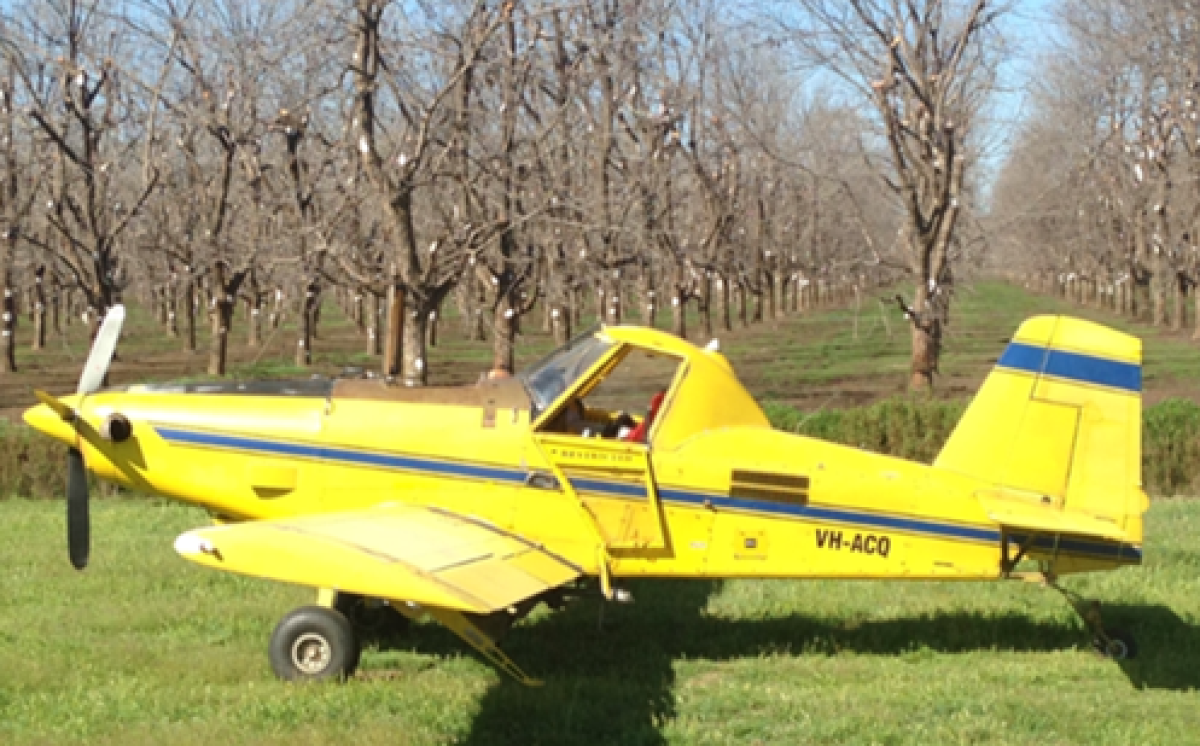
An aerial application-specific flight risk assessment would likely have identified the elevated risks that a high workload, fatigue, task complexity and weather presented to the pilot of an Air Tractor AT-400 aircraft that aerodynamically stalled and collided with the ground, an ATSB investigation report details.
The accident occurred at the end of the pilot’s fifth spray run, during their eleventh spray load of the day, while spraying at a property about 75 km from Moree, NSW on 4 December 2021.
“The ATSB found that the aircraft was too close to the start of the spray run during the turn, which probably resulted in the pilot tightening the turn,” said ATSB Director Transport Safety Dr Stuart Godley.
“This almost certainly resulted in an aerodynamic stall at a height too low to recover before colliding with the ground.”
After being reloaded with chemical and refuelled, the AT-400 had returned to the western side of the target block, where the pilot had been spraying in a racetrack pattern on the previous load, the report details.
After descending to recommence spraying towards the south, the aircraft climbed and turned away to track north and overfly a flood-affected area. The pilot radioed the company operations manager expressing concern about the weather conditions and the potential for chemical to drift onto a neighbouring property. About 5 minutes later, the aircraft returned to the target block, this time on the eastern boundary.
The pilot then conducted 2 ‘smoker’ runs to assess the drift, followed by 5 back-to-back (parallel) spray runs. At the end of the fifth spray run, the aircraft was observed to climb then enter a right procedure turn.
During the turn, the aircraft descended rapidly, collided with terrain, and was subsequently destroyed by fire. The pilot sustained fatal injuries.
“Mishandling the turn was probably a result of the combined effects of the pilot experiencing high workload and fatigue due to long flight and duty times, inexperience, the complexity of the task and the weather conditions,” said Dr Godley.
“The combination of these factors would likely have identified an elevated flight risk, had an aerial application-specific flight risk assessment been conducted. However, there was no requirement for the operator or pilot to conduct a flight risk assessment or to have a flight risk assessment tool.”
As a result of this accident, the operator has implemented additional fatigue management measures, which include an assessment of other factors that may contribute to fatigue and flight risk, within the regulatory fatigue requirements.
The investigation also considered aspects of pilot survivability of the accident, and notes that the pilot was almost certainly wearing a helmet and 4-point restraint, which increased their chances of survival in an accident. However, the aircraft’s fuel tanks ruptured during the accident sequence resulting in a fire and fatal thermal injuries to the pilot.
“The aircraft was not fitted with a crash-resistant fuel system, nor was it required to be,” noted Dr Godley.
The ATSB found that on average, post-impact fire in VH-registered certified aeroplanes has resulted in one fatality every 2 years in Australia.
“As such, post-impact fire presents a significant risk of fire-related injuries and fatalities to occupants of general aviation aeroplanes.”
Crash-resistant fuel systems have been proven effective in helicopters and in automotive applications, Dr Godley noted.
“As such, the ATSB has issued a formal Safety Recommendation to the US Federal Aviation Administration to take action to address certification requirements for crash-resistant fuel systems for fixed wing aircraft to reduce the risk of post-impact fire.”
Read the final report: Collision with terrain involving Air Tractor AT-400, VH-ACQ 75 km west-south-west of Moree, New South Wales, on 4 December 2021
Preliminary report released from on-going Gold Coast helicopter investigation
Key points
- Preliminary report details factual information but contains no findings;
- Report details accident’s sequence of events;
- Investigation will look closely at the issues both pilots faced in seeing the other helicopter, the nature of radio calls made, operator procedures and regulatory approvals
The Australian Transport Safety Bureau has released a preliminary report detailing factual information as part of its on-going investigation into the 2 January 2023 mid-air collision of two sightseeing helicopters at the Gold Coast.
The two Eurocopter EC130 helicopters were being operated by Sea World Helicopters (a separate corporate entity to the theme park) on 5-minute scenic flights. One helicopter with a pilot and 5 passengers on board was on approach to land at a helipad adjacent to the Sea World theme park and the second, with a pilot and 6 passengers, had just departed a separate but nearby helipad within the theme park when they collided above the Broadwater.
“The ATSB has released this preliminary report to detail the circumstances of this tragic accident as we currently understand them, but it is important to stress that we are yet to make findings,” said ATSB Chief Commissioner Angus Mitchell.
“Our findings as to the contributing factors to this accident, and the analysis to support those findings, will be detailed in a final report to be released at the conclusion of our investigation.”
Mr Mitchell said the preliminary report details factual information, including the accident’s sequence of events.
“The factual information detailed in this report is derived from interviews with survivors of the accident, including the surviving pilot and passengers, and witnesses; analysis of video footage and images taken by passengers on board both helicopters, onlookers on the ground, and CCTV from nearby buildings; examination of the wreckage of both helicopters; and a review of recorded radio calls and aircraft tracking and radar data.”
The preliminary report details that the helicopters were operating from two separate helipad facilities about 220 metres apart, a pad within the theme park, and a pad to the south at the operator’s own heliport, adjacent to the park. The 5-minute scenic flights were to follow the same counter-clockwise orbit, with the inbound helicopter, registration VH-XH9 (XH9) on approach to land at the heliport to the south and the outbound helicopter, registration VH-XKQ (XKQ) having departed the pad to the north from within the theme park.
The two helicopters collided at an altitude of about 130 feet, 23 seconds into the departing XKQ’s flight.
The main rotor blades of helicopter XKQ entered the forward cabin of XH9. XKQ broke apart in mid-air and impacted shallow water next to a sandbar. The pilot and 3 passengers were fatally injured, and 3 passengers were seriously injured. The helicopter was destroyed.
Helicopter XH9 sustained significant damage to the forward cabin, instrument console, and main rotor blades. The impact turned XH9 to the left, and the pilot continued with the momentum of that movement, completing a 270° descending turn to land on the sandbar below them near to XKQ. The pilot and 2 passengers were seriously injured, and 3 other passengers had minor injuries.
The helicopters were operating in non-controlled airspace where pilots use a common traffic advisory frequency (CTAF) to make radio calls to announce their position and intentions, and, as required, to arrange separation with other aircraft.
The report details the radio calls made by the pilot of the returning helicopter XH9, and that as they tracked south over the Broadwater, that the pilot saw passengers boarding XKQ as it was preparing to depart.
The pilot of XH9 recalled that their assessment was that XKQ would pass behind them, and that they did not recall the pilot of XKQ making a standard “taxiing” call announcing their intention to depart.
“This does not necessarily mean that a taxi call was not made, and the ATSB investigation will undertake a detailed analysis of the nature of the radio calls made,” Mr Mitchell noted.
The report also details that the pilot of XH9 did not see XKQ depart from the park helipad.
While video footage taken by passengers in both helicopters on mobile phones contained images of the other helicopter, this does not mean that the other helicopter was visible to either pilot.
“The investigation will look closely at the issues both pilots faced in seeing the other helicopter,” Mr Mitchell said.
“We have already generated a 3D model of the view from the pilot’s seat from an exemplar EC130 helicopter which we will use as part of a detailed visibility study to help the investigation determine the impediments both pilots faced in sighting the other helicopter.”
Mr Mitchell said the investigation will also look more broadly beyond the issues of radio calls and visibility.
“The ATSB will also consider the operator’s procedures and practices for operating scenic flights in the Sea World area and the process for implementing the recently-acquired EC130 helicopters into operation, and will review the regulatory surveillance of the operator and similar operators.”
The investigation would also look at the use of traffic collision avoidance systems (TCAS). There was no requirement for the helicopters to be equipped with a collision avoidance system, and while both accident helicopters were fitted with TCAS, those systems had not been fully integrated in the accident helicopters (as they had with the operator’s other helicopters), and according to the operator’s pilots were of limited benefit when operating near and on the helipads.
“This will be a complex and comprehensive investigation.
“However, if at any time during the course of the investigation the ATSB identifies a critical safety issue, we will immediately share that information with relevant parties so they can take appropriate safety action.”
Read the preliminary report: AO-2023-001: Mid-air collision involving Eurocopter EC130B4, VH-XH9, and Eurocopter EC130B4, VH XKQ Main Beach, Gold Coast, Queensland, on 2 January 2023
Weather diversion from Sydney Airport to an emergency alternate involving Qantas B787-9 VH-ZNJ, on 18 February 2023
Discontinuation notice
Report release date: 29/05/2023
| Section 21 (2) of the Transport Safety Investigation Act 2003 (TSI Act) empowers the ATSB to discontinue an investigation into a transport safety matter at any time. Section 21 (3) of the TSI Act requires the ATSB to publish a statement setting out the reasons for discontinuing an investigation. The statement is published as a report in accordance with section 25 of the TSI Act, capturing information from the investigation up to the time of discontinuance. |
Overview of the investigation
On 18 February 2023, a Boeing Company 787-9, registered VH-ZNJ, was being operated on a scheduled passenger flight between Santiago, Chile, and Sydney, Australia. At 1639 Sydney local time, prior to the top of descent, the flight crew requested and received, via the aircraft communication and addressing system (ACARS), the weather forecast (TAF 3) for Sydney, Melbourne, and Canberra airports in preparation for their planned arrival time of 1820. The flight crew also requested and received the forecast for Christchurch, New Zealand.
The Sydney TAF3 for their arrival stated clear skies and wind from 040° True with a speed of 22 knots. The forecast also stated that from 1900, for periods of up to 60 minutes, there would be a 30% probability of wind being variable at 20 knots gusting to 40 knots, along with thunderstorms and rain in which visibility would reduce to 2,000 m.
Due to the forecast thunderstorm having only a 30% probability and not commencing until 40 minutes after their planned arrival time, there was no company or CASA procedural requirement for the flight crew to discontinue the approach to Sydney Airport or to plan for an alternate destination. However, during the descent, the flight crew requested and received the forecast for Williamtown Airport, New South Wales, which stated clear skies and wind from 060° True at 14 knots.
An aerodrome warning was subsequently issued for Sydney Airport at 1735 by the Bureau of Meteorology for a squall line ahead of the storm commencing at 1845, again after the planned arrival time of VH-ZNJ. At 1745 the flight crew received the Automatic Terminal Information Service data (ATIS) which provided current information and conditions at Sydney Airport. The ATIS stated that at 1732 wind was from 020° True at 22 knots, visibility was greater than 10 km, and there were thunderstorms to the north. The ATIS also contained a significant weather caution for a possibility of turbulence on runway 34 right final.
At 1818, 2 minutes before VH-ZNJ arrived overhead Sydney Airport, the TAF 3 forecast was amended stating that from 1830, the forecast wind would be from 230° True with an average velocity of 25 knots gusting to 45 knots and that, from 1800 (retrospectively applied), there would be periods of up to 60 minutes of wind being variable at 30 knots gusting to 50 knots, along with thunderstorms and hail, visibility reducing to 1,000 m with scattered cumulonimbus at 600 feet above ground level.
At 1820, the aircraft arrived overhead Sydney Airport and conducted a left turn to position the aircraft on downwind for runway 34 left. Shortly after, moderate turbulence and high wind conditions were encountered leading to an unstable approach. In response, the crew conducted a missed approach and advised air traffic control of minimum fuel conditions. The captain later reported to the ATSB that the aircraft was down to approximately 60 minutes of fuel. Due to this quantity being insufficient to hold while the thunderstorm passed, the flight crew diverted the aircraft to Williamtown, where an uneventful landing was conducted.
Following notification of the occurrence, the ATSB initiated an investigation.
As part of its investigation, the ATSB:
- interviewed the captain and the first officer
- analysed:
- recorded data from the aircraft’s flight data recorder
- the ACARS flight log
- the weather reports and forecasts from the Bureau of Meteorology
- reviewed company planning and diversion procedures.
ATSB comment
The available evidence indicated that, prior to the top of descent, the flight crew of VH-ZNJ collated all necessary and available information required for a decision to be made for their arrival to Sydney Airport.
The Sydney TAF 3 was amended 2 minutes prior to VH-ZNJ being overhead due to the thunderstorm arriving earlier than forecast. The flight crew, already in visual range with the airport, had no requirement to collect or review the amended forecast. Additionally, until the 1818 amended TAF3 was issued with a retrospective forecast of deteriorating conditions, there was no requirement for the flight crew to make provision for holding or diversion to an alternate airport.
The retrospective application of periods of temporary or intermittent deteriorating conditions within a current TAF 3 validity is due to the format being unable to provide detail to the nearest minute. Amendments to a TAF are issued as soon as the need is recognised and when a TAF 3 is amended at a time between whole hours, the commencement of its validity is ordinarily the next hour. However, as was the case with the 1818 forecast detailed above, the TAF 3 may be amended from the preceding hour if the amendment criteria are expected to be met before the next hour.
Reasons for the discontinuation
Based on a review of the available evidence, the ATSB considered it was unlikely that further investigation would identify any systemic safety issues or important safety lessons. Consequently, the ATSB has discontinued this investigation.
The evidence collected during this investigation remains available to be used in future investigations or safety studies. The ATSB will also monitor for any similar occurrences that may indicate a need to undertake a further safety investigation.
Occurrence summary
| Investigation number | AO-2023-009 |
|---|---|
| Occurrence date | 18/02/2023 |
| Location | Sydney Airport |
| State | New South Wales |
| Report release date | 29/05/2023 |
| Report status | Discontinued |
| Investigation level | Short |
| Investigation type | Occurrence Investigation |
| Investigation status | Discontinued |
| Mode of transport | Aviation |
| Aviation occurrence category | Missed approach |
| Occurrence class | Incident |
| Highest injury level | None |
Aircraft details
| Manufacturer | The Boeing Company |
|---|---|
| Model | 787-9 |
| Registration | VH-ZNJ |
| Serial number | 66074 |
| Sector | Jet |
| Operation type | Part 121 Air transport operations - larger aeroplanes |
| Departure point | Santiago International Airport, Chile |
| Destination | Sydney Airport, New South Wales |
| Injuries | None |
| Damage | Nil |
Changes underway after loss of separation after take-off from Sydney
Key points
- A loss of separation occurred between a Boeing 787 and an Airbus A330 shortly after take-off from Sydney Airport in September 2022;
- The standard instrument departure (SID) being used by both aircraft did not provide a positive method of providing separation assurance;
- Airservices Australia has advised of a redesign for the SID, but a timeframe for implementation is unknown, and the ATSB will continue to monitor.
The ATSB will monitor the planned introduction of a revised Sydney Airport standard instrument departure (SID), after a loss of separation occurrence involving two widebody airliners shortly after take-off last year.
On the afternoon of 28 September 2022, a Boeing 787-9, operated by British Airways, took off from Sydney’s runway 16R for a scheduled passenger service to Singapore.
Approximately three minutes later, an Airbus A330-200, operated by Qantas, departed the same runway for a scheduled passenger service to Cairns.
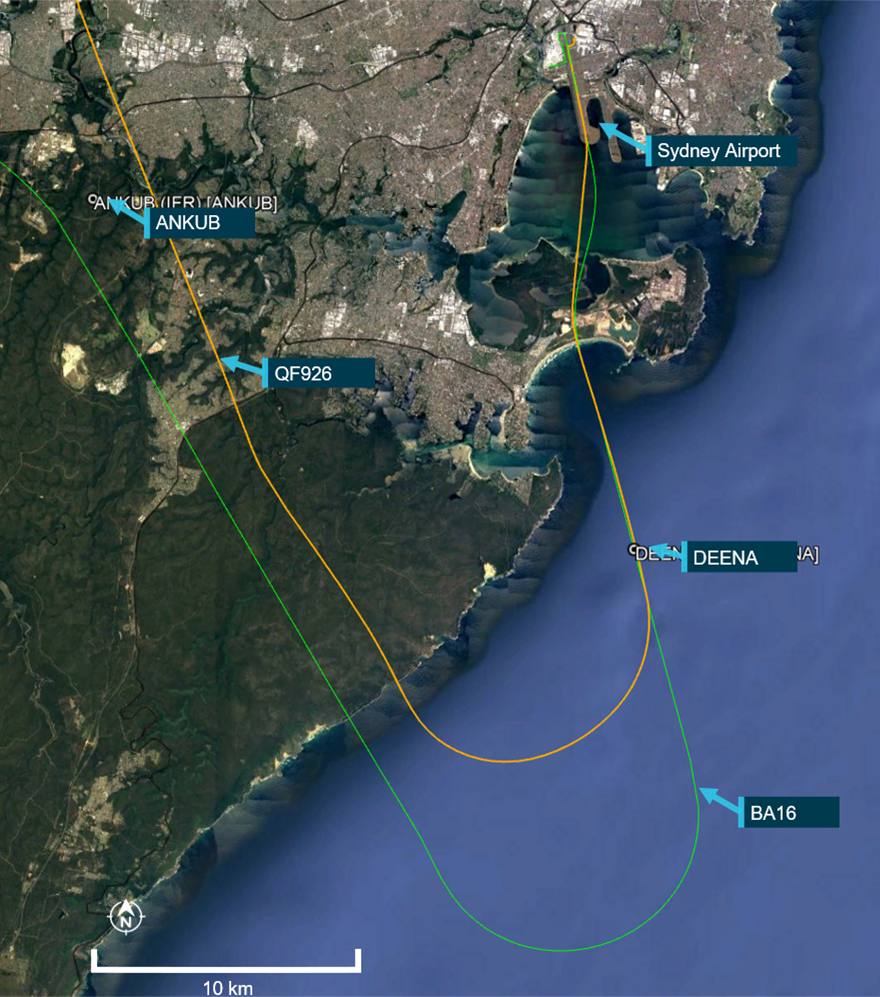
Both aircraft were directed to follow the same standard instrument departure (SID) routing, the DEENA 7 SID, for their respective climbs to 28,000 ft.
This SID required the aircraft to meet two separate conditions after take-off before turning to the north-west: they had to pass the DEENA waypoint, and they had to climb to at least 6,000 ft.
“Because aircraft have to satisfy two separate conditions prior to turning, there is no way to ensure aircraft will turn at the same location when conducting the DEENA 7 SID,” ATSB Director Transport Safety Stuart Macleod explained.
In the September incident, the trailing A330 was being used on a domestic flight, with a correspondingly lower fuel load and higher climb performance than it would have had for an international flight.
“The departure controller did not expect this, and instead expected the A330 to have a similar climb performance to the 787 it was following, thus remain behind it and turn at about the same location,” Mr Macleod said.
Instead, the A330 reached 6,000 ft as it passed DEENA, and began its turn about 20 km from the airport. Meanwhile, the heavier 787 reached 6,000 ft some time after passing DEENA, and began its own turn about 25 km from the airport.
This meant the trailing A330 was turning inside the path of the 787, as they both climbed to the same flight level.
During the event, separation between the aircraft reduced to 2.4 NM laterally, and 600 ft vertically – below the required separation standards of either 4 NM laterally (for ‘heavy’ aircraft) or 1,000 ft vertically – before the controller advised the aircraft and separation was re-established.
The British Airways flight crew later advised they had received a traffic collision avoidance system (TCAS) traffic advisory during the event, and the first officer had subsequently visually identified the A330.
“Maintaining separation in high traffic terminal areas, such as Sydney, requires that both controllers and flight crews remain vigilant, maintain open communications, and use the available systems and tools to minimise the risk of errors,” Mr Macleod said.
“When sequencing departures, controllers should consider a number of factors, including how the flight duration (and the associated fuel load) will likely affect aircraft climb performance.”
The ATSB final report notes that, in the last decade in Australia, there have been eight loss of separation occurrences involving aircraft cleared on a SID, where a following aircraft has climbed faster than the preceding aircraft.
Of these, six were at Sydney, and five involved the DEENA 7 SID.
“Airservices Australia has advised the DEENA 7 SID has been redesigned to remove the two conditional requirements of the procedure,” Mr Macleod said.
“The changes are planned to be part of the first implementation package for Western Sydney International Airport, but as the timeframe for this implementation is unknown, the ATSB will continue to actively monitor this open safety issue,” Mr Macleod concluded.
Read the final report: Loss of separation involving Airbus A330, VH-EBK and Boeing 787, G-ZBKF, near Sydney Airport, New South Wales, on 28 September 2022
Interim report outlines Cairns approaches below minimum altitude
Key points
- Two Boeing 737-800 aircraft descended below minimum altitude during approach into Cairns on separate flights in October 2022;
- ATSB’s interim report details information gathered in early evidence-collection phase of investigation;
- Investigation is on-going, with analysis and findings to be presented in final report at later date.
An Australian Transport Safety Bureau interim report details a pair of occurrences involving Boeing 737-800 passenger aircraft which descended below minimum altitude constraints on approach into Cairns Airport, in North Queensland, in October 2022.
The interim report aims to provide timely information, gathered in the early evidence collection phase of the investigation, which is on-going. It contains no analysis or findings, which will be detailed in the final report.
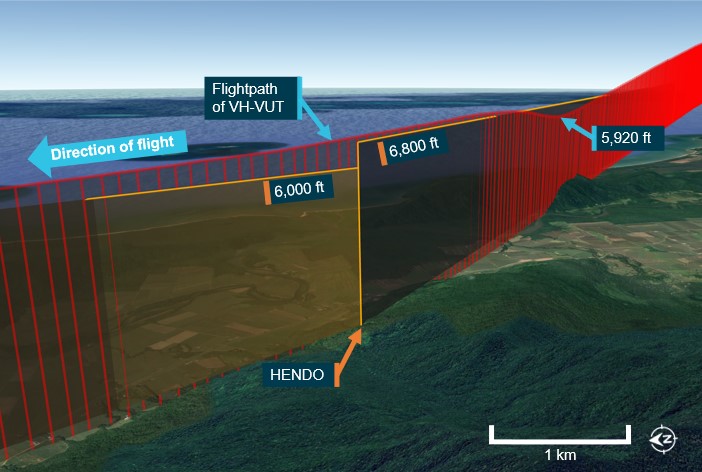
In each occurrence, flight crews (one Virgin Australia, the other Qantas) entered the same standard arrival (HENDO 8Y) and approach (RNP Y runway 33) into their flight management computers, ahead of a planned landing on runway 33 at Cairns. However, neither flight crew selected the required approach transition.
In both cases, when presented with the discrepancy by the flight management computer, flight crews resolved it by manually connecting the arrival waypoint HENDO to the intermediate approach fix waypoint noted on the approach chart.
“As an unintended consequence, this removed the 6,800 ft descent altitude constraint associated with the initial approach fix waypoint in each aircraft’s programmed flight path,” ATSB Director Transport Safety Stuart Macleod explained.
“In both occurrences, the aircraft therefore descended below that constraint, as well as the 6,500 ft minimum sector altitude in that segment of airspace.”
In both cases, air traffic control alerted flight crews of their low altitude. No terrain warnings were triggered in either occurrence.
“The first flight, on October 24, took place on a dark night, so the Virgin Australia flight crew conducted a go-around, and then landed without further incident,” Mr Macleod said.
“The second flight, on October 26, occurred in daylight under visual conditions, so the Qantas flight crew was approved for a visual approach by air traffic control, and landed without further incident.”
To date, the ATSB has interviewed the flight crews, examined recorded flight data, reviewed air traffic control audio and surveillance data, and reviewed operator and air traffic control procedures.
The interim report notes both operators have already taken steps to provide flight crews with further guidance, relating in particular to approaches where the selection of an approach transition is required.
“Going forward, the ATSB’s investigation will include further review and examination of the evidence gathered, as well as instrument procedure and waypoint naming processes and standards, and arrival and approach chart information and presentation,” Mr Macleod said.
A final report will be released at the conclusion of the investigation.
“However, should a critical safety issue be identified during the course of the investigation, the ATSB will immediately notify relevant parties so that appropriate and timely safety action can be taken,” Mr Macleod concluded.
Read the interim report: Flight below minimum altitude occurrences, 40 km south of Cairns Airport, Queensland, on 24 and 26 October 2022
Tertiary qualifications for transport safety investigators
Under a strategic partnership launched in early 2019, RMIT University delivers the Graduate Certificate in Transport Safety Investigation to both the ATSB’s own transport safety investigators and industry participants.
Through the partnership the ATSB provides advice on the development of the program structure and the course material, and a significant number of topics are delivered by ATSB subject matter experts with in-depth investigation and industry experience.
The ATSB-RMIT University partnership provides industry in Australia and throughout the Asia-Pacific region with access to high quality, ATSB sponsored training in transport accident investigation, as well providing a framework to facilitate important transport safety related research through a credible university-based methodology.
The Graduate Certificate in Transport Safety Investigation delivers the following units of study:
- Investigation Readiness – covering Transport Safety Legislative frameworks, Accident Site Work Health and Safety, Critical Incident Stress Management, Cognitive Interviewing Techniques etc;
- Human Factors for Investigators – covering a broad spectrum of fields that are contextualised for safety investigation purposes;
- Accident Investigation Fundamentals – covering on-site deployment and information gathering techniques applied in aviation, rail and marine;
- Analysis and Analytical Writing Techniques – covering the ATSB’s world-leading safety investigation analytical methodologies and practices.
The courses are offered intensively in one-week blocks spread over a six-month period. They are primarily delivered by experienced ATSB investigators and by design, meet the needs of the Bureau while extending the opportunity for industry participants to gain this coveted qualification.
Delivery is through a hybrid of either attending RMIT University’s Melbourne campus and/or through on-line lectures (where possible attending in person is highly recommended).
The Graduate Certificate program has also received the endorsement of the International Federation of Air Line Pilots' Associations (IFALPA) as an IFALPA Accredited Accident Investigation (AAI) course.
In 2025, RMIT extended its offerings to include the Graduate Diploma program, which incorporates an additional four units of study as follows:
- Specialist Engineering Techniques applied in Transport Safety Investigations – covering primarily materials failure and an extensive array of data recovery applications and techniques
- Advanced Accident Investigation Fundamentals – building on the Graduate Certificate course as applied to more complex accident scenarios
- Investigating Safety Management Systems – covering techniques applied to more systemic type investigations
- Choice of an elective – from a wide range of subjects/courses geared towards advanced engineering applications and/or research techniques.
Longer term, RMIT and the ATSB (and potentially the Australian Defence Force) will create a pathway to a further higher education program leading to Masters-level qualifications in Transport Safety Investigation.
The relationship also provides for a range of collaborative research projects which will bring together RMIT’s deep expertise in delivering world-leading research with the ATSB’s considerable industry knowledge, intelligence and data access.
Further information on the Graduate Certificate in Transport Safety Investigation can be found on the RMIT website.(Opens in a new tab/window)
Collision with terrain involving Textron Aviation Cessna 340A, RP-C2080, Mount Mayon, Albay Province, Philippines, on 18 February 2023
Summary
On 18 February 2023, at 0643 local time, a Textron Aviation CE340A aircraft, registered RP-C2080, departed Bicol International Airport for Ninoy Aquino International Airport, Philippines. A few minutes after departure, air traffic control lost contact with the aircraft, and the wreckage was subsequently found to have collided with terrain on the slope of Mount Mayon. There were 2 Australian citizens on board.
The Civil Aviation Authority of Philippines (CAAP) investigated this occurrence. As Australian citizens were on board the aircraft, the CAAP invited the ATSB to appoint an expert to the investigation. To facilitate this appointment, the ATSB initiated an accredited representative investigation under the provisions of the Transport Safety Investigation Act 2003.
During 2023, an ATSB investigator provided liaison between the Australian passengers' next-of-kin, Australian Federal Police family liaison officers and CAAP as required. The final report into this investigation was released by CAAP on 16 October 2023. The report is available for download on the CAAP website.
Occurrence summary
| Investigation number | AA-2023-002 |
|---|---|
| Occurrence date | 18/02/2023 |
| Location | Mount Mayon, Albay Province, Philippines |
| State | International |
| Report release date | 14/02/2024 |
| Report status | Final |
| Investigation type | Accredited Representative |
| Investigation phase | Final report: Dissemination |
| Investigation status | Completed |
| Mode of transport | Aviation |
| Aviation occurrence category | Collision with terrain |
| Occurrence class | Accident |
| Highest injury level | Fatal |
Aircraft details
| Manufacturer | Textron Aviation Inc. |
|---|---|
| Model | CE340A |
| Registration | RP-C2080 |
| Operation type | Charter |
| Departure point | Bicol International Airport, Philippines |
| Destination | Ninoy Aquino International Airport, Philippines |
| Damage | Destroyed |
Inverleigh derailment investigation preliminary report released
Key points
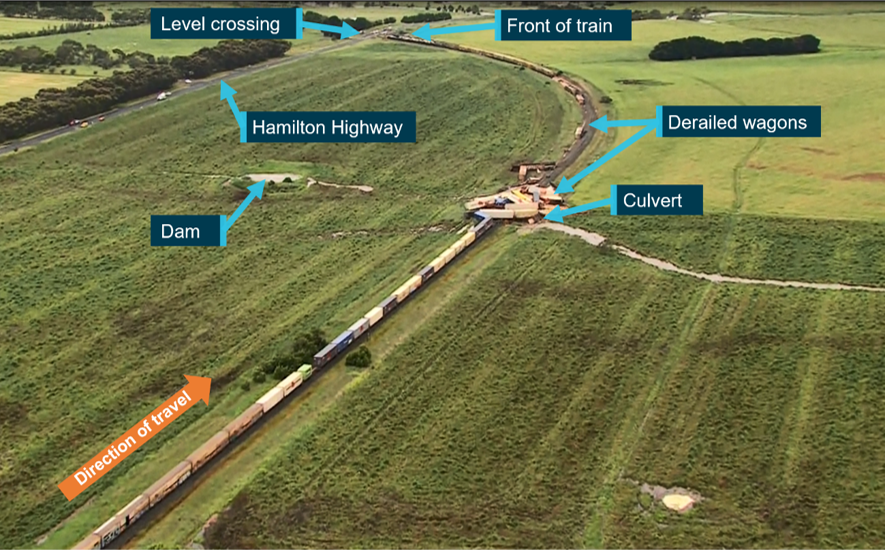
- 16 of 55 wagons of a freight train derailed as it passed over a culvert near Inverleigh, Victoria;
- Heavy rainfall had been recorded in the area prior to the derailment, and an embankment supporting the track at the location collapsed;
- Transport safety investigation is ongoing.
A preliminary report has detailed factual information established in the early evidence collection phase of the ongoing investigation into the derailment of a freight train near Geelong, Victoria on the morning of 14 November 2022.
The transport safety investigation is being conducted by the Chief Investigator, Transport Safety, who conducts rail investigations in Victoria on behalf of the Australian Transport Safety Bureau.
The report notes that the freight train was travelling at about 80 km/h over a culvert near Inverleigh, west of Geelong, when 16 of its 55 wagons derailed.
Significant rainfall was recorded at Inverleigh in the 12-hour period prior to the derailment, and the embankment supporting the track at the location of the culvert collapsed.
The incident resulted in substantial track damage, and 16 destroyed wagons. There were no injuries.
“Since attending the derailment site and completing a site and train inspection, investigators have examined drainage in the waterway catchment area and commenced hydrology studies,” Chief Investigator, Transport Safety Mark Smallwood said.
“Investigators have also examined operational information, conducted interviews, and commenced collecting other relevant information.”
Mr Smallwood said investigation will further review the waterway catchment, weather warnings in the area, the effect of prior rainfall on soil moisture and catchment flow and culvert design, including capacity.
Investigators will also review maintenance of track infrastructure and train operation.
A final report will be released at the conclusion of the investigation.
“However, should a critical safety issue be identified during the course of the investigation, relevant parties will be notified immediately, so appropriate and timely safety action can be taken,” Mr Smallwood said.
Read the preliminary report: Derailment of freight train 4PM9 Inverleigh, Victoria, on 14 November 2022
Fatal wirestrike highlights hazards of low-level flight
Key points
- Pilot of a Cessna 172 was fatally injured when their aircraft contacted wires above a field adjacent to Coonabarabran Aerodrome during an intentional low-level pass;
- Pilot was not wearing upper torso restraint, however it was not possible to determine whether this could have prevented fatal injuries.
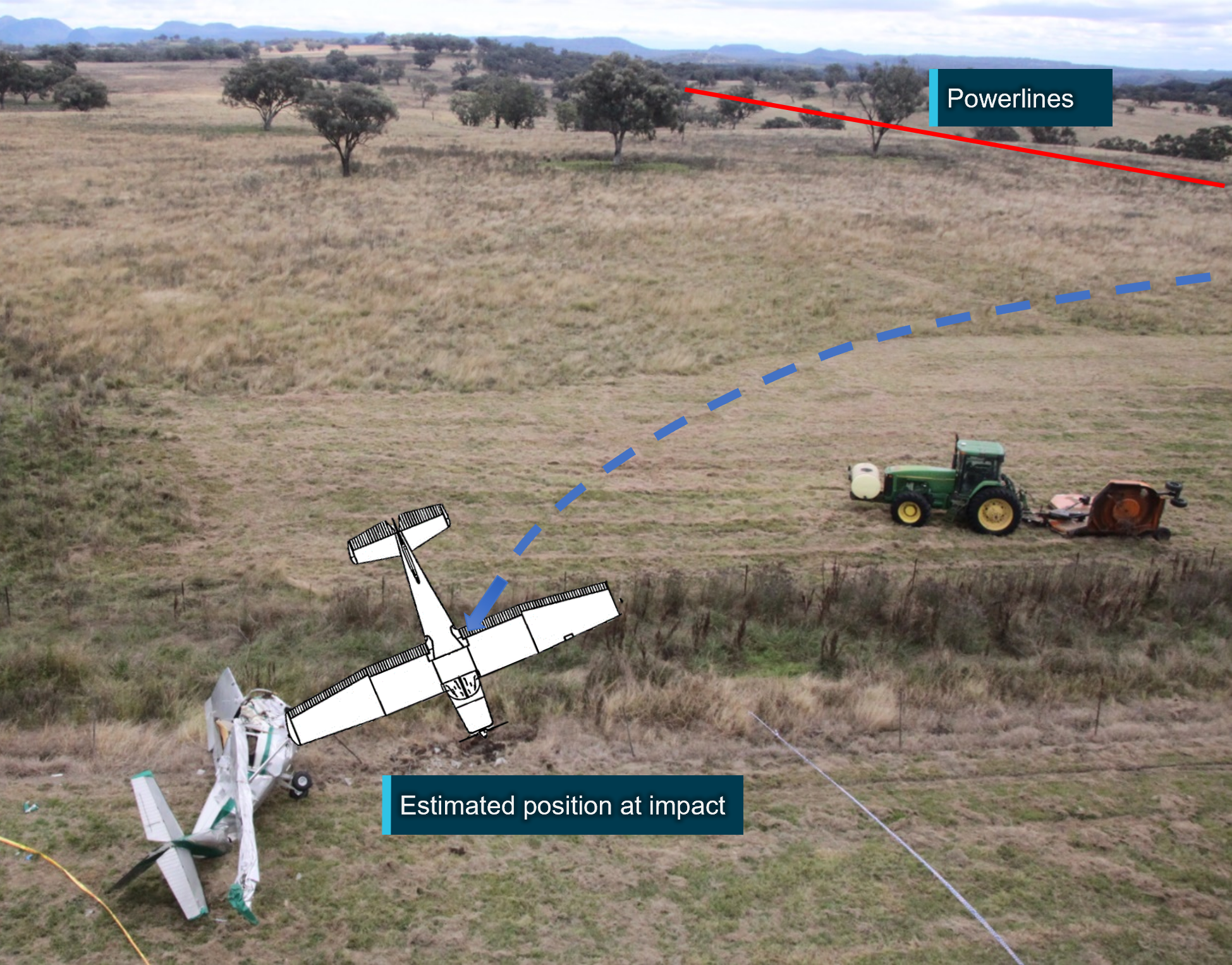
A Cessna 172 pilot was very likely conducting an intentional low-level pass over a tractor before their aircraft struck a powerline, an Australian Transport Safety Bureau investigation details.
The Cessna, with a single pilot on board, had been conducting circuits at Coonabarabran Aerodrome on 18 April 2022, before it contacted powerlines and impacted terrain. The pilot was fatally injured and the aircraft was destroyed.
“After completing several touch-and-go landings, the pilot flew a low pass at 15–25 feet above the ground over a tractor, which was working in a field adjacent to the aerodrome,” ATSB Director Transport Safety Dr Mike Walker said.
In the vicinity of an airfield operations at low level are normal during take-off and landing, however, the aircraft’s flight path just prior to the collision did not align with the runways, and was not consistent with a normal circuit pattern.
“It was therefore very likely the pilot was conducting an intentional low-level pass over the tractor,” Dr Walker said.
“Operations at low height expose an aircraft to several hazards like powerlines, which are typically very difficult to see and present a critical hazard to any low-flying aircraft,” Dr Walker said.
In recognition of this and other specific risks and hazards of low-level flying, the Civil Aviation Safety Authority requires pilots to hold a specific low-level rating before flying at low level.
“Even with appropriate training, flying at low-level carries a significant risk and should be avoided when there is no operational reason,” Dr Walker continued.
“For most private pilots, there is generally no reason to fly at low levels, except during take-off and landing, or conducting a forced or precautionary landing.”
The investigation also notes the pilot was found to be wearing only the lap portion of their seatbelt. However, it was not possible to determine with certainty whether, if worn, the seatbelt’s upper torso restraint would have reduced the severity of injuries.
“Nonetheless, pilots should always wear upper torso restraints where available,” Dr Walker said.
“Research has shown that wearing an upper torso restraint significantly reduces the risk of serious or fatal injury.”
Read the final report: Wirestrike and collision with terrain, involving Cessna 172, VH-REU, Coonabarabran Aerodrome, New South Wales, on 18 April 2022