Bourke ag aircraft accident

The Australian Transport Safety Bureau (ATSB) has commenced a transport safety investigation into a collision with terrain accident involving an Air Tractor aerial application aircraft north-west of Bourke on Saturday morning.

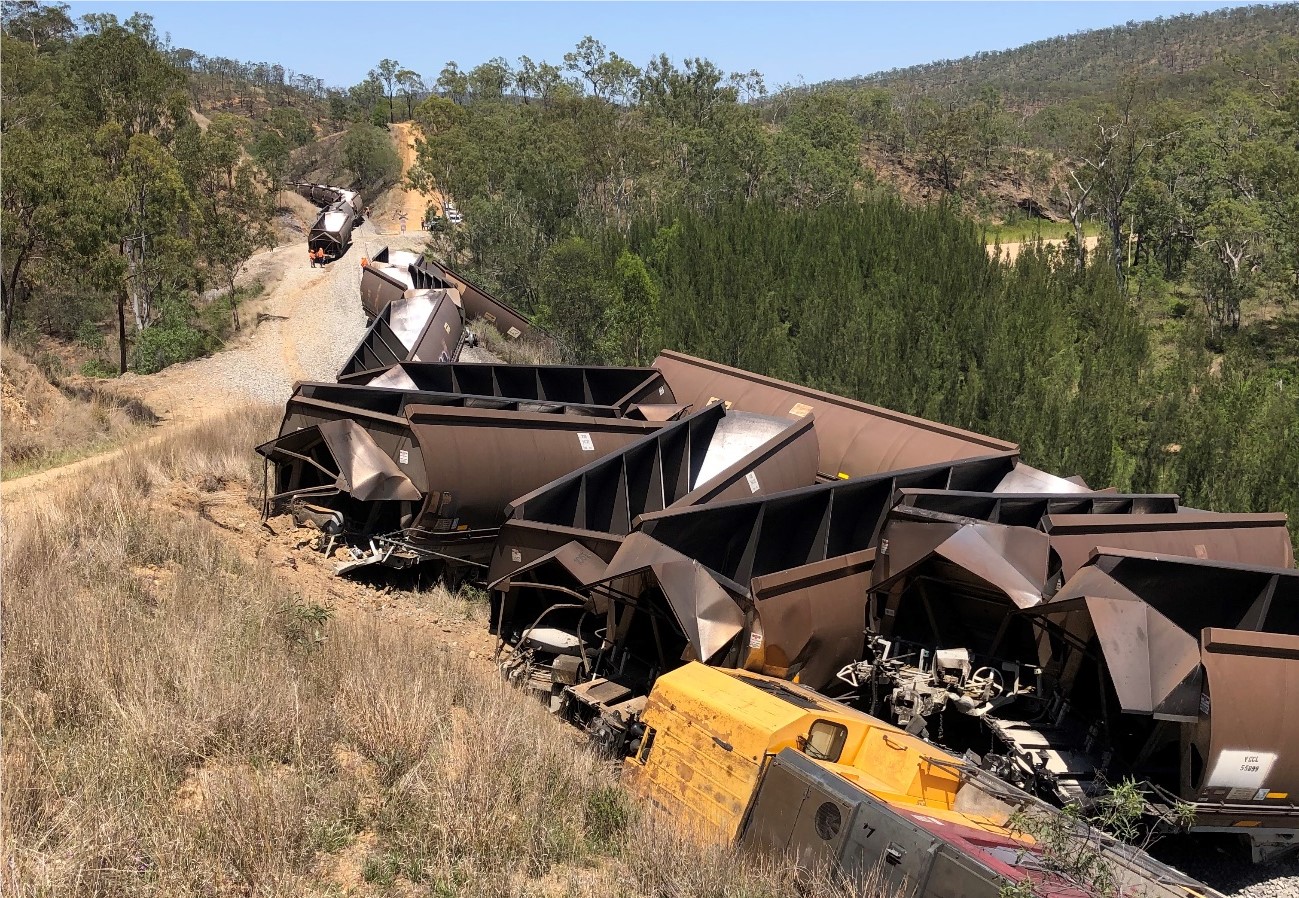
While conducting aerial spraying on a property near Bourke, the aircraft collided with the ground, coming to rest inverted.

The ATSB is deploying a team of three transport safety investigators from its Canberra office, with expertise in human factors, aircraft maintenance, and operations. The team was due to depart Canberra on Saturday afternoon to arrive on site on Sunday.

On site investigators will conduct a range of evidence-gathering activities on site, including site mapping, wreckage examination, and recovery of any aircraft components for further examination at the ATSB’s technical facilities in Canberra.

Investigators will also seek to interview any witnesses and involved parties, and collect relevant recorded information including flight tracking data, as well as pilot and aircraft maintenance records, and weather information.

The ATSB will release a final report at the conclusion of the investigation. However, if at any time should a critical safety issue be identified during the course of the investigation, the ATSB will immediately notify relevant parties so safety action can be taken.

Taxiway excursion, ground strike and near collision with terrain involving Cessna 172R, VH-EWW, at Gold Coast Airport, Queensland, on 6 February 2024

Final report

Executive summary

What happened

On 6 February 2024, a student pilot and flight instructor conducted a dual training flight from Gold Coast Airport, Queensland, in a Cessna 172R aircraft, registered VH-EWW. On their return, the student received an initial air traffic control clearance to track direct to runway 32. 

About 40 seconds later, the flight crew accepted an amended clearance to track to the shorter runway 35 at ‘best speed’. When VH-EWW was at 1,000 ft and 1.9 NM from the runway 35 threshold, the flight crew were cleared to conduct an approach and maintain ‘best speed all the way in to crossing the runway’. Unsure how to comply with that instruction, the instructor directed the student to reduce the throttle to idle and lower the aircraft’s nose.

The aircraft subsequently passed about 100 ft above the runway threshold at about 25 kt faster than the normal approach speed. As a result, the aircraft floated along the runway before it touched down and bounced once. During the landing roll, as the aircraft approached the end of the runway, the instructor took over control of the aircraft from the student. They attempted to brake and turn the aircraft onto a taxiway beyond the end of the runway. During the turn, the aircraft veered off the taxiway towards a ditch. In response, the instructor applied back pressure on the control column and full power to commence a go-around, during which the rear fuselage and tail struck the ground. A right circuit and landing to runway 32 was then conducted.

What the ATSB found

The ATSB found that the air traffic controller's request to maintain best speed to the runway, combined with the instructor's interpretation of the instruction, resulted in an excessively fast approach. Although the aircraft exceeded both the manufacturer’s approach speed and the operator’s stabilised approach speed, the instructor did not conduct a go-around prior to landing or while on the runway. This resulted in the aircraft landing long and fast. 

The excessive landing speed also resulted in reduced braking effectiveness and a loss of control during the turn onto the taxiway. Following the loss of control, a go-around was initiated to avoid a drainage ditch, resulting in a ground strike and near collision with hangars located on the eastern boundary of the airport.

What has been done as a result

The aircraft operator reviewed the company’s standard operating procedures for stabilised and unstable approaches. They also reviewed training material and sequences for instructors and students, including human factors aspects regarding communication, decision making and assertiveness.

Finally, the operator and their instructor team discussed training challenges at Gold Coast Airport with a focus on non-standard air traffic control requests and clearances, including the refusal of clearances considered operationally unacceptable. 

Safety message

Although not standard phraseology, air traffic controllers may ask pilots to maintain ‘best speed’. It is up to the pilot to determine what is best in this context and more generally advise if an instruction is unclear or cannot be complied with. An approach must be flown in accordance with the aircraft flight manual and operator’s procedures. Landing with excessive speed is likely to result in the aircraft floating, landing long on the runway, bouncing and/or ballooning, all of which increase the risk of a landing mishap.

When operating in visual meteorological conditions, if an approach is not stabilised by the height specified by the operator (or generally by about 500 ft above the ground), or becomes unstable after that point, a go‑around should be conducted. The Flight Safety Foundation’s briefing note Being prepared to go around, emphasises the importance of being go-around-prepared and go‑around‑minded. This includes being ready to conduct a go‑around during the approach if any desired flight parameter, such as aircraft configuration, vertical speed, airspeed, or attitude cannot be achieved. 

The investigation

Decisions regarding the scope of an investigation are based on many factors, including the level of safety benefit likely to be obtained from an investigation and the associated resources required. For this occurrence, a limited-scope investigation was conducted in order to produce a short investigation report, and allow for greater industry awareness of findings that affect safety and potential learning opportunities.

The occurrence

On 6 February 2024, a student pilot and flight instructor were conducting a dual training flight in a Cessna 172R aircraft, registered VH-EWW. The aircraft took off from Gold Coast Airport, Queensland, at about 1138 local time, and tracked to the locality of Baryulgil, New South Wales (NSW), where the flight crew conducted aerial work overhead. The aircraft then tracked to Casino Aerodrome, NSW, where the student conducted 5 circuits, before departing at about 1354 to return to Gold Coast Airport (Figure 1). 

Figure 1: VH-EWW track Gold Coast – Baryulgil – Casino – Gold Coast
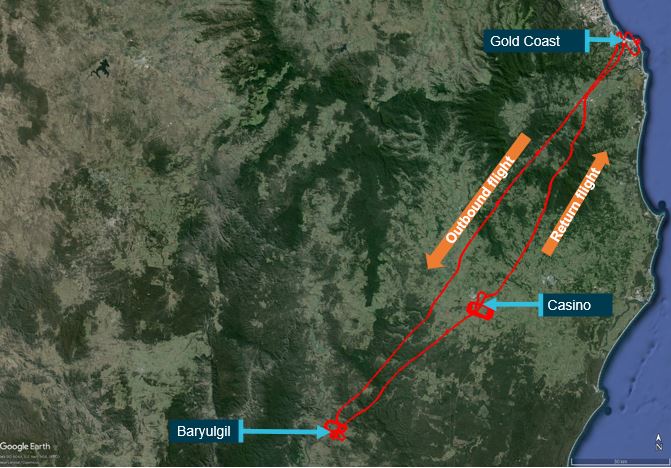
Figure 1: VH-EWW track Gold Coast – Baryulgil – Casino – Gold Coast

Source: Google earth overlaid with Airservices Australia radar data, annotated by the ATSB

At about 1419, when VH-EWW was about 10 NM south-west of Gold Coast Airport, the student pilot contacted Gold Coast Tower air traffic control. The student pilot advised that they were inbound and requested a clearance to enter controlled airspace. The aerodrome controller (ADC) issued the flight crew a clearance to track direct to the airport at 1,500 ft and advised them to expect runway 32. The ADC subsequently cleared the flight crew to descend to 1,000 ft. At that time, VH-EWW was 6.3 NM from the airport and tracking towards a right base leg[1] for runway 32. 

About 40 seconds later, to facilitate sequencing with other aircraft, the ADC asked the VH-EWW flight crew whether they could ‘accept runway 35, best speed’. The student pilot reported looking at the instructor and shaking their head thinking the aircraft was too high and close to that runway. At that time, VH-EWW was 3.9 NM from the threshold of runway 35, which was 582 m long, and significantly shorter than runway 32, at 2,492 m (Figure 2). The student’s assessment was probably due to inexperience, having only landed on runway 35 once before. Had they been cleared to commence the approach from that position, a landing should have been readily achievable, with an approach profile of about 2.4°. 

Figure 2: Gold Coast Airport showing runways 32 and 35
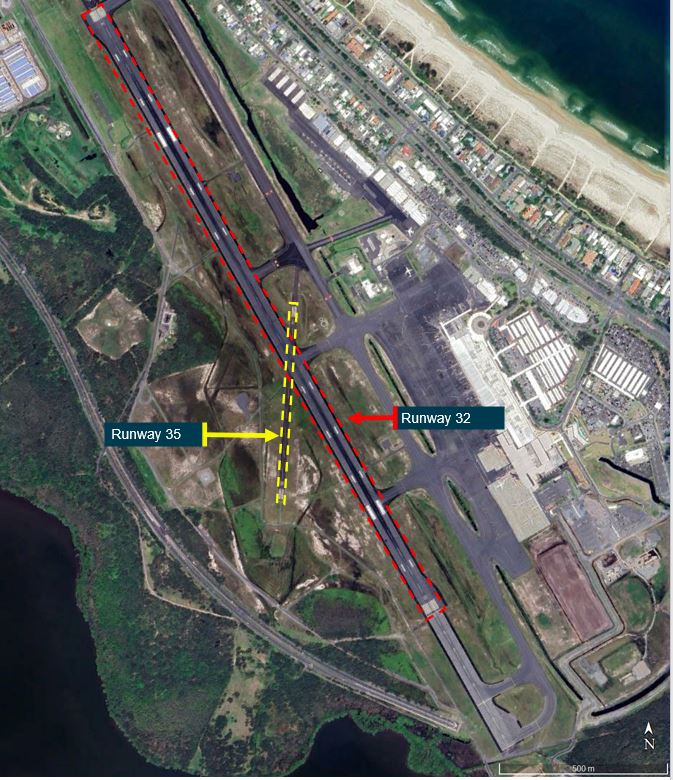
Figure 2: Gold Coast Airport showing runways 32 and 35

Source: Google earth, annotated by the ATSB

The instructor assessed that, as there was a headwind of about 14 kt, the aircraft could land safely on runway 35 from that position, and it would be a good opportunity for the student to practise landing on the shorter runway. The instructor therefore responded ‘affirm’ to the ADC. The ADC then issued a clearance to track for a straight-in approach to runway 35 at ‘best speed’ and advised the flight crew that they would shortly be cleared to descend. 

Just over 1 minute later, the ADC cleared the flight crew to conduct a visual approach, and stated, ‘I need best speed all the way in to crossing the runway’. According to radar data, VH-EWW was then 1.9 NM from the runway 35 threshold, at about 1,000 ft and 90 kt ground speed.

The student and instructor later reported that, although on previous flights they had received air traffic control instructions to maintain best speed, these had been up to the commencement of an approach. They had not previously received a clearance for a visual approach and best speed to the runway, and were unsure what was expected.

In an attempt to comply with the clearance, the instructor advised the student to reduce the throttle to idle and lower the aircraft’s nose to maintain best speed. When the airspeed was below 110 kt, the student extended the flaps 10°. Further flap extension required a maximum airspeed of 85 kt. As the airspeed remained at or above 90 kt for the remainder of the approach, the flaps were not subsequently extended to the normal 30° landing configuration. 

According to radar data, VH-EWW was about 1 NM from the runway 35 threshold, descending through about 500 ft at 95 kt ground speed, when the ADC cleared the flight crew to land and to ‘continue to taxi into GOLF’ (Figure 3 and Figure 4). This was to reiterate that they were cleared to continue through the runway 32 intersection. As VH-EWW approached the runway, the controller observed that the aircraft appeared to be faster than normal and, expecting the flight crew would conduct a go-around,[2] started planning to re-sequence the aircraft. 

Figure 3: VH-EWW track showing positions of key air traffic control communications
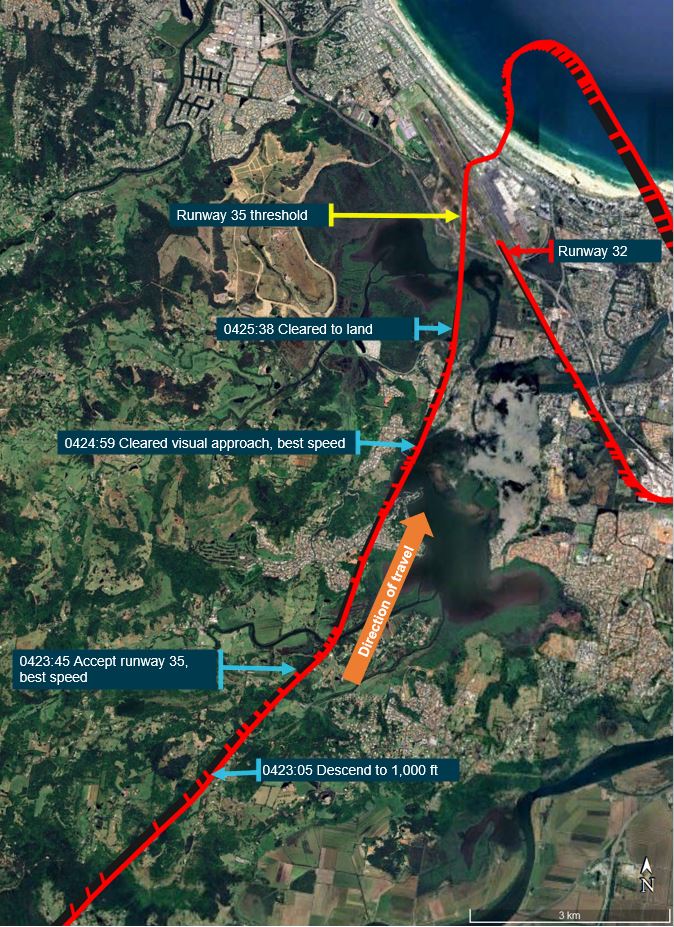
Figure 3: VH-EWW track showing positions of key air traffic control communications

Source: Google earth overlaid with Airservices Australia radar data, annotated by the ATSB

The aircraft crossed the runway 35 threshold at about 100 ft and 90 kt indicated airspeed (about 80 kt ground speed). The aircraft floated in ground effect just above the runway for a significant period before it briefly touched down and bounced/ballooned once. The instructor advised the student to continue the landing rather than go around. The instructor reported that this was based on their experience of normal operations on runway 32, which had sufficient runway length to decelerate following a fast approach and long float prior to touchdown. When the aircraft landed long on runway 35 and the student commenced braking, the wheels locked up. The instructor then took over control of the aircraft from the student and reported applying firm back pressure to the control column in an attempt to increase the weight on wheels to assist with the braking. However, the application of heavy braking still resulted in the brakes locking the wheels. 

The instructor assessed that the aircraft was still travelling faster than expected. At this stage the aircraft was past the runway 32 intersection and rapidly approaching the end of the runway. Seeing this, the ADC stated, ‘turn up [taxiway] CHARLIE if need be’, to alert the flight crew that they could make a 20° left turn onto that taxiway, instead of a 66° right turn onto GOLF. The instructor heard the call but did not recognise the alternate option, as they were focused on making the turn onto GOLF (Figure 4).

Figure 4: Gold Coast Airport taxiways CHARLIE and GOLF, drainage ditch, hangars and VH-EWW track 
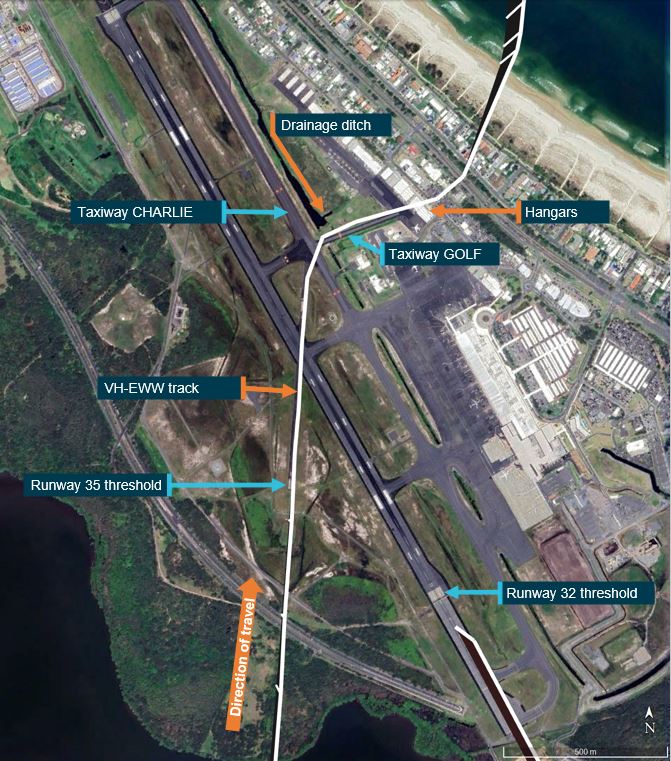
Figure 4: Gold Coast Airport taxiways CHARLIE and GOLF, drainage ditch, hangars and VH-EWW track

Source: Google earth overlaid with Airservices Australia radar data, annotated by the ATSB

During the turn, the aircraft skidded left off the taxiway onto grass and towards a drainage ditch. The instructor then applied full power and back pressure on the control column to clear the ditch, which resulted in a ground strike, damaging the rear fuselage (Figure 5). Having observed the aircraft exit the taxiway, the ADC activated the crash alarm[3] to alert aviation rescue fire fighters. 

Figure 5: Ground strike damage to VH-EWW
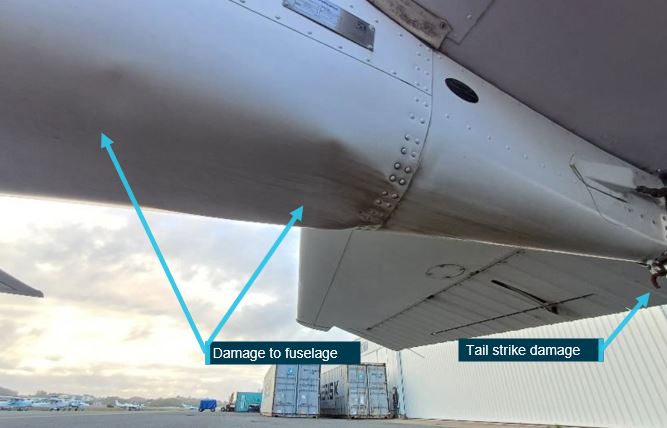
Figure 5: Ground strike damage to VH-EWW

Source: Aircraft operator, annotated by the ATSB

Unaware of the ground strike, the instructor commenced a go-around, with the aircraft climbing towards a row of hangars. The instructor turned the aircraft slightly right towards the lowest roof to maximise the clearance from the buildings. The instructor reported that the stall warning horn[4] was sounding, and therefore they had to lower the aircraft’s nose to prevent a stall, but also maintain a high enough nose attitude for the aircraft to climb above the hangar (Figure 6). The instructor advised the ADC that they ‘just had to make an emergency go-around’. 

Figure 6: Image from CCTV footage showing VH-EWW passing close above hangars
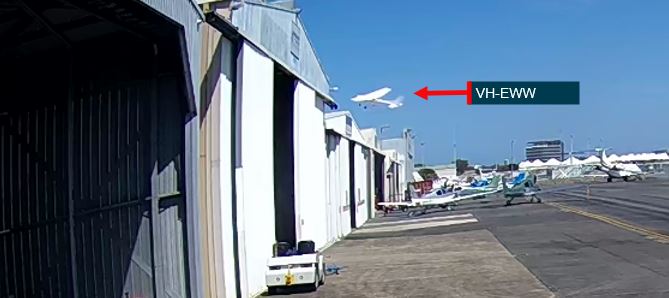
Figure 6: Image from CCTV footage showing VH-EWW passing close above hangars

Source: Gold Coast Airport Limited, annotated by the ATSB

The ADC handed over aerodrome control duties to another controller, who advised the VH-EWW flight crew they had had a tail strike and confirmed they anticipated being able to conduct a normal approach and landing. The instructor then conducted a right circuit, with a left orbit on downwind as required by air traffic control for spacing, and landed on runway 32 at about 1434.

Context

Approach airspeeds

According to the Cessna 172R Pilot’s Operating Handbook (POH), the aircraft’s power-off stall speed was 47 kt with full (30°) flap and 51 kt with the flaps retracted. The handbook also provided the following approach speeds:

Table 1: Airspeeds for normal operation – approach 

ApproachIndicated airspeed 
Normal approach, flaps up65–75 kt 
Normal approach, flaps 30°60–70 kt 
Short field approach, flaps 30°62 kt 

Landing distance required

The automatic terminal information service current at the time of the accident broadcast the following: temperature 31 °C, QNH[5] 1008 hPa, wind from 010° (magnetic) at 15 kt. For runway 35, this equated to a headwind component of 14 kt and a crosswind of 5 kt. Gold Coast Airport aerodrome elevation is 21 ft above mean sea level. The calculated pressure altitude[6] was 171 ft and the density altitude[7] was 2,091 ft. 

The pilot’s operating handbook provided a chart for calculating the landing distance required at the aircraft’s maximum weight. The distances were based on a short field landing technique with flaps 30°, power off, maximum braking, paved level dry runway, nil wind and 62 kt indicated airspeed at 50 ft above the ground. It also advised to decrease distances 10% for each 9 kt of headwind. Further, if landing with flaps up, increase the approach speed by 7 kt indicated airspeed and allow for 35% longer distances. There was no data for landing with flaps 10°, or for landing at a higher indicated airspeed.

At flaps 30°, sea level pressure altitude and 30 °C, the ground roll distance required was 177 m and the total distance required to clear a 50 ft obstacle (on the approach path) was 408 m. The beneficial effect of the 9 kt headwind reduced these distances to 159 m and 368 m respectively. If landing with the flaps retracted, the required approach speed was 69 kt, ground roll 215 m and distance to clear a 50 ft obstacle 496 m. 

Speed control

The Airservices Australia Aeronautical Information Publication (AIP) listed standard air traffic control phraseologies, including for speed control. ‘Best speed’ was not a standard phrase however, the AIP also stated that clear and concise plain language should be used where no phraseology was available. In the section regarding speed control for arriving aircraft, the AIP stated that a clearance for a visual approach ‘terminates speed control’. Airservices Australia advised that this meant termination of previous speed instructions but did not preclude a controller issuing subsequent speed control instructions for sequencing. Further, speed control instructions to flight crew conducting visual approaches were frequently issued. 

Additionally, the Airservices Australia Manual of Air Traffic Services section Speed control principles included ‘Do not vary the final approach speed’. That manual defined final approach as ‘That part of an instrument approach procedure which…commences at the specified final approach fix or point…ends at a point in the vicinity of an aerodrome from which…a landing can be made; or…a missed approach is initiated’. In response to the draft report, Airservices Australia reiterated that the term final approach only applied to aircraft conducting an instrument approach, therefore was not applicable when flight crew were conducting a visual approach. 

The aerodrome controller issued the ‘best speed’ instruction to the VH-EWW flight crew to facilitate traffic flow. The controller estimated that had the flight crew conducted a normal approach, there would probably have been insufficient spacing for VH-EWW to land before an inbound Boeing 737. The controller reported that flight crew of training aircraft sometimes deliberately conducted very slow approaches. Further, that the approach speeds of similar aircraft to the Cessna 172 could vary by 20 to 30 knots, but the landing speed would be essentially the same. In issuing the instruction, the ADC expected that the flight crew would maintain a higher speed until the aircraft was a bit closer to the airfield than normal, and then reduce speed appropriately to make a safe landing. 

The AIP Speed control section also included:

5.2 The pilot must request an alternative when an ATC-issued speed control instruction is unacceptable on operational grounds. 

The instructor reported that during the approach, they wanted to help the ADC by getting in quickly, and not impeding the Boeing 737. After the incident, the instructor reported that in future they would be more assertive with air traffic control and advise they could not comply with maintaining best speed while conducting a normal approach. 

Stabilised approach 

The United States Federal Aviation Administration’s (FAA’s) Airplane Flying Handbook defined a stabilised approach as:

one in which the pilot establishes and maintains a constant-angle glide path towards a predetermined point on the landing runway. It is based on the pilot’s judgment of certain visual clues and depends on maintaining a constant final descent airspeed and configuration.

The handbook further stated that for a general aviation piston-engine aircraft, an immediate go‑around should be initiated if an approach became unstable below 300 ft above the ground. The handbook listed criteria for a stabilised approach. These included a criterion for airspeed. For a stable approach, the airspeed was to be within +10 and -5 kt of the recommended landing speed specified in the aircraft flight manual, 1.3 x stalling speed or an approved placard/marking. 

The FAA fact sheet Stabilized approach and landing, described an optimum 3° glideslope. The fact sheet referenced a study that found unstable approaches with a glideslope greater than 3° often had high descent rates and approach speeds. 

The operator of VH-EWW prescribed stabilised approach criteria in the operations manual. When operating in visual meteorological conditions[8] the criteria were, when below 300 ft: 

  • in the landing configuration
  • on the correct flight path
  • only small changes in heading and pitch required to maintain the correct flight path
  • speed stabilised at not more than the reference landing speed[9] [in this case 61 kt with full flap and 66 kt with the flaps retracted] plus 10 kt and not less than the reference landing speed
  • sink rate of not more than 1,000 feet per minute
  • the power setting is appropriate for the aircraft configuration and is not below the minimum power for the approach as defined by the aircraft operating manual.

Safety analysis

When the aerodrome controller cleared the flight crew to conduct a visual approach and to maintain best speed until crossing the runway, their expectation was that the flight crew would initially maintain a higher airspeed, but reduce to normal final approach speed as required for a safe landing. However, the flight crew were uncertain how to comply with the instruction, having previously only been requested to maintain best speed up until the commencement of an approach. Despite that, the flight crew did not seek clarification from the controller, or advise that they were unable to comply with the speed requirement. 

When the flight crew were issued the clearance to conduct a visual approach, the aircraft was at about 1,000 ft and 1.9 NM from the runway threshold. A stabilised approach is generally based on a 3° approach profile. In this case the aircraft’s flight path to the threshold was steeper at about 5° (to the horizontal). To achieve that flight path, and maintain what they interpreted as the required airspeed, the crew reduced the throttle to idle and lowered the aircraft’s nose. Those actions resulted in an approach airspeed significantly faster than that published in the POH. 

The phrase ‘best speed’ used by the controller was not included in the standard air traffic control phraseology published in Airservices Australia’s Aeronautical Information Publication (AIP). However, controllers could use clear and concise plain language when a standard phrase did not exist. In this instance, the controller’s emphasis to maintain best speed until within the vicinity of the runway contributed to the aircraft’s excessive airspeed.

Based on published landing data, runway 35 was long enough for the aircraft to land at maximum weight, even using a normal landing technique with the flaps retracted. However, VH‑EWW’s 90 kt airspeed when it crossed the runway threshold was 15 kt higher than the upper limit of the flapless approach speed specified in the POH. Additionally, the aircraft’s approach speed exceeded the operator’s stabilised approach criteria for the airspeed to be not more than the reference landing speed (61–66 kt depending on flap setting) plus 10 kt, which should have prompted the flight crew to initiate a go-around. 

The instructor’s expectation that they could remedy the effects of the fast approach on the runway, rather than having to go around, was based on usually landing on runway 32, which was more than 4 times the length of runway 35. The flight crew therefore continued the approach, resulting in the aircraft floating above the runway and landing a long way down the runway. Because of the higher airspeed (and possibly the extended flap) reducing the load on the wheels, when the aircraft landed brake application locked the wheels despite the instructor’s application of back pressure on the control column. 

Although still travelling at speed, the instructor attempted to turn onto taxiway GOLF. The instructor did not identify the controller’s intent for them to make a much smaller left turn onto taxiway CHARLIE, while focused on trying to achieve the right-hand turn onto GOLF. The turn at speed resulted in the aircraft skidding off the side of the taxiway into grass. 

The instructor’s application of full throttle and back pressure to avoid the aircraft nosing forward into a ditch resulted in the fuselage and tail striking the ground. Unaware that the ground strike had occurred, the instructor initiated a go-around from the grass. By that stage, the airspeed had reduced such that the stall warning indicated an impending stall. The instructor’s action to lower the aircraft’s nose prevented the stall but resulted in a low climb gradient and near collision with hangars.

Findings

ATSB investigation report findings focus on safety factors (that is, events and conditions that increase risk). Safety factors include ‘contributing factors’ and ‘other factors that increased risk’ (that is, factors that did not meet the definition of a contributing factor for this occurrence but were still considered important to include in the report for the purpose of increasing awareness and enhancing safety). In addition ‘other findings’ may be included to provide important information about topics other than safety factors. 

These findings should not be read as apportioning blame or liability to any particular organisation or individual.

From the evidence available, the following findings are made with respect to the taxiway excursion, ground strike and near collision with terrain, involving Cessna 172R, VH-EWW, at Gold Coast Airport, Queensland, on 6 February 2024. 

Contributing factors

Safety actions

Whether or not the ATSB identifies safety issues in the course of an investigation, relevant organisations may proactively initiate safety action in order to reduce their safety risk. All of the directly involved parties are invited to provide submissions to this draft report. As part of that process, each organisation is asked to communicate what safety actions, if any, they have carried out to reduce the risk associated with this type of occurrences in the future. 

The aircraft operator advised that the following safety actions had been taken:

  • The safety committee reviewed the company’s standard operating procedures for stabilised and unstable approaches. Company procedures and training were found to be aligned with the United States Federal Aviation Administration Private Pilot – Airplane Airman Certification Standards – Short field approach and landing speed tolerance (+10/-5 knots with gust factor applied) and the Civil Aviation Safety Authority’s Part 61 Manual of Standards Schedule 8, Table 1 Final approach speed tolerance (+5/-0 knots).
  • A review of training material and sequences for instructors and students, including human factors aspects regarding communication, decision making and assertiveness.
  • Discussions with the instructor team focused on training challenges at Gold Coast Airport for non-standard air traffic control requests and clearances, including refusal of clearances considered operationally unacceptable. 

Sources and submissions

Sources of information

The sources of information during the investigation included:

  • the student pilot, instructor and air traffic controller
  • the operator
  • Airservices Australia
  • video footage of the accident flight. 

References

Federal Aviation Administration (2021). Airplane Flying Handbook, FAA-H-8083-3C. US: FAA. Retrieved from: https://www.faa.gov/regulations_policies/handbooks_manuals/aviation/airplane_handbook 

Federal Aviation Administration (2022). Stabilized approach and landing, AFS-850 20-04. US:FAA. Retrieved from: Stabilized Approach and Landing (faa.gov) 

Flight Safety Foundation (2000). FSF Approach and Landing Accident Reduction Briefing Note 6.1– Being prepared to go around. US:FSF. Retrieved from: 

Submissions

Under section 26 of the Transport Safety Investigation Act 2003, the ATSB may provide a draft report, on a confidential basis, to any person whom the ATSB considers appropriate. That section allows a person receiving a draft report to make submissions to the ATSB about the draft report. 

A draft of this report was provided to the following directly involved parties:

  • the student pilot, flight instructor and air traffic controller
  • the aircraft operator
  • Airservices Australia
  • the Civil Aviation Safety Authority.

Submissions were received from:

  • the aircraft operator
  • Airservices Australia.

The submissions were reviewed and, where considered appropriate, the text of the report was amended accordingly.

Purpose of safety investigations

The objective of a safety investigation is to enhance transport safety. This is done through: 

  • identifying safety issues and facilitating safety action to address those issues
  • providing information about occurrences and their associated safety factors to facilitate learning within the transport industry.

It is not a function of the ATSB to apportion blame or provide a means for determining liability. At the same time, an investigation report must include factual material of sufficient weight to support the analysis and findings. At all times the ATSB endeavours to balance the use of material that could imply adverse comment with the need to properly explain what happened, and why, in a fair and unbiased manner. The ATSB does not investigate for the purpose of taking administrative, regulatory or criminal action.

Terminology

An explanation of terminology used in ATSB investigation reports is available here. This includes terms such as occurrence, contributing factor, other factor that increased risk, and safety issue.

Publishing information

Released in accordance with section 25 of the Transport Safety Investigation Act 2003

Published by: Australian Transport Safety Bureau

© Commonwealth of Australia 2024

CC BY logo

Ownership of intellectual property rights in this publication

Unless otherwise noted, copyright (and any other intellectual property rights, if any) in this report publication is owned by the Commonwealth of Australia.

Creative Commons licence

With the exception of the Coat of Arms, ATSB logo, and photos and graphics in which a third party holds copyright, this publication is licensed under a Creative Commons Attribution 3.0 Australia licence.

Creative Commons Attribution 3.0 Australia Licence is a standard form licence agreement that allows you to copy, distribute, transmit and adapt this publication provided that you attribute the work.

The ATSB’s preference is that you attribute this publication (and any material sourced from it) using the following wording: Source: Australian Transport Safety Bureau

Copyright in material obtained from other agencies, private individuals or organisations, belongs to those agencies, individuals or organisations. Where you wish to use their material, you will need to contact them directly.

[1]     The base leg of the circuit is at a right angle to the final approach leg.

[2]     A go-around is an aborted landing of an aircraft that is on final approach or has already touched down.

[3]     Crash alarm: an emergency is declared when an aircraft is experiencing problems and there is a reasonable certainty of a threat to the safety of the aircraft.

[4]     The Cessna 172R Pilot’s Operating Handbook stated that the stall warning horn sounds between 5 and 10 knots above the stall in all configurations.

[5]     QNH: the altimeter barometric pressure subscale setting used to indicate the height above mean seal level.

[6]     Pressure altitude is the altitude corrected for non-standard pressure.

[7]     Density altitude is pressure altitude corrected for temperature.

[8]     Visual Meteorological Conditions (VMC): an aviation flight category in which visual flight rules (VFR) flight is permitted – that is, conditions in which pilots have sufficient visibility to fly the aircraft while maintaining visual separation from terrain and other aircraft.

[9]     Reference landing speed is usually defined as 1.3 x stall speed for the configuration. 

Occurrence summary

Investigation number AO-2024-004
Occurrence date 06/02/2024
Location Gold Coast Airport
State Queensland
Report release date 17/04/2024
Report status Final
Investigation level Short
Investigation type Occurrence Investigation
Investigation status Completed
Mode of transport Aviation
Aviation occurrence category Ground strike
Occurrence class Accident
Highest injury level None

Aircraft details

Manufacturer Cessna Aircraft Company
Model 172R
Registration VH-EWW
Serial number 17280090
Aircraft operator Flight One Australia Pty Ltd
Sector Piston
Operation type Part 141 Recreational, private and commercial pilot flight training
Departure point Gold Coast Airport
Destination Gold Coast Airport

Technical assistance to the Transport Accident Investigation Commission New Zealand investigation of a rejected take-off at speed involving a Q300, ZK-NEF, at Timaru Airport, New Zealand, on 7 February 2024

Summary

At about 0650 local time on 7 February 2024 at Timaru Aerodrome, New Zealand, a Q300 passenger aircraft, registration ZK-NEF, aborted an attempted take-off at speed and stopped at the end of the runway. There were no injuries and there was no reported damage to the plane.

The New Zealand Transport Accident Investigation Commission (TAIC) is investigating the occurrence. TAIC has requested assistance from the ATSB to download the aircraft’s cockpit voice recorder (CVR) and analyse the flight data recorder (FDR) to assist their investigation.

To facilitate this support and to provide the appropriate protections for the information, the ATSB appointed an accredited representative in accordance with paragraph 5.23 of ICAO Annex 13 and commenced an investigation under the Australian Transport Safety Investigation Act 2003.

Any enquiries relating to the New Zealand AO-2024-001 investigation should be directed to TAIC.

Occurrence summary

Investigation number AA-2024-001
Occurrence date 07/02/2024
Location Timaru Aerodrome
State International
Investigation type Accredited Representative
Investigation status Active
Mode of transport Aviation
Aviation occurrence category Rejected take-off
Occurrence class Technical Analysis
Highest injury level None

Preliminary report into fire surveillance aircraft accident near Cloncurry

An Australian Transport Safety Bureau preliminary report has detailed evidence established so far in the ongoing investigation of a fatal accident involving a twin turboprop Commander aircraft which was in transit to conduct fire surveillance in Queensland’s remote northwest late last year.

The aircraft’s three crew were fatally injured when it collided with terrain near Cloncurry on 4 November 2023.

“Today’s preliminary report is released to provide timely, factual information,” ATSB Chief Commissioner Angus Mitchell said.

“The evidence collected to date and areas of ongoing investigation detailed in the report will help us develop analysis and findings, which will be detailed in a final report at the conclusion of the investigation.”

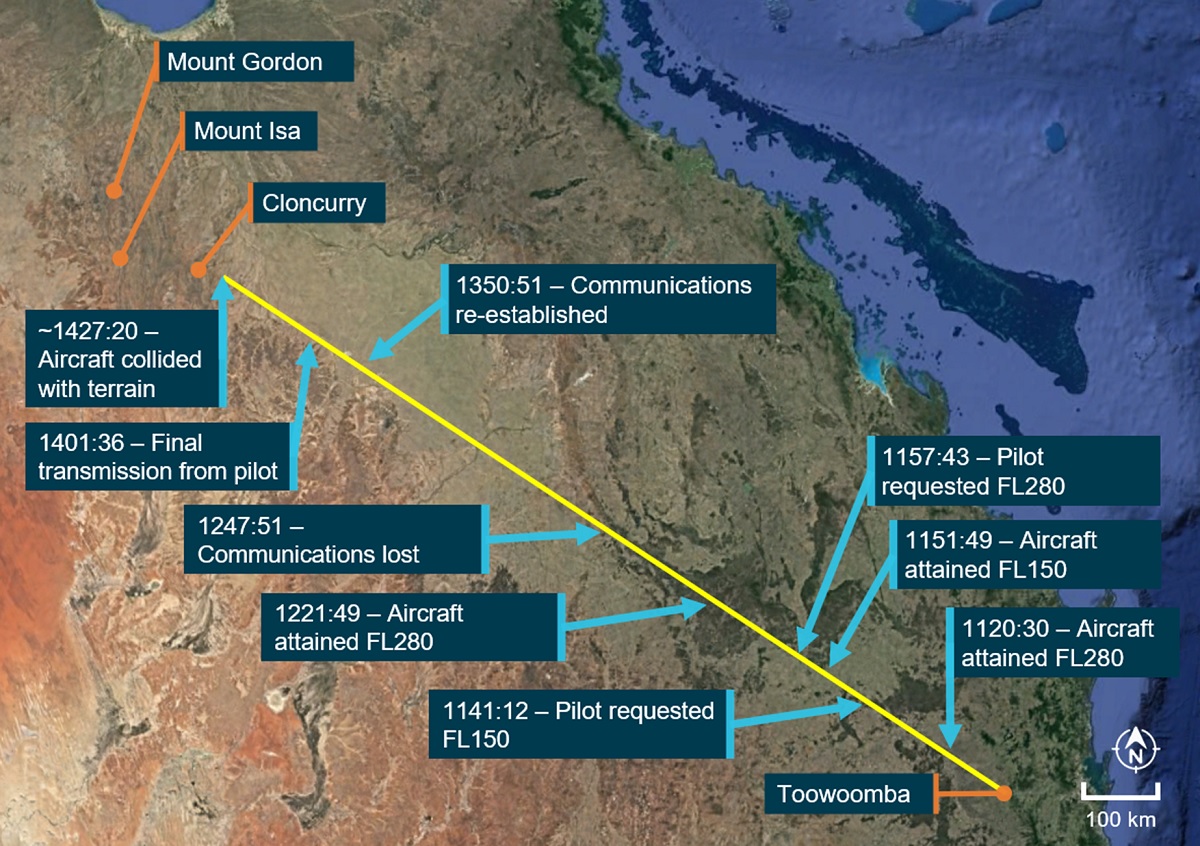
The preliminary report details that the aircraft, operated by AGAIR under contract with Queensland Fire and Emergency Services, had taken off from Toowoomba to photograph fire zones north of Mount Isa. On board were a pilot and two camera operators, employed by the operator.

About 20 minutes after reaching the planned cruise altitude of 28,000 ft, the aircraft descended to 15,000 ft, remaining there for about 6 minutes, before returning to 28,000 ft.

After another 25 minutes, the air traffic controller requested the pilot change radio frequency.

“The pilot acknowledged this request, but the controller was then unable to establish two-way communications with them for over an hour,” Mr Mitchell said.

Once communications were eventually re-established, the pilot advised the controller they were to conduct airwork in an area near Mount Gordon. When they were provided clearance for this, the pilot, seeming uncertain, repeated the clearance four times over a four-minute period.

“Although a formal speech analysis has not been undertaken at this stage, radio recordings during this period indicate that the pilot's rate and volume of speech had substantially lowered from earlier communications and was worsening,” Mr Mitchell noted.

Flight data indicates approximately 20 minutes after the pilot’s last transmission, the aircraft’s groundspeed decreased, before it departed controlled flight, and began to descend rapidly.

The aircraft impacted terrain in flat, open bushland, and it was destroyed by a significant post-impact fire.

“During their on-site examinations, investigators were able to account for all major aircraft components, and determined that both engines and propellers had indications that the engines were running at impact. However, it was not possible to determine the operability of the aircraft’s pressurisation and oxygen systems.”

Along with on-site work, ATSB investigators have also interviewed relevant parties, collected radio communication recordings, aircraft tracking and navigational application data, and gathered documentation relating to the aircraft, pilot, crew and operator.

“As the investigation proceeds, it will include further analysis of the pilot’s speech during radio communications, including an examination of hypoxia indicators,” Mr Mitchell said.

“Investigators will also analyse weather information, maintenance records, operational procedures, flight data, and pilot and crew training and medical records.”

A final report will be released at the conclusion of the investigation.

“If at any time should a critical safety issue be identified during the course of the investigation, the ATSB will immediately notify relevant parties so safety action can be taken,” Mr Mitchell concluded.

Read the preliminary report: Collision with terrain involving Gulfstream 695A, VH-HPY, 30 NM south-east of Cloncurry, Queensland on 4 November 2023

CSIRO MH370 drift reports

The Commonwealth Scientific and Industrial Research Organisation (CSIRO) published four reports describing oceanographic drift modelling work done in aid of the search for MH370.

The first report identified the 36°-32°S segment of the 7th arc (especially the region near 35°S) as being the most likely site of the impact, based on where and when debris was seen and not seen on African and Australian shores and during the initial 40-day aerial search (Fig 1.1). This work was a contribution to the First Principles Review ATSB (2016).

The 2nd report documented additional research recommended by the First Principles Review using a real Boeing 777 flaperon, rather than a replica. The CSIRO measured its drift characteristics after modifying it to match the damaged one retrieved from Ile de la Reunion. This work did not change the CSIRO's estimate of the most likely location of the impact – it just increased confidence in the modelling by explaining more easily the 29 July 2015 Ile de la Reunion flaperon discovery.

The third report discussed the implications, in terms of locating 9M-MRO, of analyses by Minchin et al. (2017) of some ultra-high resolution (meter-scale) optical images acquired in March 2014. This showed that items seen in the images could very well have been within the southern half of the proposed (36°-32°S) search region, but not the northern half. Recalling that the CSIRO had already identified this southern half as being more prospective, this extra information gave an additional measure of confidence. 

The 4th report revisited the effectiveness of the surface search. To what extent did it rule out various areas as being the location of MH370? In particular, the CSIRO partially relied on the surface search to argue that the aircraft is less likely to be north of 32°S than south of 32°S. Other factors were that 1) travel times to Africa are progressively less for more northern sites, so absence of debris findings before December 2016 become harder to explain, and 2) simulated flight paths terminating north of 32°S are progressively less consistent with SATCOM data.

The search for MH370 and ocean surface drift – Part IV

The search for MH370 and ocean surface drift – Part III

The search for MH370 and ocean surface drift – Part II

The search for MH370 and ocean surface drift

Summary of imagery analyses for non-natural objects in support of the search for Flight MH370

Geoscience Australia (GA) was asked to assist the ATSB in the analysis of a set of four Airbus PLEIADES 1A images. GA received these images for analysis on 23 March 2017.

The data was acquired over the Indian Ocean on 23 March 2014. The analysis performed by GA was to determine whether the images included objects that were potentially man-made in origin. GA analyses included semi-automatic workflows and a number of potential objects were identified.

The overall location of the study area is shown in Figure 1 of the report, and a detailed overview of the four scenes with associated detected objects is shown in Figure 2. Figure 3 details the relationship between the PLEIADES data and other MH370 search-related activities.

The appendix to the report presents a data summary for each of the images. This includes a browse image of each scene, including the object locations, a cross plot of the representative spectral radiances observed in the image, a table of the object locations plus size metrics and an indicative label as to the object’s origin. The detected objects are shown in true colour and in a false colour derived from Principle Components Analysis (PCA) to help distinguish objects from their surroundings.

Summary of imagery analyses for non-natural objects in support of the search for Flight MH370

Results from the analysis of imagery from the PLEIADES 1A satellite undertaken by Geoscience Australia

MH370 data review

In late January 2022, the ATSB asked Geoscience Australia to undertake a review of certain sonar imagery collected during the original search for MH370, conducted between October 2014 and January 2017.    

The review concluded that it is highly unlikely there is an aircraft debris field within the reviewed search area.

MH370 search overview

Between May 2014 and January 2017 the ATSB led an underwater search for MH370. With the publication of the final report The Operational Search for MH370 on 3 October 2017, the ATSB ceased to have any formal role in searching for the missing aircraft.

History of the search

MH370 cover image

On 8 March 2014, Malaysia Airlines flight 370 (MH370), a Boeing 777 carrying 12 crew and 227 passengers (including 7 Australian citizens and residents), was lost during a flight from Kuala Lumpur, Malaysia to Beijing, People’s Republic of China.

Under Annex 13 to the Convention on International Civil Aviation Aircraft Accident and Incident Investigation, the Malaysian Government, as the state of registration for Malaysia Airlines, was responsible for the search for, and investigation into, the disappearance of MH370.

After initial air and sea search operations focused on the South China Sea and the Straits of Malacca, on 17 March 2014, the Malaysian Government requested that Australia assume responsibility for the search operations when analysis showed the aircraft did not head north but turned south to the southern Indian Ocean, within Australia’s search and rescue region.

A surface search by aircraft and surface vessels in the Indian Ocean, coordinated by the Australian Maritime Safety Authority (AMSA) and supported by the Australian Defence Force, and an acoustic sub-surface search for the aircraft’s flight recorder underwater locator beacons, found no debris nor signals associated with MH370.

At the conclusion of the surface search on 28 April 2014, the Australian Prime Minister offered that Australia could continue to lead search operations. On 5 May 2014, Ministers from Malaysia, the People’s Republic of China and Australia met to consider next steps and agreed to take all decisions regarding the search together as a Tripartite. Ministers agreed that Australia would take the lead in the underwater search operation in the southern Indian Ocean with support from Malaysia and China.

The ATSB on behalf of Australia led the underwater search. Scientific principles were applied to define the most probable area to be searched through modelling the aircraft’s flight path and behaviour at the end of the flight. The flight path modelling was based on unique and sophisticated analysis of the metadata associated with the periodic automated satellite communications to and from the aircraft in the final six hours of the flight. The end-of-flight behaviour of the aircraft, when MH370 was considered to have exhausted its fuel, was also analysed and simulated.

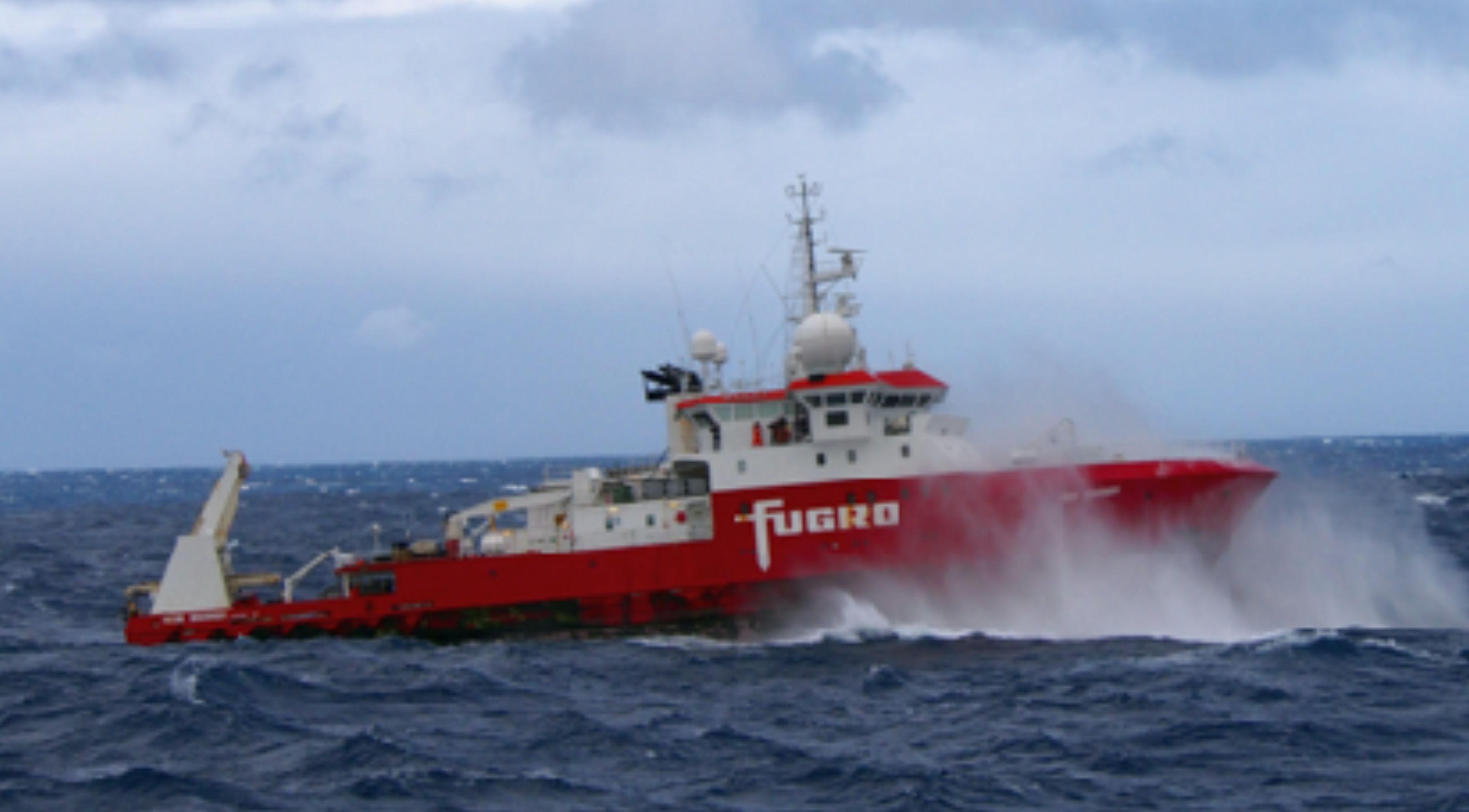
Search vessel Fugro Discovery in typical sea conditions.

Throughout the underwater search, Geoscience Australia provided specialist advice and capability in bathymetry and sonar imagery, providing an understanding of the environment in which the search was conducted.

The search was further aided by the discovery of debris from MH370 on the shores of Indian Ocean islands and the coastline of east Africa in 2015 and 2016, which yielded significant insights into how and where the aircraft ended its flight. Drift modelling of the debris was performed by the Commonwealth Scientific and Industrial Research Organisation (CSIRO).

The primary objective of the underwater search was to establish whether or not the debris field of the missing aircraft was in the area of seafloor defined by expert analysis of the aircraft’s flight path and other information. If a debris field was located, optical imaging would have been used to confirm the debris was MH370 and to map the debris field to enable planning for a recovery operation. (Tripartite meetings in August 2014 agreed that Australia, through the ATSB, would lead a recovery operation.)

The ATSB-led underwater search would cover over 120,000 square kilometres of the sea floor, in a remote area of the southern Indian Ocean that would leave the search vessels exposed to difficult conditions, thousands of kilometres away from the nearest port.

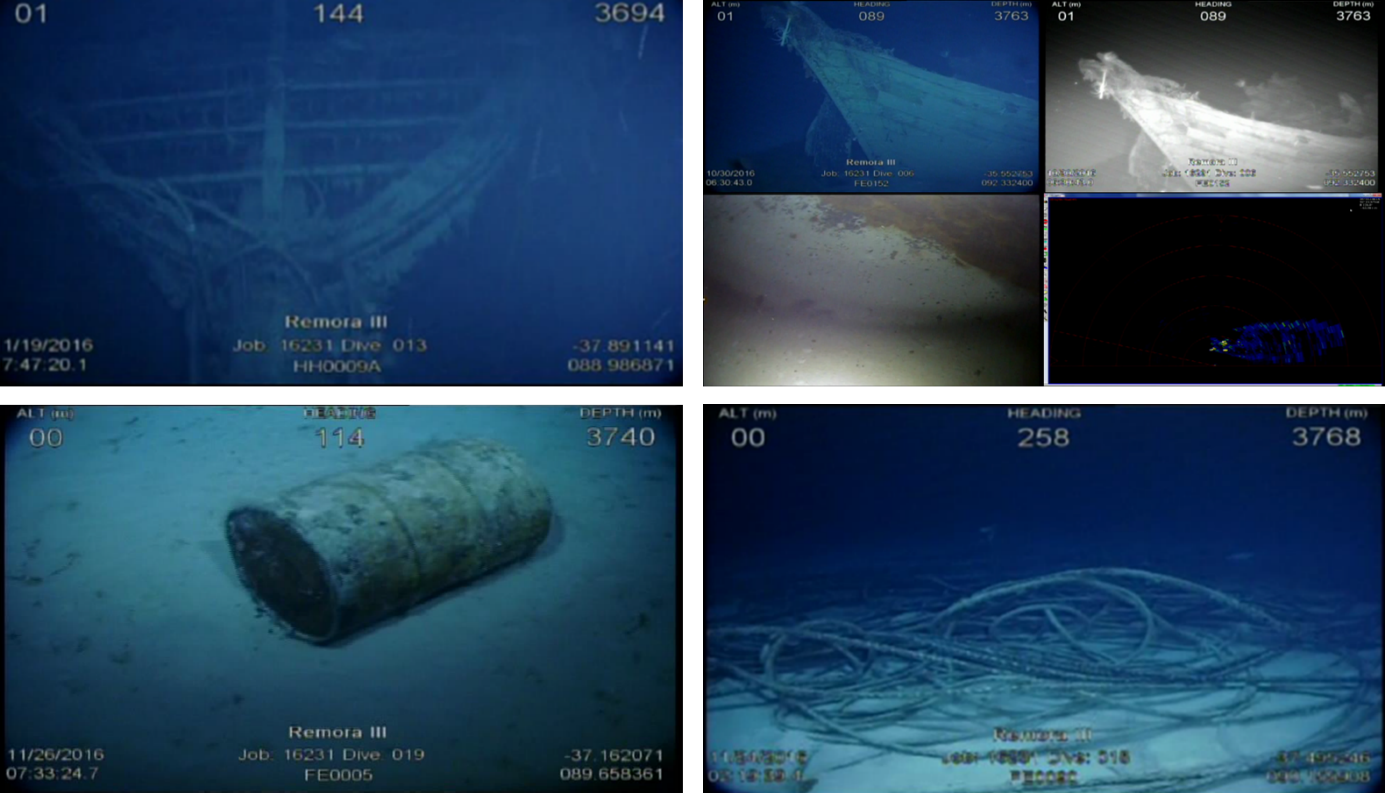
ROV images of man-made objects discovered during the underwater search.

Despite the extraordinary efforts of hundreds of people involved in the search from around the world, the aircraft was not located, and on 17 January 2017, the governments of Malaysia, Australia and the People’s Republic of China jointly announced the suspension of the search until further credible evidence became available that could identify the specific location of the aircraft.

The ATSB published its final report The Operational Search for MH370 on 3 October 2017, which details where the search was conducted and why, how the search was conducted, and the results of the search.

With the publication of the report, the ATSB ceased to have any on-going formal role in the search for the missing aircraft.

On 16 January 2018, the Malaysian Government announced the commencement of a second search, led by the Malaysian Investigation Team, by Ocean Infinity on a “no find, no fee” basis, located immediately north of the previous search area.

On 29 May 2018, the Malaysian Government advised that the second search operation to locate MH370 had come to an end, bringing the total seafloor searched to more than 1,800 kilometres long, between 86 and 146 kilometres wide and close to 200,000 square kilometres in total, without locating the missing aircraft.

The Malaysian Government released its final Safety Investigation report on 31 July 2018, which acknowledged that, as the main aircraft wreckage, including the aircraft’s flight data recorder and cockpit voice recorder had not been located the investigation was unable to draw definitive conclusions about what happened to flight MH370.

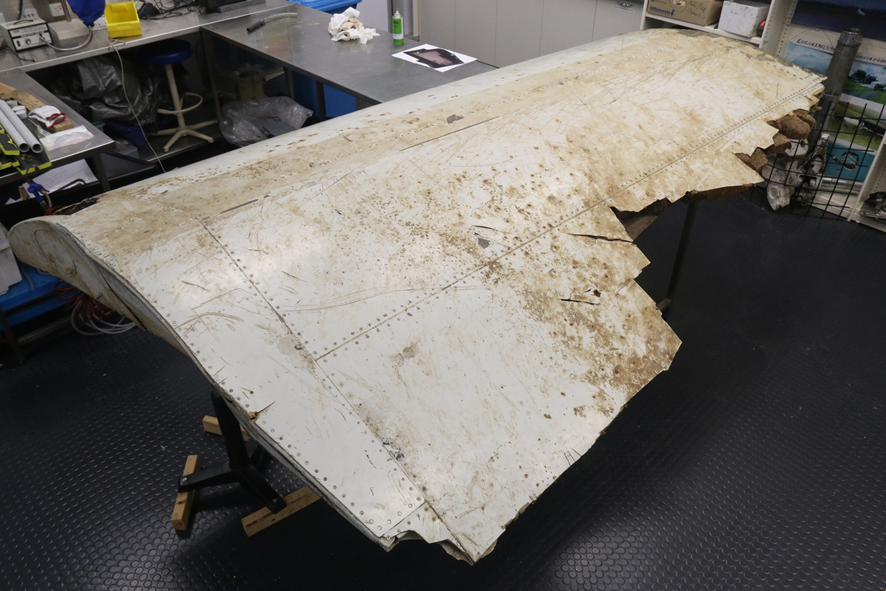
In support of Malaysia’s investigation, in addition to coordinating the search for MH370 the ATSB also performed examination and analysis of several pieces of aircraft debris, including a section of the right outboard wing flap, and provided limited planning and analysis assistance.

Right outboard flap section in the ATSB's Canberra facilities.

The ATSB acknowledges the importance of the aircraft being found, both for the families of those on board and for the interests of improving aviation safety.

The ATSB continues to express our deepest sympathies to the families of the passengers and crew on board MH370. We acknowledge their profound and ongoing grief, and deeply regret that we were unable to locate the aircraft.

Further information

Instrument failure and control issues involving Raytheon Aircraft Company C90A, VH-JEO, 170 km north-east of Kalgoorlie-Boulder Airport, Western Australia, on 25 January 2024

Final report

Executive summary

What happened

On 25 January 2024, at 0640 local time, a Raytheon Aircraft Company C90A aircraft, registered VH-JEO and operated by Goldfields Air Services, departed Kalgoorlie-Boulder Airport (Kalgoorlie), Western Australia (WA) on a commercial passenger transport flight to Warburton Airport, WA with one pilot and 2 passengers on board. 

About half an hour into the flight, while operating in instrument meteorological conditions, an avionics failure resulted in the aircraft commencing an uncommanded turn to the right. In response, the pilot disengaged the autopilot and repositioned the aircraft back onto the correct heading. During this manoeuvring, altitude variations between −400 ft and +900 ft were recorded on ADS‑B tracking services. 

Having observed the aircraft deviate laterally and vertically, the monitoring air traffic controller queried the pilot’s intentions several times. The combination of manually flying in IMC, troubleshooting and the interactions from ATC resulted in a high workload situation for the pilot. 

The pilot elected to return to Kalgoorlie and the aircraft landed around 0800 local time.

What the ATSB found

The ATSB identified that the remote gyroscope failed, resulting in erroneous indications on the horizontal situation indicator while the aircraft was being operated with the autopilot engaged in heading mode. This resulted in a sustained, uncommanded right turn.

Contrary to the guidance in the pilot operating handbook, the pilot did not deselect the autopilot and continued to operate the autopilot in heading mode, which led to them experiencing high workload and sustained control issues. 

Finally, although probably influenced by their focused attention on the malfunction, the pilot did not make a PAN PAN broadcast to ATC, reducing the opportunity for the controller to provide appropriate assistance.

What has been done as a result

Since the incident, the operator has:

  • issued a notice to aircrew reminding pilots to disengage the autopilot and hand fly the aircraft any time there are failure modes indicated on the autopilot annunciator
  • added training exercises relating to horizontal situation indicator and artificial horizon instrument failures in the line-oriented flight training phase of all pilots’ training.

Safety message

This incident highlights the value of aircraft system knowledge and pilot operating handbook familiarity in resolving malfunctions. Additionally, pilots should utilise all options to reduce their workload, including requesting assistance from air traffic services (ATS) when they recognise an emergency situation developing, to allow the appropriate support measures to be activated. 

Controllers are reminded that a pilot in difficulty may not immediately alert ATS if they are disoriented or focused on maintaining aircraft control. If a controller assesses they may be able to assist, this should be communicated proactively. 

The investigation

Decisions regarding the scope of an investigation are based on many factors, including the level of safety benefit likely to be obtained from an investigation and the associated resources required. For this occurrence, a limited-scope investigation was conducted in order to produce a short investigation report, and allow for greater industry awareness of findings that affect safety and potential learning opportunities.

The occurrence

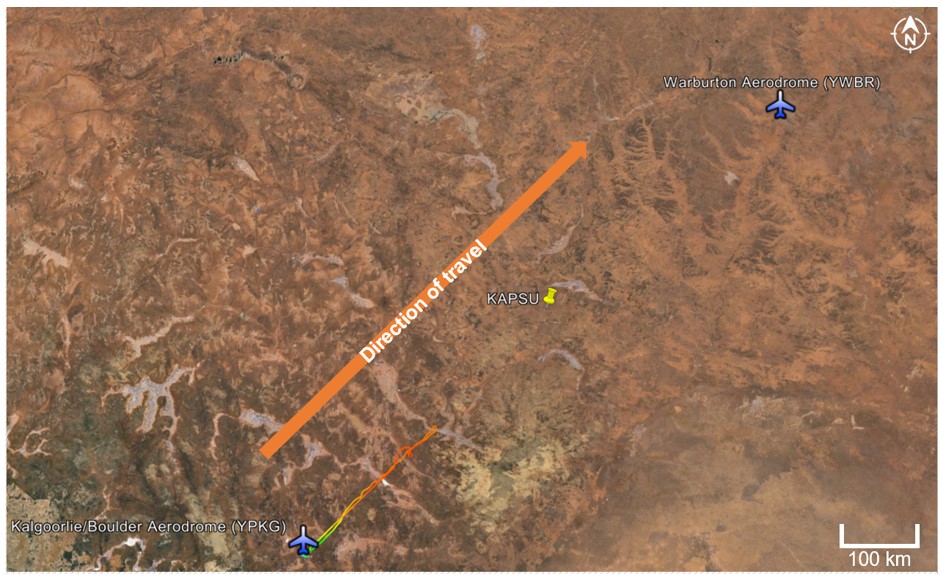
At 0640 local time on 25 January 2024, a Raytheon Aircraft Company C90A aircraft, registered VH-JEO and operated by Goldfields Air Services, departed Kalgoorlie-Boulder Airport (Kalgoorlie), Western Australia (WA) on a commercial passenger transport flight to Warburton Airport, WA (Figure 1). On board were the pilot and 2 passengers. 

Figure 1: Flight track from Kalgoorlie to Warburton

Figure 1: Flight track from Kalgoorlie to Warburton

Source: Google Earth overlaid with Flight Radar 24 data, annotated by ATSB 

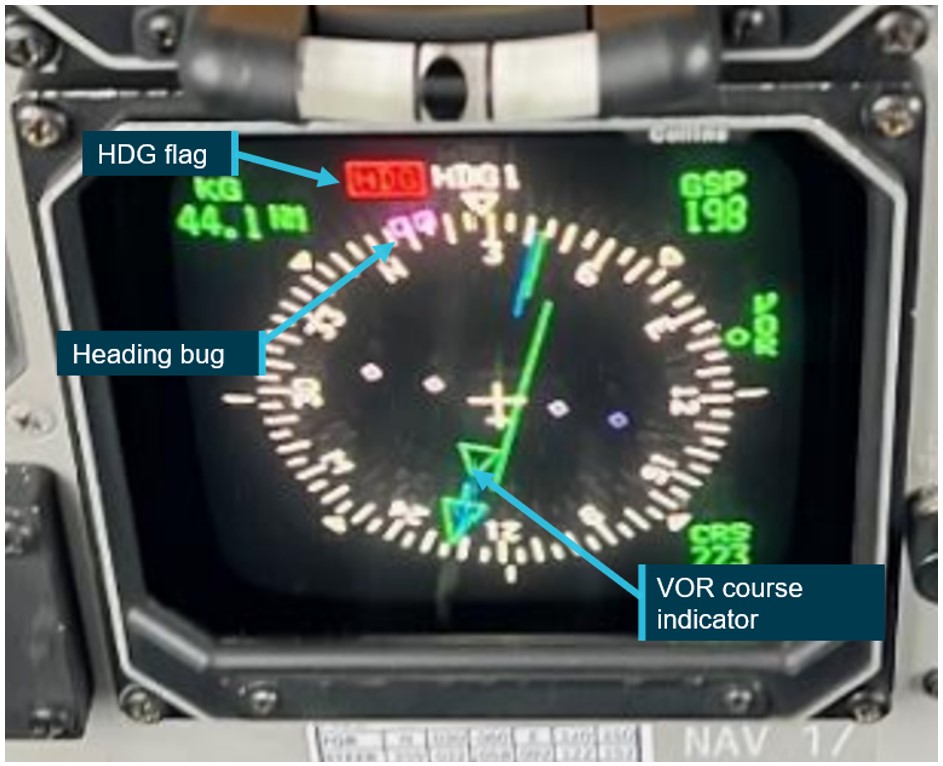
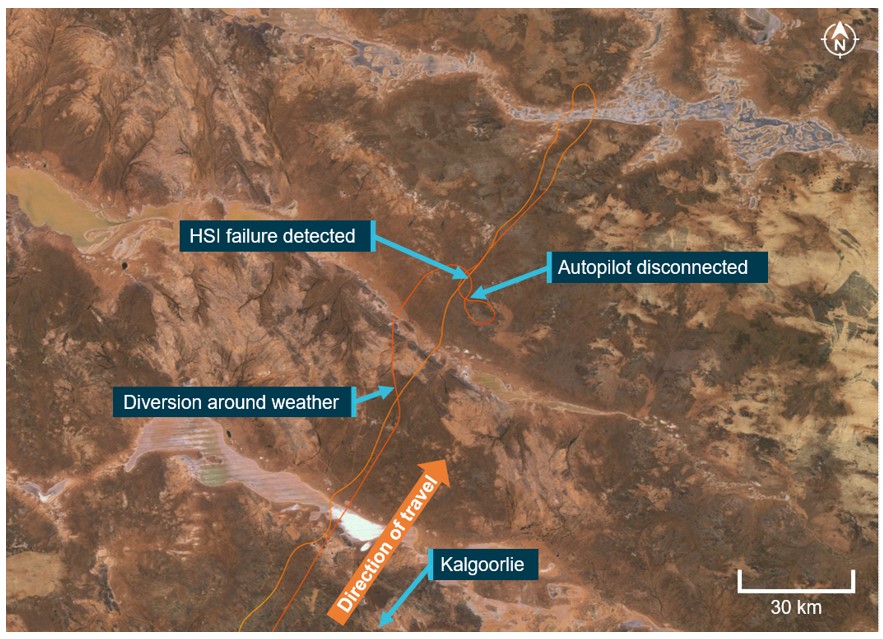
Around half an hour after departure, while maintaining flight level (FL) 210[1] and tracking to waypoint[2] KAPSU in instrument meteorological conditions (IMC)[3] with the autopilot engaged (altitude hold and navigation mode), the pilot requested and received a clearance from air traffic control (ATC) to divert left of track due to a storm ahead. The pilot changed the mode in the autopilot from navigation (tracking to waypoint KAPSU) to heading. They then set an initial target heading of around 350° using the heading bug[4] on the horizontal situation indicator (HSI)[5] (Figure 2), to track left of the storm before flying parallel to the original track to KAPSU. Once past the storm, the pilot changed the heading to around 030°, to re‑intercept the original track (Figure 3). 

Figure 2: Horizontal situation indicator

Figure 2: Horizontal situation indicator

Photo taken by the pilot during the flight showing the heading flag, the heading bug and the instrument indicating the aircraft heading was 027˚. Source: The pilot, annotated by the ATSB

The aircraft commenced the right turn, but it continued to turn through the selected heading. In response, the pilot moved the heading bug left, but observed that the aircraft was very slow to respond. 

Still in IMC and now heading towards the storm and associated severe turbulence that the pilot had diverted to avoid, the pilot completely disconnected the autopilot, and manually manoeuvred the aircraft away from the storm and towards the planned track. During the turn, uncommanded altitude variations between −400 ft and +900 ft were recorded on ADS‑B tracking services. 

Figure 3: VH-JEO flight path

Figure 3: VH-JEO flight path

Source: Google Earth overlaid with Flight Radar 24 data, annotated by the ATSB 

The controller observed the aircraft deviating from the cleared track and questioned the pilot as to their intentions. The pilot responded that they were ‘having some issues with the avionics’. The controller subsequently observed the aircraft descending and asked the pilot if they ‘were descending as well?’. The pilot then requested a block level from FL 210 to FL 100, which the controller advised they were unable to accommodate, due to class E airspace[6] below. The controller instead issued a descent clearance to FL 190, which the pilot acknowledged.

About a minute later the controller observed the aircraft climbing and asked the pilot ‘are you climbing?’ to which the pilot responded, ‘stand by’. Due to the presence of other aircraft, the controller advised that they needed the aircraft to maintain a level and asked the pilot what level they required. The pilot then advised they were descending back to FL 190. A minute later, the controller asked if the pilot would like vectors back to Kalgoorlie, which the pilot replied they were ‘having trouble with the autopilot in IMC’ and to ‘stand by’.

Once the aircraft returned to the planned track, the pilot re-engaged the autopilot and armed the navigation and altitude select mode. The navigation mode normally activated when the aircraft was within 90° of the planned track, but on this occasion it failed to engage and the aircraft recommenced an uncommanded turn to the right. 

The pilot then detected that the HDG (heading) red flag was displayed on the HSI, indicating that the magnetic input to the HSI had failed or was unreliable. At this time, the flight director (FD) indicator bars disappeared from the electronic attitude direction indicator (ADI), and a red FD flag was also displayed, indicating that the flight director was no longer reliable. 

At 0721, the controller asked if the pilot was intending to hold at their current location. The pilot advised that they were trying to resolve the issues, with a preference to continue to Warburton. Around 3 minutes later, unsure of the cause of the instrumentation issue, the pilot requested a return to Kalgoorlie, which was approved.

The pilot kept the autopilot engaged in heading mode and altitude select, with the intention of reducing their workload while operating in turbulence and IMC. By making continual inputs to the heading bug, the aircraft completed a turn onto the reciprocal track. The pilot assessed that the course deviation indicator on the HSI appeared to be working throughout the reciprocal turn to Kalgoorlie, as it still provided guidance to KAPSU. The pilot then selected the Kalgoorlie VOR[7] to provide directional reference on the left HSI and also monitored the right side HSI and the independent Garmin 600 GPS during the return flight. The aircraft’s system did not permit the right side HSI or Garmin 600 to be coupled to the autopilot (see the section titled Heading failure). 

The aircraft landed at Kalgoorlie at 0802. A post-flight engineering inspection found that the left remote gyroscope had failed resulting in the left HSI providing erroneous indications. 

Context

Pilot qualifications and experience 

The pilot held a commercial pilot licence (aeroplane) with a Class 1 aviation medical certificate and had accrued 1,153 hours of aeronautical experience, 144 of which were on the C90A aircraft type. In May 2023, the pilot completed line-oriented flight training with the aircraft operator, which included knowledge and use of the autopilot.

Aircraft

VH-JEO was a Raytheon Aircraft C90A, twin‑engine turboprop aircraft with Pratt & Whitney PT6A‑21 engines. The aircraft was manufactured in the United States in 1997 and issued serial number LJ-1464. The aircraft was first registered in Australia in 2013. There were no outstanding maintenance items at the time of the incident. 

Weather conditions

Data obtained from the Bureau of Meteorology showed that, at the time and location of the occurrence, icing and thunderstorms were forecast and present, with associated severe turbulence. The pilot reported that only light icing was present during the incident, which was appropriately managed by the aircraft’s anti‑icing systems and not considered a factor in the incident. 

Heading failure

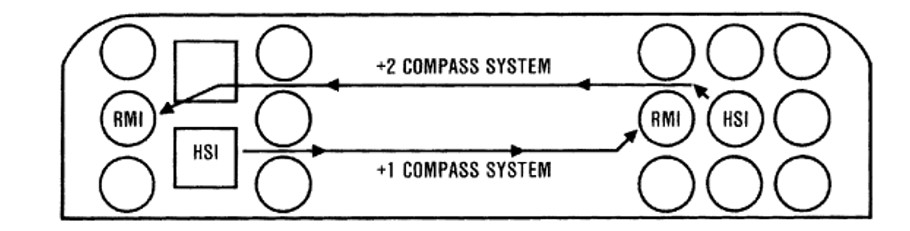
The C90A pilot operating handbook stated that, in the event of a heading failure on the HSI (indicated by a red HDG flag on the instrument), the pilot was to reference the instrument displaying compass no 2 data – either the opposite HSI or the same side RMI (Figure 4).  

The C90A Collins autopilot fitted to the aircraft was unable to be coupled to the copilot’s (right) side instruments. 

Figure 4: Compass systems on C90A

Figure 4: Compass systems on C90A

Source: King Air C90A/B Pilot training manual 

Manufacturer guidance for flight director flag

The Collins FCS-65 autopilot guide stated that a flight director (FD) flag was generated when a system fault, such as a heading failure, warranted disengaging the autopilot. However, by the time the pilot identified the FD flag during this occurrence, they had already disengaged and re‑engaged the autopilot.

Collins Aerospace advised that several inputs to the autopilot computer monitor could activate the red FD flag on the ADI. Therefore, before continuing to use the ADI, if the red FD flag was in view there was a requirement to conduct an airborne self-test to determine the specific cause. The manufacturer further noted that this test is not widely practiced by pilots and was not included in the POH. As such, pilots were unlikely to be able to conduct the self‑test in flight and the POH recommended simply disengaging the autopilot if the red flag was present.

The United States National Transportation Safety Board (NTSB) further advised that both the aircraft manufacturer and the autopilot manufacturer suggested that in the event of any autopilot malfunction (whether due to a failure of the autopilot or a system that feeds the autopilot) the autopilot should not be re-engaged. While there may be some input failure modes that would still allow modes of the autopilot to be useful, this would require the pilots to troubleshoot in flight, which they did not advise.

PAN PAN call

A ‘PAN PAN’ transmission is used to describe an urgent situation but one that does not require immediate assistance. Examples of such situations include instrument malfunctions and deviation from route or track in controlled airspace without a clearance.

According to the Manual of Air Traffic Services, when an air traffic controller receives a PAN PAN call from an aircraft, the controller will declare an alert phase.[8] Safety bulletin What happens when I declare an emergency, released by Airservices Australia, states that ATC may provide a range of support services including:

  • passing information appropriate to the situation, but not overloading the pilot
  • allocating a priority status
  • allocating a discrete frequency (where available) to reduce distractions
  • notifying the Joint Rescue Coordination Centre (JRCC), appropriate aerodrome or other agency
  • asking other aircraft in the vicinity to provide assistance.

Safety analysis

In-flight failure of the left remote gyroscope induced a slow, steady erroneous roll of the primary HSI display. As the autopilot was at the time operating in heading mode, the aircraft also began a constant turn to the right, attempting to follow the drifting heading bug.

In response to the observed aircraft turn, the pilot fully disengaged the autopilot (consistent with the guidance in the pilot operating handbook (POH) for an FD flag warning on the ADI) and manually manipulated the aircraft back onto the desired heading. During that manoeuvring, likely due to a combination of turbulence and manually flying in IMC, the aircraft experienced unintended altitude variations and the pilot was subjected to high workload.

While the pilot recognised the HSI was giving spurious readings, contrary to the guidance in the aircraft’s POH, they re‑engaged the autopilot (including heading mode) in an attempt to reduce their workload. Unfortunately, this had the opposite effect as the aircraft recommenced the uncommanded right turn, which the pilot countered by making constant adjustments to the heading bug. 

In this instance, disengaging the autopilot and monitoring an alternate (secondary) compass system navigation aid (left RMI or right HSI) would have eliminated the uncommanded turn and enabled accurate instrument navigation. 

The pilot reported that the interactions with ATC during this incident further increased workload and stress, but the pilot did not declare a PAN PAN to alert the controller to the extent of the instrument issues. While that omission was probably due to the pilot’s focused attention on the malfunction, it reduced the opportunity for the controller to provide appropriate assistance.  

Findings

ATSB investigation report findings focus on safety factors (that is, events and conditions that increase risk). Safety factors include ‘contributing factors’ and ‘other factors that increased risk’ (that is, factors that did not meet the definition of a contributing factor for this occurrence but were still considered important to include in the report for the purpose of increasing awareness and enhancing safety). In addition ‘other findings’ may be included to provide important information about topics other than safety factors. 

These findings should not be read as apportioning blame or liability to any particular organisation or individual.

From the evidence available, the following findings are made with respect to the instrument failure and control issues involving Raytheon Aircraft Company C90A, VH-JEO, 170 km north-east of Kalgoorlie-Boulder Airport, Western Australia on 25 January 2024.

Contributing factors

  • The left remote gyroscope failed resulting in erroneous readings on the horizontal situation indicator while the aircraft was being operated with the autopilot engaged in heading mode, resulting in an uncommanded right turn.
  • The pilot continued to use the autopilot in heading mode, contrary to the guidance in the pilot operating handbook, which led to them experiencing a higher workload and sustained control issues.

Other factors that increased risk

  • The pilot did not make a PAN PAN broadcast to ATC, reducing the opportunity for the controller to provide appropriate assistance.

Safety actions

Whether or not the ATSB identifies safety issues in the course of an investigation, relevant organisations may proactively initiate safety action in order to reduce their safety risk. All of the directly involved parties are invited to provide submissions to this draft report. As part of that process, each organisation is asked to communicate what safety actions, if any, they have carried out to reduce the risk associated with this type of occurrences in the future. The ATSB has so far been advised of the following proactive safety action in response to this occurrence. 

Safety action by Goldfields Air Services

The aircraft operator:

Since the incident, the operator has:

  • issued a notice to aircrew reminding pilots to disengage the autopilot and hand fly the aircraft any time there are failure modes indicated on the autopilot annunciator
  • added training exercises relating to horizontal situation indicator and artificial horizon instrument failures in the line-oriented flight training phase of all pilots’ training.

Sources and submissions

Sources of information

The sources of information during the investigation included the:

  • incident pilot
  • air traffic control audio tapes
  • chief engineer and head of flight operations of Goldfields Air
  • recorded ADS-B data
  • Bureau of Meteorology

References

King Air C90A/B pilot training manual, volume 2 aircraft systems, chapter 16, Flight safety international, 2002. P. 333

Manual of Air Traffic Services, version 67.1, 21 March 2024, Airservices Australia and Department of Defence, p.160

Collins FCS-65 Flight Control System (3rd edition) – pilot’s guide, Collins general aviation division/Rockwell international corporation, October 1989, p.26-27.

Raytheon Aircraft Beech King Air C90A Pilot’s Operating Handbook and FAA approved airplane flight manual supplement for the Collins FCS-65H automatic flight control system with Collins EFIS 84 electronic flight instrument system (EFIS), Raytheon aircraft company, 2002, p. 6.

Submissions

Under section 26 of the Transport Safety Investigation Act 2003, the ATSB may provide a draft report, on a confidential basis, to any person whom the ATSB considers appropriate. That section allows a person receiving a draft report to make submissions to the ATSB about the draft report. 

A draft of this report was provided to the following directly involved parties:

  • Airservices Australia
  • incident pilot
  • Goldfields Air Services
  • Civil Aviation Safety Authority
  • Aircraft manufacturer
  • Autopilot manufacturer
  • National Transportation Safety Board.

Submissions were received from:

  • Airservices Australia
  • Goldfields Air Services
  • Aircraft manufacturer
  • Autopilot manufacturer
  • National Transportation Safety Board.

The submissions were reviewed and, where considered appropriate, the text of the report was amended accordingly.

Purpose of safety investigations

The objective of a safety investigation is to enhance transport safety. This is done through: 

  • identifying safety issues and facilitating safety action to address those issues
  • providing information about occurrences and their associated safety factors to facilitate learning within the transport industry.

It is not a function of the ATSB to apportion blame or provide a means for determining liability. At the same time, an investigation report must include factual material of sufficient weight to support the analysis and findings. At all times the ATSB endeavours to balance the use of material that could imply adverse comment with the need to properly explain what happened, and why, in a fair and unbiased manner. The ATSB does not investigate for the purpose of taking administrative, regulatory or criminal action.

Terminology

An explanation of terminology used in ATSB investigation reports is available here. This includes terms such as occurrence, contributing factor, other factor that increased risk, and safety issue.

Publishing information

Released in accordance with section 25 of the Transport Safety Investigation Act 2003

Published by: Australian Transport Safety Bureau

© Commonwealth of Australia 2024

image_5.png

Ownership of intellectual property rights in this publication

Unless otherwise noted, copyright (and any other intellectual property rights, if any) in this report publication is owned by the Commonwealth of Australia.

Creative Commons licence

With the exception of the Coat of Arms, ATSB logo, and photos and graphics in which a third party holds copyright, this publication is licensed under a Creative Commons Attribution 3.0 Australia licence.

Creative Commons Attribution 3.0 Australia Licence is a standard form licence agreement that allows you to copy, distribute, transmit and adapt this publication provided that you attribute the work.

The ATSB’s preference is that you attribute this publication (and any material sourced from it) using the following wording: Source: Australian Transport Safety Bureau

Copyright in material obtained from other agencies, private individuals or organisations, belongs to those agencies, individuals or organisations. Where you wish to use their material, you will need to contact them directly.

[1]     Flight level: at altitudes above 10,000 ft in Australia, an aircraft’s height above mean sea level is referred to as a flight level (FL). FL 210 equates to 21,000 ft.

[2]     Waypoint: a specified geographical location used to define an area navigation route or the flight path of an aircraft employing area navigation.

[3]     Instrument meteorological conditions (IMC): weather conditions that require pilots to fly primarily by reference to instruments, and therefore under instrument flight rules (IFR), rather than by outside visual reference. Typically, this means flying in cloud or limited visibility.

[4]     Heading bug: a marker on the heading indicator that can be rotated to a specific heading for reference purposes, or to command an autopilot to fly that heading.

[5]     Horizontal situation indicator (HSI): an instrument that combines magnetic heading indication and navigation guidance.

[6]     Class E airspace: mid-level en route controlled airspace is open to both IFR and VFR aircraft. IFR flights are required to communicate with ATC and must request ATC clearance.

[7]     Very high frequency omnidirectional range station (VOR):  transmitters that support non-precision (lateral guidance only) approach and en route navigation.

[8]     Alert phase: a situation where apprehension exists as to the safety of an aircraft and its occupants (this generally equates to a PAN PAN).

Occurrence summary

Investigation number AO-2024-003
Occurrence date 25/01/2024
Location 170 km north-east of Kalgoorlie-Boulder Airport
State Western Australia
Report release date 17/09/2024
Report status Final
Investigation level Short
Investigation type Occurrence Investigation
Investigation status Completed
Mode of transport Aviation
Aviation occurrence category Avionics/flight instruments
Occurrence class Incident
Highest injury level None

Aircraft details

Manufacturer Raytheon Aircraft Company
Model C90A
Registration VH-JEO
Serial number LJ-1464
Aircraft operator Goldfields Air Services
Sector Turboprop
Operation type Part 135 Air transport operations - smaller aeroplanes
Departure point Kalgoorlie-Boulder Airport, WA
Destination Warburton Airport, WA
Damage Nil

Safety action underway to address airliner separation event

Several safety actions been made or are planned in response to a close proximity event between two 737 aircraft at Sydney Airport last year, an Australian Transport Safety Bureau final report details. 

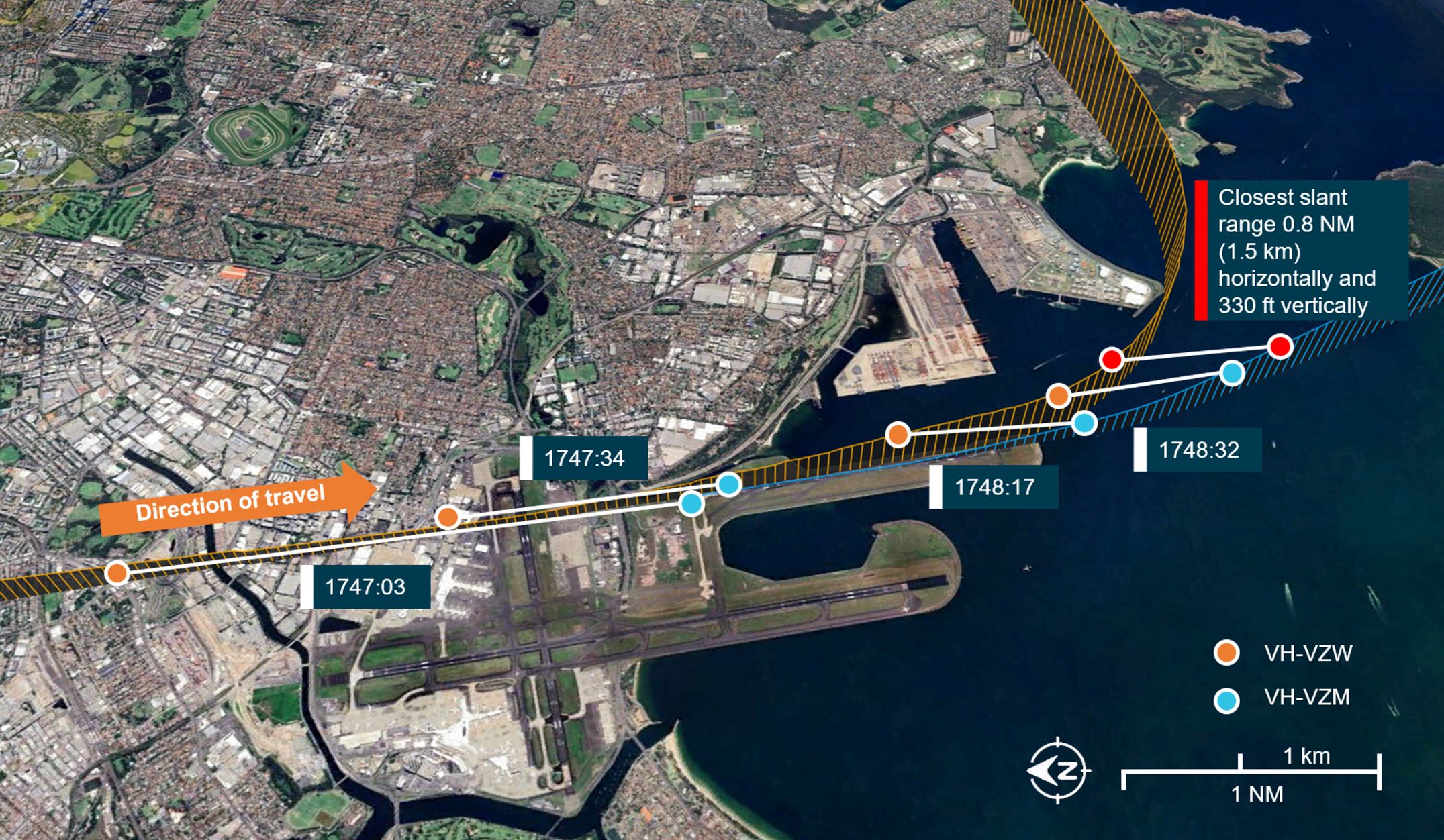
On 29 April 2023, a Qantas-operated Boeing 737 was lined up to take off from Sydney’s runway 16L, while a second Qantas 737 was on approach to land on the same runway. 

Shortly after the first aircraft began its take-off roll, the aerodrome controller in the Sydney Airport air traffic control tower identified that the second aircraft was too close behind for runway separation to be assured. 

After being delayed by about 12 seconds due to an inadvertent interjection by the tower shift manager, the controller instructed the second aircraft to go-around, while the first continued its take-off. 

Shortly after the go-around, the controller then instructed the second aircraft to turn left after reaching 2,100 ft altitude. 

“The flight crew of the second aircraft, at this time of high workload, misinterpreted this instruction as overriding the published missed approach procedure, which calls for a left turn at 600 ft,” ATSB Director Transport Safety Dr Stuart Godley said. 

Due to misinterpreting the controller’s instruction, the crew of the second aircraft maintained the runway heading as they climbed through 600 ft and, as the two aircraft climbed away from the runway, separation reduced to a minimum of 1.5 km laterally and 330 ft vertically. 

The controller had both aircraft in sight throughout the occurrence, and the ATSB assessed that adequate visual separation had been maintained. 

In response to the incident, the air traffic services provider, Airservices Australia, advised the ATSB that it had undertaken, and would undertake, a range of safety actions. 

“These include a detailed analysis of landing runway occupancy times at Sydney, and possibly other major airports, to determine expected runway occupancy times for different types of aircraft and conditions,” Dr Godley noted. 

Further actions, detailed in the final report, include adding defensive controlling techniques and minimum assignable altitudes for go-around scenarios, conducting an assurance review of go-arounds at Sydney involving a second aircraft requiring controller intervention, and adding night-time go-around scenarios to compromised separation training. 

“In complex airspace settings, it is inevitable errors will sometimes be made by controllers and pilots alike,” Dr Godley said. 

“Consequently, the system within which these activities take place should be designed to be resilient to error and to reduce the impact that individual actions can have on the overall safety of operations.” 

Read the final report: Separation occurrence involving Boeing 737, VH-VZM, and Boeing 737, VH-VZW, near Sydney Airport, NSW on 29 April 2023