Amateur-built aircraft differences in systems and controls

An Australian Transport Safety Bureau investigation highlights to pilots planning to fly amateur (kit) built aircraft the importance of being aware of potential differences in systems and controls compared to type-certified factory-built aircraft.

Two pilots were fatally injured when their amateur-built Glasair aircraft collided with terrain shortly after a landing and go-around at Wedderburn aircraft landing area, south-west of Sydney, on 26 December 2022.

The aircraft, a Stoddard Hamilton Aircraft Glasair Super II FT, was powered by a Subaru automotive engine modified for aviation use, and was originally assembled from a kit in the United States.

It accumulated about 60 flight hours before being sold by its original owner to the two pilots, who then had it transported to Australia.

Earlier on the day of the accident, the pilots conducted the aircraft’s first flight since it was reassembled, flying from Bankstown to Temora. While at Temora, the pilots conducted two circuits, before landing and then subsequently setting off for Wedderburn about an hour later.

On arrival at Wedderburn, the aircraft landed and conducted a go-around, during which it failed to achieve sufficient climb performance and impacted terrain about 2.7 km to the south-west of Wedderburn airfield. The two pilots on board were fatally injured.

The aircraft wreckage was consumed by a post-impact fire, limiting the evidence available for ATSB examination. As such, the reasons for the insufficient climb performance after take-off could not be determined, however the ATSB’s investigation report highlights key safety messages for amateur-built aircraft pilots.

“Pilots intending to operate amateur-built aircraft should be aware of the potential differences in systems and controls to that of conventional type-certified aircraft,” ATSB Director Transport Safety Dr Stuart Godley said.

“They should also use familiarisation flights to better understand the systems, controls, and emergency operations specific to the aircraft they are flying, and they should use an appropriate aerodrome, and benign weather conditions, for these flights.”

The ATSB’s final report notes the pilots were both highly experienced in multi-engine fixed wing operations, and both held a valid Air Transport Pilot (Aeroplane) Licence, but neither had recent experience in single-engine operations, automotive engine conversions, amateur-built aircraft, or the Glasair in general.

The report also notes the pilots elected to operate the aircraft from Bankstown to Temora for its first flight in Australia, despite the aircraft’s special flight authorisation not permitting operation over built-up areas.

“Understanding the safety implications of regulatory permissions is vital so that experimental aircraft do not adversely affect the safety of third parties, such as other airspace users and people on the ground,” Dr Godley said.

Read the final report: Collision with terrain involving, Stoddard Hamilton Aircraft Glasair Super II FT, N600 near Wedderburn Airport, New South Wales, on 26 December 2022

AvSafety panel discuss lessons learned from VFR into IMC incident

In this episode from CASA’s AvSafey panel discussion series, a panel of experts analyses our investigation into a VFR into IMC incident involving a Piper PA-28 near Warrnambool, Victoria in February 2021.

ATSB Senior Transport Safety Investigator Dr David Wilson joins the host CASA’s Steve Creedy, along with Corporate Air’s Captain Allison Lane and the Bureau of Meteorology’s aviation meteorologist Rebecca Ryan to discuss what went wrong, and what went right, on this flight, and give their expert advice to pilots on how they can avoiding getting into a similar situation.

This episode is a must-see for all GA pilots.

FOI Disclosure 2023-24

Date of access (date decision released to applicant)FOI reference numberDescription of documentsDocuments releasedAccess
9 April 2024FOI 23-24(19)

Non-restricted documents related to the factual inquiry and investigation of an aircraft accident involving VHMSF, that departed from Canberra, ACT Airport (CBR) which ultimately crashed near Gundaroo, NSW on 6 October 2023 [investigation number AO-2023-045]. 

Specifically, we request the following information:

1. Copies of any Air Traffic Accident Package or Aviation Accident Files involving VHMSF’s accident flight on 6 October 2023.

2. Copies of any ADS-B data with regard to VHMSF’s accident flight or flights on 6 October 2023.

3. Copies of any radar and/or automation data associated with VHMSF’s accident flight on 6 October 2023, from the Canberra, ACT Airport (CBR) to the Armidale, NSW Airport (ARM).

4. Copies of any audio communications from or to VHMSF and Air Traffic Control for VHMSF's accident flight on 6 October 2023.

Partial
15 March 2024FOI 23-24(16)A copy of all non-restricted records in relation to the investigation of the occurrence and the final report [investigation number AO-2020-033], including but not limited to transcripts or records related to witness and expert interviews, expert reports, maintenance releases, and communications in relation to the occurrence and report [during the period 4 July 2020 to 12 April 2023]. Full
5 March 2024FOI 23-24(15)

...a release of all the records (including exempt documents containing my personal information) held by ATSB for the following aviation occurrence:

Occurrence Reference                   OA2022-03033   

Date Time                                     1/8/2022 12:00:00 PM

Location                                        6.5 NM 69.75 degrees from Albury

Partial
4 March 2024FOI 23-24(12)

The following documents regarding the collision with terrain involving Robinson R22, 200 km south-west of Winton, Queensland, on 17 June 2022 (occurrence number AB-2022-003):

1. All documents relating to any safety audit;
2. All reports and correspondence relating to the incident on the above date;
3. Any maintenance records, work orders relating to any and all works carried out on the Robinson R22 helicopter;
4. All non-restricted Safety Recommendations issued by the ATSB or Aviation Authority for occurrence number AB-2022-003;
5. All non-restricted correspondence, communications, statements, reports, notes, recommendations, records exchanged between and among the ATSB and any other Aviation Authority related to the incident on the above date;
6. Any expert reports, aircraft maintenance and components reports, pilot information and training records, witness information and statements, site and wreckage reports and any on-board audio and video analysis from any onboard recording device excluding restricted information.

Partial
19 December 2023FOI 23-24(14)The Style Guides/Brand Guides/Writing Guides currently used for the Australian Transport Safety Bureau. Full
8 December 2023FOI 23-24(11)The previous 10 years of runway excursion occurrences for commercial operations from the ATSB occurrence database. Full
5 December 2023FOI 23-24(07)

1. All non-restricted documents, communications, witness statements, photographs and videos related to the in-flight break-up of Robinson R44 Raven I helicopter VH-NBY, 3km north of Broome Airport, Western Australia on 4 July 2020 [during the period 4 July 2020 to 4 July 2021].

2. All communications between the ATSB and external parties – including but not limited to DIPs – pertaining to the release of report/s into ATSB Investigation AO-2020-033 [during the period 4 July 2020 to 4 July 2021].

Partial

Changes made to training after Sydney Airport hard landing

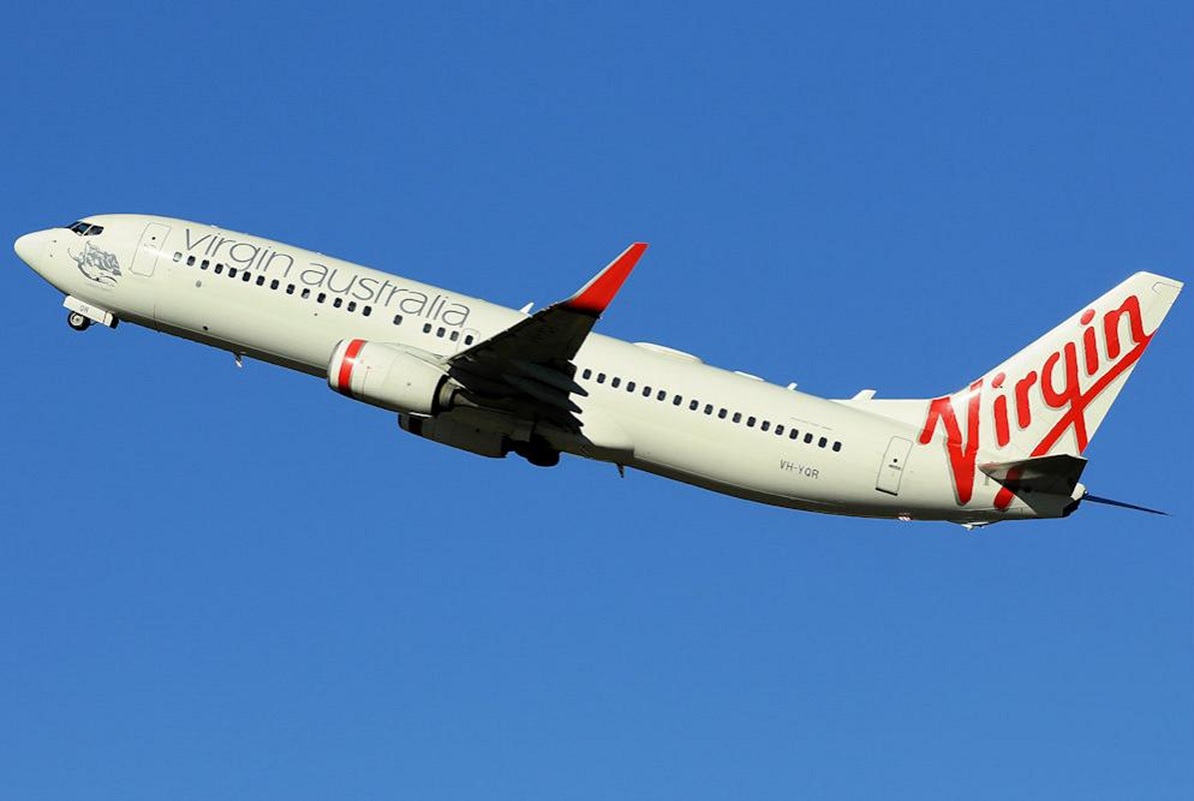
Safety actions have been taken by Virgin Australia and a type rating provider following a hard landing involving a 737 airliner earlier this year, an Australian Transport Safety Bureau final report notes.

On the morning of 10 March 2023, a Virgin Australia 737, carrying 179 passengers and 6 crew, had a hard landing at Sydney Airport.

The aircraft bounced after initial touchdown and landed again with a G force of 2.96 G, breaching the defined threshold for hard landings of 2.2 G.

There was no damage to the aircraft, and no injuries were reported.

“The ATSB found that during the final approach, the first officer flared the aircraft later than they normally did, and the throttle was not reduced to idle prior to the initial touchdown, resulting in the aircraft bouncing approximately 3 ft,” ATSB Acting Director Transport Safety Derek Hoffmeister said.

“During the bounce, the ground spoilers and speed brakes automatically deployed, resulting in a hard landing.”

The ATSB found the international training provider contracted to Virgin Australia for Boeing 737 conversion was training pilots to flare the aircraft at a higher altitude than the manufacturer’s requirement of approximately 20 ft, increasing the risk of unstable and/or hard landings.

The first officer was relatively new to type, having previously flown for Virgin Australia on a different model of aircraft. In the months prior to the incident, they had completed their type rating at the international training provider, before returning to Australia to complete an operator conversion course, and a recency simulator session, prior to beginning Boeing 737 line training.

At interview, the first officer said they were aware the operator’s training manuals and operator conversion course training required a flare at 20 ft, but they were more comfortable flaring at 30 ft as originally trained.

They advised that during all landings conducted prior to the occurrence flight, flare was initiated at 30 ft.

“On the day of the occurrence, the first officer recalled, they were flying with a check captain, so they made a last-minute decision to follow the operator’s procedures, and initiate flaring the aircraft at 20 ft,” Mr Hoffmeister explained.

“This introduced an unfamiliarity and uncertainty, which most likely led to misjudgement resulting in the aircraft being flared late and the thrust not being reduced prior to the initial touchdown.

“Since the incident, the training provider has completed several actions, including a risk assessment in pilot training assessment, and reviewing and amending all relevant courseware.”

In addition, Virgin Australia has reviewed all hard landing events from 2017 to identify common trends, increased oversight on external type rating providers, added more simulator sessions in training regime, and conducted an independent review of its checking and training department.

“This incident highlights how important it is that operators ensure external training providers align their training with the operator’s flight procedures,” Mr Hoffmeister said.

“Ensuring pilots are trained as they are expected to fly will ensure they are well prepared especially during the critical flight phases.”

The ATSB’s final report also bears important safety messaging for flight crews.

“It is important for flight crew to be go-around minded at all times during the approach and landing,” Mr Hoffmeister explained.

“This will ensure they are prepared when things do not go as expected. Conducting a go around will allow the aircraft to be set up in a stabilised approach, increasing the likelihood of conducting a safe landing.”

However, the Boeing flight crew training manual stated that where an ‘airplane bounces during a landing attempt, hold or re-establish a normal landing attitude and add thrust as necessary to control the rate of descent. Thrust need not be added for a shallow bounce or skip. If a high, hard bounce occurs, initiate a go-around.’

Read the final report: Hard landing involving Boeing 737-8FE, VH-YQR, Sydney Airport, New South Wales, on 10 March 2023

Fire-fighting helicopter accident preliminary report released

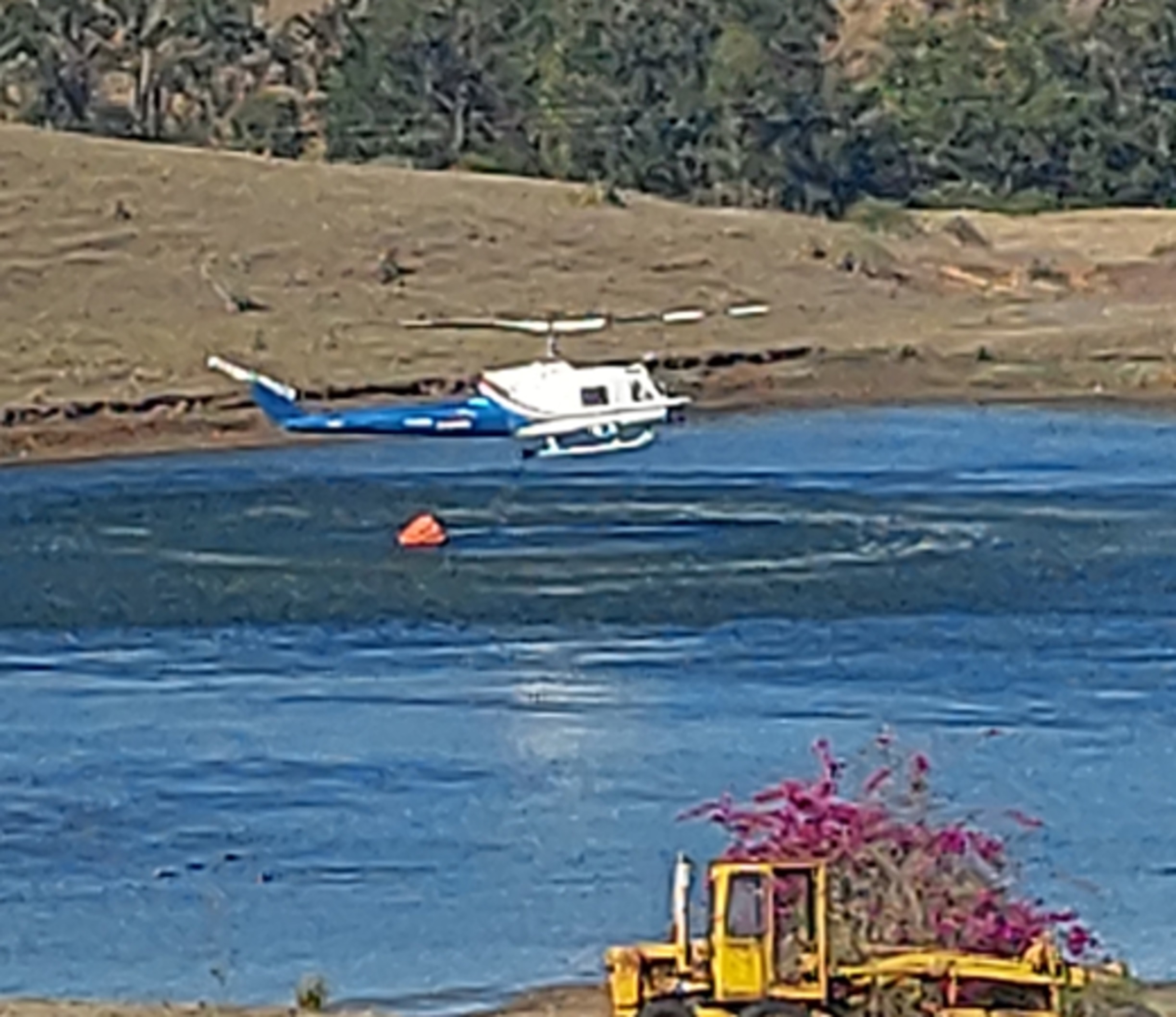
The Australian Transport Safety Bureau has released a preliminary report from its ongoing investigation into the collision with water of a fire-fighting helicopter at a property in Tarome, in south-east Queensland.

The preliminary report details factual information established in the early evidence collection phase of the ongoing investigation.

It notes that on 20 September 2023, the pilot of a Bell 204B was tasked with fire-fighting operations utilising a 1,200 L bucket with a short line.

After flying from a property near Amberley to another property in Tarome, the pilot commenced picking up their first load of water from a dam.

“The pilot reported an unusual noise and that the helicopter ‘kicked’,” ATSB Director Transport Safety Kerri Hughes said.

“Remaining in the hover, the pilot observed all engine indications were normal and the bucket and line were in the appropriate place. However, concerned something was not right, they elected to dump the water and initiate a climb.”

Within about 10-15 seconds, as engine power was being applied, and the water was being released from the bucket, the pilot heard what they described as a ‘loud roaring’ sound as the helicopter pitched up, yawed, and subsequently had a reduction in power.

The helicopter rolled left and impacted the water at low speed. The pilot sustained minor injuries and the helicopter was destroyed.

“Almost immediately after the impact, the helicopter inverted, started to fill with water, and sink rapidly,” Ms Hughes said.

The pilot removed their seatbelt and helmet, and attempted to open the front left door but could not open it with either the normal or emergency release handles.

“When the helicopter was almost fully submerged, the pilot swam to the rear of the cabin and tried to open the rear right door but could not open it either, making further attempts to get out by kicking the helicopter windows.

“The pilot then moved to the rear left door and, utilising considerable force, was able to successfully open it.”

Speaking with the ATSB, the pilot stated that familiarity with the helicopter, the open area in the cabin (all seats removed) and HUET (helicopter underwater escape training) all assisted with their ability to successfully escape from the helicopter.

To date, the ATSB’s investigation has involved interviewing the pilot and witnesses, and preliminary examination of the helicopter wreckage.

“As this investigation continues, the ATSB will review and examine the pilot’s training and records, maintenance documentation, and key components of the helicopter,” Ms Hughes said.

A final report will be released at the conclusion of the investigation.

“Should a critical safety issue be identified during the course of the investigation, the ATSB will immediately notify relevant parties so appropriate and timely safety action can be taken,” Ms Hughes concluded.

Read the preliminary report: Collision with terrain involving Bell 204B, registration VH-EQW, Tarome, Queensland, on 20 September 2023

Video: Tips for flying in the Top End wet season

The ATSB recently joined CASA, Airservices and the BoM in Darwin to engage with local pilots about the challenges and risks when flying in the Top End during the wet season.

This video, produced by CASA, is a must see for all pilots flying in this part of the world during the annual wet season, which typically runs from September to March.

In the video, ATSB Senior Transport Safety Investigator Lee Ungermann talks about accidents that have occurred during wet season operations involving many young inexperienced pilots flying into weather perhaps beyond their capability or the capability of their aircraft.

"In the last 10 years the ATSB has recorded 123 weather related occurrences in the Northern Territory alone, and unfortunately three of these have involved fatal accidents," Mr Ungermann said.

In 2017, a Cessna 210 broke up in flight about 22 km to the east of Darwin, fatally injuring both pilots. Despite making track diversions to avoid severe thunderstorms, the aircraft entered an area of strong convective activity with rapidly developing rain cells. This resulted in the aircraft experiencing severe turbulence and possibly reduced visibility.

"The ATSB investigation found the pilot had requested a deviation from their intended flight track left or right by five nautical miles," Mr Ungermann said.

"In this particular circumstance, had the pilot been given a wider birth around those thunderstorms of greater than 10 nautical miles, it may very well have seen them outside of the influence of the turbulence and powerful conditions that are associated with these tropical storms."

The ATSB encourages pilots to use all available resources to avoid adverse weather, including forecasts and requesting air traffic control assistance. Awareness of the weather avoidance actions of other pilots in the area can also be useful.

"Education is definitely the one thing, but also communication would be the second," Mr Ungermann said.

"Talk to their chief pilots, talk to their more experienced pilots about operating in the northern weather areas and to understand exactly what is expected of them from their employer before they head out so that they can then make informed decisions and safe weather-related decisions."

Take-offs past temporary runway end

The Australian Transport Safety Bureau has detailed early evidence gathered in its ongoing investigation into two incidents where widebody airliners took off beyond the end of a temporarily shortened runway at Melbourne Airport in September, 11 days apart.

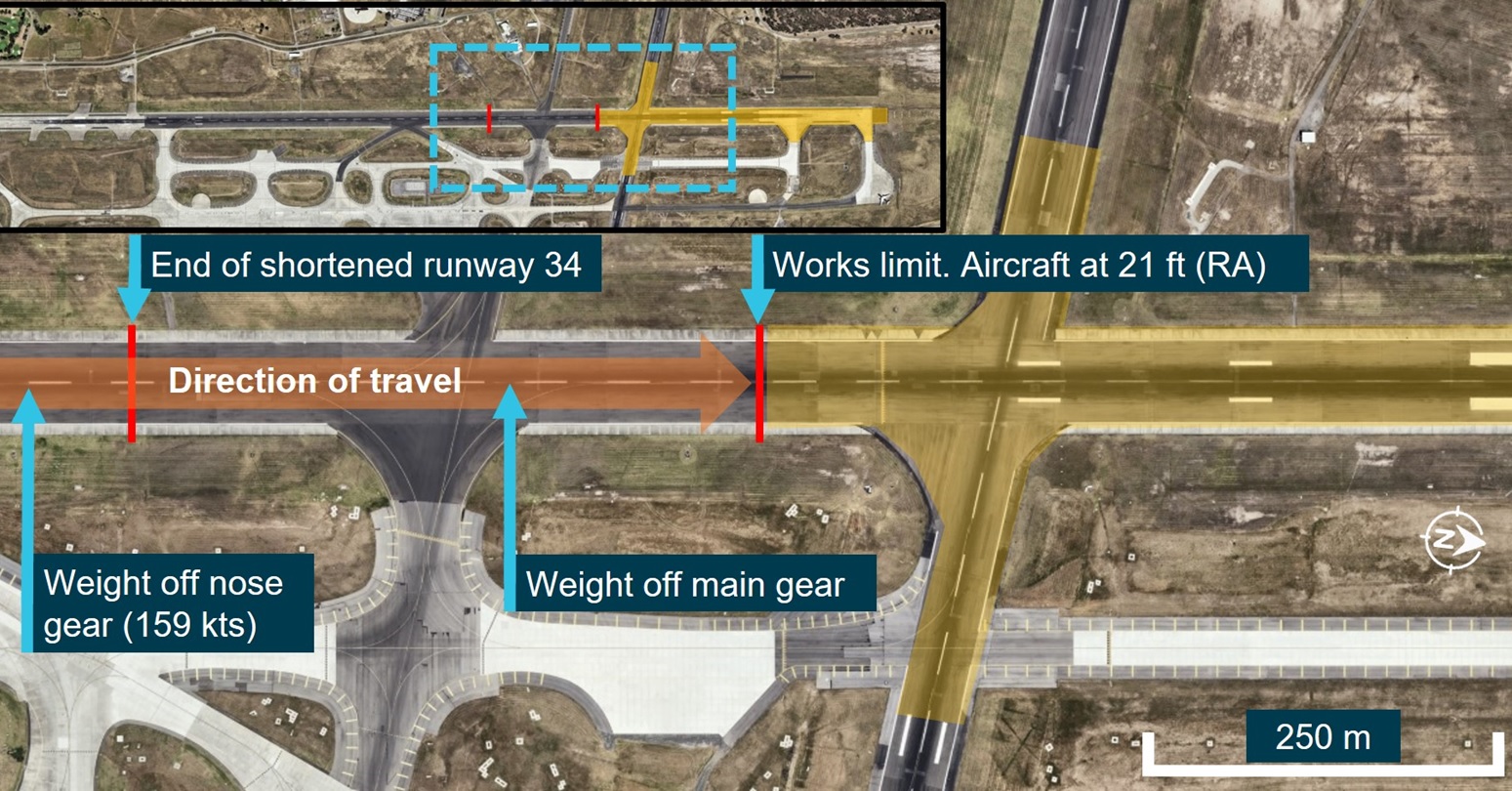
In both instances, the northern end of Melbourne’s north-south runway (16/34) was closed for runway works. As a result, aircraft taking off on the runway had 2,089 metres available for take-off, compared to the normal 3,657 metres.

“This shortened runway state was detailed in the airport’s notice to airmen (NOTAM) and broadcast over radio via the automatic terminal information service (ATIS), but in both incidents, the flight crews were not aware of the shortened runway and selected the normal full length for the aircraft’s performance calculations,” Chief Commissioner Angus Mitchell explained.

In both incidents, each aircraft’s flight computer responded to the full-length runway selection by providing settings for a reduced-thrust take-off – standard practice to reduce engine wear when a full-powered take-off is not necessary.

“Both aircraft subsequently passed the end of the shortened runway 34 during their take-off rolls, and lifted off within the 450-metre buffer zone between the runway’s temporary end and the edge of the worksite,” Mr Mitchell said.

In the first occurrence, flight data shows a Malaysia Airlines Airbus A330-300 lifted off the runway approximately 170 metres before the worksite, passing over the nearest works boundary at about 21 feet in height above the runway.

In the second occurrence, a Bamboo Airways Boeing 787-9 lifted off in a similar location, and was estimated to have passed over the nearest works boundary at approximately 10-16 feet.

As a result of these occurrences, Melbourne Airport cancelled the remaining planned runway works requiring a displaced threshold/shortened runway.

“The ATSB’s preliminary report has been prepared to provide timely information to the industry and public, and includes a summary of the evidence gathered so far, which comes from NOTAM and ATIS information, CCTV footage, air traffic control audio, interviews with flight crews, recorded flight data, and other sources,” Mr Mitchell said.

“As the investigation progresses, we will continue to further review and analyse this evidence, as well as runway works planning and risk assessments, and mechanisms for the communication of safety-critical aeronautical information to air crews.”

A final report will be released at the conclusion of the investigation.

“Should a critical safety issue be identified during the course of the investigation, the ATSB will immediately notify relevant parties so appropriate and timely safety action can be taken,” Mr Mitchell concluded.

Read the preliminary report: Runway excursions on take-off involving Airbus A330-323 9M-MTL and Boeing 787-9 VN-A819, at Melbourne Airport, Victoria, on 7 and 18 September 2023

Fuel management, emergency procedures focus of ditching report

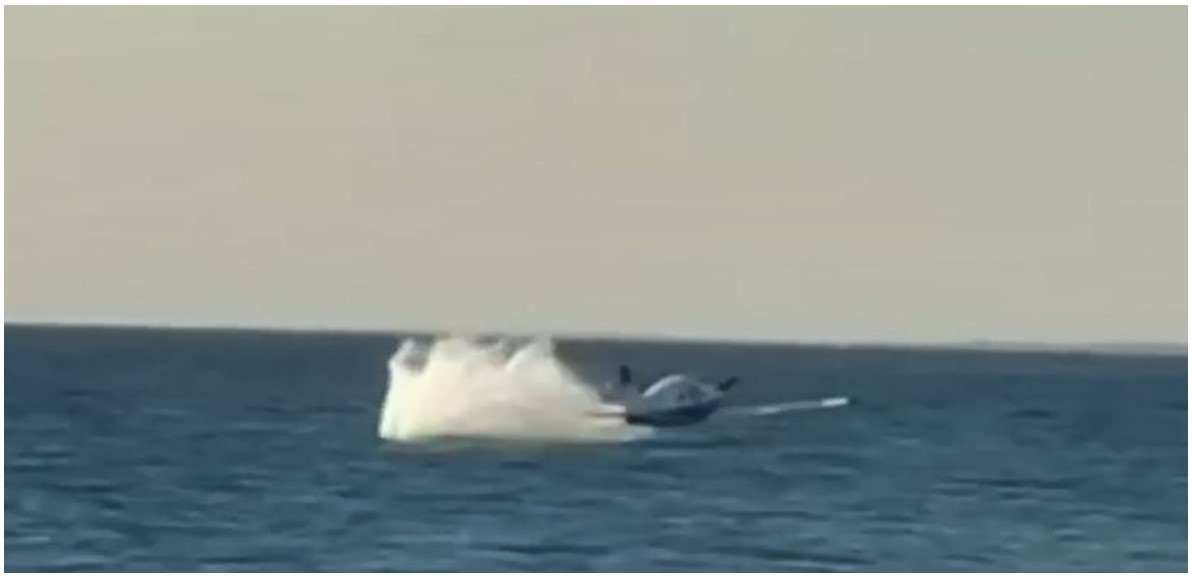
A ditching accident off Leighton Beach, Western Australia highlights the importance of proper fuel management, an Australian Transport Safety Bureau investigation final report notes.

On 20 April 2023, a Piper Archer single-engine light aircraft departed Carnarvon for a private flight to Jandakot, via Geraldton.

About 10 km north of Fremantle, engine power subsided then recovered a number of times.

“Unable to maintain height, the pilot decided to turn into wind for a forced landing on the adjacent Leighton Beach, but then opted to ditch into the ocean after observing a number of people on the beach,” ATSB Director Transport Safety Stuart Macleod said.

After a successful ditching, the uninjured pilot and passenger were able to egress and swim to shore. The aircraft was substantially damaged.

The ATSB’s investigation concluded the pilot had left Carnarvon with enough fuel on board for the planned flight, but did not carry out regular fuel quantity checks in accordance with regulatory guidance, or keep a written log of fuel consumed from each tank during the flight.

“The engine power issues probably occurred due to a lack of fuel in the selected right tank,” Mr Macleod said.

“The pilot responded to power anomalies by carrying out some of the emergency procedures, but did not select the other – left – tank, which contained usable fuel.”

Mr Macleod said that the accident highlighted the importance of good fuel management.

“Pilots must carry out in-flight fuel quantity checks at regular intervals, including a cross check and recording of key data,” he said.

“For aircraft with separate tank selections, it is advisable to monitor the fuel consumed, and fuel remaining, for each tank.”

Further, Mr Macleod noted the accident was a reminder that an intermittent or partial engine power loss is an ambiguous condition that can disrupt pilot implementation of emergency procedures.

“Unless there is an obvious solution, pilots should prepare for a complete engine power loss and follow the applicable procedures to optimise recovery of engine power,” he concluded.

Read the final report: Fuel starvation and ditching involving Piper PA-28, VH-FEY, 15 km north-west of Jandakot Airport, Western Australia, on 20 April 2023