

Last light flight planning
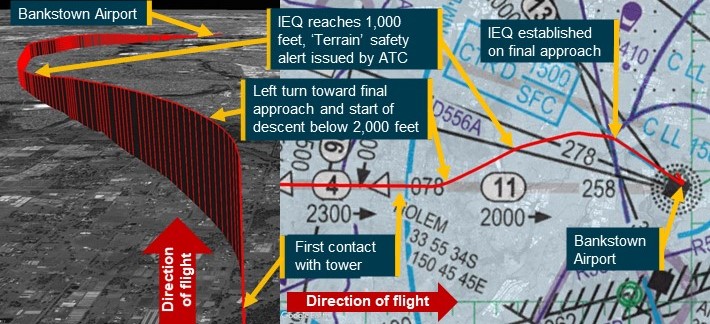
A Citation jet’s descent below lowest safe altitude on approach into Bankstown highlights to pilots to consider how operating rules may change during flight, particularly around last light, an ATSB investigation report details.
On 16 November 2022, the Cessna Citation Mustang with a single pilot and one passenger on board was conducting a charter flight from Young to Bankstown.
As the aircraft approached Bankstown to land under the instrument flight rules, about 10 minutes after last light, the pilot established contact with air traffic control (ATC) and requested a ‘visual’ approach. ATC approved the pilot to fly directly toward final approach for runway 11 centre.
“The pilot proceeded to follow the rules applicable to day operations, as there was still some ambient light available,” ATSB Director Transport Safety Kerri Hughes explained.
“However, as the operation was taking place after last light, this meant the pilot descended below the lowest safe altitude applicable, reducing the assurance for separation from terrain and ground‑based obstacles.”
Flight data showed the pilot descended to a height of 1,000 ft, about 800 ft below the lowest safe altitude for the area at that time.
ATC subsequently issued a terrain safety alert, and the pilot reported they were visual. An uneventful landing was then conducted.
The ATSB report notes the flight was the fourth of the day, and the pilot had submitted all flight plans at about 0448 local time, before commencing operations.
“This incident highlights the importance of planning, in particular around times when rules change, such as the transition from day to night,” Ms Hughes said.
“In this case, both planned and actual times when the flight below lowest safe altitude occurred were after last light.”
During the investigation, the pilot reported that flying a published instrument approach procedure, rather than declaring ‘visual’ would have been a more suitable plan for this flight.
Read the final report: Flight below minimum altitude involving Cessna Citation 510, VH-IEQ, 13 km west of Bankstown Airport, New South Wales, on 16 November 2022
Fuel starvation involving Cessna T210M, VH-MYW, 4 km north-west of Bankstown Airport, New South Wales, on 26 May 2024
Final report
Report release date: 11/10/2024
Executive summary
What happened
On 26 May 2024, a Cessna T210M, registered VH-MYW, was prepared for flight at Maitland Airport, New South Wales. The pilot planned to ferry the aircraft to Bankstown Airport, where the aircraft was to undergo maintenance. There was a pilot and one passenger on board.
During the approach, the engine stopped and while looking for a suitable landing place, the pilot saw a taxiway on the airport and decided to aim for that. To successfully reach the airport, the pilot elected to leave the flap retracted and gear up. This was done to reduce drag and achieve maximum glide range. Once the aircraft was assured of a landing on the airport, the gear was lowered. However, it did not successfully lock into place due to the limited time available before touchdown. The aircraft landed wheels-up resulting in minor damage and both occupants were uninjured.
What the ATSB found
The ATSB determined that, while the aircraft departed with sufficient fuel to complete the intended flight, it is likely that the amount of fuel reduced to a level that, in combination with unbalanced flight approaching Bankstown Airport, resulted in the engine being starved of fuel.
The ATSB also determined that the pilot's decision to carry non-essential crew placed the additional occupant at unnecessary risk of injury.
Safety message
Fuel starvation occurrences can often be prevented by conducting thorough pre-flight fuel quantity checks combined with inflight fuel management. Pilots are reminded to check fuel quantities prior to departure using a known calibrated instrument such as a dipstick. In addition, comparing the expected fuel burn with actual fuel remaining after a flight, will give a validated fuel burn for the aircraft and ensure the measuring equipment is accurate. Pilots should familiarise themselves with the Civil Aviation Safety Authority, Advisory Circular AC 91-15v1.1 Guidelines for aircraft fuel requirements, which provides further guidance for in‑flight fuel management.
Practising forced landings from different altitudes under safe conditions can help pilots prepare for an emergency situation, should one arise. Some components of the aircraft such as flap and gear, increase drag and reduce the glide range. Being familiar with emergency checklists and your aircraft’s systems will assist in an emergency when identifying and managing an engine failure.
The investigation
| Decisions regarding the scope of an investigation are based on many factors, including the level of safety benefit likely to be obtained from an investigation and the associated resources required. For this occurrence, a limited-scope investigation was conducted in order to produce a short investigation report, and allow for greater industry awareness of findings that affect safety and potential learning opportunities. |
The occurrence
On 26 May 2024, a Cessna T210M, registered VH-MYW, was prepared for flight at Maitland Airport, New South Wales (NSW). The pilot planned to ferry the aircraft to Bankstown Airport, where the aircraft was to undergo maintenance. As the pilot had not previously operated to Bankstown Airport, they elected to carry a passenger, who was also a helicopter pilot, to assist with navigation and radio communication.
At 1313 local time, with the left fuel tank selected for take-off, the aircraft departed from runway 23[1] and tracked south. The pilot reported that about 4 minutes into the flight (while passing abeam Cessnock) they selected the fuller right tank, which they thought would reduce workload when entering Bankstown airspace. The aircraft entered the Visual Flight Rules (VFR) route[2] between Brooklyn Bridge and Prospect Reservoir at 1336 at approximately 2,000 ft.
Figure 1: Sequence of events
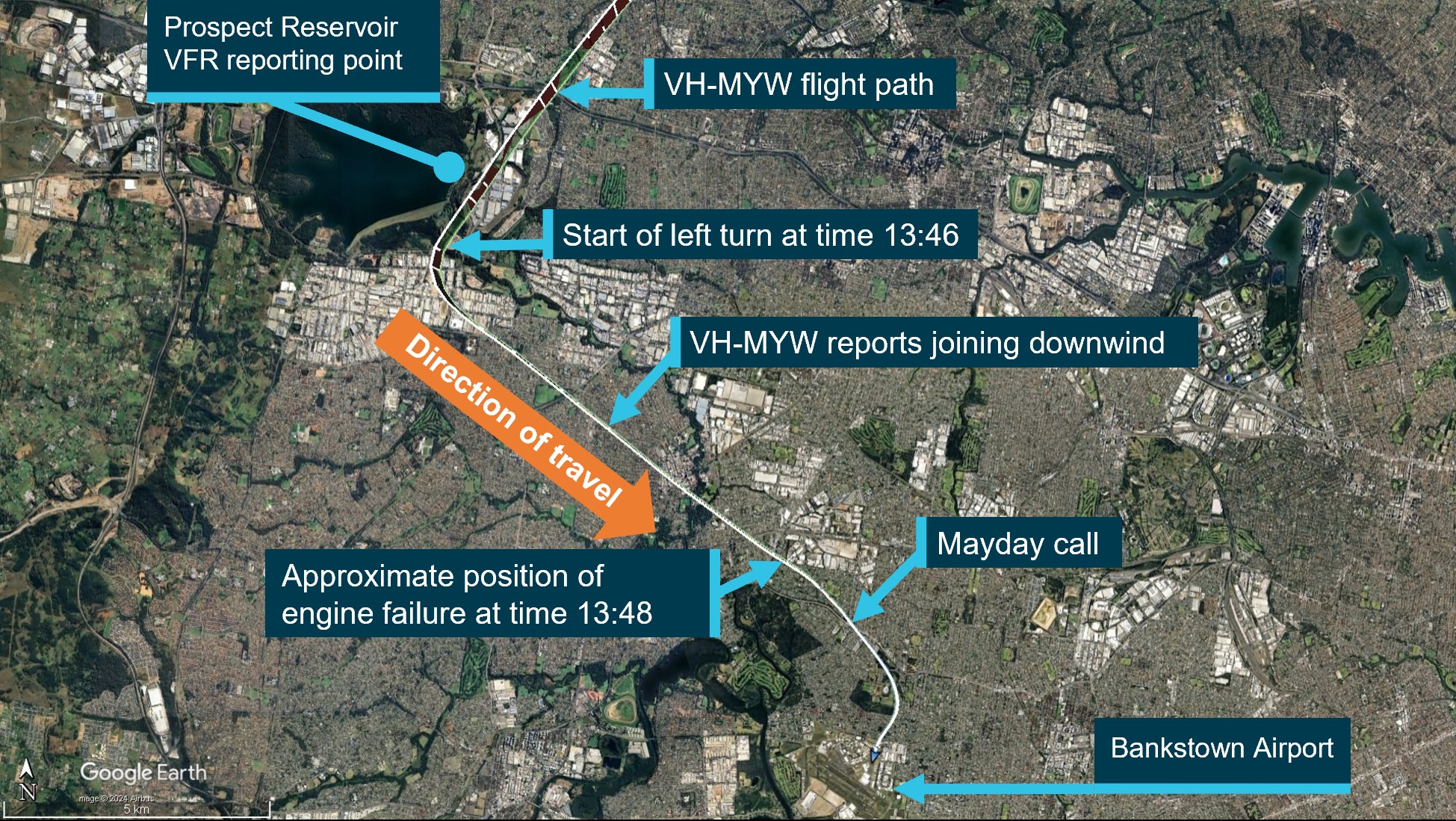
The image shows the sequence of events leading up to and during the forced landing, it highlights relevant places and reference times. Source: OzRunways flight data overlay on Google Earth.
The aircraft arrived overhead Prospect Reservoir at 1346 (Figure 1) and the aerodrome controller (ADC) instructed VH-MYW to maintain 1,500 ft and join the downwind leg of the circuit for runway 29R. An approximate 25° angle of bank turn was conducted to track toward a downwind join for runway 29R.
At 1347, the pilot reported joining downwind for 29R and the ADC instructed them to maintain 1,500 ft and provided them with updated Automatic Terminal Information Service (ATIS) [3] information ‘Foxtrot’. The pilot confirmed receipt of the new information by reading back the new QNH.[4]
The pilot recalled that, at about the time of that radio transmission, with the aircraft about 4.5 km north-west of Bankstown Airport, the propeller RPM increased, and they felt a braking sensation. They recalled that, in response they attempted to reduce drag on the propeller, changed fuel tank selection and briefly selected the electric fuel boost pump to ON. They then aimed to maintain glide speed while looking for a place to land.
At 1348, the pilot transmitted a MAYDAY call on the Bankstown Tower radio frequency stating they were having engine problems. The ADC advised that all runways were available, and they could track as required. The ADC continued to coordinate traffic to assist VH-MYW.
The pilot reported that while they were looking for a place to conduct a forced landing, they saw a taxiway on the airport and decided to try to land there. They advised that, during the approach the aircraft clipped the top of a tree and they raised the aircraft’s nose at the last minute to avoid a building on the airport perimeter. They decided not to deploy landing gear or flap until they were assured of reaching the airport.
At 1350, a helicopter operating in the area, reported that the aircraft had landed at the intersection of taxiway November 1 and taxiway Lima.
Both occupants of the aircraft were uninjured, and the aircraft sustained minor damage.
Context
Pilot
The pilot held a private pilot licence (aeroplane) issued in 2014 with a single‑engine class rating. They were appropriately endorsed to fly the Cessna 210 with design features for manual propeller pitch control and retractable undercarriage. The pilot also held a current class 2 aviation medical certificate.
They had accrued a total flight experience of approximately 222 hours, of which 15 hours were on the Cessna 210. In addition, they had previously flown other aircraft in this range including the Cessna 206 and Cessna 177. The pilot’s licence showed an entry for a single‑engine flight review conducted on 31 May 2023.
Weather
At the time of the incident, the Automatic Terminal Information Service information ‘Foxtrot’ was current, which indicated CAVOK[5] conditions, temperature 22°C, wind direction variable at 5 kt, and runway 29R in use for arrival and departures.
Aircraft
The aircraft was a Cessna Aircraft Company T210M manufactured in 1978 and issued serial number 21062277. It was powered by a fuel‑injected Continental Motors Inc TSIO-520-R piston engine driving a 3‑bladed, constant‑speed McCauley Propeller.
The aircraft was purchased from South Africa where it was previously registered as ZS-MYV and was shipped to Australia where it was reassembled and placed on the Australian register on 19 March 2021 as VH-MYW.
Maintenance
The aircraft was issued a maintenance release in November 2022 for private operations however, this expired in November 2023. At the time of the incident the aircraft was being ferried to Bankstown for completion of the maintenance required to return the aircraft to service.
As the maintenance release had expired, a special flight permit (SFP) was issued for the purpose of completing this ferry flight. The SFP was issued by the Civil Aviation Safety Authority (CASA) on 14 May 2024. The permit expired on 31 May 2024 and was subject to the following conditions:
- Essential operating crew only to be carried.
- Daily inspection and flight times are to be recorded on the Maintenance Release.
- Day VFR, non-commercial operation by the most direct route practical and permitted by weather.
- Operation shall be conducted in accordance with the approved flight manual / cockpit placards for the aircraft.
- A copy of this SFP to be carried on-board and filed with the aircraft logbooks.
The permit also stated the flight was permitted to depart Maitland and arrive at Bankstown.
The last daily inspection signed on the aircraft maintenance release was completed on 2 November. The pilot advised that they had completed the daily inspection prior to the flight, but this was not recorded on the maintenance release.
The aircraft maintenance release also carried 2 endorsements for defects. These included the wing flaps not extending equally and hail damage. The flap defect was addressed by a third party, however, the hail damage was assessed by the aircraft owner in accordance with the CASA Airworthiness Bulletin 51-010 Assessment of hail damage.
Airworthiness Bulletin 51-010 recommended having a person who was appropriately qualified under Civil Aviation Safety Regulations 21.M to inspect the aircraft.
The pilot reported the aircraft had a tendency to fly right wing down. There was insufficient evidence available to the ATSB to determine whether either of the aircraft defects contributed to the flight characteristics described by the pilot.
Aircraft systems
Trim
The aircraft was fitted with elevator and rudder trim. Rudder trimming was accomplished via a wheel mounted in the cockpit (Figure 2). Setting the rudder trim left of centre would result in the aircraft maintaining the nose left of the flight path and remaining in that position until the wheel was manipulated, or the rudder pedals were manipulated. To maintain the desired track with that trim configuration, the aircraft would need to be flown in an uncoordinated state with the right wing low.
The aircraft’s pilot operating handbook stated:
Unusable fuel is at a minimum due to the design of the fuel system. However, when the fuel tanks are ¼ full or less, prolonged uncoordinated flight[6] such as slips or skids can uncover the fuel tank outlets, causing fuel starvation and engine stoppage. Therefore, with low fuel reserves, do not allow the airplane to remain in uncoordinated flight for periods in excess of one minute.
Cessna advised this was originally added to the Cessna 210 model D owner’s manual and was carried through as the aircraft developed into different models. Cessna did not have the available data to assess the likelihood of uncoordinated flight contributing to fuel starvation.
The pilot stated the rudder trim had been set left of centre since the aircraft was re‑assembled in Australia and that the trim wheel was not manipulated in flight.
Figure 2: Aircraft control pedestal post-incident
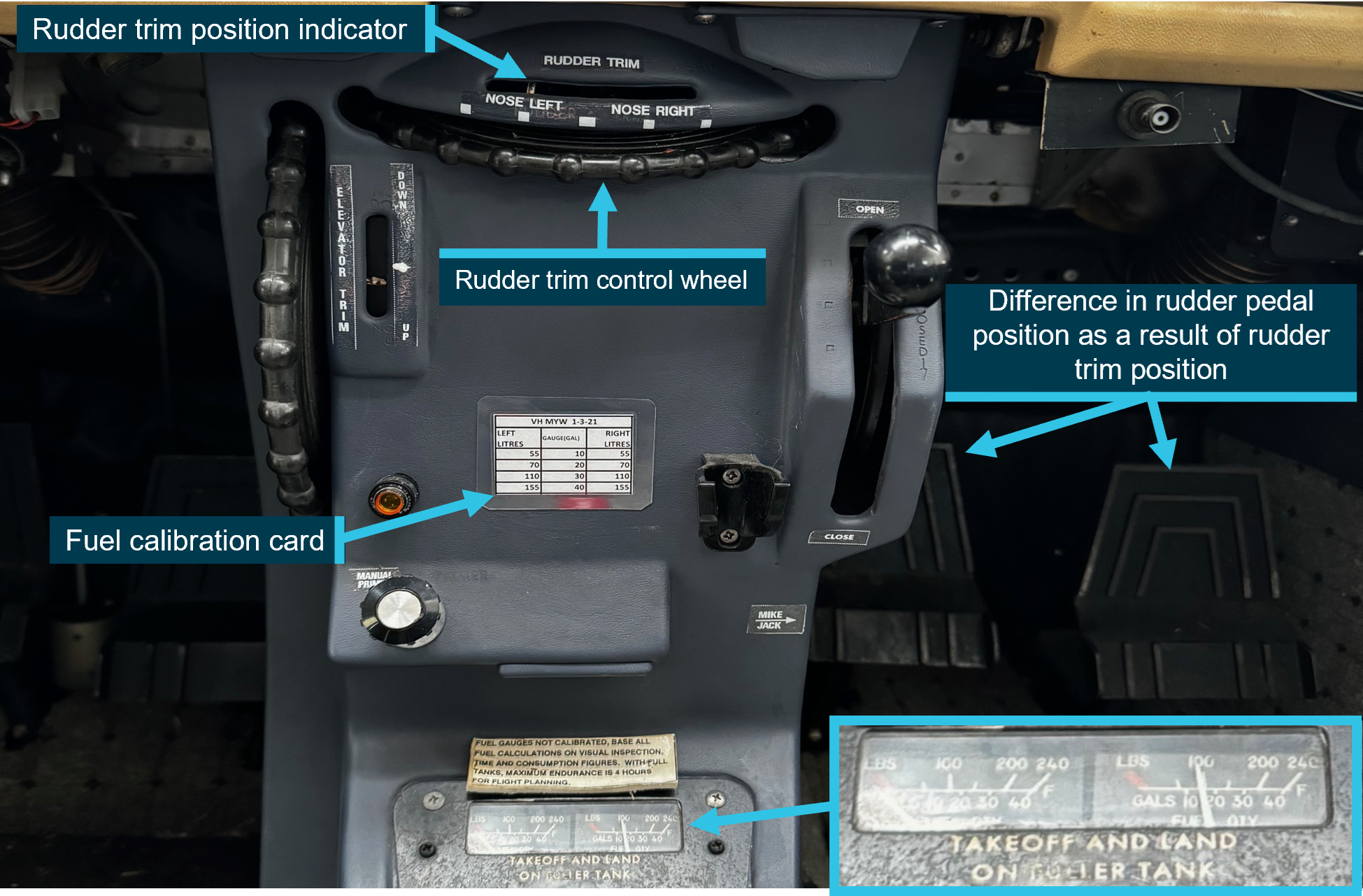
The image shows the fuel gauge level and the rudder trim. The image was taken on 6 June 2024, several days after the incident. However, the person responsible for recovering the aircraft stated, no fuel was added prior to this photo and the trim was set as found on the day of the incident. Source: Engineer responsible for aircraft recovery.
Fuel system
The Cessna 210 fuel system consists of a main fuel tank located in each wing. Each tank capacity is 171 L, of which 169 L is usable fuel. Each tank gravity fed a smaller fuel reservoir tank of approximately 1.9 L through fuel collector ports, which were located at the forward and aft inboard side of the main fuel tank (Figure 3Figure 3 and Figure 4).
Figure 3: Cessna 210M fuel schematic
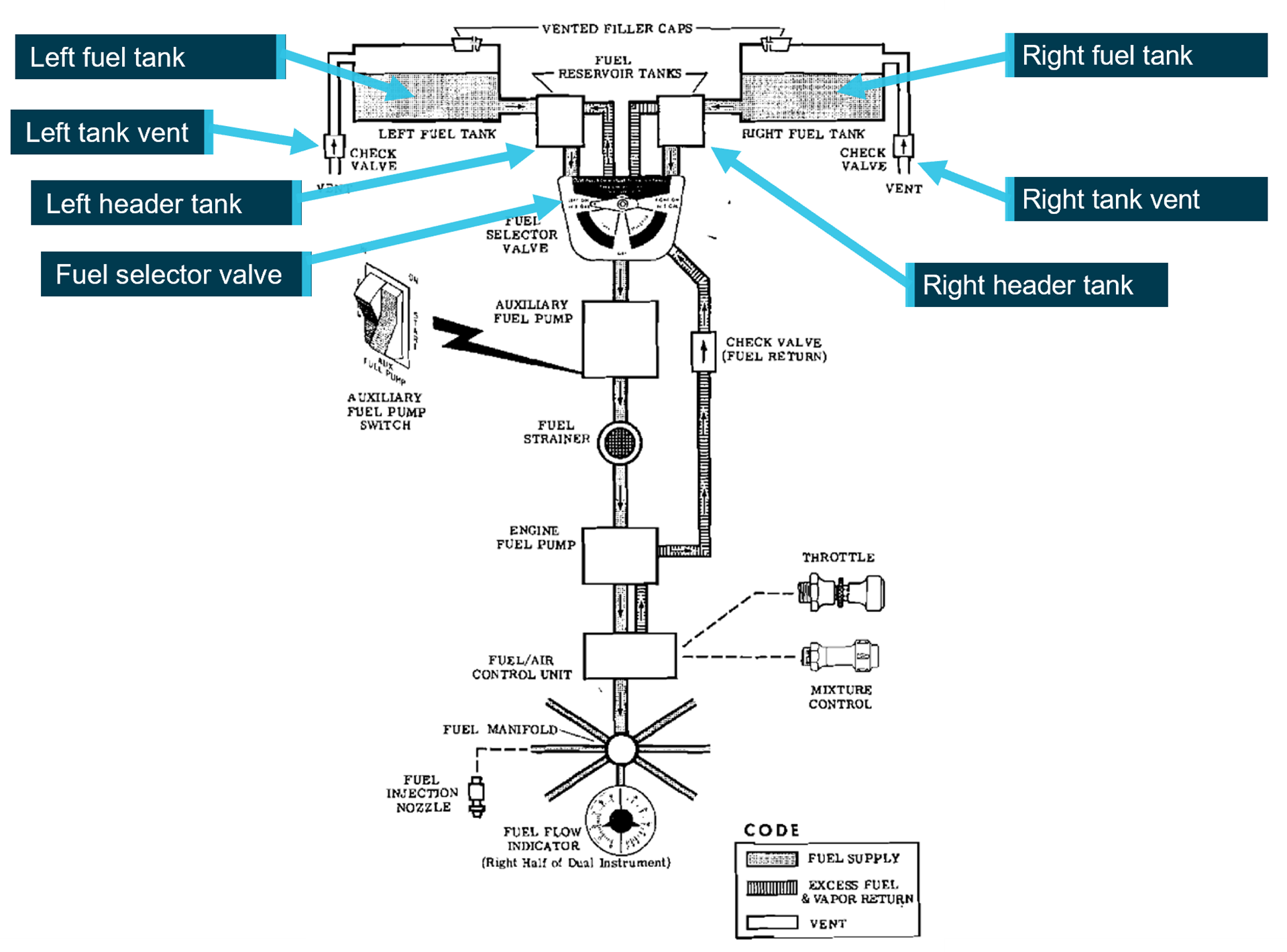
Source: Cessna 210M pilot operating handbook, annotated by the ATSB
The fuel selector valve had 3 positions – left, right, and off – and so fuel could only be drawn from either the left or right tank. Cessna advised that at a low cruise power setting, if no fuel was being fed to the smaller fuel reservoir tank, it could supply fuel to the engine for between 1.5–3.5 minutes. The pilot advised that, at the time of the power loss the fuel selector was selected to the right fuel tank.
The fuel system has an engine-driven fuel pump and an auxiliary fuel pump, which is electrically driven. The pilot operating handbook states the following:
If it is desired to completely exhaust a fuel tank quantity in flight, the auxiliary fuel pump will be needed to assist in restarting the engine when fuel exhaustion occurs.
Cessna stated that during testing, the electric auxiliary fuel pump was required to operate for 4 seconds to restart the engine.
Figure 4: Fuel tank design
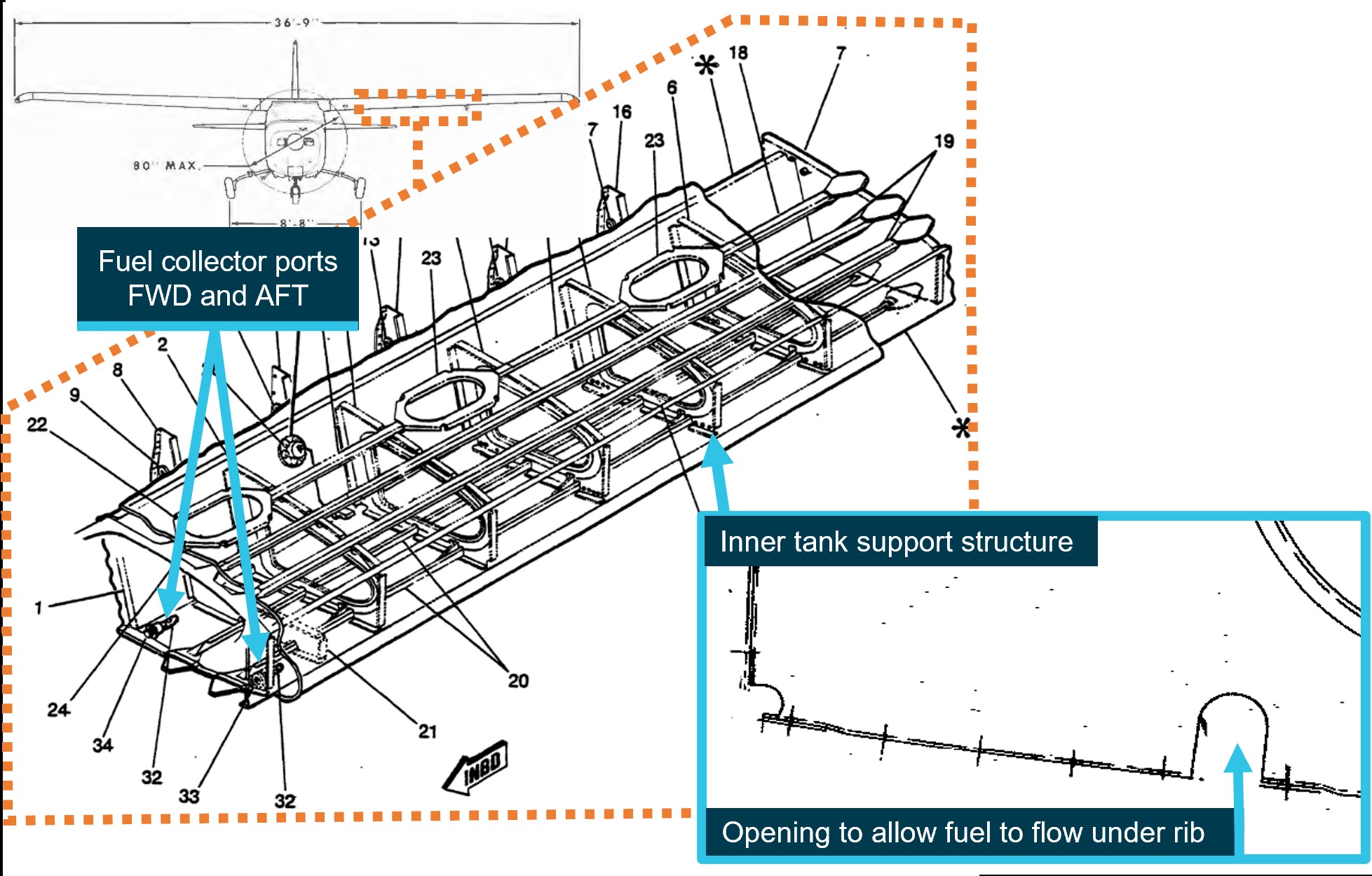
The above image shows the location of the fuel collector ports and the openings that are located in the rib support structure. The fuel cell image shown is for later serial numbers of the Cessna 210. However, it is the most descriptive image of fuel collector ports. Further images provided by Cessna show the aft collector port is located in a similar location to the above image. Source: Cessna 210 illustrated parts catalogue model 210 & T210 series 1981–1986, annotated by the ATSB.
The fuel tank design included an internal rib support structure (Figure 4). Each rib had an enlarged centre opening for fuel to freely flow through the tank, with small openings at the base of each rib, ensuring useable fuel could not become trapped. Cessna stated, ‘The small, if any, amount of fuel caught behind any structure would be part of the unusable fuel level determined during certification.’
Propeller
A control lever was used to set aircraft RPM by changing the propeller blade pitch. When the control lever is pushed inward, the propeller increases RPM (low blade pitch). When the control lever is pulled outward, the propeller RPM decreases (high blade pitch). This is achieved by a propeller governor which relies on engine oil pressure to move the propeller toward a high blade pitch (low RPM).
The combination of an internal spring and centrifugal force, twists the blades toward a low pitch (high RPM) setting when oil pressure at the propeller hub is relieved.
Engine Failure During Flight checklist
The pilot operating handbook provided the following checklist to be conducted in the event of an engine failure during flight:
- airspeed – 85 [kt indicated airspeed] KIAS
- fuel quantity – check
- fuel selector valve – fuller tank
- mixture – rich
- auxiliary fuel pump – on for 3-5 seconds with throttle ½ open; then off
- ignition switch – both (or start if propeller is stopped)
- throttle advance slowly.
Flight data
The ATSB obtained flight data from an electronic flight bag (EFB) used by the pilot. The data provided aircraft position, time, altitude, and ground speed.
The flight data was analysed by the ATSB to obtain the approximate position when the engine stoppage occurred. This was determined to be at 1348 as there was a significant reduction in ground speed at that time.
Flight planning and fuel usage
The pilot reported that during the cruise, the manifold pressure was set near the top of the green (approximately 25 inches) and RPM at 2,200. A fuel flow reading was noted by the pilot of 14 gallons per hour (53 L/hr).
The pilot advised that they normally dipped the tank during the pre-flight inspection using the aircraft’s fuel dipstick. During the pre-flight they estimated 150 L of fuel on board, 60 L in the left tank and 90 L in the right tank (see the section titled Fuel system). Using that fuel quantity and recorded flight data, Table 1 details the expected consumption throughout the flight.
Table 1: Estimated fuel burn based on flight data
| Sector | Start time | Block time (min) | Estimated fuel burn (L) at 53 L/hr | Total | Comments | |
| Departing Maitland | 1313 | 0 | 5 | 145 | Pilot stated, they departed on left tank (5 L allowed for taxi) | |
| Abeam Cessnock | 1317 | 4 | 4 | 141 | Climbing phase, fuel burn was likely higher than 53 L/hr. | |
| Near Warnervale | 1325 | 8 | 8 | 133 | Pilot stated, at approximately overhead Cessnock, they swapped to right fuller tank. | |
| Brooklyn Bridge | 1336 | 11 | 10 | 123 | ||
| Prospect Reservoir | 1346 | 10 | 9 | 114 | ||
| Estimated engine stop | 1348 | 2 | 2 | 113 | ||
| Total | 35 | 38 | Totals have been rounded up |
Post-incident inspection
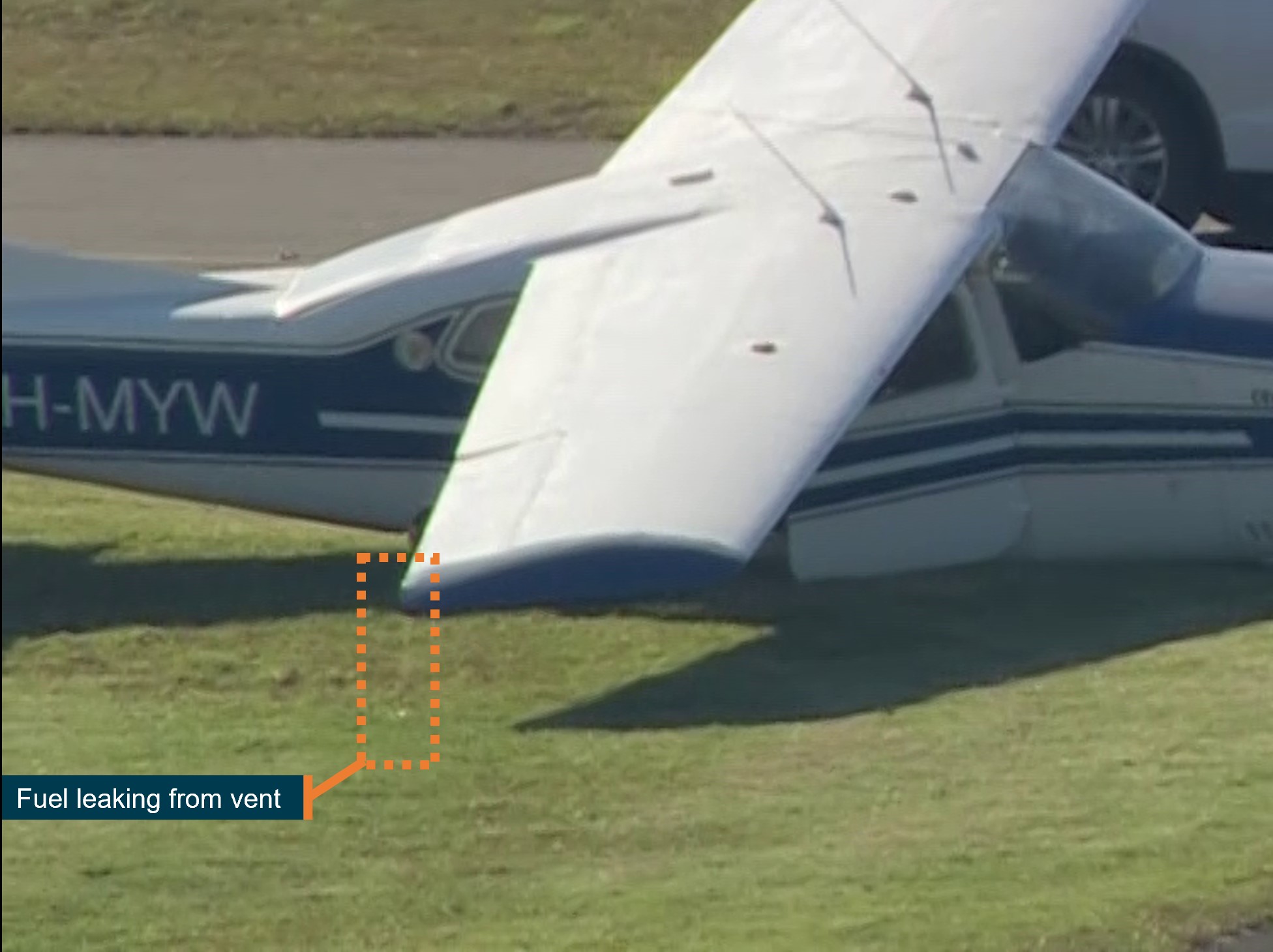
The ATSB did not attend the site. A video of the aircraft, provided by 9News Australia showed fuel leaking from the right fuel tank vent. The aerodrome operator who attended the incident site stated that the fuel which leaked from the vent was no more than 2–4 litres, of which most was funnelled into a jerrycan. While the ATSB could not verify how long the fuel was leaking, based on the observations of the aerodrome operator, it was unlikely to have significantly affected the amount of fuel in the tank. There was no evidence of fuel leaking from the left tank.
Figure 5: Fuel leak from right tank vent
Source: 9News Australia
The aircraft was recovered, and an initial inspection was completed. The fuel level was checked using the on-board fuel gauges and dipstick. The left tank was estimated to hold between 0–5 L and the right tank was estimated between 40–50 L.
The aircraft’s damaged propeller was removed, and a suitable test propeller was fitted to the aircraft. The engine was started and was able to draw fuel from the remaining fuel in both tanks, the test continued for approximately 5 minutes on each tank. However, high power settings similar to in‑flight conditions were not tested.
The aircraft had undergone a fuel calibration and the placard above the fuel gauges was no longer relevant however, it was not removed (Figure 2). The placard was not considered to have contributed to the incident as the fuel on board was likely less than the 4 hours stated on the placard. The onboard fuel dipstick used was labelled C210 dipstick and was marked with the aircraft’s previous registration, ZS-MYV.
Related occurrences
Fuel management and fuel starvation incidents and accidents continue to occur with single and twin-engine aircraft. Examples of other ATSB investigations of similar occurrences include:
- Fuel starvation and forced landing involving Piper PA-31-350, VH-HJE, 11 km south of Archerfield Airport, Queensland, on 7 April 2023 (AO-2023-017)
- Fuel starvation and ditching involving Piper PA-28, VH-FEY, 15 km north-west of Jandakot Airport, Western Australia, on 20 April 2023 (AO-2023-021)
- Fuel starvation and forced landing involving Pilatus Britten-Norman Islander BN2A, VH-WQA, Moa Island, Queensland, on 3 October 2022 (AO-2022-046).
Safety analysis
The pilot reported that, during approach to Bankstown Airport, they noted an increase in propeller RPM and could not maintain altitude. This behaviour was consistent with an engine failure, with the associated loss of oil pressure resulting in the propeller moving to a finer pitch (increased RPM). The post-incident aircraft inspection did not identify an engine malfunction, and the engine was able to run at low power on the remaining fuel in both tanks. As there was no evident malfunction of the engine, the most probable reason for the inflight power loss was fuel starvation.
The pilot reported that the aircraft departed with 90 L in the right tank and 60 L in the left tank (150 L total). They also advised the right tank was selected for most of the flight. If this was the case, there should have been approximately 61 L in the right tank and 51 L in the left tank. However, given the total fuel on board after the incident occurred (maximum 59 L), it was unlikely that approximately 91 L was burnt during the 35-minute flight. Therefore, it was unlikely that the amount of fuel the pilot stated was on board at the commencement of the flight was actually in the aircraft. Significantly however, there was sufficient total fuel on board for the flight.
The post-incident inspection revealed between 40–50 L remaining (which equated to approximately 1/4 full tank) in the right tank, with about 2–4 L reportedly leaking after the landing. The pilot operating handbook (POH) stated that if there was less than 1/4 fuel in the tank and the aircraft was in uncoordinated flight, the fuel pick-ups could uncover, and fuel starvation could occur.
The post-incident inspection also revealed between 0–5 L remaining in the left fuel tank. If the engine was being supplied from the left tank, during an uncoordinated left turn at Prospect Reservoir at 1346, it is possible the fuel drained away from the fuel pick-ups and the engine continued to draw fuel from the left header tank until 1348 when the engine stopped. This was consistent with Cessna’s advice that the header tank can supply fuel for 1.5–3.5 minutes at low cruise power.
In summary, irrespective of which tank was supplying the engine, the quantities of fuel remaining, when combined with the uncoordinated flight, were conducive to fuel starvation in accordance with the POH.
The pilot’s initial response during the emergency was largely focused on attempting to reduce drag created by the propeller, despite the aircraft not having this ability, and they did not complete the engine failure during flight checklist. If the checklist had been followed, the pilot would have increased the likelihood of restarting the engine in flight. During the extended period where the aircraft was resting on the ground and positioned right-wing low, it is likely the fuel remaining in the left tank drained into the left header tank. Even though this fuel was sufficient to run the engine at low power, it may not have been available during approach or sufficient for the power required in flight.
The pilot’s decision to minimise the aircraft’s drag during the glide, by keeping the gear up and flaps retracted, combined with managing the airspeed, resulted in the aircraft achieving the required performance to land safely inside the airport environment. However, due to the distance the aircraft needed to glide and obstacles that needed to be cleared, by the time the landing gear was selected down, there was not enough time to extend and lock in place before the aircraft collided with the ground resulting in a wheels-up landing.
Finally, the CASA special flight permit was issued for the purpose of ferrying the aircraft for maintenance. The conditions put in place were to minimise the consequences if an incident occurred during flight which was conducted outside of the normal aircraft operation. Although their reported purpose was to assist with navigation and radio communication, the pilot’s decision to allow a passenger to fly on board the aircraft unnecessarily exposed them to a risk of injury and consequently was another factor that increased risk.
Findings
ATSB investigation report findings focus on safety factors (that is, events and conditions that increase risk). Safety factors include ‘contributing factors’ and ‘other factors that increased risk’ (that is, factors that did not meet the definition of a contributing factor for this occurrence but were still considered important to include in the report for the purpose of increasing awareness and enhancing safety). In addition ‘other findings’ may be included to provide important information about topics other than safety factors. These findings should not be read as apportioning blame or liability to any particular organisation or individual. |
From the evidence available, the following findings are made with respect to the fuel starvation involving Cessna T210M, VH-MYW, 4 km north-west of Bankstown Airport, New South Wales, on 26 May 2024.
Contributing factors
- While the aircraft departed with sufficient fuel to complete the intended flight, low usable fuel quantities, in combination with probable uncoordinated flight approaching Bankstown Airport, resulted in the engine being starved of fuel.
Other factors that increased risk
- The pilot's decision to carry non-essential crew placed the additional occupant at unnecessary risk of injury.
Sources and submissions
Sources of information
The sources of information during the investigation included the:
- pilot
- aerodrome operator
- engineer responsible for aircraft recovery
- aircraft manufacturer and insurer
- Civil Aviation Safety Authority
- Airservices Australia
- OzRunways recorded data
- video footage of the incident flight and other imagery taken on the day of the incident.
Submissions
Under section 26 of the Transport Safety Investigation Act 2003, the ATSB may provide a draft report, on a confidential basis, to any person whom the ATSB considers appropriate. That section allows a person receiving a draft report to make submissions to the ATSB about the draft report.
A draft of this report was provided to the following directly involved parties:
- pilot
- engineer responsible for aircraft recovery
- Civil Aviation Safety Authority
- aircraft manufacturer.
Submissions were received from the:
- pilot
- Civil Aviation Safety Authority.
The submissions were reviewed and, where considered appropriate, the text of the report was amended accordingly.
Purpose of safety investigationsThe objective of a safety investigation is to enhance transport safety. This is done through:
It is not a function of the ATSB to apportion blame or provide a means for determining liability. At the same time, an investigation report must include factual material of sufficient weight to support the analysis and findings. At all times the ATSB endeavours to balance the use of material that could imply adverse comment with the need to properly explain what happened, and why, in a fair and unbiased manner. The ATSB does not investigate for the purpose of taking administrative, regulatory or criminal action. TerminologyAn explanation of terminology used in ATSB investigation reports is available here. This includes terms such as occurrence, contributing factor, other factor that increased risk, and safety issue. Publishing informationReleased in accordance with section 25 of the Transport Safety Investigation Act 2003 Published by: Australian Transport Safety Bureau © Commonwealth of Australia 2024 
Ownership of intellectual property rights in this publication Unless otherwise noted, copyright (and any other intellectual property rights, if any) in this report publication is owned by the Commonwealth of Australia. Creative Commons licence With the exception of the Commonwealth Coat of Arms, ATSB logo, and photos and graphics in which a third party holds copyright, this report is licensed under a Creative Commons Attribution 4.0 International licence. The CC BY 4.0 licence enables you to distribute, remix, adapt, and build upon our material in any medium or format, so long as attribution is given to the Australian Transport Safety Bureau. |
[1] Runway number: the number represents the magnetic heading of the runway. The runway identification may include L, R or C as required for left, right or centre.
[2] VFR route: A pre-defined laneway for aircraft traffic to remain clear of airspace and enter or exit high traffic areas such as Bankstown Airport.
[3] Automatic terminal information service: The provision of current, routine information to arriving and departing aircraft by means of continuous and repetitive broadcasts. ATIS information is prefixed with a unique letter identifier and is updated either routinely or when there is a significant change to weather and/or operations. See Automatic terminal information service (ATIS).
[4] QNH: the altimeter barometric pressure subscale setting used to indicate the height above mean seal level.
[5] Ceiling and visibility okay (CAVOK): visibility, cloud and present weather are better than prescribed conditions. For an aerodrome weather report, those conditions are visibility 10 km or more, no significant cloud below 5,000 ft, no cumulonimbus cloud and no other significant weather.
[6] Uncoordinated flight occurs when the aircraft skids or slips, this is most commonly associated with a turn, but a skid can occur when the ailerons and rudder are used in opposite directions during normal flight.
Occurrence summary
| Investigation number | AO-2024-033 |
|---|---|
| Occurrence date | 26/05/2024 |
| Location | 4 km north-west of Bankstown Airport |
| State | New South Wales |
| Report release date | 11/10/2024 |
| Report status | Final |
| Investigation level | Short |
| Investigation type | Occurrence Investigation |
| Investigation status | Completed |
| Mode of transport | Aviation |
| Aviation occurrence category | Collision with terrain, Engine failure or malfunction, Forced/precautionary landing, Fuel starvation, Wheels up landing |
| Occurrence class | Serious Incident |
| Highest injury level | None |
Aircraft details
| Manufacturer | Cessna Aircraft Company |
|---|---|
| Model | T210M |
| Registration | VH-MYW |
| Serial number | 21062277 |
| Sector | Piston |
| Operation type | Part 91 General operating and flight rules |
| Departure point | Maitland, NSW |
| Destination | Bankstown, NSW |
| Damage | Minor |
Accredited Representative to the Transport Accident Investigation Commission investigation of a runway excursion involving Airbus A320, VH-VFF, at Christchurch Airport, New Zealand on 30 May 2024
Summary
The Transport Accident Investigation Commission (TAIC) of New Zealand has commenced an investigation into a runway excursion involving an Airbus A320, registered VH-VFF, at Christchurch Airport, New Zealand, on 30 May 2024.
During descent while conducting a passenger flight from Auckland, New Zealand, to Christchurch, the crew received a warning for one of the hydraulic systems, affecting the nose wheel steering. On landing, the aircraft had a runway excursion and made contact with a runway sign causing damage to the right engine. There were no reported injuries to crew or passengers and minor damage to the aircraft.
The TAIC requested assistance and the appointment of an accredited representative from the ATSB. To facilitate this support and to provide the appropriate protections for the information, the ATSB appointed an accredited representative in accordance with paragraph 5.23 of Annex 13 to the Convention on International Civil Aviation and commenced an investigation under the Australian Transport Safety Investigation Act 2003.
On 19 March 2026, the TAIC released the final investigation report into this accident. Accordingly, the ATSB has concluded its involvement in the investigation. A copy of the report can be obtained from the TAIC at: https://taic.org.nz/inquiry/ao-2024-004.
Any enquiries relating to the investigation should be directed to the Transport Accident Investigation Commission at https://taic.org.nz/.
Occurrence summary
| Investigation number | AA-2024-005 |
|---|---|
| Occurrence date | 30/05/2024 |
| Location | Christchurch Airport, New Zealand |
| State | International |
| Investigation type | Accredited Representative |
| Investigation status | Completed |
| Mode of transport | Aviation |
| Aviation occurrence category | Runway excursion |
| Occurrence class | Serious Incident |
Aircraft details
| Manufacturer | Airbus |
|---|---|
| Model | A320-232 |
| Registration | VH-VFF |
| Serial number | 5039 |
| Sector | Jet |
| Operation type | Part 121 Air transport operations - larger aeroplanes |
| Departure point | Auckland Airport |
| Destination | Christchurch Airport |
Turbulence event and cabin crew injury involving Boeing 737, VH-VYK, 36 km south-east of Brisbane Airport, Queensland, on 4 May 2024
Final report
Report release date: 27/05/2025
Investigation summary
What happened
On 4 May 2024, a Boeing 737, operated by Qantas Airways Limited, departed Sydney, New South Wales for a scheduled passenger carriage flight to Brisbane, Queensland. In the latter stages of descent, the aircraft entered a band of approaching cloud. While the flight crew expected some turbulence associated with the entry to cloud, after passing 11,400 ft about 36 km south‑east of Brisbane, the aircraft experienced unanticipated severe turbulence. Three cabin crew were unrestrained and suffered various injuries during the occurrence. Two received minor injuries, including a facial injury and concussion, whilst the third was seriously injured with a fractured ankle.
What the ATSB found
The ATSB found that the captain did not inform the cabin crew about the expected turbulence during descent, likely due to not being aware of its severity. This resulted in 3 unrestrained cabin crew being injured during severe turbulence.
Following the turbulence, the captain instructed all passengers and crew to return to their seats and fasten seatbelts. However, 2 cabin crew and 2 passengers remained unrestrained in the rear galley to assist the seriously injured crew member during landing. When the flight crew were informed of this, the captain repeated the instruction that everyone besides the injured crew member was to return to their seats for landing. Assuming the cabin would be secured after the repeated instruction, the flight crew proceeded with the landing, unaware that 4 crew and passengers remained unrestrained. Qantas 737 standard operating procedures relied on the customer service manager to inform the flight crew if the cabin crew had not secured the cabin for landing.
A crew member who had sustained a concussion returned to work before seeking medical treatment. The ATSB found that the operator did not have a procedure to ensure that crew were assessed for fitness for duty after a significant injury.
What has been done as a result
Qantas has updated the integrated operation control procedures for requesting medical assistance for cases where any crew member or passenger is significantly injured. Updated protocols now mandate that a doctor will immediately be required to assess the fitness of cabin crew members prior to commencing any further work‑related duties. Additionally, the operator will arrange immediate medical assessment following any turbulence or unplanned aircraft movement classified as moderate or severe with injuries or unrestrained crew.
Safety message
Effective coordination and communication among all crew members is critical in managing turbulence and ensuring cabin safety. This coordination should extend beyond pre‑flight briefings to include continuous communication throughout the flight, particularly during periods of increased workload and operational complexity.
Collaboration between the flight and cabin crew helps ensure the timely completion of service‑related tasks while minimising the risk of injury during known or anticipated encounters with turbulence.
Flight crew rely on clear and timely communication from the cabin crew to maintain awareness of the condition in the cabin. When there is a different understanding of the state of the cabin, there is an increased risk delayed responses or misaligned decision‑making which may lead to safety being compromised.
Aircraft are more likely to experience the effects of weather and wake turbulence during the descent, approach, and landing phases of flight, highlighting the importance of effective communication procedures to promote cabin safety and minimise the risk of injury to passengers and crew.
The occurrence
On 4 May 2024, a Boeing 737, registered VH‑VYK, being operated by Qantas Airways Limited as QF520, departed Sydney, New South Wales on a scheduled flight to Brisbane, Queensland. The aircraft departed Sydney at 1202 local time and was scheduled to arrive in Brisbane at 1335. On board was the flight crew, comprised of the captain and first officer (FO), a customer service manager (CSM) supported by 3 cabin crew members, and 143 passengers.
Prior to departing Sydney for Brisbane, the captain recalled briefing the CSM about leaving the seatbelt sign on for the departure from Sydney due to weather, however neither the captain nor the CSM could recall any specific details regarding the weather conditions in Brisbane.
Descent into Brisbane
At about 1300, the flight crew commenced their descent into Brisbane while approaching Lismore, New South Wales. As the aircraft continued descent towards Coolangatta, Queensland, the captain visually observed cloud over Moreton and Stradbroke islands, but recalled no weather radar indications that identified precipitation normally associated with increased turbulence.
After passing 30,000 ft above mean sea level (AMSL) at 1303, the captain, who was pilot monitoring, recalled performing the ‘prepare cabin’ public announcement (PA), and the cabin crew commenced securing the cabin for landing. About 6 minutes later, the captain contacted the CSM to enquire about the amount of time the cabin crew required to complete their cabin preparations. At about 15,000 ft AMSL, the aircraft entered a thick layer of stratiform[1] cloud with minimal turbulence observed initially by either the flight or the cabin crew. The CSM advised the captain the preparations would take about 2 minutes. About 2 minutes later, the captain turned on the seatbelt sign and announced the ‘seatbelts PA’.
Immediately after the captain turned on the seatbelt sign, the CSM and the 2 cabin crew members in the aft galley completed their duties as per the procedures. The CSM made a PA while standing in the forward galley, then checked and locked their assigned lavatory. The 2 cabin crew members in the rear galley got out of their jump seats to verify that the lavatories were vacant before locking them.
At about this time, the captain observed a cumulus[2] cloud embedded in the stratiform layers. However, there was no radar return consistent with increased turbulence, and the cloud did not appear to be overly concerning in terms of turbulence risk from their shape or size.
After descending below 12,000 ft AMSL at 1311, the aircraft encountered a severe turbulence event less than one minute after the seatbelt sign was illuminated, while 3 cabin crew were unrestrained. The CSM recalled observing the right 2 primary (R2P) cabin crew member at the rear galley rising off the floor and colliding with the aircraft's ceiling. They immediately fell back to the floor, landing on their right ankle. The R2P felt a crushing sensation as they landed on their ankle and experienced intense pain and was unable to move.
Events in the cabin
The CSM contacted the captain to inform them that the R2P was injured and that some passengers were standing. The captain responded with instructions that all passengers and cabin crew must remain seated. Following this interaction, the CSM made a public announcement to remind passengers to stay seated and to request assistance from the cabin crew if needed. The captain contacted the operator’s Brisbane airport coordinator to advise that there was an injured cabin crew member and medical assistance would be required on arrival in Brisbane. Queensland Ambulance service records showed that a request for an ambulance was received at 1315.
Although being instructed to remain seated, the CSM immediately moved to the rear of the aircraft to assist the injured R2P in the aft galley. There, they observed the injured R2P lying on the floor while a passenger was holding their leg. Another passenger, who identified themselves as a doctor, offered to assist with providing first aid. Meanwhile, another cabin crew member, the left two primary (L2P), was supporting the R2P’s head.
At this point, the CSM advised the L2P and the passengers that the captain had instructed everyone to return to their seats. However, they were unwilling to leave the R2P unattended. The CSM instructed the L2P to advise the captain of the situation. The CSM then retrieved the physician's kit from the front of the cabin. At this point, the passenger seated in 3F advised the CSM that they were a travelling cabin crew member and were able to assist.
The L2P contacted the captain to advise that all the occupants located in the rear galley were still unrestrained. However, the captain did not recall receiving requests for additional time to address the situation. The captain reiterated that all uninjured occupants must return to their seats as the aircraft was in the final stages of the approach and would be landing soon.
The CSM subsequently returned to the rear galley with the physician’s kit and the off‑duty cabin crew from 3F, who subsequently relieved the passenger who was holding the R2P’s leg. While the CSM was attempting to provide first aid and preparing a splint with the assistance of the travelling doctor, a passenger seated in 30D yelled, ‘we’re about to land’. Shortly after at 1322, the aircraft landed in Brisbane with 4 unrestrained passengers and cabin crew in the rear galley. The flight crew taxied the aircraft to its assigned gate, arriving at 1328, with paramedics in attendance at 1338.
Context
Flight crew information
Captain
The captain held an Airline Transport Pilot (aeroplane) Licence with an instrument rating and a Class 1 aviation medical certificate. They had 23,177 flight hours, including 15,005 hours on the Boeing 737, and had logged 165 hours on the 737 in the last 90 days.
The captain reported sleeping 7 hours the night before the occurrence. They were awake for 8 hours and 45 minutes at the time of the occurrence and reported feeling ‘responsive, but not at peak’.
First officer
The first officer held an Airline Transport Pilot (aeroplane) Licence with an instrument rating and a Class 1 aviation medical certificate. They had 10,163 flight hours, including 1,717 hours on the Boeing 737, and had logged 152 hours on the 737 in the last 90 days.
The first officer reported sleeping 7 hours the night before the occurrence. They were awake for 8 hours and 45 minutes at the time of the occurrence and reported feeling ‘somewhat fresh’.
Cabin crew
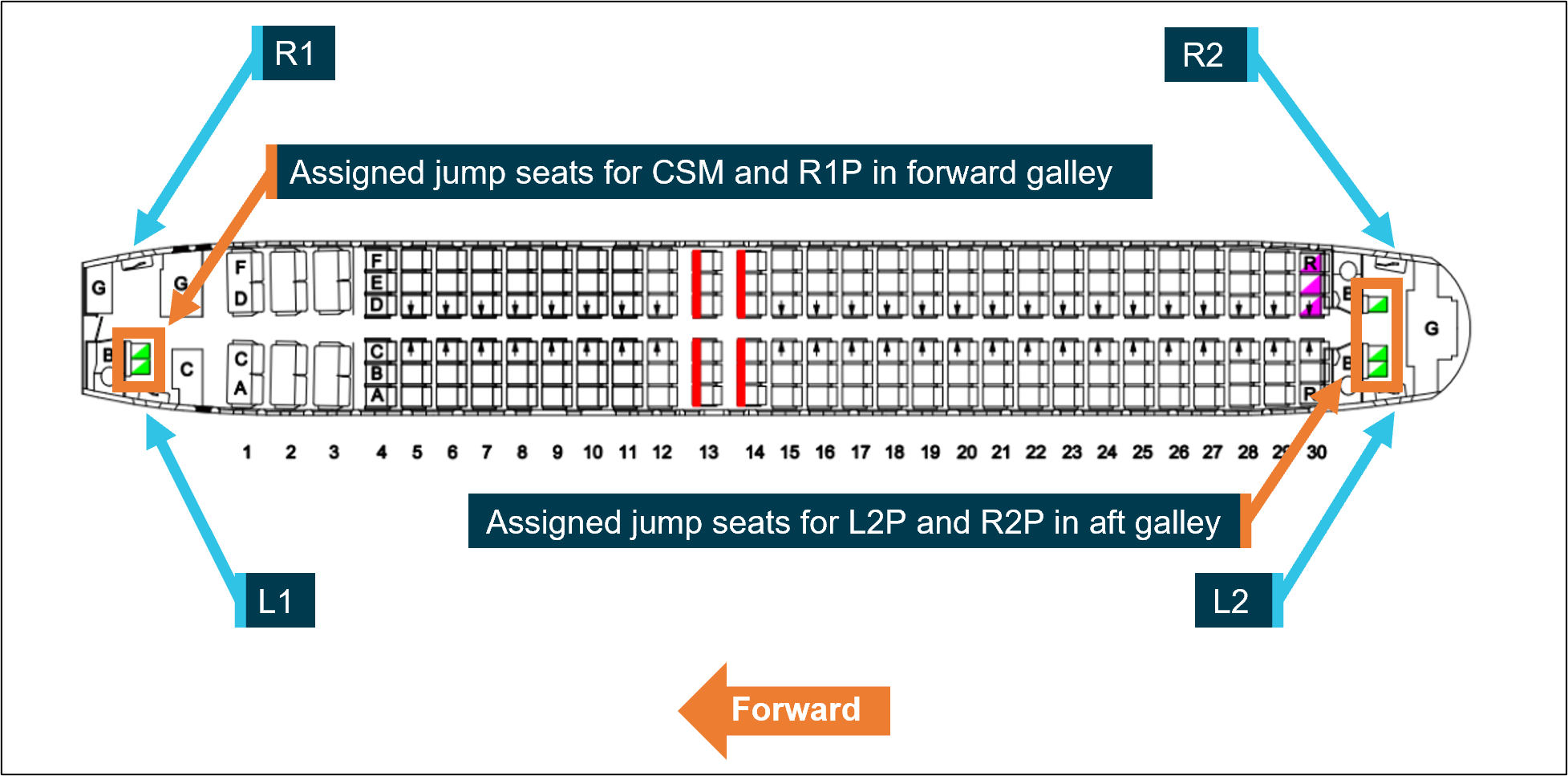
The cabin crew on board was comprised of a complement of 4 members, with their assigned jump seats located in the forward and aft galleys. Each cabin crew member was responsible for one of the 4 main cabin doors (Table 1) during critical phases of flight, with their assigned jump seat (Figure 1) located immediately next to their assigned door. The cabin crew were under the supervision of the customer service manager (CSM) who was responsible to the captain for administration of in‑cabin service and liaison with the crew for all service and safety related matters.
Table 1: Cabin crew door assignment
| Cabin Door | Cabin crew assignment |
| Left one (L1) | Customer service manager (CSM) |
| Right one (R1) | Right one primary (R1P) |
| Left two (L2) | Left two primary (L2P) |
| Right two (R2) | Right two primary (R2P) |
Figure 1: 737 Cabin layout, doors and assigned jump seats for cabin crew
Source: Qantas, annotated by the ATSB
Cabin crew injuries
R2P
The R2P had been in the process of taking their seat when the turbulence occurred. They rose into the air during the turbulence, struck their head on the ceiling, and landed heavily on their feet. R2P immediately fell to the galley floor and told L2P that they were injured, possibly with a broken bone. They were later diagnosed in the hospital with a fracture involving 2 breaks in the ankle and another break in the leg, which required surgery.
CSM
The CSM sustained minor injuries due to striking aircraft fixtures while standing unsecured during the turbulence. The CSM self‑assessed their injuries and applied first aid the following day after noticing minor pain, including discomfort in their lower back and right shoulder blade. They also became aware of facial pain 2 days after the event.
L2P
The L2P sustained a head injury, due to striking the ceiling or other aircraft fixtures during the event but did not initially believe they were injured. They had several rostered days off after the event. They returned to work on 11 and 12 May and were made aware by co‑workers that they were displaying symptoms of possible injury. On 16 May, 12 days after the turbulence event, they were diagnosed with concussion after a consultation with their general practitioner.
Aircraft
The aircraft was registered as VH‑VYK in Australia on 11 January 2006, serial number 34183. The Boeing 737‑800 is a twin‑engine, narrow‑body commercial aircraft in the 737 Next Generation series, used for short to medium‑haul routes. It had a seating capacity of 174 passengers, with Qantas configuring its aircraft with 12 business class seats in a 2‑2 layout and 162 economy class seats. It is powered by two CFM56‑7B turbofan engines.
The passenger address system broadcasts announcements throughout the cabin, and the interphone facilitates communication between the flight and cabin crew.
Weather radar
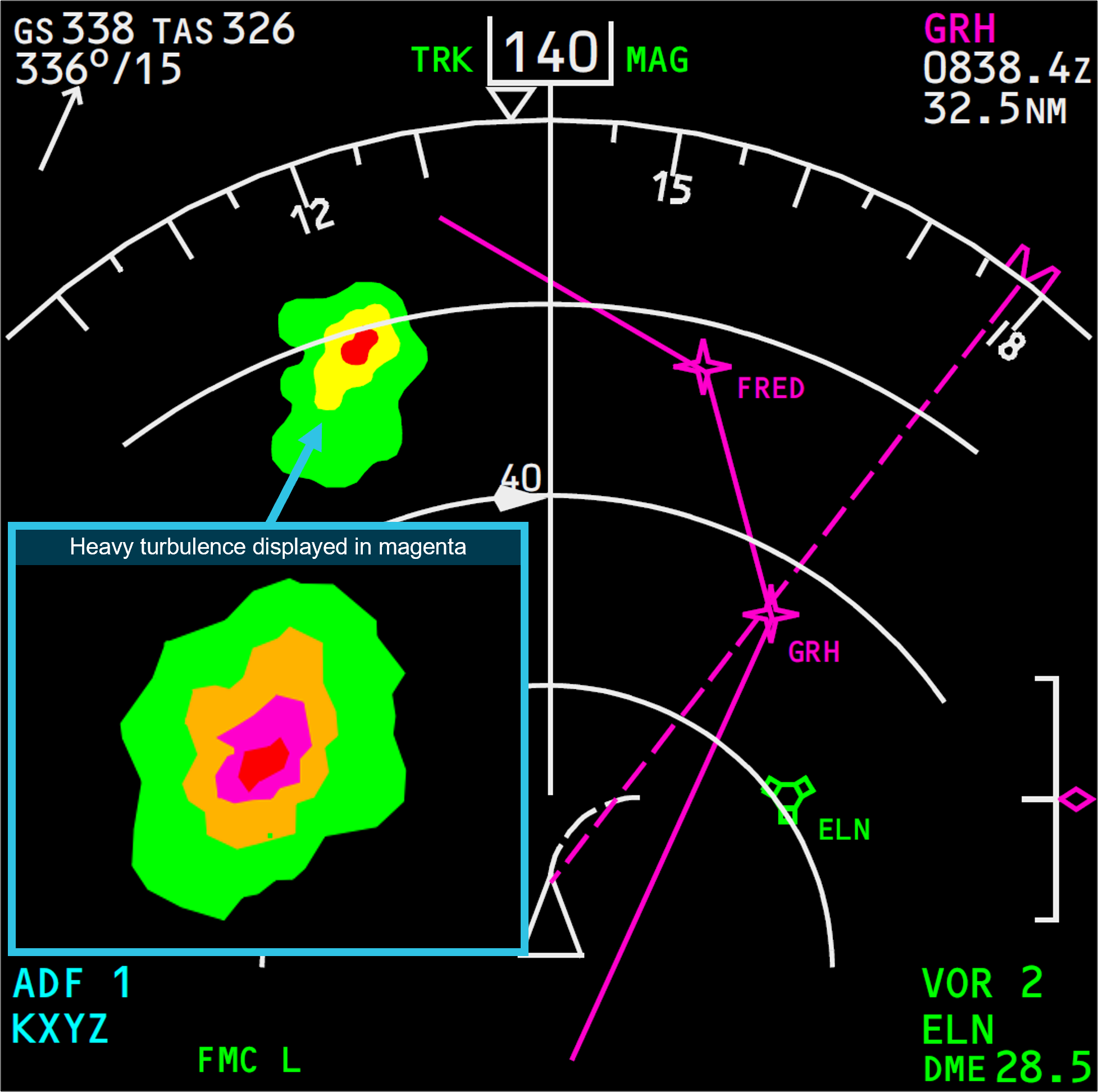
The weather radar system fitted to the Boeing 737 detects and locates various types of precipitation bearing clouds along the flight path of the aircraft and gives the pilot a visual indication in colour of the cloud’s intensity. The radar antenna sweeps a forward arc of 180°. The radar indicates a cloud’s rainfall intensity by displaying colours contrasted against a black background. Areas of heaviest rainfall appear in red, the next level of rainfall in amber, and the least rainfall in green (Figure 2).
Figure 2: Example depiction of 737 weather radar returns on pilot's navigational display
Source: Qantas, annotated by the ATSB
The turbulence mode displays normal precipitation and precipitation associated with turbulence. When the radar detects a horizontal flow of precipitation with velocities of 5 or more metres per second toward or away from the radar antenna, that target display becomes magenta. These magenta areas are likely associated with heavy turbulence.
The captain did not recall identifying areas of turbulence on the weather radar on descent or report that they were experiencing any difficulties operating the weather radar. Neither the captain nor the operator reported that the weather radar fitted to the aircraft was unserviceable during this occurrence.
Post‑event maintenance
Aircraft data was collected for use by the operator’s maintenance operations control, and engineering. The aircraft health monitoring (AHM) section collected and analysed data from aircraft components and systems post‑event to assess their condition and identify any potential overstressing of components. The operator’s AHM and flight data analysis showed that the event did not exceed tolerances, and no additional inspections were required.
Meteorological information
Brisbane Airport weather
The TAF for Brisbane Airport predicated winds from 100° at 10 kt with visibility more than 10 km in light rain showers and scattered cloud at 3,500 ft from 1200–2000 local time. Table 2 shows the automatic terminal information service (ATIS)[3] report at the time of departure.
Table 2: Brisbane Airport automatic terminal information service (abridged)
| Condition/requirement | ATIS and time issued |
| ‘Foxtrot’ 1159 local time | |
| Approach type | Expect instrument approach |
| Visibility | Greater than 10 km |
| Weather | Showers in the area |
| Cloud | Few[4] at 1,500 ft and scattered at 3,500 ft |
| Temperature | 22° |
Gold Coast Airport weather
The TAF for Gold Coast Airport predicted winds from 100° at 10 kt with visibility more than 10 km in light rain showers and scattered cloud at 2,000 ft. There was a significant intermittent variation from the prevailing conditions from 1300–2200 local time. For up to 30 minutes at a time during this period, the visibility was forecast to reduce to 4 km in rain showers with broken[5] cloud at 1,500 ft.
Graphical area forecast
The flight transited through a region contained in the graphical area forecast for Queensland south, covering subdivisions A and A2 (Figure 3). Table 3 shows the forecast conditions for the duration of the descent into Brisbane Airport which was issued at 0815 local time.
Figure 3: Graphical area forecast Queensland south
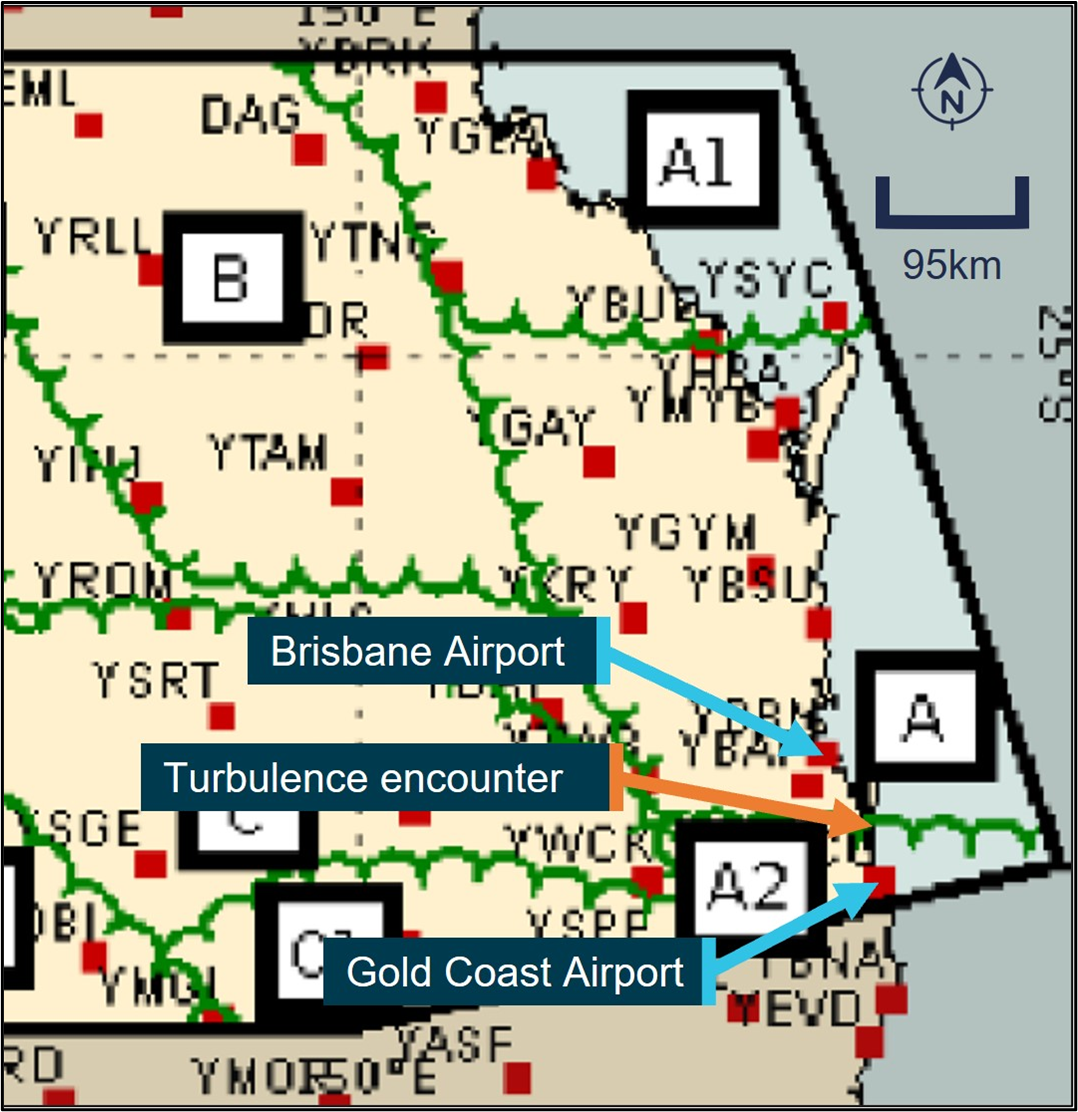
Source: Australian Bureau of Meteorology, annotated by the ATSB
Table 3: Graphical area forecast Queensland south
| Area | Surface visibility and weather | Cloud | Turbulence |
| A |
|
|
|
| A2 |
|
|
|
Turbulence reporting
In accordance with the requirements of regulation 91.675 of CASR (Civil Aviation Safety Regulations 1988) and instructions contained in the Aeronautical Information Publication Australia, a special air report must be provided to air traffic control whenever turbulence meeting the following specifications is encountered:
- Moderate: Changes to accelerometer readings of between 0.5 g and 1.0 g at the aircraft’s centre of gravity. Moderate changes to aircraft attitude and/or altitude may occur but aircraft remains under positive control. Usually small changes in airspeed. Difficulty in walking. Loose objects moved about.
- Severe: Changes to accelerometer readings greater than 1.0 g at the aircraft’s centre of gravity. Abrupt changes to aircraft attitude and/or altitude may occur; aircraft may be out of control for short periods. Usually large changes of airspeed. Loose objects tossed about.
The flight crew could not recall whether a special air report was provided to air traffic control and the turbulence event was classified as moderate in a post‑flight conference call between the captain and Qantas personnel. The operator defined moderate turbulence as ‘causing rapid bumps or jolts without appreciable changes in aircraft altitude or attitude.’ The description elaborated that unsecured objects are dislodged, and walking is difficult.
Recorded data
The operator’s internal investigation report detailed flight data and showed that over a 4‑second period, at an altitude of approximately 11,100 ft, the aircraft recorded:
- vertical G went from +1.2G to -0.06G (negative) to +1.35G to +0.61G to +1.59G.
- pitch attitude changed from -2.4deg to -0.7deg over 1 sec.
Operator procedures
Dispatch weather briefing
For the operator’s domestic sectors, a flight plan, textual weather, and notice to airmen (NOTAM)[7] were provided in a briefing package to flight crew via an electronic application installed on their iPads. The briefing information included graphical area forecasts, additional weather, turbulence information and weather radar overlay imagery. Figure 4 shows a weather radar overlay issued at the time of departure. For operator domestic flights under 90 minutes, the crew did not receive a flight watch service[8] from the operator’s flight dispatch during the flight and consequently, any hazard alerts or amended terminal forecasts (TAF)[9] were only provided by air traffic control.
Prior to departure from Sydney, the flight crew conducted their pre‑flight planning and reviewed the weather briefing package. The crew recalled that the weather briefing package contained forecast light showers and some cloud in the vicinity of Brisbane and that the forecast weather for departure at Sydney was worse.
Figure 4: Brisbane Airport weather radar overlay on 4 May at 1200 local time (time of departure)
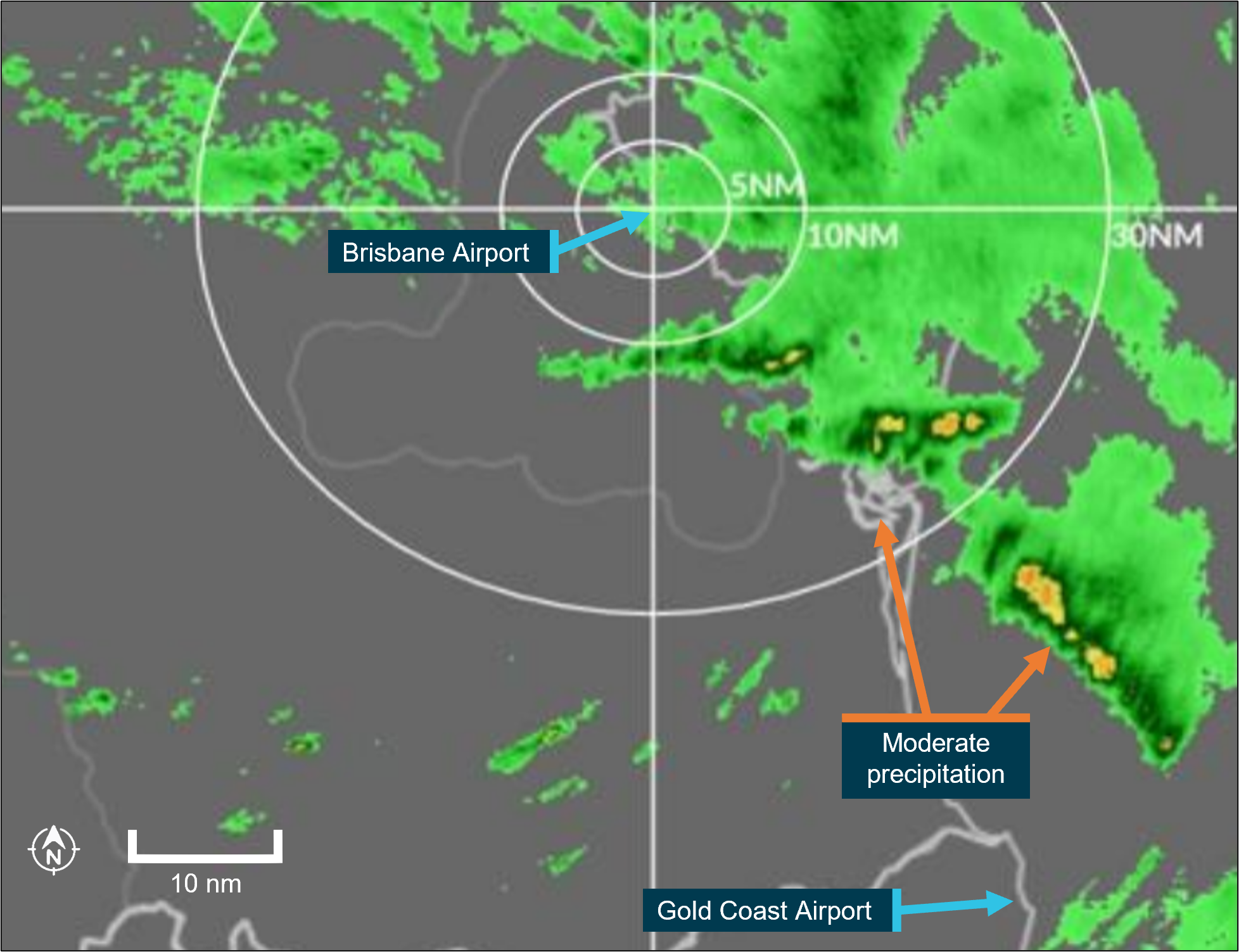
Source: Qantas, annotated by the ATSB
Cabin preparation for landing
The Qantas Flight administration manual (FAM) specifies that the flight crew make the ‘prepare cabin’ public announcement (PA) for cabin crew to commence cabin preparations at 20,000 ft or no lower than 10,000 ft above the destination airport. This PA can be performed at a higher altitude when considering descent profile, arrival procedures, weather and workload management. The customer service manager will then confirm receipt of the PA by directly contacting the flight crew.
The Qantas Cabin crew operation manual (CCOM) states the timing of this announcement should provide the cabin crew at least 10 minutes to secure the cabin and occupants for landing prior to the illumination of the seatbelt sign. After receipt of the ‘prepare cabin’ PA, all activity by the cabin crew shall be safety‑related only and no new service duties may be initiated.
Additionally, the FAM stated, ‘should contingencies occur that impact on the planned preparation time, every effort should be made to advise the cabin crew of these changes.’
In the case of the occurrence, the CSM recalled that the captain advised them that they would prepare the cabin earlier for a ‘bit of weather’. The prepare cabin PA was performed after passing 30,000 ft and the seatbelt sign was illuminated less than 10 minutes later following a further discussion with the CSM relating to the progress of the cabin preparations.
Anticipated turbulence on descent
In the event that turbulence is anticipated on descent, the Qantas FAM stated that:
Where turbulence is anticipated during descent, the flight crew should consider the 10 minutes requirement to prepare the cabin for landing. Cabin crew are to be alerted to anticipated turbulence as early as possible to enable them to complete their duties.
Any time the seatbelt signs are illuminated for turbulence, a PA must be made by the crew.
Securing cabin for landing
Cabin secured for landing
The CCOM specified that when the seatbelt sign is illuminated at the conclusion of the 10 minutes, the CSM will make the following PA:
All customers and crew must now be seated for landing with their seatbelt fastened
The cabin crew will subsequently perform the following procedures:
• ensure passengers are seated
• verify lavatories are vacant
• conduct a simultaneous galley secure check
• return to jump seats and secure within one minute
• after one minute, the CSM initiates a callback from their jump seat to the other cabin crew, to advise that the cabin was secure
• perform silent [safety] review.
Cabin unsecured for landing
Approximately one minute after the seatbelt sign is illuminated, the CSM will initiate a callback from their designated jump seat. Each cabin crew member will respond with ‘door number, name, cabin secured for landing’. If the cabin is not secured for landing, the CSM will inform the flight crew. In this case, the CCOM stated the ‘the CSM will assess the situation and inform the flight crew regarding the status of the cabin.’ This allows alternative actions before the no contact period, which commences when the landing gear is extended for landing. The cabin crew are not to contact the flight deck under any circumstances during this period.
In this case, the captain stated they would have ensured that passengers and cabin crew assisting the injured member were seated before landing had they been informed the cabin was not secure.
Use of cabin secure notifications in Australian airlines
The ATSB also reviewed the cabin secure procedures of 7 similar Part 121 passenger air transport operators in Australia. Of those, 4 operators employed a positive signal to confirm cabin security during normal operations, while 3 did not.
In the past 20 years, the ATSB identified 26 occurrences involving unrestrained occupants on landing, based on historical occurrence data. None of these resulted in fatalities, serious injuries, or minor injuries. Of these 26 occurrences, only 4 could potentially be linked to the absence of a positive cabin secure signal.
Anticipated turbulence procedure
If the flight crew anticipates turbulence, the following procedure from the CCOM will apply:
When the flight crew become aware of anticipated turbulence, they will liaise with the CSM advising the time and likely duration of the anticipated turbulence.
The CSM will relay this information to the members of the cabin crew to enable them to prioritise their duties by securing carts, galleys, items of service equipment, cabin and galley curtains, and the passenger cabin, based on time available.
A PA may be made by the flight crew to the passengers and cabin crew advising that cabin service is to cease as there is a likelihood of turbulence and the following actions will be initiated (Table 4):
Table 4: Crew actions during anticipated turbulence
| Action | Description |
| Seatbelt sign illumination | Must be illuminated by the flight crew no later than one minute prior to anticipated turbulence. |
| Cabin crew seated | Cabin crew to be seated in their jump seat within one minute of seatbelt signs illumination |
| Seatbelt announcement | Flight crew announces, ‘all passengers and crew to be seated and fasten seatbelts.’ |
| Call back procedure | CSM initiates call back to ensure all cabin crew are seated and have assessed the cabin condition. |
| Cabin crew call back response | Cabin crew respond to CSM with, ‘door number, name, seated and secured,’ or if cabin or crew are not secure, cabin crew report this to CSM during the call back. |
| Confirming security | If secure, CSM calls flight crew via interphone to confirm, ‘passengers and crew are secure’, as well as any other relevant information |
Unanticipated turbulence
Unanticipated light turbulence
If it is deemed necessary to illuminate the seatbelt signs for unanticipated light turbulence, the flight crew will perform the ‘seatbelts’ PA announcing, ‘all passengers and crew must be seated and fasten seatbelts.’
The CCOM states the following will then apply:
Cabin crew are to prioritise their duties by securing carts, galleys, items of service equipment and the passenger cabin and initiate crew actions for anticipated turbulence…..
When the captain illuminated the seatbelt sign prior to the turbulence encounter, they performed the ‘seatbelts’ PA. They stated they did this as a precautionary measure as this was their normal practice if there is the possibility of some turbulence.
Unanticipated turbulence posing an immediate hazard
In the event of unanticipated turbulence that poses an immediate safety hazard, the flight crew must select the seatbelt signs on and announce the ‘turbulence’ PA:
All passengers and crew be seated and fasten seatbelts immediately.
Following this announcement, the CCOM issues the following instructions:
Cabin crew will lock carts in position and secure themselves in the nearest seat or wedge themselves in the aisle.
If circumstances permit, the CSM will initiate the call back procedure, ascertain the condition of the cabin and relay this information to the flight crew.
Cabin crew incapacitation
In the event of a cabin crew member’s incapacitation, the CCOM calls for first aid to be administered, and the CSM and captain to be notified as soon as practicable. The CSM would then reassign the duties of the incapacitated crew member to an assist crew member, if available. If the incapacitation results in a crew complement less than the minimum required, the CSM, in consultation with the captain, will determine whether any additional off‑duty crew members are available to assume the role of the incapacitated cabin crew for landing.
The timing of the incapacitation placed concurrent procedural demands on the CSM and disrupted the cabin secure procedures. The CCOM procedures were sequential instructions designed to achieve consistent performance and reduce the potential for miscommunication and non‑conformances.
Injury response tool
The Qantas Group injury response tool specified the actions the crew must follow if an injury has occurred inflight. In this case, the injury response tool directed crew to seek immediate doctor advice via telephone for a turbulence event and for a head blow or head strike which fell under the classification as a ‘specific circumstance’. Consequently, the crew would be required to cease work immediately.
However, as neither co‑workers nor the injured crew recognised the symptoms of a concussion in the L2P or a facial injury in the CSM, they were not triaged according to the Group injury response tool. The operator stated that this likely occurred due to the injury response tool process relying on the self‑assessment of injuries which may not be immediately apparent.
Integrated operations controls procedures
The integrated operations control (IOC) was the central point of contact during any kind of disruption or incident on a Qantas aircraft. At the time of this occurrence, the IOC incident notification communications protocol contained in the operations control procedure (Figure 5) included contact with the on‑call doctor in cases of severe turbulence regardless of whether there were reported injuries. The IOC notification process for a ‘significant passenger/crew injury or illness’ event did not include contact with the Qantas on‑call doctor.
As the turbulence in this event was deemed post‑event by flight crew as moderate, contact with the on‑call doctor was not required under the process.
Figure 5: Qantas incident notification communications protocol version 11, March 2024
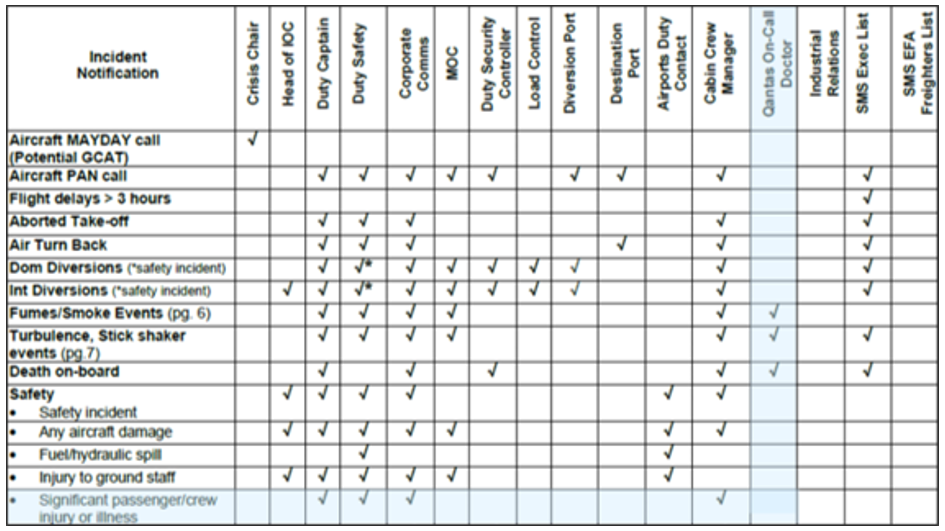
Source: Qantas
Research into turbulence detection
There are occasions where it can be challenging to identify turbulence. The US National Transportation Safety Board conducted 10 case studies (National Transportation Safety Board, 2021) of accidents between 2019–2020 that involved turbulence and embedded convection and determined that:
Embedded convection may not be easily detected by onboard or ground‑based weather radar, and when not visible outside the aircraft windows, this class of convective activity can act as a hidden source of severe turbulence encounters within an otherwise benign‑looking cloud mass.
Research into turbulence related injuries
From 2009 through 2018, the US National Transportation Safety Board (NTSB)[10] found that turbulence‑related accidents accounted for more than a third of all Part 121 accidents. The accident data revealed that the most common phase of flight associated with turbulence‑related accidents in Part 121 operations was during the en route descent, which accounted for 36.0% of accidents.
Further analysis indicated that cabin crew accounted for 78.9% of serious injuries, with the majority occurring in the aft section of the aircraft cabin. Passengers accounted for 21.1% of serious injuries, while no flight crew members were seriously injured (National Transportation Safety Board, 2021).
The distribution of cabin crew injuries found most occurring in or near an aft galley (Figure 6), which likely reflects that the service‑related duties of cabin crew often require them to spend more time working unrestrained in the galley area. The most commonly reported cabin crew activities at the time of serious injury were:
- preparing the cabin for landing (39.2%)
- conducting cabin service (13.4%)
- preparing for cabin service (9.3%).
During this occurrence, the R2P and L2P sustained the most severe injuries while unrestrained in the aft galley as they prepared the cabin for landing, which is consistent with research on turbulence‑related injuries.
Figure 6: Location of cabin crew at time of turbulence‑related serious injury, 2009–2018
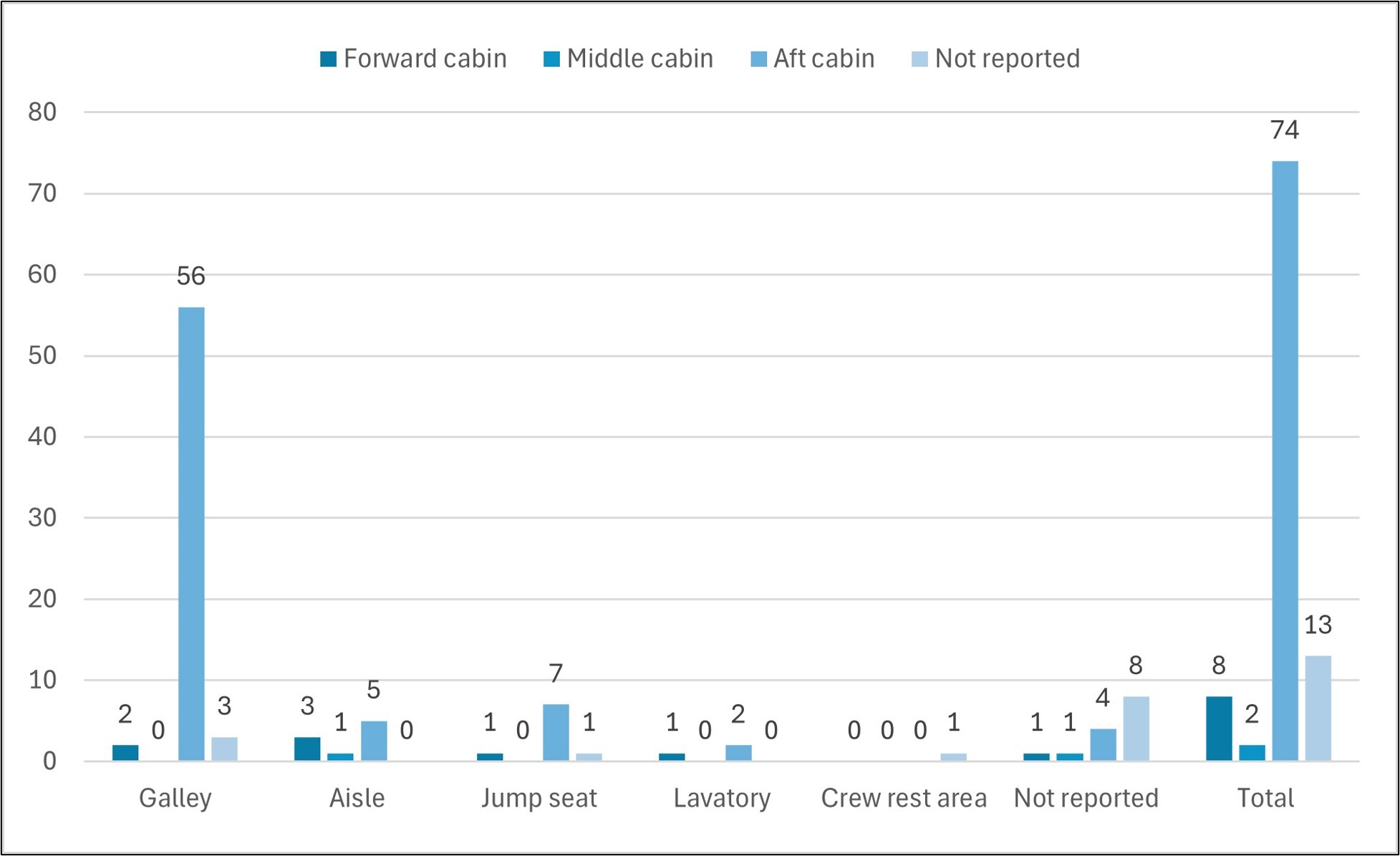
Source: National Transportation Safety Board
Safety analysis
Crew communication
During the descent into Brisbane, the captain commenced cabin preparations earlier than usual, using standard protocols to account for known weather conditions en route. Although the graphical area forecast indicated the possibility of moderate to severe turbulence, the captain did not observe weather radar returns or receive any other pilot reports indicating the presence of moderate to severe turbulence during the descent.
Approximately 5–6 minutes after initiating cabin preparations, the aircraft entered stratiform cloud and the captain contacted the customer service manager (CSM) to check on the cabin crew’s progress. The purpose of this communication was to provide the captain with information to guide the timing of the seatbelt sign illumination. However, the captain did not provide any weather‑related information to the CSM during this interaction, leaving the cabin crew unaware of any increased likelihood of turbulence.
Two minutes later, the seatbelt sign was illuminated, accompanied by the ‘seatbelt’ public announcement (PA). The captain then observed an approaching cumulus cloud along the flight path but determined it did not pose an immediate hazard based on a visual assessment and the lack of radar indications. As a result, the captain did not perform the ‘turbulence’ PA, which would have prompted the cabin crew to immediately secure themselves in the nearest seat or wedge themselves in the aisle to prepare for the turbulence encounter.
Although the captain contacted the CSM to confirm the time remaining to prepare the cabin, the absence of indications to the subsequent severity of the turbulence limited the captain's perception of the possible threat. Therefore, additional precautions were not considered. The captain followed normal descent procedures, however, did not discuss any additional weather‑related information in communications with the CSM.
As a result, the cabin crew, who relied on information from the flight crew, were unprepared for the turbulence encounter. This situation underscores the difficulties posed by unexpected turbulence, as the procedures for managing in‑flight turbulence rely on the flight crew's ability to predict or avoid these situations.
Contributing factor The captain did not communicate to the cabin crew about the expected turbulence, likely as a result of the captain not knowing the severity of the turbulence. |
Crew unrestrained during severe turbulence
When the seatbelt sign was illuminated during the descent, cabin crew members were required to perform several duties whilst being unrestrained. In the moments immediately preceding the turbulence encounter, the CSM and R2P recalled checking their assigned lavatories as part of securing the cabin for landing.
Cabin crew were required to complete their assigned duties within one minute of the seatbelt sign being illuminated, which was also the case for unanticipated light turbulence. The captain performed the ‘seatbelts’ PA when the seatbelt sign was illuminated, which indicated unanticipated light turbulence to the cabin crew members. However, the cabin crew did not recall hearing this PA and remained unaware of the increased risk of turbulence as the aircraft approached a cumulus cloud.
Because the turbulence event occurred less than one minute after the illumination of the seatbelt sign, which was accompanied by the ‘seatbelt’ PA, the cabin crew did not have sufficient time to ensure they were seated and restrained prior to the aircraft being affected by turbulence. The injuries sustained during the encounter reflect research showing that cabin crew members face a higher risk of turbulence‑related injuries, especially during the descent phase of a flight when they are preparing for landing (National Transportation Safety Board, 2021).
Contributing factor Three cabin crew were unrestrained while performing duties during unanticipated severe turbulence resulting in all 3 receiving injuries. |
Cabin management
After the turbulence event, the CSM and left 2 primary (L2P) turned their attention to the right 2 primary (R2P) who was laying on the floor of the aft galley and was unable to move due to their injury. The turbulence event occurred in the latter stages of the descent, which meant there was little time to provide first aid to the R2P and complete the required preparations for landing. The CSM, L2P and the passengers assisting the R2P were reluctant to return to their assigned seats despite the clear instructions from the captain to do so.
The situation in the aft galley disrupted the procedural flow and meant that the CSM and L2P became focused on providing first aid rather than returning to their seats to complete the callback and silent review prior to landing. Interruptions often lead people to forget to resume their tasks, while multitasking can further complicate the situation by increasing the overall workload within a limited timeframe (Loukopoulos & Barshi, 2009). In this case, the CSM and L2P had to balance providing first aid and securing the cabin. High stress levels are also known to cause errors (Kim & Hyun, 2022), which likely contributed to the CSM prioritising providing first aid over securing themselves and the cabin for landing.
The CSM subsequently lost situational awareness with respect to the phase of flight and the sequence of the standard operating procedures. As a result of being situated in the aft galley, the CSM likely missed audible cues, such as the extension of the landing gear.
The captain did not recall receiving any requests for more time to prepare the cabin for landing. Additionally, the single aisle cabin configuration of the Boeing 737 offered limited options for accommodating the R2P anywhere other than the aft galley. After repeated instructions for everyone to be seated for landing, the captain was confident that all uninjured occupants had complied.
The decision of the CSM and L2P to remain unrestrained in the aft galley during a critical phase of flight increased the risk of incapacitation to additional cabin crew, which could have further compromised their ability to manage a landing‑based emergency effectively if one was to happen. Additionally, the 5 occupants in the aft galley created a potential obstruction to emergency exits, increasing the likelihood of delays or complications if they needed to enact an emergency evacuation.
Other factor that increased risk Although the captain had instructed that the uninjured passengers and crew needed to be seated, 3 cabin crew and one passenger were unrestrained for landing due to being preoccupied with administering first aid to the injured cabin crew member. This increased the risk of injury to the unrestrained occupants and had the potential to compromise a safe emergency evacuation if required. |
The aircraft landed with the CSM, L2P, R2P and 2 passengers unrestrained in the aft galley. The flight crew was made aware by the CSM that the injured cabin crew member was unsecured and unable to be made secured for landing and instructed the CSM to ensure everyone else was secure for landing. While this instruction was communicated to those people unsecure in the cabin, the instruction was not followed as described above. The CSM attempted to inform the flight crew by instructing the L2P to communicate with them. However, the captain again instructed that everyone who could be secured needed to be, as they were landing. As such, the flight crew assumed all cabin occupants would be secure apart from the injured R2P crew. At this stage, the cabin crew operating procedures requiring the CSM to inform the flight crew if the cabin was not secure broke down as there was no further communication that the cabin was not secure.
The captain stated that if they had known that 4 uninjured occupants were still unrestrained in the aft galley, they would have taken appropriate action to ensure they had returned to their seats prior to the final approach to land. The lack of a positive signal increased the likelihood that flight crew would be unaware of unrestrained occupants during the approach and landing phases of flight.
While the lack of a positive cabin secure signal played a role in this occurrence, the available data does not indicate it as a significant ongoing risk.
Other factor that increased risk The Qantas 737 procedures did not require flight crew to receive positive confirmation that the cabin was secure for landing. This increased the risk that occupants and objects were not secure for landing. |
Post‑flight medical assessment
Shortly after arrival at the gate at Brisbane airport, the R2P was attended to by ambulance personnel. However, the CSM and L2P, who were also injured during the event, did not receive any follow‑up medical assessments or treatment. This situation arose due to procedural gaps, which relied on crew members to self‑assess and report a significant injury to receive a medical assessment.
While the CSM self‑diagnosed a minor injury and reported it the following day, the L2P was unaware of their injury. As a result, the L2P operated on multiple flights while experiencing symptoms of an undiagnosed concussion, until some days later when co‑workers noticed signs of a possible injury.
Other factor that increased risk A crew member with undiagnosed concussion from the accident flight operated on subsequent flights without receiving appropriate medical attention. |
The Qantas integrated operations control protocols did not mandate contacting the on‑call doctor in cases where a passenger or crew member was significantly injured. Although the protocol required consultation with the on‑call doctor in cases of severe turbulence, this turbulence event was classified as moderate, and no medical consultation was either required or requested. Additionally, the Qantas group injury response tool also relied on crew members self‑assessing their injuries to determine if medical treatment would be required, but an injured crew member may not realise the extent of their injury at the time.
In the cases of a concussion, symptoms may include impairments in neurocognitive functioning, primarily affecting attention, concentration, memory, and judgment or problem‑solving (Ryan & Warden, 2003). Returning to work with an undiagnosed concussion likely compromised the L2P’s ability to perform safety‑critical tasks. A subtle incapacity due to an undiagnosed injury could negatively impact operational safety, particularly during emergencies.
Other factor that increased risk Qantas lacked a procedure to ensure cabin crew fitness was assessed after a significant injury. This increased the risk that a crew member could continue to operate while being unfit for duty. (Safety issue) |
Findings
ATSB investigation report findings focus on safety factors (that is, events and conditions that increase risk). Safety factors include ‘contributing factors’ and ‘other factors that increased risk’ (that is, factors that did not meet the definition of a contributing factor for this occurrence but were still considered important to include in the report for the purpose of increasing awareness and enhancing safety). In addition ‘other findings’ may be included to provide important information about topics other than safety factors. Safety issues are highlighted in bold to emphasise their importance. A safety issue is a safety factor that (a) can reasonably be regarded as having the potential to adversely affect the safety of future operations, and (b) is a characteristic of an organisation or a system, rather than a characteristic of a specific individual, or characteristic of an operating environment at a specific point in time. These findings should not be read as apportioning blame or liability to any particular organisation or individual. |
From the evidence available, the following findings are made with respect to the turbulence event and cabin crew injury involving Boeing 737, VH‑VYK, 36 km south‑east of Brisbane Airport, Queensland, on 4 May 2024.
Contributing factors
- The captain did not communicate to the cabin crew about the expected turbulence, likely as a result of the captain not knowing the severity of the turbulence.
- Three cabin crew were unrestrained while performing duties during unanticipated severe turbulence resulting in all 3 receiving injuries.
Other factors that increased risk
- Although the captain had instructed that the uninjured passengers and crew needed to be seated, 3 cabin crew and one passenger were unrestrained for landing due to being preoccupied with administering first aid to the injured cabin crew member. This increased the risk of injury to the unrestrained occupants and had the potential to compromise a safe emergency evacuation if required.
- The Qantas 737 procedures did not require flight crew to receive positive confirmation that the cabin was secure for landing. This increased the risk that occupants and objects were not secure for landing.
- A crew member with undiagnosed concussion from the accident flight operated on subsequent flights without receiving appropriate medical attention.
- Qantas lacked a procedure to ensure cabin crew fitness was assessed after a significant injury. This increased the risk that a crew member could continue to operate while being unfit for duty. (Safety issue)
Safety issues and actions
Central to the ATSB’s investigation of transport safety matters is the early identification of safety issues. The ATSB expects relevant organisations will address all safety issues an investigation identifies. Depending on the level of risk of a safety issue, the extent of corrective action taken by the relevant organisation(s), or the desirability of directing a broad safety message to the Aviation industry, the ATSB may issue a formal safety recommendation or safety advisory notice as part of the final report. All of the directly involved parties are invited to provide submissions to this draft report. As part of that process, each organisation is asked to communicate what safety actions, if any, they have carried out or are planning to carry out in relation to each safety issue relevant to their organisation. Descriptions of each safety issue, and any associated safety recommendations, are detailed below. Click the link to read the full safety issue description, including the issue status and any safety action/s taken. Safety issues and actions are updated on this website when safety issue owners provide further information concerning the implementation of safety action. |
Undiagnosed injuries
Safety issue number: AO-2024-032-SI-01
Safety issue description: Qantas lacked a procedure to assess cabin crew fitness after a serious injury. This increased the risk that a crew member could continue to operate while being unfit for duty.
Glossary
| AHM | Aircraft health monitor |
| AMSL | Above mean sea level |
| ATIS | Automatic terminal information service |
| CCOM | Cabin crew operations manual |
| CSM | Customer service manager |
| FAM | Flight administration manual |
| IOC | Integrated operations control |
| L1 | Left one |
| L2 | Left two |
| L2P | Left two primary |
| NOTAM | Notice to airmen |
| NTSB | National Transportation Safety Board |
| PA | Public announcement |
| R1 | Right one |
| R1P | Right one primary |
| R2P | Right two primary |
| TAF | Terminal area forecast |
Sources and submissions
Sources of information
The sources of information during the investigation included:
- the captain of the accident flight
- the customer service manager on the accident flight
- the R2 primary cabin crew member on the accident flight
- Qantas Airways Limited
- the manager of Safety, Qantas Airways Limited
- Civil Aviation Safety Authority
- Bureau of Meteorology
References
Endsley, M. R. (1999). Situation awareness in aviation systems. Handbook of aviation human factors. Retreived from https://www.pacdeff.com/pdfs/AviationSA-Endsley%201999.pdf.
Kim, J. Y., & Hyun, S. (2022). Study on Factors That Influence Human Errors: Focused on Cabin Crew. International Journal of Environmental Research and Public Health, 19(9), 5696.
Loukopoulos, L. D., & Barshi, I. (2009). The multitasking myth : Handling complexity in real-world operations. Taylor & Francis Group. Taylor & Francis Group.
National Transportation Safety Board. (2021). Preventing Turbulence-Related Injuries in Air Carrier Operations Conducted Under Title 14 Code of Federal Regulations Part 121. Retrieved from https://www.ntsb.gov/safety/safety-studies/Documents/SS2101.pdf.
Ryan, L. M., & Warden, D. L. (2003). Post concussion syndrome. International Review of Psychiatry, 15(4), 310–316. Retreived from https://doi.org/10.1080/09540260310001606692.
Submissions
Under section 26 of the Transport Safety Investigation Act 2003, the ATSB may provide a draft report, on a confidential basis, to any person whom the ATSB considers appropriate. That section allows a person receiving a draft report to make submissions to the ATSB about the draft report.
A draft of this report was provided to the following directly involved parties:
- the captain of the accident flight
- the customer service manager on the accident flight
- the L2 primary cabin crew member on the accident flight
- the R2 primary cabin crew member on the accident flight
- Qantas Airways Limited
- Civil Aviation Safety Authority
- Bureau of Meteorology.
Submissions were received from:
- the L2 primary cabin crew member on the accident flight
- the R2 primary cabin crew member on the accident flight
- Qantas Airways Limited
- Civil Aviation Safety Authority
- Bureau of Meteorology
The submissions were reviewed and, where considered appropriate, the text of the report was amended accordingly.
Purpose of safety investigationsThe objective of a safety investigation is to enhance transport safety. This is done through:
It is not a function of the ATSB to apportion blame or provide a means for determining liability. At the same time, an investigation report must include factual material of sufficient weight to support the analysis and findings. At all times the ATSB endeavours to balance the use of material that could imply adverse comment with the need to properly explain what happened, and why, in a fair and unbiased manner. The ATSB does not investigate for the purpose of taking administrative, regulatory or criminal action. TerminologyAn explanation of terminology used in ATSB investigation reports is available here. This includes terms such as occurrence, contributing factor, other factor that increased risk, and safety issue. Publishing informationReleased in accordance with section 25 of the Transport Safety Investigation Act 2003 Published by: Australian Transport Safety Bureau © Commonwealth of Australia 2025 
Ownership of intellectual property rights in this publication Unless otherwise noted, copyright (and any other intellectual property rights, if any) in this report publication is owned by the Commonwealth of Australia. Creative Commons licence With the exception of the Commonwealth Coat of Arms, ATSB logo, and photos and graphics in which a third party holds copyright, this report is licensed under a Creative Commons Attribution 4.0 International licence. The CC BY 4.0 licence enables you to distribute, remix, adapt, and build upon our material in any medium or format, so long as attribution is given to the Australian Transport Safety Bureau. Copyright in material obtained from other agencies, private individuals or organisations, belongs to those agencies, individuals or organisations. Where you wish to use their material, you will need to contact them directly. |
[1] Stratiform: clouds that exhibit extensive horizontal development (in contrast to the vertical development of cumuliform clouds).
[2] Cumulus: a principal cloud type, forming in the low levels of the troposphere, characterised by flat bases and dome or cauliflower‑shaped upper surfaces. Small, separate cumulus are associated with fair weather but may grow into towering cumulus or cumulonimbus.
[3] Automatic terminal information service (ATIS): the provision of current, routine information to arriving and departing aircraft by means of continuous and repetitive broadcasts.
[4] Few is a meteorological term used in aviation to describe cloud coverage that occupies 1 to 2 oktas (eighths) of the sky.
[5] Broken cloud is a meteorological term used in aviation to describe cloud coverage that occupies 5 to 7 oktas (eighths) of the sky.
[6] Scattered cloud is a meteorological term used in aviation to describe cloud coverage that occupies 3 to 4 oktas (eighths) of the sky.
[7] NOTAM: Notice to Airmen (NOTAM) is a notice containing information or instructions concerning the establishment, condition or change in any aeronautical facility, service, procedure or hazard, the timely knowledge of which is essential to persons concerned with flight operations.
[8] Flight watch service: a flight watch service provides updated weather information to pilots en route.
[9] Terminal forecast (TAF): a TAF is a coded statement of meteorological conditions expected at an aerodrome and within a radius of 8 kilometres of the aerodrome reference point.
[10] National Transportation Safety Board. (2021). Preventing Turbulence‑Related Injuries in Air Carrier Operations Conducted Under Title 14 Code of Federal Regulations Part 121.
Occurrence summary
| Investigation number | AO-2024-032 |
|---|---|
| Occurrence date | 04/05/2024 |
| Location | 36 km south-east of Brisbane Airport |
| State | Queensland |
| Report release date | 27/05/2025 |
| Report status | Final |
| Investigation level | Defined |
| Investigation type | Occurrence Investigation |
| Investigation status | Completed |
| Mode of transport | Aviation |
| Aviation occurrence category | Cabin injuries, Turbulence/windshear/microburst |
| Occurrence class | Accident |
| Highest injury level | Serious |
Aircraft details
| Manufacturer | The Boeing Company |
|---|---|
| Model | 737-838 |
| Registration | VH-VYK |
| Serial number | 34183 |
| Aircraft operator | Qantas Airways Limited |
| Sector | Jet |
| Operation type | Part 121 Air transport operations - larger aeroplanes |
| Departure point | Sydney Airport, New South Wales |
| Destination | Brisbane Airport, Queensland |
| Damage | Nil |