Breakaway of Grand Pioneer and AAL Fremantle, Fremantle, Western Australia, on 17 August 2014
Final report
Report release date: 04/05/2016
Safety summary
What happened
On 17 August 2014, Grand Pioneer and AAL Fremantle broke away from their berths when a thunderstorm passed across the Port of Fremantle. A bollard on the wharf holding both ships’ stern lines failed, most likely after Grand Pioneer’s vehicle ramp contacted it. AAL Fremantle contacted a ship at an adjacent berth, and parts of the Fremantle Rail Bridge nearby.
The ships were berthed again with tug assistance. The ships had suffered minor damage. The rail bridge, however, was closed for 3 weeks for inspection and repairs to track alignment and other non-structural damage.
What the ATSB found
The ATSB investigation concluded that Grand Pioneer moved slightly as the tension in its mooring lines increased, in response to the high winds associated with the passing thunderstorm. It is likely that its vehicle ramp then made contact with the bollard that held the stern lines of both ships. As a result of the contact, the bollard broke away from the wharf.
The investigation found that Fremantle Port Authority’s (Fremantle Ports) examination of the risks associated with a ship contacting the rail bridge contained limited analysis on keeping ships alongside in adverse weather, particularly at berths 11 and 12 where the wind is predominantly on ships’ beams. There was also no analysis of the means to assist a ship that got close to Wongara Shoal and the rail bridge.
The ATSB also found that Fremantle Ports’ adverse weather procedures were triggered only by specific Bureau of Meteorology (BoM) forecast categories and terms. There was no guidance for vessel traffic service (VTS) officers to take action based on actual weather conditions, or certain other severe weather terms used in BoM forecasts.
Another investigation finding was that BoM’s marine forecast at the time of the incident did not describe expected wind speeds using recognised marine terms, such as ‘gale force’. Further, the forecast title understated the wind speeds expected.
What's been done as a result
Fremantle Ports has put into service 12 ‘shore tension’ devices in the inner harbour. These devices maintain a constant tension in a mooring line to assist keeping a ship alongside its berth.
The port has subscribed to a customized weather prediction service for its area, and upgraded its weather station and VTS equipment to enhance monitoring. The VTS officers have been trained to use the new and upgraded equipment. The port has updated its ship weather warnings to include a broader range of meteorological terms and descriptions.
Fremantle Ports has also revised its weather warning distribution list to include the manager of the rail bridge, the Public Transport Authority (PTA). The port and the PTA have established direct, high level, points of contact with communication processes in place to manage any emergencies that could involve the rail bridge.
The BoM safety action includes undertaking to use standard terminology in marine forecasts and implementing a formal process to consult stakeholders to better identify and meet their needs.
Safety message
When analysing the risks to a port’s operation, its operator needs to consider the risk controls to avoid a serious incident as well as the recovery controls in case an incident does occur.
The occurrence
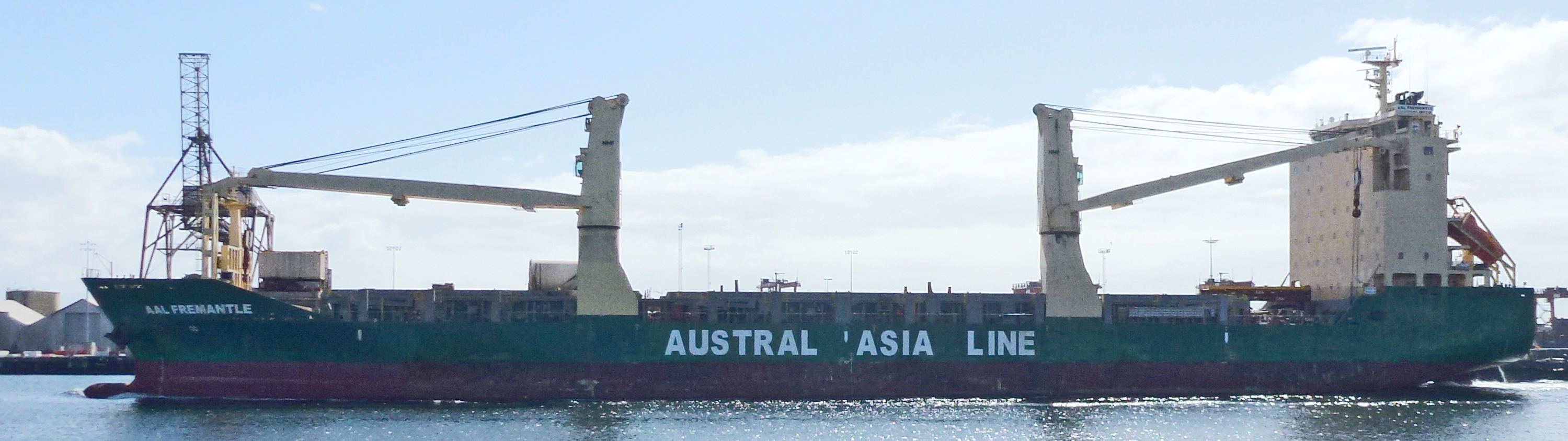
At 1712[1] on 17 August 2014, the 190 m long car carrier, Grand Pioneer (Figure 1), berthed in the port of Fremantle at berth 11 (Figure 3). Berthed astern of the car carrier was the 140 m long general cargo ship, AAL Fremantle (Figure 2). It had been in port for the past 10 days, unloading and then loading cargo using its two, port-side mounted cranes.
Figure 1: Grand Pioneer
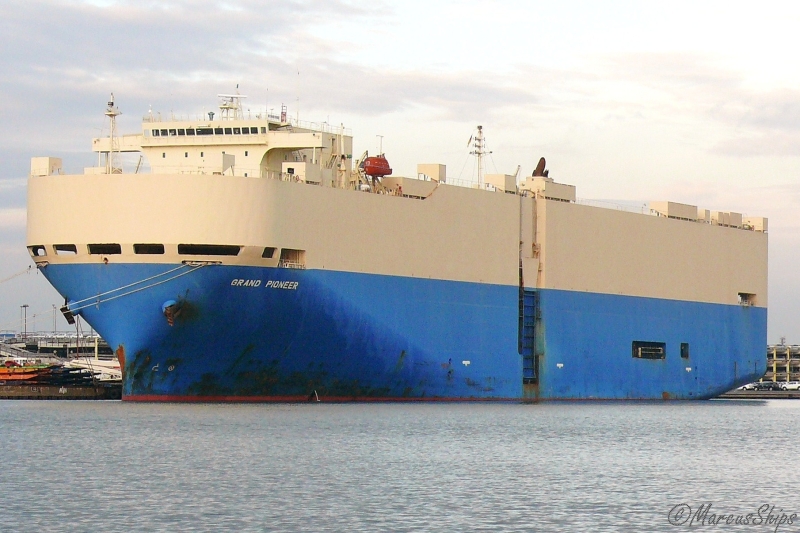
Source: Marcus, Shipspotting
Figure 2: AAL Fremantle
Source: Australian Transport Safety Bureau
At the time, a Bureau of Meteorology (BoM) strong wind (26 to 33 knots)[2] warning was in place for Perth local waters, which include Fremantle. The warning, issued that morning, included the caution ‘scattered thunderstorms in the late evening, possibly severe with damaging winds’.[3]Grand Pioneer’smaster had been monitoring the weather forecasts, and in response to the strong wind warning, the ship’s mooring arrangement had been enhanced to include an additional head line and stern line.
Fremantle Port Authority (Fremantle Ports) had taken its standard precautions in response to the BoM forecasts – advising the masters of berthed ships of the strong wind warning.[4] The port’s advice included asking that masters lower their ship’s outboard anchors to the seabed. AAL Fremantle’s master had its anchor lowered but Grand Pioneer’s master decided not to do so.
Figure 3: Section of navigational chart Aus 113 showing involved ships at their berths, and the movement of ships that broke away

Source: Australian Hydrographic Service, annotated by ATSB.
At 1900, Grand Pioneer’s cargo unloading started using the vehicle ramp on its starboard quarter. As forecast, the wind was from the north at 28 to 33 knots, on the ship’s starboard beam.
At 2200, Grand Pioneer’s master was on the ship’s navigation bridge attending to paperwork as the forecast thunderstorm approached. He saw that the anemometer (above the bridge front windows) indicated that the wind had increased to 35 knots. He radioed the duty mate to stop vehicle traffic on the ramp in case the ship moved off the wharf. He then telephoned the ship’s agent, and as a precaution, requested a tug to assist in keeping the ship alongside if required.
At 2202¾, AAL Fremantle’s stern moved slightly off the wharf and the tension in the mooring lines increased.
At that time, Grand Pioneer’s third mate was at the top of the ramp. As he finished checking the aft spring lines, a stern line parted. The third mate then noticed that two other stern lines, on a different bollard to the parted line, were slack and in the water. He then hurried up the ramp, attempting to stop the cars on it in case the ramp fell off the wharf.
At about 2203, Grand Pioneer’s master noted that the wind was now gusting to 55 knots. Looking aft, he saw the ship’s stern moving rapidly away from the wharf and the ramp sliding over the edge. He immediately called Fremantle vessel traffic service (VTS) via VHF radio to request immediate assistance. When he received no response, he contacted the agent and asked for assistance. He then instructed his crew to standby at their forward and aft mooring stations and requested the ship’s main engine and bow thruster to be prepared for immediate use.
AAL Fremantle’s master was in his cabin when he heard the sudden rise in wind speed. He went to the aft facing cabin window and saw his ship’s stern moving away from the wharf. As he could not see the ship’s three stern lines, the master immediately went to the bridge and started preparations to manoeuver the ship.
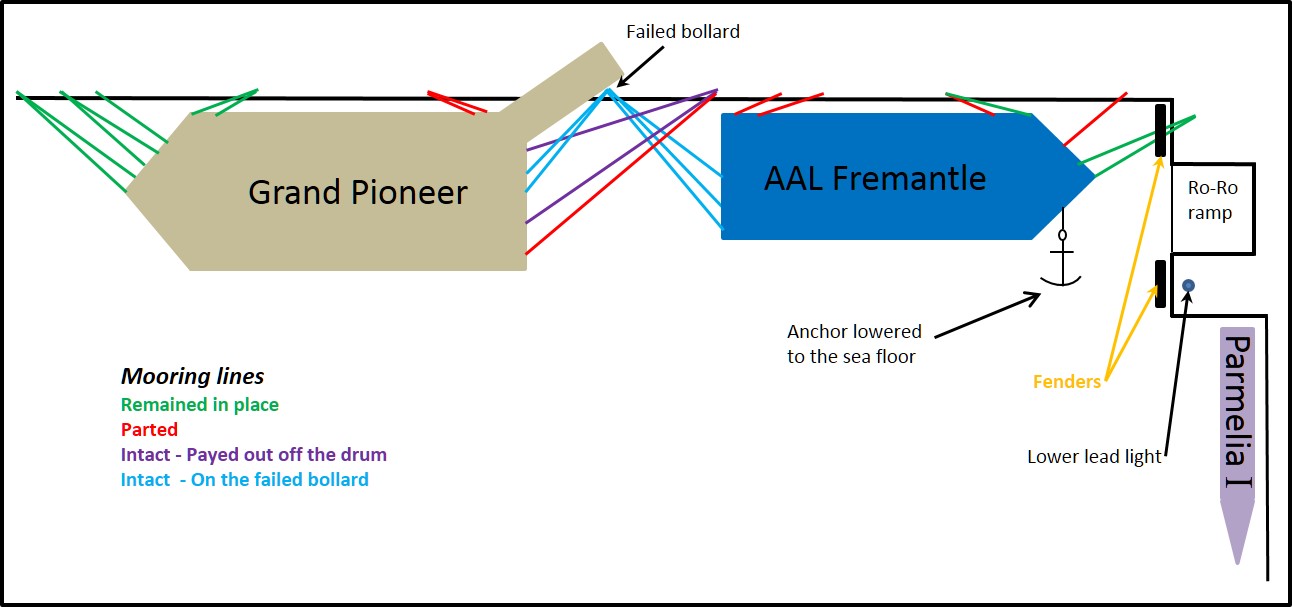
Figure 4: Indicative diagram showing the ships’ mooring arrangements (not to scale)
Source: ATSB
By about 2203, Grand Pioneer’s vehicle unloading had ceased, with one car stopped on the ramp after its driver ran back up to the vehicle deck. At this time, a northbound commuter train was passing over the nearby Fremantle Rail Bridge.
At 2203½, Grand Pioneer’s stern had moved sufficiently away from the wharf to allow the ramp to fall off the wharf. A stern line, after running off its winch drum, fell onto the ramp. The line then caught under a rear tyre of the stranded car, pulling the car down the ramp and turning it about 90 degrees before the line came free and fell into the water.
Shortly after, AAL Fremantle had swung to lie at about right angles to its berth. As the ship moved astern, a fender near the lower lead light (Figure 4) fouled the ship’s starboard anchor cable and the anchor was dragged onto the wharf apron. At about 2207, as the anchor was dragged across the apron, it brought down the lead light.
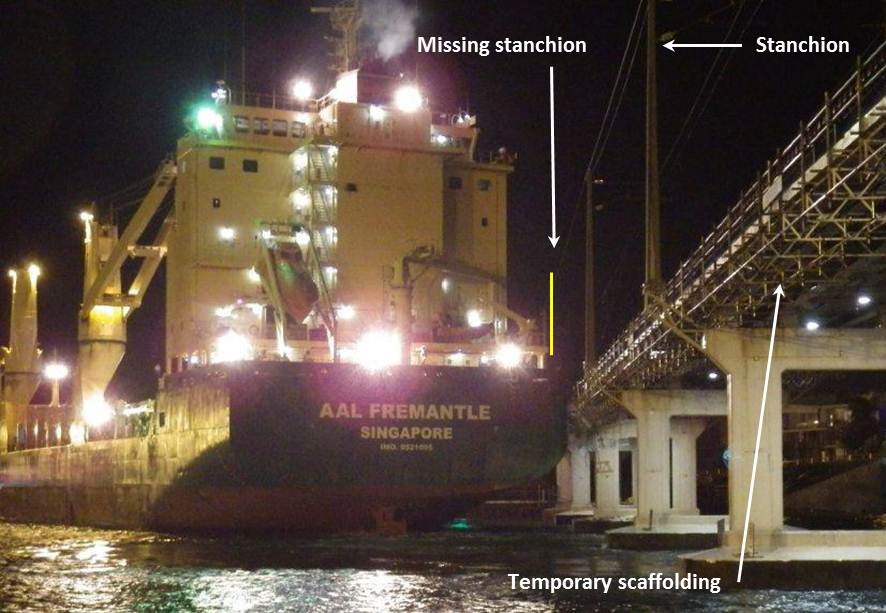
At about 2210, AAL Fremantle’s starboard quarter struck a stanchion[5] on the rail bridge, bringing it down and cutting power to that section of track. Temporary scaffolding on the side and under the bridge was also damaged, and the rail track’s alignment was disturbed (Figure 5). Moments later, AAL Fremantle, about midships, contacted the starboard shoulder of Parmelia I (Figure 3) at the adjacent berth. AAL Fremantle’s two remaining head lines were slack and the remaining forward spring line was still under tension (Figure 4). At that point, the ship’s astern movement stopped in the proximity of Wongara Shoal (Figure 3).
Response
Shortly after, AAL Fremantle’s master ran the main engine at dead slow ahead to maintain the ship’s position, and avoid putting any further weight on the rail bridge.
By 2210, Grand Pioneer had swung until its port shoulder was about 15 m from Singapore Bridge, a container ship at berth 10 (Figure 3). Grand Pioneer’s head lines and forward spring lines had held. The master let go the port anchor and used the bow thruster and main engine to maintain the ship’s position.
At 2215, the Public Transport Authority (PTA) train controller received a phone call from Brookfield Rail. [6] Brookfield Rail advised that the police had notified it of a ship striking the rail bridge.
The PTA then enacted their safety plan, which included terminating all southbound trains at North Fremantle station, and calling out overhead-staff to inspect the section of track. At this time, the next train due to cross the bridge was a southbound train was 13 minutes away from the rail bridge. The train was stopped at North Fremantle station.
At 2235, a tug arrived and began assisting Grand Pioneer. At 2245, a pilot boarded AAL Fremantle and other tugs arrived to assist both ships.
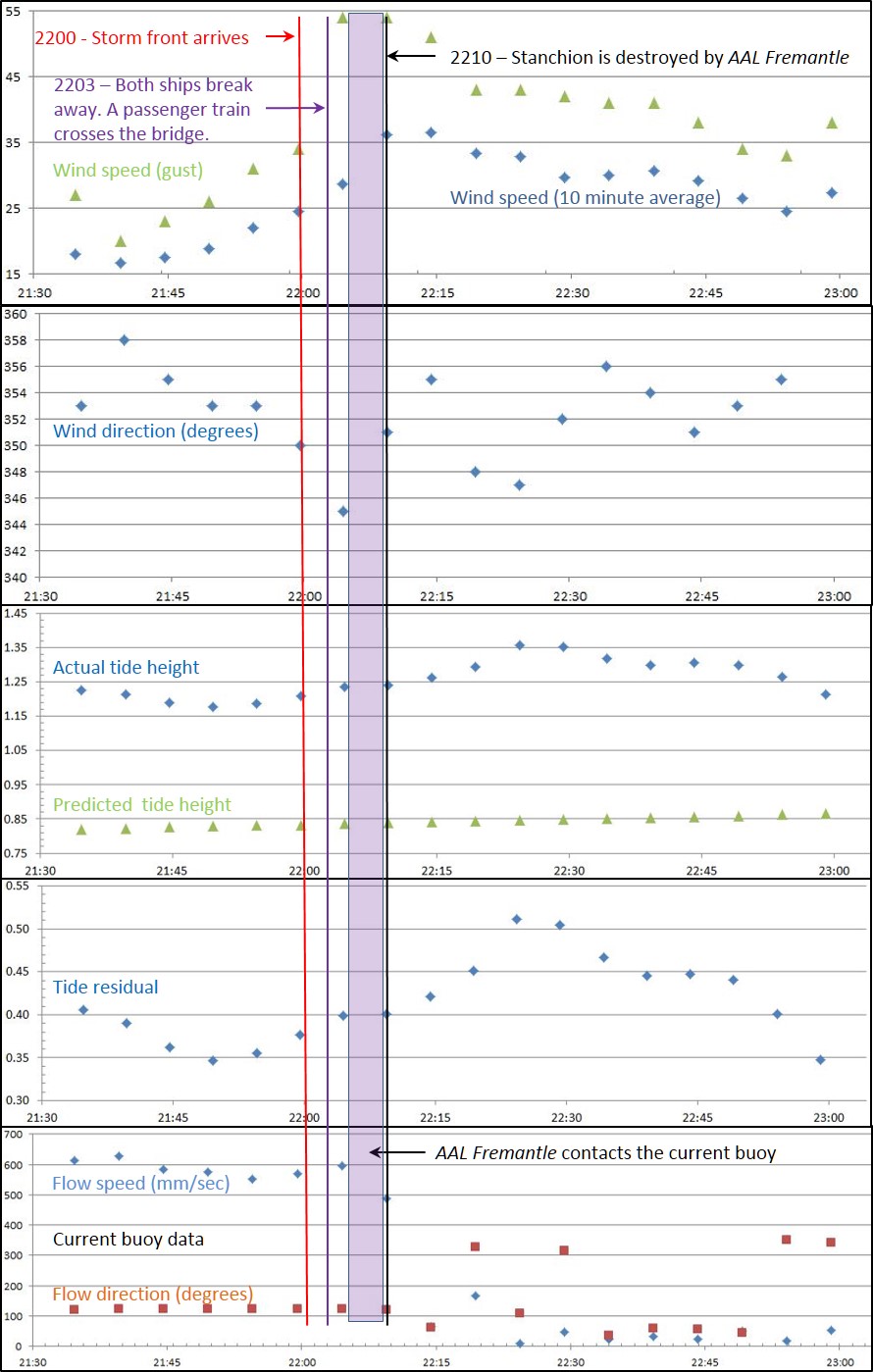
At about 2300, a pilot boarded Grand Pioneer and a second tug made fast to the ship in preparation for returning the ship to its berth. The weather had moderated and the wind had decreased to about 25 knots (Appendix B).
Figure 5: AAL Fremantle near the Fremantle rail bridge
Source: Fremantle Ports, annotated by ATSB
At about 0100 on 18 August, Grand Pioneer was all fast at its berth. One tug was retained to stand by the high-sided car carrier in the windy conditions. At about this time, AAL Fremantle’s fouled anchor was cleared from the lower lead light’s tower.
At 0115, two tugs had been made fast to AAL Fremantle. The aft tug’s towline was made fast to a ship’s mooring line, as there was insufficient water over Wongara Shoal for the tug to approach the ship.
By 0300, AAL Fremantle was all fast at berth H on South Quay (Figure 3).
Following the incident, the PTA closed the rail bridge to all traffic until necessary repairs and inspections were completed. Passenger rail services resumed on 1 September and freight services on 5 September 2014.
__________
- All times referred to in this report are local time, Coordinated Universal Time (UTC) + 8 hours.
- One knot, or one nautical mile per hour, equals 1.852 kilometres per hour.
- The Bureau of Meteorology defines ‘damaging winds’ as sustained wind speeds between 63 and 88 km/h (34 to 47 knots) with gusts between 90 and 125 km/h (48 to 67 knots).
- Fremantle Ports’ standard written weather advice is hand-delivered.
- The stanchion is a prestressed concrete pole that supports the 25 kV ac power catenary used on the suburban train network.
- Brookfield Rail is the lessee of the freight network that also uses the Fremantle Rail Bridge.
Context
AAL Fremantle
AAL Fremantle is a 140 m long general cargo ship with two 350 t cranes mounted on its port side. At the time of the incident, the ship was managed by Columbia Ship Management, Singapore.
The ship had a crew of 20 Russian, Ukrainian, Chinese and Philippine nationals. The master first went to sea in 1982 and had sailed as master since 2004; holding a Russian master’s certificate of competency. He had completed three, 4-month assignments on board AAL Fremantle before the incident.
The ship was moored with ten, 80 mm diameter, eight-strand polypropylene lines, each with a 95 t rated breaking load. All lines were run onto self-stowing winch drums and held by a manual brake. The ship’s mooring arrangement in Fremantle (Figure 4) did not include any breast lines due to the unsuitable position of the available bollards.
Grand Pioneer
Grand Pioneer is a 190 m long pure car and truck carrier. The ship’s main vehicle ramp is on its starboard quarter. Two smaller ramps are located amidships on the port and starboard sides. At the time of the incident, the ship was managed by Cido Shipping, South Korea.
The ship had a crew of 20 Philippine nationals. The master first went to sea in 1991 and since then had sailed mainly on car carriers. He held a Philippine master’s certificate of competency and had sailed as master since 2010.
The ship was moored with ten, 72 mm diameter, eight-strand polypropylene lines run onto split drum winches and held by a manual brake. Each mooring line had a 97 t rated breaking load. Two additional mooring line, one forward and one aft, were of the same type and left on the winches’ drum ends. The ship’s mooring arrangement in Fremantle (Figure 4) did not include breast lines due to the position of the available bollards, and the height (about 10 m) of the winches above the wharf.
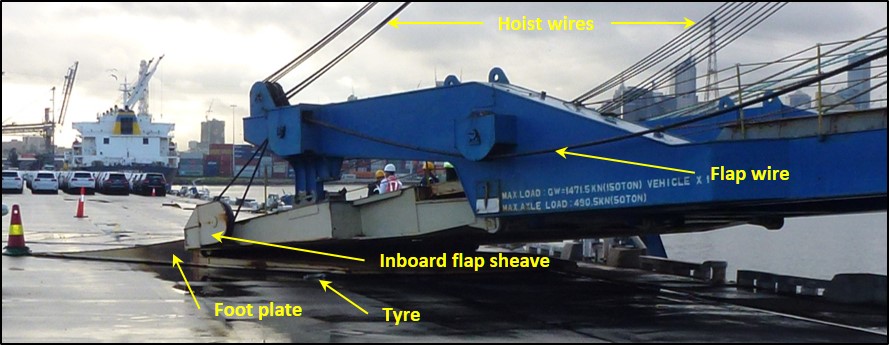
Themain vehicle ramp was about 9 m wide and 30 m long. The ramp comprised three sections, and weighed approximately 90 t. When landing it on the wharf, the standard practice of the ship’s crew was to place two automotive tyres under the ramp’s footplate (Figure 8 and Figure 9). The ramp had no float[7] function, which meant its entire weight was on the wharf apron. The wires to fold/unfold and hoist/lower the ramp were left slack. The slack wires allowed for the vertical movement of the ship relative to the wharf without the need for continuous adjustment.
Parmelia I
Parmelia I is a 65 m long tanker servicing the bunker (fuel) requirements of ships in the Port of Fremantle. At the time of the incident, it was managed by Teekay Shipping, Australia, and manned by United Maritime, Australia.
On the night of 17 August, a skeleton crew manned the barge overnight, as there were no bunker deliveries scheduled.
Port of Fremantle
Fremantle is the principal commercial port for Western Australia and is situated at the mouth of the Swan River. The port comprises the inner harbour, within the estuary of the Swan River, and an outer harbour with three open roadsteads where ships can anchor.
Fremantle Ports maintains a 24-hour vessel traffic service (VTS)[8] which, in accordance with international guidelines aims to provide vessels using the port with an information service (INS)[9] and a traffic organization service (TOS).[10] As part of its function, the service organises and manages traffic within its VTS area, and provides essential information related to shipping movements.
The duty VTS officer (VTSO) is required to maintain a continuous watch: monitoring shipping traffic and providing ships, pilots, tugs and others with information. The VTSO also provides service users information of shipping movements, allocation of berths, weather and other matters related to the safety of navigation within port waters.
Amongst the inner harbour berths, numbers 11 and 12 are common-user berths providing 429 m of berthing space. The reinforced wharf aprons have substantial stacking areas, making the wharf suitable for handling general, break-bulk and heavy lift cargoes. The wharf also provides suitable parking space for large numbers of vehicles.
The proximity of Wongara Shoal to berth 12 meant that only smaller ships could use that berth, while larger ships use berth 11 and are generally berthed stern-in. Berth 12 A, adjacent to berth 12 and near the Fremantle Rail Bridge, is reserved for Parmelia I (Figure 3).
Fremantle Rail Bridge
The Fremantle Rail Bridge is a 260 m long, double line, dual gauge (down direction only), rail-only bridge that spans the Swan River at the eastern end of the Port of Fremantle. Two steel girders (transoms), which sit across eight concrete piers, support the track 10 m above the water. The ends of the wooden railway sleepers overhang the sides of the transoms.
The bridge services the electrified[11] suburban train system, and the freight requirements of Fremantle’s inner harbour. Typically, it caters for 158 suburban and 30 freight movements per day.
The bollard
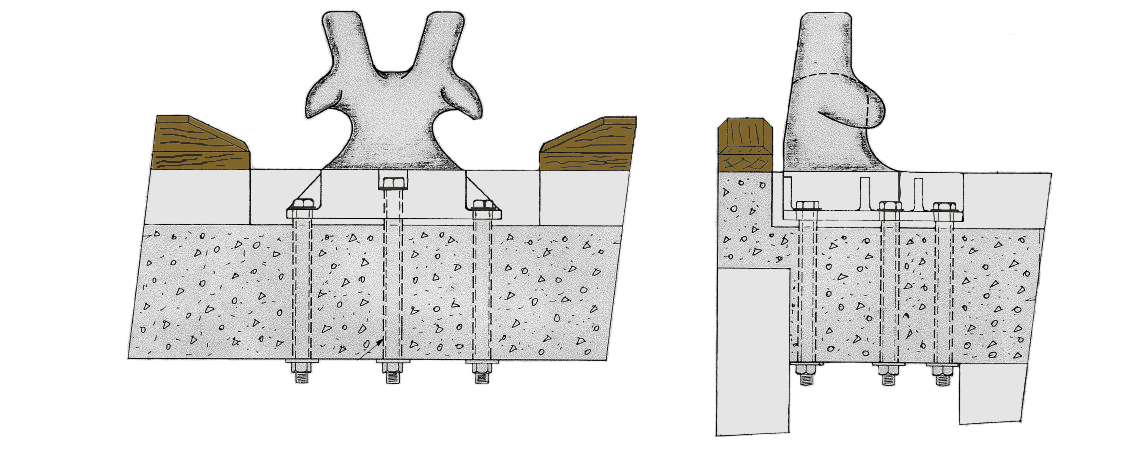
The bollard that failed was a Bean Type II 10-A-21 (Figure 6). It had been manufactured from flake graphite grey cast iron by EJ Bean, England. It weighed approximately 585 kg, and had a safe working load of about 95 t.
The bollard was mounted in a recess in the wharf apron and held down by bolts. Once in place, grout was pumped into the space under the bollard through a grouting hole (Figure 12) that was cast into the bollard’s top face. Steel plates covered the gap between the wharf apron and the base of the bollard.
No records were available to indicate when the bollard had been manufactured or installed. Production of this bollard model started in 1959 and stopped some time before 2001.
Fremantle Ports’ ongoing maintenance program includes a periodic visual inspection of bollard sections above the wharf apron and their fixings underneath the wharf. A 65 t bollard pull harbour tug is used for load testing the bollards.
Figure 6: Side, front and plan elevations of the bollard

Source: Fremantle Ports
__________
- The float function operates similarly to self-tensioning winches. The full weight of the ramp is not landed on the wharf as a minimum tension is maintained in the wires by heaving in or paying out the hoist wire, as required, as the ship moves relative to the wharf.
- A service implemented by a Competent Authority, designed to improve the safety and efficiency of vessel traffic and to protect the environment. The service should have the capability to interact with the traffic and to respond to traffic situations developing in the VTS area
- An information service is a service to ensure that essential information becomes available in time for on-board navigational decision-making
- A traffic organization service is a service to prevent the development of dangerous maritime traffic situations and to provide for the safe and efficient movement of vessel traffic within the VTS area
- The electrified suburban network uses 25 kV AC.
Analysis
Breakaway
On 17 August 2014, Grand Pioneer and AAL Fremantle broke away from their berths when a thunderstorm passed across the Port of Fremantle. A bollard on the wharf holding both ships’ stern lines failed; most likely after Grand Pioneer’s vehicle ramp contacted it. AAL Fremantle contacted a ship at an adjacent berth, and then parts of the Fremantle Rail Bridge.
The ships suffered minor damage; however, the rail bridge was closed for 3 weeks for inspection and repairs to track alignment and non-structural damage.
Bollard failure
Scrape marks, running parallel to the wharf’s edge, were found on the wharf apron that indicated minor movement of Grand Pioneer’s ramp footplate due to the passage of vehicular traffic and changes to the ship’s draught and the height of tide.
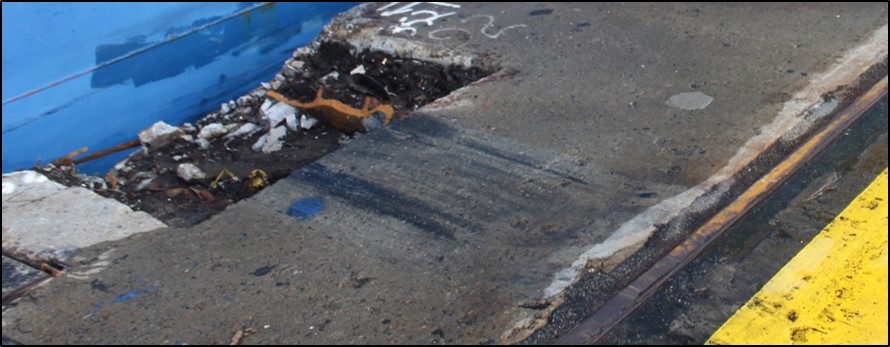
A distinct rubber mark (Figure 7 and Figure 8), at right angles to the wharf’s edge near the failed bollard had a circular pattern at the inboard end consistent with being produced by the outboard tyre under the ramp’s footplate. There were no other marks on the wharf apron to indicate that the ramp had moved in any direction other than off the wharf. The tyre mark shows that the ramp only had to move a short distance (Figure 8) for the sheave to be able to make contact with the bollard.
Figure 7: Tyre marks on the wharf near the failed bollard
Source: ATSB
Figure 8: Indicative set up of the ramp at the time of the incident

Source: ATSB
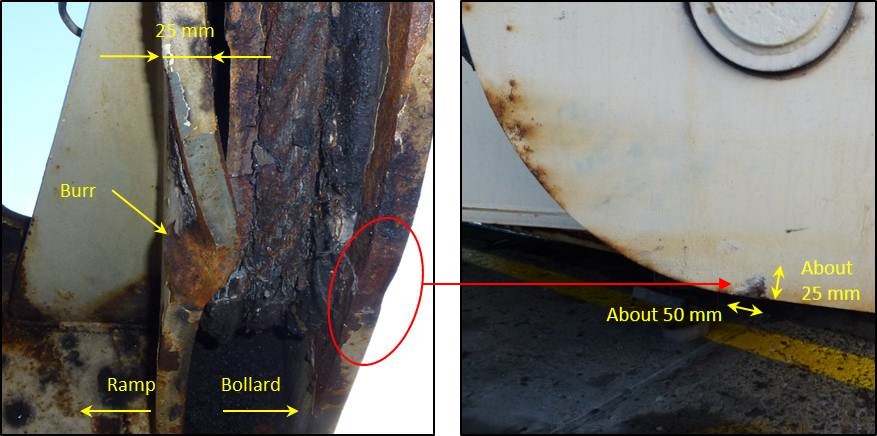
When the ramp dropped off the wharf, it fell about 4 m to the water’s surface. The size and shape of the groove and burr (Figure 10, left) was consistent with being caused by the wire rope jumping off the sheave and rubbing on the cheek plate under heavy load as the ramp dropped. Further, the damage was recent. When examined a few days after the event, it only had a covering of light surface rust (Figure 9 and Figure 10) which is consistent with having happened in Fremantle.
Figure 9: Ramp set up
Source: ATSB (photo taken in Melbourne)
The ATSB considered the possibility that the contact damage to the sheave could have been made by a means other than the bollard, such as a vehicle. This possibility was discounted for two reasons: there was insufficient space for equipment to approach the sheave (Figure 8) and a large force would have been required to distort its 25 mm steel plate (Figure 10).
Figure 10: Damage to the ramp’s outboard flap sheave
Source: ATSB
Closed circuit television footage
Fremantle Ports has closed circuit television (CCTV) cameras at strategic points at wharves and other locations in the inner harbour to assist with monitoring shipping and cargo operations. The following images (frames) are from footage from a CCTV camera on the North Quay wharf apron.
Figure 11: CCTV footage
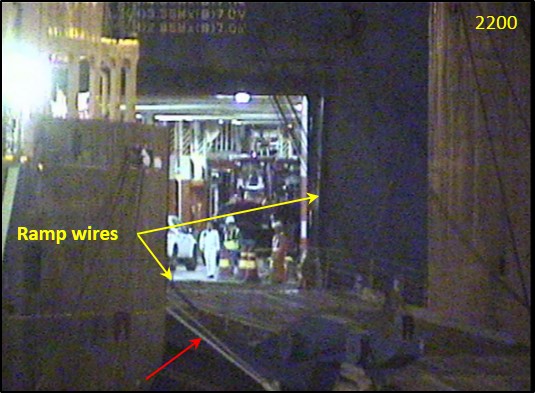
The 2200 frame, just before the storm’s arrival, shows Grand Pioneer’s two stern lines (red arrow) on the shared bollard that failed. The bollard itself is just outside the frame.
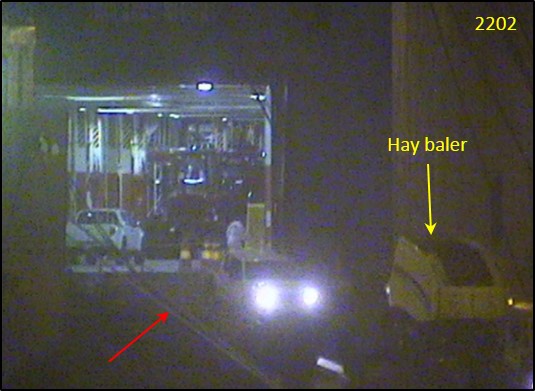
By 2202, the wind speed has increased, and rain has started to fall, with the approach of the thunderstorm.
At about this time, the driver towing the hay baler heard a mooring line part. The two stern lines (red arrow) on that bollard are still visible.
This frame also shows that AAL Fremantle has moved slightly off the wharf, as its mooring lines take the weight and then stops moving.
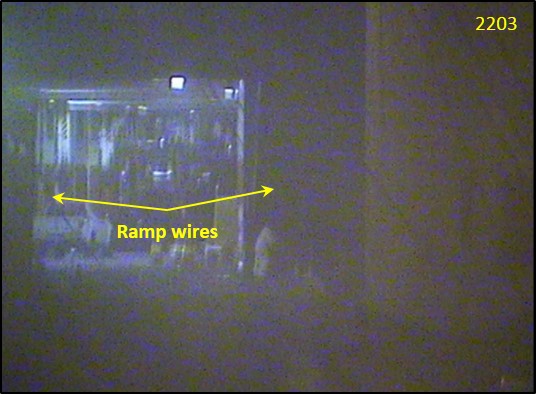
The CCTV footage over the next minute shows heavier rain. Grand Pioneer has moved slightly away from the berth. Both stern lines on the shared bollard lines are no longer visible. This is consistent with the failure of the bollard at that time.
The footage that follows shows both ships then moving further away from the wharf.
Collectively, the evidence is consistent with the ship’s ramp contacting the bollard at about 2203. It is very likely that the contact caused the bollard to fracture and be pushed from its mounts.
Bollard examination
Fremantle Ports engaged Exceed Consulting to conduct an independent examination of the bollard and determine the reasons for its failure. The following relevant information comes from Exceed Consulting’s examination report.
The specification for the casting metal[12] in the original bollard design drawings specified a tensile strength but not a chemical composition. The bollard material met the tensile strength requirements and was therefore compliant with the specification.
However, the examination report stated that the bollard had been made from low quality cast iron with a high phosphorus and sulphur content. Due to these high levels, particles of manganese sulphide and steadite with iron phosphide formed. The brittle steadite phase would have contributed to the fracture of the cast iron bollard, particularly in the areas of the structure where it was present as a network. The network was predominantly at the austenitic grain boundaries and was found to be associated with the fracture surface. The report did not offer any information on how the low quality casting material affected the tensile strength of the bollard.
The bollard was held down with grade 4.8 bolts,[13] which had a higher tensile strength than the bollard’s cast iron parent material.
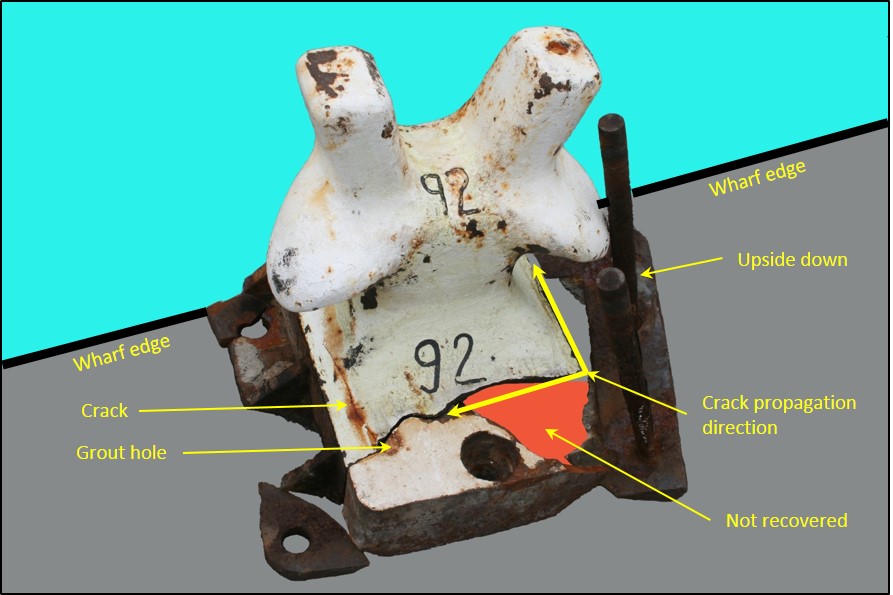
Examination of the bollard’s fracture surfaces identified the corner opposite the grout hole as the point of fracture initiation (Figure 12). This area of the fracture had a finer texture and showed characteristic ‘river marks’ that propagated away from it.
Figure 12: The bollard
Source: Exceed Consulting, annotated by ATSB
Exceed Consulting noted that the crack originating from the grout hole was not present before the bollard failed and, thus, had not contributed to the failure. The rust marks around the crack were the result of immersion in seawater after the failure.[14]
Bollard loading
Fremantle Ports engaged Det Norske Veritas – Germanischer Lloyd (DNV-GL) to calculate the load imposed by the mooring lines on the failed bollard. The DNV-GL analysis[15] and calculation of the overall force on the bollard took into account the:
- windage areas of each ship
- recorded wind speed
- angle of the wind relative the ships’ beams, and
- angles of the mooring lines relative to the bollard.
This analysis concluded that the mooring line-induced loads on the bollard were less than its expected failure load, thus, it did not fail solely due to the load from the five mooring lines.
Bureau of Meteorology forecasting
The Bureau of Meteorology (BoM) issues land and marine forecasts twice a day[16] with predicted wind speeds and directions. The forecasts use descriptive terms, such as ‘afternoon’ or ‘evening’, to indicate different periods during the day (Appendix C). Every forecast also clearly states at its beginning that the gust strength can be up to 40 per cent higher than the predicted wind speed.
On 16 August, the Perth local waters forecast changed during the day. The predicted wind speed was increased, and the updated forecasts’ terms were upgraded to include strong winds and later thunderstorms.
On 17 August, the BoM issued a ‘severe thunderstorm’ warning for the Perth area, (including Fremantle Port), at 0401, 1001, 1214, 1453, 1751 1601 and 2053. These warnings advised of damaging winds in the late evening.
The 0401 forecast highlighted the potential for gusty winds with thunderstorms. At 1601, the forecasts became more specific, including reference to the severity of the winds associated with the expected thunderstorms:
Strong wind warning. Winds NW 15 to 25 knots, reaching 30 knots during the evening. Scattered thunderstorms in the late evening, possibly severe with damaging winds.[17]
Local waters forecasts for use by professional and recreational mariners. Some terms used in these forecasts, such as ‘strong wind’, indicate a specific wind speed range to mariners.[18] However, the wind force scale used by mariners does not similarly define other terms, such as ‘severe’ or ‘damaging’ winds.
At the time of the incident, Fremantle Ports’ operational staff considered ‘severe’ and ‘damaging winds’ as forecast terminology for shore-based users. Other than having a general understanding of these terms, staff were not aware that there was a specific BoM-definition. Therefore, the significance of the terms was not fully understood, and they did not take any action suited to the predicted ‘storm’ conditions.
The port’s operational staff most likely saw the title of the forecast, ‘strong wind warning’, as the dominant piece of information. However, the forecast included other defined terms for much stronger weather categories. It is likely that a lack of understanding of these terms, and the use of other, weather specific terms in the port’s weather-related procedures,[19] resulted in them placing importance only on the category of the warning issued.
Weather event management
Fremantle Ports’ Port Information Guide includes the following weather-related advice for the Fremantle area.
Gales - The barometer is a good indicator of the weather, as a general rule rising with southerly and falling with northerly winds. It invariably gives several hours notice of the approach of bad weather.
During the winter months, gales generally commence from the north and rapidly shift W’ly with a falling barometer.
When the wind shifts to the NW with the barometer still falling the wind will be approaching its maximum and may reach gale force. When the wind shifts to the West, or WSW, it generally increases. As the wind shifts S’ly, with a rising barometer and the weather moderating, as it generally does, it continues to back to the NE quarter.
Should the wind after backing SW, veer to the W or NW, the gale is not over, but will probably blow harder than before, the barometer keeping below 1016 hPa.
Fremantle Ports
Fremantle Ports’ Vessel Traffic Service – Operational Procedures sets out operating parameters for ships, including size, draught and others, using the inner and outer harbours. The procedures also detail the roles and responsibilities of the duty vessel traffic services officer (VTSO) and the harbour master.
The weather-related procedure included the following:
Strong wind, gale and severe warnings that are formally issued by the BoM …are received automatically by all VTSOs via e-mail.
These weather warnings are further distributed automatically to relevant port users including…
Upon receipt of a severe weather or gale warning[20] the VTSOs are to ensure that a standby tug has been fully crewed both in the Inner Harbour and Outer Harbour and that Port Service Officers have completed or are in the act of distributing such warnings to vessels in the Inner Harbour.
Additionally the bunker vessel located at berth 12A, Inner Harbour is also to be fully crewed at all times.
VTSOs are to ensure that vessels are compliant in securing for bad weather especially those vessels along North Quay, Inner Harbour where the outboard anchor must be lowered to the sea floor, all mooring lines doubled up and self-tensioning winches secured.
Another procedure required the VTSO to notify the duty harbour master when the tugs and bunker barge were advised of a gale warning. This procedure aimed to ensure that gale force wind forecasts came to the attention of the duty harbour master.
The weather forecast for the night of 17 August included a ‘strong wind warning’ (Appendix C). As a result, the port issued a strong wind warning advice to the masters of berthed ships.
The port’s weather-related procedures were triggered by the type of BOM-issued warning; that is, a strong wind, gale or severe weather warning. There was no requirement, or guidance, to implement any procedure based on sustained local wind speeds or gusts recorded by the port’s own equipment.
While VTSOs are required to ensure compliance with the port’s procedures, it appears there was no specific process for this. For example, Grand Pioneer’s anchor was not lowered as required by the procedures, and this non-compliance was not followed up or addressed.
Similarly, some other procedural requirements are not, or could not be, effectively implemented. The requirement to ‘double up’ on all mooring lines is difficult, if not impossible. Most ships cannot double up on all of their mooring lines, as they have neither the number, nor the length of lines, to do so. In the case of Grand Pioneer and AAL Fremantle, it was not possible for the ships, and the port, to be able run and make fast twice as many lines.
It is not unusual for a ship’s bridge to remain unattended in port. Further, visibility in the direction of an approaching storm, from the bridge, can be obscured by land or infrastructure, as was the case at berths 11 and 12. However, the VTS tower is manned on a 24-hour basis and the duty VTSO has an uninterrupted view of an approaching storm from the tower. Radar, anemometer and barometer provide VTSOs with useful tools for effectively monitoring the weather, giving them the ability to provide advance warning to ships in port waters.
At the time of the incident, Fremantle Ports’ weather-related procedural triggers were written with the aim of having precautionary measures in place in advance of adverse weather. However, they did not adequately cover the weather that could not be predicted, or allow for a response to actual wind speeds experienced. Further, those precautionary measures that were put in place were not adequately monitored to ensure compliance.
Grand Pioneer
Grand Pioneer’s master had monitored the weather forecasts before berthing and was expecting strong winds while alongside. As a precaution, he had an additional mooring line run at either end when berthing. Based on his experience, the master decided that a tug would also be required to keep the ship alongside if the winds from abeam exceeded 35 knots.
Both berths 11 and 12 have bollards along the wharf edge, but no bollards further back from the wharf face. Therefore, there was no provision for running effective breast lines from the winches, which were about 10 m above the wharf.
As the forecast only gave a predicted time of ‘late evening’ for the arrival of the adverse weather, the master did not know when, or even if, a tug would be required. Hence, the master waited until the wind reached 35 knots before calling for a tug. Had he been advised, by VTS, that the storm was approaching he could have called for a tug earlier so that it was ready to assist when the storm arrived.
When berthing, the master had instructed the mates to maintain equal tension in the mooring lines (as is usual) while alongside. When he received Fremantle Ports’ strong wind warning advice, he re-issued his earlier instruction. The master stated that he did not lower the outboard anchor as required because he was concerned about the possibility of the anchor fouling on the seabed.
The second and third mates stated that both additional lines were left on the drum ends to assist with maintaining an equal tension as, when transferring the lines on to the bits, the lines would lose tension. The additional line forward was ‘locked off’[21] so it could not slip. However, the additional line aft was not, and once the bollard failed, this line payed out with little resistance. The remaining stern line also payed out, as the brake did not, or could not, hold the line fast.
AAL Fremantle
When AAL Fremantle’s master received the port’s strong wind warning advice, he had the outboard anchor lowered. Based on his experience, he was confident the ship would remain safely alongside with the mooring lines used. Further, with a ship berthed astern, there were no available options to use a different mooring arrangement, or to move the ship to use other bollards.
Rail bridge risk assessment
Fremantle Ports
In May 2011, Parmelia I contacted the Fremantle Rail Bridge.[22] In response to a Western Australian Department of Transport investigation into that incident, Fremantle Ports completed the ‘Fremantle rail bridge impact assessment’ risk assessment. The assessment identified the following categories of operational risk:
- the operation of Parmelia I at berth 12A
- ships with a draught of less than 7 m
- ships with a draught of greater than 7 m.
Those three categories were further divided into:
- berthing
- unberthing
- a severe weather event while alongside.
The risk assessment determined that ships with draughts greater than 7 m could not contact the rail bridge because Wongara Shoal provided a barrier. The assessment determined that contact with the rail bridge was possible for the operations of Parmelia I and ships with a draught less than 7 m.[23] However, the analysis deemed the risks to be as low as reasonably practicable (ALARP) due to the existing operational risk controls.
In October 2013, the Public Transport Authority (PTA, the bridge operators) engaged DNV-GL to conduct a qualitative assessment (workshop) of Fremantle Ports’ risk mitigating measures for protecting the rail bridge.[24] That workshop considered Fremantle Ports’ and PTA’s procedures, hydrographic survey data, and previous risk assessments. The investigation report into the 2011 bridge contactby Parmelia I, and the resulting procedural changes, were also taken into account. The qualitative assessment was based on the ‘best judgement’ of workshop participants, who were considered subject matter experts.
When investigating risks associated with weather events, both Fremantle Ports’ and DNV-GL’s risk assessments dealt with the consequences of a ship breaking away from the berth. Neither assessment considered mitigating measures associated with keeping a ship alongside, or the ability of tugs and the port to assist a ship that was at risk of contacting the rail bridge – particularly when in the shallow water close to Wongara Shoal.
During winter in Fremantle, there is an increase in frequency and severity of weather events. A rise in the number of storms will directly affect the number of weather related occurrences in the port, and therefore, the outcome of the risk assessment. However, the frequency of severe weather was not considered when assessing the level of risk.
Fremantle Ports’ had undertaken computer-based ship modelling for berths 11 and 12 as part of its risk assessment. The process modelled the simultaneous failure of all mooring lines at both berths, with and without the outboard anchor lowered, which was considered the worst-case scenario. Bow-in berthing, port side alongside, was not modelled as it was considered unusual.
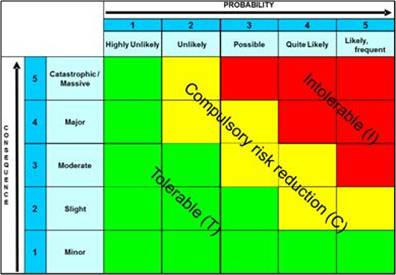
In summary, the risk assessments concluded that, while it was possible for a ship to make contact with the rail bridge. The existing procedures and practices, in combination with protection given by Wongara Shoal, indicated a risk rating of ‘tolerable’.[25]
Berth 11 and 12 operations
AAL Fremantle’s cranes were on the port side, so it berthed port side alongside, bow in. When the ship broke away, some of its forward mooring lines remained intact, and were under tension. As a result, the ship’s stern swung outward and towards the rail bridge.
As such, the ship’s breakaway was significantly different to the modelled scenario.
Similarly, Grand Pioneer’s breakaway event was not as modelled, as there was no simultaneous failure of all mooring lines. Further, the car carrier had a much more uniform wind loading than a ship with an aft accommodation superstructure. This characteristic would have resulted in the ship moving quite differently to the modelling. Grand Pioneer’s movement was consistent with the modelling only because its forward mooring lines remained in place.
Fremantle Ports’ risk assessment of operations, particularly at berths 11 and 12, did not assess all of the various ship/berthing operations carried out there. Consideration was only given to what was deemed to be the worst-case scenario. No consideration was given to methods of preventing ships breaking away from their berths. Further, there was no analysis of possible impediments to assisting a ship on, or close to, Wongara Shoal and the rail bridge.
Tidal variation
Shortly after the incident, Fremantle Ports put forward that a ‘meteo-tsunami’[26] had resulted in a sudden, 0.5 m tidal rise, causing Grand Pioneer to surge 12 m aft. The port claimed that this surging led to the ship’s ramp contacting the bollard, which then failed.
Low water (0.6 m) was predicted at 1612 on 17 August and high water (1.0 m) at 0323 on the following day. The height of tide in the hours before the storm had maintained a steady positive residual of between 0.35 and 0.40 m. It was not until after AAL Fremantle had contacted the bridge that the positive residual increased, peaking shortly before 2230 (Appendix B).
A buoy located near the bow of Parmelia I fitted with measuring instruments provided local current direction and flow. The recorded data indicated a consistent direction and flow of about 1 knot, until 2105, after which the data became erratic.[27]
The evidence shows that Grand Pioneer did not surge and only moved directly away the wharf, and there were no reports of any other ships surging at that time.
As such, the ATSB investigation concluded that a ‘meteo-tsunami’ or other related tidal variation did not contribute to the breakaway.
__________
- AS1830-2007 grade ISO 185/JL/275.
- The bolts were compliant with AS4291.1-2000 grade 4.8. Modern bollards are generally fastened with grade 8.8 bolts.
- The larger sections of the failed bollard were recovered from the harbour bottom 7 days after the incident.
- The analysis was undertaken using AQWA, a hydrodynamic analysis package built around the use of diffraction theory and Morrison’s equations. It can be used to analyse loads experienced by floating structures when attached to mooring systems.
- When a marine wind warning is in force, these forecasts are routinely updated every 6 hours with more frequent updates made as required
- Refer to Appendix C.
- The Beaufort scale of wind force, developed in 1805 by Admiral Sir Francis Beaufort, enables sailors to estimate wind speeds through visual observations of sea states.
- Fremantle Ports’ procedures referred to the BoM forecast terms, Strong wind/Gale force/Severe weather, to initiate its weather procedures.
- Refer to Appendix C.
- To lock off a line on a drum end a bight of the line’s tail is passed over the tensioned part of the mooring line and back around the drum end.
- On 3 May 2011, the Parmelia I was departing berth 12A when it made contact with the piers of the rail bridge and a stanchion. Weather, tide and other local conditions were not identified as contributing factors. Parmelia I’s operational procedures were changed to prevent a re-occurrence.
- AAL Fremantle’s aft draught was 6.6 m.
- A draft copy of the document was released to the workshop participants on 11 October 2013.
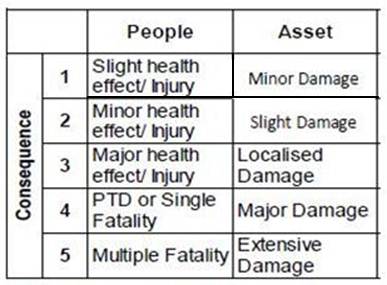
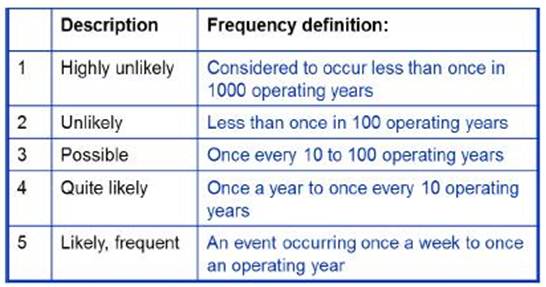
- The risk matrix used had three levels of risk, tolerable, compulsory risk reduction and intolerable (See Appendix A).
- Large amplitude, short period (a few minutes to a few hours) sea level oscillations forced by meteorological disturbances. ‘Meteo-tsunamis along the West Australian coastline’ C Pattiaratchi & S Wijeratne.
- The buoy was recovered out of position the following day suffering severe damage that was attributed to heavy contact by AAL Fremantle.
Findings
From the evidence available, the following findings are made with respect to the breakaway of Grand Pioneer and AAL Fremantle from their berths when a forecast, severe thunderstorm passed across the Port of Fremantle on 17 August 2014. These findings should not be read as apportioning blame or liability to any particular organisation or individual.
Safety issues, or system problems, are highlighted in bold to emphasise their importance. A safety issue is an event or condition that increases safety risk and (a) can reasonably be regarded as having the potential to adversely affect the safety of future operations, and (b) is a characteristic of an organisation or a system, rather than a characteristic of a specific individual, or characteristic of an operating environment at a specific point in time.
Contributing factors
- The wind direction on 17 August 2014, during the thunderstorm, was nearly abeam of both Grand Pioneer and AAL Fremantle with wind gusts reaching 55 knots.
- The rapid increase in wind speed as the thunderstorm passed did not allow the crew of either ship to respond to the significantly worsening weather conditions.
- The parting of a single line at the stern of Grand Pioneer, when the storm front passed over, increased the load on the remaining stern lines.
- As the wind loading on Grand Pioneer increased, it is likely that the stern moved sufficiently off the wharf so that the ship’s vehicle ramp made contact with the adjacent bollard.
- It is very likely that the ramp’s impact resulted in the bollard’s failure, leaving Grand Pioneer with only two stern lines that payed out under the increasing load. The ship’s stern then broke away from the wharf causing the two aft spring lines to part.
- The bollard’s failure resulted in AAL Fremantle losing its three stern lines. Consequently, the ship’s stern broke away from the wharf and then the two aft spring lines parted.
- After breaking away, AAL Fremantle contacted Parmelia I, a ship at an adjacent berth, and then the Fremantle Rail Bridge.
- Fremantle Ports’ assessment of risks associated with a ship contacting the Fremantle Rail Bridge as a result of a breakaway (particularly from berths 11 and 12) was limited. Preventing a breakaway from berths where the wind was likely to be on a ship’s beam had not been considered. Similarly, the impediments to assisting a ship near Wongara Shoal after a breakaway had not been assessed. [Safety issue]
Other factors that increased risk
- The Bureau of Meteorology (BoM) marine forecast title of ‘strong wind warning’ understated the ‘damaging winds’ expected during the ‘severe thunderstorm’. The forecast did not use recognised marine weather terms for wind speed, such as ‘gale force’. [Safety issue]
- Fremantle Ports’ staff did not understand the significance of some wind and weather terminology used in the BoM forecast. Consequently, port procedures triggered by a BoM ‘gale’ or ‘severe weather’ warning such as preparing the tugs and calling the harbour master were not followed. [Safety Issue]
- Fremantle Ports’ procedures for adverse weather were not adequate for weather that could be reasonably be expected to occur. Some procedures could not be reasonably implemented and others were not monitored for compliance. [Safety issue]
Other findings
- A ‘meteo-tsunami’ did not contribute to the breakaway.
- While the failed bollard was compliant with its documented specification, examination showed that it had been made from a low-quality cast iron.
- While the loads imposed solely by the mooring lines could be calculated, the overall load imposed on the bollard could not. As such, the contribution of the low quality cast iron to the failure could not be determined.
Safety issues and actions
The safety issues identified during this investigation are listed in the Findings and Safety issues and actions sections of this report. The Australian Transport Safety Bureau (ATSB) expects that all safety issues identified by the investigation should be addressed by the relevant organisation(s). In addressing those issues, the ATSB prefers to encourage relevant organisation(s) to proactively initiate safety action, rather than to issue formal safety recommendations or safety advisory notices.
Depending on the level of risk of the safety issue, the extent of corrective action taken by the relevant organisation, or the desirability of directing a broad safety message to the marine industry, the ATSB may issue safety recommendations or safety advisory notices as part of the final report.
Where relevant, safety issues and actions will be updated on the ATSB website as information comes to hand. The initial public version of these safety issues and actions are in PDF on the ATSB website.
Fremantle Ports’ risk assessment
Fremantle Ports’ assessment of risks associated with a ship contacting the Fremantle Rail Bridge as a result of a breakaway, particularly from berths 11 and 12, was limited. Preventing a breakaway from berths where the wind was likely to be on a ship’s beam had not been considered. Similarly, the impediments to assisting a ship near Wongara Shoal after a breakaway had not been assessed.
ATSB Safety Issue: MO-2014-009-SI-01
Bureau of Meteorology weather warnings
The Bureau of Meteorology (BoM) marine forecast title of ‘strong wind warning’ understated the ‘damaging winds’ expected during the ‘severe thunderstorm’. The forecast did not use recognised marine weather terms for wind speed, such as ‘gale force’.
ATSB Safety Issue: MO-2014-009-SI-02
Weather event management
Fremantle Ports’ procedures for adverse weather were not adequate for weather that could reasonably be expected to occur. Some procedures could not be reasonably implemented and other were not monitored for compliance.
ATSB Safety Issue: MO-2014-009-SI-03
Forecast terminology
Fremantle Ports’ staff did not understand the significance of some wind and weather terminology used in the BoM forecast. Consequently, port procedures triggered by a BoM ‘gale’ or ‘severe weather’ warning such as preparing the tugs and calling the harbour master were not followed.
ATSB Safety Issue: MO-2014-009-SI-04
__________
- The Shoretension device is part of a flexible stand-alone mooring system, based on maintaining tension within shore mooring lines without the need of external energy. It reduces the movements of a moored ship caused by strong wind, current or passing ships.
- The graphic shows operations/areas of risk against a level of impact that the weather will have based on user defined criteria (No. low or high impact).
Sources and submissions
Sources of information
The sources of information during the investigation included the:
- AAL Fremantle’s master and directly involved crewmembers
- Grand Pioneer’s master and directly involved crewmembers
- Fremantle Ports
- Public Transport Authority (PTA) of Western Australia
- Det Norske Veritas-Germanischer Lloyd
- Exceed Consulting
- Dr Charitha Pattiaratchi[30]
- Fendercare Australia
- Bureau of Meteorology
References
Charitha Pattiaratchi, Sarath Wijeratne, Meteo-tsunamis along the West Australian coastline, University of Western Australia.
Exceed Consulting, 9 September 2014, Failure investigation of bean type bollard from Fremantle wharf.
Submissions
Under Part 4, Division 2 (Investigation Reports), Section 26 of the Transport Safety Investigation Act 2003 (the Act), the Australian Transport Safety Bureau (ATSB) may provide a draft report, on a confidential basis, to any person whom the ATSB considers appropriate. Section 26 (1) (a) of the Act allows a person receiving a draft report to make submissions to the ATSB about the draft report.
A draft of this report was provided to the Australian Maritime Safety Authority (AMSA), Fremantle Ports, the master, managers and crew of AAL Fremantle, the master, managers and crew of Grand Pioneer, the Public Transport Authority (PTA), the Bureau of Meteorology (BoM) and Dr Charitha Pattiaratchi.
Submissions were received from AMSA, the managers of Grand Pioneer and AAL Fremantle, the master of AAL Fremantle, BoM, the PTA and Dr Charitha Pattiaratchi. The submissions were reviewed and where considered appropriate, the text of the report was amended accordingly
__________
- Professor of Coastal Oceanography, School of Civil, Environmental and Mining Engineering & UWA Oceans Institute. University of Western Australia.
Appendices
Appendix A – Qualitative analysis report risk matrix
Appendix B – Wind, tide and current information[31]
Appendix C – Bureau of Meteorology weather service and terms
The Australian Bureau of Meteorology (BoM) provides the maritime community with weather forecasts, warnings and observations for coastal waters areas and high seas around Australia.
Marine and local waters forecasts
Forecasts for wind speed and direction, and sea and swell heights are issued routinely every 12 hours. When a marine wind warning is in force, these forecasts are updated routinely every 6 hours. These forecasts provide information on mean wind, sea height, swell height and direction and weather conditions:
- coastal waters – areas within 60 miles of the coast
- high seas – areas beyond the coastal waters.
The following terminology is used to describe time periods in these forecasts:
- Early in the morning - expected to occur before 6am.
- In the morning - expected to occur between 7am and 10am.
- Middle of the day - expected to occur between 11am and 1pm.
- During early afternoon - expected to occur between 2pm and 3pm.
- In the afternoon - expected to occur between 4pm and 6pm.
- During the evening - expected to occur between 7pm and 8pm.
- Later in the evening - expected to occur after 9pm
All BoM marine forecasts and warnings predict wind speed as the average (or mean) speed expected over any given 10 minute period at a height of 10 m above the ground. Hence, marine forecasts provide a summary of the average wind speed expected within the forecast area, not the maximum wind gust expected.
Wind warnings are only issued when mean winds (winds speed averaged over 10 minutes) are expected to exceed 25 knots for an extended period of time across more than 10 per cent of the marine area. A wind warning is not issued for individual wind gusts, which typically last seconds.
In the absence of severe weather, such as thunderstorms or squalls, it is normal for wind speed to vary by up to 40 per cent over a 10 minute period. Hence, a statement is added to BoM marine forecasts to remind users that wind gusts at any time can be 40 per cent higher than the mean wind predicted in BoM marine forecasts and warnings. Wind gusts can be much higher than 40 per cent during severe weather, such as thunderstorms or squalls.
Mariners should refer to the weather section of the coastal or local waters forecast to determine the likelihood of thunderstorms occurring. Mariners should be aware that there is a risk of damaging wind gusts occurring with any thunderstorm and should actively monitor weather conditions when they are forecast. Weather conditions can be monitored by checking current weather observations, weather watch radar and satellite imagery
For marine operations near the shore, BoM’s severe thunderstorm warning service should also be used. These warnings provide short term advanced notice of thunderstorms that are likely to be accompanied with wind gusts in excess of 48 knots, as well as other hazardous conditions that can accompany thunderstorms.
More information about BoM marine wind forecasts is available on its website.
Marine weather warnings
Marine weather warnings are issued whenever strong winds, gales, storm force or hurricane force winds are expected. The following warnings are provided:
- coastal waters wind warnings
- ocean wind warnings – issued to ships at sea whenever gale, storm or hurricane force winds are expected
- severe weather warnings – provided for potentially hazardous or dangerous weather that is not directly related to severe thunderstorms, tropical cyclones or bushfires.
- Gust speed can be 40 per cent greater than the predicted wind speed
Marine wind warnings aim to provide a 24-hour lead-time and are normally reviewed every 6 hours and issued every 12 hours.
Wind speed warnings
These warnings are issued whenever strong winds, gale, storm or hurricane-force winds are expected. They provide around 24 hours’ notice and are updated every 6 hours. These warnings are based on expected 10 minute mean winds (not maximum wind gusts) and are only issued if mean winds are expected to exceed thresholds for extended periods.
The following 10 minute mean thresholds are used:
- Strong wind warning: 26 to 33 knots, Force 6 to 7
- Gale warning: 34 to 47 knots, Force 8 to 9
- Storm force wind warning: 48 to 63 knots, Force 10 to 11
- Hurricane force wind warning: 64 knots or more, Force 12.
Wind directionis given using the eight compass points for forecasts and 16 points for observations.
Recipients are further cautioned that maximum wave heights may be up to twice the height of those forecast (average). More information is available via BoM's website.
Severe thunderstorm warnings
They provide short term advance warning of the likelihood of severe thunderstorms impacting on the region and are updated every three hours and can produce any of the following:
- a tornado
- Large hail (2cm in diameter or larger)
- Damaging wind gusts (generally wind gusts exceeding 90 km/h [48 knots])
- Heavy rainfall which may cause flash flooding.
Damaging winds
Winds having a sustained wind speed between 63 km/h (34 knots) and 88 km/h (47.5 knots) with gusts between 90 km/h (48.5 knots) and 125 km/h (67.5 knots).
Severe weather
Sustained winds of 34 knots or more with gust of 48 knots or more and very heavy rain.
__________
Purpose of safety investigationsThe objective of a safety investigation is to enhance transport safety. This is done through:
It is not a function of the ATSB to apportion blame or provide a means for determining liability. At the same time, an investigation report must include factual material of sufficient weight to support the analysis and findings. At all times the ATSB endeavours to balance the use of material that could imply adverse comment with the need to properly explain what happened, and why, in a fair and unbiased manner. The ATSB does not investigate for the purpose of taking administrative, regulatory or criminal action. TerminologyAn explanation of terminology used in ATSB investigation reports is available here. This includes terms such as occurrence, contributing factor, other factor that increased risk, and safety issue. Publishing informationReleased in accordance with section 25 of the Transport Safety Investigation Act 2003 Published by: Australian Transport Safety Bureau © Commonwealth of Australia 2016 
Ownership of intellectual property rights in this publication Unless otherwise noted, copyright (and any other intellectual property rights, if any) in this report publication is owned by the Commonwealth of Australia. Creative Commons licence With the exception of the Coat of Arms, ATSB logo, and photos and graphics in which a third party holds copyright, this publication is licensed under a Creative Commons Attribution 3.0 Australia licence. Creative Commons Attribution 3.0 Australia Licence is a standard form licence agreement that allows you to copy, distribute, transmit and adapt this publication provided that you attribute the work. The ATSB’s preference is that you attribute this publication (and any material sourced from it) using the following wording: Source: Australian Transport Safety Bureau Copyright in material obtained from other agencies, private individuals or organisations, belongs to those agencies, individuals or organisations. Where you wish to use their material, you will need to contact them directly. |
Preliminary report
Report release date: 21/10/2014
| The information contained in this Preliminary report is released in accordance with section 25 of the Transport Safety Investigation Act 2003 and is derived from the ongoing investigation of the occurrence. Readers are cautioned that new evidence will become available as the investigation progresses that will enhance the ATSB's understanding of the accident as outlined in this Preliminary report. As such, no analysis or findings are included in this report. |
What happened
On the afternoon of 17 August 2014, the Grand Pioneer and AAL Fremantle were berthed, stern to stern at North Quay berths 11 and 12 respectively, in the port of Fremantle.
At about 2200, while both ships were discharging cargo, a storm front passed over Fremantle bringing with it a rapid increase in wind speed and gusting to about 55 knots. Both ships' sterns broke away from the berth and they swung bow to the wind. AAL Fremantle’s starboard side subsequently made contact with the Parmelia I and the Fremantle Rail Bridge.
The Parmelia I, Grand Pioneer and AAL Fremantle suffered minor damage.
A stanchion supporting the catenary wire for the 25 kV AC electrified train network on the rail bridge was destroyed along with large sections of temporary scaffolding along the side of and under the bridge. The track alignment was also disturbed. The bridge was closed to rail traffic until repairs could be undertaken and the bridge deemed safe.
By about 0300 both ships were safely berthed.
What the ATSB found
The ATSB’s initial analysis of the incident indicates that a bollard, with all of AAL Fremantle’s and two of Grand Pioneer’s five stern lines, failed. This allowed the stern of AAL Fremantle to swing to starboard. The loss of the stern lines increased the tension on Grand Pioneer’s remaining stern lines, which were not able to hold. Grand Pioneer’s stern then swung to port.
Investigation direction
The investigation is ongoing and will focus on the:
- bollard failure mechanism
- preparedness of the ships leading up to the incident
- port authority procedures to avoid weather related incidents
- effect of weather on water levels in the port and the movement of ships
- risk analysis and management in relation to relevant marine and rail infrastructure
- risk management and emergency response between relevant agencies.
Occurrence summary
| Investigation number | 313-MO-2014-009 |
|---|---|
| Occurrence date | 17/08/2014 |
| Location | Fremantle |
| State | Western Australia |
| Report release date | 04/05/2016 |
| Report status | Final |
| Investigation level | Systemic |
| Investigation type | Occurrence Investigation |
| Investigation status | Completed |
| Mode of transport | Marine |
| Marine occurrence category | Contact |
| Occurrence class | Incident |
| Highest injury level | None |
Ship details
| Name | Grand Pioneer |
|---|---|
| IMO number | 9247572 |
| Ship type | Mooring |
| Flag | Panama |
| Manager | Cido Shipping |
| Destination | Berthed at Fremantle, Western Australia |
Ship details
| Name | AAL Fremantle |
|---|---|
| IMO number | 9521095 |
| Ship type | Mooring |
| Flag | Singapore |
| Manager | Columbia Ship Management |
| Destination | Berthed at Fremantle, Western Australia |
Ship details
| Name | Parmelia I |
|---|---|
| IMO number | 9565168 |
| Ship type | Mooring |
| Flag | Australia |
| Destination | Berthed at Fremantle, Western Australia |