Carburettor icing risk warning

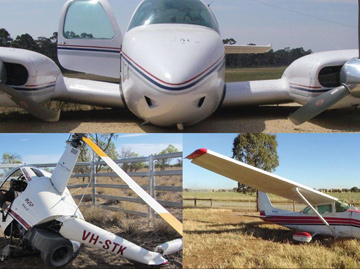
Carburettor icing likely resulted in the engine failure that led to the crash of an amateur‑built Van’s Aircraft RV-6 two-seat aeroplane.

Carburettor icing likely resulted in the engine failure that led to the crash of an amateur‑built Van’s Aircraft RV-6 two-seat aeroplane. Tragically the pilot and passenger died in the accident.

Vans_ao-2014-149_news.jpg

On 14 September 2014 a Van's Aircraft RV-6 aircraft, operated in the ‘Experimental’ category, was approaching Mudgee Airport after departing Dubbo Airport, New South Wales about 25 minutes earlier.

The pilot approached from the north-west and conducted a non-standard circuit entry including an orbit to the south of the airport. Prior to turning onto the downwind leg of the circuit, the aeroplane descended to about 600 ft above ground level. Witnesses stated the pilot conducted a tight left turn onto final approach at a slow speed and low height. Witnesses also recalled hearing the aircraft’s engine ‘splutter’ and then go silent during the turn, followed by a ‘rev’, and then again silence.

The aircraft continued its high angle of bank left turn and then collided with terrain about 300 m south-west and short of the runway threshold. The pilot and passenger were fatally injured and the aeroplane was substantially damaged.

The ATSB found that during the turn onto final approach to land, the aeroplane’s engine ceased operating. The aeroplane’s airspeed before the engine failure was within about 0.5 kt of the estimated stall speed during the high-bank turn. After the engine failure, it is likely the aeroplane entered an aerodynamic stall. The associated loss of control was not recovered and the aircraft continued in the turn until it collided with terrain.

The ATSB also found that the engine failure was probably due to carburettor icing. No defects were identified that would have precluded normal engine operation prior to the accident, and uncontaminated fuel was being supplied to the engine at that time. However, the environmental conditions at the time of the accident were conducive to serious carburettor icing at descent power, and the pilot-operated carburettor heat control was found in the OFF position.

The ATSB also found that the aeroplane’s weight was higher than the design limits. However, the effect of this weight on aircraft performance was not considered to have contributed to the accident.

The aeroplane was not required to be, and was not fitted with an angle-of-attack indicator or stall warning device.

All pilots of aircraft fitted with a carburettor are advised to check the forecast weather conditions and consider the risk of carburettor icing as a result of those conditions prior to each flight.

Although amateur-built aeroplanes operated in the Experimental category are not required to be fitted with a stall warning device, owner-pilots should consider the benefits of such devices as a last line of defence against the inadvertent approach to, or entry into an aerodynamic stall.

Read the final report: Collision with terrain involving Van's Aircraft RV-6, VH-TXF, near Mudgee Airport, New South Wales, on 14 September 2014

(Opens in a new tab/window)

Aviation Bulletin Issue 46

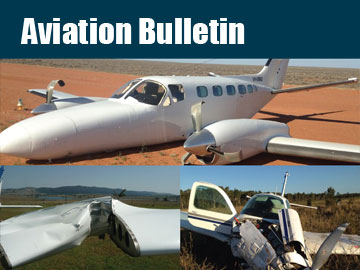
The ATSB has released its latest Bulletin of short investigations covering incidents involving jet, turboprob and piston aircraft and helicopters.
Bulletin46_news.jpg

The ATSB has released its latest Bulletin of short investigations covering incidents involving jet, turboprop and piston aircraft and helicopters.

The Bulletin also highlights important safety messages for the broader aviation community, drawing on earlier ATSB investigations and research.

Released periodically, the Bulletin provides a summary of the less-complex factual investigation reports conducted by the ATSB. The results, based on information supplied by organisations or individuals involved in the occurrence, detail the facts behind the event, as well as any safety actions undertaken. The Bulletin also highlights important Safety Messages for the broader aviation community, drawing on earlier ATSB investigations and research.

Issue 46 of the Bulletin features ten safety investigations:

Jet aircraft

Turboprop aircraft

Piston aircraft

Helicopters

Follow this link to: Aviation Short Investigation Bulletin Issue 46

Trains collide

A train collision, resulting in the derailment of three wagons, highlights the importance of good communications in reducing the risk of collision.

RO-2015-007_news-item.jpg

A train collision, resulting in the derailment of three wagons, highlights the importance of good communications in reducing the risk of collision.    

On 31 March 2015, freight train 2MP9 collided with the rear end of stationary freight train (2MP1) at Mile End, South Australia. The collision resulted in moderate track damage and the derailment of three wagons at the rear of train 2MP1. Fortunately, there were no injuries to train crews.

The accident occurred as train 2MP9 passed the southern end of the Mile End crossing loop. As it approached train 2MP1 under a ‘calling on/low speed’ signal, some stumpy vegetation and a low fence initially obscured the driver’s view of the empty flat wagons at the rear of the train. When the driver finally saw the rear of train 2MP1, he immediately made an emergency brake application, but was unable to stop the train before it collided with 2MP1.

While acknowledging the requirement under a ‘Proceed Restricted Authority’, for drivers to be able to stop their train within half of the distance that the line ahead is clear, the ATSB noted that the network control officer’s pathing of a train onto a line occupied by a preceding train (when an alternate route was available and not obstructed), had created an elevated level of risk. Similarly, well thought out and clear communications between the network control officer (NCO) and crew of the approaching train (as to the presence of another train on the line ahead) could have significantly enhanced the train crew’s situational awareness.

The Australian Rail Track Corporation (ARTC) and SCT Logistics have implemented a range of proactive strategies for enhancing the safe operation of train movements when entering an occupied section of track under a ‘Proceed restricted authority’ (PRA). This includes the use of all available infrastructure to reduce risk, encouraging communications between train drivers and NCOs where clarification of operational conditions is necessary, and a review of the National Train Communications System (NTCS) for the Adelaide area.

Safety message

Train drivers should carefully consider their obligations when accepting a ‘Calling on/Low speed’ signal indication in relation to sighting constraints, train speed and occupation of the track ahead. In circumstances where sighting constraints may exist, drivers should consider requesting further information from the NCO before moving through the track ahead.

When dispatching trains, NCOs should carefully consider the pathing of trains under their control and the communication of information that may mitigate collision risk. 

Read the final report: Collision between freight trains 2MP1 and 2MP9, at Mile End, South Australia, on 31 March 2015

Low-flying accident

A fatal wirestrike accident involving a Cessna 182L graphically illustrates the dangers of unauthorised low-level flying.

AO-2014-131_VH-TRS.jpg

A fatal wirestrike accident involving a Cessna 182L graphically illustrates the dangers of unauthorised low-level flying.

On 20 July 2014, the aircraft struck wires from a high voltage powerline while the pilot was conducting a private flight at low altitude near the rural township of Burrumbuttock, NSW.

Witnesses saw the aircraft flying low towards the township before it struck wires above a paddock on the outskirts of the town. The aircraft then rolled and impacted terrain. The wreckage came to rest a short distance from the Farmers Inn. Tragically, the pilot died in the accident.

The ATSB found no evidence of any engine or airframe defect that may have contributed to the accident.

Importantly, the pilot did not hold any approval to conduct low flying and had not received training to identify hazards or operating techniques for flight close to the ground. The evidence also indicated that the pilot had a history of unauthorised low flying.

The pilot was reported to be in good health with no issues that might have affected his ability to fly an aircraft. Despite this, the postmortem medical examination revealed a pre-existing medical condition that could have resulted in pilot incapacitation.

While it is possible the pilot may have been incapacitated immediately before the accident, the aircraft was flown at a level that provided little margin for error if an event had been experienced.  

Safety message

This fatal accident provides a clear message to pilots: don’t fly low if you’re not authorised, or don’t have to.

Flying below the regulated thresholds of 1,000 feet AGL overpopulated areas and 500 feet over non-populated areas provides very little margin for error if something goes wrong. Pilots who fly below this height without appropriate training and an operational reason to do so are exposing themselves and any passengers to an increased risk of striking hazards, such as electrical power lines, many of which are difficult to see from the cockpit of an aircraft in flight. 

Low-level flying is one of the ATSB’s top safety concerns for general aviation pilots. More information can be found on the ATSB’s SafetyWatch page or via the ATSB’s avoidable accident publication Low-level flying.  

Read the final report: Wire strike and impact with terrain involving a Cessna 182L, VH-TRS, Burrumbuttock, New South Wales, on 20 July 2014

Aviation Bulletin Issue 45

The ATSB has released its latest Bulletin of short investigations covering incidents involving jet, turboprob and piston aircraft, helicopters and remotely piloted aircraft systems.
Bulletin45.jpg

The ATSB has released its latest Bulletin of short investigations covering incidents involving jet, turboprob and piston aircraft, helicopters and remotely piloted aircraft systems.

The Bulletin also highlights important safety messages for the broader aviation community, drawing on earlier ATSB investigations and research.

Released periodically, the Bulletin provides a summary of the less-complex factual investigation reports conducted by the ATSB. The results, based on information supplied by organisations or individuals involved in the occurrence, detail the facts behind the event, as well as any safety actions undertaken or identified.

Issue 45 of the Bulletin features 10 safety investigations:

Jet aircraft

Turboprop aircraft

Piston aircraft

Helicopters

Remotely piloted aircraft systems

Follow this link to: Aviation Short Investigation Bulletin - Issue 45

Routine task ends in fatality

A tragic man overboard fatality shows why it’s vital that mariners always plan properly for all tasks, no matter how seemingly straight forward or routine.

Hyundai-Dangjin_newsitem.jpg

A tragic man overboard fatality shows why it’s vital that mariners always plan properly for all tasks, no matter how seemingly straight forward or routine. 

The tragedy unfolded on 10 July 2015 when Hyundai Dangjin was in the final stages of loading its cargo of iron ore at Port Walcott, Western Australia. The ship was starboard side alongside the wharf and the chief mate and draught surveyor were on the wharf to check the ship’s draught. (The draught is the distance between the surface of the water and the lowest point of the ship).

They could see the forward and aft draught marks but not the midships marks.

At 0450, the chief mate asked the second mate, via UHF radio, to read the midships draught on the ship’s port (outboard) side. The ship’s crew had already rigged a rope ladder adjacent to the draught marks there.

In preparation to climb down the rope ladder, the second mate donned a life vest (non-inflatable flotation aid). The able seaman (AB) on duty offered to go down the ladder instead of the second mate, who was a large and heavy man. The second mate declined the AB’s offer (mates are trained to read draught marks).

Just after 0455, the chief mate and draught surveyor returned from the wharf to the ship’s office. The chief mate then called the second mate and asked for the midships draught. The second mate did not reply.

At that time, the second mate was near the bottom of the ladder, about 7 m below the ship’s deck. He called out to the AB for help and said he was having difficulty. When the AB checked, he saw the second mate struggling to hold on to the ladder. As the AB looked around for a rope to throw down, the second mate fell into the water. The AB threw a nearby lifebuoy to the second mate and it landed a few metres away.

The second mate tried to swim to the lifebuoy, but was not able to reach it. The sea was rough (1.4 m sea on a 0.4 m swell) and the water temperature was about 22 °C.

The ATSB found the rope ladder had been rigged upside down. With their wrong side up, the ladder steps (folded aluminium) did not provide a flat surface to stand on comfortably. Further, the steps were not good handholds.

The sole precaution taken by the second mate while reading the draught marks was his life vest. No fall prevention measures were put in place or used. The life vest’s specifications could not be determined but similar types provide around 7 to 10 kg of buoyancy.

Safety message

In many cases, little attention is paid to planning apparently straightforward tasks, such as using a rope ladder. This can lead to important factors and relevant considerations not being taken into account, including the experience and physical ability of persons undertaking the task.

The ATSB SafetyWatch highlights the broad safety concerns that come out of our investigation findings and from the occurrence data reported by industry. Marine work practices is one of those safety concerns.

Read the final report: Man overboard from Hyundai Dangjin, at Port Walcott, Western Australia, on 10 July 2015

MH370 - Search Area

The Australian Defence Science and Technology (DST) Group conducted a comprehensive analysis of the available data.
dst-heat-map_news.jpg

Update: 10 December 2015

The ATSB has issued an update to clarify its recently released report MH370 - Definition of Underwater Search Area.

The update establishes that the ‘power loss’ mentioned on page 9 occurring between 17:07:48 and 18:03:41 was referring to the Satellite Data Unit (SDU) only.  The SDU did not respond to an automatic interrogation from the Ground Earth System (GES) at 18:03:41 UTC, although it resumed working at 18:25:27.


Report released: 3 December 2015

This report provides an update to the MH370 search area definition, described in previous ATSB reports. For background information, please see the ATSB publications MH370 - Definition of underwater search areas, 18 August 2014 and Flight Path Analysis Update, 8 October 2014 under the tabs on this web page.

Analysis of available data has been ongoing since the search for MH370 commenced. Initial results assisted the search and rescue mission, and later refinements have formed the basis for the underwater search areas.

The Australian Defence Science and Technology (DST) Group conducted a comprehensive analysis of the available data. The analysis used models of the Inmarsat satellite communications (SATCOM) data and a model of aircraft dynamics. Recorded meteorological data (wind and air temperature) were also modelled in the analysis. The SATCOM model was calibrated using SATCOM data and flight data from B777 flights including previous flights of the accident aircraft.

Validation experiments were conducted to ensure that predictions aligned with actual flight data. The output of the DST Group analysis was a probability density function (PDF) defining the probable location of the aircraft’s crossing of the 6th arc. These results were then extrapolated to the 7th arc. The analysis indicated that the majority of solutions only contained one significant turn after the last recorded radar data. DST Group have written a book called

detailing the entire analysis.

Performance analysis by Boeing produced a series of achievable ranges, with time intervals, for different cruise altitudes. It was noted that maintaining a constant altitude of FL350 or higher gave range values that closely matched the region on the arc corresponding to the DST Group analysis results. The DST Group and Boeing results were obtained independently and it is significant that they were in general agreement.

In contrast to the series of data points that were recorded from the SATCOM system, only the following indirect information was available to assist the ATSB in determining the end-of-flight scenario and therefore determine a search area width:

  • probable aircraft systems status
  • simulator results
  • review of previous accidents
  • glide distance.

The original ATSB underwater search area definition report published in August 2014 identified a width of 20 NM behind the arc and 30 NM forward of the arc as the priority search area width. This primary priority width has been adjusted to make it symmetrical about the arc (20 NM on both sides). The ATSB has also defined and prioritised additional search area widths.

The probability distribution of the location of the aircraft is shown in Figure 1.

Figure 1: Probability distribution of the location of MH370

Probability distribution of the location of MH370: Figure 1 is a graphical representation of the results from the DST Group analysis combined with the ATSB end-of-flight scenario. The colours in the area represent the different location probabilities as follows:  Low probability - Highest probability The yellow and pink lines are the 6th and 7th arcs respectively. The green line outlines the main area of interest representing approximately 90% of the PDF.

Ongoing work:

Any further evidence that becomes available, and may be relevant to refining the search area,will be considered.

In-flight engine shut down

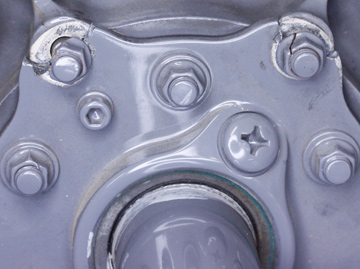
The failure of an air turbine starter led to the in-flight shutdown of the number one engine of a China Airlines Airbus A330 aircraft in October 2013. (An air turbine starter uses pressurised air to rotate the high-pressure rotor within the engine during the engine start sequence).

AO-2013-172_Air-turbine-starter.jpg

The failure of an air turbine starter led to the in-flight shutdown of the number one engine of a China Airlines Airbus A330 aircraft in October 2013. (An air turbine starter uses pressurised air to rotate the high-pressure rotor within the engine during the engine start sequence).

The incident occurred approximately four hours into a flight from Sydney to Taipei, Taiwan ROC. The flight crew completed a precautionary shutdown of the number one engine in response to a low oil pressure warning, and diverted the flight to Cairns, Queensland.

The ATSB investigation found that the air turbine starter had sustained an uncontained failure. When the starter failed, an oil scavenge pipe from the number one engine was severed by debris that had not been contained by the starter casing. This resulted in a rapid loss of oil that required the number one engine to be shutdown.

The investigation identified that the starter failure was due to the failure of the output shaft bearing. Damage to the bearing was consistent with exposure to transient loads from the crash engagement of the starter clutch during engine starts, or, from axial loads to the bearing from the horizontal driveshaft.

Safety actions taken

To eliminate the potential for crash engagements to occur during operation of the air turbine starter, the starter manufacturer was phasing out the single pawl and ratchet clutch mechanism. A redesigned air starter using a full range pawl and ratchet is being incorporated into service. The manufacturer has also initiated changes to limit the potential for axial loads to be applied to the output shaft bearing of the turbine stater.

The resulting changes in design will eliminate air turbine starter failures associated with crash engagements, though they will not completely eliminate the potential for failures to occur (contained or otherwise).

Other safety action from the starter manufacturer, the engine manufacturer, and the operator includes a number of changes to the procedures for oil level checks and changes.

The ATSB is satisfied that the likely reoccurrence of this failure mode will remain low as a result of these safety actions.

Read the final report: Engine shut down in-flight involving Airbus A330-302, B-18358, 887 km east-north-east of Darwin Airport, on 3 October 2013

Blue Mountains railway

The Zig Zag railway has faced a number of hurdles over the past 4 years, with regulatory issues, bush fires and floods.
Zig-Zag_railway.jpg

The Zig Zag railway has faced a number of hurdles over the past 4 years, with regulatory issues, bush fires and floods.

On 2 December the ATSB held a workshop at this well-known tourist attraction in the Blue Mountains of NSW, at the request of the ZZR board.

This workshop, presented by two senior rail investigators covered how the ATSB conducts investigations and how Australian Standard AS4292.7 would apply to ZZR. The aim being to give the ZZR investigation team a broad understanding of what a typical investigation would look like, and how they could improve safety through the investigative process.

The Zig Zag railway was built in the 1860s, to transport people and produce from the western plains of NSW to Sydney. It was replaced in 1910 by a 10 tunnel deviation. During the 1970s the line was rebuilt as a fully operational tourist railway using narrow gauge track and rolling stock from Queensland, South Australia and Western Australia. The trains, track and rolling stock are maintained and operated by the Zig Zag Railway Co-op Ltd, a voluntary, “not for profit’ co-operative.

The ATSB would like to thank the board of Zig Zag Railway for giving us the opportunity to visit and play a part in helping to return the Zig Zag Railway to operational status.

Passenger train hits equipment

A V/Line passenger train was brought to a grinding halt after it collided with maintenance equipment left behind from track work.

RO-2015-003_Montgomery.jpg

A V/Line passenger train was brought to a grinding halt after it collided with maintenance equipment left behind from track work.

On 16 February 2015, track maintenance was being conducted at Montgomery (between Sale and Bairnsdale) in Victoria. To allow a passenger train to pass through the section, the maintenance gang cleared the track and lifted the track protection. When the gang vacated the line however, some equipment was left behind on the track. 

As the V/Line passenger train approached the work site, the driver saw the obstruction. Despite making an emergency brake application the driver was unable to bring the train to a stop before it collided with the equipment. The train remained on the track and there were no injuries to passengers or rail personnel.

The ATSB’s investigation found that the item of maintenance equipment struck had earlier been moved along the track - away from the immediate area of works. Subsequently, this equipment was overlooked when the track was cleared of workers and other tools.

The task of ensuring that the line was clear had cascaded to a third party within the maintenance gang. There was no formal system in place to manage this process of informal delegation.

As a result of this and other related safe working incidents, V/Line has advised that a review of infrastructure rules, safety procedures and training has been implemented.

Safety message

This incident highlights the need for track maintenance personnel to be particularly vigilant in ensuring that no obstructions remain on the line when authorising the passage of a train through a work site.

Similarly, network managers should ensure that systems and processes are in place to minimise the potential for maintenance equipment to be left on track. 

Read the final report: Passenger train collision with maintenance equipment, Montgomery, near Sale, Victoria, on 16 February 2015