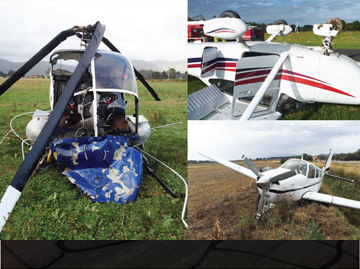
Landing gear failure

A runway excursion involving a Fairchild Industries Metro 23 aircraft shows why it’s important that maintenance and inspection programs adequately provide for the detection of corrosion and cracking.

A runway excursion involving a Fairchild Industries Metro 23 aircraft shows why it’s important that maintenance and inspection programs adequately provide for the detection of corrosion and cracking.

landing-gear-failure.jpg

On 20 February 2014, the aircraft was being operated on a charter flight from Avalon to Portland, Victoria with 10 passengers and two crew on board.

Shortly after touch-down, the torque link on the left, main landing gear (MLG) failed. This resulted in the aircraft veering left and coming to rest beside the runway. Fortunately no one was injured.

The runway excursion resulted from failure of the lower torque link attachment lug on the left main landing gear’s yoke. This allowed the wheels to rotate through 90 degrees, producing a large braking effect on the left side.

The flight crew were unable to counteract this and the aircraft veered to the left and off the runway.

The failure of the lug on the yoke resulted from pre-existing cracks that had progressively grown until the part had insufficient strength to support normal landing loads.

The cracks initiated principally from areas of pitting corrosion in the lug’s bore and were propagated by cyclic stresses imposed during operation.

The ATSB found the maintenance and inspection program for the aircraft’s landing gear did not adequately provide for the detection of corrosion and cracking in the yoke lug bore.

This occurrence highlights the importance of developing and conducting appropriately detailed maintenance inspections on susceptible parts and assemblies.

The Civil Aviation Safety Authority (CASA) has released Airworthiness Bulletin AWB 32-023 to alert all Fairchild Swearingen Metro and Merlin operators of the need for detailed inspection of the internal bore of the landing gear torque link lugs for any signs of corrosion or wear outside of the manufacturer’s specified limits and to take appropriate action per the aircraft’s structural repair manual, where necessary.

In addition, the aircraft’s Type Certificate Holder has drafted service bulletins 226-32-083, 227-32-065, CC7-32-030 titled “inspection of Main Landing Yoke for Corrosion and/or Damage” that will significantly increase the effectiveness of maintenance inspections for the affected parts.

This occurrence highlights the importance of developing and conducting appropriately detailed maintenance inspections on susceptible parts and assemblies.

Read the final report: Runway excursion involving Metro 23, VH-UUB, at Portland, Victoria, on 20 February 2014

Track worker fatally struck by train

A track worker who was fatally struck by a passenger train in Guildford, WA had no form of protection such as a lookout, at the work site.

A track worker who was fatally struck by a passenger train in Guildford, Western Australia had no form of protection such as a lookout, at the work site, according to the ATSB’s final investigation report.

ro-2015002_accident-intersection.jpg

On 10 February 2015, a Public Transport Authority (PTA) maintenance crew commenced work at Meadow Street in Guildford. The crew was maintaining the pedestrian gates adjacent to the level crossing.

At about 10.35 am, one of the track workers was struck by a Perth-bound suburban passenger train. Tragically, the track worker died in the accident.

The ATSB investigation found that the PTA maintenance workers had not implemented any form of track worker protection at the work site. This was partially due to the PTA not having documented instructions specifying the level of protection required, preferring that track workers make their own assessment based on their knowledge of the Network Rules. The ATSB found that, under these arrangements, track workers could make an incorrect assessment, placing themselves at a greater risk of being struck by a train.

A review of the safeworking training provided to the track workers found that the training material did provide a suitable level of safe-working knowledge.

Following the occurrence, the toxicology report on the deceased track worker identified the presence of amphetamine and methamphetamine; methamphetamine being a prescribed drug under the Rail Safety Regulations 2011. The use of stimulants such as methamphetamine is associated with a range of neurocognitive effects in humans that may affect performance.

The ATSB found that in this instance, the presence of a prescribed drug within the worker’s system appeared to be a relatively isolated case. An examination of the company’s drug and alcohol policy/procedures found them to be generally effective in managing drugs and alcohol in the workplace.

The PTA issued a safety alert following the incident to highlight the importance of implementing the correct level of track worker protection. The subsequent introduction of new safeworking rules, track access accreditation levels and training further supported this.

Further, the PTA has created the role of Workplace trainer and assessor with the task of ensuring track workers comply with the network rules by way of competency-based assessments. Implementation of a new track access accreditation system, with improved training and job mentoring, has also commenced.  

Safety message

This incident strongly emphasises the need for rail transport operators to provide clear and concise work instructions to employees working within the railway corridor. It also highlights the potential for recreational and other drug use to impair performance and affect workplace safety.

Read the final report: Collision between track worker and passenger train, at Guildford, Western Australia, on 10 February 2015

Learn more about Safe work on rail

Light aeroplane engine failures

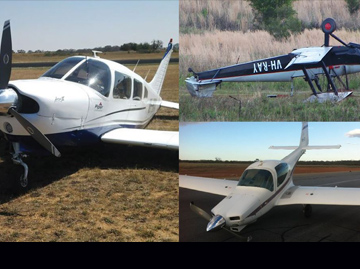
Over the 6-year study period between 2009 and 2014, 322 engine failures or malfunctions involving light aircraft were reported to the ATSB and/or Recreational Aviation Australia (RA-Aus).

Through routine trend monitoring of safety occurrence reporting, the ATSB became aware of a potential issue surrounding the frequency of light aircraft engine failures and malfunctions (both Australian VH and recreationally-registered). To formally and more fully examine the contributing factors behind these statistical observations, the ATSB initiated this Aviation Research investigation (under the provisions of the Transport Safety Investigation Act 2003).

Over the 6-year study period between 2009 and 2014, 322 engine failures or malfunctions involving light aircraft were reported to the Australian Transport Safety Bureau (ATSB) and/or Recreational Aviation Australia (RA-Aus). These reports involved single-engine piston aeroplanes up to 800 kg maximum take-off weight. Aircraft powered by Jabiru engines were involved in the most engine failures or malfunctions with 130 reported over the 6 years. This represents about one in ten aircraft powered by Jabiru engines in the study set having reported an engine failure or malfunction. Reports from Rotax powered aircraft were the next most common with 87 (one in 36), followed by aircraft with Lycoming (58 – one in 35) and Continental (28 – one in 35) engines. When factoring in the hours flown for each of these engine manufacturers, aircraft with Jabiru engines had more than double the rate of engine failure or malfunction than any other of the manufacturers in the study set with 3.21 failures per 10,000 hours flown.

Unlike the engines of other engine manufacturers in this study, nearly half of the Jabiru engine failures or malfunctions related to a fractured component. Engine through-bolt failures were the most commonly reported failure mechanism in Jabiru powered aircraft with 21 through-bolt fractures reported between 2009 and 2014. Taking into account the number of aircraft registered in the study period, through-bolt failures occurred in about one in 55 Jabiru powered aircraft. Although originally designed to be replaced after 1,000 hours, 19 through-bolts failed before the 1,000 hour mark, with seven failing before 500 hours. At least four failures involved engines with upgraded 3/8 inch diameter through-bolt nuts. There were no failures reported involving the newer 7/16 inch diameter through-bolts which are used in currently manufactured engines (present in about 20 per cent of Jabiru engines).

Jabiru Aircraft Pty Ltd have designed and tested a modified 3/8 inch diameter through-bolt which incorporates aspects to alleviate the effects of thermal expansion and damp resonant vibrations.

The ATSB has issued recommendations to Jabiru Aircraft Pty Ltd and the Civil Aviation Safety Authority to reduce the risk of engine failure or malfunction in aircraft fitted with Jabiru engines and to assure future reliability of these engines.

Safety message

Owners and operators of light aircraft with Jabiru engines that have 3/8 inch diameter through-bolt configurations need to be aware of the continued elevated risk of a through-bolt failure leading to an engine failure or malfunction in flight. It appears that Jabiru engine service bulletins, requiring upgraded through-bolts of the same thickness and upgraded nuts to the 12-side ARP nuts, may not have fully addressed this issue. Thicker 7/16 inch through-bolts (installed in newly manufactured engines and recommended as a retro-fit for aircraft conducting flight training), appear to have improved the reliability of Jabiru engines, although future monitoring will provide more definite evidence.

Read the ATSB research report AR-2013-107

Fatal accident prompts recommendation

A fatal accident involving an amateur-built aircraft has prompted the ATSB to issue a formal safety recommendation to Australia’s aviation regulator, the Civil Aviation Safety Authority (CASA).

A fatal accident involving an amateur-built aircraft has prompted the ATSB to issue a formal safety recommendation to Australia’s aviation regulator, the Civil Aviation Safety Authority (CASA). The recommendation urges CASA to take action to require builders of amateur-built experimental aircraft to produce a flight manual, or equivalent, for their aircraft following flight testing.

onedesign_ao2014163_news.jpg

The accident occurred on the afternoon of 10 October 2014, when the pilot of an amateur-built One Design DR-107 aircraft was performing low-level aerobatic manoeuvres. The manoeuvres were being performed to the east of Goolwa Airport, South Australia.

Witnesses described the aircraft performing a series of similar manoeuvres. Each involved a vertical climb and tumbling manoeuvre followed by a vertical dive and a low altitude recovery.

Witnesses reported that, during recovery from the last vertical dive, the aircraft collided with terrain. The aircraft was destroyed by the impact and the pilot was fatally injured.

The ATSB found no evidence of pilot incapacitation or a mechanical fault with the aircraft that could have contributed to the accident. There was insufficient evidence to determine why the recovery was not accomplished above the pilot’s minimum authorised aerobatics height.

CASA recommends that pilots performing low-level aerobatics undertake regular peer reviews due to the high level of skill and fine safety margins involved. The ATSB found no evidence of the pilot undertaking a peer review of their aerobatic performance in the 15 months prior to the accident.

The ATSB identified a safety issue that CASA does not require builders of amateur-built experimental aircraft to produce a flight manual, or equivalent, for their aircraft following flight testing. Without a flight manual, the builder, subsequent owners and other pilots do not have reference to the operational and performance data necessary to safely operate the aircraft.

In response to this safety issue, the ATSB has issued a safety recommendation to CASA to take action to require builders of amateur-built experimental aircraft to produce a flight manual, or equivalent, for their aircraft following flight testing. CASA has 90 days to formally respond to the ATSB’s safety recommendation.

Safety message

This accident highlights the risks inherent in performing low-level aerobatics. Applying the recommendations in CASA civil aviation advisory publication CAAP 155-1(0) Aerobatics will reduce these risks. Specifically, pilots are encouraged to always maintain minimum approved heights above the ground when performing aerobatics and to engage in regular peer reviews.

Owners of amateur-built experimental aircraft are also encouraged to ensure a comprehensive and accurate flight manual, or equivalent, is available for reference by themselves, subsequent owners and other pilots who may fly the aircraft.

Read the final report: Collision with terrain involving One Design DR-107, VH-EGT, Goolwa Airport, South Australia, on 10 October 2014

Prepared for the worst

It pays to have a plan if things start to go wrong - in this case the pilot made all the right moves.

  • It pays to have a plan if things start to go wrong - in this case the pilot made all the right moves.
gippsland-aeronautics-ga-8_news.jpg

On 21 October 2015, a Gippsland Aeronautics GA-8 aircraft was conducting parachute operations at Busselton Airport, Western Australia.

The aircraft took off with a pilot and seven parachutists on board. As it climbed through about 2,000 ft, the pilot observed a decrease in the engine manifold pressure. The fuel flow also increased significantly. As the aircraft was tracking south towards forested terrain, the pilot elected to turn back towards the aerodrome, and continue the climb, in case the engine issue worsened. The pilot conducted the standard engine checks, but the engine continued to produce only partial power. In response the pilot broadcast a Mayday.

The pilot advised the parachutists they would establish the aircraft in the drop run overhead the aerodrome at about 4,000 ft. As the pilot subsequently reduced the power to allow the parachutists to exit the aircraft, the engine ran roughly. Six of the parachutists exited normally and landed safely at the drop zone, while the seventh, who was also a company pilot and seated in the front passenger seat, remained in the aircraft with the pilot in command.

The pilot then increased the aircraft’s power until the engine ran smoothly, although only producing partial power, while continuing the descent to the aerodrome. The pilot also advised Air Traffic Control that they did not require immediate assistance and downgraded to a PAN, as the engine continued to produce some power. The aircraft landed safely at Busselton.

After shutting down the engine, the pilot consulted with the maintainer, and found that the intake tube on the No. 4 cylinder was loose. 

A reminder that constant monitoring of the engine instruments can provide early indication of a problem.

This incident highlights the importance of having thoroughly rehearsed emergency procedures, particularly for parachute operations.The parachutists had, in accordance with standard procedures, removed the single point restraints during the climb, and were prepared to exit the aircraft quickly.

For pilots, this provides a reminder that constant monitoring of the engine instruments can provide early indication of a problem. Acting quickly on this information may reduce the impact of partial or total power loss on flight safety.

The ATSB publication Avoidable Accidents No. 3 – Managing partial power loss after take-off in single-engine aircraft, provides information also relevant to partial losses of power in flight as well as after take-off. Following a complete engine failure, a forced landing is inevitable. For a partial power loss, pilots are faced with deciding whether to continue the flight or land immediately.

Read the final report: Partial engine failure involving a Gippsland Aeronautics GA-8, VH-FGN, near Busselton Airport, Western Australia, on 21 October 2015

Oil on windscreen

Oil on the windscreen due to an unsecured engine oil filler cap prompted the pilot of a Cessna T210N to attempt a go-around, with tragic results.

  • Oil on the windscreen due to an unsecured engine oil filler cap prompted the pilot of a Cessna T210N to attempt a go-around, with tragic results.
cessna_vh-zfw_news.jpg

On 4 July 2014, the owner/pilot of a Cessna aircraft and two passengers were conducting a private flight from Inverell Airport to Bankstown Airport, New South Wales.

Shortly after take-off, oil appeared on the windscreen and the pilot rejected the take-off with the intent of landing back on the runway.

With the oil obscuring the pilot’s forward vision, the pilot looked to the left of the aircraft to assess their position along the runway. The pilot realised they were a lot further along the runway than expected and had insufficient runway distance to land safely. The pilot attempted a go-around but later reported the engine did not respond. During the subsequent forced landing, the aircraft impacted a shrub beyond the end of the runway overrun and flipped, before coming to rest inverted.

The pilot and a passenger were hospitalised with serious injuries and the second passenger received minor injuries. Tragically, the seriously-injured passenger later succumbed to their injuries. The aircraft was destroyed by the impact forces and a post-impact fuel-fed fire.

Examination of the aircraft found the engine oil filler cap detached from the oil filler tube but hanging by its chain. Further examination of the tube and cap determined that it was most likely the cap was not secure before the flight commenced.

The Cessna T210N pilot’s operating handbook advised pilots to check the engine oil level during a pre‑flight inspection but not the security of the separate oil filler cap. The ATSB could not establish the extent to which a specific checklist item about oil filler cap security would have assisted in identifying the unsecured cap in this case, although it would probably have increased the likelihood of detection.

Witness observations and the pilot’s assessment of the aircraft’s position along the runway during the rejected take-off indicated that the take-off was longer than normal. The reason for this could not be determined.

Examination of the engine and turbocharger found no mechanical defect or failure that would have precluded normal operation. While it was possible that a temporary issue occurred, resulting in the reported lack of engine response during the go-around, this could not be established.

The ATSB also determined that the engine manufacturer’s oil change interval had been exceeded by 3 months but it was very unlikely that this had any effect on the operation of the engine.

Safety message

This accident highlights that, prior to take-off, pilots should have in mind a go/no-go decision point along the runway by which time the aircraft should become airborne. If at that point the aircraft is not airborne, the pilot should reject the take-off. Having such a point assists pilot decision making during a critical phase of flight. This is particularly important when operating in conditions that may affect aircraft performance, such as tailwind conditions.

In addition, the ATSB highlights the importance of being aware of the daily inspection requirements when operating aircraft under a CASA maintenance schedule. In particular, how this may differ from the aircraft manufacturer’s pre-flight inspection procedure.

Read the final report: Collision with terrain involving Cessna T210N, VH-ZFW, near Inverell Airport, New South Wales, on 4 July 2014

Unexpected developments

A recent ATSB investigation shows how unexpected developments or confusion about procedures can contribute to decisions and actions that increase the safety risk to the aircraft.

A recent ATSB investigation shows how unexpected developments or confusion about procedures can contribute to decisions and actions that increase the safety risk to the aircraft.

qantasjet_news.jpg

In the incident, the crew of a Cobham Airline Services Boeing 717 aircraft, was conducting an instrument approach to land on runway 03 at Perth Airport.

The aircraft was conducting an approach in instrument meteorological conditions after a flight from Paraburdoo, Western Australia. When they reached the decision altitude, the crew initiated a missed approach procedure as they had not obtained visual reference with the runway.

Almost immediately, however, they obtained visual reference with the runway, discontinued the missed approach procedure and landed, despite the aircraft being in an unstable condition.

The ATSB found that the onset of fog at Perth Airport at the estimated time of arrival was not forecast until after the aircraft had passed the point in the flight when it had insufficient fuel remaining to divert to a suitable alternate aerodrome. Before that point, there had been no requirement for the aircraft to carry fuel to continue to a suitable alternate.

Under the circumstances, the flight crew considered that the better option was to discontinue the missed approach procedure and land, in spite of the aircraft being in an unstable condition due to the initiation of the missed approach.

This incident highlights the risk of an unstable approach from not following a missed approach through to its conclusion.

Unstable approaches are a frequent factor in approach and landing accidents, including controlled flight into terrain. The Flight Safety Foundation has developed an Approach and Landing Accident Reduction Tool Kit(Opens in a new tab/window) to reduce the risk of approach and landing accidents.

Handling approach to land’ is also a top safety concern in the ATSB’s SafetyWatch initiative. The ATSB has identified an increasing trend where pilots mishandle or mismanage their aircraft and flight profile when unexpected events arise during the approach to land.

The occurrence also highlights that during a flight, the forecast weather at the destination may change and it is advisable to obtain the most up-to-date weather forecasts. However, pilots should be alert to the fact that the actual weather can differ significantly from forecasts.

Read the final report: Weather-related operational event involving Boeing 717, VH NXO, Perth Airport, Western Australia, on 1 June 2012

Gastro leading cause of pilot incapacitation

Gastrointestinal illness, followed by laser strikes are the leading causes of pilot incapacitation, according to a new ATSB research report.

Gastrointestinal illness, followed by laser strikes are the leading causes of pilot incapacitation, according to a new ATSB research report.

pilotincapacitation_news.jpg

This report provides insight into pilot incapacitation occurrences in both high and low-capacity air transport, and general aviation.

In the past five years there were 23 pilot incapacitation occurrences reported per year on average. Around 75 per cent of the incapacitation occurrences happened in high-capacity air transport operations (about 1 in every 34,000 flights), with the main cause being gastrointestinal illness, followed by laser strikes. (A high-capacity aircraft provides more than 38 passenger seats and a maximum payload greater than 4,200 kg.)

Low-capacity air transport and general aviation had fewer occurrences with a wider variation of causes of incapacitation. These ranged from environmental causes, such as hypoxia, to medical conditions, such as heart attack.

Pilot incapacitation can result in a restriction of flight duties in high-capacity operations but with multi - pilot crews these occurrences usually had minimal effect on the flight.

In single pilot operations there could be more serious consequences such as collision with terrain.

The report also recommends effective ways to manage pilot incapacitation, across all levels of aircraft operations.

Safety message

Pilot incapacitation can occur in any operation type, albeit rarely.

In high-capacity air transport operations, the practice of ensuring all pilots on the same flight eat different meals prior to and during the flight has been an effective defence preventing all pilots on the same flight becoming incapacitated at the same time.

Providing pilots with training in dealing with incapacitation events has been effective for when these events do occur. Pilots are also encouraged to report laser strikes to police and the Office of Transport Security.

In low-capacity air transport operations, providing emergency training to non-flight crew, such as aeromedical nurses, is an important defence in case of pilot incapacitation.

Finally, in general aviation, pilots are reminded to assess their fitness prior to flight. Assessment of fitness includes being aware of any illness or external pressures they may be experiencing.

Read the research report AR-2015-096 Pilot incapacitation occurrences 2010–2014

Wildlife strikes pose risk

Two recent incidents illustrate how quickly and unexpectedly damage can occur to aircraft.

Wildlife strikes are among the most common occurrences reported to the ATSB. They are a significant safety risk for pilots as well as an economic risk for aerodrome and airline operators.

Two recent incidents illustrate how quickly and unexpectedly damage can occur to aircraft.

On 1 September 2015, the pilot of a SA227 (Metroliner) aircraft was conducting a scheduled freight run from Brisbane to Emerald via Thangool Airport, Queensland.

Shortly after touchdown, and with all landing gear wheels in contact with the ground, the pilot saw the glimpse of an animal flash from left to right in front of the aircraft. At the time, the aircraft was travelling at about 80 kt.

The right propeller then struck the animal, later identified as a small kangaroo. The pilot reported that following the large bang associated with the propeller striking the animal, there was a lot of vibration throughout the aircraft, but no abnormal engine indications. The pilot continued the landing roll, and used ground idle rather than reverse thrust to slow the aircraft.

The pilot taxied the aircraft to the parking bay, shut down the engines, then carried out an external inspection. One of the propeller blades attached to the right engine was twisted. Luckily the pilot escaped injury.

Although the Thangool airport had wildlife protective fencing, at the time it wasn’t fully fenced. There had been no reported kangaroo strikes in the last 28 years, and a runway inspection had just been conducted 20 minutes prior to the landing.

On 2 September 2015, another strike was reported by a Raytheon B200 aircraft on a medical retrieval mission from Townsville to Barcaldine Airport, Queensland.

When touching down in the early hours of the morning, the pilot caught a last moment glimpse of a small kangaroo before the aircraft struck the animal.

The pilot reported that engine indications were normal, with no noticeable vibration as they completed the landing roll and then shut down the left engine while on the runway. They then taxied clear of the runway using the remaining engine.

The strike caused damage to the three propeller blades attached to the left engine and disabled the aircraft. No one on-board the aircraft was injured.

The ATSB regularly publishes a statistical report on the number and frequency of wildlife strikes. This report provides information for pilots, aerodrome and airline operators, regulators, and other aviation industry participants to assist with managing the risks associated with bird and animal strikes.

Both animal strikes and bird strikes remain a mandatory reporting item under the Transport Safety Investigation Act 2003.

Read the final report: Collisions with kangaroos involving a Fairchild SA227 (Metroliner), VH-HPE, at Thangool Airport, Queensland, on 1 September 2015 and a King Air B200, VH-FDB, at Barcaldine Airport, Queensland, on 2 September 2015

Good fuel management saves the day

This incident shows how a pilot’s good fuel management ensured the safe landing of a Piper Chieftain aircraft after an unexpected incident.

This incident shows how a pilot’s good fuel management ensured the safe landing of a Piper Chieftain aircraft after an unexpected incident.

piperchieftain.jpg

On 12 October 2015, the pilot and three passengers were conducting a survey flight over the southern highlands area of New South Wales.

After departure, the pilot reported that clouds (both towering cumulus and cumulus) were beginning to form in the area, producing some light turbulence. The pilot remained concerned about one of the passengers, seated at the rear of the aircraft, who appeared to find the conditions difficult to tolerate.

The pilot’s workload remained high. Apart from flying to each of the pre-arranged waypoints, additional landmarks were being relayed to the pilot from the client’s operator on the ground.

The pilot kept a very detailed fuel log, and continually cross-checked the fuel in each of the four fuel tanks. The weather had deteriorated even further as the pilot prepared to fly to the last waypoint before a return to Bankstown. The pilot delayed a scheduled fuel tank change to maximise the fuel remaining in the main (inboard) tanks.

As the pilot was maneuvering around large banks of cloud and thunderstorms, the left auxiliary (outboard) tank ran dry and the engine surged. The aircraft yawed. The pilot reacted immediately and changed the fuel selectors onto the main tanks. The engine responded and power was restored. The aircraft returned to Bankstown without incident.

In this incident, the pilot followed all the key suggestions in the ATSB’s Avoidable Accident Series No 5 – Starved and exhausted: Fuel management aviation accidents. These being

  • Knew exactly how much fuel was on board
  • Knew how much / what rate fuel was being consumed
  • Knew the aircraft fuel system and keep a detailed fuel log of the four tanks during flight.

Despite a high workload, deteriorating weather, and untimely distractions the pilot was well prepared to handle an unplanned outcome of temporary fuel starvation of the left engine.

Read the final report: Fuel management issue involving a PA31-350, VH-HJH, 19 km north of Goulburn Airport, New South Wales, on 12 October 2015