Safety Bulletin 03 - Lifeboat Accidents

A seaman was killed and two other seamen were seriously injured when the lifeboat they were in fell 20 metres to the water after the wire falls parted. The limit switches did not operate, and the falls parted when the davits came up to their stops with the winch motor running. Another fatality was only prevented by a crewmember's safety helmet. This was one of three similar accidents where lives were put at risk.

Publication details

Publication type Safety Education Material
Publication mode Marine
Publication date 01/12/2003
Review date 01/12/2008
Subject matter Maritime safety bulletin

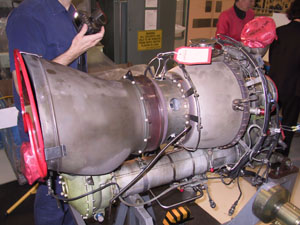
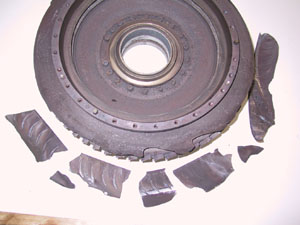
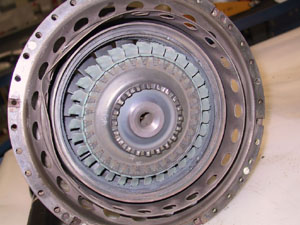
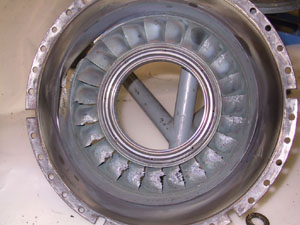
Bolt Fracture High Pressure Turbine Disk Assembly

Pratt & Whitney Canada PW118A, Engine s/n 115120

INTRODUCTION

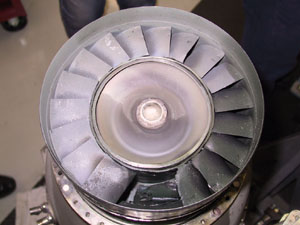
Airnorth Regional experienced operational problems with a Pratt and Whitney Canada PW118A engine (engine s/n PC-E 115120). The problems ranged from hung starts resulting in aborted hot starts to vibration (sub-idle vibration) and noise from the high-pressure (HP) rotor. These problems occurred over a period of several days. In order to resolve the problems, the engine was removed from the aircraft to allow further investigation through disassembly.

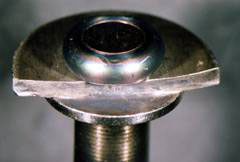
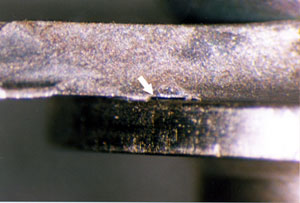
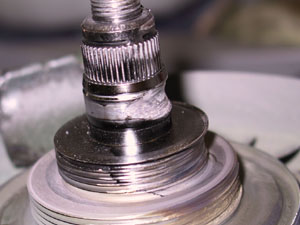
Disassembly revealed that the bolted joint between the HP turbine disk and turbine stub shaft had failed. Of the five bolts used in the assembly, two had fractured in the threaded section. The remaining three bolts exhibited varying degrees of bending and thread damage.

After a detailed examination of the bolts by Pratt and Whitney Canada, it was concluded that the fracture of the two bolts and cracking in the remaining bolts was caused by corrosion fatigue, with sulphur being identified as the corrosive agent. It was proposed that the presence of sulphur was the result of environmental contamination.

Airnorth brought the bolt failure and subsequent analysis by the engine manufacturer to the attention of the ATSB. An independent review of the bolt failure analysis was undertaken by the ATSB.

Publication details

Publication mode Aviation
Publication date 15/06/2003
Review date 15/06/2003
Subject matter Helicopter

CR 217: Prospects for improving the conspicuity of trains at passive railway crossings (2003)

Introduction

The problem of collisions at railway crossings is an on-going one for rail operators, track providers and regulators and road authorities in Australia. While the number of deaths and injuries is small in comparison to other road casualties and has been reduced considerably in recent years, they are the most serious safety issue faced by the rail system in Australia.

The genesis of the present project was at a special meeting of the Australian Transport Council (ATC) on 8 August 2002 that considered the outcome of recent tests of locomotive auxiliary lighting. It was agreed at that meeting that the SCOT Rail Group, in consultation with the rail industry, develop a strategic approach to managing the full range of level crossing issues. It was further agreed that Austroads and Rail Group were to review available research on train lighting and visibility and report back to ATC at its meeting on 8 November 2002 on the need for any further research. The Australian Transport Safety Bureau was required to produce this review on behalf of Austroads and Rail Group and has commissioned ARRB Transport Research Ltd to undertake the work.

The essential purpose of the present report is therefore to advise on the need for, the feasibility of, and the potential benefits of, further research into train lighting and conspicuity that will deliver significant reduction in road safety trauma.

Number of collisions and their associated costs

In the period 1996-2000, it is estimated that approximately 36 crashes per year occurred at passive crossings throughout Australia. These crashes resulted in an average of four deaths and six serious injuries per year. The average annual cost of collisions at railway level crossings was estimated to be at least $24.8 million for all crossings, including $16.3 million for active crossings and $8.3 million for passive crossings. As fatality data for NSW were not available, these estimates were based on the assumption that the distribution of injury outcomes for NSW is similar to that in other states. The estimates are regarded as minimums, since the data for South Australia, Western Australia and the Northern Territory were incomplete. They are based on personal injuries recorded in the road crash system and do not reflect the major losses to the rail system that can occur as a result of a collision with a road vehicle. Rail system loss data are not kept in a systematic manner by all rail operators. Data that were obtained indicated very high losses associated with some incidents. The fatality rate at level crossings per 100,000 population is considerably lower in Australia than in the United States and Finland.

Case for improving train conspicuity

Since there are fewer locomotives (approximately 2300) than passive crossings (approximately 6000), and since locomotive lighting treatments are likely to cost less than even the low-budget active warning systems currently being trialled, treating locomotives appears to be an attractive option. Increasing the conspicuity of locomotives would cost far less than providing active treatments at all passive crossings. However, there is presently insufficient research evidence to estimate the proportion of collisions at passive crossings that would be prevented by such treatments. While available data suggests that active warnings would reduce crashes by more than 60 per cent (Schulte 1976), it is not possible to say by how much increased conspicuity would reduce collisions.

Vehicle/train collisions

Under Australian conditions, approximately 70% of collisions occur during daylight and 30% occur at night. Daytime collisions also predominate in the US, but the difference between daytime and night-time crash occurrence is less marked than in Australia.

In Australia, approximately 65% of crashes involve trains running into road vehicles and 35% involve road vehicles running into the side of trains.

Seven contributing factors related to the driver of the road vehicle have been identified:

  • Not detecting the crossing
  • Stalling
  • Not detecting the train
  • Being distracted
  • Inaccurate expectancies
  • Deliberate risk taking
  • Misjudging train speed.

There are very few cases of stalled vehicles on the tracks, and deliberate risk taking is not possible unless the driver has already seen the train. The important contributing factors are, on the one hand, not detecting the train, to which distraction and inaccurate expectancies regarding the presence of a train may contribute; and on the other hand, misjudging the speed of the train. It is not known to what extent each of these factors contributes to collisions at railway level crossings. It seems inherently unlikely that adding more lights to the train would result in more accurate (or at least more cautious) perceptions of train speed. This leaves cases which involve not detecting the train, distraction and expectations that a train will not be present as events where adverse outcomes could be avoided by better train conspicuity. Unfortunately, it is not possible to say what proportion of cases this involves, or by how much increased conspicuity (assuming effective increases in conspicuity were possible) is likely to reduce this.

Lighting standards

The Australian Rail Operations Unit, in consultation with the rail industry, is in the process of developing a draft Code of Practice for the Defined Interstate Rail Network to provide uniform guidance for the design and construction of rolling stock. The relevant volume of the Code includes provisions for lighting and reflectorised material on trains. The draft code has mandatory provisions for headlights and 'road visibility lights', which are similar to crossing lights. Reflectors are optional, but where provided the reflective sheeting must be to Class 1A standard and there are mandatory provisions for minimum dimension, placement and colour.

The present report discusses characteristics of different lighting systems and puts forward an outline for the development of photometric models to predict the relative visibility of different lighting treatments.

Empirical studies of the effectiveness of auxiliary lighting treatments are reviewed. There is evidence to suggest that all auxiliary lighting treatments are effective and increase detectability or improve estimations of time to arrival compared to headlights alone. A study for the US Federal Railroad Administration showed that crossing lights were the most effective treatment. Studies have also shown that strobe lights can improve detection when added to locomotives previously equipped with headlights alone. However, a recent study for Western Australian Government Railways indicated that a single strobe light did not improve detection when added to locomotives already fitted with both headlights and crossing lights.

Possible means of improving train conspicuity

It is possible that daytime crashes might be reduced by adding coloured strobe lights or by selection of colour schemes which better contrast with the background against which locomotives on particular lines are viewed.

Although reflectorised panels may be effective in improving conspicuity, they may not be effective at crossings where the road does not cross the rail track at right angles. Self-illuminated devices, similar to those currently available as road delineators (also known as cats eyes), may be a viable alternative.

Conduct of future research

If it is decided that the scale of the problem and the potential benefits warrant further research, then it is recommended that the following procedure be followed. Future research should proceed first by careful modelling of the photometric properties of proposed conspicuity enhancing treatments. Only once there is a solid case established that a treatment has a high probability of succeeding should any field work be undertaken. The photometric modelling will probably have to be supplemented by photometric measurements and some tests with subjects using real-life visibility aids on a static locomotive to provide data for the modelling process, resolve issues which cannot be resolved theoretically and confirm the predictions of the models. The cost of the photometric modelling exercise is estimated at $75,000 and the supplementary program of measurements and tests at $15,000 to $45,000. A study of the safety margins allowed by drivers when crossing in front of a train would cost approximately $105,000, including equipment and a pilot study to confirm the feasibility of the method. The total program of recommended research would cost up to $225,000.

Evaluation of the effectiveness of conspicuity treatments in terms of crash reductions will not be practical, due to the small number of crashes available for comparison, unless the proportion of crashes prevented by the treatment is exceptionally high.

Publication details

Publication number CR217
Publication type Research and Analysis Report
Publication mode Rail
Publication date 01/01/2003
Authors Cairney P
ISBN 0642 25505 9
ISSN 1445-4467
Subject matter Rail Crossing

Aviation Safety Indicators 2002 - A report on safety indicators relating to Australian aviation

The objectives of this draft report are to: Provide objective, statistical measures of the safety of Australian aviation (excluding sport and military) Provide a document that highlights broad trends and developments that have occurred in aviation safety Provide a document that offers a basis to compare aspects of Australian aviation safety against the safety of aviation in other countries Deliver the above utilising a process that is acceptable to stakeholders. Data concerning aviation activity, the aviation industry and aviation accidents were collected from four main sources. Data are presented graphically in time series figures, and some data were tested for statistical significance using simple regression.

Publication details

Publication type Research and Analysis Report
Publication mode Aviation
Publication date 19/11/2003
ISBN 18 770710463

The Hazard Posed to Aircraft by Birds

Birdstrikes continue to be a problem for aviation worldwide, costing approximately $US3 billion annually. Increasingly, funds are being directed towards research which focuses on bird control and avoidance methods. Two such methods which are proving to be successful, are the use of handheld laser devices to scare birds from the airport environment, and the use of the US developed Avian Hazard Advisory System (AHAS), which allows aircraft to avoid high-risk birdstrike areas. This study investigated the Australian birdstrike data for the period 1991 to 2001. Although limited, the available data was able to be used to investigate birdstrike rates, species involvement and hazard potentials, as well as providing a time of day and phase of flight analysis. Additionally, the current study highlights the magnitude of some of the impact forces exerted during a birdstrike. The data suggest that there has been a significant increase in the rate of birdstrikes being recorded in Australia since 1992 (most notably between 1998 and 2001).

Publication details

Publication type Research and Analysis Report
Publication mode Aviation
Publication date 19/03/2003
ISBN 1 877071 23 4
Subject matter Bird Strikes

Australian Aviation Accidents Involving Fuel Exhaustion and Starvation

Fuel exhaustion and fuel starvation accidents continue to be a problem in the Australian aviation industry, accounting for over 6 per cent of all accidents between 1991 and 2000. Within Australia, fuel exhaustion refers to those occurrences where the aircraft has become completely devoid of useable fuel. Fuel starvation refers to those occurrences where the fuel supply to the engine(s) is interrupted, although there is adequate fuel on board the aircraft. The current study investigates the overall rates of factors contributing to and significance of fuel-related accidents between 1991 and 2000. While fuel starvation accident rates have remained relatively stable over the past 20 years, fuel exhaustion accident rates have shown a significant decrease of 29.6 per cent. Between 1991 and 2000, there were a total of 139 fuel-related accidents reported to the Australian Transport Safety Bureau (ATSB). As a result, 49 lives were lost, with an estimated cost to the Australian community of between $63 million and $127 million (in 1996 Australian dollars).

Publication details

Publication type Research and Analysis Report
Publication mode Aviation
Publication date 19/01/2003
ISBN 1 877071 2 50
Subject matter Fuel

Annual Review 2003

The ATSB Annual Review 2003 documents ATSB's achievements and safety activities from 1 July 2002 to 30 June 2003 and outlines its business planning for 2003-2004

Executive Director's message

During 2002-03, the ATSB assisted the Minister for Transport and Regional Services with new legislation to enable the Bureau to investigate rail accidents on the increasingly important interstate system. The Transport Safety Investigation Act 2003 (TSI Act) also updates and harmonises the Bureau's aviation and marine investigative powers. The Transport Safety Investigation Regulations 2003 were also finalised this year following industry consultation and commenced together with the TSI Act on 1 July 2003.

In 2002-03 the ATSB further developed its website www.atsb.gov.au which contains the new legislation and all ATSB reports, recommendations, and key safety information and receives more than five million hits' each year.

In August 2002, the Bureau received national tertiary accreditation for five years for its internal competency-based Diploma in Transport Safety Investigation. The Diploma will validate that ATSB investigators have reached a minimum competency standard linked to investigator work level standards.

The ATSB has worked closely with state and territory transport agencies and other major stakeholders, through the National Road Safety Strategy Panel, and coordinated the development of a National Road Safety Action Plan for 2003 and 2004. The Action Plan was endorsed by Australian Transport Council (ATC) Ministers in November 2002 and covers priority areas including more effective speed management, expansion of road-based treatments, enhanced drink-driving deterrence, and measures to reduce fatigue-related harm. The Action Plan seeks to accelerate progress towards reducing the national road fatality rate by 40 per cent by 2010.

Senator Ron Boswell in his role as Parliamentary Secretary, released a number of well-received ATSB research and statistical reports and a number of other road safety publications throughout the year. A special analysis of fatal crashes over the Christmas/New Year holiday period was undertaken at the request of the Minister. The ATSB also worked closely with the National Road Transport Commission to develop a heavy vehicle safety strategy which was approved by ATC Ministers in May 2003.

The ATSB continued to participate in rail safety investigations at the invitation of state governments. Since 1999, the Bureau has undertaken or taken part in 14 investigations. Most have been in Victoria, but others have involved WA, NSW, Queensland and SA. Investigations have brought about important safety changes including to operational practices, infrastructure and regulation. The ATSB highlighted the potential inadequacies with deadman's handle' braking devices in the event of driver incapacitation in its Footscray and Epping reports.

In 2002-03, the 13 marine reports released included the October 2002 report of a ballast tank explosion on the Hong Kong registered Nego Kim with eight fatalities. Its recommendations led to both operator safety action and broader recommendations for improved safety procedures for future painting and similar work in enclosed spaces.

The ATSB released 78 final air safety investigation reports during 2002-03. A major report on maintenance problems with the Ansett Boeing 767 fleet has been especially well received in Australia and internationally and has been nominated for an international air safety award. The Bureau was pleased that in many cases safety action was undertaken obviating a need for a recommendation. Most recommendations made also led to positive safety action.

At the invitation of the East Timor Government the ATSB is leading an investigation into the fatal crash of an Ilyushin IL-76TD aircraft near Baucau, East Timor in a joint investigation with the Australian Defence Force and in cooperation with Russian investigators.

The findings on 12 September 2002 of a WA Coronial inquest into a charter accident involving Beech King Air VH-SKC included some criticisms of the ATSB. While the Bureau accepted that in hindsight there were areas it could improve upon in future investigations if additional resources were applied, other criticisms were not accepted, including criticism of the basis for independent ATSB no blame investigations under Annex 13 to the Chicago Convention.

A Coronial inquest into the accident involving Whyalla Airlines Piper Chieftain VH-MZK commenced hearings on 22 July 2002, and the SA State Coroner delivered his findings on 24 July 2003. The process also involved civil damages litigation in the US and required substantial Bureau resources to be diverted from other safety priorities. The ATSB formally reopened its VH-MZK investigation after the US engine manufacturer issued a service bulletin in September 2002 which included MKZ's left crankshaft. The ATSB will deliver a supplementary investigation report later in 2003.

During the year the Bureau continued to liaise with and seek to improve cooperation and mutual understanding with coroners around Australia, and this remains a priority for 2003-04 based on the ATSB's new legislative framework. The ATSB is reliant on coroners to assist with forensic and pathology testing.

I am again grateful to the Deputy Prime Minister and Minister for Transport and Regional Services, the Hon. John Anderson, to our Parliamentary Secretary, Senator the Hon. Ron Boswell, and to the Department Secretary Mr Ken Matthews, for their support throughout the year. I also acknowledge the bipartisan support the ATSB has received for its safety work and in the course of the passage of the TSI Act.

Kym Bills

Publication details

Publication type Annual Report
Publication mode Corporate
Publication date 17/10/2003
Review date 17/10/2008
ISBN 1877071390
ISSN 14444798

Airspace-Related Occurrences Involving Regular Public Transport and Charter Aircraft within Mandatory Broadcast Zones

The adequacy of MBZ procedures to ensure the safety of Instrument Flight Rules (IFR), Regular Public Transport (RPT) and charter aircraft has been questioned several times since their inception in 1991. The former Bureau of Air Safety Investigation (BASI) recommended in 1993 that, to enhance safety within MBZs (then called MTAFs), areas such as pilot education and training, along with stricter surveillance and enforcement of procedural compliance, be reviewed. BASI further recommended in 1997 that options for pilots to confirm the correct operation of communication equipment be examined. The current study reviews the available data for airspace-related occurrences in MBZs since 1994. Given the limited detail available for the majority of occurrences, caution must be used when interpreting the results of the analysis.

Publication details

Publication type Research and Analysis Report
Publication mode Aviation
Publication date 20/12/2003
Subject matter Statistics

Light Utility Helicopter Safety in Australia

Light utility helicopters made up half the fleet of registered helicopters in Australia yet were involved in 72 per cent of helicopter accidents between January 1985 and December 2003. This report compared the relative safety of four light utility helicopter models. These are the: Robinson R22, 47G (made variously by Bell Helicopter Company, Agusta SPA Costruzioni or Kawasaki Heavy Industries), 269 (made by Hughes Helicopters or Schweizer Aircraft Corporation) and Hiller UH-12E. These helicopters are primarily single engine, reciprocating engine aircraft and the demand for them in Australia is high. The number of light utility helicopters on the civil register grew by 36 per cent between 1990 and 2002. The aim of this report was to determine if any particular light utility helicopter model has a higher risk profile than similar aircraft. For each of the light utility helicopter models the report compared accident trends (fatal and non-fatal), accident rates per registered aircraft, fatal accident rates per hours flown and accident rates per hours flown.

Publication details

Publication number BE/04/73
Publication type Research and Analysis Report
Publication mode Aviation
Publication date 19/06/2004
ISBN 1 877071 71 4
Subject matter Helicopter

Transport Accident Fatalities: Australia compared with other OECD countries, 1980-1999

The purpose of this publication is to examine trends in the numbers of transport accident deaths in Australia in the 1980s and 1990s in the light of the most recent comparable data from most other countries that are members of the Organisation for Economic Cooperation and Development (OECD). Overall, the data indicate that in the period from 1980 to 1999 Australia's transport safety improvement compared favourably with that of other OECD countries and performance reached OECD median levels in the 1990s.

Data for this publication have been obtained from the World Health Organisations Mortality Database but responsibility for the analyses presented here rests solely with the ATSB.

The OECD was formed in 1961 to promote economic cooperation and development among its members. Current member states are Australia, Austria, Belgium, Canada, Czech Republic, Denmark, Finland, France, Germany, Greece, Hungary, Iceland, Ireland, Italy, Japan, South Korea, Luxembourg, Mexico, Netherlands, New Zealand, Norway, Poland, Portugal, Slovakia, Spain, Sweden, Switzerland, Turkey, the UK and the USA.

Publication details

Publication type Research and Analysis Report
Publication date 01/01/2004
Subject matter Statistics