Major Accident Info

This contact form is intended for use during Major Accident Response scenarios. If you need to contact the ATSB, please visit the contact page.


The ATSB has been advised of .... The ATSB is investigating this accident.

Police and emergency services are on site.

We understand multiple people are injured.

Concerned family and friends need to <operator's> hotline to be kept informed as to the wellbeing of the passengers on board the flight.
•    (Within Australia): 1800 XXX XXX
•    (International callers) +61 X XXXX XXXX

The ATSB has deployed a team of investigators to the accident site.

While on-site the investigators will be:

  • examining the wreckage for evidence
  • interviewing witnesses and survivors as well as people involved in the aircraft operation
  • examining documentation relating to the airworthiness, maintenance history, company operation, flight crew qualification, air traffic records
  • recovering the flight data recorder and cockpit voice recorder to download in our Canberra facilities. 

Other investigators will be called in, depending on what is found during the initial stages. ATSB staff back in our offices are also collecting relevant data from other sources that may also shed some insight into the nature of this accident.

To help us with our investigation, we are asking witnesses to complete the form below or call the ATSB on 1800 992 986.

We will be releasing more information as it come to hand.

We will publish a preliminary investigation report within the next month, detailing what factual information has been obtained so far.

Contacts:

  • Family and friends – please contact <Operator's> hotline:  1800 XXX XXX
  • Media outlets – to receieve email updates on this investigation, please send your contact details to: media@atsb.gov.au
  • Witnesses – please contact the ATSB on 1800 992 986 or complete the below form
  • Overseas investigation agencies – please contact the ATSB on +61 2 6257 XXXX or via email: atsbinfo@atsb.gov.au
  • National Emergency Call Centre (DHS)  1800 992 986 

If you or anyone you know needs help:


Remotely piloted aircraft systems (RPAS)

SafetyWatch_icon_1.png
Safety concern

With the exponential increase in the number of RPAS in Australia, the number of near collisions with manned aircraft has also increased.

The growth in the number of remotely piloted aircraft systems (RPAS) in Australia is increasing rapidly. This presents an emerging and insufficiently understood transport safety risk.

Over half of all occurrences involving an RPAS reported to the ATSB are near encounters with manned aircraft – almost half involve high capacity air transport aircraft.

To date, there have been no reported collisions between RPAS and manned aircraft in Australia.

Due to the rarity of actual collisions, the ATSB has examined various experimental studies and mathematical models to predict damage expected from collisions between RPAS and manned aircraft. These are informed by abundant aircraft birdstrike data.

RPAS collisions with high capacity air transport aircraft can be expected to lead to an engine ingestion in about eight per cent of strikes. The proportion of ingestions expected to cause engine damage and engine shutdown will be higher than for bird ingestion (20 per cent of ingestions).

RPAS have the potential to damage a general aviation aircraft’s flight surfaces (such as the wings and tail), which could result in a loss of control. Rotorcraft blades are expected to be particularly susceptible to damage due to the invariably high impact speeds. Furthermore, a collision with a general aviation aircraft’s windscreen poses a high risk of penetration.

Fatigue

SafetyWatch_icon_1.png

Safety concern

The ATSB has investigated a number of incidents and accidents where fatigue was identified as having a causal effect.

Human fatigue is a physical and psychological condition primarily caused by prolonged wakefulness and/or insufficient or disturbed sleep. Everyone has experienced fatigue at some point, but in the transport industry, where there’s often high pressure to deliver, fatigue can have very real, very dangerous implications.

Fatigue can have a range of adverse influences on human performance, such as slowed reaction time, decreased work efficiency, reduced motivational drive, and increased variability in work performance. Fatigue can lead to lapses or errors associated with attention, problem-solving, memory, vigilance and decision-making.

Experiencing fatigue and its effects on performance is a widespread issue across the transport industry. ATSB investigations have found fatigue to be a safety factor in many rail, marine and aviation incidents and accidents. Investigators will check for the possibility of fatigue as a contributing safety factor in investigations where human performance issues are apparent.

Most people generally underestimate their level of fatigue. Studies have found that people experiencing fatigue are not able to evaluate accurately their own fatigue level or their ability to perform. Instead, they tend to overestimate their abilities.

What can you do?

Minimising fatigue is a responsibility for both employees and employers. Sleep is vital for recovery from fatigue, with both the quantity and quality of sleep being important. Most people need at least seven to eight hours of sleep each day to achieve maximum levels of alertness and performance.

Employers: Employers have a duty of care to provide safe work schedules that permit adequate time for an employee to sleep, rest and recover, as well as fulfil their social and domestic responsibilities. In doing so, organisations should provide adequate time for their staff to get the required restorative sleep opportunity, sufficient time for recovery including meals, hygiene and rest, as well as enough time to travel to and from suitable sleeping accommodation.

Employees: Employees should ensure they use any rest periods provided to obtain adequate sleep where possible. They also have a duty of care to use their time away from work to get enough sleep and recovery time so they can complete their work duties safely and responsibly.

The following questions can help you assess your risk of elevated fatigue at any time:

  • Have you missed gaining adequate sleep over the past few nights?
  • Have you had less than six hours sleep in the last 24 hours?
  • Have you had less than 14 hours sleep in the past 48 hours?
  • Has your sleep been disrupted?
  • Have you been awake and/or at work for an extended period?
  • Have you had a recent illness or injury?
  • Are you affected by medication, other drugs or alcohol?

If you have answered yes to one or more of these questions, you are at a higher risk of fatigue.

Culture: In the transport industry, when there’s so much emphasis on hitting schedules, and getting cargo and passengers to their destinations, there can be cultural pressure to ‘power on through’ and ‘just get it done.’ Even though there are laws which restrict the hours that people can be made to work, there are sometimes unofficial policies to stretch people’s hours or enter incorrect duty times. In circumstances like these, it can be difficult to speak up.

For situations like this, the ATSB maintains REPCON, a voluntary confidential reporting scheme for aviation, marine, and rail. It allows any person who has a safety concern to report it to the ATSB confidentially. Protection of the reporter’s identity is a primary element of the scheme.

Communication and self-separation in non-controlled airspace

SafetyWatch_icon_1.png

Safety concern

It is difficult for pilots to identify other aircraft through visual observation alone.

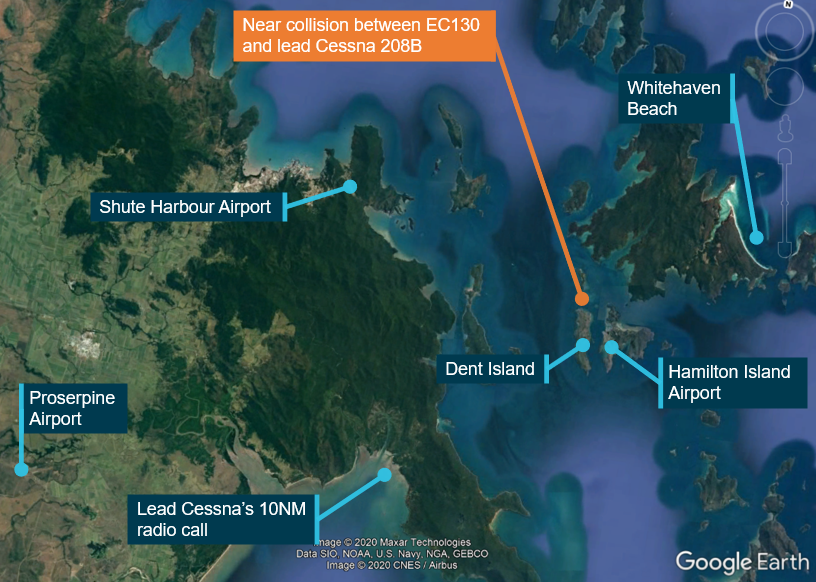
The ATSB often receives reports from pilots that another aircraft is flying too close to them in uncontrolled airspace. Not surprisingly, three quarters of these reports involve pilots flying within 10 nautical miles (18.5 kilometres) of a non-controlled aerodrome.

In nearly three quarters of all near-collisions reported to the ATSB, at least one pilot had no prior warning of the other aircraft in their vicinity.

Insufficient communication between pilots operating in the same area is the most common cause of safety incidents near non-controlled aerodromes.

Data input errors

SafetyWatch_icon_1.png
Safety concern

There have been numerous accidents worldwide that were the result of simple human errors in data calculation or entry.

Data errors—such as the wrong figure being used as well as data being entered incorrectly, not being updated, or being excluded—happen for many different reasons.

The consequences of these sort of errors can range from aborted take-offs through to collisions with the ground. Errors can occur irrespective of pilot experience, operator, aircraft type, location and take-off performance calculation method.

Descending too low on approach

SafetyWatch_icon_1.png
Safety concern

An increasing trend has been identified where pilots do not effectively manage their aircraft’s flightpath when unexpected events arise during the approach to land.

When compared to other phases of flight, the approach and landing has a substantially increased workload and is traditionally the phase of flight associated with the highest accident rate. Flight crews must continuously monitor aircraft and approach parameters, and the external environment, to ensure they maintain a stable approach profile and make appropriate decisions for a safe landing.

The selection of inappropriate autoflight modes, unexpected developments, or any confusion about roles or procedures can contribute to decisions and actions that increase the safety risk to the aircraft and its passengers.


Safe work on rail

SafetyWatch_icon_1.png
Safety concern

The ATSB has investigated several accidents that have occurred when maintenance work was being carried out on or near railway tracks.

Conducting work on or near a railway track can be dangerous if safeworking rules and procedures have not been correctly implemented to protect the worksite. Trains cannot stop quickly and any breakdown in the communication or management of a worksite can leave workers extremely vulnerable to dangerous situations.

Explanatory statement

Fatal accident prompts safety recommendations for skydiving operations

A multi-fatal accident involving a Cessna U206G aircraft has resulted in the ATSB issuing recommendations to improve the safety of skydiving operations in Australia.

The 22 March 2014 accident occurred when the aircraft was conducting tandem parachuting operations at Caboolture in Queensland. On board were the pilot, two parachuting instructors and two tandem parachutists.

Shortly after take-off, the aircraft climbed to about 200 feet before aerodynamically stalling and colliding with the ground. Tragically, all five died in the accident.

ATSB Chief Commissioner Greg Hood said the investigation report, released today, reveals that extensive fire damage prevented examination and testing of most of the aircraft components.

“Due to the post-impact damage to the aircraft, we couldn’t rule out a mechanical defect as a contributor to this accident,” Mr Hood said.

“Importantly, our investigation did uncover a number of safety issues associated with occupant restraint, modification of parachuting aircraft and scope for improving the risk controls associated with parachuting operations.”

In response to the ATSB’s investigation, the Australian Parachute Federation (APF) and Australia’s aviation safety regulator, CASA, undertook action to improve safety of parachuting operations.

“The APF mandated that all member clubs/operations have their own safety management system to proactively assess and mitigate risks. The APF has also enhanced their audit process and increased the number of full-time safety personnel to audit their member organisations.” Mr Hood said.

“The Civil Aviation Safety Authority (CASA) has increased the available information on their website about the risks associated with sports aviation. CASA also introduced an Airworthiness Bulletin to provide guidance about co-pilot side flight control modifications.

“We welcome APF’s and CASA’s safety action but consider more can be done to improve safety for skydiving operations.”

In response to an identified safety issue, the ATSB recommends that CASA take safety action to increase the fitment of the Cessna secondary pilot seat stop modification. This safety issue affects all Cessna Aircraft and not just those being used for parachuting operations.

In addition, it is recommended that CASA introduce measures to reduce the risk associated with the aviation aspect of parachuting operations.

As well, the ATSB recommends CASA and the APF increase the use of dual-point restraints in parachuting aircraft.

Under legislation, APF and CASA have 90 days to respond to the ATSB’s recommendations.

Read the final investigation report AO-2014-053

Corporate Plan 2017–18

Greg Hood Chief Commissioner
As the accountable authority for the Australian Transport Safety Bureau (ATSB), I am pleased to present the ATSB’s 2017–18 Corporate Plan, which covers the period 2017–18 to 2020–21.

This Corporate Plan sets out the ATSB’s purpose – to improve transport safety – and its strategies for achieving that purpose. The Plan also sets out the ATSB’s key deliverables and associated performance criteria. It has been prepared consistent with paragraph 35(1)(b) of the Public Governance, Performance and Accountability Act 2013 and the relevant provisions of the Transport Safety Investigation Act 2003 (the TSI Act), which establishes the ATSB. It also covers the Minister for Infrastructure and Transport’s Statement of Expectations (SOE ) as notified under Section 12AE of the TSI Act.

The TSI Act provides that the ATSB’s primary purpose is to improve the safety of aviation, rail and marine transport through accident investigation, data analysis and safety education. It must do so independently while cooperating with the other organisations that share responsibility for transport safety, including counterpart organisations in other countries. Successive governments have indicated that, in carrying out its role, the ATSB should give priority to the safety of the travelling public.

To accomplish its primary purpose, the ATSB must take into account the known and projected environmental challenges associated with continuing growth, emerging technologies and safety trends across the aviation, rail and marine transport sectors. In response, the ATSB has implemented a significant reform agenda that will position the agency to evolve its capabilities to deliver core functions in a more efficient and effective manner. A key enabler to this reform agenda has been the Government’s recent budget measure that will assist the ATSB in maintaining a sustainable resource base.

Through its contemporary workforce planning strategies, the ATSB will strive to attract, develop and retain the best people, with the requisite skills, knowledge and experience to meet the current and emerging challenges in transport safety investigation.

In my capacity as Chief Commissioner and Chief Executive Officer, I am fully committed to maintaining the ATSB’s reputation as a world leading safety investigation body. Consistent with this commitment, I will work collaboratively with the relevant authorities to ensure the ATSB is appropriately resourced to fulfil its legislative duties and positioned to meet the expectations of our stakeholders and the broader travelling public.

Chief Commissioner Greg Hood

Greg Hood
Chief Commissioner

30 August 2017